




Abstract
This project comparatively analyzes how TikTok and Instagram shape the conditions for cultural production through their platform-specific configurations of governance, public positioning, and design. Employing a multimethod approach that combines qualitative discourse analysis of platform communications and a systematic walkthrough of app interfaces and features, the study identifies four key themes—authenticity, creativity, community, and discovery—central to understanding the differences between the two platforms. The findings reveal that TikTok and Instagram construct and operationalize these themes in distinct ways, creating conditions that foster distinct cultures of creative production. The study proposes a novel framework for comparative platform analysis that integrates sociotechnical profiling and thematic analysis. This framework is useful for both comparative platform studies and research examining how platform-level forces may shape the characteristics of on-platform cultural production.
Introduction
Social media platforms have become central spaces for and mediators of cultural production—the creation, circulation, and consumption of content that shapes our shared understandings, experiences, and cultural trends (Becker, 1982; Bourdieu, 1993; Couldry, 2012). TikTok and Instagram, operated by ByteDance and Meta, respectively, stand out as two of the most influential, each with billions of monthly active users (Statista, 2024). Both mobile-first, visual-centric applications offer users tools for creating and sharing user-generated content (UGC), target overlapping user groups, operate on comparable business models, and continually expand their features (Kaye et al., 2022; Leaver et al., 2020). Despite these apparent similarities, TikTok and Instagram have fostered distinctly different creative environments with particular cultures of expression, engagement, and self-presentation.
This article investigates how TikTok and Instagram discursively and materially shape the conditions for cultural production through their specific configurations of public positioning and marketing, governance structures, and platform architecture and app design. Although they share technical affordances and business models, these platforms have cultivated strikingly different expressive cultures. This divergence poses a broader theoretical challenge: Why doesn’t technical convergence produce cultural convergence? I introduce a framework for comparative platform analysis that explains how seemingly similar platforms can differentially shape user experience and cultural expression. Although users co-produce these environments, it is crucial to understand how platform-level forces structure the conditions under which participation unfolds. Despite their surface-level similarities, these platforms cultivate distinct platform vernaculars (Gibbs et al., 2015)—unique modes of expression and interaction shaped by their respective features and designs, policies, and community norms. TikTok and Instagram serve here not as interchangeable examples, but as analytically distinct case studies through which this framework is developed and demonstrated. As contemporary platforms increasingly evolve toward what has been called “everything apps” (Peters, 2023; van der Vlist et al., 2024) via continually expanding their scope and features, examining the particularities of their strategies and implementations becomes crucial to understanding their nuanced impact on user creativity and expression.
While others have examined how platforms strategically perform values in policy discourse and offload responsibility for enacting them onto users (Scharlach et al., 2023), this study instead identifies analytic themes that emerge inductively across governance, interface, and rhetoric—structuring user experience without necessarily being professed ideals. Through a comparative analysis of platform documents, public discourse, and app walkthroughs, I identify four key concepts—authenticity, creativity, community, and discovery—that emerge as central to understanding the differences between TikTok and Instagram. While seemingly universal themes, each platform implicitly defines and operationalizes these concepts differently, shaping the conditions for cultural production. Much like Gillespie's (2018) characterization of platform policies as “the scars of past conflicts,” these seemingly universal concepts bear the marks of each platform's unique history and strategic choices. By examining how TikTok and Instagram differentially construct and maintain these concepts, I aim to illuminate the specific mechanisms by which they shape distinct platform cultures and practices.
Ultimately, this study seeks to develop a framework for examining how platforms with similar features and user bases can nevertheless foster distinct creative cultures that lead to distinct approaches to user-generated content (UGC). This provides a model for conducting in-depth, cross-platform analyses that account for the mutual shaping of platforms and social practices. In doing so, I contribute to ongoing discussions in platform studies (Gillespie, 2018; Nieborg and Poell, 2018; van Dijck et al., 2018) and cultural production theory (Duffy, 2017; Scolere et al., 2018), while highlighting the importance of attending to the specificities of individual platforms in understanding their role in the contemporary media landscape. By deepening our understanding of how these powerful platforms create distinct cultural ecosystems, this research lays the groundwork for future analyses of how these differences play out in user practices and cultural trends and the broader implications for platform-mediated cultural production.
The shaping power of platforms
To understand how TikTok and Instagram shape cultural production in unique ways, it's crucial to examine the dynamics through which social media platforms gain and exert influence over the creation, circulation, and consumption of UGC. Engaging with platform studies and sociological literature, I examine the power of platforms at three levels: the macro level co-evolution of platforms and users, the micro level mechanisms for platform control, and the consequences for cultural production.
This study integrates structural perspectives from Science and Technology Studies and cultural approaches to meaning-making and production. Drawing on Poell et al.'s (2022a) definition of platforms as “data infrastructures that facilitate, aggregate, monetize, and govern interactions between end-users and content and service providers” (p. 5), I focus on platform structures and outcomes rather than centering user experience or corporate framing. This definition aligns with van Dijck et al.'s (2018) concept of a “platform society,” where online platforms not only mediate sociality but actively produce social structures (Couldry and Hepp, 2016).
At a macro level, platforms operate as complex systems combining technology, practices, and cultural norms that co-evolve with users, trends, and economic models. Through “platformization” (Helmond, 2015; Nieborg and Poell, 2018), platforms restructure the social web around their economic imperatives and technical infrastructures, shaping user practices and cultural norms. This process is shaped by diverse stakeholders’ interests and power dynamics, creating platform-specific environments with distinct creative affordances and constraints.
These dynamics manifest differently on TikTok and Instagram despite their surface similarities. TikTok's algorithmic culture incentivizes participatory creativity through mimetic practices and trend engagement (Zulli and Zulli, 2020), while Instagram has evolved from photo-sharing to a multimodal platform with increasingly complex visibility dynamics (Cotter, 2023). Recent comparative research highlights how these platforms’ divergent algorithmic philosophies create fundamentally different environments for cultural production (Valdovinos Kaye et al., 2021), with TikTok prioritizing content discovery through algorithmic recommendation while Instagram balances social graph dynamics with interest-based exploration. These platform-mediated interactions give rise to distinct cultural norms and expectations, shaping how users communicate, present themselves, and participate in creative expression on each platform (Gillespie, 2018; van Dijck, 2013).
Mechanisms of platform shaping
Platforms also shape user practices at a more micro level in three main ways. First, they strategically construct their public image and frame their societal role through discursive outlets such as official policies, blog posts, press releases, and marketing materials (Gillespie, 2010; Hoffmann et al., 2018). These narratives emphasize platforms’ positive impact while downplaying the economic priorities behind their design (Srnicek, 2017). The tension between public rhetoric and economic imperatives is particularly evident on TikTok and Instagram: TikTok frames itself as a joyful space for creative expression and community building while operating a sophisticated data collection and algorithmic optimization system designed to maximize engagement (Kaye et al., 2022); similarly, Instagram emphasizes meaningful connections and authentic self-expression while implementing algorithmic feed changes that prioritize monetizable content formats and commercial partnerships (Leaver et al., 2020). This strategic self-positioning creates specific user expectations about platform purpose and value, influencing how different types of users—from casual content consumers to professional creators and businesses—approach content creation and community building on each platform.
Second, governance and moderation practices represent another mechanism of platform control. Formal policies, such as terms of service and community guidelines, set the boundaries of acceptable behavior and creative expression on the platform (Gorwa, 2019). These rules are enforced through a combination of algorithmic filtering and human labor, with moderation decisions shaping what content is allowed to circulate and what is removed (Gillespie, 2018; Gorwa et al., 2020; Myers West, 2018; Roberts, 2019). Comparing how TikTok and Instagram's governance strategies shape the possibilities for cultural production highlights the sometimes overlooked role of content moderation in structuring creative practices.
Finally, platforms shape cultural production through their technical architectures and design choices. Features like algorithms, interfaces, and data structures create “affordances” that encourage certain behaviors and constrain others (Bucher and Helmond, 2018; Davis, 2020). This view is reinforced by recent work showing how user interfaces shape cultural experience by framing not only what content is visible but how it is presented and organized for interaction (Hesmondhalgh et al., 2024). Algorithmic curation systems like TikTok's For You Feed or Instagram's Explore page have a particularly powerful influence, determining what content gains visibility and how cultural trends emerge (Gillespie, 2014; Pasquale, 2016). However, users are not passive recipients of these structures; they actively navigate, manipulate, and resist them in creative ways (Bishop, 2019; O’Meara, 2019). Examining how TikTok and Instagram's technical architectures shape user behavior and cultural production in different ways contributes to a more nuanced understanding of the interplay between platform affordances and user agency.
To understand these mechanisms, scholars have primarily examined platform control through three lenses: algorithmic governance and content moderation (e.g. Gillespie, 2014; Roberts, 2019), platform affordances and user behavior (e.g. Bucher, 2018; Zulli and Zulli, 2020), and the emergence of platform-specific vernaculars (e.g. Abidin, 2021; Gibbs et al., 2015). While these approaches have yielded valuable insights, they often focus on individual platforms in isolation. This study builds on and extends these perspectives by offering a comparative analysis of TikTok and Instagram. By examining how these platforms differentially employ mechanisms of control, this research illuminates the complex relationship between platform architectures and cultural production. This approach addresses the need for more comparative, granular analyses of how specific platform features and discourses shape cultural production differently and enables further analysis of cultural production situated in these platform environments.
Platforms and the sociology of cultural production
The micro level mechanisms of platform shaping have significant consequences for cultural production, as they create unique environments that structure how users navigate identity, community, and creative expression. Platforms function as cultural intermediaries (Wright, 2005) that mediate between the production and consumption of culture and actively shape how culture is created and experienced. By shaping the norms, expectations, and opportunities for creativity and self-expression, platforms influence the social fields (Bourdieu, 1992)—areas of social life with their own rules, practices, and forms of capital (i.e. valued social resources)—in which cultural production occurs. While platform structures and mechanisms constrain user behavior in certain ways, users also maintain agency to resist, subvert, and reimagine these constraints, demonstrating the dynamic interplay between structure and agency central to structuration theory (Giddens, 1979). This tension between structure and agency is key to understanding how cultural production unfolds on platforms like TikTok and Instagram.
Given this tension between structure and agency, Griswold's (2012) “cultural diamond” model offers another useful framework for understanding platforms’ role in shaping and being shaped by cultural production. The cultural diamond highlights the relationships between four elements: creators, cultural objects, receivers, and the social world. In the context of social media platforms, the category of “users” encompasses a diverse array of actors including ordinary content consumers, casual and professional content creators, influencers, businesses, brands, and advertisers (Abidin, 2018; Duffy, 2017). These different user types occupy distinct positions within the cultural diamond, with varying degrees of visibility, influence, and economic stake in platform participation. For instance, while influencers simultaneously create content and function as promotional channels for brands, ordinary users may primarily consume content while occasionally contributing their own, and businesses engage primarily to build brand presence and customer relationships. Applying the cultural diamond perspective to the study of TikTok and Instagram directs our attention to how these platforms mediate the relationships between these diverse actors, content, audiences, and broader cultural contexts, offering a holistic view of their influence.
One fundamental way in which platforms shape cultural production is by structuring the possibilities for identity expression and self-presentation. As users navigate platforms, they engage in a form of impression management (Goffman, 1959) aimed at controlling how others perceive them, shaped by the platform's design and the broader attention economy where platforms are competing for users’ engagement (Abidin, 2018; Citton, 2017). This impression management takes different forms depending on user type: ordinary users may focus on authentic self-presentation to peers, while creators and influencers must balance personal authenticity with professional branding considerations, and businesses construct carefully managed brand identities (Marwick, 2013). The imperative to craft an online persona appropriate to one's role creates a tension that users must navigate by drawing on their cultural and social capital (Bourdieu, 1992)—intangible resources such as knowledge, skills, and status.
Platforms also shape cultural production by structuring the possibilities for creativity, community-building, and content visibility. As users engage with platform features and interact, they develop new creative practices, genres, and vernaculars specific to each platform's affordances and user culture (Abidin, 2021; Gibbs et al., 2015). At the same time, the algorithms and metrics that govern content visibility and popularity have a powerful influence on what types of creative expression gain traction and shape cultural trends (Cotter, 2019; Poell et al., 2022b).
Ultimately, the consequences of platform shaping for cultural production emerge through complex negotiations of power and agency between platforms, users, and the broader sociocultural contexts in which they are embedded. By taking a comparative approach to studying TikTok and Instagram as sociotechnical environments, this study advances a holistic and nuanced perspective on the relationship between platforms and cultural production. This approach allows us to examine how seemingly similar platforms can foster distinct creative cultures and practices, challenging monolithic conceptions of social media's impact on cultural production.
Therefore, I ask:
How do the public positioning, formal policy frameworks, embedded cultural assumptions, and technical architectures within the sociotechnical environments of TikTok and Instagram differentially shape platforms’ conditions for cultural production?
By addressing this question, this study contributes to our understanding of the complex dynamics of platform-mediated cultural production, illuminating how platform-specific discourses and structures can lead to different creative outcomes and expressions and building on the two landmark book-length platform overviews of TikTok (Kaye et al., 2022) and Instagram (Leaver et al., 2020). It offers a unique contribution through (1) a timely comparative analysis of both platforms, revealing how their distinct sociotechnical environments differentially shape cultural production; (2) an up-to-date examination of these rapidly evolving platforms in 2024; and (3) a specific focus on cultural production, providing insights into how platform affordances and cultures may facilitate and constrain creative expression.
Methods
Research design
This project employs a comparative, multimethod approach to examine how TikTok and Instagram differentially shape the conditions for cultural production. The research design combines qualitative discourse analysis of platform documents and public communications with a systematic walkthrough of the platforms’ user interfaces and features. The three-stage design includes (1) discourse analysis of platform documents, including community guidelines, privacy policies, terms of service, homepages, news articles, blog posts, YouTube videos, and advertisements 1 ; (2) a walkthrough of the platforms’ user interfaces and features; and (3) integration of findings to create sociotechnical profiles—comprehensive descriptions of how platforms function as integrated social and technological systems to shape user experiences and cultural production. This design follows Bucher and Helmond's (2018) call for platform-sensitive approaches to affordance analysis by attending to the relational, multilayered interplay between interface design, governance structures, and rhetorical positioning, and complements recent efforts to identify platform specificities through close empirical attention to platform logics and cultural dynamics (Valdovinos Kaye et al., 2021).
The selected data sources—governance documents, public statements, marketing materials, and platform interfaces—each contribute uniquely to understanding how TikTok and Instagram shape the conditions for cultural production. Governance documents, such as community guidelines, privacy policies, and terms of service (English-language versions; both platforms localize regionally via internal moderation criteria and add-ons), represent the platforms’ formal communication of rules, policies, and expectations. These documents not only limit legal liability and ensure regulatory compliance but also subtly shape user behavior by setting clear boundaries for acceptable actions. In contrast, public statements and marketing efforts allow the platforms to craft their public image more creatively and flexibly. These communications engage with broader cultural conversations, signaling the platforms’ values, priorities, and positioning. They also set expectations for user experiences, highlighting features and success stories that align with the platforms’ intended visions. While governance documents and public communications provide insights into the platforms’ intended culture and image, the walkthrough data offers a complementary perspective by revealing how these intentions are materialized in the platforms’ interfaces and functionalities. By systematically documenting and analyzing the features, affordances, and user flows of TikTok and Instagram, the walkthrough method uncovers how platform design and architecture shape user behavior and cultural production in practice.
Together, these diverse data sources paint a holistic picture of how platforms govern cultural production through a complex interplay of formal rules, informal norms, and design choices. The combination of discursive analysis and interface walkthrough enables the study to situate TikTok and Instagram within the broader contexts they operate in and unpack the ways in which they enable and constrain cultural expression.
Data collection and sampling
Data was collected from TikTok and Instagram's community guidelines, privacy policies, terms of service, homepages, news articles, blog posts, YouTube channels, and advertisements. Collection methods included web scraping via the Wayback Machine, keyword searches in Nexis Uni and Google Alerts, and manual collection. The data spans from 2010 (Instagram's launch) to 2024, with TikTok data starting from 2018 when ByteDance acquired Musically. More details about these data and sampling strategies can be found in Table 1.
Data sources and sampling.
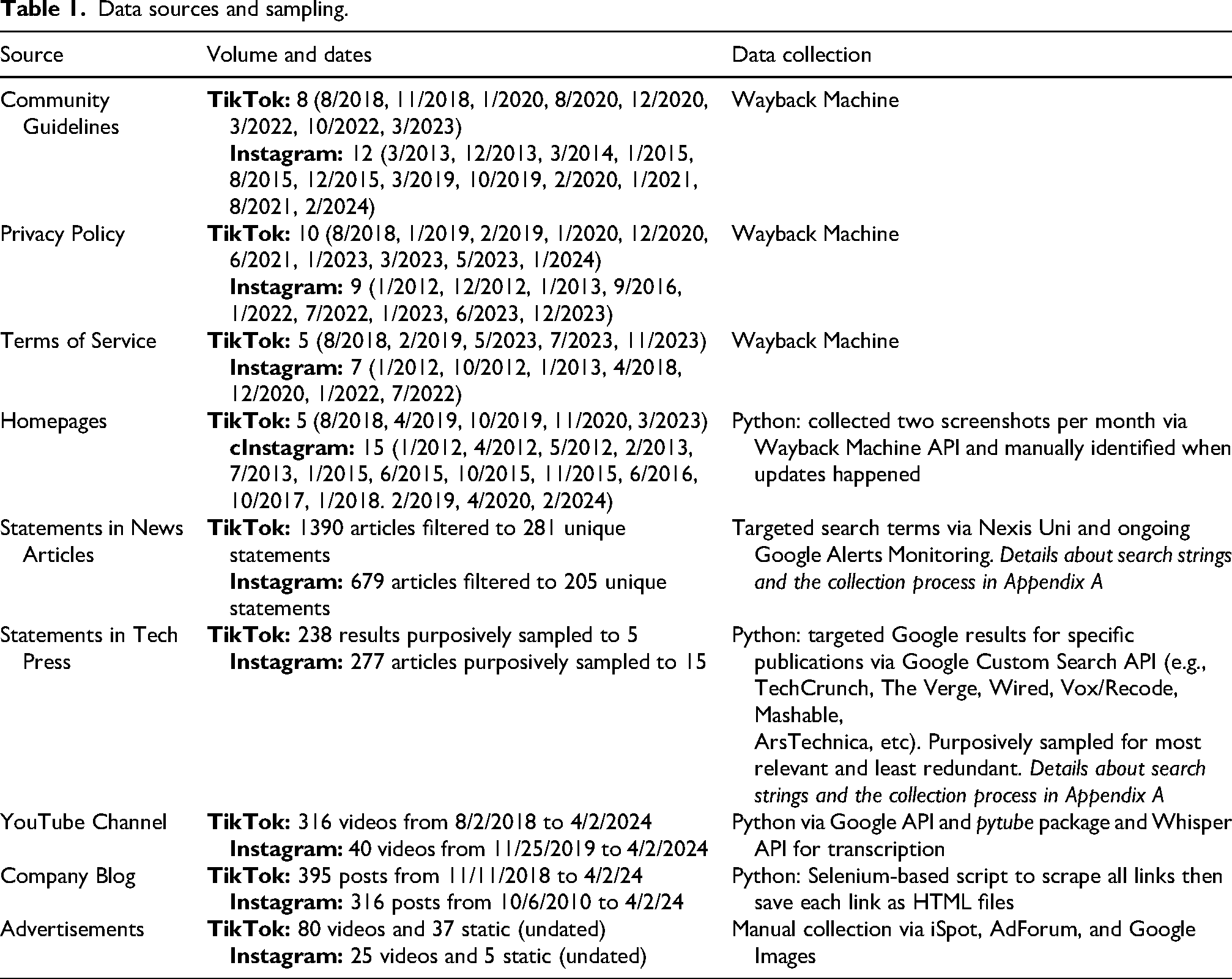
Sampling strategies varied by data type. For governance documents, the Wayback Machine has frequently captured snapshots of relevant pages containing these documents and they are typically marked by the platform with the date of last update. I manually used a binary search approach to sort through the entire corpus of snapshots and identify when new versions were introduced. By manually reviewing Wayback Machine snapshots of homepages, I determined that homepages were rarely modified and so I used the Wayback Machine API to capture two snapshots per month for each platform's homepage and then manually reviewed these to identify when new versions were introduced. YouTube channels and company blogs were also sampled comprehensively via API access and Selenium scraping, respectively, while advertisements were manually collected as comprehensively as possible via ad databases and Google Images. Details about data collection techniques for public statements in news and tech press can be found in appendix A; these data were filtered for redundancy and purposively sampled for relevance to platform cultures and cultural production.
Data analysis
A structured qualitative media analysis approach (Altheide and Schneider, 2012) was employed to analyze the collected data. For each data type, a protocol (appendix B) was developed to systematically interrogate the documents and identify key themes, discourses, and structural characteristics related to platform governance, cultural norms, and user expectations. The protocols included 13 guiding questions (appendix C) focusing on key messages, recurring patterns, and broader contexts.
The analysis involved multiple rounds of open and focused coding to refine the emerging categories and ensure conceptual robustness. Constant comparative analysis (Glaser and Strauss, 1967) was used to examine similarities and differences between the two platforms, while memo writing (Charmaz, 2014) supported the iterative development of theoretical insights. Repeated readings were conducted until saturation, guided by an inductive approach that surfaced candidate themes and enabled their iterative refinement across platform materials.
This thematic analysis unfolded through iterative memoing and cross-type comparison. Rather than preselecting categories, I used open coding to surface candidate themes from the governance documents and public-facing platform communications, then refined these categories by systematically testing their relevance across additional data types. Each emerging theme was evaluated for recurrence and interpretive utility across the full set of platform communications and walkthrough data. During this process, I employed a structured comparison scaffold—grouping insights under the headings of governance, public vision, and interface design—to assess whether themes consistently manifested across these distinct layers. Only those themes that could be meaningfully traced through all three were retained as final organizing concepts. This approach allowed for analytic flexibility while ensuring internal consistency, grounding the four final themes (authenticity, creativity, community, and discovery) in both breadth and structural coherence.
Building on the discourse analysis findings, I conducted a systematic walkthrough of TikTok and Instagram's user interfaces and features. This walkthrough approach, grounded in Light et al.'s (2018) methodology, is also informed by Duguay and Gold-Apel's (2023) subsequent reflections on the method's limitations when applied to algorithmically curated and rapidly evolving platforms like TikTok. Rather than treating the walkthrough as a stand-alone method, I follow Duguay and Gold-Apel's recommendation to situate it as one component in a flexible methodological toolkit. In this study, the walkthrough complements the discourse analysis and supports the construction of platform-specific sociotechnical profiles by examining how interface design and user flows materialize—or complicate—the values expressed in governance and public communications.
The walkthrough examined content consumption and production features, response and remix-style interactions, comments, direct messages, settings menus, and onboarding and account deletion processes and documented these with notes and screenshots. Rather than approaching the walkthrough as a neutral catalog of features, I treated it as a theory-guided interpretive process. The themes surfaced through discourse analysis—such as authenticity, community, and discovery—framed the walkthrough as an exercise in identifying alignment, friction, or dissonance between rhetorical claims and interface design. For instance, TikTok's emphasis on spontaneous joy directed attention to its camera-first posting interface and integrated sound library, while Instagram's rhetoric of control and connection shaped analysis of features like audience segmentation, comment moderation, and profile customization. This approach allowed the walkthrough to function as a grounded test of how thematic and rhetorical ideals were operationalized—or contradicted—through platform design.
Integration
The integration process was iterative and reflexive, leading to progressively refined sociotechnical profiles of each platform via a three-step process. First, the key themes and narratives identified through the discourse analysis were used to guide and structure the walkthrough analysis, providing a framework for interpreting the significance of different design choices and features. Second, the walkthrough data was used to interrogate and refine the insights gained from the discourse analysis, looking for areas of alignment, tension, or contradiction. Finally, the two sets of findings were synthesized into a set of “sociotechnical profiles” for each platform, which captured the complex interplay between their discursive and material characteristics and the implications for cultural production.
These profiles were developed through a layered mapping process that traced each theme—authenticity, creativity, community, and discovery—across governance structures, public-facing rhetoric, and interface design. This structured matrix served as both a scaffolding for comparative insight and a means of detecting internal contradictions within each platform. By analyzing how themes were differently enacted, emphasized, or undermined across layers, the profiles surface each platform's distinctive logics of cultural production. This multimethod approach allows for a nuanced understanding of how TikTok and Instagram differentially shape the conditions for cultural production, addressing the study's central research question.
Findings
Inductive analysis revealed four central, interconnected themes that emerged as crucial for understanding the distinct sociotechnical environments of TikTok and Instagram: authenticity, creativity, community, and discovery. These themes surfaced repeatedly across data sources and analytical approaches, suggesting their centrality to how these platforms shape cultural production. As I iteratively integrated strands of analysis, clear differences in their constructions and operationalizations began to crystallize. The prominence of these themes and the striking differences in how TikTok and Instagram engaged with them suggest their critical importance for understanding how these platforms distinctly shape conditions for cultural production. To analyze these dynamics, I trace each theme across three interrelated layers—governance, public rhetoric, and interface design—highlighting both alignment and tension across platform environments. An overview of these findings (summarizing how each platform constructs and enacts these themes) can be found in Table 2.
Platform summaries.
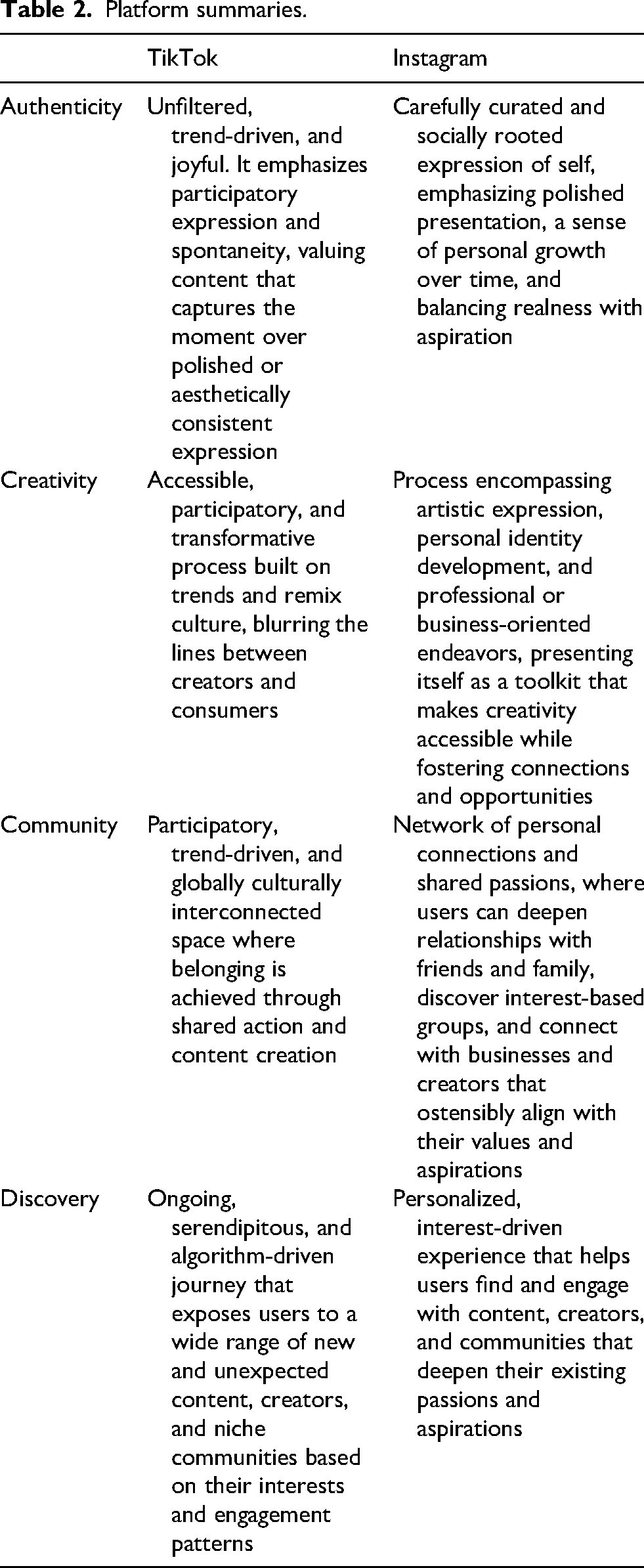
The following comparative analysis dives deep into these themes in pairs, examining authenticity and creativity, then community and discovery. This structure allows for a more nuanced exploration of how these interrelated concepts manifest and interact within each platform's context. By considering these themes in tandem, we can better understand how TikTok and Instagram's platform-level differences shape the kinds of content, interactions, and creative energies that emerge.
I begin this comparative analysis by examining the relationship between authenticity and creativity. While both platforms emphasize the importance of authentic self-expression and creative empowerment, they construct these concepts in strikingly different ways. As we will see, TikTok and Instagram's contrasting approaches to authenticity and creativity have profound implications for the kinds of identities, content, and creative labor that emerge on each platform.
Constructing the self: Authenticity and creativity
Authenticity and creativity are deeply intertwined in how users navigate self-expression and cultural production on platforms like TikTok and Instagram. The pursuit of authentic self-presentation is often closely tied to the drive to share one's creative abilities and outputs. Yet the specific norms, aesthetics, and expectations that shape what it means to be “authentic” and “creative” can vary significantly between platforms. By examining how TikTok and Instagram construct and incentivize particular forms of authenticity and creativity, we can gain insights into the distinct pressures and possibilities for identity formation and creative labor.
The performance of authenticity on platforms
Authenticity can be understood as the degree of congruence between an individual's inner experiences and their external presentations (Erickson, 1995; Goffman, 1959). On social media platforms, users navigate a complex interplay between their genuine selves and the curated, performative identities they present to their audiences (Deuze, 2012). TikTok and Instagram's distinct approaches to authenticity shape how users negotiate this tension, influencing the norms and practices of self-expression on each platform.
TikTok's construction of authenticity centers on unfiltered, trend-driven, and joyful self-expression. This ethos is consistently reinforced through the platform's features, policies, and messaging. In interviews, TikTok CEO Shou Chew emphasizes the value of spontaneous, organic content that captures the “feelings of the cultural zeitgeist,” underscoring the importance of authenticity by stating, “If you try to make [content] very polished or very refined, it's not going to be that organic” (Thomas, 2024). TikTok's advertising further reinforces this vision, showcasing diverse users engaging with the app in playful, impromptu ways and framing the platform as a space for homemade, colorful, joy-filled content. The prominence of “TikTok Sparks Good” videos on their YouTube channel featuring users and phenomena with positive, unexpected real-world impact suggests a focus on authentic, genuine content that challenges stereotypes and dominant narratives.
The platform's focus on joy and positivity is deeply intertwined with its construction of authenticity. As COO Vanessa Pappas notes, “TikTok has been called the Last Sunny Spot on the Internet” (Swisher, 2022), highlighting the app's emphasis on fostering a lighthearted, uplifting environment for self-expression. This commitment to joy is evident in the platform's community guidelines, which explicitly state that TikTok is “for creativity and joy,” underscoring the idea that authentic expression on the app should be rooted in positivity and fun. TikTok's homepage evolution (Figure 1), from taglines like “make every second count” and “real short videos” to encouraging active participation with slogans like “Make Your Day,” reflects the platform's emphasis on authentic self-expression through spontaneous content creation. Including “Originators” videos on YouTube, where creators who started specific trends explain their process, highlights the user-driven nature of “authentic” content on TikTok.

TikTok's homepage in August 2018 (left), March 2019 (middle), and September 2019 (right), captured via Internet Archive's Wayback Machine.
TikTok's interface and feature set further reinforce this raw, participatory vision of authenticity. TikTok's interface design (Figure 2) immediately presents users with the camera screen upon clicking the “post” button, with the “record” button prominently featured, encouraging spontaneous, and unfiltered content creation. In contrast, Instagram's post creation flow opens to the user's photo gallery, prioritizing curation and editing before sharing. Both allow users to switch modes from this default (see circled sections), but this is de-emphasized. Moreover, the platform's defining features, such as duets and stitches, foreground remix culture and trend engagement as core aspects of authentic expression. By making it easy and intuitive to reuse and respond to others’ content, TikTok positions creative responsiveness and communal participation as integral to genuine self-expression on the app. This model of expression not only reinforces the platform's identity but also supports its commercial logic: by privileging low-effort, high-frequency posting, it ensures a steady stream of content to populate the algorithmic feed and sustain ad engagement. Further, the emphasis on spontaneity and unfiltered expression aligns with TikTok's focus on short-form content, with the default time limit of 15 seconds encouraging quick, raw reactions rather than polished productions. However, the wide range of filters and effects on the platform complicates the notion of “unfiltered” content, suggesting that TikTok's version of authenticity is a specific aesthetic that allows for creative manipulation and performativity.
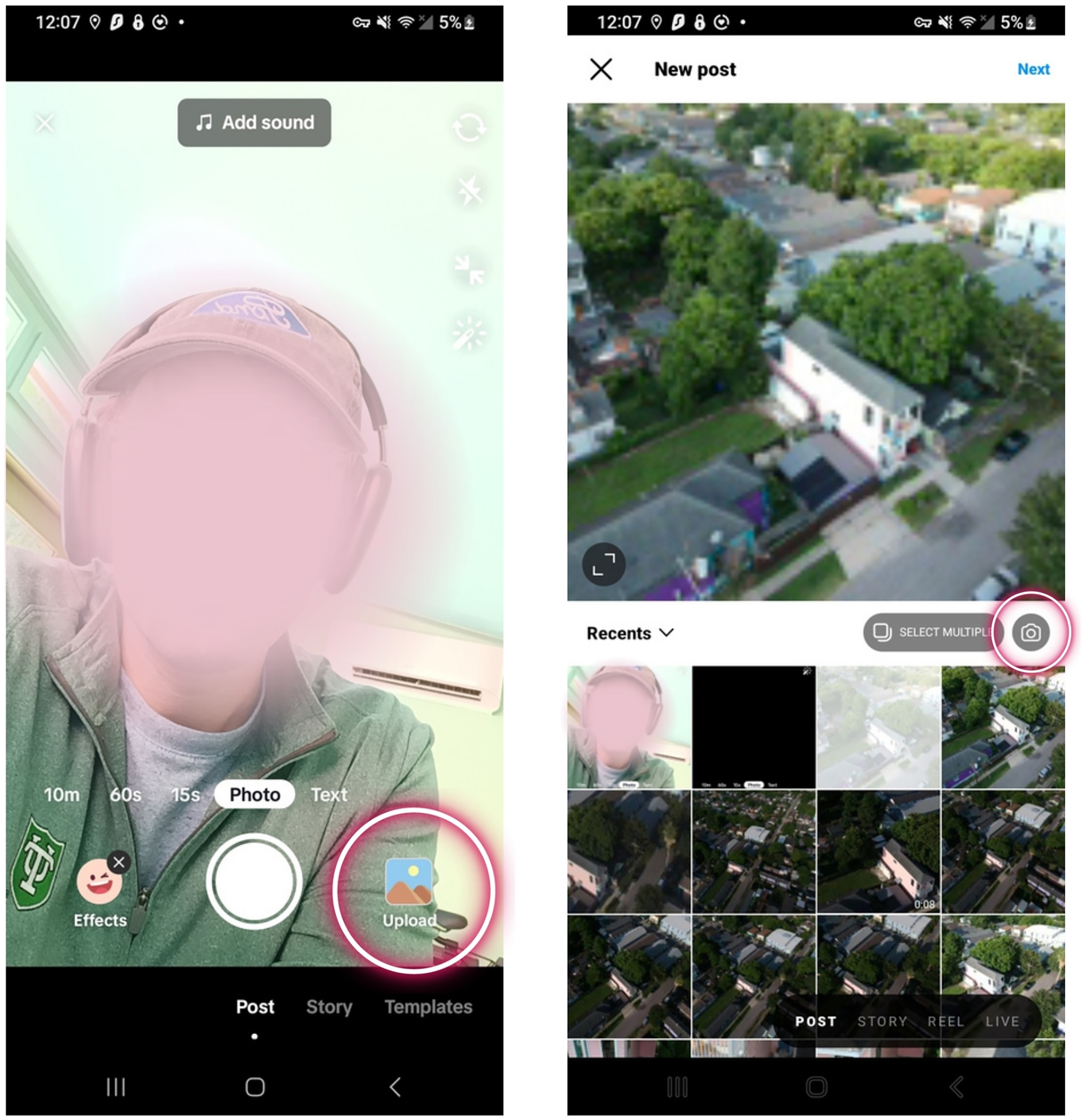
Screenshots depicting TikTok and Instagram's default options upon clicking the main “post” button.
On the other hand, Instagram constructs authenticity as a curated and socially rooted expression of self, balancing realness, and aspiration. The platform's emphasis on visually appealing, filtered content has long shaped norms of self-presentation that privilege aesthetics and social connection (Leaver et al., 2020). Instagram's Terms of Service emphasize “personalized opportunities to create, connect, communicate, discover, and share,” framing authenticity as something the platform helps users achieve through data-driven customization. Their Privacy Policy further reinforces this data-driven approach to authenticity, detailing extensive data integration across Meta's platforms. This blurring of lines between different contexts and audiences could lead users to self-censor or feel unable to express themselves authentically for fear that unintended audiences will see their content across platforms. The evolution of Instagram's homepage (Figure 3), from focusing on sharing with friends in the earliest available version in 2012 to discovering “inspirational communities” by 2015, suggests a shift toward balancing social connection with interest-based authenticity. Instagram executives continually emphasize connecting to “the things and people you love” (Constine, 2018a; Dua, 2018), positioning authenticity as rooted in fostering meaningful relationships through the platform. This focus on social rootedness is evident in features like Close Friends, which allow users to share more intimate, unfiltered content with a select group of followers.
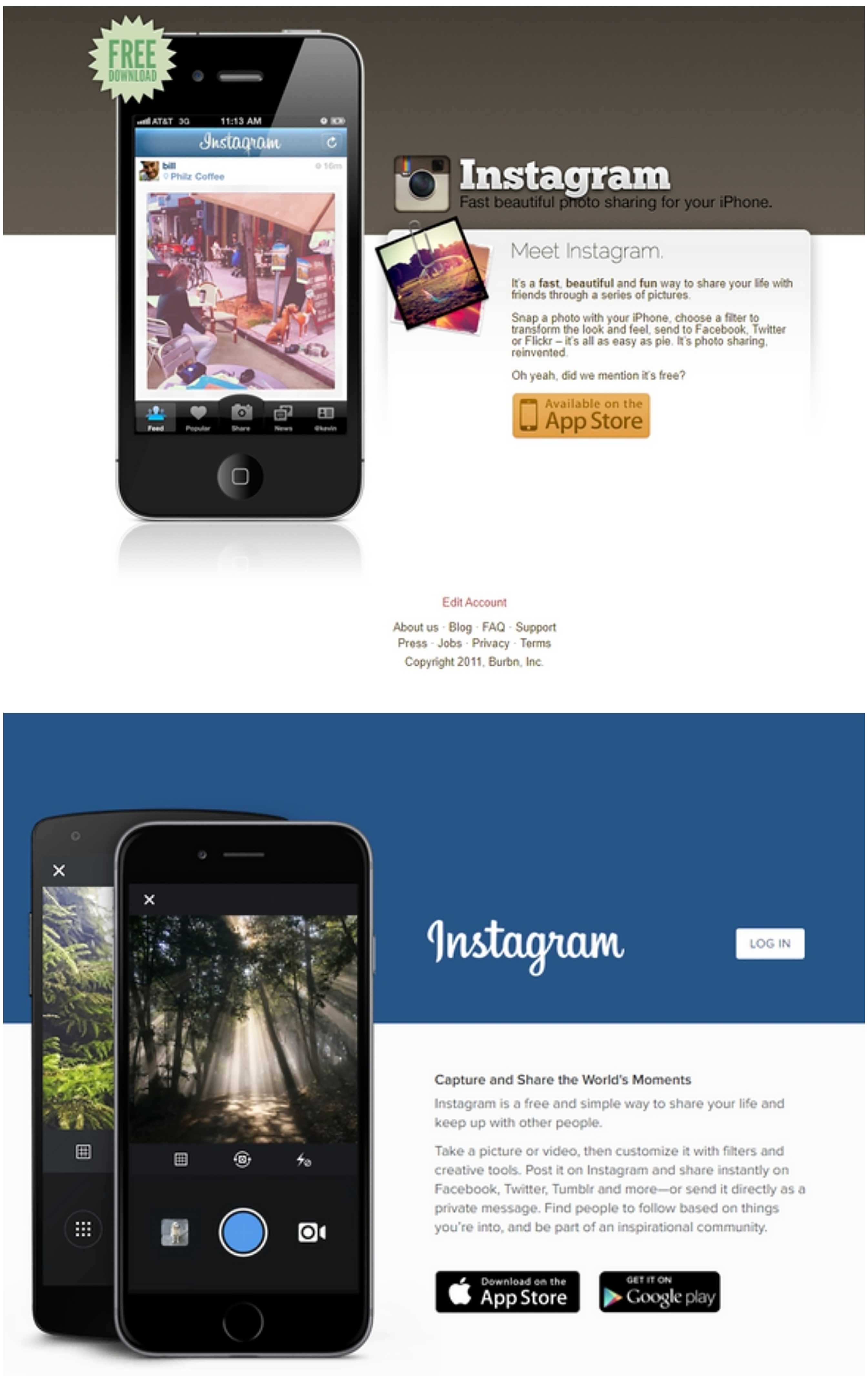
Instagram's homepage in January 2012 (top) and July 2015 (bottom), captured via Internet Archive's Wayback Machine.
At the same time, Instagram's construction of authenticity involves a careful balance between realness and aspiration. While the platform encourages users to share genuine moments and experiences, it also fosters an environment where self-presentation is often strategically crafted to project an ideal image. Emphasizing features like comment controls and tweaks to the resharing process frames authenticity as intentional self-presentation (Friedman, 2016). As more people adopt features like Stories, Instagram acknowledges that the profile has become “less and less representative of you and your life” (Sandler, 2018). It has had to navigate the tension between its established aesthetic of curated perfection and the demand for more raw, unfiltered content. The platform has responded by developing tools that allow for different degrees of authenticity and privacy, such as selecting an audience for any post type and hiding like and view counts, enabling users to tailor their self-presentation. These tools also serve the platform's economic interests by encouraging ongoing content production that aligns with personalization algorithms and supports influencer marketing and ad delivery systems. Despite this, authentic participation on Instagram is framed as the sort of participation that serves the user's needs, with the platform aiming to ensure that time spent on the app is “meaningful and intentional” (Holt, 2024). This dual function—framing authenticity as both personally fulfilling and commercially productive—reflects Instagram's broader strategy of aligning user expression with monetizable behaviors.
The politics of creative expression
These divergent constructions of authenticity are mirrored in how each platform approaches creativity. Creativity, defined as the generation of novel and valuable ideas, expressions, and artifacts (Becker, 1982; Bourdieu, 1993), takes on distinct forms and meanings within the contexts of TikTok and Instagram. These platforms’ specific tools, templates, metrics, and governance structures shape the conditions for creative expression (Burgess and Green, 2009), influencing the types of content that emerge and gain visibility.
TikTok positions itself as a democratizing force for creative expression, framing its tools and features as a means of unlocking users’ innate creative potential. In Community Guidelines and many other documents, TikTok directly states that the platform is for “creativity and joy.” The company's vision emphasizes providing users with “a canvas to create,” which CEO Shou Chew describes as “really exciting with new technologies in AI that are going to help people create new things” (Chew, 2023). COO Vanessa Pappas highlights how TikTok “really does lower the barrier for entry when you think about the creation experience,” noting that “your grandma could come on and create a video and use an effect and upload it to TikTok fairly seamless[ly]” (Swisher, 2022). TikTok's content strategy strongly encourages and supports user creativity, as demonstrated by the prominence of words like “create,” “creative,” “creators,” and “creativity” in their blog posts.
By making remix culture and collaborative creativity central to the user experience, TikTok constructs a vision of creativity as an accessible and participatory process. Features like duets and stitches are prominently integrated into the app's design, normalizing the reuse and reinterpretation of existing content as a core creative practice. TikTok's ads highlight the collaborative and participatory nature of creativity on the platform, such as one that highlights how the process of duets and replies build creative content as this collaborative chain spreads from user to user. By positioning new features and tools as ways to “unleash” creativity and “captivate the community,” TikTok suggests that creativity is not just about individual expression but about inspiring and engaging others. Trend compilation videos on YouTube feature the creative ways in which users participate in and put their own spin on shared trends and challenges, highlighting the collaborative creativity on the platform. The centrality of remix culture on TikTok is further reinforced by the prevalence of hashtags like #duetthis, which actively encourage users to participate in chains of responses and re-interpretations of original content. This positions creativity as a collaborative and iterative process, where value is placed on the ability to cleverly riff on existing trends and memes rather than solely on original ideation. This model also externalizes creative labor to users, allowing TikTok to scale content production without direct investment while sustaining attention loops critical to its ad-based revenue model.
Instagram's approach to creativity encompasses artistic expression, personal identity development, and professional or business-oriented endeavors. The platform's tools and features cater to a wide range of creative pursuits, from honing one's visual storytelling skills to building a personal brand or creative business. Instagram's blog posts and creator profiles often profile individuals who have leveraged the platform to launch successful artistic careers, positioning Instagram as a legitimate venue for creative growth and professional opportunities. Instagram's founders have described the platform as a place for various creative purposes, from buying ads to sharing 15-second looping videos to creating conceptual art pieces (Kiss, 2015). The platform's filters, which transform photos into “artistic memories,” were developed to give users creative control over their content (Schawbel, 2012).
Moreover, Instagram frames creativity as a means of personal identity exploration and development. The “We Are in the Making” YouTube series illustrates how Instagram can help users discover and express their evolving sense of self. It ties creativity via Instagram to personal growth and self-discovery. This emphasis on creativity as a process of self-discovery and growth positions Instagram as a space where users can show off their artistic talents and actively construct their identities through creation. Instagram's ads often feature the creative tools and features available on the platform, such as customizable Stories, filters, and effects, emphasizing its role in facilitating personal expression and identity development. At the same time, this framing helps sustain Instagram's commercial ecosystem by channeling personal creativity into platform-sanctioned formats that are easily branded, monetized, and circulated through influencer and advertizer workflows—a structure that often incentivizes conformity over experimentation. The platform's emphasis on templates, trends, and prebuilt elements can also lead to a homogenization of content, potentially limiting the scope for genuinely original creative expression.
Implications for identity and cultural production
The implications of these platform-constructed visions of authenticity and creativity are significant. TikTok's emphasis on unfiltered, joyful, and trend-driven content has created a fast-paced culture of participation that thrives on remix and responsiveness. The platform's features, such as duets, stitches, and its algorithmic recommendation system incentivize users to continuously engage with and build upon the latest viral trends, fostering a creative ecosystem that values timeliness and cultural fluency over originality (Zulli and Zulli, 2020). While this low-barrier, remix-friendly environment has enabled diverse and vibrant forms of creative expression, particularly among youth and marginalized communities, the pressure to keep up with fleeting trends and the platform's focus on entertainment and virality can also result in a degree of creative homogenization and the prioritization of attention-grabbing content over more nuanced or experimental forms of expression. The prominence of prebuilt elements like templates and Magic Effects on TikTok, while lowering the barrier to entry for creative participation, could also foster a reliance on platform-provided assets rather than encouraging the development of original creative skills. This raises questions about the nature of creativity on the platform and whether it truly empowers users or perpetuates a form of “microcreativity” within predetermined constraints. These predetermined constraints are not incidental—they reflect TikTok's underlying economic logic, which encourages constant content generation within narrow aesthetic and structural bounds optimized for engagement and ad delivery.
In contrast, Instagram's emphasis on curated, aesthetically pleasing, and socially rooted content has normalized a vision of creativity that is deeply entangled with personal branding and commercial imperatives. The platform's tools and culture, which privilege visual polish, adherence to popular aesthetic conventions, and the cultivation of a consistent brand identity, incentivize users to approach creative expression as a means of achieving social status and economic success (Leaver et al., 2020). Despite this emphasis on polished, professional content, Instagram's founder, Kevin Systrom, highlights the platform's role in facilitating diverse forms of creative expression, stating, “Calling Instagram a photo-sharing app is like calling a newspaper a letter-sharing book, or a Mozart grand era symphony a series of notes. Instagram is less about the medium and more about the network…photo sharing’ misses the nuance” (Kiss, 2015). While this culture has enabled the rise of a thriving influencer economy and provided new opportunities for creative professionals to showcase their work and build their businesses, it has also contributed to the professionalization of creativity on the platform, blurring the lines between authentic self-expression and strategic self-commodification (Abidin, 2021). The labor and savvy required to maintain a successful presence on Instagram can make creative expression feel like a full-time job, potentially limiting the space for more organic, experimental, or noncommercial forms of creativity.
Furthermore, these divergent constructions of authenticity significantly affect identity formation and self-expression. TikTok's celebration of unfiltered, “real” content and its emphasis on raw and spontaneous creative expression can foster a sense of authenticity and relatability among users, encouraging them to embrace their quirks, vulnerabilities, and genuine selves. However, the platform's focus on joyful, positive content and its tendency to commodify authenticity through trending hashtags and challenges can also create pressure to perform a particular version of authenticity that aligns with platform norms and expectations.
On the other hand, Instagram's emphasis on curated, aspirational content and its construction of authenticity as a socially rooted and intentionally crafted performance can lead users to approach self-presentation as a strategic, branding-oriented endeavor. While this can provide opportunities for users to explore and express different facets of their identities and to connect with like-minded communities, it can also contribute to feelings of anxiety, self-doubt, and the need to constantly manage one's online image (Leaver et al., 2020). The platform's granular privacy controls and audience segmentation tools, while offering users some degree of control over their self-presentation, also reinforce the notion that authenticity is a carefully curated performance tailored to different audiences. The pressure to balance “realness” with the curation of an attractive, aspirational persona reflects not just user expectations, but the platform's underlying incentives—turning authentic self-expression into a form of visibility labor optimized for engagement and monetization.
As these platforms continue to evolve and exert a growing influence on our cultural landscape, we must remain attuned to their power to structure the terms of identity formation, community-building, and creative labor—all of which may manifest through cultural production.
Connecting the collective: Community and discovery
TikTok and Instagram play a significant role in structuring user experiences of community and discovery. Through their specific technological affordances, governance approaches, and cultural positioning, these platforms shape the possibilities for social connection and exposure to new ideas in distinctive ways. A comparative analysis of how TikTok and Instagram construct and facilitate community-building and content discovery offers valuable insights into the evolving dynamics of platformed sociality and its implications for cultural production.
Modes of belonging and participation
Community can be understood as the social bonds, shared norms, and collective identities that form among individuals (Durkheim, 1893; Tönnies, 1957 [1887]). Social media platforms like TikTok and Instagram play a significant role in mediating the formation and maintenance of communities, with their specific features and policies shaping patterns of cultural exchange and collaboration (Baym, 2015; Carey, 1989).
TikTok's approach to community centers on the idea of participatory, trend-driven spaces where belonging is achieved through shared action and content creation. The platform's community guidelines emphasize creating a “safe, trustworthy, and vibrant” environment for collective engagement, reinforced by features like duets, stitches, and hashtag challenges that encourage users to actively contribute to the cultural conversation. This alignment between feature design and community messaging helps cultivate ongoing user engagement, but also reflects TikTok's strategic interest in sustaining content velocity and optimizing creator visibility within algorithmically ranked trend cycles. As one TikTok executive notes, the platform is “driven by the community” (Swisher, 2022), highlighting the centrality of user participation in shaping the platform's cultural landscape. This ethos of collaborative creativity is further evidenced by the prominence of community-building initiatives like #LearnOnTikTok hashtag on X and the “It Starts on TikTok” YouTube series, which demonstrates how the platform enables unique interactions and supports microcommunities around shared interests.
Central to TikTok's community dynamics is the notion of trend-driven participation as a path to belonging rather than pre-existing social networks or curated self-presentation. TikTok's “For You” page (Figure 4) illustrates this trend-driven approach to discovery, displaying a mix of trending hashtags, popular sounds, and personalized content recommendations based on the user's viewing habits. This contrasts with Instagram's “Suggested Posts” feature and “Explore page” (also in Figure 4), which prioritize interest-based recommendations. This approach from TikTok aligns with their CEO's description of the app as a “window” for users to discover new content, ideas, and communities. Moreover, Chew characterizes TikTok as a “bridge” that connects people, enabling them to find and engage with communities based on shared interests and cultural moments (Chew, 2023). These metaphors point to TikTok's emphasis on serendipitous discovery and participatory community formation. By making it easy for users to remix, reinterpret, and respond to popular content, the platform encourages a form of communal creativity that values cultural fluency and timely engagement over originality or polish. This emphasis on trend participation creates a shared symbolic vocabulary and a sense of insider knowledge that binds users together, even as the specific trends and challenges constantly evolve. Chew (2023) emphasizes this content-driven community formation, noting, “People find communities, and I've heard so many stories of people who have found their communities because of the content that they're posting.” This emphasis on trend-driven participation creates a distinct social field with its own forms of capital, such as cultural fluency and timeliness (Bourdieu, 1992) where the ability to quickly engage with and contribute to trending challenges and memes shapes their possibilities for belonging and visibility.

Screenshots depicting TikTok's algorithmic FYF, Instagram's within-feed “Suggested for you” posts, and Instagram's personalized “Explore” page.
However, TikTok's construction of community also reveals tensions between individual expression and collective belonging. While the platform celebrates diverse voices and niche interests, such as in YouTube videos that highlight LGBTQ creators or spotlight Black History Month, the pressure to participate in viral trends and challenges can lead to the homogenization of content and prioritization of performative belonging over authentic self-expression. Moreover, the platform's extensive data collection and algorithmic personalization (detailed in their Privacy Policy) raise questions about the authenticity of these community experiences, as users are increasingly sorted into content-defined groups based on their engagement patterns rather than organic social connections. These personalization systems, while framed as enhancing discovery and belonging, also serve to sort users into behaviorally defined microcommunities that are optimized for attention retention and advertising relevance—raising questions about whether connection is truly emergent or engineered.
In contrast, Instagram's approach to community emphasizes cultivating personal connections and interest-driven exploration within the context of a highly visual, curated platform experience. Instagram's construction of community revolves around “bringing you closer to the people and things you love” (Constine, 2018b, 2020), positioning the platform as an extension of users’ existing social networks and passions. This focus on strengthening bonds with friends, family, and shared interests is reinforced by features like Close Friends and the platform's emphasis on facilitating conversations and interactions around UGC (Baym, 2015; Recode, 2019). This strategy deepens platform stickiness by reinforcing ties that increase return visits and meaningful interaction—two metrics closely tied to Instagram's ranking algorithm and monetization model. This positions Instagram as a mediator of existing social relationships and a facilitator of new connections around shared passions.
The notion of designed intimacy and engineered connection is central to Instagram's community model. The platform's focus on visual storytelling, combined with its interactive features and algorithmic curation, creates an environment that encourages users to form affective bonds and invest emotionally in the content and interactions they encounter (Leaver et al., 2020). This manufactured intimacy is further reinforced by the platform's emphasis on self-curation and the construction of aspirational identities, which blur the lines between authentic self-expression and strategic self-branding. This focus on meaningful connections is articulated by CEO Adam Mosseri, who describes the platform as “a place where people spend more of their energy connecting with the people that they love and the things that they care about” (CBS, 2019).
However, Instagram's curated approach to community also raises questions about the authenticity and sustainability of the connections it enables. The pressure to present a polished, idealized version of oneself can lead to a form of social comparison and status-seeking that undermines genuine relationship-building. Moreover, the platform's increasing emphasis on commercial interests, such as influencer marketing and in-app shopping, can distort the nature of emerging communities, prioritizing monetization over meaningful interaction. The platform's evolving moderation and visibility algorithms—rarely transparent—further shape what forms of community are surfaced or suppressed, with marginalized content often facing visibility constraints despite public commitments to inclusion.
The algorithmic curation of discovery
Discovery on social media platforms is increasingly shaped by algorithmic recommendation systems, which determine the visibility and spread of content (Napoli, 2019). These mechanisms of content surfacing and exploration play a crucial role in shaping users’ exposure to diverse information, ideas, and perspectives, with TikTok and Instagram's distinct approaches to discovery influencing the types of cultural products that gain traction on each platform.
TikTok's content discovery approach centers on serendipitous encounters with new creators and ideas through the algorithmically curated “For You” feed. The platform's emphasis on continuous scrolling and the endless stream of personalized recommendations creates a sense of immersion and surprise, encouraging users to explore a wide range of content and communities. As CEO Shou Chew (2023) explains, “We have given the everyday person a platform to be discovered,” highlighting the democratizing potential of the platform's recommendation system.
One of the critical features of TikTok's discovery model is the idea that “anyone can go viral,” regardless of their follower count or prior engagement on the platform. This democratizing narrative is reinforced by the platform's algorithmic recommendation system, which surfaces content based on mostly opaque factors, including user preferences, content attributes, and real-time feedback. By prioritizing the “freshness” and relevance of content over the popularity of the creator, TikTok's algorithm creates the illusion of a level playing field where any user's content has the potential to be widely seen and appreciated. This algorithmic curation is powered by the extensive data collection outlined in TikTok's privacy policy, enabling highly personalized content recommendations. This structure not only personalizes content but also advances the platform's commercial objectives—maximizing engagement time and creating a predictable environment for targeted ad delivery.
However, while this algorithmic approach can surface unexpected gems and foster a sense of shared cultural moments, these predictable environments risk creating filter bubbles (Pariser, 2011), where users are primarily exposed to content that reinforces their existing preferences and worldviews. Despite these concerns, CEO Shou Chew (2023) highlights the platform's potential for facilitating diverse content discovery, stating, “I think there's a huge benefit to the world when people can discover new things. You know, people think that TikTok is all about dancing and singing, and there's nothing wrong with that, because it's super fun…but we're seeing science content, STEM content, have you about BookTok? People are learning how to cook, people are learning about science…I think there's a huge, huge opportunity here on discovery and giving the everyday person a voice.” Moreover, TikTok's discovery model reflects a broader trend toward addictive, bite-sized content consumption, which aims to keep users engaged and scrolling for as long as possible (Zeng and Kaye, 2022). While users have some control over their discovery experience through features like “not interested” prompts and keyword filters, the overall design of the platform privileges continuous, passive consumption over intentional exploration and curation.
In contrast, Instagram's approach to content discovery is rooted in a combination of social graph-based recommendations and personalized exploration. While ostensibly more user-controlled than TikTok's, this approach to content discovery also shapes user experiences in powerful ways. The platform's recommendation algorithms, powered by data integration across Meta's family of apps detailed in their Privacy Policy, primarily surface content that aligns with users’ established interests and social connections, creating a sense of continuity and familiarity in the discovery process. As Instagram CEO Adam Mosseri explains, the platform aims to help users “be with their close friends…and be inspired by the world around them” (Recode, 2019), emphasizing the value of targeted, interest-driven exploration. This focus on interest-driven discovery is further reinforced by Instagram's marketing campaigns, such as the “Get into ____ You Love” series, which emphasizes the platform's role in connecting users with people and things they love, fostering communities around shared passions.
Central to Instagram's discovery model is interest-based exploration and the curation of personalized content feeds. By leveraging user data and engagement signals, the platform's algorithm presents users with a tailored selection of posts, stories, and reels that match their preferences and behaviors. This personalized approach to discovery is reinforced by the platform's emphasis on hashtags and UGC, which enable users to dive deeper into specific niches and communities that resonate with their interests.
However, this personalized approach to discovery also has its limitations. By prioritizing content that matches users’ existing preferences and social graphs, Instagram's algorithms may limit exposure to diverse perspectives and new ideas, reinforcing echo chambers and filter bubbles. Moreover, the platform's increasing emphasis on Reels and its promotion of trending content within the Explore page suggests a shift toward a more TikTok-like model of continuous, algorithmically curated content consumption, potentially undermining the sense of user agency and intentionality in the discovery process. This design also serves platform incentives: by shaping user exposure toward content with high engagement likelihood, it reinforces behaviors that support advertising efficiency and in-app commerce without explicitly disclosing these priorities.
Implications for social connection and cultural exposure
The distinct ways in which TikTok and Instagram structure user experiences of community and content discovery have significant consequences for the nature of social connections and the diversity of cultural exposure on these platforms. The comparative analysis reveals that while both platforms promise to connect users and expand their cultural horizons, the specific mechanisms they employ can lead to different outcomes in terms of the sustainability of these connections, especially given the platform's economic reliance on trend churn and the emotional pull of viral community dynamics.
On TikTok, the emphasis on participatory culture and trend-driven engagement fosters a highly dynamic, iterative, and ephemeral community. While this approach enables a sense of shared experience and cultural co-creation, it also raises questions about the depth and sustainability of the connections it facilitates. Moreover, the platform's reliance on algorithmic curation and the pressure to create viral content can lead to a narrowing of cultural exposure and homogenization of creative expression. These outcomes are not incidental—they reflect underlying platform goals: increasing watch time, reinforcing attention loops, and optimizing viral content pipelines for commercial benefit.
The focus on designed intimacy and interest-based exploration on Instagram creates a more curated and controlled environment for social interaction and content discovery. While this approach allows for cultivating niche communities and forming affective bonds, it also risks reinforcing existing preferences and limiting exposure to alternative perspectives. However, Instagram's founder, Kevin Systrom, defensively emphasizes the platform's role in connecting users with diverse interests and experiences, stating, “The idea of Instagram is that we create something that allows them to connect with their friends, and their family, and their interests, positive experiences, and I think any criticism of building that system is unfounded” (Thompson, 2017). Still, the increasing commercialization of the platform and the prominence of influencer culture can distort the nature of the emerging communities and the authenticity of the connections they enable.
Ultimately, the impact of TikTok and Instagram's community and discovery mechanisms on platformed sociality and cultural exposure is shaped by the interplay between platform design, algorithmic mediation, and user agency. As these platforms continue to evolve and adapt to changing user behaviors and business imperatives, it is crucial to critically examine how they shape our sense of belonging, our exposure to new ideas, and our participation in public discourse. By understanding these platforms’ distinct characteristics and limitations, we can work toward developing more inclusive, equitable, and transparent models of digital sociality that prioritize user empowerment, diversity, and meaningful social connection.
Discussion
This comparative analysis of TikTok and Instagram reveals how platform-specific configurations of discourse, design, and user practices shape distinct cultures of production. On TikTok, the construction of authenticity as raw, trend-driven, and participatory, coupled with the emphasis on algorithmic discovery and community belonging, engenders a fast-paced, remixed, and meme-oriented creative ecosystem. In contrast, Instagram's framing of authenticity as curated, aspirational, and socially rooted, combined with its focus on interest-based connection and visual aesthetics, fosters a more polished, branded, and commercially inflected cultural landscape. These findings underscore the profound influence of platform infrastructures on the conditions of cultural production, mapping how seemingly similar platforms can foster distinct vernaculars and value systems that shape user behavior and creative expression in unique ways. Moreover, the study highlights the tensions between platform rhetoric and reality, as the promise of user agency and empowerment is complicated by the algorithmic curation, commercial imperatives, and normative pressures that structure platform participation.
Proposing a framework for comparative platform analysis
To advance comparative platform studies, this article offers this approach as a framework that integrates sociotechnical platform profiling and comparative thematic analysis. The first component involves thoroughly examining platform discourse to identify core values, norms, and expectations, coupled with an in-depth analysis of platform architectures to uncover how these values and norms are materially instantiated. By integrating these discursive and architectural analyses, researchers can create holistic profiles that capture the interplay of platform rhetoric and design.
The second component identifies key themes central to shaping user experiences and cultural practices on each platform, such as (in this case) authenticity, creativity, community, and discovery. By comparatively analyzing how these themes are differentially constructed, operationalized, and incentivized across platforms, researchers can generate nuanced insights into the implications of platform-specific cultures for user behavior, norms, and creative production.
While recent studies have advanced comparative platform research through walkthrough methods and governance analysis (e.g. Hesmondhalgh et al., 2024; Jia and Ruan, 2020; Kaye et al., 2021; Su and Tang, 2023), this framework offers a distinct contribution. Following Duguay and Gold-Apes (2023) recommendation, I do not treat the walkthrough as a stand-alone method but rather as one component of a flexible methodological toolkit. By integrating discourse analysis and interface observation, the framework supports the construction of platform-specific sociotechnical profiles that trace how cultural production is shaped across governance structures, public rhetoric, and technical design. It differs from prior research that tends to focus on intradomain comparisons (e.g. between music-streaming platforms), geopolitical divergence (e.g. TikTok vs. Douyin), or regulatory contrasts. To my knowledge, no existing study integrates these elements into a transferable comparative framework focused on cultural production. The resulting model is both conceptually generative and practically replicable—well suited for researchers seeking to understand how different platforms cultivate distinct creative environments even under conditions of technical convergence.
Limitations and future directions
It is important to acknowledge the limitations of this study, particularly its reliance on publicly available data and the researcher's positionality as a user of both platforms. These factors may shape the interpretations and analysis presented here. I have sought to mitigate these limitations through a reflexive and multimethod design that stays rooted in the data and triangulates toward conclusions. While this study provides a robust comparative analysis of TikTok and Instagram's sociotechnical environments, it primarily relies on qualitative discourse analysis and walkthrough data based on this publicly available data. Further, it's essential to recognize that the statements and quotes from platform representatives in the media may be subject to editorial selection and framing by the media outlets themselves. This potential for mediated representation should be considered when interpreting the findings of this study.
Future research may combine these methods with ethnographic work, content analysis of user practices, or interviews about user experiences to better understand how different communities negotiate and navigate platform infrastructures.
Moreover, by illuminating the distinct logics and mechanisms of platform-specific cultures, this study lays the groundwork for further research into how these conditions shape the content that emerges and finds success on different platforms. Armed with a deeper understanding of how platforms structure the terms of cultural production, scholars can more effectively analyze the relationship between platform affordances, user practices, and the characteristics of viral content, popular genres, and influential creators.
By revealing the specific ways in which TikTok and Instagram shape the conditions for cultural production through their construction of key concepts like authenticity, creativity, community, and discovery, this comparative analysis illuminates the profound influence of platform infrastructures on the norms, practices, and possibilities for creative expression in the digital age. The sociotechnical framework developed in this study provides a valuable tool for future research to unpack the complex dynamics of platform power across diverse contexts, contributing to a more granular and multifaceted understanding of the role of platforms in contemporary culture. This structuring is not only achieved through design, but also through the strategic use of public-facing materials—executive interviews, branded campaigns, and corporate storytelling—that frame extractive mechanisms as empowering features. These materials play an ideological role in aligning users with platform goals, masking monetization strategies behind narratives of creativity, discovery, and connection. Crucially, by rendering visible the often-opaque logics and mechanisms that structure user experiences and cultural production on these platforms, this work opens up new avenues for analyzing and interpreting user practices and cultural production situated on these platforms.
Footnotes

Funding
The author received no financial support for the research, authorship, and/or publication of this article.
Declaration of conflicting interests
The author declared no potential conflicts of interest with respect to the research, authorship, and/or publication of this article.
Data availability statement
The data supporting this study consist of publicly available platform documents, policies, and user interface walkthroughs. No proprietary or restricted data were used in the analysis.
Other identifying information
No identifying information related to the author's institution, funders, or approval committees is included in the manuscript that would compromise anonymity.