



Abstract
Like most online radical movements, the incel community heavily relies on images to express and amplify its ideology; yet its visual practices have not yet been comprehensively analysed. Using an original dataset of 31,925 images scraped from seven online spaces of the ‘incelosophere’, we implement the first large-scale, systematic analysis of incel images. Combining a codebook-guided quantitative analysis with a qualitative interpretation of representative images, we demonstrate the merits of studying incel imagery to enhance more frequent methods such as textual analysis. Specifically, our study documents three major roles played by images in the incelosphere. First, they consolidate incel misogynist and lookist narratives by exhibiting archetypal group categories. Second, they structure the community’s collective affective expression, intensifying shared emotions and shaping members’ perceptions of self and others. Third, images reflect divisions within the incelosphere, demonstrating the ideological and platform-specific heterogeneity of this ecosystem and evidencing influence from far-right digital milieux.
Keywords
Introduction
Following early seminal work on extremist imagery (Dauber and Winkler, 2014; Engström, 2014) and calls to effect a ‘visual turn’ in terrorism research (Conway, 2019), recent innovative contributions have demonstrated the importance of images when it comes to extremism. Surprisingly, however, less attention has been paid to the iconography and visual rhetoric of male supremacism and especially its ‘incel’ (involuntary celibate) offshoot, despite this ecosystem’s heavy reliance on memes, recurring pictorial genres, and potent unifying visual symbols. Within the now sizable literature investigating the manosphere and the incel phenomenon, visual analyses, while insightful, are predominantly qualitative and small-scale (e.g. Cockerill, 2019; Dafaure, 2022; DeCook, 2018; Massanari and Chess, 2018). Large-scale incel studies are based on text corpora without their associated images, and the recent diversification of methods – such as surveys, interviews or metadata analysis – has not yet offered a comprehensive, systematic study of either manosphere or incel visual practices and cultures. In this article, we address this limitation, combining quantitative and qualitative approaches to offer a bird’s eye, yet simultaneously granular analysis of the incel visual landscape.
Conceptualising extremist imagery
Over the past decade, the rise of social media has engendered a new, high-velocity, and highly participatory culture of digital image production, in which large numbers of users constantly contribute to the ever-changing visual repertoires of online communities. Unsurprisingly, extremist groups and individuals have been quick to exploit the affordances of this socio-technological context through the widespread circulation of millions of images in sprawling extremist online ecosystems. However, and while the power of imagery has long been recognised in political propaganda, the ‘visual turn’ in extremism studies is relatively new and centred on a narrow range of cases, chiefly Salafi-jihadist magazines and segments of the alt-/far-right, where most visual analysis is restricted to memes (e.g. Daviess, 2019; DeCook, 2018).
Seeking to address this deficit by providing an overarching theoretical framework for the study of extremists’ use of images, Baele et al. (2020) have argued that images are vectors of meaning, that they have significant emotional valence, and that they are prime indicators of a group’s ideological fabric and evolution; while this is also applicable to language, images have distinct qualities regarding how these dimensions operate. First, stereotypical images of positive (ingroup) or negative (outgroup) individuals are used to structure the Manichean perception of a binary, conflictual social environment (Dauber and Winkler, 2014; Tebaldi, 2023). These images ‘reinforce both out- and in-group assigned identities through reification, that is, by offering stereotypical visualizations that homogenize them as objectively existing, fully coherent entities with inherent negative/positive traits’ (Baele et al., 2020: 639). For example, DeCook’s (2018) study of memes on Proud Boys’ digital spaces detailed how these images constructed a shared, collective identity. Second, extremist imageries also function to express and generate intergroup emotions, and thus play a central role in the affective politics of the ‘post-truth era’ (Boler and Davis, 2018). In a study of the memes populating the Facebook pages of Finland First and the Soldiers of Odin, Hakoköngäs et al. (2020) for instance showed that recurrent images simultaneously arouse group-based hate towards refugees and encourage positive affective association with a heroic imagined past. Visual rhetoric can also layer new meanings onto recognisable signs, for example, by adapting derogatory images of immigrants to construct a shared ethno-nationalist emotional bond of solidarity across transnational networks and publics (Doerr, 2017, 2020). As Hokka and Nelimarkka (2020) assert, each extremist digital ecosystems now host its dominant visual ‘affective economy’ through the repetition of recurring visual tropes. Finally, images expose the ideological fabric of extremist ecosystems by signalling ideological splits and evolution through time and space. For example, they can document the percolation of narratives, archetypes and symbols initially developed in one extremist community into another, and can even become the site of ideological cross-fertilisation, displaying hybrid signs such as those posted by influencers linking wellness and neo-Nazi cultures (Tebaldi, 2023). A granular study of images can also detect different ideological nuances within a single ideological movement or ecosystem, while platform-specific affordances and vernacular styles can similarly work to differentiate the visual rhetoric of extreme groups. As Sparby (2017) has noted, both interface design and community norms are influential in mutating visual rhetorics as they travel through the social media ecosystem.
In this article, we apply these analytical dimensions to the ‘incelosphere’, that is, ‘the constellation of online spaces – forums, subreddits, blogs, etc – that contain incel content’ (Baele et al., 2024). We thus significantly expand on existing attempts to examine incel (and male supremacist more broadly) visuality (e.g. Anastasi et al., 2024; Baele et al., 2025; Solea and Sugiura, 2023), which either consider very small samples or offer primarily methodological argument, to update and widen the scope of the ‘visual turn’ in extremism and terrorism studies.
Extremist imagery in the incelosphere
Before we examine how these three dimensions apply to the incelosphere, it is critical to highlight three contextual elements: first, specific gender tropes characterise the manosphere and neighbouring digital ecosystems, second, platform-specific affordances partly shape the nature of images and their dissemination, and third, the absence of studies of incel imagery is due to a series of practical difficulties hampering rigorous analysis.
Gender tropes in the manosphere
The contemporary manosphere, a ‘conglomerate of web-based misogynist movements focused on men’s issues’ (Horta-Ribeiro et al., 2021), is underpinned by a rigid, biological-essentialist understanding of the ‘gender order’, propped up by persistent references to evolutionary psychology (Ging, 2019). In other words, it is diametrically opposed to the feminist sociological theorisation of gender as socially constructed. This ‘anti-genderism’ has become especially pronounced in recent years with the surge of anti-trans and gender-critical sentiment and activism that has manifested in both manosphere and far right groups (Martino and Kuhl, 2024). The various segments of the manosphere and the far-right are indeed broadly united by a hostile heterosexism which positions genders in hierarchies to one another (Jasser et al., 2020). In addition, feminism is unequivocally perceived as a negative force, often referred to as a cancer; the construction of feminists (and liberals more generally) as a pervasive enemy enables both male and white supremacist groups to mobilise a narrative of white male victimhood in a society that is allegedly stacked against them (Jasser et al., 2020). Yet, despite the unifying logic of the ‘red pill’, significant tensions have been noted between different factions of the manosphere (Ging, 2019; Rothermel et al., 2022). For example, while pick-up artists are dedicated to the sexual pursuit of women, MGTOWs have opted to banish them entirely. Tensions and contradictions also arise around ‘acceptable’ and ‘unacceptable femininities’ (Doerr and Svatoňová, 2023). For example, female promiscuity is both scorned as an evil of feminism and also regularly exploited in the routine consumption of pornography (Ging, 2019).
Given the power of the visual, it is unsurprising that memes and other images are used extensively in the manosphere and the far-right online ecosystem to conceptualise, caricature and forcefully reiterate these gender archetypes and narratives, as well as to resolve tensions that arise between contradictory femininities. For example, in their analysis of images of women posted in US far-right groups active on Telegram, Doerr and Svatoňová (2023) note that ‘unacceptable’ women such as far-right politicians, which they perceive as iterations of ‘hegemonic femininity’ (Connell and Messerschmidt, 2005) are re-negotiated as protectors of white, civilised values against the threat of backward immigrant cultures. Any other women who deviate from ‘emphasized femininity’ (i.e. women who are both sexually pleasing and pure) are portrayed as ‘slutty’, oversized or unappealing to the male gaze (‘despised femininity’) or as deviant and threatening, as in the case of non-binary and trans women (‘feared femininity’). These despised and feared femininities are consistent with the ‘monstrous feminine’ identified by Massanari and Chess (2018) in their analysis of social justice warrior memes in the manosphere, and by Cockerill (2019) in her study of Indian men’s right memes.
Many studies of the linguistic dimension of incel online spaces have shown how particularly extreme versions of these gender tropes are constitutive of the incel ‘worldview’, which is structured by a belief that society is hierarchized along sex and attractiveness lines (‘lookism’), that this hierarchy is absolutely immutable (‘black pill’), and that this structure favours women (who are only driven by sex impulses towards good-looking ‘chads’) and excludes men who are not good-looking (‘incels’) (e.g. Baele et al., 2019; Ging, 2019). However, how incel visual imagery conveys these gendered tropes or expresses different ones has not yet been systematically studied. Two recent papers offer incel imagery datasets and computational methods to analyse them, but do not fully deploy this analysis themselves (Anastasi et al., 2024; Baele et al., 2025). Solea and Sugiura’s (2023) study of incel Tiktok accounts, which focuses on videos, already shows how they disseminate typical incel misogynist tropes, albeit in a more covert way.
Platform-specific affordances in ‘toxic technocultures’
Importantly, the technological features specific to different digital platforms contribute to their distinct cultures, dynamics and behaviours. In other words, activity on a given platform depends on the ‘affordances’ 1 it fosters: technological structures offer possibilities to users who shape how they engage. While several understandings of digital affordance exist (some distinguishing between ‘meta’ and specific affordances), Ronzhyn et al.’s (2023) recent review offers a useful definition of social media affordances as ‘the perceived actual or imagined properties of social media, emerging through the relation of technological, social, and contextual, that enable and constrain specific uses of the platforms’. They highlight some particularly important affordances of social media, like ‘editability’ (sharing created content), ‘persistence’ (this content remains saved on IT storage), and ‘visibility’ (the fact that users inevitably appear to each other). Crucially, the specific extent to which these affordances are enacted depend on the convergence of the platform’s digital architecture and the users’ choices and practices; for example, while some platforms offer a priori anonymity, some users nonetheless prefer to share identity hints, thereby moving towards ‘pseudoanonymity’. Attuning to these diverse affordances is crucial when analysing images of the incelosphere, whose linguistic heterogeneity has already been documented in relation to the gendered tropes sketched above (Baele et al., 2024). As we will see, high-anonymity platforms are conducive to the most extreme incel imagery.
Importantly, these affordances may themselves be gendered (Schwartz and Neff, 2019), whereby technical features are both designed and/or exploited to reproduce and amplify existing inequalities or, in many cases, to engender new forms of gender-based abuse (Ging, 2023). For example, Massanari (2017) has shown how Reddit’s pseudonymity, algorithm, upvote/downvote system and decentralised moderation policies reify the interests of young, white, cis-gendered, heterosexual males, privilege toxic and inflammatory content and create echo chambers or ‘toxic technocultures’. In a large-scale UK study of youth experiences of image-based sexual abuse, Ringrose et al. (2021) found that Snapchat enables image-based sexual harassment and abuse through its quick adds, shout outs, streaks, score points and lack of identity verification measures, while Instagram facilitates unwanted sexual content through its direct message and group chat features.
Importantly, this study analyses images from platforms with highly unusual – and clearly gendered – expressions of social media affordances. For example, the hybrid instant-messaging platform, Telegram, has been shown not only to contribute to radicalization dynamics (Schulze et al., 2024; Zehring and Domahidi, 2023) but has also been identified as a privileged app for the spreading of violent content (Mazzoni, 2019) and for allowing misogynist discourses to flourish. 2 According to Semenzin and Bainotti (2020), who conducted a covert online ethnography of Italian Telegram channels and groups, key affordances revolving around anonymity and the encrypted and limited ‘persistence’ of shared content facilitate large-scale private sociality and male homosocial bonds, in which non-consensual sharing of intimate images and ritualised harassment (Flood, 2008) are encouraged, rewarded and normalised. The ‘Chan’ imageboards, i.e., peer-produced imageboards where anonymous users share images and create threaded discussions, present similar patterns (Baele et al., 2021). Posting is anonymous and ephemeral, whereby threads receiving recent replies are ‘bumped’ to the top of their respective board but expire once they reach the bump-limit. This short lifespan of threads encourages users compete with one another to post the most controversial material (Nagle, 2017), with users expected to include a new image in any original post (‘OP’). Similarly, the general thread feature involves ‘anons’ combing through previous discussions in order to create a new thread that compiles all the salient details on a given topic (Tuters et al., 2018), fostering a logic of urgency, competition and performative transgression. The home pages of the various Chans, which are all constructed identically, list unrelated thematic discussion boards next to one another (notably, a racist board may be presented next to an incel one). Taken together, the Chan features translate into affordances of high anonymity, high internal visibility, and high collectivity (Schulze et al., 2024), which largely explain the community’s notoriety for aggressive ‘shitposting’, radicalization, and extremist cultures cross-pollination (Brace et al., 2023; Tuters et al., 2018).
Visual ruptures in the ‘deep vernacular web’: the challenge of incel imagery
Finally, two main challenges prevent typical methods of extremist image analysis from being easily transferred to the incel case. First, incels do not constitute a well-organised group with official publications or channels expressing a doxa. Instead, the incelosphere is an amorphous community which often appears more concerned with intra-group dynamics than with outward-facing propaganda (Ging, 2023). Compared with more organisation-generated formats such as flyers, magazines, or posters, the rhetorical characteristics of incel platforms are more diverse, abstruse, and transgressive, similar to those found in other extreme subcultures pertaining to the ‘deep vernacular web’ (Tuters, 2018), which is characterised by irony, parody and the transgression of liberal values (Daviess, 2019).
Second, incels do not fit neatly into extremism and (counter-)terrorism frameworks. They are part of a much wider male supremacist ecosystem whose guiding ideology of misogyny is also embedded within mainstream social structures and norms (Leidig, 2021) and, despite several acts of incel-inspired violence, the terrorist denomination is still debated (Hoffman et al., 2020). Not only do many incels reject violence, they also tend to define their own ingroup negatively, which is uncharacteristic of the stereotypically positive ingroup perceptions found among extremists (Berger, 2018). Similarly, unlike extremists with a clear enemy, incels have a complex relationship with their outgroup: they both despise and sexually desire women, and both hate and aspire to ‘alpha’ masculinity. Furthermore, incels do not consider inceldom to be a political ideology but rather a genetic condition or state of being. As a result, imagery shared on incel online spaces may not cohere neatly with the three standard theoretical expectations of visual extremism put forward in our first section, and thus demands nuanced and context-dependent analysis.
Methodology
With these three contextual elements in mind, we now outline our multi-methods approach to investigate how the incel visual landscape constructs meaning, creates a collective emotional climate, and expresses incels’ ideological fabric. We followed three methodological steps, combining automated content scraping to generate a large visual corpus, quantitative manual coding of a representative sample of the collected images to obtain granular frequency statistics, and qualitative interpretive analysis of visual tropes shown to be prominent in the quantitative step.
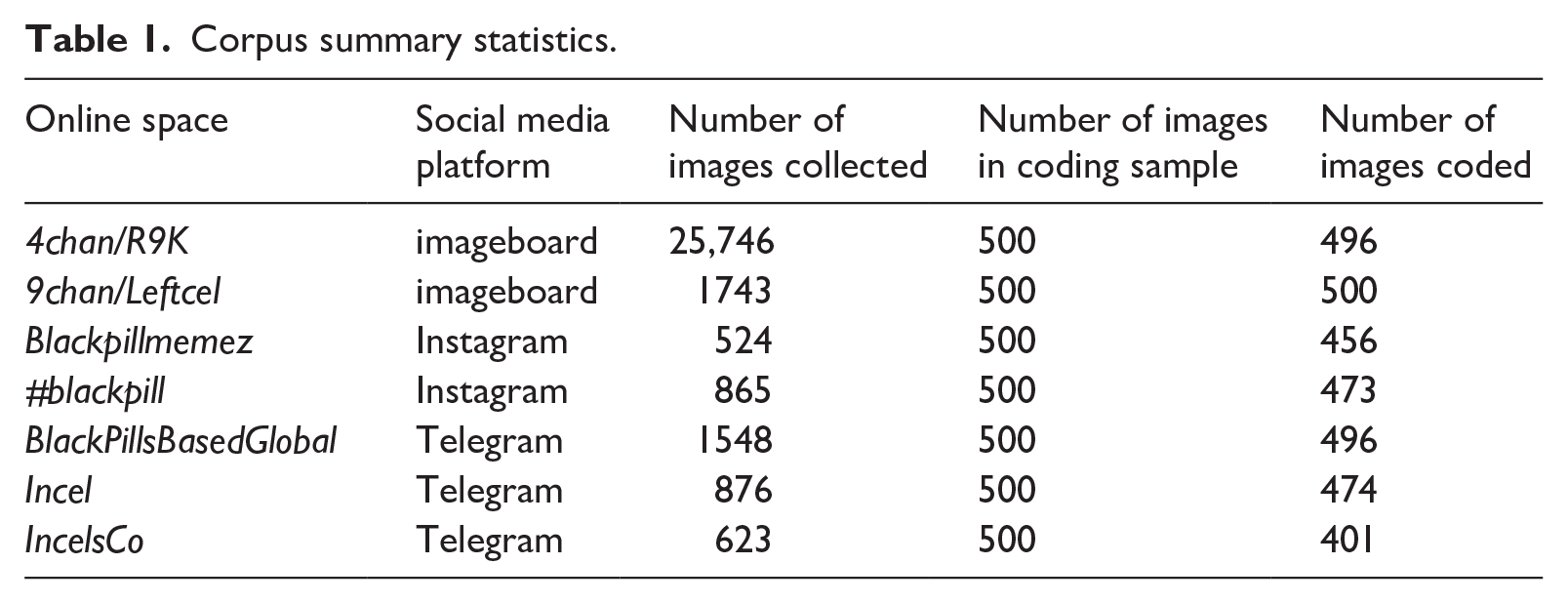
First, custom web-scrapers were developed in the Python programming language 3 to collect all images contained on seven online incel spaces anchored in three different digital platforms (Instagram, Telegram, and chan imageboards) occupying the most important positions in the incelosphere. 4 Overall, 31,925 images were collected and securely stored, of which 3376 were randomly selected for manual coding from each of the platforms in the dataset. First, we scrambled the image files by reordering them by ‘kind’ instead of ‘date modified’. We then selected the first 500 from each platform folder. We excluded the Incels.is forum from our corpus because the vast majority of images on the platform are avatar images, which perform different functions to images embedded in threads and would thus warrant a separate investigation. Table 1 offers summary statistics for the collected visual corpus, which is available to the scholarly community upon request to the authors. 5
Corpus summary statistics.
We then generated descriptive statistics along our lines of theoretical interest (in-/out-grouping, emotions, ideological fabric). A robust codebook (see Appendix 1) was developed using a three-step deductive-inductive iterative process. First, broad categories pertaining to visual style (pictures, memes, anime), content (in-/out-group members, symbols, shocking imagery), and theme (misogyny, lookism, pornography, far-right) 6 were deductively inferred from the conceptual framework described above, to orient a screening of the entire visual corpus. These three dimensions broadly follow Rose’s (2016) critical visual methodology, in which she specifies three modalities (technological, compositional, and social) through which visual materials can be interpreted. They also allow for the systematic examination of the three theoretical dimensions of interest put forward above, namely meaning construction, collective emotions, and ideological fabric.
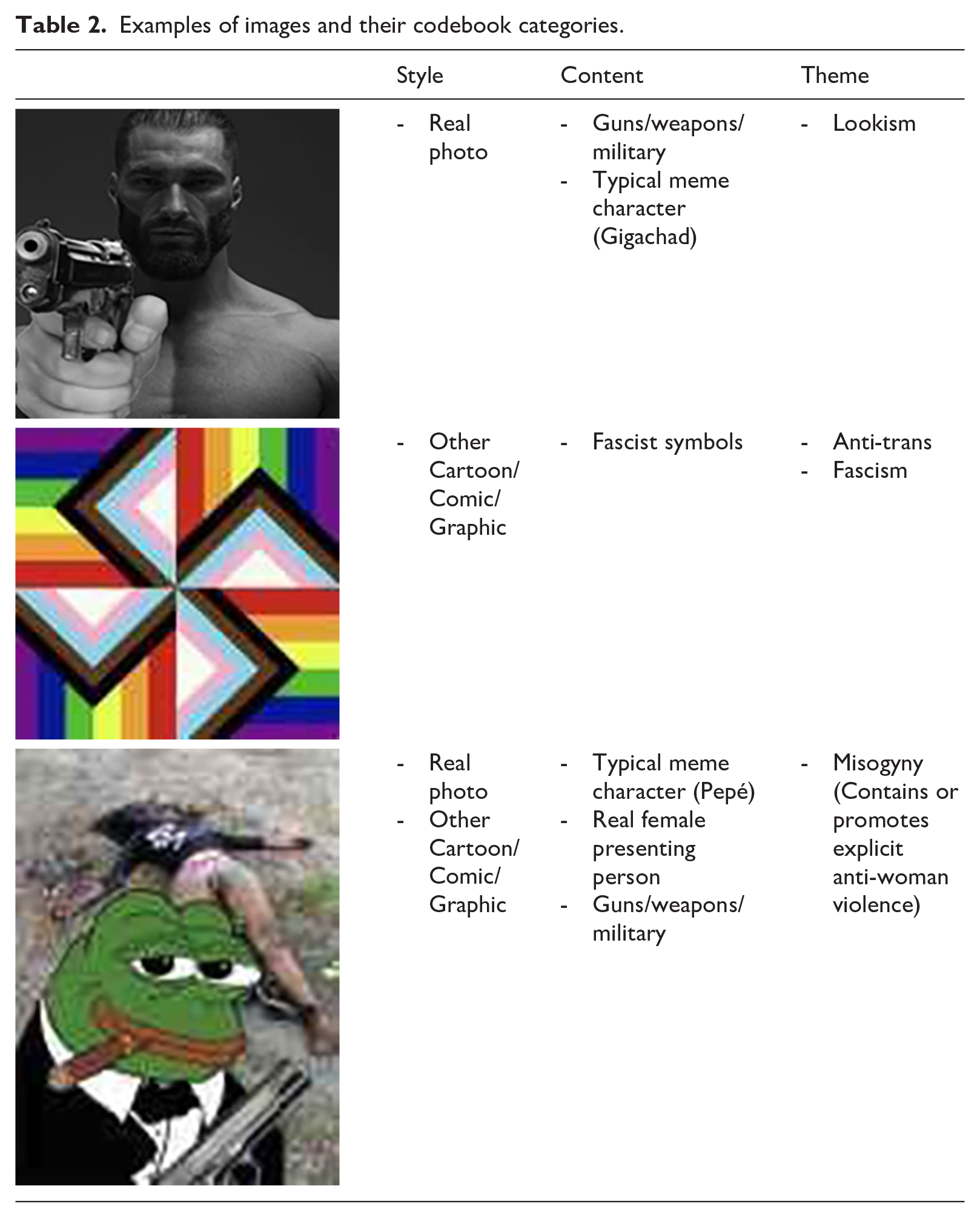
This first screening led to the refinement of categories into a second version of the codebook, which also included sub-categories (e.g. subcategories of the ‘misogyny’ theme, such as ‘Degrade or dehumanise women’ or ‘Contain or promote explicit anti-woman violence’). This second iteration was systematically applied by two co-authors to a random sample of 100 images, whereby coders systematically double-checked the origin and meaning of each image, using different sources. Imprecisions were thereafter identified, and ambiguities clarified, leading to the consolidation of a codebook with high chances of strong inter-coder reliability; that final version was used to manually code the 3376 images contained in the sampled corpus. Some codes were not exclusive: many images were coded for more than one style, theme or type of content, as demonstrated in Table 2.
Examples of images and their codebook categories.
Finally, we selected a sample of recurring images from the most dominant thematic and sub-thematic categories for a deeper interpretative analysis. This step involved taking 50 images from each of these thematic codes (misogyny, lookism, mental health and racism), i.e., seven or eight from each online space, including at least two from each subtheme (e.g. ‘Degrading/dehumanising women’ or ‘Dogpill’). Following Svatoňová and Doerr (2024), we then applied a combination of visual iconography, in order to analyse the content’s aesthetic (Müller et al., 2009) and critical contextual analysis (Richardson and Wodak, 2009) to discuss the rhetorical functioning of the images in the broader ideological context of incel and far right ecosystems. This approach allowed for a deeper analysis of how style, content and theme coalesce to construct meaning, create affect and express ideological heterogeneity, enabling us to draw broader conclusions about their overall rhetorical and affective appeal as well as to discern significant stylistic and ideological discrepancies between the spaces and platforms analysed.
Our approach therefore articulates quantitative and qualitative content analysis as well as inductive and deductive reasoning, in the spirit of Grimmer and Stewart’s (2013) call to consider these alternatives to be combined rather than exclusives to oppose.
Findings: detailing incels’ visual landscape
Before drilling down into the three theoretical dimensions of interest, several preliminary observations are necessary to contextualise the findings. First, the visual styles (e.g. screenshot, cartoon/graphic) employed in the incelosphere are diverse, and regularly overlapping within images. 7 Figure 1 summarises this diversity. Surprisingly, memes constituted only 12.49% of the images coded, indicating that existing research on incel and manosphere imagery, which focuses almost exclusively on memes, is addressing only a small portion of the visual repertoire. The most common ‘codeable’ visual style was a screenshot of a platform or website (30.64%), while real photos accounted for 26.69% and non-meme Cartoon/Comic/Graphic for 22.67% of all coded images. There were also notable stylistic differences between the platforms: animé was most prevalent on 4chan/R9K, while memes were most prevalent on Instagram/Blackpillmemez, 9chan/Leftcel and Instagram/#Blackpill.
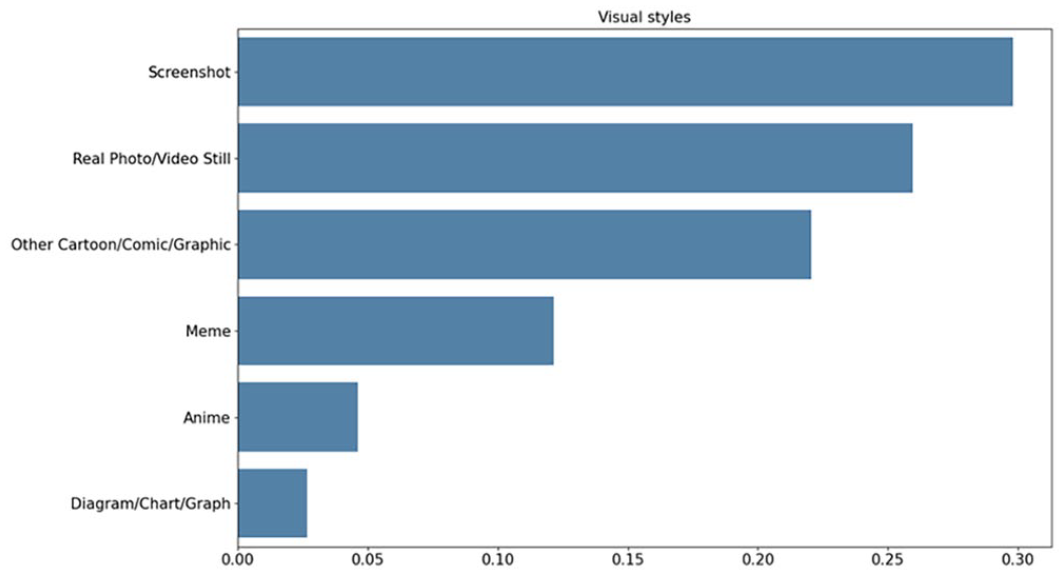
Proportion of visual styles present in the incelosphere.
Second, in terms of visual content, men/male-presenting people featured most prominently in the dataset (42.38%), with women making up 23.02% of visual content. As shown in Figure 2, following these were typical meme characters (12.62%) and animals (7.36%). Military/guns/weapons accounted for 4.54% of images, with images of real incels accounting for only 3.82% of the entire dataset. Pornographic images or images of genitalia accounted for 2.48%. Again, although existing qualitative analyses focus on typical meme characters or pornography, these categories are in fact a minority in the incel visual repertoire.
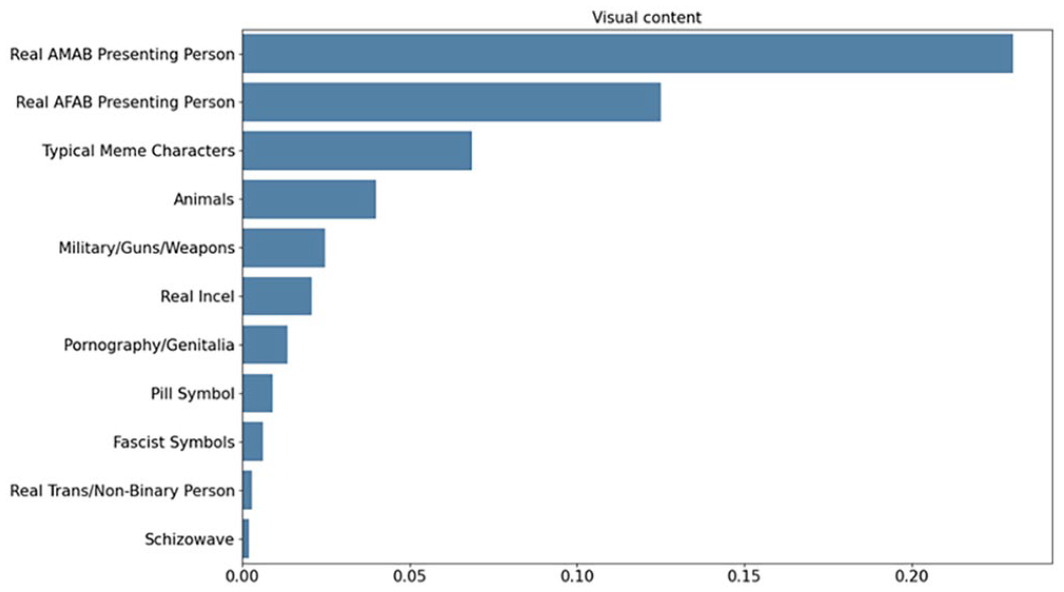
Most frequently appearing visual content categories in the incelosphere.
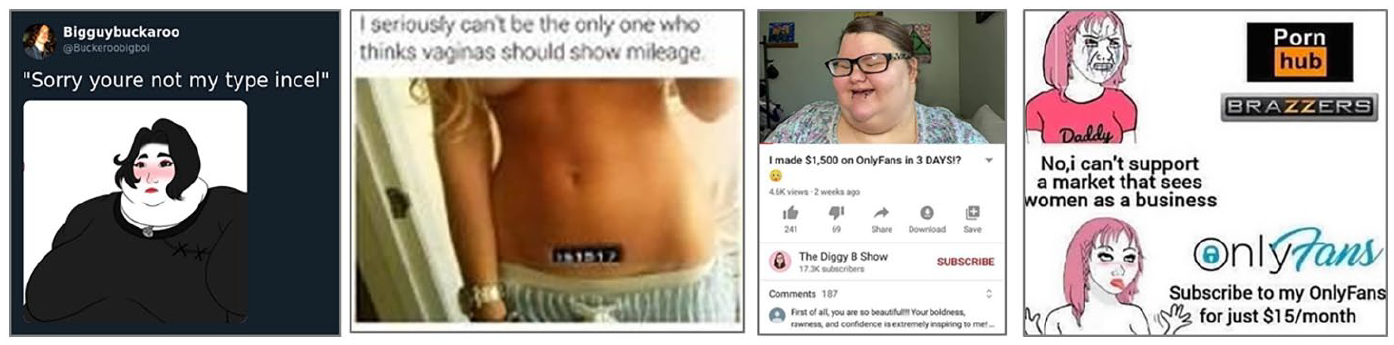
Examples of images ridiculing women’s appearance or body parts and/or ridiculing online sex workers in the dataset.
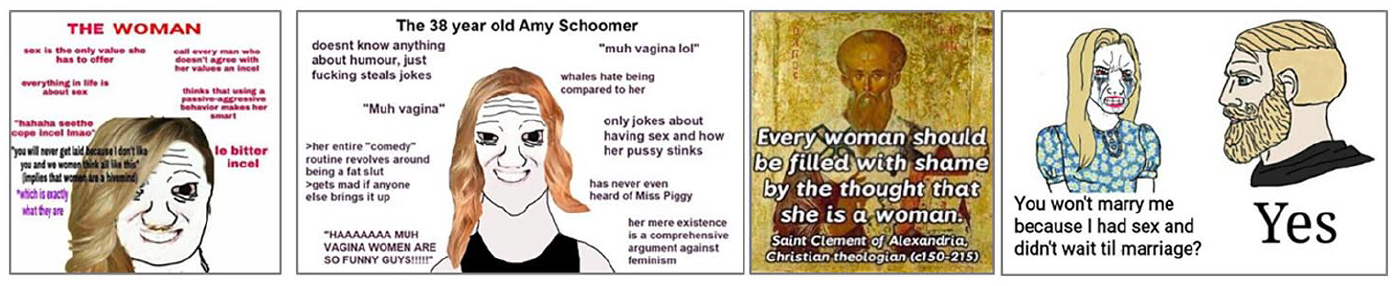
Examples of images shaming, degrading, or dehumanising women in the dataset.
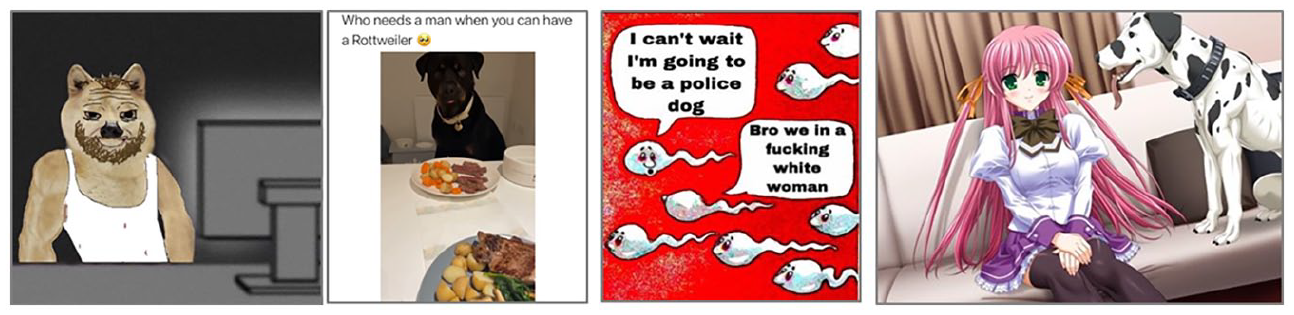
Examples of images coded in the ‘Dogpill’ category in the dataset.
Finally, in relation to thematic categories, the two typical incel themes of misogyny and lookism were the most prevalent ones (33.56% and 25.25% respectively), followed by humour (11.52%), mental health/autism (8.81%) and racism (3.90%). Perhaps the most surprising finding here is the non-negligible presence of left-leaning content which, although relatively small at 3.05%, is more prevalent than anti-LGBTQ+, conspiracy, ableism, religion, and suicide. However, as the platform-specific breakdown below shows, left-leaning content was almost exclusively found on a single online space (9chan/leftcel), and therefore not representative of the wider incel community.
A Sankey diagram provided in Appendix 2 brings together the three general coding layers (style, content and theme) broken down in a single graph displaying how these overarching categories interconnect in the dataset, offering a bird’s eye view of the visual landscape. With these preliminary observations in mind, the following sections examine, using quantitative data supported by qualitative insights, our three key theoretical dimensions of extremist imagery.
Meaning construction: visual display of archetypes and narratives
Unsurprisingly, the most salient finding is the highly stereotypical, sexist and binarist depiction of gender in the dataset. Thus, while the predominant theme for images containing men or male presenting people was lookism (41.46%), that for images containing women or female presenting people was misogyny (32.53%). In this regard, our visual analysis broadly aligns with the findings of the text-based studies: incels insist that the ‘lookist’ society is fundamentally organised along appearance lines, constructing stereotypical categories of super-human ‘Chad’ alpha-men and sub-human women characterised by egotistical behaviours such as lust and discrimination against incels.
Misogyny was the most frequent theme overall, and the most prevalent subthemes were variants of the misogyny theme. No less than 24.15% of images in this theme involved images depicting women as dishonest, manhaters, ‘gold diggers’, and manipulators, thus presenting them as a moral and economic threat to men (see Figure 6). The second most common subtheme in this category comprised images ridiculing or insulting women’s appearance or body parts (9.85% of misogyny-coded images), which works to construct feminists and western women as promiscuous or ‘ran-through’ from ‘riding the cock carousel’. Not only do these images emulate pornography’s dehumanising decontexualisation of body parts from identifiable people, they also function as visual and therefore highly compelling ‘evidence’ of the claim that women’s genitalia become damaged from excessive sex. While such characterisation of non-virgin women as ‘used goods’ is as old as patriarchy, it is also enjoying a significant revival among far-right and neo-masculinist Christian formations and in the rhetoric of a number of high-profile ‘tradwife’ influencers such as Hannah Pearl Davies (Baker et al., 2024).
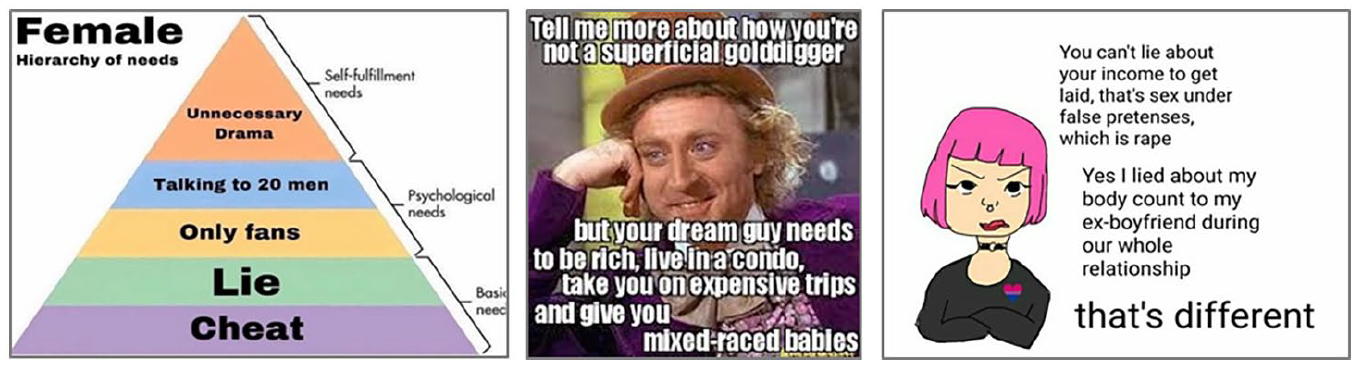
Examples of images depicting women as evil, manhaters, ‘gold diggers’, and manipulators in the dataset.
Another key misogynistic visual subtheme in our corpus, contributing to the negative characterisation of women as an out-group, is the ridiculing of women considered to be ugly or overweight; images often convey the claim that even ‘landwhales’ have better sexual opportunities than incels, or castigate them for believing they are worthy of a mate who scores above their ‘looksmatch’. In addition, 6.95% of misogynistic-coded images were coded as directly belonging to the ‘Degrading/dehumanising women’ subtheme (images which explicitly refer to them as ‘foids’, ‘roasties’, etc.), with a further 9.85% coded as the ‘Ridiculing female online sex workers’ sub-theme. Surprisingly, we also identified a subtheme that has not yet appeared in incel scholarship, but which accounted for 6.28% of misogynistic-coded images: the ‘Dogpill’ (referring to the claim that [white] women have sex with their dogs, and prefer dogs over incels). This trope was most common on Telegram/Incel, where such images accounted for no less than 25.22% of all misogynistic-coded images. While many of these images take the form of cartoons or memes, others are photos of real women with their pets, which are reappropriated and captioned from entirely innocent contexts as ‘evidence’. Taken together, this visual repertoire works to degrade and dehumanise ‘unacceptable femininities’, to posit women as inferior to men and to evoke feelings of disgust and disdain for their bodies, genitalia, and lack of sexual morals.
The infographic nature of many of these images and memes (already noted in Baele et al., 2025) establishes a pseudo-scientific causality between incels’ plight and immutable biological ‘facts’, evidencing the ‘black pill’ belief central to the incel worldview. Moreover, their relentless repetition over time consolidates incels’ view of gender as binary and of women as shallow, amoral and threatening. This broader context of existential threat also makes anti-woman violence appear more justifiable. Unsurprisingly, therefore, images that contain/promote explicit anti-woman violence were present, (see Figure 7) accounting for 6.47% of misogynistic-coded images. These consisted of both cartoon/animated images and real-life images of violence against women, and were usually coded as having ‘humorous’ intention in order to deflect from their sinister subtext. Men’s lack of responsibility for their own violence is further enforced by images perpetuating the pseudoscientific belief that women are biologically attracted to men with ‘dark triad’ personalities, purported to be a combination of Machiavellianism, narcissism, and psychopathy. Images ‘indicating women love only alphas and/or violent/abusive men’ accounted for 9.66% of misogynistic-coded images.
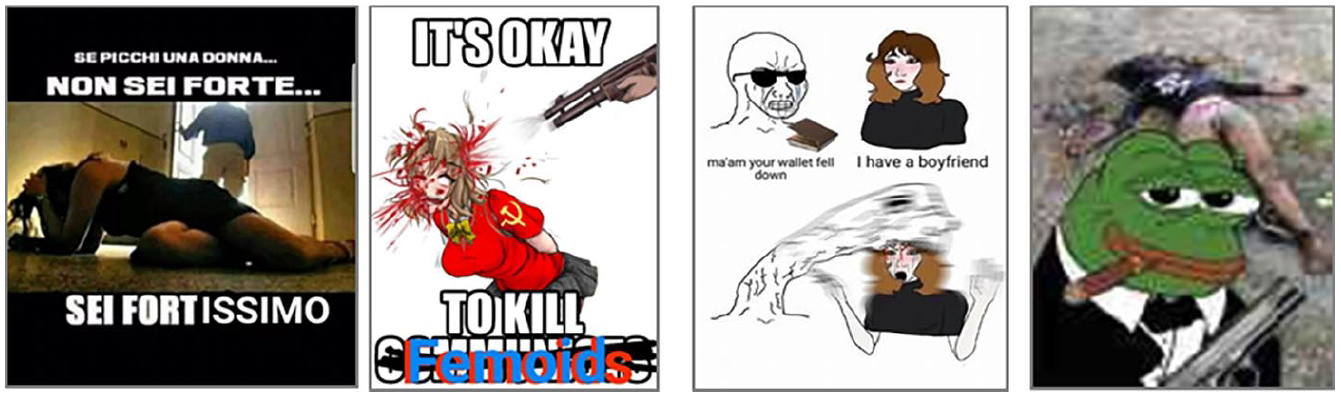
Examples of images containing/promoting explicit anti-woman violence in the dataset.
After misogyny, the second most salient theme in the dataset was lookism (see Figure 8), accounting for 25.25% of all coded images. As explained earlier lookism forms the basis of incels’ claim that they are unattractive to women and therefore socially marginalised. ‘Looksmaxxing’ describes attempts incels make to improve their appearance, including working out, ‘jelquing’ (penis stretching), or ‘mewing’ (chewing to strengthen the jaw). The key visual tropes in this image category were jaw shape, height, and penis size, with the ‘few millimetres of bone’ meme appearing frequently. 8 In addition to highlighting incels’ physical defects and thereby constructing this atypically negative ingroup identity, however, many memes and images also sought to expose the perceived hypocrisy of society’s claim that ‘looks don’t matter’ or that personality and mind-set play a role in sexual success. Much of this imagery thus expresses a sense of collective anger at the injustice and hypocrisy of the ‘lookist’ society.
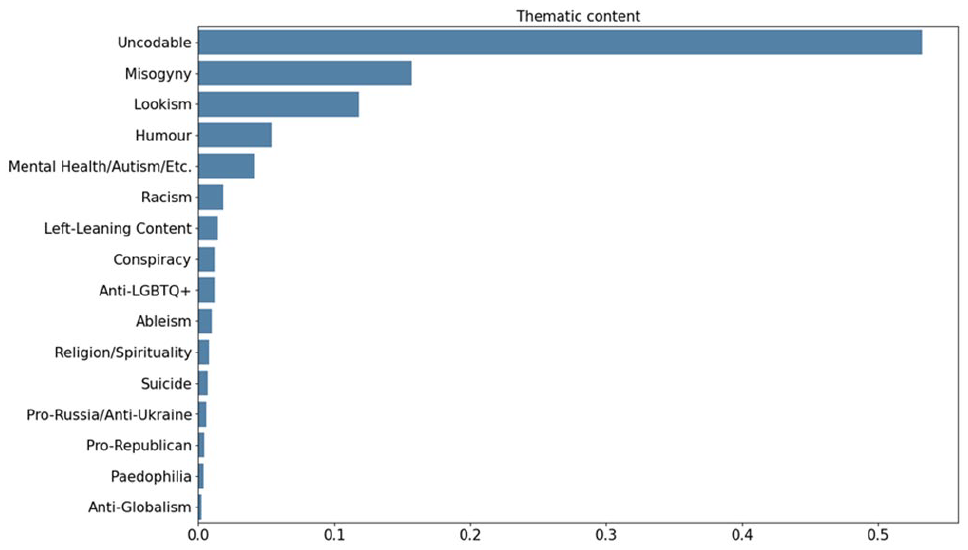
Proportions of visual thematic styles present in the incelosphere.
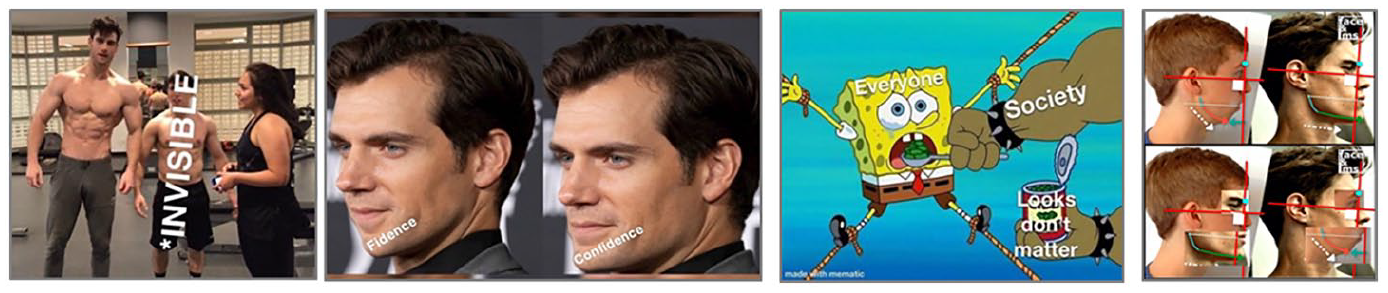
Examples of images coded as lookism/looksmaxxing in the dataset.
In sum, the dominance of both misogyny and lookism as themes in the dataset constructs a worldview based on highly stereotypical ingroup and outgroup archetypes: images of women construct a pervasive set of negative archetypes of women as hypersexualised, morally degraded, intellectually inferior to men, and both repulsive and desirable. Meanwhile, images of men portray either overtly muscular, brutal ‘alphas’ or weak and ugly incels. These characteristics, while broadly consistent with the manosphere’s conceptualisation of gender difference as derived from evolutionary psychology, also echo heterosexual pornography. This is especially evident in the visual portrayal of women as hypersexualised, sexually submissive, and degraded or ‘used goods’, and adds to Tranchese and Sugiura’s (2021) claim that incels and mainstream pornography speak the same extreme language of misogyny.
Affective dissonance: pain and the visual expression of collective emotions
Images shared in the incelosphere also perform a highly affective function. The shared expression of emotions enables incels to display individual belonging to the ingroup, while the cumulative effect of these displays is a consolidation of the collective sense of affective community. Several types of visual content found in our corpus are clearly aimed at expressing strong emotions thought to be commonly held – and valued – by the group. Above all, images expressing suffering and despair due to mental health/autism concerns (see Figures 10 and 11) accounted for 8.81% of all coded images in the dataset, echoing the high rates of self-reported mental health issue and autism among its members (Moskalenko et al., 2022; Speckhard and Ellenberg, 2022). A common visual trope here is the ‘cope’ concept, which refers to the coping mechanism of rejecting a harsh truth in favour of a less disturbing belief. Futile attempts to improve one’s situation, such as a looksmaxxing method (which ‘blackpilled’ incels maintain doesn’t work), are often referred to as copes. This idea is frequently symbolised through the depiction of the Pepe the Frog meme character inhaling a fictional drug called ‘copium’ to deal with loss, defeat or failure. Taken together, the images coded in this category express a deep sense of loneliness, fatalism and despair, and frequently challenge commonsense advice about going out or meeting friends as antidotes to depression. Implicit in much of this visual rhetoric is a critique of neuronormativity, which is also made explicit in memes attempting to express how the world looks and feels from a neurodivergent perspective. Incels draw on a range of different aesthetic styles, from anime to expressionist art, to visualise these intense feelings of dissonance and despair.

Examples of images coded in the autism/mental heath/depression category in the dataset.
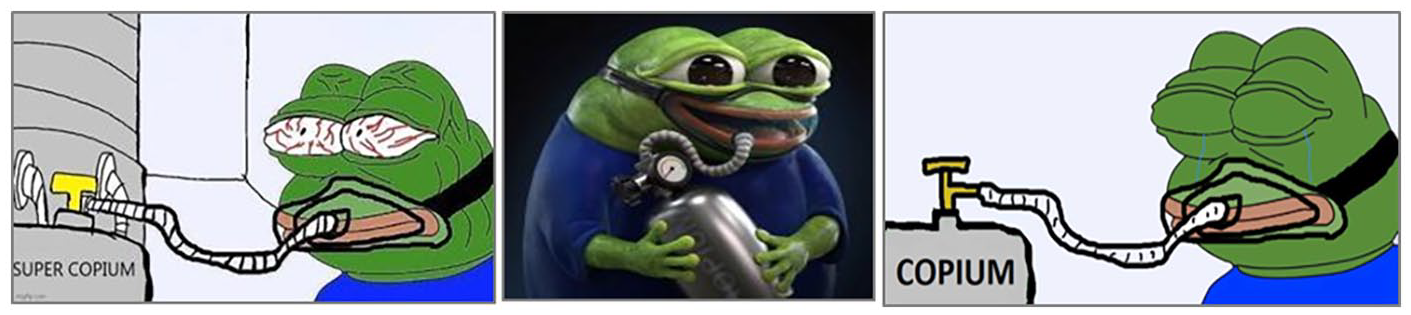
Examples of the ‘Pepe’ meme character inhaling ‘copium’ in the dataset.

The ‘Pill Time’ meme (far left) and examples of ‘schizowave’ images of the ‘trollface’ in the dataset.
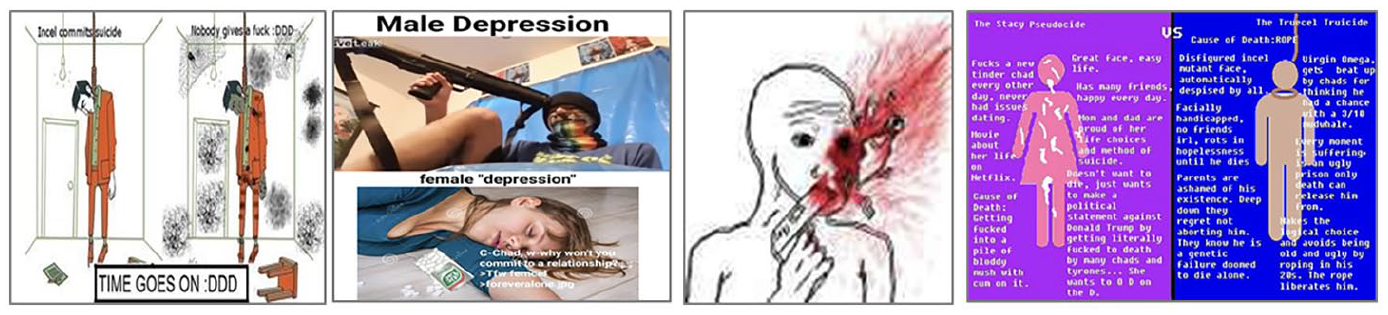
Examples of suicide imagery in the dataset.
Because they are not produced in a controlled, top-down way that seeks to reinforce an ideological worldview, but are focussed rather on expressing personal pain which finds echo in the community, the images coded in this category tend to be stylistically diverse and highly expressionistic, juxtaposing words and images to convey highly subjective perspectives and feelings. The expressionist tendency within this thematic category becomes most explicit in the case of ‘schizowave’ and ‘schizoposting’. ‘Schizoposting’ refers to the act of posting memes as though one is having a mental breakdown, which is often done using the ‘schizowave’ genre (a relative of ‘fashwave’ aesthetics), where images, gifs, and videos are deliberately distorted using digital effects to create nightmarish, surreal, and dissonant images, allegedly aimed at stimulating the Central Nervous System and triggering psychosis or violent action. A common format identified in this sub-category is ‘Pill Time’, a four-panel ‘Schizoposting Rage Comic’ featuring a schizophrenic meme character (usually ‘Trollface’/‘Wojak’) who realises that his companion is an illusion after taking his medication. These ‘deep-fried’ images are often run through filters, creating a grainy, washed-out and strangely coloured effect. Even though this was a relatively small genre in our dataset (0.37% of all coded images), we argue that the logic of expressionism, which distorts reality for emotional effect to evoke ideas, moods and feelings, is still a defining aesthetic and rhetorical component of the incel visual landscape.
Closely linked to mental health are images of suicide or suicidal ideation, which accounted for 1.50% of all coded images in the dataset. Many of these images suggested that nobody would care or miss incels if they died by suicide, echoing a similar finding by Maxwell et al. (2020) in incel discussion threads. Other images in this category portrayed female suicide and depression as fake or performed, compared to male depression and suicide, contrastingly perceived as genuine, violent and fatal. This visual trope thus serves as yet another way to characterise women as fake, attention-seeking and duplicitous, while asserting the claim that only men know true pain and suffering, and bonding the community around shared emotions.
Ideological fabric: heterogeneity and platform-specific affordances in the incel visual ecosystem
Finally, we consider images as the prime indicators of the sometimes mixed or heterogenous ideological fabric of extremist ecosystems. Our granular visual evaluation of ideological heterogeneity and fusion within the incelosphere measures the importance of far-right contamination, which has been discussed by numerous scholars and commentators (e.g. Gheorghe, 2023) but without systematic evidence. After misogyny, lookism, humour and mental health, racism was indeed the fifth largest thematic category in our dataset, followed by left-leaning content, anti-LGBTQ and conspiracy. Racism accounted for 3.90% of all coded images (examples in Figure 14), most prevalently on 4chan/R9K. The racism category also included anti-immigration and ‘Great Replacement’ conspiracy tropes, indicating significant overlap with popular far-right talking points. This imagery thus supports recent work by Brace et al. (2023), which documents the structural permeability of the incelosphere to far-right ideology, especially on the ‘Chans’ where, as noted above, incel and racist boards coexist.
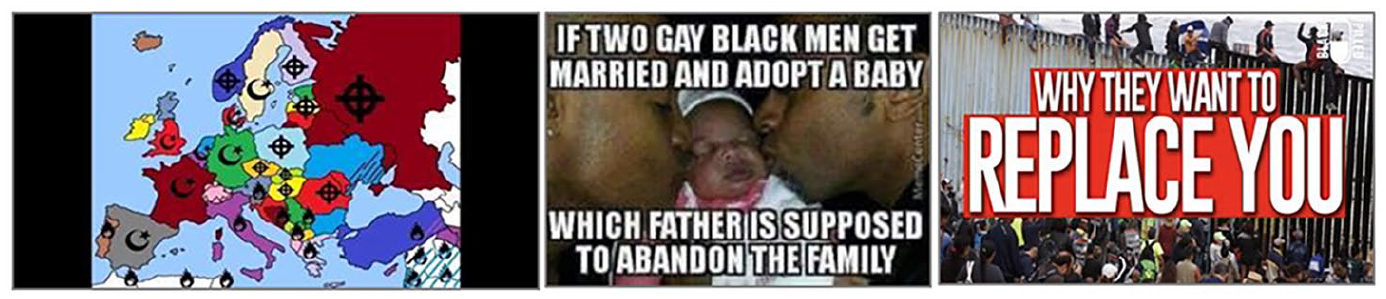
Examples of far-right imagery found on incel online spaces in the dataset.
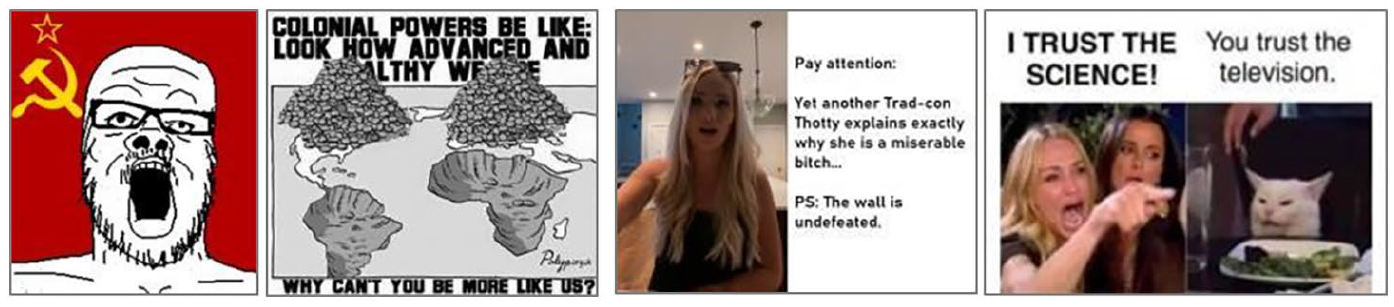
Examples of images from 9chan/leftcel in the dataset.
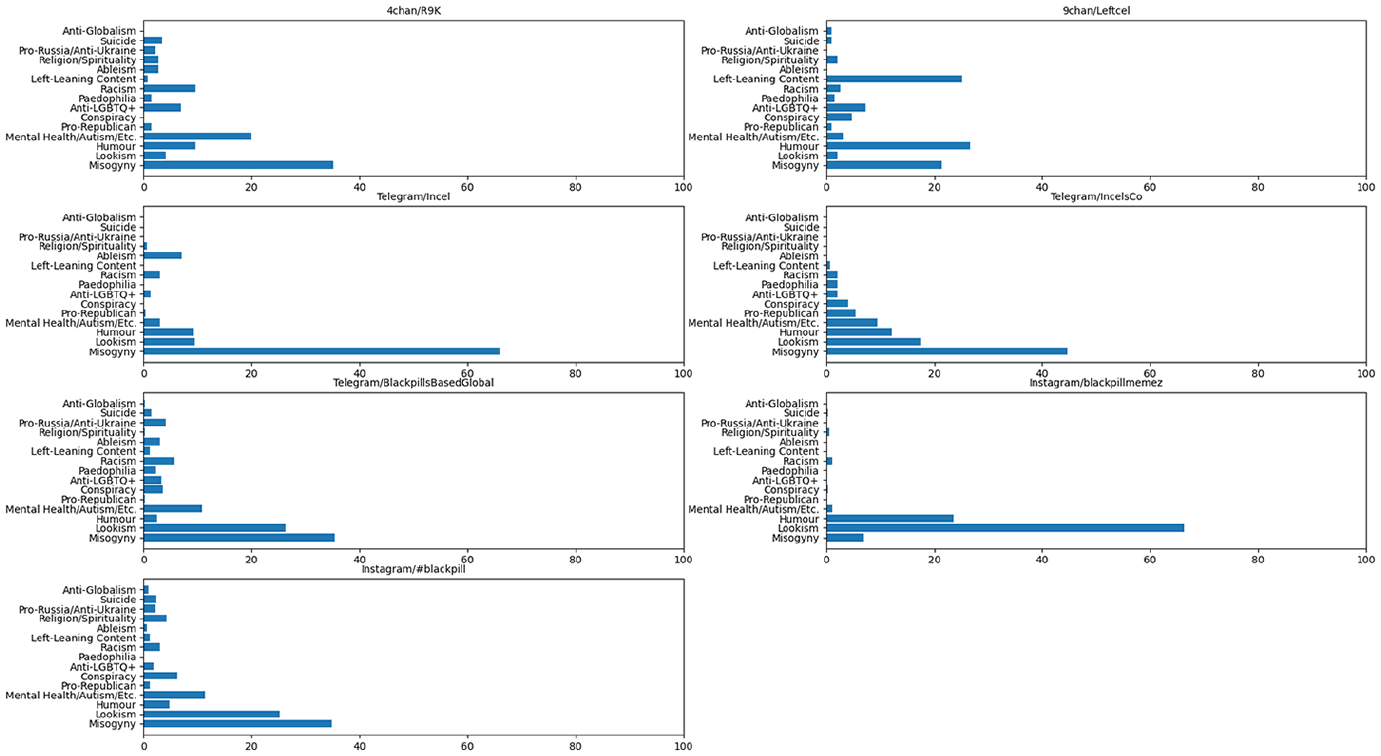
Proportions of themes across different incel spaces/platforms.
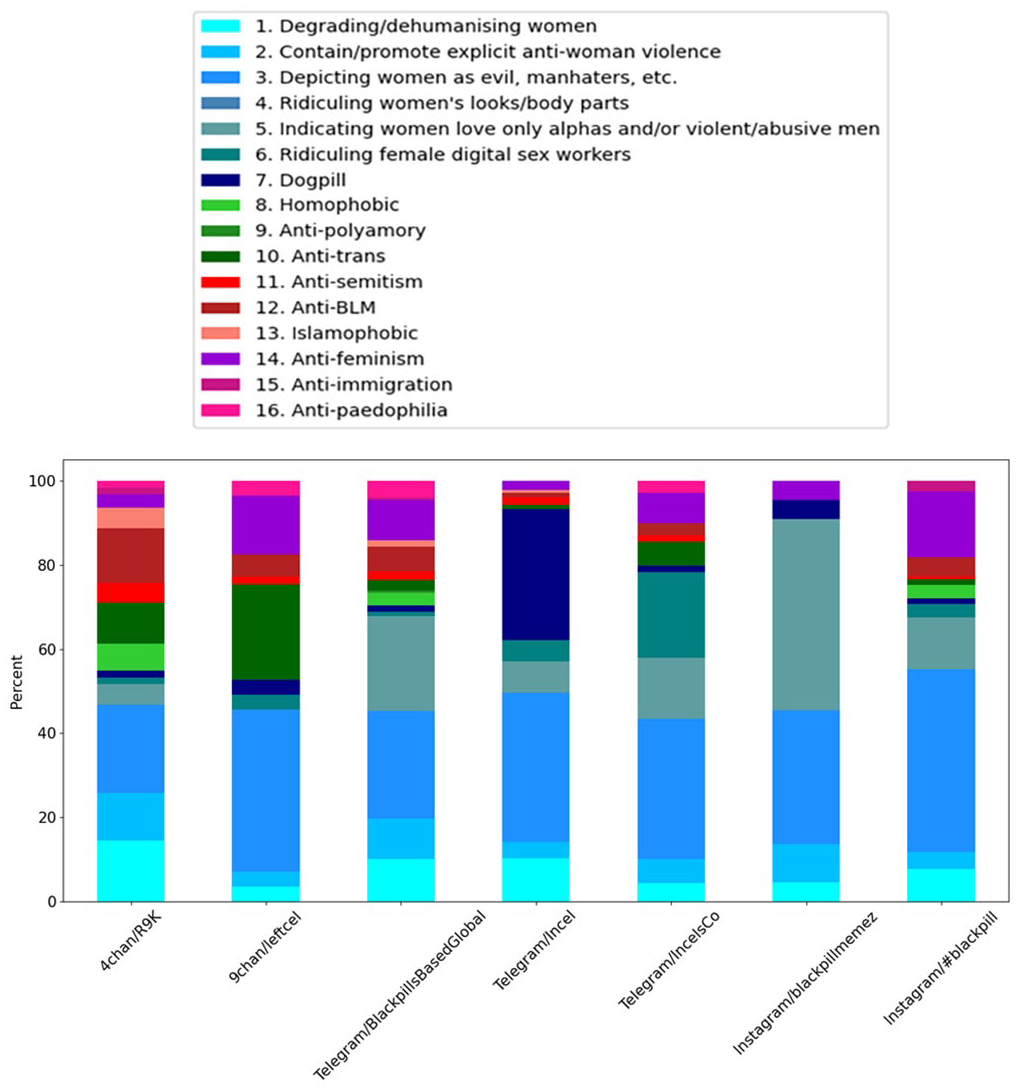
Misogyny, anti-LGBTQ and racism subthemes broken down by platform.
Beyond racism, we found some notable platform-specific variations in terms of thematic categories. First the Chan images (4chan/R9K and 9chan/leftcel) were the most heterogenous, random and transgressive, featuring images of women and LGBTQ people clearly intended to provoke disgust. Within the misogyny category, 4chan/R9K had the highest proportion of images which degrade or dehumanise women. These ‘despised’, ‘feared’ (Doerr and Svatoňová, 2023) and ‘monstruous’ (Massanari and Chess, 2018) femininities included depictions of extremely overweight women, women as ‘used goods’, and women as ‘gold diggers’, as well as degrading images of women from pornography and hentai, and photos of genitalia and ‘damaged’ vulvas. The two Chan accounts also contained the highest proportion of images coded as humour, while as noted above 4chan/R9K had the highest proportion of racist images, most likely because it is hosted on 4chan alongside other racist boards and is therefore most susceptible to ideological crossover. As Baele et al. (2021) observed in their cross-platform analysis of various Chans’/pol/boards, while all contribute to a distinct far-right online subculture, each/pol iteration has its own ‘sub-subculture’, marked by differences in ideological content. Similarly, we noted that the images on 9chan/leftcel were more political than those on 4chan/R9K, featuring anti-Trump, anti-vax, anti-globalisation, and QAnon content. By contrast, the 4chan/R9K images were more ludic, ironic and varied, including also images of cats, schizo Telegram stickers and anime/manga.
Like the chans, Telegram is characterised by affordances of high anonymity and collectively, but also high external as well as internal visibility (Schulze et al., 2024). It is unsurprising, therefore, that by far the highest quantity of misogynistic-coded images were found on Telegram/Incel (65.95%), followed by Telegram/IncelsCo (44.59%) and Telegram/BlackPillsBasedGlobal (35.35%) (compared with 34.83% on the less anonymous Instagram/#Blackpill and 35.17% on the more publicly visible 4chan/R9K). Interestingly, the ‘Dogpill’ subtheme was highly prevalent on Telegram/Incel (31.07%) compared with only 4.16% on Telegram/IncelsCo, again suggesting that different subcultures on the same platform favour different types of misogyny. For example, images that ridicule female sex workers were by far the most common on Telegram/IncelsCo, while images depicting women as evil/manhaters/gold-diggers and images suggesting women are attracted to abusive men were the two dominant sub-thematic categories on Telegram/BlackPillsBasedGlobal. These trends indicate that Telegram supports not only higher levels of misogyny than the Chans but also less heterogenous and more specialised subcultures, an affordance undoubtedly facilitated by its private, closed-group structure (Semenzin and Bainotti, 2020). These findings thus contribute to our understanding that certain social media affordances such as visibility and anonymity not only facilitate extremism but are also gendered in their facilitation of cultures of competitive misogyny.
Finally, Instagram, a mainstream platform which originated as a photo-editing/filter app, differs considerably from Telegram and the chans. It is based on a follower model and is subject to much stricter content moderation, while its hashtagging feature allows users to search for content by topic as well as to connect with ideologically adjacent topics and communities. Popular with influencers, artists/performers, and companies, it has lower anonymity and higher external visibility (Schulze et al., 2024). The hashtag function, in particular, enables more extreme images and accounts to co-exist with more mainstream ones. Given these affordances, it is unsurprising that both Instagram/Blackpillmemez and Instagram/#blackpill had by far highest number of lookism-coded images (66.31% and 25.22%, respectively) as this theme belongs to the more mainstream end of the incelosphere. They also had the lowest levels of racist images (1.06% and 3.03%, respectively). However, they differ in terms of types of misogyny, with Instagram/Blackpillmemez containing the highest proportion overall of images indicating that women love only alphas and or violent or abusive men, while Instagram/#blackpill had the highest number of images depicting women as evil/manhaters/‘gold-diggers’.
Conclusion
This article combines quantitative and qualitative approaches to provide a systematic analysis of the incelosphere’s visual landscape, demonstrating that these images function primarily to construct a binary, in/out-group worldview, to signal and consolidate collective emotions, and to evidence ideological heterogeneity. Using a large visual corpus, we evidenced a diverse visual landscape made of screenshots, real photos, cartoons, graphics, and memes, featuring a diverse range of figures, from historical personae, real politicians and OnlyFans account holders to people with disabilities, depictions of various sexual acts, and acts of violence. Our findings thus demonstrate that the visual rhetoric of the incelosphere is more aesthetically heterogenous than is often assumed and than most extremist visual landscapes, drawing on imageries not just from meme culture but also from gaming culture, anime, cartoon and collage, fantasy, porn, hentai and the occult.
Despite this heterogeneity and ostensibly random transgressive aesthetic, incel imagery nevertheless functions to consolidate in-group cohesion and construct a pervasive vision of a hypocritical, degenerate, and unfairly ‘lookist’ society. Through the forceful reiteration of gendered archetypes, incels are posited as victims of a gynocentric and hypergamous order, while women are repeatedly visualised as immoral, promiscuous and sub-human. Indeed the relentless reinforcement of despised and feared femininities in the form of repulsive or monstruous images of women is arguably the incelosphere’s most pervasive and affectively potent visual trope. It establishes a very particular type of male gaze (Mulvey, 1975), not borne of sexual desire but of disgust, or desire and disgust combined. This abhorrent/repulsive sexualized gaze serves to channel anger, resentment and violent sexual fantasy onto the dehumanised and degraded bodies of abject female caricatures, as well as to confirm and legitimise essentialist concepts about ‘female nature’ derived from evolutionary biology, and is arguably far more effective than ‘rational’ argument, given the voyeuristic and hermeneutical power it confers. Incel imagery plays a vital role in creating a shared affective experience of victimhood, rage and despair. Images express a subversive and transgressive sensibility, and are highly affective in their desire to shock and provoke outrage, as well as in their appeals to collectively shared – and valued – emotional pain and suffering. Finally, the visual landscape of the incelosphere reveals significant ideological crossover with racist and anti-LGBTQ agendas of the far-right, as well as conspiracy theories and, surprisingly, some left-wing and anti-capitalist content. Platform-specific thematic and stylistic variations are also evident, facilitated in large part by platform-specific affordances.
Kraidy (2017) argues that the global networked affect of the Islamic State’s digital visual warfare is projectilic, mimicking fast, lethal, penetrative objects. By contrast, the networked affect of the incelosphere’s digital visual rhetoric might best be described as scattershot, mimicking a weapon that shoots wide but with a random and haphazard range. Taken together, the grassroots iconography of the incelosphere disrupts, distorts and disorientates the conventional propagandist techniques typical of top-down extremist organisations, not only in its thematic content but also at a formal aesthetic level. While there is relatively little visual content that explicitly encourages acts of terrorism, the collective tone of the incelosphere’s visual repertoire is a pervasive manifesto of rage, disgust and fatalism. Dehumanised images of women, images of violence, transgressive humour and the use of graphics software to create nightmarish, distorted and surreal visions of suffering work together to create an affective vision that is greater than the sum of its parts. Despite the centrality of linguistic analysis in incel research, this study indicates that the affective potency of the incelosphere’s visual culture may function as an even more powerful dogwhistle than language to disaffected boys and young men who feel marginalised by mainstream culture and excluded from the patriarchal dividend.
Footnotes
Appendix 1
Appendix 2
Funding
The author(s) disclosed receipt of the following financial support for the research, authorship, and/or publication of this article: This work was supported by the Economic and Social Research Council under Grant ES/V002775/1.
