



Abstract
With the rise of explosive violence in urban Sweden, gang-related crime has become a dominant theme in Swedish media and political discourse. As individual members of prominent criminal networks gain increasing media attention, the construction of the gang myth—how gangs and their members are represented, circulated, and re-imagined—becomes a crucial area of inquiry. This article investigates the ways in which crime content moves through the hybrid news cycle, shaping public perceptions of gangs and their leaders. Using topic modeling of news articles (n = 521) and multimodal critical discourse analysis of TikTok posts (n = 73) referencing one of the most well-known gang leader in contemporary Sweden, the Kurdish Fox, we examine how myth-building operates across different media contexts. Our findings reveal a stark contrast in narrative strategies: while news media frame gangs through urgency, fear, and political crisis, TikTok users engage in playful, dissident humor—employing memes, emojis, and remix culture to subvert dominant crime discourses.
Introduction
With a rise of organized crime in Sweden, resulting in one of the highest shooting deaths per capita in Europe, The Swedish National Council for Crime Prevention (Brå, 2021) found that gun violence claims the lives of four people per million in Sweden, which is more than double the European average. This social problem has come to dominate Swedish media reporting and the political debate, and, similar to other contexts where organized crime has achieved this heightened salience, a key figure has emerged that has come to personify gang violence in Sweden. Rawa Majid, one of the most well-known leaders, and his accompanying moniker “Kurdiska räven” (the Kurdish Fox), has played a significant role in the hybrid Swedish media landscape, both in legacy media outlets as well as in new media such as TikTok.
There has been an increased rise in “explosive violence” in urban Sweden (including shootings and hand grenade attacks) attributed to gangs (Sturup et al., 2020). The criminal network Foxtrot, based in Uppsala and Stockholm, grew in the 2010s in Sweden and focused on narcotics distribution. The network’s leader, Rawa Majid, used the name “Fox Kurdish” in online chat rooms and often wore jewelry in the shape of foxes (Olin, 2023), later specifying it as his epithet Kurdish Fox. Since 2022, several shootings have been connected to an ongoing conflict between the Foxtrot network and another (Dalen). In 2023, internal conflicts involving splits between many high-profile members of the Foxtrot network and its leader resulted in several violent attacks between different gang members and their relatives. During the fall of 2023, a highly mediatized conflict arose between Rawa Majid and his former associate Ismail Abdo, known by his moniker, “Jordgubben” (the Strawberry). In December of the same year, a similar split occurred between Rawa Majid and Mustafa Aljiburi, also known under the moniker “Benzema” (Ericson and Abdigadir, 2023). This reported split in the organization has led to several more shootings and bombings in Sweden during 2023.
This study examines how myths about gangs are mediated and circulated across legacy media and social media platforms, focusing on the Swedish context. By analyzing how popular sounds, imagery, and symbolism are utilized on TikTok, we explore how the myth of the gang (van Hellemont and Densley, 2019) “move, stick, and slide” (Ahmed, 2014: 14) across diverse media formats. In doing so, we aim to study the circulation of crime content within the hybrid news cycle, shedding light on how gang myths are created, represented, and re-imagined. Building on prior studies that have examined the circulation of gang myths in news media (Koumouris and Blaustein, 2022; Richardson, 2012; Zavala and Savinar, 2022), the role of social media in gang practices (Elsaesser et al., 2021; Patton et al., 2016; Urbanik, 2021), and the influence of memes on gang myth-making (Albarran-Torres and Goggin, 2023), we propose a novel approach to understanding gang myths as hybrid, interconnected, and relational phenomena in contemporary media systems. By highlighting how these myths are mediated, remixed, and (mis)translated through TikTok’s memefied content creation, this study underscores the importance of hybridity in the construction and circulation of gang myths. More specifically, we focus on legacy news media reporting on gangs and how memes can be used for political discourse on TikTok. For this purpose, we ask:
These research questions will be addressed by focusing, first, on the content of legacy news media coverage through a topic model (Blei, 2012) of 521 Swedish newspaper articles, outlining how the myth of the gang is portrayed in legacy news media. The second research question will be addressed through a multimodal critical discourse analysis (MCDA) (Machin and Mayr, 2012) of social media data consisting of 73 TikTok videos, where we focus on the ways myths travel and become memefied when moving between legacy to social media formats and how these myths become re-contextualized online. As a form of political critique, memes have the potential to undermine the myth-building efforts of legacy media actors, and our intention is to expand the growing academic field by focusing on the hybridity of crime myths. In particular, we combine methods and media content to understand the interconnectedness of different media contexts and conditions.
Mythologies of gangs
Gangs become mythologized in many ways. Mythmaking is integral to gang practices, and “without the myth, there is no gang” (van Hellemont and Densley, 2019). One integral part of these myths is related to their own nicknaming practices, where individual gang members acquire nicknames that shape others’ perceptions of them, which are called “monikers”. Often, they are bestowed upon by others rather than self-proclaimed. Sometimes, a moniker is adopted from older to younger members, adding the prefix “young” or “tiny” before the name (Densley, 2013). According to Wilson (1997) monikers “become symbols of acceptance by the gang” and that many “reflect a distinctive aspect of a gang member’s personality, physical characteristics, reputation, or other traits.” Through representations of gangs in the media, gang myths make gang life seem compelling, and through gangs’ own mythologization, gang membership becomes framed as “exciting, adventurous, fun, and risky” (van Hellemont and Densley, 2019: 109). The gang image, as such, can become “seductive” to presumptive members (Katz, 1988) and understood as a form of “resistance identity” opposed to society at large (Hagedorn, 2008).
Myths, according to Roland Barthes (1973), are defined by meanings that describe an entity with an ideological framing. Outside of the language object (the linguistic system), a myth is based on metalanguage—the ways an object is described and understood. We argue that monikers are integral to creating these myths in both legacy news media and digital media formats. In public discourse, then, monikers shape the mythologization of gangs and their members.
Applied to the Swedish context, the rise in the myth of gang violence as a social problem is deeply related to other social processes that are ingrained in the Swedish identity. These are social problems that are much more complex to address in media arenas and have occurred over longer periods of time, making their construction as a social problem much less salient. The long-term decline in the so-called “Swedish model” of the welfare state (Schall, 2016), the similarly mythologized “migration crises” (Ericson, 2018), and an unprecedented rise in law and order rhetoric by all major Swedish political parties that preceded recent increases in crime (Lehmann et al., 2024), are all related to what Swedish criminologists have termed the “Swedish condition” in the development of crime (Rostami and Sarnecki, 2022). The simplicity of these monikers, combined with the drama they invoke and the novelty of being relatively new actors in Swedish crime discourse, allows for these other, larger social processes to play out through the social problem of gang violence personified by “Kurdiska räven,” at least in legacy media.
The stickiness of crime reporting
Reporting on violence is an integral part of the news cycle, and gang violence, in particular, often receives widespread attention. Media scholar Barbie Zelizer has argued that violence gains visibility in the media because it is “positioned as antithetical to the democratic project [where] media’s pivot toward making it visible is a reminder of how fragile democracy is and continues to be” (Zelizer, 2023: 1388). In other words, the media’s focus on violence serves as a warning sign, reinforcing the notion that democracy is always at risk. To understand how violence circulates in the media and remains a persistent focus, Zelizer draws on Sarah Ahmed’s concept of stickiness. Stickiness, as Ahmed (2014) describes it, refers to how certain ideas, emotions, or representations accumulate meaning through repetition and association. A concept or an image becomes “sticky” when it carries emotional weight, adhering to people’s perceptions and shaping how they interpret events. In the case of crime reporting, violence is sticky not only because it is repeatedly featured in the news but also because it is tied to existing societal fears, anxieties, and narratives about crime and disorder. Ahmed suggests that sticky objects or ideas “move, stick, and slide” (Ahmed, 2014: 14) across different contexts, meaning that their significance shifts depending on where and how they appear. For instance, media reports about gang violence do not just inform the public; they also reinforce existing stereotypes, influence policy discussions, and shape public perceptions of safety and governance. In this way, violence lingers in the collective consciousness—it is “sticky” because it remains attached to broader social anxieties and political concerns.
Zelizer (2023: 1388) applies this framework to crime reporting, arguing that “violence is sticky” in that it continues to circulate through media discourse long after an event has taken place. Even as specific incidents fade from the headlines, their symbolic weight endures, reminding audiences that violence is an ever-present threat that could resurface under the right conditions. The persistence of crime narratives in the media, therefore, is not just about reporting isolated events—it is about reinforcing broader cultural understandings of crime, danger, and democracy itself.
News legacy media often neglects the social origins and broader circumstantial situations leading up to a crime, instead promoting fear-based narratives and punitive hostility (Jewkes, 2015), giving prominence to news reporting on certain forms of crime. These frequently occur in response to high-profile crimes that are “highly unusual cases made to appear ‘all too typical’” (Garland, 2001). In comparing official crime data from the local police department and the news legacy media, Baranauskas (2020) found differences between real-life crime and news coverage trends that depended on the neighborhood where the crime was committed. In this work, he highlights the “law of opposites” in crime coverage, showing that there is an association between lower levels of neighborhood disadvantage and disproportionately more reports of robbery and assault. The relevance of media’s reporting on crime and societal perceptions of crime has fascinated researchers for years. In an early attempt, Sacco (1982) found no evidence of a “media effect” on public opinion on crime. Previous experience with the criminal justice system, either as a victim, offender, or employee within the criminal justice system, is associated with less reliance on the media for crime-related information. In contrast, a high reliance on media for information on crime (for example, from newspapers, television, magazine articles, and radio) was associated with a higher likelihood of providing incorrect answers regarding the juridical system and crime policies (Pickett et al., 2015). As such, one may question how the media portrays crime and how this may affect public opinion on crime and criminal punishment.
Against this backdrop, we use topic modeling as our means of analyzing how gang violence is shaped as a social problem in legacy news media, and how this shapes the myth of the gang. Social problems are not objective societal conditions; instead, they “exist primarily in terms of how it is defined and conceived in society” (Blumer, 1971). They exist in an environment with many other social problems, competing for the public’s attention, and are a scarce resource (Hilgartner and Bosk, 1988). Social problems high in drama and connected to other deep mythological themes in society are more likely to rise in salience. By amplifying and legitimizing threat constructions through their journalistic practice, legacy news media may report in biased ways, leading to moral panics, often shaped by sensationalized and racialized representations of offenders (Koumouris and Blaustein, 2022). Crime is sometimes reported as a fictional narrative, for example, by referring to individual crime incidents as “like a scene from West Side Story” (Richardson, 2012). Through such journalistic narration, ideas of organized crime become shaped by fictional descriptions of gangs. In a historical account, Gorbach (2015: 39) emphasizes how romanticism and sensationalism in early 1900s news reporting on crime in Chicago were “drawn to the dark, the forbidden, the dangerous,” understating crime members’ “kinship with rebels and renegades.”
In a more recent example, the gang leader Juaquine “El Chapo” Guzman came to personify international drug trafficking, cross-border violence, and the legitimacy of the state itself (Zavala and Savinar, 2022). The myth-building of “El Chapo” in the legacy media was crucial for the myth-building of the cartels. It similarly followed such logic by using a simplified, theatrical expression of real-life social problems (Morales, 1989). By incorporating the gang leader’s moniker into the media reporting, the myth-building of “El Chapo” has shown how these myths shape real-life societal problems, ultimately undermining the completeness of news reporting. However, these monikers also become incorporated into counter-narratives of gangs in other formats. For example, the “El Chapo” moniker has been appropriated by left-wing podcasters “Chapo Trap House” who satirize the U.S. Drug Enforcement Agency logo and regularly critique legacy media narratives about a range of issues. This subversive power threatens the efficacy of the myth-building power of legacy media, partly because they challenge the narratives, but also because new media platforms such as podcasts and social media do not need to appease the same gatekeepers or be limited by news editorial conditions.
Internet banging
Since gangs lack access to construct their own myths through legacy media, they rely on social media to build their own narratives in direct dialogue with the consumer on the same platform. In some cases, this may undermine the myth-building power of legacy media, while in others, it may augment it by giving legacy media access to report on conflicts that it would otherwise not be privy to. Social media has significantly transformed the dynamics of gang life and violence, giving rise to a phenomenon colloquially known as “Internet banging.” This term describes the use of social media platforms by gang-affiliated individuals to boast, provoke, and escalate conflicts, which often culminate in real-world violence (Elsaesser et al., 2021; Patton et al., 2013). It represents a convergence of traditional gang culture with digital communication, creating new challenges for violence prevention and social order. Social media provides a virtual space for gangs to assert dominance, incite rivalries, and escalate conflicts. This digital interaction intensifies the visibility and immediacy of interpersonal slights, as platforms like Twitter, Facebook, and Instagram enable the rapid dissemination of taunts, threats, and violent imagery (Patton et al., 2016). For instance, live-streamed videos and provocative comments often serve as triggers for escalating online disputes into offline confrontations, especially in urban neighborhoods marked by systemic disinvestment (Elsaesser et al., 2021). These dynamics are further shaped by what Whittaker et al. (2020) describe as a digital divide within gang cultures: while established gangs often adopt a more traditionalist stance toward media, newer and emerging gangs embrace digitalist strategies, leveraging social media more extensively for visibility, provocation, and recruitment.
“Internet banging” is deeply entwined with expressions of masculinity and the cultural legacy of hip-hop, where digital bravado mirrors street-level posturing (Patton et al., 2013). Urbanik (2021) highlights the pressures within gang hierarchies, where members traditionally less inclined toward violence, such as ’hustlers,’ feel compelled to engage in online provocations to align with their peers’ expectations. This complicates internal gang dynamics, as social media blurs the distinction between performative and actual violence, increasing the stakes for those involved. The interplay of social media features, such as live-streaming, commenting, and photo sharing, facilitates the rapid escalation of minor disputes into severe conflicts. Additionally, the “code of the digital street” creates a feedback loop in which threats and insults perpetuate cycles of retaliatory violence (Patton et al., 2019).
Dissident humor in memes
Social media users adopt communication methods based on standard practices shaped by the platforms where communication occurs, as well as the social norms of users. This can consist of different forms of Internet slang, abbreviations, and incorporation of certain memes or emojis, and is often referred to as platform vernaculars (Gibbs et al., 2015) since the platforms themselves consist of different communication tools available for their users. In this article, we focus specifically on memes and their use in political discourse (Denisova, 2019; Gal et al., 2016; Divon & Eriksson Krutrök, 2025; Al-Rawi, 2021). Memes “stay within the subversive and create frontiers to political elites and the mainstream, but in their playful appropriation of political contexts, they may challenge and push these very same frontiers,” according to Mortensen and Neumayer (2021: 2375), and “as their template travels effortlessly, memes continue to playfully appropriate new political contexts and to (re)negotiate frontiers in the political.”
Over time, the very format of memes has evolved, exhibiting an increasingly multimodal nature. On TikTok, memes have undergone an “aural turn” (Abidin and Kaye, 2021), whereby numerous users repurpose short musical excerpts, remixes, and diverse forms of sound over time. As sounds are reused by users across TikTok, content becomes interlinked with others through the employment of the same sounds, which has effectively established audio memes as TikTok’s fundamental organizing structure (Abidin, 2021). Memes can reach a wider audience of social media users; thus, the reach and amplifying function of memes need to be given broader attention regarding subversive practices during heightened political periods.
Memes have been used for political discourse in several ways, especially in criminal politics, which can shape meme circulation. In their study of the myth-building surrounding “El Chapo” Guzmán, Albarran-Torres and Goggin (2023) have argued that “El Chapo memes on social media shape popular communication of narco culture, as well as function as opportunities for political contestation. In creating and circulating memes, Internet humor becomes “a form of spontaneous political critique,” mainly directed at government officials rather than El Chapo himself (Albarran-Torres and Goggin, 2023:1425). This type of political critique has the potential to undermine the myth-building efforts of legacy media actors whose narratives buttressed support for the war on drugs policies. Because of studies like these, it is essential to understand meme usage relating to other criminal contexts—especially in regard to the criminal offenders themselves.
Method and data collection
This research employs a mixed methods approach by incorporating diverse data and analytical methods to enrich the case study. In this way, we have avoided focusing solely on one mode of myth-building of gangs but rather on the interconnectedness and co-creation of gang myths in contemporary society. In order to answer our first research question, we focused on legacy media articles related to gangs. We used the search tool Mediearkivet Retriever, a tool commonly used to search news article archives across Sweden. We focused our data collection on articles for the year 2023 and the largest news outlets in Sweden: Dagens Nyheter, Svenska Dagbladet, Aftonbladet, and Expressen. We included all articles mentioning the name “Rawa Majid” or his given moniker “Kurdiska Räven.” This resulted in 521 print media articles.
To analyze these articles, we conducted an exploratory analysis using structural topic modeling (Blei, 2012; Weston et al., 2023), which allows for the incorporation of covariates from metadata such as publisher, date of publication, and news format to assess the prevalence of topics across the different outlets. We used the tidytext (Silge and Robinson, 2024) and STM packages (Roberts et al., n.d.) in R to conduct the analysis. To determine the appropriate number of topics (k), we ran a series of diagnostics varying the number of topics in increments of 5 from 5 to 40. Based on these diagnostics, several models were likely suitable for analysis based on high exclusivity and semantic coherence (see appendix). Considering these, we evaluated several model specifications and chose to report the results from the model, including ten topics, due to ease of interoperability. In addition to providing exploratory results of how the legacy media covered Rawa Majid, these results also provide an opportunity to map the variation in topic coverage across publishers. Once the model was chosen, we extracted the five articles most associated with each topic and analyzed them, and from this analysis, we determined a name for each topic.
To answer our second research question, we acquired social media data from the same period, consisting of all public videos using the hashtag #rawamajid or #kurdiskaräven, resulting in 73 TikTok videos. The metadata for these videos (likes, comments, creation dates) was collected, and the content of the videos was coded using MCDA (Machin and Mayr, 2012). However, in seven cases, the videos had been deleted before metadata could be collected for the purpose of the study, and these videos could only be visually coded. This showed that the posting and deleting practices of gang-related content were prevalent, as we were not able to collect everything within a mere 2-day collection process. The videos may, for example, have been deleted by users themselves, flagged as inappropriate by other users, or removed by the platform for not following the user guidelines.
In this article, we examine the circulation of crime content within the hybrid news cycle, shedding light on how the “myth” of the gang is created, represented, and re-imagined in different media formats. Drawing on social semiotics, MCDA takes on a “social semiotic view of language,” which emphasizes the way “we should see all communication, whether through language, images, or sounds, as accomplished through a set of semiotic resources, options, and choices” (Machin & Mayr, 2012:15). Our implementation of discourse analysis focused on the content itself, through its multimodal forms (imagery, audial elements, text) in the representations of violent crime and gangs. However, we do not see them as causally correspondent. On the contrary, we view them as interconnected formats of discourse, tied together in the “cultural circuit” (Hall, 1997) of representation of gang violence. Leaning on Hall (ibid.: 3), we want to focus on how these “meanings are produced at several different sites and circulated through several different processes or practices” while not attempting to see them as originating in one source, extended to another, but rather as a circular movement of content in different formats.
As social media content is incorporated into the analysis of the study, individual content creators have been pseudonymized as part of an ethical consideration toward the originators of the content analyzed, as emphasized by the Association of Internet Researchers (AoIR) (Franzke et al., 2020). This research has been approved by the Ethical Review Board as part of a larger ongoing research project (2024-06006-01).
Analysis
Violence and sensationalism of gang news coverage
Developing into a public figure in 2023, our first query regarded the naming practices of the newspapers included in our dataset (DN, SvD, Aftonbladet, Expressen) during the entire year of 2023. We were especially interested in how the myth of individual offenders became reproduced in the media during a time of heightened social tension and violence. Here, we found that reports concerning Rawa Majid had smaller surges in coverage in March and June 2023. However, the moniker “Kurdiska räven” was used more frequently than their real name and was most intensely used during the fall of 2023, followed by a steep drop-off, as seen in Figure 1. At this time, Swedish journalism scholar Ester Pollack had openly critiqued the inclusion of his moniker in Swedish news reporting on violent crime due to its potential aggrandizement of the individual offender (Bergkvist, 2023). Debatably, this critique may have contributed to this abrupt drop off in moniker use, potentially shifting toward increasingly socially responsible news reporting (Hautakangas and Ahva, 2018).
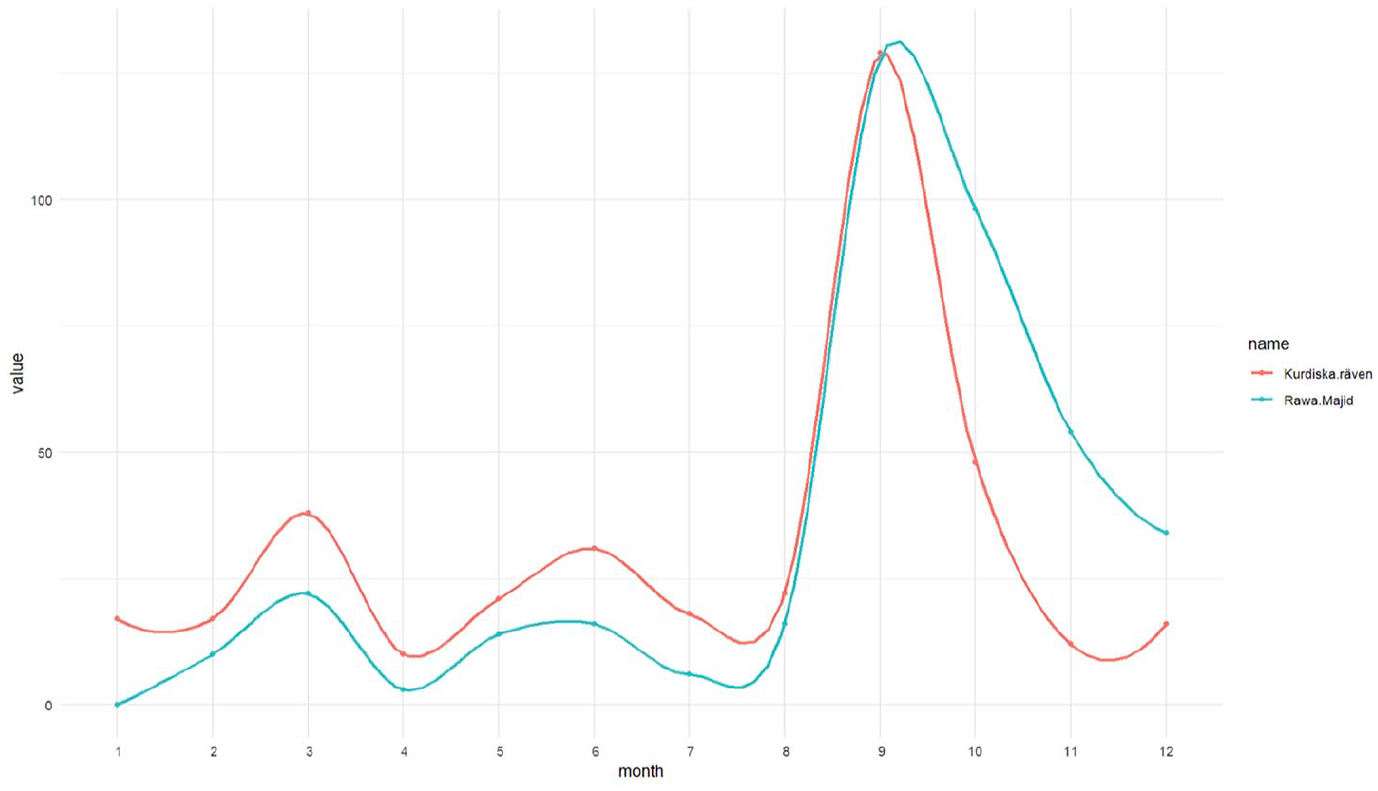
Articles in legacy media mentioning Rawa Majid and his moniker “Kurdiska Räven” (January 1 2023–December 31 2023).
The topic modeling results reveal that legacy media reporting focuses on a range of distinct themes, with the prevalence of each topic illustrated in Figure 2. Among the top five topics, the most dominant, labeled Acute Threat, centers on visceral depictions of violent crimes and emphasizes the immediacy and severity of the threat. Key terms and phrases associated with this topic include “recklessness,” “unprecedented,” and “expect more violence.” One article, for example, features a direct quote: “You get scared, really scared. I don’t think anyone here is sleeping at night.”
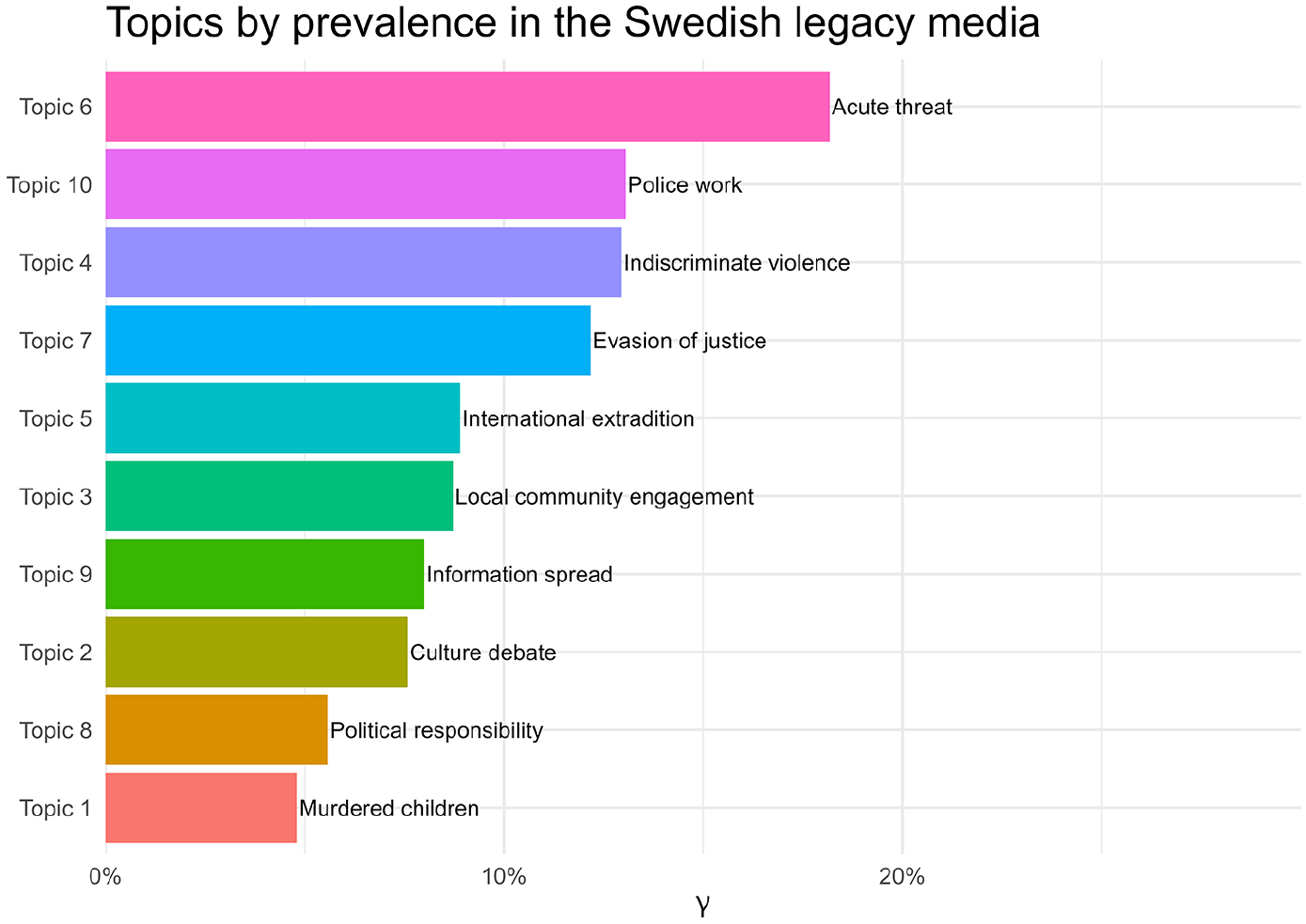
Topic prevalence in Swedish legacy media.
Two other topics, Police Work and Indiscriminate Violence, emerge with similar levels of prevalence. Articles within Police Work often focus on action-oriented narratives, detailing law enforcement efforts to contain the violence. Prominent terms include “police chase,” “wiretapping,” and “house search.” Meanwhile, Indiscriminate Violence captures accounts of violence that extend beyond gang members, affecting innocent civilians and broader society. Notable phrases in this topic include “children are dragged in,” “innocents,” and “two women are shot dead in cold blood.” The fourth most prevalent topic, Evasion of Justice, portrays Majid and his associates as evading law enforcement while living abroad in luxurious conditions. This topic includes terms such as “has not been arrested,” “police gearing up with foreign actors,” “luxury pools,” and “palm trees.” The fifth prominent topic, International Extradition, discusses the geopolitical and legal complexities of extraditing criminals, alongside questions of citizenship. Frequently used terms in this category include “bought citizenship,” “Turkey does not extradite gang criminals,” and “document falsification.”
The remaining five topics provide additional nuance to the media coverage. Local Community Engagement highlights grassroots efforts to address gang-related violence, while Information Spread examines the circulation of information within and about criminal networks. The topic Culture Debate encompasses opinion pieces where columnists often use Majid’s case to advance broader narratives. Political Responsibility covers discussions on political inaction and the allocations of blame across different stakeholders. Finally, the Murdered Children topic focuses on the tragic deaths of children linked to gang violence.
When contextualized within the framework of myth-making by legacy media, these topics coalesce into a narrative that positions Majid as an acute and violent threat to society (Acute Threat, Indiscriminate Violence) and as an adversary locked in a heated struggle with the state. This narrative portrays Majid as both powerful and elusive, capable of evading capture despite significant efforts by law enforcement (Police Work, Evasion of Justice, International Extradition). Such representations elevate him to an almost supervillain-like status, amplifying his perceived role in Sweden’s gang violence crisis.
However, this mythologization comes at the expense of deeper, structural reporting of gangs in Sweden. By focusing on individual figures like Majid, the media assigns disproportionate responsibility for gang violence to specific actors, while neglecting the systemic and structural antecedents that underpin organized crime. These structural issues, which lack the “stickiness” of sensationalized reporting, further perpetuate the myth-building of gangs in Sweden.
Figure 3 shows the topic model by publisher. Surprisingly, the topic model shows minimal variation in the prevalence of topics across publishers. Despite having a reputation for variation in reporting based on their ownership and news practices, for example, sensationalization and personification (Hadenius et al., 2008), there is an apparent uniformity in how frequently they report the different themes. One exception to this is the slight differences in the prevalence of publishing in Dagens Nyheter, who give somewhat more attention to both the Police response. We find the lack of variation interesting and a statement about how effective legacy media can be in collectively crafting the myth in constructing a social problem.
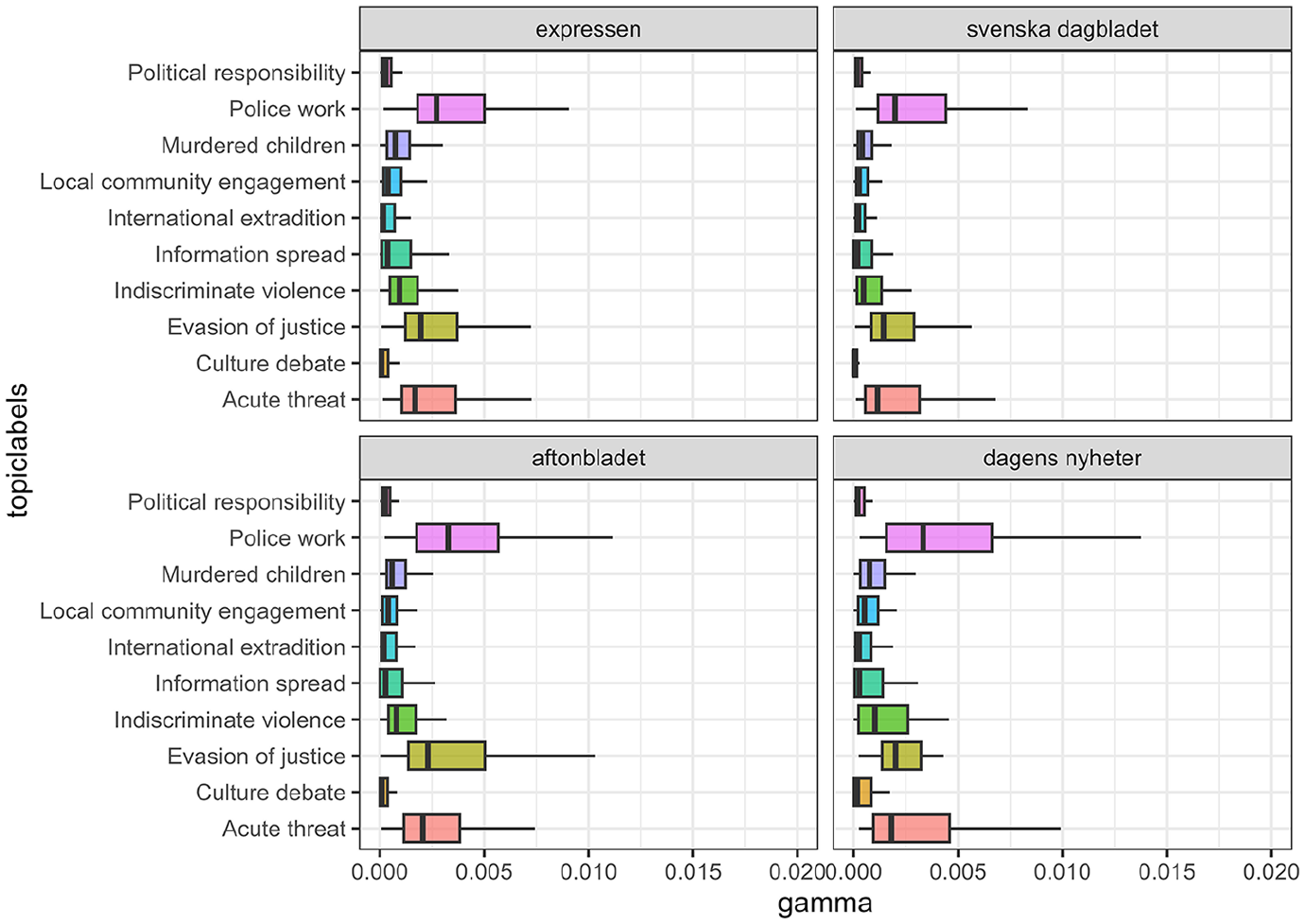
Top ten topics divided by publisher.
TikToking gang myths
Recirculation of gang myths from legacy media
As the circulation of media content was one of the focal points for the study of the social media data, we were interested in how different forms of media were incorporated into the video creation practices of TikTok users. Expectedly, in 21 of the videos in the sample, the video incorporated some form of media content—popular songs, imagery, video snippets, and others—indicating that the content regarding the gang leader was highly combined with other media contexts. However, none of the videos in our sample were posted by legacy media sources on TikTok, and solely private accounts and compilation accounts, for example, a true crime account. Several images used in crime reporting in the legacy media were incorporated into the TikTok videos (see Figure 4). The “stickiness” of violence (Zelizer, 2023), as evidenced through this circulation and repurposing of legacy media imagery of gangs, shows that mediated myths of gangs and their members become fodder for online content creation.
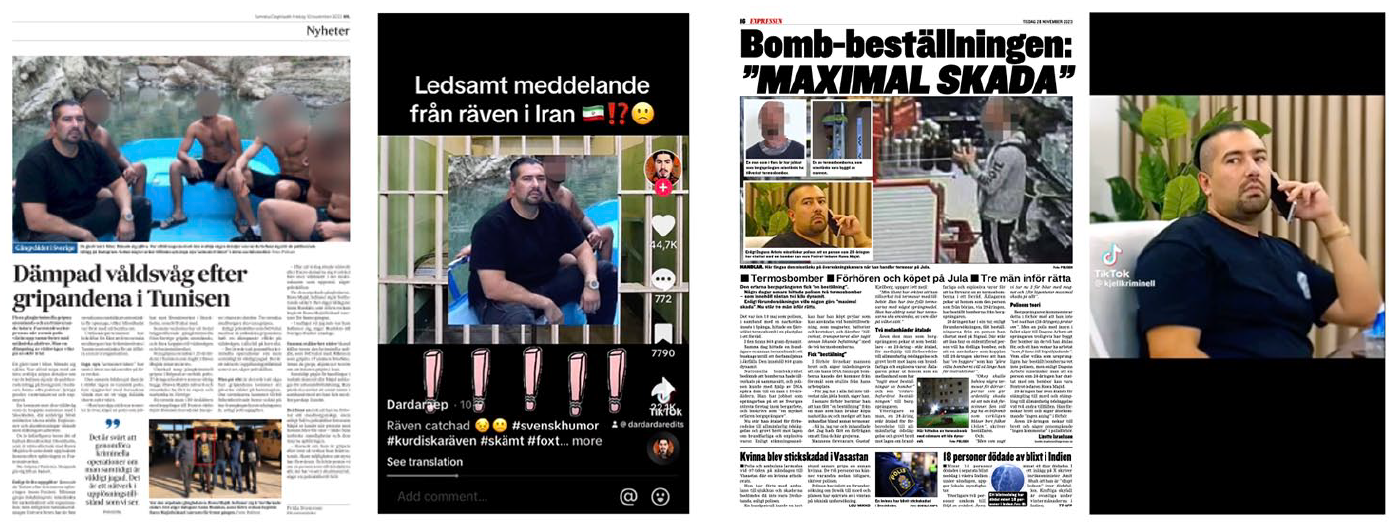
Repurposing of gang imagery from legacy media to TikTok.
Not only images from news media were included in this way, but also sound. In April 2023, a recorded voice message from Rawa Majid collected during an ongoing police investigation was broadcast on several Swedish news outlets, including Expressen (20 September, 2023), with the headline “Listen here to ‘Kurdish Fox’s’ voice message: “I enjoy this,’,” and other media outlets (cf. Jamshidi, 2023), where he said:
(trans.) “Hey guys, sup. Animal here. Just want to let you know that nobody touches Strängnäs [Swedish city]. Strängnäs is my area. And no one calls (. . .) and (. . .) one more time. If I hear one more thing about Örebro, Vivalla [Swedish cities], I don’t know, lalala. Whoever’s calling, I will fuck you from head to toe. This is the last time I will say it, then it will be Newroz [New Year in Kurdish], there will be fireworks. I will bomb every staircase, shoot every head. I take pleasure in this. I hope you read the news.” (Our own translation)
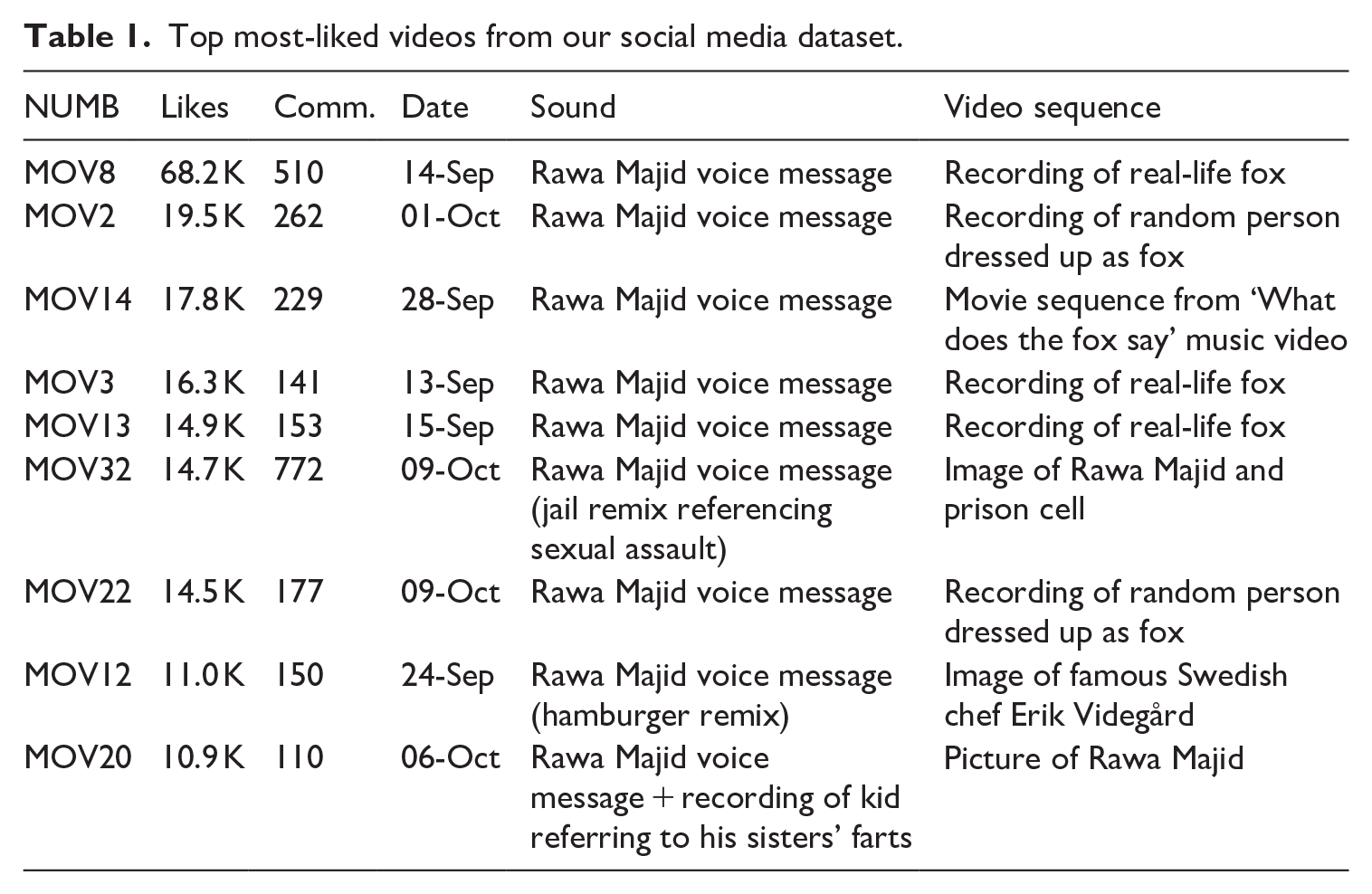
In Dagens Nyheter (16 October, 2023), this voice message was not included in full, but rather added as part of media reporting on ongoing crime waves, stating that the “threatening statement” has “prompted Prime Minister Ulf Kristersson (M) to react: ‘No city in Sweden should belong to criminals. And I want to be clear that Strängnäs does not either’.” The recording was quickly picked up and spread across social media (Arvidson, 2023). While audio memes are a vital part of the infrastructure of interaction on TikTok (Abidin and Kaye, 2021), this audio meme was directly repurposed from legacy media reporting. This audio meme proved to be the most used, and it gained popularity by receiving the largest number of likes across all videos in our dataset. The audio meme of Rawa Majid proved essential to getting recognition from peers, as seen in Table 1, as the number of likes were as high as 68.2 K at best. Videos using the audio recording had, on average, almost twice as many likes as other videos 1 . By the dates of the videos included in Table 1, we find that they were posted during the same period as the spike in the increased use of the moniker in Swedish newspapers (as seen previously in Figure 1). It created a context for meme creation, becoming popular in the autumn of 2023 on TikTok. This shows that the audio meme itself served as purpose for increased algorithmic visibility on the platform. This form of algorithmic amplification of not only the voice message itself, but gang mythologies as a whole, could enhance the visibilitiy of gangs in Sweden during this time. In this way, the audio recording from the police investigation became a memetic framework for joking about Rawa Majid, serving as a dissident tool for mockery and ridicule at the expense of the infamous gang leader.
Top most-liked videos from our social media dataset.
We found that the imagery included in the reporting of Rawa Majid in legacy media was often incorporated into the video creation on TikTok. The police mug shot of Rawa Majid was often incorporated into these videos (see Figure 4). This image has been consistently used in legacy media reporting on gang violence in Sweden (cf. Ericson and Larsson, 2023a) during 2023. This way of amplifying gang-related content, as shared by police through investigation materials and incorporated into mass media reporting, showed specifically how content travels from one media context to another and that violence becomes “sticky” (Zelizer, 2023). Considering that Sweden’s most common TikTok user was born in the aughts (00s) and 2010s (Internetstiftelsen, 2023), we must consider young people’s role in resharing, remixing and viewing these gang mythologies, especially as underage recruitment into Swedish gangs has been an essential part of the news creation (as evidenced by the topic label Murdered children).
Recirculation of gang myths from gangs’ content creation
In the collected data, we found several instances of recirculating content coming directly from gang members themselves. In 25 instances, gang members’ imagery, videos or live sessions, made out the general content. The Foxtrot gang has been prominent on social media, sharing content and going live on their social media profiles (cf. Fernández-Planells, et al. 2021), and in our dataset, we found 11 instances where video recordings from their own posted content were incorporated into the TikTok videos. This form of “Internet banging” (Elsaesser et al., 2021; Patton et al., 2013), meaning the uses of social media platforms by gang members or affiliated users as a measure of boasting and provoking others, was evident specifically in recirculated content from a live session where gang members from opposing gangs debate current events. In the session, they debate a recent killing of a 13-year-old boy.
You know that bastard, Mateo, that Matte. He killed that poor thing, what’s his name Marko, huh, that thirteen year old. What was his name?
Er [laugh] What “poor, poor thirteen year old,” uh.
Ah wallah, what’s up brother? If you guys wanna fight, fight like men, bre [slang for brother in Serbian].
Through the recirculation of live sessions like these, where cross-gang fighting is openly discussed and intended to be seen, the gang mythologies become enhanced and reconfigured to new audiences. While the “indiscriminate violence” of gangs (as described within legacy media) is related to by gang members themselves, this type of content shows the relational conditions of violence as it becomes expressed by gang members themselves, through their own social media feeds, as a potential escalation of ongoing conflicts (Elsaesser et al., 2021; Patton et al., 2019).
In another instance, gang members’ evasions of justice (as described in legacy media reporting) were featured through a gang member’s own sneak video taken of a famous program host of the show “Efterlyst” (“Wanted”), a long-running crime show in Sweden that has been airing since 1990. The show focuses on unsolved crimes in Sweden, often featuring appeals for public assistance in solving crime cases, such as providing tips about wanted individuals or missing persons. In the video, one Foxtrot member secretly films Hasse Aro, the program host, while laughing and saying the show’s phone number used for calling in hot tips to the show, “08 702 00 90”. This way, the gang members are able to portray their evasion of justice in a humorous and direct manner, while still remaining “sticky” (Ahmed, 2014), moving from one media context to another.
Often, these videos were reposted with added emojis connoting foxes ( ) and strawberries (
 ) and, in two separate cases, GIFs of foxes. The myths of gangs are thus expanded on social media and incorporated into common Internet vernaculars, such as emojis, GIFs, and memes in playful ways (see Figure 5). The availability of emojis as stand-ins for gang monikers facilitates visual, as well as cute, aids for communicating these nicknaming practices. The use of emojis introduces a dissonance between the serious nature of gang activity and the “cute” or whimsical nature of digital expression (cf. Maddox, 2020). The cuteness of emojis like foxes and strawberries might not just be humorous but also serve as a way to undermine the fear or seriousness associated with gang presence. Certain emojis can become “insider knowledge” and how their connotations evolve over time in online spaces where symbols like these take on layered meanings, and can be understood as markers of identity as well as a form of irony, or even distancing mechanisms toward the gangs. In this way, platform affordances encourage this kind of meaning-making through visual shorthand. Emojifying gang membership in this way highlights the dual nature of communication—both as a form of dissident humor directed at individual gang members and as a way of infusing discussions of organized crime with a playful “cuteness” through emoji use.
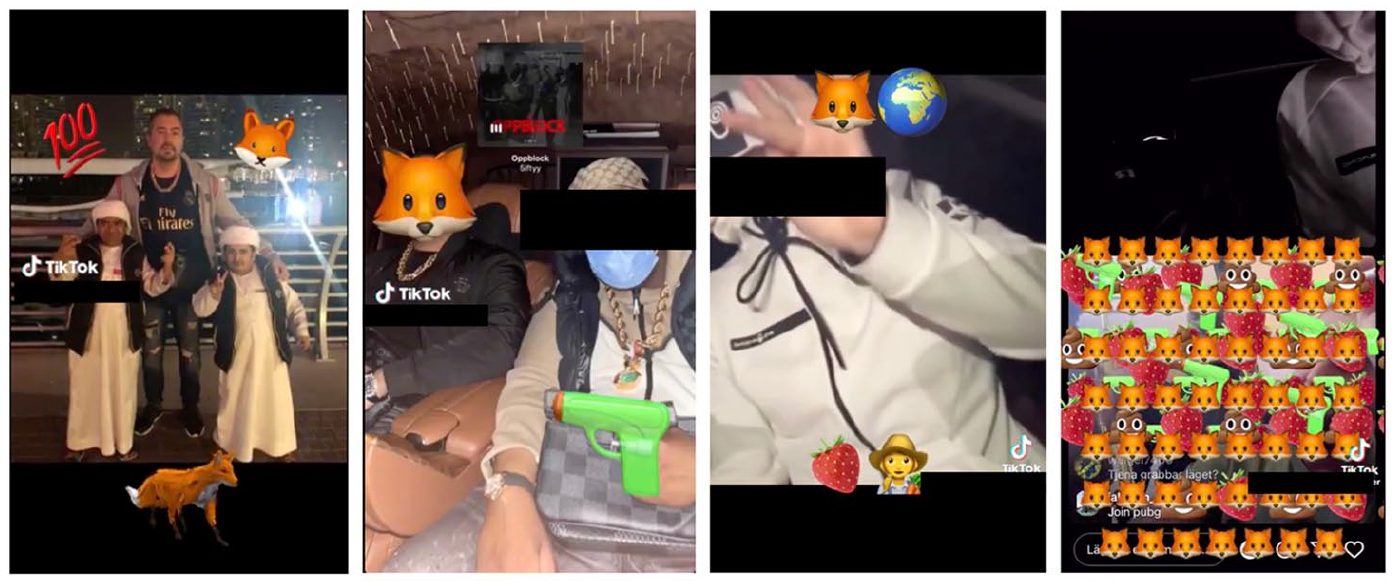
Gang content in TikTok videos.
Playful remediation of gang myths
The audio recording of the Kurdish Fox was sometimes juxtaposed with other popular cultural references, where the seriosity of the matter at hand—including gun violence, adolescent deaths, and narcotics—became connected to mass media contexts that are inherently non-serious. This was evidenced by the incorporation of the song What Does the Fox Say?, a well-known hit in the Nordic countries several years prior to 2023, performed by comedic group Ylvis (see MOV14 in Table 1). Often, not only the sound of the famous fox-related song was incorporated, but also imagery from their music video, in which the comedy duo dressed up as foxes (see Figure 6). As the verse of the song asks, “What does the fox say?”, it creates an opening for the Kurdish Fox’s voice message to respond to the direct question posed in the song.
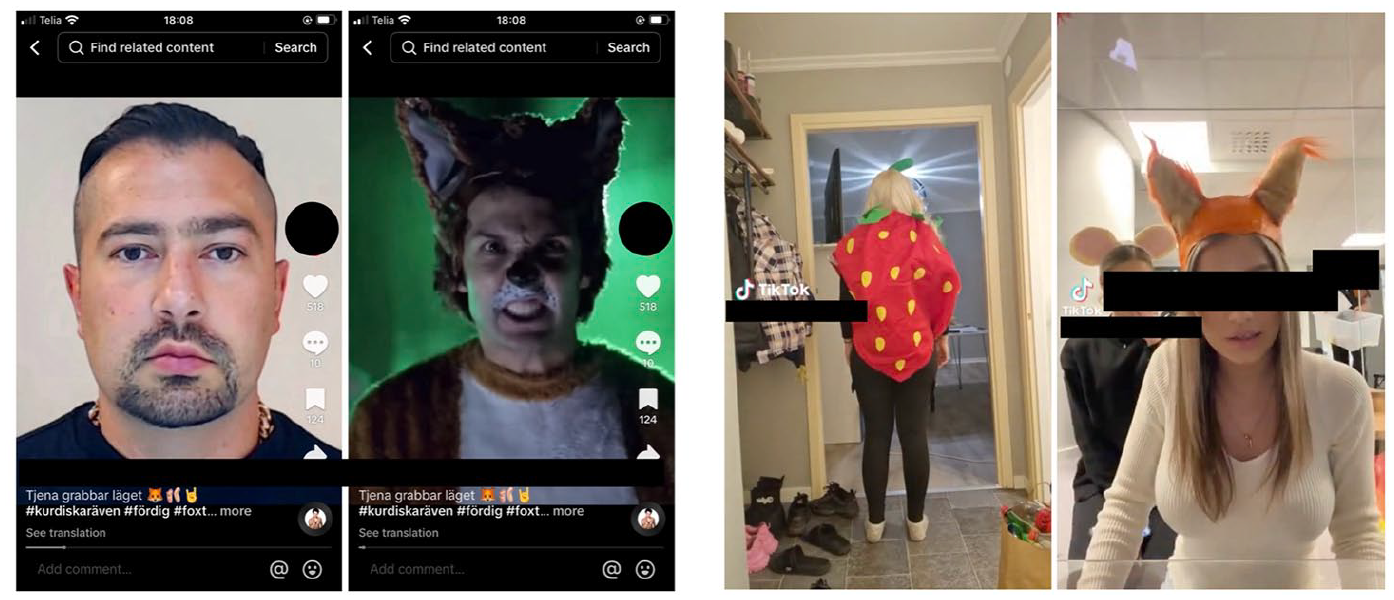
Playful remixing of gang myths on TikTok.
The dissident humor in approaching crime myths playfully was also evidenced by other types of content. His voice message was often juxtaposed by video recordings or images of real-life foxes, often running in inner-city areas or as emojis. In other cases, the sound of Rawa Majid’s voice message was overlaid with videos of people dressed up as foxes, often called “therians” or “furries.” Utilizing the cuteness of animals in different forms shows that these videos are constructed within the “cultural dynamics of the Internet’s cute economy” (Maddox, 2020: 3139), where contrasting the cuteness of foxes with the violent message from the offender seemed to satirically portray Rawa Majid, and ultimately challenge his position of power by “playfully appropriate new political contexts” (Mortensen and Neumayer, 2021: 2375). Here, the dissident stance toward gang mythologies can be understood as both relating to the gang myths created by gangs themselves—being “cool,” “adventurous,” “risky,” and so on (cf. van Hellemont and Densley, 2019)—as well as how they are mythologized in legacy media reporting. In one instance, a TikTok user dressed up as a furry resembling a fox and lay on the bed while touching themselves in sensual ways. This could be interpreted as a way of degrading the gang leader by overlaying the voice message audio on top of a soft porn-related video format.
In a playful sense, these representations underscore the absurdity of their gang monikers and connect the discourse of gang violence to a much more playful remix on TikTok. The playful platformed body (Divon & Eriksson Krutrök, 2024), engaging in these remixes, shapes not only gang mythologies themselves, but also the political contexts of gangs as a social problem. By incorporating these visual cues of gang interrelations, persona creation, and identification—gang myths of specific offenders create a playful context for users to interact with and embody.
Discussion: the stickiness of gang myths across media
Without the myth, there is no gang, as proposed by van Hellemont and Densley (2019). Gang monikers work as fodder for news framing and social media content creation. When these gang myths move between media contexts, they become extended and interacted with in multiple ways. Our inclusive approach to media formats, contexts, and practices of online communities offers a novel perspective on understanding crime myths as hybrid, interconnected, and relational within contemporary media systems. While previous studies have focused on gang myths’ circulation in news media (Koumouris and Blaustein, 2022; Richardson, 2012; Zavala and Savinar, 2022), the uses of social media as part of gang practices (Elsaesser et al., 2021; Patton et al., 2016; Patton et al., 2019; Urbanik, 2021), and the role of memes in shaping gang myths (Albarran-Torres and Goggin, 2023), we have outlined the importance of understanding the hybridity of gang myths as they become mediated, circulated and remixed.
The narratives constructed in news media about crime play a critical role in shaping public perceptions of crime, justice, and punishment. Research indicates that individuals with direct experience of the criminal justice system—whether as victims, offenders, or employees—are less reliant on the media for crime-related information. In contrast, individuals who rely heavily on media sources such as newspapers, television, radio, or magazines are more likely to hold inaccurate beliefs about the juridical system and crime policies (Pickett et al., 2015). Our analysis of legacy news media narratives showed that Rawa Majid and the events surrounding him were overwhelmingly framed as an acute and violent threat to society. This portrayal assigned him a near super-villain status, attributing an outsized amount of responsibility to him for the social problem of violence. Such media-driven perceptions can have tangible consequences. Public beliefs, shaped by media portrayals, influence policy priorities, funding decisions, and crime control measures. Sensationalized reporting can amplify fears of crime or reinforce stereotypes, leading to calls for punitive policies or increased law enforcement funding. Conversely, underreporting or misrepresenting crime can obscure systemic issues, diverting attention from necessary reforms. Thus, the media not only informs public discourse but actively shapes cultural and political understandings of crime.
While legacy media constructs crime myths as urgent and threatening, TikTok presents an alternative mode of engagement. Through our second analysis, we demonstrated how users employ memetic content—including remixes of gang-related imagery, video, sound, emojis, and GIFs—to extend, distort, or humorize the societal understanding of gangs. Rather than reinforcing a singular threat narrative, TikTok fosters a participatory culture where crime myths are playfully re-imagined and remediated. However, the potential impact of this re-contextualization remains complex. Unlike legacy media, which tends to emphasize gangs as a structural problem requiring policy responses, TikTok often treats these myths as entertainment. This raises critical questions: Does TikTok’s playful engagement with gang imagery trivialize organized crime? By making figures like Rawa Majid objects of humor, does this content function as a form of resistance, challenging dominant crime narratives, or does it risk normalizing gang culture by rendering it more palatable? While humor and memes can be powerful tools of critique, they can also blur the boundaries between satire and glamorization. This holds potential impacts for violent crime and recruitment into gangs, and deserves scholarly attention.
The dissident nature of these playful remediations lies in their ability to undercut dominant narratives, yet their effect may not always be subversive in the traditional sense. Instead of directly opposing legacy media narratives, TikTok users remix and circulate these myths in ways that complicate their meanings. This aligns with Zelizer’s (2023) concept of the “stickiness” of crime, where crime narratives do not remain static but rather move, stick, and slide (Ahmed, 2014: 14) across media platforms, adapting to new cultural logics.
This study contributes to ongoing discussions about the role of hybrid media ecologies in shaping crime narratives. By analyzing the circulation of gang myths across legacy and social media, we highlight the tensions between fear-based reporting and playful reinterpretation. While traditional media frames figures like Rawa Majid within crisis-driven moral panics, social media platforms such as TikTok allow for alternative, often humorous, engagements with these myths. However, these digital reworkings are not necessarily subversive in an oppositional sense; rather, they constitute a complex mix of satire, commodification, and playful remediation.
Future research should further explore how different social media platforms contribute to gang myth-making and whether these dynamics vary across cultural and political contexts. In addition, while this study focused on TikTok, expanding to other platforms such as Instagram, YouTube, or Snapchat could provide further insights into the interplay between play, crime discourse, and digital folklore. By broadening the scope of analysis, future studies may uncover additional ways in which crime myths are recontextualized, contested, or reinforced in the digital age.
Footnotes
Appendix 1
Diagnostic of k models. Several models with different numbers of topics likely would have been informative for our analysis based on their levels of exclusivity and semantic coherence. We chose k = 10 both because it performs well in these diagnostics and for ease of interpretability.
Funding
The authors disclosed receipt of the following financial support for the research, authorship, and/or publication of this article: This work was supported by the Swedish Research Council (grant number 2022-05414).
Statement
The authors has agreed to submission and the manuscript is not currently being considered for publication by any other print or electronic journal.
