



Abstract
Does digital stratification foster inequalities in access to work and employment? We address this question by examining inequalities related to online job search skills and the outcomes of the online search process. Results from a representative survey of 1103 Spanish jobseekers show that online job search skills positively affect the chances of getting an interview through employment platforms but that they are unevenly distributed. Online job search skills are more important than other digital resources, including basic digital skills, in determining positive outcomes of online job searches though there are still inequalities in getting an interview independent of either. This calls for considering domain-specific digital skills both in research and in practice alongside tackling traditional inequalities.
Introduction
The past three decades have seen a great interest in the study of the inequalities associated with the development of the Internet and other technologies, with a focus on the differences among social groups in terms of access, skills and use that create offline advantages or disadvantages (Ragnedda, 2018; Robinson et al., 2015; Van Deursen et al., 2017). Scholars first theorised a first-level digital divide as the ‘gap between those who have access to information and those who do not’ (Attewell, 2001: 252), focusing on the disparities in Internet access between disadvantaged social groups (Van Dijk, 2020). The widespread diffusion of the Internet brought to the fore a second-level digital divide resulting from the unequal distribution of digital skills, which were shown to play a pivotal role in translating use of the Internet into tangible beneficial outcomes in everyday life (Hargittai, 2002; Hargittai and Hinnant, 2008; Van Deursen et al., 2017).
In this context of growing and ever-changing digital inequality, scholars have developed standardised instruments to measure digital skills and their components to identify their influence on social life (DiMaggio and Hargittai, 2001; Van Deursen et al., 2016; Van Dijk, 2006). They found higher levels of digital skills among young and well-educated users (Hargittai and Hinnant, 2008; Hargittai and Walejko, 2008) and those with higher levels of economic (e.g. wealth), social (e.g. support networks) and material resources (e.g. technology for Internet access) (Buchi et al., 2016; Lissitsa et al., 2017; Robinson, 2012; Van Deursen and Van Dijk, 2014). These skills provide tangible benefits from advanced Internet use, fostering offline resources, such as income, education and social capital. These inequalities in outcomes of Internet use represent a third-level digital divide, supporting the rich-get-richer or Matthew effects hypothesis: people with higher levels of resources derive greater benefit from digitisation (Helsper, 2021; Helsper and Van Deursen, 2015; Ragnedda et al., 2020; Van Dijk, 2020).
This article addresses lacunas in existing research by examining the relationship between offline resources, digital capital (access and general digital skills), online job search-specific skills and the outcomes of the use of employment platforms for job seekers. We define online job search skills as the domain-specific set of strategies, skills and knowledge related to the use of employment platforms, such as identifying appropriate platforms; creating a CV that identifies the most searchable information, highlighting the right employment skills on profiles, correctly completing a job application online, understanding the expectations of recruiters and the functioning of platforms. In contrast to previous research in Northern Europe and the United States, we examine this relationship in Spain, a country with high levels of unemployment, high use of the Internet for job search and comparatively few job openings, especially for lower qualified workers (Bolíbar et al., 2019; Dumont et al., 2023; Instituto Nacional de Estadistica (INE), 2021). These characteristics create a perfect storm of high demand and low offer in which having the right kinds of skills to navigate online job search is of vital importance.
Along the lines of previous digital inequalities research, we test hypotheses that propose that systematic inequalities in these specific skills and strategies exist for those from different socio-demographic backgrounds and those with different levels of digital capital. Quantitative research has studied mostly inequalities in confidence related to search and application processes (Karaoglu et al., 2021), and qualitative research looked at specific strategies within specific groups (Dumont et al., 2023; Wheeler and Dillahunt, 2018). But it remains unclear how specific search strategies, skills and knowledge are distributed among the broader population and how they relate to outcomes of the job search process in comparison with general skills and confidence.
This article shows that inequalities in online job search skills, strategies and knowledge exist and that job seekers with higher education levels and those in employment are more likely to achieve positive employment outcomes, such as being invited for interviews, independent of their general and online job search-specific digital skills. These findings bring important nuance to the rich-get-richer theory of digital inequalities by demonstrating the persistence of domain-specific structural inequalities in an increasingly digitalised employment context.
Background
Digital skills and inequalities
Scholars have increasingly studied digital skills after identifying a reduction in the gap in Internet access between population segments. Van Dijk (2006) first referred explicitly to ‘digital skills’ and categorised them under three dimensions: operational skills, necessary for using computer hardware and software; information skills, essential for searching and selecting online information and strategic skills, encompassing computer-based resources and the Internet to achieve specific goals (Van Dijk, 2006: 228). In 2008, Van Deursen and Van Dijk (2008) added the dimension of formal skills related to the Internet’s hypermedia structure and requiring browsing and orientation abilities. In 2016, Van Deursen and colleagues refined the definition of digital skills into technical (e.g. managing devices/settings), information (e.g. obtaining search results), communication (e.g. managing online relationships) and creative (e.g. designing websites, editing photos) skills. They pointed out that these dimensions were significantly correlated, ‘indicating that those who are good in one skill area are also good in another area’ (Van Deursen et al., 2016: 13).
Scholars have used these tools to measure digital skills to map skills distribution across the population. They found that individuals with higher levels of education and better socio-economic conditions tend to have higher levels of digital skills (Dodel and Mesch, 2018; Hargittai and Hinnant, 2008; Ragnedda et al., 2022; Ragnedda and Ruiu, 2017). Subsequently, Ragnedda et al. (2020) coined the term ‘digital capital’ to refer to digital access, skills and engagement, highlighting that digital skills alone do not guarantee favourable outcomes from performing specific tasks online (Arroyo, 2018; Hassani, 2006; Peter and Valkenburg, 2006; Van Deursen and Van Dijk, 2015).
Previous research suggests a sequential and cumulative process: offline resources foster users’ digital capital and engagement with technologies, resulting in significant differences in the tangible benefits of Internet use (Scheerder et al., 2017; Van Deursen et al., 2016). These third-level digital inequalities in outcomes reinforce social stratification, as individuals with higher levels of offline resources can improve their social standing through their digital capital to a greater extent than those from more disadvantaged backgrounds (Calderón Gómez, 2020; Robinson et al., 2015).
Research into how these processes work within specific domains is scarcer. However, Karaoglu et al. (2021) show that the acquisition of other digital resources (e.g. quality connection, up-to-date devices and broad Internet use) facilitates developing confidence in domain-specific digital skills for online job search.
Online job search
The Internet has fundamentally changed job search and recruitment processes (e.g. Bonet et al., 2013; Coverdill and Finlay, 2017; Garg and Telang, 2018). On one hand, it increasingly offers new tools and opportunities for job seekers to identify and apply for vacancies alongside access to better-paid jobs (Lindsay, 2005). For instance, the Internet reduces the time to find a job by 25% compared to traditional channels (Kuhn and Mansour, 2014). This is particularly true for young people and those with greater confidence in using digital technologies (Kroft and Pope, 2014; Piercy and Lee, 2019). Job seekers must embrace employability strategies aligned with neoliberal ideals of continuous individual self-improvement and empowerment (Gershon, 2017). This causes anxiety and stress (De Marco et al., 2023; Dumont et al., 2023; Sharone, 2017). On the other hand, employment platforms provide recruiters with large databases of readily identifiable candidates (Coverdill and Finlay, 2017; Sutherland, 2020). Recruiters increasingly use artificial intelligence, enabling online, automatic screening to handle high volumes of candidates (Dubovitskaya et al., 2020). This may reproduce existing inequalities. In the United States, Karaoglu et al. (2021) found systematic inequalities in using social media to search and apply for jobs online and in related skills and confidence.
Many job search processes occur via dedicated employment platforms and qualitative research shows that job seekers struggle to use them (De Marco et al., 2023; Dillahunt et al., 2016; Gist-Mackey, 2018). There is an imbalance between supply and demand, triggering competition among a growing number of low-qualified candidates applying for a decreasing number of vacancies in countries with high levels of unemployment (Dumont et al., 2023; McDonald et al., 2019). Lower-qualified job seekers face not only fierce competition, but also lack understanding of how these platforms work and get frustrated with opacity in recruitment processes (Dumont et al., 2023; Dillahunt et al., 2018). They struggle to make their applications visible and suffer job search burnout (De Marco et al., 2023; Wheeler and Dillahunt, 2018). Job seekers with higher and lower qualifications struggle to understand how to use employment platforms, which information to display in their resume and how to identify job ads (Gershon, 2019; Sharone, 2017).
The findings from these and other studies offer two important insights. First, job seekers with different qualifications experience online job search differently and have varying levels of confidence in their job search skills (Arroyo, 2018; Karaoglu et al., 2021; Sharone, 2017). Second, digital skills specific to employment and job applications shape people’s experiences. However, most of these studies are qualitative in nature and focus on specific groups and employment programmes (Dillahunt et al., 2021; Gershon, 2019; Gist-Mackey, 2018).
In addition, when they have looked at the pre-interview stage, these studies remain vague about the digital skills needed to secure an interview and have examined specific groups of job seekers independently, focusing either on low- or high-qualified job seekers (Dumont et al., 2023; Gershon, 2019; Sharone, 2017; Dillahunt et al., 2018). They have yet to explore inequalities during the process by which job seekers develop strategies, skills and knowledge specific to employment platforms, use these to find vacancies, apply and get invited for interviews.
Hypotheses
In this article, we build upon recent insights from the literature on inequalities to propose five sets of hypotheses around the relationship between digital inequalities and online job search. These test the impact of socio-demographic variables on digital capital alongside online job search-specific skills. We build on third-level digital divide theory, which proposes that those with more resources are more likely to have digital skills and achieve positive outcomes (Helsper, 2021; Van Dijk, 2020). Building on previous digital inequalities research, we examine the effects of socio-cultural (gender and age) and socio-economic (education, income and employment) resources on online job search-specific skills (Hargittai et al., 2019; Karaoglu et al., 2021) and being invited to interview (Dumont et al., 2023). Throughout, we emphasise the importance of domain-specific job search skills over and above general digital skills in determining outcomes.
Research has recognised that the variety of access devices and autonomy of use facilitates the development of digital skills and their use (Hassani, 2006; Peter and Valkenburg, 2006; Ragnedda, 2018; Van Deursen and Van Dijk, 2015). Moreover, research on the third-level digital divide has uncovered the relationship between digital skills and advanced area-specific skills and tangible outcomes from Internet use (Calderón Gómez, 2020; Ragnedda, 2018; Robinson, 2012; Van Deursen et al., 2017). Therefore, we propose the following hypotheses around digital capital (access and general digital skills):
H1a: Applicants’ digital capital relates positively to the acquisition of online job search skills.
H1b: Applicants’ digital capital relates positively to the frequency of being contacted for online job interviews.
Furthermore, because specific online job search skills should assist users in making their applications more visible, enhancing their chances of finding and applying for a job (Dumont et al., 2023; Karaoglu et al., 2021; Sharone, 2017), we propose that:
H2: Applicants’ online job search skills relate positively to the frequency by which they are invited for an interview.
Our first focus around inequalities is on the impact of gender on online job search. Women struggle to access executive roles independent of their qualifications (International Labour Organization [ILO], 2023) and face disadvantages in information and communication technology (ICT)-related skills, especially in countries with higher levels of general gender inequalities (Acilar and Sæbø, 2023; Calderón et al., 2022; Martínez-Cantos, 2017; Peláez-Sánchez et al., 2023). Therefore, we hypothesise that in Spain:
H3a: Being female relates negatively to applicants’ levels of online job search skills.
H3b: Being female relates negatively to the frequency of being invited to interviews, independent of their access and skills (i.e. digital capital).
Because younger people tend to have higher levels of general digital skills (Hargittai et al., 2019; Leukel et al., 2021; Mubarak and Suomi, 2022; Van Laar et al., 2020) and there is ageism in recruitment processes (Lössbroek et al., 2021; Turek and Henkens, 2020), we propose that:
H4a: Applicants’ age negatively affects their online job search skills.
H4b: Applicants’ age relates negatively to the frequency they are contacted for an interview, independent of their digital capital.
Moreover, since higher socio-economic status leads to better job prospects (Blau and Robins, 1990; Faberman et al., 2022). Poorer and lower educated individuals and the unemployed people are less successful in finding a job than employed people (Blau and Robins, 1990; Faberman et al., 2022). Moreover, unemployed people are more likely to apply for underpaid positions and for those not matching their qualifications (Boswell et al., 2012; Manroop and Richardson, 2016). Furthermore, given that economic and educational resources are closely associated with higher levels of digital skills and tangible benefits from Internet use (Helsper and Van Deursen, 2015; Livingstone et al., 2023; Piercy and Lee, 2019; Van Deursen et al., 2017), we hypothesise that:
H5a: Applicants’ economic and educational resources relate positively to higher levels of online job search skills.
H5b: Applicants’ economic and educational resources relate positively to the frequency of job interview contacts, independent of their digital capital.
Methodology
Sampling
We collected data between 2020 and 2021 through a representative sample of 1103 individuals seeking jobs online in Spain. Spain offers an ideal case study because the country has 94% of Internet users and widespread use of employment platforms (Eurostat, 2023a). Furthermore, the rate of the general population who used the Internet for job search purposes in 2021 is 19%, above the average of 13% for the European Union (EU)-27 countries. For 16- to 29-year-olds, this rate increases to 37%. Finally, for people aged between 15 and 75, the unemployment rate in Spain (13%) over the last 10 years has been above the average for the EU’s member states (Eurostat, 2023b). This trend is similar for individuals aged between 15 and 29, with an unemployment rate of 27% in Spain, compared to 15% in the EU-27. Hence, many people look for jobs online in a context of high unemployment.
Because most online job seekers tend to be young and with at least high school education (Campos et al., 2014), we included subjects aged between 18 and 50, with a minimum educational level of upper secondary education. This means our sample has an overrepresentation of individuals with higher education compared to the broader Spanish job seeking population, but the sample does reflect the population of online job seekers who are more likely than the wider population to have graduate and postgraduate degrees (INE, 2023). An independent social research company created a sample from their panel of 2,722,476 Spaniards using a random sampling technique. The survey was conducted in Spanish and translated into English for the article. Our respondents gained ‘virtual points’ to exchange for gifts. To increase representativeness of the unemployed Spanish population, we stratified our sample by sex and age, using percentages provided by the Spanish National Statistics Institute (INE, 2021). We also included quotas for educational attainment and employment status, to include low- and high-qualification positions. Respondents had to have actively looked for a job within the last year. Through this method, we assured the inclusion in the sample of long-term unemployed people as well as those in short term unemployment. Respondents used Infojobs (78%), LinkedIn (64%), Infoempleo (40%), Indeed (35%) and public employment platforms from the regional governments (18%), showing that official job search platforms dominate the market over more general social media platforms (see Figure 1).
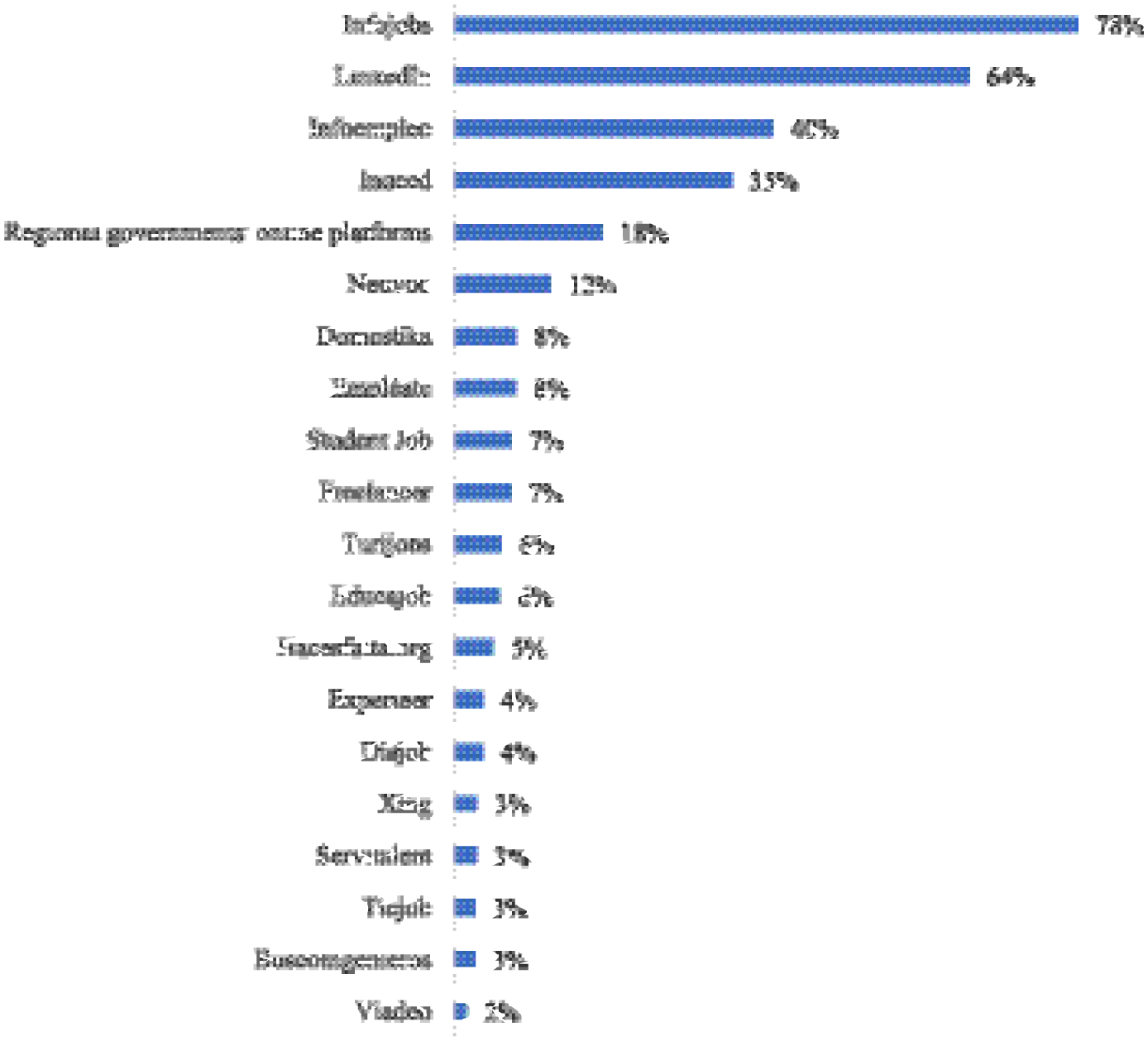
Employment platforms used by respondents. Percentage of the total subjects.
Measures
This article is part of a larger study using a framework inspired by the DiSTO (From Digital Skills to Tangible Outcomes) project (Van Deursen et al., 2014). The framework offers robust measures developed in Northern Europe and validated in a variety of countries including Europe and Latin America.
Socio-demographic characteristics
We used the socio-demographic variables in two regression models to measure respondents’ offline resources associated with digital inequalities by previous research, and to understand their implication for inequalities in online job search skills and opportunities. The sample represented the job-seeking population (see Table 1).
Socio-demographic characteristics of the sample.
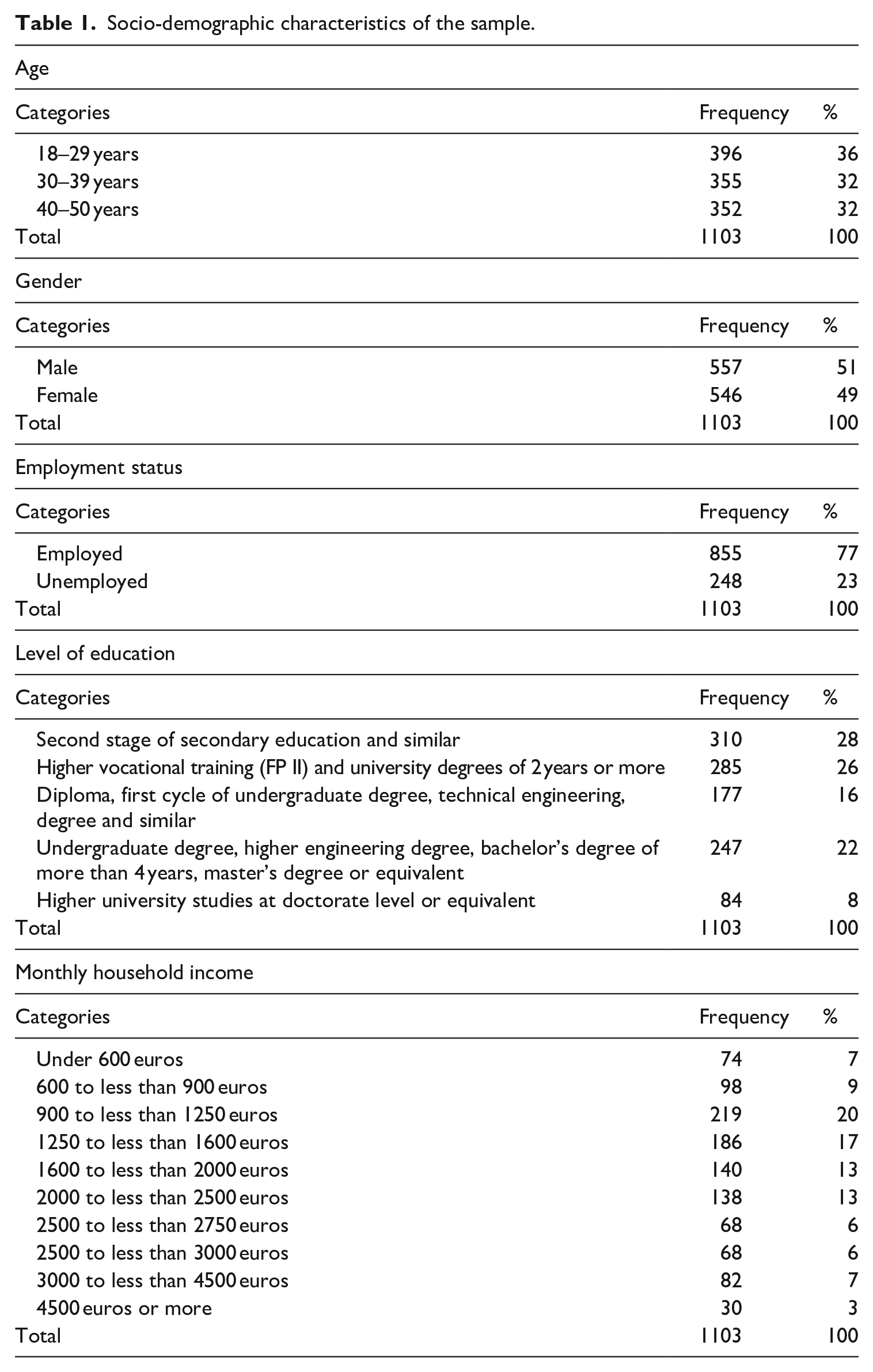
We measured gender with three answer categories: male (51%), female (49%), other (0%) and age continuously (µ = 34.2 and SD = 8.3). Level of education was an ordinal variable, with five categories running from upper secondary to doctorate. The largest represents respondents whose highest level of education is upper secondary (28%) and the smallest represents respondents with doctoral-level studies (7%). Economic resources were measured through household monthly income dividing the sample into ten categories, of which ‘900, to less than 1,250 euros per month’ is the largest, representing 20% of the sample, and ‘4,500 euros or more per month’ is the smallest, representing only 3% of the sample. For the analyses, we calculated weighted income by dividing the income variable by the number of members in the household (min. = 0.17, max. = 9; M = 1.7, SD = 1.0). We included employment status and measured it dichotomously unemployed (23%) and employed (77%).
The second set of independent variables focused on digital capital. We calculated household devices by adding up the number of (Internet connected) devices that a participant had in their home ranging from 0 to 11 (M = 8.2, SD = 2.1). Autonomy of Internet use ranged from 0 to 6, constructed by adding up the number of places from which the respondent used the Internet 6 months before the survey (M = 3.4, SD = 1.5).
We used the general digital skills measures provided by the Internet Skills Scale (ISS; Van Deursen et al., 2016). The ISS was validated in different languages and across socio-demographic groups, testing for internal consistency and social desirability bias using a truth-based claim answer scale (from 1 to 5, ‘Very true of me’ to ‘Very untrue of me’, including an option ‘I don’t know what you mean by that’ scored as 0). The original scale consisted of 25 items measuring four dimensions: operational and technical, information navigation and processing, communication and interaction, and content creation and production skills. The full scale was too long to be included in this study, so that, based on recommendations by the authors, we selected the three indicators with the highest factor loading on each dimension, and, for the same reason, we included programming as separate dimension (Helsper et al., 2020) (see Table 2). The final scale consisted of the sum score of the 13 items (M = 49, SD = 7). The composite scale showed high levels of statistical reliability (α = .84).
Items that make up the digital skills scale.
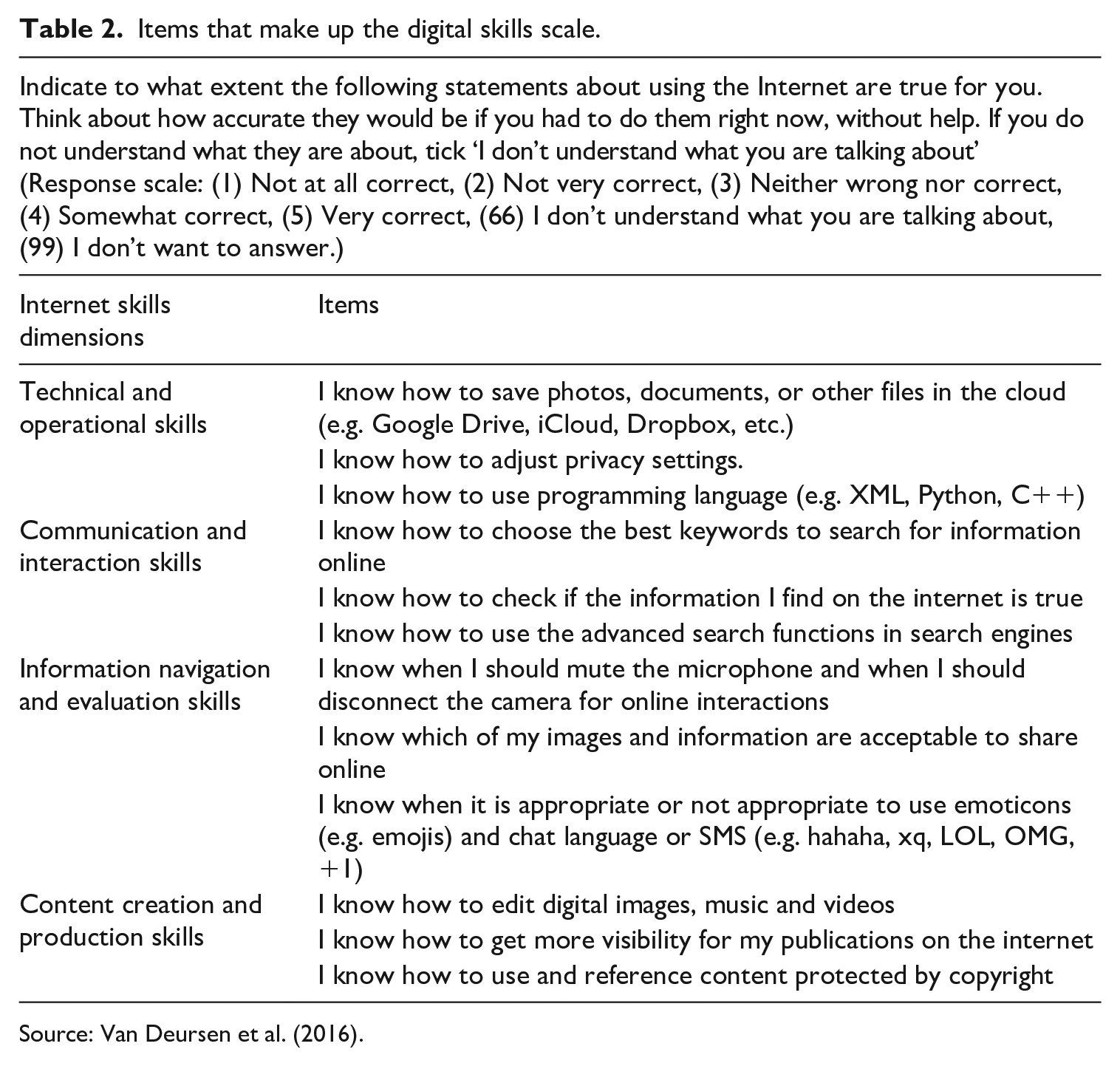
Source: Van Deursen et al. (2016).
Online job search skills
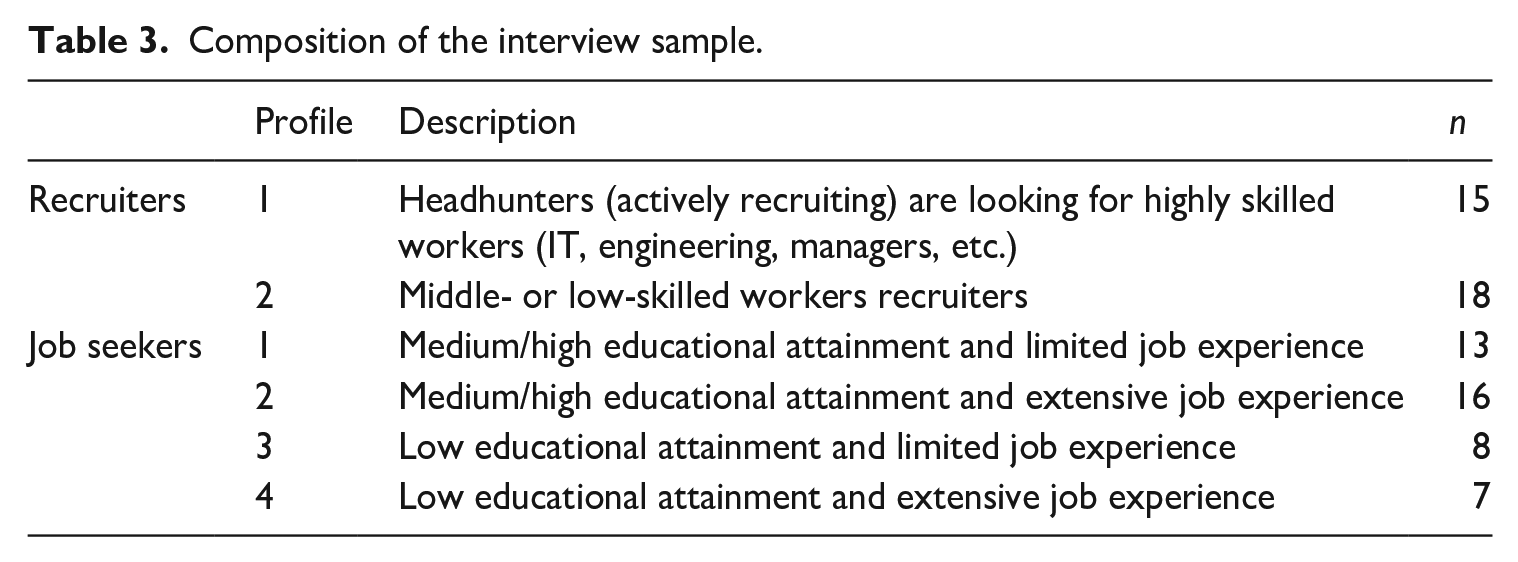
One of the aims of this study is to investigate whether specific online job search skills have an impact on inequalities in online job search and its outcomes over and above that of general digital skills (see previous paragraph). This scale was newly developed and validated. We conducted 77 interviews, including 44 job seekers and 33 recruiters at employment agencies or in human resources positions for large companies, to develop specific online job search skills variables measuring domain-specific strategies, skills and knowledge, and validate these items (for more detail, see Dumont et al., 2023). Our sample covered a broad range of profiles and areas of job-seeking (see Table 3).
Composition of the interview sample.
We asked job seekers about actions that would make it more likely for a job application to be noticed and we asked recruiters about how they evaluated online profiles. We analysed interviews inductively, iterating between the notes taken during the interviews (memos) and the interview data to identify exploratory themes guiding coding (Coffey and Atkinson, 1996; Corbin and Strauss, 1990). We used open coding to identify and group relevant data segments, refining our themes based on their significance within the overall data set, merging some themes while developing others. We contrasted the resulting insights with the literature and refined our constructs in different areas of interest.
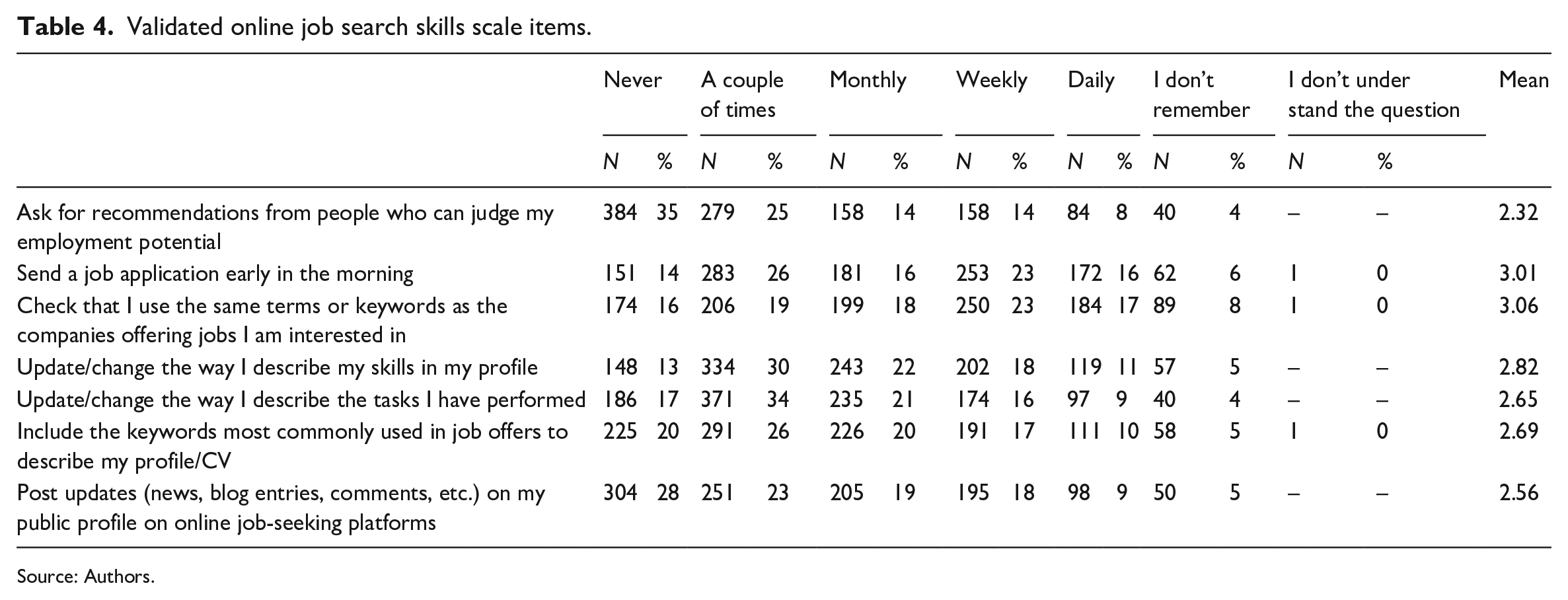
We found that algorithms used by platforms sorted applications based on their relevance to job ads, but that outcomes were highly contingent upon the recruiter’s actions. Also, job seekers were aware that they must generate a ‘positive impression’ on another person, someone they did not personally know but who was likely to review their resume, to be invited to an interview. Consequently, their strategies extended beyond manipulating technological features and encompassed knowledge related to impressing an ‘offline’ individual behind the machine. For instance, sending an application early in the morning increased visibility because it would be among the first found by recruiters (reflecting online job search skill related to content creation and production – knowing when to post to get the broadest or most valuable audience). These are digital skills because they reflect effective strategies based on understanding how technologies are embedded in others’ everyday practices. Similarly, ‘asking for recommendations from people who can judge employment potential’ (as opposed to family or friends) reflects communication and interaction skills. This indicates an action based on knowledge that having the ‘right’ people in your online social network supporting you (i.e. online social capital) is important in achieving a successful outcome in online job searches.
We created a pool of 11 items. We used the frequency with which each activity was performed during the previous 6 months to assess how often respondents undertook activities beneficial for job-seeking. Other scales were tested (including truth claim and frequency formats) and the frequency formulation was most appropriate to reflect actual skill levels leading to positive outcomes and was well understood by job seekers in the qualitative interviews. The formulation of the question avoided self-reported confidence as used in other skills measures that asked about the extent to which people perceived themselves as skilful at executing a general task, such as sending an email or downloading a file from a website. This formulation carries social desirability bias with people in privileged positions in particular tending to overestimate their abilities (Arning and Ziefle, 2008; Gonyea, 2005; Hakkarainen et al., 2000; Van Deursen et al., 2014; Van Deursen and Van Dijk, 2019).
Another issue with previous research lies in the frequency of use of a specific application or service as an indicator of skill without knowing whether this use is beneficial or well executed (e.g. one can do something often and make mistakes or do something infrequently but efficiently being skilled at getting positive outcomes) (Helsper et al., 2020). We handled this issue by formulating items based on the practical implementation of successful job search-specific actions. Failure to perform specific activities known to benefit the job search process results in ineffective applications. Indeed, frequency-based responses can be used as proxy variables for digital skills if based on concrete actions beneficial for specific contexts (Van Deursen et al., 2011; Van Deursen and Van Dijk, 2010).
The validity of frequency-based response items is strongly related to choosing an appropriate time frame (Schwarz, 1999; Zickar, 2020). Hence, we used a 6-month period to formulate the items representing the median value of the distribution of time spent looking for a job in Spain (INE, 2021). After creating indicators, we validated the instrument through a pilot study by surveying 50 job seekers and conducting 16 cognitive interviews, excluding four of the 11 items from the final version of the online job search skills scale, see Table 4 for the seven remaining items.
Validated online job search skills scale items.
Source: Authors.
We conducted factor analyses to create a composite scale called ‘online job search skills’ (standardised M = 0, SD = 1). We first implemented an exploratory factor analysis using the unweighted least squares (ULS) method with Promin rotation. Because of the categorical nature of our items, we used a polychoric correlation matrix. The results of the parallel test indicated that the one-factor solution was the best fit with our data. This factor explained 79% of the items’ variance. Furthermore, the goodness-of-fit (GFI) indexes showed that the one-factor solution perfectly fit our data set (GFI: 0.998 and adjusted goodness-of-fit index [AGFI]: 0.988). Finally, the very high Cronbach’s alpha (.926) confirmed the high reliability of the scale. We also implemented a confirmatory factor analysis to test these results. Latent variable modelling using standard error of the mean (SEM) revealed good model fit (χ2 = 35,228, p < .001; Tucker–Lewis index [TLI]: 0.997; comparative fit index [CFI]: 0.988; root mean square error of approximation [RMSEA]: 0.053; standardized root mean square residual [SRMR]: 0.029). This variable was used both as a dependent and an independent variable (see the analysis section).
Positive outcomes
The opportunity to be invited for an interview is more likely to be related to the skills needed to gain attention from recruiters. Interviews are crucial for interacting directly with recruiters without the intermediation of the platform, providing more opportunities for finding a job. Given the role of additional factors beyond digital inequalities (i.e. the applicant’s non-digital skills and CV or the availability to attend the interview), we did not use getting a job as an indicator.
Our second dependent variable measured positive outcomes from online job search by asking ‘In the last 6 months, I have been invited for an interview after sending an application for a position advertised on the internet’ with answer options: Never (26%), A couple of times (39%), Monthly (14%), Weekly (14%) and Daily (6%). We treated ‘I don’t know’ or ‘no answer’ as missing cases (2%) and reduced our sample to 1080 subjects.
Before proceeding with our analyses, we checked for multicollinearity. We found no correlations higher than .293 (p < .001) and decided to implement the regression models.
Results
We tested two stepwise multiple-regression models using SPSS v27. First, we regressed socio-demographic and digital capital variables on respondents’ online job search skills to test H1a, H3a, H4a and H5a. Second, we regressed socio-demographic characteristics and digital capital and online job search skills onto being invited for an interview to test H1b, H2, H3b, H4b and H5b.
Explaining online job search skills
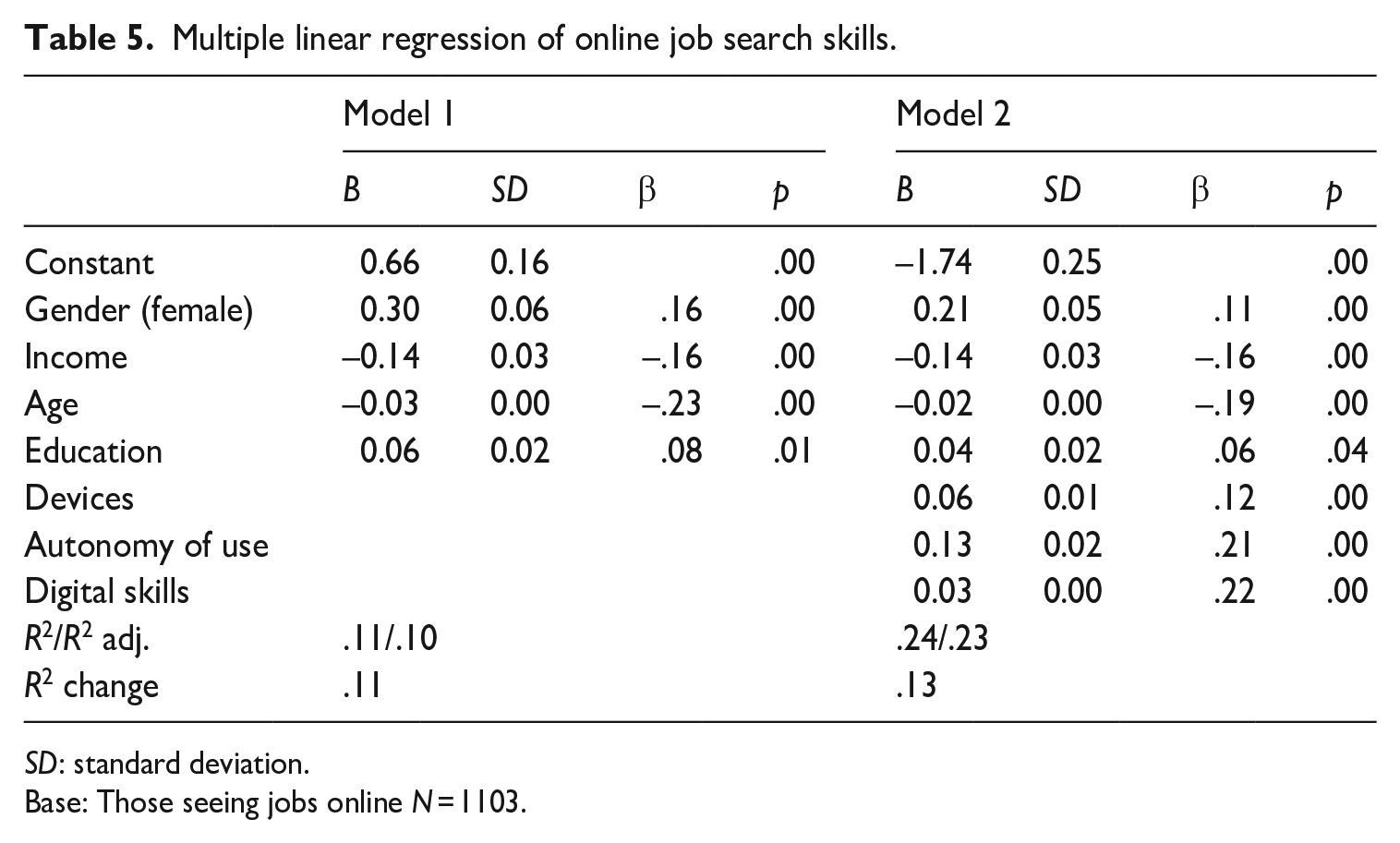
We used stepwise regression to test hypotheses H1a, H3a, H4a and H5a. The first block of variables consisted of socio-demographic indicators and the second block of variables related to digital access and skills. In both steps of our model, the analysis of variance (ANOVA) was significant. Adding digital access and skills increased the adjusted R2 significantly from 0.10 in the first stage to 0.24 in the second stage (see Table 5).
Multiple linear regression of online job search skills.
SD: standard deviation.
Base: Those seeing jobs online N = 1103.
As hypothesised in H1a, the different indicators of digital capital showed a positive relationship with online job search skills. We found higher levels of online job search skills for applicants with more devices (β = .12, p < .001) or autonomy of use (β = .21, p < .001). We also found a positive relationship between digital and online job search skills (β = .22, p < .001).
Among the socio-demographic variables, being female was unexpectedly associated with higher levels of online job search skills (β = .11, p < .001), which contradicts H3a. Age was negatively related to job search skills in support of H4a. H5a was only partially supported, a higher level of education was positively related (β = .09, p = .006) to online job search skills, although this relationship was weaker (β = .06, p = .045) when introducing digital capital variables into the model. However, the opposite direction to that hypothesised in H5a, the weighted income of the applicants showed a negative and significant relationship (β = .16, p < .001) with online job search skills.
Explaining positive outcomes: invitation to interview
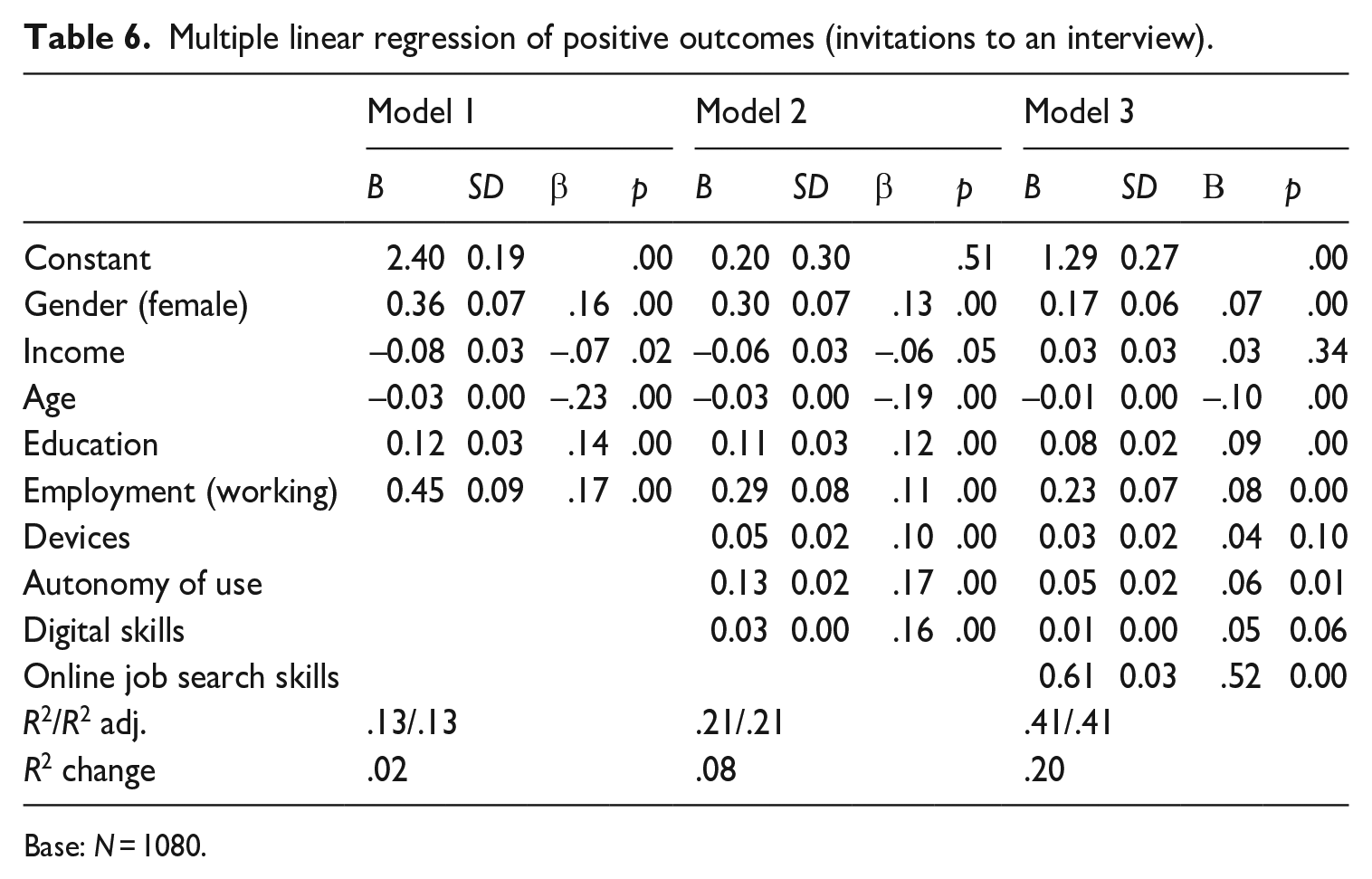
We also employed stepwise regression to test hypotheses H1b, H2, H3b, H4b and H5b. The first step involved socio-demographic variables and employment status. In the second step, we introduced variables related to digital capital, and in the third step, we incorporated online job search skills. The variance explained increased from 21% to 41% when introducing online job search skills in the model using socio-demographic and digital capital to explain being invited for an interview (see Table 6).
Multiple linear regression of positive outcomes (invitations to an interview).
Base: N = 1080.
Digital capital was positively related to being invited for an interview (H1b) but lost significance or became marginal when introducing online job search skills (H2). The introduction of online job search skills in the last step of our model significantly improved model fit and increased the frequency of being invited for an interview. Higher autonomy of use (β = .07, p = .015) was still associated with a higher frequency of being contacted for an interview (H1b). Nevertheless, a greater number of digital devices (β = .05, p = .105) and higher levels of general digital skills (β = .05, p = .061) were no longer significantly related to being invited for an interview. In strong support for H2, job search skills had the highest standardised coefficient (β = .52, p < .001).
Being female was positively related to how often a person was contacted for an interview (β = .07, p = .004), contradicting H3b. As expected, age was (H4a) negatively related to invitations for an interview (β = –.10, p < .001).
Like explanations of online job search skills, our hypotheses around economic resources were partially confirmed concerning being invited for an interview (H5a). Higher levels of education (β = .09, p < .001) were positively related to the frequency of being invited for an interview. Once considering online job search skills, the weighted income lost significance in its relationship with being invited for an interview (β = .03, p = .34). Up until the inclusion of online job search skills, the relationship between weighted income and being invited for an interview was negative and significant even when accounting for digital skills (β = –.06, p = .047). Employment status is also positively related with being invited for an interview (β = .09, p < .001).
Discussion
This article examined inequalities in online job search skills and their implications for the outcomes of the job search process. We collected survey data from a sample of Spanish job seekers and conducted two multiple linear regressions. Our main finding is that domain-specific digital skills are more important than general digital skills, compound socio-economic and socio-cultural inequalities in the outcomes of the job search process. We conceptualised these strategies as ‘online job search skills’ and showed how their unequal distribution among job seekers limited socio-economic opportunities. Our findings reveal a strong relationship between digital capital and specific online job search skills. Access ubiquity and autonomy (the variety of devices in the household and Internet access locations facilitating Internet use) and general digital skill levels positively relate to these domain-specific skills.
An important contribution from this study is that online job search-specific skills are more important than the commonly measured digital resources (access and general digital skills) in relation to positive outcomes. Indeed, the introduction of online job search skills into the model reduced the importance of other aspects of digital capital. This outcome empirically supports the assumptions that general digital skills may not be that helpful for specific activities, in this case using employment platforms, requiring additional specialised skills (Arroyo, 2018; Van Deursen and Van Dijk, 2015). One key implication of this finding is that, even among those with low levels of digital skills or lower quality access, having skills specific to online job searches significantly improves someone’s chances of achieving positive outcomes when looking for jobs online.
These findings echo recent insights from digital inequalities research emphasising that digital resources tend to be concentrated among users with more significant resources (Helsper and Van Deursen, 2015; Ragnedda, 2018; Robinson, 2012) and that digital inequalities are sequential (having better access enables acquisition of skills) and cumulative (someone lacking digital access or skills in one area is also lacking this in another area) (Van Deursen et al., 2017). In that sense, the digitally rich do get richer.
This article extends research on the online job search process in two significant ways by focusing on the need for job search-specific skills and in emphasising outcomes. Previous research showed that young men and those with higher levels of education were more confident in their digital job search skills on social media and their access to digital resources increased the likelihood of applying for jobs (Karaoglu et al., 2021). Previous research also examined experiences of employment training programmes and job interviews of job seekers with particular backgrounds and skill levels (Dillahunt et al., 2021; Gershon, 2019; Gist-Mackey, 2018). By focusing on domain-specific strategies, skills and knowledge, and their tangible outcomes, we extend this research by unearthing the crucial role of online digital skills specific to online job-seeking in securing an interview over and above more general digital skills.
However, offline resources, measured here through an applicant’s socio-demographic characteristics, remain important, influencing the probability of being invited for an interview. Our findings shed new light on the role of socio-demographic factors in acquiring strategies, skills and knowledge specific to job search employment platforms. As hypothesised, these relationships reflect existing inequalities (Helsper, 2021; Van Dijk, 2020). For example, older applicants are less likely to have developed online job search skills as well as general digital skills. Similarly, higher levels of educational attainment enable individuals to acquire higher skill levels in this area (Leukel et al., 2021; Robinson, 2012). However, we found no evidence for replication of other inequalities online and found counter-evidence in its relationship for gender and income. For gender, we found that women are more likely to have higher levels of online job search skills than men. For the income level, we found a negative relationship with job search skills and challenged the assumption that higher income systematically leads to higher skill levels (Van Deursen et al., 2017).
Our findings have several practical implications. While we demonstrate the critical role of specific online job search skills for employment outcomes, most digital skills courses focus on technical or software and application-based skills and often do not address the specific skills and knowledge needed to navigate the online job market and get positive results. Yet, this is especially important in countries like Spain with high unemployment rates, extensive use of dedicated job search platforms and little offer, especially at the lower qualification end. Therefore, employment programmes should integrate everyday online job search skills and knowledge of how systems work to address this shortcoming. Job interventions should also recognise the sequential nature of this process. Indeed, we showed that having first-level (access) and second-level (skills and content available) digital resources provide essential foundations for acquiring specific and targeted skills. Therefore, effective interventions targeting specific skills should incorporate better connectivity and broader digital engagement with an understanding of the candidates’ specific socio-economic and socio-cultural circumstances. When it comes to the third (outcome) level (Ragnedda et al., 2022; Van Deursen et al., 2014; Van Dijk, 2020), interventions should acknowledge the role played by structural inequalities in shaping access to employment according to population segments independent of their general and online job search specific skills.
Limitations and future research
Our sample was not representative of all sectors of the job-seeking population. Our results showing that socio-economic background relates to higher online job search skills and better outcomes, might have been even more pronounced if the sample had included less educated job seekers. In addition, those who were uncomfortable in Spanish, corresponding to a sizable part of the population of marginalised ethnic minorities in Spain, were not included. And because all our participants identified as either male or female, we could not analyse whether non-cis-gendered people are disadvantaged in online job-seeking making it impossible to analyse experiences of one of the groups facing severe job market discrimination, the transgender community (Raj and Juned, 2022). To be able to reach sufficient numbers for statistical testing and draw meaningful conclusions, future research should adapt questionnaires and employ sampling techniques that overrepresent marginalised groups typically underrepresented in survey research, such as individuals uncomfortable with the survey language, transgender individuals and other minority populations relevant to the study context.
Furthermore, while we know how many respondents were invited to interview, we do not have information on the number of applications submitted. Thus, we do not have the ratio of application to interview, which would shed additional light on inequalities. In addition, we did not include information about offline job search, limiting our ability to compare offline and online processes. Accordingly, future research should include indicators of the number of applications sent online and offline.
Finally, further research should be carried out in countries other than Spain to increase the portability of our findings and, more importantly, help develop a more comprehensive understanding of how digital inequalities shape access to work and employment. The present study provides a valuable starting point for these and other future investigations.
Footnotes
Data availability statement
The correspondence author will share data on a reasonable request.
Funding
The author(s) disclosed receipt of the following financial support for the research, authorship, and/or publication of this article: This research was fundedby the Spanish Ministry of Science and Innovation (reference number: RTI2028-098967-A-100).
