




Abstract
Given the urgent need for environments that enable everyone in fulfilling their fullest potential, many new media innovations have focused on equity, diversity and inclusion (EDI) actions. Gamification is one of these innovations, becoming a promising avenue to engage people towards effective social change. Yet, the intersection between EDI and gamification is incipient and fragmented, preventing a comprehensive understanding of current findings and future advancements in this field. This literature review systematically investigates the meanings, methods and effects of gamification in EDI actions (i.e. gamification towards EDI), and the design of equitable, diverse and inclusive gamification (i.e. gamification alongside EDI). Results elucidate how gamification improves performance, enriches experiences and fosters change, while analysing its design through gender, age and disability lenses. Future work calls for broader and deeper gamified EDI interventions informed by social sciences, diverse people-oriented design and empirical demonstration of sustainable social change.
Introduction
Equity, diversity and inclusion (EDI) actions have gained significant attention across various domains, given their undeniable contribution to sustainable growth. These actions prioritise fair treatment and opportunity for everyone (i.e. Equity), recognise and value unique characteristics that make people who they are (i.e. Diversity) and implement practices that ensure equal access for those who would otherwise be excluded or marginalised (i.e. Inclusion) (Kohl, 2022). They include promoting quality education regardless of colour or socioeconomic status (Tjoa and Poecze, 2020), avatar representation for transgender and non-binary players in game spaces (Kosciesza, 2023) and creating new media that holistically respect, protect and fulfil children’s rights to play freely (Livingstone et al., 2023).
Despite their positive impact, EDI actions have also encountered resistance and multiple pushbacks. Such resistance stems from historical and cumulative unfair advantages granted to certain groups, including privileged access to resources and differentiated social rights (Costanza-Chock, 2020). Therefore, EDI actions might be perceived as attacks or threats to some individual or social identities, often responding with denial (e.g. ‘This is not a problem’), disengagement (e.g. ‘This is not my problem’) and derailing (‘What about other problems?’) (Rai and Dutkiewicz, 2022).
As a potential tool to reshape these responses, gamification introduces game-like experiences in real life to support the accrual of skills (e.g. mood regulation and empathy), motivation (e.g. self-regulation and goal commitment) and overall positive growth (Hamari, 2019). While this support deeply relates to social sustainability, the extent to which gamification facilitates EDI actions and prevent pushbacks is not yet clear (i.e. gamification towards EDI). More than a means towards EDI, gamification should create a safe space that leaves no one behind (i.e. gamification alongside EDI) by understanding individual needs instead of imposing a design decided by an academic or managerial elite (Woodcock and Johnson, 2018). Since games themselves historically encode injustices that pervade society through a systematic over-representation of certain identity groups, this is a crucial step for gamification to not become a training ground for stereotype consumption and an instrument of hegemony (Gray et al., 2018). Beyond addressing power dynamics and paternalism implemented in games that incorporate top–down design approaches, other ethical challenges also need to be understood and overthrown by a more equitable, diverse and inclusive gamification, such as the lack of voluntarity and confidentiality, cognitive manipulation and social comparison (Klock et al., 2023). By overcoming such challenges, gamification would support people in achieving their own goals while promoting a meaningful game-like experience for everyone (Klock et al., 2020).
Therefore, understanding gamification towards and alongside EDI is essential to advancing these topics. Since research is not yet consolidated, this systematic literature review fills a knowledge gap by describing the state of the art of the intersection between EDI and gamification. More specifically, this article focuses on which meanings gamification has, which methods it employs and how it affects EDI. Our findings contribute to understanding how gamification promotes EDI actions and how gamification itself can be more equitable, diverse and inclusive, while providing future directions for gamification towards and alongside EDI.
Background
EDI: equity, diversity and inclusion
EDI actions are not new; they trace back centuries to human and civil rights movements and laws. These rights have been progressively evolving from exclusionary policies (i.e. leaving women, people of colour, members of certain sexual identities, social, religious, economic and political groups behind) towards more equitable, diverse and inclusive acts (Dewidar et al., 2022). EDI vocabulary has been purposefully and increasingly incorporated into corporate, educational and governmental environments to create a new and better world – one that recognises humanity, celebrates diversity, and makes equity and inclusion a reality (Kohl, 2022).
While incorporating this vocabulary is an important step in deliberation, it is far from enough to create this new and better world: we need to recognise the complexity of individual experiences and social structures and their impact on our lives (Collins, 1990). To support this tangled challenge, intersectionality comes as an analytic tool to understand how diversity dimensions interrelate and mutually shape each other in creating individual experiences and how intersecting power relations influence social relations across societies (Crenshaw, 1989). This understanding is crucial to addressing social obstacles stemming from compound inequality while providing the means to effectively change these long-standing structural barriers, including (Gagnon et al., 2022) the following:
Quantitatively measuring diversity to raise awareness on the representation of certain groups and highlight systemic issues to heighten people’s attention and willingness to take action (i.e. functionalist paradigm);
Qualitatively understanding how individuals experience being confronted with inequality to recognise complex dynamics between their intersectional self and their environments (i.e. interpretivist paradigm);
Emphasising how individuals generate change by resisting and overcoming limitations from social arrangements through agency (i.e. radical humanist paradigm);
Exposing measured inequality structures to provide historical and systemic analysis of issues to understand deep patterns and the barriers they pose to EDI (i.e. radical structuralist paradigm).
Regardless of the paradigms and their interplay, it is imperative to develop more and enhanced EDI actions to reach beyond our social bubbles and effectively address existing stereotypes, prejudices and discrimination. For that, we can take full advantage of new media innovations to measure diversity metrics, understand experiences, emphasise agency and expose inequality structures towards pushing EDI forward. One of these innovations to support societal transformation is gamification (Spanellis and Harviainen, 2021).
Gamification
Gamification uses game design elements in non-game contexts (Deterding et al., 2011). Since its definition, gamification has evolved towards holistically designing systems that support gameful experiences through motivational affordances, rather than merely adding game design elements with predetermined effects (Hamari, 2019). These motivational affordances can be grouped according to people’s motivations to play, which might vary based on a number of factors – as games, being an intrinsic part of our ever-changing culture (Berger, 2017), also constantly evolve. One of the most popular ways to categorise such motivations, especially when considering more recent literature reviews on gamification (Klock et al., 2020; Koivisto and Hamari, 2019; Krath et al., 2021), is through Yee’s (2006) classification, in which motivational affordances are divided as achievement – the desire for competing and gaining power over others, progressing rapidly and optimising performance (e.g. challenges, levels and points); social – the satisfaction of chatting and helping others, forming meaningful relationships and being part of a group (e.g. social networking, cooperation and teams) and immersion – the wish for escapism, assuming a virtual identity, getting involved in role-playing and discovering secret contents or features (e.g. narratives, avatars and easter eggs).
Motivational affordances result in psychological outcomes (i.e. experiences) that later translate to behavioural outcomes (i.e. actions supported or encouraged by gamification; Koivisto and Hamari, 2019). Overall, gamification is based on many theories (e.g. self-determination and flow theories, theory of planned behaviour; Krath et al., 2021) by offering different ways of doing activities without becoming a manipulative, exploitative or coercive means (Deterding, 2014). These theories help to explain mixed and conflicting results by acknowledging factors that contribute to successful gamification in different contexts and for diverse audiences (Krath et al., 2021). Yet, the literature lacks a comprehensive understanding of gamification towards and alongside EDI, preventing future work from drawing insights on current efforts to advance this field.
Methodology
We conducted a systematic literature review that consolidates how gamification can support EDI actions (i.e. gamification towards EDI) and how gamification itself can be equitable, diverse and inclusive (i.e. gamification alongside EDI). A systematic review aggregates existing literature regarding a topic, summarising research and highlighting gaps (Kitchenham et al., 2009). This review followed the PRISMA 2020 statement (Page et al., 2021), whose reproducible protocol is available in Open Science Foundation (OSF).
Identification
Three research questions guided this research in understanding the intersection between EDI actions and gamification:
RQ1. What are the meanings that gamification has towards and alongside EDI?
RQ2. How has gamification been employed towards and alongside EDI?
RQ3. What effects does gamification introduce towards and alongside EDI?
The search string ultimately was (diverse OR diversity OR inclusive OR inclusiveness OR inclusivity OR inclusion OR equality OR equity OR minorities OR underrepresented OR discrimination OR discriminative OR discriminatory OR stereotype OR bias OR justice OR fair OR fairness) AND gamification. We searched for journal articles and conference papers that match this search string in their title, abstract and keywords on 20 February 2023, returning 1735 studies in ACM Digital Library, IEEE Xplore Digital Library, Scopus and ISI Web of Science. After removing 634 duplicates with the support of Zotero reference management system, 1101 records were screened.
Screening
Non-duplicated records were distributed among authors, ensuring that at least two researchers screened each study. At first, researchers would individually identify whether each record was a complete (i.e. not protocol descriptions nor work-in-progress papers) and original (i.e. not reviews nor meta-analyses) study, and written in English based on title, abstract and keywords. After this screening, the first author identified disagreements between peers and invited a third researcher to be an active listener or participant in the discussion towards a consensus. For the first phase, 64 records were not a complete study, 139 were not original and 79 were not in English. Thus, 819 records were sought for retrieval through Tampere University, of which 50 were not retrieved. Similar to the first phase, 769 records were assessed for eligibility by two researchers and a third, if necessary. In this second phase, records needed to be about gamification (i.e. using game elements in non-gaming contexts (Deterding et al., 2011) but not fully fledged games nor other gameful technologies – as virtual and augmented reality) and EDI (i.e. focusing on representation, affirmation or correction of historical inequalities and consequent marginalisation of some groups based on specific attributes – such as race, ethnicity, gender, sexual orientation, socioeconomic status, disability, age, immigration status and language; American Psychological Association, 2021). After solving disagreements, 418 records were excluded based on the gamification criterion and 331 based on the EDI criterion, including 20 studies (Albuquerque et al., 2017; Besoain et al., 2020; Boyle et al., 2022; Casey et al., 2023; Christy and Fox, 2014; Codish and Ravid, 2017; De Souza Sombrio et al., 2016; Garcia-Holgado et al., 2019; Hightow-Weidman et al., 2021; Huang and Lau, 2020; Le Pichon et al., 2024; Manzano-León et al., 2022; Minge and Cymek, 2020; Mora et al., 2016; Ndegwa et al., 2023; Oliveira et al., 2024; Santos et al., 2023; Thiel et al., 2019; Von Holy et al., 2017; Wernbacher et al., 2022) in this review, as Figure 1 summarises.
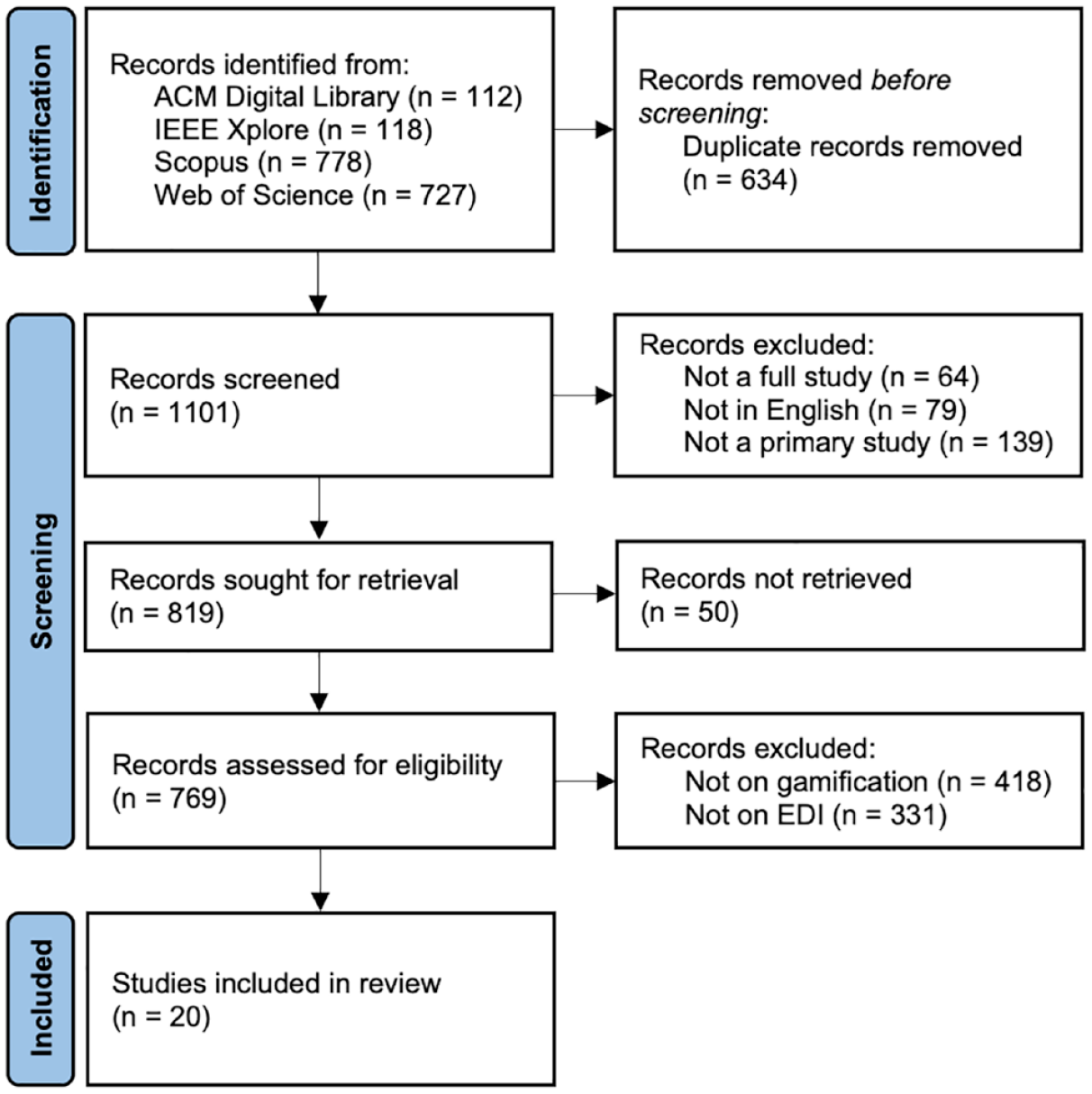
PRISMA-2020 flow diagram.
Included
Authors were also randomly assigned to extract data from these studies, which were later reviewed and standardised by the first author in a synthesis matrix, being later quantitatively compared and qualitatively characterised through an integrated design approach (Noyes et al., 2019). Regarding meanings (RQ1), we analysed purposes and target groups, contexts and contents or subjects being addressed. Regarding methods (RQ2), data were related to theories and fields (e.g. psychology, pedagogy), motivational affordances (e.g. achievement-, immersion- and social-based), research nature (i.e. conceptual or empirical), approach (i.e. quantitative, qualitative, mixed-methods), strategy (e.g. experiments, case studies), data collection (e.g. questionnaires, interaction logs), analysis methods (e.g. descriptive statistics, thematic analysis) and sample size. Regarding effects (RQ3), outcomes were based on metrics (e.g. motivation, experience, performance) and effects (e.g. increase, decrease).
Results
Meanings (RQ1)
Regarding purposes, half of the studies (n = 10) focused on gamification towards EDI, especially for minorities related to gender, age – including children and older adults, sexual orientation, language, disabilities and immigration status. The other half investigated gamification along EDI for different genders, ages and disabilities.
On one hand, studies on gamification towards EDI actions were more specifically aiming at the following:
Fostering gender diversity and inclusion in Science, Technology, Engineering and Mathematics (STEM) fields: Garcia-Holgado et al. (2019) described a gamified Software Engineering discipline introducing gender-inclusive indicators (e.g. equality of opportunities, treatment, training and work–life balance). Similarly, Wernbacher et al. (2022) introduced a gamified learning tool to help parents with little or no connection to STEM in building skills to be positive role models for children, especially by not being gatekeepers for girls.
Promoting language diversity and equity: Ndegwa et al. (2023) evaluated a gamified language learning app to improve reading comprehension of Swahili among Kenyan children. Likewise, Von Holy et al. (2017) investigated how gamification motivates native speakers to create content on South African Resource Scarce Languages (i.e. isiNdebele, isiXhosa, isiZulu, Sepedi, Sesotho, Setswana, siSwati, Tshivenda and Xitsonga). Supporting more equitable education, Le Pichon et al. (2024) analysed how refugee children experienced a gamified learning platform that provided linguistic versatility.
Encouraging health behaviours within sexual minorities: Hightow-Weidman et al. (2021) aimed to increase the engagement of men who have sex with men in Antiretroviral Therapy uptake and adherence through gamified medication reminders and social support. Likewise, Besoain et al. (2020) focused on preventing sexually transmitted diseases by creating gamified reminders of preventive measures (e.g. using condoms) for men who have sex with men in places where sexual activities could occur (e.g. gay saunas and nightclubs). Not related to sexual health, Boyle et al. (2022) aimed to reduce alcohol consumption while addressing negative stereotypes within lesbian-, bisexual-, and queer-identified (LBQ) women that are moderate to heavy drinkers through a digital competition.
Supporting functional diversity: Manzano-Léon et al. (2022) explored whether gamified education promoted awareness of different disabilities and means to overcome difficulties related to each in Early Childhood Educational degree students (i.e. future teachers). In another direction, Mora et al. (2016) presented a gamified training tool aimed at preventing cognitive decline in healthy older adults prior to or in the early stages of dementia.
On the other hand, studies aiming to promote more equitable, diverse and inclusive gamification specifically addressed the following:
Gender-specific gamification: Codish and Ravid (2017) evaluated a gamified Software Analysis and Design course using gender as a moderating factor. Similarly, Christy and Fox (2014) investigated the impact of leaderboards on women’s academic performance in mathematics. Exploring gamified gender stereotypical or non-stereotypical environments, Albuquerque et al. (2017), Oliveira et al. (2024) and Santos et al. (2023) identified relationships between aggressiveness levels, anxiety, performance and flow experience using colour-based badges (being blue for men, purple for women and grey as neutral), leaderboards (either masculine-only, feminine-only or mixed names) and avatars (gendered photos or mixed representations).
Gender- and age-specific gamification: Casey et al. (2023) analysed how gamification change girls’ interest in technology, while Thiel et al. (2019) investigated the influence of gender and age on gamified civic participation in urban planning.
Age-specific gamification: Minge and Cymek (2020) investigated how older adults perceive long-term objectives, tasks’ difficulty and motivational affordances in learning computer basics through a gamified interactive prototype.
Disability-specific gamification: De Souza Sombrio et al. (2016) documented the creation of a learning object in mathematics accessible to people with visual or hearing disabilities. Moreover, Huang and Lau (2020) proposed game design guidelines to enhance the touristic experiences of people with vision impairments.
Regarding target audiences, both gamification towards and alongside EDI actions focused gender, age and disability minorities, while gamification towards EDI actions also tackled sexual orientation, language and immigration status, as Figure 2. Some studies investigated multifaceted audiences, as Le Pichon et al. (2024) enabling refugee children to learn mathematics in their own language (i.e. age, immigrant status and language), or Wernbacher et al. (2022) assisting parents in supporting girls in STEM fields (i.e. age and gender).
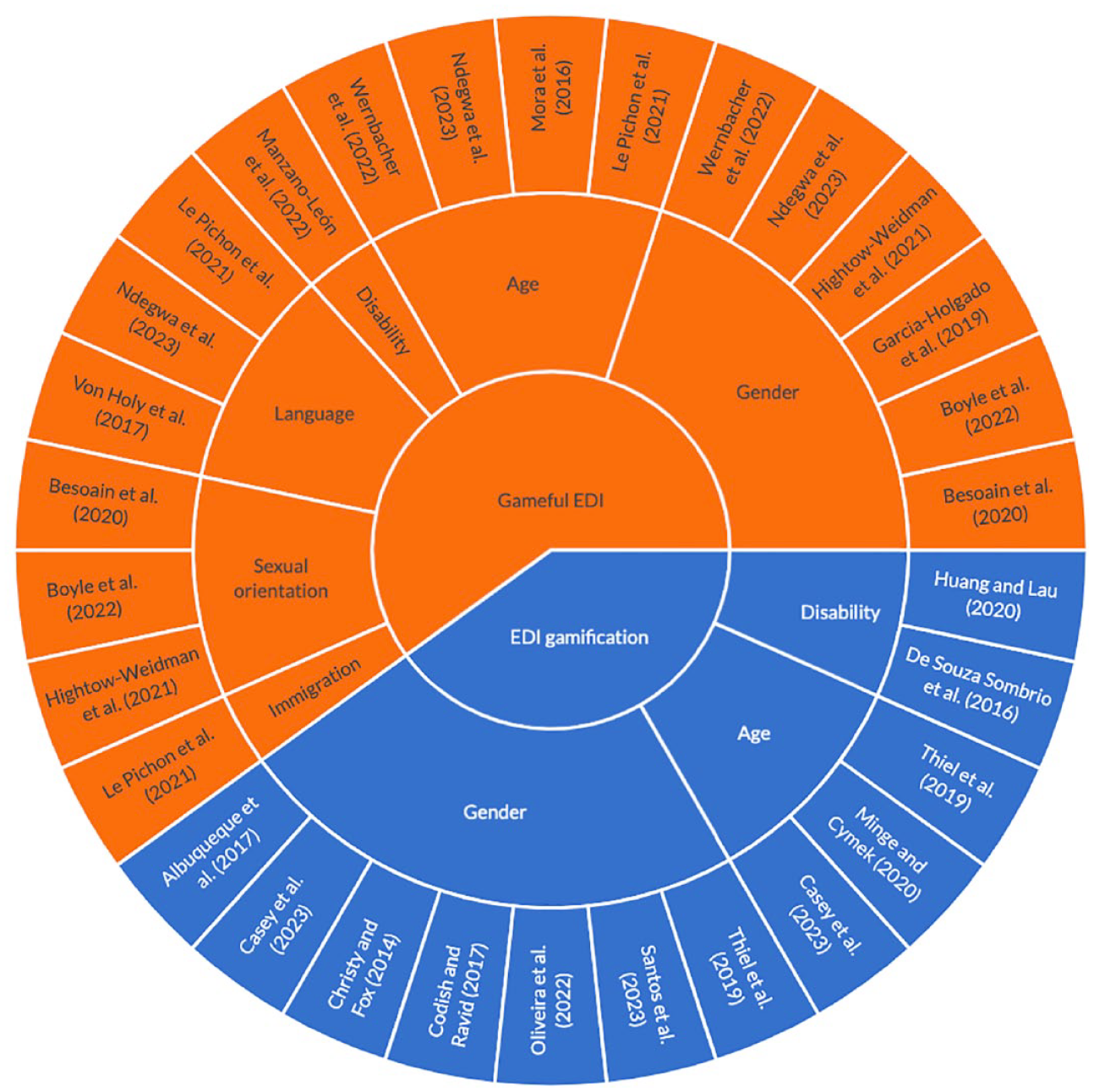
Studies by purpose and target groups.
Education is the most common context, as Figure 3 shows. Within education, studies focused on Mathematics (i.e. numeracy (Le Pichon et al., 2024), geometry (De Souza Sombrio et al., 2016), logical reasoning (Albuquerque et al., 2017; Oliveira et al., 2024; Santos et al., 2023), and algebra and calculus (Christy and Fox, 2014)) and Technology (i.e. digital literacy; Minge and Cymek, 2020), future technologies and careers (Wernbacher et al., 2022), software analysis (Codish and Ravid, 2017), computer engineering (Garcia-Holgado et al., 2019) and cybersecurity (Casey et al., 2023)) subjects, but there is also evidence on gamified EDI in content related to Languages (i.e. Swahili; Ndegwa et al., 2023) and South African Resource Scarce Languages (Von Holy et al., 2017) and Pedagogy (Manzano-León et al., 2022). Within healthcare, studies tackled sexual health behaviours by promoting gamified prevention (Besoain et al., 2020) and treatment (Hightow-Weidman et al., 2021) of HIV, training towards preventing cognitive decline in older adults (Mora et al., 2016) and addressing psychoactive substance abuse within LBQ women (Boyle et al., 2022). Finally, Thiel et al. (2019) focused on gamified civic e-participation towards urban planning within the governmental context, and Huang and Lau (2020) proposed gamification co-design guidelines to enhance the tourism experience within the mobility context.
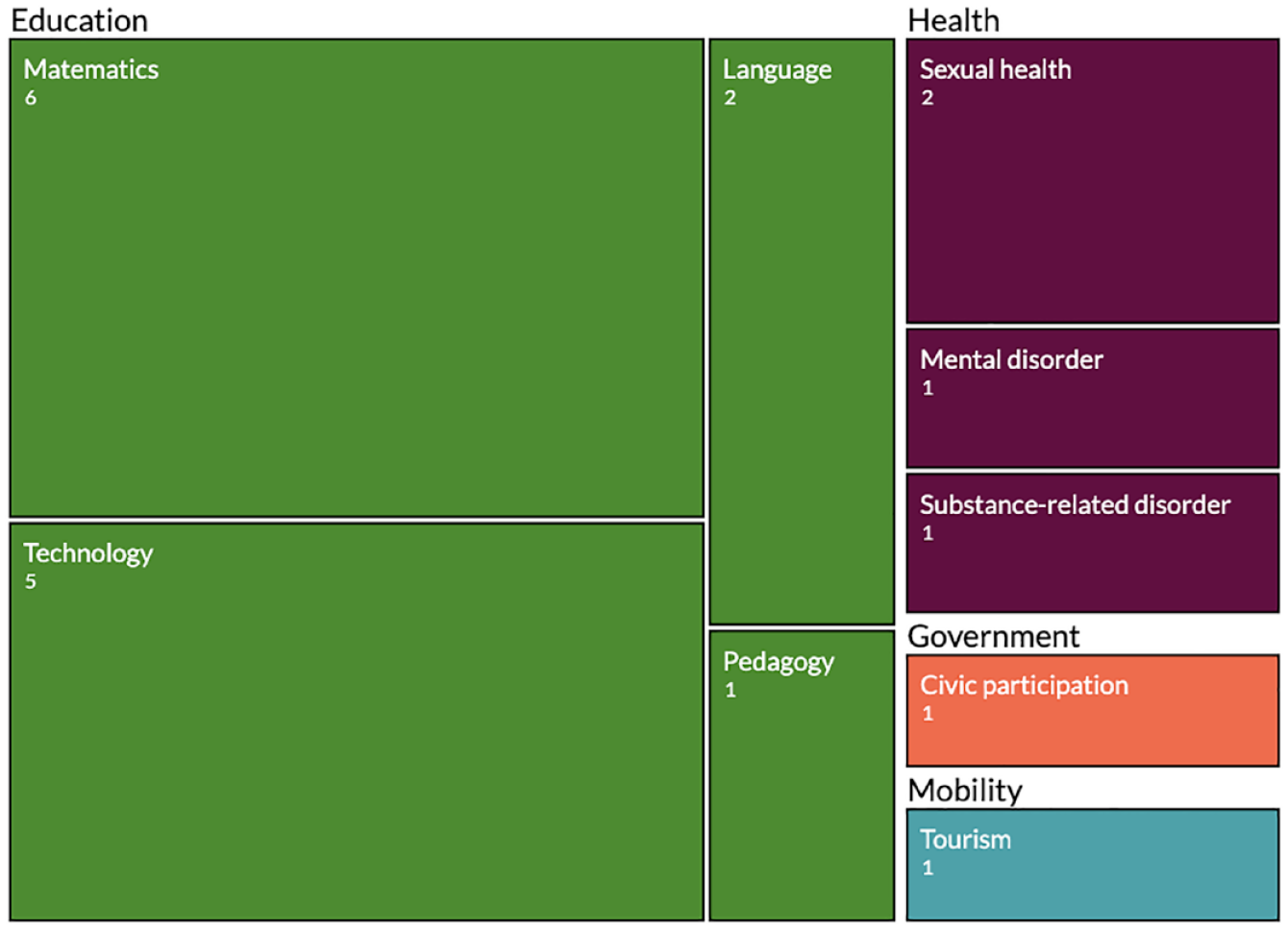
Studies by contexts and subjects.
Methods (RQ2)
Regarding methods, many theories supported gamification alongside and towards EDI. Ten studies were backed by at least one psychological theory. For instance, gender stereotype threat was investigated by Albuquerque et al. (2017), Christy and Fox (2014), Oliveira et al. (2024) and Santos et al. (2023) when understanding its effects on people’s experience in a gamified educational environment. Furthermore, gamification was related to autonomy, competence and relatedness (i.e. self-determination; Ryan and Deci, 2020) and flow state, in which people feel fully involved in an activity (Csikszentmihalyi, 2000). Other psychological theories were used by only one study, namely cognitive neo-association theory (Santos et al., 2023), information-motivation-behavioural (IMB) skills model (Hightow-Weidman et al., 2021), Maslow’s hierarchy of needs and PERMA model (Huang and Lau, 2020), theory of planned behaviour (Thiel et al., 2019), and nudge theory and trans-theoretical model (Wernbacher et al., 2022).
Regarding design theories, three studies applied the mechanics, dynamics, aesthetics (MDA) framework to support gamification design (Codish and Ravid, 2017; Huang and Lau, 2020; Manzano-León et al., 2022). Studies also employed co-design (Besoain et al., 2020), goal-question-metric framework (Oliveira et al., 2024), user-centred design (Mora et al., 2016) and Lazzaro’s and LeBlanc’s types of fun (Huang and Lau, 2020). As most studies were in education, project- and problem-based learning (Casey et al., 2023; Garcia-Holgado et al., 2019; Manzano-León et al., 2022) also appeared. Garcia-Holgado et al. (2019) proposed a Software Engineering project that required students to design an application supporting diversity and inclusion policies, Manzano-Léon et al. (2022) implemented a set of cooperative challenges for students learning how to overcome difficulties in teaching for people with different disabilities, and Casey et al. (2023) presented real-world problem-based scenarios on digital forensic science and cybersecurity to increase the interest of girls for the topic. Four studies (Boyle et al., 2022; Minge and Cymek, 2020; Ndegwa et al., 2023; Von Holy et al., 2017) did not mention any theories.
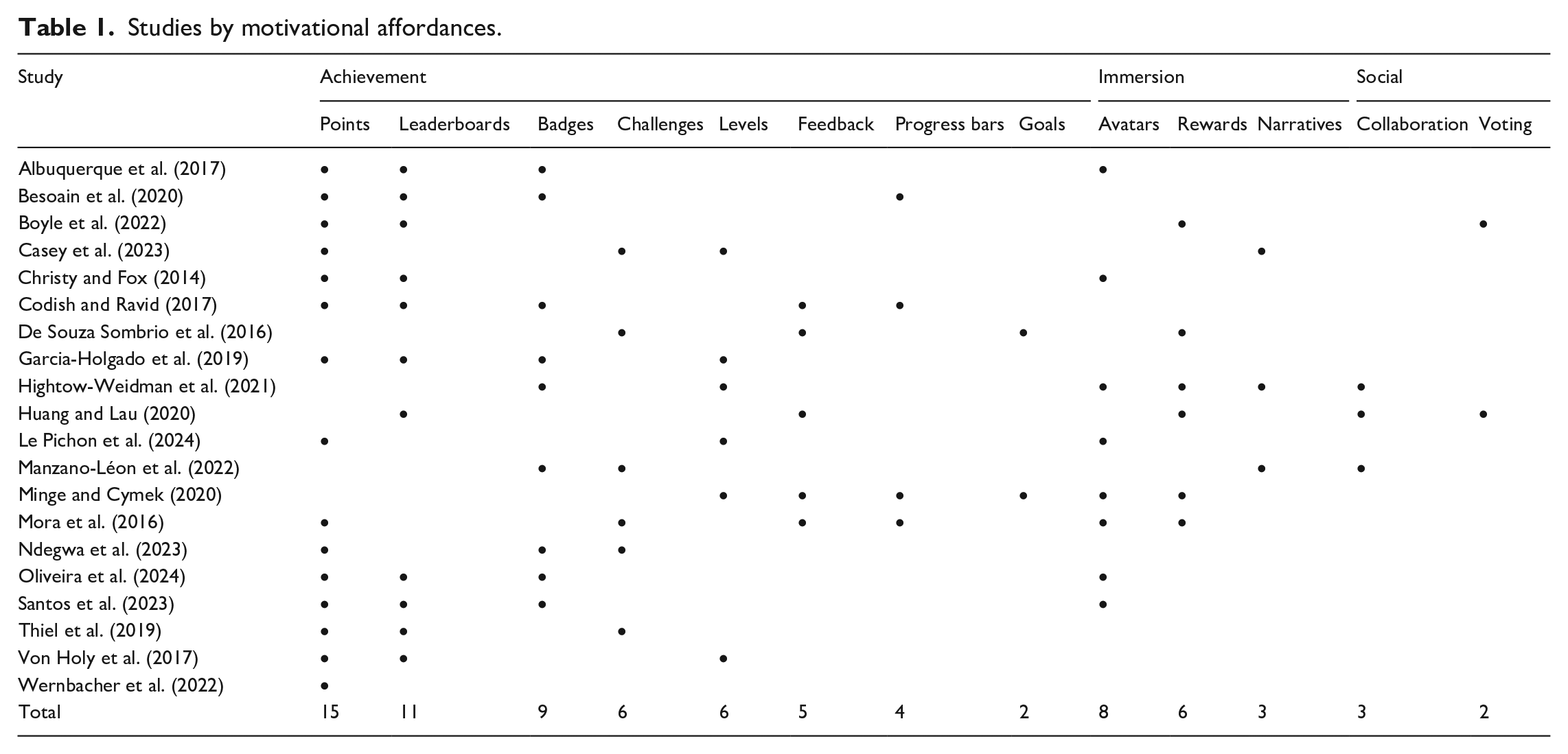
Regarding motivational affordances, achievement-based ones were employed by all studies. Points, badges and leaderboards were predominant, as Table 1 summarises, which also replicates gamification and most common affordances overall (Koivisto and Hamari, 2019). Surprisingly, social-based affordances were rare, despite the inherent social aspect of EDI. In more detail, points were based on actions performed, but also on usage time and friend referrals. People could lose these points in some studies, either by poor performance or betting. Leaderboards were mainly based on points. Badges were awarded according to activities milestones, levels, challenges or points. Challenges were related to specific exercises or daily usage. Overall, levels increased according to points or content difficulty. Feedback mostly followed exercises performance, but it was also based on leaderboards. Progress bars were either based on points or completed exercises, while goals were a virtual representation of individual progress in exercises. Avatars were mostly customisable, either as predefined pictures, uploaded pictures or through an avatar maker, except for Christy and Fox (2014) that implemented avatar as a fixed 3D representation of an adult white woman, despite not being representative of all people within their sample. Rewards vary from unlockable features, virtual coins to buy new avatar features, virtual candy that would fill a basket, virtual pieces to compose a puzzle, a part of a song and even cash prizes. Narratives involved role-playing as a superhero saving the world or as a cybersecurity expert helping people. Finally, collaboration was implemented through team missions or peer challenges, and voting comprised questions or messages written by others.
Studies by motivational affordances.
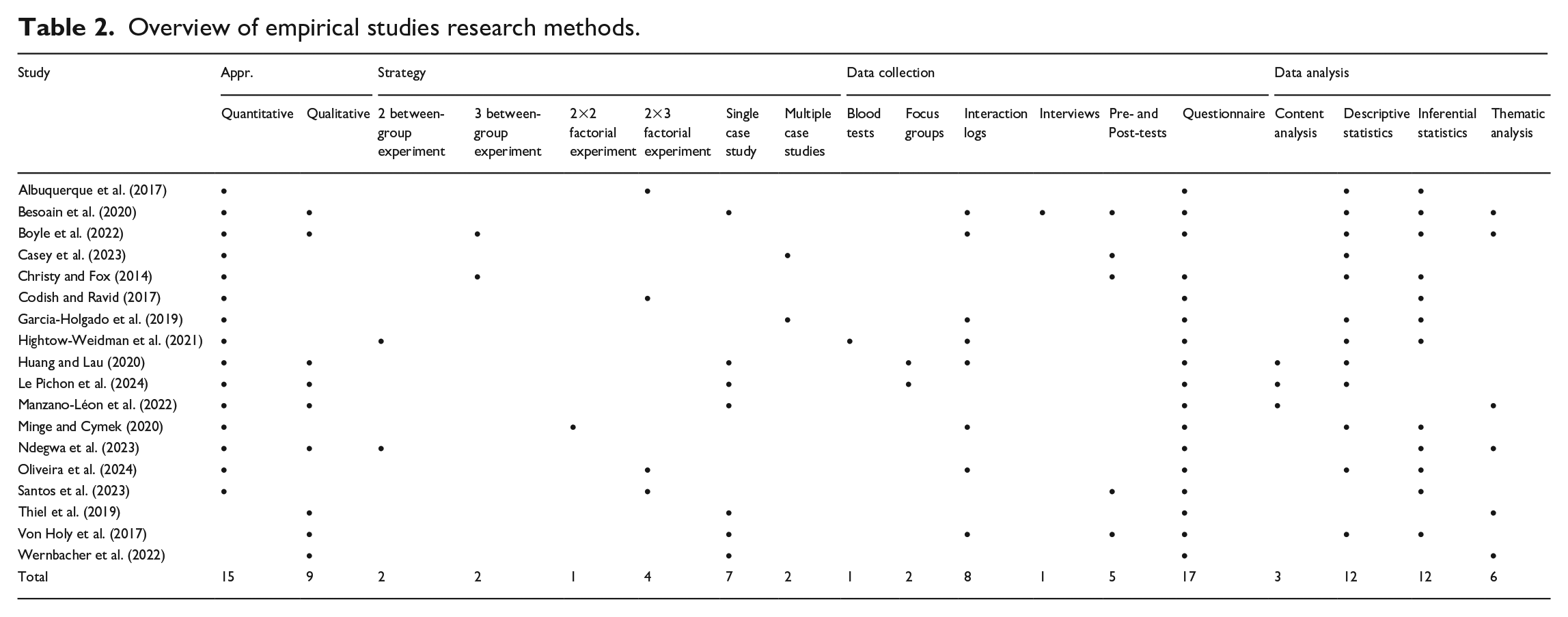
Empirical nature was predominant in this topic, with two studies (De Souza Sombrio et al., 2016; Mora et al., 2016) describing conceptual designs based on existing literature. Empirical studies were mostly quantitative or mixed approaches, as shown in Table 2. Regarding strategy, five studies conducted between-subjects factorial design experiments, either as a 2×3 design by analysing the use of gamified stereotypical-male, stereotypical-female and control interventions by women or men and by understanding gamification uses by women and men across three different semesters, or as a 2×2 design that evaluates gamified or non-gamified interventions effects on two age groups (60–69 years old and 70–79 years old). Four studies employed between-subjects design experiments with either 2 (i.e. gamified vs non-gamified interventions) or 3 groups (i.e. alcohol use and coping, alcohol use, or personalised normative feedback; and using men-dominated, women-dominated and control leaderboard). The nine remaining works conducted single- or multiple-case studies. Overall, the most used data collection methods were questionnaires and interaction logs. As most studies applied quantitative and mixed-methods approaches, data analysis methods were descriptive and inferential statistics, especially using t-tests, ANOVA, Pearson’s correlation. Sample sizes ranged from 9 to 2667 participants (M = 279.11, SD = 617.22), being 9 studies with less than 100 participants (Besoain et al., 2020; Christy and Fox, 2014; Garcia-Holgado et al., 2019; Huang and Lau, 2020; Le Pichon et al., 2024; Manzano-Léon et al., 2022; Minge and Cymek, 2020; Ndegwa et al., 2023; Von Holy et al., 2017) and only 2 with more than 350 participants (Boyle et al., 2022; Thiel et al., 2019).
Overview of empirical studies research methods.
Effects (RQ3)
Regarding psychological outcomes, four studies analysed experience, being positive for teachers, seniors and students using gamification (Manzano-León et al., 2022; Minge and Cymek, 2020; Ndegwa et al., 2023), but with no effect for people with visual impairment’s travelling experience (Huang and Lau, 2020). Four studies evaluated effort in use, which were lower for South Africans and parents (Von Holy et al., 2017; Wernbacher et al., 2022), no effects for older adults (Minge and Cymek, 2020), but higher efforts within some app functionalities (e.g. excessive notifications, repetition and battery consumption) for men (Besoain et al., 2020). Three studies investigated attitude, being a positive change in gender perspective in STEM for students and parents (Garcia-Holgado et al., 2019; Wernbacher et al., 2022), and fear of technology for seniors (Minge and Cymek, 2020). Three studies evaluated motivation, with a noticeable increase for students learning mathematics (Le Pichon et al., 2024) or by comparing affordances (e.g. levels being more motivating than leaderboards) (Von Holy et al., 2017), but no significant correlation between gamification usage and motivation in Thiel et al. (2019). Regarding anxiety levels, Le Pichon et al. (2024) described an anxiety decrease for refugee children, but Albuquerque et al. (2017) identified an anxiety increase for women using men-stereotyped gamification. Gender-stereotyped gamification did not affect the flow state in Oliveira et al. (2024), but the women-stereotyped version increased the flow in Santos et al. (2023). Regarding interest, Von Holy et al. (2017) perceived an increase in participants’ search for content in resource-scarce languages, while Casey et al. (2023) identified that girls were less likely than boys to come into the programme with an interest in computer science, yet expressed a more significant increase in interest than boys in learning more about careers related to digital forensics and cybersecurity. Santos et al. (2023) noticed a detectable increase in aggressiveness in people using men-stereotyped gamification; Codish and Ravid (2017) indicated that women reported higher enjoyment with badges, points and leaderboards, and men with points and leaderboards; Christy and Fox (2014) reported that participants using women-dominated leaderboards had significantly higher academic identification scores than other conditions; and Codish and Ravid (2017) observed that perceived playfulness decreased over time, and men reported a stronger decline than women. Seven studies reported behavioural outcomes through an increase of performance (Le Pichon et al., 2024; Manzano-León et al., 2022; Ndegwa et al., 2023; Santos et al., 2023; Wernbacher et al., 2022) – while there was no change in between-groups performance Albuquerque et al. (2017); Oliveira et al. (2024). Four studies also investigated participation, being successful in increasing it towards learning (Le Pichon et al., 2024) or lowering the consumption of alcohol (Boyle et al., 2022), but being indifferent in antiretroviral therapy uptake or adherence (Hightow-Weidman et al., 2021) and being negatively correlated with age (i.e. older people would participate less in gamified environments; Thiel et al., 2019).
Discussion
This study focused on investigating the meanings gamification has (RQ1), the methods it employs (RQ2) and the effects it promotes towards and alongside EDI actions (RQ3). These findings allow us to comprehensively understand how gamification can promote EDI and how gamification itself can be more equitable, diverse and inclusive, while also highlighting existing gaps that need to be addressed by future works.
Answering RQ1, gamification is being used as both a means and a subject of EDI. Being a means towards it, gamified EDI addressed gender, age, language, sexual orientation, disability and immigration status. In detail, gamification fostered gender diversity and inclusion in STEM fields by promoting awareness of gender-inclusive indicators for Software Engineering students and by supporting parents to better understand STEM skills and support children aspiring to learn about these areas. Gamification also promoted language diversity and equity, either by providing tools to learn and create content in Bantu languages or by allowing refugee children to learn mathematics in their own native language. Finally, gamified personalised feedback on alcohol use and contextualised reminders on medication uptake and preventive sexual measures encouraged health behaviours within sexual minorities, while gamified education and training tools aimed to promote awareness of disabilities for future teachers and to prevent cognitive decline in older adults prior to or in the early stages of dementia. In like manner, being a subject alongside EDI, gamification addressed the gender-, age- and disability-specific effects of motivational affordances towards designing more equitable, diverse and inclusive gamification. Overall, studies aimed to understand how points, leaderboards, badges, avatars, levels, challenges, feedback, narratives, progress bars designs influenced the experiences of people of different genders when interacting with gamification; how points, challenges, levels, avatars, badges, feedback, goals, narratives, progress bars and rewards designs impacted diverse ages; and feedback, rewards, challenges, collaboration, goals, leaderboards and voting designs were able to support people with disabilities. Beyond describing which populations are being considered by the current literature, our findings also highlight other marginalised groups that are not, such as race, ethnicity and socioeconomic status.
Gamification towards and alongside EDI actions were mainly in education and health contexts, by reducing gender disparities in mathematics and technology (which are still male-dominated fields; Charlesworth and Banaji, 2019) from an early age through and within gamification, and by supporting better healthcare for stigmatised groups. Still, we perceive a lack of gamification towards and alongside EDI in many contexts permeating our everyday lives, such as corporate training and social media.
Answering RQ2, gamification towards and alongside EDI is methodologically backed by multiple psychological, design and pedagogical theories. Notably, stereotype threats (Spencer et al., 1999) supported the design of gender-stereotyped gamified environments in four studies that later evaluated their impact on students, self-determination theory (Ryan and Deci, 2020) was used to justify the application of gamification and to support the design of better gamified experiences and flow theory (Csikszentmihalyi, 2000) assisted in the evaluation of the flow state promoted by gamification. Moreover, project- and problem-based learning supported the educational practices within three studies, while the MDA framework (Hunicke et al., 2004) guided three other studies in choosing and justifying motivational affordances used in the gamification design. In these lines, most motivational affordances are still based on achievement (i.e. points, leaderboards and badges), and only a few immersion- and social-based affordances appeared, despite EDI actions being inherently social. This finding highlights that, despite the multiple theories being explored, social aspects not yet internalised in gamification towards and alongside EDI.
Most studies conducted empirical research, which is a good indicator that knowledge is being constructed from data (e.g. by asking people through questionnaires, interviews and focus groups) while using rigorous strategies (e.g. controlled experiments, case studies). Still, as studies were mainly quantitative, they provided a measurable understanding of people’s preferences and needs, but less of critical knowledge regarding how and why gamification works towards and alongside EDI actions. While EDI discussions tend to be inherently political, the intersection between EDI and gamification as shown so far to be fairly depoliticised by, for instance, making use of diversity dimensions as a solely quantitative report basis.
Answering RQ3, gamification towards and alongside EDI actions has demonstrated notable support for both psychological and behavioural change. For instance, the majority of studies indicated a positive experience and enhanced performance among individuals from diverse backgrounds when engaging with gamification. However, the assessment of effort in use and participation yielded more mixed results, emphasising the complexity of the interplay between gamification and EDI and its nuanced impact on diverse people and contexts. Despite being still early to substantiate the positive effects of gamification, especially in the long term, the perceptible benefits it presents so far cannot be overlooked but rather provide a promising foundation for further exploration and refinement of this topic.
Future agenda
Gamification towards and alongside EDI demonstrated promising early momentum. However, we are still a long way from properly integrating and fostering long-term gamified social justice as a cohesive field. The above insights provide a complete picture of existing gaps and can drive future work through the following agenda:
Future work should explore overlooked diversity dimensions and contexts, while including more privileged groups
This work sheds light on a significant population gap, specifically concerning many diversity dimensions so far overlooked (e.g. race, ethnicity, socioeconomic status and faith) (Crenshaw, 1989). Ensuring minorities are fully represented is critical in this field, especially as these dimensions are practically never considered in technology (Hankerson et al., 2016). Beyond the dearth of representation of many diversity dimensions to understand experiences and support agency for marginalised communities (i.e. interpretivist and radical humanism), we need to recognise the scarcity of studies focusing on how more hegemonic groups are becoming aware, challenging structures of inequality and upholding everyone’s rights (i.e. functionalism and radical structuralism), such as Manzano-Léon et al. (2022) in promoting awareness of different disabilities to future teachers. However, this critical role of privileged groups in fostering EDI remains understudied. Furthermore, future work must also reflect on how contexts might impose hurdles on various people and which contexts are still missing (e.g. business, social work). Addressing this gap is imperative to holistically understand how gamification can effectively leverage EDI actions informed by evidence-based practices that facilitate meaningful change in many contexts.
Future work should promote intersectionally informed gamification towards and alongside EDI
While studies investigated some diversity dimensions, gamification towards and alongside EDI is still far from understanding how intersecting and overlapping social identities can support and influence its meanings, methods and effects. This theoretical gap highlights that studies are mostly examining single or isolated multifaceted dimensions, neglecting how they interrelate and mutually shape one another. In pursuing intersectionally informed gamification, future work should learn from those typically excluded from expert roles, consider how diverse identities interact to create unique experiences, recognise that people may experience both power and oppression, reflect on own unconscious biases influencing in their study and not assume or make decisions on behalf of others (Monjurul Kabir et al., 2022). These intersectionality principles are not new, as Black feminists have been elaborating on struggles from overlapping colours, genders, sexual orientations and class oppression for many decades (Collins, 1990; Crenshaw, 1989), but yet to be extended to technological efforts that aspire social injustice. Thus, we must delve deeper into how intersecting social identities influence the internalisation of gamified experiences, using both qualitative and quantitative methods to understand gamification’s role in perpetuating or challenging inequalities and gamification outcomes through intersectional lenses.
Future work should balance motivational affordances types to suit diverse people and contexts
An evidence gap emerges from conclusive, yet contradictory, results presented. A huge unbalance in gamification design currently prioritises achievement-based motivational affordances. Despite several critiques on points, leaderboards and badges as an ill-considered design that repeatedly disregard people and contexts (Deterding, 2014), these affordances are still popular but unlikely to meet everyone’s expectations, needs and preferences, which consequently stands in the way of a more equitable, diverse and inclusive gamification. Furthermore, there are plenty opportunities to make the most of these contexts by exploring more immersive and socially meaningful experiences. For instance, social-based affordances can encourage interactions that enable people to voice their thoughts, promote collaboration that makes the best use of their skills, and allow discussions and cooperation that strengthen community-building (Gomez et al., 2021), which foster social support and accountability. In addition, immersion-based affordances in debiasing training, specifically in facilitating perspective-taking, can enable people to witness how oppression functions, foster empathy and inspire prosocial behaviour (Chen et al., 2021), making it harder for people to dismiss or disregard others’ reality and encourage engagement with issues that do not directly affect them.
Future work should ethically integrate diverse people in the decision-making processes
Thus far, studies provided little support for people to shape gamification as co-owners, with only Besoain et al. (2020) using co-design yet providing limited information on this process. Thus, this methodological gap calls for more bottom–up approaches, especially providing specific details for transparency and credibility. Future work should bring diverse stakeholders together (e.g. who are they? what is their context?) to promote a collective understanding (e.g. how is it designed, created, and disseminated?), while addressing historical injustices, structural inequalities and power imbalances (e.g. how did we, in our position of power, ensure an equitable space for everyone involved?) – so that we avoid consistently giving power to those who would already traditionally hold it. More than integrating diverse people, we need to ensure it is done ethically, not as another (un)intentional means to exploit marginalised communities, by establishing a respectful and transparent relationship with stakeholders that safeguards their privacy and well-being when revisiting traumatic experiences which introduces negative emotions and overwhelms them with the burden of continuously educating others; by using suitable tools to stakeholders’ needs and abilities to avoid perpetuation of power imbalances, which provides them a genuine opportunity to influence the decision-making instead of solely involved them for the appearance of an equitable, diverse and inclusive process (i.e. tokenism); and by providing pertinent credit, ownership and compensation for people’s ideas and contributions, instead of borrowing elements without properly understanding their cultural context (Costanza-Chock, 2020).
Future work should use non-stereotypical means of understanding and representing people
In gamification alongside EDI actions, tailored gamification aroused as an approach that recognised the influence of social identities and contexts in gamified experiences (Klock et al., 2020). While it is overall effective, it can also perpetuate stereotypes and reinforce biases if not carefully implemented. For instance, tailoring gamification solely based on motivational affordances suggested to people’s gender (e.g. ‘all women like customisation’, ‘all men like competition’) is, at best, a misunderstanding of the tailored gamification goal and, at worst, a disrespectful assumption and subsequent abuse of power by gamification researchers and practitioners. Luckily, there are multiple ways to avoid these exclusionary practices, such as by applying inclusive design principles (e.g. equitable, flexible and intuitive use) to ensure that motivational affordances are accessible, respectful and beneficial to everyone’s needs (Mace, 1985). Beyond poor tailored gamification design, we speculate that implementing stereotypical gamification on purpose, even if for the ‘right’ reasons (e.g. evaluating gender stereotype threats; Albuquerque et al., 2017; Oliveira et al., 2024; Santos et al., 2023), is counterproductive (i.e. practical knowledge gap) by disregarding potential negative effects it might cause in the long term and beyond measured outcomes. Therefore, upholding ethical standards and maintaining consistency between research goals and developed tools are crucial to avoiding oversimplification, discrimination and inequality reinforcement in gamification actually geared towards and alongside EDI.
Future work should empirically explain how gamification towards and alongside EDI is a sustainable approach to change
Overall, studies focused on marginalised groups using quantitative and mixed-methods that evaluate psychological and behavioural effects. Yet, it is still unclear how gamification can be a tool to raise awareness about under-representation, foster understanding of different perspectives, promote agency and challenge structures of inequality (Gagnon et al., 2022). Thus, compounding with the gaps presented above, this empirical gap calls for more comprehensive and exhaustive approaches to understand the effects of gamification towards and alongside EDI through individual, collective and systemic levels. Future work must investigate how gamification outcomes extrapolate into the real world to support actual change, explain its effects based on both theoretical foundations and people’s perceptions and reflect on the meaningfulness of their work for their target audiences and society at large. Without such reflection and deliberation, gamified EDI initiatives may inadvertently serve as a sugar-coat for coercive forms of paternalism (Hassan and Hamari, 2020) rather than genuine social good. We encourage the pursuit of change through multiple paradigms, so this topic can avoid hidden economic agendas or fast-selling promotional coverage of gamification towards and alongside EDI actions without any actual change in policies and practices (i.e. ‘woke-washing’) (Kohl, 2022).
Conclusion
This work provided a comprehensive understanding of the meanings, methods and effects of gamification towards and alongside EDI through a systematic literature review. Regarding meanings, gamification is both a means and a subject of EDI actions. As a means, gamified interventions focused on fostering gender inclusion in STEM fields, promoting language equity, encouraging health behaviours within sexual minorities and supporting functional diversity. As a subject, it investigated how gender, age and disability influence experiences provided by motivational affordances. Target audiences encompassed gender, age, disability, language, sexual orientation and immigration status, particularly within education and health to reduce gender disparity and improve healthcare for stigmatised groups. Regarding methods, this intersection was supported by various theories, especially from psychology and game design fields, and implemented mostly achievement-based affordances (e.g. points, leaderboards and badges). Empirical research was prevalent, including controlled experiments and case studies, primarily evaluated through quantitative methods. Regarding effects, gamification towards and alongside EDI showed benefits in supporting psychological and behavioural change.
Beyond describing the state of the art, this study provided clear implications and future directions. Based on population, theoretical, evidence, methodological, practical and empirical gaps, we encouraged future work to explore more diversity dimensions and contexts, promote more intersectionally informed work, balance motivational affordance types, integrate diverse people in decision-making processes, use non-stereotypical means of understanding and representing people, and empirically explain how they promote sustainable approaches to change. By addressing these gaps, the intersection of gamification and EDI can advance significantly by developing more equitable, diverse, and inclusive gamified policies and practices. These efforts also contribute to creating positive societal change that leverages gamification as a tool to promote EDI and address social challenges more holistically. While there is still much to evolve in this topic towards transformative change, we invite readers to treat our results as a reminder of gamification’s positive impact and potential opportunities towards and alongside a more equitable, diverse and inclusive future.
Following the PRISMA 2020 statement to ensure rigour and relevance, whose protocol detailed in OSF ensured clarity and reproducibility. However, in our best efforts in defining the search approach, we did not include some relevant keywords (e.g. diversified, prejudice, justice and intersectionality) as they did not return any new records in exhaustive search tests during the protocol definition. However, we understand that EDI keywords sometimes are attached to organisational frameworks and might not be universally used but, to mitigate this effect, we included other keywords that relate to these concepts. Similarly, our search engines were based on popular reviews on gamification (e.g. Klock et al., 2020; Koivisto and Hamari, 2019), while this method is not common in EDI. Still, we tried to mitigate this lack by testing our keywords in Taylor & Francis, not returning any new relevant hits (n = 57). Science Direct did not accept our keywords, given its maximum of eight boolean terms while not accepting wildcards. SpringerLink did not allow filtering by titles, abstracts and keywords – which returned studies mentioning these terms at any point, being an unbearable number of records (n = 1524) for the resources available. Similar to the issues experienced in Taylor & Francis and SpringerLink, Google Scholar did not return any new relevant hits (n = 84) when testing our keywords in the title of the published works (which is the only option for filtering available), but when performing the same test without such a filter, it would return more than 100,000 entries. Thus, there might be relevant keywords and search engines that have been unintentionally neglected that could lead to different results. We also recognise that our selection criteria might have reproduced barriers inherited from power structures, especially in terms of language and access. As we included only records written in English, we left behind 139 studies in languages that we are not able to understand as a group, whose translation through existing tools could misrepresent their findings, but whose inclusion could have provided more representative and less colonising results. We also did not contact the authors of the 50 records to which we did not have access through our universities, despite searching for these records through other legal avenues (e.g. ResearchGate, Academia.edu). We remained impartial throughout this research, but we understand that everyone is subjected to unconscious biases that influence their decisions. For transparency’s sake, we outline our positionalities below.
Footnotes
Reflexivity and researcher positionality
To enhance transparency and deepen comprehension of our approach to formulating research questions, designing the literature review, collecting and analysing data, interpreting findings, and framing conclusions, we present our researcher perspectives. These profiles offer essential insights into our viewpoints on EDI and gamification, though they are not exhaustive.
Declaration of use of large language models and generative AI tools
The authors refused to use generative AI tools to prevent potential ethical concerns. As such technologies are not inherently neutral, their decision-making may result in plagiarism, inaccuracies and discriminatory outcomes based on lack of proper referencing and the creation of knowledge based on historically biased data, being counterproductive to our personal and scientific desire for social sustainability. Nonetheless, we acknowledge the use of non-generative AI technologies (i.e. Grammarly and Quillbot) to improve writing quality and promote better readability.
Funding
The author(s) disclosed receipt of the following financial support for the research, authorship and/or publication of this article: This work was supported by the European Union’s Horizon 2020 research and innovation programme under the Marie Sklodowska-Curie (Grant No. 101029543, GamInclusive), the HORIZON Research and Innovation Actions (Grant Agreement 101132543, GameHearts), the Academy of Finland Flagship Programme (Grant No. 337653, UNITE), the Academy of Finland (Grant No. 342144, POSTEMOTION) and Foundation for Economic Education (Grant No. 210301, GAMETH).

Author biographies
Armando Toda has a PhD from University of São Paulo. His research explores the uses of gamification and games in society, culture, and education intersecting with the fields of Human-Computer Interaction, Software Engineering and Artificial Intelligence.