




Abstract
The study utilized the masking technique to explore the stability behavior of a forced nonlinear oscillator through the non-perturbative approach, with a particular focus on a Van der Pol oscillator subjected to external force, characterized by both cubic and quadratic nonlinearities. The application of the non-perturbative method (NPM) in conjunction with the masking technique was a pivotal aspect of this research, transforming the inherently non-homogeneous, nonlinear system into a homogeneous linear system. This transformation was crucial as it simplified the complex dynamics of the system, rendering it more amenable to analysis. Through this method, the research successfully established the system’s overall frequency, meticulously accounting for the impact of the periodic external force. The study also identified a distinct type of resonance response, where the system’s frequency incorporates the excited frequency in a nonlinear relationship. The masking technique proved to be an invaluable tool for examining the stability behavior of forced vibrations in oscillators via the NPM, providing profound insights into stability under external forces and enhancing the understanding and control of oscillatory behaviors in nonlinear dynamical systems. A critical confirmation of the current methodology is provided by the remarkable agreement found between the numerical solution and the provided analytical solution. This agreement shows that the analytical method produces trustworthy predictions and appropriately describes the system’s behavior. The plotted stability diagrams, which demonstrate that the model’s simulation of stability behavior is consistent with observed events, particularly resonance phenomena, offer further validity for the findings. In the resonance case, the effects of the damping coefficient and the external force’s magnitude are significant. The results of the analysis show that an increase in the damping coefficient has a destabilizing effect that causes unstable zones to expand. In contrast, in the resonance state, the quadratic and cubic nonlinearity factors both contribute to stabilization. Understanding how various system factors impact stability dynamics particularly in relation to resonance phenomena is made easier with the help of this insight.
Keywords
Introduction
Nonlinear oscillations, marked by periodic or quasi-periodic motions, are governed by nonlinear differential equations and have been extensively studied. Differing from linear oscillators which maintain constant frequency and amplitude, nonlinear oscillators demonstrate varied behaviors including amplitude-dependent frequencies, bifurcations, and chaotic dynamics. The investigation into nonlinear oscillations holds substantial significance across various scientific and technical fields due to the inherent nonlinear characteristics prevalent in many real-world systems. Understanding these oscillations is crucial for accurately modeling and predicting the behavior of complex systems in nature and technology.
Currently, managing nonlinear processes poses significant challenges, as the properties of a nonlinear system can change abruptly with even minor variations in factors such as time. While theories and methods for solving linear differential equations have advanced considerably in science and engineering, it is crucial to recognize that nonlinear differential equations often govern a wide range of oscillatory systems. Researchers have utilized various methods to find approximate solutions to nonlinear problems. Notably, the perturbation approach, initially formulated for weakly nonlinear problems with small parameters, stands out for its relevance and application in this domain.1–4 This approach involves expanding parameters into power series and solving a series of linear algebraic problems to determine the coefficients. However, many scientific and engineering problems are characterized by the absence of small parameters, limiting the perturbation approach’s effectiveness. Consequently, a variety of other approximation methods have been developed to solve highly nonlinear oscillators, reflecting the ongoing effort to understand and manage the complexities inherent in nonlinear systems. As a result, a variety of other approximation methods have been developed to address highly nonlinear oscillators. These include the modified Lindstedt-Poincaré method, 5 the harmonic balance method,6,7 the residue harmonic balance method, 8 the global residue harmonic balance method, 9 the iterative homotopy harmonic balance method, 10 and the homotopy analysis method.11–13 Additionally, the energy balance method has emerged as another powerful tool for tackling severely nonlinear oscillators.14,15 These methods broaden the toolkit available to researchers and practitioners, enhancing the capability to analyze and understand complex nonlinear behaviors and facilitating the effective management of nonlinear dynamical systems.
The widespread applications of Van der Pol oscillation in various human endeavors, as well as in scientific, technological, and industrial sectors, have attracted considerable attention from scholars. The Van der Pol-Duffing-Helmholtz oscillator, a complex model in the field of nonlinear dynamics, incorporates characteristics from Van der Pol, Duffing, and Helmholtz oscillators.16,17 This combination provides a rich framework for investigating intricate oscillatory behaviors in diverse physical systems. 18 Specifically, the Helmholtz oscillator is noted for capturing resonant phenomena, while the Duffing oscillator models nonlinear stiffness. Together with the Van der Pol oscillator, known for its self-sustained oscillations and limit cycles, they form a multifaceted tool for probing various facets of nonlinear dynamics. 19 This integrative approach allows for a deeper exploration and understanding of the intricate world of nonlinear oscillatory systems. Rahman and colleagues have applied the harmonic balancing method to approximate the Van der Pol oscillator’s solution. 6 Though effective, this approach has its challenges, particularly with modest improvements in solution accuracy. It’s essential to understand that no single method suits all problems; specific nonlinear situations necessitate customized approaches, underscoring the need for a varied toolkit in nonlinear dynamics research. Some methods may be complex and time-intensive, with results that may not always meet expectations, requiring extensive computations and derivations. This highlights the ongoing need for versatile and accurate analytical techniques in the study of nonlinear dynamical systems. To address these challenges and improve the precision of analytical methods, a novel approach has been introduced, concentrating on linearizing nonlinear oscillators to approximate solutions for the Van der Pol nonlinear oscillator. Frequently, it’s feasible to substitute a nonlinear differential equation with an equivalent linear one that closely resembles the original, simplifying the complexity involved in solving the equation. 20 The Van der Pol-Duffing-Helmholtz oscillator serves as a prime example of the intricate nature of nonlinear dynamical systems and the persistent endeavors to refine analytical methods. 21 Continued research in this field significantly enriches our understanding of nonlinear oscillations and contributes to their real-world applications, demonstrating the value of innovative approaches in tackling complex dynamical behaviors.
The non-perturbative technique is a methodology that operates independently of perturbative expansions. In contrast to perturbation theory, which typically provides only the initial terms of a series and typically culminates in a polynomial approximation, 1 non-perturbative methods aim to comprehensively capture the essence of a problem. These methods often involve an approximate analytic continuation, transitioning from the polynomial approximation to a non-perturbative conclusion. 20 This process requires innovative approaches and techniques that extend beyond the constraints of traditional methods, offering a more thorough understanding of complex problems.
The NPM is particularly effective for exploring the complex dynamics of combined oscillator systems. 22 Designed to provide a more accurate and comprehensive understanding of a system’s behavior, it proves especially beneficial in scenarios where conventional perturbative methods are inadequate. As an advanced computational and mathematical technique, the NPM offers significant new insights into nonlinear dynamics. It accurately captures the essence of complex scenarios, thereby circumventing the limitations of traditional approximations. This aspect is particularly valuable in systems heavily influenced by nonlinear effects. The method involves transforming a nonlinear ordinary differential equation into its linear equivalent, enabling more precise analyses and predictions. 23 NPM is crucial for systems with substantial nonlinearities or those far from equilibrium, 24 as it provides a more in-depth understanding of the system’s behavior. It is effective in revealing complex dynamics, including bifurcations and chaotic behaviors in oscillatory systems—phenomena that might be overlooked or inaccurately depicted by perturbative methods. 25 With the increasing application of nonlinear systems in various fields, such as physics, engineering, biology, and finance, the relevance and importance of non-perturbative methodologies are expected to rise, providing deeper insights and more reliable predictions.
Ji-Huan He has developed an NPM that is particularly effective for solving nonlinear problems with cubic nonlinearity. 22 His approach has streamlined the analysis of nonlinear differential equations, rendering them more comprehensible and reducing their computational complexity. Additionally, He’s frequency formula, which he initially introduced, 26 has proven to be an invaluable tool in calculating the frequencies of nonlinear oscillatory systems. This formula has found widespread application across various fields,27,28 offering a simpler and more straightforward solution compared to the complex calculations and assumptions required by traditional perturbation methods. 29 This innovative approach significantly simplifies the process of deriving solutions for complex nonlinear problems.
The frequency-amplitude formula is an essential tool for understanding the behavior of nonlinear oscillatory systems. 1 The complexity of the frequency-amplitude relationship is primarily determined by the type of nonlinearity (quadratic or cubic) in the differential equation. 30 Deriving the frequency formula for nonlinear vibration requires intricate mathematical processes that draw upon multiple fields of applied mathematics and physics. These procedures are often complex and necessitate a deep understanding of the fundamental principles underlying nonlinear dynamics. El-Dib has developed a novel technique20,31,32 that is crucial for obtaining analytical solutions for nonlinear oscillators. Through skillful application of the NPM, El-Dib20,30,33 has achieved a comprehensive derivation of frequency-amplitude relationships for oscillators with significant nonlinearity. The primary aim of this method is to substitute the actual nonlinear structure with a model that offers well-defined solutions. This strategy facilitates an initial approximation of the original system’s behavior, simplifying the analysis of complex nonlinear dynamics. El-Dib’s formula plays a pivotal role in the precise derivation of frequency-amplitude equations for oscillators with high levels of nonlinearity. This frequency formula aims to provide a more accurate estimation of frequency in nonlinear oscillatory systems. Derived from the governing nonlinear differential equations, these formulas often incorporate higher-order variables. These variables, typically overlooked in simpler linear or weakly nonlinear analyses, are crucial for capturing the essence of a system’s nonlinear behavior. El-Dib’s frequency formula has numerous applications across various scientific and technical fields. 20 It is particularly valuable for studying complex nonlinear oscillatory systems, 34 providing essential insights into their dynamic behaviors. This formula represents a significant advancement in the field, offering a more comprehensive and nuanced understanding of nonlinear dynamics.
In oscillator frequency analysis, a hierarchical approach through various levels of frequency consideration enables progressively comprehensive and complex analyses. Each successive level incorporates additional variables and complexities, building upon the preceding ones:
33
1. Zero-level frequency ( 2. First-level frequency ( 3. Second-level frequency: Building on the zero- and first-level frequencies, this level incorporates the effects of 4. Third-level frequency: As the advanced stage, this level integrates all previous considerations and may encompass additional factors. El-Dib et al.39,40 recently utilized these principles with the annihilator operator to explore 5. Fourth-level frequency: This level is the most comprehensive as it integrates the impact of quadratic nonlinear forces to the previous levels, yielding a holistic frequency that encapsulates all effects of the oscillator.
42
Each level in this structured framework provides a deeper insight into oscillator dynamics, facilitating nuanced analyses of both simple and highly complex oscillatory systems. 43
The exploration of periodic forces within nonlinear systems represents a dynamic and essential area of research, offering profound insights for both theoretical studies and practical applications across a range of scientific and engineering disciplines. Understanding the impact of periodic forces on nonlinear vibrations is fundamental, especially in real-world scenarios like the design and optimization of mechanical systems. This research is crucial for developing more efficient and robust mechanical structures and contributes significantly to advancements in both theory and practical engineering solutions.
The central objective of this study is to develop innovative strategies for formulating a comprehensive frequency formula that aptly captures the effects of an excited periodic force. This endeavor is particularly pertinent in the field of structural dynamics, which concentrates on modeling the temporal behavior of mechanical and structural systems. At the heart of this approach lies the utilization of solutions derived from linear differential equations, a method that effectively “
A new analytical approach, grounded in the masking method, has been introduced to enhance the accuracy of existing analytical methods. This innovative approach is focused on deriving an approximate solution for the forced Van der Pol nonlinear oscillator. Crucial for both theoretical analysis and practical applications in various engineering fields, this methodology enables precise predictions of system behavior under periodic forces. Consequently, engineers and scientists can design mechanical and structural systems that are not only more efficient but also more reliable and robust. The development of a comprehensive frequency formula, incorporating the effects of excited periodic forces, marks a significant advancement in this field. Such progress is set to notably improve the performance and safety of engineering designs, demonstrating the increasing sophistication and relevance of techniques in structural dynamics and related engineering disciplines. This advancement represents a significant stride in the study and practical application of nonlinear dynamics, reflecting its growing importance in modern engineering solutions.
Formulation and solution method
To comprehensively discuss the Forced Van der Pol-Duffing-Helmholtz oscillator, it is crucial to examine the specific form of the differential equation that underpins its dynamics. This oscillator represents a complex system, blending the distinct characteristics of the Van der Pol, Duffing, and Helmholtz oscillators. Typically, its formulation encompasses terms that capture the nonlinearities and external forces inherent in the system. A representative form of the Forced Van der Pol-Duffing-Helmholtz oscillator may include terms that account for:


El-Dib’s method20,31 offers an efficient approach for assessing the even-power nonlinearities crucial in systems characterized by intricate nonlinear dynamics. Applying this method to the Helmholtz function in equation (1) enhances our understanding of its influence on the system’s frequency. This analysis is vital for examining the Helmholtz function’s potential impact on frequency formation, a key factor in understanding the overall behavior of the Forced Van der Pol-Duffing-Helmholtz oscillator. This methodology provides insight into the interplay between the system’s resonant characteristics, other nonlinear elements, and the applied periodic force, leading to a more comprehensive understanding of the oscillator’s dynamic behavior.
By applying the aforementioned technique to equation (1), we can significantly refine our understanding of the Helmholtz function

Considering the enhanced formulation specified in (3), the original nonlinear oscillator, as described in equation (1), undergoes a significant transformation. This modification redefines the oscillator’s dynamics, capturing its behavior more accurately in the enhanced form. Consequently, the nonlinear oscillator initially represented in equation (1) is now expressed in a revised configuration, effectively incorporating the adjustments and nuances outlined in (3). This restructured representation is pivotal for more precise analysis and understanding of the oscillator’s complex dynamics.

We propose a new stiffness function in this revised formulation of the nonlinear oscillator, which is composed of the odd functions and the quadratic contribution as defined in Ref. 42.

The equivalent damping coefficient

It is important to recognize that the frequency

Crucially, the frequency Ω goes beyond the crude concept of a linear frequency and includes the contributions from the damping forces μ eq as well. It provides a more thorough representation of the dynamics of the oscillator by accounting for the complex interactions between different dynamic components. It is important to realize that the periodic force’s impact is not taken into account at this frequency level. As a result, Ω is an essential signal for forecasting how the system will behave in various circumstances, particularly in situations where there are no external force impacts. The determination of Ω requires a detailed examination of the governing equations of the system, with a focus on the unique properties of the damping and nonlinear components.
Assuming that in equation (6), the function g(t) is incorporated as follows:

The influence of periodic forces on nonlinear vibration is a crucial aspect of research within dynamics and vibration analysis. This influence is known for generating a wide range of complex behaviors, which are not typically observed in linear systems. Such phenomena are vitally important across multiple fields, including mechanical and structural engineering, as well as in biological systems. A comprehensive understanding of these complex dynamics is essential for the effective design and control of nonlinear systems, with applications in vibration isolation, energy harvesting, and the study of biological rhythms.
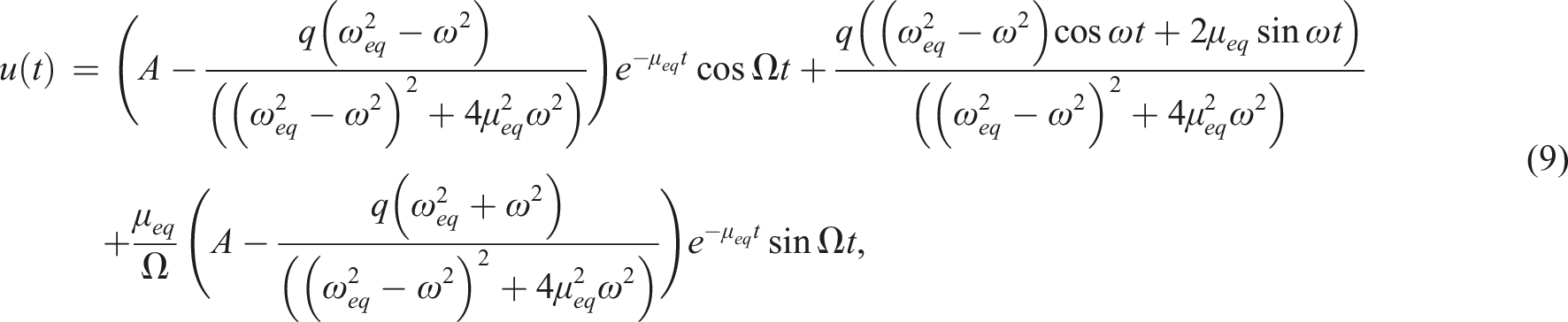
To compute the solution of equation (8), representative of a linear harmonic oscillator with damping, it is necessary to consider the standard solution form applicable to such equation s. In the case of a linear damped harmonic oscillator, the solution offers the simplest approximation, mirroring the natural oscillatory behavior of the system. This fundamental solution typically assumes the form of a sinusoidal function, modulated by an exponential decay factor that accounts for the damping effects. The general expression for the exact solution can be articulated as:
The study of resonance response behaviors in dynamical systems particularly when an external force is applied at a frequency that interacts with the system’s natural oscillation frequencies. Resonance is a fundamental concept in various fields of physics and engineering, especially in the study of vibrational systems, where it describes the phenomenon of increased amplitude that occurs when the frequency of an applied force matches the natural frequency of the system.
It is noted that an exact solution, referred to as “solution (9)” cannot explore the resonance response behavior. This implies that while exact solutions can provide specific insights, they might not capture the nuanced behavior of systems under resonant conditions, necessitating more sophisticated analytical or numerical approaches.
Perturbation theory is highlighted as a valuable tool in this context. It allows for the approximation of solutions to complex problems by starting with a known simple solution and adding small, incremental changes. This method is particularly useful in dealing with systems where the exact solution is complicated or impossible to obtain due to the presence of small, nonlinear effects. In perturbation theory, there are some relations of these frequencies known as primary resonance case, harmonic resonance case, sub-harmonic resonance case, superharmonic resonance case, and so on. Nayfeh’s researches 1 provide further details regarding this definition of resonance cases.
In the subsequent analysis, a different approach to understanding resonance response is explored, which involves incorporating the effect of the applied frequency directly into the formulation of the oscillation frequency. This novel methodology aims to capture the essence of resonance by establishing a clear relationship between the system’s oscillatory frequency and the frequency of the external forcing. By integrating the influence of the applied frequency into the expression for the oscillation frequency, a nonlinear relationship between these frequencies is obtained.
This nonlinear relationship between the oscillation frequency and the applied frequency provides valuable insights into the stability implications of the external force on the system. By analyzing how changes in the applied frequency affect the oscillation frequency, researchers can gain a deeper understanding of how external forces influence the system’s dynamics and stability.
Overall, this approach offers a comprehensive framework for studying resonance phenomena, allowing researchers to explore the complex interactions between external forces and system dynamics in a more integrated and systematic manner. It provides a valuable tool for analyzing and predicting the behavior of resonant systems in various real-world applications.
The masking technique
The implementation of the masking technique within nonlinear dynamics, particularly in scenarios involving periodic forces, signifies a strategic and innovative methodological approach. This technique primarily focuses on the reconfiguration of the system’s governing equation, to obfuscate the explicit manifestation of the periodic force. Such a reformulation simplifies the analytical process, yet adeptly retains the fundamental aspects of the system’s reaction to the periodic influence. By doing so, the masking technique circumvents the direct complexities associated with periodic forces, while still providing a comprehensive understanding of their impact on the system’s behavior. This approach is especially beneficial in unraveling the nuanced dynamics of nonlinear systems influenced by periodic forces, thereby offering a more streamlined yet effective analytical pathway.
The masking technique’s application commences with the initial formulation, such as equation (4) in our study, and transforms to effectively eliminate the explicit representation of the periodic force. This critical transformation involves constructing an alternative equation that “masks” the periodic force’s influence on the system. The objective is to derive an equivalent system that mirrors the behavior of the original system under periodic forcing, yet without the force being directly included in the equation. To achieve this, equation (4) is restructured through a series of mathematical manipulations or approximations. These steps are designed to subtly encode the effects of the periodic force within the system’s dynamics. The key stages of this process entail:

The masking technique proves invaluable in situations where direct engagement with the periodic force results in substantial analytical or computational complexities. Offering an indirect yet efficacious means of incorporating the force’s impact, this technique simplifies the analysis of the system’s behavior. In equation (10), the masking function embodies a modified definition of stiffness as delineated in equation (5). This adjustment facilitates a more streamlined and effective approach to analyzing the dynamic responses of the system, even in the presence of intricate periodic forces.

The concept of a “masking frequency” as derived from equation (11) presents an intriguing facet in the analysis of nonlinear dynamics. This frequency is formulated by amalgamating the original frequency, represented by

In the scenario where

Analyzing the dynamics of the transformed system, as depicted in equation (13), presents a strategic method for indirectly understanding the effects of periodic force on the system’s behavior. This approach simplifies the analysis by minimizing the complexity typically associated with directly addressing the periodic force. By examining the transformed system, one can uncover the subtle ways the periodic force affects the overall dynamics without directly grappling with its complexities. To extend this analysis, let’s consider that the harmonic oscillator in question possesses a modified total frequency, denoted as Θ(ω). This frequency is not just the natural frequency of the system but a comprehensive measure that incorporates the influences of various factors, potentially including damping forces, nonlinear stiffness, and the indirect effects of the periodic force. The formula for Θ(ω) is derived from the dynamics of the transformed system and is essential for accurately predicting the system’s behavior under different scenarios. The modified total frequency Θ(ω) thus serves as a key component in understanding the system’s dynamics.

A fast and simple approach to establishing the equivalent masking linear oscillation
To derive a linearized version of the forced oscillator as represented in equation (1) and address the inaccuracies arising from this linearization, a systematic approach can be employed. The objective is to minimize the discrepancy between the original nonlinear equation (10) and its linearized counterpart, equation (13). This method involves approximating the nonlinear terms while preserving the fundamental dynamics of the system. The linearized equation should incorporate unknown parameters that best replicate the effects of the original nonlinearities. The next step is to calculate the error resulting from this linearization, which is the difference between the nonlinear behavior predicted by equation (10) and that predicted by the linearized equation (13). This process entails several key steps:

Develop a method to minimize this error, which typically involves identifying the optimal values of the unknown parameters in the linearized equation. This ensures that it closely approximates the original nonlinear equation. Methods such as the least squares approach can be employed for this purpose, utilizing knowledge of mean square errors



Solving the equations that arise from the linearization process and minimizing the error between the nonlinear equation (10) and the linearized equation (13) requires sophisticated computational tools.


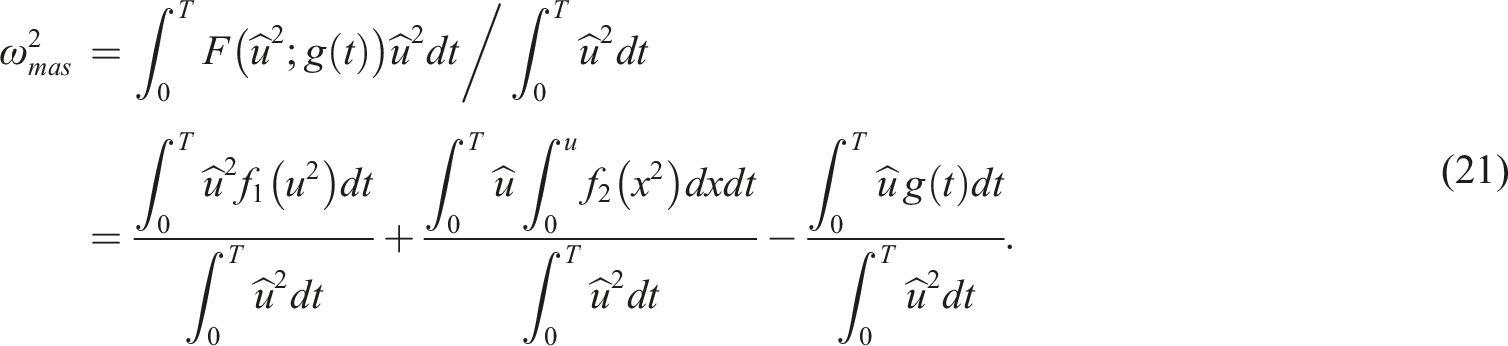
The period of oscillation is represented by T. These formulas align with those previously obtained in Refs. 20,31–33.
The strategy outlined thus far presents a robust approach for navigating the complex dynamics of nonlinear systems, especially those influenced by external factors. By deriving analytical formulations for the damping coefficient and the masking frequency, we effectively distilled the complex behavior of the forced oscillator into more manageable terms, while preserving its essential characteristics. In summary, this method provides valuable tools for a range of applications, including control systems, engineering design, and theoretical physics. It also offers a clearer perspective for examining the intricate dynamics of the forced oscillator.
The outline solution of the forced VdP-DH
To illustrate the efficacy of the proposed method, employing the example of the forced Van der Pol-Duffing-Helmholtz nonlinear oscillator is an excellent approach. The Van der Pol oscillator is presented as follows:

In comparing equation (22) with the system given in equation (1), the objective is

To complete these integrations (20) and (21), a trial solution satisfying the first requirement (2) in the basic form can be proposed as


The masking frequency



This formulation,


The solution (29) represents the culmination of the linearization process, providing an easier-to-analyze version of the original, more complex nonlinear problem. It captures the essential dynamics of the system while simplifying the mathematical representation, making it more accessible for further analysis or practical application. This solution is key to understanding the behavior of the oscillator under the conditions defined in the linearized model.
It is important to note that the solution represented by equation (29) governs the dynamics of the forced nonlinear damping oscillator as defined in equation (22). This solution is significant in that it is derived with a non-zero value of Θ(ω), indicating its relevance in the context of the specific oscillatory behavior under consideration. The acknowledgment of a non-zero Θ(ω) in the solution underscores the influence of the modified total frequency on the oscillator’s behavior, highlighting the solution’s applicability in analyzing the system’s response to the external forcing and inherent nonlinear damping characteristics.
Stability discussion
For the stability of a system, particularly about the discussed frequency, the stability condition frequently hinges on certain properties of the system’s coefficients or parameters. It’s important to recognize that the total frequency formula, as presented in equation (30), takes on a nonlinear transcendental form. To formulate stability criteria, it’s necessary to simplify the complexity of the frequency formula (30). This simplification can be achieved by considering a specific relationship between the frequency ω and the total frequency Θ, whereby ω is transformed into

When considering that the stability behavior necessitates the right-hand side of equation (31) to be positive, we can establish the stability condition accordingly. This requirement implies that the system’s parameters and the interactions between them must be such that they collectively yield a positive value on the right-hand side of equation (31).

This positive value is indicative of a stable system, as it suggests that the system’s response to perturbations will not amplify over time, but rather will either dampen out or remain bounded within certain limits. In essence, the formulation of the stability condition based on this criterion ensures that the system maintains its equilibrium state without diverging into instability or chaotic behavior.
In summary, the stability condition plays a pivotal role in ensuring the reliability and safety of the system. It is a key factor in the design and analysis of systems, especially those characterized by nonlinear dynamics, as it helps in preventing undesirable or chaotic behaviors.
Discussion and numerical illustration
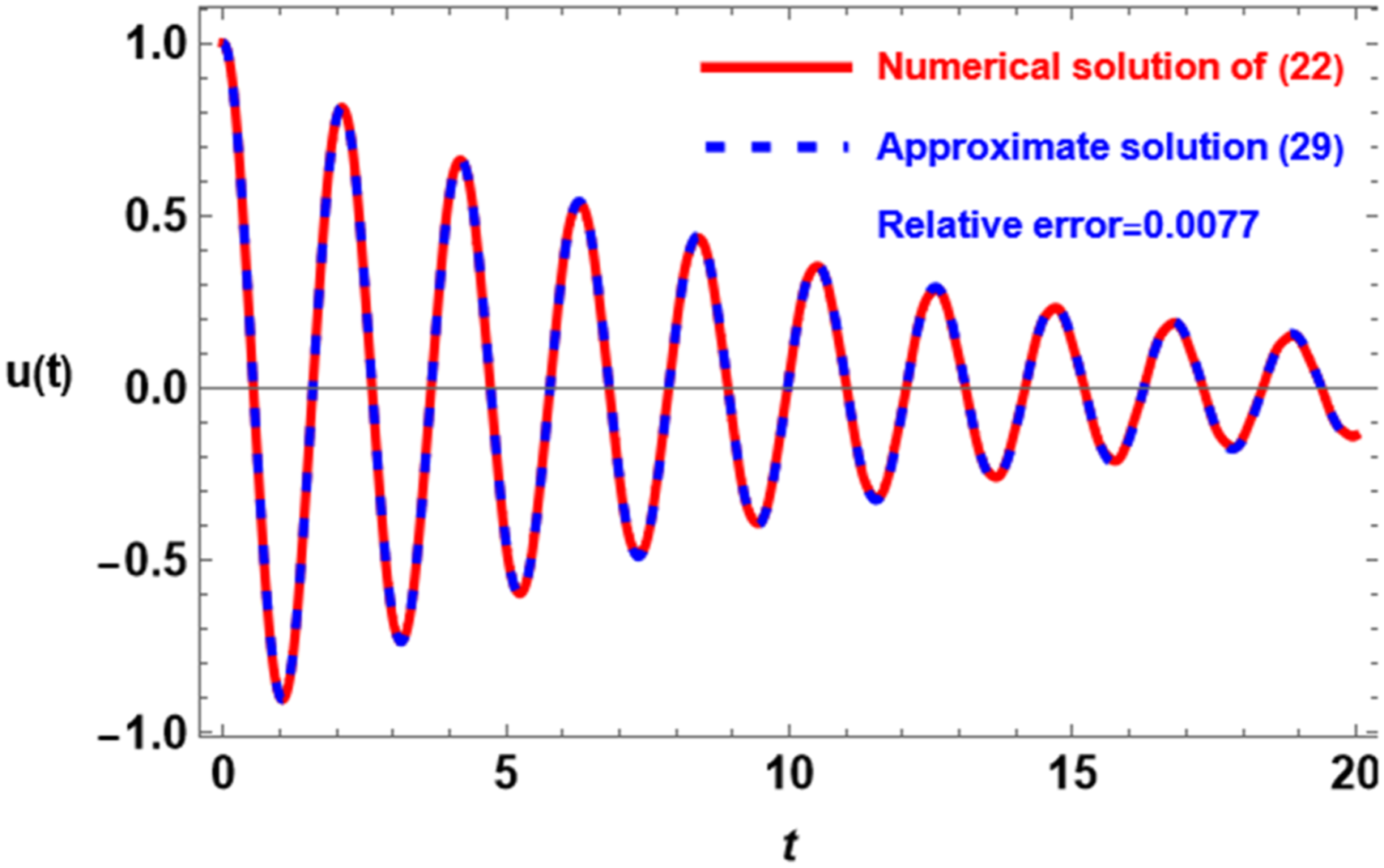
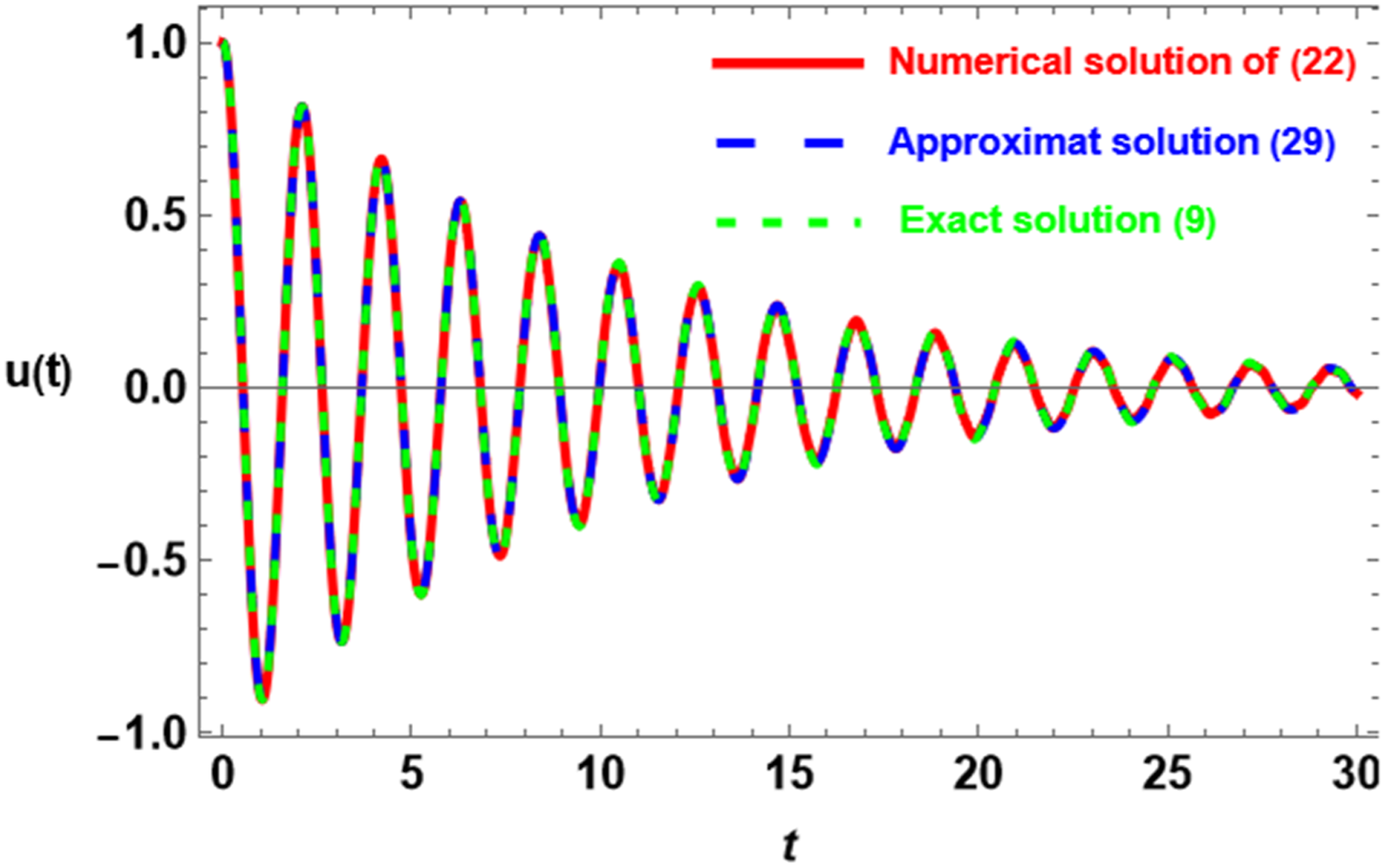
To numerically present the approximate analytical solution (equation (29)) for the forced nonlinear oscillation of the Van der Pol type (equation (22)), and to compare it with the numerical solution, two graphs focusing on the system’s time history can be created. Figure 1 compares the numerical solution of the nonlinear equation (22), as obtained by numerical calculation, with the exact solution (29) derived from the non-perturbative equation given by the linear equation (13). The displayed framework is as follows.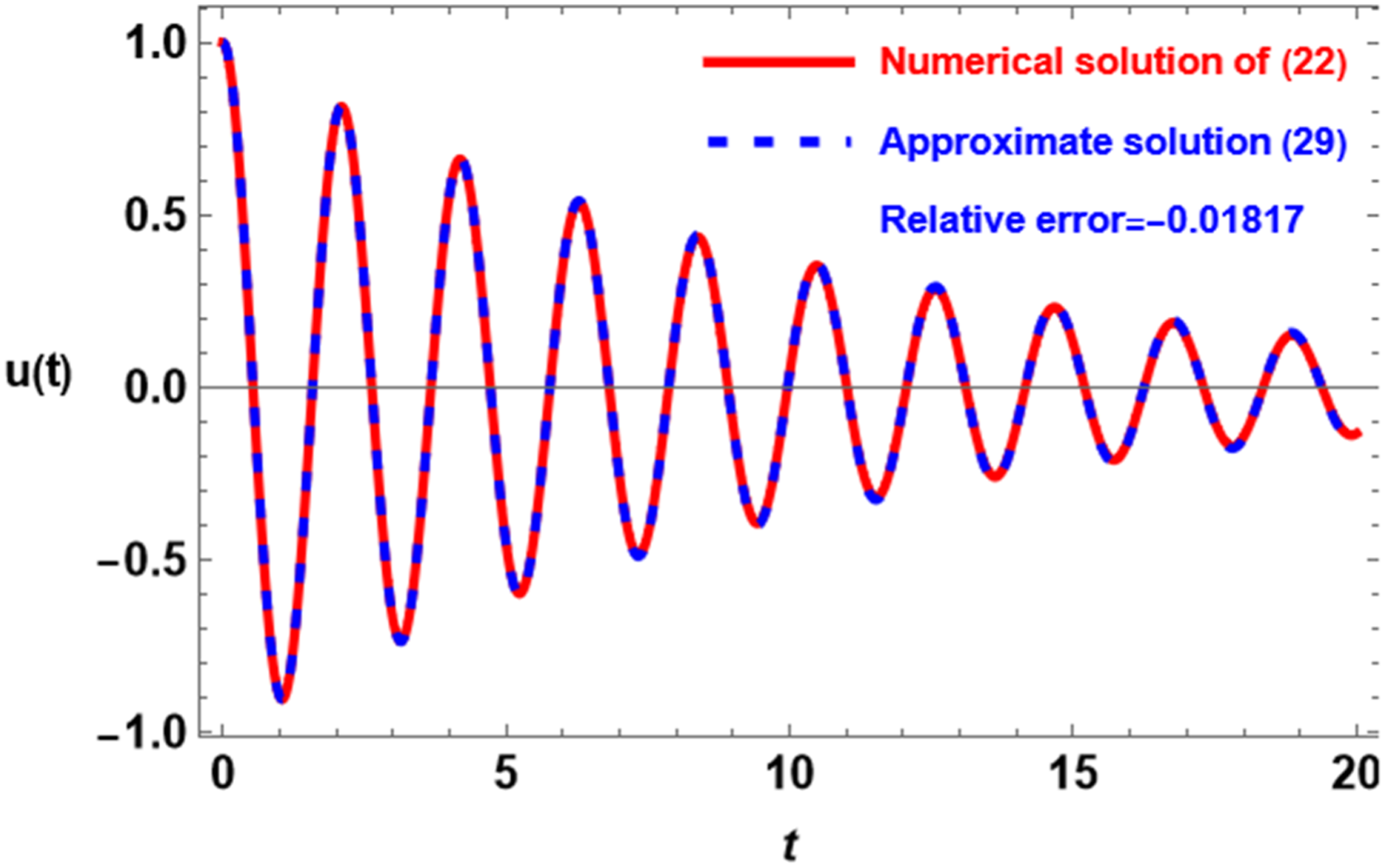

The current approach offers the added advantage of enabling stability analysis for the given nonlinear problem while addressing the effect of the periodic force. In this method, the contribution of the periodic force is established in conjunction with the system’s frequency. By analyzing the third level of the total frequency Θ, as demonstrated in equation (32), a comprehensive stability profile can be constructed. To illustrate the stability landscape, a relationship between the natural frequency ω0 and the frequency σ of the periodic force can be depicted. This graphical representation provides a clear understanding of how the natural frequency of the system interacts with the frequency of the external periodic force, offering insights into the overall stability of the system under various dynamic conditions.
The emphasis on the broad applicability and importance of understanding the physical connection of resonance phenomena in various fields is very important. By recognizing this phenomenon, engineers and physicists can harness resonance for beneficial purposes, such as improving the performance of musical instruments or enhancing the efficiency of technological systems. Furthermore, this understanding enables the development of mitigation strategies to prevent catastrophic failures that may result from uncontrolled resonance. In engineering and physics applications, where systems are subject to dynamic forces and vibrations, mitigating the effects of resonance is essential for ensuring safety, reliability, and longevity. Indeed, this principle transcends disciplines, influencing the design and operation of diverse systems ranging from bridges and buildings to electronic circuits and medical devices. By integrating this understanding into the design process, engineers and physicists can optimize the performance of systems while minimizing the risk of resonance-related issues.
As shown in Figure 4(a) and (b), the study investigates the effects of the periodic force’s amplitude q on the system’s stability profile. The stability landscape is shown in Figure 4(a) about the stimulated frequency σ and the natural frequency ω0, and the stability profile is shown in Figure 4(b) about the oscillation amplitude A. The main effect of changing the amplitude q is examined in both pictures. The unstable zone (unshaded) and the stable zone (shaded) visibly separate the system’s stability in these stability diagrams. The analysis indicates that an unstable zone appears inside a defined range of the parameter σ, from σ = 3.109 to σ = 9.416, at a given amplitude q = 1. The system tends to return to stability outside of this window. An interesting finding is reported on the impact of oscillation amplitude A, as shown in Figure 4(b). The unstable zone contracts as A increases and eventually vanishes when A reaches about 0.93460.9346. This phenomenon implies that a larger amplitude A stabilizes the system by reducing the possibility of instability brought on by σ. When the periodic force is ignored, this stabilizing impact of A is noticeably gone, suggesting that its presence is a phenomenon particular to resonant responses. Furthermore, the research shows that the diameter of the unstable area increases when the amplitude q exceeds q = 1, which reduces the stabilizing effect of an increased A. This behavior highlights the delicate balance between the factors driving the dynamics of the system and their impact on resonance and stability. It suggests that greater values of q tend to destabilize the system’s stability profile. (a): The variation of the amplitude q on the stability picture for the plane (σ, ω0) where the remaining parameters of the system are held fixed as 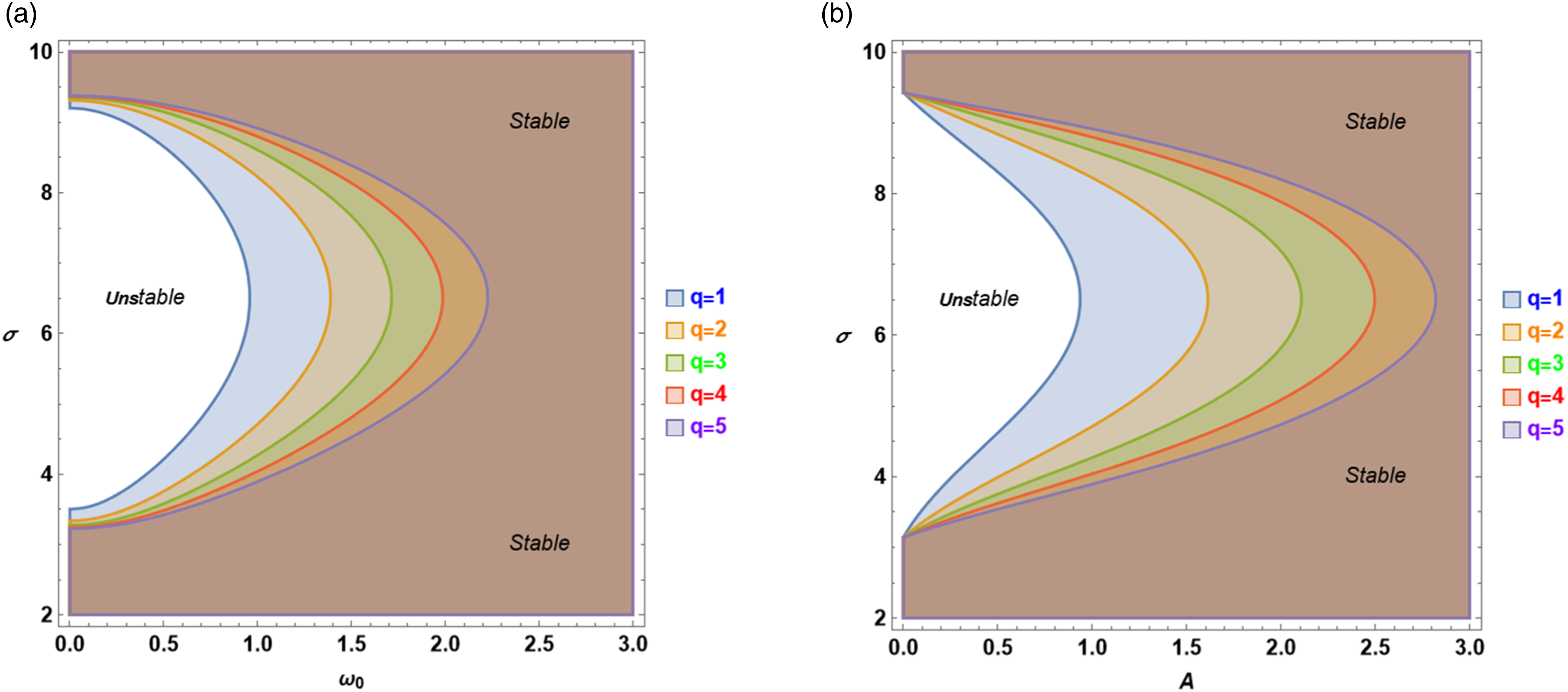
The effects of the natural frequency ω0 on the stability of the system are explored in detail in Figure 5, where the plane of the stimulated frequency σ is compared with the oscillation amplitude A. The system examined in Figure 4(b) is expanded upon in this study while keeping the periodic force amplitude of q = 1 constant. When the natural frequency is set at ω0 = 0.1, this stability diagram shows that a considerably unstable zone is located between the points σ = 3.109 and σ = 9.416, respectively. This unstable zone shows a discernible decrease in size as ω0 grows. This pattern emphasizes the system’s ability to stabilize when the natural frequency rises. The diminishing size of the unstable region with higher ω0 values highlights the natural frequency’s crucial role in influencing the system’s stability. It suggests that by tuning the natural frequency, it may be possible to mitigate instability induced by the excited frequency σ, thereby enhancing the system’s overall stability. This finding is particularly relevant in the context of engineering and physical systems where controlling natural frequencies can lead to improved performance and reduced susceptibility to resonance-induced instabilities. The variation of the natural frequency on the stability behavior for the same system considered in Figure 4(b) with q = 1.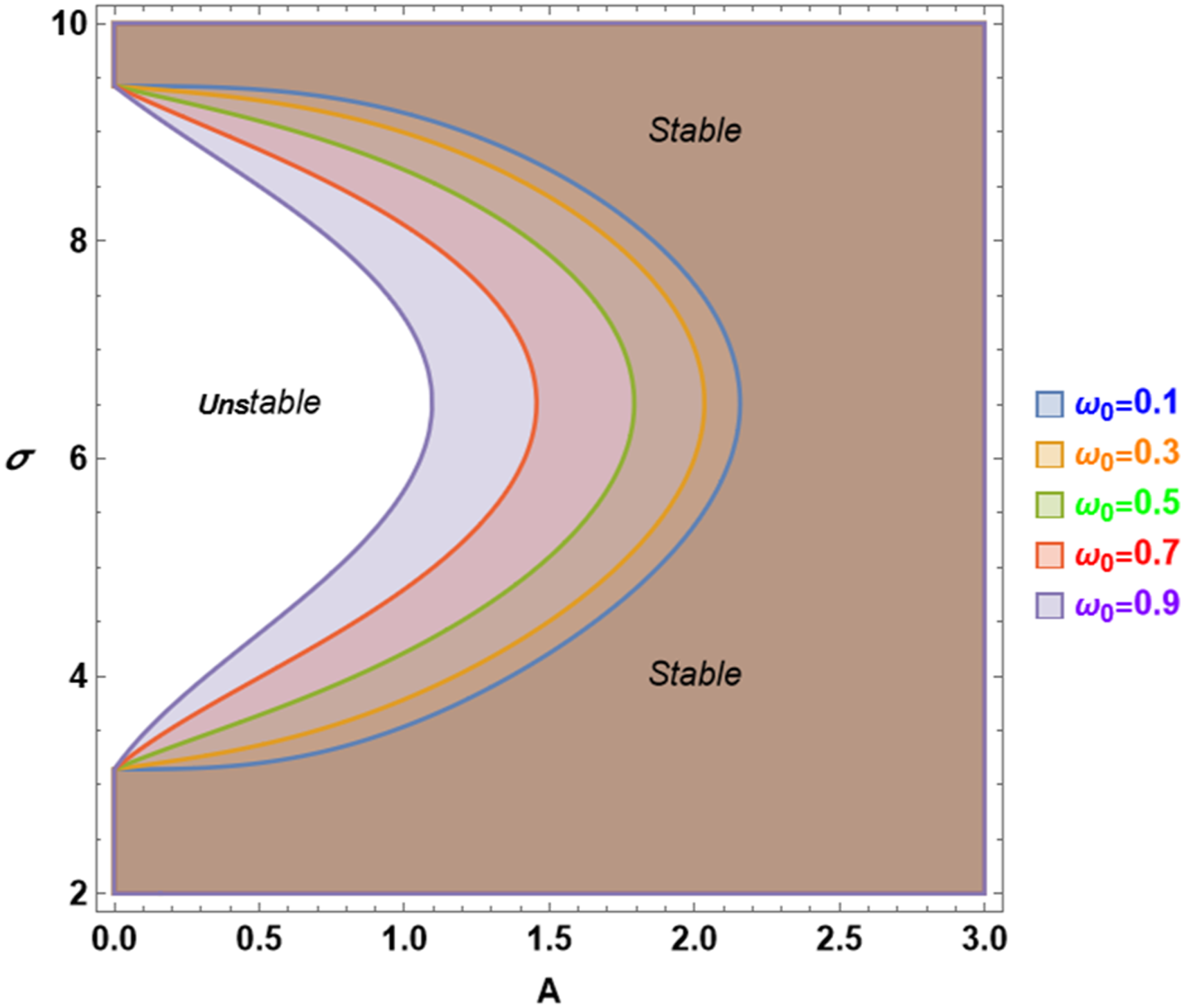
The influence of the damping coefficient μ on the stability dynamics of the system is investigated in Figure 6, providing information on how changes in μ affect the stability behavior of the system. It is seen that an increase in μ causes instability by causing the unstable zone between σ = 3.109 and σ = 9.416 to expand. The variation of the damping coefficient on the stability behavior for the same system considered in Figure 4(b) with q = 1.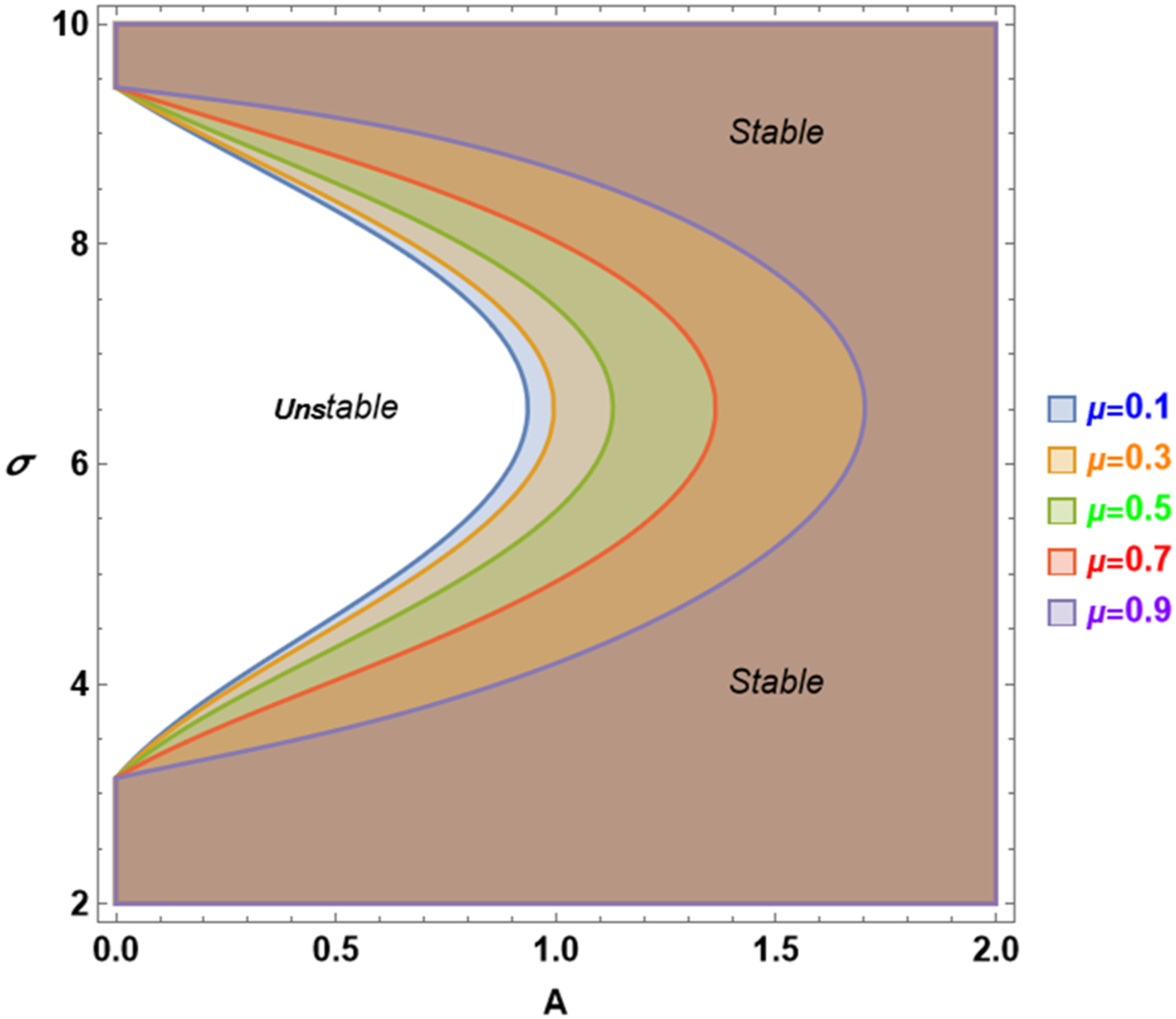
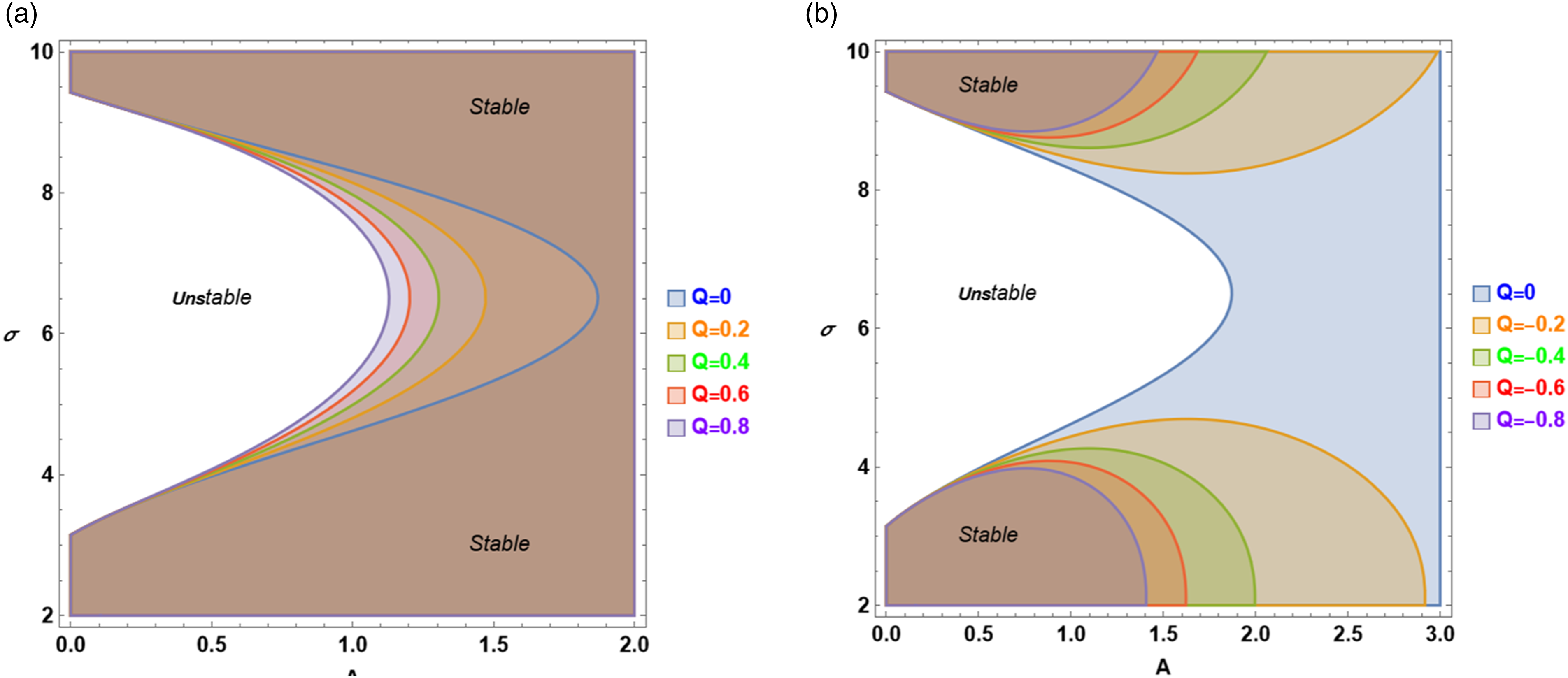
The effects of rising positive values of the quadratic nonlinear coefficient P on stability behavior are discussed in Figure 7(a), while increasing negative values of the Helmholtz coefficient are discussed in Figure 7(b). The research indicates that increasing the positive values of P effectively stabilizes the system by reducing the destabilizing influence of the parameter σ. Increasing P’s negativity, on the other hand, results in an expansion of the unstable zone and a destabilizing impact. This concludes that whereas negative increments in the coefficient P have a destabilizing effect, positive increments contribute to system stability. The cubic nonlinear coefficient exhibits a comparable pattern, as illustrated in Figure 8(a) and (b), hence strengthening the correlation between the nonlinearity coefficients and the stability dynamics of the system. (a): The variation of the positive Helmholtz coefficient on the stability behavior for the same system considered in Figure 4(b) with q = 2. (b): The variation of the negative Helmholtz coefficient on the stability behavior for the same system considered in Figure 4(b) with q = 2. (a): The variation of the positive Duffing coefficient on the stability behavior for the same system considered in Fig.(4-b) with q = 2. (b): The variation of the negative Duffing coefficient on the stability behavior for the same system considered in Figure 4(b) with q = 2.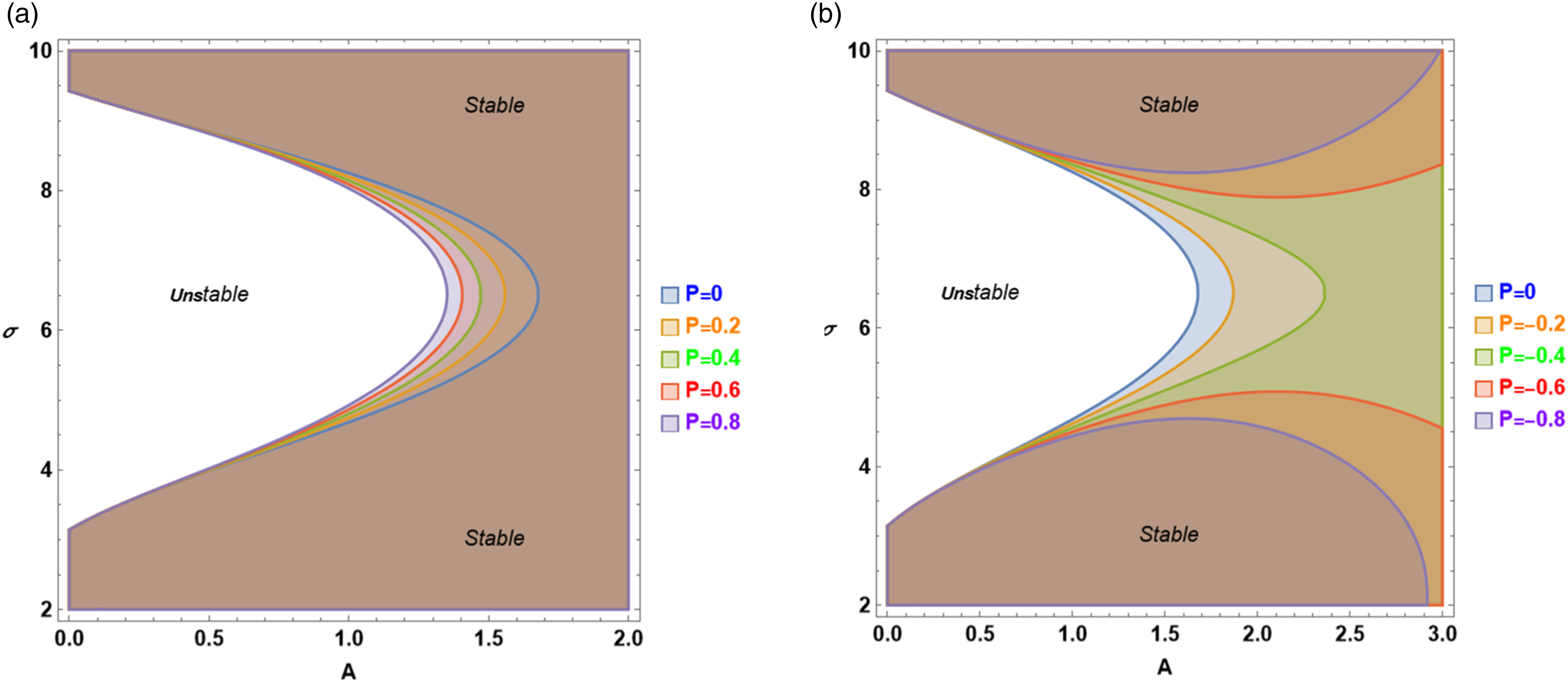
Conclusion
The paper primarily focuses on employing external forcing as a means to mitigate the energy of free transverse oscillations within nonlinear dynamical systems. It specifically examines the Van der Pol oscillator, which demonstrates both quadratic and cubic nonlinearities, under the influence of external force. This research aims to enhance understanding of how external forces can be strategically utilized to control and modulate complex nonlinear systems, particularly in oscillatory dynamics where the interplay of forces can lead to diverse and unpredictable phenomena. The investigation into the Van der Pol oscillator, a pivotal model in nonlinear dynamics, yields valuable insights into the wider implications and applications of external forcing in such systems. Utilizing the masking technique alongside a non-perturbative approach, the study achieves a more holistic understanding of the stability behavior of forced oscillators, shedding light on their intricate dynamics. Key aspects of the study include: • Stability Analysis Through Periodic Force: Examining the system’s stability behavior under the impact of a periodic external force, using the novel masking technique. • Implementation of Masking Technique and Non-Perturbative Approach: This technique transforms a non-homogeneous equivalent equation into a homogenous one, leading to the exact solution. • Correlation with Numerical Solutions: The exact solution aligns excellently with numerical solutions, affirming the method’s effectiveness. • Establishing Total Frequency and Stability Conditions: The study delineates the total frequency of the system, incorporating various influences like the amplitude and frequency of the periodic force, damping force effects, and Duffing frequency impact. This leads to identifying stability conditions. • Graphical Representation of Stability Conditions: The paper provides visual demonstrations showing how the periodic force modifies the mechanisms of all physical parameters, crucial for comprehending the complex forces interplay and their impact on system stability. • Suppression of Self-Excited Vibrations: A key application of this theory is the suppression of self-excited vibrations, highlighting the practical significance of the study in managing undesirable oscillatory behaviors in nonlinear dynamical systems.
In summary, the paper significantly contributes to the field by analyzing the control and stabilization of nonlinear oscillatory systems using external periodic forcing, offering theoretical insights and practical applications. The masking technique is shown to be particularly beneficial for systems with complex dynamics, including those characterized by nonlinearity and external forcing.
Future studies will focus on applying this technique to obtain approximate solutions for oscillators with periodic coefficients, such as the Mathieu equations and the Hill equations. These equations arise in various physical systems and have periodic coefficients, presenting challenges for traditional solution methods. By adapting the proposed technique to handle these types of equations, we can explore a wider range of nonlinear dynamical systems and gain deeper insights into their behavior. This endeavor will contribute to advancing our understanding of oscillatory phenomena in diverse fields, from mechanics to electronics, and pave the way for innovative applications in engineering and physics.
Footnotes
Declaration of conflicting interests
The author(s) declared no potential conflicts of interest with respect to the research, authorship, and/or publication of this article.
Funding
The author(s) received no financial support for the research, authorship, and/or publication of this article.
