




Abstract
The unique dynamic characteristics and energy focalisation of the acoustic black hole (ABH) have been confirmed. Meanwhile, an ABH composite structure covered with a damping layer exhibits excellent performance in vibration control. However, limited by machining accuracy and conditions, imperfect ABH is easier to obtain than ideal ABH. This study focuses on the sound radiation characteristics of an imperfect ABH thin plate without a damping layer in the low-frequency range. The imperfect ABH in this paper replaces the traditional curve with an oblique line near the centre of two-dimensional ABH. The vibration and acoustic changes of imperfect ABH plate are investigated based on three key variables: ABH diameter, residual thickness and centre position of imperfect ABH indentation. The finite element method (FEM) is used to calculate the radiation efficiency of various imperfect ABH plates at eigenfrequencies. The acoustic radiation efficiency is measured and estimated via a sound-intensity experiment. Both the simulation and experimental results show that the acoustic radiation efficiency of thin plates can be controlled by an imperfect ABH in the low-frequency band, which is associated closely with the geometric parameters and position of imperfect ABH.
Introduction
The control of low-frequency vibration is very important for the safety of structures and the health of people in architectural and mechanical engineering. Novel structures and models are constantly being proposed, for example, the homotopy perturbation method is helpful for optimising the low-frequency characteristics of the Fangzhu oscillator. 1 Fractal vibration model provides new theoretical basis for the low-frequency vibration attenuation of the porous concrete beam.2–4 In recent decades, the acoustic black hole (ABH), a novel lightweight structure, has revealed its potential in reducing vibrations in beams and plates. The energy-trapping effect of the ABH structure is afforded by the unique propagation phenomenon of waves. Early research primarily investigated the propagation of bending waves in ABH indentation using analytical and semi-analytical methods.5,6 In recent years, the wavelet-decomposed semi-analytical model has been shown suitable for characterising wavelength changes in the ABH region.7,8 As research progresses further, the research object is extended from one-dimensional (1D) ABH beams and two-dimensional (2D) ABH plates to double-leaf ABH,9–11 periodic tunnelled ABH plates, 12 periodic nested ABH structures, 13 annular ABHs inside a cylindrical shell, 14 2D circular ABH-based dynamic vibration absorber add-on structures attached to the benchmark plate 15 and elliptical ABHs similar to a tunable lens. 16
It was discovered that the combination of ABH indentation and damping layers resulted in excellent vibration and noise reduction performance.17,18 Placing the damping layer at the tip of a 1D ABH or at the centre of a 2D ABH yields the most significant vibration-reduction effect. Additionally, the vibration and sound characteristics of the structure can be improved by optimising the damping layer distribution19–22 and applying thermally controlled damping in the ABH area. 23 Although the vibration and sound performance of the ABH structure are improved by adding a damping layer, studies have shown that the parameters of the damping layer exert different effects on its performance. The addition of a damping layer can increase the acoustic radiation efficiency of an ABH plate, 24 and the ideal ABH indentation thickness decreases exponentially to zero. However, owing to the limitations of machining accuracy and material properties, the plate cannot be machined into a perfect ABH during the actual machining process. The imperfect ABH with plateau still retains the characteristics of energy focalisation. 25 The characteristics of ABHs at high frequencies have been supported by many theoretical studies and confirmed by experiments; however, the analysis of low-frequency flexural vibration of ABHs in thin plates remains incomplete. In the latest investigation, it was discovered that the vibration attenuation by ABHs occurs in the low-frequency band below the cut off frequency. 26 A systematic experimental scheme was proposed for the sound power measurement of a 2D ABH indentation plate. 27 The advantage of this scheme is its high measurement accuracy; however, the measurements must be performed in an anechoic chamber. Reference 28 used wavenumber transform analysis to study the acoustic radiation of ABH panels, which mainly focused on the performance of periodic ABHs grids and damping layers at high frequencies. The results also showed that ABH could reduce the radiation efficiency when the local ABH dynamics dominated the vibration of the plate. References 29,30 proposed a new double-layer ABH plates which offer complete sub-wavelength band gaps. And the periodic ABH plate reduced sound radiation properties in an ultra-broad frequency range, far below the cut-on frequency of ABH element. 30 However, there was no detailed discussion about the ABH parameters.
The purpose of this study is to investigate the low-frequency acoustic performance of an imperfect ABH thin plate without a damping layer. Three key variables are investigated, that is, the residual thickness, surface diameter and position on the plate. The sound radiation efficiency of imperfect ABH thin plates is calculated using the finite element method (FEM). The simulation results are verified using a simple experimental method, without an anechoic chamber. Finally, by combining the sound radiation efficiency results of the double imperfect ABH indentation thin plate, some suggestions are provided for the placement of the ABH.
Firstly, the geometric model of the imperfect ABH and acoustic model used in the simulation and experiment are briefly described in theoretical background section. Secondly, simulations pertaining to the eigenfrequencies and acoustic performance of the imperfect ABH thin plate are discussed. Thirdly, experimentally verified simulation results are presented. The conclusions are summarized in the last section.
Theoretical background and analysis method
This section briefly introduces the imperfect 2D imperfect ABH indentation used in the analysis in this study. A 2-mm-thick rectangular thin plate was used as the basic material. A single imperfect ABH was arranged at the centre of the thin plate, as shown in Figure 1(a). When the thickness machining allowance near the centre of two-dimensional ABH is 0.05 mm, the ideal curve was replaced by an oblique line, as shown in Figure 1(b). Meanwhile, double imperfect ABHs were arranged symmetrically along the long side, as shown in Figures 1(c) and (d). The residual thickness ‘h’ is the thickness of the plate at the centre of the imperfect ABH. The diameter D is the maximum diameter formed by the ABH indentation on the surface of the thin plate. The thickness of the imperfect ABH plate, H(x, y), can be expressed as shown in equation (1) Schematic diagrams of imperfect ABH indentation thin plate: (a, b) single imperfect ABH plate; (c, d) double imperfect ABHs plate; (e) imperfect part of ABH.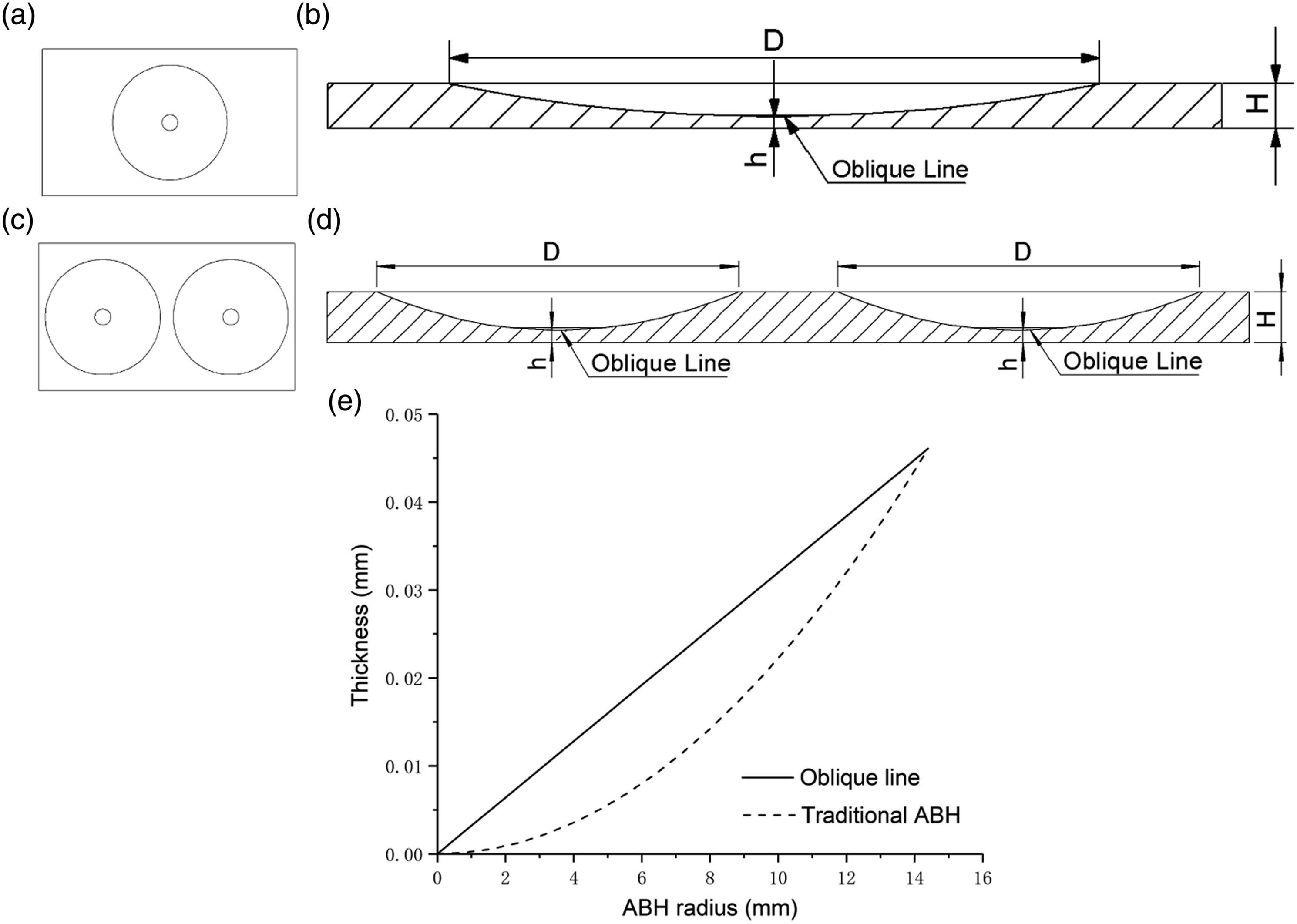






Substituting the sound pressure in equation (3) into equation (6) and assuming that the sound pressure detection point is in the near field of the radiated sound, the radiated sound power can be expressed as follows
31


In the experiment, the sound intensity and surface vibration velocity of the thin plate were estimated based on the self- and cross-spectra of the sound pressure of the two probes. The sound intensity and acoustic radiation efficiency of the thin plate can be obtained as follows
32



Simulation results and discussion
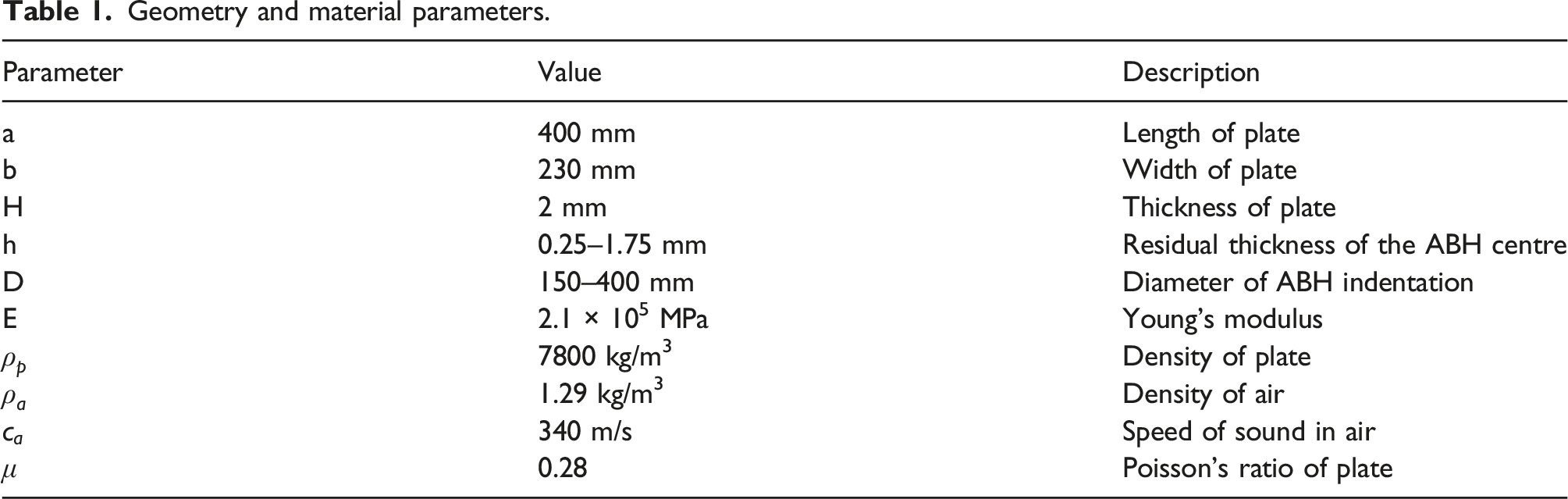
Geometry and material parameters.
Eigenfrequency and vibration velocity
Eigenfrequency analysis is a basic and essential aspect in the low-frequency vibration and sound analysis of thin-walled components. In this study, the first 10 eigenfrequencies of various types of single imperfect ABH plates were calculated to analyse the effects of geometric parameters on frequency shift. The first 10 eigenfrequencies of the contrast plate with uniform thickness are shown in Figure 2(b) (h = 2 mm). Based on a residual thickness of 0.2 mm as a fixed value, the first 10 eigenfrequencies of plates with different ABH diameters are as shown in Figure 2(a). As the ABH diameter increased, the first-order eigenfrequency of the thin plate increased, whereas the other frequencies decreased. Meanwhile, based on an ABH diameter of 200 mm as a fixed value, the first 10 eigenfrequencies of plates with different residual thicknesses are as shown in Figure 2(b). As shown in Figure 2(b), as the residual thickness increased, the first-order eigenfrequency of the thin plate decreased, whereas the other frequencies increased. As the diameter increased and the residual thickness decreased, the eigenfrequency range decreased. This feature is particularly evident at the eighth, ninth and tenth eigenfrequencies. The analysis above clearly shows that the imperfect ABH will result in a change in the eigenfrequency, which is particularly evident at higher frequencies. First 10 eigenfrequencies of thin plate: ABH plate with (a) residual thickness of 0.2 mm and (b) diameter of 180 mm.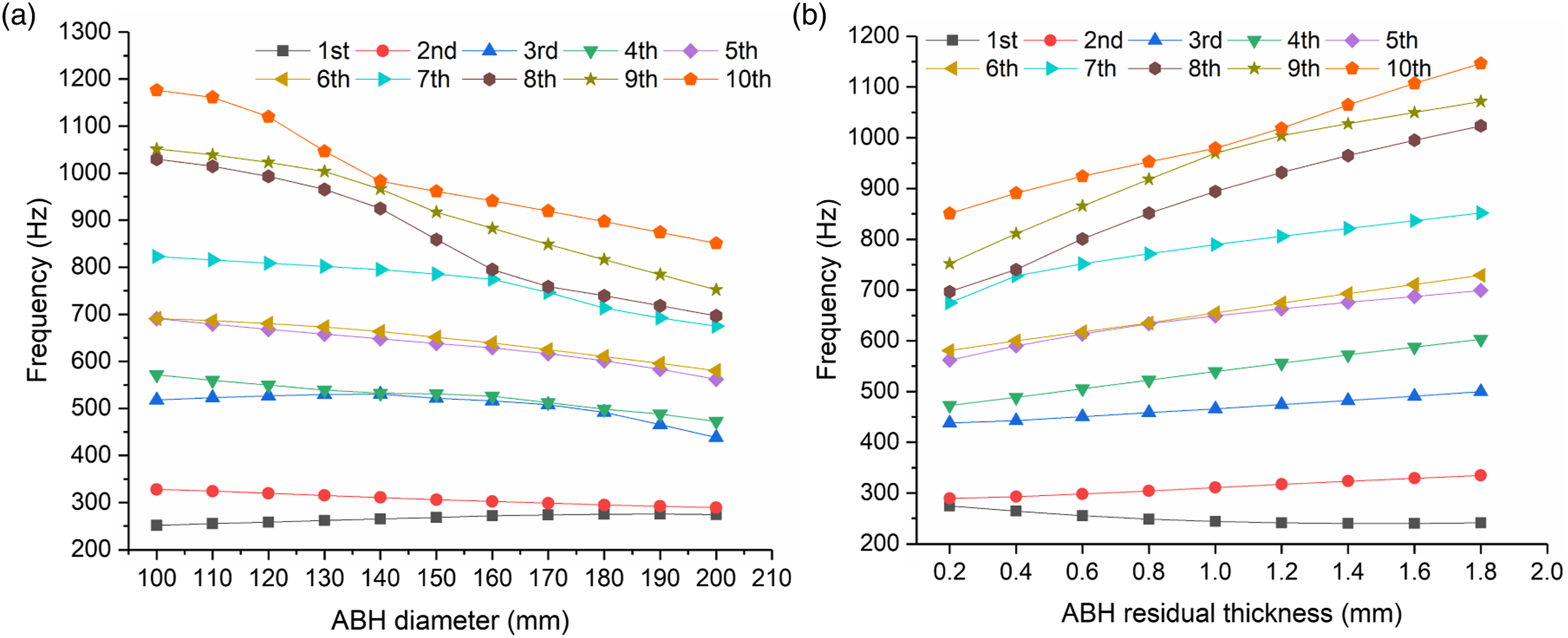
The first six frequencies were investigated in this analysis. Based on imperfect ABH plate with D = 180 mm, h = 0.2 mm and l = 15 mm as an example, the vibration velocity of the thin plate at the first six eigenfrequencies is shown in Figure 3. The vibration velocity in the ABH area was greater than that outside the area and tended to concentrate at the centre. The mean square and absolute values of the vibration velocity reached the maximum values at the first and third eigenfrequencies, as shown in Figures 3(a) and (c), respectively. Vibration velocity of single imperfect ABH plate: (a–f) vibration velocity at first to sixth eigenfrequencies.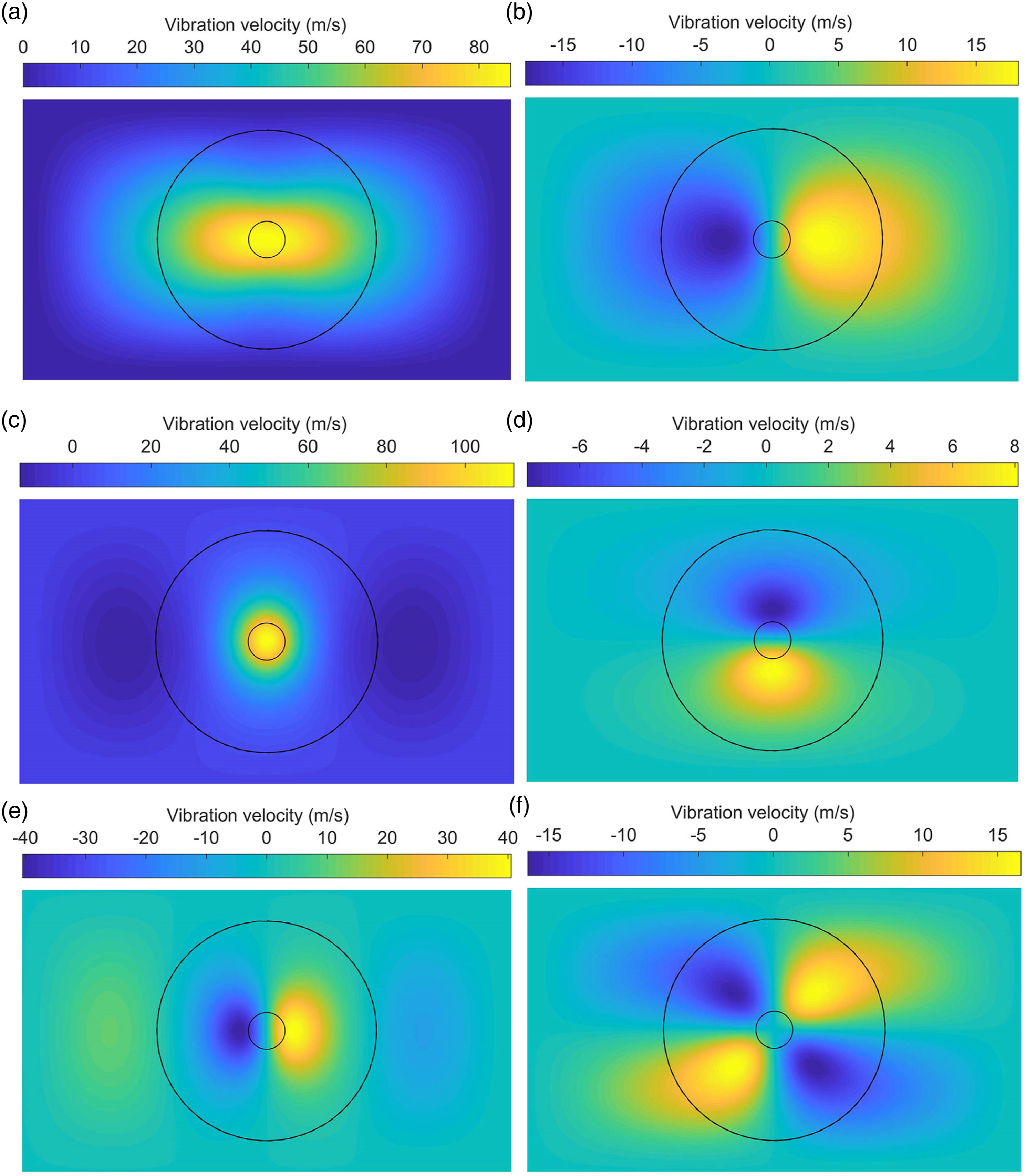
Effect of acoustic black hole diameter
To comprehensively investigate the acoustic radiation performance of thin plates with various ABH geometric parameters, the acoustic radiation efficiency of those thin plates was investigated at the first six eigenfrequencies. The radiation efficiency of the uniform-thickness contrast thin plate was −23.17, −32.13, −21.10, −23.82, −29.63 and −18.15 dB. The results for the acoustic radiation efficiency of the imperfect ABH thin plate at the first six eigenfrequencies are shown in Figure 4. At different frequencies, the acoustic radiation efficiency of the thin plate exhibited the following relationship with the geometric parameters: Acoustic radiation efficiency versus ABH diameter, (a–f) acoustic radiation efficiency at first to sixth eigenfrequencies.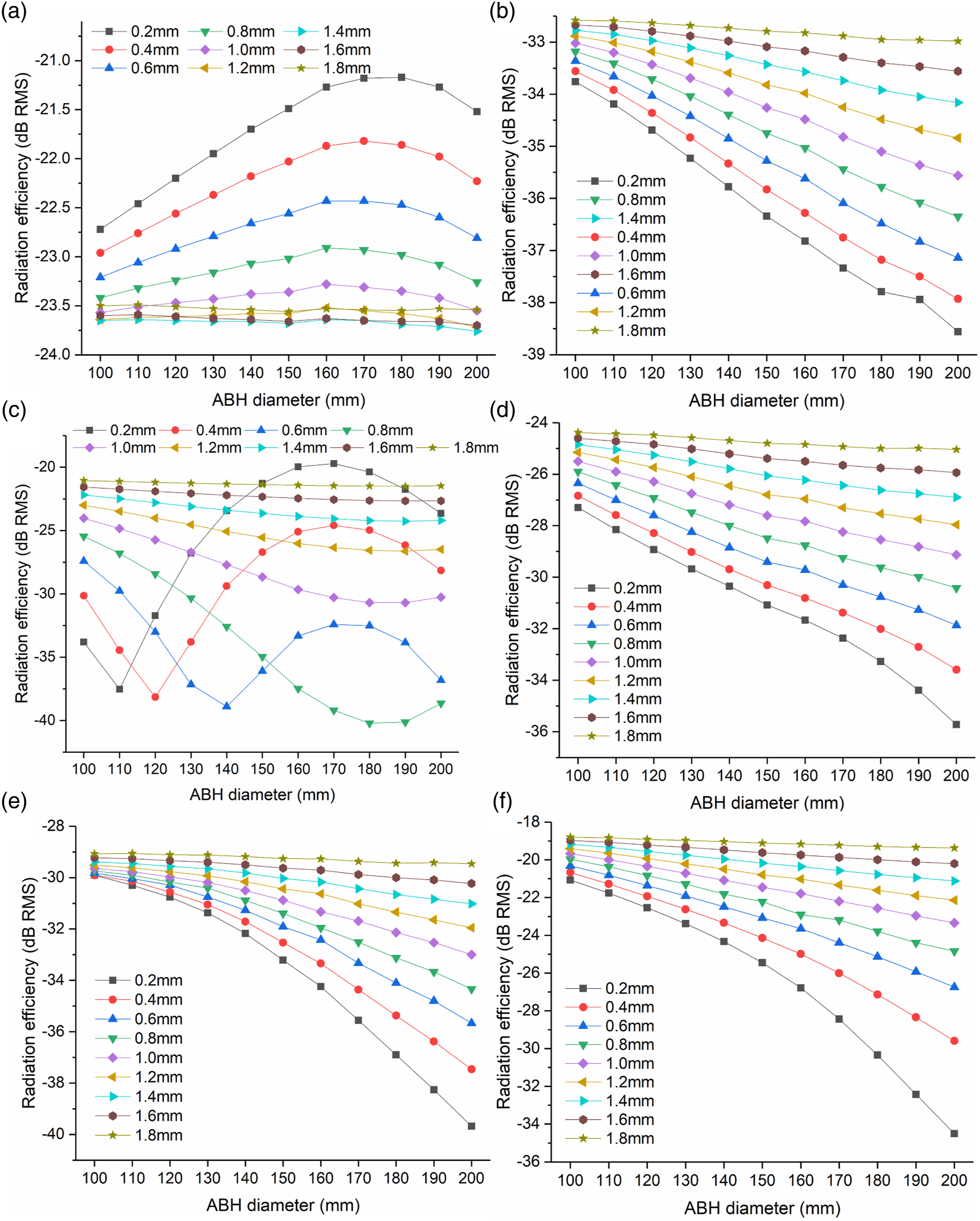
As shown in Figure 4, when the ABH diameter decreased, the acoustic radiation efficiency of the ABH plate converged to the value of the contrast plate with a uniform thickness. As shown in Figure 4(a), the acoustic radiation efficiency was proportional to the ABH diameter at the first eigenfrequency in the diameter range of 100–160 mm. The radiation efficiency reached a maximum at a diameter of 170–180 mm and then decreased when the diameter exceeded 180 mm. As shown in Figures 4(b), (d), (e), and (f), the acoustic radiation efficiency was inversely proportional to the diameter of the ABH at the second, fourth, fifth and sixth eigenfrequencies. At the third eigenfrequency, the law of radiation efficiency was more complex than those of the others. The radiation efficiency of the ABH plate with thickness h = 0.8–1.8 mm exhibited a trend opposite to that of the first frequency point, and the minimum value was achieved at the diameter D = 180 mm. However, the radiation efficiency of ABH plates with thickness h = 0.2, 0.4 and 0.6 mm first decreased and then increased, and the maximum value was obtained at D = 170–180 mm.
Effect of residual thickness
The relationship between the acoustic radiation efficiency and residual thickness of the imperfect ABH plate is shown in Figure 5. At the first eigenfrequency (Figure 5(a)), the acoustic radiation efficiency was inversely proportional to the residual thickness. When the residual thickness exceeded 1.2 mm, the acoustic radiation efficiency gradually converged to the value of the uniform contrast plate. As shown in Figures 5(b), (c), and (d), at the second, fourth and fifth eigenfrequencies, the acoustic radiation efficiency was linearly proportional to the residual thickness. Acoustic radiation efficiency versus residual thickness: (a–d) Acoustic radiation efficiency at first, second, fourth and fifth eigenfrequencies.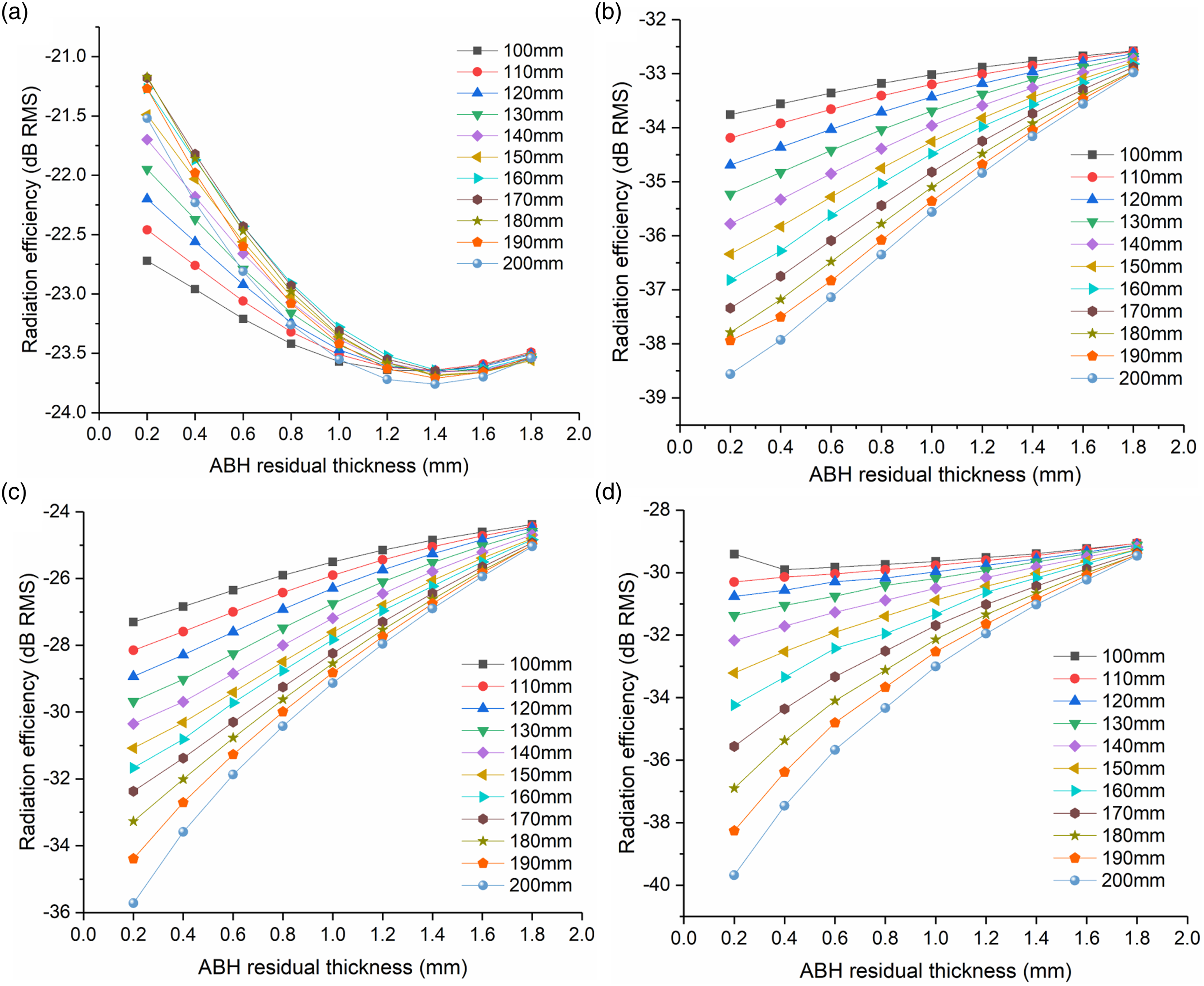
Effect of position
To verify the effect of the position on the radiated sound, double imperfect ABH indentations were arranged symmetrically on a thin plate, as shown in Figures 1(c) and (d). Double imperfect ABHs with diameter of 180 mm and residual thickness of 0.2 mm were used in the simulation. The acoustic radiation efficiency of the double imperfect ABHs thin plate at the second eigenfrequency was −30.2 dB, which is greater than that of the contrast thin plate with uniform thickness and those of all single imperfect ABH thin plates at the second eigenfrequency. The vibration velocity of the plate at other frequencies, in addition to the first eigenfrequency, reached an extreme value near the centre of the ABH, as shown in Figure 6. Both the mean square and absolute values of the vibration velocity reached their maximum values at the second eigenfrequency. Vibration velocity of double imperfect ABH plate: (a–f) Vibration velocity at first to sixth eigenfrequency.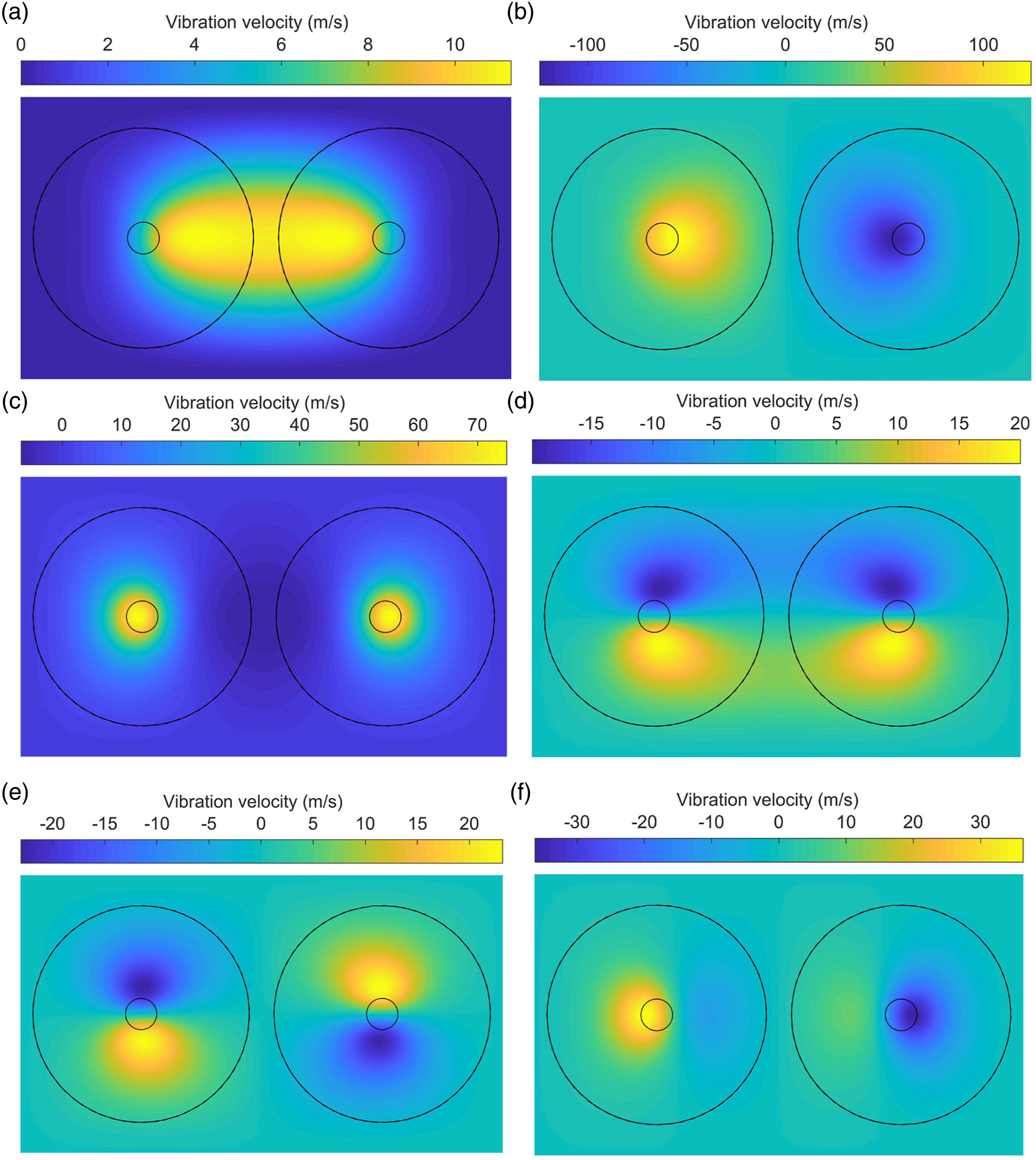
The results indicate that the acoustic radiation efficiency of the imperfect ABH thin plate was proportional to the ABH diameter and inversely proportional to the residual thickness. When the ABH diameter was extremely small or the residual thickness was extremely large, the energy-concentration effect disappeared, and the acoustic radiation efficiency of the imperfect ABH plate converged to the value of the reference plate with uniform thickness. When the modal centre of the thin plate coincided with the geometric centre of the ABH region, the energy-concentration effect of the ABH enhanced the acoustic radiation efficiency of the thin plate, and the acoustic radiation efficiency of the ABH plate was higher than that of the uniform contrast plate.
To check the changes of vibration velocity at different eigenfrequencies, the frequency-amplitude simulation results of imperfect ABH plate and uniform plate were shown in Figure 7. The monitoring point was set at the centre of the ABH area. The vibration velocity of the single imperfect ABH plate (h = 0.2 mm; D = 180 mm) is higher than that of the uniform plate at the first and third eigenfrequencies, as shown in Figure 7(a). The vibration velocity of the double ABHs plate at the second and third eigenfrequencies are higher than those of the uniform plate, as shown in Figure 7(b). However, at the first eigenfrequency, the vibration velocity of the double ABHs is lower than that of the uniform plate. The results show that when the centre of the imperfect ABH is adjacent to the centre of the mode shape, the vibrational velocity in the ABH region will be enhanced. On the contrary, the vibration velocity of the ABH region will be weakened. Vibration velocity of imperfect ABH plate and uniform plate.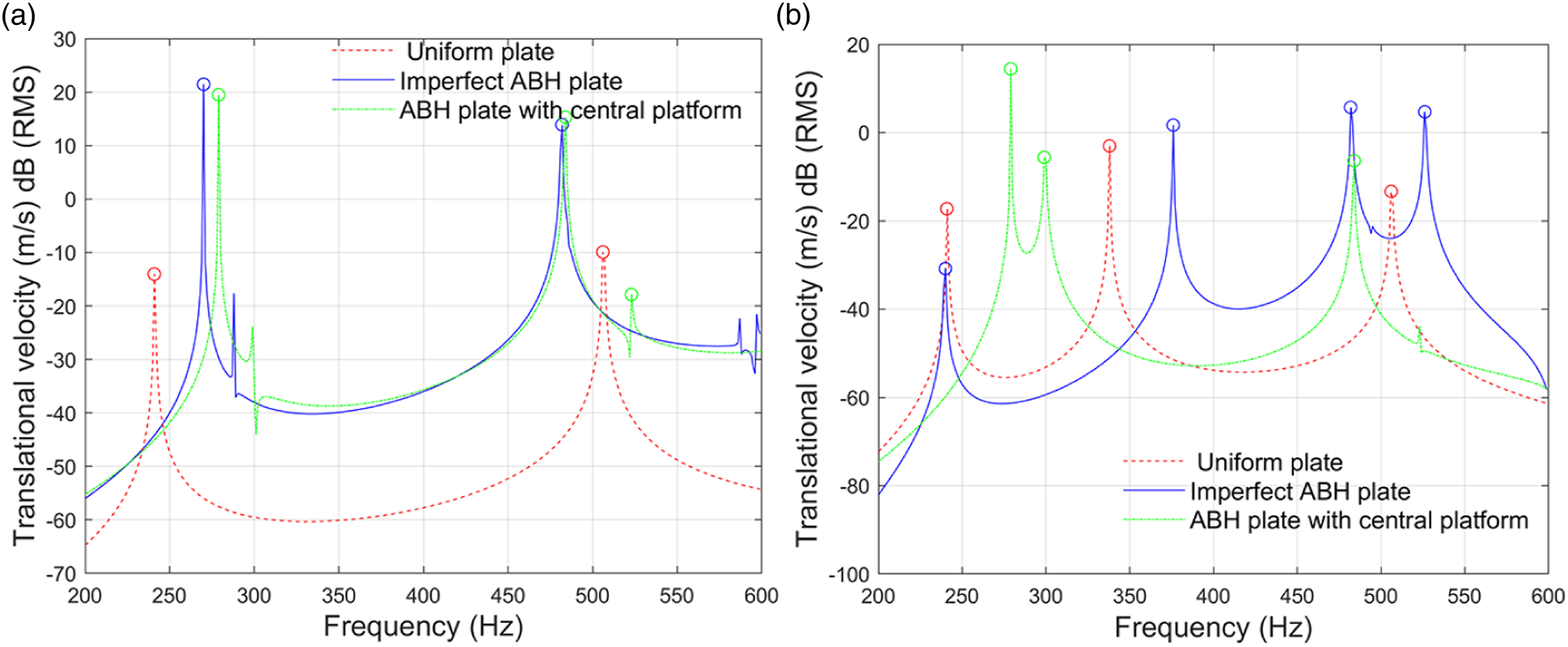
Experimental validation
To verify the simulation results, the sound intensity method was used to measure the sound pressure and sound intensity of the imperfect ABH plate in a conventional environment. The acoustic radiation efficiency was estimated using equation (9). The equipment connection diagram and the experimental test system are shown in Figure 8. The ABH plate was fixed on a steel fixture and restrained on four sides. The plate was excited at (0, 0.15 m) by a vibration generator (JZK-5, SINOCERA). The direct current excitation signal, which was generated by a computer, powered the vibration generator after it was passed through a power amplifier (YE5871 A, SINOCERA). A face-to-face sound intensity probe (SI 512, BSWA) and a data acquisition system (NI 9234) were used to obtain the sound pressure signals. The spacing between the two sound pressure probes was set to 50 mm. Schematic diagram of experimental setup and photograph of testing system.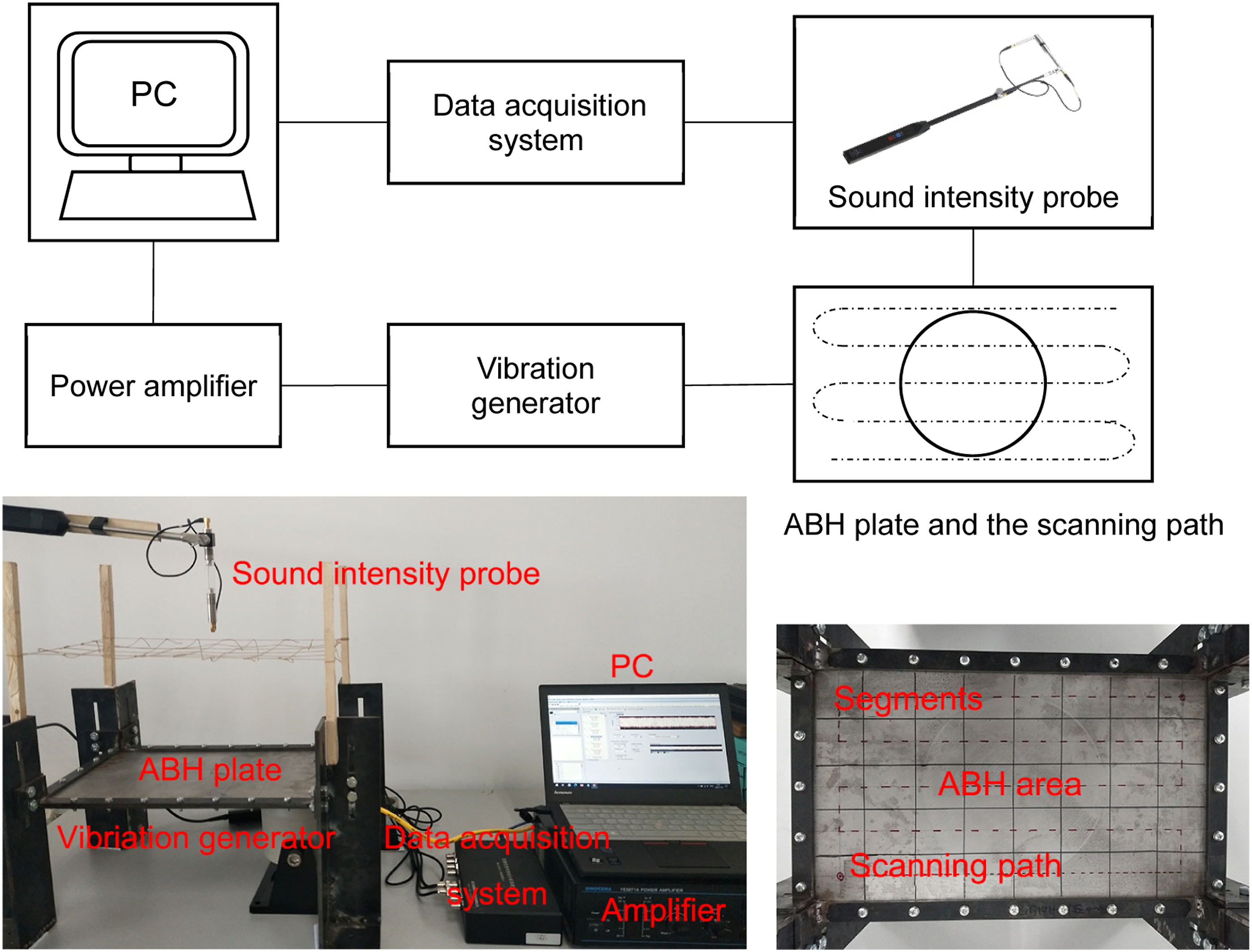
As shown in Figure 9, the experimental results were consistent with the simulation results. Based on the simulation results, the acoustic radiation efficiency difference between the imperfect ABH plate (h = 0.2 mm; D = 180 mm; l = 15 mm) and the uniform contrast plate was 2.48, −5.15, 0.25, −8.82, −7.80 and −11.63 dB at the first to sixth eigenfrequencies, respectively. The experimental results pertaining to the radiation efficiency of the ABH plate and uniform contrast plate are as follows: The radiation efficiency of the ABH plate was 2.9 dB larger than that of the contrast plate in the first eigenfrequency, which was also observed in the third eigenfrequency. However, it was smaller than that of the contrast plate at other eigenfrequencies, and the maximum difference was −10 dB at the sixth eigenfrequency. It is noteworthy that the measured sound intensity may exhibit a negative value in the low-frequency band, particularly in the first-order frequency, and multiple measurements are required to eliminate the negative effect. Acoustic radiation efficiency results of simulation and experiment (ABH plate: D = 180 mm; h = 0.2 mm; l = 15 mm).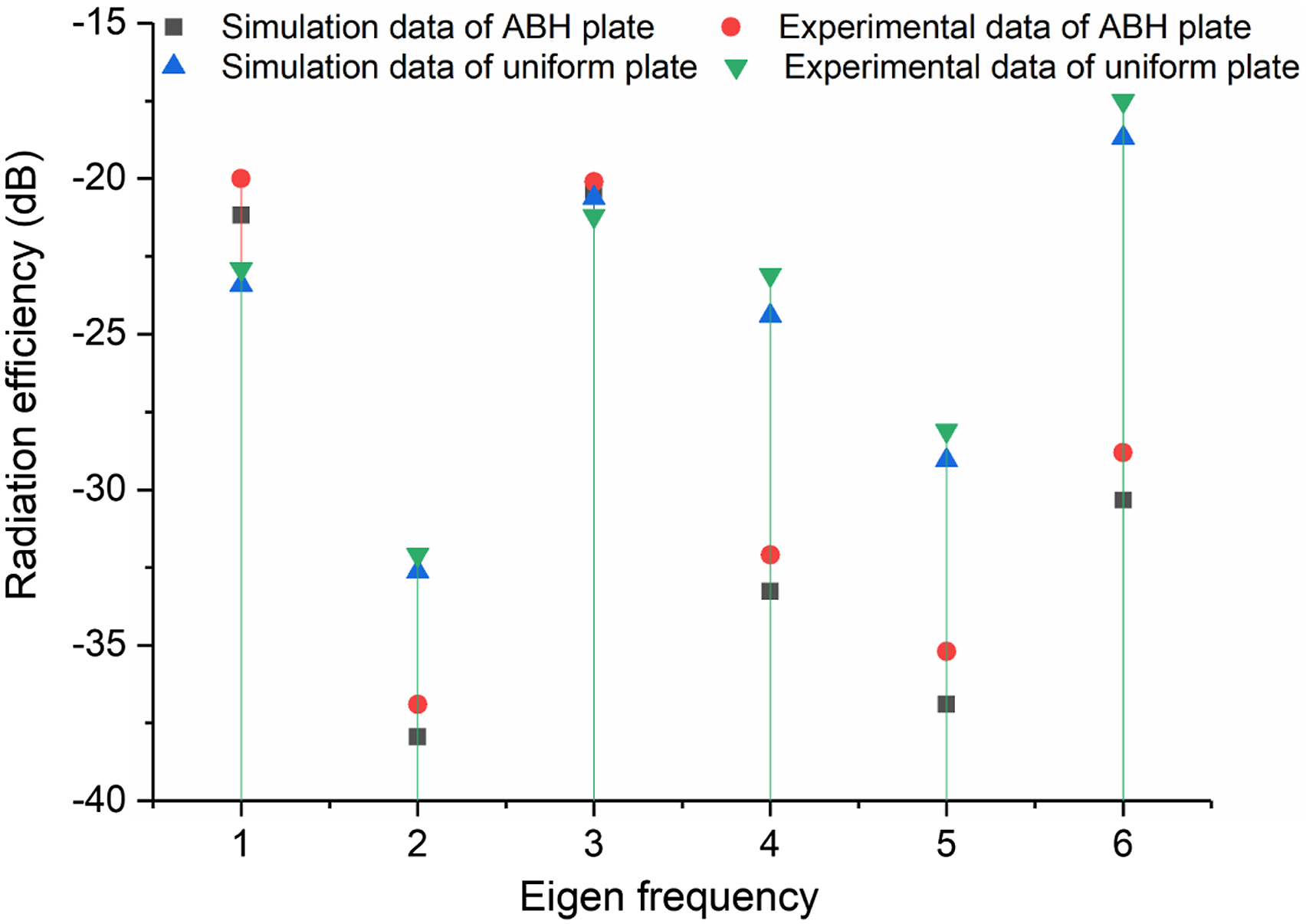
Conclusion
This study provides a reference for the application of imperfect ABH in the low-frequency vibration and sound control of thin-walled components. An imperfect ABH indentation was proposed in this paper. Simulation results based on the FEM showed that the change in eigenfrequency caused by ABH indentation was not negligible. The acoustic simulation and experimental verification showed that the energy-concentration effect occurred at low frequencies although it was associated closely with the diameter, residual thickness, mode shape and position of the ABH indentation. When the appropriate size of the imperfect ABH coincided with the modal shape of the plate, the sound radiation efficiency of the plate increased; conversely, it decreased. The vibration velocity simulation results show that imperfect ABH still has the same energy aggregation effect as traditional ideal ABH. The experimental scheme for calculating the sound radiation efficiency of an imperfect ABH thin plate by measuring the sound intensity provides a feasible solution when the conditions of an anechoic chamber are not available.
It is difficult to machine ABHs in thin-walled structures owing to machining deformation. Therefore, only a single representative imperfect ABH was used in the experiment. The experimental data were consistent with the simulation results. Hence, this study can serve as a foundation for future investigations involving mechanism of imperfect ABH and composite structures in the low-frequency band.
Footnotes
Declaration of conflicting interests
The author(s) declared no potential conflicts of interest with respect to the research, authorship, and/or publication of this article.
Funding
The author(s) disclosed receipt of the following financial support for the research, authorship, and/or publication of this article: This work was supported by the National Key Technology Research and Development Program of China (grant number 2015BAF07B04).
