




Abstract
In this work, we investigate and apply higher-order Hamiltonian approach (HA) as one of the novelty techniques to find out the approximate analytical solution for vibrating double-sided quintic nonlinear nano-torsional actuator. Periodic solutions are analytically verified, and consequently, the relationship between the initial amplitude and the natural frequency are obtained in a novel analytical way. The HA is then extended to the second-order to find more accurate results. To show the accuracy and applicability of the technique, the approximated results are compared with the homotopy perturbation method and numerical solution. According to the numerical results, it is highly remarkable that the second-order approximate solutions produce better than previously existing results and almost similar in comparing with the numerical solutions.
Keywords
Introduction
Nonlinear differential equations are mathematical equations that are significant in modeling physical, chemical, biological phenomena that occur in nature. Applications can be found in physics, ocean acoustics, ocean engineering, mathematics, fluid dynamics, mechanics, and finance. Examples include modeling mechanical vibration, heat, linear and nonlinear water waves, coastal ocean, propagation of nonlinear waves, lakes pollution, sound vibration, elasticity, and fluid dynamics, just to name a few. Although nonlinear DEs have a wide range of applications to real-world problems in science and engineering, the majority of DEs do not have analytical solutions. It is, therefore, important to be able to obtain an accurate solution numerically. The advancements of high-speed computers have made it possible to find numerical solutions to complex DEs while minimizing the time it requires to perform the computations. Many computational methods have been developed and implemented to successfully approximate solutions. Traditionally, mesh methods such as the finite difference method, finite element method, and boundary element method have been used. These methods require a mesh to connect nodes inside the computational domain or on the boundary. Complications of these methods include a slow rate of convergence, spatial dependence, instability, low accuracy, and difficulty of implementation in complex geometries. However, meshless approximation techniques using radial basis functions have been developed over the last several decades. These techniques are easy to implement, highly accurate, and truly meshless, which avoids troublesome mesh generation for high-dimensional problems. While this method along with other methods has been proven to be effective, a significant disadvantage to these methods is that they are not able to handle the solution of problems on a large scale. In this case, the matrices can become dense and are often poorly conditioned. Not only is stability an issue but the computational cost and memory allocation become very high thereby rendering the method ineffective. Furthermore, the solution is very sensitive to the choice of the shape parameter in the RBFs. To circumvent these issues, a number of efforts have been made in the literature in which their results have a good accuracy with the numerical solutions. Among these methods, a domain decomposition introduced by Main-Duy and Tran Cong, 1 a multi-grid approach in Ref. 2, compact support radial basis functions by Chen et al., 3 variational iteration techniques,4–6 the greedy algorithm, 7 local RBF method, 8 semi inverse method,9,10 iteration perturbation method, 11 variational principle,12–16 Taylor series method 17 and local methods such as the local Kansa method and local method of approximate particular solutions, 18 He’s frequency formulation, 19 and many more.20–29
Nonlinear oscillators have been widely utilized to represent numerous physical systems particularly in applied sciences and engineering including the vibrations of plates and beams, the vibrations induced on different structures by fluid flow, the large amplitude oscillations of centrifugal governor systems, the free vibration of a restrained uniform beam undergoing large amplitudes of oscillation and carrying intermediate lumped mass, the oscillations of magneto-elastic mechanical systems or pendulum-like systems, the oscillations of pendulum-like systems or propagation of a short electromagnetic pulse in a nonlinear medium, and so on (see, for example, Refs. 30–34).
Electrostatic torsional actuators are extensively applied in nano-electromechanical system devices such as tunable torsional capacitors, torsional mirrors, and torsional radio frequency switches. Recently, several experimental studies have been conducted on the pull-in instability and dynamic behavior of nano-electromechanical system devices.35–39
In the last two decades, significant progress is made in analytical approximate solutions of nonlinear oscillator’s differential equations.40–42 Nowadays, several methods have been used in the literature to investigate the vibrating double-sided quintic nonlinear nano-torsional actuator such as variational iteration method,43–45 energy balance method,46,47 homotopy perturbation method,48,49 global error minimization method, 50 homotopy analysis method, 51 global residue harmonic balance method, 52 and Hamiltonian approach (HA)53–56 have been applied to investigate the governing nonlinear differential equations.
The main objective of this article is to get the accurate analytical natural frequency for the nonlinear vibration of double-sided-actuated nano-torsional switches with different actuation voltages as a second-order nonlinear differential equation up to second-order Hamiltonian approaches. The results obtained show that the proposed technique is convenient and very effective for the highly nonlinear governing equations of nonlinear beam vibration. The planned analytical technique proves that to obtain a highly accurate solution of micro-beam vibration, the two terms in series expansions are sufficient. The relationship between frequency and amplitude is then gained in an approximate analytical form. Also, a comparison is carried out between the obtained frequency responses of the systems and the numerical solutions.
The basic description of the Hamiltonian approach
A HA to nonlinear oscillators was suggested by He in 2010,
55
and recently, it has been advanced for the transverse vibration of a reinforced concrete pillar.
57
In order to clarify the basic idea of the HA, we consider the following nonlinear differential equation of an oscillatory system as55,58

For equation (1), a variational principle can be established easily, which reads
59


From equation (3), we have

Introducing

It is clear that

Rearranging equation (6), we get the following

Mathematical modeling
The schematic of a nano-torsional switch
38
has been shown in Figure 1 under double-sided electrostatically actuated voltages. The nano-torsional system has a spring torque coefficient The configuration of a double-sided nano-torsional switch.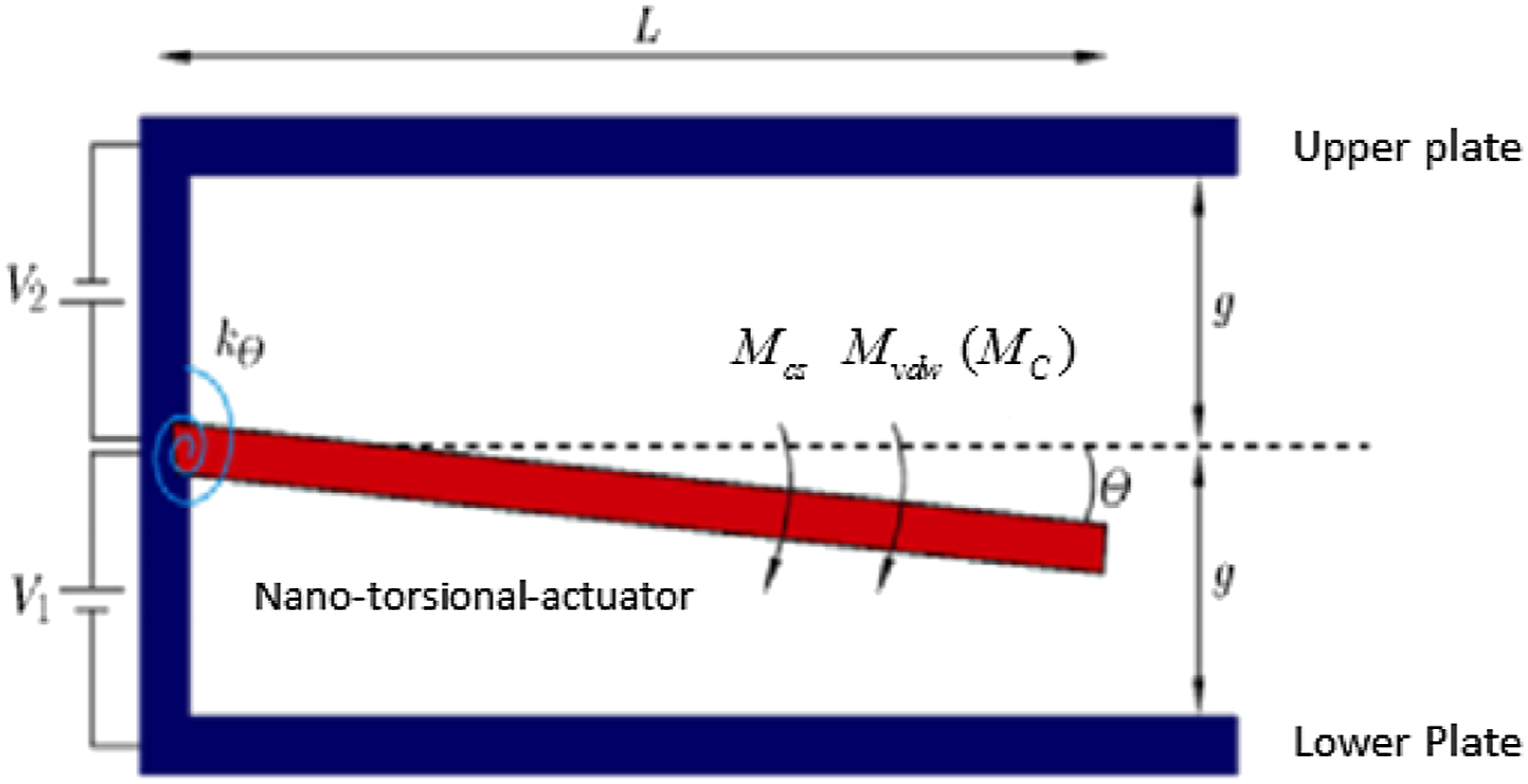
The initial gap of air is
For the nano-actuator system, the governing equation of motion can be expressed as below
38

From equation (8), amplitude and frequency relationship of nonlinear oscillators can be obtained. The Hamiltonian equation for the current special problem can be written as

According to Ref. 38, the electrostatic torques per unit length, applied to the nano-actuator from the lower and upper plates, can be computed using a standard capacitance model.
Following Refs. 35 and 38, the electrostatic torque from the lower plate can be expressed as


In the same way, the vdW and the Casimir torques from the upper and lower surfaces can be, respectively, described in the form


The index

Hamiltonian approach approximation of first order
For the first order approximation, we assume the first approximate solution of equation (8) as:55

Substituting equation (15) into (9), we get

Setting

Solving equation (17), an approximate frequency as a function of amplitude can be obtained as

Hamiltonian approach approximation of second order
To improve the precision and accurateness of the HA, as the response of the system, we consider the following equation


Substituting equation (19) into (9), we get
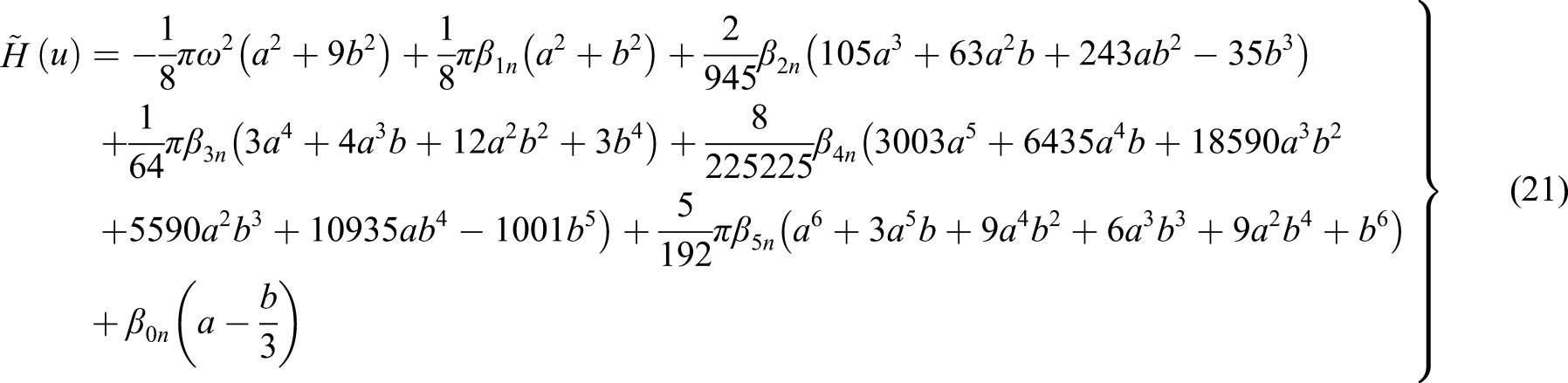
Setting
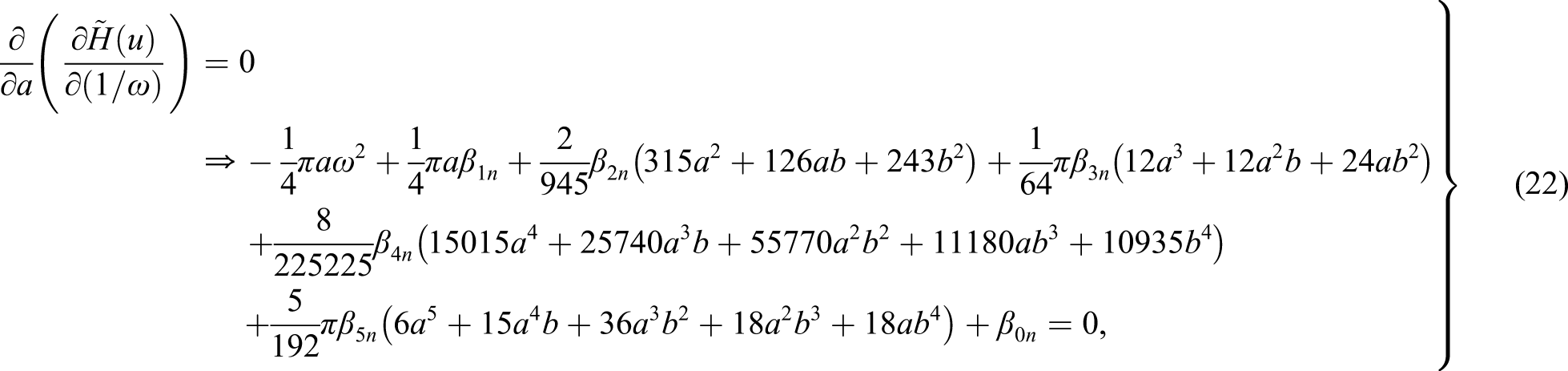
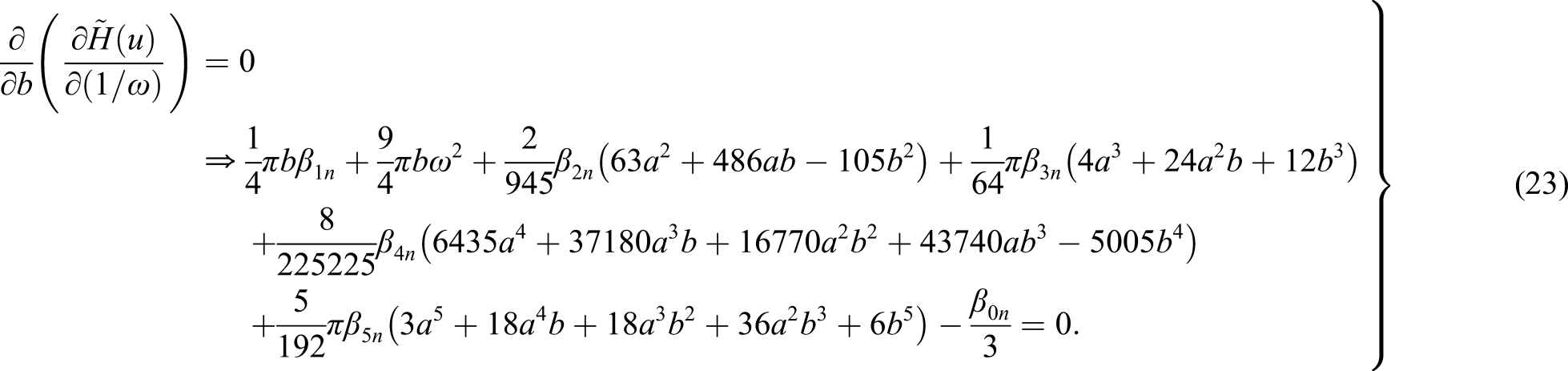
Values of

Values of

Numerical results and discussion
The Hamiltonian approach as a suggested technique is used to find the approximate analytical expressions for the displacement and frequency of vibrating double-sided quintic nonlinear nano-torsional actuator and compare the obtained results with those obtained from the HPM. 38 Also, the results from numerical calculations (RK4) are considered the reference for such comparisons.
According to Figures 2 and 3, it is observed that when the order of the suggested technique increases, more accurate results and higher agreement are gained. Hence, the second-order solution was the best in terms of computational efficiency and accuracy. The time history obtained for the initial condition is illustrated in Figures 2 and 3. It is seen that in the time domain, a very excellent correlation is still preserved. Comparison of the results obtained from the analytical solution (black line), HPM (blue line), and the numerical solution (green line). Comparison of the results obtained from the analytical solution (black line), HPM (blue line), and the numerical solution (green line).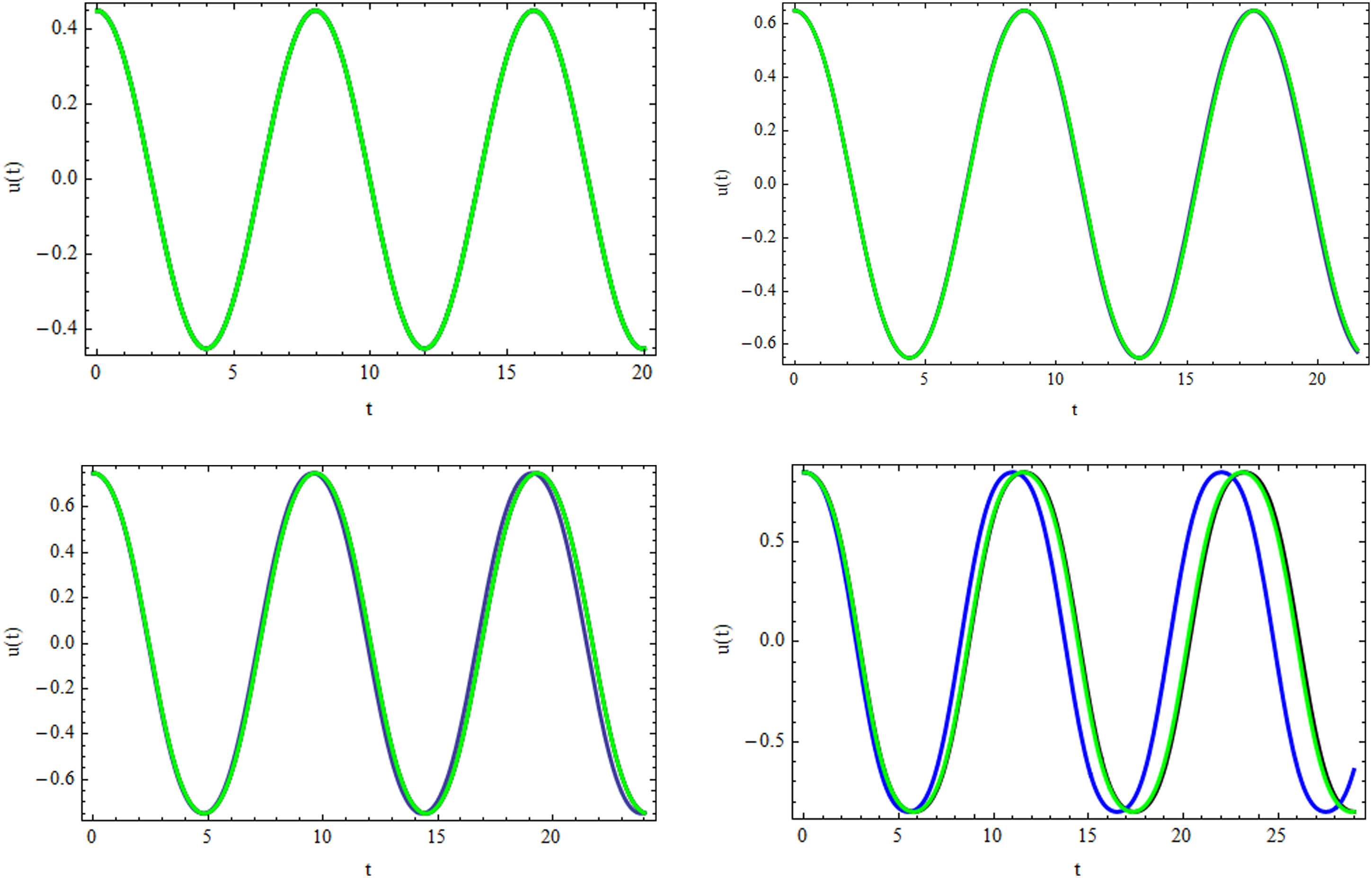
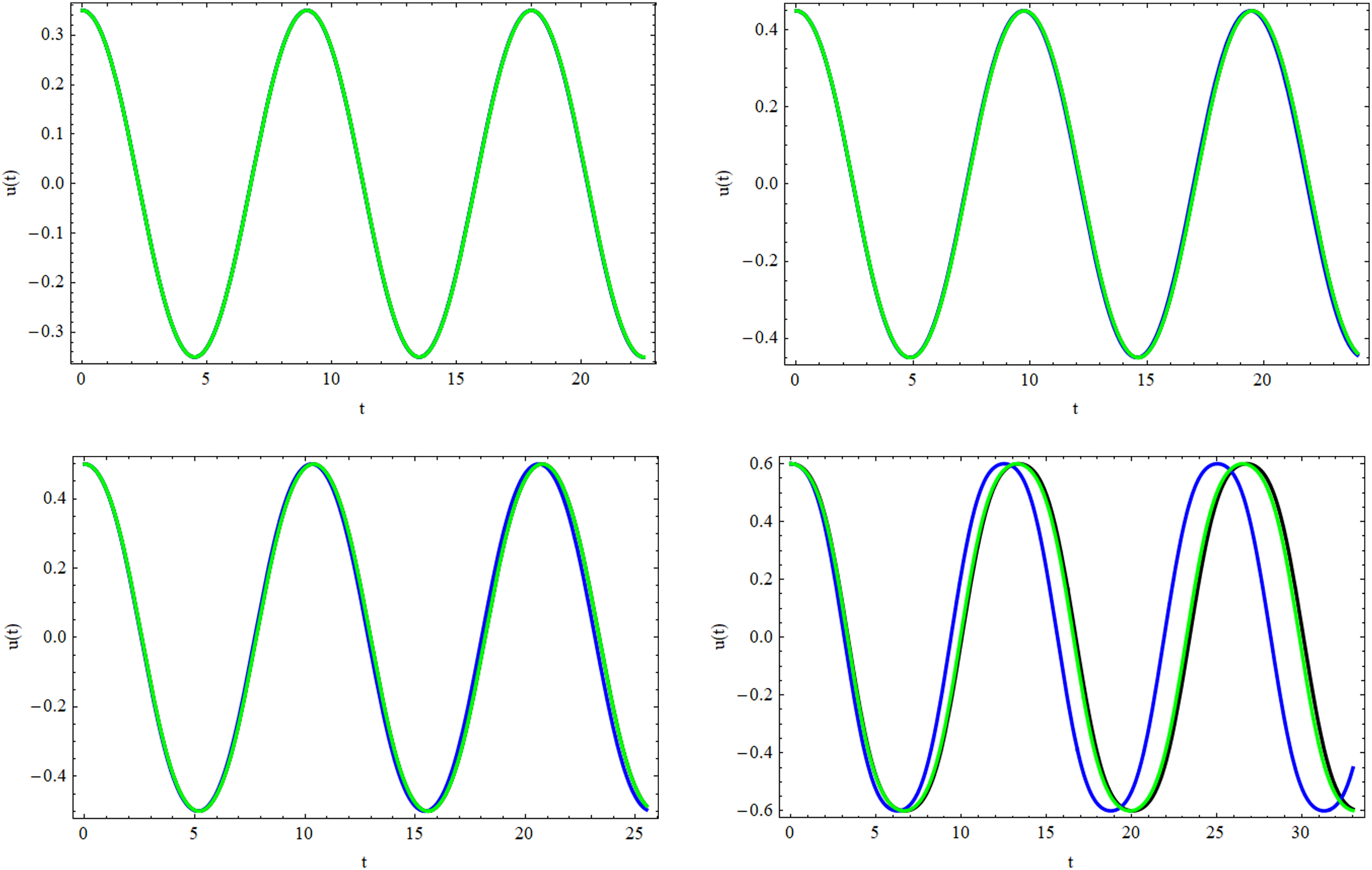
In Figures 2 and 3, we compare the results of analytical and numerical solutions. From the previous, we can conclude the following: Figure 2 shows the comparison between the analytical HA of second-order and numerical solutions gained from the Runge–Kutta method of fourth-order by considering the Van der Waals effect for Figure 3 shows the comparison between analytical and numerical solutions by considering the Casimir effect for The obtained results in this work confirm that the HA of higher order is an effective and powerful technique for the solution of nonlinear differential equations in various fields of applied sciences and engineering. Hence, this method may be used to study physical problems with strong nonlinearity efficiently.
Conclusion
The HA of higher order as a modern powerful analytical method was employed successfully to obtain the frequency–amplitude relationship of the nonlinear nano-electromechanical system. The HA of second-order provides a direct and easy process for determining approximations of the periodic solutions. The idea of this research has important outcomes for biological, physical models, and their related complications. Thus, in describing physical, chemical, medical, social, and engineering processes, the conclusion is that the HA of higher order is helpful.
The results obtained along with the comparisons between analytical solutions and numerical ones show excellent agreement between analytical and numerical ones and do provide strong evidence to the utility of the approach and support the belief that the proposed method has a substantial future in solving a wide range of difficult problems that occur in the natural sciences and engineering. A simple solution procedure with high accuracy in the obtained results from the benchmark problem reveals the novelty, reliability, and wider applicability to the proposed analytical technique.
Footnotes
Acknowledgements
The authors extend their appreciation to the Deanship of Scientific Research at King Khalid University, Saudi Arabia, for funding this work through research groups program under grant RGP.1/86/42.
Declaration of conflicting interests
The author(s) declared no potential conflicts of interest with respect to the research, authorship, and/or publication of this article.
Funding
The author(s) received no financial support for the research, authorship, and/or publication of this article.
