




Abstract
Introduction
With Cyprus’ entry into the European Union (EU) in 2004, the country established basic pillars for the development of eHealth services. 1 However, several critical issues such as the lack of a coherent legal framework for eHealth applications, insufficient infrastructure for technical devices, and limited acceptance of these technologies by healthcare professionals and the public remain to be addressed. 2
The implementation of the Electronic Health Record (EHR) in Cyprus was formalized through legislation passed by the Ministry of Health in 2019. This law provided specific guidelines on the content and use of the EHR. 1 Simultaneously, the necessary legislative initiatives were introduced to reform the structure and operations of the GHS and the Cyprus Health Insurance Organization (HIO), the organization responsible for the implementation of the GHS was established. 3
Although Cyprus has made progress in aligning with European directives, such as defining the national contact point for cross-border care and adopting Directive 2011/24/EU, the full integration of the interoperability system still remains incomplete and its realisation a priority.4,5 Additionally, in Cyprus the development of telemedicine services, remote healthcare related communication systems, and telemonitoring remains at a slow pace. 6 A key challenge in implementing eHealth innovations lies in raising awareness among healthcare professionals on issues such as the standardization of eHealth implementation, as well as data exchange and security.4,5 To date, no national initiatives have addressed these issues efficiently. 7
While the EHR has been integrated into the GHS since 2019, there is limited research on its adoption by healthcare professionals across disciplines and professions. Studies addressing EHR implementation in Cyprus prior to 2019 are scarce. For instance, two decades ago, the need for aligning health policies and workforce resources with telemedicine applications was emphasized by Pattichis et al. 8 while about a decade later significant gaps including the lack of digitization and supervisory systems for health infrastructure and tools to enhance service efficiency and quality were identified by Theodorou et al. 9 Similarly, the infrastructural challenges facing EHR development in Cyprus and the need for investment in secure software systems featuring transaction control, user authorization, and data monitoring was advocated by Neokleous et al. 4 while a framework for EHR design and implementation was suggested by Schiza et al. 10
One of the earliest initiatives to implement EHR in Cyprus was the eENERCA project, 11 which proposed a system for managing rare congenital conditions that require lifelong monitoring. This initiative yielded positive outcomes for both patients and healthcare professionals. More recently, Cypriot researchers have developed frameworks for cross-border eHealth services within the EU, which facilitate the exchange of patient histories and e-prescriptions, in compliance with Directive 2011/24/EU on patient rights in cross-border healthcare. 12
Prior to the implementation of the GHS, a study to assess the implementation of the existing Integrated Health Information System in two public hospitals in Cyprus (in the provinces of Nicosia and Famagusta) involved a total of 309 participants, including doctors, nurses, and other healthcare professionals. Participants evaluated system aspects such as satisfaction, collaboration, quality, safety, and processes, rating them as moderate, with considerable scope for improvement. 13 In a subsequent study by Papaioannou et al., 4 initial findings from the eHEALTH4U project highlighted efforts to design the architecture of the EHR system in Cyprus. This included defining requirements for clinical content, specifying hardware needs, and ensuring compliance with European and national legislation on confidentiality and security in the management of sensitive operational data.
Based on the above discussion, it becomes evident that a greater number of studies on EHR in Cyprus were published prior to its implementation in 2019, with only two studies by emerging post-implementation.4,13 Only the study of Stylianides et al. was targeted health professionals as users of the Integrated Information System in Nicosia and Famagusta Hospitals. targeting healthcare professionals as users of the Integrated Information System at Nicosia and Famagusta Hospitals. 13 Generally, these studies have centered on the necessity of EHR integration within the GHS or on the architectural aspects of the EHR system, with particular attention to functionality, interoperability, data security, and cross-border healthcare.4,10 Furthermore, following the EHR implementation in the GHS no research capturing the perspectives and attitudes of healthcare professionals on the use of EHR has been conducted. A recent review by Tsai et al. 14 suggests that healthcare workers’ perceptions and attitudes are closely associated with aspects of work efficiency. Thus, such insights are essential, as end-users play a pivotal role in the system’s ongoing implementation, helping to identify both its strengths and areas for improvement. Such data are expected to inform health policy initiatives aimed at enhancing EHR quality, specifically in terms of user efficiency about the use of EHR functions.
Methods
Study design
This cross-sectional study aimed to assess the self-reported efficiency of EHR users within the GHS in Cyprus. The significance of this study lies in the fact that is the first such study undertaken post-implementation the EHR and extends beyond the Republic of Cyprus, as it contributes to the broader body of research within the European and Mediterranean regions.
Data collection tools and approach
The study was conducted during the period of October to December 2022 using convenience sampling. Data were collected through an anonymous self-reported questionnaire designed to assess the medical application of EHR by healthcare professionals and was developed by Laerum and Faxvaag. 15 The questionnaire covers multiple dimensions of EHR efficiency, with related questions grouped into factors. Though several validated tools are available to assess EHR efficiency, this research used a tool that met specific conditions relevant to the context of the COVID-19 pandemic. The questionnaire was translated and validated in the Greek language by Paganas et al. and demonstrated strong reliability (Cronbach’s α > 0.8). 16 All required permissions for the use of the questionnaires were received following communication with the holders of the respective copyrights.
For this study, the questionnaire included two sections (Supplemental Material): (a) Demographic and Occupational Factors: This section was developed based on literature reviews and the researcher’s observations. It includes questions related to participants’ social and professional characteristics to be statistically analyzed at a later stage. (b) EHR Efficiency Scale: This section comprised a 24-item, 7-point Likert scale measuring participants’ perceptions of EHR efficiency in medical practice. In this section the ease of performing tasks when physicians using the EHR was investigated.
The internal consistency of the EHR efficiency scale was high (Cronbach’s α = 0.991), and its validity was supported (SRMR = 0.058). A pilot study involving 20 physicians, excluded from the final sample, confirmed the questionnaire’s suitability for this research.
Appropriate permissions to use the questionnaire were obtained from the holders of the respective copyrights, and the competent committee granted approval for initiation of the study. All participants were informed of the study’s purpose and were assured of their anonymity and confidentiality. Participation was voluntary and participants could withdraw at any time without consequence. The study adhered to the ethical standards of the 1964 Helsinki Declaration and its subsequent amendments.
Study area and participants
The target population included EHR users within the GHS, specifically personal and specialist physicians across all provinces of the Republic of Cyprus. As physicians constitute the primary users of the EHR system, their participation was critical. Given the large size of the target population, it was expected that participation would be voluntary due to the physicians’ heavy workload.
A total of 429 participants from a target population of 2648 physicians listed on the HIO website responded to the survey. To maximize response rates, three email reminders were sent at specific intervals, and letters were sent to professional associations and scientific societies to promote participation, while highlighting the benefit that can be derived from the study.
All participants were informed about the purpose and evaluation activities of the study and were informed that they could withdraw at any time without obligation. Initially, all the people selected for the study signed a consent form, which guaranteed their participation and anonymity. Anonymity is maintained both throughout the study and after its results are made public, due to sensitive personal data.
Sampling strategy
The participants were selected using convenience sampling. The method of convenience sampling was followed as the process of selecting a random sample from a large population such as EHR users with various medical specializations was considered to be time-consuming. Physicians are currently the main users of the EHR in Cyprus. Also, due to the large size of the target population, it was expected that the subjects’ participation in the research would be voluntary, since members of the target population, it was judged that they would not be easily available, or would probably be reluctant to take part in the research due to the physicians’ workload. Also, data collection occurred during the covid-19 pandemic, a period marked by extraordinary demands on healthcare providers. This unprecedented pressure could have affected physicians’ willingness to participate in the study. The results of the survey can be relevant to populations that have characteristics similar to those in the sample and similar EHR status within their GHS.
The G-Power software was used to calculate the final differential force (power). As a minimum required number of sample observations, 282 people were calculated (for a minimum power of 80%). So, with 429 participants, the power of the present study exceeds 92% (Figure 1). Sample power.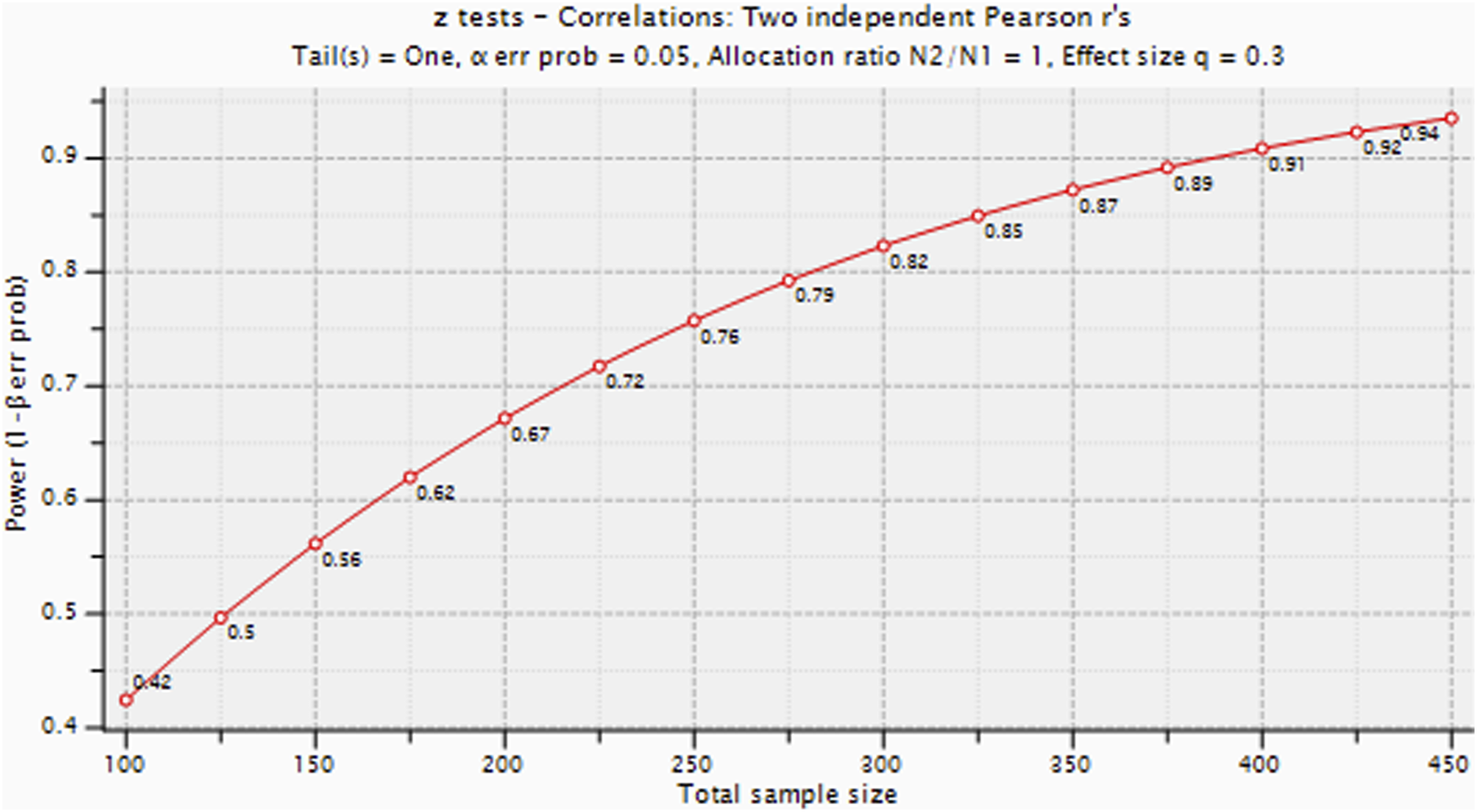
Data analysis method
Statistical analysis was performed using SPSS version 26.0. Likert scale responses were converted into percentile scores to facilitate comparison. Responses indicating “task not supported by EHR” or “don’t know/not applicable” were treated as missing values. Continuous variables were expressed as mean ± standard deviation, and categorical variables as frequencies and percentages. Relationships between continuous and ordinal variables were analyzed using the Spearman correlation index, while the Point Biserial correlation was used for dichotomous variables. For comparisons involving more than two categories, ANOVA was employed. A significance level of p < 0.05 was used for all statistical tests.
Results
Social, demographic and occupational characteristics of the sample (N = 429).

The overall average score for EHR efficiency was 57.4/100 indicating moderate efficiency levels among users. Half of the participants had scores ranging between 23.6/100 and 94.4/100. According to the results on the level of efficiency of the EHR in the practice of clinical work of the users presented in detail in Table 2, statistically significant findings include: (a) Age: Younger participants reported higher efficiency levels (p < 0.001). (b) Professional Experience: Less experienced physicians indicated greater efficiency with EHR (p < 0.001). (c) Familiarity with Technology: Those with higher proficiency in computer and ICT use demonstrated significantly higher EHR efficiency (p < 0.001). (d) Typing Speed: Faster typing speeds were positively correlated with better efficiency (p < 0.001). (e) Familiarity with EHR: Familiarity with EHR usage was strongly associated with higher efficiency scores (p < 0.001). (f) Training: Physicians who received extensive training reported higher efficiency levels (p < 0.001). (g) Support from HIO: Physicians who felt adequately supported by the HIO reported better efficiency (p < 0.001). Bivariate analysis of the scale “Efficiency with the EHR” with social, demographic and occupational factors. *rs = Spearman index, rpb = point biserial index, F = F-test (ANOVA).
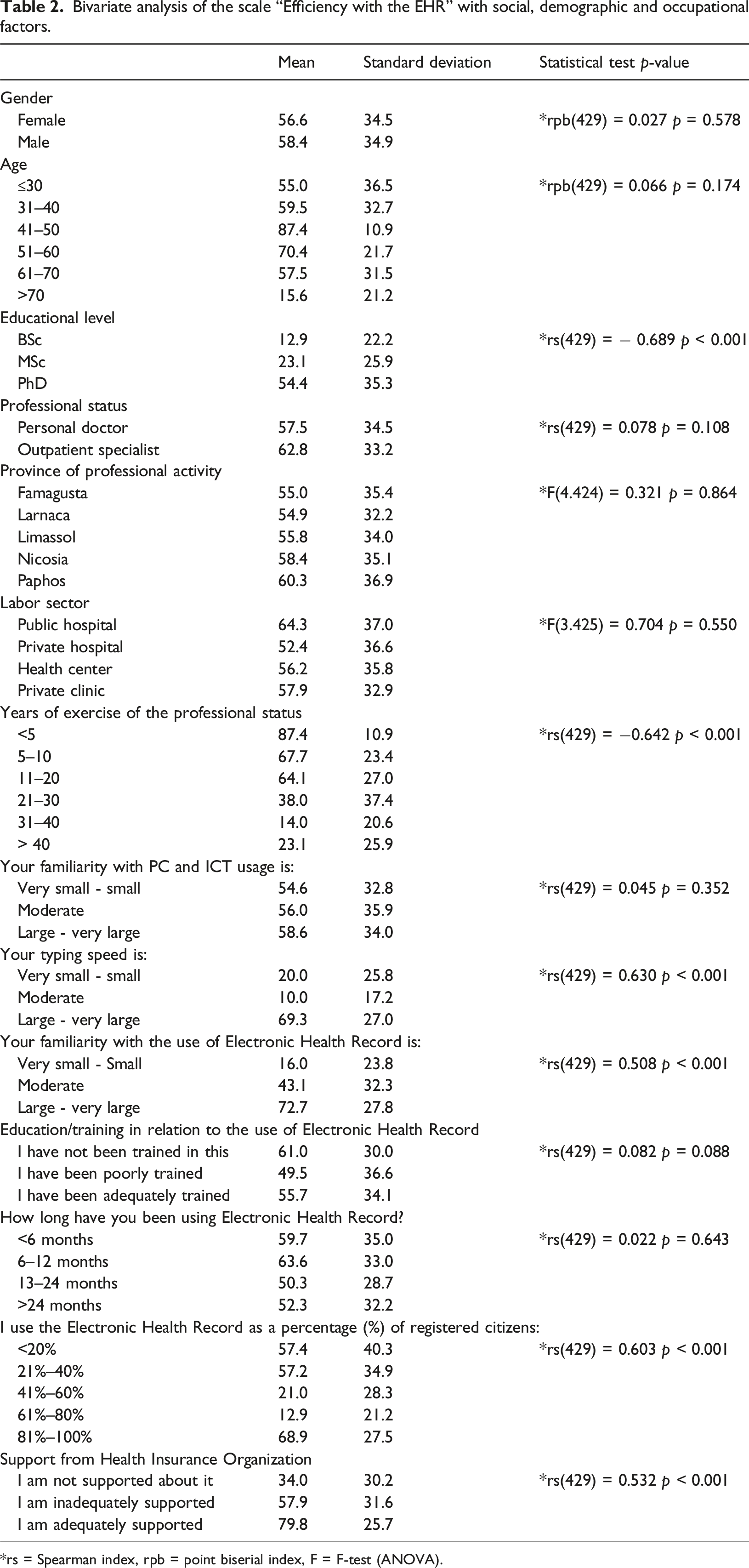
It is noted that a p-value < 0.05 and a p-value < 0.001 are both statistically significant and that a p-value < 0.001 provides an even stronger case against the null hypothesis than p-value < 0.05.
Discussion
The aim of this study was to investigate the efficiency levels of EHR users within the GHS in Cyprus and is considered unique and original research in this specific field, following the implementation of the EHR in the GHS in 2019, as no similar study has been undertaken. It is expected that the findings of this study will act as a valuable resource for policymakers in motivating them to take further actions to improve the efficiency of EHR users, who are regarded as the cornerstone of the GHS. While a rich body of research exists globally on EHR systems, enriching this data set with findings from a country that has the cultural, social, and economic characteristics of Cyprus is considered a valuable contribution to the scientific community. 14
Due to the absence of relevant Cypriot studies in the respective field, it is not possible to conduct a detailed comparative analysis of the findings with similar local studies at this point. However, the moderate levels of satisfaction reported by EHR users in Cyprus are consistent with a study conducted during the evaluation of the Integrated Information Systems at Nicosia and Famagusta hospitals undertaken before the implementation of the EHR in 2019. 13
The study identified that the average efficiency level of EHR users was positively associated with several social, demographic, and occupational factors. More specifically, factors such as “age,” “years of professional experience,” “familiarity with computers and ICT,” “familiarity with EHR,” “EHR training,” and “support from the HIO” were statistically significantly related to the reported efficiency levels of EHR users.
In particular, fewer years of professional experience were linked to greater efficiency. This could be attributed to younger or less experienced doctors being more flexible and open to new systems, including EHRs as indicated in a study in the Netherlands. 17 Similarly, younger participants were associated with higher levels of efficiency, likely because younger doctors tend to be more technologically adept and have more exposure to digital systems.18–22 These findings align with international research, where younger healthcare professionals have been shown to adapt more easily to digital health systems as found by Garcia and Crenner in their comparative study in the USA and Norway. 23
Familiarity with computers and ICT was also found to be a key factor in user efficiency. The greater the participants’ familiarity with digital technology, the more positively they rated their efficiency using the EHR.24–27 This result is consistent with global research that highlights the significant role of digital literacy in the effective use of EHR systems. 26
Furthermore, familiarity with the EHR system itself was positively correlated with higher efficiency levels.28,29 Participants who reported a higher degree of familiarity with the system were more likely to report greater efficiency in their clinical practice, a finding that has been corroborated in both national and international studies.30,31
Training on EHR usage emerged as another critical factor, with participants who had received adequate training reporting higher levels of efficiency. 32 This further supports existing literature, which consistently shows that training is vital for optimizing EHR usage33–36 and for wider digital transformation. 37 Physicians with comprehensive training programs were better equipped to navigate and utilize the EHR system effectively.38,39
Moreover, the study also revealed that support from the HIO significantly contributed to the efficiency of EHR users. Physicians who felt adequately supported by the HIO reported higher efficiency, underscoring the importance of institutional backing in the successful implementation of health information systems.33,40,41
Limitations of the study
This study has several limitations that should be considered when interpreting the findings. First, the sample focused solely on physicians, excluding other healthcare professionals such as nurses, pharmacists, and administrative staff who also interact with the EHR system. As these groups may experience different challenges or benefits in EHR usage, their exclusion limits the generalizability of the study’s conclusions to the overall healthcare workforce. Future studies should aim to include a broader range of healthcare professionals for a more comprehensive view of EHR efficiency within the healthcare system.
Also the participants were selected using convenience sampling. The method of convenience sampling was followed as the process of selecting a random sample from a large population such as EHR users with various medical specializations was considered to be time-consuming. On the other hand, due to the large size of the target population, it was expected that the subjects’ participation in the research would be voluntary, since members of the target population, it was judged that they would not be easily available, or would probably be reluctant to take part in the research due to the physicians’ workload.
In addition, data collection occurred during the covid-19 pandemic, a period marked by extraordinary demands on healthcare providers. This unprecedented pressure could have affected physicians’ willingness to participate in the study and therefore the response rate. Thus the results of the survey can be generalized only to populations that have characteristics similar to those in the sample.
Also, the study only conducts bivariate analysis, which examines the relationship between each variable and the outcome variable. Multiple regression was not performed because the non-randomness of the sample does not allow for generalization of the results and therefore the examination of causality is considered to be without substance.
Finally, due to the lack of comparable Cypriot studies, this study’s findings were only benchmarked against international literature. Without local studies, it is difficult to assess the unique factors affecting EHR efficiency in the Cyprus context. Future research within Cyprus would provide valuable insights into how local cultural, social, and healthcare-specific factors influence EHR adoption and user efficiency.
Conclusion
The implementation of the EHR system within Cyprus’ GHS, which was initiated in 2019, has not yet fully achieved the country’s eHealth objectives, as indicated by the moderate efficiency levels reported by users. While the EHR system provides a foundation for modernizing healthcare delivery, it still falls short of fully meeting the needs of healthcare providers and, by extension, the patients who rely on their services.
To help the GHS meet its objective of becoming a modern, sustainable health ecosystem, improvements to the existing EHR architecture are essential. Key steps include ensuring equal access for all healthcare professionals, integrating other health providers into the system, and fostering a multidisciplinary approach to patient care. Realizing the broader vision of eHealth in Cyprus will require further advancements in cross-border care capabilities and the development of telemedicine services.
Healthcare policymakers should systematically leverage both quantitative and qualitative data from EHR implementation to develop comprehensive national programs for ongoing education and training. Strengthening healthcare professionals’ digital skills will be crucial in optimizing EHR usage and enhancing its effectiveness in improving healthcare delivery.
Supplemental Material
Supplemental Material - Efficiency of Electronic Health Record users in the General Health System of Cyprus
Supplemental Material for Efficiency of Electronic Health Record users in the General Health System of Cyprus by Periklis Rompolas, Panicos Masouras, Sotiris Avgousti and Andreas Charalambous in Health Informatics Journal.
Footnotes

Ethical approval
This study was performed in accordance with the principles of the Declaration of Helsinki. Approval was granted by the Cyprus National Bioethics Committee (05/19/2022/2022.01.130).
Consent to participate
Informed consent was obtained from all individual participants included in the study.
Author contributions
All the authors contributed to the study conception and design.
Funding
The author(s) received no financial support for the research, authorship, and/or publication of this article.
Declaration of conflicting interests
The author(s) declared no potential conflicts of interest with respect to the research, authorship, and/or publication of this article.
Data Availability Statement
All the authors confirm that the data generated or analysed during this study are included in this published article. Restrictions apply to the availability of data, which were used under licence for the current study and so are not publicly available. The data are, however, available from the authors upon reasonable request and with the permission of the Cyprus National Bioethics Committee.
Supplemental Material
Supplemental Material for this article is available online.
References
Supplementary Material
Please find the following supplemental material available below.
For Open Access articles published under a Creative Commons License, all supplemental material carries the same license as the article it is associated with.
For non-Open Access articles published, all supplemental material carries a non-exclusive license, and permission requests for re-use of supplemental material or any part of supplemental material shall be sent directly to the copyright owner as specified in the copyright notice associated with the article.
