



Abstract
Keywords
Introduction
Hypertension, a chronic condition characterized by elevated arterial blood pressure, is a major global health concern, affecting over one billion people and contributing to cardiovascular diseases, strokes, and kidney issues. 1 Despite effective treatments, hypertension often remains undiagnosed and undertreated, leading to preventable health problems and mortality. 2 Hypertension ontologies aim to create a standardized framework for managing high blood pressure data in medical and research contexts. However, existing ontologies often lack the necessary coverage and specificity. This study addresses these gaps by developing a comprehensive hypertension ontology using the Protégé tool, improving data sharing, understanding, and decision-making in hypertension management. The significance of SNOMED CT in hypertension management is evident in its representation of decision logic. 3 Researchers have standardized clinical document titles to LOINC Document Ontology using manual annotation and BERT. 4 OWL’s incorporation into EFO marks a key milestone in applying ontologies to biomedical contexts. 5 Mondo Disease Ontology unifies multiple disease terminologies into a coherent classification, 6 while OGMS focuses on meta-information and high-level concepts, enhancing data integration and knowledge exploration in biomedicine. Recent years have seen the development of various hypertension-related ontologies, often encompassing broader cardiovascular issues. Notably, the “Hypertension Ontology” (HTN-O) covers hypertension’s definition, causes, risk factors, symptoms, and treatments but lacks official evaluation. 7 The “Ontology for Cardiovascular Drug Adverse Events” (OCVDAE) focuses on adverse events related to cardiovascular drugs, including hypertension, yet hasn’t gained widespread acceptance. 8 The “Human Phenotype Ontology” includes hypertension-related concepts but is more focused on disease traits, lacking comprehensive hypertension detail. 9 The “Ontology of Adverse Events” (OAE) addresses hypertension but isn’t specialized for it. 10 Lastly, the “Cardiovascular Disease Ontology” (CVDO) addresses high blood pressure and treatments but may lack detailed hypertension data. 11 Our work aims to integrate and synthesize these diverse data sources, advancing hypertension research and care. Developing a comprehensive hypertension ontology is crucial to overcoming the limitations of existing models. This study will synthesize prior research to create a structured framework, aiding healthcare professionals and researchers in improving hypertension diagnosis, treatment, and management. The primary goal is to address the question:
What are the essential concepts and relationships necessary for a comprehensive understanding of hypertension, and how can these be organized effectively?
Our main objective is to develop an ontology that surpasses the limitations of existing models, offering a more thorough framework for hypertension data. This involves: ⁃ Consolidate key hypertension concepts, including risk factors, symptoms, and treatments, to form the ontology’s foundation. ⁃ Map relationships between risk factors, hypertension, and management to define the condition’s nature and treatment efficacy. ⁃ Develop a structured ontology framework with clear categories, attributes, and instances. ⁃ Include relevant medical procedures, medications, and anatomical aspects for comprehensive coverage. ⁃ Apply formal logic and Protégé to construct an inferential ontology supporting complex queries and advancing hypertension research and care.
The envisioned hypertension ontology offers significant benefits by enhancing insights into hypertension, guiding research, and informing healthcare recommendations. Its integration into healthcare technologies could improve information quality and accessibility, supporting informed decisions and better health outcomes for hypertension patients.
Methodology
In our research, we’re using a method called Systematic Literature Review (SLR) mapping, developed by Kitchenham and her team in 2010. Our aim is to explore the ideas present in recent ontologies related to information systems.
8
The overall process of our systematic literature review is illustrated in Figure 1. Systematic literature review (SLR) process.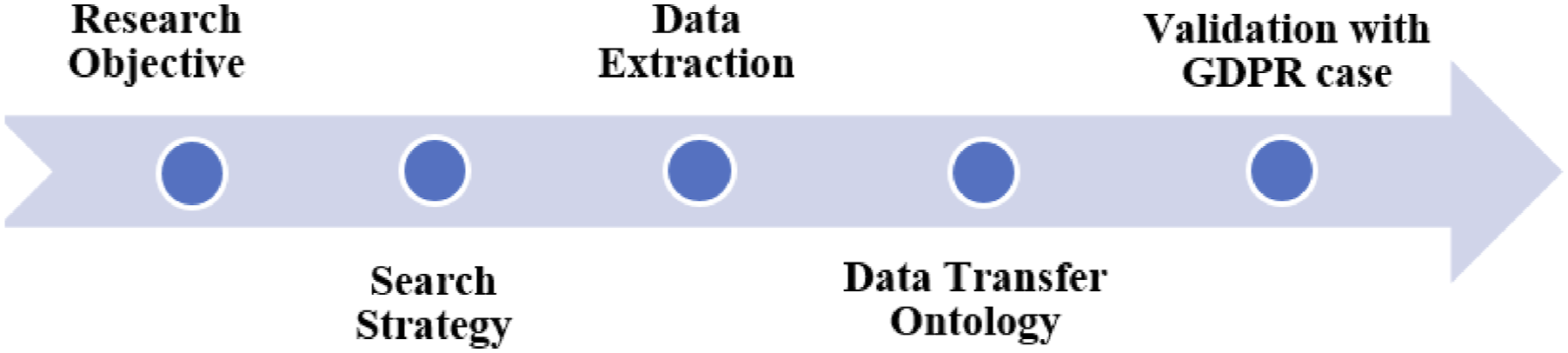
Literature review strategy
This current study performed an exhaustive literature search using ten major databases: PubMed, Scopus, Embase, IEEE Xplore, ScienceDirect, SpringerLink, ACM Digital Library, Wiley Online Library, CINAHL, and Cochrane Library. To supplement our search, we also used Google Scholar. To ensure comprehensive coverage and eliminate redundancy, we cross-checked our results against the Web of Science (WoS) index, including ESCI, SCIE, and SSCI. Our search included peer-reviewed journal articles, conference papers, books, and relevant reports, enabling the thorough identification of existing ontologies related to hypertension.
The literature review targeted terms like “hypertension,” “high blood pressure,” “cardiovascular disease,” “risk factors,” “ontologies,” “semantic,” and “knowledge representation” in titles, keywords, and abstracts. Boolean operators “OR” and “AND” were used to construct precise search queries, such as (“hypertension” OR “high blood pressure”) AND (“ontologies” OR “semantic”). The search, which extended to February 2023 with no publication date restrictions, included backward and forward citation tracking via Web of Science and DBLP citation index analysis. This method ensured a thorough and comprehensive search for literature on hypertension ontologies.
Selection criteria
This study on hypertension ontology applied strict criteria, selecting only English-language sources and prioritizing the most comprehensive publications. Duplicate works and literature lacking class definitions or properties were excluded, ensuring the relevance and essential information needed for ontology development.
Systematic review registration
This systematic review has been registered with PROSPERO, an international prospective register of systematic reviews.
Data extraction and analysis
In this study on hypertension ontology, 165 papers were initially identified for relevance to ontologies or semantics. Duplicates were culled, yielding a total of 120 duplicate records being removed, leaving 80 records to be screened. 110 records were excluded based on title, abstract, or keyword relevancy. A total of 61 full-text articles were screened for eligibility. After removing 4 studies that were not in English language, 9 irrelevant studies and 6 studies which were not research papers, 61 studies were included in the review for focused analysis on OWL-based information system development.
Ontology development using Protégé
Following the SLR, we engaged in the development of the Hypertension Ontology (HPO) using Protégé, a choice driven by its sophisticated features for OWL ontology creation.
HPO ontology design
The Protégé platform facilitated a methodical establishment of classes, attributes, and individuals, mirroring the complex relationships and concepts unearthed from our literature review. Each element was crafted with precision, ensuring our ontology’s alignment with the domain’s specific needs and its compatibility with real-time applications. Protégé's advanced tools for visualization, reasoning, and management played a crucial role in enhancing design efficiency and accuracy, yielding a robust and flexible ontology.
Integration on BioPortal for real-time utilization
To maximize the HPO’s accessibility and utility, we uploaded it onto BioPortal, significantly enhancing its reach and application in real-time scenarios.
Integration on BioPortal
This strategic step ensures that healthcare professionals, researchers, and decision support systems can seamlessly access and utilize the HPO. The collaborative nature of BioPortal fosters continuous updates and community contributions, enhancing the ontology’s relevance and adaptability. Thus, the HPO becomes an invaluable resource for immediate decision-making and a catalyst for innovation in hypertension management and research.
Results and discussion
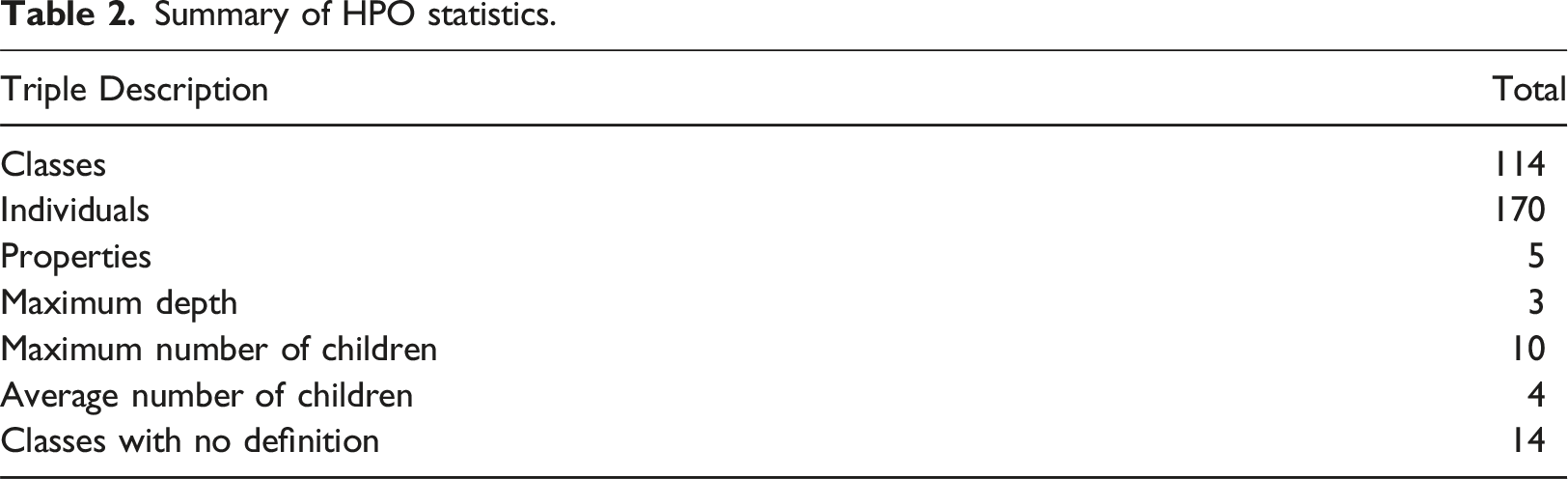
Hypertension ontology (HPO) elements.

Summary of HPO statistics.
Hypertension ontology (HPO) class hierarchy
Class hierarchy is essential in organizing knowledge and building ontologies, particularly in information science and computer science. It structures groups or types in a tree-like format, where general categories sit at the top and specific one’s branch out below. This organization aids in managing and understanding complex subjects by highlighting shared characteristics and relationships. Class hierarchies are crucial for data modelling, information retrieval, and knowledge representation, facilitating the definition of traits and connections across entities. They enable interoperability in systems like ontologies and databases.4,5
Figure 2 presents a structured framework for understanding hypertension, systematically categorizing its causes, effects, symptoms, diagnosis, treatment, and types. The framework is organized hierarchically, with broader topics at higher levels and detailed subcategories below. The “Causes” section addresses factors such as genetics, lifestyle, and health conditions, while the “Effects” section highlights potential complications affecting organs like the heart and kidneys. The “Symptoms” section identifies clinical manifestations, and the “Diagnosis” section outlines various diagnostic methods. The “Treatment” section covers therapeutic approaches, and the “Types” section classifies different forms of hypertension. This structured approach facilitates efficient information organization, retrieval, and analysis. Class hierarchy of hypertension ontology.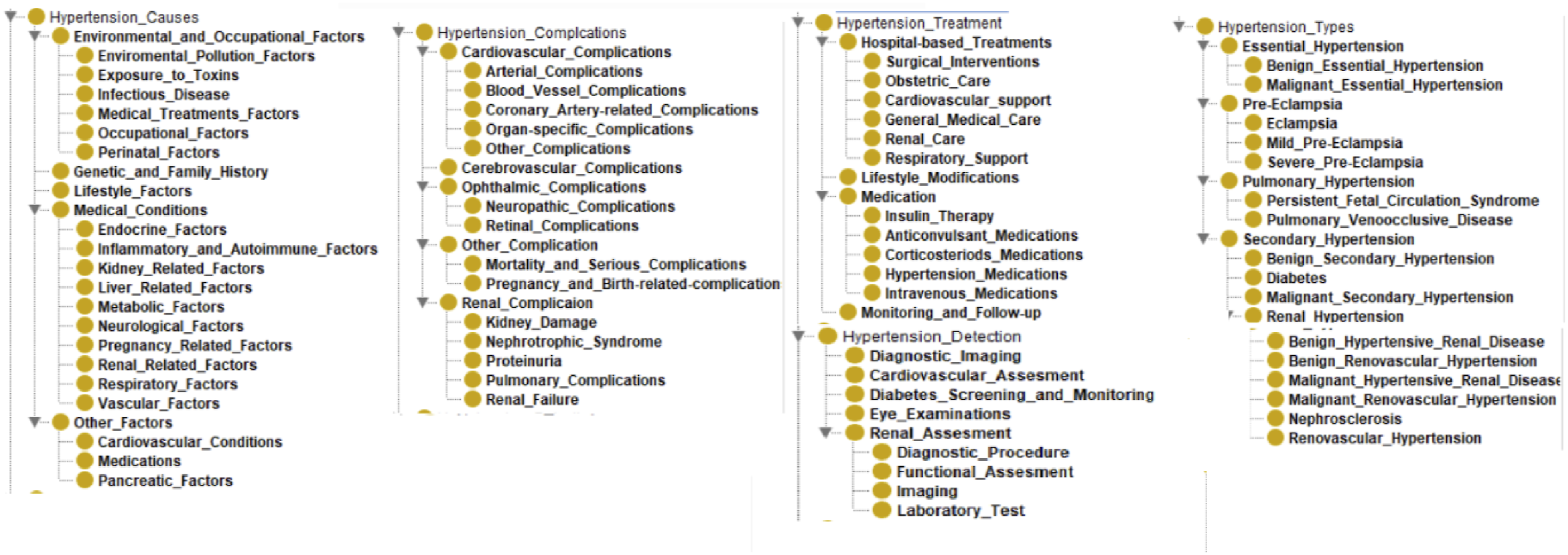
Class properties of hypertension ontology
Class properties, or attributes, define unique traits of ontology classes, enhancing domain knowledge representation. They include data and object properties, enabling richer semantics, reasoning, and inference.
Figure 3 illustrates the “canCause” connections between different hypertension types and their potential triggers within our framework. This linkage highlights how specific factors may lead to certain hypertension types, enhancing our understanding of the complex relationships between these conditions and their contributing factors. Relationship between hypertension types and causes.
Figure 4 illustrates the “createsTheRiskOf” connections between different hypertension types and related health issues. This indicates a cause-and-effect relationship, where specific hypertension types increase the risk of certain complications, aiding in healthcare decision-making, research, and in-depth analysis of hypertension’s impact on health. Relationship between hypertension types and complications.
Figure 5 illustrates the “treats” relationship, linking various types of hypertensions— such as Essential Hypertension, Pre-Eclampsia, Pulmonary Hypertension, and Secondary Hypertension—to their corresponding treatment protocols. This connection emphasizes the significance of a structured hypertension classification system in guiding accurate treatment decisions, enhancing healthcare outcomes, and improving our understanding of the relationship between hypertension types and their tailored therapeutic approaches. Relationship between hypertension types and treatments.
Figure 6 illustrates the connections between hypertension types and their diagnostic methods, showing how specific techniques identify different hypertension subtypes. This structured representation enhances the ontology’s utility, supporting precise querying, reasoning, and clinical decision-making, and providing a clearer understanding of the relationship between hypertension classifications and their detection methods. Figures 7 and 8 illustrate the “isSymptomOf” relationship, linking specific symptoms to various hypertension types within the ontology. This connection captures the hierarchical structure, aiding in understanding symptom manifestations, and supporting medical diagnosis and decision-making by clarifying how symptoms indicate specific hypertension types. Relationship between hypertension types and detection. Relationship between hypertension types and symptoms (a). Relationship between hypertension types and symptoms (b).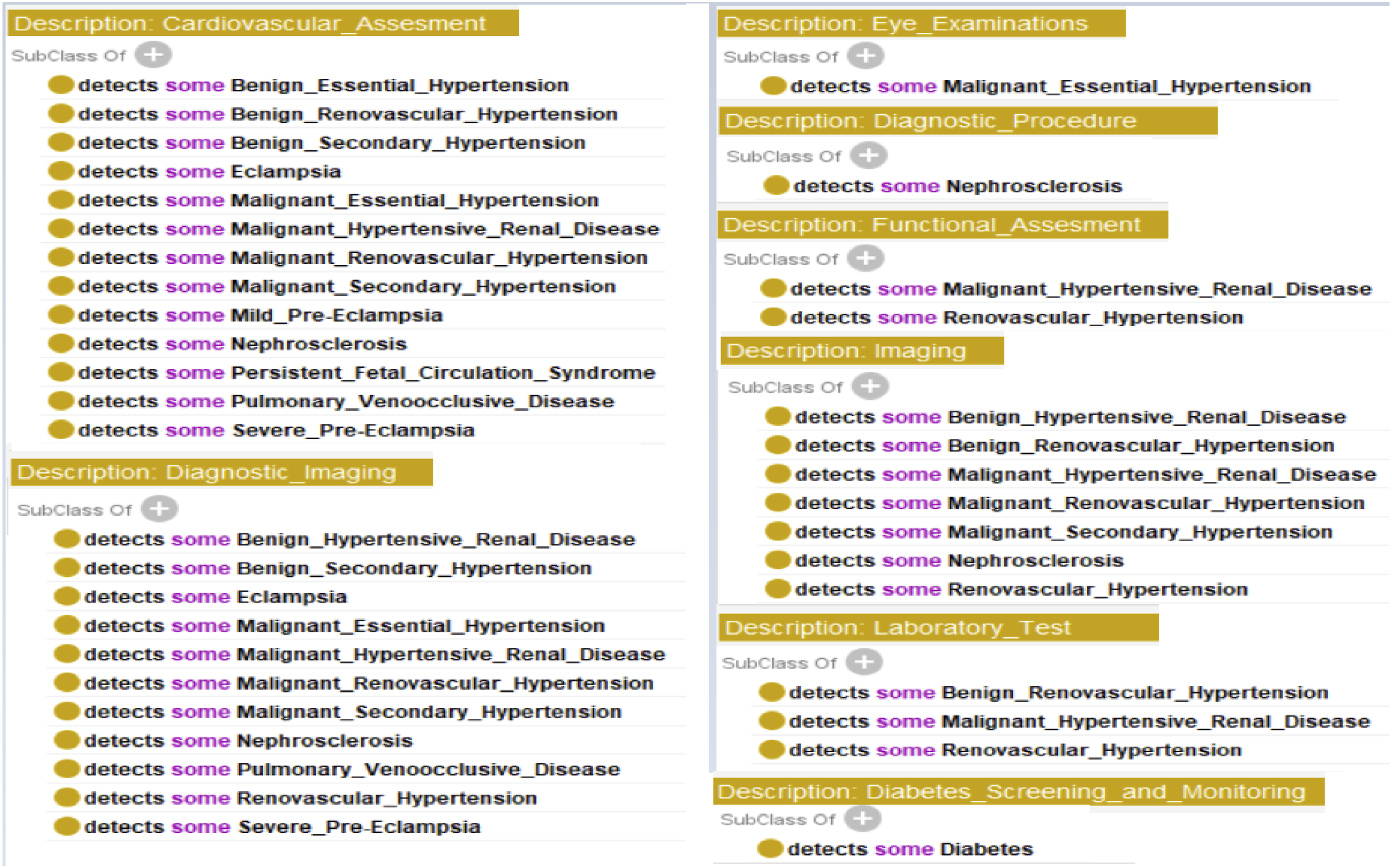
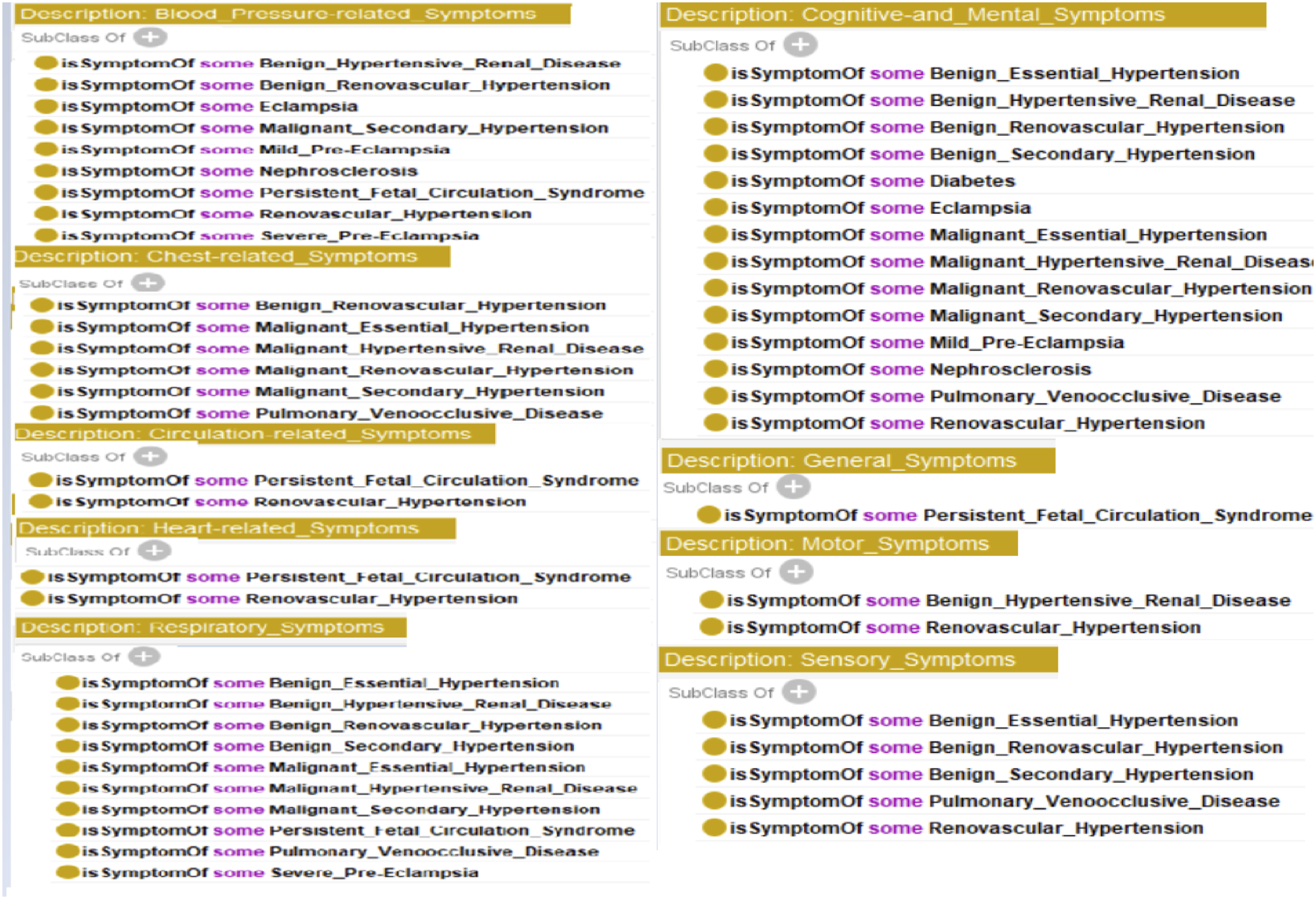

Figures 7 and 8 illustrate the “isSymptomOf” relationship within the ontology, linking specific symptoms to various hypertension types. This connection captures the hierarchical structure, aiding in understanding symptom manifestations and supporting medical diagnosis and decision-making by clarifying how symptoms correspond to specific hypertension types.
Discussion
Quality evaluation of the hypertension ontology
The logical consistency and structural richness of Hypertension Ontology (HPO) were assessed on the following metrics: Verification of Ontology Logical Consistency. This reasoner performs tabular reasoning, verifying the nonexistence of conflict in the definition of classes and relationships in the ontology according to Description Logics (DL). This approach compares entity knowledge inferred through FaCT++, widely utilized as sound and complete, 45 with the baseline knowledge between entities as a measure of ontology evaluation best practice.
In addition, the ontology was assessed based on the Attribute Richness (AR) and Relationship Richness (RR) indexes. AR is the average number of attributes per class, and it means the level of detail provided for one class. The metric is calculated using the formula:
Compared to many existing ontologies, such as Human Phenotype Ontology and Cardiovascular Disease Ontology (CVDO), the HPO usually yields an AR of 0.64 and RR of 0.62, highlighting its extreme description and relationship richness. 9 The Cardiovascular Disease Ontology (CVDO) is similar but has an AR of about 0.55–0.60 and RR of about 0.55–0.60, according to available metrics. 47 These values suggest that HPO is more extensive than other ontologies with respect to attributes as well as relationships, leading to a more detailed representation of hypertension-related knowledge. Therefore, the calculated AR value (0.63) and RR (0.52) for HPO indicates that it is a rich and detailed ontology with a balanced set of relations, when compared to healthcare applications. The RR value is marginally lower than that of HPO and CVDO, but still competitive; ergo, the ontologies offer a reasonable depth (via AR) to breadth (via RR) balance and as such will serve a useful function in research as well as clinical domains.
Compared with existing ontologies such as Hypertension Ontology (HTN-O), OCVDAE, Cardiovascular Disease Ontology (CVDO) and Human Phenotype Ontology, the HPO is unique in its specificity towards hypertension, risk factors associated with hypertension and comorbidities. The HPO is a more specialized ontology than broader ontologies that emphasize the relationships between hypertension and diabetes, stroke, and heart disease, which are important for dissecting hypertension’s complex nature. This focused strategy allows the HPO to provide greater depth and specificity in its response to the clinical and research requirements for hypertension than can be found in any other ontologies. In addition, the modular-developmental structure of the HPO allows for simple, recursive revisions as new studies come to light, making the encode inherently flexible and scalable across time.
Real-world applications and use cases
Hypertension Ontology (HPO) has utility in clinical practice, as well as research. Within clinical practice, the HPO can be incorporated into a clinical decision support system (CDSS) tool to aid healthcare providers in diagnosing and managing hypertension. The HPO helps in tailoring treatment recommendations in relation to hypertension, by structuring relevant hypertension data like risk factors, comorbid conditions, and symptoms. Past research has shown that embedded ontologies in computerized clinical decision support system (CDSS) can improve the quality of decisions or support clinical decision improvement. 48 On the other hand, at the research level, ontology can improve the analysis of large datasets of epidemiological nature to identify new correlations between risk factors and clinical data in relation to hypertension. Ontology such as Human Phenotype Ontology have successfully been utilized in epidemiological studies to understand complex disease relationships and identify potential new biomarkers. 9 Moreover, HPO enables automatic data annotation in clinical trials guaranteeing that identical entities of the same biological nature are represented uniformly even when studying different diseases, which enhances meta-analyses and cross-study comparisons. 49 These examples demonstrate the applied benefit of the HPO in improving the efficacy of both clinical and research decisions. This HPO represents a directed acyclic graph (DAG) that organizes all the data about hypertension, such as the symptoms, risk factors, and comorbid conditions, and aids during clinical decision-making. Organizing this data assists clinicians in evaluating ambiguous symptoms and considering differential diagnoses, he says. HPO’s framework enables healthcare providers to improve the accuracy of diagnostics.
Scalability and maintenance of the hypertension ontology
As medical knowledge is ever-changing, it is critical to have strong maintenance and expansion strategy for the Hypertension Ontology (HPO) to remain aligned with current medical guidelines. Therefore, these updates need to be done regularly to include new research findings, practice changes and new risk factors for hypertension. One strategy involves creating a continuous feedback mechanism with clinical specialists, researchers, and medical databases, which could steer the development of the ontology. Furthermore, the HPO can be integrated with automated data mining tools that are acknowledged for their abilities in detecting gaps with those in the ontology by proposing new relationships or classes based on the most recent data. Furthermore, the modularity of the design enables the easy addition of new terms and concepts while preserving existing constructs, guaranteeing scalability. In addition, the alignment of the HPO with other major health ontologies, such as the Human Phenotype Ontology 9 and the Cardiovascular Disease Ontology (CVD Ontology), will help improve interoperability and liberate the HPO to remain up to date with the shifting landscape of the medical canon.
The HPO serves as a natural extension of this analysis, providing a comprehensive database of conditions associated with hypertension, including comorbidities that are already known (such as diabetes and cardiovascular diseases). Nonetheless, monitoring infrequent or novel entities related to hypertension remains a challenge. The HPO is designed to be scalable and flexible, with a modular structure that supports continuous updates in response to new conditions or research discoveries. Rare conditions may take longer to be integrated into the ontology, but the ontology is frequently updated in response to insights from clinical experts as well as new research. The appearance of studies on new causes of secondary hypertension arising from genetic mutations or newly defined comorbidities, for example, will be included as part of the ongoing maintenance and expansion of the ontology. This helps keep the HPO relevant and inclusive as medical knowledge expands.
Moreover, The HPO also needs to be pre-trained on the healthcare provider-level to be utilized in clinical decision support systems (CDSS). Despite the ease of use of the HPO, healthcare professionals may be required to familiarize themselves with ontology-based systems and standardized terminologies such as SNOMED CT and ICD-10 to understand its modular design and apply it in practice. It will depend on the fields of healthcare providers and if they have used this ontology before, the learning curve will differ. Ontological alignment techniques are also used to solve any problems in merging data from different sources, it helping make sure that ontology is consistent and reliable over time.
Usefulness evaluation of the HPO
The useful evaluation of the hypertension ontology involves assessing its practical benefits and potential contributions to various stakeholders within the medical and healthcare domains. The evaluation aims to determine how effectively the ontology fulfills its intended objectives and addresses the needs of its target users. (a) What factors contribute to the development of Pulmonary Venoocclusive Disease? (b) What are the indicative signs of Benign Renovascular Hypertension?
In Figure 9(a), the DL Query “canCause some Pulmonary_Venoocclusive_Disease” identifies factors contributing to Pulmonary Venoocclusive Disease within the hypertension ontology. Figure 9(b) uses “isSymptomOf some Benign_Renovascular_Hypertension” to visually present symptoms associated with Benign Renovascular Hypertension, highlighting the relationship between the condition and its symptoms. (a) What potential dangers are associated with Nephrosclerosis? (b) What treatment options are available for Malignant Secondary Hypertension? (a) Factors develop pulmonary venooocclusive disease, (b)signs of benign renovascular hypertension.
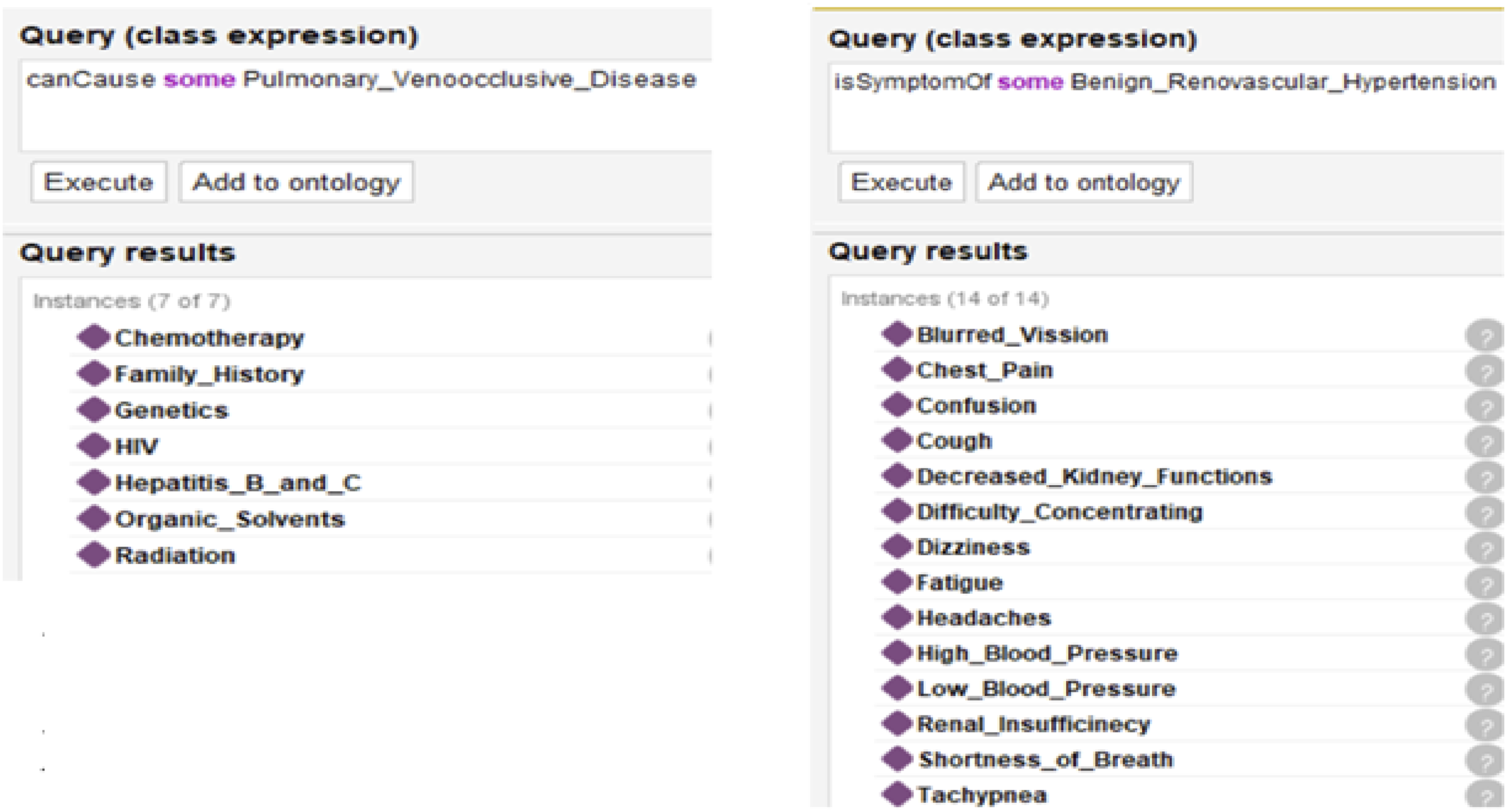
Figure 10(a) uses the DL Query “createsTheRiskOf some Nephrosclerosis” in Protégé to identify factors that increase the risk of developing Nephrosclerosis, highlighting potential complications. Figure 10(b) employs the DL Query “treats some Malignant_Secondary_Hypertension” to explore the relationship between treatments and Malignant Secondary Hypertension within the ontology. These queries enhance our understanding of managing Malignant Secondary Hypertension and provide insights into the risks associated with Nephrosclerosis. (a) Risk of nephrosclerosis; (b) treatment of malignant secondary hypertension.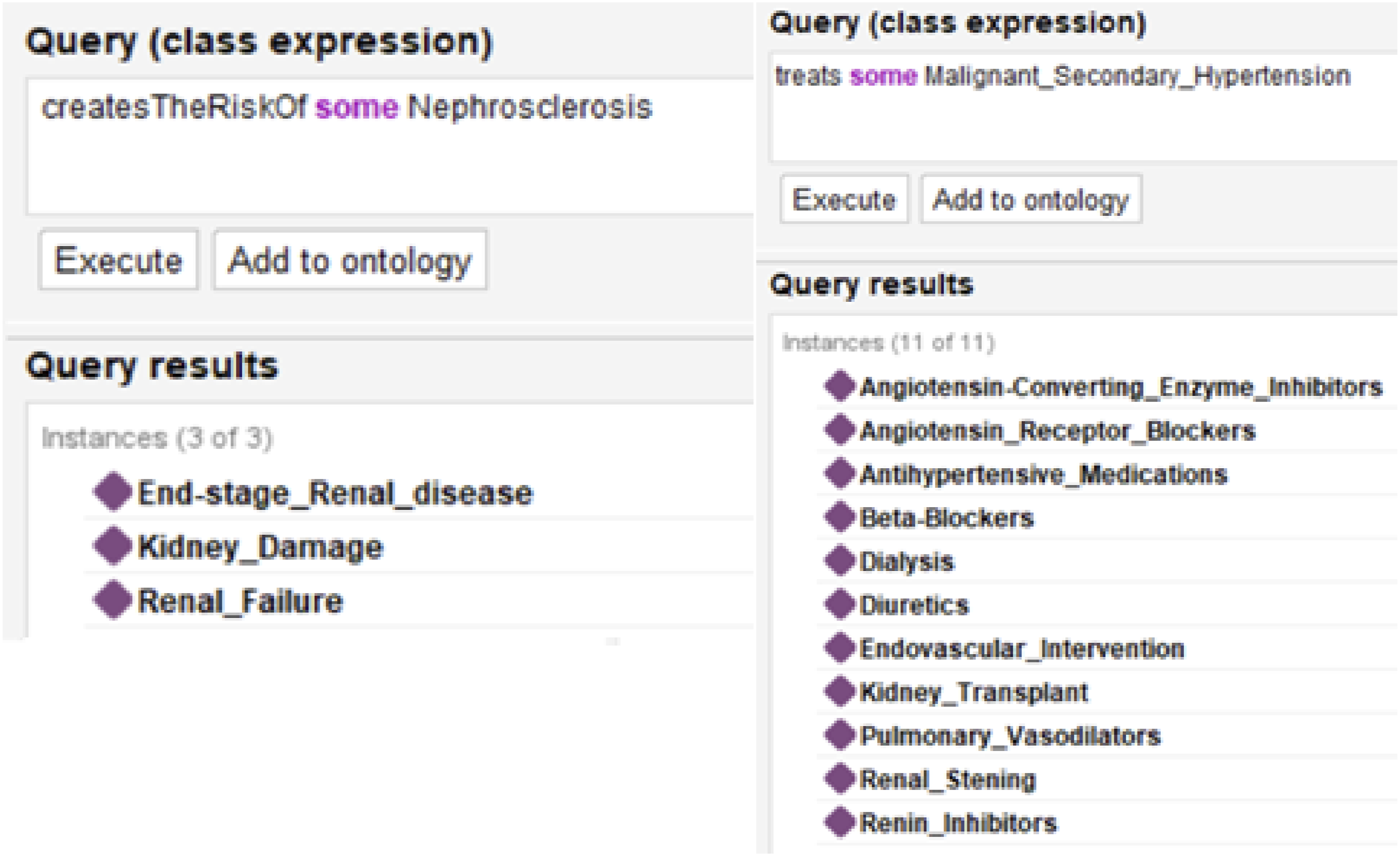
Streamlined real-time navigation of the HPO
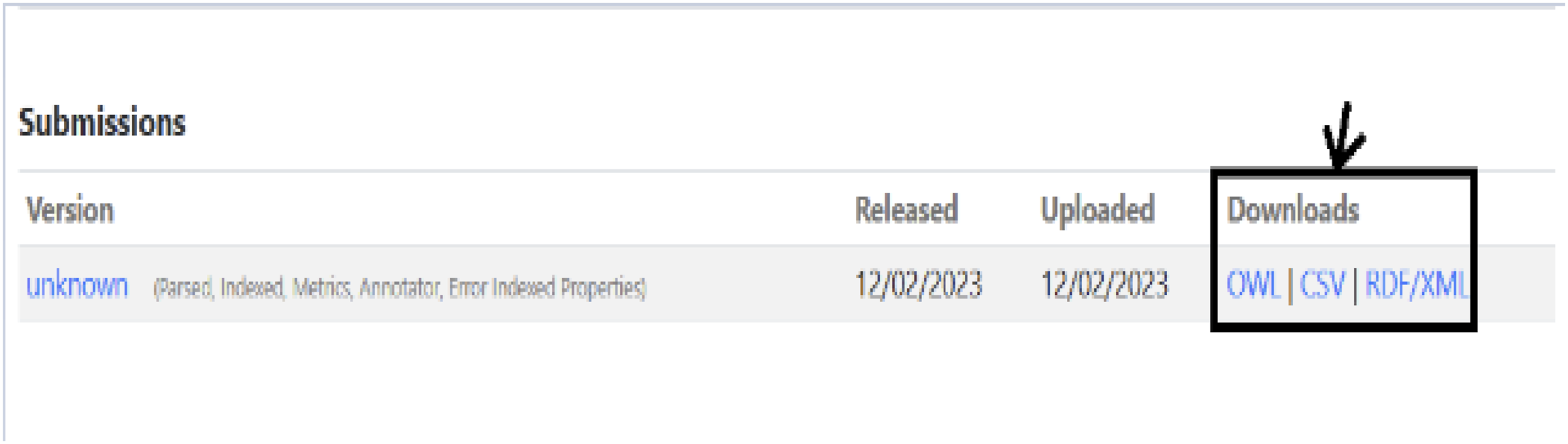
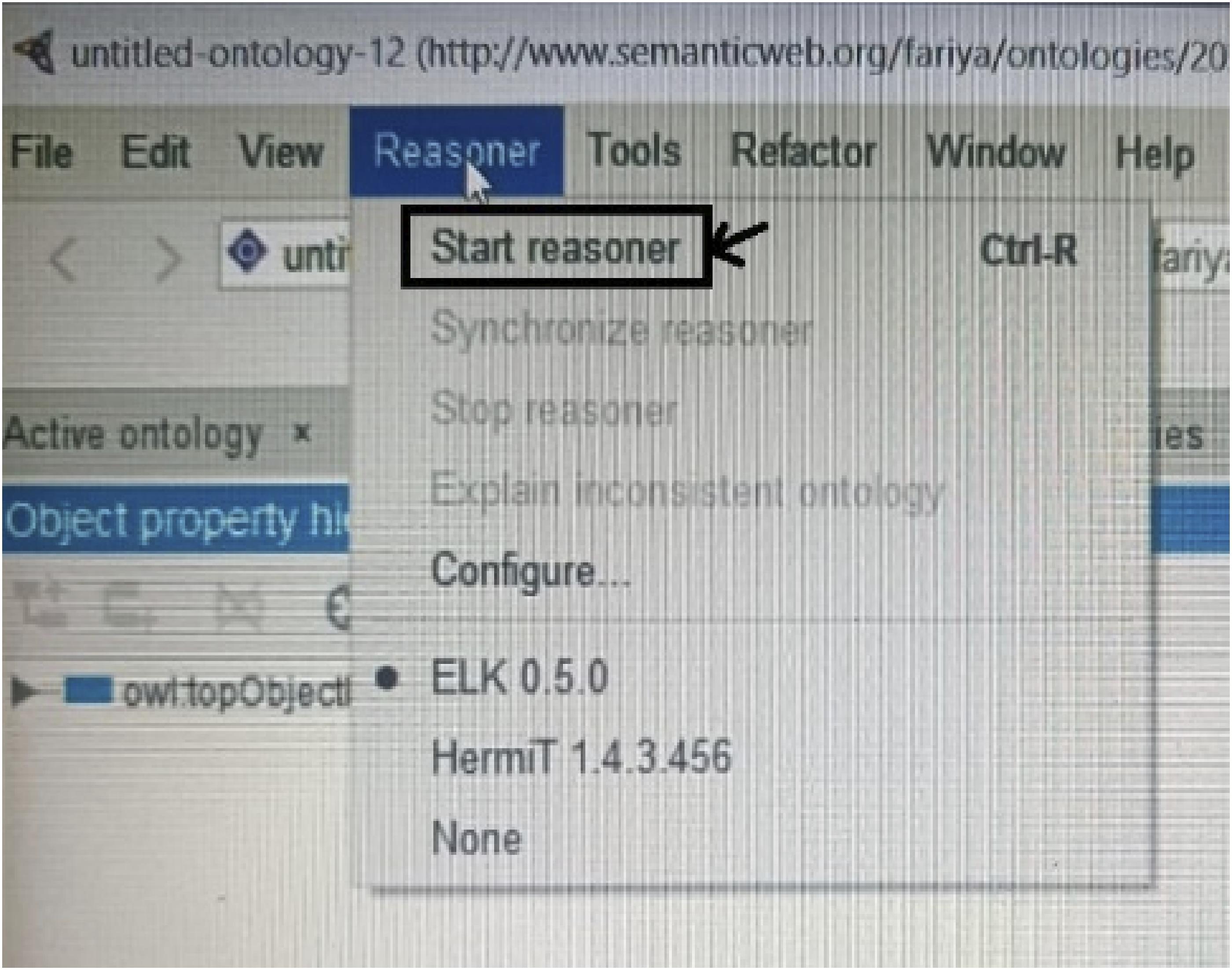
We have simplified the process for accessing and navigating the HPO through BioPortal, as depicted in Figures 11 through 14. Users can now more easily download ontology, activate reasoning features in Protégé, and conduct DL queries to explore the ontology’s extensive knowledge base. This streamlined access enhances the HPO’s usability, making it an indispensable tool for real-time decision-making and research in hypertension management. Search the HPO Ontology in any browser. Download the HPO ontology. Start the reasoner. Write a DL Query.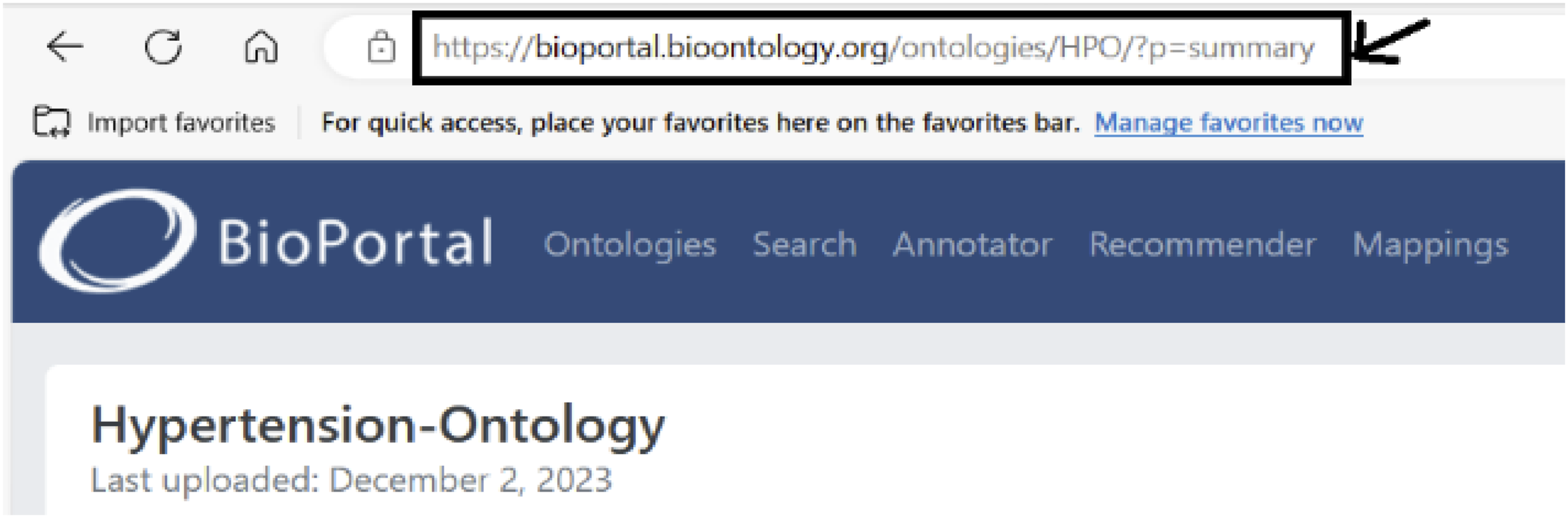

Limitation of the study
Although the present study offers meaningful insights into the development of a comprehensive hypertension ontology, there are several limitations that should be considered. The ontology was originally drawn from literature and publicly available datasets, which may not reflect all real-world variations between populations despite efforts to represent a wide range of hypertension cases. Moreover, although Protégé and BioPortal offer powerful ontology creation and managed services, these are relatively compute-intensive while the scale and complexity of data being ingested may slow or limit live reasoning and querying performance. A second limitation is the ontology’s reliance on a static class structure and hierarchical relationships, which, while carefully developed, will need to be updated continuously as new discoveries are made in the medical domain and clinical guidelines evolve. In addition, though, there may be practical difficulties in implementing such systems in the clinic, including requiring clinicians to learn to use yet another ontology-driven decision support system. Moreover, to map this ontology to existing EHR systems, interoperability solutions are needed, which were not deeply discussed in this study. Thus, the existing research offers opportunities for future work to include real-world clinical data, scalability, and the integration with existing healthcare technologies.
Conclusions
The study introduces a comprehensive Hypertension Ontology (HPO) developed using the Protégé tool, marking a notable advancement in medical informatics. The HPO is designed to improve the understanding, diagnosis, treatment, and management of hypertension by providing a detailed, scientifically grounded knowledge base. This ontology facilitates efficient data management and processing, helping bridge information gaps, foster collaboration, and enhance medical decision-making. The practical benefits of the HPO have been demonstrated, particularly in aiding healthcare professionals in identifying factors related to hypertensive conditions and making informed decisions, thereby improving patient care. Integration into BioPortal increases accessibility and ensures the ontology remains updated and relevant through ongoing collaboration and new research findings. However, despite its strengths, Protégé and BioPortal have limitations when handling complex, multi-layered hypertension data. Protégé relies on Description Logics (DL), which may not fully capture intricate relationships in complex medical conditions. Similarly, BioPortal can experience performance issues with large datasets. These limitations highlight areas for future improvement, including the integration of advanced reasoning tools and database systems to better handle complex data structures. Overall, the HPO exemplifies the value of interdisciplinary collaboration in developing advanced knowledge systems. It represents a significant step towards better information exchange, consistency in data handling, and personalized healthcare solutions, setting the stage for future innovations in medical informatics and hypertension management.
Supplemental Material
Supplemental Material - Developing comprehensive hypertension ontology: Addressing Data integration gaps to improve healthcare results
Supplemental Material for Developing comprehensive hypertension ontology: Addressing Data integration gaps to improve healthcare results by Fariya Sultana Prity, Mohammad Mahmudul Hasan, Nafiz Fahad, Kah Ong Michael Goh, Md Jakir Hossen and Md Munjurul Islam in Health Informatics Journal
Footnotes
Acknowledgements
The authors want to thank Multimedia University, Malaysia.

Author contributions
Funding
The authors received no financial support for the research, authorship, and/or publication of this article.
Declaration of conflicting interests
The authors declared no potential conflicts of interest with respect to the research, authorship, and/or publication of this article.
Supplemental Material
Supplemental material for this article is available online.
References
Supplementary Material
Please find the following supplemental material available below.
For Open Access articles published under a Creative Commons License, all supplemental material carries the same license as the article it is associated with.
For non-Open Access articles published, all supplemental material carries a non-exclusive license, and permission requests for re-use of supplemental material or any part of supplemental material shall be sent directly to the copyright owner as specified in the copyright notice associated with the article.

