



Abstract
Introduction
Lung cancer is one of the most diagnosed cancers and the leading cause of cancer death around the world. 1 The annual incidence of new lung cancer cases in China is estimated to be around 820,000, causing approximately 710,000 deaths. 1 Among these cases, non-small cell lung cancer (NSCLC) accounts for the majority, comprising approximately 85% of cases. 2 In recent years, the emergence of novel therapies has significantly prolonged the survival rates among NSCLC patients.3,4 The concept of the “chronification of non-small cell lung cancer” has been frequently discussed at international lung cancer conferences.5,6 Especially with the availability of oral targeted therapies in recent years, many NSCLC patients receive treatment at home. 7 However, this can pose challenges for patients in terms of managing adverse side effects, potentially leading to poor medication compliance and treatment efficacy. 8 Consequently, there is an urgent need to meet the pressing demand for health education among NSCLC patients.
Internet healthcare applications are the fastest-growing application category among Chinese users in 2022. 9 An increasing number of patients access relevant health information via the Internet. 10 In China, 25% to 65% of patients have searched for health-related information online.11–13 As an emerging medium, video can break the barriers of health knowledge dissemination with the help of various technical means and enhance the effect of information dissemination. 14 The rise of online video and short video platforms has brought significant development opportunities for the production and dissemination of patient education materials. 14 During the recent pandemic, videos related to COVID-19 on the short video platform TikTok collectively received 93.1 billion views. 15 Video platforms are increasingly gaining popularity in disease management, serving as crucial channels for disseminating video-based patient education materials encompassing disease prevention, diagnosis, and treatment.16–18
The video platforms TikTok, Bilibili, and Red all hold significant positions in the social media landscape of China. 19 These platforms have achieved notable success across different domains, and their user base spans various age groups and social identities in China.20–22 They have, therefore, become increasingly popular channels for disseminating health information. However, due to the absence of restrictions and thorough scrutiny of health education videos shared on online social platforms, various issues may arise, such as the lack of depth and reliability of the health information content, potentially misleading patients and negatively impacting their medical decision-making.23–25 Therefore, assessing the quality of video-based patient education materials and exploring existing issues with this medium can provide strategies for creators to produce higher-quality health education content. However, to the best of our knowledge, there has been no previous multidimensional analysis of the quality of video content related to non-small cell lung cancer. To address this gap, our study aims to assess the quality of educational videos about NSCLC on three platforms: TikTok, Bilibili, and Red.
Methods
Video selection
This study is a cross-sectional analysis evaluating the quality of Chinese NSCLC-related videos from multiple dimensions. The term “非小细胞肺癌” (“non-small cell lung cancer” in Chinese) was searched on three social media platforms [i.e., Tiktok, Bilibili, and Red] on March 26, 2023. To minimize the influence of algorithmic recommendations, this study used newly created accounts on all three video platforms. Searches on TikTok and Bilibili were conducted on a computer using a web browser, while RED searches were done via the mobile app, as its web version does not support search functionality. The search results on TikTok and Bilibili were consistent between the web browser and the mobile app using the new accounts. The top 60 videos resulting from this search were collected in default order (most users only browse the first two pages of search results).26,27 Videos meeting the following criteria were excluded: not related to NSCLC (e.g. videos exclusively about small cell lung cancer), not intended for patients (e.g. research progress, news about drug launches), non-video content (such as images and text), duplicate videos, non-Chinese videos (neither the audio nor the subtitles are in Chinese), and advertising videos. Figure 1 presents our video selection process. Flowchart describing the video selection process.
We collected the features and sources of all included videos, including video links, publication dates, number of likes, bookmarks, and comments; and video duration. The video publishers were categorized into four groups: medical professionals, individuals, news agencies, and organizations.
Content coverage and completeness
Evaluation criteria for content coverage and completeness of non-small cell lung cancer-related videos.
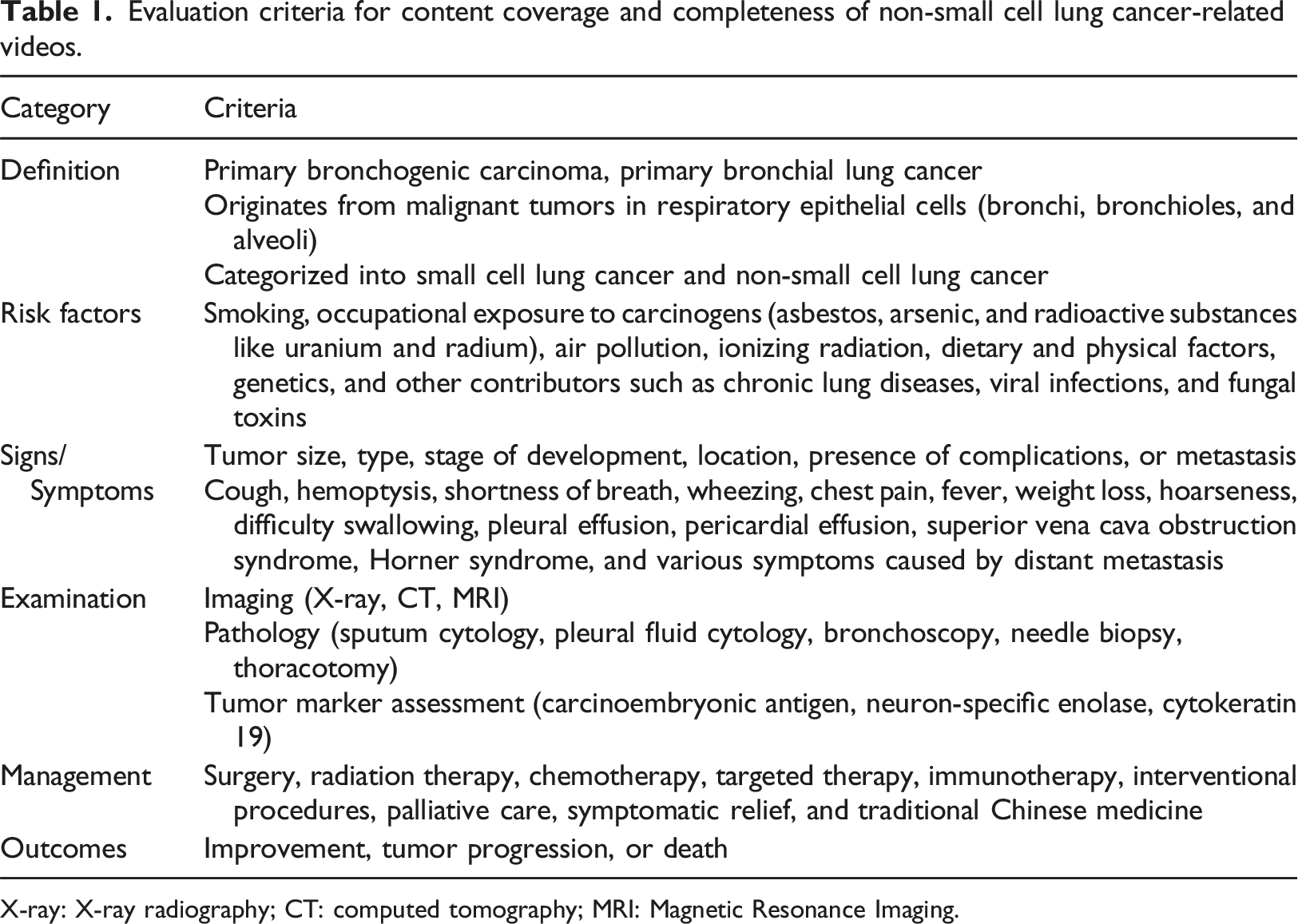
X-ray: X-ray radiography; CT: computed tomography; MRI: Magnetic Resonance Imaging.
Quality
Video quality was evaluated using the DISCERN instrument. 31 Although it was originally designed for evaluating written materials,31,32 it has been widely adopted to evaluate health-related videos.33–36 DISCERN is a validated tool that consists of 16 questions, of which questions 1–8 evaluate reliability, questions 9–15 evaluate the quality of information, and question 16 is an independent rating of the overall quality (Table S1). Each question is rated from 1 to 5 (1 = not at all; 2–4 = partially; 5 = completely). Higher total DISCERN scores indicate higher quality information on the following scale: excellent (80–63), good (62–51), fair (50–39), poor (38–27), and very poor (26–16). 37
Understandability and actionability
Understandability and actionability were evaluated using the Patient Education Materials Assessment Tool (PEMAT 38 ). Understandability refers to patient education materials being clear enough for individuals from diverse backgrounds and varying levels of health literacy to grasp and explain key messages. Actionability means that patient education materials allow consumers with diverse backgrounds and health literacy levels to determine specific actions they can take based on the information provided. Specifically, there are 13 items measuring understandability and 4 items measuring actionability (Table S2-3). 38 For each item, “agree” was scored as 1, “disagree” was scored as 0, and “not applicable” was labeled with “NA”. The final score was converted to a percentage.
Reliability
Reliability is defined as the perception by both consumers and professionals that the information is credible, reasonable, or useful, enabling them to make informed decisions on how to apply it in real-world situations. 39 To evaluate the reliability of the videos, we referred to the Journal of the American Medical Association (JAMA) benchmarks. 39 The JAMA benchmarks assess the reliability of medical information on the Internet based on four core standards: authorship, attribution, disclosure, and currency (Table S4). The score ranges from 0 (no criteria fulfilled) to 4 (all criteria fulfilled).
Statistical analysis
Two independent researchers with extensive oncological clinical pharmacy practice experience (YX and XF) evaluated the quality, reliability, understandability, and actionability of the selected videos, the final score was averaged. Kappa analysis was used to assess inter-rater agreement, with Kappa coefficients (κ) greater than 0.80, indicating strong agreement. 40 Continuous variables were reported as the median and interquartile range (IQR), while nominal variables were expressed as frequencies and percentages. The analysis between groups was performed using the Kruskal-Wallis test and Bonferroni adjustment.41,42 Two-sided significance testing was used, and differences were considered significant at the p < 0.05 level. All statistical analyses were performed with IBM SPSS Statistics for Windows, version 25.0 (IBM Corp).
Results
Characteristics of included videos
Video characteristics.
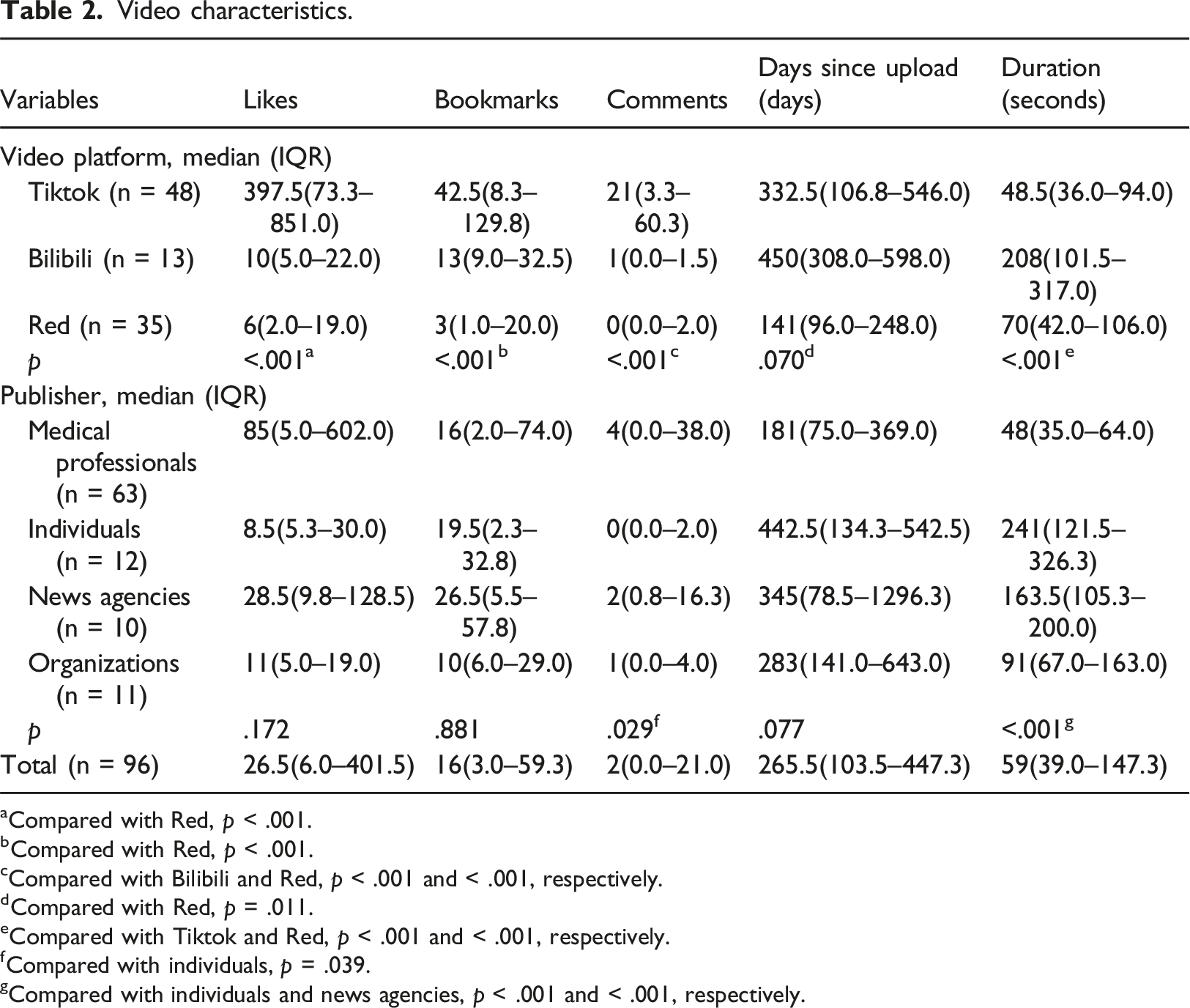
aCompared with Red, p < .001.
bCompared with Red, p < .001.
cCompared with Bilibili and Red, p < .001 and < .001, respectively.
dCompared with Red, p = .011.
eCompared with Tiktok and Red, p < .001 and < .001, respectively.
fCompared with individuals, p = .039.
gCompared with individuals and news agencies, p < .001 and < .001, respectively.
Content coverage and completeness
The included videos covered six pre-defined content items to varying degrees, as depicted in Figure 2. The results indicate that two-thirds of the videos (67.7%) addressed disease management. The second most frequently covered topic was the definition of non-small cell lung cancer (38.5%). The least frequently covered topic was risk factors, with only 12 videos (12.5%) addressing this aspect. Among the included videos, disease management videos had the highest completeness (15.6%), while the content type with the lowest completeness was disease outcomes, with only two videos offering complete disease outcome content. Percentage stacked chart of video content coverage and completeness scores.
Quality
Distribution of DISCERN classification according to video features.
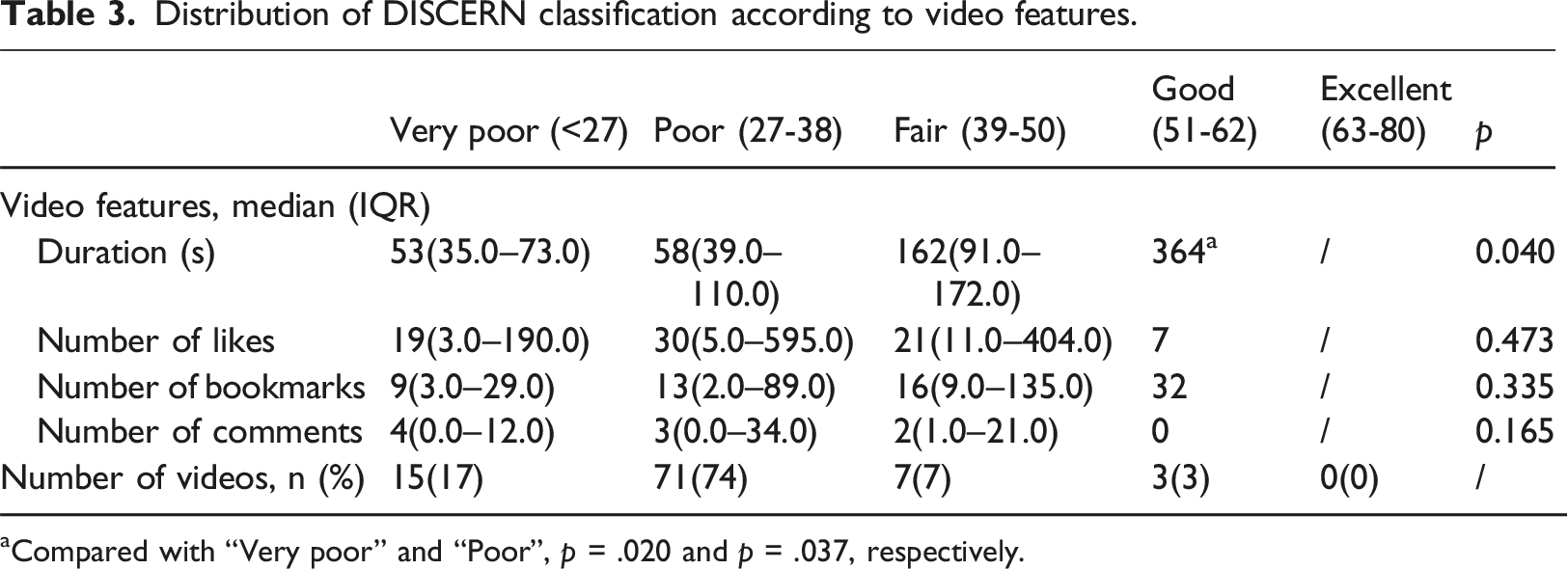
aCompared with “Very poor” and “Poor”, p = .020 and p = .037, respectively.
Comparison of quality, understandability, and actionability.
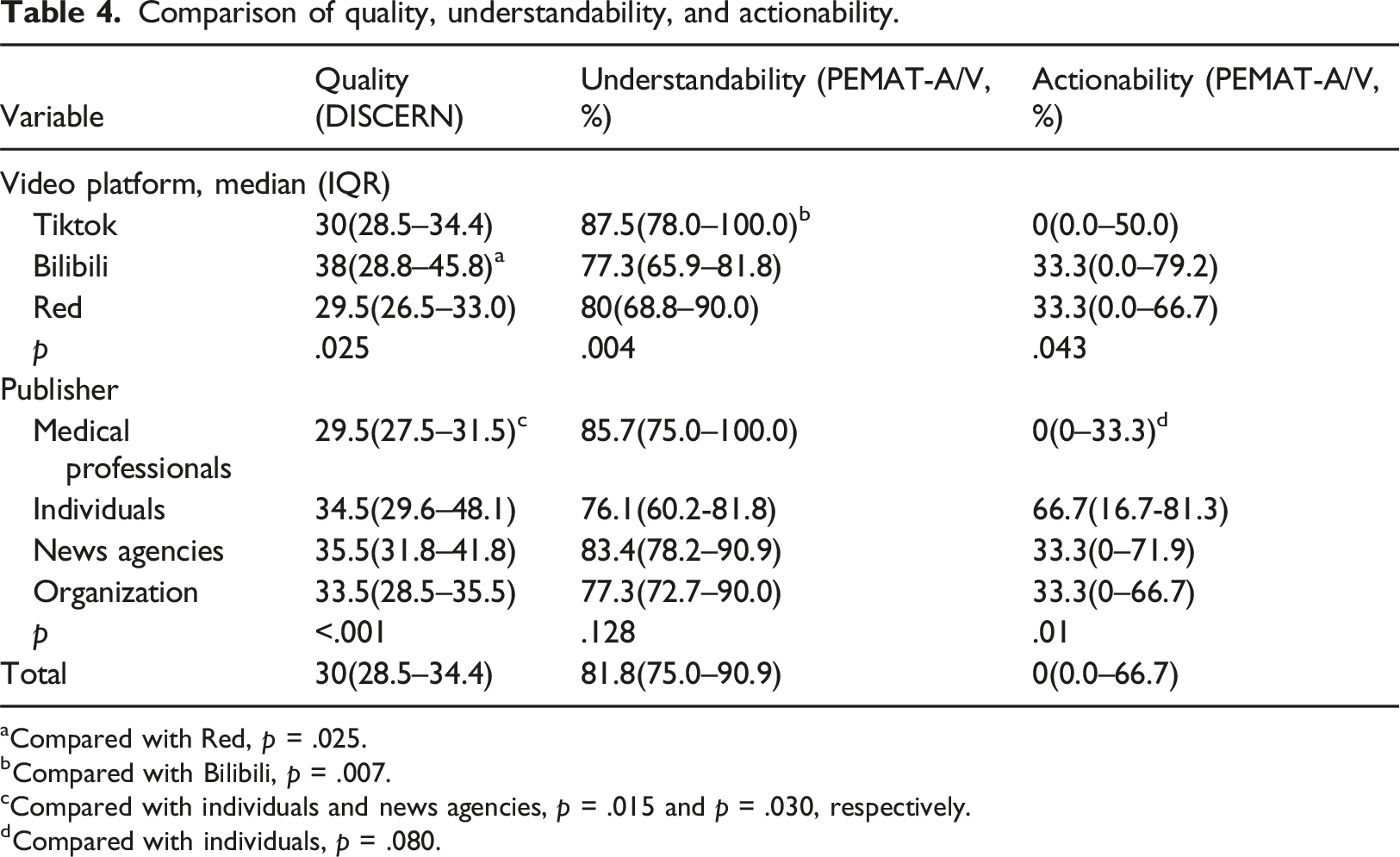
aCompared with Red, p = .025.
bCompared with Bilibili, p = .007.
cCompared with individuals and news agencies, p = .015 and p = .030, respectively.
dCompared with individuals, p = .080.
Understandability and actionability
The PEMAT scores for video understandability and actionability are presented in Table 4. The median overall understandability score for the included 96 videos was 81.8% (IQR, 75.0–0.9%), while the median overall actionability score was 0.0% (IQR, 0.0–66.7%). The interrater agreements of the PEMAT score were strong (κ = 0.835[understandability], 0.934[actionability]). This result indicates that the included videos had relatively high understandability but poor actionability. Notably, we observed that videos posted on TikTok had higher understandability scores than those posted on Bilibili (p = 0.007). Additionally, videos published by individual users demonstrated higher actionability than those published by medical professionals (p = 0.080).
Reliability
The number of videos meeting different JAMA benchmark criteria is illustrated in Figure 3. The interrater agreement of JAMA sore was strong (κ = 0.922). All included videos met the criterion of having a visible publication date or update date. Furthermore, 65% of the videos provided author information, while 5% and 15% of the videos indicated information attribution and disclosure information, respectively. Among the 96 videos, only a single video met all four JAMA benchmark criteria, while the majority of videos (56%) complied with two JAMA benchmark criteria. In videos published by medical professionals, 71% disclosed their identity information. The JAMA score of videos posted by news agencies was the highest, significantly exceeding that of videos posted by medical professionals (p = 0.002) and individual users (p = 0.012). This can be primarily attributed to the fact that news organizations predominantly disclose information in their videos (Table 5). JAMA scores of included videos. Percentage stacked chart of video JAMA scores (left). Percentages of videos that met 0–4 JAMA benchmark (right). Reliability score. aCompared with medical professionals and individuals, p = .002 and p = .012, respectively.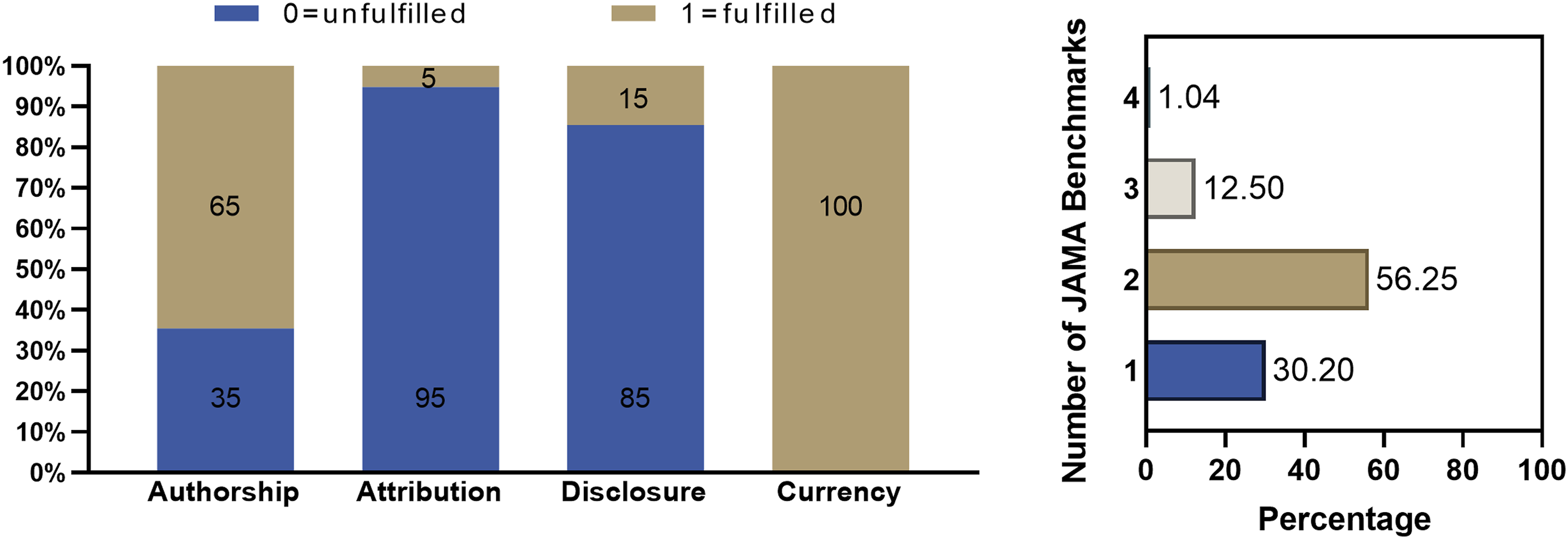

Discussion
The Internet is one of the main sources of health information for many patients. 43 Several studies have validated its importance in patients’ decision-making and clinical outcomes.44–46 Given the increasing complexity of NSCLC treatment options, patients are increasingly turning to social media platforms to seek assistance in supplementing unmet information needs. Videos offer an intuitive way of presenting information, making medical concepts more vivid and easily understandable. Many healthcare professionals, doctors, scientists, and institutions have started utilizing video platforms to convey health information to the public.47,48 Videos on social media platforms play an increasingly important role in health education. We selected three influential social media platforms in China and evaluated the selected videos in terms of content completeness, quality, reliability, actionability, and understandability. This study is the first to conduct both qualitative and quantitative evaluations of NSCLC-related online videos, providing a foundation for improving patient education materials while offering insights into enhancing health information dissemination.
Major findings
The number of likes, comments, and bookmarks on social media platforms partly reflects the popularity of videos or posts.49,50 We observed that the videos on TikTok garnered more likes, bookmarks, and comments compared to the other two video platforms. As of the data collection cutoff, there were 13 videos published in the past month, eight on TikTok, two on Bilibili, and three on Red. Notably, TikTok had a higher frequency of video updates, indicating its significant impact on NSCLC health education in China. This could be attributed to the fragmented and timely nature of TikTok videos, which aligns well with the fast-paced lifestyles of modern individuals. 51 Particularly in terms of conveying concise and engaging health knowledge, many medical professionals and health experts utilize the short video format of TikTok to disseminate health information. Additionally, as of September 2023, TikTok’s monthly active users reached 743 million, significantly surpassing Bilibili’s 210 million and Red’s 199 million. 52 This difference in user base further explains the higher engagement. The combination of its vast audience and algorithmic content delivery strengthens the reach and impact of health-related videos.
When analyzing publishers grouped by their identities, it was found that over half (66%) of the videos were published by medical professionals. These videos garnered the highest number of comments, suggesting a greater trust from the public towards professionals when seeking health information online. The interactivity of video platforms enables the public to ask questions, leave comments, and share personal experiences, fostering closer connections between doctors and patients or the general public.
The content categories with the highest coverage and completeness were both related to disease management, while the content category with the lowest coverage was risk factors, and the content category with the lowest completeness was disease outcomes. NSCLC often manifests subtly, with approximately 75% of patients being diagnosed at an advanced stage of illness, highlighting low awareness of the importance of early screening among patients. 53 Current NSCLC patient education materials in video format frequently overlook descriptions of risk factors, examination items, and similar aspects, thus making it challenging to contribute to disease prevention and enhanced public awareness of screening. Among the 96 included videos, only two provided comprehensive descriptions of NSCLC outcomes, likely due to prognostic complexity. Limited video duration constrains comprehensive coverage.
The overall DISCERN score for the videos was low, indicating poor quality overall. A group analysis based on different DISCERN score levels revealed that higher-scoring videos tended to be longer. However, these scores showed no correlation with video likes, comments, or bookmarks, suggesting that dissemination and impact were not directly related to video quality. This indicates a lack of discernment among the public regarding the quality of health education videos and underscores the importance of guiding the public to be able to recognize high-quality health information. Simultaneously, we found that among videos from different publisher identities, those from medical professionals had lower DISCERN scores compared with videos from other identity sources and that videos published by medical professionals were shorter. This finding aligns with results from some prior studies.54,55 One possible explanation for this result is that DISCERN emphasizes the importance of treatment options, suggesting that patient education materials should include detailed descriptions of treatment plans to assist patients in making informed treatment decisions. Medical professionals, especially clinical doctors, often publish series of educational videos on respiratory medicine on platforms for an extended period. They tend to release multiple videos under the same topic, with each video addressing only one issue, such as “How to detect non-small cell lung cancer early?” or “Advanced non-small cell lung cancer: Targeted therapy or chemotherapy?” As a result, the duration of individual videos is relatively short, with limited coverage of treatment-related information or none at all. Similarly, the higher quality of videos on Bilibili may be attributed to longer durations, which tend to be more comprehensive. In contrast, Red’s content leans towards personal health experiences and insights into disease treatment, with a lower tendency to offer systematic treatment descriptions. This leads to lower DISCERN scores for videos on this platform.
The overall understandability of the 96 included videos was relatively high, with TikTok videos showing even higher levels, likely due to their rich visual content. These videos often utilize bold text, arrows, boxes, and emphasized fonts, coupled with clear Chinese subtitles, to attract viewers’ attention. However, the overall level of actionability for the included videos was low, indicating a significant shortfall in terms of providing practical guidance in the current NSCLC-related health education videos available in China.
All included videos provided a publication time or update time, assisting patients in determining the latest content. Over half of the videos (66%) were published by individuals identified as medical professionals, yet only 71% of those from medical professionals disclosed specific identity information (name and affiliated institution). TikTok, Bilibili, and Red lacked functionalities to verify and authenticate user information, making information about publishers unreliable and raising concerns about potential impersonation of medical professionals and dissemination of misinformation, contributing to the spread of rumors and inaccurate information.
Possible interventions
The general public faces challenges in distinguishing the authenticity and accuracy of medical video content. Currently, implementing policies and regulatory mechanisms to prevent the spread of false information poses some difficulties. However, video platforms can enhance the credibility of science communication videos by verifying the professional identity of video creators and introducing certification symbols. Simultaneously, health professionals, scientists, and institutions delivering health education via video platforms are encouraged to introduce themselves in the videos and provide corresponding evidence to enhance video reliability.
Providers of medical information and education should focus more on disseminating knowledge about disease prevention, including information on risk factors and early screening, when creating NSCLC videos. This helps raise public awareness of disease prevention methods and early screening opportunities for NSCLC. Additionally, using visual aids, breaking down content into more easily digestible main points, employing simple and understandable language, and incorporating clear voiceovers and subtitles can make abstract and complex medical concepts more accessible. Finally, presenting clear and actionable suggestions in videos, along with providing detailed step-by-step descriptions, enhances the feasibility of the recommendations provided, guiding the public toward making more informed medical decisions.
Limitations and future research
This study has several limitations. First, some videos meeting the inclusion and exclusion criteria might not have appeared within the top 60 search results. Our results, thus, might not reflect the whole situation of all NSCLC video information. However, people prefer to read websites that appear in the first several pages of search results. Second, although we collected relevant videos from specific dates and locations, the search results on social platforms may still change over time. Third, this study only evaluated Chinese video platforms, and future research could assess English video platforms (such as YouTube) for a more comparative analysis. This would provide a broader perspective on the quality of NSCLC-related health education videos across diverse audiences. Furthermore, future studies could also evaluate the actual impact of these videos on public health behaviors, such as raising awareness about early screening or improving medical decision-making.
Conclusion
After a comprehensive evaluation of videos related to NSCLC, we found that medical professionals are the main contributors to relevant content. While NSCLC-related videos on TikTok, Bilibili, and Red exhibit good understandability, they fall short in completeness, quality, and actionability, with room for improvement regarding reliability. Notably, higher-quality videos tend to be longer, contrary to the shorter and relatively lower-quality videos often published by medical professionals, deviating from expectations. Considering the increasing importance of Internet videos in health education, ensuring public access to high-quality videos is crucial for aiding them in making more informed medical decisions regarding NSCLC treatment.
Supplemental Material
Supplemental Material - Assessment of non-small cell lung cancer online videos in China: A cross-sectional study on quality, content, understandability, actionability, and reliability
Supplemental Material for Assessment of non-small cell lung cancer online videos in China: A cross-sectional study on quality, content, understandability, actionability, and reliability by Xiaoqing Feng, Yuhui Xu, Yi Yang, Yifan Zheng and Jia Li in Health Informatics Journal
Footnotes

Statements and declarations
Author contributions
Conceptualization, XF, YX and JL; Data curation, XF and YX; Methodology, YZ and YX; Writing - original manuscript, XF; Writing-review & editing, YZ, JL and YY; Supervision, JL and YY.
Funding
The authors disclosed receipt of the following financial support for the research, authorship, and/or publication of this article: This study was funded by the PSM Guangdong Pharmacy Popular Science Research Fund 2022KP88.
Conflicting interests
The authors declared no potential conflicts of interest with respect to the research, authorship, and/or publication of this article.
Supplemental Material
Supplemental material for this article is available online.
References
Supplementary Material
Please find the following supplemental material available below.
For Open Access articles published under a Creative Commons License, all supplemental material carries the same license as the article it is associated with.
For non-Open Access articles published, all supplemental material carries a non-exclusive license, and permission requests for re-use of supplemental material or any part of supplemental material shall be sent directly to the copyright owner as specified in the copyright notice associated with the article.
