




Abstract
Even with the extolled benefits of patient portals, there has been some challenges to ensuring patient portal use. This study examines if a patient’s level of information technology (IT) sophistication, defined as the degree of use of diverse information technologies by an individual, is associated with their use of a patient portal. Patients previous experience and exposure to other similar technologies like desktop computer, laptop, internet, smart phone, or social media explains their willingness to use information technology for their health. Data on a cross-sectional survey of 565 individuals in Eastern NC was available for analysis. Multinomial regression analyses revealed that IT sophistication is important in determining whether patients will use a patient portal. It specifies that patients with low IT sophistication compared to those with high IT sophistication were more likely to have never activated their patient portals (RRR = 2.2155, p < 0.009), or to have activated but never used a patient portal (RRR = 3.5869, p < 0.010). The findings of this study should aid healthcare leaders as they strive to improve patient engagement. They should continue to promote the benefits of the patient portal and consider offering personalized support programs for patients with low IT sophistication.
Keywords
Introduction
Current US health policy have led to the adoption of patient portals as a leading health information technology (HIT) for fostering patient engagement and patient-centeredness in healthcare delivery. The goal of HIT is to improve health care quality, reduce health disparities, and promote patient-centered delivery of medical care.1–4 These technologies provide patients with enhanced access to and management of their health information, as well as improve patient-provider communications.5,6 Patient portals are described as secure online websites that give patients convenient, 24-h access to personal health information from anywhere with an internet connection. 7 With patient portals, patients can obtain a clinical summary of their care after each visit, send, and receive secure messages to and from their provider. Patients can also view, download, and transmit their personal health data, obtain specific online education resources, set reminders, pay their bills, and manage their medication, including refill requests.7–9
The use of patient portals has been discussed in the health care literature to be important for enhancing patient involvement and engagement in their care, and subsequently improve overall population health.1,10,11 Despite its promise and potential benefits, there has been challenges in ensuring actual use of patient portals. Even with genuine provider encouragement certain patient characteristics serve as hurdles that must be overcome if patients are to receive the full benefit of this HIT.12–15 Studies suggest that some patients face barriers to consistently using a patient portal given their demographic and socioeconomic characteristics and the existent digital divide.14,16,17 Although it is important to understand the unique patient characteristics and how their access to the internet may hinder patient portal use, it must not be forgotten that their technical abilities could play a role in determining their likelihood of using the patient portal. Therefore, this study aims to examine if a patient’s information technology (IT) sophistication is associated with their level of use of a patient portal.
Information technology (IT) sophistication has typically been applied in the description of organizations.18,19 This study however extends this concept to the individual level. Here, IT sophistication is defined as the degree of use of diverse information technologies by an individual. It suggests that individual willingness to use information technology for their health care may be explained by their previous experience and exposure to similar technologies. Although other empirical literature discusses the socioeconomical status (SES) and demographics as important factors in determining the individual motivation to utilize technologies, few have expounded on how previous technological exposure could impact individual willingness to accept and utilize new technology. This study therefore attempts to examine if prior exposure to and consistent use of varied and day-to-day basic contemporary IT will predict if an individual is more likely to use a patient portal.
Conceptual framework
The US healthcare environment is poised for widespread adoption and use of the patient portal as individuals continue to adopt and use different communication technologies (e.g. smart phones and tablets) and social media in their everyday lives. It is estimated that the global HIT market will grow from US$94.5 billion in 2021 to US$172.3 billion by 2026.
20
Additionally, research suggests that patients are interested in using similar technologies in the management of their healthcare.21,22 Moreover, healthcare providers continue to adopt patient portals and its functionalities due to pressures from US healthcare policy.23,24 However, several concerns have been raised about the slowness in individual uptake and use of the patient portal.25–27 This study therefore explores individual IT sophistication as an obstacle to the use of the patient portal. Resistance to using the patient portal have been explained in prior studies by individual patient characteristics however there is a dearth of studies that have examined if an individual’s prior exposure to similar IT will spur interest for adoption and use of the patient portal. The study purports that individuals who use contemporary information and communication technologies will be more willing to use the patient portal (Figure 1). Conceptual model.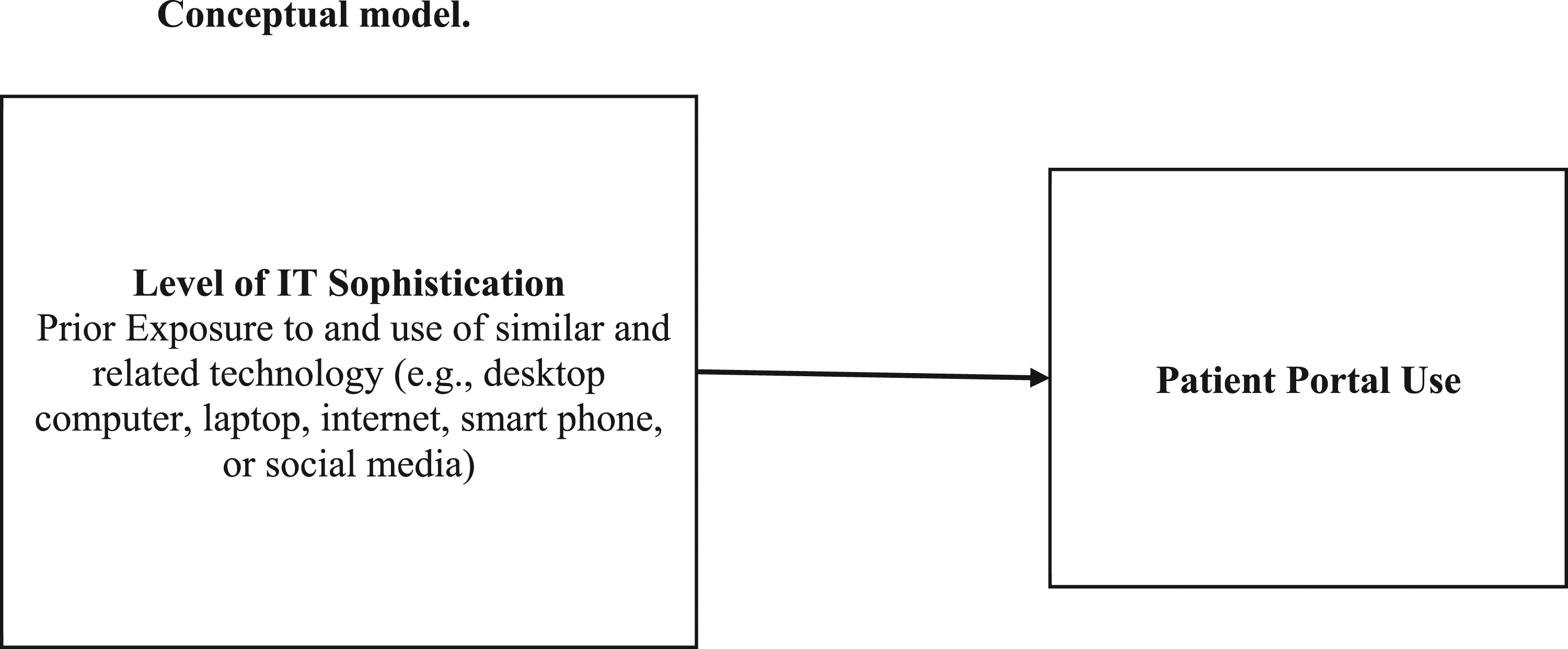
Patient portals and innovation resistance
An innovation is generally described as any good, service, practice, or idea that may be considered or perceived to be new.28,29 The concept of “newness” suggests that the good, service, practice, or idea itself is new, or that it is being applied in a novel way or in a different area. In the case of a patient portal, the underlying technology is not entirely new. The internet and mobile applications are not new, and has allowed for e-communication, e-commerce, social and event organizing, e-banking, and so on. Here, the “newness” in the application of the internet to providing patients with convenient, 24-h access to their personal health information allows for the description of patient portals as an innovation. 7 Subsequently, patients must decide to either use or not to use the portal.
Theories on innovation have been employed in discussing consumer acceptance and use of new technology. They suggest that different factors influence when, if, and why an innovation is adopted. For example, the diffusion of innovation theory suggests that for an innovation to be adopted the adopter must see a relative advantage in the innovation compared to what is being replaced.28,29 The innovation must be compatible and consistent to the adopters needs and values. The innovation must also be easy to understand by the adopters, who can then test and experiment with the innovation, as well as the observe results. Similarly, the extended unified theory of acceptance and use of technology (UTAUT2) emphasizes effort expectancy and performance expectancy as important factors in determining consumer acceptance and use of technological innovation. 30 However, both allude to some resistance to innovation because of its “newness.” The patient portal, as an innovation, is expected to experience similar resistance.
Patients’ unwillingness to adopt and use the patient portal may be explained by “innovation resistance.” Innovation resistance has been described in the literature as resistance offered by consumers to changes imposed by innovations.31–33 According to Bazzoli and Lee, the innovation itself is not what is being resisted but the change caused by the innovation. 34 The patient portal, in this case, utilizes already existing technology – internet and mobile applications – to facilitate patient engagement in healthcare delivery. It applies an existing solution to new needs. This new application will produce a change which will invariably result in a level of resistance. The resulting effect of this resistance is a delay in acceptance and use of the technology, and subsequently a postponement in retrieving the benefits. Consumers must first overcome the initial resistance to the change before they can accept and use the technology.
Individual patient characteristics, IT sophistication, and patient willingness to use the patient portal
Individual use of patient portals has been of interest in recent literature. These studies report challenges in the adoption and use of the patient portal and describe several factors that contribute to the patient’s resistance to using the patient portal. They suggest that patient socioeconomic and demographic factors explain why patients may be slow to using the patient portal.35–38 Given these studies, it can be inferred that the individual characteristics of patient play an important role in determining their willingness to use innovations like the patient portals. It would however be helpful to know other unique characteristics of patients who are resistant to using patient portals. This additional knowledge should prove helpful to healthcare providers and policy makers as they formulate strategies for patient portal adoption for the purposes of increasing patient engagement.
Apart from socioeconomic and demographic factors, there are other unique individual characteristics that provide better understanding and aid in devising strategies to promote patient portal use. Of interest for this study is how IT sophistication of patients can influence their decision to use patient portals. A link between socioeconomic and demographic characteristics and individual IT sophistication has been generally assumed and as such these factors were used instead. By operationalizing IT sophistication however, a direct link to the patient willingness to use a patient portal can be examined. IT sophistication, defined here as the degree of use of diverse information technologies by an individual, allow the examination of how individual prior exposure to similar or related technologies like a desktop computer, laptop, internet, smart phone, or social media will reduce the learning curve necessary to overcome individual resistance to the patient portal. Individuals that regularly use a broad range of information technologies will be more likely to accept and use a patient portal.
By controlling for patient demographic and socioeconomic characteristics, this study will examine if patient prior exposure to similar technologies will increase their willingness to use the patient portal. This will further shed some light on their level of resistance, whether patients who are not regular users of precursor technologies like the internet or other mobile applications are not likely to use an application based on those precursor technologies. In other words, patients who do not regularly use the internet or other mobile applications will likely not have an interest in using the patient portal that could require them. Prior use of these technologies however could reduce the learning curve for use of the patient portal and provide an opportunity for patients to overcome their initial resistance to using the portal. It is hence hypothesized that individuals who have had some exposure to precursor and other similar technologies will have less resistance and find it easier to use patient portals.
Methods
Study design and analysis
Participants and procedure
This study focuses on the IT sophistication of adults in Eastern North Carolina (ENC). Most counties in this region are considered rural, with residents that have low access to health care. 39 Residents in this region on average have lower incomes and are less healthy than their counterparts in other counties in North Carolina. Additionally, the region reports a higher prevalence of several chronic diseases compared to other parts of the state. 40 Consequently, it is believed that the adoption and proper use of the patient portal could play an important role in improving the overall health of the population in this region. It is therefore vital to understand the challenges to patient portal adoption and use in this region and similar regions.
To determine IT sophistication of adults in the region and their use of the patient portal, a cross-sectional survey was conducted in 2018 and the questionnaire was administered electronically by Qualtrics from October to November of 2018. A total of 565 out of 2204 individuals contacted completed the survey for a response rate of 25.64%. This survey method establishes that at baseline the respondents have access to an internet connection. The 27-item survey was administered electronically to adults in 32 counties in ENC. A third-party research group, Qualtrics Research Services, was contracted to administer the survey. The target sample size was 500 residents from ENC. Efforts were made to ensure that survey respondents were a demographic representation of residents in ENC. To be included in the study, participants had to be adults (18 years and older) residing in any county in the region with some access to the internet. Respondents also had to agree to thoughtfully respond to all questions. Incomplete surveys were excluded. Quality checks were also conducted and complete responses with errors were also excluded. The study and survey instrument received IRB approval with a waiver of written or signed consent.
Variables
Here the dependent variable is the “use of patient portals.” Individual exposure to and use of patient portals was obtained by asking respondents to choose their level of exposure to patient portals. Patient portal use is also categorized into four groups as: (1) never heard of patient portal; (2) never activated a patient portal; (3) activated but never used a portal; and (4) used a patient portal at least once. The independent variable here is IT sophistication. It is operationalized as the extent of use of specific technologies – cellphones, tablets, computers, and social media by an individual. The level of IT sophistication was grouped into four categories: low, low-moderate, moderate-high, and high. Individuals that are considered of low IT sophistication use regularly only one of the indicated technologies. Individuals that are considered of low-moderate IT sophistication regularly use any two of the indicated technologies. Individuals that are considered of moderate-high IT sophistication use any three of the indicated technologies. Individuals that are considered of high IT sophistication use all the indicated technologies regularly. Socioeconomic and demographic factors highlighted in prior studies were collected and included in the analyses as control variables.35–38 The covariates included are age, gender, race, academic attainment, health insurance type, household income, geographic location, employment, and marital status.
Analytic strategy
The unit of analysis is the individual healthcare consumer. A cross sectional study design was used for data analysis. The dependent variable was measured as a categorical variable with the reference group being “used a patient portal at least once.” The primary independent variable was also measured as a categorical variable and the reference group was “high level of IT sophistication.” Consequently, a multinomial logistic regression was deemed appropriate in determining if individual IT sophistication was associated with the extent of patient portal use. Also included in the regression model were the control variables indicated by previous studies to possibly influence if individuals are likely to use a patient portal. SPSS v.23 was used for data management, and STATA v.14 was used to perform the multivariate analysis. Only statistically significant results (p < 0.05) are discussed.
Results
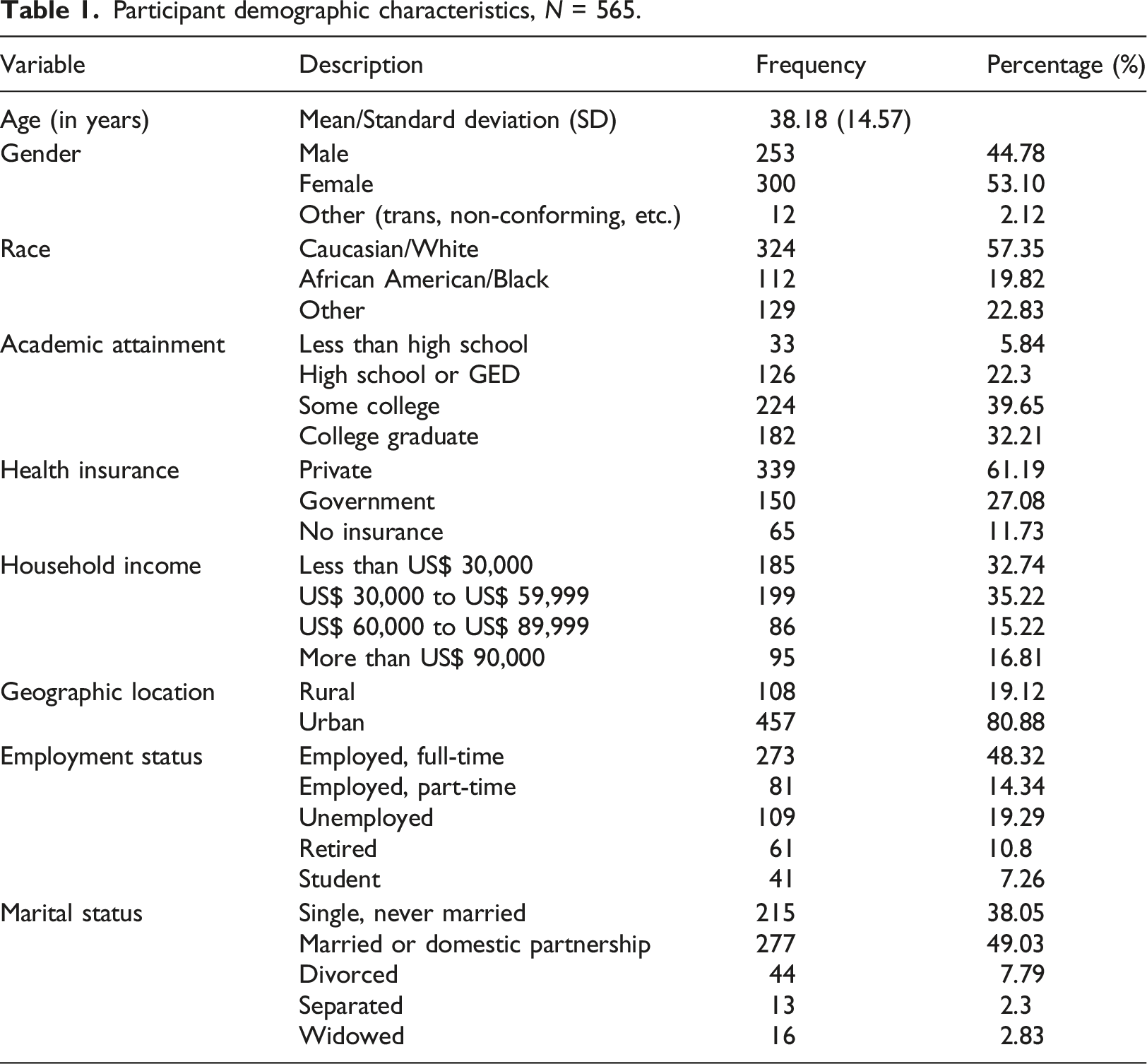
Participant demographic characteristics, N = 565.
Crosstabulation of IT sophistication and use of patient portal.
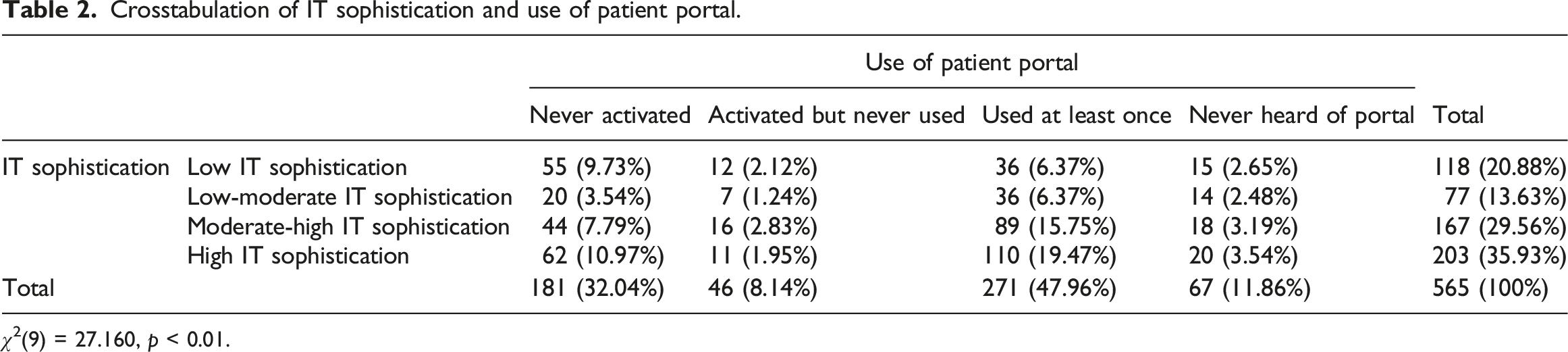
χ2(9) = 27.160, p < 0.01.
Multinomial logistic regression analyses showing the relationship between IT sophistication and level of patient portal use.
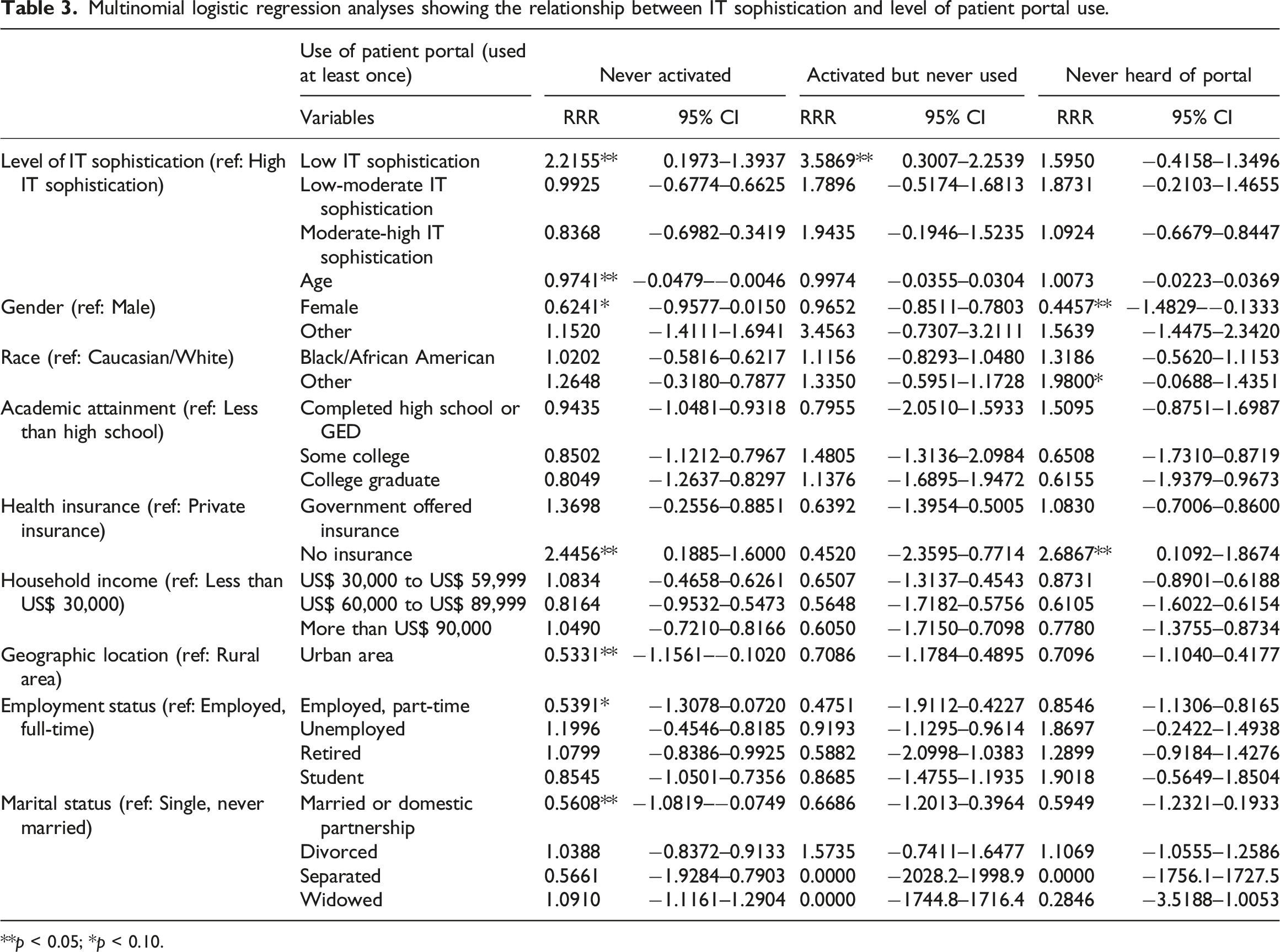
**p < 0.05; *p < 0.10.
Discussion
Previous studies have examined the role of individual demographic and socioeconomic status in determining their use of patient portals.35–38 However, to the best of our knowledge, none have examined the extent to which individual level of IT sophistication will predict individual use of the technology. This study suggests that when controlling for the demographic and socioeconomic factors, individual IT sophistication is important in predicting patient portal use. While patient demographic and socioeconomic characteristics like age, health insurance, geographic location, and marital status are important predicators, the patient’s prior exposure to and use of similar and related technology (e.g. desktop computer, laptop, internet, smart phone, or social media) cannot be ignored.
The findings from this study suggest that individuals with low IT sophistication face challenges in activating their patient portals compared to those with high IT sophistication. It revealed that low IT sophisticated individuals compared to high IT sophisticated individuals were 2.2155 times more likely to have never activated their patient portal. Similarly, even when the patient portal was activated, individuals with low IT sophistication compared to individuals with high IT sophistication were 3.5869 times more likely to have never used the patient portal. This underscores that lack of experience with the technology or a similar technology could be impediment to activating the patient portal. As individual interests in health information technology continue to grow however, it is likely that use of the patient portals will also continually increase.20–22 Providers should therefore be mindful of this in their attempt to persuade their patients to use the patient portal. Also, providers should consider additional efforts like personalized support programs for patients that may be considered as having low IT sophistication.
Additionally, the individual may still retain some skepticism about the supposed benefits to be gained from the patient portal. They may have a general lack of interest in activating the patient portal because they feel it is not compatible with their current needs. The individual’s resistance may also be due to their unwillingness to trying something new out of fondness for current practices or due to their resistance to change itself.28,29,34 This assertion is supported by other studies that have found that an individual’s willingness to use a portal is a barrier to consistent use. 41 This finding also reinforces the positions of innovation theories that suggests that adopters must perceive some benefit and relative advantage to overcome their resistance to the innovation.28–30 Therefore, more attempts should be made to promote to advantages and benefits of the patient portal to low IT sophisticated patient.
This study also found no significant difference in the level of IT sophistication between those individuals that have used their patient portal at least once and those that have never heard of a patient portal. This finding suggests that while IT sophistication is a relevant factor in determining whether an individual will use the patient portal, they still must be made aware of the technology. Given that no significant difference between those who have used the portal at least once and those who have never heard of the technology was observed, it may be inferred that those who may not have heard of the portal may just be as likely to use the technology. According to Rogers, the innovation-decision process must begin with knowledge of the innovation.28,29 This indicates that more work is necessary to educate and raise awareness about the patient portal. An added benefit to alerting and encouraging individuals who would be more likely to use the patient portal is that a positive experience with a patient portal would lead to continued use of the patient portal and other services.42,43
The findings of this study should be viewed through the lens of several limitations. First, the sample was limited to individuals residing in a region of the country willing to respond to the survey. It is possible that this may have introduced selection bias, and the results may not necessarily be generalizable to all individuals in the United States. Second, given that the average age of respondents in this study, the results may be more relevant to younger individuals who may have a generally higher level of IT comfort/access. Third, there may be other factors influencing the individual use of patient portals not controlled for in this study, for example cost and availability of technical support. 26 Data on these elements were not available for our study, as such it was impossible to incorporate them into our analysis. Future research should consider additional factors in their models when examining the use of patient portals.
Overall, this study does not only fill a gap in the HIT literature by highlighting the relationship between individual IT sophistication and portal use, but it also highlights the challenges that stakeholders must consider and tackle if they are indeed to encourage the use of patient portals among their patient population. By understanding how individual prior exposure to similar technologies influences the use a patient portal, healthcare policy makers, health system, and community health leaders can be better informed in their decision making and how they allocate resources to ensure the use of patient portals.
Conclusion
The findings of this study should serve to buttress the understanding of health system and community health leaders as they aim to improve patient engagement among their patient population with the adoption of patient portals. It reveals that in addition to individual characteristics, prior exposure to similar technologies is important in determining patient portal use. As such, more efforts to reach and recruit those individuals who are already inclined to use the patient portal is should be made as they can serve as ambassadors and advocates to others in their communities. Furthermore, this study explains that a person with a high IT sophistication compared to those who have low IT sophistication are just as likely to have never heard about the patient portal suggesting that there is an opportunity to engender more users of the patient portal. Considering the significant investments made in the adoption of patient portals for the purposes of promoting patient engagement, healthcare providers and policy makers must ensure that this innovation diffuses through their communities and patient populations. Future research should focus on patient use of the patient portal and the challenges patients encounter in its use, as well as if and how patient use of the portal results in engagement and better health outcomes.
Footnotes
Declaration of conflicting interests
The author(s) declared no potential conflicts of interest with respect to the research, authorship, and/or publication of this article.
Funding
The author(s) received no financial support for the research, authorship, and/or publication of this article.
Institutional review board statement
IRB approval was obtained from East Carolina University, UMCIRB 18–000,373 “Use of HIT for Patient Engagement,” 30 April 2018.
Informed consent statement
A waiver of written or signed consent was obtained as the research presented no more than minimal risk of harm to subjects and involves no procedures for which written consent is normally required outside of the research context.
