




Abstract
Studies on vitamin D receptor (VDR) and its association with multiple disorders are expanding. This bibliometric study aims to find and summarize VDR-related publications, and compare them across various countries, organizations, and journals to demonstrate trends in VDR research. VOSviewer and Excel 2019 were used to classify and summarize Web of Science articles from 1900 to mid-2021. Total records of 8762 articles were analyzed, and maps of co-citations bibliometric keywords co-occurrence were designed. In conclusion, relative research interest and published papers related to VDR were growing in the past 30 years. The United States of America dominates the research regarding VDR. The highest quality of VDR research was achieved by the University of California System, University of Wisconsin System, and Harvard University. J Steroid Biochem Mol Biol, PLoS One, and J Biol Chem are the leading three productive journals on VDR. Various aspects of vitamin D deficiency associated disorders and genetic studies regarding VDR, including single nucleotide polymorphism, gene variants, epigenome, long non-coding ribonucleic acid (lncRNA), and small nucleolar RNA host gene 6 are potentially the recent research hotspot in this field. Moreover, coronavirus disease, polycystic ovary syndrome, non-alcoholic fatty liver disease, gut microbiota, gestational diabetes, systemic sclerosis, and chemoresistance are the trending medical conditions associated with VDR.
Introduction
Vitamin D is a prohormone, and it is similar to steroid hormones in its structure and function. 1 Vitamin D undergoes metabolism in the liver to yield 25-hydroxyvitamin D2 (25(OH)D2) and 25-hydroxyvitamin D3 (25(OH)D3). Serum calcium and phosphate, along with parathyroid hormone (PTH), are regulating the conversion of 25(OH)D3 to 1,25(OH)2D3 (calcitriol), the active form of vitamin D. 2 Calcitriol binds to vitamin D receptors (VDR) in its target cells, controlling the synthesis of many different proteins. 2 Vitamin D-related disorders may be caused by polymorphic variants of genes coding protein molecules involved in vitamin D metabolism and transport. 3 Although the mechanism for how vitamin D is associated with multiple disorders has not been fully explained, VDR gene variants seem to influence multiple biological endpoints, including those related to osteoporosis. 4 Therefore, in the last decades, multiple novel mechanisms of vitamin D have been identified, 5 and several observational studies have suggested a protective role of vitamin D against cardiovascular disease, 6 malignant neoplasms, and diabetes. 7 Moreover, recent studies have highlighted the importance of the analysis of vitamin D serum levels and its metabolites in multiple diseases.8,9
Bibliometric research is a valuable method to analyze qualitatively and quantitatively the publications related to a particular subject. The method assists in identifying novel and emerging areas of research and it is widely used in the medical research field. 10
VOSviewer is a free java built software tool, developed by van Eck and Waltman 11 (Leiden University) to construct and visualize bibliometric networks. In the bibliometric networks, the co-occurrence of two words indicates a possible relationship. The closeness of that relationship is determined by the frequency of its occurrence. Also, the semantic relation of several research themes can be identified by analysis of the clusters inside the bibliometric networks. 12 Brüggmann et al. 13 have conducted a bibliometric study regarding vitamin D using NewQIS platform. Another bibliometric study was published by Yang et al. 14 on vitamin D trends; however, Co-occurrence Matrix Builder (BICOMB) software was used instead.
The number of publications in the Web of Science (WOS) database associated with VDR has increased over the years up to mid-2021 (Figure 1(a)). Hence, it is necessary to identify global trends and future directions in the studies on VDR. We believe that this is the first work to use VOSviewer as the main tool to analyze publications linked to VDR.
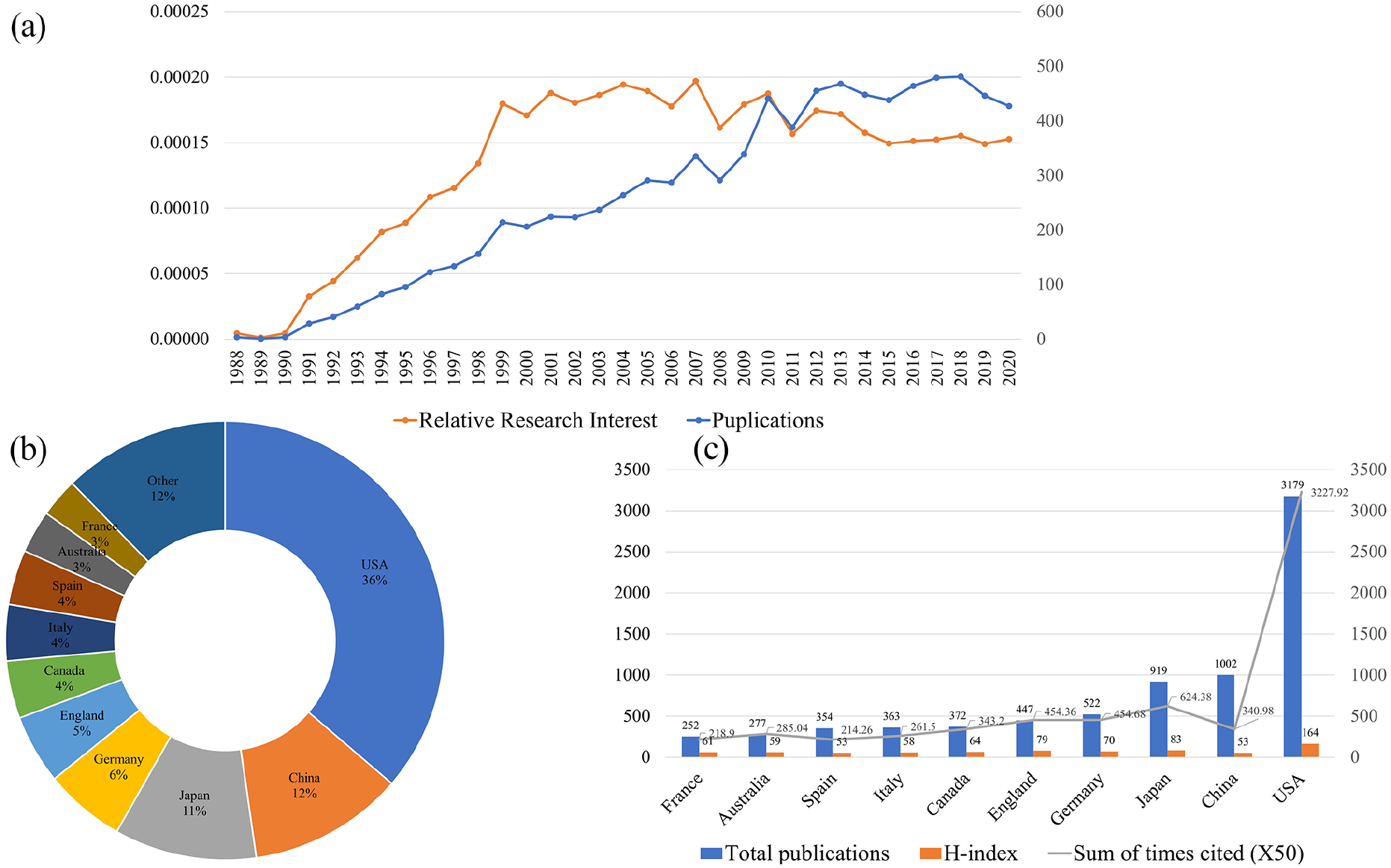
(a) Relative research interest and annual publication number, (b) distribution of VDR publications countries, and (c) the total publications, H-index, and time cited for top 10 countries.
Materials and methods
Database and search methodology
WOS was employed for searching literature on VDR in July 2021. WOS is an online subscription-based scientific citation indexing service preserved by Clarivate Analytics. It delivers a wide-ranging citation search. Its temporal coverage is from 1900 to the present and it grants scholars access to various databases that reference cross-disciplinary research. 15 Data exported from WOS was raw data designed for the bibliometric analysis in particular for the co-citations and bibliographic coupling. These features permit a comprehensive investigation of dedicated and specialized sub-fields within a scientific or academic discipline. 15
In this study, the selected WOS database included CCR-EXPANDED, CPCI-SSH, CPCI-S, A&HCI, BKCI-SSH, SCI-EXPANDED, SSCI, BKCI-S, and ESCI. The document type was set to “article,” the language was set to “all languages,” and the period was set from 1900 to 2021. Field tag, “TS = Topic,” was used in the advanced search field which expanded the lookup for “vitamin D receptor” in the title, abstract, and keywords. The following query was used:

Data extraction
The data was obtained from the WOS database as separate files, combined into a single file that has been filtrated by Microsoft Excel 2019. The recorded publication information (hereby referred to as DEXL for simplicity) comprised: number, year, country, organization, journal, author, H-index, journal’s impact factor, and total times cited. The following formula was used to calculate the relative research interest (RRI) 16 :

Data analysis
DEXL quantitatively and qualitatively analysis was conducted using Microsoft Excel 2019. The bibliometric network (BNT) was built by VOSviewer. 11 The software is available online and can be freely used without licensing. BNT is based on distance, and each network consists of a large of nodes mapped in a two-dimensional (2D) space based on visualization of similarities. VOSviewer (version 1.6.1) in this study was used to analyze and visualize the co-occurrence of keywords and the co-citation of references.
Bibliometric maps of co-citations
One of the most crucial methods in bibliometrics is the co-citations of reference, which identifies the multiple references that have been cited by the same publication. To increase the accuracy of the co-citation map, the minimum number of citations per record was adjusted to 20. Out of 170,036 cited references, only 2345 met the criteria and were designated for visualization in this study.
In the visualization, the 2345 points (i.e. nodes) with different colors represent 2345 cited references. Distinct colors imply different clusters. The node size indicates paper citation frequency, whereas the line (i.e. edge) between two nodes indicates that the two papers were cited in a single publication. The edge length signifies the closeness of two papers; shorter edges are for closer papers (Figure 2(a)).
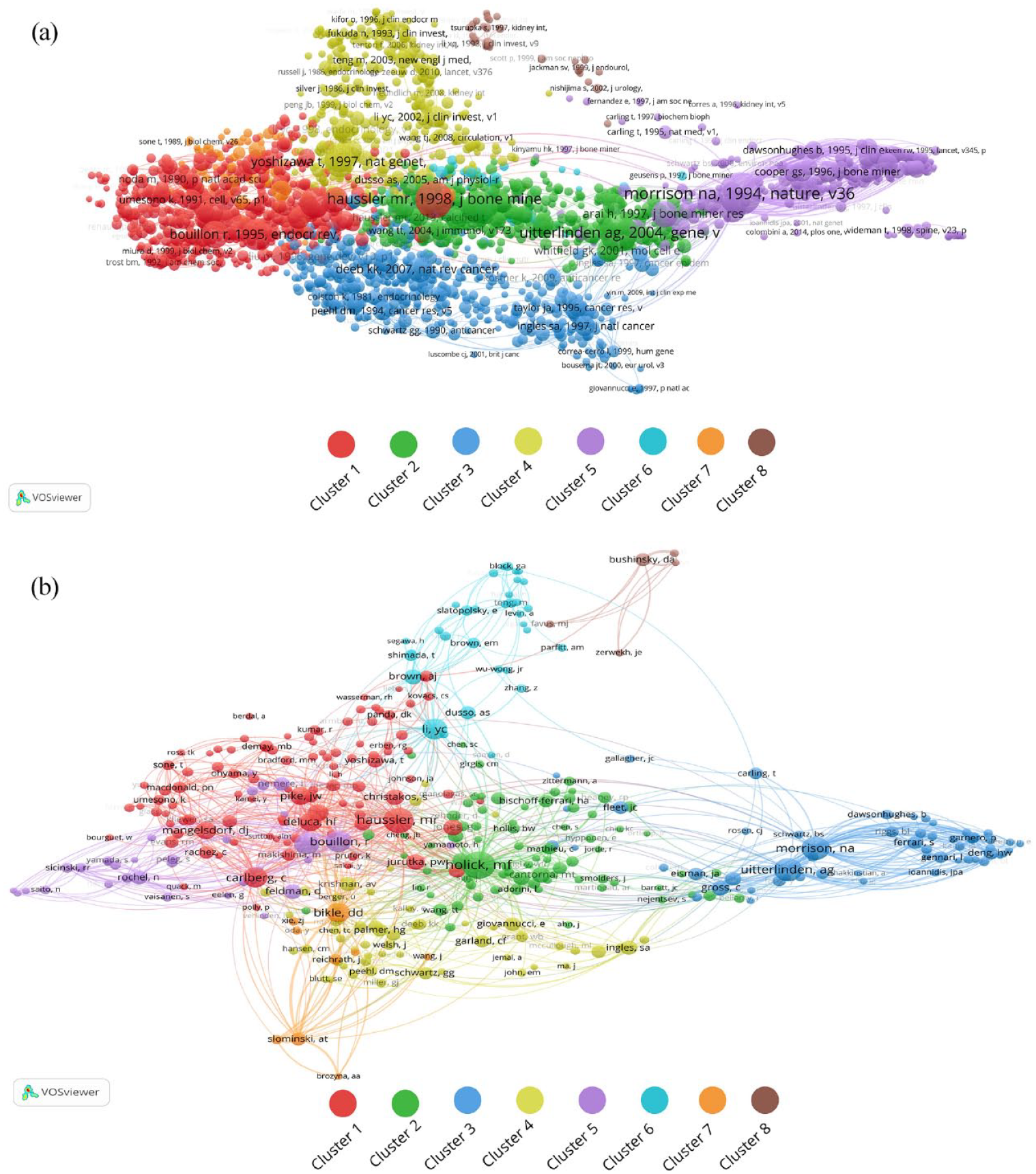
(a) Mapping on co-cited references of studies related to VDR and (b) mapping on co-authors of studies related to VDR.
The analysis of authors’ co-citations was performed as well using the aforementioned co-citations steps with some adjustments. Minimum citations of an author were adjusted to 100. As a result, there were 374 authors (out of the 105,319) represented in 374 nodes and 8 clusters with distinct colors. The node size is an indicator of the author’s citation frequency. If two nodes are linked, this means the two authors were cited in a single paper. The edge length signifies the closeness of two authors; shorter edges are for closer authors (Figure 2(b)).
Results
Overview of publications on VDR
Overall, WOS has generated 8926 publications; and it were extracted and filtrated accordingly. Publications that had missing records such as missing citing references or publication years, or those who had anonymous authors/references were eliminated. A total of 8762 papers have been included in further analysis. The sum number of citations of all papers associated with VDR is 312,507 (233,310 not including self-citations), H-index was equal to 192, whereas the average citation for entire articles is 35.67 times.
Publication year and RRI
VDR related publications were covered from 1988 to 2021. The most productive year was 2018 with 481 publications, followed by the years 2017 and 2013 with 479 and 468 papers, respectively (Figure 1(a)).
Countries of publications
The United States of America (USA) published most papers (3179; 36.28%), followed by China (1002; 11.43%). Japan published 919 papers, accounted for 10.48% (Figure 1(c)). Research from USA has the highest number of citations (161,396 times), followed by Japan (31,219 times) and Germany (22,734 times). USA, Japan, and England had the highest H-index with values of 164, 83, and 79, respectively.
China was in the second rank concerning the number of publications; however, its H-index ranked the ninth. Even though France ranked 10th in publication number, its H-index ranked 5th among countries. Also, even though Australia has publications four times lower than China, Australia has a higher H-index (Figure 1(b)).
Journals of publications
J Steroid Biochem Mol Biol (420 publications, IF 4.292) published the most papers on VDR, followed by PLoS One (203 publications, IF 3.240) and J Biol Chem (186 publications, IF 5.157). The top three productive journals published 9.42% of VDR papers (Figure 3(a)). Out of 1908 journals, the top 50 journals published 25 or more papers on VDR, accounting for 40.39% of all papers related to VDR.
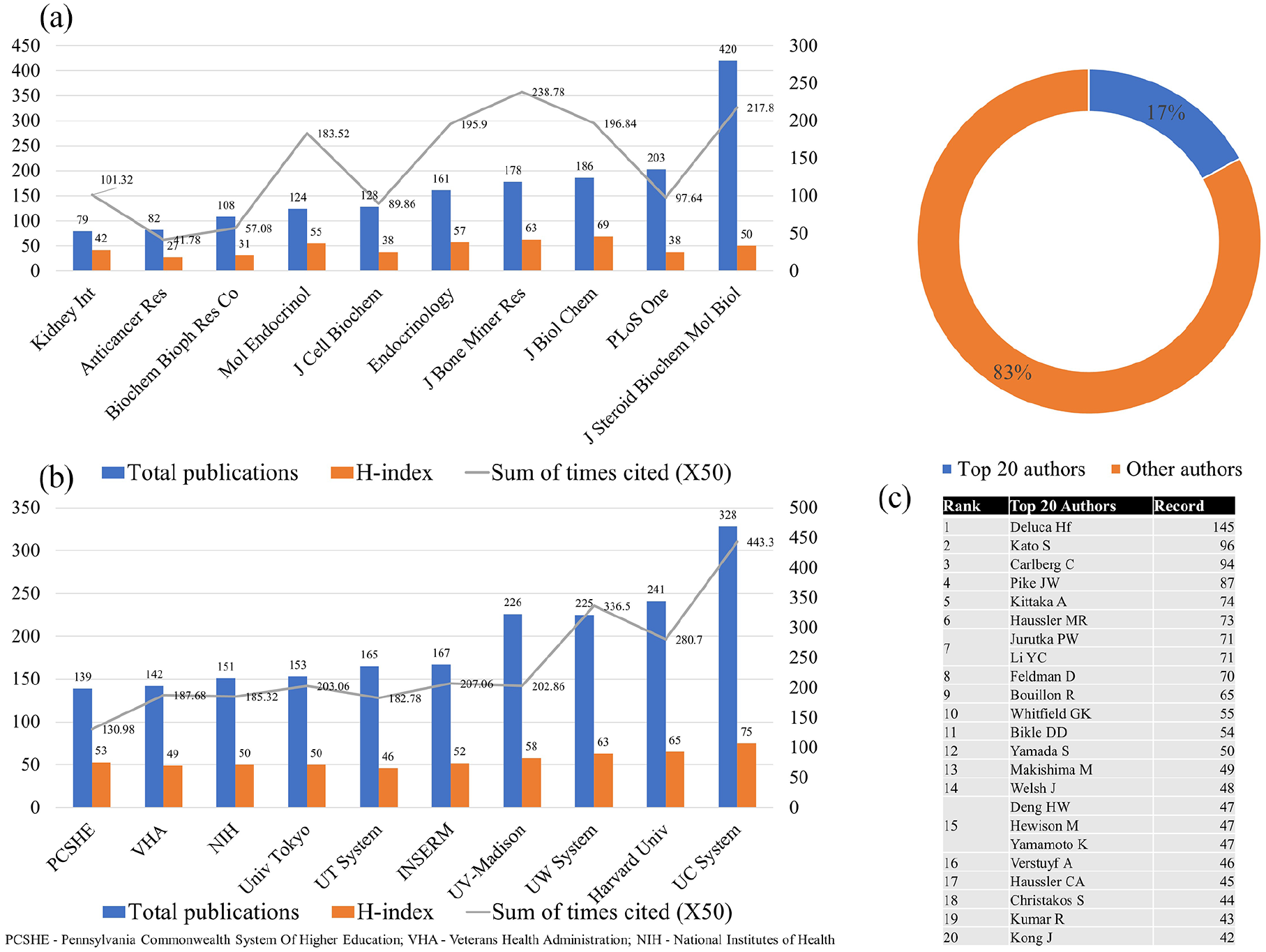
(a) Publications, H-index, and time cited per item for the top 10 productive journals, (b) publications, H-index, and time cited per item for the top 10 productive enhanced organizations, and (c) top 20 contributing authors.
Organizations of publications
Organization-Enhanced feature for WOS has been used, which searches only for the unified organization name. The most productive organization on VDR research is the University of California System (UC System) with 328 publications, followed by Harvard University, University of Wisconsin System (UW System), University of Wisconsin Madison (UW-Madison), Institut National de la Santé et de la Recherche Médicale (INSERM), and University of Texas System UT System, with 241, 225, 226, 167, and 165 publications, respectively.
Citation frequency of papers from UC System ranked first (22,165 times), followed by that from UW System (16,825 times) and Harvard University (14,035 times). H-index of UC System ranked first (75), followed by that of Harvard University (65) and UW System (63) (Figure 3(b)).
Authors of publications
Out of 32,013 authors who published papers associated with VDR, the top 20 authors account for 19% of the total VDR publications (Figure 3(c)). The first contributing author to VDR research was Deluca. He co-authored 145 publications and had H-index of 45. He was followed by Kato (96 publications, H-index 46), and Carlberg (94 publications, H-index 38).
Bibliometric maps of references co-citations
Eight clusters have been created, the first cluster has 577 publications, and it is focused on VDR crystal structure and the active conformation of vitamin D. The second cluster had 515 publications and was primarily dedicated to VDR and cancer association. The third cluster consisted of 491 publications and its main theme was vitamin D deficiency and VDR polymorphisms and their association with various diseases. VDR mutation was the main topic of the fourth cluster, with 332 publications. The fifth cluster included 258 publications that focus on the association of VDR properties and its polymorphism with bone physiology and bone mineral density (BMD). The sixth cluster is composed of 77 clusters, and it highlighted the distribution of VDR in various tissues. The seventh cluster covered understanding the molecular details of transcriptional control, cloning, and expression of VDR with 66 publications. Finally, the eights cluster early discovery of VDR and its polymorphism covered VDR mutation with 29 publications.
Hotspots of papers related to VDR
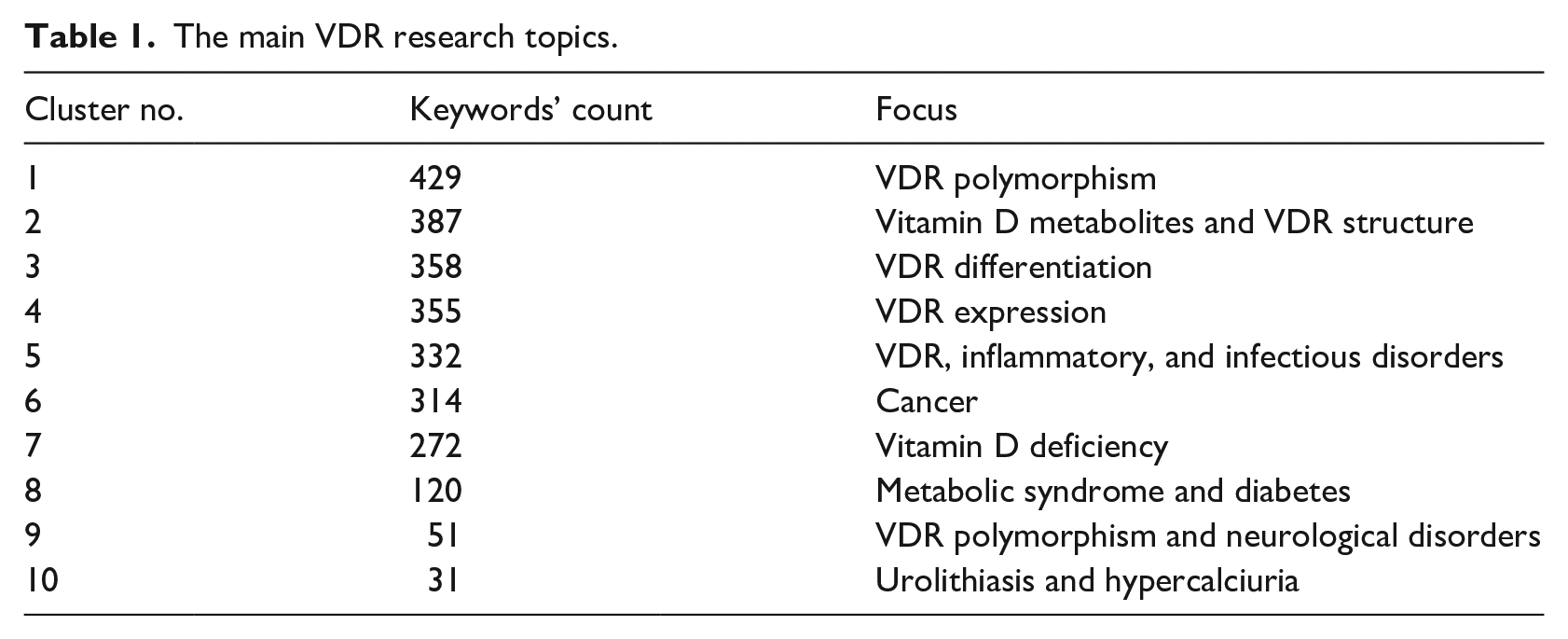
Keywords related to VDR were analyzed by VOSviewer and shown in (Figure 4). Keywords’ map was designed by selecting keywords that have been mentioned at least five times. Out of 19,204 keywords, 2649 were chosen and were classified into 10 clusters (Table 1).
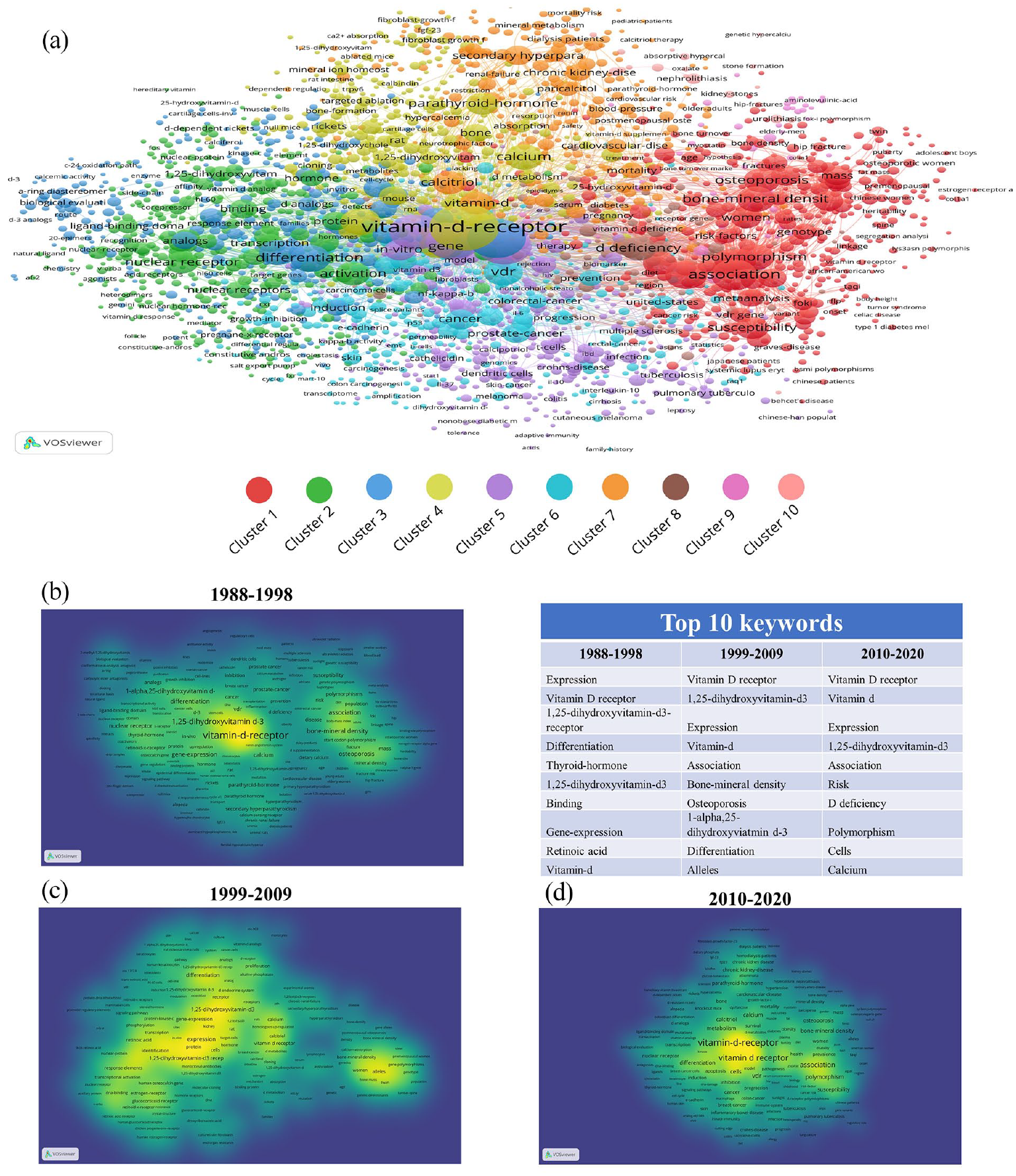
(a) The map of VDR co-occurrence keywords, (b) analysis of keyword co-occurrence between1988 and 1998, (c) analysis of keyword co-occurrence between 1999 and 2009, and (d) analysis of keyword co-occurrence between 2010 and 2020.
The main VDR research topics.
The latest trending keywords were “lncrna,” “snhg6,” “nlrp3 inflammasome,” gene variants,” and “epigenome” that appeared in the last 2 years. Other new keywords include “vitamin D target genes,” “vitamin D status,” “polymorphism, single nucleotide,” “genetic variation,” and proinflammatory cytokines as “pro-inflammatory cy” that appeared in 2017.
“COVID-19” appeared as a trending keyword in 2020 that was associated with coronavirus diseases. Other diseases associated with VDR are polycystic ovary syndrome (PCOS), and Non-alcoholic fatty liver disease (NAFLD) appeared as keywords “PCOS” and “NAFLD,” respectively. Moreover, “Gestational diabetes,” “gut microbiota,” “cognitive decline,” “chemoresistance,” “fatal growth restriction,” and “systemic sclerosis,” are the new diseases keywords associated with VDR in 2017. All trending keywords from 2019 to mid-2021 are visible in Figure 5. Out of 2260 keywords, only 117 meet the threshold and occurred at least five times.
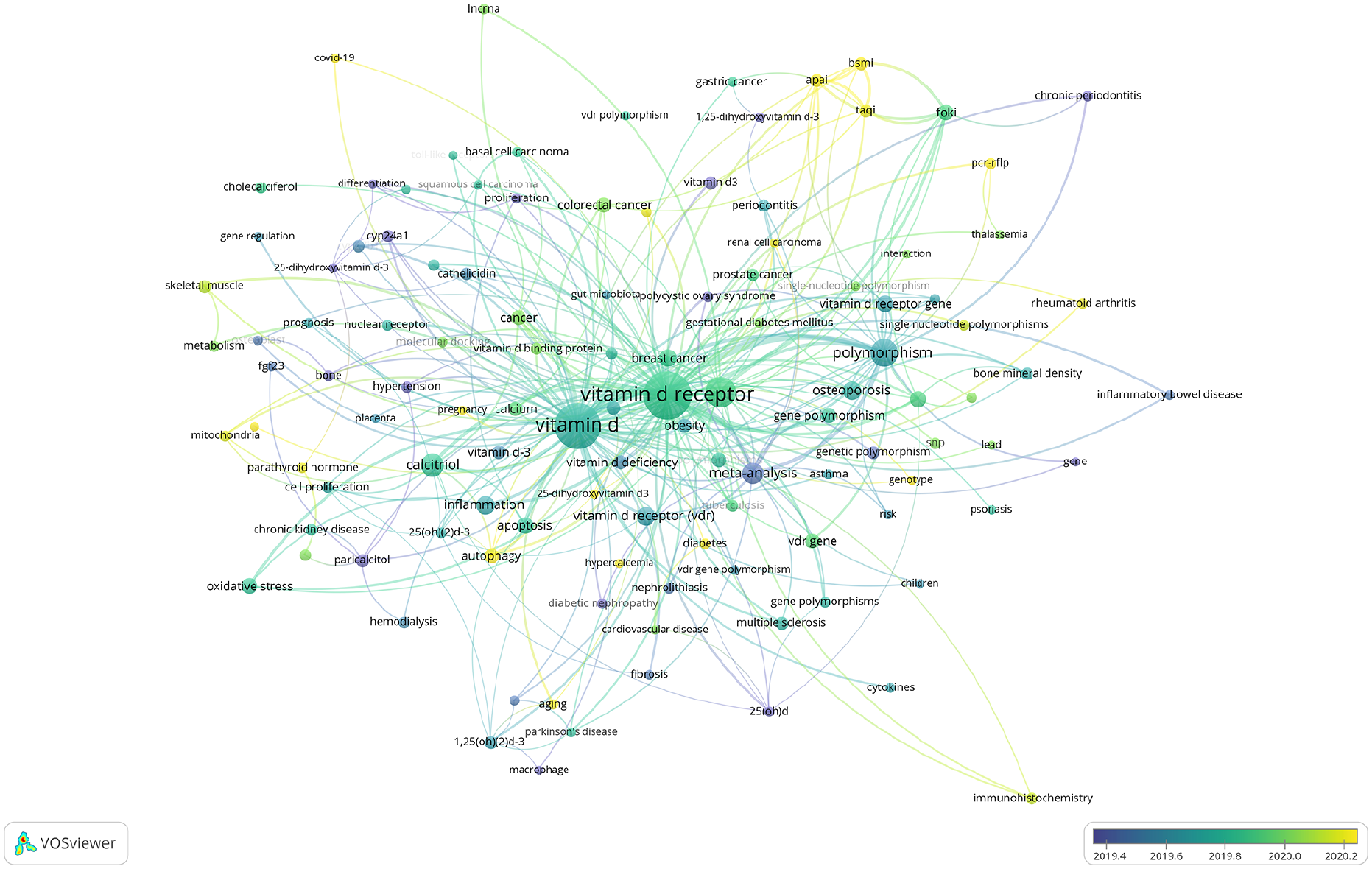
Trending keywords from 2019 to mid-2021.
Discussion
Trends of publications related to VDR
In the past 30 years, RRI and published papers of VDR were increasing. USA leads VDR research by ranking first in the number of publications and H-index. China has only an 8% increase in the number of VDR publications compared with Japan, however, Japan’s H-index is 38% higher than China. Moreover, England has almost 50% fewer publications than China and it has a 1.5X higher H-index. Spain also has low quality compared with other countries in the same publication tier. This highlights the necessity of improving the quality of publication in China and Spain. Nevertheless, Canada and France were ranked the 6th and 10th in the number of total publications, and they had relatively elevated H-index indicating high quality.
UC System dominates VDR publications by ranking the first in publication count, citation frequency, and H-index. Hence, substantial VDR studies are expected to be published by UC System. However, none of the top 10 authors belong to UC System.
J Steroid Biochem Mol Biol, PLoS One, and J Biol Chem are the three major journals that published studies concerning VDR. In a 12-month period, PLoS One has published over 30 new papers on VDR which suggests further studies will be published in the future. Scholars and readers involved in VDR topics may check these journals regularly. The journal’s impact factor has also increased in 2020 which indicates the overall good quality of the published papers.
Concerning the latest keywords that appeared recently, are “gene variants” and “epigenome” appeared in 2018 in 5 and 9 papers, respectively, both in the second cluster. Other relatively new keywords include “vitamin D target genes,” “vitamin D status,” “polymorphism, single nucleotide,” and “genetic variation” that appeared in 2017 in 7, 4, 5, and 8 papers in clusters 2, 2, 3, and 1, respectively. Despite the single nucleotide polymorphism (SNP) that has been studied since early 1990, the timeline analysis, Figure 4(a), (b), and (c) displays an overall trend in the first cluster topics concerning VDR polymorphisms, especially in the last decade. Still, the four major VDR polymorphisms: BsmI, TaqI, ApaI, and FokI, remain trending topics in the last 12 months. Moreover, hot topics included various studies that involved association between VDR and long non-coding RNAs (lncRNA), small nucleolar RNA host gene 6 (SNHG6), and NOD-, LRR-, and pyrin domain-containing protein 3 (NLRP3) inflammasome (Figure 5).
We also noticed the appearance of keywords in 2017 associated with medical conditions such as “PCOS,” “NAFLD,” “gut microbiota,” which occurred in 9, 8, and 6 papers, clusters 8, 8, and 6, respectively. PCOS and NAFLD are associated with metabolic syndrome that was the main concern of the eighth cluster.
Additional keywords have been noticed to appear in five papers in different clusters, “gestational diabetes,” “systemic sclerosis,” “pro-inflammatory cy,” “cognitive decline C,” “chemoresistance,” “COVID-19,” and “fatal growth restriction” in clusters 8, 7, 2, 3, 3, 3, and 5, respectively. That indicates the variety of topics associated with VDR and its extension among distinct clusters.
Studies focused on VDR
The bibliometric analysis of co-citations has revealed the top three cited studies in the field among all the examined clusters. In the third cluster, an article entitled “Prediction of bone density from vitamin D receptor alleles” is the most cited (820 times), which was published in Nature in 1994 by Morrison et al. 17 The study discussed how it was possible to expect differences in bone density by using common allelic variants in the gene encoding the VDR. In postmenopausal women, lower bone density associated genotype bb was overrepresented compared with young women. The mechanisms in which VDR regulates bone density were not fully exposed. It was suggested that allelic differences in the 3′ untranslated region may alter messenger RNA levels. The finding of this study opened new avenues for prophylactic intervention targeting and development. It also showed that a single gene with pleiotropic transcriptional actions might modulate a complex multifactorial genetic regulation.
In the third cluster, an article by Haussler et al. 18 entitled: “The Nuclear Vitamin D Receptor: Biological and Molecular Regulatory Properties Revealed” published in J Bone Miner Res (1998) was cited (617 times). The article mentioned historical events concerning VDR cloning, 19 actions of calcitriol-VDR complex, and VDR as a ligand-dependent transcription factor and as a member of the superfamily of steroid/thyroid hormone receptors.20,21 Then, the article mentioned various biological and molecular regulatory properties of VDR, including but not limited to hypocalcemic calcitriol resistance, the influence of VDR on the endocrine feedback loop between PTH and vitamin D, catabolism of calcitriol, and the metabolism pathway of 24-hydroxylated vitamin D metabolites, the role of calcitriol–VDR in phosphate homeostasis, and neoclassical calcitriol/VDR actions. Haussler et al. predicted that VDR polymorphisms identification can have a key role in the treatment plan of patients with osteoporosis, prostate cancer, or breast cancer. They also predicted an increase in research investigating VDR structure, including its crystal structure and VDR complex liganded versus unliganded forms in the presence and absence of vitamin D response element-binding sites or several proteins.
The second cluster contained an article entitled “Genetics and biology of vitamin D receptor polymorphisms” published in Gene in 2004 by Uitterlinden et al. 22 and it was cited (642 times). The study aimed to analyze linkage disequilibrium among polymorphisms and to examine how the gene functions can be diminished or augmented through certain combinations of alleles across a candidate gene. Uitterlinden et al. documented additional VDR polymorphisms, such as Cdx2, FokI, BsmI, ApaI, and TaqI.
Strengths and limitations
This is the first study to spot VDR research trends at a point in time. It can assist us in determining the general status of old and current VDR publications and their trends versus time. The bibliometric analysis covered over 30 years of VDR research. It also could act as a reference for scholars in the future by identification the expected upcoming trends. Still, there are few limitations associated with this bibliometric analysis. First, raw data collected was associated with a particular timestamp, hence, the conclusion may change over time and the study should be updated. Second, our exclusion criteria for analyzing the new keywords were set to a minimum of five, thus, at the time of writing this paper, newly published outstanding papers that did not meet these criteria were excluded from the trend analysis, a situation that may be altered in the future. Third, even though H-index can be used to evaluate the performance of the research, it cannot be used merely to determine its quality. Also, the bibliometric maps of co-citations can reveal the association between references, authors, and keywords thought node size “frequency,” but it does not necessarily reflect the quality of the paper.
Conclusion
The bibliometric analysis in this paper demonstrated the trend in RRI and published papers of VDR in the past 30 years. USA leads VDR related publications. China and Spain have a low quality of studies and it requires enhancement. UC System, Harvard University, and UW System achieved the highest quality of VDR research. J Steroid Biochem Mol Biol, PLoS One, and J Biol Chem are the three most productive journals in the VDR field. Gene variants, epigenome, SNP, lncRNA, SNHG6, and NLRP3 inflammasome could be the VDR trending investigation hotspots. Moreover, COVID-19, PCOS, NAFLD, gut microbiota, Gestational diabetes, systemic sclerosis, and chemoresistance are the trending medical conditions associated with VDR.
Footnotes
Acknowledgements
We thank Ms. Sara Treneman and Mr. Deepak Singh Rawat for replying directly to our emails while asking for the manuscript status. Also, we thank the anonymous reviewers for their thorough reading of our manuscript and their many insightful comments and suggestions. We thank Poznań University of Medical Sciences for the financial support of the paper. Mr. Mohamed Abouzid is a participant of STER Internationalization of Doctoral Schools Programme from NAWA Polish National Agency for Academic Exchange No. PPI/STE/2020/1/00014/DEC/02.
Author contributions
MA: Conceptualization, Data collection, Writing—Original draft preparation, Visualization; AG: Data collection, Writing; MKŁ: Supervision, Methodology, Writing—Reviewing and Editing. All authors have contributed to manuscript writing and review and have approved the final version.
Funding
The author(s) disclosed receipt of the following financial support for the research, authorship, and/or publication of this article: We obtained financial support from Poznan University of Medical Sciences for the publication of the article.
