




Abstract
The continuous monitoring of chronic diseases serves as one of the cornerstones in the efforts to improve the quality of life of patients and maintain the healthcare services provided to them. This study aims to provide an in-depth understanding of the perspectives of healthcare professionals on using sensor-based networks (SBN) used for remote and continuous monitoring of patients with chronic illness in Kosovo, a developing country. A qualitative research method was used to interview 26 healthcare professionals. The study results demonstrate the positive attitudes of participants to using SBN, and considers their concerns on the impact of these platforms on the patient’s life, the number of visits in the medical centre, data privacy concerning interactions between patients and their medical personnel and the costs of the platform. Further to that, the study makes an important contribution to knowledge by identifying the challenges and drawbacks of these platforms and provides recommendations for system designers.
Introduction
Worldwide, the healthcare sector is facing major challenges due to dwindling resources, higher hospitalization rates and an increased ageing population that has higher levels of chronic diseases such as diabetes, cardiovascular diseases, stroke and arthritis.1,2 Various studies have concluded that chronic diseases have also become increasingly prevalent among younger adults. 3 Hence, caring for all these people is expensive and potentially unsustainable in the long-term, especially taking into consideration the fact that patients with chronic illnesses need continuous treatment and management of their conditions and are more prone to the risk of disability, hospitalization and other limitations in their activities. 4
The application of digital technologies has been proposed as a solution to meet the challenges that the healthcare sector is facing and offer easier and improved healthcare services for patients. 5 In this context, a telehealth system includes any digital device that can provide behavioural or environmental information on a patient’s status at a distance. Hence, the concept behind the telehealth is closely related to monitoring patients remotely. These technologies include any platform that enables the monitoring of individuals through a remote interface that can gather information (e.g. clinical data such as vital signs) and share them with the healthcare professionals. 6 Remote monitoring includes sensor-based networks that are considered to play an active role in managing health-related parameters, recording and sharing vital signs and communication between the patient and the healthcare professionals also at a distance. 7
Sensors-based networks consist of a group of nodes that communicate wirelessly over limited frequencies and can collect information and transmit them to a base station or remote location. Within the telehealth domain, the sensor-based networks can provide continuous and remote monitoring of chronic conditions and enable the sharing of the information that is generated, between patients and their doctors. This is considered highly beneficial, taking into account the increasing number of patients diagnosed with chronic diseases, particularly those in low-and-middle-income countries.8,9 Various studies have concluded that patients can significantly benefit from the application of remote monitoring technologies for chronic diseases, as it allows them to receive continuous treatment in their homes and stay connected with their doctors.10–14
Sensor-based platforms enable monitoring of vital signs and these data can be transferred to a location where healthcare professionals can access them. The sensor-based industry, on the other hand, is growing rapidly to fulfil market needs and the market share of eHealth devices is expected to reach 201 billion dollars by 2025, with a 23% increase anticipated for the forecast period from 2019 to 2025. 15 The prevalence of chronic diseases and the application of the Internet of things (IoT), including sensor-based platforms, are expected to further enhance the market demand for eHealth systems for this period.
Although the use of health-oriented digital technologies is rapidly growing, research that could guide practice, policy and user-centred design and acceptance is in its infancy.16 –19 Sensor-based platforms can further facilitate and improve healthcare services; however, they can face challenges associated with their acceptability to users. Hence, a clear understanding of the challenges and facilitators of engagement for the users is an important part of proposing and developing feasible, acceptable and desired sensor-based platforms. Consequently, the purpose of this paper is to present the results of a study on the adoption of SBN from the healthcare professionals, for remote management of the vital signs of patients with chronic illness at a distance, in a developing country, Kosovo. The objective was to better understand healthcare professionals’ attitudes and perceptions on distance-based and continuous monitoring SBN platforms, the impact of such platforms in clinical-decision making, the frequency of measuring vital signs, the number of hospitalization days, the number of visits, the treatment cost and the patient’s health and quality of life.
Related work
The need for incorporating digital technologies like sensor-based platforms in healthcare is closely related to the progression of the ageing population, the need to cut off the costs associated with the increased healthcare consumption, the benefits of early detection of symptoms related to chronic conditions and an opportunity to facilitate access to healthcare services at a distance. 20 This was further supported by Hanlon et al. 21 and Nakamura et al. 22 who, in their meta-analysis, found that the application of telemonitoring for heart failure patients reduced mortality rates and hospital admissions. In this context, various studies have commented on the importance of including medical professionals and end-users in the design process of distance-based monitoring platforms at an early stage.23,24 As, Gaveikaite et al. 25 also suggested, there is a need to understand the perceptions of healthcare professionals about remote monitoring technologies (referred to as telehealth) and their corresponding views on variables that may influence their adoption of these technologies in healthcare.
Various studies have investigated users’ opinions mainly regarding the application of digital technologies in healthcare. Alwashmi et al. 26 performed interviews with healthcare professionals (clinicians, nurses and pharmacists) who were involved in treating patients with Chronic Obstructive Pulmonary Disease (COPD), on their views of using mobile health (mHealth) interventions for the management of COPD. The authors identified various barriers (e.g. technical issues, data privacy and confidentiality issues, communication issues between patients and healthcare professionals, financial aspects, adoption from elderly patients) and facilitators (e.g. health benefits for patients, credibility, cost savings and ease of use) in this context. Further to this, Chiang et al. 27 performed a qualitative study with case managers, administrators, physicians and nurses regarding the implementation of home telecare in Taiwan. This study concluded that the main problem was the lack of governmental regulations and policies that would support the implementation of telecare. Another study by Weenk et al. 28 that included patients’ and healthcare professionals’ views on the ViSi Mobile (VM; Sotera Wireless) and HealthPatch (HP; Vital Connect), concluded that for successful application of these devices in healthcare, they needed to provide fewer artefacts, for example, not correct values displayed to medical staff when the device was not placed properly, or when it lost the skin contact. Klakegg et al. 29 reported positive feedback of caregivers, both in time-saving and improved quality of care, after being asked regarding a mobile application (mHealth) that was designated for elderly patients access to information on their wellbeing. A similar study performed by Thaduangta et al. 30 investigated healthcare professionals’ opinions on a smart healthcare prototype designated for elderly patients to monitor vital signs such as blood pressure, heart rate and temperature. The authors in this study got feedback from healthcare professionals that used the system before the interviewing process.
Davis et al. 31 investigated the perceptions of 15 clinicians and their willingness to use remote monitoring technologies in rural areas. The study showed that the application and adoption of remote monitoring technologies by health professionals may be influenced by the technology itself, its purpose and the overall cost. In addition to these factors, a further study, 32 indicated that stakeholder’s creep, that is, the misperception of health information technology, or misunderstanding of duties and efforts from clinicians or managers can affect the successful implementation of projects related to health information technology. Hollenbach et al. 33 used focused groups with 41 clinicians (pulmonologists, paediatricians, physician assistants, nurses) to understand their views on the usage of mobile applications (mHealth) for the management of a chronic disease, in this case, asthma. The authors concluded that, overall, participants had a positive attitude to using mobile health platforms and believed that they could enhance the patient-centred medical home. However, participants in different areas (in this case paediatricians and pulmonologists) wanted different information from the mobile app.
In most of the review studies discussed here and also those reviewed in Brunton et al, 34 the length of monitoring patients at a distance was between 5 days and a calendar year. However, this research study aims to inform the development of a system that will provide monitoring for longer periods of time. Furthermore, from the reviewed literature some platforms have only been used to monitor patients’ vital signs, whilst others aimed to support self-management, or facilitate consultations between patients and clinicians, while our research aims to integrate all of these components in one sensor-based architecture. Hence, the results from this study would contribute to the research about the impact of sensor-based platforms (specifically) for continuous and remote monitoring of chronic diseases in developing regions.
Methods
This exploratory study adopted a qualitative methodology to:
Examine healthcare professionals’ willingness to use wireless remote monitoring technologies.
Elaborate possible concerns related to the use of SBN for managing chronic diseases.
Consider healthcare professionals’ recommendations before proposing a sensor-based architecture that will meet the needs of healthcare centres in developing regions.
The following sub-sections will provide brief information on the methods used to conduct interviews, collect data and analyse them.
Ethics
Ethical approval was received from the Research Ethics Committee within the [University of Sheffield], (Application no. 008335, approved on 23/09/2016) and from the American Hospital in Kosovo (2/10/2016), before conducting the interviews. An information sheet was provided to potential participants and they were also informed verbally. Written consent was obtained from those who were willing to participate. Before the interview, it was emphasized that participation was voluntary and the participant could withdraw from the study at any time. All of the interview data were anonymized when transcribed, to ensure data integrity and the anonymity of each participant.
Setting
The interviews were conducted in the American Hospital in Kosovo, which is a general hospital. At the time of the study, the hospital used a wired-based digital monitoring system for hospitalized patients that enabled monitoring of heart rate through wired electrodes, oxygen saturation, blood pressure, pulse and temperature. The inpatient monitoring system in the American Hospital was used intermittently, in that only patients in critical conditions or cases suggested by the doctors were using the digital monitoring system. Healthcare professionals were also using wired sensor-based platforms to monitor their chronic ill patients at a distance (e.g. in their homes) on a continuous basis and for short periods (3–5 days). Hence, Holter monitors were used to record heart rate and blood pressure of patients in distance, and continuous glucose monitoring (CGM) device for recording blood glucose. However, healthcare professionals did not have access to these data, until the patient brought the device back to the hospital.
Recruitment
The recruitment procedure utilized a combination of purposive, convenience and snowball sampling. Purposive sampling was used to ensure that interviewees were healthcare professionals who treated patients with chronic diseases or monitored related parameters. Convenience sampling 35 was used to contact nurses or recruit staff who were accessible and available for interviews. The administrative nurse also suggested other nurses who might be willing to participate in the study. Snowball sampling thus was used where a participant suggested another nurse and a doctor that helped with their opinions in the study.
Data collection
A qualitative approach was taken in which in-depth semi-structured interviews were undertaken. An interview guide was prepared by the research team containing a pre-determined topic guide to ensure that all interviews followed the same procedure. However, the semi-structured approach enabled the interviewees to express their opinions and discuss the topic whilst allowing the interviewer the freedom to ask follow-up questions in response to their replies. This enabled the researchers to gain a deeper understanding based on the interviewees’ responses.
Expert input to the design of the interview guide, information sheet and consent form, was provided by members of the research team [TL, PB, GE]. All interviews were conducted by the first author [AB], a trained researcher in qualitative and quantitative research methods. The information sheet was provided to potential interviewees and those who agreed to participate in the study signed the consent form.
The data collection process lasted 3 months (December 2017–February 2018). During this period, 26 interviews were conducted and transcribed in Albanian and then translated into English before analysis. The total duration of recordings approximates 866 minutes (mean = 33 min; minimum = 11 min; maximum = 54 min). All interviews were conducted on hospital premises and were audio-recorded. The collected data were stored and analysed anonymously using a keyword and a number, for example, Interview 1.
Data analysis
The data generated from the interview study were processed using two software tools, Statistical Package for the Social Science (SPSS) and NVIVO. SPSS was used to code and analyse demographic data, while NVIVO was used to import the transcripts and code the interview data.
This study used thematic analysis and generated themes to facilitate the process of data analysis. 36 The six phases of thematic analysis (familiarization, generation of codes, identification of themes, verification of themes, collating and refining themes and generation of data sets) were used by the multidisciplinary team (with expertise in qualitative methods, remote monitoring technologies, sensor-based platforms, health informatics, computer science and implementation research).
The first author [AB] read the early transcripts and defined a preliminary coding scheme, which was discussed, revised and confirmed with the other research team members [TL, PB, GE]. Emerging codes and then themes were developed and verified using an iterative process in discussion with the team members and all discrepancies were resolved through consensus. 37
Findings
The healthcare professionals’ experience of using digital technologies facilitated the conversation on benefits, challenges and concerns about the existing systems, and enabled a discussion about the potential for remote monitoring of patients in their own homes. Hence, a thematic analysis was conducted and the emerging themes consist of:
Attitudes and benefits from the healthcare professionals’ point of view, related to the application of SBN for remote and continuous monitoring of patients with chronic illness.
Impact of SBN in healthcare professionals everyday work, patient’s life, medical centre visits and hospitalization.
Areas of application where SBN could further help them, besides the chronic illnesses.
Possible challenges and drawbacks that were foreseen from healthcare professionals considering their experience with wired sensor-based platforms.
Consequently, this section summarizes the findings of the interview study and elaborates on the generated themes.
Characteristics of the sample
The characteristics of the participants are presented in Table 1. There were 16 females and 10 males and 14 of these were nurses and 12 were doctors.
Demographic characteristics of the sample.
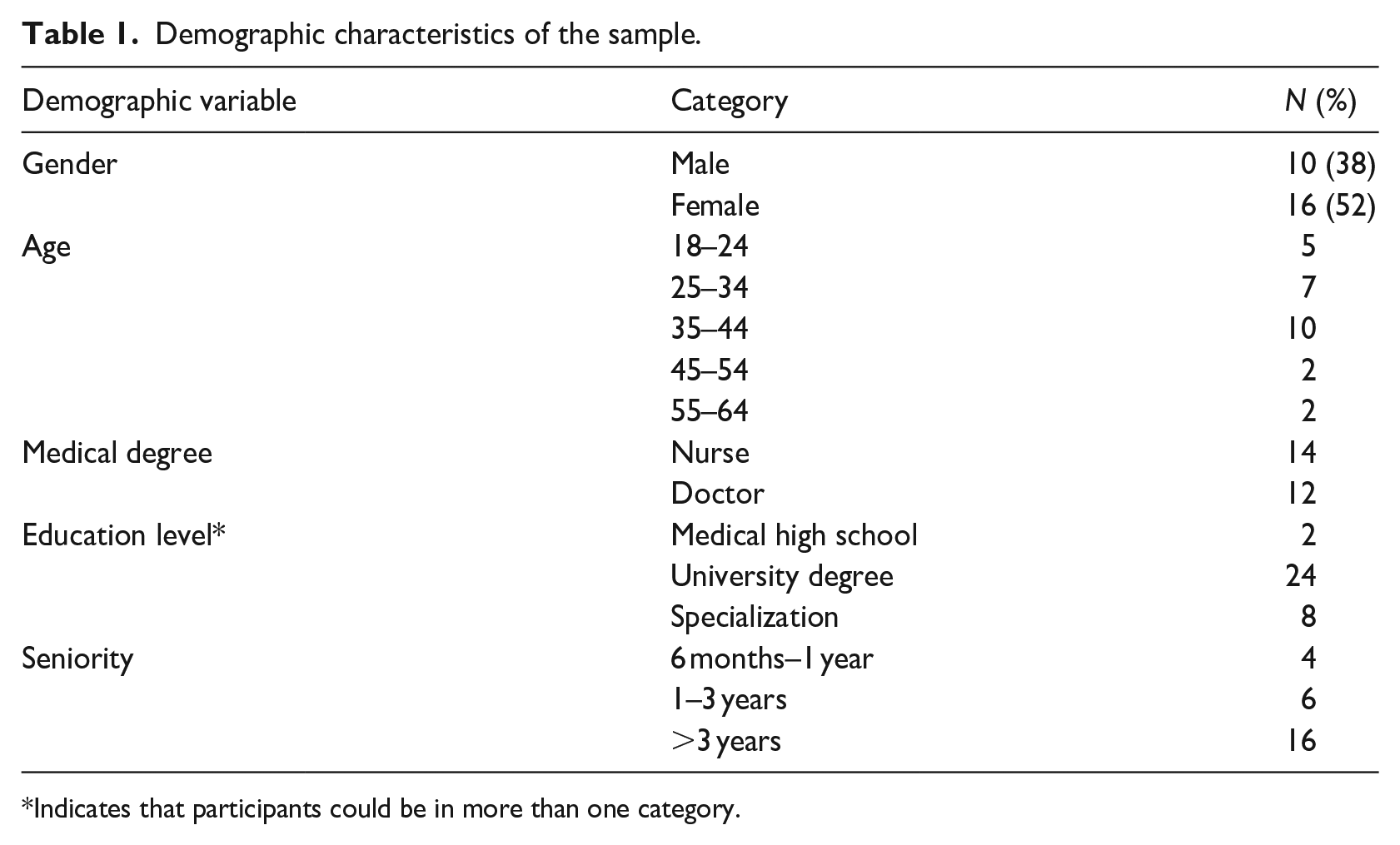
Indicates that participants could be in more than one category.
This study aimed to have a variety of participants’ work experiences. As shown in Table 1, the majority of the interviewed doctors and nurses had more than 3 years of work experience (some of them had 16 and 30 years of experience). All participants indicated that they used digital technology every day as part of their work.
Applying sensor-based networks
At the time of the study, the American Hospital was using several sensor-based devices, such as Holter monitoring, pacemakers and CGM. However, as the healthcare professionals confirmed, these platforms do not enable continuous monitoring for long periods of time (e.g. for months at a time), they do not provide access to patient data in real-time, and neither do they provide alarms in critical situations.
‘It is CGM- continuous glucose monitoring. This is (.) actually like a sensor, and it is connected with the computer, and all the data are displayed in the form of graphs, it is extra [means special]. But it is too expensive. We made five, six measurements. We have the device. The patient keeps it for 5, 6 days or one week’. (Interview 15. Doctor)
‘We give the Holter to the patient for 24 hours or 48 hours. But I cannot notice if he/she [the patient] has a rhythm disorder or I cannot see from here [from distance] what he/she has. No. I only notice it after reading it’. (Interview 26. Doctor)
Hence, based on their experience, the participants in this study discussed the benefits and shortcomings of existing platforms and how the real-time and distance-based communication with the patient could facilitate the management of chronic diseases in developing regions. Using thematic analysis this study identified five main themes and their underlying sub-themes, as presented in Figure 1.
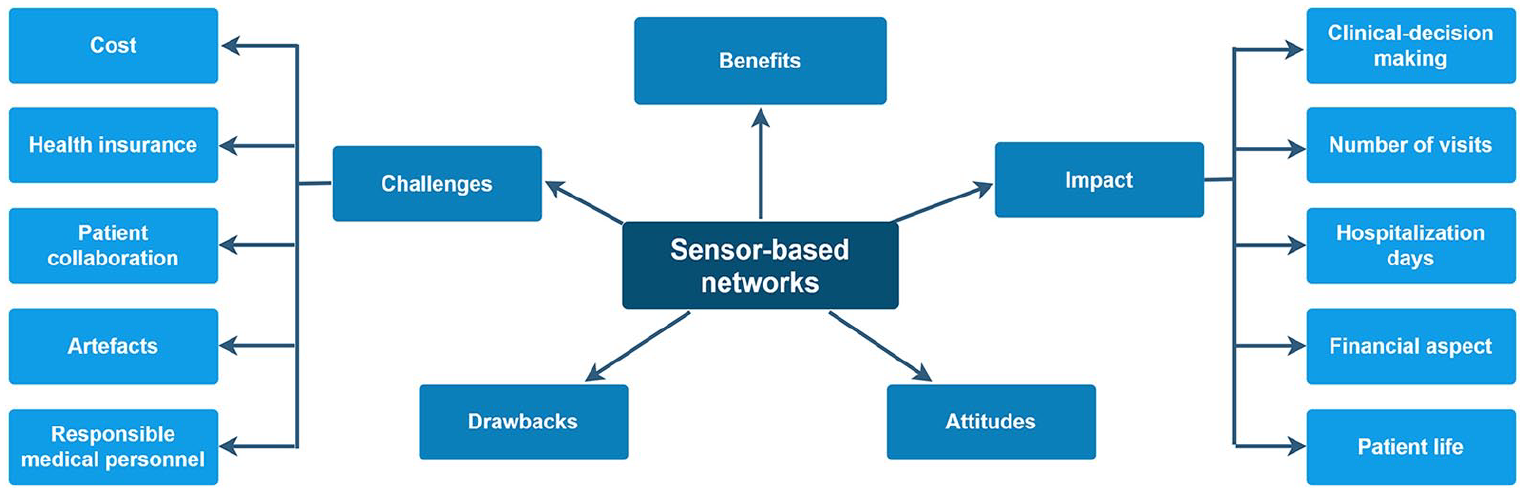
Underlying themes of SBN for healthcare.
These themes and their underlying sub-themes are discussed in detail in the following sections.
Attitudes
The healthcare professionals had a positive attitude regarding the application of sensor-based platforms for remote and continuous monitoring of their patients with chronic illness. They confirmed that it would help them a lot to have a patient’s record or history of their measurements.
‘It would have a positive impact. You would be able to discover some things that can save us if it would not be monitored’. (Interview 12. Doctor)
‘It means is different when you see patient’s values all the time, the parameters, and different not to have the monitor/screen at all. It is much better. It is much better to also monitor continuously the patient how he/she is feeling’. (Interview 11. Doctor)
‘On Monday evening I would read gathered sensor-based data and depending on any patient that will take my attention . . . I would contact him/her to come to me the next day’. (Interview 24. Doctor)
‘I am saying that sometimes I think how to implement an idea that is less annoying for the patient and to give us much more data. I like very much these in distance’. (Interview 25. Doctor)
Participants confirmed that it would be a relief for them to have the patient’s history and that would also influence the therapies or medication provided. Further to this, they proposed to use them also inside the clinic and avoid the application of wired-digital systems. Moreover, healthcare professionals proposed other healthcare domains where SBN could help them, for example, to improve the treatment of strokes, to detect any epileptic activity, or for the acquisition of information about blood flow acceleration that could lead to detecting blocked vessels that supply the brain with blood.
Benefits
Overall, the healthcare professionals mentioned several benefits of applying sensor-based platforms for chronic disease monitoring, as follows:
– continuous monitoring,
‘Then you are connected with the patient for 24 hours and whatever happens to him/her it is easier to react’. (Interview 14. Doctor)
‘Because if a patient goes out from here [the hospital], as here [in the hospital] we constantly monitor him/her, but if something goes wrong and there is a change, we cannot monitor him/her continuously. But if it is with this device it would be better. For the patient data and the medical staff too’. (Interview 20. Nurse)
– present the information that healthcare professionals need,
‘It means this device [the sensor-based device] gives you extraordinary elements’. (Interview 26. Doctor)
‘Absolutely [convincingly], the sensor-based application is the best parameter. Better than the family members to inform you when it happened or what has happened’. (Interview 3. Doctor)
‘We can discover unexpected events that at a given moment we do not have them. A cardiac event that we cannot catch here, we catch in the distance’. (Interview 12. Doctor)
– the history of a patient’s condition,
‘. . it would absolutely facilitate [convincingly] the work because you have a basic overview when there has been a distortion of the situation, when the saturation was low, or when there was a very high blood pressure, for how long, with what therapy was treated that blood pressure’. (Interview 3. Doctor)
‘Personally (. .) I would feel better if, for example, I would have a (. .) a list of vital parameters for at least a week’. (Interview 9. Nurse)
‘For example, to have a history and to look at the blood pressure, to look the time period, in the morning it was normal, in the noon normal, but it increased during the evening. Now also for the application of the therapy, we propose to shift it for example for the evening, instead of morning. Hence, we monitor the blood pressure and according to those values, we also give the therapy’. (Interview 16. Nurse)
– real-time monitoring,
‘Benefits would be mainly in accessing the information table for the current situation and having this information on the current situation’. (Interview 24. Doctor)
– facilitate the work of healthcare professionals,
‘It would facilitate a lot. It would reduce the time to deal with a patient. It would give us more free time to deal with other things. A psychological relief’. (Interview 5. Nurse)
‘However, it facilitates the work. Facilitates the work. And it increases the responsibility of the doctor that if he/she detects the deviation of the vital parameters, the doctor must intervene’. (Interview 24. Doctor)
– patients treated better,
‘Benefits (.) the patient and the physician, the benefit on time is the first one. It saves time, always. Also, the cost. Cost. The patient’s pocket. Another benefit besides time is transportation. Since the patient does not need to come here’. (Interview 18. Doctor)
‘I mentioned earlier that of course, the patient benefits a lot if he/she is also monitored outside the clinic. This because (.) he/she may have a much better situation if the proper therapy is applied. There may be fewer complications because as we know there may be serious complications if a disease is not treated’. (Interview 21. Nurse)
Most of the healthcare professionals regarded the potential benefits of SBNs to be mutual, in that there are benefits for the patient as well as the medical personnel.
Impact
The findings of this study confirm that SBN applications could have a significant impact on various aspects of treating chronic diseases. The underlying sub-themes, as shown in Figure 1, are discussed below.
Sub-theme 1: Clinical-decision making
A report of measurements for a specific period of time, or critical values of the vital signs and their implication were some of the types of information that healthcare professionals mentioned that they could get from the sensor-based application while continuously monitoring their patients in distance.
‘For example, it is different if you monitor a patient every moment. And is different when he/she [the patient] comes once in two months and shows a current ECG and a current blood pressure. You do not know how it [the ECG] was last night or earlier’. (Interview 25. Doctor)
‘It informs the doctor directly so that he/she can make the changes in the therapy’. (Interview 1. Nurse)
As confirmed, having this information would be easier for the healthcare professionals to apply a specific therapy, considering that they are dealing with chronic parameters and their values fluctuate very often and depend on many factors.
Sub-theme 2: Number of visits
A group of participants thought that the application of sensor-based platforms would increase the number of visits, considering that the majority of chronically ill patients are not diagnosed and this could contribute to the early detection of chronic conditions.
‘Perhaps there would be an increased number of patients. Since as I told you, they [the patients] are unaware that they are sick of heart’. (Interview 26. Doctor)
‘To increase the interest, and in the long term to lower the prevalence level. Because if this will be done also for the early screening (. .) the number of diabetic patients can increase but the control will get improved a lot. Because nearly half of diabetics are not diagnosed’. (Interview 15. Doctor)
Another reason for the increased number of visits is related to a patient’s knowledge about the disease as, according to healthcare professionals, they get worried every time an alarm is triggered by the device and will visit the healthcare centre.
Other healthcare professionals supported the idea that sensor-based devices would reduce the number of visits and hospitalization days as patients would be self-monitored:
‘I believe that would reduce the number of visits in the clinic’. (Interview 12. Doctor)
‘We could redirect him/her [the patient] from distance, and he/she would not have the need to come, and if the patient were to come for a certain date, we could say that he/she may not come because everything is fine’. (Interview 25. Doctor)
‘In reality, the number of visits will get decreased’. (Interview 14. Doctor)
‘There will be fewer visits’. (Interview 18. Doctor)
‘They will reduce the subsequent examinations’. (Interview 9. Nurse)
If the number of visits were to be decreased, so would the health expenses which is considered as another benefit for patients using SBN.
Sub-theme 3: Hospitalization days
As well as the number of visits, the healthcare professionals confirmed that the application of sensor-based platforms could impact on the number of hospitalization days, for example:
‘I believe the sensor-based application would shorten the time of hospitalization. It would prevent unnecessary hospitalizations. In both sectors [public hospital and private ones]’. (Interview 12. Doctor)
‘It will affect automatically. Because the patient is being monitored and you can see the situation and it does not come to the deterioration’. (Interview 18. Doctor)
Sub-theme 4: Financial aspects
As mentioned above, the impact of the SBN on the financial aspect of treating chronic diseases is closely related to the number of visits and hospitalizations, as participants also confirmed:
‘The costs I believe that (. .) I do not believe that it will increase the costs. Because if you stop the visits then you pay this [the sensor-based device] instead of paying the visit’. (Interview 12. Doctor)
‘Of course, it will lower them. Because if the number of visits is lower normally, spending will be less. Even though I do not know the price of the device, but I believe that it would reduce the costs. If the visits are less frequent’. (Interview 21. Nurse)
Considering that the participants had no idea about the cost of a sensor-based platform, some were assuming that it may cost the same as the number of visits, or even more when it was bought for the first time:
‘Initially it appears to be more expensive [when the patient will buy the device for the first time] but may be lower in the long term’. (Interview 15. Doctor)
‘In the long term Yes [convinced] there is such a possibility’. (Interview 6. Doctor)
‘. . and the sensor-based application is probably more costly, I think it’s easier to come and check for 20 euros, to see the doctor, than to buy it. Although maybe (.) someone has more often controls and becomes the same as buying it. It’s the same costly as the visits’. (Interview 22. Nurse)
‘Now I do not know how much the sensor-based device will cost. But it would certainly cost a lot’. (Interview 25. Doctor)
Hence, for developing regions the cost of the sensor-based device presents an important factor that has an impact on the successful implementation.
Sub-theme 5: Effect on a patient’s life
Participants’ mentioned several aspects of how the application of SBN can affect a patient’s life. They mentioned:
– Better treatment.
– The patient will get informed about his/her condition.
– Time savings, in the context of travelling distance to the nearest medical centre and waiting time for doctor’s appointment.
– Enhanced quality of life.
– Reduced number of deaths as the patient will be monitored better.
– It may create concerns, the psychological aspect of wearing a device all the time.
Hence, there was a diversity of opinions of healthcare professionals. It is evident that these factors depend also in a patient’s personality, knowledge about his/her disease and his/her financial situation.
Challenges
Healthcare professionals pointed out some of the important factors that may challenge the successful implementation of sensor-based platforms. These factors are discussed below.
Sub-theme 1: Cost
From the opinions of the participants, it was clear that they perceived the sensor-based platform as costly and this may be a limiting factor for people living in developing regions, as they indicated:
‘The cost of the product I think could be a problem. Because if it’s too expensive probably many patients will not buy it because they cannot afford’. (Interview 17. Nurse)
‘Yes, yes, but I believe that the specific device cannot be used by each patient. Because that device is expensive, it has a cost (. .) and as I see, as the situation in Kosovo is, not everyone can use it’. (Interview 8. Doctor)
The financial aspect of providing better treatment for developing regions is also closely related with the lack of public health insurance. This was identified as a further challenge by the healthcare professionals.
Sub-theme 2: Health insurance
While considering the cost of treatment for chronic diseases in developing regions, health insurance still remains a concern. The healthcare professionals indicated that there were patients who need to leave the hospital due to financial obligations and a lack of health insurance, especially when considering private healthcare centres. As one healthcare professional said:
‘If you do not have health insurance, many things remain behind. You cannot apply some things as you wish’. (Interview 1. Nurse)
According to the participants, the lack of health insurance presents a challenge for better treatment and management of chronic diseases.
Sub-theme 3: Patient collaboration
The healthcare professionals also raised concerns about patient collaboration. They mentioned that there are patients that do not often visit the doctor and others that may not find it acceptable to wear a sensor-based device and to be monitored continuously. However, some of the healthcare professionals declared that they could help in this context, for example:
‘. . . we have many cases here, even if the patient hesitates if you attempt to explain that it is for his/her good (.) I believe the patient will accept it. If it will be explained properly’. (Interview 10. Nurse)
‘That yes because it is the same as we influenced to the use of the therapy. We can same influence on the devices. It also means that in the Holter’s device we have influenced’. (Interview 14. Doctor)
‘And the patients obey more on doctor’s words’. (Interview 20. Nurse)
Sub-theme 4: Artefacts
Artefacts were discussed by healthcare professionals as a phenomenon that they encountered in their digital monitoring system and the Holter monitors. The digital monitoring system gave alarms when, for example, the patient had moved or changed his/her position and one of the electrodes got removed – this is called an artefact. These were also encountered during the remote monitoring made by Holter monitors. The healthcare professionals confirmed that they identified these artefacts by comparing the ECG graphs and the values of vital signs after reading the recording of the Holter monitor.
Therefore, for sensor-based platforms that will be used by patients, it is important to consider their settlement, accuracy and provide instructions to measure vital signs correctly and not to have artefacts.
Sub-theme 5: Responsible medical personnel
Healthcare professionals need to monitor gathered vital signs coming from the sensor-based platform and provide feedback to patients afterwards. During the interview study, it was noticed that nurses somehow delegated the responsibility to doctors. In an indirect way they mentioned this:
‘Of course, it seems to be a very good idea (.) to monitor patients outside the hospital. As I told you earlier it is much easier for the doctor to look at the situation, he/she [the patient] has had at home and not just here. It is a great advantage if they are also monitored at home’. (Interview 21. Nurse)
‘For myself, I’m talking, I would feel very good. Because I would have that belief that even if the patient goes home, he/she is under the supervision of the doctor that follows-up everything’. (Interview 20. Nurse)
Doctors, on the other hand, mentioned several times that they were overloaded with the increased number of patients, and the responsibility to provide feedback and monitor patients in distance should be resolved by the healthcare institutions. Hence, they suggested some alternatives, such as a personal or family doctor, or a specialized nurse, or a call centre that provides feedback.
Drawbacks
The healthcare professionals did agree on the benefits of using sensor-based monitoring, however, they mentioned that continuous monitoring could create stress or concerns for patients.
‘With 24 and 48 hours Holter I have seen the patients . . . maybe the fact that they had a device placed in the body, I can say that they were very concerned’. (Interview 21. Nurse)
‘Maybe keeping the device all the time. . . it’s uncomfortable’. (Interview 2. Nurse)
Hence, healthcare professionals proposed not to use the sensor-based device all the time and, in cases when patients do not feel comfortable to have it, to talk with them and explain the benefits of wearing the sensor-based platform.
Participants also mentioned that the profits of the private health institution may get affected by the application of SBN, as a doctor also explained:
‘Because in a hospital such as the American hospital, to patients without health insurance I do not know how it would be accessible and acceptable for them to advise the patients because the incomes of the hospital would decrease. This is good for the state and the patient, but for many hospitals, it would be counter-productive. I’m thinking, I do not know. Perhaps it is also productive because the doctor may say come and do this, and that’. (Interview 12. Doctor)
The possible drawbacks that were identified here were closely related to the challenges that healthcare professionals also proposed in the previous section. However, as healthcare professionals mentioned the platform should be cost-effective, flexible, accurate and easy to wear, to suit theirs and their patients’ needs.
Discussion
As mentioned in the introduction, this study aimed to develop a better understanding of the attitudes and perceptions of healthcare professionals towards distance-based and continuous monitoring through sensor-based platforms. The study found that healthcare professionals, in general, had a positive attitude towards the adoption of SBN for remotely and continuously managing chronic diseases; however, some challenges and possible drawbacks were identified. Further to this, a patient’s consent and willingness to use the sensor-based platform is another important aspect for the successful implementation of such a digital technology in health monitoring. As the healthcare professionals mentioned, the application of sensor-based platforms may also negatively affect a patient’s life (they may get worried in each time an alarm is triggered from the platform, or even by being more aware of their medical condition). Hence, there is a need to address these barriers that may have an impact on the successful implementation of sensor-based platforms for distance-based monitoring of chronically ill patients. This will be an important consideration for further research.
To facilitate the adoption process, our thoughts, based on this study findings, are that both healthcare professionals and patients need to be aware of the benefits of remote and continuous monitoring for chronic diseases through the sensor-based platforms. The platform, on the other hand, needs to be cost-effective, easy to use, secure and accurate. In the following sections, the recommendations that arose from this qualitative study are discussed, in comparison with previous work. The strengths and limitations of this study are also discussed.
Recommendations
The interviews with healthcare professionals enabled this study to provide recommendations for health organizations in developing regions to improve the healthcare provision and services delivered to patients. One important aspect that healthcare professionals mentioned was related to the communication method applied with patients. Doctors expressed their concerns about patients that may not follow their instructions and then blame them for the consequences. This was emphasized as very important while communicating with the patient at a distance. 38
Furthermore, the participants suggested that there should be also a form of financial support for doctors who continuously and remotely monitor patients. This was strongly supported by the group of healthcare professionals who felt that the application of sensor-based platforms would reduce the number of visits. At the same time from their point of view, the healthcare professionals suggested that the responsibility to provide feedback and monitor patients at a distance should be resolved by the healthcare institutions. Hence, they suggested some alternatives, such as a personal or family doctor, or a specialized nurse, or trained healthcare professionals within primary health care, that provide feedback to patients only remotely.
According to the results of this study, the design recommendations that system architects should consider for the successful implementation of sensor-based platforms for remote and continuous monitoring would be:
The platform should provide alarms for critical values of vital signs.
The platform should enable users to prioritize patients in need, for example, present patients that have critical conditions first.
The sensor-based device should be easy to use, measure vital signs accurately and should be easy to carry.
Another important recommendation is related to the financial support of health institutions for having sensor-based devices in medical centres. The cost was identified as the primary challenge for the successful implementation of sensor-based platforms in developing regions. Therefore, participants recommended seeking support from governmental institutions or possible donations that should be provided to healthcare centres for the successful implementation of the SBN architecture.
Comparison with previous work
Although the use of IoT in healthcare, including sensor-based platforms, is growing, there is a need for qualitative research that involves the users of such systems at an earlier stage of development. 34 Hence, the focus of our study was to present a preliminary investigation of the opinions of healthcare professionals on sensor-based platforms and their concerns and preferences to be considered before proposing such a digital system for the healthcare domain. Results presented in this study confirm the findings reported in previous work in the context of eHealth platforms for chronic disease management.
Our findings are in accordance with Chang et al. 39 who reported the concerns of healthcare professionals about patient confidentiality, their increased workload and the complexity and responsibility of responses that they needed to provide to patients when monitoring them remotely. Similar concerns from the healthcare providers were also identified by Alwashmi et al. 26 Nevertheless, in our study, participants also mentioned the financial aspect of remote monitoring for healthcare professionals and, in this case, for private hospitals. This is discussed in the Recommendations section above.
Further to this, our study confirmed that clinicians of various disciplines may require different types of information from the sensor-based platform, this was also concluded by the Vitacca et al. 20 who suggested adapting eHealth platforms to the diverse healthcare contexts in which clinicians operate. To support this, in our study, a doctor who monitored stroke patients proposed the monitoring of blood flow acceleration that could lead to detecting blocked vessels that supply the brain with blood. Another nurse proposed that it would be useful to have information on the vital signs that can cause epileptic seizures. The results of this study therefore provide guidance for future research to investigate further the recommendations from healthcare professionals in specific contexts and for particular groups of patients.
The findings of our study on the challenges and benefits add further value to the model of barriers and facilitators proposed by Simblett et al. 7 Moreover, the impacts identified in our study could easily be incorporated as a Motivation variable described in the model and thus enhance user engagement with remote monitoring technologies, in this case, sensor-based platforms.
As presented in the findings of this study, the benefits of applying remote monitoring through sensor-based platforms affect also patients’ life and their wellbeing. As Walker et al. 40 reported in their review, the application of remote monitoring for chronically ill patients increased their knowledge about disease-specific problems and care, enabled earlier diagnosis and treatment, and enabled shared decision-making with their healthcare professionals.
The cost of the sensor-based platform was discussed as an important factor that is closely related to the successful application of these technologies. Previous studies have reported the cost-effectiveness of using remote monitoring technologies. For example, Ricci et al. 41 performed an economic analysis of the remote monitoring platform for cardiac implantable electronic devices and concluded that these platforms are cost-saving considering the perspective of the healthcare system, patients and caregivers. Vegesna et al. 42 reviewed remote patient monitoring via non-invasive digital technologies and concluded that there are very few studies that demonstrate the cost benefits of using remote monitoring eHealth platforms. In our case, we cannot conclude on the cost analysis before proposing and implementing the sensor-based platform and this will be considered in future work.
Limitations and strengths of the study
This study has a number of limitations. Considering that this was a relatively small-scale qualitative study, the findings may not be generalisable to a wider population. Nevertheless, the findings of this study may be transferrable to other healthcare institutions in Kosovo, and are potentially applicable to healthcare facilities in other developing countries and regions that face similar issues. Further work research could explore the use of remote technologies in other settings.
Another limitation is related to the participants who did not have experience in using sensor-based platforms for real-time monitoring and communication with patients while they were at a distance. The views of these healthcare professionals are limited to use of these technologies within the hospital; that said, their perspectives helped develop our understanding and will inform the development of a prototype sensor-based platform, which is the next phase of this work. Evaluating this prototype will help develop further recommendations for the development and application of remote sensor-based technologies.
A strength of this qualitative study is that it was based on a diverse sample of healthcare professionals. The sample included healthcare professionals from other departments, such as general doctors working in the Cardiology and Surgery departments, an anaesthesiologist, a neurologist, endocrinologists and nurses working in the Cardio-Surgery department. This enabled us to investigate a variety of perspectives on the needs and the challenges of people involved in monitoring vital signs related to chronic conditions. All participants had experience in using digital technologies in their everyday work, including the wired-digital monitoring system placed within the hospital. Moreover, some healthcare professionals had experience in monitoring patients remotely, this further enhanced the richness of the data and our understanding of their experiences.
Conclusion
Considering the findings of this study, we can conclude on the positive attitudes of participants towards the idea of using sensor-based platforms for continuous and remote monitoring of their chronically ill patients. The exploratory findings showed several aspects that were not previously summarized and that would contribute to the field of research regarding the application of sensor-based platforms. Hence, the impact of SBN on the number of visits to medical centres was discussed from two perspectives, one that would increase the number of visits as it would lead to the early diagnoses of chronic conditions given that most patients do not know whether they have such symptoms, and the other point of view is related to the reduced number of visits to medical centres, considering that patients will be monitored from their homes, and from there, they will communicate with the healthcare professionals. According to this study results, among other factors, this depends also on patient education about his/her disease and their collaboration with the medical personnel.
Further to this, findings here enabled to provide recommendations to researchers and developers regarding the adoption of SBN in healthcare settings, and these included clinical relevance, clarification of response protocols, for example, responsible staff that will provide feedback to patients in distance, the financial support for remote monitoring staff, and communication guidelines that will maintain consistency and help patients obey remote monitoring advices. Hence, we can conclude that cost of the platform, obstacles in policy, regulations and lack of medical insurance may challenge the successful implementation of SBN in developing regions.
Future research, following the results of this qualitative study, will focus on integrating the findings and recommendations reported here. These will be used to develop a prototype sensor-based architecture for remote and continuous monitoring of chronically ill patients. Understanding the views of the healthcare professionals will form an important part of the evaluation process.
Supplemental Material
sj-pdf-1-jhi-10.1177_1460458220979350 – Supplemental material for Sensor-based platforms for remote management of chronic diseases in developing regions: A qualitative approach examining the perspectives of healthcare professionals
Supplemental material, sj-pdf-1-jhi-10.1177_1460458220979350 for Sensor-based platforms for remote management of chronic diseases in developing regions: A qualitative approach examining the perspectives of healthcare professionals by Adelina Basholli, Thomas Lagkas, Peter A Bath and George Eleftherakis in Health Informatics Journal
Supplemental Material
sj-pdf-2-jhi-10.1177_1460458220979350 – Supplemental material for Sensor-based platforms for remote management of chronic diseases in developing regions: A qualitative approach examining the perspectives of healthcare professionals
Supplemental material, sj-pdf-2-jhi-10.1177_1460458220979350 for Sensor-based platforms for remote management of chronic diseases in developing regions: A qualitative approach examining the perspectives of healthcare professionals by Adelina Basholli, Thomas Lagkas, Peter A Bath and George Eleftherakis in Health Informatics Journal
Footnotes
Authors’ contributions
All authors have read the manuscript and approved it for publication. The first author conducted the interviews, performed the data analysis and wrote the initial version of the manuscript. The other authors were involved in the study design, contributed to the ethics applications and design of the interview guide, supervised the data collection and analysis process and helped in the preparation of the manuscript.
Declaration of conflicting interests
The author(s) declared no potential conflicts of interest with respect to the research, authorship, and/or publication of this article.
Funding
The author(s) received no financial support for the research, authorship, and/or publication of this article.

Supplemental material
Supplemental material for this article is available online.
References
Supplementary Material
Please find the following supplemental material available below.
For Open Access articles published under a Creative Commons License, all supplemental material carries the same license as the article it is associated with.
For non-Open Access articles published, all supplemental material carries a non-exclusive license, and permission requests for re-use of supplemental material or any part of supplemental material shall be sent directly to the copyright owner as specified in the copyright notice associated with the article.
