




Abstract
To characterize how ophthalmologists are using social media in their practice. A survey regarding ophthalmologists’ personal and professional use of social media was distributed online through a university alumni listserv. Data collection occurred over 4 weeks from January to February 2020. In total, 808 ophthalmologists opened the survey email, and 160 responded (19.8%). Of 160 respondents, 115 (71.9%) participated in social media for personal use. Professional use of social media was noted by 63 (39.4%) respondents. Age >40 years old correlated with less personal (X2 = 5.06, p = 0.025) but not professional use (p = 0.065). Private practice was associated with more use of social media professionally compared to those in an academic or Veteran’s Affairs hospital (X2 = 6.58, p = 0.037). A majority of respondents (58.7%) were neutral regarding the effect of social media on their practice. The present survey showed that nearly 40% of respondents are involved in social media in a professional context. Private practice correlated with increased use of social media professionally, but providers were most commonly neutral regarding the impact of social media on their practice. This finding suggests further avenues of research including how providers using social media professionally are defining and assessing successful use.
Keywords
Social media has become an integral platform of communication in contemporary society. As of 2017, there were a reported 2.48 billion users of social media worldwide. 1 Social media has great potential to influence ophthalmology practices and education; from communicating with patients and networking with colleagues to disseminating knowledge, adoption of social media offers potential benefits to providers and patients.2–4
Presently, few reports have been published that study ophthalmologists’ patterns of social media use in a professional context. Current literature focuses more on the use of social media for education purposes, such as surgical teaching through YouTube.5,6 Additionally, social media platforms may enable large epidemiologic studies. For example, mentions of diseases such as “viral conjunctivitis” on social media platforms have been used to identify and track epidemics.7,8 Lastly, social media has been explored as a channel of communication between physicians and patients. In one study, providers used social media to send instructions and appointment reminders to postoperative cataract patients. 9
The way in which ophthalmologists use social media for their daily practice has not been well studied, however. One report by Clarke et al. characterized the 20 most recent Twitter and Instagram posts by ophthalmologists and eye institutes, but the study reviewed just 30 accounts. 10 More work must be done to understand how ophthalmologists use social media in their practice, if at all, and which factors such as subspecialty, region of practice, and others affect usage.
The present study aims to characterize if, why, and how practicing ophthalmologists are incorporating social media professionally. Furthermore, we aim to better illustrate the impact of this use.
Methods
Institutional review board approval was obtained from the University of Miami. A survey assessing use of social media was distributed to practicing ophthalmologists through an academic university eye hospital alumni listserv. Responses were collected over 4 weeks beginning in January 2020.
Demographic information collected included age, level of training, region of practice, practice type, and subspecialty (see Appendix 1 for complete list of survey questions). Participants were asked if they used social media for personal and professional purposes. Personal use was defined as interacting with friends and family for non-work-related reasons. Professional use was defined as the use of social media in a work-related capacity such as to interact with patients, increase practice visibility, and communicate with colleagues regarding work or other ophthalmology matters.
Information was collected regarding platforms used, frequency of use, target audience, account manager characteristics, privacy settings, and interactions with patients. Pearson’s chi-squared, Fisher’s exact, Kruskal–Wallis rank, and Spearman’s rank correlation tests were used to assess correlations between demographics and factors of social media use. A p-value of <0.05 was considered statistically significant for all statistical analysis. Statistical analysis was performed using StataIC 15 (StataCorp LLC, College Station, TX).
Results
Demographics
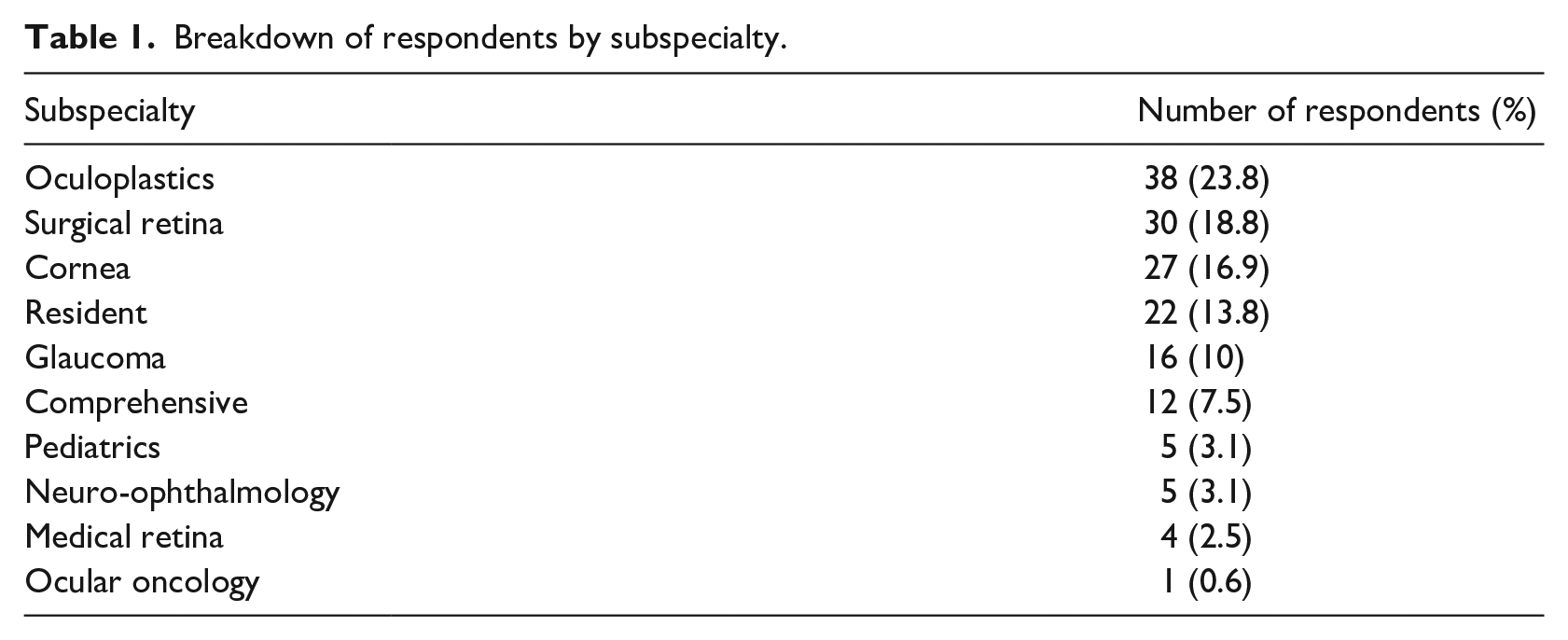
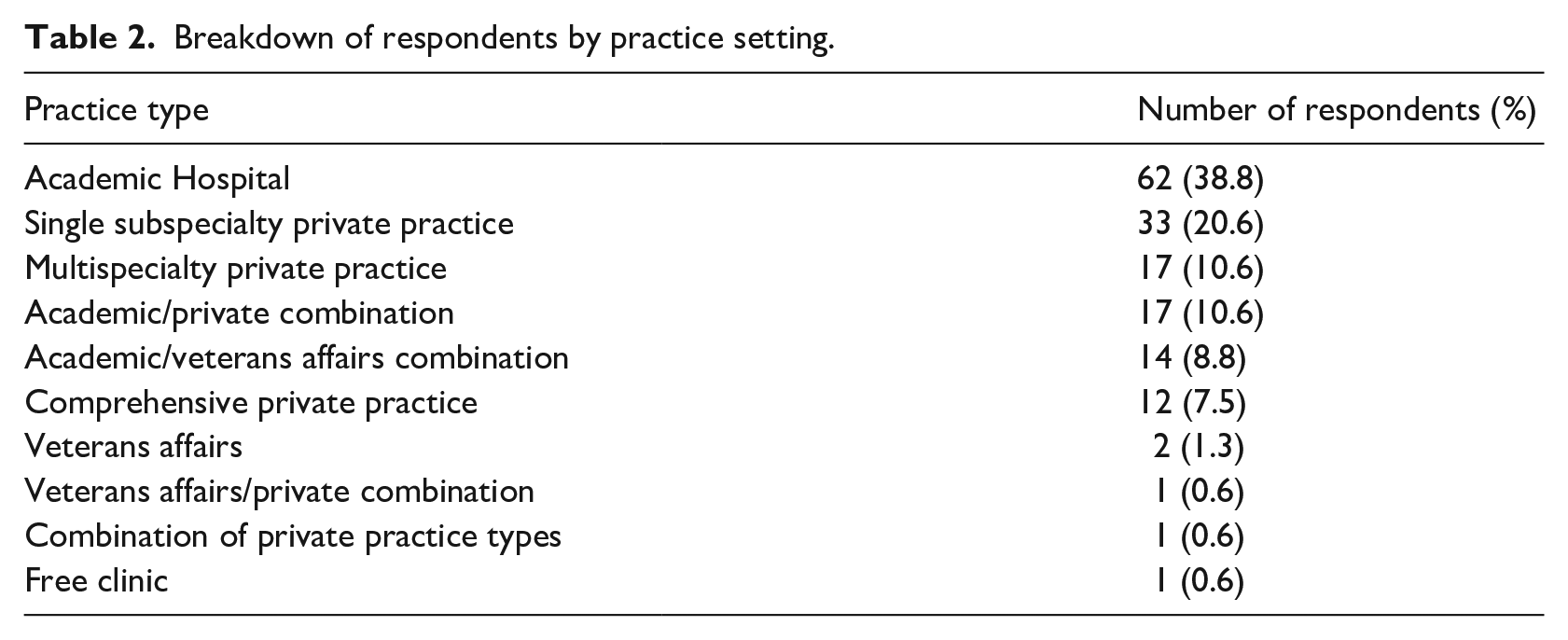
Of 2628 total recipients, 808 alumni opened the email containing the survey (30.7%). In total, 160 respondents replied to the survey (19.8%). The average age of respondents was 47.1 (range: 25–84) years with 26 residents, 8 fellows, and 126 attending physicians participating. Of the attending physicians who answered the survey, 25 (19.8%) reported <5 years of experience, 17 reported 5 to 10 years (13.5%), and 84 (66.7%) reported >10 years. 113 respondents (70.6%) practiced in urban settings, 40 (25%) in suburban settings, and 7 (4.4%) in rural settings. The breakdown of participants by subspecialty is listed in Table 1. The breakdown of practice type is listed in Table 2. The geographic breakdown of respondents is illustrated in Figure 1.
Breakdown of respondents by subspecialty.
Breakdown of respondents by practice setting.
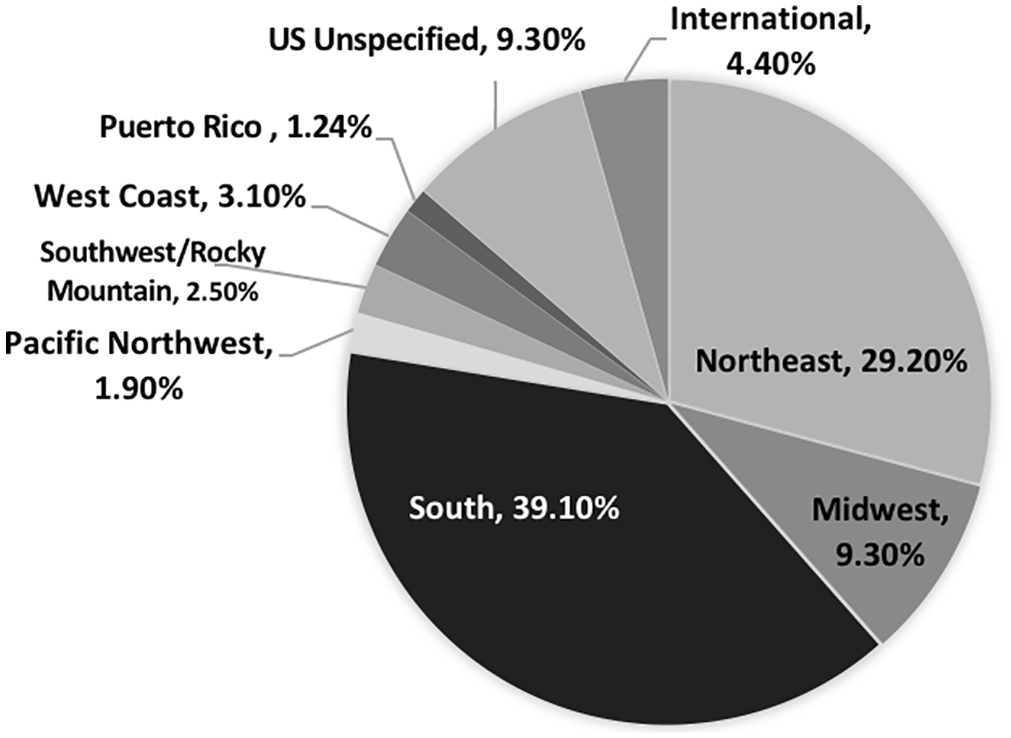
Breakdown of respondents by region.
Social media use
Of the 160 respondents, 115 (71.9%) noted participation in social media for personal use and 90 (78.3%) participants had private settings on their personal accounts. Overall 63 (39.4%) respondents reported using social media for professional use. For those using social media, 17 (27%) had their own professional page, 35 (55.6%) had a page for their practice/institution, and 11 (17.5%) had both. The distribution of platforms used and frequency of use are listed in Figures 2 and 3, respectively.
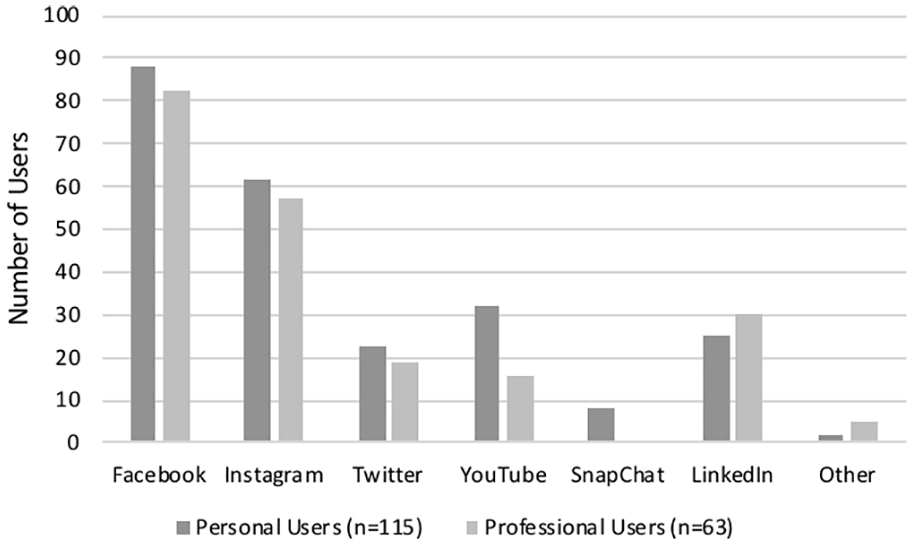
Number of users by social media platform.
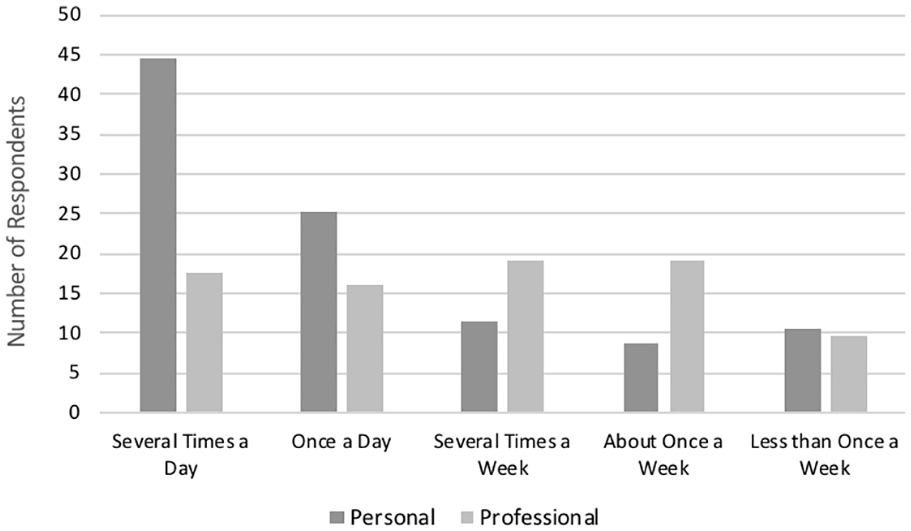
Frequency of social media use among respondents.
Univariate analysis was performed to examine associations between demographic factors and professional social media use (Table 3). Practicing in a private clinical setting in any capacity was associated with increased use of social media professionally compared to those working in an academic or Veteran’s Affairs hospital (X2 = 6.58, p = 0.037).
Factors associated with professional social media use.
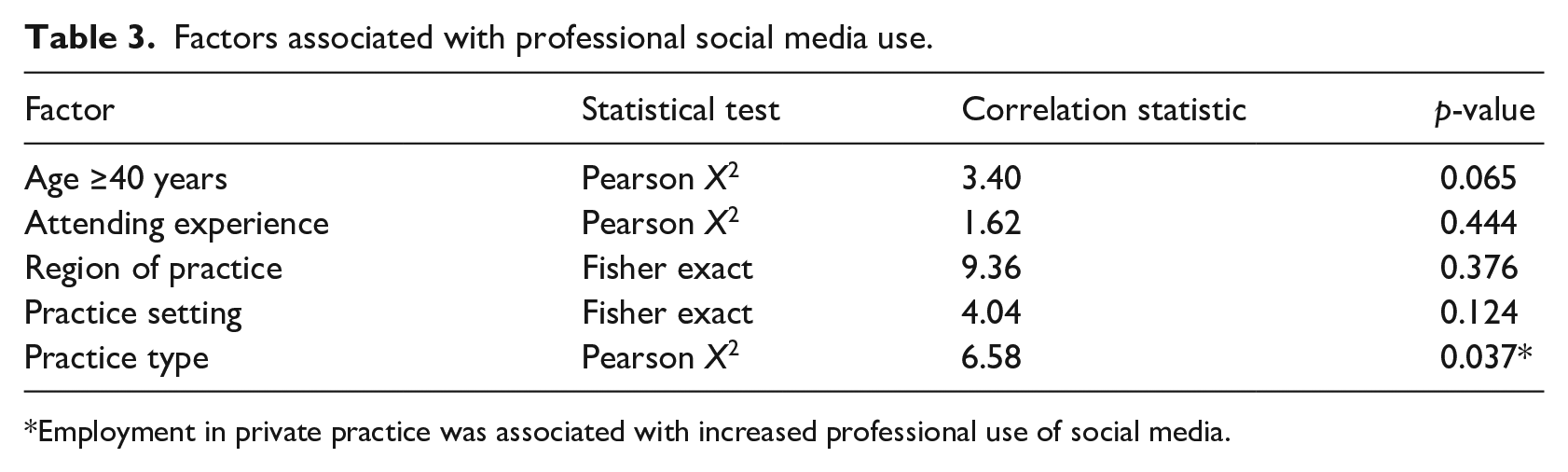
Employment in private practice was associated with increased professional use of social media.
Excluding residents and fellows, there was no correlation between years of experience as an attending ophthalmologist and use of social media in a professional capacity (p = 0.444). Furthermore, there was no significant correlation between region of practice, practice community type, nor age >40 years old and the use of social media professionally (p = 0.376, p = 0.124, p = 0.065, respectively). Age >40 years old, however, correlated with less use of social media personally (X2 = 5.06, p = 0.025). There was no statistically significant difference in rates of personal social media use between those using social media professionally and those who did not (p = 0.089)
Characteristics of professional accounts
The target populations for social media pages were patients (22, 34.9%), other professionals (3, 4.8%), both patients and professionals (35, 55.6%), or no specific target audience (4.8%). The most common primary reason indicated for the use of social media was to publicize the respondent’s practice (27, 42.9%), demonstrate expertise in the field (13, 20.6%), educate patients/other professionals (9, 14.3%), and network with other providers (5, 7.9%). Six respondents (9.5%) indicated that they either did not know the primary reason for their social media page or that someone else managed the page. Those involved in private practice in any capacity were more likely to report using social media to publicize their practice than those who did not (X2 = 12.04, p = 0.002).
In terms of the administration of social media accounts, 28 (44.4%) were managed by non-physician administrators, 26 (41.3%) primarily by doctors, and 8 (12.7%) by third party social media firms. One respondent (1.6%) did not know who administered their page. In terms of frequency of content posted, 12 (19.1%) respondents noted daily content, 24 (38.1%) at least biweekly, 12 (19.1%) monthly, and 9 (14.3%) less frequently than monthly. Six (9.5%) did not know the frequency of posts.
When asked how willing they or their practice would be to pay a firm to establish and manage their profile, 23 (36.5%) indicated they would be either willing or extremely willing to do so. Seventeen respondents (27%) were neutral on the matter and 21 (33.3%) were unwilling or extremely unwilling to do so. Two respondents (3.2%) were unsure.
As to the impact of social media on their practice, 20 respondents (31.7%) agreed or strongly agreed that social media had positively impacted their practice, 37 respondents (58.7%) were neutral, and 6 (9.5%) disagreed or strongly disagreed. There was a significant positive correlation between those who engaged more frequently (ρ = 0.278, p = 0.0366) and posted more (ρ = 0.3179, p = 0.016) on social media and the belief that social media had positively impacted their practice. There was no association with the type of account manager (p = 0.773).
Patient interactions on social media
With respect to responding to patients’ messages on social media, 13 (20.6%) respondents said they always did, while 11 (17.5%) did so often, 3 (4.8%) did so sometimes, 11 (17.5%) did so rarely, and 15 (23.8%) never did. 10 (15.9%) did not know their rate of response. Forty (63.5%) respondents indicated that they did not have a standardized response to patient messages while 12 (19.1%) did. 11 (17.5%) participants did not know whether their page had a standardized response.
In terms of characterizing patients’ outreach to their social media page as positive, 11 (17.5%) said messages were positive 100% of the time. Twenty-seven (42.9%) participants noted positive messages 75% to 99% of the time while 6 (9.5%) noted positive responses 50% to 74% of the time. Of those rating less than a majority of responses as positive, 1 participant (1.6%) indicated messages were positive only 25% to 49% of the time and 3 (4.8%) indicated <25% of time. Fifteen participants (23.8%) did not know the rate of positive outreach from patients.
A statistically significant positive correlation was seen between frequency of responses to patients and positive patient outreach (ρ = 0.4659, p = 0.0014). Having a standardized response was also associated with more positive patient outreach in univariate analysis (X2 = 4.613, p = 0.0317). However, in multivariable logistic regression including both frequency of responses to patient outreach and having a standardized patient response, only the former remained statistically significant (coefficient = 0.249, p = 0.009 and coefficient 0.635, p = 0.054, respectively).
Factors limiting use of social media professionally
Ninety-six respondents reported not using social media for professional use. The most common reasons indicated were that social media was too time consuming (30, 31.25%), worries about patient privacy laws (16, 16.7%), and lack of belief that it would positively impact respondents’ practices (15.6%). The full list of reasons reported for not using social media in a professional capacity are listed in Table 4.
Primary reason preventing social media use for professional purposes among respondents without professional accounts.
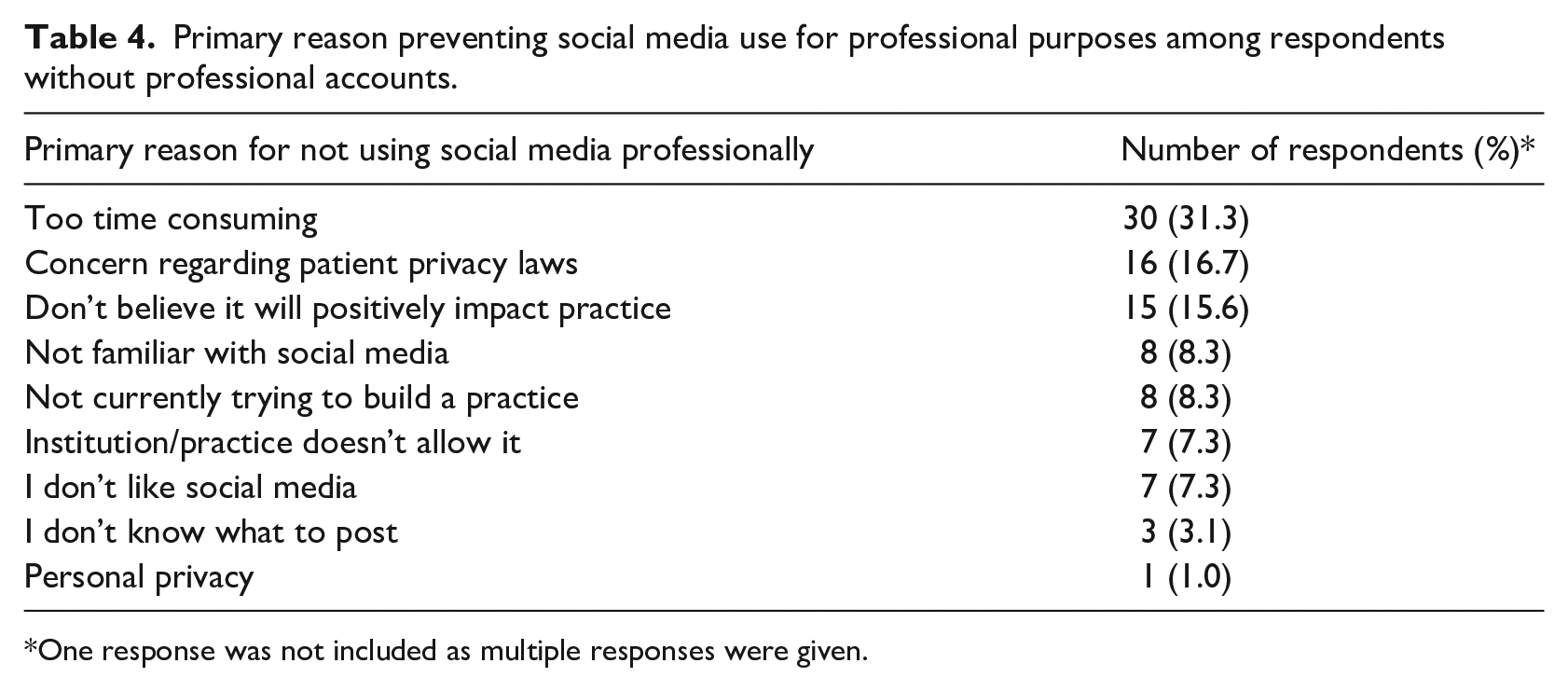
One response was not included as multiple responses were given.
Discussion
This survey represents, to the authors’ knowledge, the largest to date in the literature looking specifically at ophthalmologists’ use of social media in a professional context. The results demonstrate that ophthalmologists are active on social media in both a personal and professional capacity. Of the 160 respondents, more than 70% said they used social media for personal use and nearly 40% for professional use. Facebook and Instagram were the two most commonly used platforms.
Employment in a private practice setting was positively correlated with use of social media professionally. This finding is consistent with fields outside of ophthalmology as demonstrated in a survey of plastic surgeons and a review of neurosurgery social media accounts.11,12 Further, ophthalmologists working in a private practice in any capacity were more likely to use social media with the intention of publicizing their practice. This observation matches the recent abundance of literature regarding leveraging social media platforms to connect with and potentially draw patients to practices.13–15
Age >40 years old was found to correlate with less use of social media for personal use, matching prior similar studies.16–18 In one study of healthcare workers including physicians and nurses in Texas, age less than 40 years was found to be associated with increased social media use. 16 A trend toward higher usage among younger physicians was also seen in a study of family medicine doctors. 17 However, the aforementioned studies did not specifically evaluate social media usage for professional purposes. For professional usage in our study, age and attending years of experience were not found to correlate with social media use. These findings suggest barriers to adoption of social media among older providers and that experience with personal use does not translate to utilization of social media in a professional context. This may be because many physicians did not manage their own accounts. Interestingly, most respondents (58.7%) were neutral regarding the impact of social media on their practice while approximately one-third indicated a positive impact.
Of particular interest is whether ophthalmologists with professional pages receive any quantitative metrics or other analysis to evaluate their page’s performance. Sparse literature exists regarding available metrics, much written outside of medical literature, for measuring the impact of social media in a healthcare context.19,20 Any metrics that are used to measure the value of social media for ophthalmology practices must be adapted to the physicians’ primary reason behind social media use. For example, a provider using social media to attract patients should not use the same metric of evaluation as a physician using their social media page to teach surgical pearls. Many social media platforms such as Facebook and Instagram include their own metrics evaluating views, likes, and trends in exposure; future studies should address whether physicians are using these metrics to tailor their content.
While social media use can provide a new avenue of access to patients, this comes with the expectation of response to outreach. In the present survey, we observed a statistically significant positive correlation between frequency of provider response to patients and positive patient messages to the page. This finding is supported by research in other areas of medicine. For example, in a qualitative study of psychiatry outpatients using social media to communicate with providers, the authors described a “rapid response expectation” among the patients after reaching out to their providers. 21 If providers choose to engage in social media with patients as their primary audience, then strategies should be developed about how best to respond to patients in a consistent and timely manner.
For those not using social media professionally, the majority indicated that it was either too time consuming, had a concern regarding privacy laws, or did not believe that it would positively impact their practice. These reasons for not using social media, particularly privacy concerns, are commonly cited and have been reported among other specialties.22–24 Guidelines for the ethical use of social media, especially related to patient privacy, have been published by associations including the American Academy of Ophthalmology.25–27 As social media use continues to grow among ophthalmologists, these guidelines should continually be updated to ensure adherence to professional guidelines in the virtual space and to address potential legal concerns.
The present study shares the general limitations of surveys. In this case, the data may have been influenced by a sampling bias. Those responding to the survey, which was distributed electronically, may have been more likely to use social media. Even though the respondents were of varying ages and practice settings they were graduates of a single institution, which may have biased their responses. Additionally, the plurality of respondents was from urban areas and academic institutions, likely secondary to the means of survey distribution. Despite these limitations, the survey provides interesting insights regarding the use of social media by ophthalmology providers. These findings should serve as a means of directing future research on the topic.
In summary, the present study demonstrates that many ophthalmologists are active on social media for professional purposes and offers many important insights. Older age, though correlating with less personal social media use, was not found to correlate with less professional social media use. Those employed in a private setting were more likely to use social media professionally. Lastly, although a majority of patient outreach to social media pages was positive, most respondents indicated a neutral attitude toward the impact of social media on their practices. As social media use by ophthalmologists continues to grow, efforts should continue to be made to understand engagement patterns and outcomes to the benefit of both patients and providers.
Supplemental Material
Appendix_1 – Supplemental material for Social media in ophthalmology: An analysis of use in the professional sphere
Supplemental material, Appendix_1 for Social media in ophthalmology: An analysis of use in the professional sphere by Hasenin Al-khersan, Thomas A Lazzarini, Kenneth C Fan, Nimesh A Patel, Ann Q Tran, Andrea A Tooley, Wendy W Lee, Eduardo Alfonso and Jayanth Sridhar in Health Informatics Journal
Footnotes
Declaration of conflicting interests
The author(s) declared no potential conflicts of interest with respect to the research, authorship, and/or publication of this article.
Funding
The author(s) disclosed receipt of the following financial support for the research, authorship, and/or publication of this article: Bascom Palmer Eye Institute received funding from the NIH Core Grant P30EY014801, Department of Defense Grant #W81XWH-13-1-0048, and a Research to Prevent Blindness Unrestricted Grant. The sponsors or funding organizations had no role in the design or conduct of this research.

Supplemental material
Supplemental material for this article is available online.
References
Supplementary Material
Please find the following supplemental material available below.
For Open Access articles published under a Creative Commons License, all supplemental material carries the same license as the article it is associated with.
For non-Open Access articles published, all supplemental material carries a non-exclusive license, and permission requests for re-use of supplemental material or any part of supplemental material shall be sent directly to the copyright owner as specified in the copyright notice associated with the article.
