




Abstract
Objectives. YouTube is one of the most popular video-sharing tools and is used as a forum for sharing information about experiences with new technology-based exercise programs, such as the wearable cyborg Hybrid Assistive Limb (HAL). This study aimed to analyze the content and quality of HAL-related videos viewed by people to clarify the content required by YouTube viewers. Methods. We searched HAL-related YouTube videos and selected the top 100 most viewed videos. The number of views, video length, upload date, content, and uploaders of each video were recorded. In addition, DISCERN was used to evaluate the quality of videos. Results. Of the 100 videos, the most shared content was the training videos on HAL (n = 58). The videos uploaded by YouTubers had a significantly higher number of views than those uploaded by other uploaders (hospital, company, and municipality) (p < .001). Furthermore, they had significantly higher DISCERN Questions 16 scores, which serve as the basis for the overall evaluation of the publication’s overall quality (p < .001). Conclusion. HAL-related videos on YouTube, featuring the experiences and feedback of YouTubers who are HAL users, are favored more by viewers than by service providers.
Keywords
Introduction
Sharing patient experiences is an essential source of information for people with illnesses. Learning about the treatment experiences of others with similar situations will encourage health-promoting behaviors.1–3 In Japan, patient groups comprising individuals with similar diseases, disabilities, or symptoms convene across various regions to share experiences and exchange information. These groups serve as platforms for patients to share information and support one another. Recently, with the widespread use of the Internet, not only face-to-face patient experience sharing but also patient experience sharing using various social network services (SNS) has become a common practice. 4 Owing to the occurrence of the coronavirus disease 2019 pandemic, patient experience sharing through SNS has been increasingly practiced due to the difficulties with direct interaction among patients.
SNS, which was introduced at the end of the 1990s, initially served as a tool for exchanging information, mainly textual data. 5 Subsequently, with the development of the Internet and the widespread use of smartphones, it has become possible to exchange various types of information, such as images and videos, and different SNS have been developed. Generally, textual data are used when sharing information about patient experiences on SNS. However, with the widespread utilization of video SNS, such as YouTube, it is possible to share patient experiences with video.
YouTube is the most commonly used video social network and is recognized as an important online information source.6,7 Videos on rehabilitation and healthcare are also uploaded and used as a tool for sharing patient experiences and providing education.6,8 YouTube enables anyone to post videos for free, and influencers who regularly upload videos to their personal YouTube channels are known as YouTubers. 9 YouTubers significantly influence their viewers, and it has been reported that some people believe information obtained from their favorite YouTubers more than that obtained from their parents or friends. 7 Therefore, they are expected to be an effective source of health information. However, videos on YouTube contain misinformation.10,11 For example, recent studies evaluating the accuracy of YouTube videos on the effects of vitamin C for colds have revealed that videos created by non-professionals contain misleading information. Despite vitamin C showing no effect in preventing colds and only demonstrating a minimal effect on reducing the duration and severity of infections, its benefits have been excessively exaggerated by non-professionals. 12 Furthermore, most of the YouTube videos on intra-articular injection materials for osteoarthritis of the knee were found to convey information not based on clinical practice guidelines. 13 This suggests that medical advice on YouTube does not always align with evidence-based guidelines. YouTubers are a kind of influencer, and they can have a strong effect on the viewers; thus, if harmful information were spread, it would have a significant negative impact on public health. 14
In Japan, with its aging population, rehabilitation and exercise programs using robotic technology are attracting attention to extend the healthy life expectancy of older adults and reduce the burden on aged workers. A Hybrid Assistive Limb (HAL) is an exoskeletal cyborg-type robot that assists with voluntary movements and extends bodily functions. 15 It can improve the walking function of patients with slowly progressive rare neuromuscular diseases or those that have experienced stroke.16–19 HAL, an innovative technology with proven clinical efficacy, faces limited adoption in Japan primarily due to high costs and restricted national health insurance coverage. The number of hospitals and facilities adopting HAL is limited, thereby restricting the opportunities for healthcare professionals and the general public to access information regarding HAL’s effectiveness and user experience. In fact, HAL’s distinctive feature of assisting patient movement is not widely known in Japan. A recent survey targeting rehabilitation specialists revealed that only 36.1% were acquainted with the specific functionalities of the HAL. 20 This figure suggests even lower awareness among the general public. The use of HAL in exercises presents a potential avenue for enhancing motor function in patients with neuromuscular disorders. 19 However, due to the lack of information about HAL among experts and the general public, professionals face challenges in deciding whether to recommend HAL treatment to patients. Simultaneously, the general public experiences difficulty in determining if HAL treatment is necessary for themselves or their family members. Increasing the dissemination of information about HAL to a wider audience of healthcare providers and the general public could significantly expand available treatment choices. Previous efforts to share information about HAL, such as through television and direct sales, have had limited reach and impact. Moreover, the traditional television-based approach is frequently costly and lacks sustainability, while direct sales initiatives are unlikely to reach a broad audience. In contrast, YouTube emerges as a viable platform for addressing these dissemination challenges at a low cost. The advantages of YouTube include its free accessibility to users and its ability to leverage extensive reach. In addition, exercise programs using HAL contain information that is difficult to explain in writing, including how HAL assists body movements and how movements such as standing and walking change before and after the HAL exercise program. Therefore, YouTube, which enables the sharing of this information, can be an essential source of information for patients who desire to undergo HAL treatment in the future.
On YouTube, various HAL-related videos, including footage of training sessions and patient experiences, have already been uploaded, with their view counts varying from tens of thousands to virtually none. In health-related information videos on YouTube, it has been observed that frequently viewed videos exhibit specific characteristics, particularly those that discuss user perspectives and experiences, which tend to have higher view counts.6,21 Similarly, in the context of HAL-related YouTube videos, those with many views may demonstrate common features. However, no studies have evaluated the HAL-related videos uploaded on YouTube, and the characteristics of the most viewed videos need to be clarified further. In this study, we aimed to analyze the content and quality of HAL-related videos viewed by various people to clarify the content required by YouTube viewers. This increase in diverse and influential HAL-related content is anticipated to facilitate the sharing of information that can address the informational needs of professionals grappling with treatment decisions, patients currently undergoing HAL therapy, individuals considering HAL treatment in the future, and their families.
Methods
Retrieval of HAL–related YouTube videos
Using the Google keyword search tool, a method used by Williams et al.,
22
we identified appropriate search keywords that the general public uses when searching for the term “HAL” on YouTube. From the original keyword “Robot suit HAL,” the keywords “Cyberdyne HAL,” “HAL Walk,” and “Rehabilitation HAL” were selected and used during the YouTube search. Another search was also conducted using the keyword “Wearable cyborg HAL,” as it was possible to identify highly viewed videos using this term. Five Japanese keywords were used during the search. To identify the videos most viewed by the general audience, YouTube’s advanced search option was used to retrieve the videos in order of the highest number of views. The top 50 most viewed videos searched for every five keywords were extracted. Overall, 250 videos with the highest number of views were identified. A YouTube search was conducted on October 27, 2021. (1) Rehabilitation-related videos using HAL and (2) Japanese language were included. Meanwhile, (1) non-Japanese language videos, (2) duplicate videos, (3) videos with rough quality and audio, (4) HAL-related videos explained for purposes other than rehabilitation, and (5) videos that were illegal copies of TV programs were excluded. Of the 250 videos, 116 were excluded (2 non-Japanese videos, 54 duplicate videos, 3 with rough quality and audio, 55 HAL-related videos explained for purposes other than rehabilitation, and two illegal video copies of TV programs). The top 100 videos regarding the number of views were extracted, and an analysis was conducted based on this list. The search strategy is illustrated in Figure 1. In SNS, only the top content with a large number of views has a strong influence on the public.
23
Thus, in line with the previous study, which investigated YouTube content, we extracted only the top 100 videos in this study. Search strategy flow diagram.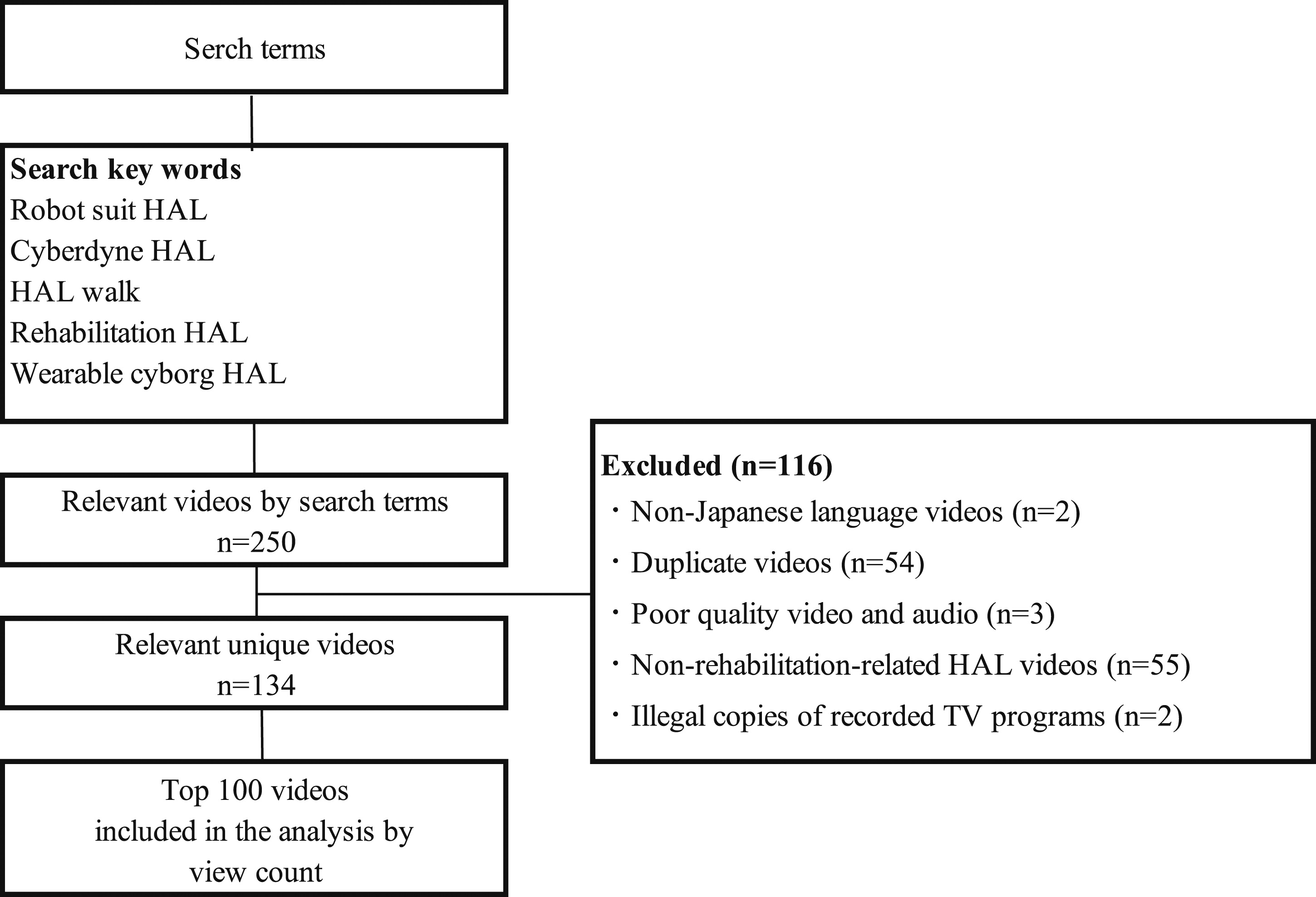
Video assessment
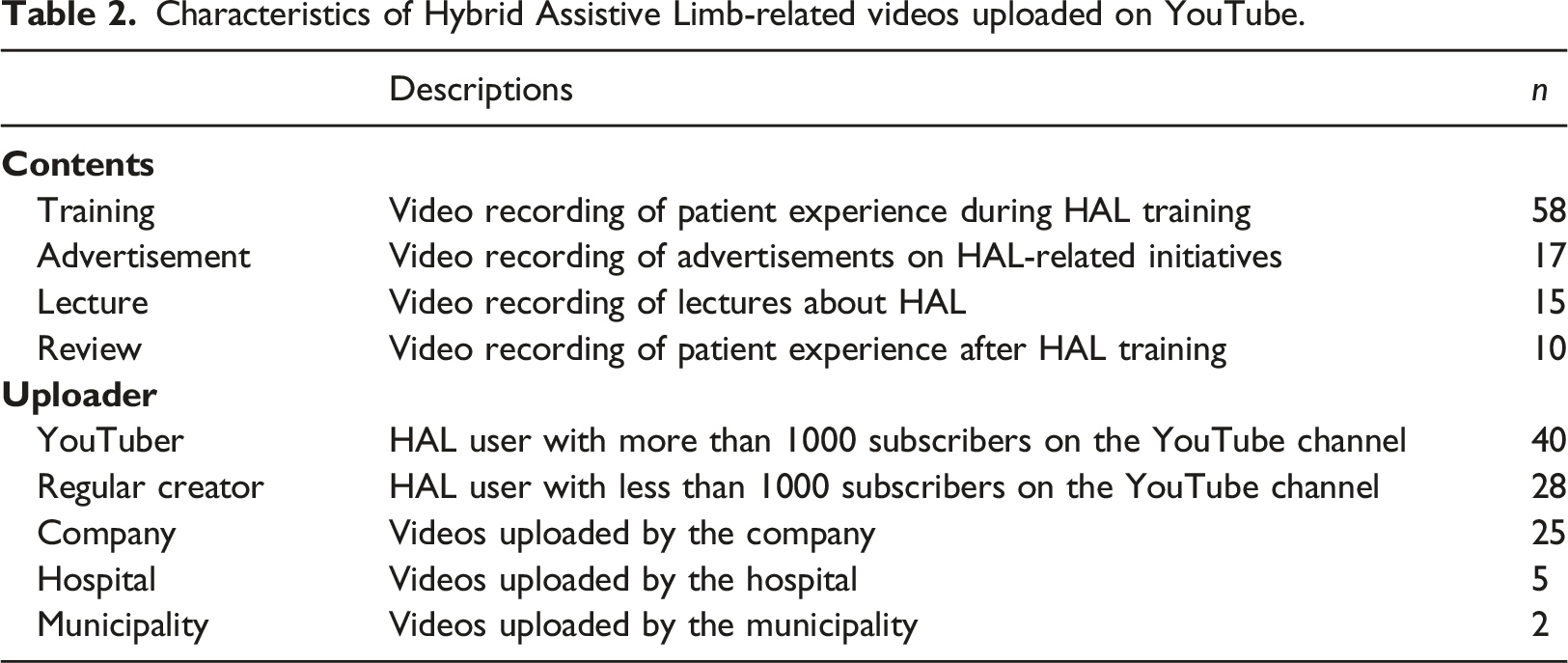
The video title, number of views, upload date, uploader name, video length, and number of days since the upload were obtained. Based on the content, the videos were classified into the following four groups: (1) training, defined as video recordings of patient experience during HAL training; (2) advertisement, defined as video recordings of advertisements on HAL-related initiatives; (3) lecture, defined as video recordings of lectures about HAL; and (4) review, defined as video recordings of patient experience after HAL training. The videos were also categorized into the following five groups based on the uploader: (1) YouTuber, defined as HAL users with >1000 subscribers on the YouTube channel; (2) regular creator, defined as HAL users with <1000 subscribers on the YouTube channel; (3) company, defined as the video uploaded by the company; (4) hospital, defined as the video uploaded by the hospital; and (5) municipality, defined as the video uploaded by the municipality. Using the information of people who appeared in the videos, the locations where they were filmed, and shared information, we calculated the percentage of videos created by YouTubers that contained information from professionals.
Quality assessment
DISCERN 24 was used to evaluate the video quality. The DISCERN is a rating scale created to determine the quality and reliability of information written about treatment when patients make treatment choices. The DISCERN comprises 15 key questions and an overall quality rating for a total of 16 items. Each item was evaluated on a five-point scale, with a minimum score of one and a maximum score of 5. The 15 key questions are categorized into Chapter 1, comprising questions 1–8, and Chapter 2, comprising questions 9–15. The overall evaluation is categorized into Chapter 3, comprising question 16. Chapter 1 evaluates the reliability of publications as sources of information on treatment methods. Chapter 2 evaluates the process of selecting treatment methods, including their advantages and disadvantages and other possible treatment methods. Chapter 3 presents an overall evaluation of the publication’s overall quality based on the scores of questions 1–15. The raters read the DISCERN handbook thoroughly and underwent prior training before rating the quality of videos; one physical therapist and one physician independently rated the quality of each video, and the average of the scores of the two participants was used in the analysis.
Statistical analysis
Descriptive statistics were calculated to characterize the following data: video title, number of views, upload date, uploader name, video length, number of days since the upload, DISCERN scores and the main content of the acquired video lists. Data were presented as median (range) and n (%) for continuous and categorical variables, respectively. The data obtained in this study did not exhibit a normal distribution; therefore, the median, which is used in non-parametric distributions, was used for analysis. Videos uploaded by YouTubers and those uploaded by other uploaders were compared using the Wilcoxon rank-sum test. Statistical analyses were performed using R software (version 1.4.1106, R Foundation for Statistical Computing, Vienna, Austria). Statistical significance was set at p < .05.
Results
Descriptive statistics to characterize the Hybrid Assistive Limb-related videos uploaded on YouTube (n = 100).
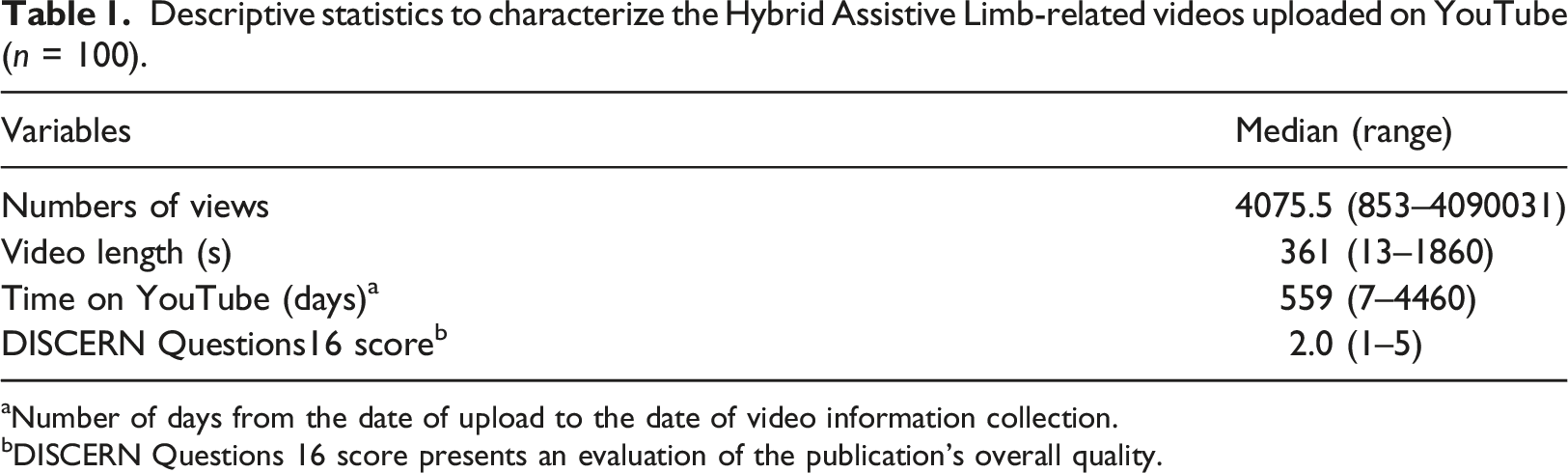
aNumber of days from the date of upload to the date of video information collection.
bDISCERN Questions 16 score presents an evaluation of the publication’s overall quality.
The top 100 videos had a median length of 361 s (range: 13–1860). The top 100 videos were uploaded on YouTube within a median of 559 days (range: 794,460 days), and 54% (54/100 videos) were uploaded in 2020 and 2021 (Figure 2). Number of videos included in the study according to year of upload.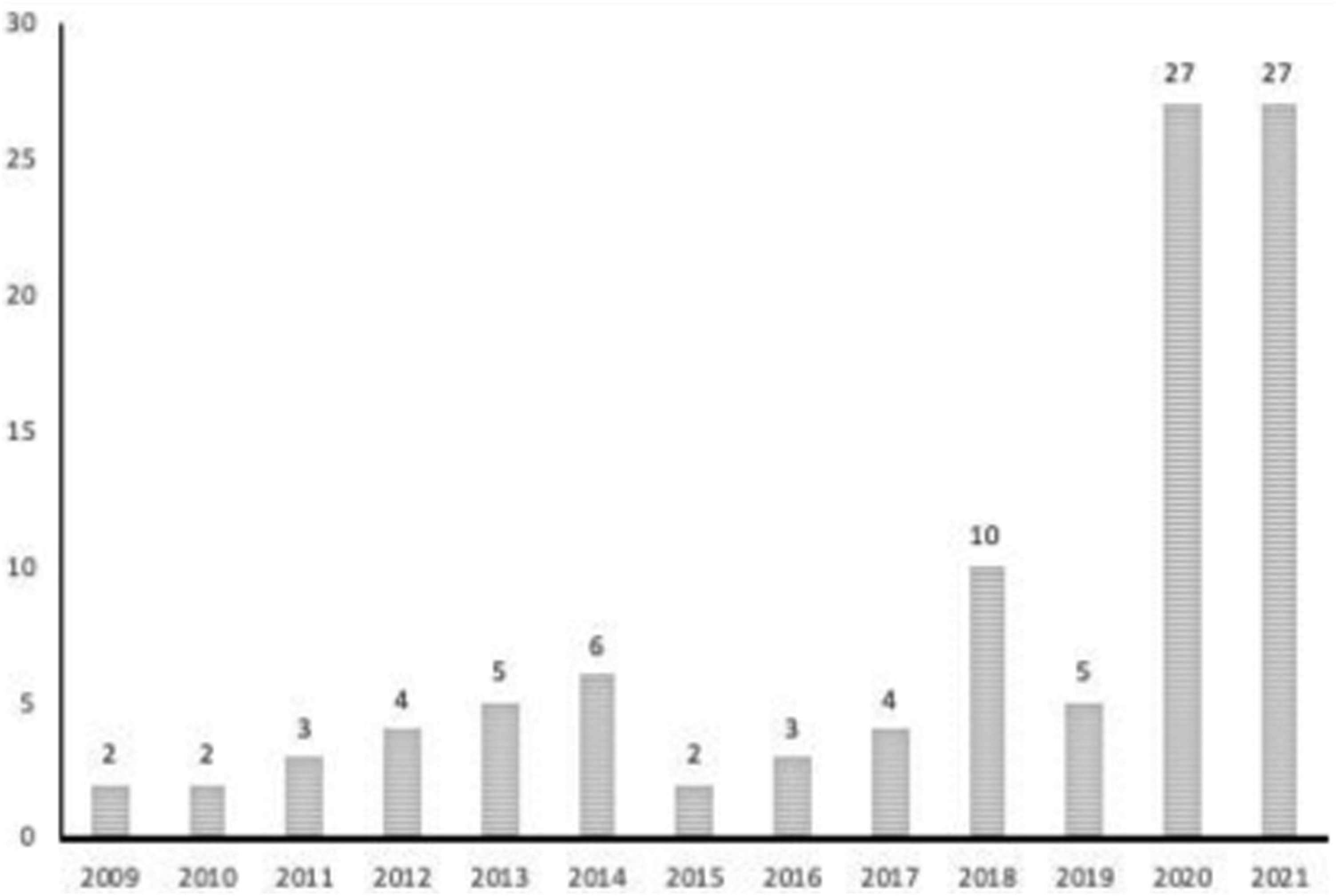
Characteristics of Hybrid Assistive Limb-related videos uploaded on YouTube.
Comparison between Hybrid Assistive Limb-related YouTube videos from YouTubers and those from other uploaders.
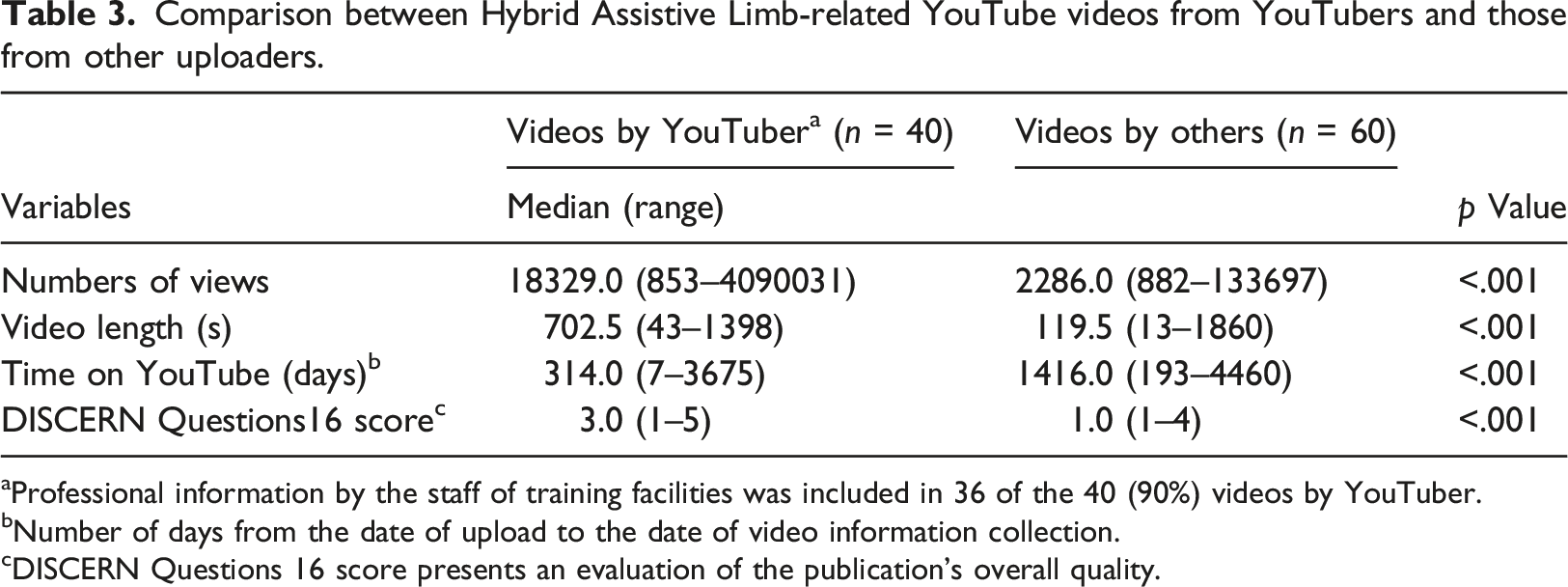
aProfessional information by the staff of training facilities was included in 36 of the 40 (90%) videos by YouTuber.
bNumber of days from the date of upload to the date of video information collection.
cDISCERN Questions 16 score presents an evaluation of the publication’s overall quality.
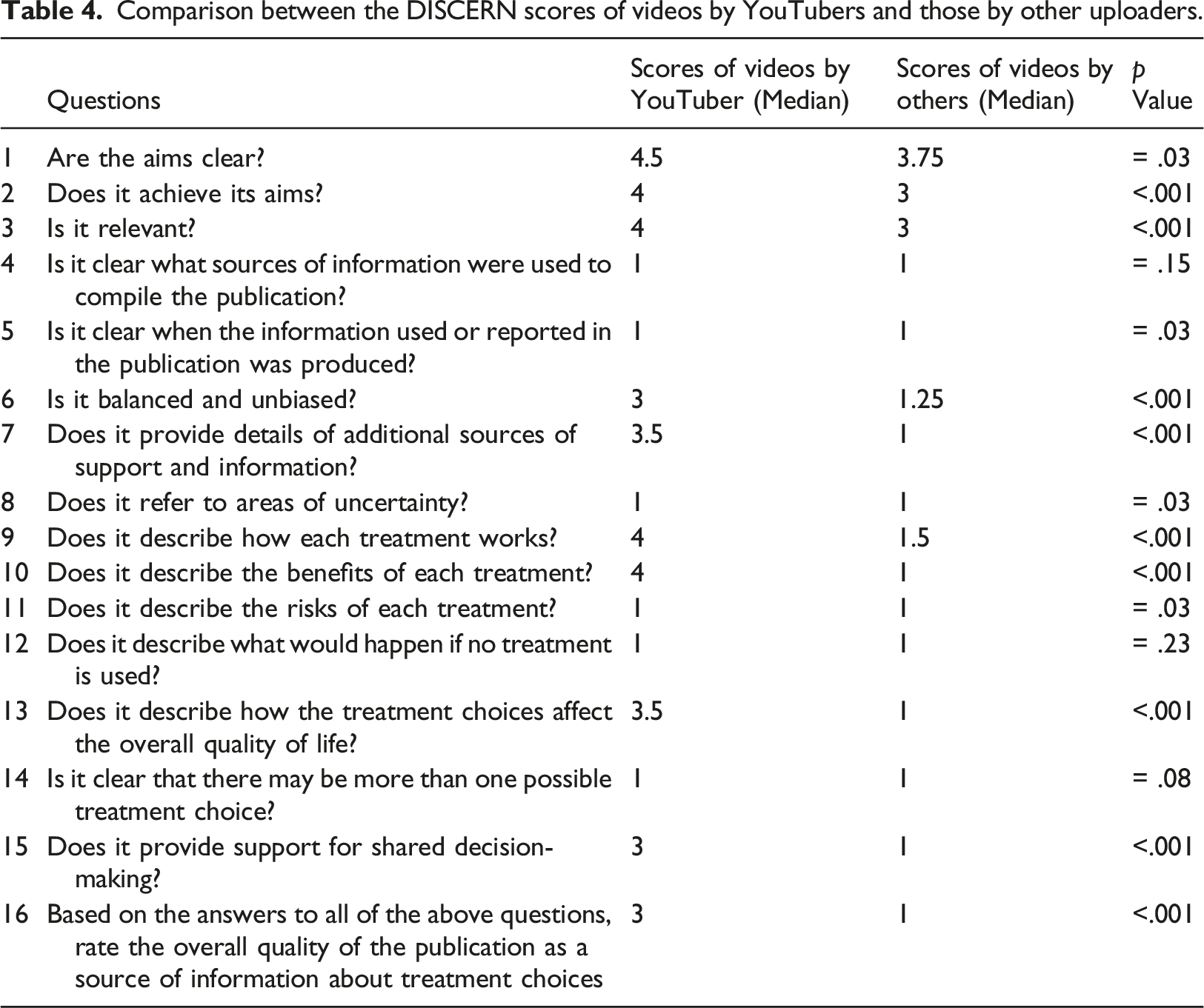
Comparison between the DISCERN scores of videos by YouTubers and those by other uploaders.
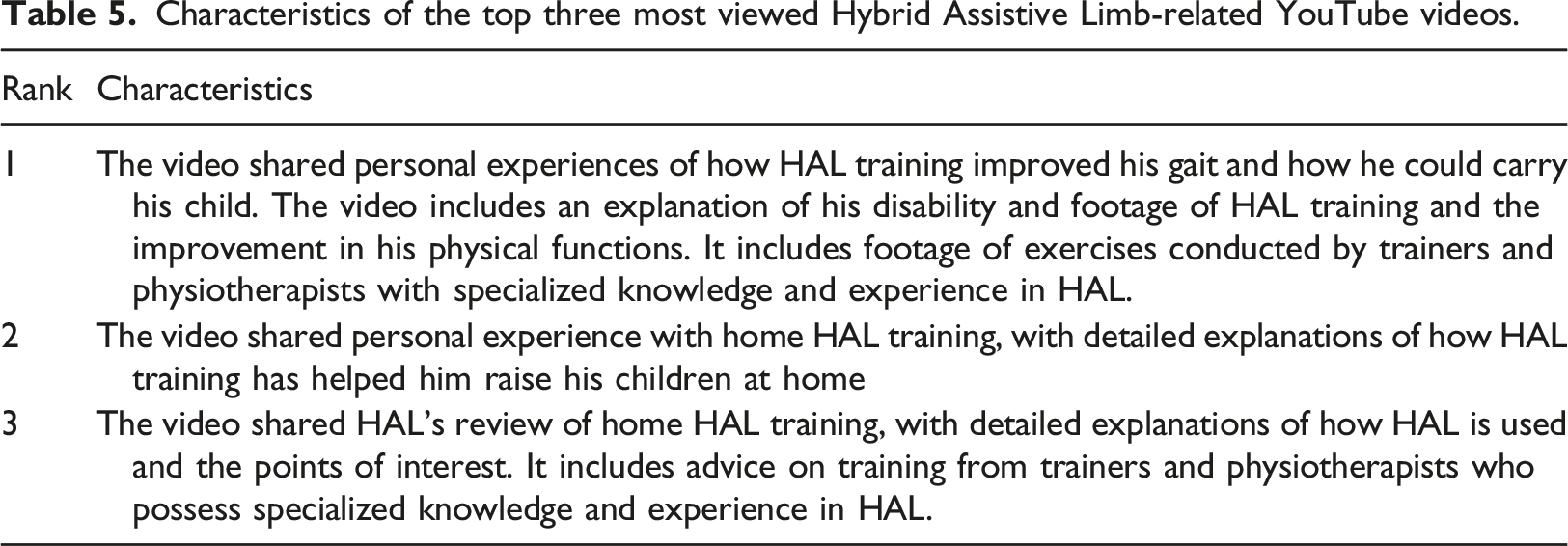
Characteristics of the top three most viewed Hybrid Assistive Limb-related YouTube videos.
Discussion
Principal findings
This study identified the characteristics of the most viewed HAL-related videos on YouTube. The first characteristic observed is that videos with many views primarily focus on HAL training. Information about HAL is limited to where information about its training can be obtained because HAL is limited due to the restricted number of facilities and hospitals implementing it. It was more difficult for the viewers to watch the training sessions directly than other health-related information. Therefore, viewers found information on HAL’s actual training sessions and feedback on training more valuable, which may have increased the number of views of the training videos. As YouTube is a video SNS, it can properly convey actions compared with other types of SNSs or websites that primarily use photos and text. HAL is expected to improve movements, such as standing and walking. Videos are easier to understand than text when providing information about a certain movement. These findings suggest the usefulness of YouTube for content, such as training using HAL, where information is limited, and where it is essential to show how the equipment is used and how it works. Furthermore, YouTube could serve as a platform for delivering rehabilitation information to the general public; therefore, this video-based SNS can be instrumental in disseminating (1) limited information, such as those related to HAL training, and (2) details about using movement-assisting devices in rehabilitation.
The second characteristic observed is that more recently uploaded videos tend to have more views than older ones (Figure 2). Two factors could explain this finding. First, CYBERDYNE, INC (Tsukuba, Japan), the HAL developer, is creating new types of equipment and updating their existing services. The “Neuro HALFIT at Home” service was introduced in 2020, which enables users to receive HAL training at home. CYBERDYNE has been attracting increasing public interest as this company continuously develops various new services. Second, YouTube is a pull-type marketing tool that requires users to actively gather information on their own, unlike television, radio, or newspapers, where users can passively receive information; therefore, the level of public interest may be related to the number of views. Recent videos were viewed more frequently as public interest in HAL gradually increased. Thus, public interest can influence the number of views on YouTube. For example, when a new game is released, the number of views on YouTube videos related to the recent game increases. YouTube can be considered a platform that quickly meets the information acquisition needs of the general public. In HAL, the development of new devices and services is constantly underway, and YouTube may be a helpful tool to meet the increasing information acquisition needs of the general public that accompany these developments.
The third characteristic observed is that videos created by users (YouTubers and regular creators) tend to have more views than those produced by hospitals and companies. The top three most-watched videos were made by users, showing that viewers prefer user-generated videos. Two main reasons exist for this. First, user videos with disabilities and subjective findings, such as the fact that they could move their legs using HAL, were transmitted from the users. Second, the videos included information on the impact of HAL on the daily lives of users with disabilities, such as how their lives changed with the use of HAL. Users shared information that could not be disseminated by hospital personnel who were not involved. These aspects likely garnered the interest of individuals seeking information about HAL, contributing to the frequent viewership of user videos. Among the HAL-related videos obtained in this study, the videos created by HAL users had the highest percentage, suggesting that viewers were seeking videos uploaded by HAL users that provided significant information about their experiences. Therefore, it is easier to gain support for health videos, such as HAL-related videos, if the concerned people transmit them. In Japan, patient groups are a common avenue for sharing experiences in the medical and nursing care fields. Face-to-face discussions among patients regarding their experiences are helpful methods to share information and support each other. However, the number of patients who use assistive devices, such as HAL, which has yet to become widely used, is relatively small, and opportunities for discussion are likely to be limited. Even if other people desire to know the experiences of HAL users, they could not obtain the necessary information owing to the absence of relevant patient groups or limited dates to conduct such meetings. In addition, owing to the recent spread of coronavirus disease 2019, face-to-face meetings, such as conventional patient group meetings, have become challenging. YouTube is accessible anytime, anywhere, and for free, making it easier for the public to access important information about the users’ experiences that is not provided on medical-related websites or facilities. YouTube can help users communicate with each other in areas where HAL use is not yet widespread and where an established community of users, such as those using HAL, is required.
Characteristics of YouTuber videos
The fourth characteristic observed is that YouTuber videos tend to have higher view counts and better quality than other videos. The DISCERN score indicates that the number of YouTubers’ videos was higher than that of those provided by other uploaders in the following categories: DISCERN6 (Is it balanced and unbiased?), DISCERN7 (Does it provide details of additional sources of support and information?), DISCERN9 (Does it describe how each treatment works?), and DISCERN10 (Does it describe the benefits of each treatment?). Previous studies have inconsistently reported that the quality of videos providing health-related information is lower for videos uploaded by individuals and higher for videos from educational institutions or medical professionals.7,13 This is because the YouTuber videos obtained in this study included information from the ROBOCARE CENTER, which provides the HAL exercise program and staff information. The ROBOCARE CENTER has trainers and physical therapists with specialized knowledge and experience in HAL. Therefore, collaboration with these organizations and their staff and the availability of sufficient information about HAL treatment and clear sources of information about HAL enhanced the quality of YouTubers’ videos obtained in this study. In this study, the most viewed video by YouTubers had more than four million views. This number of views was significantly higher than the highest (130,000) of the other source videos, indicating the high influence of YouTubers’ videos. These results suggest the potential of influencers on SNS for practical application in new healthcare technologies. For example, collaborating with YouTubers might be a practical approach to disseminating useful but underutilized medical technologies, such as Virtual Reality 25 and the Metaverse. 26 Although caution is necessary concerning the reliability of YouTube video information, it would be worthwhile to validate this utility in new technologies in healthcare in future research. YouTube enables anyone to freely disseminate ideas; in some cases, it serves as a promotional medium for unscientific products that appropriate authorities have not approved. Therefore, we should be cautious when handling information in YouTube videos. 27 YouTuber videos should include information from professional facilities and staff for their video information to be meaningfully used in society.
Limitations
This study had some limitations. First, we only included Japanese videos in our search, which may have caused a sampling bias. HAL has been used worldwide; therefore, the videos should be analyzed in other languages to gain a more comprehensive understanding of the characteristics of HAL-related videos. Second, YouTube’s video display algorithm may have influenced the number of views. When a keyword search is performed on YouTube, the videos are displayed by default according to their relevance. In addition, videos from popular YouTubers with many subscribers may be displayed as recommended videos for many viewers. This could have increased the number of views of a particular video.
Conclusions
This is the first study to analyze HAL-related YouTube videos. This study contributes to understanding the information about HAL, which is widely viewed on YouTube. Our results showed that the most popular HAL-related videos were primarily uploaded by users, and the most viewed content was videos of training situations. Information on training using HAL on YouTube is valuable to the general public; the sharing of patient experiences on YouTube may satisfy the public’s information acquisition needs. Furthermore, it was found that YouTuber videos exert more influence than those created by hospitals or corporations. Collaborating with YouTubers might be a practical approach to disseminating useful but underutilized medical technologies, such as Virtual Reality and the Metaverse. Additionally, the YouTubers’ videos included information from HAL professional staff, which made the information more reliable. Collaboration between professional staff and institutions may be required to make YouTube videos more widely available.
Footnotes

Author contributions
M.N. and H.N. conceptualized and designed the study. M.N. contributed to the data acquisition. M.N. and H.N. analyzed and interpreted the data and drafted the manuscript. S.N. critically revised the manuscript. All authors read and approved the final manuscript.
Declaration of conflicting interests
The author(s) declared the following potential conflicts of interest with respect to the research, authorship, and/or publication of this article: MN has been an employee of CYBERDYNE, INC. since October 2022. CYBERDYNE has no role in this study. For other authors: none declared.
Funding
The author(s) received no financial support for the research, authorship, and/or publication of this article.
Ethical statement
Data Availability Statement
Data are available upon reasonable request.