




Abstract
As “mukbang” (eating broadcast) becomes increasingly widespread, there is growing interest about the impact of mukbang on public health. This study aimed to analyze the content of mukbang YouTube videos, as well as news articles related to mukbang and the association between watching mukbang videos and health habits. We analyzed 5952 YouTube mukbang videos, 5265 news articles, and a survey of 1200 people in Korea. In this study, we confirmed that the provocative content of mukbang YouTube videos, such as overeating, was related to video popularity (p < 0.001). In addition, more exposure to mukbang was associated with greater effects on dietary health due to mukbang (p < 0.001). The prevalence of news articles on the negative effects of mukbang showed an increasing trend over time, while the articles on “Mukbang is funny” were most common in all the years evaluated. To cope with public health problems such as obesity, it will be necessary to continue to investigate the content and effects of mukbang on public health.
Introduction
Mukbang (eating broadcast) is a type of live online audiovisual broadcast in which a creator or host eats large amounts of foods. The word mukbang is a portmanteau of the Korean words for “eating” (meokneun) and “broadcast” (bangsong). 1 Since the late 2000s, mukbang has become widely popular in Korea with the increasing popularity of single broadcasting media. 2 Mukbang primarily consists of content in which the creator eats alone or with someone and constantly communicates with the viewer. Previously, mukbang was produced and aired primarily on platforms such as Afreeca TV, 3 which allows anyone to view live streams on various subjects. However, mukbang is currently attracting more viewers via YouTube.
There are many reasons why mukbang has become popular,4,5 but loneliness may be a primary factor.6,7 Korea has a culture of eating together. When Koreans eat, they not only share a table, but also the same dishes.8,9 As the number of the single-person households increases and the generational landscape changes in Korea, fewer people are eating with their families. In this generation, watching mukbang via online broadcasting is an alternative way to satisfy the yearning for communal eating. Based on YouTube comments, people are watching mukbang videos while eating their meals; in other words, many young Koreans consider mukbang as their new eating mate. Second, similar to “food porn” or “eating shows,” mukbang viewers feel vicarious satisfaction.4,10 To increase the satisfaction of the audience, mukbang creators deliberately eat loudly or place the food close to the viewing audience. Through these visual and auditory stimuli, mukbang viewers feel that their craving for food is fulfilled vicariously.
As mukbang videos become increasingly widespread, there is increasing interest about the impact of the mukbang on people’s eating habits, as well as obesity. Previous studies have shown that food-related shows disseminated through the media encourage and stimulate overeating,11 –14 and children are known to be particularly affected by these food-related media.15,16 Correspondingly, the food consumption of influencers such as mukbang creators is also known to affect viewers’ food consumption. 17 In particular, the types of foods and the manner of eating portrayed in these media might be a major factor in determining the impact of mukbang. From a public health perspective, however, there is insufficient research regarding the content of the actual Mukbang videos.
Current mukbang broadcasts usually show the eating of a large amount of food with several dishes. To gain popularity, mukbang creators not only performatively overeat, but they also eat irritating foods or try new products on their web-based broadcasting. Previous studies have investigated the effects of exposure to food broadcasts and that the popularity of mukbang is increasing worldwide;5,18 therefore, evaluating the content of mukbang videos will be necessary to predict the popular impact of mukbang. Also, there is a lack of study regarding the news media positions on mukbang and how this could affect people’s perceptions. News media can carry messages beyond the targeted audience, provide pertinent background information about a topic, and also influence the thoughts of people who read the news through agenda-setting.19,20 News media places emphasis on the specific issues in media messages through agenda-setting and can affect the public’s view on a topic. However, little is known to date regarding how online news media interact with mukbang videos.
In this study, we examined news article topics and YouTube video content-related to “mukbang,” all of which may be accessible to general populations and could have effects on eating behavior. First, our study may provide useful information on the content of mukbang and generate information for predicting the popular impact of watching mukbang videos. Second, we also investigated the effect of watching mukbang videos on health habits. This result could reflect the public perceptions. Finally, this research examines the position of the news media on mukbang by evaluating the topics covered by the articles. These results could help establish future research priorities and may be useful as a basis for public policy decision-making.
Materials and methods
Sample
YouTube videos
In order to investigate the “mukbang” YouTube videos viewed by more than 10,000 viewers over the 2-year period from April 2017 to April 2019, we searched for the term “mukbang” in YouTube on the Google Chrome browser. Before searching, all search histories and cookies were deleted. A search of popular videos on YouTube with “mukbang” terms identified over 100,000 videos, and a total of 5952 YouTube videos with 10,000 or more views in the top 1000 pages were analyzed. Videos that were not retrievable due to broken or inactive links, or those with content shorter than 5 min, were excluded from the analysis. Approximately 20 percent of the final dataset was independently coded by two coders, and the inter-rater reliability by kappa coefficients was evaluated.
News articles
We examined news media articles on “mukbang” from 10 online newspapers over a 6-year period (January 2013 to April 2019, as the word “mukbang” has been used extensively since January 2013). In this study, news articles from 10 general newspapers were collected from the online Newswire Archives. In order of circulation level, and excluding regional newspapers and sports magazines, the following newspapers were included in the analysis: Chosun Ilbo, Dong-A Ilbo, JoongAng Ilbo, Hankyoreh, Kyunghyang Shinmun, Munhwa Ilbo, Hankook Ilbo, Kukmin Ilbo, Maeil Business Newspaper, and The Korea Economic Daily. Among the 16,405 news articles identified by the keyword “mukbang,” we excluded news articles in the following cases: (1) news articles in which mukbang is not the main topic (for instance, news articles on the release of a movie starring an actor who frequently does mukbang), (2) news articles with a different meaning of mukbang (“mukbang” has a dictionary meaning of “dark room”), and (3) mukbang is used as a modifier for other products. A final total of 5265 articles were included in the analysis.
Coding procedure
In order to investigate the content of mukbang videos, we examined mukbang content in 100 randomly selected videos, constructed the evaluation criteria based on this sample, and then coded the entire 5942 video cohorts according to these criteria. If the coder was able to confirm that the creator cooks food directly in the video, the video is coded to include “Cooking.” If cooking scenes were not included in the video, even if the creator who shot the video said that they cooked the food, the video was coded as not containing cooking. For overeating, when a single creator is eating more than three meals worth of food, the video was coded “Overeating.” If the creator filmed a video in which a certain amount of food was consumed within a time limit, it was coded as a video including “Eating quickly within the time limit.” “Eating extremely spicy or irritating food” was defined to include the following items: (1) spicy chili powder sprinkled intentionally on spicy food, (2) intentionally drinking or eating spicy food on an empty stomach, or (3) if the creator mixes and eats stimulating foods on purpose. “Eating non-hygienic or dangerous food” was defined to include the following content: (1) creator took a video emphasizing that the food was non-hygienic, (2) eating live food while pointing out the danger of the food, (3) eating food that may cause injury upon eating, or (4) creator eating something that is not food. Cohen coefficients were used to assess inter-rater reliability and ranged from 0.74 to 1.00, reflecting excellent inter-rater reliability. 21 We used STATA version 14.2 (STATA, College Station, TX) software for all statistical analyses. Means and 95 percent confidence intervals (CIs) were evaluated for the video statistics, and t-tests were used to compare the means. We considered a two-sided p < 0.05 to denote statistical significance.
Exposure to mukbang and their influence on health habits
To investigate the relationship between mukbang exposure and its influence on health habits, we further analyzed the items of a previous health tax study of 1200 Koreans. 22 This study determined the participants’ degree of exposure to mukbang as part of the following question: “How often have you been exposed to the following factors during the last week?.” The responses were based on a 4-point Likert-type scale: (1) never, (2) rarely, (3) occasionally, and (4) always. Questions measuring the impact of mukbang were as follows: “How does watching ‘Mukbang’ affect your health habits?.” Participants responded using a 4-point Likert-type scale that ranged from “Not at all affected” to “Strongly affected.”
Topic analysis
We used the latent Dirichlet allocation (LDA) as a topic modeling method, a model with a three-level hierarchical Bayesian model.23,24 Because it is difficult and time-consuming to manually analyze large numbers of news articles, natural language processing (NLP) procedures were used, including tokenization, stop words, and stemming, to process news article content through the Korean natural language processing in Python (KoNLPy) package.25,26 Using Gibbs sampling techniques, the LDA model estimates the marginal distribution of interested variables to determine the topics among news articles. 27 The LDA model conducts unsupervised topic modeling to generate a given number of topics for a set of news articles. By understanding the topic and word distributions in the news articles, hidden information within the news articles can be automatically discovered. To perform LDA analysis, we used the Gensim Python Library.28,29 Many studies have been performed regarding the choice of LDA topic number, but there is no consensus on the appropriate number of topics. We performed topic modeling with 20, 15, 10, and 5 topics; when we categorized the articles into more than 10 topics, the topic keywords tended to substantially overlap. Therefore, we used seven topic classifications, and topic content was generated accordingly considering the meaning of keywords. We also conducted topic modeling for each year to determine how the topics covered in the articles changed over time. We classified the topics into three main groups: (1) entertainment, (2) pros and cons, and (3) regulation.
Results
Content of “mukbang” videos on YouTube
Only 8.5 percent of the mukbang videos showed cooking, whereas 91.5 percent of the videos showed the consumption of delivered food, food bought at convenience stores, and food purchased from restaurants (Table 1). About 83.5 percent of the videos presented overeating, and 1.3 percent of videos showed the creator eating quickly within a time limit. About 5.6 percent of the mukbang videos contained the content of eating extremely spicy or irritating food, and 0.6 percent of videos showed eating non-hygienic or dangerous food. Videos containing overeating were significantly more watched than those not including overeating (p < 0.001), and videos showing food consumption within a time limit also had a significantly higher number of views (p < 0.001). Videos showing consumption of spicy or irritating food were had fourfold more views than those that did not include this content, a significant difference (p < 0.001).
Content of “mukbang” videos on YouTube (N = 5952).
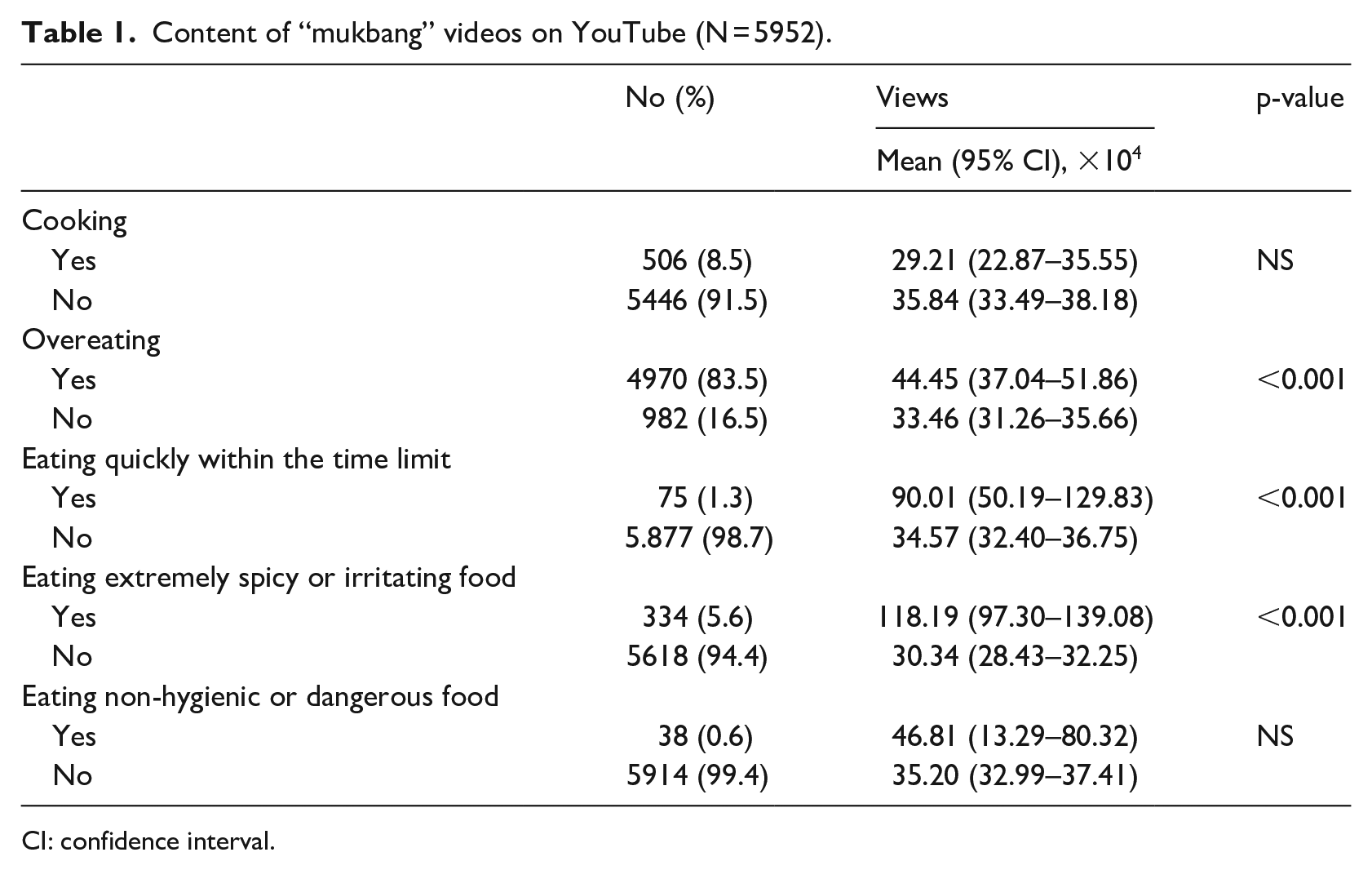
CI: confidence interval.
Types of food consumed in “mukbang” videos on YouTube
Among the mukbang YouTube videos, 15.7 percent show the creator eating fast food or junk food (Table 2), as the content of most mukbang videos is traditional Korean food. About 18.4 percent of all mukbang videos contained content showing the consumption of instant foods such as ramen, and 2.7 percent of the total mukbang videos included alcohol along with eating food. In the case of videos broadcasting alcohol consumption, the name of “sulbang” was attached to 134 of the 163 cases. “Sulbang” is a Korean abbreviation meaning “broadcasting drinking alcohol.” All the YouTube mukbang videos that included alcohol consumption could be viewed without adult certification. There was no statistically significant difference in the number of views according to the type of food being consumed.
Types of food to eat in “mukbang” videos on YouTube (N = 5952).
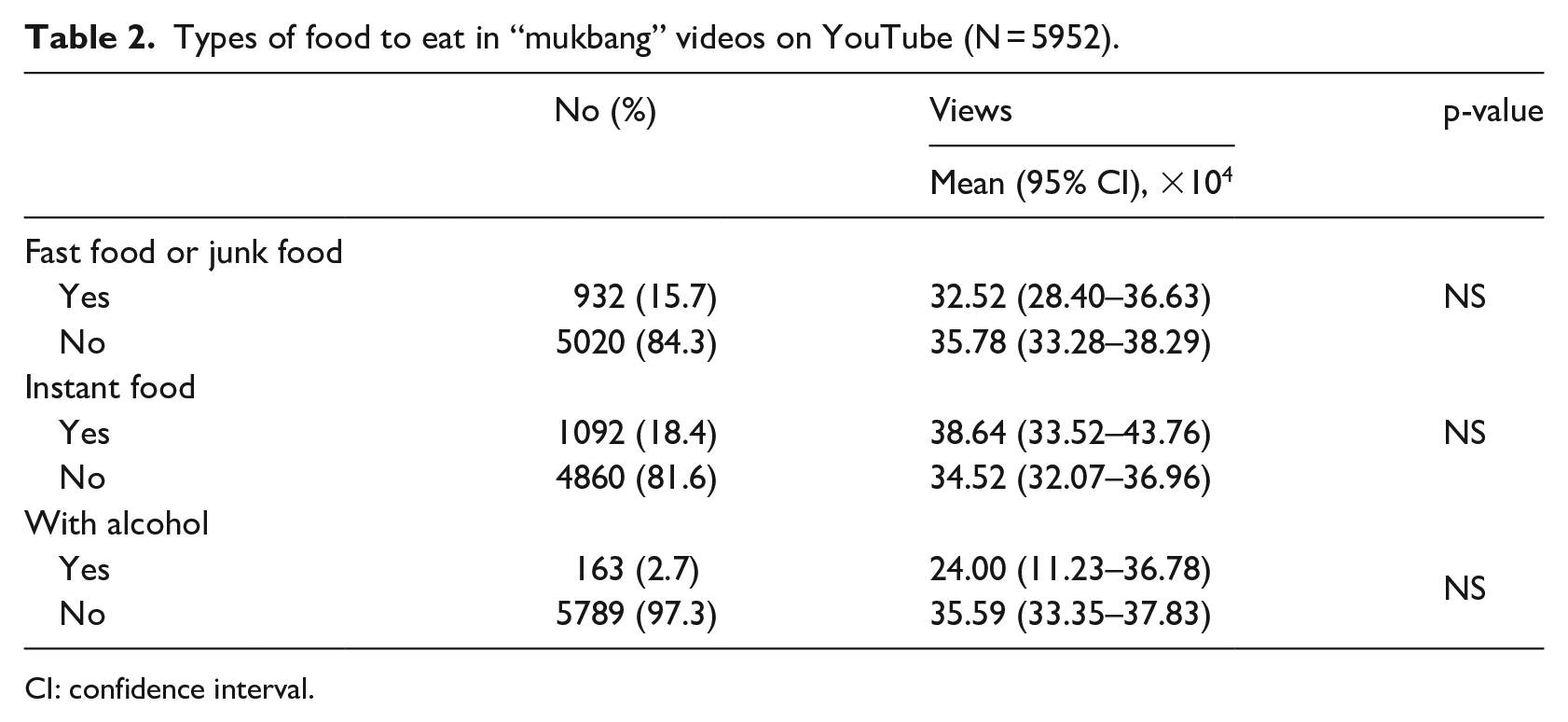
CI: confidence interval.
Exposure to “mukbang” and its influence on health habits
Figure 1 shows the relationship between mukbang exposure and its impact on health habits. Among people who do not watch mukbang at all, only 1.3 percent of the respondents said that watching mukbang had a strong influence on their health habits; in contrast, 32.6 percent of the people who always watch mukbang indicated a strong influence on their health habits. More than half of those who rarely or never view mukbang videos responded that mukbang had little or no effect on their health habits, whereas more than half of those who often or always watch mukbang answered that mukbang mostly or strongly impacted their health habits. There was a significant difference in the effect on health habits depending on exposure to mukbang (p < 0.001).
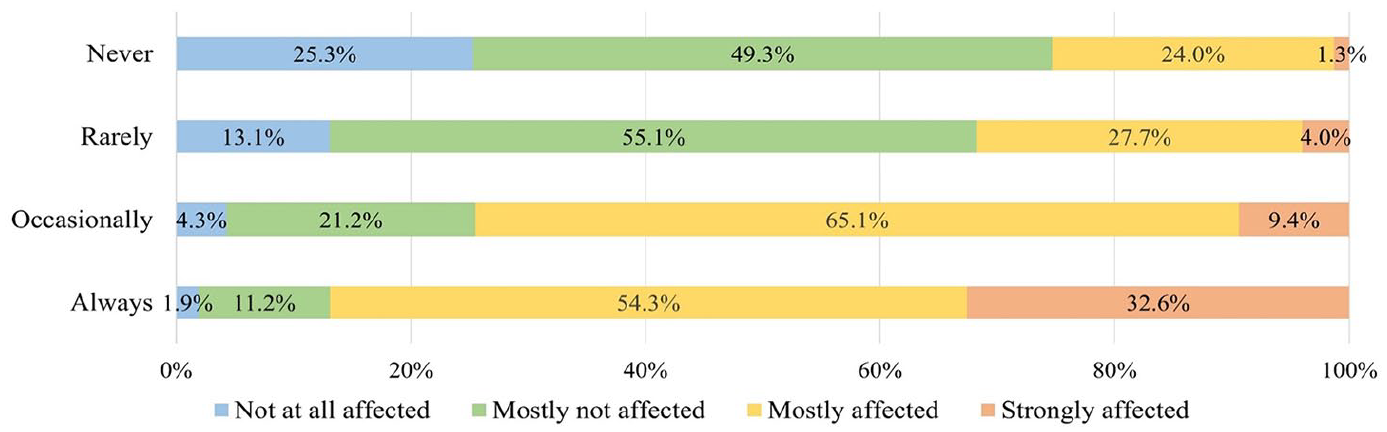
Exposure to “mukbang” and their influence on health habits.
Trends in news articles about “mukbang” and the proportion of each topic over time
The number of news articles related to mukbang varied in time, but on average more than 50 articles per month were reported (Figure 2). Between May and June 2018, while the Korean government considered a policy of restricting mukbang YouTube videos, news media reported intensively on the subject, and there was a dramatic spike in the volume of articles. Regarding the percentages of the topics according to year, articles on “Mukbang is funny” were most common in all years (Figure 3). Articles on “The food is becoming a trend” were constantly reported, and in 2018, there was a remarkable increase in the number of articles on “Regulation of mukbang.” The proportion of articles on the negative effects of mukbang changed each year but showed an increasing trend over time. However, in 2019, which was the most popular for this topic, only 10.2 percent of the articles highlighted the negative effects of mukbang, while 75.0 percent of the articles dealt with the theme that mukbang is fun.
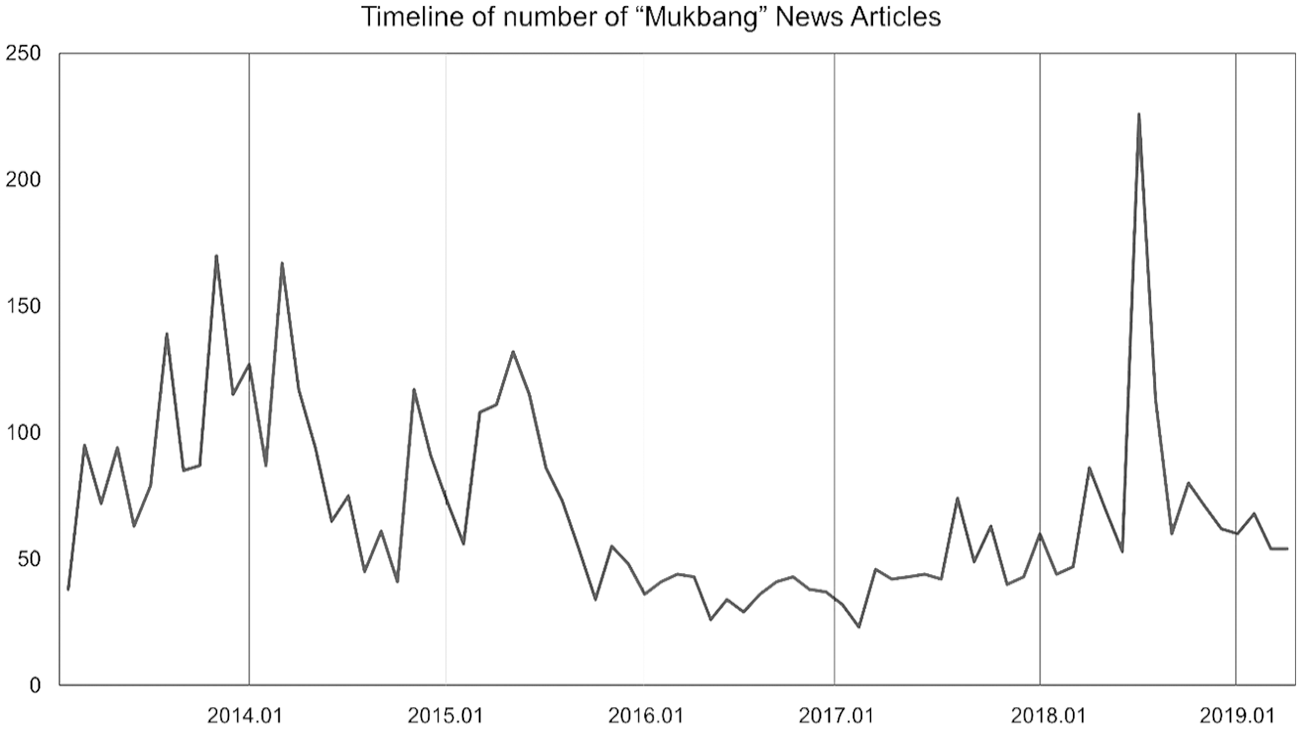
Trends in news articles about “mukbang” from 2013 to 2019.
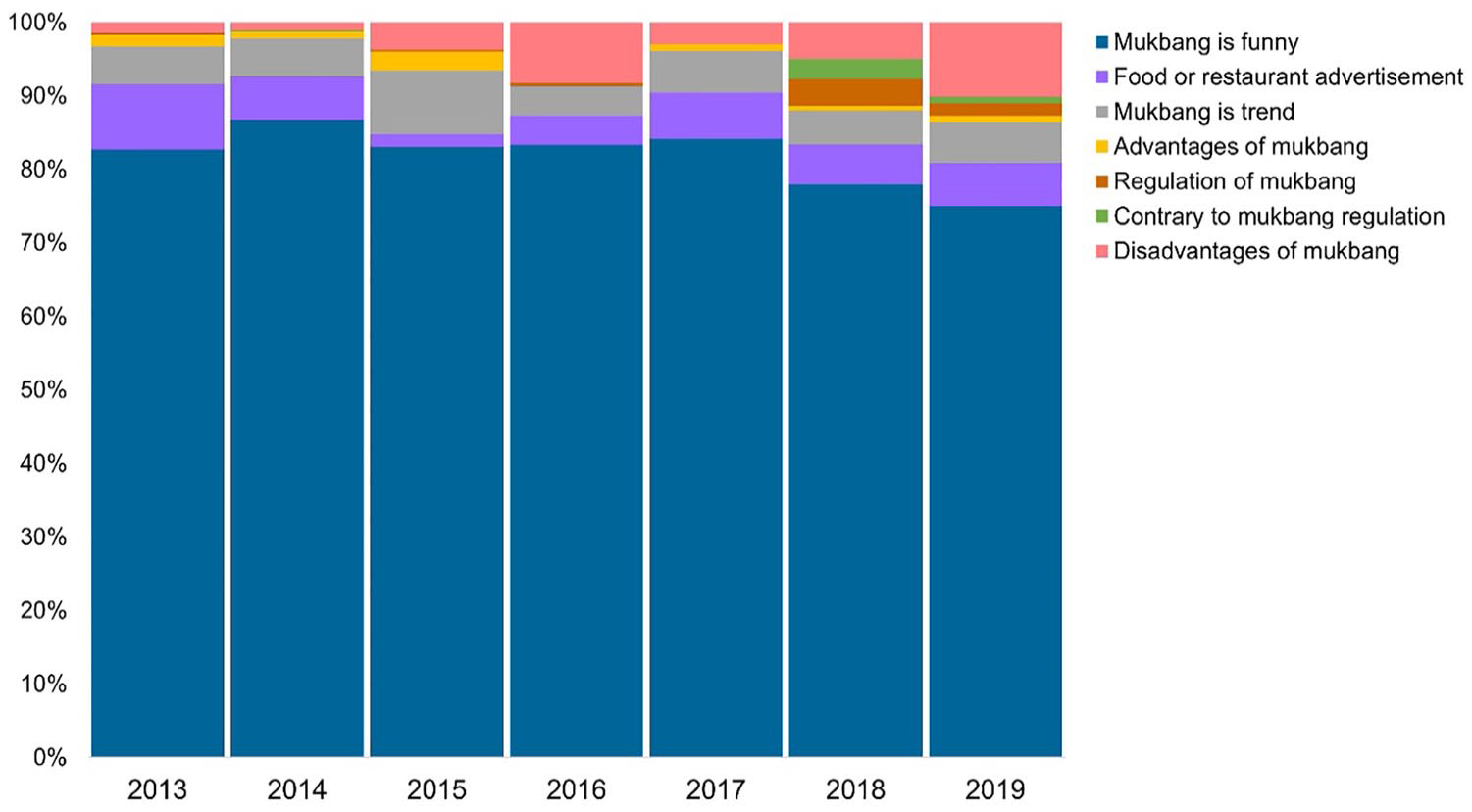
Chronological bar showing the proportion of each topic for each year (the width of the bar is proportional to the number of text segments each year, and the height of the clusters represents the frequency of text segments within the topics).
Topic classification and keywords of news articles related to “mukbang”
We performed LDA on the news article dataset. The number of topics was set to seven. For each topic, the top 15 associated keywords are listed in Table 3. Topic 1 was about “Mukbang is funny.” The keywords included mukbang descriptions and the charms of mukbang. The main contents included the appearance of mukbang broadcasts, the pleasure of watching mukbang, as well as the charm and subjectivity of mukbang. Topic 2 was the advertisement of food or restaurants. In this topic, keywords such as advertisement, delicious restaurant, travel, and menu were characteristic, and the content by topic included advertisements for food, specific restaurants, and local specialties. Topic 3 was “Mukbang is a trend.” This topic included explanations of why mukbang is popular. Topic 4 and Topic 7 were topics focusing on the pros and cons of mukbang. Topic 4 contained keywords about the merits of mukbang videos for reducing the loneliness of a single-person household and forming an online community, and Topic 7 covered the disadvantages of mukbang in promoting overeating and obesity and the effects on eating habits. Topic 5 was “Regulation of mukbang”; it mainly covered the Ministry of Health and Welfare’s mukbang regulatory plan. As a contrast to these regulations, Topic 6 focused on media autonomy.
Topic classification and keywords. a
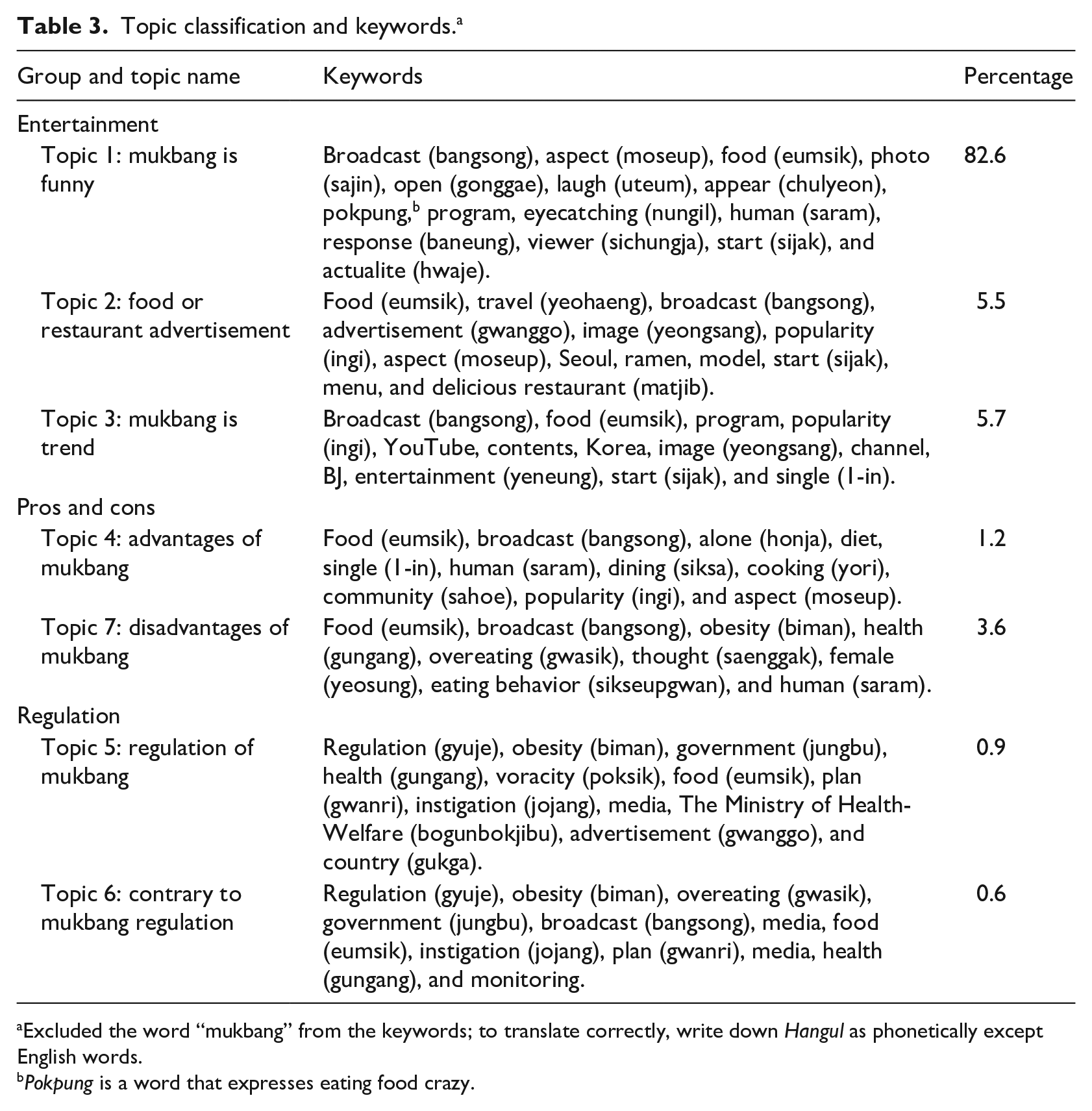
Excluded the word “mukbang” from the keywords; to translate correctly, write down Hangul as phonetically except English words.
Pokpung is a word that expresses eating food crazy.
Discussion
Principal results
In this study, we sought to examine the primary content of mukbang videos, the impact of mukbang on people, and the position of the press on mukbang broadcasts. In this study, we attempted to identify the meaning of mukbang, which has become its own form of culture,7,30 as well as the various points of view on mukbang, research objective priorities, and the potential effects of mukbang. Similar to previous understanding that the creators of mukbang videos are predominantly eating unhealthy food or overeat, 31 it was confirmed that many mukbang creators showed overeating, as well as other unhealthy eating behaviors. The fact that mukbang YouTube videos that showed overeating or unhealthy eating habits had a higher number of views suggests that this stimulating content is used as a means to gain popularity. However, there was no difference in the number of viewers according to the type of food consumed. In addition, considering that there are mukbang broadcasts that show creators drinking alcohol with eating food, consideration should also be given to the effects of watching mukbang on youth. Previous studies have shown that exposure to alcohol-related media is associated with alcohol drinking of youth.32 –34 These results demonstrate the necessity of close monitoring of the effects of mukbang with alcohol consumption on the eating and drinking habits of adolescents.
The finding that people who always watch mukbang state a strong influence of mukbang on their eating habits may be simply be due to the high level of exposure, or because viewing mukbang actually may have an impact. Because this result suggests that mukbang videos may affect people’s eating habits, further research is needed. Some people experience surrogate satisfaction while watching mukbang YouTube, and others feel the impulse to eat food while watching mukbang videos. 35 According to previous studies, some individuals are more susceptible to cue-induced eating in the presence of a palatable food option. 36 Other studies have suggested that an increased attentional bias to food cues may contribute to overeating and weight gain.37 –39 In particular, given the content of mukbang YouTube videos, long-term research is needed on the effect of mukbang.
Similar to previous studies of 114 Asians and 129 Caucasian participants who indicated that most people are attracted to mukbang videos, 4 most of the news articles focused on the notion that mukbang is fun and engaging. News framing influences the opinion of the public who read the news. 40 The fact that most articles in the press treat mukbang videos as fun could give people a positive perception of mukbang. In addition, reporting that mukbang is a trend can also generate a positive perception of mukbang in the public. However, as we have previously discussed, mukbang videos have substantial content showing harmful eating habits, and watching mukbang is negatively related to healthy eating habits. In other words, it may be necessary to take into account the cumulative position of these media reports and their approach when evaluating the impact of mukbang videos.
This study has some limitations. First, we only analyzed YouTube videos and not other mukbang channels, such as Afreeca TV. Nonetheless, considering that YouTube viewership is increasingly expanding and that the main channel for mukbang is moving to YouTube, our analysis is meaningful. In addition, our analysis of YouTube videos with more than 10,000 views allows us to select and analyze representational content. Second, the topic modeling analysis in this study may have some bias. We used LDA for topic modeling, which requires manual modification of various factors, including the number of topics. We have evaluated topic modeling number and constructed a perplexity plot. The perplexity plot shows the relationship between perplexity and topic number, which helped us determine the optimal number of topics. However, there remains the potential limitation that changing the number of topic models could lead to different results. Third, we only analyzed a subset of online newspaper articles from 2013 to 2019. We chose the news media sources by considering actual circulation volume; however, given the fact that news subjects may vary according to the nature of the newspaper media, a wider selection of newspapers would have more accurately reflected the position of the news media. In addition, we only analyzed Korean news articles and YouTube channels in this study. In light of the increasing popularity of mukbang, further research is needed to analyze datasets from other countries. Finally, in our analysis we only coded for eating behaviors or foods seen on the videos. However, this selection approach may potentially bias the results.
Despite these limitations, there were many strengths of this analysis. Our study evaluated a large sample of YouTube videos, representing a significant amount of time and effort spent manually constructing this dataset. Moreover, the analyses were carried out over 2 years, during which we also investigated eating behaviors in the mukbang videos as well as the types of food consumed. To our knowledge, content analysis of mukbang videos has never before been conducted, and the results of this study may provide increased understanding of mukbang videos in a multidimensional nature. An additional key strength of this work is the fact that both the press and general population’s position on mukbang was confirmed. In order to consider the effects of mukbang on public health, it is necessary to analyze attitudes of both the general population and the media, which may influence public perception. In this study, we confirmed the position of the media through topic analysis of the news and how the analyzed topics changed over time. In addition, the effect of mukbang exposure was also evaluated. The strength of this article is that it evaluates mukbang from various perspectives.
Conclusion
In this work, we demonstrated the content of mukbang, its popular influence, and the attitudes of the press. Mukbang is spreading as a cultural trend, and hundreds of mukbang items are being produced everyday. In this study, we confirmed the need to continuously investigate the content and influence of mukbang videos. In addition, we also examined the position of the media on mukbang broadcasts, indirectly confirming public opinion regarding mukbang. In order to deal with the continuing increase in obesity rates, it will be necessary to further investigate the effects of mukbang on public health.
Footnotes
Acknowledgements
We acknowledge the help and support of staff and patients of Seoul National University Hospital.
Declaration of conflicting interests
The author(s) declared no potential conflicts of interest with respect to the research, authorship, and/or publication of this article.
Ethical approval and patient consent
This study was reviewed and approved by the institutional review board of Seoul National University Hospital (IRB No. 1804-024-934). Informed consent to participate in this public survey is obtained from all participants.
Funding
The author(s) received no financial support for the research, authorship, and/or publication of this article.

Data accessibility statement
The raw data are being kept in the custody of Seoul National University Medical College and are available upon request.