



Abstract
There is concern about the expanding size of the ageing population and burgeoning care costs for older adults. Robotic technology could assist older adults. In this study, the effectiveness of the robotic technologies is evaluated. A systematic literature review was undertaken of peer-reviewed literature. An initial set of 8533 studies was evaluated for relevance; these were reduced to a final subset of 58 studies finally subjected to analysis. This study categorised the problems encountered by older adults, identified robot types deployed to overcome them and derived a subjective effectiveness score. The most used and most effective robots were companion robots followed by telepresence robots. The findings imply positive effects of robotic technologies in helping elderly people’s problems. Although robotic technologies could bring some innovation into aged care, more research is needed to design and develop robots to be of assistance and support elderly in having an independent lifestyle.
Introduction
The world is ageing at a rapid rate, which means that older adults will take advantage of an increased lifespan in the coming years. It has been predicted that this trend is going to be reinforced and intensified as the number of older adults in aged care increases.
Researchers have shown that the health of older adults deteriorates over the years. 1 Consequently, they will need more attention in terms of care services, which in turn will result in an increase in the amount of responsibility that falls on caregivers such as family members, friends and other individuals working in the caregiving area. Obviously, families, governments and health sectors would welcome any technological breakthrough that could help them face this problem. Alternative options in this case could result in lower care costs and more independence for older adults living in their homes.
Considering other dimensions, researchers have shown that this problem will worsen in view of the fact that the workforce and number of professional caregivers will decrease in the coming years, as the number of people entering this area is not increasing at the same speed as the increasing number of older adults.2,3
Researchers who work in academic, governmental and industrial environments have tried to propose new technologies in response to the increasing need for addressing the problems of an ageing population.4,5 However, although it is most ethical for human caregivers to provide the preferred type of care, other options could be considered, as they may help older adults with independent living. Innovation offers better access to care for older adults in their own homes and could reduce the need for hospital admissions. 6
Technologies can support families and professional caregivers with a broad range of equipment for use in aged care, for example, information technology, 7 remote monitoring 8 and online daily services. 9 One of the most promising areas in recent years is robotic technology.
Rapid advances in robotic technologies together with enormous demographic changes have led researchers to realise that robots may be the answer to our aged-care problems, and it is expected that products will have significant roles in assisting older adults. 10 It has been one of the most researched areas in recent years in relation to assisting older adults, and some researchers have shown that robots can be useful in certain areas of aged care; 11 for example, some robots have been developed for recreational purposes, cooking, companionship and health monitoring. Robots could have major advantages for older adults (people of age 60–65 years and older as World Health Organization (WHO) suggests which is nearly equivalent the age that people normally start to retire as beginning of old age (http://www.who.int/healthinfo/survey/ageingdefnolder/en/)), although the effectiveness of robotic technologies in addressing older adults’ needs has not been researched yet. It is this effectiveness that we estimate in this research project.
Given the above-mentioned issues, the aim of this research project is to identify the position of robotic technology in aged care and to provide a comprehensive picture of its position in older adults’ problems. To do this, the following research questions have been considered:
RQ1. What type of robot technologies have been developed to address aged care so far?
RQ2. How effective have robotic technologies been in overcoming older people’s problems?
This study has identified recent researches that have been undertaken in the robotic technology field to demonstrate its roles in aged care, as well as identifying how effective these studies have been in addressing older adults’ problems. This understanding will be useful for older adults and their informal caregivers (family members, friends and other people connected with them) to choose the right robot for the right purpose, in order for the older adult to live in an independent manner.
This research has been conducted through a systematic literature review as suggested by Kitchenham. 12 Section ‘Methodology’ explains the method and necessary steps taken to conduct this study. In this research, we systematically searched related databases and extracted papers that are relevant to the above-mentioned research questions. We then extracted attributes such as geographical distribution, robot types and problems addressed. Section ‘Results’ discusses the findings, including how we adapt a method to estimate the effectiveness of robots in aged care. Finally, section ‘Discussion’ concludes the article with a discussion of the results, including a demonstration of implications that are useful for the health sector, researchers and other stakeholders involved in the aged-care industry.
Methodology
Aim and procedure of systematic literature review
The purpose of this systematic literature review has been to gather all research literature relating to the application of robot technologies to aged care in recent years and to provide an overview, as well as evaluating the effectiveness of robot technologies in addressing older adults’ problems.
A systematic literature review is a method of systematically searching the literature on a topic using library databases to find relevant papers that meet criteria, extracting information for each study and then interpreting that information to make a brief summary. In this way, results are reliable and can be reproduced by another researcher using the same steps. For this research, the guidelines proposed by Kitchenham 12 were used, as used by Broekens et al., 13 Vichitvanichphong et al. 14 and Kachouie et al. 15 They13–15 mainly discussed socially assistive robots, while in this study we have used comprehensive search to include all types of robot technologies that have been applied in aged care. According to Kitchenham’s method, 12 three main phases must be carried out: planning the review, conducting the review and reporting the review.
Search terms and targeted databases
The first step to take in performing a systematic review is to develop a set of keywords and to search for them in databases. To generate a general set of keywords to be sought within the publication titles, keywords, abstracts or full texts, we proceeded as follows.
An initial search in the selected databases revealed an enormous number of irrelevant results, including military, space, discovery and industrial robots (manufacturing, welding, handling, etc.). These had to be excluded from the search terms. Additionally, as the term robotics refers to the branch of technology that deals with the design, construction and operation of robots, only the word robot was included. Also, as our research was focused on older adults, we excluded the terms that refer to other age groups, such as young or juvenile. After several iterations, the final word set was as follows:
Robot AND (old* OR senior* OR elder* OR ‘long lived’ OR aged OR ‘older adults’ OR ‘old adult’ OR ‘old people’ OR ‘older people’) AND NOT (automobile OR car OR industry OR industrial OR automation OR manufacturing OR assembly OR military OR space OR farm OR handling OR exploration OR discovery) AND NOT (young OR juvenile OR adolescen* OR infant OR teenage OR youth OR child)
This research was conducted in May and July 2015. Systematic searches were undertaken in the MEDLINE, ScienceDirect, ProQuest, PubMed, Scopus and SpringerLink databases.
Inclusion/exclusion criteria
The purposes of this step were (a) to narrow and filter the search results from the initial list to obtain a subset of final studies that were relevant to our research questions and could be considered for this research and (b) to exclude the ones that were not pertinent; these included duplicated papers and those with irrelevant titles or abstracts.
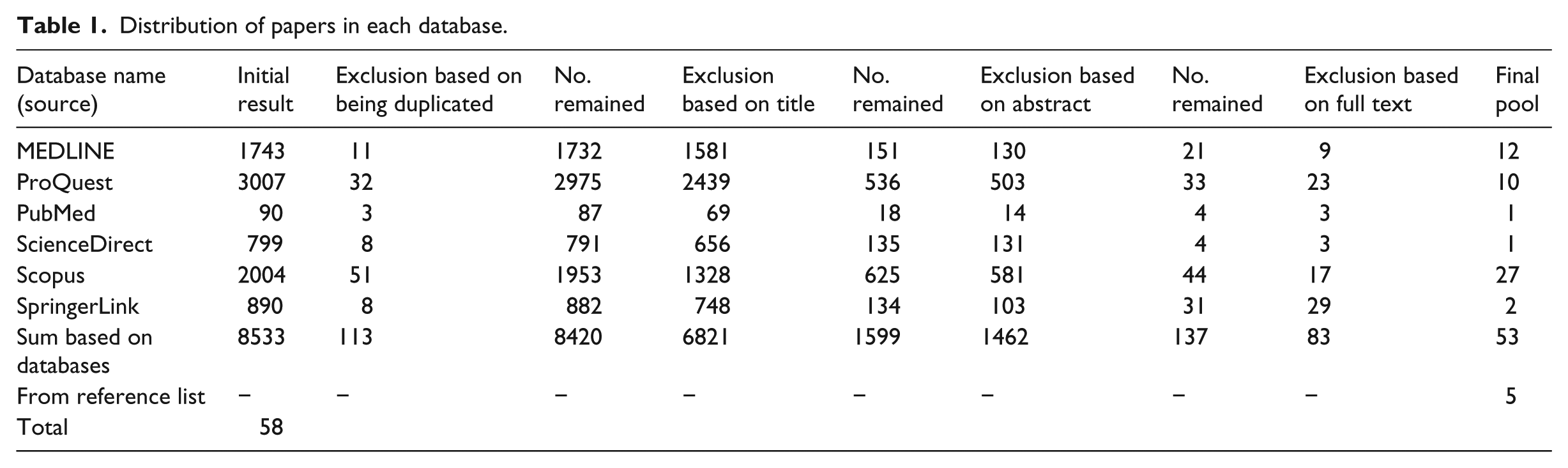
To identify relevant papers, a filtering process was applied in five steps. In the first step, duplicate papers were eliminated. The second and third steps were taken to eliminate irrelevant studies based on the title and abstract, respectively. The fourth step aimed to eliminate irrelevant papers by studying the full text. Finally, papers that were identified through citations were added to the paper data pool. The initial search retrieved 8533 title and abstracts, and these were reviewed. The steps followed to identify the final number of papers are demonstrated in Figure 1 and Table 1.
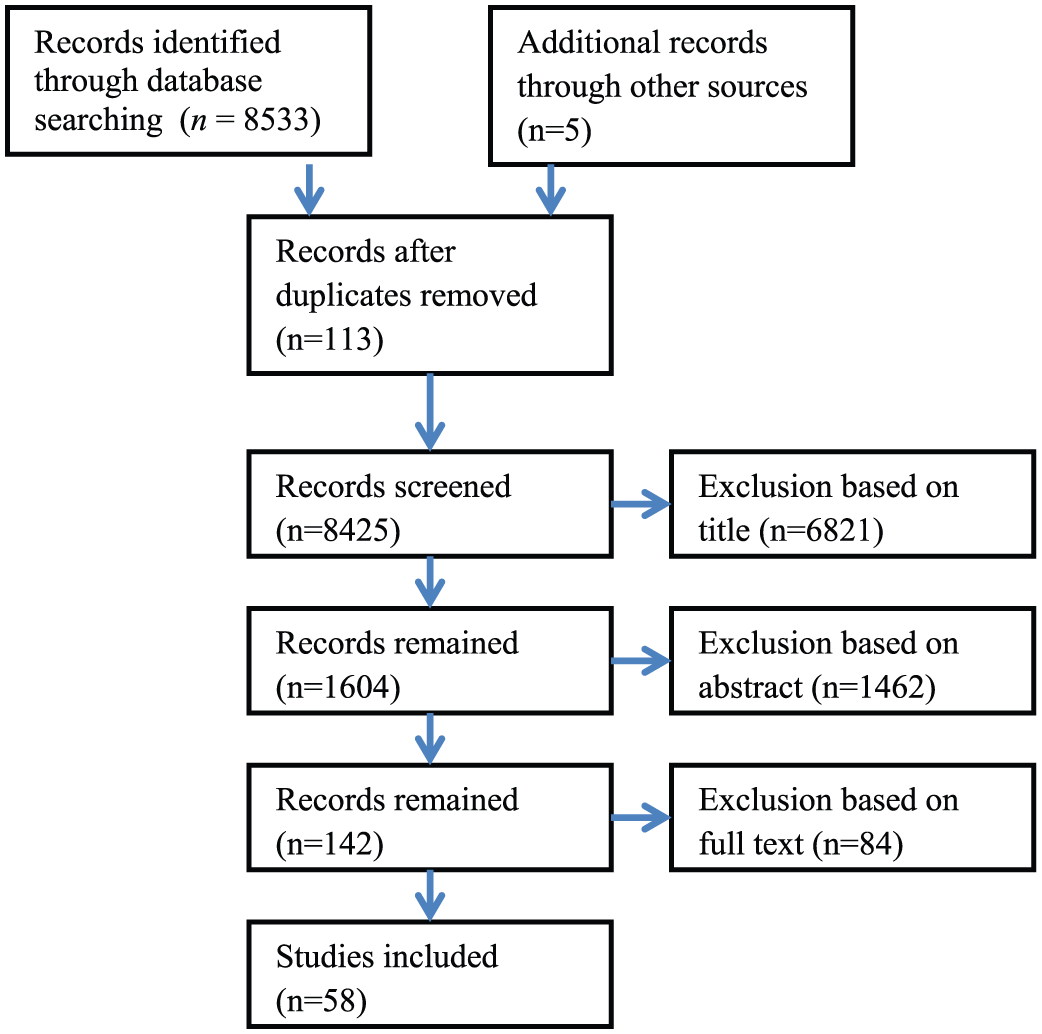
Relevance appraisal process.
Distribution of papers in each database.
The papers that met one or more of following criteria were removed from the final set:
Were not peer reviewed;
Did not involve older adults or were not related to them;
Did not include robotic technology that could address aged-care problems;
Were published before 2000 (as we aimed to study the most recent researches in this area);
Were not in a pertinent field or could not be related to the current research aim;
Were not in the English language.
It should be pointed out that the definition of ‘older adult’ or ‘older people’ is not consistent in all studies. Consequently, the term was identified using the same criteria employed in studies to cover all related papers in robotic technologies that were applied to older adults’ problems.
Data extraction and synthesis
In order to obtain relevant data from selected papers in the final pool, key sorts of information were retrieved. For each paper, the following types of data were collected:
Robot types: we identified the type of robot and technology that was used in each paper to assist older adults.
Problem type related to each robot technology: we determined which older adult problems had been addressed by the researcher.
Study settings: we determined how robotic researchers had addressed independent life issues for older adults.
No. of participants: we analysed the results in terms of generalisation.
Outcome of studies: we determined each paper’s outcome (this was necessary to evaluate the role of robotic technology in aged care).
Evaluation of the effectiveness of the robot technologies in the studies
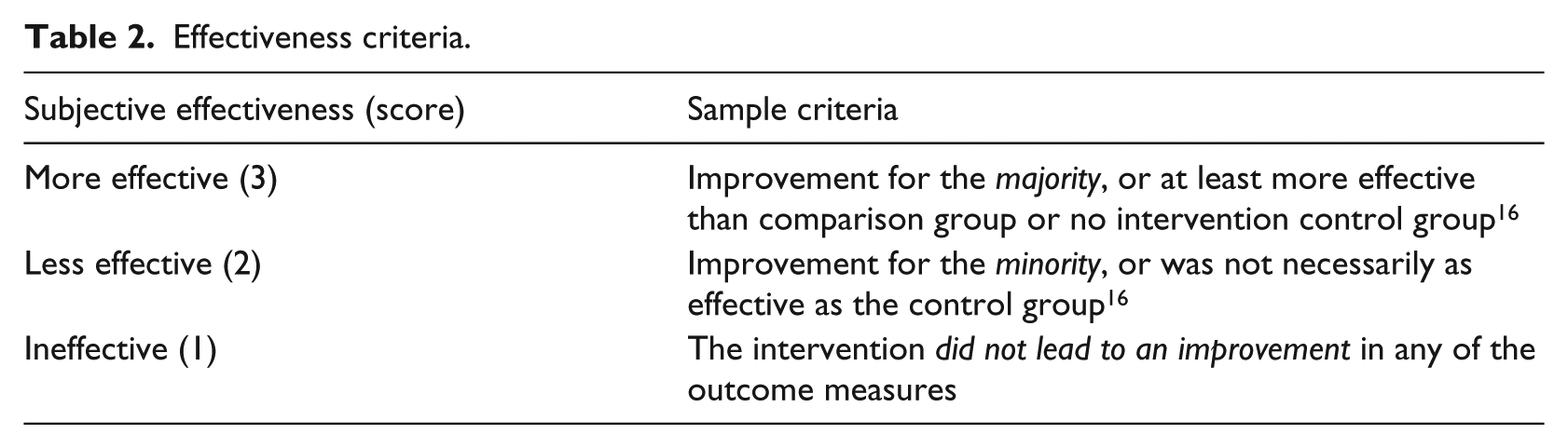
Morrison et al. 16 have suggested criteria for evaluating effectiveness that we could use with robot technologies in aged care. Furthermore, we have adapted the method proposed, and new criteria were developed to enable us to assess the results in the final pool, as shown in Table 2.
Effectiveness criteria.
Results
Analysis of study settings and number of participants
The number of publications in each study setting is depicted in Figure 2. We have identified four settings of studies. The first is of studies performed under laboratory or experimental conditions (Lab). This has the highest number of papers in the final pool, with 17 studies (about 28%). It shows the attention that researchers have given to performing studies under controlled conditions, whereas the majority of older adults tend to stay at home to have an independent lifestyle. The second category is of studies that have been done in Elder Care facilities, with 16 studies (about 27%); this shows that elder-care facilities have hosted a large number of older adults, and researchers have used these facilities to conduct their research projects. The third category is home settings, with 11 studies (around 18%). Regarding the tendency of older adults to have an independent lifestyle, this figure of a mere 18 per cent could be considered as low and an inefficient use of research resources, which would be better directed to experiments conducted within homes. Four studies were carried out in hospitals. An important point is that 11 studies (around 18%) did not specify their settings; this lack of detail in reporting prevents these experiments from being replicable by other researchers.
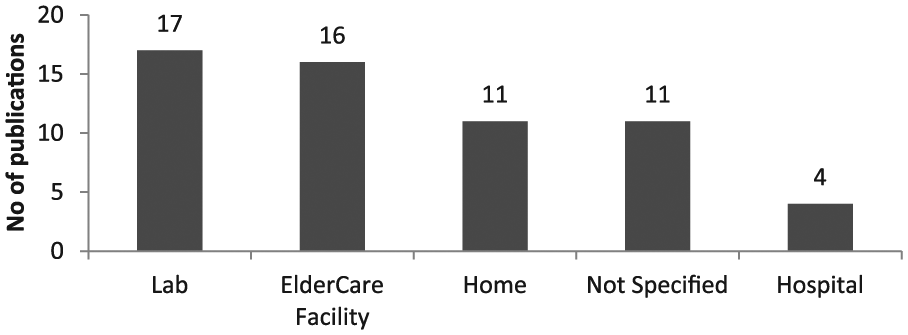
Setting of studies in final pool.
We also identified the number of participants employed in each study (see Figure 3). As can be seen, most of the studies have fewer than 30 participants. Although this may be because of time and budget limitations, it implies that most of the studies suffer of the small number of participants, and that consequently the findings cannot be generalised.
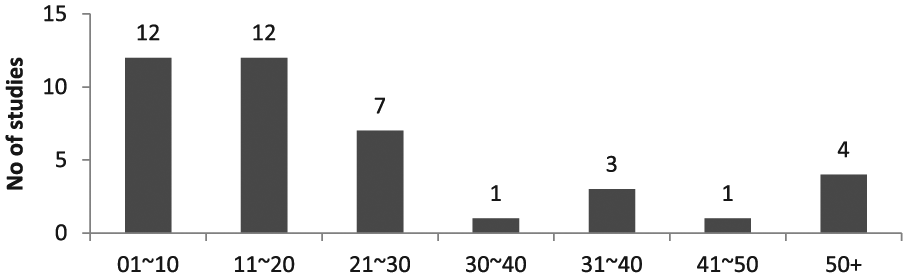
Number of participants in studies.
Problem areas that have been investigated by robotic technologies
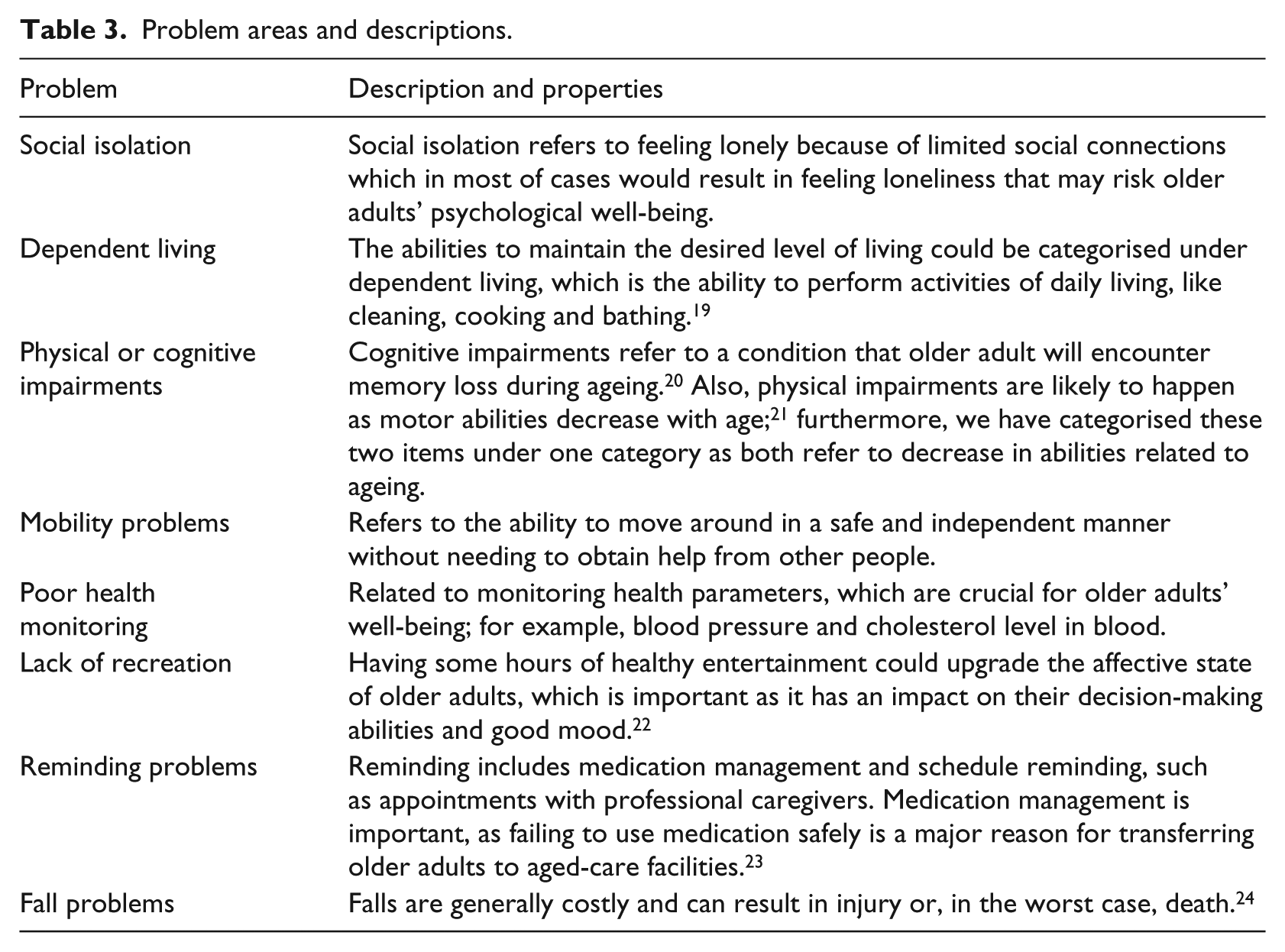
In this section, we have categorised the problems addressed by robot technology researchers in the final pool. To develop categories into which the problems could be allocated, we applied the process proposed by Ghapanchi and Aurum 17 and also used in Vichitvanichphong et al. 18 To adapt that process for this study, we extracted older adults’ problems and provided an explanation for each one. The problem areas in aged care that have been addressed by robotic technologies are shown in Table 3.
Problem areas and descriptions.
Robots used to assist older adults and their evaluated effectiveness
In this section, we have categorised robot technologies for aged care, defined their capabilities and then estimated their effectiveness in addressing older adults’ problems. Some researchers13,25–27 have previously tried to categorise robots, but have mostly focused on assistive robots and home services robots. To find out which robot types have been used in addressing older adults’ problems, we applied the process mentioned in the previous section. To adapt that process for this study, we extracted information on robots and their functions from the final list of selected papers and eventually formed a primary list of robotic technologies.
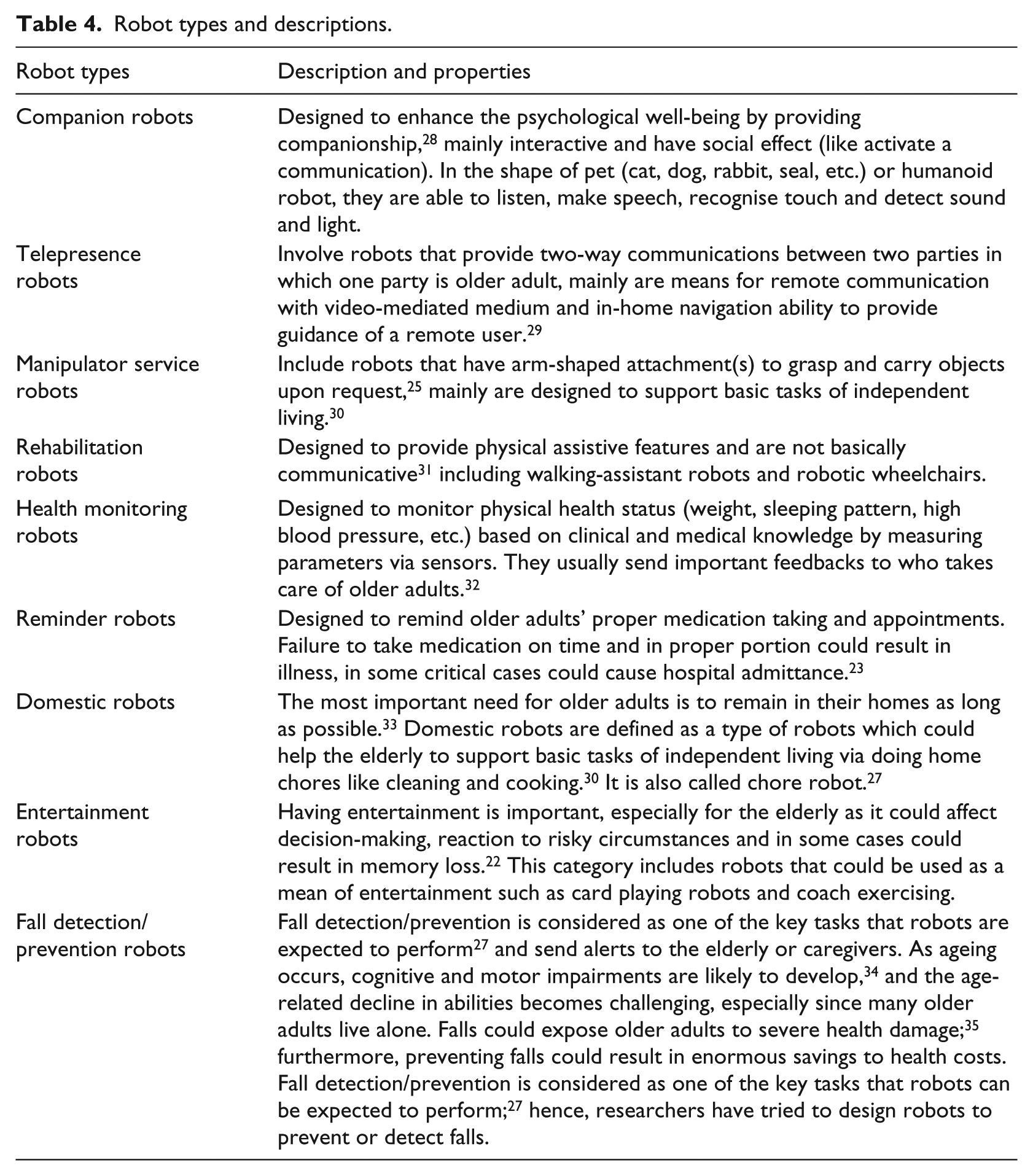
As a result, nine categories of robotic technologies were found in the final set of publications. These categories – companion robots, telepresence robots, manipulator service robots, rehabilitation robots, health monitoring robots, reminder robots, domestic robots, entertainment robots and fall detection/prevention robots – are discussed in the following sections. The table in each section shows, for that robot type, the source studies, the problem areas, the results and the subjective effectiveness scores. In Table 4, definitions of each robot technologies are demonstrated.
Robot types and descriptions.
Companion robots
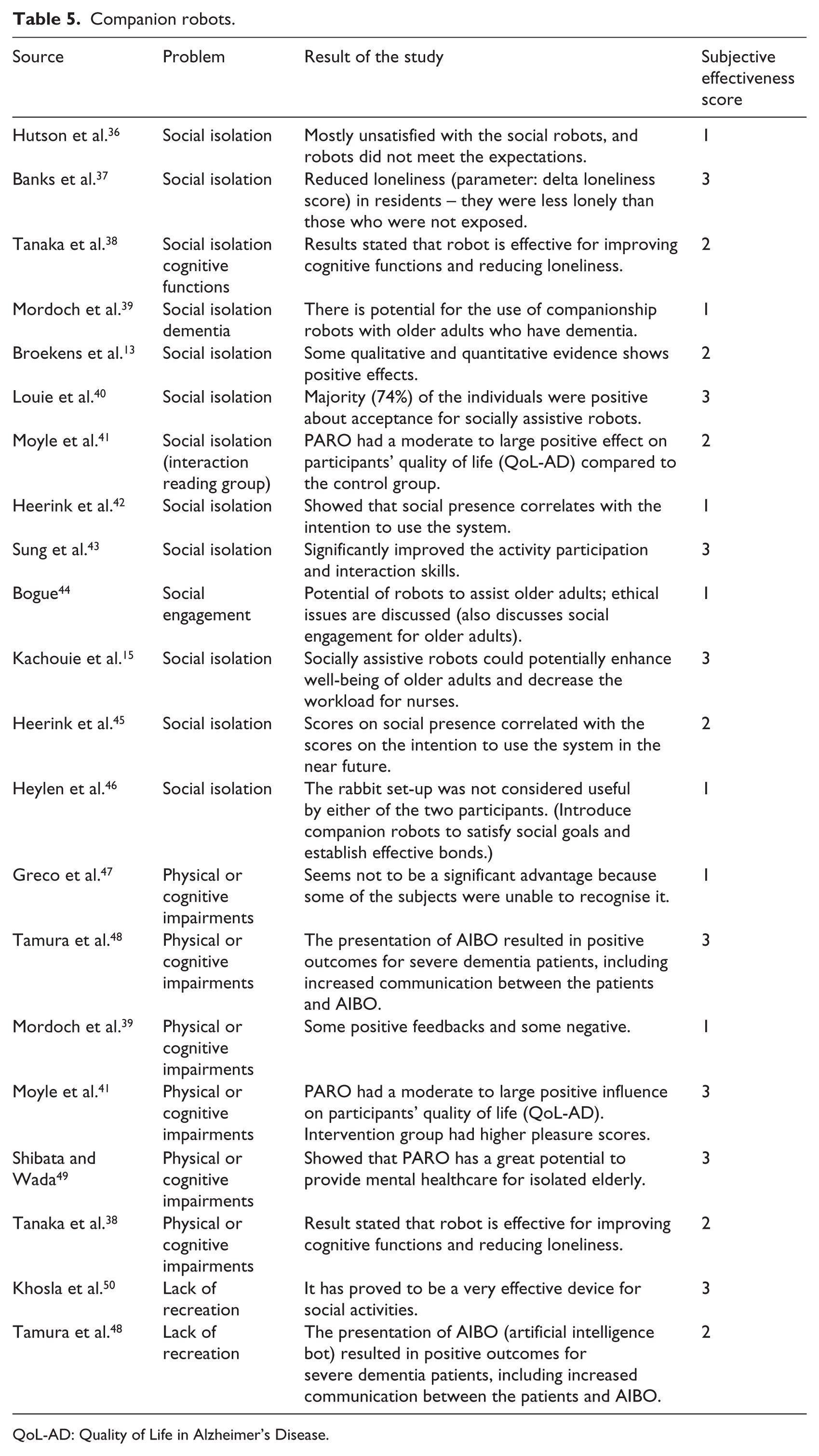
Table 5 shows the studies that have used companion robots.
Companion robots.
QoL-AD: Quality of Life in Alzheimer’s Disease.
In this category, there are 21 studies discussing three problem areas. First, companion robots have been widely used in addressing social isolation, which older adults will face more than other people because of the increased possibility of health problems and life-changing events – for example, the death of loved ones and friends; 51 furthermore, social isolation is a common problem that is frequently experienced by older adults. 52 Researchers have therefore tried to address this problem with companion robots, as reflected in the 13 studies in the final pool. The next problem, physical or cognitive impairment, has six studies that involve companion robots. These have been used mainly in cognitive impairment problems, because of their capabilities to interact with older adults, and because the symptoms of cognitive impairment are usually demanding for families to manage. 41 Also, this type of robot has been used to provide entertainment for older adults. The overall effectiveness of companion robots in each problem area is discussed in section ‘Critical analysis of robot technologies studies in aged care’.
Telepresence robots
Table 6 shows the studies that have used telepresence robots.
Telepresence robots.
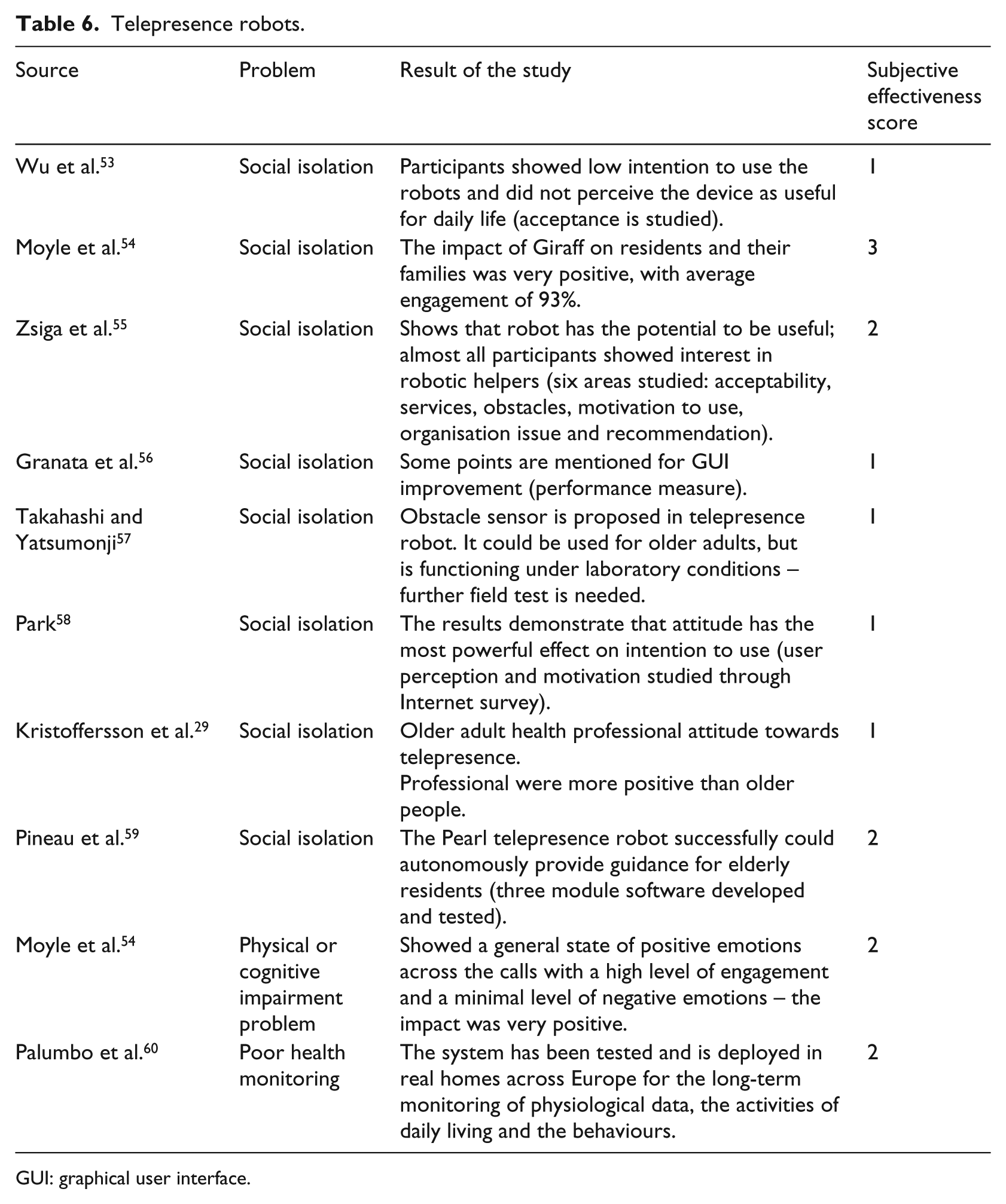
GUI: graphical user interface.
In the final pool, 10 studies have used telepresence robots for aged care. Eight of the 10 have used this type of robot to address social isolation and loneliness problems. As telepresence robots could bring a sense of connectedness between older adults and their loved ones, such as family members and friends, these robots are reported to have positive effects in decreasing social isolation and the sense of loneliness. Two other problem areas in which telepresence robots could be beneficial are (a) physical and cognitive impairment and (b) poor health monitoring problems. In these two areas, telepresence robots could connect older people with informal caregivers (family members and friends) or professional caregivers, to make sure that older adults are safe regarding their mental and physical health. In this way, their relatives would have peace of mind. The overall effectiveness of telepresence robots in each problem area is discussed in section ‘Critical analysis of robot technologies studies in aged care’.
Manipulator service robots
Table 7 shows the studies that have used telepresence robots.
Manipulator service robots.
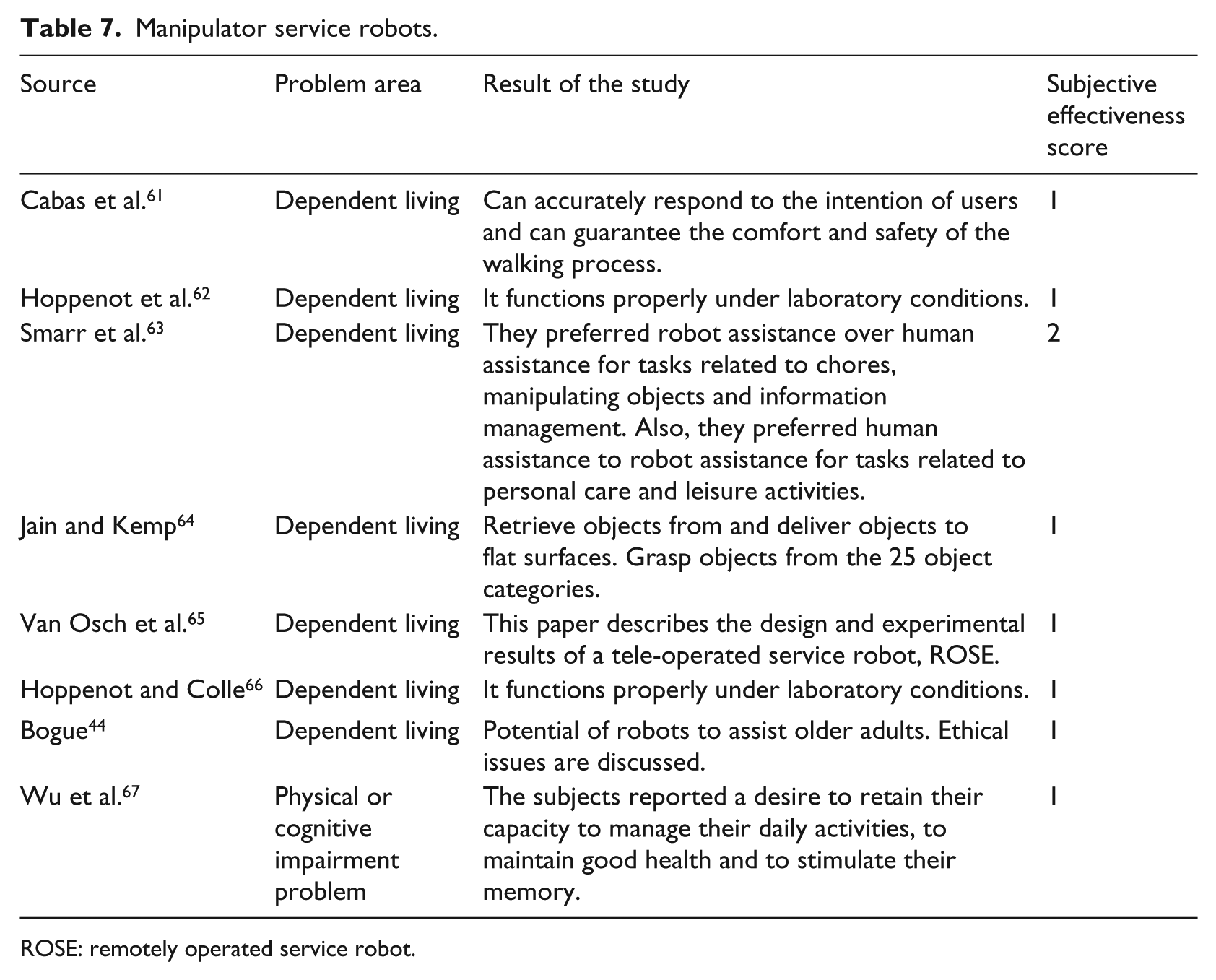
ROSE: remotely operated service robot.
Manipulator service robots are mainly used in addressing dependent-living problems (seven of eight studies) as the majority of older adults prefer to live in their own homes rather than in nursing facilities. This preference is facilitated by manipulator service robots, designed with the aim of carrying out home chores. Also, one study used a manipulator service robot to address physical impairment problems. Robots in this category could help to assist older adults with some kinds of motor impairment to lead independent lives in their homes. The overall effectiveness of manipulator service robot in each problem area is discussed in section ‘Critical analysis of robot technologies studies in aged care’.
Rehabilitation robots
Table 8 shows the studies that have used this type of robot.
Rehabilitation robots.
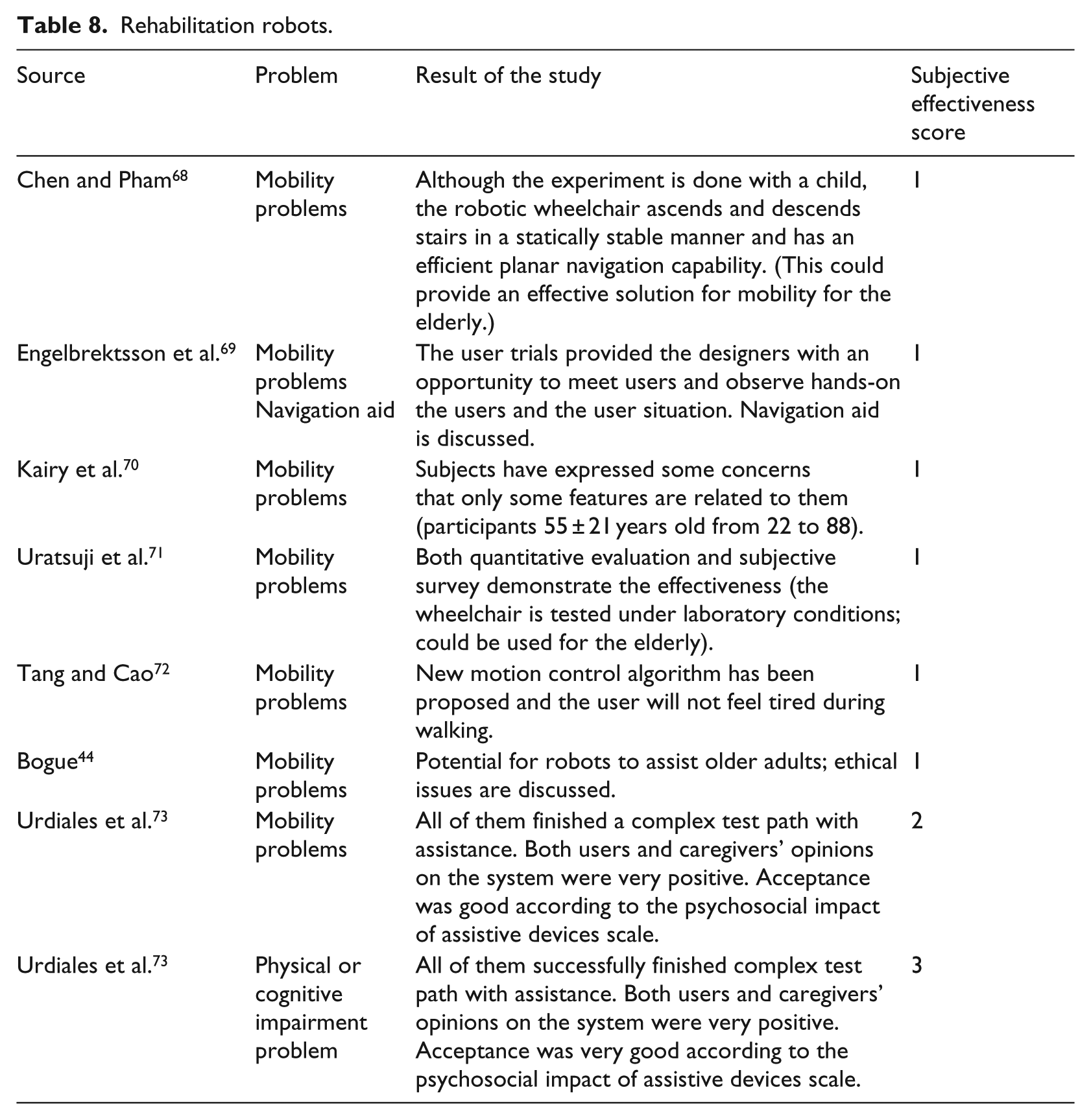
In the final pool, there are eight studies that used rehabilitation robots for aged care. Seven of the eight were used to address mobility problems. This is very reasonable, as they have been designed to provide transport facilities for the elderly in order to enable them to move safely within their home or community. Mobility problems are demanding and likely to afflict the elderly, because motor impairments are likely to develop with ageing. 34 Another application is to address physical impairment using a walking-assistant robot. The overall effectiveness of rehabilitation robots in each problem area is discussed in section ‘Critical analysis of robot technologies studies in aged care’.
Health monitoring robots
Table 9 shows the studies that have used this type of robot.
Health monitoring robots.
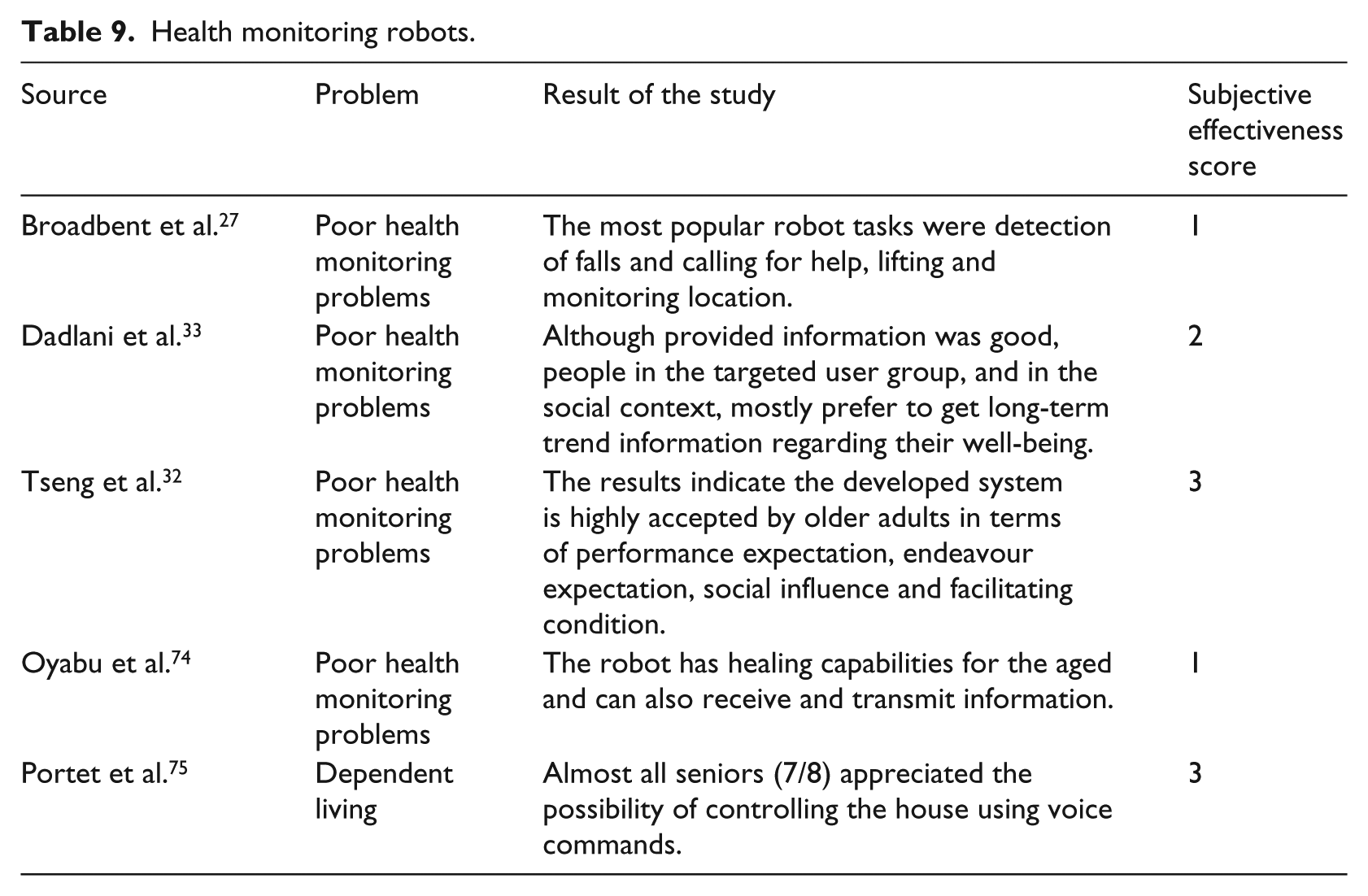
In the final pool of studies, there were five that reveal benefits of using health monitoring robots in aged care; four of the five studies addressed poor health monitoring problems. As ageing occurs, the levels of mental and physical health decrease. Furthermore, robots that monitor health have vital and crucial roles to play in bringing peace of mind for both the elderly and their dependants. Also, one study attempted to address the dependent-living problem. The overall effectiveness of health monitoring robots in each problem area is discussed in section ‘Critical analysis of robot technologies studies in aged care’.
Reminder robots
Table 10 shows the studies that have used this type of robot.
Reminder robots.
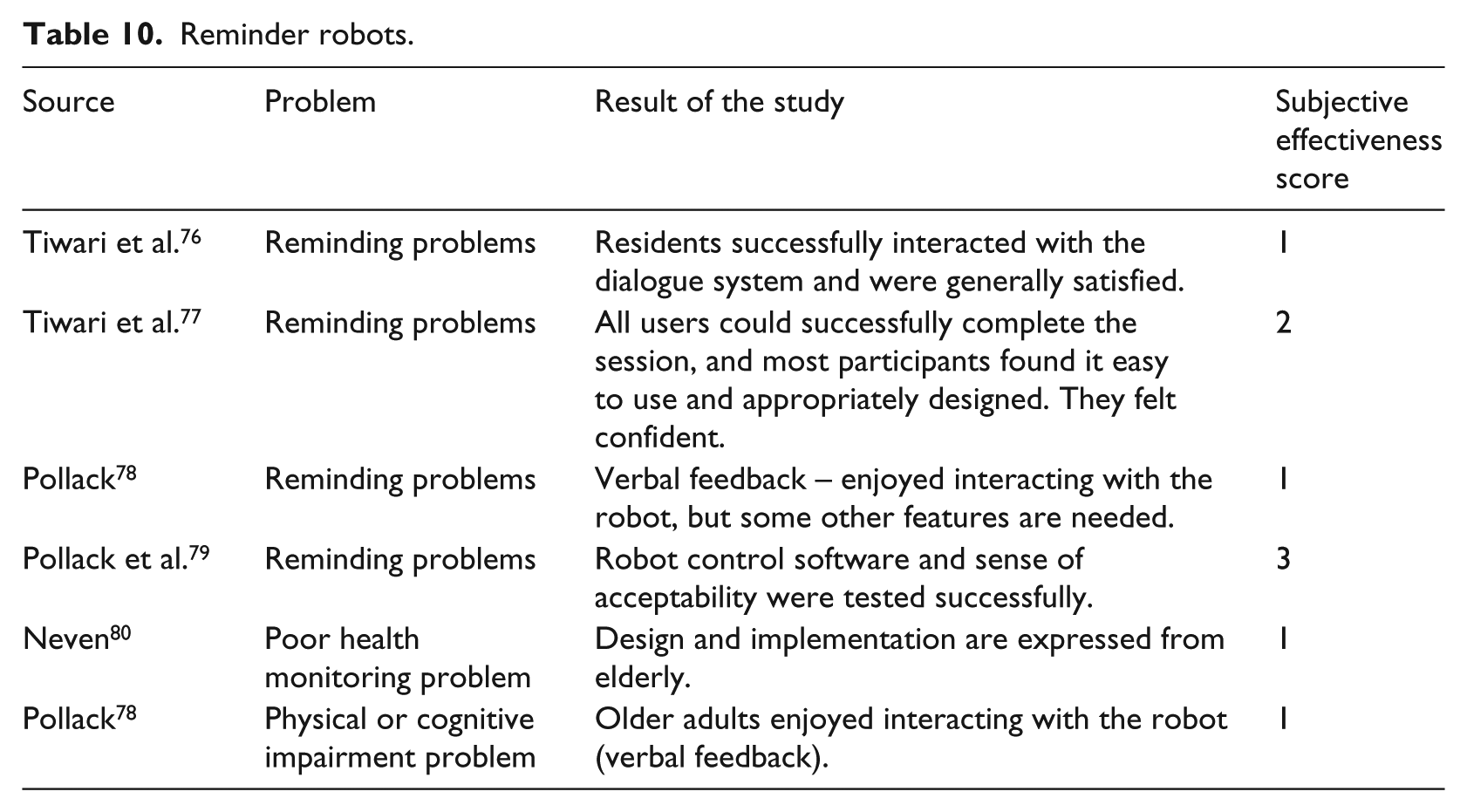
Six studies used reminder robots in aged care. Reminder robots have been designed to enhance the accuracy of medication management as most older adults could be required to perform complicated self-care tasks including medication taking. 81 Research has shown that the risk of not taking medication appropriately is prevalent in 60 per cent of the elderly population, 82 and failing to take proper medication safely is often a major reason for transferring the elderly to an aged-care facility. 23
Four studies discussed reminding problems, and the other two were about poor health monitoring and cognitive impairment (because older adults with cognitive impairment are more likely to forget their medications and appointments related to their health). Additionally, for older adults who have mild cognitive impairment, reminder robots have been designed and developed to assist them with their daily schedule, such as meeting appointments. The overall effectiveness of reminder robots in each problem area is discussed in section ‘Critical analysis of robot technologies studies in aged care’.
Domestic robots
Table 11 shows the studies that have used this type of robot.
Domestic robots.
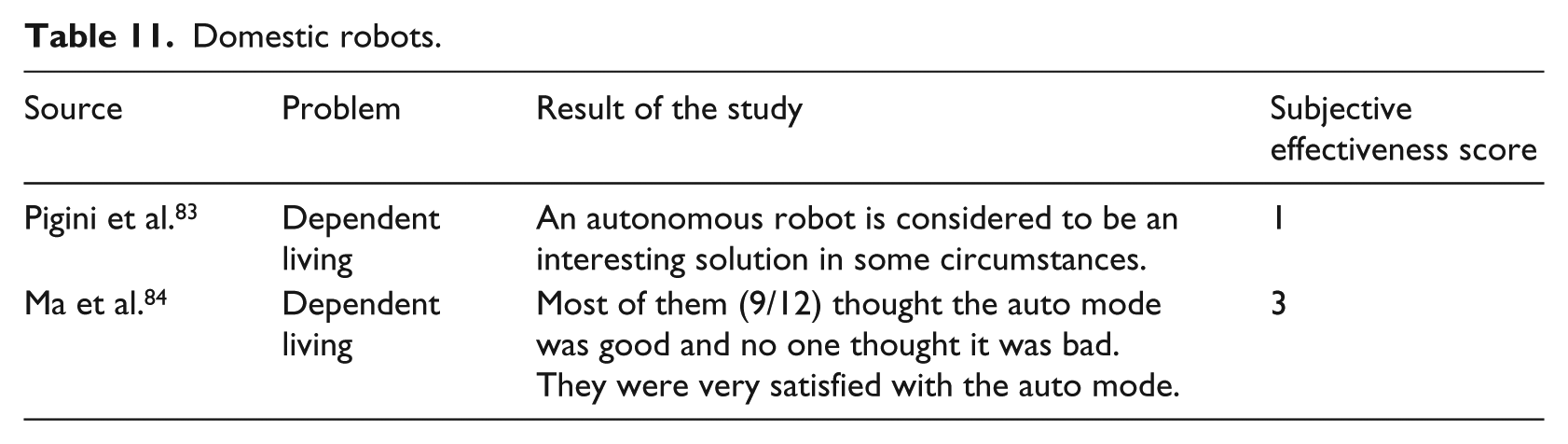
Although dependent living is one of the greatest concerns of older adults, few robots have been designed to assist in this area. As can be seen, only two robots are in the final pool of those specially developed for aged care. One explanation is that each robot needs its own customised design for each older adult. From the marketing point of view, this is not a very profitable pursuit, despite the fact that there is a large market in this area. The overall effectiveness of domestic robots in each problem area is discussed in section ‘Critical analysis of robot technologies studies in aged care’.
Entertainment robots
Table 12 shows the studies that have used this type of robot.
Entertainment robots.
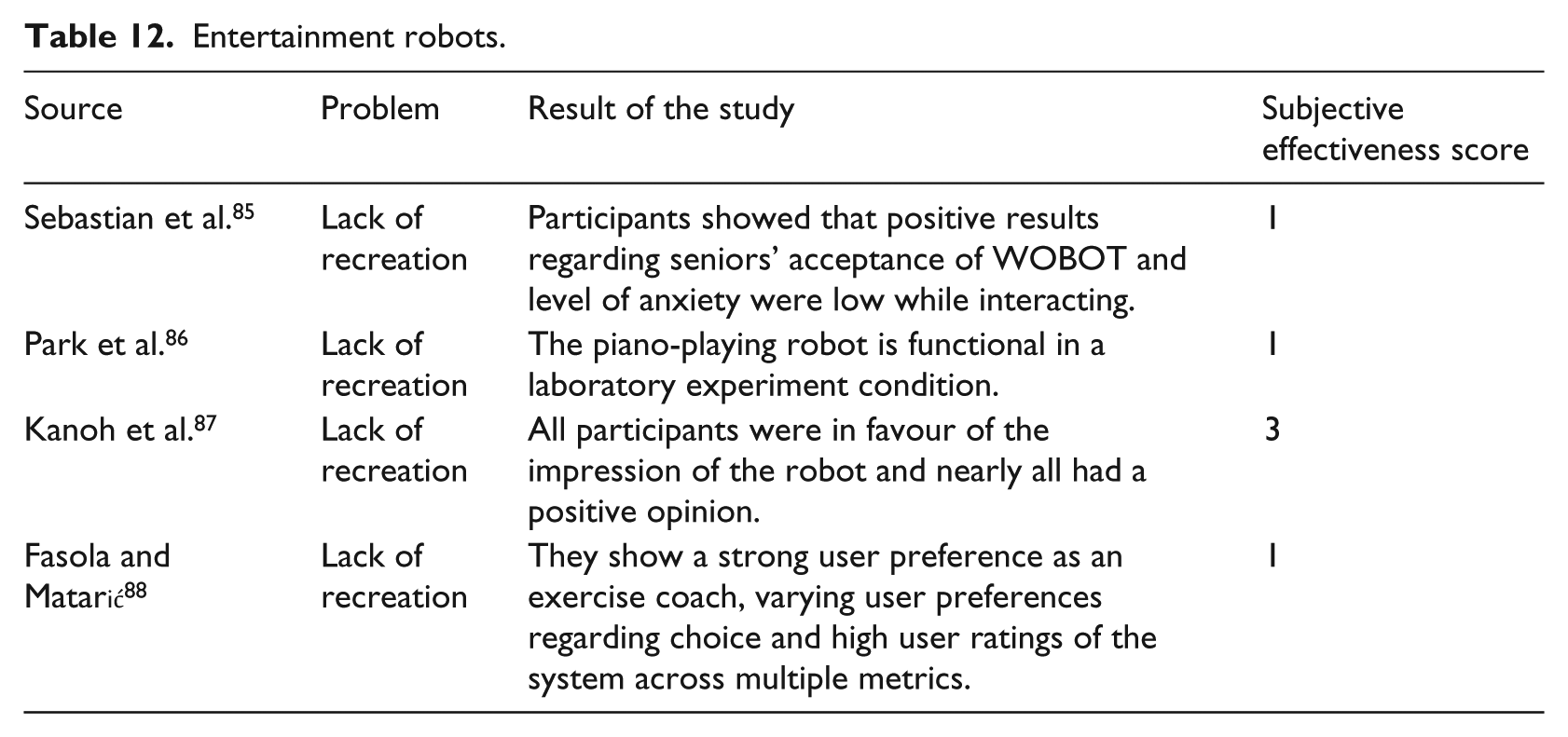
In the final pool, there were four studies that used robots to entertain older adults. It should be noted that older adults who have some hours of healthy entrainment will exhibit better moods and better affective states. 89 Such entertainment is vital for older adults as it can affect decision-making, memory and reaction to dangerous situations. 90 Furthermore, lack of recreation can be harmful to mental and physical health. The overall effectiveness of entertainment robots in each problem area is discussed in section ‘Critical analysis of robot technologies studies in aged care’.
Fall detection/prevention robots
Table 13 shows the only study that used this type of robot.
Fall detection/prevention robots.
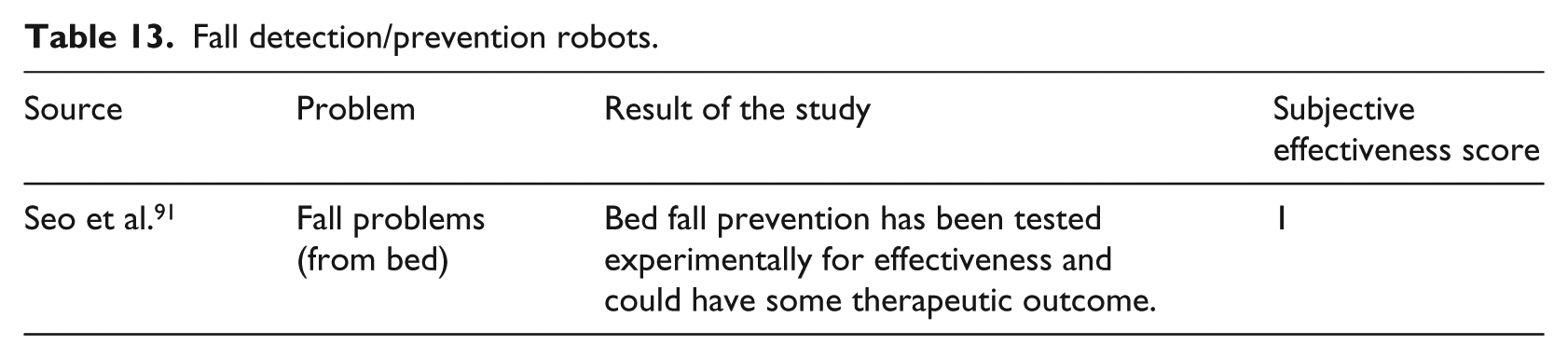
This publication in the final pool used fall detection/prevention robots developed for bed-ridden people who need a system for informing caregivers if a fall occurs. The overall effectiveness of fall detection/prevention robots in each problem area is discussed in section ‘Critical analysis of robot technologies studies in aged care’.
Infrastructure for healthcare
A healthcare infrastructure is composed of many components: facilities to make care accessible and feasible, trained personnel, sufficient training, users who maybe older adults or their family and friends and mechanisms to make sure that older adults will get enough help and support when they need it. In this section, we will discuss what infrastructure is needed to achieve this goal.
For each robot category, a certain set of infrastructures is needed. Companion robots are used to bring companionship to older adults. They use sensors to sense the situation and environmental surroundings using devices such as range finders, microphones, camera and angular velocity measurement devices. Other devices used include acceleration sensors and elevation and bumper sensors.15,38 In these types of robots (e.g. the Nabaztag), the need for an Internet connection is common as they need to connect to a server to execute certain commands. 15
For telepresence robots, the most important feature is videoconferencing (including a camera, display, speaker and microphone); 60 therefore, the requirement is a wireless Internet connection to make calls. 54 They also need a smooth floor for travel and enough room for the remote user to navigate through the location. 55
Manipulator service robots have an arm to grip objects. This arm can be mounted on wheelchairs or grips. They do need an apparatus like a wheelchair to provide support for the arm. Rehabilitation robots are designed to provide physical assistive features, including robotic wheelchair and walking-assistant robots; the infrastructure required is obstacle detection, control for manual or automatic control, switch for parking brake, 69 speed control option and sound alert when approaching obstacles. 70
Health monitoring robots may detect falls and call for carers or monitor location of people. 27 To make sure older adults are in good condition, information on medication, meals, activities, mood and calendar items could be provided and they will be sent to doctors remotely using weight, heart rate and other sensors such as load sensors in bed to monitor weight and sleep pattern. 33 Other sensors are common like odour sensing to detect breath odour, 74 light control sensors, heat adjust sensors, windows and shutters’ controllers (manage them remotely), control of kitchen devices like oven and refrigerators and a contact person in the event of an emergency situation. 75 They therefore need communication infrastructure and connection to a power source.
For reminder robots, reminding activities are applied via software modules and medication reminder application. Also, speaker could be used to announce time of medication intake. 77 Domestic robots need to be fit in home setting to do home chores like cooking, cleaning, washing and bathing. The infrastructure is customised based on the home environment; however, general robots like cooking robot could be implemented in home. 63
Entertainment robots are able to perform entertainment activities such as card playing, teaching exercise techniques and playing a piano within a motion imitation system. 86 Some of these activities can be done with companion robots, 87 for example, physical exercise and memory games. For fall detection, the robot infrastructure needed are sensors to sense the fall of the person and Internet access to allow for contact with relatives or the doctor to report emergency situations. 91
Critical analysis of robot technologies studies in aged care
After categorising and evaluating the effectiveness of each study (as described in previous sections), we examined how researchers used robots from these categories in aged care. Figure 4 depicts the percentage of publications in each category; Figure 5 shows the number of publications in each robot category in the final pool, along with the average subjective effectiveness score.
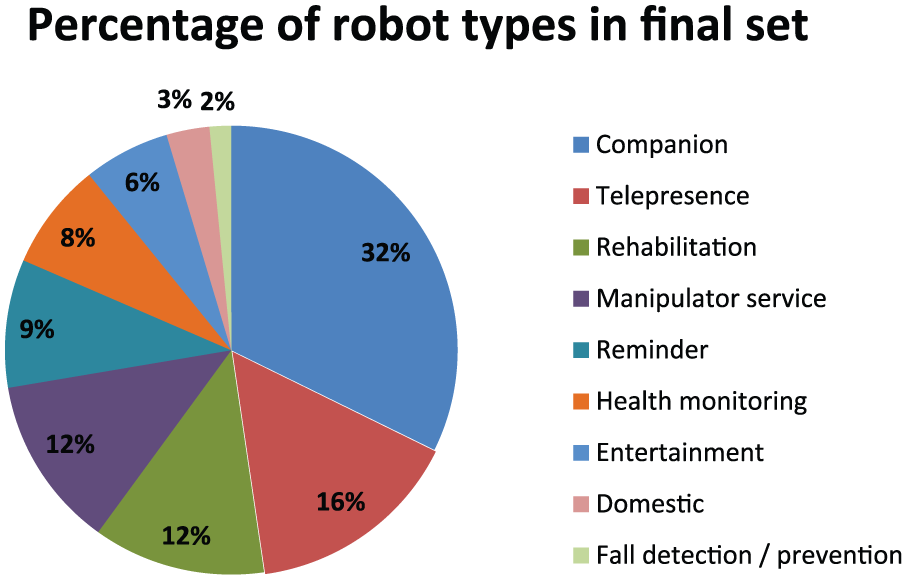
Percentage of publications in each robot technology (studies demonstrated in sections ‘Companion robots’ to ‘Fall detection/prevention robots’).
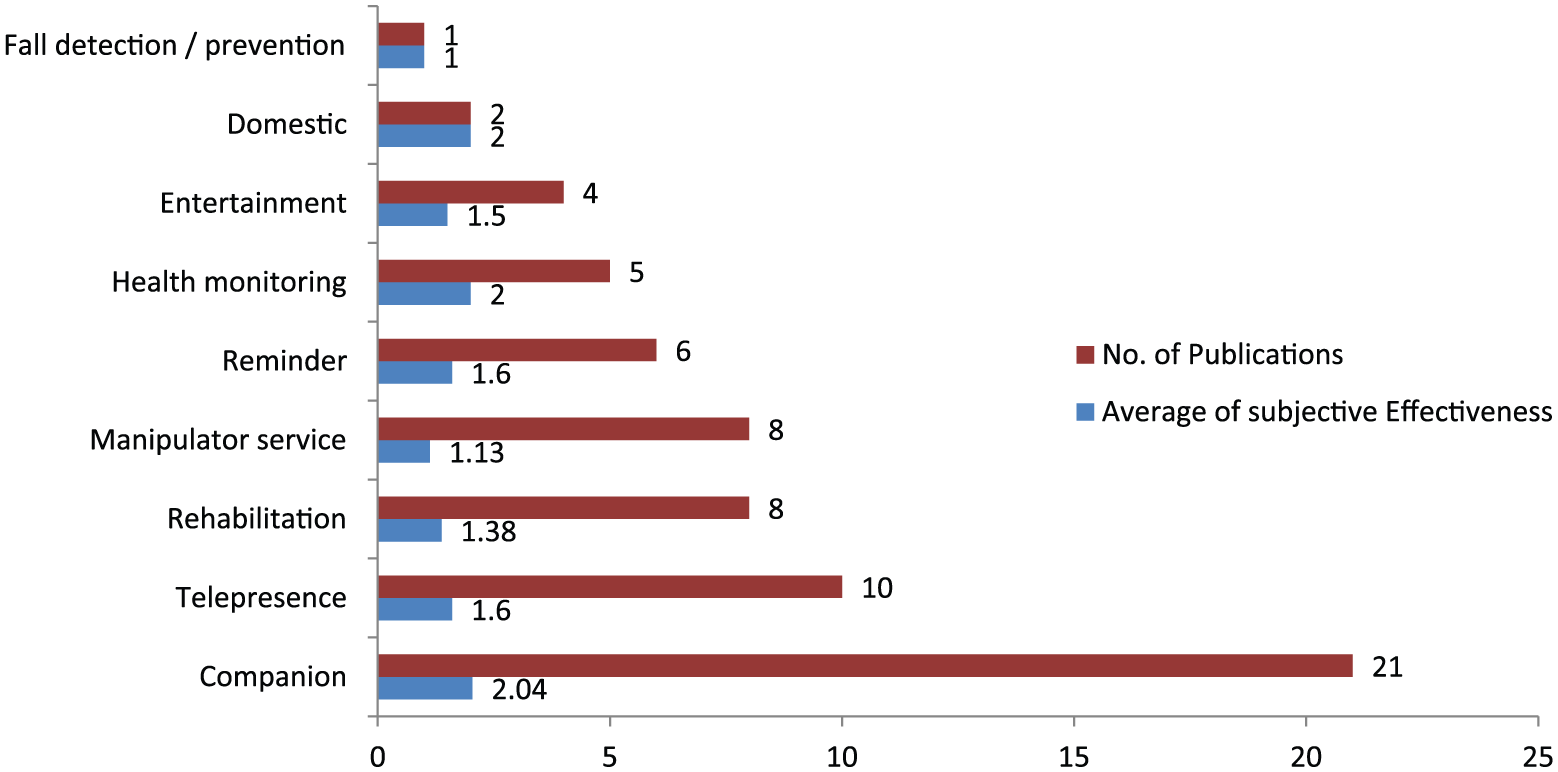
Number of publications in each robot category, with the average of subjective effectiveness.
In Figure 5, the red bars represent the number of publications and the blue bars show the average subjective effectiveness score. As can be seen, about one-third of all studies used companion robots to address older adults’ problems – mainly problems of social isolation and cognitive impairment; these had an average effectiveness score of 2.04, which shows that companion robots are about 70 per cent (2.04/3) effective in addressing the two above-mentioned problem areas.
In rank 2, telepresence robots are seen to account for about 20 per cent of all studies. As with companion robots, social isolation is the most studied problem area with telepresence robots. In summary, robotic researchers have addressed social isolation with companion robots (13 studies) and telepresence robots (8 studies). The average effectiveness score is about 54 per cent (1.6/3), which shows that more research is needed in this area due to its being a relatively new field in aged care.
Rank 3 illustrates the data on rehabilitation robots. This type of robot could be more beneficial for older adults, the majority of whom experience motor impairment during ageing. Seven of the 10 studies addressed mobility problems; the others studied physical impairment problems. The average effectiveness score is 46 per cent (1.38/3), which shows that robots are not quite successful in this problem area, and that there is plenty of room here for improvement.
Other robot types – reminder, health monitoring, entertainment, domestic and fall detection/prevention robots – account for 40 per cent of all studies (Figure 5). It should be noted that these areas are directly related to dependent living of older adults and have attracted less attention from researchers; for example, domestic and fall robots may have been neglected due to their complexity and the level of customisation that is needed in these areas. Also, the design and development of robots in such areas are more complicated and budget-demanding compared with the first two categories (companion and telepresence). These limitations inhibit research centres from becoming more involved.
The effectiveness of the various robotic technologies for specific problems, based on their subjective effectiveness scores, is compared in Table 14. The effectiveness scores are shaded in green, and the number of publications in each segment is highlighted in yellow.
Comparative analysis of the effectiveness of various robotic technologies.
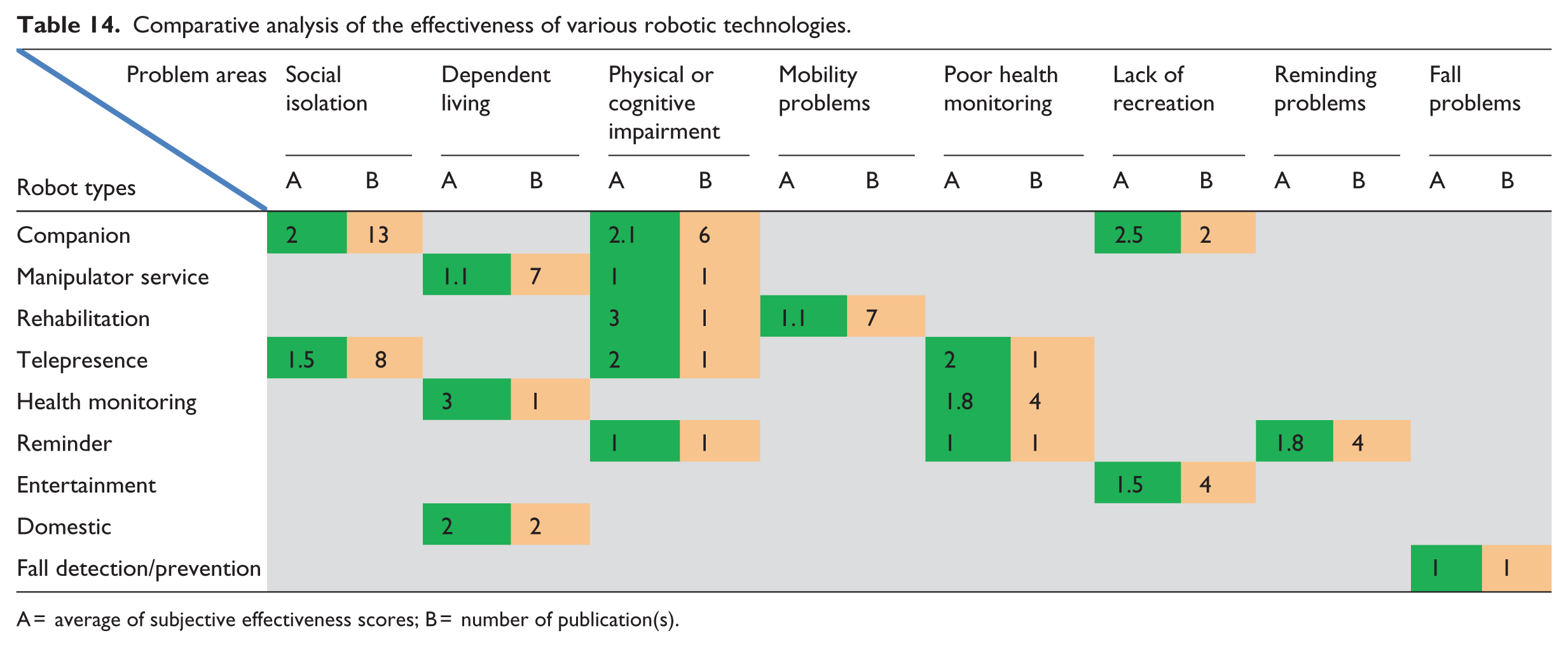
A = average of subjective effectiveness scores; B = number of publication(s).
Various robotic technologies have been applied to specific problem areas, except for fall problems, reminding problems and mobility problems. Entertainment, domestic and fall detection robots have been applied to address one problem, whereas companionship, telepresence and reminder robots have been used in three different problem areas, with the highest subjective effectiveness score of 2.1 for companionship robots.
Among the problems that have been addressed by several types of robot is impairment (physical or cognitive), which shows the attention given by researchers to taking different approaches. The outcomes of these attempts are more positive for cognitive impairments, especially dementia, as the majority of publications have addressed this issue.
The data of Table 14 must be interpreted with caution, as the numbers of publications in the segments differ widely, from 1 to 13. To make better comparisons, both average subjective effectiveness score and the number of publications should be considered simultaneously. Some robotic technologies, such as companionship, have attracted more attention, and different dimensions have been scrutinised by performing several studies; however, this does not apply to some others, like domestic robots.
Discussion
The design and development of technologies to help older adults are growing rapidly. 23 Whereas human caregiving cannot be replaced by intelligent technologies, technologies can provide supplementary caregiving, which has the potential to improve the quality of life of older adults and professional caregivers. 10 One of the promising areas is robotic technologies, which have made a significant impact on healthcare in recent years. 92
The main aim of this study has been to identify, select and synthesise all the research on robotic technology conducted within the aged-care field. Based on the final set of selected papers, it is apparent that researchers in recent years have become more interested in robotic technologies to address the problems of older adults (Figure 6); this is depicted in the linear trend line shown in black. This research has contributed to knowledge about the usefulness of robotic technologies by determining the role of this technology in assisting older adults, and thus by improving their lifestyles.
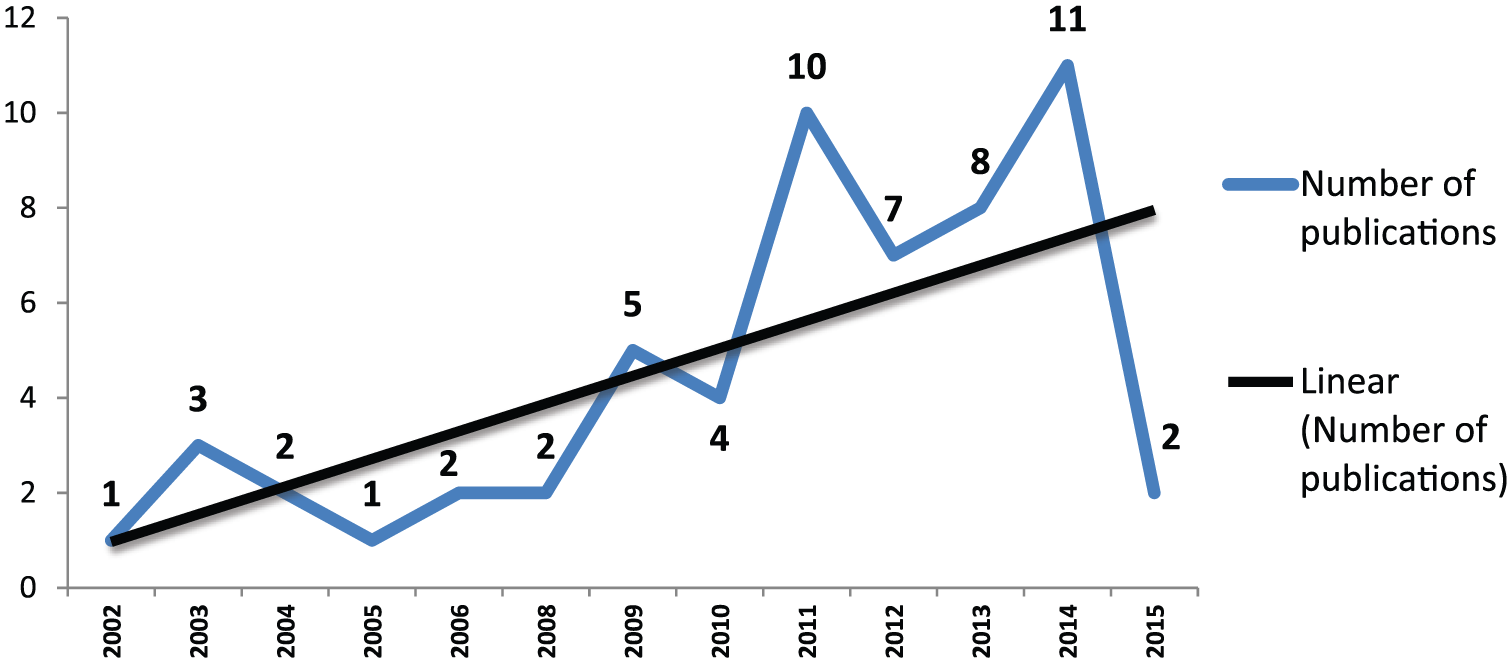
Number of publications in each year.
It should be noted that the results of this research have depended on the set of keywords, inclusion/exclusion criteria and subjective effectiveness of the scores, which are based on outcomes. Also, the inaccessibility of papers in languages other than English has put a limit on the final set used. We tried to broaden our inclusion criteria to cover, as much as possible, the widest range of robot technologies in aged care to provide the most comprehensive picture. The results of this research should be considered with these limitations in mind.
To answer the first research question – What type of robot technologies have been developed to address aged care so far? – we categorised robot technologies that were applied in older adults’ problems, based on their main application (for example, companion robots could be used for companion or entertainment; but based on their main application, this kind of robot was used more to provide companionship for the elderly). Robots were categorised as companion, telepresence, rehabilitation, manipulator service, reminder, health monitoring, entertainment, domestic and fall detection/prevention robots.
To answer the second research question – How effective have robotic technologies been in overcoming older people’s problems? – and to find out how robot technologies are effective in addressing older adults problems, we evaluated the effectiveness of each study based on the stated results. In total, based on this evaluation, robotic technologies are 54 per cent effective (1.608/3), which is relatively low; however, in general, this result implies that these technologies have a positive effect. According to these results (see section ‘Critical analysis of robot technologies studies in aged care’), more research is needed in this area to increase the level of application of robots in aged care.
Furthermore, we investigated the average effectiveness score of robot clusters in addressing each problem area. The comparison table (Table 14) reveals that the most effective robot type in addressing social isolation is companion robots, with an effectiveness score of 2 (in 13 publications), followed by telepresence robots, with an effectiveness score of 1.5 (in 8 publications). These are promising results and show that social isolation and loneliness have been at the centre of researchers’ attention in recent years.
As can be seen in Table 14, robotic technologies have been given the greatest attention in addressing social isolation problems, with 21 publications in the final pool, while the least attention has been given to addressing fall problems (only one paper). It is apparent that researchers have been attracted to problems involving mental or psychological states of the elderly, whereas other problems – such as independent living and fall detection, although as important as mental health – received less attention. A possible explanation is that running interventions to address mental issues requires a smaller budget and less time in comparison with other problems involving physical aspects.
As stated in Table 14, the three problems that are best tackled via robotic technologies are social isolation, physical and cognitive impairment problems and reminding problems, while the three at the other end of the scale are dependent living, mobility and fall problems. Furthermore, researchers are recommended to ensure uniformity in addressing older adults’ problems and to focus on less researched areas, such as dependent living, mobility and fall problems.
Based on the results from section ‘Rehabilitation robots’, this study showed that robotic technology needs more attention from researchers to improve its effectiveness for older adults; however, the main point is that other stakeholders too – professional caregivers, family members and friends – are required to be involved. These caregivers are in constant contact with older adults and can contribute additional information about the kind of needs to be addressed and about their expectations and attitudes to robotic technologies. As one of the main aims of robotic technology is to assist older adults, it could result in reducing aged-care costs and increasing the acceptance of robotic technologies generally. With these insights about needs, researchers are in a better position to conduct appropriate research and develop products that would be more effective in addressing older adults’ problems.
Most of the studies in the final pool were conducted under experimental conditions but did not use a control group; however, all were included in the study because they contributed some positive observations. We acknowledge that researchers have limited time and budgets; however, we recommend that future research use randomised controlled trials in home settings to obtain robust outcomes in the assessment of effectiveness.
Other problems with the studies in the final pool are that most of them were unclear in their reporting, provided inadequate details and used relatively small sample sizes. These flaws make their results difficult to replicate and are unreliable sources for making generalisations applicable to other cases (Figure 3). In spite of these limitations, such studies have been included because they demonstrate potentially positive effects and potentially worthwhile insights into outcomes of robotic technologies applied in aged care.
Therefore, future researchers need to answer the question of how different robotic technologies can contribute to assisting with specific problems and to measure their acceptance by a large sample of older adults.
Finally, robotic technologies must be designed carefully to avoid encouraging lifestyles that degenerate into unhealthy ways of living; for example, there is a risk of replacing human contact with non-human robot contact, or decreasing human contact in a harmful way that could affect the older adults’ psychological well-being. Therefore, it is essential for robotics researchers to consider ethical factors associated with the well-being of individuals.
Implications for practitioners
The findings of this study provide several implications for practitioners by showing the benefits of robotic technologies.
First, governments are trying to cope with the economic pressure of aged-care expenses, 93 as the number of older adults is set to increase over the next decades. Another problem is that the number of caregivers will be insufficient in coming years and the ratio of caregivers to the elderly is decreasing. Based on demographic information of birth and death rates, this decreasing trend seems to be continuing. Furthermore, governments have the responsibility to address the increasing demand for professional caregivers. Because the utilisation of robotics in aged care is a relatively new area and needs to be accepted by older adults’ society, governments should implement new legislation and regulations about technologies to assist the elderly to maintain independent lifestyles.
This study has demonstrated that robotic technologies have some positive potential in aged care and, regarding the above-mentioned issues, governmental bodies and policy makers are advised to support new research to increase the acceptance of robotic technologies through better budget allocations. The media are also encouraged to play a role in generating images of the elderly being in favour of using robots. For governments, the most important advantage of exploiting robotic technologies is the potential for creating new jobs and opportunities that will help both society and older adults.
Second, for aged-care practitioners, studies have shown that they are in favour of robotic technology functions with better health monitoring capabilities such as fall detection, detecting dangerous positions and calling professionals when an individual needs help. 94 Utilising robotic technologies could create opportunities for caregivers to offer better services while monitoring activities are carried out by robots. In addition, new jobs and possibly greater career prospects are likely to be created. Furthermore, caregivers’ jobs will undergo modifications in the future. The disadvantage of this trend is that it could result in a loss of jobs; however, applying robots to aged care offers a huge easing of physical and mental burdens. This issue needs professional caregivers to escalate their skills and enhance their attitudes towards robotic technologies by referring relevant tasks to robots and concentrating on the new needs of the elderly.
Third, the findings of this study will be beneficial to designers, engineers and robot development companies. Some studies have shown that the acceptance of robots is fairly low among older adults. 53 Companies may benefit from the new trend by investing in research on designing and developing robots to address older adults’ needs and making a new feasible market by escalating the acceptance of robots in society. This could be achieved by involving all the stakeholders in the early stages of design and development by carefully establishing their attitudes and needs and ensuring their acceptance in the final stage. Companies could have new possibilities to expand their market opportunities in the domestic and international ranges.
Implications for researchers
For new robotics researchers, this study provides an extensive overview of the research that has already been conducted by other researchers. The study recognises the problems and the robots designed to address each problem, as well as measuring the effectiveness of robotic technologies. This study showed that robotic technologies offer various advantages to support older adults in maintaining an independent lifestyle and a better quality of life. These technologies could provide opportunities for researchers on state-of-the-art robotic technologies to raise their research profile and status. They are also encouraged to make connections with potential investors to introduce the results to the robotic aged-care market. To be successful in the market for aged-care robotic technologies, researchers should integrate older adults’ needs with the new robotic technologies developed in recent years.
This literature review has shown the kinds of needs of older adults that have been addressed by robots and the gaps in the studies that could be useful for future researchers. It is crucial to understand that the first major step in addressing older adults’ needs is to determine which needs have the highest priority. An extensive and broad needs’ assessment seems to be mandatory prior to undertaking the design and development of new robots by researchers; such an assessment would make a great contribution to finding out where robotic assistance would be most profitable as well as the design requirements in the future.
It is worth reiterating that some fields in robotic technology have received more attention than others, such as using companion robots to address memory cognitive impairment problems. Furthermore, researchers should carry out research in the new fields, for example, activities of daily life, which will enable older adults to remain in their homes.
Other critical issues are (a) that most of the studies suffered from a lack of details about the study design, (b) that most failed to employ a randomised control and (c) that to measure the acceptance of robots by the elderly, experiments should be conducted at home, not under laboratory conditions.
Conclusion
Robotic technologies have been a rapidly growing field in recent years and can be applied to improve the quality of life of older adults. This study has reviewed and consolidated the research into how researchers have introduced various robotic technologies to assist older adults. This review shows that although robotic technologies have achieved positive effects, more studies are needed.
Footnotes
Declaration of conflicting interests
The author(s) declared no potential conflicts of interest with respect to the research, authorship and/or publication of this article.
Funding
The author(s) disclosed receipt of the following financial support for the research, authorship and/or publication of this article: The author acknowledge funding for this project from Sundale Ltd and Entag Pty Ltd, Australia (QLD).
References
Supplementary Material
Please find the following supplemental material available below.
For Open Access articles published under a Creative Commons License, all supplemental material carries the same license as the article it is associated with.
For non-Open Access articles published, all supplemental material carries a non-exclusive license, and permission requests for re-use of supplemental material or any part of supplemental material shall be sent directly to the copyright owner as specified in the copyright notice associated with the article.
