




Abstract
In this work, the authors present two eHealth platforms that are examples of how health systems are migrating from client-server architecture to the web-based and ubiquitous paradigm. These two platforms were modeled, designed, developed and implemented with positive results. First, using ambient-assisted living and ubiquitous computing, the authors enhance how palliative care is being provided to the elderly patients and patients with terminal illness, making the work of doctors, nurses and other health actors easier. Second, applying machine learning methods and a data-centered, ubiquitous, patient’s results’ repository, the authors intent to improve the Down’s syndrome risk estimation process with more accurate predictions based on local woman patients’ parameters. These two eHealth platforms can improve the quality of life, not only physically but also psychologically, of the patients and their families in the country of Panama.
Introduction
As mentioned in Saldaña and Vargas-Lombardo 1 and Tran et al., 2 in Panama, a lot of medical information are still being record in paper. The information systems related to health are not developed with standards that help to manage the patient’s clinical information. Down’s syndrome and palliative care (PC) are some examples of these affected areas.
The information provided by the finance and economic ministry 3 shows that 1 in every 100 births presents Down’s syndrome, and around 15,000 cases were registered by 2012 in Panama.
Senior population aged 60 years in Panama is increasing because advances in medicine have achieved an increase in life expectancy, but most people also arise likely to have advanced disease, involving prioritization attentions at the end of life. That is why providing control pain in patients with terminal disease takes more importance everyday in the health sector as a humanitarian necessity is not a medical obligation.
Structuring a platform capable of bringing the management of patients receiving PC in Panama is necessary to help achieve the main goal of PC, providing a better quality of life for patients and their families.
To research and improve the Down’s syndrome risk estimation process and how PCs are provided in Panama, it is necessary to collect, organize and share information using artificial intelligent methods and ubiquitous computing. In this article, we present two case studies of eHealth platforms designed and developed based on ubiquity, machine learning techniques and interoperability.
The rest of the document is organized as follows: section “Ubiquity” describes what ubiquitous is. Section 3 explains the origins of PC. Section “NB” explains briefly what naive Bayes (NB) method is. Section “PC in Panama” provides information of PC in the country of Panama. Section “Down’s syndrome” resumes what is Down’s syndrome and the impact in the country of Panama. Section “Ubiquitous eHealth platform design, development and implementation” explains the main point of the analysis, design, development and implementation of both platforms. Section “Conclusion” presents the conclusion.
Ubiquity
Ubiquity is the quality of ubiquitous and it refers to the ability to have presence everywhere. Initially, this term was used as a reference to God who is capable of being everywhere.
Mark Weiser describes in his work “The Computer for the Twenty-First Century” 4 the impact that the communication and information technologies would have on the everyday life of the human being. He developed a program in the late 1980s that he called Ubicomp (Ubiquitous Computing). In this model, the communications’ capacity was beyond what was expected at the time, so it opened the next generation of computing with information technology accessible wherever and whenever.
Weiser thought that Ubicomp was opposite to virtual reality because virtual reality puts people on a computer-generated world, while Ubicomp places computers at the service of people in the real world. Based on that, Weiser expected to create an environment where devices regardless of the size and functionality could interconnect and manage information, making it more accessible and consistent with the people’s daily activities.
Ubicomp has many areas of research and application, with healthcare being one of them, 5 which gives rise to the term Ubicomp in the area of health or pervasive healthcare. It aims to provide technology services to the health sector of Ubicomp allowing access to information inside and outside the medical facilities.
Ubicomp has become notorious in recent years with several projects. The telemonitoring service offered by telemedicine is the result of one such project, which allows specialists to perform remote and real-time monitoring on older patients or PC patients. 6
Ubiquitous System Patient Medical Records or SUHPC is another example of ubiquitous projects created based on Ubicomp, which allows to manage the patient record remotely. The information can be accessed in real-time in diverse institutions based on the health information requirements. 7
NB
NB8–10 is a probabilistic classifier and a machine learning technique that uses the Bayes’ theorem, but at the same time assumes a “naive” strong independence between the variables which are independent of each other. NB is a technique that requires first to learn using a training set of classified data. After one introduces the selected data as a representative sample of the population, a model is created. This model will receive the non-classified data to be analyzed and classify it based on the rules of the model.
The advantages of using NB are as follows:
It is not complicated to implement.
It provides accurate results although the sample of data for training is small.
Some of the disadvantages are as follows:
If the variables to analyze present some dependencies, it would reduce considerably the results of the test.
Using NB, we intent to provide a method to add an extra evaluation layer to the prediction process already presented in Saldaña and Vargas-Lombardo. 1
PC in Panama
Studies conducted in 2012 indicated that 8 percent of the world population are more than 65 years, and it is estimated that within 20 years this percentage will increase to 20 percent. 11 This increase in older people is due to the great strides we have today in medicine, as it provides improvements in the treatment of various infectious diseases and other innovations. However, this increase in life expectancy involves chronic degenerative diseases in the patient, which also affects the families of the patient.
According to the 2010 census of Panama, adult population aged 60 years and older is about 9.7 percent, and it is estimated that by 2020 this will be around 12.4 percent, 12 indicating that this increase will involve a great impact on the health sector in the country, bringing with it the need to ensure greater emphasis on these people.
These home care services were given the emergence of HOSPES Association for Palliative Care in 1992, this being the first in the country to offer care in home mode. Three years later in 1995, the Program for Palliative Care and Pain Relief was created within the premises of the National Cancer Institute (ION), allowing it to provide the care in outpatient and inpatient modes. In 2003, law 68 arose, which required all health facilities in the country to provide the PC with professionals within their facilities. In the years 2006–2007, the PC was provided inside the country, covering every type of care. Finally, on 21 June 2010 under Resolution 499, the National Palliative Care Program of Panama was created.
The hospice has been providing in Panama for over 20 years, which has evolved over time but still the information is not electronically saved and many times the PC is not applied to the patient when it is necessary. In some cases, the PC arrived the patient’s home after the patient had died.
Down’s syndrome
Trisomy 21 also known as Down’s syndrome is an aneuploidy where the fetus shows a genetic alteration having three chromosome 21. 13 This trisomy is one of the major causes of deficiencies or physical disabilities in children and premature deaths that take place before birth, situation that many mothers are unaware of. This chromosomal disorder causes various physical deformities, hearth defects, organ malformations, mental retardation, thyroid disorder and diseases such as Alzheimer’s. Trisomy 21 responsible for Down’s syndrome is the most frequent aneuploidy. How is the Down’s syndrome currently calculated? As mentioned in Saldaña et al., 14 screening is a probabilistic technique applied to a population to calculate the risk or probability that the fetus suffers a particular disease.
In the screening, first serum and biochemical markers are established and compared with historical median reference values of the population. When the test results of the patient and the multiple of median (MoM) of the markers have different values, the test is considered positive.
The screening methods for Down’s syndrome are performed in the second and first trimesters, the first trimester being the most difficult to execute. One of the main barriers of this test is the lack of sampling data to perform the test.
For the first trimester trisomy 21 screening, it is necessary to perform a more effective detection taking into consideration some of the characteristics of the mother such as her weight, her ethnicity, whether she has diabetes or whether she smokes. These factors could affect the result of the test so it needs to be corrected.
Ubiquitous eHealth platform design, development and implementation
Ubiquitous palliative healthcare platform
The first step was to make a state of the art of PC in Panama. All the requirements, resources, actors, process and current issue were gathered from the specialist, current documents, final user interviews and patients. All this information was analyzed to develop a ubiquitous platform to provide an improved PC to the patients in the country. Figure 1 shows the general use cases and actors of the system that help us understand the context of the ambulatory care.
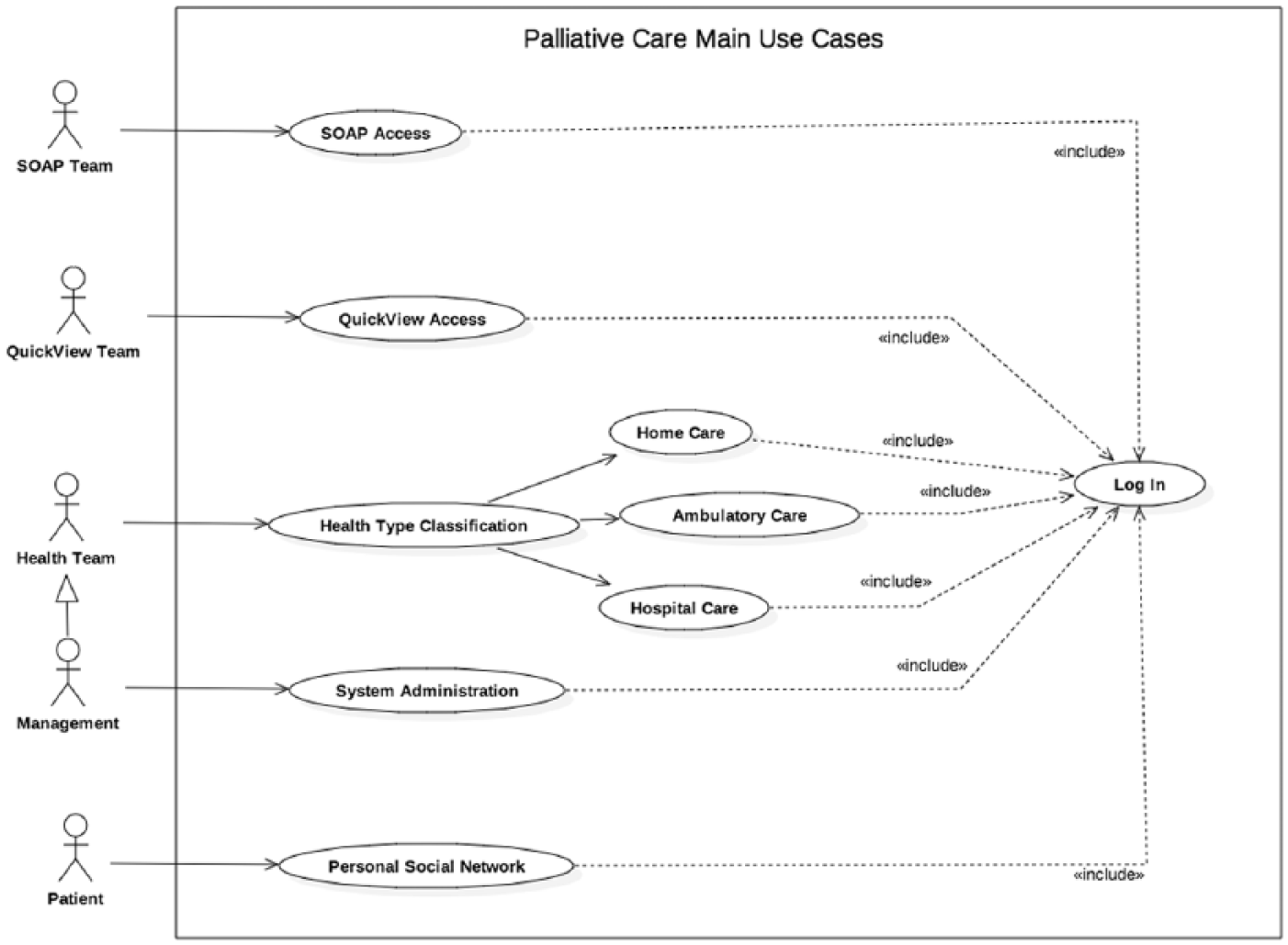
Palliative care use case diagram.
In order to cover all the steps in which the patients need to receive PC, the treatment has been divided into three types: home care, ambulatory care and hospital care.
Home care. This attention mode is very important because the patient will not be in the health institutions. It lets the patient to share with his family at home in his last stage.
Ambulatory care. This mode has two ways to perform. In the first case, the patient has the ability to attend the institution for care. In the second case, the presence of a person (family or friend) is necessary to ensure the care of the patient. This person is known as the primary caregiver and he needs to receive the ongoing training on how should give care to the sick.
Hospital care. This last method is applied when the patient cannot remain at home or the caregiver no longer has the professional skills to care for the sick. The patient has increased suffering caused by the disease, thus requiring more treatments onerous for each symptom and pain relieving suffering of the patient.
Evolution notes
In PC, it is really important to record the current status of the patient in each stage to evaluate the evolution of the illness with each applied treatment. The evolutions notes are divided into four sections, called SOAP or Subjective, Objective, Assessment Plan:
S (Subjective). This section records all the information provided by the patient, such as symptoms and pains. The subjective impressions of the specialist are also included.
O (Objective). In this section, the vital signs, physical and complementary examinations of the patients are recorded.
A (Assessment). In this section, the specialist evaluates the status and its evolution.
P (Plan). This section modifies the plan applied previously according to the patient’s new tests and evaluation.
The main classes of the platforms are presented in Figure 2. The usability was a very important factor in the design of the platform and it was based on goal-oriented design by Allan Cooper.15,16
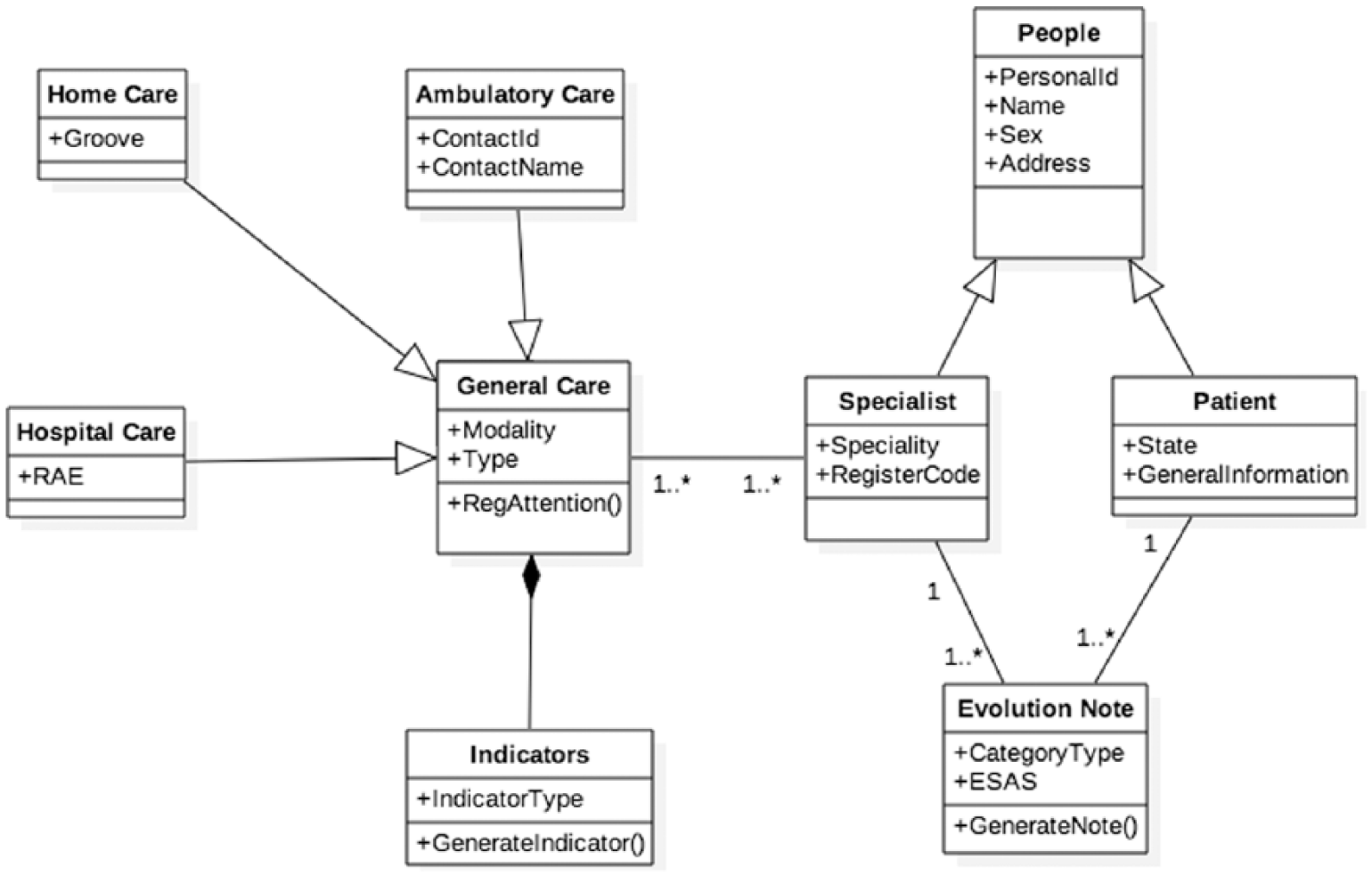
Palliative healthcare class diagram.
The interaction with the platform was designed based on the usability and specific goal that each type of user will have with the platform.
The system includes more classes, but the intention of the diagram is to show only the classes that are related to the attribute, operations and functional requirements that are specific to the context of PC.
The general architecture of the system can be appreciated in Figure 3 as was proposed in Saldaña and Vargas-Lombardo. 1
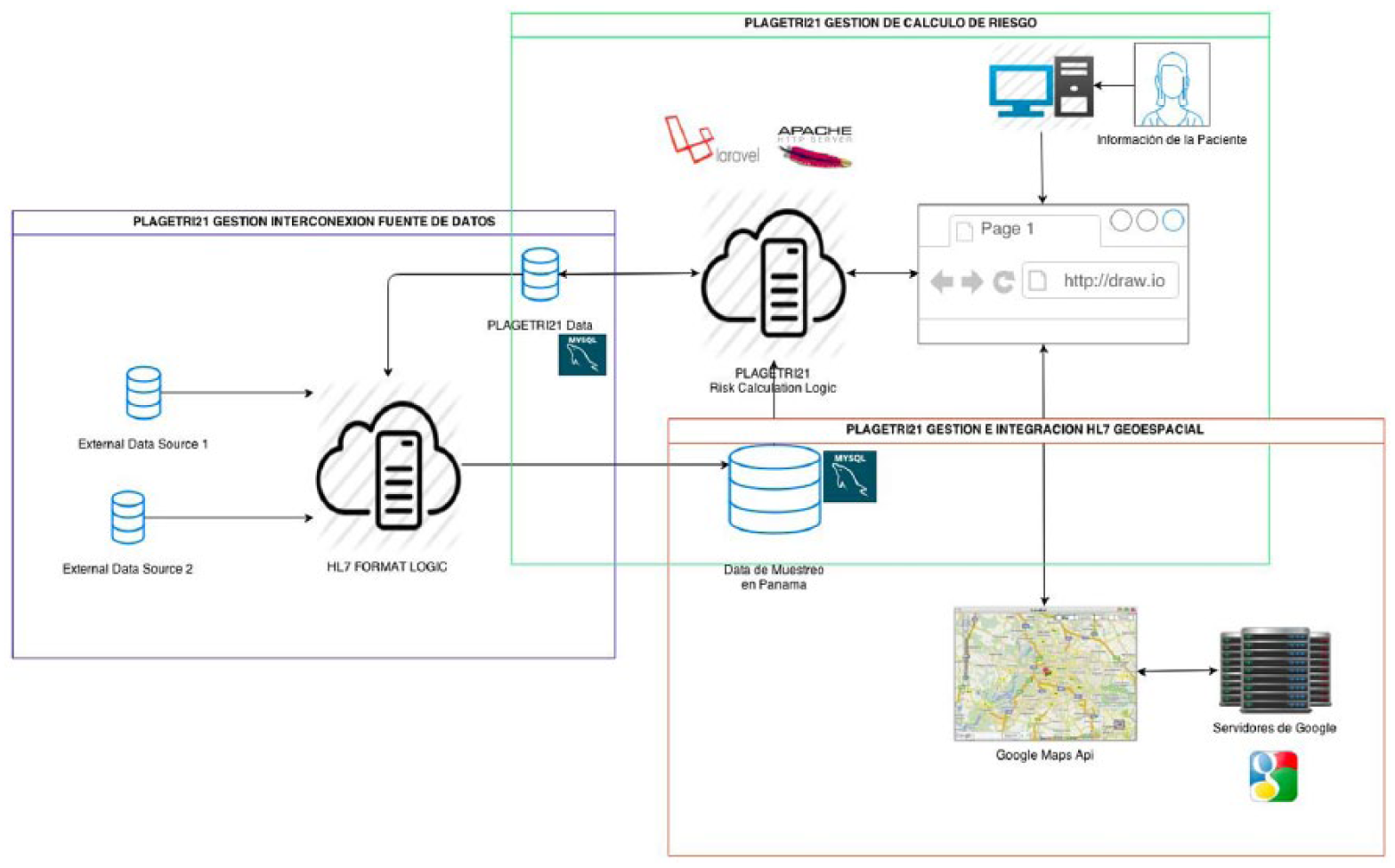
PLAGETRI21 eHealth management platform architecture.
Implementation and testing
For the development, Laravel was used as the development framework, connecting a relational MySQL database to Eloquent ORM and working with Bootstrap to provide a rich user interface.
The platform was tested using white box testing method by two requirement engineers. After all the functionalities were working, the platform was deployed in the cloud of the university and was enabled for the hospital specialist for about 2 months. They used the platform by recording data of patients from 1 year ago allowing them to test all the functionalities and provide their feedback. The next step was to sign the term and conditions agreement and deploy the platform to the medical institutions. Figure 4 shows the medical institutions and hospitals of the country that will have access to the platform.
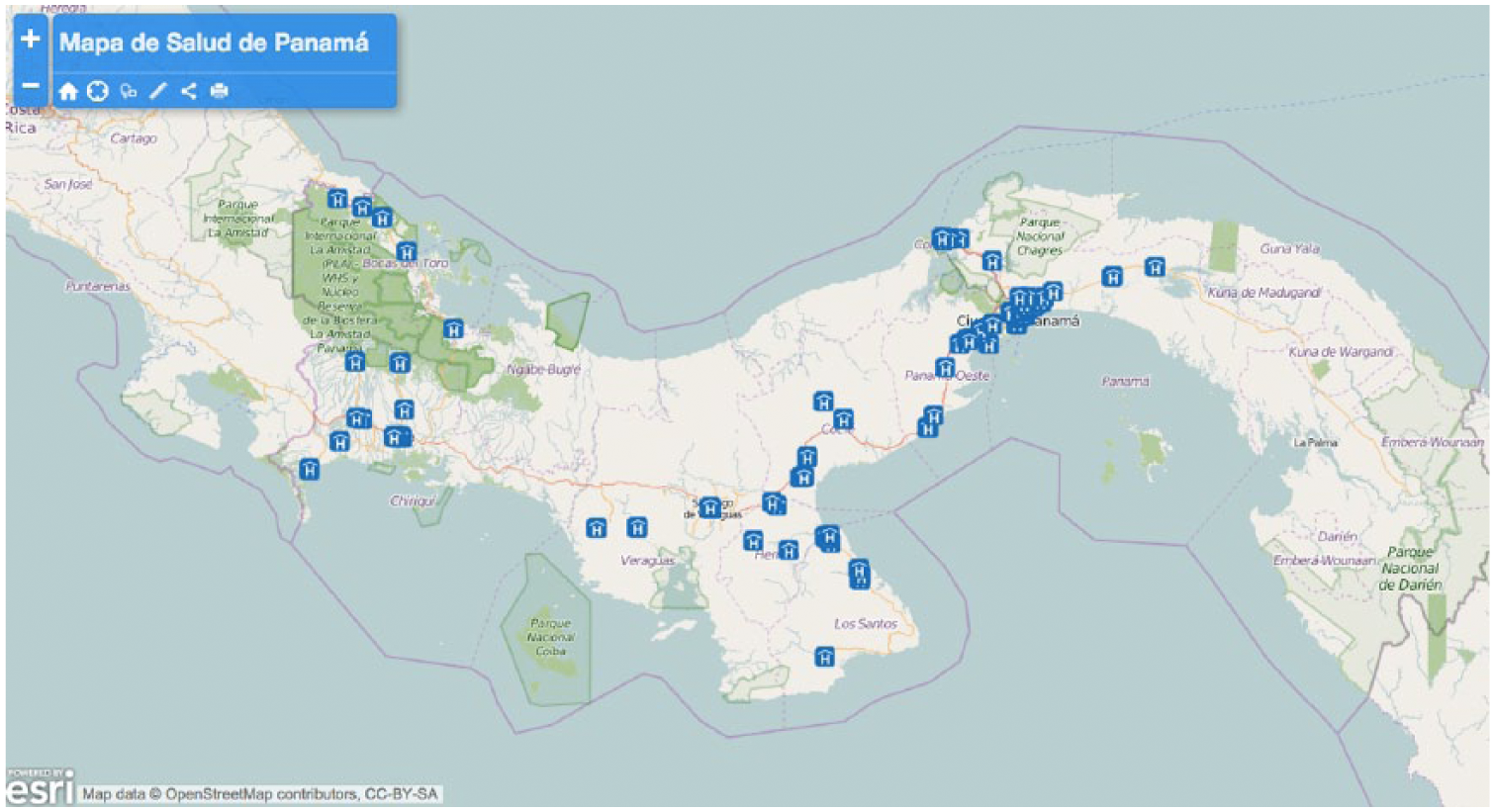
Health institutions that will utilize the eHealth platform for palliative care in the country of Panama.
Smart platform for Down’s syndrome risk estimation process
The eHealth Management Platform PLAGETRI21 1 is based on the calculation risk method of likelihood, published in Benn, 17 combining the a priori risk for maternal age obtained from the meta-analysis with the likelihood obtained from combining the MoM of the different markers used in each profile. The MoM was calculated using the multivariate normal distribution. This calculation follows a mathematical and statistical process:
Risk estimation based on the maternal age;
Markers’ standardization;
MoM calculation;
Weight and correction factors’ adjustments;
Maternal weight corrections;
Covariates’ corrections;
Likelihood ratio estimation;
Risk estimation.
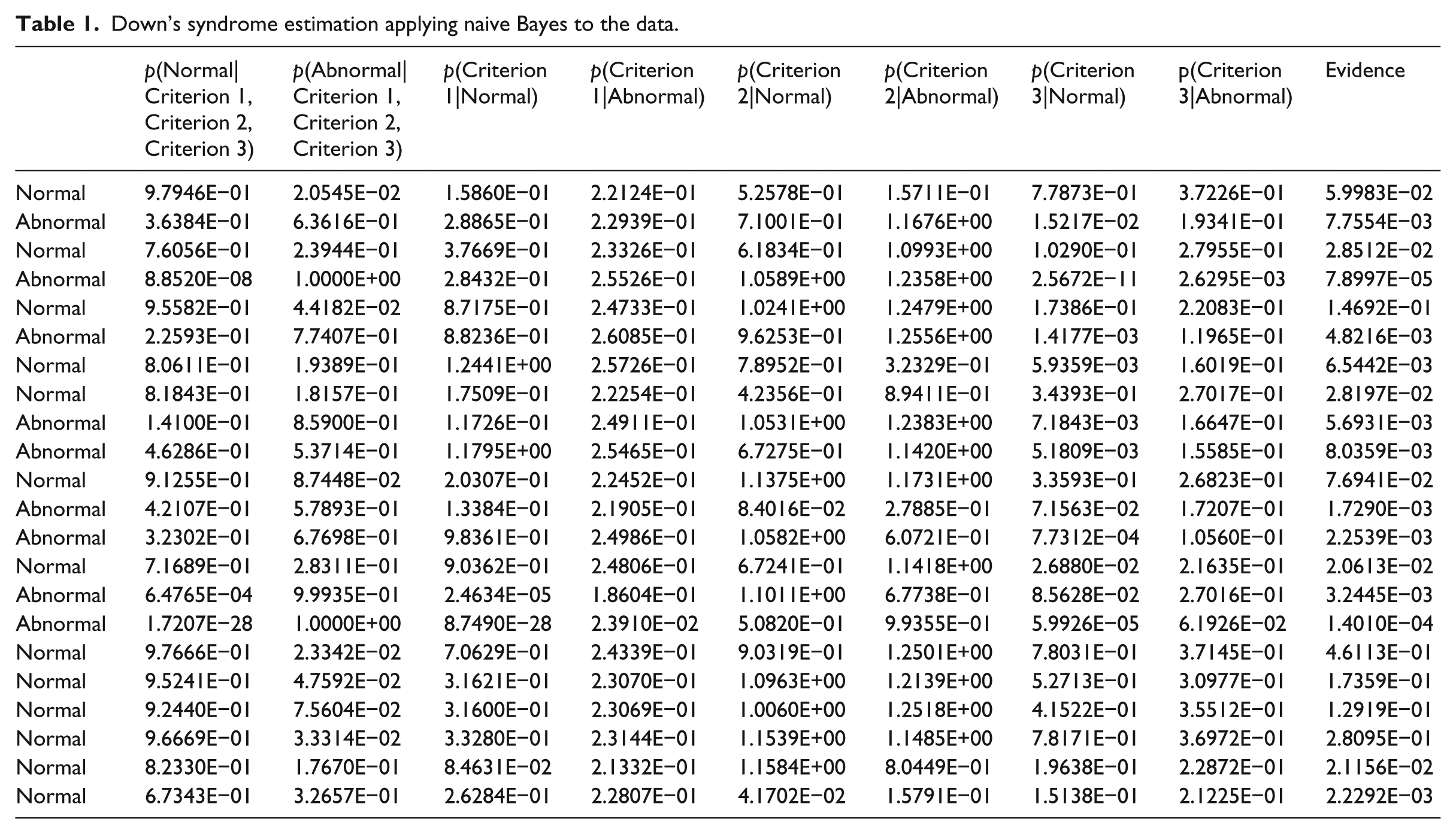
Additional to the normal process, the platform provides two new functionalities. First, it adds an extra layer of analysis applying NB techniques. Using a training set previously selected, the platform generates a model that posteriori receives the not classified data and separates the normal from the abnormal values, predicting whether the test is positive or negative. The following steps are performed to implement the NB classification:
Calculating the average µFiCj
Calculation of the variance
Estimate the probability for each class Cj;
Estimate the probability
Calculate the evidence of the value that it is really the probability of occurrence of all the features
Evaluate the class that presents the higher probability
Table 1 shows the implementation of these processes.
Down’s syndrome estimation applying naive Bayes to the data.
Second, the architecture’s platform is based on the architecture presented in Barbarito et al., 18 Esri 19 and Feldmann et al., 20 which allows the interoperability between many hospital information systems. PLAGETRI21 is able to interact using the HL7 standard with many data source of clinical information. It uses the Clinical Document Architecture (CDA) to save domain-sampling data from diverse sources around the country without the necessity of installing any software at the client side and using laptop and mobile devices. The CDA standard allows the interoperability with other platforms that also implement this standard in their architecture. The message body structured HL7 CDA consists of two parts that are the header and message body as shown in Figure 5.
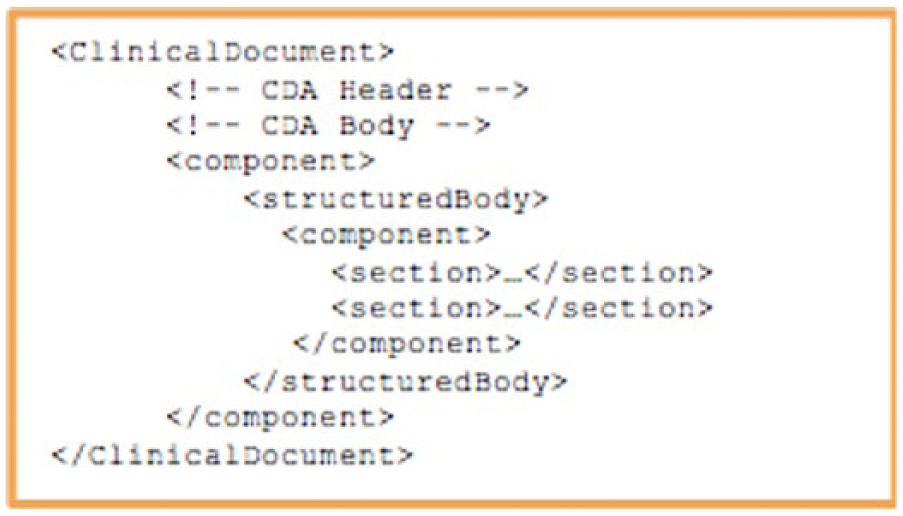
HL7 CDA structure.
As an example, to send data about the height and weight of the patient, the tag <entry> is used and is structured as follows:
<entry>
<observation classCode="OBS" moodCode="EVN">
<code code="363808001" codeSystem="2.16.840.1.113883.6.96" codeSys-temName="SNOMED CT" displayName="Peso Corporal"/>
<effectiveTime value="201504071430"/>
<value xsi:type="PQ" value="71.6" unit="kg"/>
</observation>
</entry>
<entry>
<observation classCode="OBS" moodCode="EVN">
<code code="384627007" codeSystem="2.16.840.1.113883.6.96" codeSys-temName="SNOMED CT" displayName="Estatura"/>
<effectiveTime value="201504071430"/>
<value xsi:type="PQ" value="1.65" unit="m">
</observation>
</entry>
The interconnection with other data sources involves security and privacy of the information as presented by Geissbuhler. The data that are extracted from the different data sources include general information of the patient such as age, sex, ethnic, blood type, place of birth and residence. Specific fields such as name, last names and personal ID are not included in the sampling data source. The platform also implements the geospatial interoperability standard proposed in Granell et al. 21 and Ahern. 22 The inclusion of geographical information to the platform enables the clinical information being georeferenced by birth place, residence place and location where the patient receives the medical care, allowing us to research how the location data affect the process.
Implementation and testing
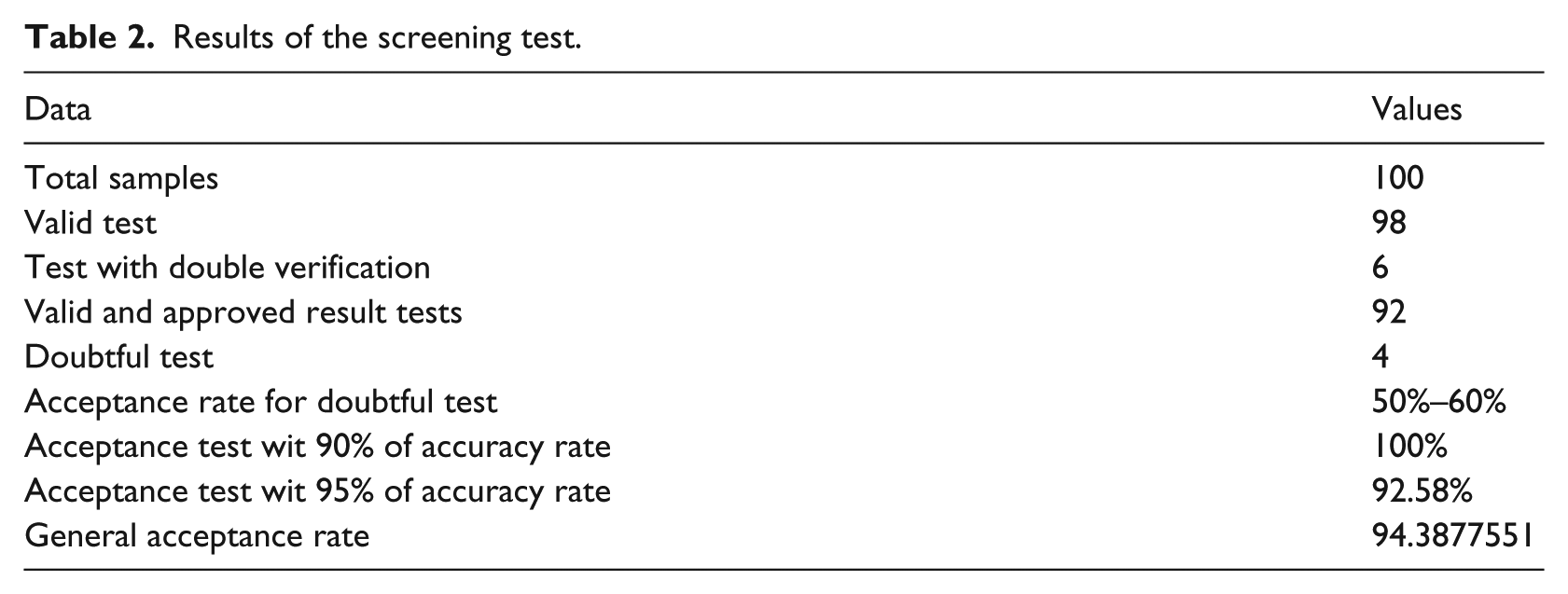
The platform was tested initially by the development team and three medicine specialists from the hospital. After all the bugs were fixed, the screening group of the laboratory took a sample data from 100 patients. The chemical tests were introduced and analyzed by the platform and the results can be found in Table 2.
Results of the screening test.
The platform is running on a private cloud inside the Technological University of Panama and the Electronics Health and Supercomputing Research’s Group developed it.
Conclusion
The Down’s syndrome risk estimation platform enhances the accuracy of the result because it adds an extra layer of data analysis applying machine learning methods to establish smart classifiers extracted from the population sampling and includes valuable geographical information to the procedures, not taken into consideration before.
Thanks to the information that is being captured, organized and shared from diverse sources in the country, the first trimester screening test will be applied allowing to detect any illness earlier in order to provide the treatment in a timely manner.
The PC platform allows, thanks to its ubiquitous properties, to record personal and medical information in real-time even from the patient’s home. It also lets specialist of the field to have access to this information and apply adequate medicines and treatment. The platform is a tool that allows the patient’s family being in touch with the medical specialist.
Ubicomp, machine learning techniques and ambient-assisted living open to us a broad source of resources that can be applied to improve many areas of healthcare.
Footnotes
Acknowledgements
The Research Group Electronics Health and Supercomputing (GISES) of the Technological University of Panama supported this research as well as Dr Miguel Vargas-Lombardo National Research Investigator award (SNI) from the SENACYT. Both projects are being presented as main topics looking for founds with SENACYT.
Declaration of Conflicting Interests
The author(s) declared no potential conflicts of interest with respect to the research, authorship, and/or publication of this article.
Funding
The author(s) received no financial support for the research, authorship, and/or publication of this article.