




Abstract
Short messaging service (SMS) messages may present a convenient and cost-effective method to support healthcare interventions. This work assesses the effects of short messaging service on various healthcare interventions found in systematic reviews. The search strategy was based on two key concepts: short messaging service and healthcare delivery. The initial search was conducted in December 2012 and was updated in June 2013. Of the 550 identified references, 13 systematic reviews met the inclusion criteria, of which 8 were published in peer-reviewed journals and 5 were retrieved from the Cochrane library. Data analysis shows that low to moderate research evidence exists on the benefits of short messaging service interventions for appointment reminders, promoting health in developing countries and preventive healthcare. In many interventions, however, there were a few studies that were of high quality, and most of the studies were rated from low to moderate quality or had no rating at all. Healthcare organizations, policy makers, or clinicians using short messaging service messages to support healthcare interventions should (1) implement interventions that have been found to work in healthcare settings, (2) continue evaluating short messaging service interventions that have not been adequately assessed, and (3) improve collaboration between various healthcare entities to develop studies targeted at specific populations to evaluate the long-term impact of short messaging service on healthcare outcomes.
Keywords
Introduction
With the advancement in the use of smartphones, short messaging service (SMS) through mobile telephones, also referred to as “text messaging,” continues to be in use today. In the United States, there are over 6 billion SMS messages sent every day and over 2.2 trillion sent each year, while globally there are over 8.6 trillion text messages sent each year. 1 The proliferation of SMS-related applications for Android and iPhones, such as WhatsApp and Facebook messages that use Wi-Fi or cellular networks has also increased the number of non-subscription-based SMS messages. 1 With the proliferation of SMS users, businesses from advertising agencies to healthcare have been using SMS messages to communicate with potential customers or healthcare clients.
For years, European and North American countries have been using SMS technologies for healthcare in a variety of ways. A recent study in the United Kingdom explored the feasibility and acceptability of using SMS messages for an aftercare plan service to improve medication adherence of psychiatric patients using antipsychotic medication. Results showed that SMS reminders for medication adherence in psychotic patients are helpful and provide a minimally invasive and cost-effective measure to improve antipsychotic medication adherence. 2 In Germany, a group of researchers conducted a randomized trial testing the efficacy of an SMS-based smoking cessation program for vocational students, which found that SMS-based smoking cessation programs can reduce smoking in teens, especially those 18 years of age and older. 3 In the United States, a recent study on public health communication and alert fatigue focused on identifying the most effective methods to share public health messages between public health agencies and providers. 4 The study found that although sharing messages through SMS was effective in communicating between public health agencies and providers, frequent information delivery through numerous communication channels had a negative impact on healthcare providers to recall the information sent to them. The study recommends re-examining the frequency of SMS messages sent out in order to improve the recall of information by public health providers during emergencies. The examples of the use of SMS in health provide a high-level overview of how SMS messages have been used in healthcare. There are other studies that examine the use of SMS medication adherence, disease preventions, public health, medication adherence, psychiatry, collection of data, and so forth.5–8
Although the studies noted above describe some of the benefits of using SMS technologies in healthcare, a high-level overview summarizing the impact of SMS technologies in a variety of healthcare settings is needed. The purpose of this systematic umbrella review is to identify, assess, and summarize SMS-related interventions in healthcare. Limiting the review to systematic reviews allowed for a rapid assessment of the literature relating to SMS technologies and their impact on healthcare.
The results of this work will be of use to healthcare providers interested in the use of SMS healthcare interventions; administrative hospital personnel looking for evidence on the use of SMS interventions; and for students and academics to grasp the state of the SMS literature and its impact on healthcare.
Methods
Search strategy
The literature search included the PubMed database and the Cochrane library. The search strategy was based on two key concepts: SMS and healthcare delivery. The initial search was conducted in December 2012 and was updated in June 2013.
Inclusion/exclusion criteria
Only systematic reviews were included as part of the umbrella review. To qualify as a systematic review, the article had to follow the systematic review process, examine the impact of SMS technologies within a healthcare setting, and be published in English from January 1990 to June 2013. A review was considered to be systematic if it included a search strategy, indicated inclusion/exclusion criteria, presented findings relevant to the review, and included a clear statement that it was a systematic review.
Literature reviews, narratives, reviews addressing telemedicine, telehealth, and other related technologies were excluded from the review. Furthermore, articles on SMS-based smartphone applications were also excluded from the review.
Data extraction
Relevant data from the systematic review articles were retrieved and placed in an excel spreadsheet for analysis. The data extraction and review was conducted between December 2013 and February 2014. One researcher extracted the information from each of the systematic reviews. Information such as authors, date of study, interventions, number of articles included in the review, the level of evidence included in the review (e.g. low, moderate, or strong), and author conclusions was extracted.
Results
Synthesis of evidence
Of the 550 identified references, 13 systematic reviews met the inclusion criteria, of which 8 were published in peer-reviewed journals and 5 in the Cochrane library (see Figure 1). The number of included studies in each systematic review ranged from one to 98, with a median of 12.
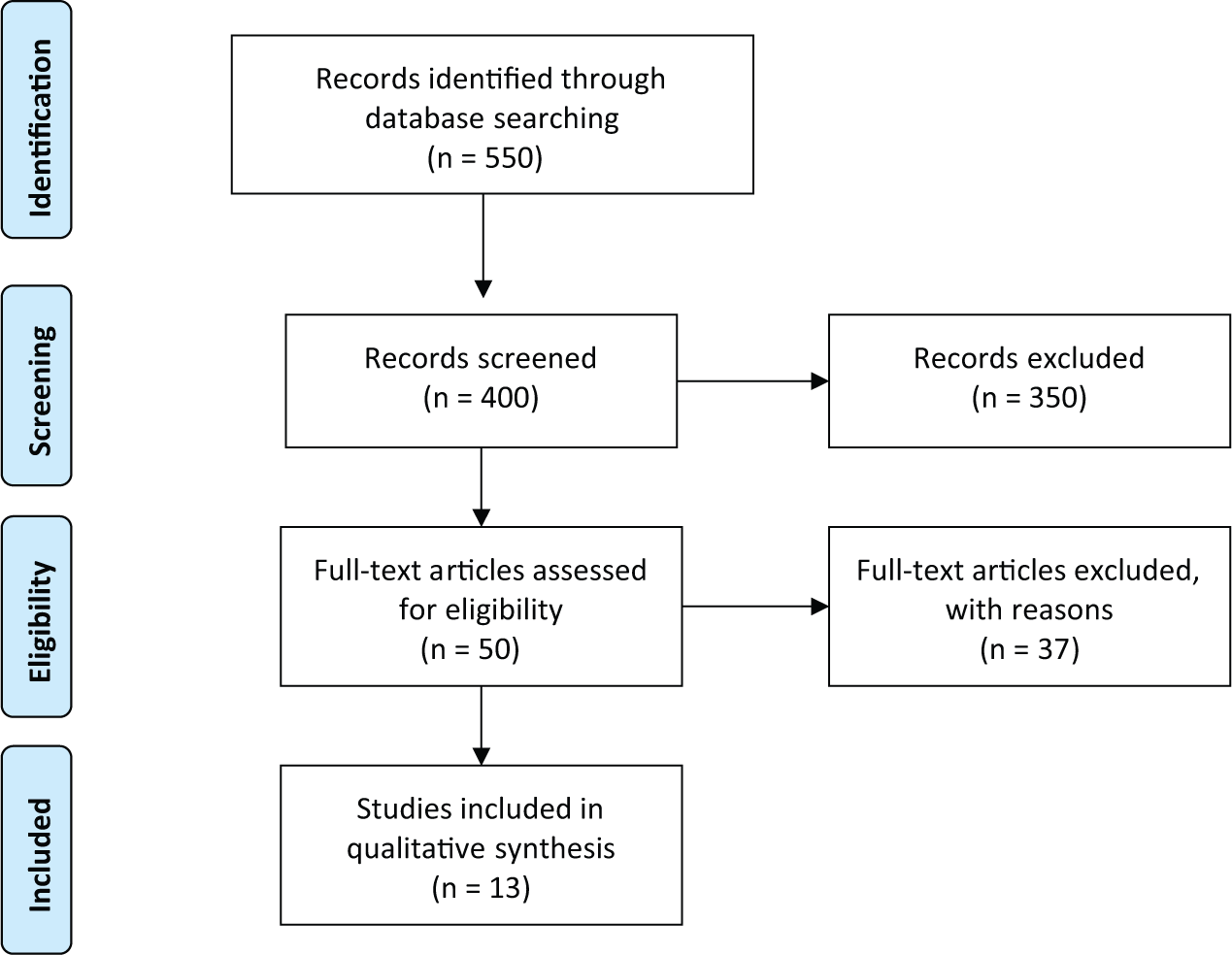
Prisma chart.
All 13 studies included a variety of experimental and quasi-experimental designs. Most of the research articles included in this study, especially the Cochrane articles, focused on randomized controlled trials. Other studies focused on before-and-after studies, controlled observations, and other quasi-experimental designs. The evidence was rated low, low to moderate, moderate to high, low to high, as reported in the systematic review. Two articles rated the quality of evidence as low, four articles rated the quality of evidence as low to moderate, one article rated the quality as being from low to high, and three articles rated the quality of evidence was moderate to high. Three articles did not discuss the quality of the evidence.
Of the 13 articles included, 3 assessed SMS messages as a tool to improve attendance in a hospital or clinic. Two articles focused on the use of SMS in developing countries. Two articles focused on preventive healthcare, while two focused on promoting health behaviors. One article focused on adherence to medication by HIV patients. Other articles focused on self-management of long-term illness; the impact of SMS on a variety of healthcare issues; and on communicating lab results. Table 1 provides a summary of the articles included in the review.
Summary of included studies.
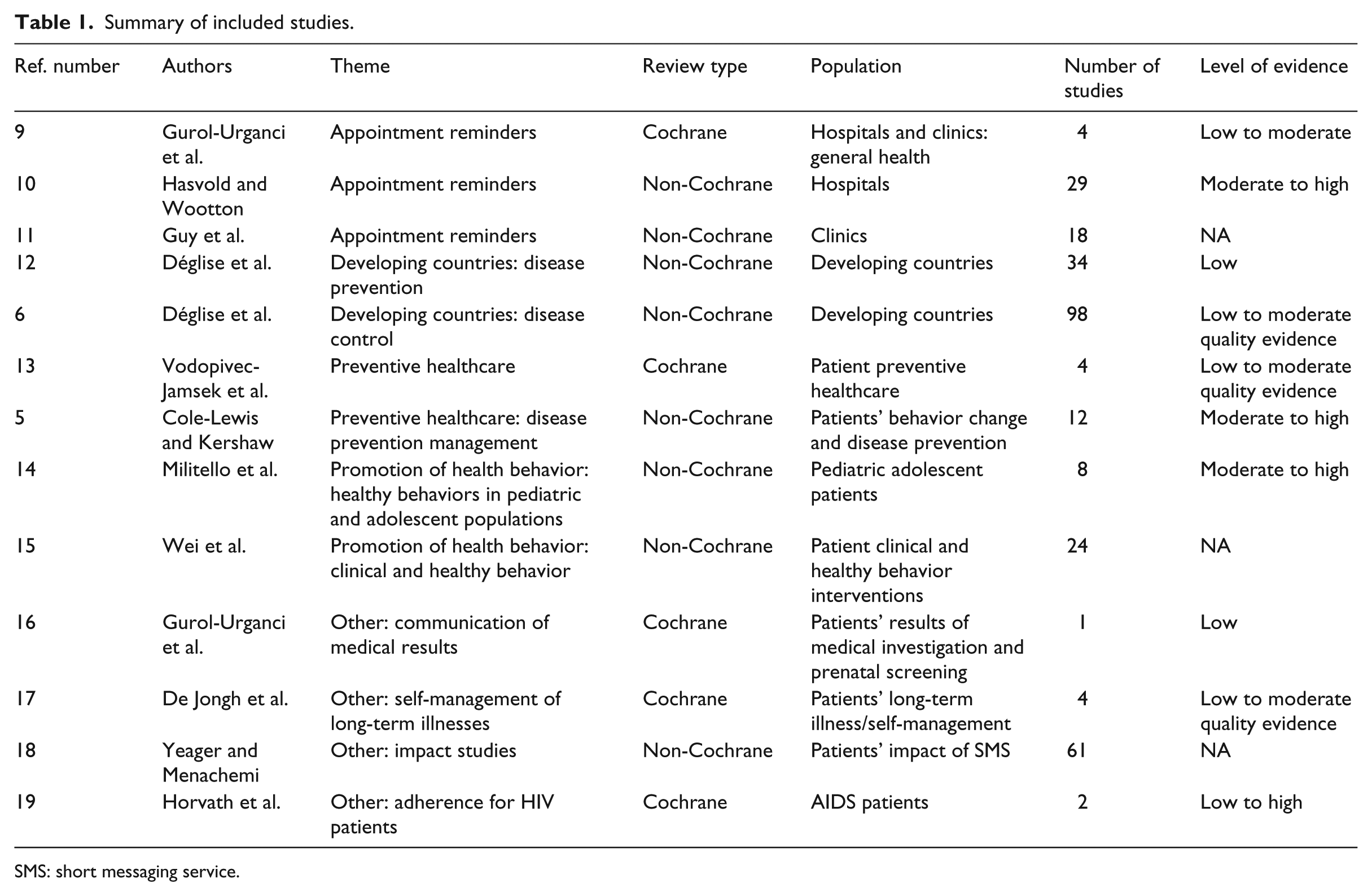
SMS: short messaging service.
Role of SMS for appointment reminders
Three reviews9–11 assessed the role of SMS message reminders for attendance at healthcare appointments. There was one Cochrane review 9 that reviewed mobile phone messaging reminders for attendance at healthcare appointments. The Cochrane review found that low-to-moderate quality evidence was found on the impact of SMS reminders for attendance at healthcare appointments when compared to traditional methods such as postal reminders and phone call reminders. The authors also report that SMS messages were less costly than phone call reminders, and there was no discussion on the impact of SMS on either health outcomes or adverse events caused. The authors conclude that there is a need for more studies that examine the impact of SMS reminders for attendance at healthcare appointments.
Hasvold and Wootton’s 10 systematic review on the use of telephone and SMS reminders to improve attendance at hospital appointments reports strong evidence that SMS reminders have a positive impact on non-attendance rates. The study also notes that SMS appointment reminders are more effective when sent by healthcare professionals versus being sent automatically by computer. Furthermore, the authors also note that all the studies involved reminders being sent out within 1 week prior to the appointments, which the authors believe is the most appropriate time to send a reminder. With regard to cost, the authors note that although the evidence is weak, the cost of sending SMS reminders was less expensive than that incurred by patients missing their appointments.
The topic of the third article was the use of SMS reminders aimed at increasing clinic attendance. 11 The article reported that the evidence suggests that SMS messages can increase the prospects of patients attending clinic appointments by 50 percent compared to not providing patients with reminders in both primary care and hospital outpatient settings.
To summarize, the evidence of the three systematic reviews relating to attendance and appointment reminders suggests that the supporting evidence in the use of SMS messages for appointment reminders can increase hospital and clinic attendance rates. The findings also suggest that the costs of SMS can be less than the costs incurred by patients missing their appointments.
Role of SMS in supporting healthcare delivery in developing countries
Two reviews examined the impact of SMS messaging for developing countries. The first article, by Déglise et al., 12 examined the impact of SMS in various health-related areas on patients in developing countries. The review included interventions around prevention, surveillance, disease management, and compliance. Furthermore, the study examined a variety of SMS applications which were located in India, South Africa, and Kenya. The study notes that most of the SMS interventions in the developing world took place in Africa and were mostly used by aid organizations. The study also reports that most of the projects focused on SMS for HIV/AIDS. The authors note that there are promising findings for the use of SMS in developing countries because it can improve the process of care and is an accepted means of communication by healthcare workers and patients. The study also reports that although the results are promising, there is a lack of high-quality research interventions that show the impact of SMS on health outcomes.
The second article focused on the use of SMS for disease prevention in developing countries. 6 Out of the 34 research articles included in the review, only five reported the findings of the SMS intervention. Many of the articles focused on the applications as opposed to how they were evaluated during the intervention. Various barriers were identified in the use of SMS for disease prevention in developing countries. Some of the barriers were relating to language, network fluctuations, finances, privacy, mobile phone turnover, and timing of the messages. The review concluded that there was a limited amount of studies on the impact of SMS interventions on social, economic, and behavioral outcomes aimed at promoting more healthy behaviors in developing countries.
To summarize, there have been various projects that use SMS in developing nations, especially in Africa to interact with patients and healthcare workers. Although the use of SMS is promising, much work is needed to further evaluate applications and their impact on healthcare outcomes.
Role of SMS in preventive healthcare
Two systematic review articles examined the impact of SMS on disease prevention and preventive healthcare. Vodopivec-Jamsek et al.’s 13 systematic review, focused on mobile phone messaging for supporting primary preventive healthcare interventions. The study found that moderate quality evidence was found to support educational SMS interventions for pregnant women. However, there was little evidence that the intervention had an impact on pregnancy outcomes. The study did find evidence that SMS messages can help people quit smoking for short periods of time. The study also reviewed work on the use of SMS to encourage healthy behavior in children, but there was little evidence showing the impact of SMS interventions on children. Overall, the authors concluded that SMS can be helpful in preventive healthcare, but there is a need to conduct more studies to determine the impact on health outcomes.
Cole-Lewis and Kershaw, 5 examined the impact of SMS as a tool for behavior change in disease prevention and management. Various articles on disease management and disease prevention were included in the systematic review. The majority of the evidence reviewed found that there were short-term effects relating to behavioral and clinical outcomes in the use of SMS on disease management and prevention. There was evidence showing that disease prevention and management worked in weight loss, smoking cessation, and diabetes management.
To summarize, there appears to be some supporting evidence the SMS interventions can help in preventive healthcare, but more evidence is needed, especially evidence that focuses on healthcare outcomes and long-term impact.
Role of SMS in the promotion of health behaviors
Two reviews focused on the use of SMS to promote healthy behavior. Militello et al. 14 studied the impact of SMS messages on pediatric and adolescent populations. The authors conclude that although the use of SMS to promote health behavior in adolescents and children is at its early stages, there is moderate research evidence that shows SMS interventions can help in promoting healthy behaviors in adolescents and children. The authors recommend, based on the evidence, that short SMS messages may be the most effective reminder system to support disease management behaviors. Furthermore, the authors recommend that interactive and tailored SMS messages should be created to improve healthy behaviors among adolescents and children.
Wei et al., 15 examine the use of SMS in clinical and healthy behaviors interventions. The authors found evidence that SMS messages can support patient education, provide a platform for test results, data collection adherence, and self-monitored data. Although the authors do acknowledge that some of the evidence may be of low quality, especially with several methodological limitations, there remains evidence that SMS technologies can have an impact on preventive behavior modification. The authors also suggest that SMS is a low-cost medium that can help promote large-scale public health initiatives.
To summarize, the systematic reviews suggest that there is some evidence to support the use of SMS to promote healthy behaviors. However, more studies are needed to study the impact of SMS on promoting healthy behaviors in various populations and geographical areas.
Others SMS interventions
Among the four remaining reviews of relevance to the use of SMS in health, one addressed the use of SMS to promote adherence in patients with HIV infection. 19 The authors note that SMS messages at weekly intervals are the most effective in improving adherence when compared to standard care. There was also evidence that the weekly SMS messages to HIV patients helped improve HIV viral load suppression. The authors recommend the use of SMS as a means to promote adherence to medication in HIV patients.
A second article was based on the use of phone messaging to communicate results of medical investigations. 16 The study found limited evidence on the usefulness of using SMS in disseminating prenatal Down syndrome in terms of reducing anxiety in pregnant women. The authors conclude that more research is needed to determine the impact of SMS on the communication of medical results.
A third article was based on the use of SMS for facilitating self-management of long-term illnesses. 17 With regard to issues relating to health outcomes, the study found that for diabetic patients there was moderate quality evidence which showed no statistical difference between SMS interventions compared to other methods such as email. For health outcomes of hypertensive patients, there was no statistical difference between those who received SMS intervention and those who did not, in controlling their blood pressure. However, for health outcomes of asthma patients, there was evidence that SMS helped improve their peak expiratory flow. With regard to self-management of the long-term illnesses such as diabetes, hypertensive, and asthma patients, there is some evidence that SMS messages may help in self-management. Furthermore, the authors conclude that SMS may benefit the self-management of long-term illnesses. However, issues around cost, health outcomes, and long-term impact remain unknown.
The fourth article reported on the general health impact of SMS interventions in healthcare. 18 The article reviewed 61 articles that studied the overall impact of SMS on health. The authors report that 82 percent (51) of the articles found that SMS had a positive outcome on health. In all, 27 articles focus on the impact of texting on disease management, while 24 articles focused on SMS impact on public health and 10 articles examined SMS influence on administrative functions. Although the articles suggest that SMS can have a large benefit to the clinical setting as well as public-health-related issues, there is insufficient amount of research evidence to suggest the impact of SMS on primary care setting in different geographical regions and vulnerable populations.
Discussion
This work provides an overview of the state of evidence in support of SMS interventions in healthcare. This umbrella review is the first of its kind that examines the impact of SMS on healthcare. Furthermore, the review did not limit itself to Cochrane reviews, or specific groups or populations, or studies that looked at specific disease-related groups. Rather, the umbrella review was inclusive by including systematic reviews that examined the impact of SMS on healthcare. Furthermore, since SMS-related studies are not focused on randomization, the study included systematic reviews that included a broader range of non-experimental research designs.
Today, the uptake of SMS in healthcare remains limited to a number of healthcare interventions in both the developed and developing world. With over 85 percent of Americans using text messages 20 and with over 64 percent of the developing world having mobile subscriptions, 21 and the low cost of SMS use, the potential to disseminate, receive, and interact with healthcare information through SMS, SMS has the potential to make a difference in a variety of healthcare settings.22–26 However, future efforts from demonstrating the effectiveness of the SMS intervention to achieving broader implementation and reporting specific health outcomes, are needed.
Overall, there still remains low-to-moderate quality of evidence to show the overall impact of SMS interventions on healthcare outcomes. There is a common list of limitations which includes: small sample sizes, poor study design, limited number of studies, low-to-moderate quality studies, and limited information on outcome measures.
This lack of conclusive evidence on the use of SMS in healthcare leaves policy makers, healthcare organizations, clinicians, and other health-related organizations with limited guidance on the direct impact of SMS messages on health outcomes. The development of appropriate guidance to implement SMS interventions in healthcare can be improved by research and evaluation, specifically focusing on long-term healthcare outcomes of SMS interventions.
This umbrella review did not include a list of SMS technologies that use SMS smartphone applications such as WhatsApp, iMessage, and GroupMe, which are both social media and mobile health applications.27–41 Although these interventions have the potential to impact the distribution of health information to a mass audience over a cellular network and are thus less costly than SMS-based messages, these technologies are not well studied, their use in healthcare is relatively scarce, their use in a healthcare environment is unknown, and effective methods by which to communicate information with patient groups are as yet unknown.
Implications and recommendations
Defining and interpreting specific health outcomes given the vast array of studies conducted around SMS interventions in health can be a complicated task. Appointment reminders were simple to group and discuss as the interventions were similar even though they occurred in different settings. However, when it came to preventive healthcare, it was difficult to group because each of the systematic reviews focused on many interventions that were dissimilar from each other. This is a challenging task, especially when trying to isolate the impact of SMS on a number of healthcare diseases. Perhaps this can be explained by the limited number of SMS studies within the field. As more studies evaluate the impact of SMS, future systematic reviews should focus on specific interventions and populations rather than a high-level overview of a variety of interventions, populations, and outcomes.
Nonetheless, at the health organizational, clinical, and program levels, there is a need to identify and carry out SMS-related interventions with strong evidence of effectiveness and cost effectiveness. Therefore, it is critical for the academic community, health policy makers, healthcare organizations, clinicians, and other partners to work together to ensure the advancement of the field, moving beyond the current state of evidence which can be characterized as being of low to moderate quality. Substantial steps need to be taken to improve the current state and use of SMS interventions in healthcare, especially as new and free services are being used in smartphones. Furthermore, collaborations between the various entities mentioned need to be cemented to develop studies with specific populations and to evaluate the impact of SMS on health outcomes, and specifically, focus on long-term impact rather than the current short-term impact of such studies.
Beyond the collaboration between various stakeholders within healthcare, there is a need among healthcare organizations, policy makers, and clinicians to identify the knowledge gaps and develop SMS interventions that aim to fill the knowledge gaps within the field. To achieve this, a knowledge base of SMS interventions should be developed that focuses on the impact of SMS intervention on health outcomes.
Clearly, further reviews of SMS interventions in healthcare would add an important contribution to the field. This umbrella review found that there is low to moderate evidence that SMS-based interventions in healthcare can provide benefit in appointment reminders, for developing countries, and in preventive healthcare. In many interventions, however, there were few studies that were of high quality, but most of the studies were rated as being of low to moderate quality. Furthermore, the research was scattered and many studies focused on the impact of the intervention and not the impact on specific healthcare outcomes. Although there are studies that examine the impact of SMS in the short term (e.g. 1 week to 3 months), more studies are needed to examine more long-term (e.g. 1 year and more) impact of SMS on health outcomes.
Given the level of breadth in the field, it is crucial to prioritize the research on SMS interventions within healthcare and its impact on health in general as well as specific population, disease groups, clinical settings, and geographical areas. Further studies and advancement of the quality and scope of the evidence related to SMS interventions in healthcare will improve our understanding of its impact on healthcare and healthcare outcomes.
Footnotes
Declaration of Conflicting Interests
The author(s) declared no potential conflicts of interest with respect to the research, authorship, and/or publication of this article.
Funding
The author(s) received no financial support for the research, authorship, and/or publication of this article.