




Abstract
Despite of its emotional benefits, communication with family members who live abroad can present a large financial burden for low-income foreign-born individuals. The aims of this study were (1) to explore the current technologies available for low-cost communication with family living abroad and (2) to assess the level of awareness and use of low-cost technologies for family communication as well as related information needs among low-income foreign-born individuals. This mixed-methods study included an environmental scan, survey, and focus groups with low-income foreign-born individuals living in East Harlem in New York City. Low-income individuals who have family members living abroad face financial stress with complicated technology choices for communication with family living abroad and they have many information needs. They would welcome interactive and convenient educational tools that (1) build skills for utilization of various technologies and (2) provide decision support to simplify choosing among the vast array of available communication options.
Introduction
Urban dwelling, foreign-born individuals have a higher likelihood of having family members who live abroad and are more likely to be of low socioeconomic status than native-born individuals. 1 About 21.5 million foreign-born individuals and their young children live in or near poverty, and it takes about 28–32 years for foreign-born individuals to close the gap in socioeconomic status related to poverty, low income, welfare use, and lack of health insurance. 1 Maintaining strong family connections and balancing communication between their subculture and their broader community’s culture may help foreign-born individuals to close socioeconomic gaps by providing psychological benefits with impacts on cognition, disposition, and behaviors that inspire successful functioning within the larger community.2–4
Although family communication is a critical component of emotional support,5–9 maintaining communication with family members living abroad creates a financial stress due to the high cost of calls, the price of a mobile device, long-term contract constraints, scams, surcharges, and hidden fees. 10 For example, at least 17 percent of US adults have experienced “bill shock,” which is a sudden increase in one’s monthly cell phone bill without having made any changes to the service plan. 11 For low-income individuals, a “bill shock” could easily consume a high percentage of their income. Moreover, individuals with low-literacy and limited income may be especially vulnerable to scams. 12 A number of survey studies provide clear evidence of the impact of high-cost long-distance communication and complexities of mobile phone contracts on the ability to maintain consistent access to long-distance and mobile communication modalities.10,11 The ability to maintain consistent communication with family members living abroad is a critical facilitator to psychological well-being for foreign-born individuals.2–4 Foreign-born individuals are more likely to be of low socioeconomic status than the general population. 13 A significant evidence gap exists demonstrating the link between financial burden due to communication costs and impact on psychosocial well-being for foreign-born individuals who are already a population predisposed to risk of financial burdens and a lack of a local social support system. In an effort to close this gap, this exploratory study contributes to an overall understanding of the following: (1) the current state of financial options and barriers related to long-distance communication and mobile technology experienced by foreign-born individuals and (2) the perceived impact of long-distance communication barriers on the lives of foreign-born individuals and the motivation and approaches used to overcome those barriers.
Innovative Internet-based communication technologies include new paradigms that are transforming the traditional consumer–seller relationship into a market of vast choices and alternatives for the savvy consumer. 14 For example, Skype allows consumers with access to the Internet to make free calls. However, individuals with low socioeconomic status may be less aware of these options, and the digital divide (e.g. lack of affordable Internet access) may negatively impact their ability to take advantage of these low-cost Internet-based communication technologies.15,16
The specific aims of this study are as follows: (1) to explore the current technologies available to individuals for low-cost communication with family living abroad and (2) to assess the level of awareness and use of technologies for low-cost communication as well as related information needs among low-income foreign-born individuals. To address these aims, we conducted a mixed-methods study that included two phases: (1) an environmental scan that included brainstorming sessions with technology and public health domain experts to explore the current technologies available to individuals for low-cost communication options and development of an action plan and (2) survey and focus groups with low-income individuals to determine their information needs related to the use of low-cost technologies for communication with family living abroad. Because phase 1 provided the foundation for phase 2, we first describe the methods and results of the environmental scan followed by the methods and results of the survey and focus groups.
Environmental scan: methods
The environmental scan consisted of literature and website reviews to explore and describe technology options for communication with family living abroad available to low-income individuals in New York City. PubMed, CINAHL, and Google Scholar were searched for publications related to low-cost communication technologies. Websites and storefronts of companies that offer communication technologies within the targeted neighborhood were reviewed. In situations where no other evidence exists, expert consensus can provide a basis for decision making and considered action. 17 Therefore, technology and public health domain experts also participated in the environmental scan through brainstorming sessions to provide feedback and insight to develop an action plan. The experts were identified based on their previous work and publications related to communication and technology needs of those with low incomes.
Environmental scan: results
Four experts from the technology and public health domains participated in the brainstorming sessions that informed the data analysis and interpretation of the environmental scan and the community member survey and focus groups.
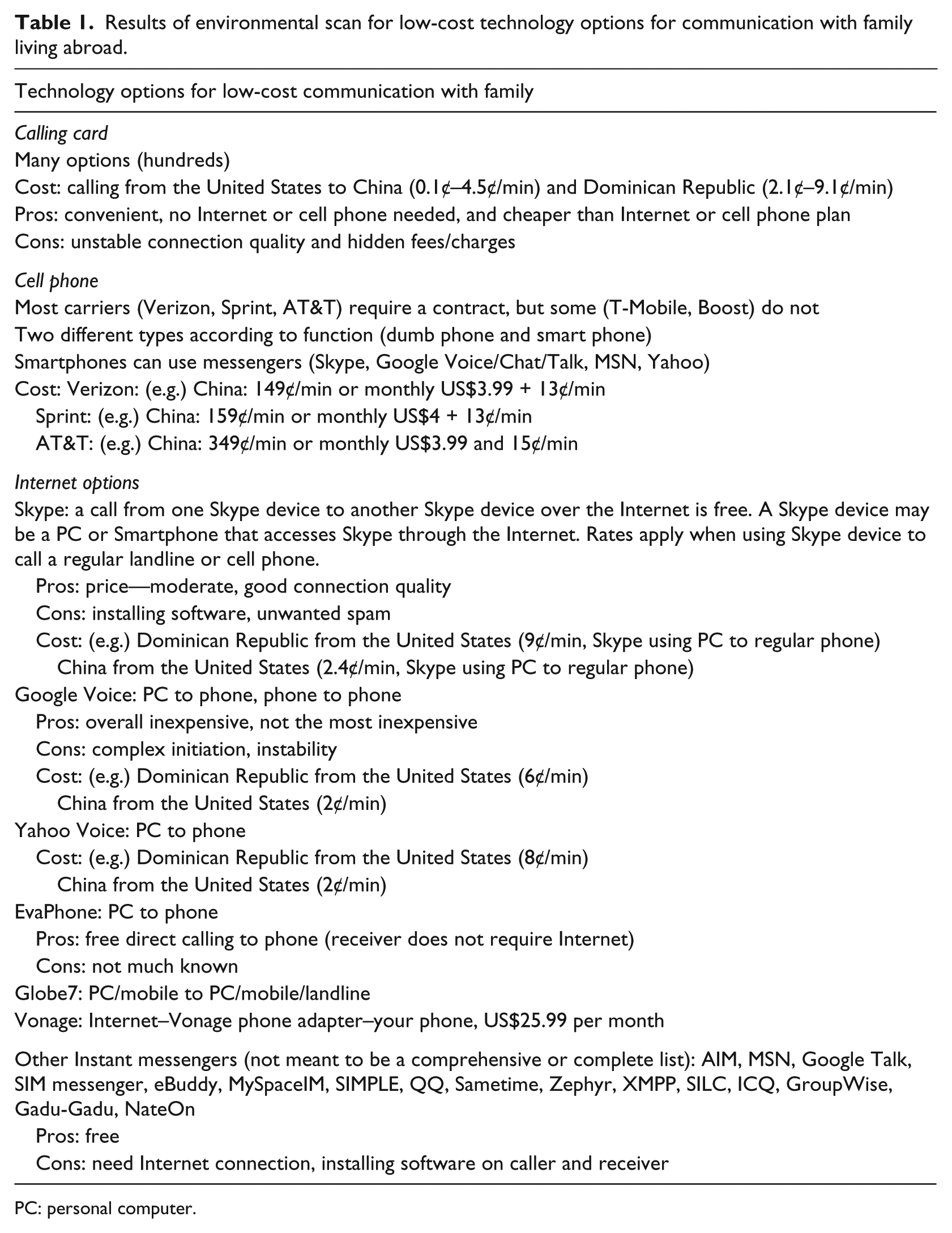
The information about available technologies for communication with family living abroad was determined by the environmental scan process, which included review of literature and websites and consultation with expert advisors. The results of the environmental scan are summarized in Table 1. Based on the environmental scan, a 21-question survey consisting of questions related to participant demographics, cell phone types and use, and Internet access and use was designed.
Results of environmental scan for low-cost technology options for communication with family living abroad.
PC: personal computer.
Focus groups and survey: methods
Setting and sample
The setting for this study was a neighborhood in the northern part of Manhattan (East Harlem) with a high proportion of foreign-born low-income individuals. The neighborhood is served by a large, multi-site, multi-service community organization that works with the neighborhood’s predominantly low-income community that includes many foreign-born individuals. This long-standing community organization provides programs in education, childcare, youth development, senior services, job training, the arts, nutrition, counseling, and community development that serve more than 13,000 people each year.
The inclusion criteria for this study were low-income individuals who participated in the community organization’s adult education English as a Second Language (ESL) program. We excluded individuals who were not foreign born and were not able to converse in English as determined by the community organization’s adult education instructor. The convenience sample was recruited by community organization staff, and participants were compensated US$25 for their time to participate in the study per our community standard. Institutional Review Board approval and approval of the leadership from the community organization were obtained for this study.
Data collection
Informed consent for voluntary participation was obtained from all individuals prior to their participation in survey and focus group data collection. Based on findings from the environmental scan, we iteratively developed a survey to assess community members’ demographic information and access to cell phones and the Internet. The 21-item survey was administered to community members prior to their participation in a focus group and required approximately 25 min for completion.
Two community member focus groups were conducted by two researchers (S.A.C. and S.Y.) at the community organization in October 2010. S.A.C. and S.Y. conducted both focus groups together. Focus group methodology was chosen to enable collection of participants’ perceptions and experience related to communication technology and communication with family living abroad in “their own words,” opportunity for clarification of participants’ responses, and as a method to understand the individual experiences that are shared within a community of peers. During each focus group, participants were asked open-ended questions about their understanding of, and experience with, available technology options for communication with family living abroad. The participants were also asked about their level of interest in—and recommendations for—educational workshops or classes about low-cost technologies for communication with family living abroad.
Each session lasted approximately 90 min. The focus groups were audio-recorded, transcribed, and verified for accuracy against the audio recording. Member checks were conducted with the participants during data collection by reflection to participants to ensure accuracy of the interpretation of the data.
Data analysis
Data from each focus group transcript were organized using qualitative data analysis software (Qualyzer version 1.1.1 from School of Computer Science, McGill University) and coded for themes. Thematic analysis was performed on the qualitative data. Each focus group transcript was analyzed by both researchers separately, and group sessions were held to reach consensus on identified themes. Of note, S.Y. is a foreign-born individual and S.A.C. is not foreign born. This dynamic was believed useful for self-reflection to identify, discuss, and set aside any inherent biases the researchers may have had based on their respective backgrounds and experiences during the thematic analyses and group consensus sessions. The survey data were analyzed using SPSS statistical software and summarized using descriptive statistics. An interpretation phase was conducted after the analysis on each set of data (qualitative focus group data and quantitative survey data) had been completed. During this step, the qualitative and quantitative findings were triangulated to transcend the limitations of the findings from each method and merged to derive a consistent outcome. This process of merging the data leveraged the collaborative judgment, wisdom, and insight of the authors and an expert advisory group. Specifically, the authors identified the differences and similarities of findings from the two methods to (1) confirm the validity of the findings if the methods produced similar results or (2) contrast the findings to indicate areas for future research if the methods produced divergent results. For example, a technology that was discussed at length during the focus groups sessions but which had low reported usage rates in the survey data would indicate non-overlapping findings that should be investigated further for complete understanding of the topic.
Focus groups and survey: results
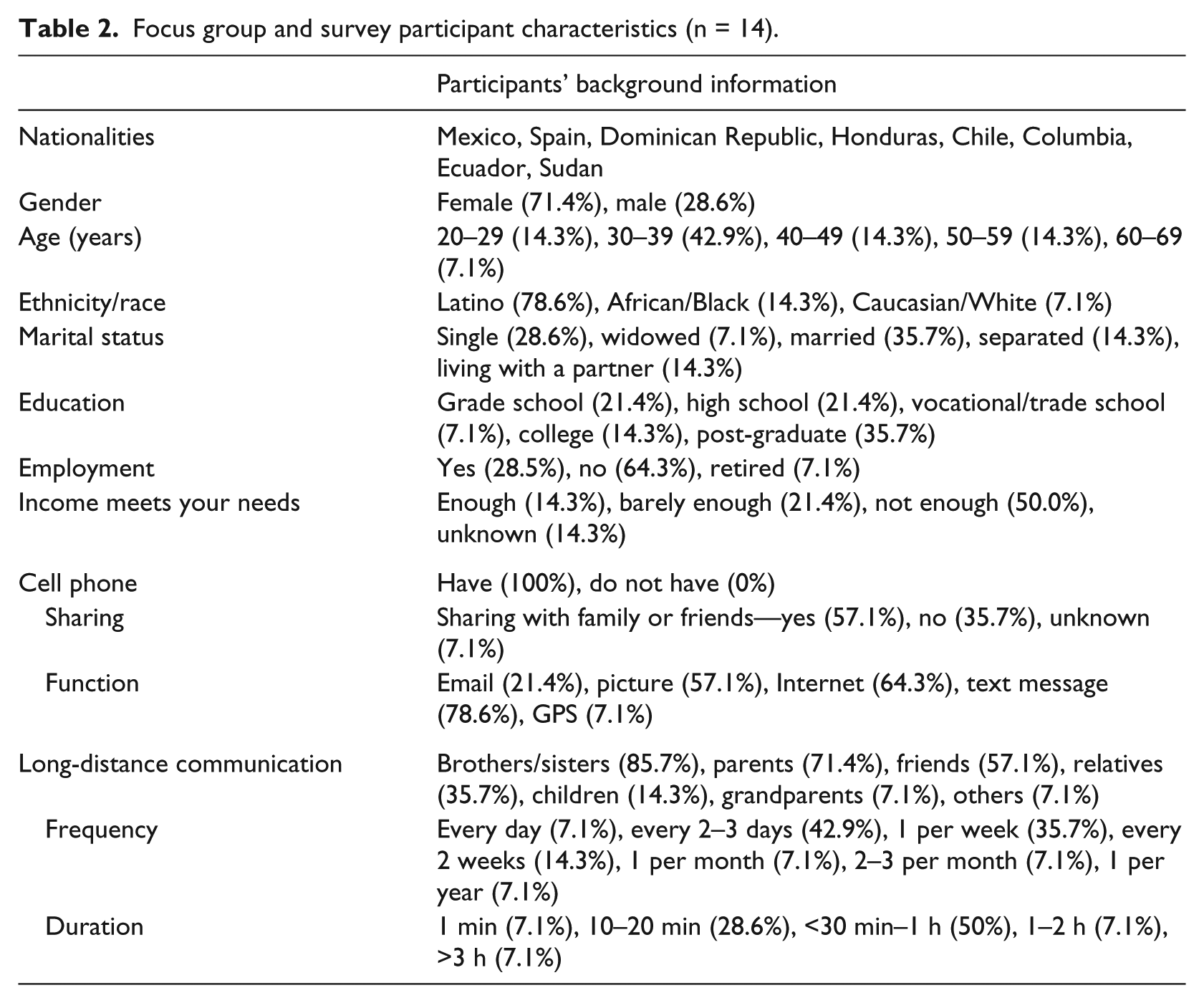
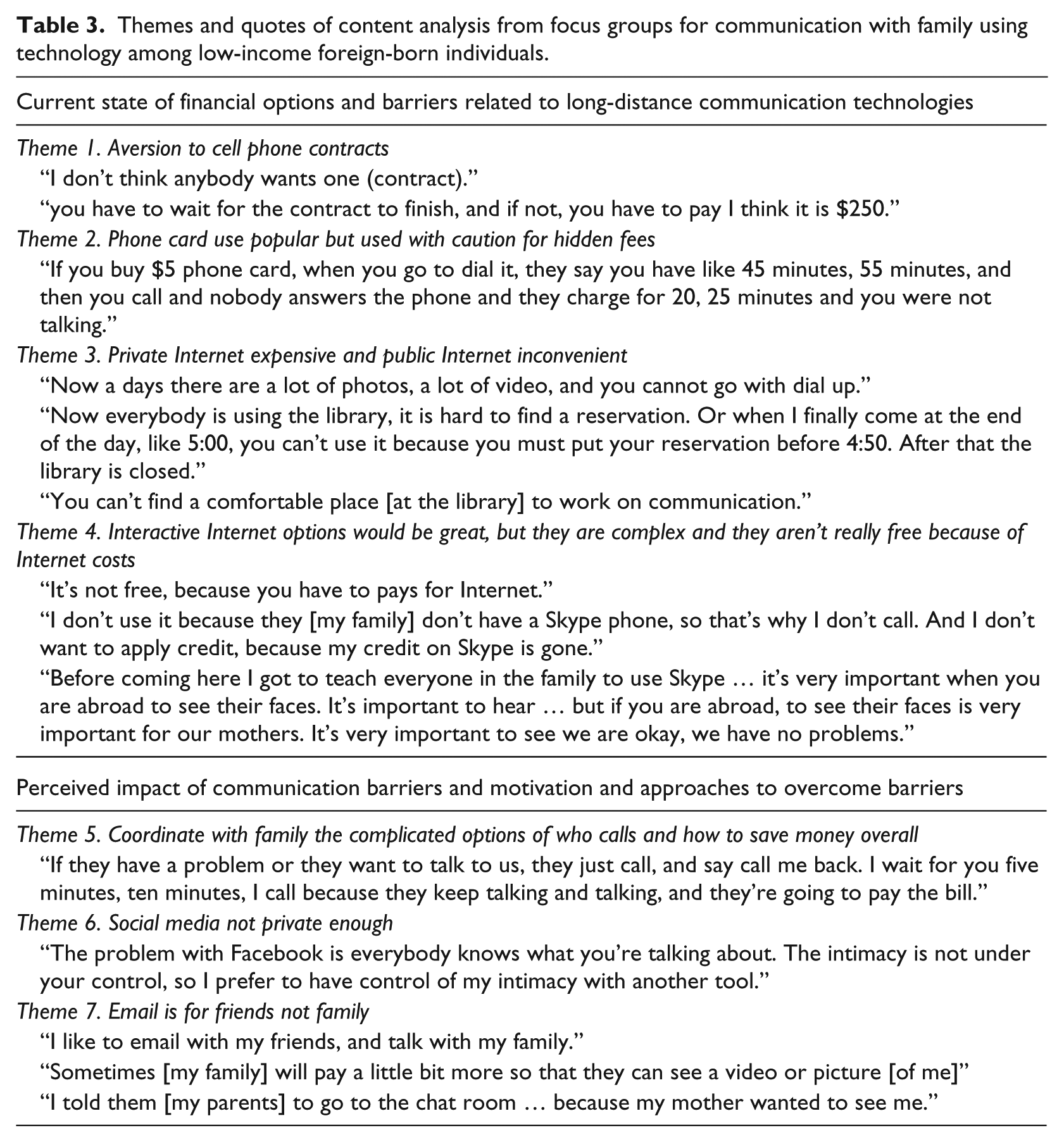
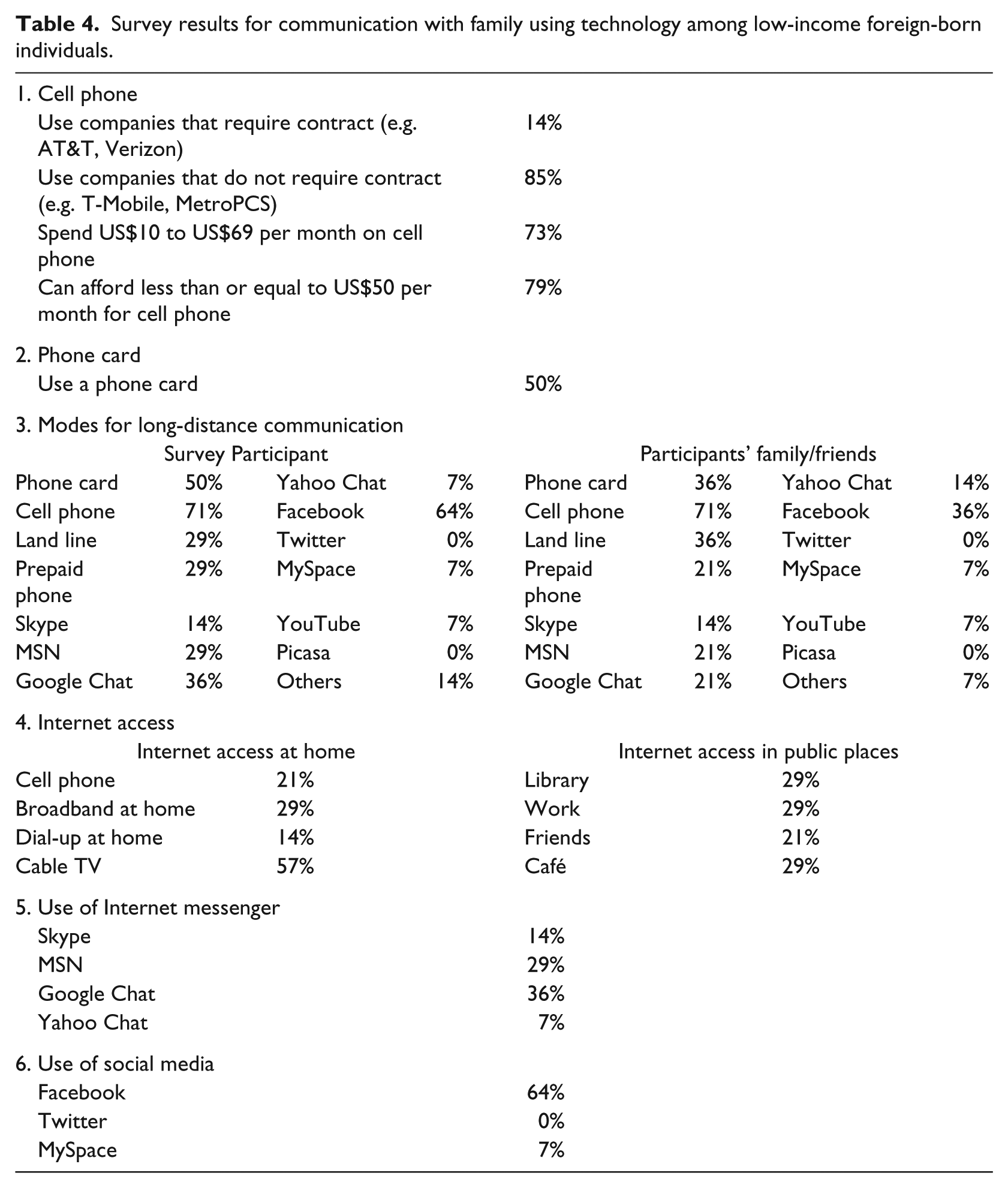
The two community member focus groups were conducted with a total of 14 participants, and each participant completed a survey. Demographic data and family communication practices of the 14 community participants are summarized in Table 2. The majority of participants were Latino and female, with 42 percent of participants between the ages of 30 and 39 years. Focus group themes are presented in Table 3, and survey results are presented in Table 4. The seven focus group themes are as follows: (1) there is an aversion to cell phone contracts; (2) phone card use is popular but is used with caution because of hidden fees; (3) private Internet is expensive and public Internet is inconvenient; (4) Internet options would be great, but they are complex and some participants cannot afford Internet; (5) coordination with family is required because of the complicated options of who initiates the call and how to save money overall; (6) social media are not private enough; and (7) email is for friends, whereas phoning is for family. The first four themes relate to our objective to understand the current state of financial options and barriers related to long-distance and mobile technology communication experienced by foreign-born individuals. Themes 5, 6, and 7 related to the participants’ perceived impact of communication barriers and motivation and approaches to overcome barriers.
Focus group and survey participant characteristics (n = 14).
Themes and quotes of content analysis from focus groups for communication with family using technology among low-income foreign-born individuals.
Survey results for communication with family using technology among low-income foreign-born individuals.
Current state of financial options and barriers related to long-distance communication technologies
Our data show that the majority of low-income foreign-born participants surveyed (85%) prefer using cell phones that do not require a contract such as T-mobile or MetroPCS; these participants discussed their perceptions of the advantages of non-contract cell phones and disadvantages of cell phone contracts. For example, one participant pointed out that a social security number is needed for a cell phone contract but is not required to purchase a non-contract cell phone. The participants also felt that a non-contract cell phone was advantageous over a contract cell phone because it allowed for greater control of one’s bill and unlimited calls and it did not affect their credit score. The main disadvantages of cell phone contracts discussed were surprise bills and unexpected charges. One participant stated “my grandson’s Verizon bill was $800 for two months.”
During our environmental scan, we found communication technologies that are free to use over the Internet; however, all of these technologies require Internet access, which is costly. Therefore, based on our environmental scan, phone cards are the cheapest option available (e.g. calling China from the United States is 0.1¢/min). However, the survey data showed that only 50 percent of the participants use a phone card. The remaining 50 percent who do not report using phone cards may be explained by the focus group participants’ discussion about experiencing unexpected and hidden phone card fees and charges. For example, one participant stated, If you buy a $5 phone card, when you go to dial it, they say you have like 45 or 55 minutes, and then you call and nobody answers the phone and they charge for 20 or 25 minutes and you were not talking.
Only 30 percent of participants reported using Internet Messenger tools such as Skype, MSN, Google Chat, and Yahoo Chat; participants explained during the focus groups that this was because Internet access is expensive and some of them have limited computer skills. For example, one participant pointed out that “[Skype] is not free, because you have to pay for Internet [access].”
Perceived impact of communication barriers and motivation and approaches to overcome barriers
Interestingly, 64 percent of the participants reported using Facebook and 7 percent reported using MySpace. However, some participants felt that social media were effective for staying connected with friends but that they do not provide enough privacy for communication with family members. For example, one participant stated, “The problem with Facebook is everybody knows what you’re talking about. The intimacy is not under your control, so I prefer to have control of my intimacy with another tool.” Another participant explained the importance of making the effort to communicate with family, including virtual face-to-face communication, despite its challenges: Before coming here I got to teach everyone in the family to use Skype … it’s very important when you are abroad to see their faces. It’s important to hear … but if you are abroad, to see their faces is very important for our mothers. It’s very important to see we are okay, we have no problems.
One participant succinctly stated, “Sometimes [my family] will pay a little bit more so that they can see a video or picture [of me].”
Discussion
Our findings indicate that a large digital divide has continued to persist in the low-income foreign-born community that we studied. 15 The participants shared experiences that illustrated (1) personal and common struggles to navigate the complicated financial options and barriers related to long-distance communication technologies and (2) motivation to remain in close connection with their family members living abroad and the development of approaches to overcome communication barriers. This digital divide with financial burden represents social barriers to the emotional support for the underserved population. The main finding that the individuals who participated in this study used “dumb cell phones,” prepaid cell phones, and calling cards demonstrates the perceived and/or real limited choices for family communication that low-income individuals may have. For example, calling cards are often chosen because they are convenient and offer low rates, but a US$2.25 million Federal Trade Commission lawsuit confirmed that some prepaid calling card companies mislead consumers about the number of minutes of talk time per card and include a number of hidden fees. 12 Alternatively, the Internet provides low- or no-cost options for communication, yet potentially costly Internet service or smart phone “apps” (e.g. iPhone Skype apps) are necessary to take advantage of these low-cost Internet-based alternatives. Moreover, public Internet access at libraries is inconvenient, and individuals perceive that Internet access at cafés increases the risk of obtaining a computer virus that may require costly computer repairs.
Our findings indicate that having a low income may limit communication alternatives; yet income restrictions increase the importance of effectively deciding among complicated choices based on personal preferences and available resources. For example, the participants’ high use of phone cards despite their awareness of hidden fees may be an example of decision making in the setting of a limited set of choices and available resources. The participants interviewed made their choices based on their own experiences as well as their friends’ and family members’ experiences. These choices included complex coordination of “who calls whom” within a family and other money saving options with family members abroad.
However, in addition to their complex decision making based on their own experience, the study participants had information needs about cell phone contracts, phone cards, and Internet-based communication technologies such as Skype. Additionally, all the study participants were open to opportunities to acquire this knowledge. Therefore, there is a potential role for educational programs to empower individuals to make choices that best meet their communication and economic needs. Based on the participants’ feedback, these educational programs and tools should be interactive, user-friendly, and convenient.
Community technology centers (CTCs) have emerged since the 1980s that offer educational programs and computer classes to narrow the digital divide in low-income urban communities. 18 These CTCs could be leveraged to provide needed educational programs. Based on our findings, a useful educational program implemented at a CTC may offer the assisted use of a computer-based decision support tool that simplifies choices for consumers based on their income restrictions and personal preferences. Additionally, an educational program should build skills that can be utilized immediately by low-income foreign-born individuals, such as how to initiate a Skype or Google Voice account.
Limitations
This study is limited to foreign-born low-income individuals from one neighborhood in the northern part of Manhattan. Moreover, most participants were Latino, female, and unemployed. The views and practices of those from non-urban areas as well as other racial and ethnic groups, gender, and employment statuses may be different. Consequently, further work is needed to determine the generalizability of the results.
Conclusion
Individuals with low incomes who have family members living abroad have information needs and are faced with financial burden and complicated choices for communication with their family members living abroad. There is a need for interactive and convenient educational tools that build knowledge and skills that can be immediately utilized to save money, such as how to initiate and use Internet-based technologies in order to provide emotional support. Additionally, there is a need for interactive decision support tools to simplify choices of technology options for communication with family living abroad among low-income consumers.
Footnotes
Acknowledgements
The authors thank James Kahn, Bob Tedeschi, Michael Winser, and Robert Wolf for their expert advice and the staff and participants of Union Settlement Association, where the focus groups and survey were carried out.
Declaration of conflicting interests
The author(s) declared no potential conflicts of interest with respect to the research, authorship, and/or publication of this article.
Funding
The author(s) disclosed receipt of the following financial support for the research, authorship, and/or publication of this article: This study received financial support from FJC—A Foundation of Donor Advised Funds. This research was partially supported by a grant from the U.S. National Institute of Nursing Research for the Center for Evidence-based Practice in the Underserved (P30NR010677, PI: Suzanne Bakken) at Columbia University. SC was a post-doctoral trainee supported by a National Library of Medicine training grant (T15-LM007079) at Columbia University. SY was a post-doctoral trainee supported by the Reducing Health Disparities through Informatics training grant (T32 NR007969) at Columbia University.