




Abstract
The purpose of this study was to assess reproductive health professionals’ familiarity with and use of various electronic technologies to support health promotion. The study also examined the relationship between demographic characteristics and attitudes and beliefs of the effectiveness of new technologies and perceived barriers for usage. A total of 165 reproductive health professionals at two conferences related to reproductive health in the United States completed the study survey. Personal and organizational factors affected the adoption of electronic technologies for health promotion. This included lack of knowledge, skills, and confidence as well as privacy concerns. The results of the study also suggested that being from an older generation was associated with having lower levels of knowledge, skills, and confidence in using new media. These findings highlight the importance of creating learning opportunities on the use of new technology for health promotion as well as addressing specific perceived barriers among reproductive health professionals in order to promote the adoption of these technologies.
Keywords
Introduction
Recent studies have found that advances in communication technology have dramatically changed the opportunities available to health professions to address significant morbidity and mortality issues among vulnerable and hard-to-reach populations including adolescents.1,2 Initial studies on cyberspace health promotion and risk reduction provide support for this application. Gray and Klein’s 3 literature review of Internet access for adolescents suggested that the Internet and associated technology did provide initial access to reproductive health information and resources, which was followed by physician visits. Eysenbach and Kohler 4 suggested that information on stigmatized health conditions were more frequently queried on the Internet as initial strategies to seeking care. The Centers for Disease Control and Prevention reported that expanding human immunodeficiency virus (HIV) testing opportunities for ethnic minorities outside of health-care settings using Internet outreach is an important strategy to reduce rates of HIV transmission among vulnerable populations. 5
A broader empirical base has been generated from the HIV community with evaluations that focused on risk prevention among gay men, 6 reminders to take HIV medications for positive patients, 7 and partner notification for HIV positive test results. 8 Levine et al. 9 found that a sexual health text messaging service was an effective tool for the prevention of sexually transmitted diseases (STDs) among adolescents in San Francisco. Users texted their query to a 5-digit number, which responded with a specific code that linked their question to a specific answer along with a referral to an appropriate medical service. The use of cell phones to disseminate health information is creative and feasible to implement and is cost-effective. 10 Specific Internet sites have also recently been evaluated as useful in the dissemination of health-related information. Ralph et al. 11 found that the social networking site MySpace provided a feasible venue for low-income communities in California to receive health information online. A systematic review of studies using new digital media to improve adolescent sexual health was conducted recently. 12 The authors conclude that there is evidence that the reviewed interventions influence various psychosocial and behavioral outcomes but that additional longitudinal studies are needed to strengthen this body of research.
Although the use of cell phones, the Internet, and social networking sites has grown in popularity in health promotion, many organizations and professionals adhere to traditional methods and have not adopted the new technology. Some studies have documented the efforts that have been made to promote the adoption of information and communication technologies in health-care settings by offering training programs for medical staff. 13 However, research on the barriers and concerns on the use of electronic or web-based technology to distribute health information among reproductive health professionals is scarce. A recent review found that recurring concerns about converting to health information technologies by health-care professionals included concerns about trust and liability issues, depersonalization of health care, and privacy. 14 Studies among nurses found similar results. Barriers to the successful adoption of health information and computer technology included privacy concerns, lack of knowledge and confidence, and concerns about depersonalization of health care.15,16
Generational disparities are often used to explain the adoption of technology. 17 Those born before 1946 are identified as the Silent Generation, Baby Boomers were born between 1946–1964, Gen X were born between 1965–1983, followed by Gen Y who were born between 1984 and 2002. Individuals raised in the Silent Generation had no access to modern technology since it was not in existence yet, and Baby Boomers began the evolution of technology that we know today. This progress in technology had led to Gen X becoming the first generation to be considered computer literate. Individuals from Gen Y have had the greatest exposure to modern technology that is an integral part of their everyday life. Although the use of modern web-based technology among those from the Silent Generation and Baby Boomers era has increased throughout the past few years, the majority of users of web-based technology come from Gen X and Gen Y. 18
Studies have demonstrated that web-based technologies can be effective in health-promotion activities to hard-to-reach populations. However, adoption of these technologies is limited due to various provider barriers. Studies on factors that encourage or impede health-care providers’ adoption of technology for health promotion are limited. In order to start educating and motivating health professionals to adopt new technology for health promotion, the field must develop a better understanding of the factors that impact the use of electronic platforms. Therefore, this study was designed to address the following questions:
To what extent are reproductive health professionals familiar with various types of electronic messaging systems and use them personally and professionally?
To what extent do reproductive health professionals use the Internet to communicate with patients?
What barriers for Internet utilization do reproductive health professionals identify?
Are there any significant demographic differences among this group of reproductive health-care providers in relation to their attitudes and practices concerning emerging technology?
Methods
The study was conducted as part of an ongoing evaluation of an electronic platform utilized by an adolescent family planning clinic in the southwestern part of the United States. The purpose of this initiative was to identify web-based technologies that can be effective in reducing teen pregnancy, HIV, STDs, and risk-taking behaviors among youth who access the clinic. A major component of this initiative was to promote the use of emerging technologies for health promotion by public health professionals, especially those who worked in family planning.
Participants
The study included a convenience sample of reproductive health professionals who attended two local and national conferences related to reproductive health care in June and August 2011. They were asked to complete an anonymous questionnaire concerning their use of technology and attitudes and beliefs on the effectiveness of new technologies. Participants were informed that by filling out the anonymous questionnaire, they would give informed consent and had agreed to voluntarily participate in this research.
Procedures
Participants were approached during the conference and were asked to complete the survey. They were given a written statement regarding the research goals and objectives, which stated that by filling out the anonymous survey, they had consented to take part in the research project. It was also stated that if they decided not to take part or not complete the survey it would not affect their rights or benefits in any way. The project protocol was approved by the Institutional Review Board (IRB) of the sponsoring institution prior to the administration of the survey. The IRB waived the consent form in lieu of the written statement.
Instrument
The project team developed a 25-item survey designed to assess reproductive health professionals’ use and reasons for lack of use of web-based and electronic media such as the Internet, social networking sites, and text messaging for personal and professional purposes. Theoretical concepts from Roger’s Diffusion of Innovations Theory guided the development of the survey. 19 Roger describes five characteristics of an innovation, namely, relative advantage, compatibility, complexity, trialability, and observability, and suggests that the users’ own perception of the characteristics of new innovations determines the extent of uptake of a new technology. The survey included the following domains.
Access and usage of web-based technologies
Questions queried participants’ access to and use of web-based and electronic media including the Internet, email, cell phone for text messaging, and social network sites such as Facebook and Twitter.
Personal factors affecting usage
Questions about personal factors included knowledge, skills, and confidence in using web-based technology as well as concerns about privacy. Questions also addressed the degree of perceived usefulness of the use of web-based and electronic media as well as common practices that are used to disseminate information to patients.
Organizational factors affecting usage
Participants were asked about their organizations’ current use and future intentions to establish web-based and electronic media for health promotion. Participants were also asked about their organizations’ perceptions of the usefulness, importance, and effectiveness of the use of this type of technology to deliver health information to patients.
Open-ended questions
Two open-ended questions asked participants to identify additional individual and organizational barriers for use of web-based and electronic media for health promotion.
Demographic characteristics
Demographic information included gender, race, education, profession, and age. Age groups were defined according to the four generational categories (Silent Generation, Baby Boomers, Gen X, and Gen Y) in order to identify differences by generation in emerging technologies use.
Results
Demographic characteristics
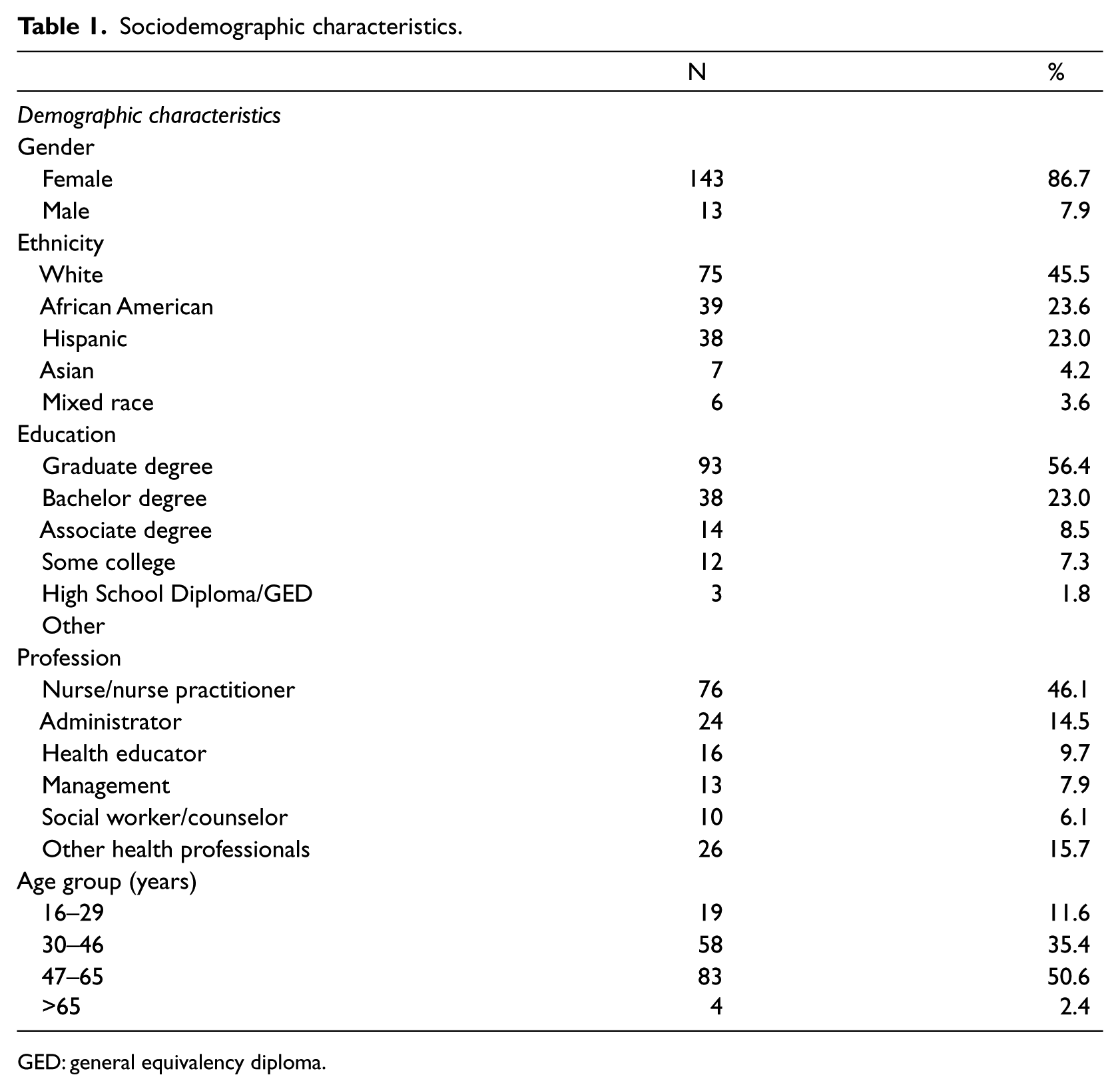
A total of 165 reproductive health professionals completed the survey. The sample was predominantly female (86.7%) and well educated, with 79.4 percent indicating they had a graduate degree (56.4%) or an undergraduate degree (23.0%). Half (50.6%) of the participants were 47 to 65 years old, and an additional one-third (35.4%) of the participants were aged between 30 and 46 years. Few participants were under the age of 30 years. Almost half of the participants identified themselves as White or Caucasian (45.5%), while about a quarter each identified themselves as Black (23.6%) or Hispanic (23.0%). Almost half of the respondents were clinicians, with 46.1 percent reporting they were nurses or nurse practitioners. Other professions included administrators, health educators, and individuals who identified themselves as other professionals (Table 1).
Sociodemographic characteristics.
GED: general equivalency diploma.
Access and usage
The majority of respondents owned a cell phone (99.2%) and used text messaging (92.1%). All respondents reported having Internet access (100%), and most (94.1%) reported to have the Internet at both work and home. Most respondents used the Internet during the workday, with one-third (33.9%) reporting 5 h or more per day, another one-third (32.2%) reporting 1–3 h per day, and about a quarter (23.7%) reporting between 3 and 5 h of work-related Internet use per day. Users of social media accounts (Facebook, Twitter, etc.) were not very common among this particular sample. Facebook represented the highest number of users, with almost two-thirds (66.1%) of respondents who reported to have an account. LinkedIn had the second largest presence with 23.1 percent of this sample owning an account, followed by Twitter (19.8% of respondents).
Personal factors affecting usage
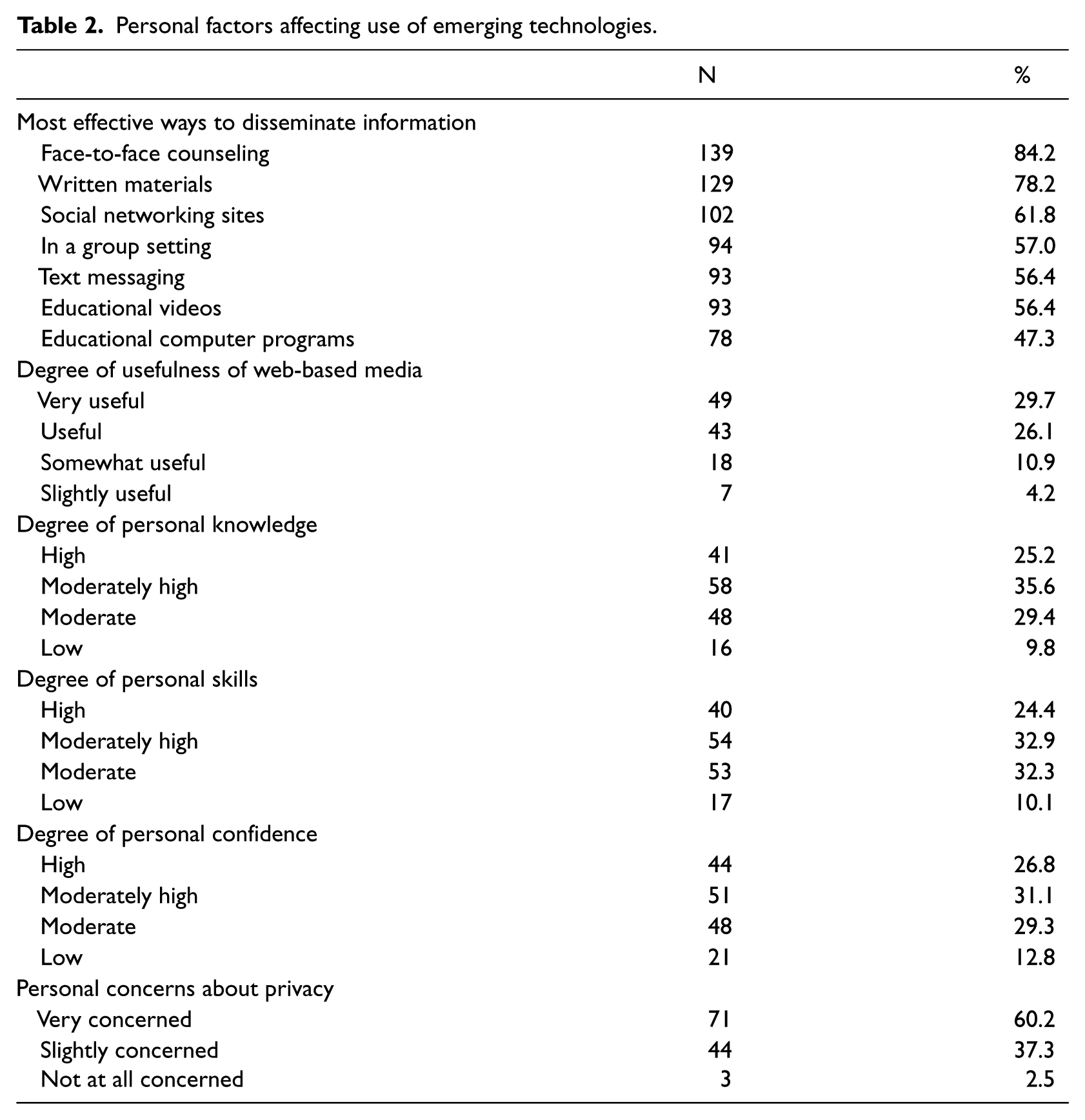
A majority of the respondents (84.2%) indicated that face-to-face counseling was the most effective way to disseminate information to patients, followed by disseminating written materials such as brochures. However, many of the respondents felt that web-based and electronic media were useful, with 29.7 percent rating the degree of usefulness as very useful, 26.1 percent as useful, and another 10.9 percent as somewhat useful. Respondents also indicated high levels of personal knowledge of web-based and electronic media: 25.2 percent rated their knowledge as high, 35.6 percent as moderately high, and 29.4 percent as moderate. Only 10.1 percent reported low knowledge. Most participants rated their skills as high or moderately high, with 24.4 percent rating themselves as high, 32.9 percent as moderately high, and 32.3 percent as moderate. Most participants were confident to use web-based and electronic media, with 26.8 percent reporting high levels of confidence, 31.1 percent moderate high confidence, and 29.3 percent moderate confidence. Almost all respondents were concerned about privacy of web-based media, with 60.2 percent selecting “very concerned” and 37.3 percent of respondents selecting “slightly concerned.” Only 2.5 percent reported being “not at all concerned” about their privacy (Table 2).
Personal factors affecting use of emerging technologies.
Organizational factors affecting usage
A little over one-third (37%) of agencies reported using social networking sites to disseminate information, and only 15.7 percent of respondents stated an intention to use social networking in the agency to share health information. Among forms of web-based technology, email was the most prevalent information channel; half of responding agencies reported using an email service (49.7%); however, only 11.5 percent of respondents indicated an intention to establish use of email to distribute health information. Use of other social networking (blog, chat rooms, and podcasts) was very low, with few indicating either current use or intention to use. Among respondents, 4.2 percent reported using an interactive blog, while only 7.3 percent reported an intention to use an interactive blog. Podcasts were used by 5.5 percent of respondents, while only 1.8 percent intended to establish use of podcasts for information dissemination. Online chat rooms were used by only 1.8 percent, and only 5.5 percent reported an intention to use online chat rooms. Text messaging fared slightly better than other forms of social media, although worse than email—7.3 percent of respondents reported the use of text messaging, but 15.2 percent intended to use text messaging in their agency (Table 3).
Organizational factors affecting use of web-based and electronic media.
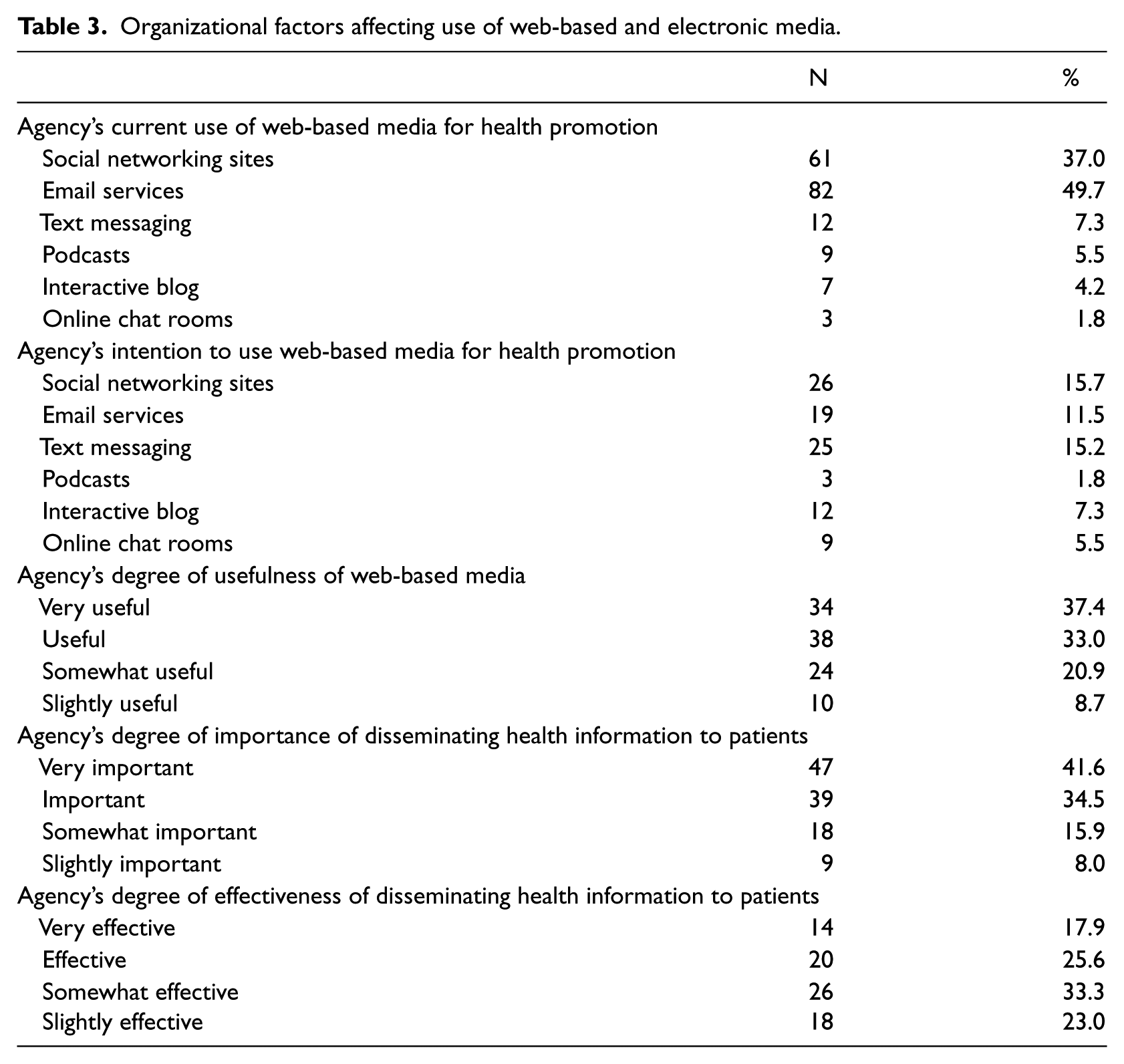
Almost all participants believed their agencies perceived web-based media as useful for delivering health information to patients, with 37.4 percent indicating that they are very useful, 33.0 percent moderately useful, and 20.9 percent as somewhat useful. All participants also believed their agencies perceived web-based media as an important tool to deliver health information to patients, with 41.6 percent indicating that it is very important, 34.5 percent important, and 15.9 percent indicating it is somewhat important. Among respondents who reported agency use of web-based media, less than one-fifth considered their agency to be very effective (17.9%) in the use of these technologies to share health information. A quarter (25.6%) of respondents believed their agency to be effective, while one-third (33.3%) believed their agency to be only somewhat effective. Almost a quarter (23.0%) reported low effectiveness in using these technologies to deliver health information to patients (Table 3).
Generational differences
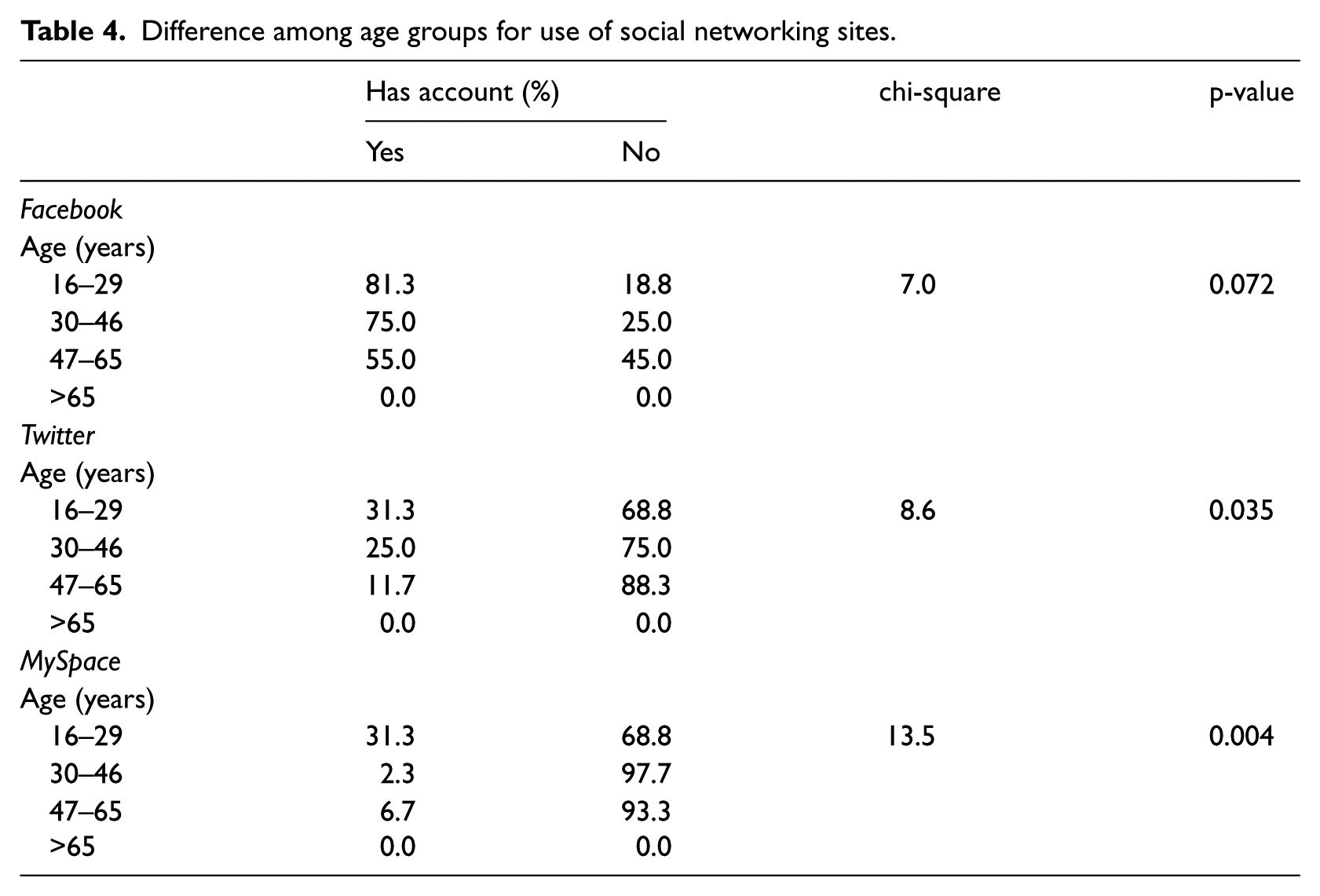
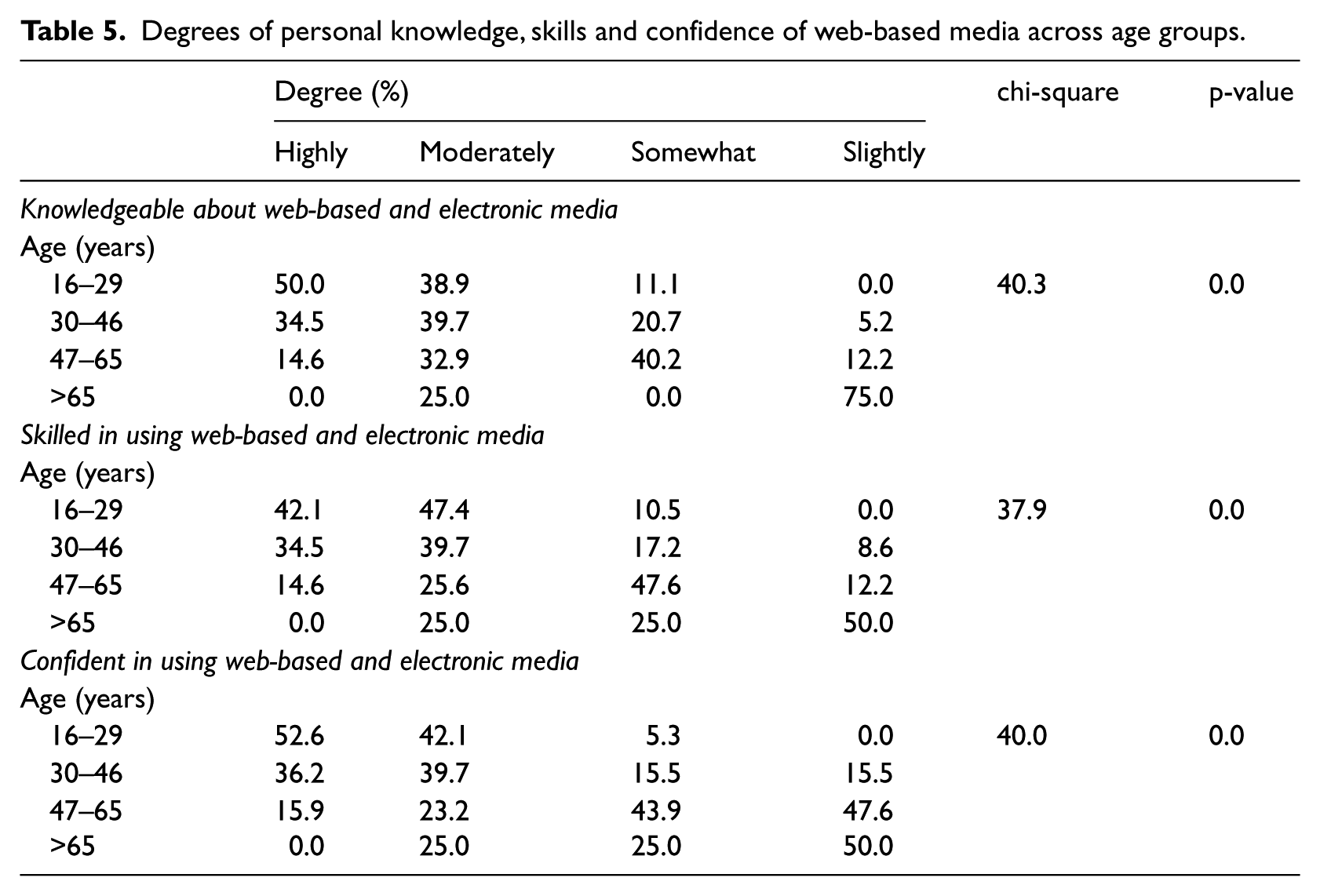
There were notable differences among age groups with regard to owning a social network site account and knowledge, confidence, and skills regarding web-based and electronic media. The results of chi-square analyses indicated that there were statistically significant relationships between age and having an account for MySpace (χ2 = 13.5, p = 0.004) and Twitter (χ2 = 8.6, p = 0.035). There was a marginal statistically significant relationship between age and owning a Facebook account (χ2 = 7.0, p = 0.072) (Table 4). A chi-square test was also performed to examine the relationships between age and levels of knowledge, skills, and confidence. The relationship was statistically significant for knowledge (χ2 = 40.3, p = 0.0), skills (χ2 = 37.9, p = 0.0), and confidence (χ2 = 40.07, p = 0.0) (Table 5).
Difference among age groups for use of social networking sites.
Degrees of personal knowledge, skills and confidence of web-based media across age groups.
Open-ended questions
A total of 78 individuals (47.2%) responded to the survey’s open-ended questions related to individual and organizational barriers for the use of web-based and electronic media technologies. The major individual barriers identified by participants included personal lack of technological knowledge and skills (N = 23) and time constraints (N = 14). Some have expressed a disinterest (N = 6) in adopting technology for health promotion with their priority population. Respondents have also identified patient-related barriers such as lack of access to technology, namely, computers, phones, and Internet (N = 26) and patients’ lack of knowledge about web-based media (N = 6). Much of patients’ lack of knowledge was related to illiteracy.
The major organizational barriers identified included funding (N = 24) and unqualified and limited staff (N = 29). Many cited the lack of funds to design a website, technology development, purchase new computers with increased capabilities, and staff training. The majority recounted having a limited number of staff and/or staff lacking skills to develop and sustain media technologies. Management and policies (N = 13) as well as privacy issues (N = 11) were also barriers related to agency’s limited use of web-based and electronic media technologies. Other barriers included lack of up-to-date technology (N = 8) and lack of time (N = 6).
Discussion
This study assessed the extent to which organizations and their personnel were ready to implement emerging electronic technology to educate and communicate with their patients. The information from the survey and open-ended questions helped to identify both barriers to implementation as well as areas that require additional technical assistance to facilitate the introduction of this medium to reproductive health clinics. The findings indicated that most respondents had access personally and professionally to the Internet but were not comfortable with using the electronic applications to reach their patients. The lack of wide adoption of this technology by providers to deliver messages to their patients is consistent with previous studies that have documented a variety of challenges in implementing electronic initiatives throughout health care. Gagnon et al. 13 in their exhaustive review of technology adoption suggested that in some health settings, a variety of training programs have been initiated for medical staff. However, not all health-care professionals are comfortable or knowledgeable with even the basic technology. 16 Although the review suggested both group and one-on-one training to facilitate adoption of technology in the health domain, the authors were uncertain whether these strategies will be ultimately successful in promoting adoption of electronic medical records, telemedicine, or Internet technology or services. If the basic approaches to such initiatives are slow to be accepted, more creative practices are slow to be tried. Lluch 14 in her review of barriers to health-care technology also concurs with earlier reports that systemic barriers such as liability issues, privacy concerns, and individual competencies effectively block institutional electronic transformation.
A review of the demographic profiles of respondents in this study may suggest some possible reasons for non-utilization of web-based communications. Over 50 percent of the providers were 47 to 65 years of age, a cohort that was not acculturated early to the usage of this medium. While highly educated (56% had earned a graduate degree), this accomplishment did not translate to advanced Internet proficiency. This coupled with the belief (84.2%) that the most effective way to communicate with patients is only through face-to face counseling suggests that their existing belief system concerning educational strategies does not give credence to the effectiveness of new technologies. Such an assumption is supported via the attitudes and beliefs about agency use. Only 37.4 percent of respondents felt that such technology was very effective in disseminating pertinent health education to patients. In addition, only 17 percent felt that their reproductive health agency is very effective in using web-based technologies to deliver pertinent health information to patients. It appears that for this group of professionals, there is neither personal nor institutional “buy-in” to adopt new technology.
This study found several personal and organizational barriers that impact low rates of adoption of emerging technologies by health professionals. Health professionals were also concerned about patients’ access to these technologies. Although the study used a convenience sample of reproductive health professionals that may hinder generalizability to professionals in other settings or countries, participants came from various agencies in the country, who work in the field of reproductive health. The information generated would therefore be useful to those trying to increase use of technology to help specific health areas. The findings point to the importance of acknowledging the digital divide among generations when new technologies are introduced. This acknowledgement hopefully would provide an impetus for an integrated technological in-service training for professions in reproductive health. This training should address not only the technical aspects of these platforms but also concerns about privacy and confidentiality and how they can be protected in the era of the Health Insurance Portability and Accountability Act (HIPAA). Additionally, effective communication pathways to promote reproductive health and disease prevention need to be adopted both by health-care providers and their organizations. Given the potential role of reproductive health clinics in providing an electronic portal to attract and influence adolescents and youth, it would be important to continue this line of electronic communication and outreach by engaging more health professionals.
Footnotes
Funding
This work was supported by the spirit golf association.