




Abstract
Aims:
Is drinking with parents (DWP) likely to curb or to encourage adolescent heavy drinking? The scant number of studies addressing this issue have arrived at contradictory conclusions, which may reflect that different measures of DWP have been used. We pursued the assumption, taking potential confounding related to parental alcohol-specific rule-setting and parenting style into account.
Method:
Data stem from the Norwegian 2015 ESPAD survey of 15–16 year olds. Drinking with parents at the last drinking event and the frequency of DWP in the past year were assessed among those who had consumed alcohol (n = 1374). Severe drunkenness and binge drinking in the past month were the outcomes. Parental covariates were accounted for in Poisson regression models.
Results:
One in five (21%) had been drinking with their parents the last time they consumed alcohol, and this DWP measure was strongly and inversely related to both drunkenness and binge drinking. Adolescents who reported no DWP episodes in the past year (61%) and those who reported 1–2 such episodes (30%) barely differed with respect to the two outcomes. More frequent DWP (9%) was significantly associated with an increased risk of heavy episodic drinking, but the statistical impact on severe drunkenness was no longer significant when adjusting for parental covariates.
Conclusions:
Different measures of DWP were related differently to adolescent heavy drinking, indicating that studies based on DWP at the last drinking event are biased in favour of the view that adolescents may “learn” sensible drinking by consuming alcohol with their parents.
According to the Norwegian health authorities, parents should not offer alcohol to their underage offspring in any context, as it promotes heavy and harmful consumption. Indeed, several studies have documented a positive association between the two (van der Vorst, 2012; Ward & Snow, 2010; Yap, Cheong, Zaravinos-Tsakos, Lubman, & Jorm, 2017). Moreover, the widespread downward trend in adolescent drinking in the 2000s (de Looze et al., 2015; Kraus, Guttormsson, Leifman, Arpa, & Molinaro, 2016) has coincided with substantial decreases in parents’ supply of alcohol and more restrictive alcohol-related parenting in various countries (de Looze et al., 2014; Hallgren, Leifman, & Andréasson, 2012; Kelly et al., 2016; Raitasalo & Holmila, 2016). However, the evidence is insufficient to conclude that parental supply of alcohol is a causal factor (Sharmin et al., 2017), and some studies have in fact revealed that it is related inversely to risky use of alcohol by youth (Kaynak, Winters, Cacciola, Kirby, & Arria, 2014).
Obviously, the term “parental provision of alcohol” may refer to different phenomena. For instance, parents may offer sips or whole drinks, they may drink with their children in a supervised family setting or provide alcohol for partying with peers, and their supply may be confined to exceptional occasions or may occur more regularly. Few studies have distinguished between different forms and aspects of parental provision of alcohol, yet there is evidence to suggest that supply for unsupervised drinking is particularly risky (Gilligan, Kypri, Johnson, Lynagh, & Love, 2012).
Our study of Norwegian youth focuses specifically on underage drinking with parents (DWP). The potential implications of DWP on adolescents’ drinking behaviour more generally have long been surrounded by controversy (McMorris, Catalano, Kim, Toumbourou, & Hemphill, 2011), and scarce research has addressed the issue. Some scholars have vigorously warned against DWP, claiming that it conveys parental approval of alcohol use, which has been found to increase young people’s risk of heavy consumption (Ryan, Jorm, & Lubman, 2010; van der Vorst, 2012; Ward & Snow, 2010). Others have argued in favour of a harm-reduction strategy, claiming that youngsters learn to drink sensibly by consuming limited amounts of alcohol with their parents (Foxcroft & Lowe, 1997; Green, Macintyre, West, & Ecob, 1991; Peele, 2007). The assumption is that such drinking practices yield a protective learning effect that generalizes to unsupervised alcohol use in other contexts. Studies from Australia and the United States indicate that quite a few parents share this view (Gilligan et al., 2012; Jackson, Henriksen, & Dickinson, 1999; Jones, Andrews, & Berry, 2016).
The study by Foley, Altman, DuRant, and Wolfson (2004) has been cited frequently both in the popular press and in the research literature as evidence in support of the harm-reduction strategy. The researchers applied a measure of DWP at the last drinking event, and found that it was related inversely to extensive use of alcohol by youth. The conclusion was that “drinking with parents […] appears to have a protective effect on general drinking trends” (Foley et al., 2004, p. e22). A few other studies have shown similar results (Mayer, Forster, Murray, & Wagenaar, 1998; Reboussin, Song, & Wolfson, 2012; Song, Smiler, Wagoner, & Wolfson, 2012). Without exception, these studies also assessed DWP by asking about the social context of the last drinking event.
However, the “last event” measure of DWP has recently been called into question (Blanchette & Heeren, 2013; Jones, 2016). The intake of alcohol is far lower when adolescents drink with their parents rather than with their peers (Foley et al., 2004; Kask & Markina, 2014; Mayer et al., 1998), and the probability that DWP occurred at the last drinking event is likely to be elevated among those who have experienced DWP but who rarely drink in a peer context. Conversely, adolescents who frequently get drunk are probably less likely to report DWP at the last drinking event, simply because excessive drinking typically occurs when the parents are out of sight. Blanchette and Heeren (2013) thus argue that studies based on a “last event” measure of DWP are likely to be biased in favour of the harm-reduction approach.
The international research literature seems to include only a couple of studies that have assessed DWP differently, and they do not lend support to the view that drinking with parents may serve a harm-reducing function. Pape, Rossow, and Storvoll (2015) used a frequency measure of DWP in a previous study of Norwegian youth, and found that it correlated positively with heavy episodic drinking. Moreover, a longitudinal study by Degenhardt et al. (2015) showed that youth who reported recurrent (3+ times) drinking in any context, including drinking with their parents in a family setting, had an increased likelihood of later risky consumption.
The present study
In contrast to previous research, our study included two different measures of drinking with parents: DWP at the last drinking event, and the frequency of DWP in the past year. Hence, we had a unique opportunity to investigate whether these measures correlated differently with adolescent heavy drinking. The dataset also included indicators for parenting style, which were taken into account. Pape et al. (2015) found an inverse association between the frequency of drinking with parents and indicators for parenting quality, yet few other studies have assessed such parental correlates of DWP. There is, however, solid evidence that both general and alcohol-related parenting impact on the risk of excessive use of alcohol by youth (Ahlström, 2002; Kaynak et al., 2014; Ryan et al., 2010; van der Vorst, 2012; Ward & Snow, 2010; Yap et al., 2017). For instance, strict rules against unsupervised drinking and high levels of parental care and support have been identified as protective factors.
Method
Sample and design
The European School Survey Project on Alcohol and Other Drugs (ESPAD) is conducted every fourth year and includes samples of 10th graders (15–16 year olds) from almost all European countries (Kraus et al., 2016). We used data from the 2015 Norwegian ESPAD survey. School classes were randomly selected after stratification by school size, region, and geography to yield a nationally representative sample of students. Attrition at the school level was quite high, so the response rate was moderate when non-participating schools were taken into account (53%), while it was high when they were excluded (90%) (N = 2805). The net sample covered all 19 counties in Norway, and the geographical distribution of the respondents was fairly proportional to the size of the youth population in the four major regions in the country. Data were collected using anonymous self-report questionnaires that were administered during ordinary school hours.
Of the respondents, 11% reported that neither of their parents had consumed alcohol in the past year, while 48% had not been drinking in the past year themselves. These respondents had ipso facto not experienced any DWP episodes in the same period, and were therefore excluded. We also excluded about 1% of the respondents in the remaining sample due to missing data on one or both DWP measures. The final study sample comprised 1374 adolescents, of whom 52% were boys.
Measures
Items on DWP and parental alcohol-related permissiveness were included only in the Norwegian survey, whereas all other items stem from the standard ESPAD questionnaire (Kraus et al., 2016).
Drinking outcomes
We applied two dichotomous measures of heavy episodic drinking: severe drunkenness and binge drinking in the past 30 days. The former was operationalised as having been “intoxicated from drinking alcoholic beverages, for example staggered when walking, not being able to speak properly, throwing up, or not remembering what happened”. Binge drinking was assessed through a question about intake of five or more units of alcohol on one single drinking occasion.
Drinking with parents (DWP) was assessed through two questions
(i) Did you drink with your parents (one or both) the last time you drank alcohol? (ii) How many times in the past 12 months have you been drinking with your parents (one or both)? The response options for the latter question were “no times”, “1–2 times”, “3–5 times”, and “6 or more times”. Very few (3%) had experienced DWP 6+ times, and we thus applied a trichotomous measure with “3+ times” as the highest frequency category. When referring to drinking with parents at the last drinking event, we will occasionally use the term “DWP last time”.
Parenting factors
We assessed alcohol-related parental permissiveness through an item about parents’ rule-setting with respect to drinking. Adolescents who were allowed to drink without getting drunk and those who reported no parental restrictions were merged and contrasted with those who reported strict parental rules against alcohol use. Moreover, the adolescents reported the extent to which six statements about their parents corresponded with their impressions or experiences on a scale ranging from 1 (hardly ever) to 5 (almost always). An exploratory factor analysis of the items resulted in a readily interpretable three-factor solution: (i) Parental knowledge (“My parent(s) know who I’m with in the evenings”, and “My parent(s) know where I am in the evenings”), (ii) Parental care (“I can easily get warmth and caring from my mother and/or father” and “I can easily get emotional support from my mother and/or father”), and (iii) Parental rule-setting (“My parent(s) set definite rules about what I can do at home” and “My parent(s) set definite rules about what I can do outside the home”). The items for each of the parenting factors were added up and averaged. The Spearman–Brown coefficients for the three indices ranged from 0.82 to 0.92, implying satisfactory reliability (Eisinga, Grotenhuis, & Pelzer, 2013).
Statistical analyses
Variations in proportions were assessed using cross-tabulations with χ2-test while ANOVA with F-test was used to examine differences between means. We also applied Poisson regression to estimate relative influence of DWP on heavy episodic drinking. This estimation procedure is more robust to omitted variables than logistic regression (Zou, 2004), and relative risks are also easier to interpret than odds ratios. Because the sampling was clustered by school, we used robust clustered standard errors with school as cluster variable (Williams, 2000). Data were analysed using STATA (version 14).
Results
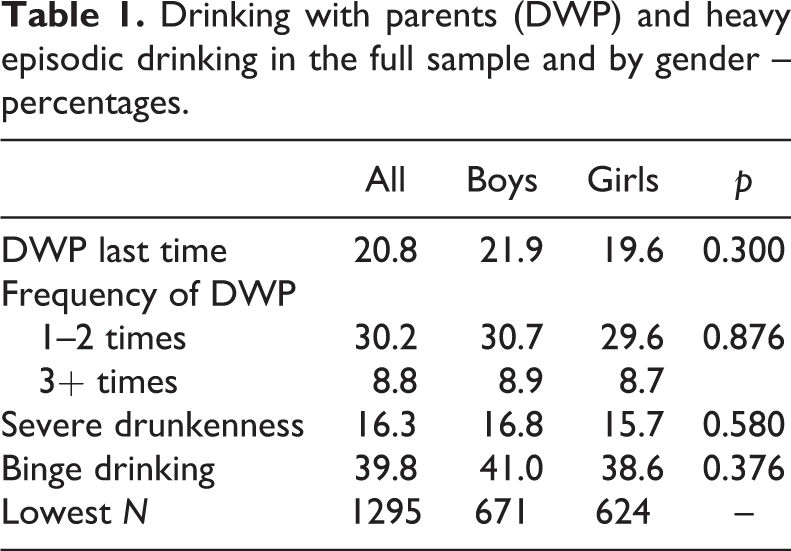
Table 1 shows that one in five adolescents (21%) had consumed alcohol with their parents at their last drinking episode. Moreover, 30% reported 1–2 DWP episodes in the past year, and 9% had experienced DWP more frequently (3+ times). The prevalence of severe drunkenness in the past month was 16%, while the percentage reporting past month binge drinking was 40%. Neither of the DWP measures varied by gender, nor were there any statistically significant differences between boys and girls with respect to the two drinking outcomes. Hence, none of the subsequent analyses were conducted separately for boys and girls, nor did we adjust for the respondents’ gender in multivariate analyses.
Drinking with parents (DWP) and heavy episodic drinking in the full sample and by gender – percentages.
The upper part of Table 2 shows that DWP at the last drinking event was strongly and inversely related to both outcome measures of heavy episodic drinking. For instance, the prevalence of past month drunkenness was nearly seven times higher among those who did not report “DWP last time” than among those who did (20% versus 3%). The associations between the past year frequency of DWP and the two outcomes went in the opposite direction. That is, the proportion reporting severe drunkenness was substantially elevated among those who had experienced 3+ DWP episodes, as was the proportion reporting binge drinking. There were, however, only small differences between the “no DWP” group and those who had consumed alcohol with parents 1–2 times.
Variations in severe drunkenness, binge drinking and parenting factors by drinking with parents (DWP) at the last drinking event and the frequency of DWP in the past year – percentages and means (SD).
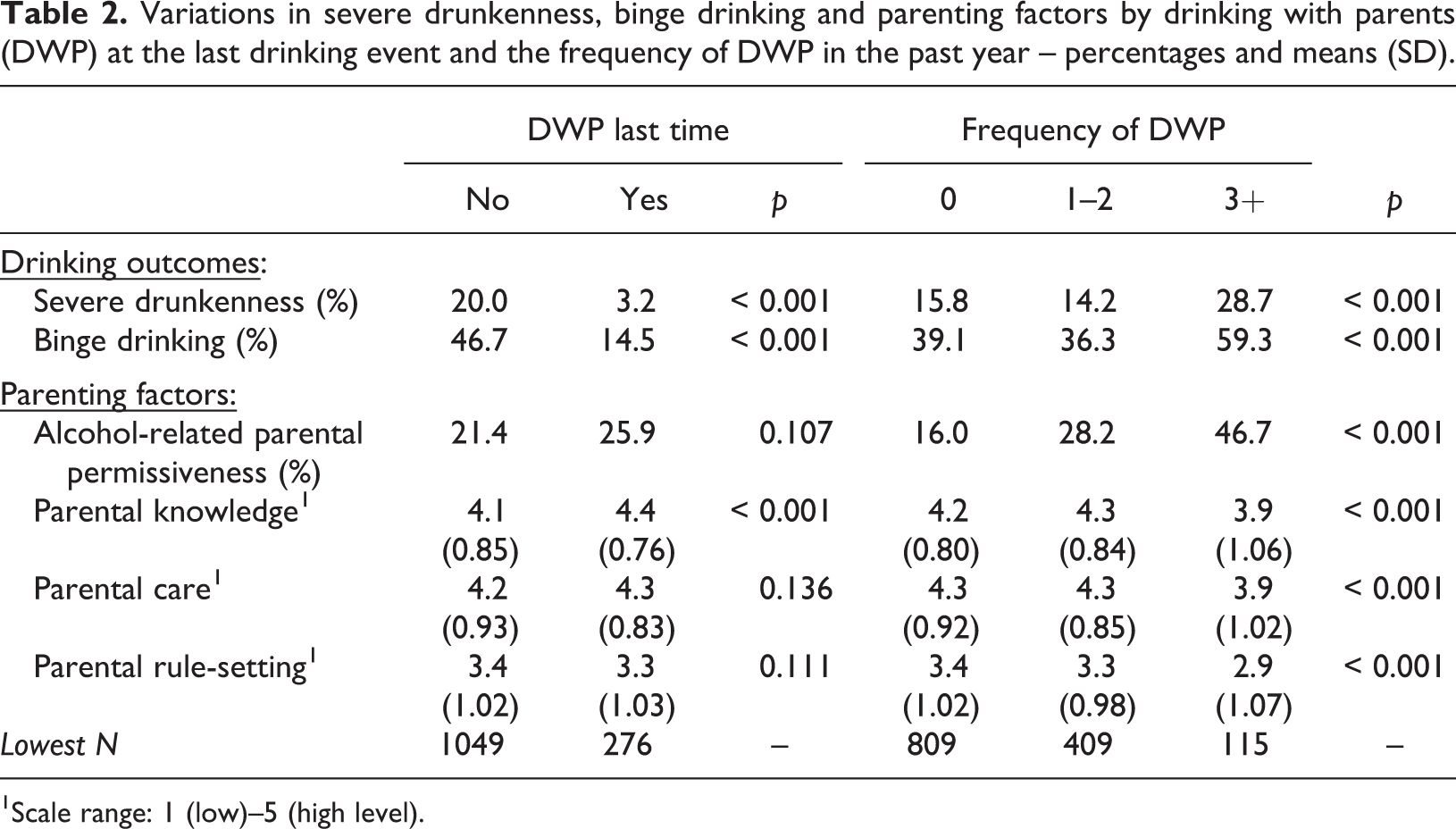
1Scale range: 1 (low)–5 (high level).
The lower part of Table 2 shows that parental knowledge was related positively to “DWP last time”. None of the other parenting factors correlated significantly with this measure of drinking with parents. In contrast, there was a consistent pattern of significant associations with the past year frequency of DWP. That is, the proportion reporting alcohol-related parental permissiveness was lowest among adolescents who reported no such drinking episodes and highest among those reporting DWP 3+ times. The latter group also reported far lower levels of parental knowledge, care, and rule-setting than others. As regards all the three indicators of general parenting style, the results for the “no DWP” group and for those who had experienced DWP 1–2 times showed little variation.
As one might expect from the results in Table 2, the inverse statistical impact of DWP at the last drinking event on the two outcomes barely changed when we accounted for the parenting factors (Table 3). The estimate implies that those who reported “DWP last time” had an expected risk of severe drunkenness that was 82% lower (Adj RR = 0.18) than those who did not, while their risk of binge drinking was 67% lower (Adj RR = 0.33). As regards the frequency of DWP, there were no indications that 1–2 such drinking episodes made any difference, mirroring the results in Table 2. Moreover, the relative risk of more frequent DWP (3+) on severe drunkenness was no longer statistically significant when adjusting for the parenting factors. The impact of relatively frequent DWP on binge drinking also declined when these factors were accounted for, but not below the level of statistical significance. Specifically, the adjusted risk of consuming 5+ alcohol units on one single occasion was 24% higher (Adj RR = 1.24) among adolescents who reported 3+ DWP episodes as compared to those who reported no DWP episodes.
The statistical impact of drinking with parents (DWP) at the last drinking event and the frequency of DWP in the past year on severe drunkenness and binge drinking in the past month – crude and adjusted relative risks (RR)1 with 95% confidence intervals (CI).
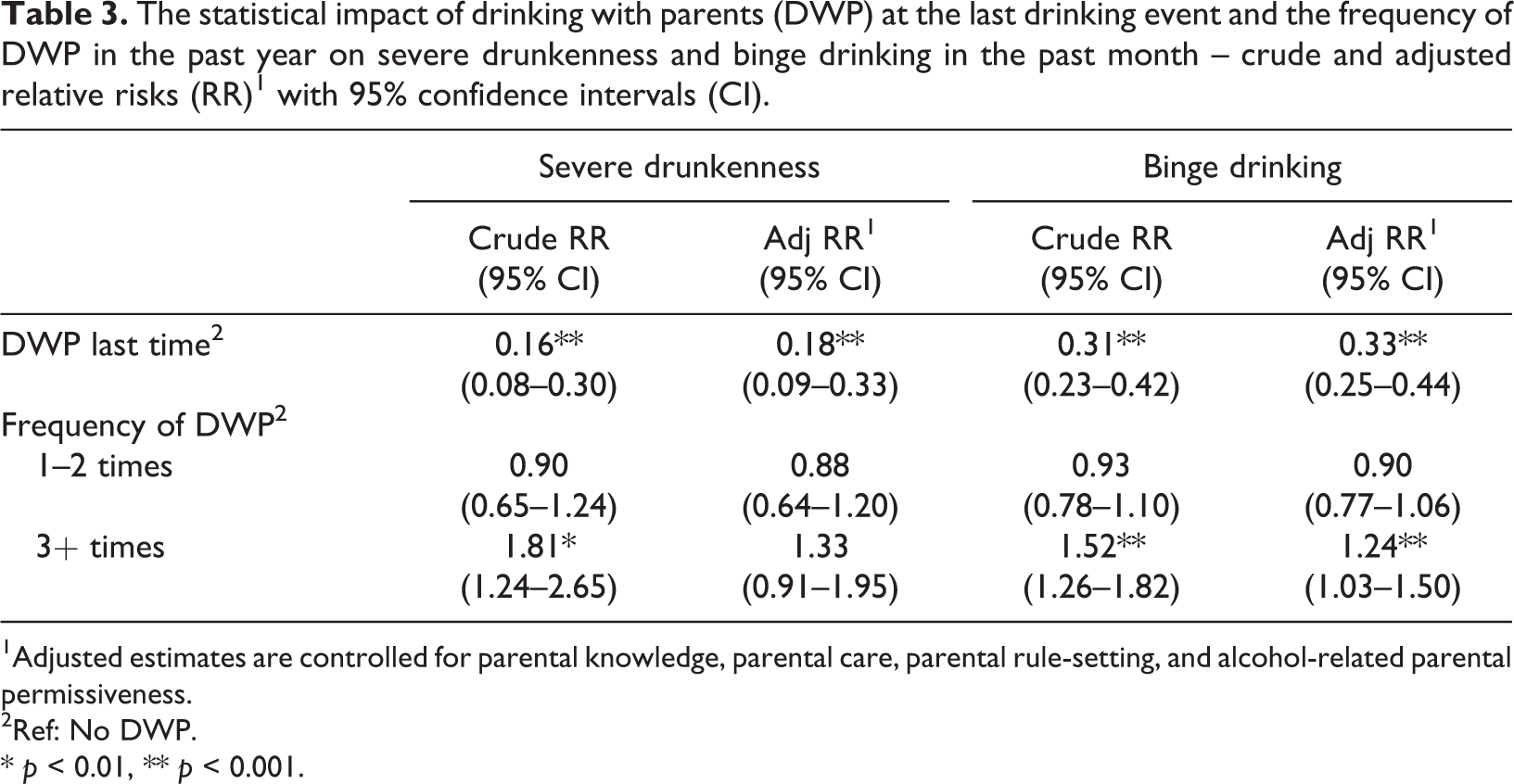
1Adjusted estimates are controlled for parental knowledge, parental care, parental rule-setting, and alcohol-related parental permissiveness.
2Ref: No DWP.
* p < 0.01, ** p < 0.001.
Discussion
Is drinking with parents (DWP) associated with an increased or a decreased risk of adolescent heavy drinking, or is there no association between the two? Our study expanded the meagre and inconsistent body of research that addresses this question. We used data on DWP at the last drinking event and the frequency of DWP in the past year, and found that the two measures were related differently to heavy episodic drinking. Moreover, we applied various indicators for parenting style and revealed that their association with each of the two DWP measures also differed in terms of both strength and direction.
In line with some previous studies (Foley et al., 2004; Mayer et al., 1998; Reboussin et al., 2012; Song et al., 2012), DWP at the last drinking event was associated strongly and inversely with past-month drunkenness and binge drinking. The decreased relative risk of “DWP last time” remained highly significant and became only negligibly weaker when accounting for alcohol-related parental permissiveness and the indicators for general parenting style. Thus, the parental factors that we gauged were generally unrelated to “DWP last time”, yet there was one notable exception: the level of parental knowledge correlated positively with this measure of drinking with parents. Other studies provide evidence that parents’ knowledge of their children’s social life and whereabouts is indicative of a high-quality parent–child relationship (Crouter & Head, 2002; Stattin & Kerr, 2000), which recently was identified as one of the most important parental factors that protects against excessive adolescent drinking (Yap et al., 2017).
We found no indications of a potential harm-reducing effect when applying the past-year frequency measure of DWP rather than “DWP last time”. That is, adolescents who had experienced no such drinking episodes and those who reported DWP 1–2 times were about equally likely to engage in heavy episodic drinking. As regards parents’ alcohol-related permissiveness and the three indicators of parenting style (parental knowledge, care, and rule-setting), the results for the two groups also showed little variation. More frequent DWP (3+ times) was related positively to the drinking outcomes – which corroborates the results of other studies that have applied frequency measures of consuming alcohol with parents (Degenhardt et al., 2015; Pape et al., 2015). Relatively frequent DWP also correlated significantly with all the parenting factors, indicating that such drinking practices were embedded in a pattern of less optimal parenting. The relative risk of 3+ DWP episodes was attenuated when adjusting for the parental factors, and the impact on severe drunkenness was no longer statistically significant. These results corroborate those reported by Pape et al. (2015) in a previous study of Norwegian teenagers.
When interpreting the findings of our study, we need to take the cultural context into account. Compared to other parts of Europe, adolescents in the Nordic countries are generally less likely to consume alcohol with their parents, and the prevalence of DWP is particularly low in Norway (Kask & Markina, 2014). Southern European countries are located at the opposite end of the scale. Indeed, adolescent drinking in a family context has been described as customary in wine-producing countries such as Italy and France (Beccaria & Sande, 2003; Heath, 1995), and the association between relatively frequent DWP and heavy episodic drinking may not be present in those countries. The association with suboptimal parenting may also be culture-specific. Negligible gender differences in the prevalence of drinking with parents have, however, been documented in both northern, western and southern parts of Europe (Kask & Markina, 2014).
Our findings clearly supported the critical reflections by Blanchette and Heeren (2013), who suspected research based on DWP at the last drinking event to be biased in favour of the view that adolescents learn sensible drinking by consuming alcohol with their parents. Applying data on the last drinking event may also be problematic in other contexts. For instance, such data are likely to produce erroneous estimates of the total alcohol consumption because the intake at the last drinking event may not be representative of individuals’ typical volume of drinking (Østhus & Brunborg, 2015). Correspondingly, if one assesses the occurrence of DWP in a given period, rather than DWP at the last drinking event, one may to a greater extent capture adolescent high-risk drinkers who only exceptionally consume alcohol with their parents.
Methodological considerations
The attrition at the school level was quite substantial, but it seems unlikely that it was biased with respect to DWP or heavy episodic drinking. Moreover, the response rate at the participating schools was high, and the net sample included students from all counties in Norway. It is likely that our study was fairly representative of the population of Norwegian 10th graders.
However, the cross-sectional study design implies that the temporal order of DWP and the drinking outcomes could not be determined. Although we used measures of heavy episodic drinking in the past month while there was a one-year time frame for consuming alcohol with parents, one cannot disregard the possibility that adolescent heavy drinking may be predictive of relatively frequent DWP (3+ times).
It is, however, highly unlikely that frequent DWP correlated with the outcomes because a sizable proportion of the adolescents drank excessively when they consumed alcohol with their parents. Thus, as noted, the intake of alcohol is typically low when adolescents drink in such a social context (Foley et al., 2004; Kask & Markina, 2014; Mayer et al., 1998). It is still possible that a small subgroup tends to drink quite a lot when they consume alcohol with their parents, and a quantity/frequecy measure of DWP would have been more optimal than the crude frequency measure that we applied.
All the data in our study were adolescent-reported, implying measurement errors that reduce the precision of our estimates. On the other hand, there is evidence to suggest that parents may be reluctant to provide truthful information about their alcohol-related rules and practices (Friese, Grube, Moore, & Jennings, 2012; Kypri, Dean, & Stojanovski, 2007). Compared to adolescents’ reports, parents tend to portray themselves as more restrictive and politically correct (Livingston, Testa, Hoffman, & Windle, 2010; Varvil-Weld, Turrisi, Scaglione, Mallett, & Ray, 2013). There are also indications that adolescent-reported measures on parenting practices are more predictive of the adolescents’ drinking behaviour than are parent-reported measures (Cohen & Rice, 1997; Cottrell et al., 2003; Latendresse et al., 2009).
Concluding remarks and suggestions for future research
This study explains why previous research on the association between DWP and underage heavy drinking has arrived at contradictory conclusions. The results clearly indicated that studies based on DWP at the last drinking event are biased in favour of the hypothesised harm-reduction effect of DWP, and that the frequency of DWP matters. Specifically, frequent – unlike infrequent – DWP was associated with an increased risk of heavy episodic drinking, which in part seemed to reflect variations in parenting quality. Our study thus tentatively suggests that DWP per se is not necessarily risky, and that parent-targeted measures against extensive use of alcohol by youth should address a wide variety of parenting skills and practices.
It is unknown whether our finding of an association between relatively frequent DWP and heavy episodic drinking reflects a causal relationship. Future research should assess the potential impact of DWP longitudinally, applying quantity/frequency measures of such drinking events and taking a broad range of parenting factors and other potential confounders into account. Moreover, scarce research has examined the nature and the situational characteristics of the occasions when underage youth and their parents consume alcohol together. Why some parents drink in this context and how much they consume when accompanied by their children are also issues that future research should address. A final suggestion is to conduct comparative cross-cultural research on the potential impact of DWP on adolescent drinking behaviour.
Footnotes
Declaration of conflicting interests
The authors declared no potential conflicts of interest with respect to the research, authorship, and/or publication of this article.
Funding
The authors received no financial support for the research, authorship, and/or publication of this article.