




Abstract
Keywords
Adolescents who live in families where alcohol is misused are at an increased risk of experiencing adversities in a range of different domains, including health, school, and interpersonal relationships (Berg et al., 2016; Park & Schepp, 2015; Raitasalo et al., 2021). Problematic drinking in the family can be thought of as a stressor in the home environment, possibly leading to decreased emotional support and warmth from parent to child, as well as neglect, abuse, and traumatic experiences (Anda et al., 2002; Dube et al., 2001; Haugland et al., 2021; Ramstedt et al., 2022). In addition, stigma and shame are also connected to having a family member who abuses alcohol (Tamutiené & Jogaite, 2019). A neglectful or conflict-ridden family life is, in turn, likely to affect adolescent health, school functioning, and leisure activities (Berg et al., 2016; Leonard & Eiden, 2007).
Most studies in this field of research have examined the lives of children of parents with alcohol use disorder (Rossow et al., 2016a), but recently a growing number of scholars have looked beyond clinical samples. Although many of the studies on the general youth population have focused on adolescent drinking as the outcome (Rossow et al., 2016b), associations between parental problematic alcohol use and offspring adverse health, difficulties in school, and poor relationships with parents have also been displayed, including in the Nordic context (Pisinger et al., 2016; Ramstedt et al., 2022; Rossow et al., 2016a; Torvik et al., 2011).
Another adolescent outcome that, to the best of our knowledge, hitherto has not been explored in relation to familial drinking is adolescent future orientation. Future orientation can be defined as the way in which individuals think, plan, hope, and feel about their future. A hopeful sense of the future in adolescence may promote a favourable transition into adulthood (Stoddard et al., 2011). Conversely, a more pessimistic future orientation in youth has been linked not only with poorer current well-being (Chua et al., 2015) but also with adverse outcomes in middle age, including increased risks of economic hardship, weak labour market attachment, and even mortality when adjusting for social class of origin and other childhood conditions (Alm, 2011; Halleröd, 2011). Future orientation among youth has been shown to correlate with conditions in the family, e.g., family connectedness and maternal support (Crespo et al., 2013; Kerpelman et al., 2008; Masa et al., 2021), but also with social problems, such as paternal criminal record and child welfare interventions (Alm, 2011). It thus seems relevant to examine if there is also an association between familial alcohol use and adolescent future orientation.
In Sweden, as well as in other European countries, individuals with lower socioeconomic status (SES) tend to experience more harmful consequences from their own alcohol use (Budhiraja & Landberg, 2016; Mackenbach et al., 2015), despite consuming similar or lower total amounts of alcohol compared to individuals with higher SES (Heckley et al., 2017). This is known as the alcohol harm paradox (Peña et al., 2021). Since alcohol's harm to others constitutes a substantial part of the total societal cost of alcohol abuse (Rossow, 2015), it is of interest to explore whether this elevated risk of alcohol-related harm among individuals with lower SES is also present in alcohol's harms to others. In our case, we want to investigate if the links between problematic familial alcohol use and adolescent outcomes are stronger among those with lower SES.
SES could be indicative of the available resources within a family and such protective resources may buffer against the harmful consequences of problematic familial alcohol use. Household SES can, for instance, influence which school adolescents attend, which in turn can affect not only school performance but also various health behaviours and well-being (Bonell et al., 2013; Sellström & Bremberg, 2006; Shackleton et al., 2016). For example, two prior studies have shown that Swedish students who reported problematic drinking in the family were less likely to engage in binge drinking if they attended a school with a high teacher-rated school ethos (captured by teachers’ reports on the school's degree of staff stability, teacher morale, structure and order, student focus, and academic atmosphere) (Olsson et al., 2019, 2021), and indeed, these schools also had a more socioeconomically privileged student composition (Granvik Saminathen et al., 2018). Other factors that may be positively affected by, or correlated with, a high parental SES and provide additional resources to adolescents are leisure time activities, social contacts, parenting practices, intelligence, and coping styles (Glasscock et al., 2013; Hjalmarsson & Mood, 2015; Hoff & Laursen, 2019; Mood & Jonsson, 2014; Olsson, 2007; von Stumm & Plomin, 2015).
There are several ways to measure SES among adolescents. Parental income, social class, and/or education are some of the most common. In itself, SES has been shown to be associated with adolescent outcomes in academic, psychosocial, and behavioural domains (Alm, 2011; Devenish et al., 2017; Hanson & Chen, 2007; Reiss, 2013; Sirin, 2005). Prior studies have also demonstrated that SES can moderate the association between family factors, such as parental externalising behaviours, parenting style, and parental educational involvement, and offspring outcomes (Benner et al., 2016; Flouri, 2007; Karriker-Jaffe et al., 2021; Spijkerman et al., 2008; Topham et al., 2010).
Yet, little knowledge exists concerning the moderating effects of SES on the associations between parental drinking and offspring outcomes. Two studies have analysed whether the heritability of alcohol problems is moderated by SES, but the results were somewhat conflicting (Russell et al., 1990; Trim & Chassin 2008). Recently, a Danish study investigated the moderating effects of family SES on the associations between parental alcohol problems and offspring depression and emotional symptoms but concluded that no protective effects of a high SES were detected (Pisinger & Tolstrup, 2022). However, further investigations into the potential moderating effects of SES including a broader range of outcomes are of interest.
The aim of the present study was to investigate the associations between familial problematic alcohol use and five adolescent outcomes – subjective health, binge drinking, relationship with parents, school performance, and future orientation – and more specifically, to examine whether these association differ by parental education. The research questions are:
Do adolescents who report familial problematic alcohol use fare poorer compared with adolescents who do not report familial problematic alcohol use? Do the associations between familial problematic alcohol use and adolescent outcomes differ by parents’ educational level?
Methods
Data material
The data were derived from the Stockholm School Survey (SSS). The SSS is performed biennially among students in the 9th grade, which is the final year of compulsory school (approximately 15–16 years), and the 11th grade, which is the second year of upper secondary school (approximately 17–18 years). All schools located in Stockholm municipality are invited to participate. For public schools, participation is obligatory, while independent schools participate on a voluntary basis (Stockholm Municipality, 2020). The SSS contains questions on a broad range of indicators, including, e.g., sociodemographic characteristics, leisure activities, drug, alcohol, tobacco, and gambling habits, school conditions, relationships with friends and family, and health status. Since students complete the SSS anonymously, the Regional Ethical Review Board of Stockholm has decided that analyses of data from the SSS are not subject to consideration for ethical approval (ref. no. 2010/241-31/5). Informed written consent was obtained from the students who participated in the survey. The surveys were completed by paper and pencil in the students’ classroom.
The current study used data from the 2018 and 2020 SSS. In 2018, the survey reached 14,572 students and 10,674 responses were collected (response rate of approximately 73%). The 2020 survey reached 16,270 students and 11,877 responses were collected (response rate of approximately 73%). In all, 22,551 total responses were gathered and after further exclusion due to internal non-response, the final sample consisted of 19,415 students (∼86%). The proportion of independent schools was 43% and 32% for the 2018 and 2020 survey, respectively. (For a more detailed description of the Swedish school system and the difference between public and independent schools, see Granvik Saminathen et al. (2018).)
Measures
Dependent variables
Subjective health was constructed from 10 items: “Do you feel sad and depressed without knowing why?”; “Do you ever feel frightened without knowing why?”; “How much would you like to change yourself?”; “How often do you feel you are not good enough?”; “Do you feel sluggish and uneasy?”; “How often have you had a headache this school year?”; “How often this school year have you had a ‘nervous tummy’?”; “How often do you have a bad appetite?”; “How often this school year have you had difficulty falling asleep?”; “How often this school year have you slept uneasily and woken up during the night?” For every item, five response categories related to the frequency of the health problem were given, with 1 indicating the least frequent occurrence and 5 the most frequent occurrence. The wording was slightly different across the items. An index was created in the range of 10–50, with higher values indicating less frequent health problems (Cronbach's alpha 0.85). A similar measure has been used in previous studies (Låftman et al., 2013, 2014; Modin et al., 2015).
Binge drinking was based on the question: “How often on a single occasion do you drink alcohol corresponding to at least: 18 cl spirits (half a ‘kvarting’) or a whole bottle of wine or four bottles of strong cider/alcopop or four cans of class III beer [starköl] or six cans of class II beer [folköl]?” Response alternatives were: “I don't drink alcohol”; “Never”; “Very seldom”; “Once a year”; “Once per month”; “A couple of times a month”; and “Once a week”. Those who answered “Once per month” or more often were categorised as binge drinkers.
Parent-youth relationships was based on the question “How well do the following statements describe your parents’/guardians’ relationship with you?” and constructed from eight items: “They praise me when I do something good”; “They threaten to punish me for things I’ve done but don't follow through on it”; “They usually encourage and support me”; “I don't know how they react when I’ve done something they don't approve of”; “They notice when I do something good”; “How they are towards me depends on the mood they’re in”; “I care about what my parents/guardians say”; and “My parents/guardians are an example to me”. Response categories ranged from “Describes very poorly” (1) to “Describes very well” (4). Responses to negatively worded items were reversed and an index was created in the range of 8–32, with higher values indicating better relationships with parents (Cronbach's alpha 0.72). For both subjective health and relationships with parents, missing answers on at most two items were replaced by the individual mean of the remaining items.
School performance was based on the students’ self-reported marks in three subjects: Swedish, English, and mathematics. Response options ranged from A to F as well as “No mark” indicating insufficient material for the teacher to base a mark on. Each mark was given a corresponding number (A = 6 … F = 1 with “No mark” also given the value of 1), and summed to an index in the range of 3–18, with higher values indicating higher marks (Granvik Saminathen et al., 2018, 2019, 2021).
Future orientation was derived from the question “If you compare your prospects of the future with people your own age, do you think it will be”: “Much worse”; “A little bit worse”; “As good”; “A little bit better”; or “Much better”. Those who answered “Much worse” or “A little bit worse” were categorised as having a pessimistic future orientation. The measure has been used previously (Alm & Estrada, 2018; Alm et al., 2019; Halleröd, 2011; Låftman et al., 2018).
The continuous dependent variables – subjective health, relationship with parents, and school performance – were transformed into standardised z-scores with a mean of 0 and a standard deviation of 1.
Independent variables
The main independent variable, familial alcohol use, was captured by asking students “Do you think someone in your family drinks too much alcohol?” The response categories were “Yes”, “No”, and “Don't know”. Besides distinguishing between problematic and not problematic alcohol use, a third category consisting of both students who answered don't know and those who skipped the question was included (see Olsson et al., 2019).
Regarding parental university education, students were asked “Which is the highest education of your parents?” and were given four response alternatives separately for mothers and fathers: “Compulsory school (maximum 9 years in school)”; “Secondary school”; “University and university college”; and “Don't know”. The variable was coded to distinguish between students who had two, one, or no parent(s) with a university education. Missing answers and “Don't know” were treated as the parent not having a university education. Regarding the mothers’ educational level, about 17% of the participants replied “Don't know” or skipped the question (16% and 1%, respectively). As for the fathers’ education level, about 21% replied “Don't know” or skipped the question (18% and 3%, respectively). The total number of respondents who did not know or had missing answers for both parents were 2,595 (∼13%). This measure has been used in previous studies on similar data material (Granvik Saminathen et al., 2018, 2019, 2021; Ramberg et al., 2021).
As for the control variables, gender included the categories “Boy”, “Girl”, and “Other+missing”. Grade consisted of school grades 9 and 11. Family structure distinguished between students who were living with two parents in the same household and students living in other household structures. Migration background included the categories “Lived in Sweden all life”, “Lived in Sweden 10+ years”, and “Lived in Sweden <10 years”. Parental unemployment distinguished between students with at least one parent currently unemployed and students with no parent currently unemployed. Survey year differentiated between students who completed the survey in 2018 and students who participated in 2020.
Statistical methods
First, we examined differences in familial problematic drinking by the sociodemographic characteristics through crosstabulations and chi-square tests. Second, linear regressions were used to assess the associations between familial alcohol use and subjective health, relationship with parents, and school performance, whereas binary logistic regressions were used in the analyses with pessimistic future orientation and binge drinking as dependent variables. Bivariate analyses were performed between each dependent variable and each independent variable in crude models. Subsequently, fully adjusted models, including all independent variables simultaneously, were performed for each dependent variable. Third, to examine moderating effects, we included the interactions terms between familial problematic drinking and parental education in the fully adjusted models and performed likelihood ratio tests to assess if the model fit was improved when interaction terms were added. Fully adjusted models stratified by parental education were then executed.
Results
Table 1 displays descriptive statistics for the total study sample, which consisted of 19,415 students. The mean values for the unstandardised variables of subjective health, relationships with parents, and school performance were 33.63, 25.60, and 12.44, respectively. A pessimistic future orientation was reported by 16.4% of the sample and 18.9% of the adolescents were categorised as binge drinkers. Problematic familial alcohol use was reported by 10.6%, 5.8% belonged to the don't know/missing category (4.9% and 0.9%, respectively), and 83.6% reported no problematic familial drinking. Almost half of the sample (47.9%) had two university-educated parents, 22.6% had one parent with a university education, and 29.5% had no university-educated parent, or had answered “Don't know” or skipped the question. The sample consisted of more girls (51.0%) than boys (45.9%), while 3.1% belonged to the third gender category (other 1.3%; missing 1.9%). Slightly more students were in grade 9 (52.2%) than grade 11. Almost two-thirds (65.6%) lived with two parents in the same household. As for migration background, 84.0% were born in Sweden, 7.6% were born abroad but had lived in Sweden for 10 years or more, and 8.4% had lived in Sweden for less than 10 years. Having at least one unemployed parent was reported by 4.9%. Lastly, 53.1% completed the survey in 2020.
Descriptive statistics, n = 19,415.
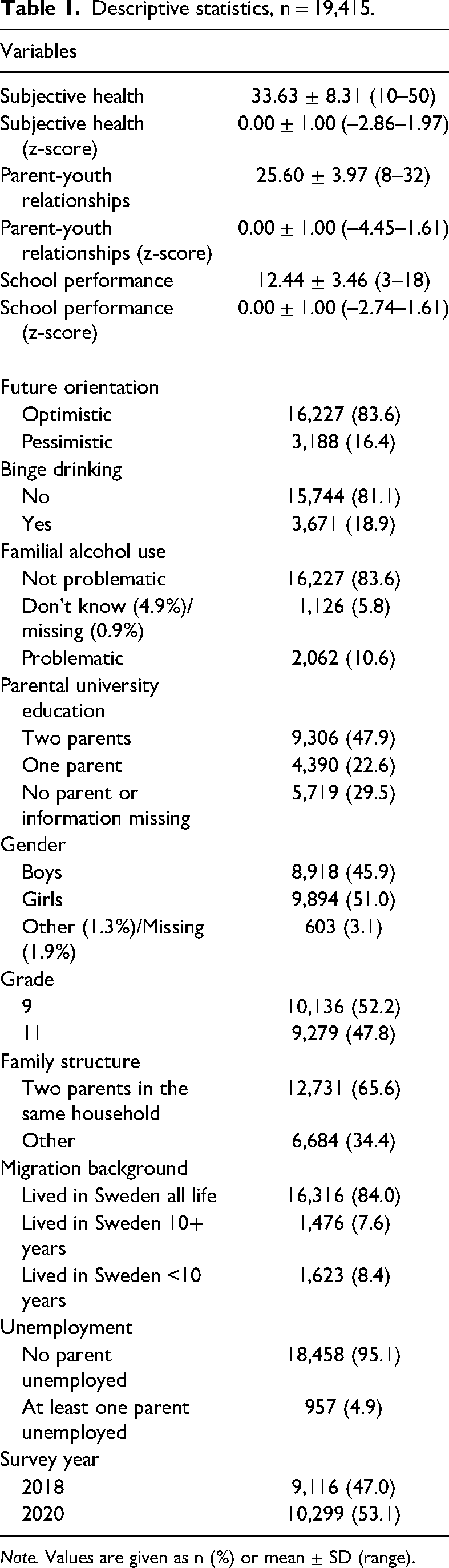
Note. Values are given as n (%) or mean ± SD (range).
Next, to examine the associations between problematic familial alcohol use and sociodemographic characteristics, cross-tabulations with chi-square tests were performed, with results presented in Table 2. Reporting problematic familial alcohol use was more frequent among adolescents with no or only one parent with a university education, compared with adolescents who had two university-educated parents. Problematic familial alcohol use was also more commonly reported among girls and adolescents in the third gender category, students in year 11, those not living with two parents in the same household, those without a migration background, those with at least one unemployed parent, and those who completed the survey in 2018.
Familial alcohol use by sociodemographic characteristics, n = 19,415.
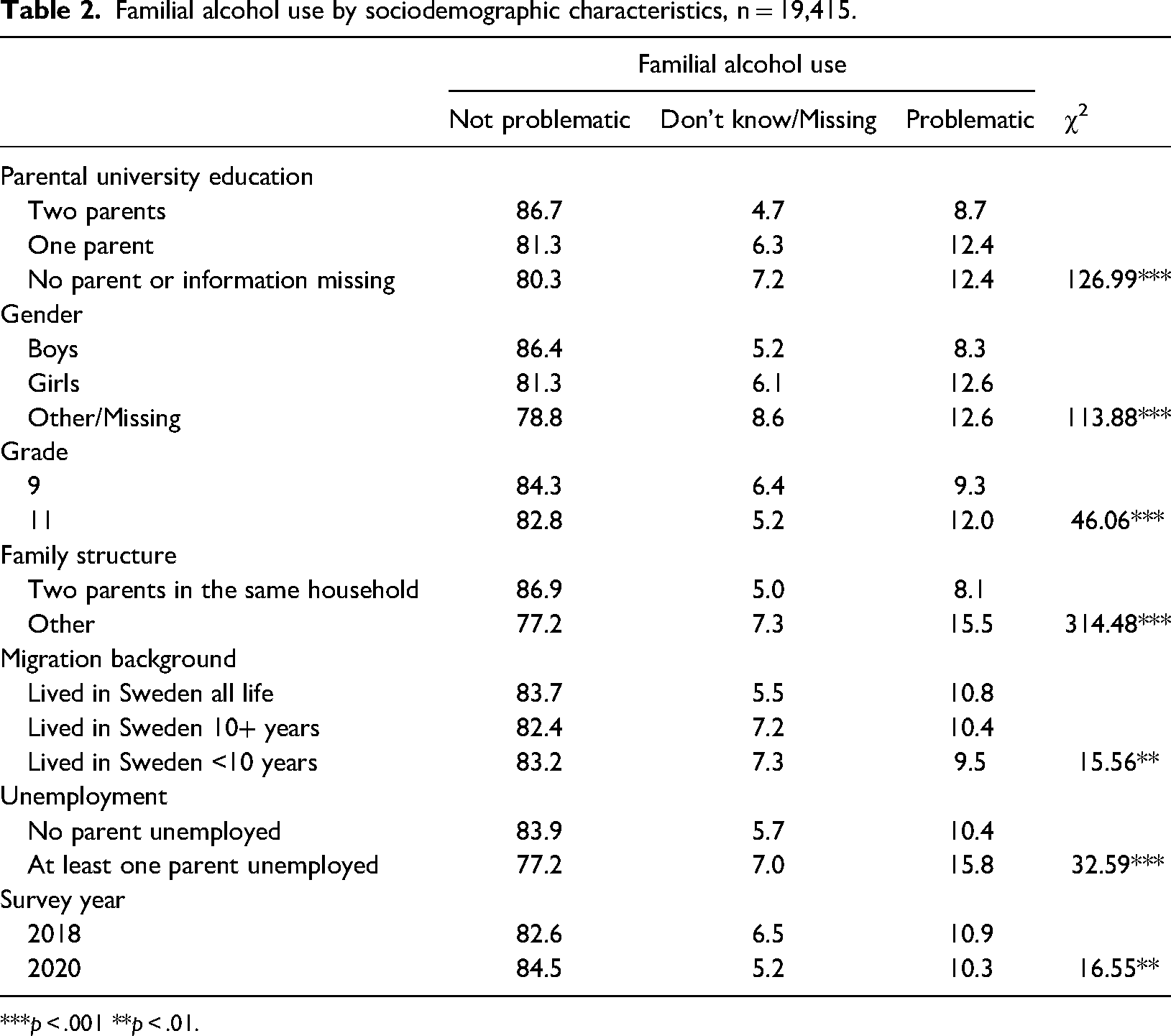
***p < .001 **p < .01.
Table 3 displays the results from linear and binary regression analyses with subjective health, binge drinking, parent-youth relationships, school performance, and future orientation as dependent variables. In the crude analyses, problematic familial alcohol use was associated with worse subjective health (b −0.58, p < .001), a higher likelihood of engaging in binge drinking (odds ratio [OR] 1.71, p < .001), worse parent-youth relationships (b −0.58, p < .001), poorer school performance (b −0.12, p < .001), and a higher likelihood of having a pessimistic future orientation (OR 1.72, p < .001), compared with students who reported no problematic familial drinking. When adjusting for all independent variables simultaneously, these associations were moderately attenuated but remained statistically significant, except for the association with school performance, which turned non-significant. Further analyses, adding one control variable at a time, revealed that it was parental education that produced a non-significant association between problematic familial alcohol use and school performance (not shown in Table 3). Similarly, being in the don't know/missing category regarding familial alcohol use was associated with worse outcomes for subjective health (b −0.35, p < .001), parent-youth relationships (b −0.50, p < .001), school performance (b −0.25, p < .001), and future orientation (OR 1.65, p < .001), compared with adolescents who reported no problematic familial drinking. These associations were all moderately attenuated but remained statistically significant in the fully adjusted model. Subsequently, to explore the moderating effect of parental education on the associations between familial alcohol use and the dependent variables, we included the interaction terms between familial alcohol use and parental education in the fully adjusted models and compared models with and without interaction terms through likelihood ratio tests. The only statistically significant interaction found was with regard to binge drinking (p < .001).
Associations between familial alcohol use and subjective health, binge drinking, parent-youth relationships, school performance, and future orientation (FO) – n = 19,415.
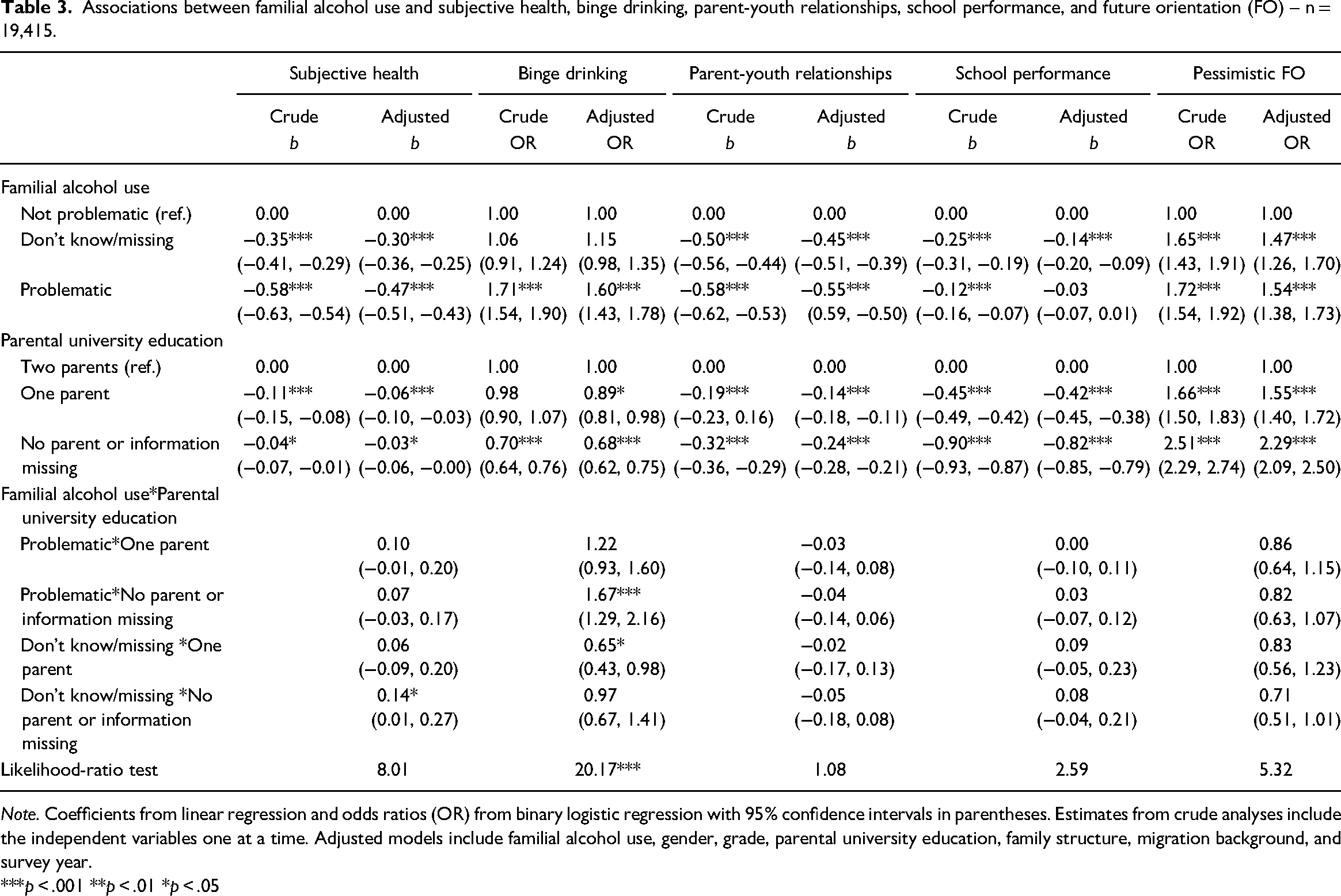
Note. Coefficients from linear regression and odds ratios (OR) from binary logistic regression with 95% confidence intervals in parentheses. Estimates from crude analyses include the independent variables one at a time. Adjusted models include familial alcohol use, gender, grade, parental university education, family structure, migration background, and survey year.
***p < .001 **p < .01 *p < .05
To further explore potential differences in the associations between problematic familial alcohol use and adolescent outcomes by parental education, fully adjusted models stratified by parental education were performed for each outcome (results presented in Table 4). Regarding binge drinking, a gradient pattern was visible among adolescents who had reported problematic familial alcohol use, showing that the association with binge drinking was stronger among adolescents without university-educated parents (OR 2.18, p < .001), and with only one parent with a university education (OR 1.57, p < .001), compared with adolescents with two university-educated parents (OR 1.28, p < .01).
Associations between familial alcohol use and subjective health, binge drinking, parent-youth relationships, school performance, and future orientation (FO), stratified by parental university education (two parents with a university education; one parent with a university education; and no parent with a university education or information missing).
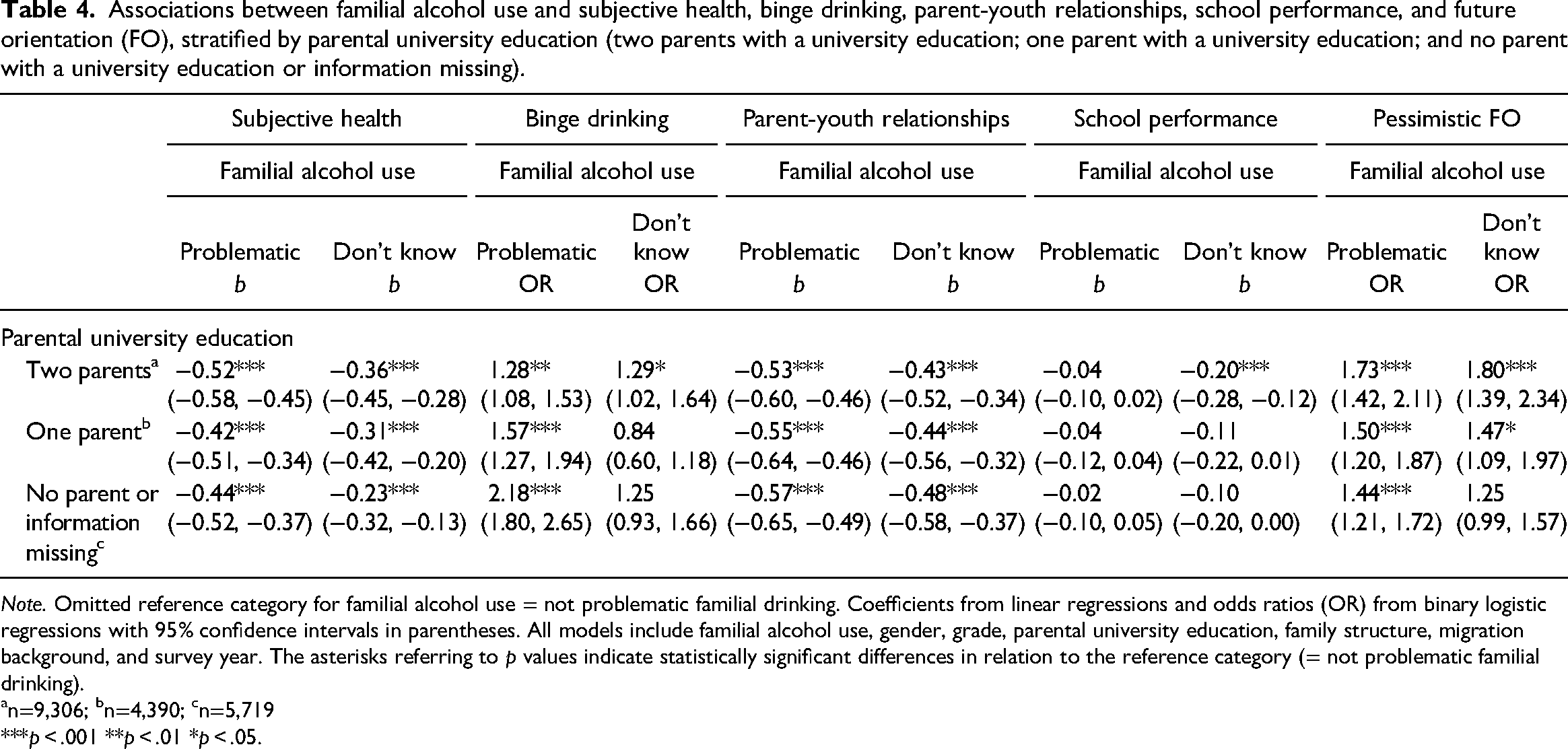
Note. Omitted reference category for familial alcohol use = not problematic familial drinking. Coefficients from linear regressions and odds ratios (OR) from binary logistic regressions with 95% confidence intervals in parentheses. All models include familial alcohol use, gender, grade, parental university education, family structure, migration background, and survey year. The asterisks referring to p values indicate statistically significant differences in relation to the reference category (= not problematic familial drinking).
an=9,306; bn=4,390; cn=5,719
***p < .001 **p < .01 *p < .05.
Finally, all analyses were performed separately for each gender to explore if any differences in the associations could be detected (see Supplementary material). The relationship between familial drinking and the studied outcomes were very similar across all three gender categories (Tables A2-A5). The supplementary material also displays the crude and adjusted models from Table 3 with estimates from all the control variables included (Table A6).
Discussion
The aim of this study was to examine the associations between problematic familial alcohol use and five adolescent outcomes – subjective health, binge drinking, relationships with parents, school performance, and future orientation – and whether these associations were moderated by parental education. The linear and binary logistic regression analyses showed that reporting problematic familial drinking was associated with worse subjective health, a higher likelihood of engaging in binge drinking, worse parent-youth relationships, and a higher likelihood of having a pessimistic future orientation, even when adjusting for sociodemographic characteristics. These results reflect earlier studies showing worse health, higher risk of alcohol use, and worse interpersonal relationships among adolescents who report that their parents misuse alcohol (Pisinger et al., 2016; Ramstedt et al., 2022; Rossow et al., 2016a; Torvik et al., 2011). Putative pathways include a possible stressful home environment, impaired family relationships, and shame that may emanate from problem drinking in the family. Previous research has also demonstrated that uncertainty, worriedness, indifference, and pessimism regarding one's future among adolescents is associated with family factors that might create a stressful home environment, e.g., low social class, poor family cohesion, weak parental support, and low parental connection (Alm, 2011; Crespo et al., 2013; Kerpelman et al., 2008; Masa et al., 2021).
The second aim of the study was to examine whether the associations between problematic familial alcohol use and adolescent outcomes differed by parental education, and was tested by including interaction terms and by performing stratified analyses. A moderating effect was detected only in relation to binge drinking. The stratified analyses showed that the association between problematic familial drinking and adolescent binge drinking followed a gradient and was stronger for adolescents with no or one university-educated parent(s), compared with adolescents who had two university-educated parents. A parallel may be drawn to a prior study that found that lower neighbourhood SES increased the risk of alcohol use among adolescents whose parents had an alcohol use disorder, while higher neighbourhood SES increased the risk of alcohol use among adolescents whose parents did not have alcohol problems (Trim & Chassin, 2008). However, the general lack of moderating effects in our study aligns with other previous studies (Pisinger & Tolstrup, 2022; Russell et al., 1990). In prior studies, the association between SES and adolescent alcohol use has been shown to be inconsistent (e.g., Thor et al. 2019; Olsson & Fritzell, 2015). In the present study, adolescents with two university-educated parents were more likely to binge drink compared with others. Hence, even though the association between familial alcohol problems and adolescents’ binge drinking was weaker among those with two university-educated parents, this “advantage” was counteracted by their higher likelihood of binge drinking at all. In addition, our findings could be related to one of the proposed explanations of the alcohol harm paradox – i.e., that alcohol-related harm is greater among adults with lower SES, despite drinking similar or lower amounts compared to those with higher SES – which posits that individuals with a lower SES tend to engage in more harmful consumption patterns, such as frequent binge drinking, to a higher degree than individuals with a higher SES (Sydén et al., 2017). Consequently, the intergenerational transmission of harmful alcohol habits might be more prevalent among families with lower SES.
In the present study, 10.6% of the adolescents reported problematic drinking in the family, with an additional 5.7% answering “don't know” or skipping the question. Prior studies have varied substantially in their estimation of the proportion of children growing up with problem-drinking parents, but the number of affected adolescents in this study was similar to another recent Swedish study (Ramstedt et al., 2022). Further, we detected that problematic familial alcohol use was more common among adolescents with no or one university-educated parent(s) (12.4% for both groups) compared to adolescents with two university-educated parents (8.7%). Our findings reflect those of Pisinger & Tolstrup (2022) who also found that youth with lower SES were more likely to report parental alcohol problems. This is perhaps not that surprising in light of the proposed explanation of the alcohol harm paradox described above (Sydén et al., 2017). It may indeed be the case that parents with lower SES to a greater extent consume alcohol in ways that negatively affect their social environment, leading offspring to be more likely to perceive their parents’ alcohol use as problematic. We cannot ascertain whether this difference in problematic familial alcohol use is caused by disparate consumption patterns across socioeconomic groups or if it is an effect of other adverse conditions that are more common in families with lower SES, or potentially due to differences in reporting. Nonetheless, the group differences in reported familial alcohol problems indicates that at the population level, harm from familial alcohol use is greater among adolescents with lower SES.
Furthermore, problematic familial drinking was more common among girls and those in the third gender category, older students, those not living with two parents in the same household, those without migration background, those with at least one unemployed parent, and those who completed the survey in 2018. Previous studies have similarly found that girls more commonly report parental alcohol misuse (Ramstedt et al., 2022; Haugland & Elgán, 2021). It is possible that girls are more sensitive to substance abuse within the family (Homel & Warren, 2019) and that boys are less likely to disclose information about negative experiences (Lev-Wiesel & First, 2018; van der Ploeg et al., 2022). Similar results regarding adolescents with non-cohabitating parents and without a migration background have also been found in prior studies (Pisinger & Tolstrup, 2022).
The present study also included adolescents who answered “don't know” or who skipped the question about familial alcohol use in the analysis. This group reported worse conditions in all studied outcomes, except for binge drinking, compared with students who had no problematic familial drinking. Based on the associations found, it is possible that at least some of the students in this group experienced issues related to drinking in the family. They could, for example, be reluctant to admit such family conditions because of the stigma and shame attached to it (Tamutiené & Jogaite, 2019). A prior study on similar data also included a don't know/missing-category and found that this group had a greater risk of engaging in heavy drinking compared with adolescents without problematic familial alcohol use (Olsson et al., 2019). School performance was only associated with reporting “don't know”/missing and not with problematic familial alcohol use in the fully adjusted models. Since there was a bivariate association between problematic familial alcohol use and school performance, additional analyses were performed that revealed that it was when parental education was added to the model that the association turned non-significant. This is not surprising since parental education is a strong predictor of school achievement among adolescents (Gustafsson & Yang Hansen, 2018). Nevertheless, it is not clear why the association between school performance and familial drinking is more robust for the “don't know”/missing group.
Strengths and limitations
The main strengths of this study lie in the large and up-to-date data material, allowing for robust analyses of the different associations studied. Yet, several limitations of the data have to be considered when interpreting the results. First, since the data are cross-sectional, the possibility to draw causal inferences is severely limited. While it is perhaps unlikely that problematic familial alcohol use is a result of, e.g., adolescent health, school performance, or future orientation, we acknowledge the possibility of unmeasured confounders, such as parental mental health or poverty, affecting the associations found.
Second, because familial alcohol use was measured by only one item, it is not known which family member(s) misuses alcohol or to what degree, nor the relationship between the adolescent and the drinker.
Third, SES is usually captured by education, occupational class, and income (Devenish et al., 2017). These dimensions are related and overlapping, but not interchangeable (Geyer et al., 2006). For children and adolescents, subjective economic status also be an important measure of SES (Quon & McGrath, 2014). One strength of using parental education as a proxy for adolescent SES is that it is more static compared with class or income, which can fluctuate more. In survey studies that use data collected among adolescents only, information about parental education might be more reliable than class or income. Yet, adolescents’ knowledge of their parents’ educational attainment is also a matter of concern (Pu et al., 2011). In the present study, those who skipped these questions were categorised as not having university-educated parents. Additional analyses excluding adolescents without valid answers on both of their parents’ education produced very similar results as in the main analyses (not shown).
Fourth, while the interpretation of the binary outcomes in this study are relatively straightforward, where a higher odds ratio means a higher probability in engaging in monthly binge drinking or having a pessimistic future orientation, the same cannot be said for the continuous outcomes. We decided to standardise these variables so that a difference of 1 on the scale corresponded to a difference of one standard deviation. Still, it is hard to draw any conclusions about the magnitude of the (statistical) effects reported in the current study.
Lastly, since the data were collected from students attending schools in Stockholm municipality, the results may not be generalisable to adolescents in other contexts. The level of education is markedly higher in the Stockholm area compared to other parts of Sweden, for example, which is reflected in our data (Statistics Sweden, 2022). Not all adolescents continue to secondary school in Sweden, roughly 90% in Stockholm do, which means that our data from this age group are less likely to contain adolescents who struggle in school and who might experience difficulties in other areas of life as well. In addition, since independent schools participated in the survey on a voluntary basis, it should be kept in mind that the data do not reflect the total student population. The data collection in 2020 also coincided with the first major outbreak of COVID-19 in Stockholm. Data for the survey were gathered during the 2 weeks after the spring break and the Swedish government's recommendation to implement distance education for secondary schools was communicated the week after that on 17 March 2020. Still, some schools and classes had a large proportion of absent students during the time of the survey (Stockholm Municipality, 2020). However, the total response rate was similar for the 2018 and 2020 surveys.
Future studies
More studies on the life situations of children and adolescents living in families where alcohol is misused would be beneficial to reveal the true harm that excessive alcohol use entails. Further examinations of outcomes beyond offspring alcohol use or other substance use are needed to broaden the knowledge about the lives of these individuals. Studies using longitudinal data and/or adequately controlling for possible confounders would aid causal inferences. Future studies investigating the moderating effects of measures of SES on the association between familial alcohol use and adolescent outcomes should acknowledge the need for satisfactory measurement of all included variables, specifically regarding SES. It is also relevant to examine other dimensions of SES than parental education, e.g., household social class and income.
Conclusion
In conclusion, this study found that, in a sample of adolescents attending schools in Stockholm municipality, problematic familial alcohol use was associated with worse outcomes in relation to subjective health, binge drinking, relationships with parents, and future orientation, but not with regards to school performance. In general, the strength of the associations between problematic familial alcohol use and the studied outcomes did not vary by parental education. The only exception where a moderating effect of parental education was detected was for binge drinking, where the positive association between problematic familial alcohol use and adolescent binge drinking was stronger for adolescents with fewer than two university-educated parents, compared to those with two university-educated parents.
Nonetheless, we argue that socioeconomic conditions in the family, such as parental education, could still be linked to the likelihood of adolescents experiencing a relative's alcohol consumption as problematic, thus implying that it is the proportion of affected that is greater and not the effects that are stronger in low socioeconomic households. Although policy implementations should seek to support children and adolescents with family members who misuse alcohol across the socioeconomic strata, a special focus on families with fewer available resources could be warranted. Continued research into the experiences of these adolescents will be beneficial to deepen the knowledge about the social harms of alcohol use.
Supplemental Material
sj-docx-1-nad-10.1177_14550725231157152 - Supplemental material for Problematic familial alcohol use and adolescent outcomes: Do associations differ by parental education?
Supplemental material, sj-docx-1-nad-10.1177_14550725231157152 for Problematic familial alcohol use and adolescent outcomes: Do associations differ by parental education? by Joakim Wahlström, Charlotta Magnusson, Johan Svensson and Sara Brolin Låftman in Nordic Studies on Alcohol and Drugs
Footnotes
Availability of data and material

Declaration of conflicting interests
The author(s) declared no potential conflicts of interest with respect to the research, authorship, and/or publication of this article.
Funding
The author(s) disclosed receipt of the following financial support for the research, authorship, and/or publication of this article: This work was supported by The Alcohol Research Council of the Swedish Alcohol Retailing Monopoly (grant no. 2020-0047).
Supplemental material
Supplemental material for this article is available online.
References
Supplementary Material
Please find the following supplemental material available below.
For Open Access articles published under a Creative Commons License, all supplemental material carries the same license as the article it is associated with.
For non-Open Access articles published, all supplemental material carries a non-exclusive license, and permission requests for re-use of supplemental material or any part of supplemental material shall be sent directly to the copyright owner as specified in the copyright notice associated with the article.
