




Abstract
Marketing research on LGBTQ+ people has increased over the past two decades, entering mainstream marketing discourse – aligning with greater societal acceptance. This paper provides a contemporary review of marketing scholarship on LGBTQ+ communities published in Q1, and Q2 ranked Scimago marketing journals. Taking a social justice lens, this review examined whose voices were represented and how those voices were represented. The finding suggests samples studied were skewed towards heterosexual samples and those from the Global North. Where LGBTQ+ samples have been included, these were predominantly gay men. Three theoretical perspectives were adopted: attitudes and identity, meaning and interpretation and critical perspectives. In addition, the focus of the studies centred on four main themes: LGBTQ+ imagery in advertising, consumer behaviour of LGBTQ+ people, brand positioning and LGBTQ+ as a consumer market segment. Based on the findings, future scholarship should consider nuancing the multidimensional nature of the LGBTQ+ markets and investigates LGBTQ+ consumers as individuals with real and unique needs in their own rights.
Keywords
Introduction
Lesbian, gay, bisexual, trans, queer and people with a diverse sexual orientation or gender identity (LGBTQ+) have begun receiving increased attention in the marketing literature. This parallel shifts towards greater social acceptance and rights for LGBTQ+ people, particularly in Westernised nations (NeJaime, 2015). However, such identities are still criminalised in 73 countries (Human Dignity Trust, 2021). Even though acceptance has increased in some places, prejudice has not declined equally (Lea et al., 2015) and LGBTQ+ people continue to experience discrimination to some degree. Such prejudice contributes to physical and emotional stress, resulting in poor mental health outcomes, substance abuse and suicidality (Kaniuka et al., 2019). Marketing can help alleviate prejudice, given its influence on social discourse (McDonald et al., 2021). This requires a nuanced understanding of the multiple distinct identities and experiences of LGBTQ+ people, their needs and behaviours within the marketing landscape and an acknowledgement of how dominant heteronormative social systems contribute to silencing diverse voices.
Marketing scholarship ‘has historically valorised the White voice with a Eurocentric lens’ (Francis & Robertson, 2021, p. 89), making it difficult for ‘other’ voices, including LGBTQ+, to gain recognition. For researchers to contribute meaningfully to scholarship and practice about LGBTQ+ people, we need to identify the boundaries of existing knowledge (Ong et al., 2022). Consequently, this study examines and critiques the current literature to identify gaps in who and how LGBTQ+ identities have been explored. This enables us to ensure scholarship aligns with the United Nations (2014. p. 9) aim of ensuring ‘no one is left behind’. LGBTQ+ inclusion is indirectly captured within several United Nations Sustainable Development Goals (UNSGD) focussing on social sustainability. For instance, Goal 3 (good health and well-being) calls for ‘Multi-sectoral, rights-based and gender-sensitive approaches . . . to address inequalities’. Goals 5 (gender equity) and 10 (reduced inequities) address group-based inequalities, calling for equal opportunity to eliminate discrimination and Goals 11 (sustainable cities and communities) and 16 (peace, justice and strong institutions) highlight the importance of peace and justice. For scholars, these goals make it important to examine our disciplines and question if and how diverse voices are included to ensure such representations contribute to advancing inclusion for those marginalised. Arguably, such disciplinary reflexivity is of growing importance as institutional pressures to publish continue to grow, encouraging superficial examinations of complex social problems (Lee & Benjamin, 2023) while perpetuating a reproduction of dominant perspectives and narratives aligned with journal gatekeepers (Kumar, 2016).
This paper reviews how LGBTQ+ identities have been constructed within the marketing discipline, exploring which identities have been examined and the focus of such examination. In doing so, it builds on past publications in three ways. First, it provides a contemporary and broad view of the marketing literature compared to previous studies (e.g. see: Ginder & Byun, 2015; McDonald et al., 2021). In doing so, this paper uses peer-reviewed publications as data to inform conclusions, as opposed to Coffin et al. (2022), who relied on reflective comments from ‘marketing scholars studying sexuality’ (p. 278) regarding Coffin et al.’s (2019) chapter on ‘LGBTQ+ studies in marketing and consumer research’ (p. 273). Second, aligning with a greater understanding of the diversity encapsulated by the LGBTQ+ acronym, this paper extends the scope of inclusion to consider multiple different gender identities and sexual orientations (Grau & Zotos, 2016). Third, it takes a critical perspective, drawing on social justice as a lens to review how marketing literature has engaged with LGBTQ+ communities. By considering how institutions and social structures coalesce to legitimise identities and construct privilege and power (Young, 1990), social justice in this context enabled a critical examination of how LGBTQ+ people as a minoritised groups are positioned (Hutton & Heath, 2020) within marketing scholarship. Finally, while we acknowledge ongoing debates on the use of the LGBTQ+ acronym that emerged to support activism (Thelwall et al., 2023), we note our use of LGBTQ+ as an acronym in this paper reflects its use in academic and colloquial discourse (Thelwall et al., 2023), particularly within the discipline of the journal.
Methods
Building on a traditional systematic review, this study adopts a narrative approach (Ferrari, 2015) to enable a more succinct critique of research that draws from multiple disciplines (Sony et al., 2020) – in this case, from the various base disciplines of marketing.
Selection process
Studies published in Q1 or Q2 journals from the Marketing classification in Scimago were included. This ensured coverage of publications in journals with a higher impact on marketing scholarship, aligning with other such reviews (Ong et al., 2022) and functioning as a quality assessment of publications included as evidence (Tranfield et al., 2003). Only journals with a general focus on marketing as opposed to an applied area and those with the following words in their titles were included: ‘marketing’, ‘advertising’, ‘consumers’, ‘market(s)’, ‘brand’, ‘promotion’ and ‘business’. This resulted in a final list of 34 journals. Manual searches for specific terms (‘LGB*’, ‘GLB*’, ‘gay’, ‘lesbian’, ‘bisexual’, ‘queer’, ‘homosexual’, ‘transgender’, ‘transsexual’, ‘transvestite’ and ‘same-sex’) in the title or abstract of publications were performed within these journals to identify publications. No restrictions were placed on the year of publication. The terms were selected to ensure consistency with other reviews in marketing and beyond (Eisend & Herman, 2019; Ginder & Byun, 2015; Ong et al., 2022) and accounted for changes in acceptable terminology– for instance, ‘transvestite’ was included despite it being an obsolete reference to ‘transgender’. The search strategy uncovered 90 potential papers and was cross-verified using manual searches and Google Scholar to search randomly selected journals from those identified.
The research team reviewed the papers identified to determine suitability. Of these, 12 were excluded because they did not focus on LGBTQ+ people. This comprised of papers that used queer theory generally to challenge social structures (n = 4); mentioned same-sex referencing people of similar sexes (n = 4); included LGBTQ+ causes as general examples (n = 2), focussed on gay men’s career choices (n = 1) or representations in film (n = 1).
The limitations of this approach are acknowledged. This study only drew from Q1 and Q2 English language journals, which focussed on marketing broadly instead of being applied to a specific domain (e.g. Islamic marketing, banking, tourism or sports). Consequently, articles published in other marketing journals or discussing LGBTQ+ people within specific applicational domains have been excluded. Second, articles that only referenced LGBTQ+ communities in the title or abstract were included. Arguably, given the importance of the title and abstract in making articles discoverable, those who did not include reference to the LGBTQ+ communities in those sections may not have focussed on them. This approach also led to the exclusion of articles focussing on gender or sexuality broadly, such as Peñaloza (1994), and accordingly, future reviews may consider expanding the terminologies used.
Analysis of papers
The analysis aimed to critically examine the narratives and themes emerging from marketing literature on LGBTQ+ people through a social justice lens. The objective was to scrutinise dominant positions, inequalities and the positioning of the LGBTQ+ community as constructed within the literature (Lepoutre & Heene, 2006). Accordingly, the analysis sought to uncover how published literature contributed to constructing LGBTQ+ inequality/inequity by assessing how participants were included (or excluded) in the research and the research’s focus. To this aim, McGrath and Brinberg’s (1983) three analytical domains were used as the basis for reviewing the papers. They propose that all types of research combine a set of methods, concepts and substantive events. The methodological domain contains the methods used for making observations, the conceptual domain encompasses models and perspectives that explain relationships and the substantive domain comprises the phenomena or situational context informing the objective of the study.
All coding and analysis were reviewed using a team analysis approach (Saldaña, 2015). Adopting Sony et al. (2020), the team came together to read each paper and compile data relevant to McGrath and Brinberg’s (1983) three domains. To understand which voices were included and how they were included, analysis was conducted using both content and thematic analysis. Content analysis was first applied to classify papers based on the methods and samples used – to quantify research approaches. Thematic analysis was used to examine the conceptual and substantive elements of the study. This involved reviewing the manuscripts and assigning codes using an open-coding process. Once no new codes emerged, the codes developed were reviewed and classified into themes based on their consistency. To ensure the trustworthiness of the thematic analysis process, the coding was initially conducted by one team member and cross-checked by the others. Differences were discussed before being resolved (Kitto et al., 2008).
Findings
The findings are discussed, citing specific articles as examples. We have used the word homosexual broadly to reference samples or topics related to diverse sexual orientations and have included specific identities where relevant.
Distribution of papers
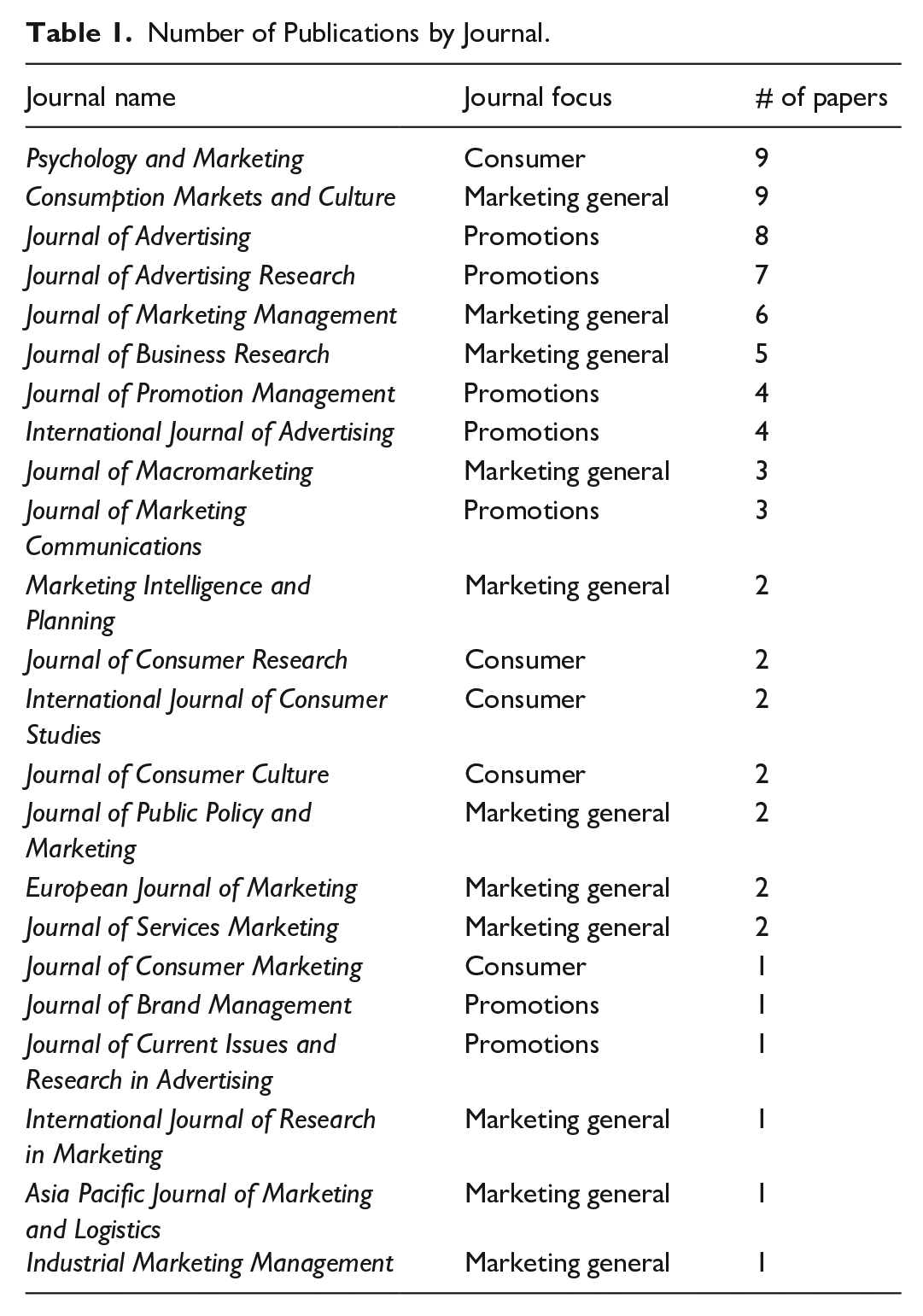
A total of 78 papers published between 1993 and 2021 were identified. From the 34 journals reviewed, 23 (68%) published studies on LGBTQ+ people. The first paper published on the topic was in the Journal of Consumer Marketing, while Psychology and Marketing and Consumption Markets and Culture published the highest number of papers (nine each). The individual journals were grouped based on their focus to examine the specific marketing areas covered. This focus was defined based on the stated aims and scope of the journals. Table 1 summarises the number of papers published in each journal and the journal focus. A third (n = 28) of the papers identified were published in journals focussing on the promotions component of the marketing mix, such as the Journal of Advertising (n = 8).
Number of Publications by Journal.
Over time, publications in promotions-focussed and general marketing journals, have increased while those in consumption-focussed journals have declined (Figure 1). Aligning with an increasing social acceptance of LGBTQ+ identities, a third of the papers (n = 26) were published between 2017 and 2021.
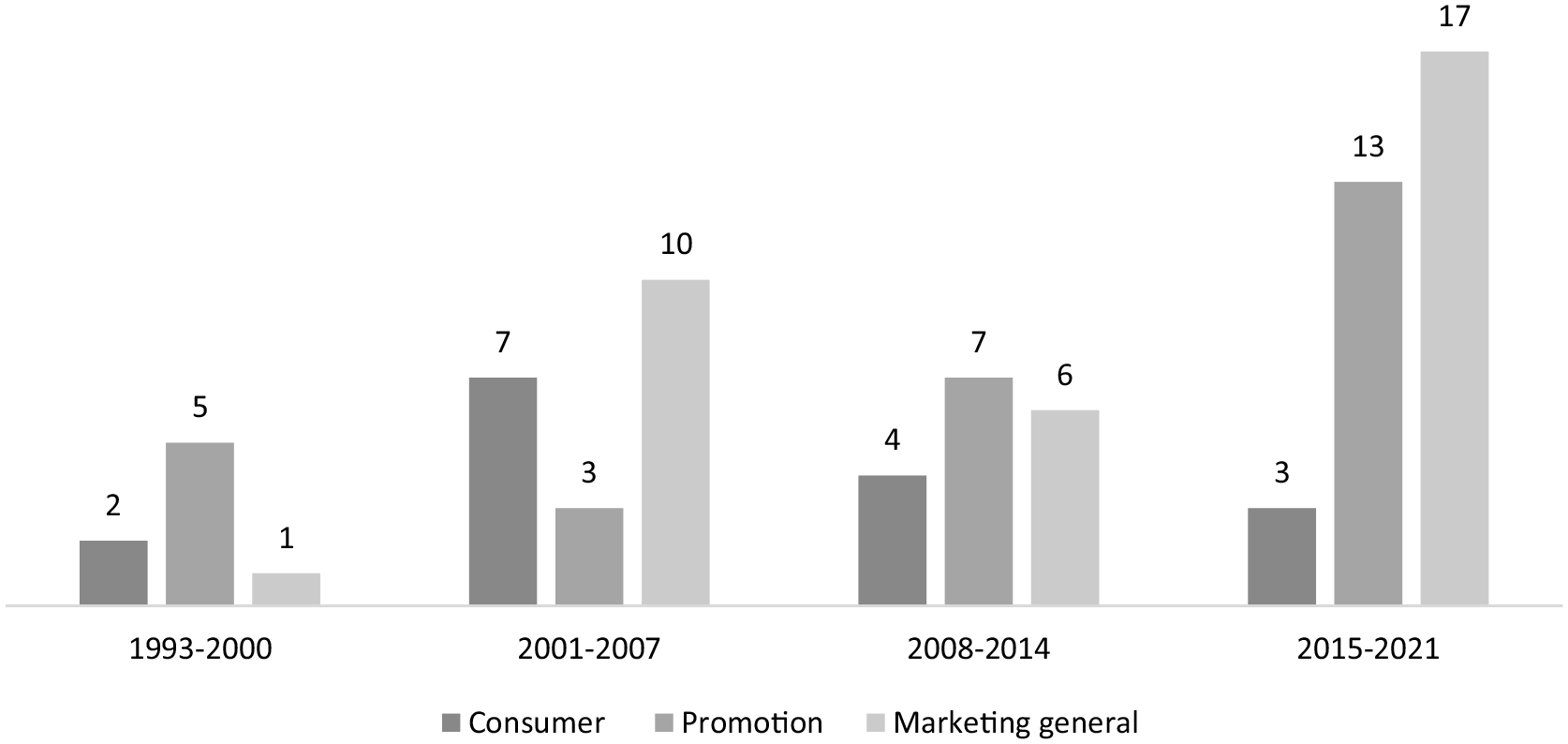
Publications distribution by focus of the journal over time.
Based on the institution of the lead authors, most papers (64%) were published by scholars from North America, while the Global North – North America, Europe and Australia (six papers) accounted for 95% of the papers published (see Figure 2). LGBTQ+ people in these regions typically enjoy greater freedoms and are consequently more likely to conduct or participate in such scholarship. Literature has relatively recently emerged from scholars in countries like China (Hsieh & Wu, 2011), Ecuador (Perez-Cepeda & Arias-Bolzmann, 2020), Korea (Um, 2016) and South Africa (Camminga & Lubinsky, 2022).
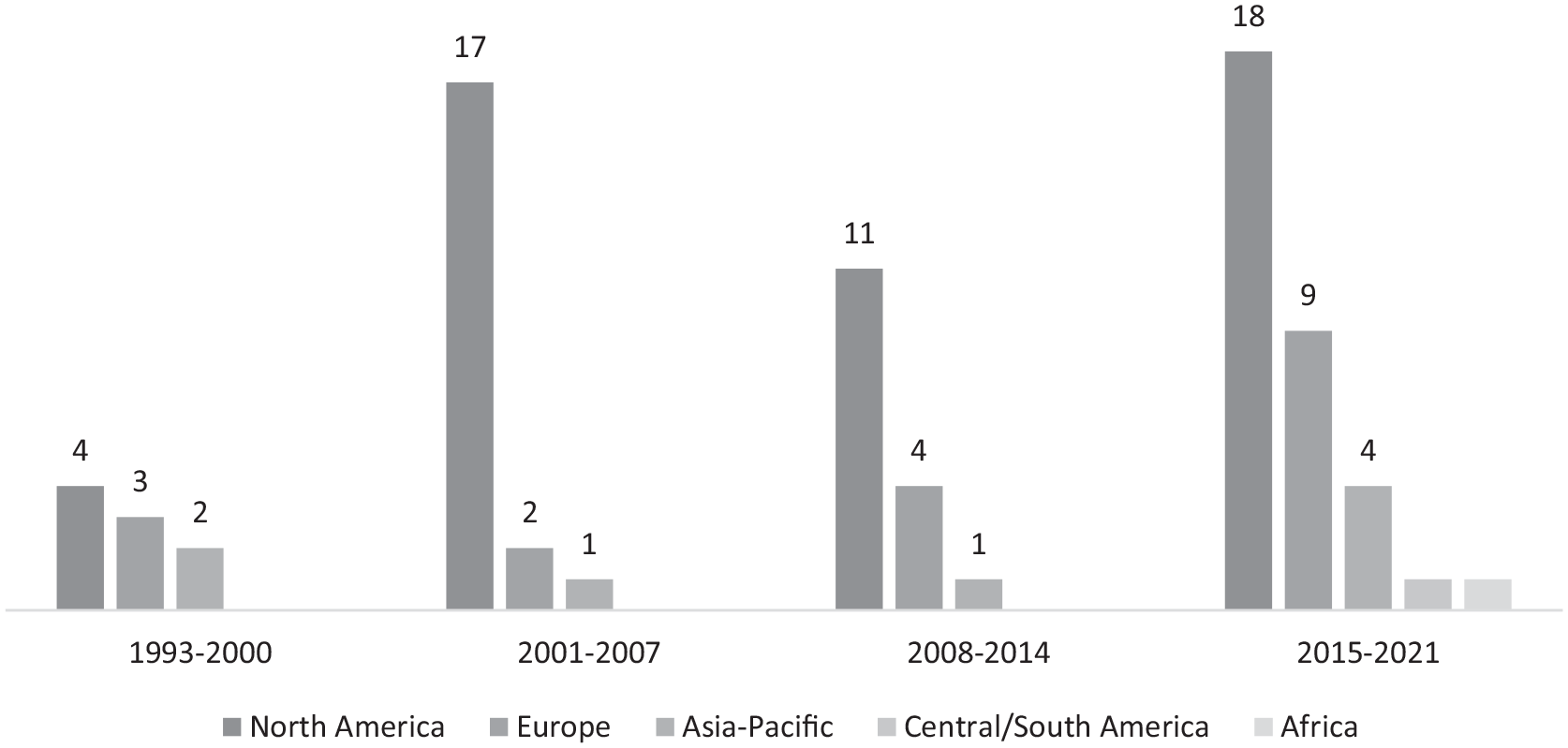
Publications distribution by first author location over time.
Methodologies
The articles identified were classified based on the methods, sample and participant recruitment strategy to understand whose voices were included.
Methods applied
Of the 78 studies reviewed, 19% were of a conceptual nature, providing a comprehensive overview of the literature on gay and lesbian marketing, the effects of homosexual imagery in advertisements, and the potential for advertising to perpetuate stereotypes and facilitate social change. In line with McGrath and Brinberg’s (1983) methodological domain, the remaining 81% of the studies were empirical in nature, with roughly equal use of qualitative (43%) and quantitative (44%) approaches to make observations. Qualitative methodologies utilised in these studies include focus groups, in-depth interviews, open-ended questionnaires, auto ethnographies and thematic advertisement analysis, while recent studies have incorporated netnographic techniques. On the other hand, quantitative studies typically used web-based surveys and various experimental designs, including structural equation modelling. Finally, 10% of the studies employ a mixed-methods approach, incorporating qualitative and quantitative elements.
Populations studied
Of the 63 empirical studies, 10 did not specifically sample human participants, drawing from advertisements (Branchik, 2007a, 2007b; Engstrom, 2007; Um, 2012), social media posts – particularly focussing on trans experiences (Brennan, 2022; Camminga & Lubinsky, 2022) or from ethnographic accounts of the researcher’s own experience (Layne, 2013). Further, two studies drew from participants tangentially associated with the LGBTQ+ communities without a direct focus on their sexual orientation – for instance, friends and relatives of people who passed away from AIDS (Kates, 2001) or hotels to examine their gay-friendliness (Visentin et al., 2021).
From studies that profiled participants’ sexual orientation, a significant portion drew on heterosexual samples (n = 27) – some exclusively (n = 13) to examine their response to LGBTQ+ imagery (Borgerson et al., 2006; G. Oakenfull & Greenlee, 2004; Um, 2016), gay influencers (Huang, 2021) or their attitudes towards gay retail staff (Palmeira & Sharifi, 2020; Russell et al., 2021). Studies included heterosexual samples and various LGBTQ+ groups (n = 15) to draw comparisons (Hildebrand et al., 2013; G. K. Oakenfull et al., 2008). As suspected, there was a strong skew towards gay identities, with n = 32 studies explicitly sampling gay men and 20 including lesbians. In contrast, only four studies targeted bisexuals (Bhat et al., 1998; Bond & Farrell, 2020; Grier & Brumbaugh, 1999; Tsai, 2012; Tuten, 2005), and one had trans participants (Ruvio & Belk, 2018) with a significant sample size for analysis. It is acknowledged that Rosenbaum and Montoya (2007) and Li (2022) included one trans and two intersex participants, respectively – however, the recruitment of these participants was incidental to the sampling. Table 2 summarises this distribution.
Identities of Groups Included in the Research.
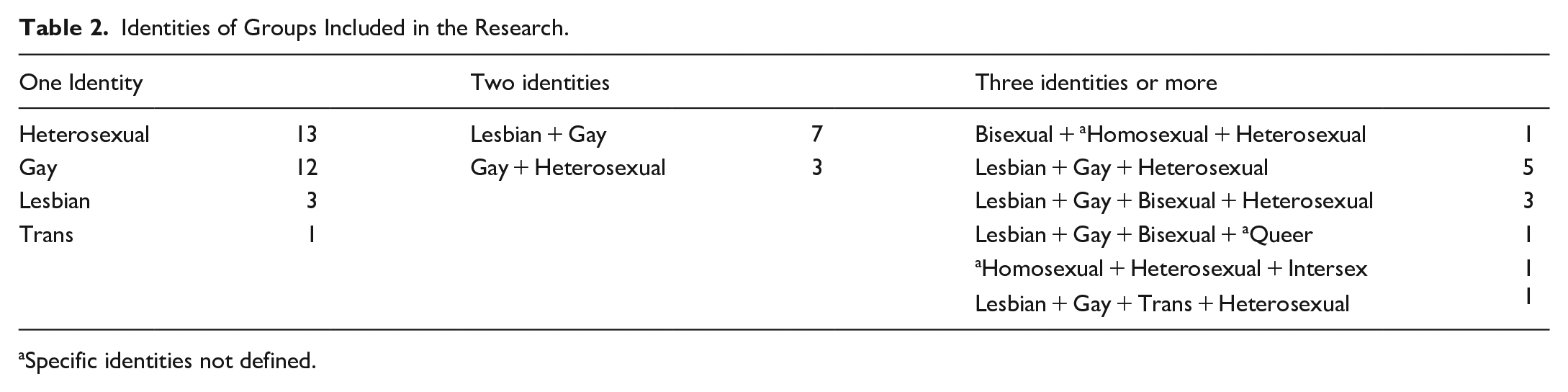
Specific identities not defined.
Sample recruitment and size
Understanding how the sample was recruited provides an indication of the boundaries of where existing knowledge has been drawn from. Focussing on the 39 studies that included LGBTQ+ people, regardless of the method used, a significant proportion of the studies recruited through a convenience sampling approach, drawing on participants who were mainly ‘out’ about their identity at queer venues (Haslop et al., 1998), events (G. W. Oakenfull, 2013; Ro & Olson, 2014) and from queer-focussed social groups or associations (Burnett, 2000; Kates, 2000). Given the size of the LGBTQ+ population and the associated challenges with reaching them, convenience sampling has also been followed by snowballing methods to maximise sample size (Gudelunas, 2011; Hsieh & Wu, 2011; Rome et al., 2022; Ruvio & Belk, 2018). Some studies have aimed to recruit beyond physical events, spaces and groups broadly. These studies used queer-focussed websites and chat rooms (Reilly & Rudd, 2007; Tuten, 2005), advertised on online queer sites and groups (Rosenbaum & Montoya, 2007; Vandecasteele & Geuens, 2009) or recruited through online panel providers (Åkestam et al., 2017; Bond and Farrell, 2020; Burnett, 2000; Li, 2022). Interestingly Webster and Reiss (2001), with the aim of getting a representative sample, used random digit dialling with quotas to reach non-traditional couples, which included same-sex couples, augmenting the sample they achieved through targeted recruitment from social groups.
Whose voice was heard is essential when considering social justice and is reflected in those recruited to participate in research studies (Lewis et al., 2023). When participants were recruited for qualitative research the sample sizes achieved ranged from nine (Mikkonen, 2010) to 63 (Gudelunas, 2011), with an average of 23 participants per qualitative paper. Most (70%) of the participants in the qualitative studies were LGBTQ+. When the country of the sample was specified, in all the qualitative studies except one (Borgerson et al., 2006), the sample’s nationality included the first author’s home country institution. As such, qualitative samples were almost exclusively from the Global North – the exception being Hsieh and Wu’s (2011) Taiwanese sample. A third (34%, n = 11) of the quantitative papers that included details of their participants either sampled heterosexual populations or did not specifically include LGBTQ+ populations in their study. When participants were recruited for quantitative studies, sample sizes ranged from 97 (Tuten, 2006) to over 1,000 (Åkestam et al., 2017; El Hazzouri et al., 2019; Huang, 2021), with an average of around 450 per paper. In total, fifty-four per cent (54%) of the participants in the quantitative studies were specified as not being LGBTQ+, in contrast to 30% that were. The remaining 16% of participants were part of general samples, which did not exclude LGBTQ+ participants. Again, quantitative samples were predominantly drawn from the Global North with only three papers including representation from beyond (Hildebrand et al., 2013; Huang, 2021; Palmeira & Sharifi, 2020), and only one of these (Hildebrand et al., 2013) specifically including LGBTQ+ participants.
Conceptual topics and theories
Articles were classified based on their conceptual domain (McGrath & Brinberg’s, 1983), considering the theoretical models and perspectives applied. Based on the theories and perspectives used, three conceptual themes were identified: attitudes and identity (37), meaning and interpretation (n = 17) and critical (n = 12). A small subset did not apply a discernible perspective (n = 10) or used theories like evolutionary theory to examine how mainstream women trusted gay men within a service context (Russell et al., 2021) and the use of cosmetic medical treatments by gay men (Rosenbaum et al., 2022).
Attitudes and identity
Studies examined how identity influenced attitudes towards LGBTQ+ advertising content and brands positioned as gay-friendly. To this aim, studies applied distinctiveness theory (Bond & Farrell, 2020; Grier et al., 1999), congruity theory (Pounders & Mabry-Flynn, 2016) and interdependence theory (Tuten, 2005) to explore how consumers responded to advertising representations that were similar to and different from themselves. Cheah et al. (2021) applied persuasion knowledge theory to examine how LGBTQ+ symbolism in ads impacted mainstream consumers’ attitudes towards the ad and the brand. Similarly, Huang (2021) applied classical conditioning theory to explore responses to trans endorsers after a sex scandal by mainstream audiences. These studies largely aligned with the notion of in-groups and out-groups as supported by Social Identity Theory, concluding that heterosexual individuals favoured heterosexual imagery (Um, 2014; Um et al., 2015). Arguably such framing is similar to how other minority groups, such as racial minorities (see: Rößner et al., 2021), have been examined in the broader marketing literature. Social Identity Theory was also explicitly applied by several studies to explore how one’s sexual orientation impacted shopping behaviour (Reilly & Rudd, 2007) and LGBTQ+ consumers’ scepticism of brands that appear to be gay-friendly (Gudelunas, 2011; Li, 2022). Aspects of identity beyond sexual orientation and gender were also considered – such as religion (Minton et al., 2017), political ideology (Northey et al., 2020) and moral identity and protestant work ethic (El Hazzouri et al., 2019). Identity was explored from a consumption perspective to examine differences and how consumption helped construct one’s identity. Herein, social role theory was used to explore how gender affected consumption based on the positioning of brands (G. Oakenfull, 2012), while the consumer innovativeness model was applied to explore attitudes towards unique products amongst LGBTQ+ and mainstream audiences (Vandercasteele & Geuens, 2009). The congruity between the brand/experience and one’s identity was also examined through conceptualisations of authenticity (Reddy-Best et al., 2021) and affect theory (Brennan, 2022).
Brand meaning and advertising interpretation
Studies applied theory to explore how brands constructed meanings aligned with LGBTQ+ identities. Within this context, the meaning transfer model was used most frequently to explore how brands developed meaning through association with symbols in the culturally constituted world and, thereon, how that meaning was transferred to the user through purchase/consumption (Haslop et al., 1998; Kates, 2002; Sha et al., 2007). Studies highlighted the socio-cultural role advertising could play (Tsai, 2011) and explored how polysemic representations can be purposefully adopted in advertising to convey ambiguous meanings that appeal to both LGBTQ+ and mainstream audiences (Puntoni et al., 2011; Tsai, 2012). Within this stream, Institutional Theory was adopted (Kates, 2004) to explore how brands can build legitimacy within the LGBTQ+ communities, aligning with research on constructing gay-friendly brands (G. W. Oakenfull, 2013; Tuten, 2006). Finally, the Reader Response Theory was adopted (Mikkonen, 2010; Reichert, 2001) to examine how mainstream consumers interpreted advertisements with lesbian imagery.
Marketing practice and institutions
Finally, studies applied a critical perspective to challenge how marketing practice as an institution influenced social discourse and the construction of power and norms in society. Queer theory was most commonly adopted with studies applying it to challenge stereotypes associated with gay consumers and how they are depicted in ads (Borgerson et al., 2006; Kates, 1999) and explore the contested nature of space concerning LGBTQ+-themed experiences (Kates, 2003). Studies examined the role of ideology and power to understand how LGBTQ+ identities were historically constructed in marketing communications (Keating & McLoughlin, 2005) and to question how same-sex relationships have been depicted in advertising over time (Mogaji, 2015). Fournier’s relationship theory was applied by Kates (2000) to examine the relationship queer consumers had with brands forming the basis for conceptualising gay friendliness. Through the lens of justice (Ro & Olson, 2014) and post-gay discourse (Rome et al., 2022), studies also sought to challenge the stigma associated with LGBTQ+ identities in consumption contexts.
Study objectives
Thematic analysis was used to categorise the articles based on the focus of the investigation (McGrath & Brinberg’s, 1983). Four main foci were identified based on the study’s objective: LGBTQ+ imagery in advertising, consumption behaviour of LGBTQ+ people, brand positioning and LGBTQ+ consumers as a market segment. This distribution reflects the focus of the journals found to be the main outlets for LGBTQ+ work. In addition, a small proportion of studies noted the marginalised position occupied by LGBTQ+ consumers and put forward methodologies for conducting sensitive research using qualitative methods (Walters & Moore, 2002) or online (Morhart et al., 2008).
LGBTQ+ imagery in advertising
Papers largely examined how mainstream audiences responded to ads with LGBTQ+ imagery. Unsurprisingly, these studies typically found heterosexuals, as a socially dominant group, did not identify with homosexual imagery (Borgerson et al., 2006), and/or had a negative emotional response (Bhat et al., 1998; Grier & Brumbaugh, 1999) to ads with homosexual imagery. This was particularly true for heterosexual men (G. K. Oakenfull et al., 2008). Studies tested the impact of gay-themed ads on the brand’s overall (Cheah et al., 2021; Um, 2014), attitudes to the ads (Bhat et al., 1998; Grier & Brumbaugh, 1999; G. K. Oakenfull et al., 2008; G. Oakenfull & Greenlee, 2004), intention to purchase (Bond & Farrell, 2020; Um, 2016) or to spread positive word of mouth (Pounders & Mabry-Flynn, 2016). Different attitudinal and sociocultural variables were examined as part of this relationship, including implicit (Read et al., 2018) and stated attitudes towards homosexuality (Bhat et al., 1998; G. Oakenfull & Greenlee, 2004; Um, 2016), social connectedness to LGBTQ+ people and empathy (Åkestam et al., 2017), moral identity and protestant work ethic (El Hazzouri et al., 2019), political ideology (Northey et al., 2020) and existing brand perceptions (Cheah et al., 2021; Um, 2014, 2016). Some studies tested different levels of homosexual imagery, finding subtle imagery had the least negative response from mainstream audiences (G. Oakenfull & Greenlee, 2004; Puntoni et al., 2011). Studies also explored homosexual imagery from an eroticised perspective, finding heterosexual men responded positively to ads depicting female same-sex eroticism (Engstrom, 2007; Reichert, 2001).
Studies in this stream have argued that it is not worth targeting homosexual consumers because of the size of the market and the cost and risk associated with alienating mainstream heterosexual audiences (Bhat et al., 1998). Simultaneously, minoritised groups like LGBTQ+ did not respond negatively to ads featuring heterosexual representations (Grier & Brumbaugh, 1999; G. K. Oakenfull & Greenlee, 2005). The literature concludes that if homosexual imagery is required, such representations should be polysemic or draw on implicit LGBTQ+ symbolism (G. K. Oakenfull et al., 2008; G. K. Oakenfull & Greenlee, 2005; Um, 2016), depict homosexual individuals performing acts commonly associated with heterosexual people (Borgerson et al., 2006) or draw on lesbian imagery (G. Oakenfull & Greenlee, 2004). Nevertheless, from a social justice perspective, studies also found that by including homosexual imagery, advertising could enhance the social position of LGBTQ+ people, increasing the sense of connectedness heterosexual people felt towards them (Åkestam et al., 2017) while empowering LGBTQ+ people as a minoritised group (Tsai, 2011).
The papers also explored how homosexual imagery in ads has changed over time. These studies show that while homosexual representations have become more respectful (Branchik, 2007a, 2007b), ads in mainstream media appear to convey homosexual orientations in a subtle manner (Mogaji, 2015). Kates (1999) advanced a queer lens to review ads arguing that ads targeting homosexual people were often designed by heterosexual marketers, were imbued with stereotypes about gay lifestyles and were sanitised to fit heteronormative narratives. On the other hand, ads in gay-themed media drew on explicit imagery and emotional appeals (Um et al., 2015), stereotypically targeting gay men with more erotic and fashion-oriented content and lesbians with leisure experiences (Um, 2012). However, there was a skew to projecting White models to represent homosexual people (Um, 2012).
A subset of papers also explored how LGBTQ+ people interpreted ads designed to target them, finding that advertising often perpetuated a stereotypical and over-sexualised view (Puntoni et al., 2011) – particularly when depicting lesbians (Mikkonen, 2010). Ads with subtle or polysemic homosexual imagery were evaluated with scepticism as gay-window-dressing (Tsai, 2012). Descubes et al. (2018) nuanced this investigation by showing that lesbians who identified with the LGBTQ+ communities were more likely to respond positively to gay ads than those who did not.
Consumption behaviour of LGBTQ+ people
Studied under this theme focussed on LGBTQ+ people as a sub-culture of consumption. These studies found social (Hildebrand et al., 2013) and sub-cultural influences on consumption in that consumption was used to construct one’s homosexual social identity (Visconti, 2008). Consumption of brands and products (Hsieh & Wu, 2011) and participation in leisure, such as dance and drag (Brennan, 2022; Kapoor et al., 2020) were also seen to play a role in constructing a homosexual identity. This was unsurprising given the skew in sampling homosexual people through social groups. Reddy-Best et al. (2021) similarly found that wedding day clothing choices by lesbian consumers aligned with in-group stereotypical views about being a lesbian. Congruence between the brand’s symbolism and one’s identity significantly influenced consumption decision-making by homosexual consumers (G. Oakenfull, 2012; Rosenbaum & Montoya, 2007). Given the marginalised nature of homosexual identities, studies explored how consumptions could help negotiate conflicting identities based on being members of the homosexual subculture and their local communities (Kates, 2002) or religious groups (Minton et al., 2017). To define the boundaries of the homosexual sub-culture, studies explored how homosexual people consumed differently from mainstream consumers, finding that homosexual consumers used different media (Burnett, 2000) and gay men were more innovative in purchase behaviour than their heterosexual peers (Vandecasteele & Geuens, 2009). Gay men were driven by the need to be attractive (Haslop et al., 1998), which influenced their consumption of cosmetic products (Rosenbaum et al., 2022), with Sha et al. (2007) even claiming they were more fashion-conscious than their heterosexual counterparts; without sampling heterosexual participants.
Consumption has been explored within diverse contexts such as fashion and cosmetics (Haslop et al., 1998; Rosenbaum et al., 2022; Sha et al., 2007), the use of media (Burnett, 2000), information on social media (Perez-Cepeda & Arias-Bolzmann, 2020), experiences like pride events (Kates, 2003), buying sperm by homosexual women (Layne, 2013) and the use of possessions and testosterone by trans people (Camminga & Lubinsky, 2022; Ruvio & Belk, 2018). Research has examined how the challenges and prejudice experienced by LGBTQ+ people informed their consumption. Reilly and Rudd (2007), for instance, found internalised homophobia influenced credit card debt; Ro and Olson (2014) uncovered stigma consciousness predisposed homosexual people to perceive discrimination within a service encounter; and Rome et al. (2022) proposed consumption may be used to hide one’s sexual orientation to ‘fit in’ with the mainstream. Finally, some studies considered consumption more broadly, finding heterosexual women preferred gay service staff when buying appearance-enhancing products (Palmeira & Sharifi, 2020; Russell et al., 2021).
Brand positioning
Papers explored how brands could gain legitimacy with the LGBTQ+ market and position themselves as ‘gay friendly’. The research considered consumers’ relationships with brands, with brands being perceived as comrades that shared political ideologies, allies or an enemy (Kates, 2000). Studies typically concluded that homosexual consumers rewarded brands that sought a legitimate connection with LGBTQ+ communities (Kates, 2004), were more likely to be satisfied with (Tuten, 2005) and were happy to pay more (Tuten, 2006) for those brands. Concurrently, being positioned as gay-friendly did not negatively impact the brand’s position amongst mainstream audiences (Tuten, 2005). Notable within this stream are Tuten (2006), Gudelunas (2011) and G. W. Oakenfull (2013), who developed and tested a gay-friendliness scale integrating internal operations of the brand with the type and channels of communication used and the philanthropic activity conducted by the brand.
Recent studies have also explored the effect of celebrity endorsements on brands. Li (2022), for instance, found that LGBTQ+ influencers positioned the brand as credible and less hypocritical for homosexual people, while heterosexual influencers elicited a more positive attitude and behavioural intention amongst mainstream audiences. Similarly, Huang (2021) found that trans endorsers were judged more critically by mainstream audiences following a scandal than their cis-gendered counterparts.
LGBTQ+ consumers as a market segment
Studies defined and nuanced LGBTQ+ people as a segment. This includes earlier studies like Fugate (1993), who questioned if gay men were a viable segment, concluding that despite being affluent, they were too small and not different enough from heterosexual consumers to warrant a specific focus. Middleton (1997) explored how marketing strategy could target gay and lesbian consumers. Though arguing that sexuality should not be considered an influential variable unless the product or service directly related to it, Middleton argued that targeting gay and lesbian consumers was no different to other forms of niche marketing. She called for research and practice to explore how products could be designed for lesbian and gay customers. Branchik (2002) provided an overview of the evolution of the gay market in the United States, identifying three stages: the underground phase, where gay identities were hidden, the community building phase, marked by increasing gay protests and the sexual revolution and finally the mainstream phase where gay people enjoy greater visibility and freedom. Branchik argued that the gay market was multidimensional, considering demographic, sexual, economic and other socio-cultural factors, calling scholars to look at the segment in a more nuanced way beyond sexuality. Similarly, Keating and McLoughlin (2005) took a social constructionist perspective to explore the emergence of the gay market. Describing the emergence of a gay identity, they argued for an appreciation of the diversity encapsulated within the gay market, calling researchers to understand gay identities by considering social-cultural factors beyond just sexuality.
Discussion, implications and call to action
This study examined how marketing scholarship studied LGBTQ+ identities. Specifically, taking a social justice lens, this study explored whose voices were represented and how they were represented.
Whose voices are included?
First, while the qualitative studies in this review sampled mainly LGBTQ+ populations, the quantitative studies did not. Indeed, a significant proportion of marketing scholarship focusses on heterosexual populations’ views of LGBTQ+ representation. Arguably, marketing scholarship on LGBTQ+ topics largely has not sought participation from LGBTQ+ people – instead, focussing on mainstream audiences’ perceptions of a minority group. In doing so, the marketing literature appears to perpetuate a heteronormative lens in marketing theorisation (Coffin et al., 2022) while creating a disconnect between LGBTQ+ people as the subject and the object of the research. By passively positioning LGBTQ+ people as objects of research, researchers potentially create a sense that LGBTQ+ people’s views are not worth listening to or acknowledging. In doing so, scholarship can potentially reduce the agency LGBTQ+ people have in how they are represented in marketing practice.
Typically, the studies reviewed were conducted by scholars from institutions in North America, Europe and Australia, drawing on samples from those countries. These countries represent the Global North, where LGBTQ+ identities have rights granted through greater legal protections and social acceptance. While this skew reflects the prominence of western perspectives in research generally (Ong et al., 2022), it highlights the exclusion of LGBTQ+ voices from developing nations or those where such identities are legally or socially persecuted. In some ways, this skew perpetuates colonial views on sexualities without considering the diversity in views and experiences of sexuality and gender inherent in the Global South (Coffin et al., 2022). Indeed, given the ability of marketing to influence social discourse (Middleton, 1997; Tsai, 2012), foster a sense of empathy with minoritised identities (Åkestam et al., 2017) and help build and solidify LGBTQ+ identities (Hsieh & Wu, 2011), those living in countries where such identities are persecuted may benefit the most from campaigns that target them, and marketing scholars need to work towards ensuring their participation, to be able to contribute to their well-being in line with UNSDG3. By taking a decolonising perspective (Thambinathan & Kinsella, 2021), scholarship beyond the Global North could help move away from Westernised definitions of sexual and gender orientation and gain an understanding of how systems and institutions within different contexts construct such identities. For instance, in large parts of Southeast Asia, Hijra and Fa’afafine communities, because of their historical and cultural embeddedness, have unique political and social experiences compared to their Western gender-diverse counterparts. However, at the same time, within these communities, diverse sexual orientations have been viewed as a Western import (Ranade, 2018) and an invasion of local culture. Examining lived experiences beyond the Global North can help uncover how marketing as an institution can support and advance the representation, inclusion and well-being of such identities.
Second, the apparent homogenisations of LGBTQ+ identities necessitates a nuanced exploration to understand differences amongst LGBTQ+ people. Consistent with Keating and McLoughlin (2005) and Descubes et al. (2018), there is a need to move beyond thinking about LGBTQ+ people as one community because of their diverse sexual or gender orientation towards a more nuanced understanding of the identities within the LGBTQ+ communities. In this regard, positioning sexuality and gender as theoretical constructs rather than a form of categorisation could play a role in informing how these groups are examined from a marketing perspective (Coffin et al., 2022). However, studies have typically explored gay men and gay male imagery, resulting in a gendered focus and the perpetuation of a homonormative patriarchy (Lamusse, 2016). While some studies have considered lesbian consumers or genderqueer identities through the exploration of drag (Brennan, 2022), minimal work has seen participation from gender-diverse or trans audiences. Arguably, the representation of LGBTQ+ identities in research lacks equality and equity – both as a collection of communities as a whole and with the sub-communities found under the LGBTQ+ banner. For example, trans people report experiencing more significant prejudice than lesbian and gay consumers (Lewis & Hermann, 2023) and may consume different products or use consumption to construct their desired gender identity in a different way from the mainstream and homosexual consumers (Ruvio & Belk, 2018). Studying trans populations as a subset of LGBTQ+ people can fail to recognise the uniqueness of trans experiences, usurping them with a group they share limited commonality (Nash, 2010). By studying trans and gender-diverse identities, researchers can help provide a more gender-sensitive approach to inclusivity, aligning with UNSDG 5 on gender equality (United Nations, 2014). Trans theories that draw a distinction from Queer Theory may be relevant here as a lens to explore the stabilities of identity and body and their influence on consumption, as opposed to its fluid performativity (Nash, 2010).
Finally, while the challenges with recruiting LGBTQ+ people are acknowledged, given their size in the population, the reliance on convenience sampling through online and offline social groups, social media or LGBTQ+ venues – particularly in the qualitative studies examined, could result in skewing samples towards those whose circumstances enable them to publicly identify as LGBTQ+ and have sought to be associated with LGBTQ+ groups. This limits participation for those still defining their self-identity or who do not have/seek an LGBTQ+ aligned social identity. The use of online panels (Åkestam et al., 2017) and random digit dialling (Webster & Reiss, 2001) for sampling can help achieve a broader representation of LGBTQ+ people, and researchers may seek to use such methods or nuance their sampling approach to consider how they can include hidden LGBTQ+ identities in their research. Encouraging participation of hard-to-reach LGBTQ+ communities may necessitate the use of targeted sampling approaches based on quotas and leveraging social networks. Such approaches would help collect a statistically significant sample to draw conclusions about individuals with diverse sexual orientations and gender identities in their own right.
How are those voices included?
Despite noting the multidimensional nature of the gay market (Branchik, 2002) and calls for research to appreciate this diversity (Keating & McLoughlin, 2005), LGBTQ+ voices have been included as a-priori segments based on their sexual orientation or gender identity. For instance, gay men have been included and analysed based primarily on their same-sex sexual behaviour. This presents a reductionist view of LGBTQ+ experiences, which devalues the diversity in attitudes, behaviours and lifestyles of LGBTQ+ people, detracting from the way the individual may see themselves. At the same time, this reductionist approach fuels an assumption that having an LGBTQ+ orientation automatically predisposes the individual to a specific identity and behaviours while down-playing how ‘normative’ sexualities may also influence behaviours within a marketing context (Coffin et al., 2022). Noting similar reasoning, Tuten (2005) and Hsieh and Wu (2011) moved to consider the role of involvement in one’s sexual identity and their stage of identity development, respectively. To represent the lived experiences of LGBTQ+ people and their influence on their consumption behaviour, future research needs to consider the heterogeneity amongst LGBTQ+ people based on their orientation, identity and the divergence between them. Studies may seek to develop post-hoc segments based on the attitudes and behaviours of LGBTQ+ people to nuance our understanding of this market. Studies could draw on intersectionality as a perspective (Crenshaw, 1989) by considering how sexual and gender orientation, when combined with other minoritised identities such as ethnicity, disability and socio-economic status, create unique impacts on the individual as a consumer. For example, intersections of identity could restrain an individual’s financial ability or could result in the need for unique products or representations in advertising. An intersectional approach to identity could help address Coffin et al. (2022), who call scholars to include perspectives from people with a disability, who speak languages other than English, and who have diverse sexualities to inform marketing theories on sexuality. By focussing on minorities within the LGBTQ+ community (Bowleg, 2012), such an approach would help move LGBTQ+ marketing practice away from perpetuating white male and stereotypical representations (Reddy-Best et al., 2021; Um, 2012) to ensure equality for hidden LGBTQ+ identities so ‘no one is left behind’ (United Nations, 2014, p. 9), allowing scholarship to better contribute to the well-being and inclusion for those marginalised.
Studies have also drawn on stereotypical perceptions of the lesbian and gay segment as being an affluent market to target. Though challenged by Kates in 1999, this assumption has been perpetuated in later research, often being cited as the reason for conducting such work (Um, 2012). Arguably, such perceptions may have contributed to a tendency in the studies to tactically examine how the LGBTQ+ market can be targeted through advertising and branding, ignoring any unique needs that LGBTQ+ communities might have. This is despite Middleton’s (1997) call for studies to examine how products can be designed for gay consumers. Keeping in mind that marketing, at its core, focusses on identifying and satisfying consumers’ needs (American Marketing Association, 2019), there is potential for future research to explore the consumption needs of LGBTQ+ people and how they may be accounted for when designing product and pricing strategies. This distinction between LGBTQ+ people and the consumption issues of LGBTQ+ people aligns with Coffin et al. (2022), who distinguish between consumption as an expression of sexual desire and the sexual consumption of romanticised or eroticised objects, calling for research within those domains. Such exploration, however, needs to be cognisant of when and within what product categories an LGBTQ+ orientation would be a salient factor (Middleton, 1997). For instance, given greater social acknowledgement of gender diversity, scholarship could explore how products could be designed to support gender transitions and alternative forms of gender identity and expression. Similarly, research has typically focussed on commercial brands and branding, and future work may explore the consumption of health and mental health services in the lives of LGBTQ+ people. Given the unique health challenges LGBTQ+ people experience (McDonald et al., 2021), the research could examine how marketing practices can position such services as inclusive and more accessible, helping to enhance their participation and well-being. Studies could explore how service environments or the servicescape can be constructed to foster inclusion for LGBTQ+ people. From a broader branding perspective, studies could build on the gay-friendliness literature (Tuten, 2006) by exploring how brands can be meaningfully positioned as gay-friendly; or contribute to the literature on brand communities by exploring how brands can foster belonging for LGBTQ+ people. The latter helps to advance the marketing literature from diversity, equity and inclusion practices towards more meaningful considerations of how brands can foster belonging for LGBTQ+ people. Scholars may also draw from the psychological literature to examine the role of products and brand consumption in the well-being and resilience of LGBTQ+ people – helping to inform product design and nuance that products are marketed to them.
A significant proportion of studies compared LGBTQ+ people to heterosexual samples or sought a heterosexual perspective treating homosexuality as the object of the research, particularly in advertising research. While some level of comparison and cross-perspectives may be expected, particularly in earlier work, to help identify boundaries between heterosexual and LGBTQ+ people, this practice has continued, often yielding the same results and conclusions despite the theoretical focus adopted (Bond & Farrell, 2020; Cowart & Wagner, 2021; Li, 2022). Such comparisons can be problematic in creating division by positioning the LGBTQ+ communities in contrast to mainstream heterosexual identities – particularly in contexts where sexual or gender orientation may be irrelevant. The findings from these studies inadvertently reinforce the minoritised status of LGBTQ+ people, arguing that marketers should seek to please the heteronormative majority in order to avoid alienating them by downplaying homosexual imagery, heterosexualise homosexual depictions or using ambiguous portrayals of homosexuality (Borgerson et al., 2006; G. K. Oakenfull et al., 2008; G. K. Oakenfull & Greenlee, 2005; G. Oakenfull & Greenlee, 2004; Um, 2016) detracting from the rights of LGBTQ+ people to be represented with their own uniqueness. Research has also fetishised and oversexualised lesbian identities (Engstrom, 2007; Reichert, 2001). Studies have referenced LGBTQ+ people as non-normal identities (Walters & Moore, 2002), or non-heterosexual people (Cowart & Wagner, 2021), positioning such identities as the antithesis to the norm. Taken together, such practices could reduce LGBTQ+ representation within the public sphere and provide a distorted view of LGBTQ+ experiences, contributing to further alienating and marginalising them and detracting from their well-being. Consequently, there is a need for scholars to consider the underlying ethical impacts of their work. Inappropriate comparisons could work towards invalidating LGBTQ+ people and their lived experiences based on their perceived misalignment with heterosexual views and interests. Here, a historical examination of how LGBTQ+ identities have been constructed in marketing could assist with destabilising systems that preference heteronormativity (Coffin et al., 2022). Given the influence of marketing on spurring social change, marketing can play a greater role in normalising LGBTQ+ identities within society and future research may explore how campaigns can be designed to foster such normalisation. This could include exploring how the depiction of LGBTQ+ causes in advertising impacts social attitudes and serves to empower a minoritised community – thus building on existing scholarship that looks at LGBTQ+ imagery in ads. Similarly, studies may draw on psychological constructs like well-being to examine how representations of LGBTQ+ people in advertising can impact the well-being of LGBTQ+ people – helping to inform future practice on inclusive advertising.
Concluding comments
This paper reviewed LGBTQ+ research in marketing, focussing on whose voices are represented and how. There is a need for researchers in marketing to focus on LGBTQ+ people as the subject of the research and not just objects of the study. Future work should expand the LGBTQ+ populations considered by including the multiple under-researched populations and sub-communities under the LGBTQ+ umbrella and move beyond the Global North. Additionally, the topics covered in the marketing literature reviewed often present LGBTQ+ participants as ‘other’, that is, in contrast to heteronormative populations. This is predominately revealed in research that examines gay imagery in advertising on mainstream consumers. A more productive focus might be to consider research that investigates LGBTQ+ consumers as individuals with real and unique needs in their own right by exploring their lived experiences. Noting greater social acceptance of diverse identities, marketing too can play a role in normalising such identities within society by focussing on trans and hidden LGBTQ+ people – such as those with intersectional identities – helping to shape social norms and contribute to the rights of LGBTQ+ people. It is our hope this review stimulates further marketing research on LGBTQ+ people, and we align with Coffin et al. (2022), noting the need for researchers to recognise the limits of their experience to ensure such research is conducted with the sensitivity required. To this aim, readers may find other papers within this special issue of interest (see G. Oakenfull, 2024; Smith et al., 2024; Upadhyah & Tuli, 2024).
Footnotes
Declaration of conflicting interests
The author(s) declared no potential conflicts of interest with respect to the research, authorship, and/or publication of this article.
Funding
The author(s) received no financial support for the research, authorship, and/or publication of this article.
