



Abstract
The stigma faced by gender and sexual minorities varies across countries. How does stigma relate to collective action for social change? We propose a curvilinear link (i.e., an inverted U-curve) between stigma and collective action such that increased stigma is associated with increased collective action up to a point, beyond which, increased stigma is associated with reduced collective action. Using Bayesian inference with a sample of over 3,000 lesbian, gay, bisexual, transgender, intersex, and queer (LGBTIQ+) individuals across 25 countries, analyses showed that at the between-country level (but not at the within-country level), there was preliminary evidence of a curvilinear effect. There was also an indirect effect of institutional stigma on collective action outcomes via perceived stigma, suggesting that structural-level factors can trickle down to shape individuals’ social change intentions and behaviours. These findings raise the importance of reconsidering the assumption of linearity between stigma and collective action.
The treatment of lesbian, gay, bisexual, transgender, intersex, and queer (LGBTIQ+) individuals varies dramatically around the world (Adamczyk & Liao, 2019; Dicklitch-Nelson et al., 2019; Flores, 2019). While some countries impose criminalize LGBTIQ+ individuals or even impose death penalties, others are making strides by introducing nonbinary gender markers, prohibiting surgeries on intersex people, and legalising marriage equality (Hässler et al., 2024). This means that there are stark differences in the severity of stigma faced by LGBTIQ+ individuals. How does stigma relate to collective action for social change? The literature to date on the role of perceived injustice suggests that higher levels of stigma are expected to elicit higher levels of collective action (Simon & Klandermans, 2001; Smith et al., 2012; Taylor et al., 1987; van Zomeren et al., 2008; Wright et al., 1990), thereby assuming a positive linear relationship. This assumption, however, might be too simplistic, especially in highly oppressive contexts where stigmatising experiences and the risks for legal punishment are so high as to act as potent deterrents, suppressing the potential for collective action (Barrientos et al., 2024; Cherian et al., 2024; Mogotsi et al., 2024).
In the present research, we propose that higher levels of stigma will initially correlate with increased collective action. However, we expect that beyond a certain threshold, increased stigma will be associated with reduced collective action, indicating a curvilinear model. Collective action would therefore be at its highest at relatively moderate levels of stigma. We examined this possibility by considering both stigma at the within-country level (i.e., through perceived stigma) and at the between-country level (i.e., through institutional stigma) amongst LGBTIQ+ individuals across 25 countries.
Stigma and Collective Action
While different conceptualisations of stigma exist, in general, stigma can be understood as the experience of being treated negatively and unfairly because of belonging to a disadvantaged group (Campbell & Deacon, 2006; Link & Phelan, 2001). Theoretically, experiences of stigma are linked to a sense of relative deprivation whereby individuals perceive their group to be disadvantaged relative to others, and a sense of group-based injustice where individuals recognise systemic discrimination faced by their group as a whole (e.g., Dubé & Guimond, 2014; Kelly & Breinlinger, 1995). Collective action, whereby members of a group collaborate to improve the conditions of their group (e.g., street protest, signing petitions), is often a strategy to challenge such forms of negative and unfair treatment (Van Zomeren et al., 2008). Yet, in situations where stigmatised group identities can be hidden, like in cases involving sexual orientation, gender identity, or sex characteristics (Pasek et al., 2017), collective action is still likely to occur when individuals perceive stigma, that is, they sense that their group is devalued in society (Herek, 2009). This perception might come from observing how the public devalues others who share the same stigmatised identity (e.g., Chan & Mak, 2020; Nouvilas-Pallejà et al., 2018).
Perceived Stigma and Collective Action
Past research has largely examined predictors of collective action in democratic, low-risk contexts (cf. Ayanian et al., 2021) in which mobilisation for social change is unlikely to face extreme repression (Hegarty & Rutherford, 2019). Individuals’ perceptions of stigma may therefore be associated with greater collective action only up to a certain point. Beyond that point, greater perceived stigma could instead be associated with reduced collective action. There can be several reasons for this. When the costs of challenging stigma through collective action are substantial—such as facing a high risk of hate crimes (Paterson et al., 2019) or legal persecution (Buyantueva, 2020; Pakhnyuk, 2019)—people may carefully weigh up their decision to engage in collective action.
In highly repressive environments, individuals may lack a belief in their capacity to improve the conditions of their group, and therefore perceive collective action as an ineffective means for social change. This low sense of collective efficacy may be particularly prevalent when group disparities and the social structure are perceived to be stable (Ellemers, 1993; Mummendey et al., 1999). An unequal system that is believed to be unchangeable can foster collective hopelessness, which demobilises collective action (Aubin et al., 2016). Furthermore, the dual-pathway model of collective action (Stürmer & Simon, 2004, 2009) suggests that individuals might also engage in individual cost–benefit calculation before participating in social movements. Hence, if LGBTIQ+ individuals perceive their engagement as too risky, they might be less likely to engage in collective action. Additionally, high levels of stigma reflect negative public opinion towards LGBTIQ+ individuals. Intolerant social norms have been shown to be associated with reductions in collective action amongst Swiss sexual and gender minorities (Eisner et al., 2022). Taken together, at very high levels of stigma, we may not expect large numbers of people to engage in collective action.
Institutional stigma and collective action
Discriminatory public discourses, practices, policies, and laws within a country can reify and contribute to various forms of structural or systemic inequalities (Hatzenbuehler, 2014; Herek, 2007, 2009). Institutions may not only deny basic civil liberties to sexual and gender minorities (e.g., by criminalising sexual acts between individuals of the same gender), but there may also be a general absence of antidiscrimination laws to actively protect the rights of LGBTIQ+ individuals (Hatzenbuehler, 2014; Herek, 2007, 2009). This is referred to as institutional stigma (Campbell & Deacon, 2006; Link & Phelan, 2001). Despite its potential for influencing the lives of stigmatised groups, institutional stigma has received relatively little attention within the literature, which has predominantly focused on individual- or group-based experiences (cf. Corcoran et al., 2011; Dambrun et al., 2006). In the present work, we expand the traditional research focus by examining how institutional stigma is related to collective action.
Similar to our reasoning for the link between perceived stigma and collective action, we propose that institutional stigma will be related to greater collective action up to a point; at relatively high levels of institutional stigma, however, increased institutional stigma will instead be associated with reduced collective action (Barrientos et al., 2024; Cherian et al., 2024; Mogotsi et al., 2024). While there is limited research on institutional stigma and social change, emerging research in the context of gender inequality has shown a related pattern on the mobilising potential of institutional stigma. It was found that lower institutional stigma (or greater structural equality) was related to lower collective action towards gender equality, at least amongst men (Kosakowska-Berezecka et al., 2020). One possible explanation for this finding is that in countries with high levels of gender equality, people may consider it unnecessary to protest since there is little need or urgency to do so (Radke et al., 2016). Thus, people living in countries with relatively low levels of institutional stigma may be less motivated to engage in collective action.
Intriguingly, there is also emerging evidence of the reverse pathway—high levels of institutional stigma against sexual and gender minorities may be associated with lower collective action amongst sexual and gender minorities. Across five East European countries, greater institutional sexual stigma was found to undermine collective action (Górska et al., 2017). This phenomenon occurred in part because institutional stigma enhanced self-stigmatisation (i.e., negative attitudes about one’s sexuality) and discouraged strong ties from developing within the LGB community (i.e., low ingroup identification; Górska et al., 2017; see also Campbell & Deacon, 2006). These findings provide initial evidence for our reasoning that when heightened stigma is pervasive—as is the case in the Eastern European countries examined—there should be a negative association between stigma and collective action.
Reconciling past work on both the mobilising and the demobilising effects of stigma, we hypothesised that there would be a curvilinear link between (perceived and institutional) stigma and collective action. Specifically, we expect increased stigma to be associated with increased collective action. However, beyond a certain point (i.e., at relatively high levels of stigma), increased stigma will instead be associated with reduced collective action. This is in line with the dual-pathway model of collective action (Stürmer & Simon, 2004, 2009), which suggests that participating in collective action is jointly determined by cost–benefit calculations (i.e., whether the actions are safe) and social identity motives (i.e., levels of identification with the group as motivating more action). Specifically, at relatively low or moderate levels of institutional stigma, threats to one’s social identity (e.g., group-based injustices) might mobilise collective action (Van Zomeren et al., 2008), whereas at high levels of institutional stigma, these same threats could suppress collective action (Górska et al., 2017) because they pose major risks to the lives of those participating in such actions (Stürmer & Simon, 2009).
From Institutional to Perceived Stigma
Although institutional stigma operates at the structural (or state) level, it can have a downstream effect on collective action through the way stigma is experienced by members of marginalised groups (Górska et al., 2017; see also Matsick et al., 2024). Living in a discriminatory environment can sow the seeds of resistance as soon as institutional stigma comes to be viewed through the lens of group-based experiences. Indeed, perceptions of group-based deprivation and injustice allow people to comprehend their structural disadvantages, and this in turn leads to collective action (Pettigrew et al., 2008; Simon & Klandermans, 2001). We therefore also investigated the indirect effect of institutional stigma on collective action through perceived stigma.
Institutional stigma shapes the expectation that one will face prejudice and discrimination in society (Herek et al., 2009; Sweigart et al., 2024). Although most stigma research has focused on individual-level processes, scholars have increasingly argued for the importance of considering institutional stigma and how it shapes the ways in which stigma is experienced by individuals. For example, it has been found that institutional stigma negatively affects the health (Brandes, 2014; Hatzenbuehler et al., 2010; Ünsal et al., 2023) and life satisfaction (Pachankis & Bränström, 2018; van der Star et al., 2021) of sexual and gender minorities, demonstrating that discriminatory policies and laws within a society can have downstream psychological effects on a community. One of the ways institutional stigma manifests is by affecting stigma processes, which includes self-concealment of one’s identity and a heightened awareness of social rejection because of one’s identity (Hatzenbuehler, 2016; Herek et al., 2009). Thus, we expect that perceived stigma will mediate the link between institutional stigma and collective action.
In the present research, we draw on a large and diverse dataset of sexual and gender minorities from 25 countries that vary in levels of stigma against LGBTIQ+ individuals. This includes participants from highly inclusive countries such as the Netherlands as well as countries that criminalise same-sex relationships such as Russia, which allows us to assess the generalisability of our theorising (Carroll & Mendos, 2017). This unique sample provides a robust and comprehensive test of our novel predictions of a curvilinear link between stigma and collective action. This builds on past work that has largely investigated collective action within a single country, usually from a Western, educated, industrial, rich, and democratic (WEIRD) nation (Gulliver et al., 2022; Henrich et al., 2010).
Method
Data and Participants
We used a portion of survey data from a larger project collected between June 2016 and June 2017 (Hässler et al., 2020), which consists of data from members of advantaged (ethnic majorities and cisgender endosex heterosexual individuals) and disadvantaged groups (ethnic minorities and sexual and gender minorities) in multiple countries. Collaborators from each country translated and/or adapted the survey for the local context as needed, to ensure that the survey was appropriate for each context. We also sought input from LGBTIQ+ associations regarding the wording used in the questionnaire. Our hypotheses and analytical approach were preregistered on the Open Science Framework (OSF; see anonymised copy in the Supplemental Material, Section G), where data analysis scripts, and disclosure of all survey measures are available (https://osf.io/yvd9t/).
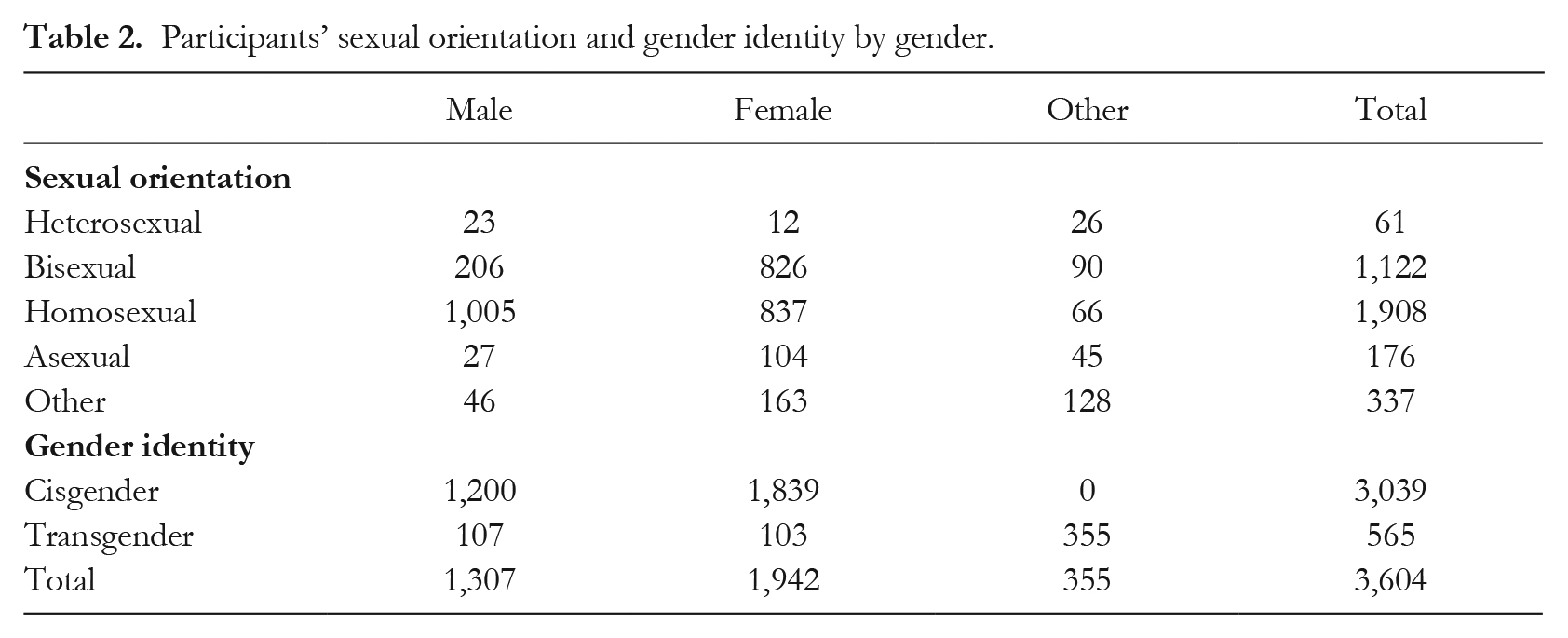
From this dataset, we retrieved a sample consisting of all sexual and gender minorities that included at least 15 individuals per country who had passed the attention checks. There were subsamples from 25 countries that met this criterion (median [Mdn] subsample size of 125, ranging from 24 to 388; see details in the Supplemental Material, Section A), reaching a total of 3,604 participants (Mage = 29.8, SDage = 12.09 years). See Table 1 for details regarding the number of participants and the country-level indicators from each country. All participants were either gender and/or sexual minorities. Please note that sexual orientation, gender identity, and sex characteristics are separate constructs. Individuals who are gender minorities (e.g., trans, nonbinary, and/or intersex individuals) can identify as either heterosexual or as sexual minority members. In terms of gender, there were 36.3% self-identified men, 53.9% self-identified women, and 9.9% self-identified as other. In terms of gender minority status, 15.7% self-identified as transgender, a gender minority, or were intersex. 1 In terms of sexual orientation, 1.7% self-identified as heterosexual, 31.1% self-identified as bisexual, 52.9% self-identified as homosexual, 2 4.9% self-identified as asexual, and 9.3% self-identified as other. See Table 2 for participants’ sexual orientation and gender identity by gender.
Number of participants and country-level measures for each sample.
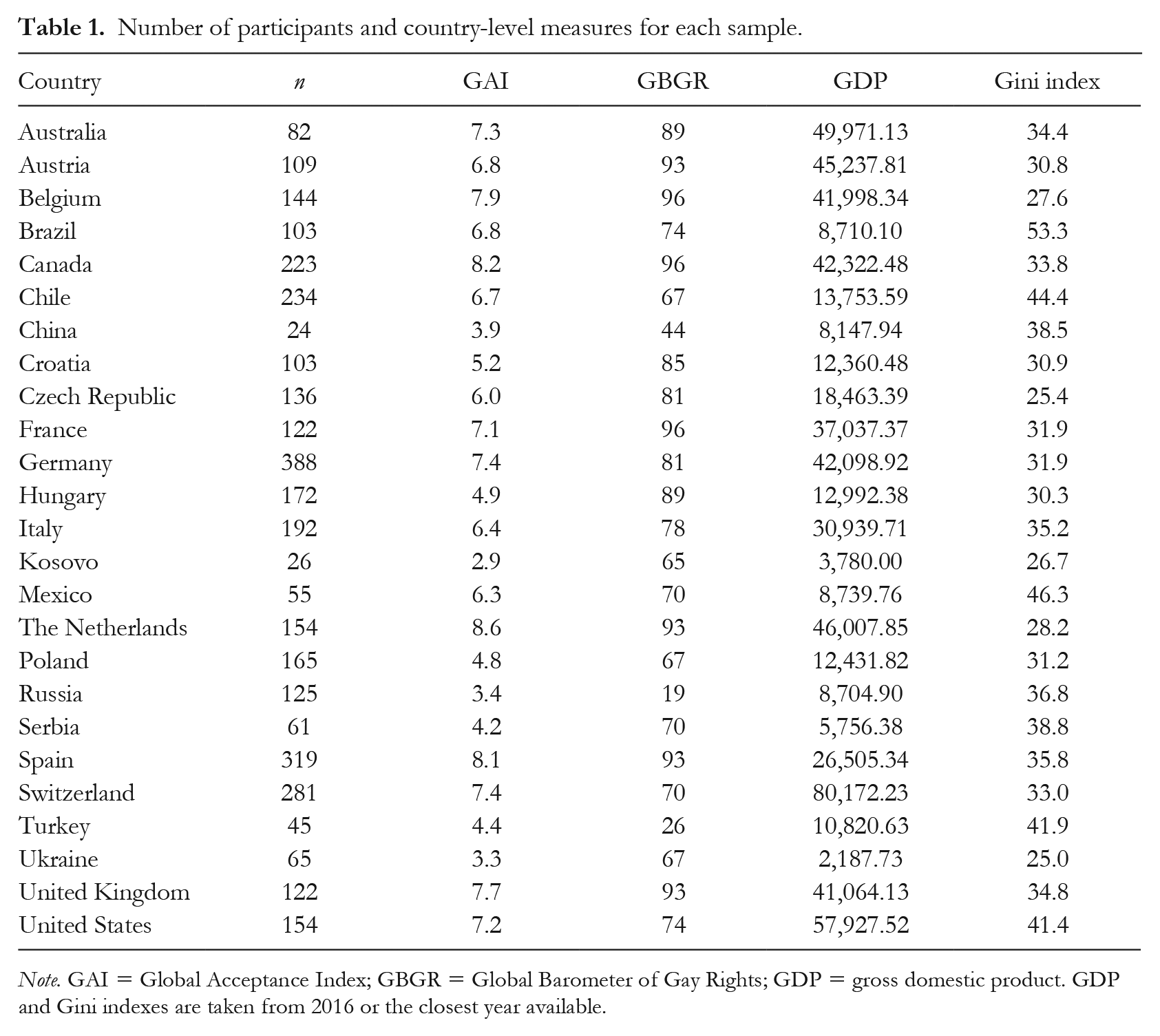
Note. GAI = Global Acceptance Index; GBGR = Global Barometer of Gay Rights; GDP = gross domestic product. GDP and Gini indexes are taken from 2016 or the closest year available.
Participants’ sexual orientation and gender identity by gender.
Measures
Full measures are available in the Supplemental Material, Section B.
Predictor variables
Perceived stigma
Perceived stigma was assessed at the individual level with two reversed items, using a 7-point Likert scale (1 = not at all, 7 = very much): “There is growing acceptance and legal recognition for sexual (and gender) minority members in my country,” “How freely can sexual (and gender) minority members disclose their sexual orientation and/or gender identity in the country you are living in?” These items were positively correlated (r = .61, p < .001). They were reverse-scored such that higher scores indicated higher perceived stigma, and were standardised and averaged into a composite measure.
Institutional stigma
We assessed institutional stigma at the country level using a combination of two indices from the years closest to the timing of our survey data collection: (a) the Global Acceptance Index (GAI; Flores, 2019) from the period 2014–2017, which provides each country with a score from 1 to 10 based on surveys of societal acceptance of gender and sexual minorities; and (b) the Global Barometer of Gay Rights (GBGR; Dicklitch-Nelson et al., 2019) from 2014, which provides each country with a percentage scale from 0 to 100% based on societal and legal aspects of LGBTIQ+ acceptance. The indices were reverse-scored so that higher scores indicated greater institutional stigma. The indices were positively correlated (r = .68, p < .001), and were standardised and averaged to form a single composite measure.
Criterion variables
Past collective action participation
A three-item scale asked participants about the relative frequency (1 = never, 6 = always) at which they had participated in several types of collective action in the past (e.g., “Attended meetings or workshops on issues regarding the unequal treatment of sexual and/or gender minority group members”; α = .76).
Future collective action intentions
A three-item scale asked participants about their willingness (1 = not at all, 7 = very much) to take part in the same types of collective action in the near future (α = .82).
Control variables
As we used cross-sectional data, we controlled for a number of variables that may covary in meaningful ways with collective action. At the individual level, we controlled for demographic variables: gender (male, female, other), gender minority status (dummy variable), and age (in years). We also controlled for identification as a member of the LGBTIQ+ community at the individual level (“I identify myself with the LGBTIQ+ community”; 1 = strongly disagree, 7 = strongly agree), as group identification is a strong predictor of collective action (van Zomeren et al., 2008). At the country level, we controlled for gross domestic product (GDP) per capita and the Gini index, either from 2016 or the closest year available (World Bank, n.d.).
Preregistered Analytical Strategy
We treated missing data using bootstrapped multiple imputation with expectation maximisation, with pooled results (Honaker et al., 2011). For hypothesis testing, we used the following second-degree polynomial regression models using mixed-effects (or multilevel) analyses:
The predicted effect of perceived stigma on collective action intentions/participation at within-country level.
The predicted effect of perceived stigma on collective action intentions/participation at between-country level.
The predicted effect of institutional stigma on collective action intentions/participation at between-country level.
We used a Bayesian approach as opposed to a null hypothesis significance testing because of its various benefits (Wagenmakers et al., 2018). A Bayesian approach provides more flexibility when handling complex analyses and models, such as nonlinear relationships and multilevel data. Bayesian multilevel modelling also provides more accurate estimates for groups with small sample sizes. Furthermore, to compare linear and nonlinear models, Bayesian model comparison techniques provide multiple indices to inform conclusions. Finally, although a Bayesian framework demands more involvement in the specifications of the models, its interpretations are more straightforward. For example, credible intervals can be interpreted as the true probability distributions of the estimated parameters. This kind of interpretation is not possible with frequentists approaches.
In line with a Bayesian approach, alongside parameter estimates, to describe the posterior distribution, we report the median (to indicate where the typical value falls), credible intervals (CI; representing the uncertainty in the estimate of a parameter), the probability of direction (pd; which describes the likelihood that an effect is in a particular direction), and the region of practical equivalence (ROPE; which defines a range of values within which the effect is considered practically equivalent to zero; see Makowski et al., 2019). In contrast to frequentist models, these parameters provide an indication of the probable distribution for each parameter and considers the strength of evidence. We also contrasted the second-degree polynomial regression with its linear counterpart using the Bayes factor to test the adequacy of the quadratic model over a linear model (Cohen et al., 2010).
We further hypothesised an indirect effect of institutional stigma on collective action outcomes (intention and participation) through perceived stigma. The relationship between perceived stigma and collective action outcomes was expected to be curvilinear, which violates the traditional methods’ assumptions to calculate indirect effects. Therefore, to test the curvilinear indirect effect of institutional stigma on collective action outcomes via perceived stigma, we followed Hayes and Preacher’s (2010) method of testing instantaneous indirect effects (IIEs). IIE can be understood as the calculation of the indirect effect over criterion variables at every point of the predictor variable. We used Bayesian inference instead of maximum likelihood estimations following the strategy outlined by Yuan and MacKinnon (2009) because this made it possible to estimate models that would not have converged or resulted in singular fits. We used weakly or minimally informative priors to avoid biasing the results in any specific direction.
Deviations From Preregistration
We deviated from preregistration by separating collective action measures into high-cost and low-cost actions, instead of using the preregistered six-item measure. This change aligns with previous publications from the same dataset (Hässler et al., 2020). We focused on high-cost collective action for this study, as it best fit our conceptualisation of collective action. Additionally, we initially planned to include income and political conservatism. However, due to unstandardised and uncodable income data, we excluded income as a control variable. Additionally, political conservatism had 37% missing data, which led to convergence issues in the models. To address this, we excluded political conservatism from the analyses. Further details regarding deviations from the preregistration are described in the Supplemental Material, Section C.
Results
Effect of Perceived Stigma (Within-Country)
As reported in Table 3, contrary to hypotheses, at the within-country level, there was no evidence of a curvilinear effect of perceived stigma on collective action intentions (Mdn = 0.30, 57% probability of being positive [pd], and nonsignificant with 4.6% of the parameter distribution within the ROPE) and on participation in collective action (Mdn = 0.68, 72% probability of being positive [pd], and nonsignificant with 5.45% in the ROPE). These ROPE percentages indicate that a portion of the posterior distribution falls within the ROPE, meaning that the estimated effects are close to zero and thus not practically meaningful. However, there was a positive linear effect of perceived stigma on collective action intentions (Mdn = 7.50, 100% probability of being positive [pd], and significant with 0% in the ROPE), indicating strong evidence that the effect is practically meaningful, as none of the posterior distribution lies within the ROPE. In contrast, no significant linear effect was found for participation in collective action (Mdn = 0.81, 75.6% probability of being positive [pd], and nonsignificant with 5.48% in the ROPE), suggesting some evidence of a positive effect but with a small portion of the distribution still falling within the ROPE, which weakens the practical significance of the finding. Figure 1 depicts the pattern of results.
Within-country polynomial regression of perceived stigma over collective action intentions and participation in collective action .
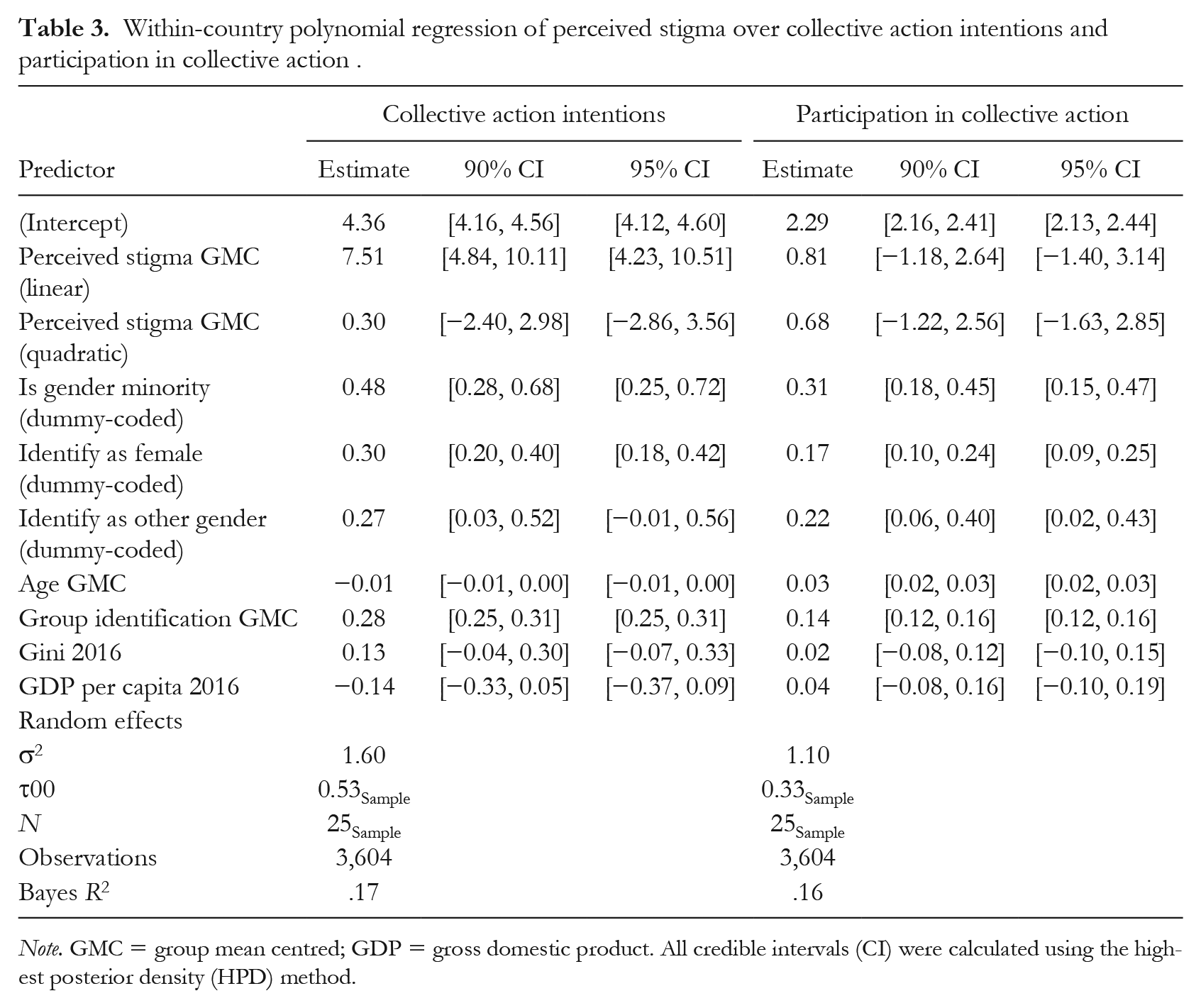
Note. GMC = group mean centred; GDP = gross domestic product. All credible intervals (CI) were calculated using the highest posterior density (HPD) method.
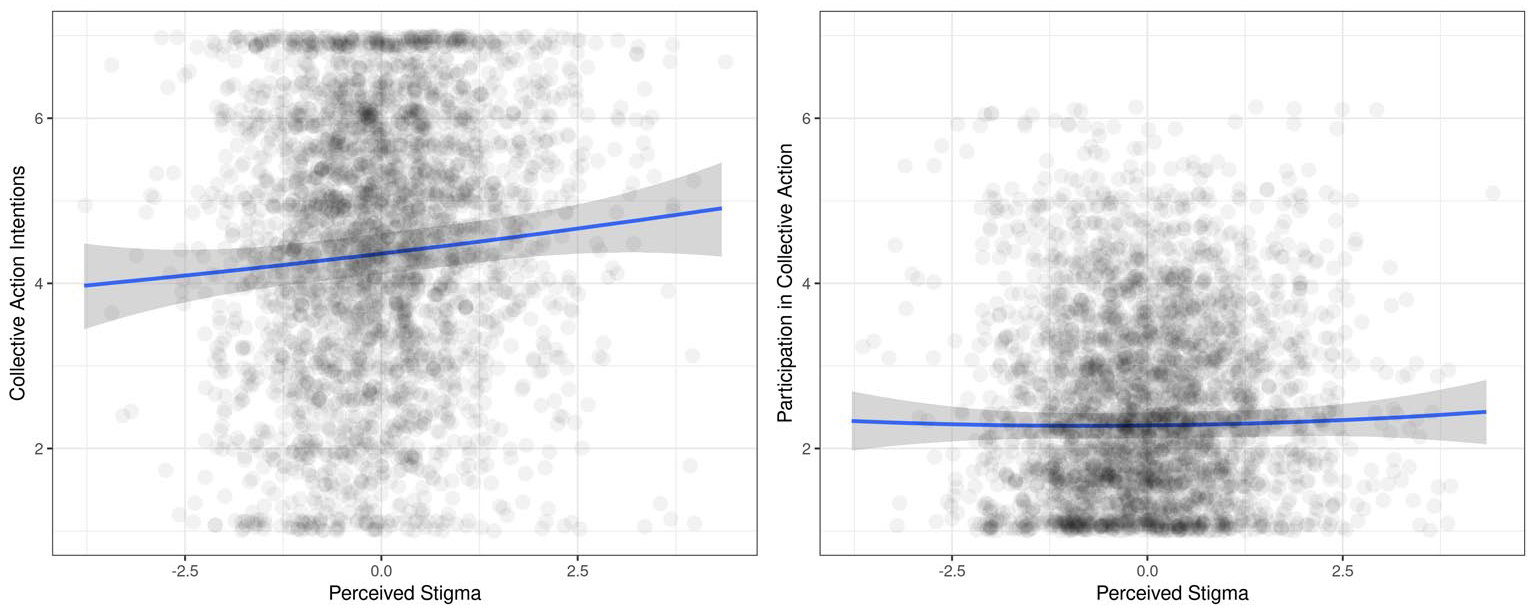
Scatter plots of the within-country links between perceived stigma and collective action intentions (left), and between perceived stigma and collective action participation (right).
Effect of Perceived Stigma (Between-Country)
As reported in Table 4, in line with hypotheses, at the between-country level, there was evidence for a curvilinear effect of perceived stigma on collective action intentions (Mdn = −10.30, 95.5% probability of being positive [pd], and significant with 0.33% in the ROPE) and on participation in collective action (Mdn = −7.50, 95.8% probability of being positive [pd], and significant with 0.38% in the ROPE). The low percentages within the ROPE indicate that the effect is practically meaningful, as virtually none of the estimated effects falls within the range considered practically equivalent to no effect. The highest levels of collective action were reported at moderate levels of stigma (i.e., collective action intentions were the highest when perceived stigma was = 3.80; participation in collective action was the highest when perceived stigma was = 4.09). Figure 2 depicts the pattern of results.
Between-country polynomial regression of perceived stigma over collective action intentions and participation in collective action .
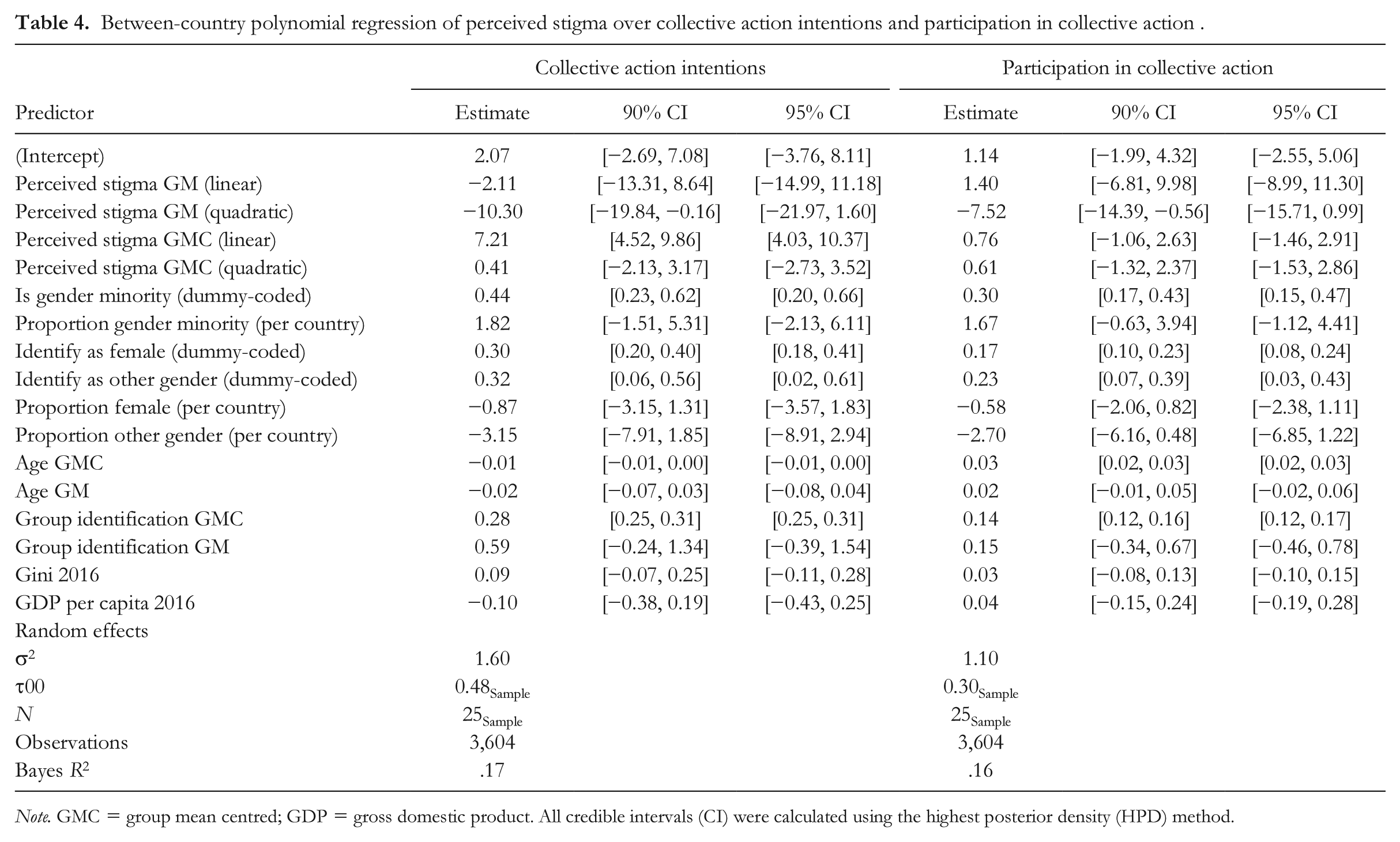
Note. GMC = group mean centred; GDP = gross domestic product. All credible intervals (CI) were calculated using the highest posterior density (HPD) method.
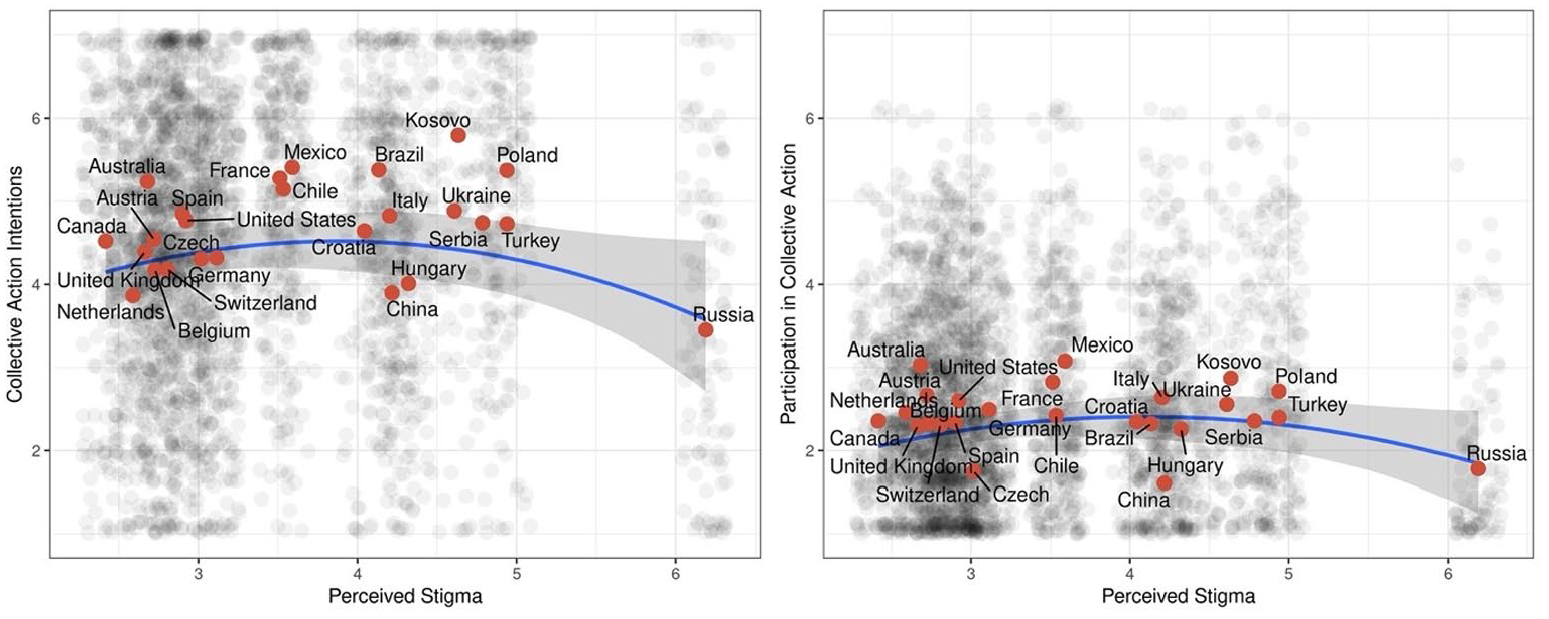
Scatter plots of the between-country links between perceived stigma and collective action intentions (left), and between perceived stigma and collective action participation (right).
Effect of Institutional Stigma (Between-Country)
As reported in Table 5, in line with hypotheses, there was evidence for a curvilinear effect of institutional stigma on collective action intentions (Mdn = −9.73, 94.2% probability of being positive [pd], and significant with 0.34% in the ROPE), and of institutional stigma on participation in collective action (Mdn = −7.50, 95.9% probability of being positive [pd], and significant with 0.3% in the ROPE). The low percentages in the ROPE indicate that the effect is practically meaningful, falling well outside the range considered negligible for practical purposes. The highest levels of collective action were reported at moderate levels of stigma (i.e., collective action intentions were the highest when institutional stigma was = 0.42; participation in collective action was the highest when perceived stigma was = 0.60). Figure 3 depicts the pattern of results. 3
Between-country polynomial regression of institutional stigma over collective action intentions and participation in collective action .
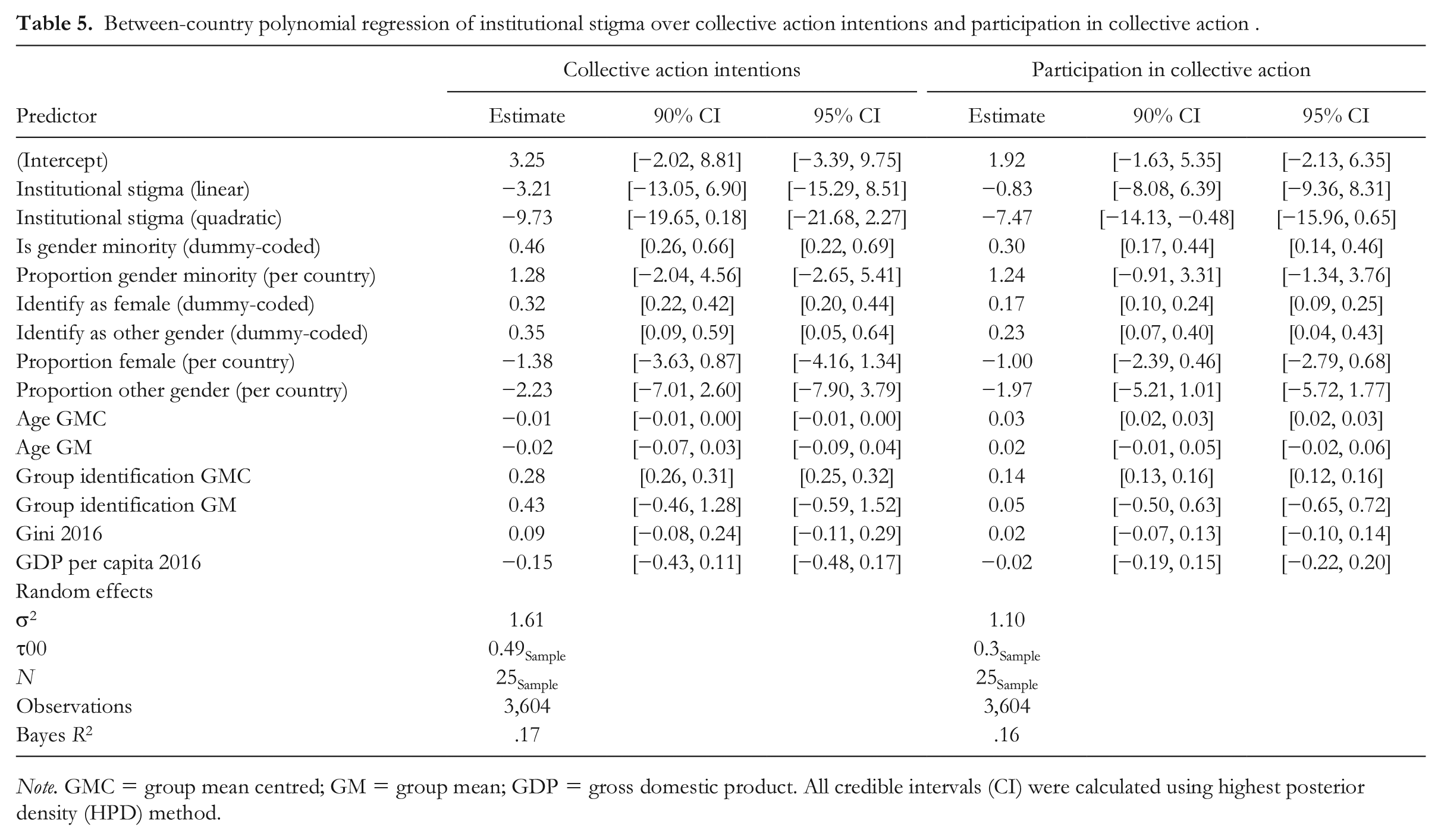
Note. GMC = group mean centred; GM = group mean; GDP = gross domestic product. All credible intervals (CI) were calculated using highest posterior density (HPD) method.
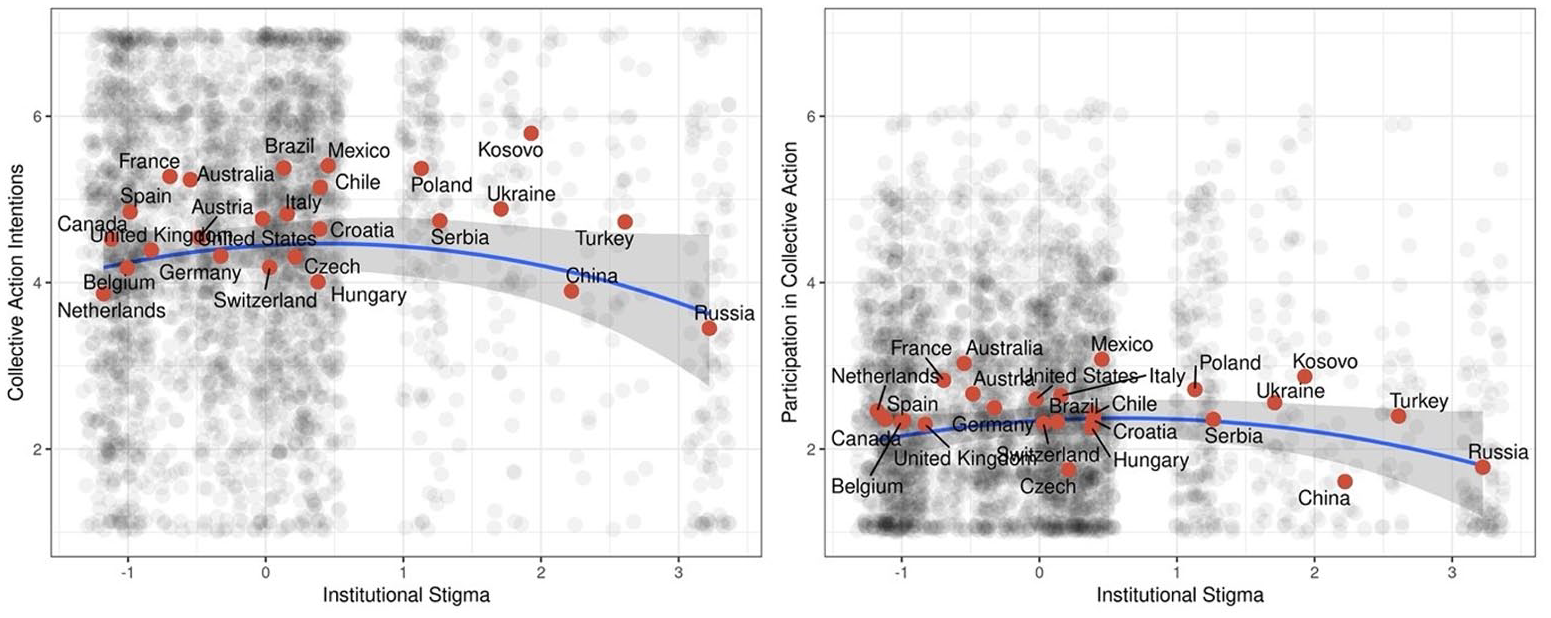
Scatter plots of the between-country links between institutional stigma and collective action intentions (left), and between institutional stigma and collective action participation (right).
Model Comparisons
As preregistered, to test whether the curvilinear models best describe the data compared to the linear models, the second-degree polynomial multiple regression models (i.e., curvilinear effect) were compared with their first-degree polynomial counterparts (i.e., linear model). Since Bayesian inference was used to estimate the parameters, the comparison was made using the Bayes factor (BF; van Doorn et al., 2021). The models were estimated using weakly informative conjugate priors and a Gaussian distribution, with a mean of zero and a standard deviation of 10. This configuration ensures correct conjugation of the priors with the likelihood, but introduces very little bias on the estimation (Kruschke, 2011). The within-level models using perceived stigma as the predictor showed moderate evidence supporting the curvilinear link, with BF = 8.85 for the model predicting collective action intentions, and BF = 11.28 for the model predicting participation in collective action. Specifically, the Bayesian factor indicates that the observed data were 8.85 times more likely to fit the curvilinear model than the linear model for predicting collective action intentions, and 11.28 times more likely to fit the curvilinear model than the linear model for predicting participation in collection action. This suggests that the curvilinear model is a better fit for the data than the linear model in both cases.
For the between-level model comparison, the model using individual perceptions of stigma as main predictor showed very strong evidence in favour of a quadratic model compared to a linear model, with BF = 556.20 for the model predicting collective action intentions, and BF = 817.10 for the model predicting past participation in collective action. This means that the data were 556.20 times more likely to fit the quadratic model than the linear model for predicting collective action intentions, and 817.10 times more likely to fit the quadratic model than the linear model for predicting past participation in collective action. Similarly, the quadratic models using institutional stigma as main predictor also showed strong evidence in their favour, with BF = 79.50 for the model predicting collective action intentions, and BF = 97.70 for the model predicting past participation in collective action. This means that the data were 79.50 times more likely to fit the quadratic model compared to the linear model for collective action intentions, and 97.70 times more likely to fit the quadratic model compared to the linear model for past participation in collective action. Thus, overall, there is strong evidence in favour of the quadratic models compared to the linear models.
Mediation Analysis: IEE
We tested the IIE of institutional stigma on collective action intentions and participation through perceived stigma, following the estimation procedure outlined by Hayes and Preacher (2010). IIE can be understood as the calculation of the indirect effect over criterion variables at every point of the predictor variable. This procedure is necessary if the relationship between the variables is hypothesised to be nonlinear. The full output of the regression models used to calculate the IIEs is reported in the Supplemental Material, Section D.
As stated in the Method section, the effect of institutional stigma on collective action intentions and participation in collective action, mediated by perceived stigma, is described as a function of the values of the predictor variable, in what is known as the IIE. We present these results by plotting the IIE along the values of the predictor for both of our criterion variables on the curvilinear model. Figure 4 shows these plots with 95% and 90% Bayesian credible intervals. In the case of the indirect effects of institutional stigma on collective action intentions through perceived stigma (left plot in Figure 4), the results suggest that up to moderate levels of institutional stigma (1 SD above the grand mean), the indirect effect is positive, with a credibility level of at least 95% (i.e., institutional stigma has a positive indirect effect on collective actions intentions via perceived stigma). However, at levels of institutional stigma above 1 SD, the indirect effect becomes nonsignificant.
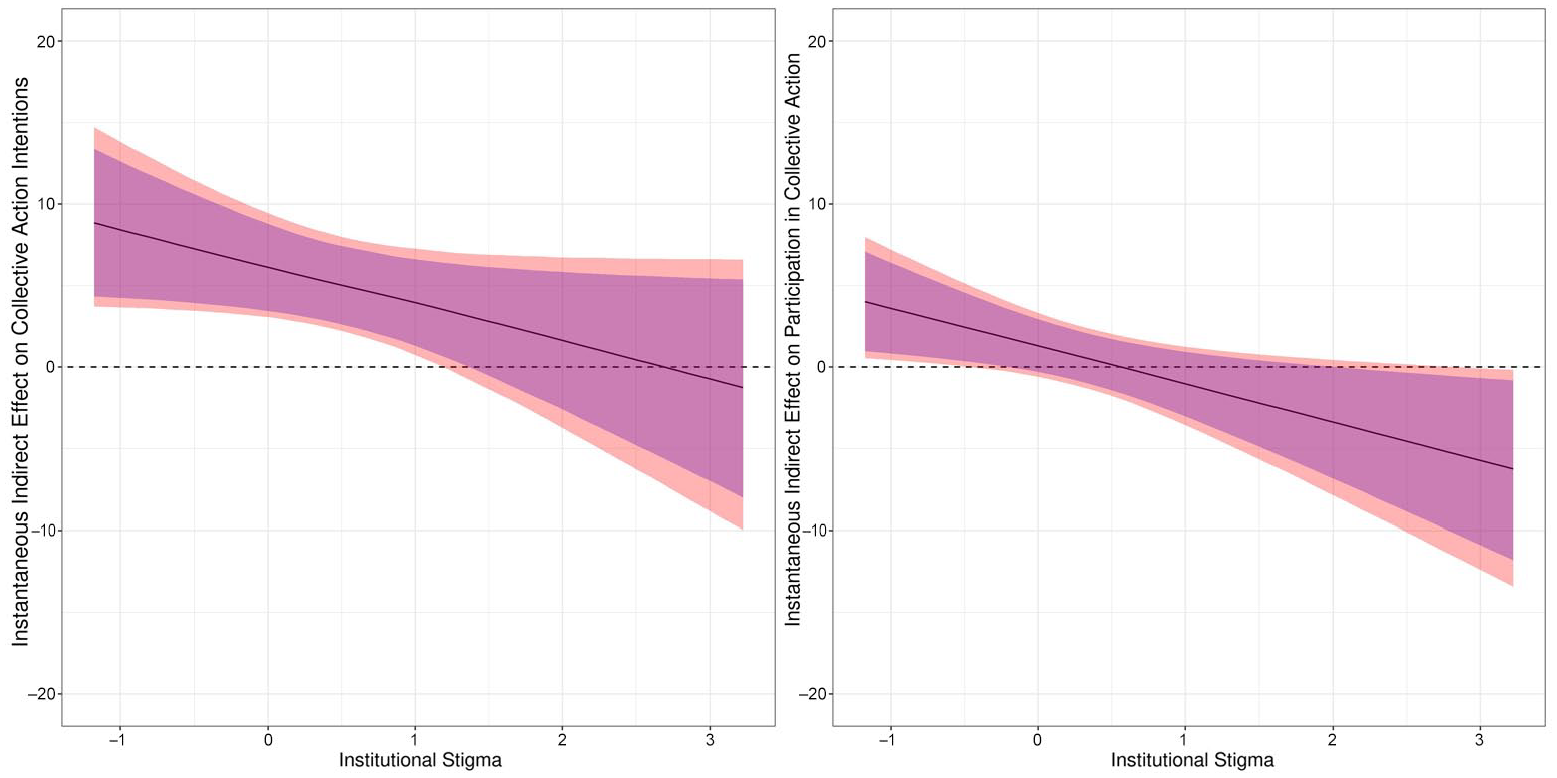
Instantaneous indirect effect (IIE; solid line) for 100 values of institutional stigma on collective action intentions (left) and participation in collective action (right).
In the case of the indirect effect of institutional stigma on participation in collective action through perceived stigma (right plot in Figure 4), the results suggest that only at relatively low levels of institutional stigma (up until 1 SD below the grand mean) is there a positive indirect effect, with a credibility level of at least 95%. As institutional stigma increases, the indirect effect on collective action participation becomes nonsignificant up until 3 SD above the grand mean, at which point the indirect effect becomes negative, with a credibility of at least 95%. In sum, these results provide some evidence in line with our hypothesis that there is a threshold level of institutional stigma, below which, intentions and participation in collective action increase, but above which, they decrease.
Discussion
In a sample of over 3,000 LGBTIQ+ individuals across 25 countries, we investigated how stigma is related to collective action. We examined both (a) individual-level experiences of perceived stigma and (b) country-level indices of institutional stigma in relation to individuals’ intentions to engage in collective action and past participation in collective action. We found mixed evidence for our hypotheses. When considering effects at the individual level (i.e., within each country), there was no evidence of a curvilinear link between perceived stigma and collective action outcomes. Instead, there was a positive linear effect: as individuals’ perceptions of stigma increased, their collective action intentions (but not participation) also increased. This corroborates previous research that has demonstrated the mobilising potential of group-based relative deprivation, discrimination, and injustice (e.g., Smith et al., 2012; Tausch et al., 2011; Van Zomeren et al., 2008; Wright et al., 1990), and further extends it to the context of LGBTIQ+ collective action. Our approach using a large, multinational sample also builds on prior research has that largely investigated these effects within a single country (e.g., Eisner et al., 2022; Stürmer & Simon, 2009; Tausch et al., 2011). However, a selection bias may exist, as participants in our survey are likely to be more connected and engaged with the LGBTIQ+ community, which could also explain the lack of the anticipated curvilinear effect.
At the between country-level, in line with hypotheses, there was initial evidence of a curvilinear link between stigma and collective action intentions and participation. When comparing aggregate levels of stigma and collective action across countries, the highest average level of collective action was found in countries with moderate levels of stigma. This curvilinear link was found both with individuals’ perceived stigma aggregated within countries and with institutional stigma based on country indices of the legal treatment of LGBTIQ+ individuals, which indicates parallel dynamics between conceptualising stigma as micro- and macro-level experiences. While it is worth noting that we had a limited number of countries with highly repressive laws, and that the curvilinear effect was heavily influenced by Russia, our data are valuable in suggesting there is a “tipping point” in the mobilising potential of stigma, beyond which, collective action is discouraged by increasing levels of stigma. The observed curvilinear link between stigma and collective action is consistent with sociological evidence on macro-level effects of government repression on the rate of protest occurrences over time (e.g., Earl, 2011; Opp, 1994).
In addition, we found preliminary evidence for a curvilinear mechanism explaining the downstream effects of institutional stigma on mobilisation for social change via individual perceptions of stigma. Crucially, this indirect effect was only present up until moderate levels of institutional stigma in the case of collective action intentions, and only at low levels of institutional stigma in the case of past participation in collective action. Above these levels, there was no evidence of an indirect effect, and for the case of collective action participation, the pathway becomes negative (i.e., increased institutional stigma was associated with reduced collective action via greater perceived stigma). While the patterns of findings are not entirely consistent with our expectation that the threshold would be at moderate (not low) levels of stigma, they nonetheless suggest that the sociopolitical environment within which one lives can shape the trajectory of social change efforts. Specifically, increased perceptions of stigma do not translate into greater collective action under high levels of institutional stigma. These findings contribute to our understanding of how macro-level factors—such as the stigma rooted in policies and laws—can trickle down to the micro level, thereby shaping the experiences of stigmatised individuals (see also Górska et al., 2017; Hatzenbuehler, 2014; Matsick et al., 2024; Pachankis & Bränström, 2018; Pachankis et al., 2015; Sweigart et al., 2024; Woodford et al., 2018). This builds on prior research that has overlooked the role of structural factors in shaping collective action.
Interpreting our findings through the lens of the dual-pathway model of collective action (Stürmer & Simon, 2004, 2009), the curvilinear relation may reflect two processes affecting collective action: cost–benefit calculations and social identity motives. On the one hand, institutional stigma poses a social identity threat to sexual and gender minorities (Major & O’Brien, 2005), which encourages identity salience and therefore a collective interpretation of disadvantage (Kelly & Breinlinger, 1995; Lalonde & Silverman, 1994); this, in turn, motivates collective action (Van Zomeren et al., 2008; Wright et al., 1990). This mechanism is likely at play for low-to-moderate levels of stigma. Indeed, this is in line with the evidence base thus far, which consists largely of research conducted in democratic and safe contexts where stigma is relatively low to moderate (Ayanian et al., 2021).
On the other hand, high levels of institutional stigma pose greater risk to minorities’ safety and well-being whereby expressing minority identity could lead to adverse outcomes such as social exclusion, hostilities, imprisonment, or even capital punishment (e.g., Barrientos et al., 2024; Bränström et al., 2023; Cherian et al., 2024; Herek, 2008; Mogotsi et al., 2024). In such situations, minority groups engaging in a cost–benefit calculation might be more likely to resign from collective action efforts when faced with extreme social identity threats because engaging in collective action could literally cost them their lives (e.g., Carter, 2023). It is possible that at high levels of stigma, the unequal social hierarchy is perceived as stable and impermeable, which will lead to lower likelihood of collective mobilisation (Ellemers, 1993; Mummendey et al., 1999; Tajfel & Turner, 1979). It is also worth noting that within repressive contexts such as Russia, Hong Kong, Ukraine, and Turkey, research has shown that perceived risk of government repression can fuel anger, which in turn motivates greater collective action (Ayanian et al., 2021), which would suggest that high levels of stigma can be particularly mobilising. Further research is needed to examine these potential explanations and underlying mechanisms on the potential mobilising and demobilising effects of institutional stigma.
One possible reason why we did not find evidence of a curvilinear effect at the individual level may be due to the distinct nature of perceived stigma and institutional stigma. Perceived stigma captures an individual’s lived experience, which might lead to a straightforward psychological response: as individuals feel more stigmatised, they become more motivated to mobilise against injustice. In contrast, institutional stigma reflects broader systemic factors that can influence not just motivation but also the feasibility of collective action. At the country level, the legal context shapes the overall environment for collective action, creating conditions where moderate levels of stigma might offer the “optimal” balance between motivation and feasibility. The divergent findings between perceived and institutional stigma suggest that we may miss important contextual effects when we solely focus on individual-level variables without considering structural-level factors.
Limitations and Future Directions
It is important to note that our conceptualisation of social change outcomes was limited to collective action, a highly visible and overt form of collective resistance (Rosales & Langhout, 2020). There is evidence, however, that individuals who are marginalised in society may turn to hidden forms of resistance in everyday life (Scott, 1985), for instance, by creating safe spaces or practicing alternative subcultures to subvert hetero-cis-normativity (Vinthagen & Johansson, 2013). We therefore caution against concluding that there is little resistance in highly repressive countries both because research suggests people can be highly motivated to mobilise in response to repression (Ayanian et al., 2021; Earl, 2011), but also because resistance can take various forms (Vollhardt et al., 2020). An important avenue for future research is to understand how people engage in collective resistance in response to extreme oppression, beyond traditional indicators of collective action such as street protests.
Data collection in highly repressive contexts poses significant challenges, as it may put both researchers and participants at risk (Acar et al., 2020; Hässler et al., 2024). Hence, most of the countries included in the present research had relatively low or moderate levels of institutional stigma. Countries that are highly repressive, such as Russia, may therefore be driving the curvilinear effects observed. While it is possible that the Russian sample provided suggestive evidence of the potential inflection point at which greater stigma is associated with reduced collective action, additional research including highly repressive countries is needed to fully examine the robustness of a curvilinear link. Future research should aim to assess the specific conditions that may trigger a change in the direction of the relationship between stigma and collective action, such as the presence of specific laws infringing upon the rights of LGBTIQ+ communities. In clarifying the underlying mechanism between institutional stigma and collective action, it is important to explore the role of collective efficacy as a potential mediator, as research has shown that collective efficacy is an important predictor of collective action even in repressive contexts (Ayanian et al., 2021). It is possible that very high levels of stigma might reduce collective efficacy, which in turn could decrease collective action.
Furthermore, while our data investigated sexual and gender minorities in the same analyses, which mirrors the psychological literature that has largely examined the experiences of LGBTIQ+ communities in aggregate (see Klysing et al., 2024; Walch et al., 2020), sexual and gender minorities are likely to experience different levels of stigma (Bränström et al., 2023; Hässler et al., 2024; Lewis et al., 2017). Future research should attempt to disaggregate these effects. In addition, our measure of stigma included an item that measured how stigma has changed over time in one’s country, which may have introduced noise into the measurement by conflating past and present perceptions of stigma. Future research should measure present-day experiences of stigma using established measures such as stigma consciousness (Pinel, 1999) or expectations of rejection (Meyer, 2003). More generally, while our focus was on the LGBTIQ+ context, our theorising may extend to other disadvantaged groups, including women and racial or ethnic minorities. Indeed, research has shown that laws and policies affecting racial minorities can shape intergroup tolerance (Weldon, 2006). Structural stigma may also influence support for equal rights among advantaged group members. For example, it has been found that greater country-level gender equality is linked to lower collective action for gender equality among men (Kosakowska-Berezecka et al., 2020). The possibility of curvilinear links between structural stigma and support for social change across domains awaits further empirical testing.
Conclusion
To conclude, our research importantly highlights that a linear link does not always reflect people’s diverse lived experiences as they face negative treatment within particular social systems. A curvilinear link is not merely an abstract technical detail or a statistical issue. Indeed, there have been increasing efforts in the literature in recent years to account for more nuanced relationships between sociostructural variables by modelling nonlinear relations (e.g., Cichocka et al., 2018; Dambrun et al., 2006). Adding to this effort and aiming to diversify LGBTIQ+ research beyond the Global North, the present contribution extends our theoretical and applied understanding of how social change efforts are shaped by broader institutional constraints. As suggested by our findings, curvilinear models may enable scholars and practitioners to capture the complex realities of marginalised communities, which in turn can have profound implications for understanding social change efforts and tailoring interventions sensitive to local contexts. For example, at high levels of repression, LGBTIQ+ identities are likely to be concealed (Pachankis & Bränström, 2018), and thus solidarity-building initiatives may be a priority, as opposed to collective action mobilisation. As addressing stigma against LGBTIQ+ individuals is a global issue, the responses and therefore the solutions to it are multifaceted.
Supplemental Material
sj-docx-1-gpi-10.1177_13684302241309539 – Supplemental material for On the nonlinear link between stigma and collective action: Evidence from sexual and gender minorities in 25 countries
Supplemental material, sj-docx-1-gpi-10.1177_13684302241309539 for On the nonlinear link between stigma and collective action: Evidence from sexual and gender minorities in 25 countries by Hema Preya Selvanathan, Daniel Valdenegro, Masi Noor, Emilio Paolo Visintin, Fanny Lalot, Mario Sainz, Michał Bilewicz, Lydia Hayward, Simone Sebben, Johannes Ullrich and Tabea Hässler in Group Processes & Intergroup Relations
Footnotes
Declaration of Conflicting Interests
The author(s) declared no potential conflicts of interest with respect to the research, authorship, and/or publication of this article.
Funding
The author(s) disclosed receipt of the following financial support for the research, authorship, and/or publication of this article: This project was funded in part by the Swiss National Science Foundation through a grant (IZSEZ0 192941) awarded to Tabea Hässler and Johannes Ullrich.
ORCID iDs

Supplemental Material
Supplemental material for this article is available online.
Notes
References
Supplementary Material
Please find the following supplemental material available below.
For Open Access articles published under a Creative Commons License, all supplemental material carries the same license as the article it is associated with.
For non-Open Access articles published, all supplemental material carries a non-exclusive license, and permission requests for re-use of supplemental material or any part of supplemental material shall be sent directly to the copyright owner as specified in the copyright notice associated with the article.
