




Abstract
This article presents the results of three studies that examine how the perceived opinions of others are related to sexual minorities’ support for social change toward greater equality. Results of two cross-sectional studies (Study 1: N = 1,220; Study 2: N = 904) reveal that perceived intolerance (i.e., perceived intolerant societal norms) is indirectly related to intentions to engage in collective action in both negative and positive ways: the negative effect was mediated by lower perceptions of perceived efficacy; positive effects were mediated by greater anger (about the legal situation and public opinion) and greater perceived need for a movement. Study 3 (N = 408) replicates this conflicting effect with a delayed outcome measure by showing that perceived intolerant norms were indirectly, both negatively and positively, associated with actual collective action engagement. We discuss the theoretical and practical implications of our expanded social identity model of collective action.
Keywords
In many countries across the world, LGBTIQ+ individuals (i.e., lesbian, gay, bisexual, trans, intersex, and queer/questioning individuals) have fewer rights than heterosexual people. Although some countries have implemented marriage and adoption by same-sex partners (e.g., the Netherlands, United States, and Taiwan), LGBTIQ+ individuals from other countries remain deprived of these rights (e.g., Switzerland in 2020; Mendos et al., 2020). To tackle these inequalities, social movements have pushed for greater legal recognition of LGBTIQ+ individuals. If these movements are to be successful, they should mobilize LGBTIQ+ individuals and consider the broader society in which the collective action takes place (Simon & Klandermans, 2001; Subašić et al., 2008). Indeed, social movements usually need to consider the general public and its opinions to guide their collective action. The goal of the present study is to provide a better understanding of how perceptions of the majority opinion in a society (i.e., perceived societal norms; Cialdini et al., 1991) are associated with LGBTIQ+ individuals’ engagement in collective action.
We explore the dualistic role of perceived intolerant societal norms in collective action for greater equality. On the one hand, perceptions of intolerance may inhibit collective action, feeding the belief that society is not ready for social change and dampening the propensity toward action. On the other hand, perceptions of intolerance might also facilitate collective action, feeding the belief that the only way to achieve greater equality is to take action. Given the significance of these divergent trends for public policies, studies are needed to elucidate how such perceptions predict individuals’ support for and involvement in social change.
We examine the dynamic interplay between individual characteristics, group characteristics, and the society and its institutions (Tankard & Paluck, 2016) by incorporating a normative framework into the social identity model of collective action (SIMCA; van Zomeren et al., 2008). SIMCA posits that collective action has three key motivators: individuals should identify with their group, perceive that a social movement will be effective in achieving its goal, and experience anger about group disparities (Çakal et al., 2011; van Zomeren et al., 2013). In adding perceived norms to SIMCA, we will test the possible role of perceived intolerant societal norms in facilitating and/or inhibiting collective action. The normative framework also permits us to test new societal mediators (i.e., anger about public opinion, anger about the legal situation, the need for a movement) that might link perceived societal norms to collective action.
We focus our inquiry on sexual minority group members’ (e.g., lesbian, gay, bisexual, pansexual individuals) support for social change for greater equality in Switzerland. Marriage equality and joint adoption by same-sex partners are still not legal as of 2020 (Mendos et al., 2020), and new proposed laws to extend the rights of sexual minorities have brought heated public debate. This makes Switzerland an ideal context for examining the collective action propensities of sexual minorities. Using data from the Swiss LGBTIQ+ Panel (Eisner & Hässler, 2019; Hässler & Eisner, 2020), we investigate the association between perceived intolerant societal norms (a) and collective action intentions in two cross-sectional studies (Studies 1 and 2); (b) and both intentions and actual collective action in a study about a public referendum to ban discrimination based on sexual orientation (Study 3).
When Do Individuals Engage in Collective Action?
Much research in social psychology has examined why people engage in collective action. According to social identity theory (Tajfel & Turner, 1979), people strive for positive social identities with groups they care about. Therefore, identification (i.e., an individual’s relationship with a group; Postmes et al., 2012) plays a central role in promoting social change to collectively improve the status of the group (Simon & Klandermans, 2001; Wright et al., 1990). According to resource mobilization theory (e.g., Klandermans, 1984; McCarthy & Zald, 1977), people engage in collective action when the expected benefits of the behavior outweigh the costs. It is therefore important that collective action is perceived as effective (Hornsey et al., 2006; Mummendey et al., 1999). The group must feel capable of bringing about societal change; in other words, there must be a strong belief in group efficacy. Finally, according to relative deprivation theory (e.g., Walker & Pettigrew, 1984; Wright & Tropp, 2002), the perception of group inequalities is a precondition for an individual’s motivation to engage in collective action. In particular, anger about perceived group injustice is understood to be important in fostering collective action (Thomas et al., 2009; van Zomeren et al., 2008).
SIMCA integrates these theoretical approaches into a coherent model. Much research supports SIMCA’s predictions that identification has not only a direct effect on collective action but also has indirect effects via group efficacy and group-based anger (e.g., Çakal et al., 2011; van Zomeren et al., 2013). In sum, SIMCA considers both individuals and groups by emphasizing that individuals should mobilize for social change if they identify with a group, feel angry about the group’s situation, and believe that the group can change its situation. Although SIMCA is responsive to social context (e.g., anger is directed at group-based injustices faced within society), society and its institutions are not explicitly addressed in the model.
Perceived Societal Norms as a Motivator of Collective Action
If people view the status quo of a society as unstable and changeable, they should be more likely to engage in collective action (Ellemers, 1993; Wright & Tropp, 2002). It is therefore important to account for the societal context in analyzing collective action. Indeed, to devise effective strategies for action, those engaged in social movements need to accurately gauge and account for the reactions of the general public (Simon & Klandermans, 2001; Subašić et al., 2008). Therefore, perceptions of societal norms should be a critical component of models of collective action (see Pettigrew, 2018).
We conceptualize “perceptions of societal norms” as a descriptive norm (Cialdini et al., 1991) that taps into perceptions of public opinion. Several studies have considered similar constructs. For instance, perceived discrimination can arouse group-based anger, which in turn increases collective action (Dixon et al., 2010; Stronge et al., 2016). Although perceived intolerant norms and perceived discrimination may be positively correlated, these constructs are theoretically distinct. For example, a majority of people in a society might be perceived as tolerant, but discrimination by a smaller segment might be perceived as a severe problem. Perceived norms may also capture broader perceptions of the social structures that create and support discrimination, as well as the tendencies of a society to be sympathetic toward a movement (Simon & Klandermans, 2001). Distinctions like these are also suggested by the correlation patterns of the key variables of SIMCA. Hence, perceived societal norms and discrimination must be viewed as separate constructs; to do otherwise would blur their theoretical and empirical differences (see also supplemental material).
A central aim here is therefore to investigate how perceived norms are associated with collective action. Initial evidence on this topic indicates mixed findings: prior research has shown that conflict between injunctive norms (others’ [dis]approval) and descriptive norms (observed behavior) might inhibit collective action (Smith et al., 2012, 2018), or both inhibit and facilitate it (McDonald et al., 2014; Smith & Louis, 2008). The reason for these mixed findings is unclear, although Smith and Louis (2008) suggest that it may be due to the salience of the issue (i.e., norm conflict facilitates action for salient issues).
We build on this prior work by examining the role of perceived societal norms in individuals’ attempts to change social structure through collective action. We do this by adding perceptions of societal norms (as perceived public opinion) to the key predictors of SIMCA. We consequently endorse a normative approach that directs attention to individuals, groups, and society and its institutions in at least two ways.
First, because normative change might occur naturally in a society, we distinguish between group efficacy beliefs and the belief that a movement is necessary to achieve the desired outcome (see Bäck et al., 2018). The collective action literature has widely explored the motivating effect of group efficacy beliefs, but little attention has been given to a potentially inhibiting effect of perceiving that social change will naturally move in the desired direction (e.g., a society and its norms will become more tolerant over time). This idea has been raised in research on climate change action, which has shown that individuals are less motivated to act when they believe there are alternative routes to improving the environment (see also free riding literature; Olson, 1965), for example, that scientific progress will benefit the environment (Meijers & Rutjens, 2014). In the case of sexual minorities, there may be a belief that equality will come because a society’s norms will naturally grow more tolerant. Therefore, we propose that the lack of perceived need for a movement is likely to be important in explaining why people do not engage in collective action.
Second, we distinguish between two related but distinct forms of anger. Because “norms” may refer to both the conventions (i.e., defined by law) and public opinions (e.g., Tankard & Paluck, 2017), we examine anger about the legal situation and anger about public opinion. Both constructs may be necessary to better understand the processes through which perceptions of (intolerant) norms could inhibit or facilitate collective action.
Bringing these ideas together, we expect perceived societal norms to both inhibit and facilitate collective action on behalf of sexual minorities, but via different pathways. On the one hand, perceptions of intolerant societal norms (i.e., intolerant public opinions) toward sexual minorities should inhibit their collective action via group efficacy and anger about the legal situation. With respect to group efficacy, perceptions of intolerant societal norms toward sexual minorities should make it seem more difficult to achieve greater equality, thereby decreasing sexual minorities’ engagement in collective action. With respect to anger about the legal situation, perceptions that public opinion is becoming more tolerant toward sexual minorities might increase anger about the fact that laws remain relatively conservative in countries like Switzerland. This might occur for at least two reasons. First, perceived tolerant societal norms should increase a shared sense of injustice and therefore raise anger about legal inequalities (van Zomeren et al., 2004). Second, the perception that societal norms are trending toward greater tolerance should expose a gap between public opinion and Swiss laws. Hence, if perceptions of tolerant norms increase anger about the legal situation, perceptions of intolerant norms should, accordingly, decrease this form of anger and inhibit collective action. 1
On the other hand, perceptions of intolerant societal norms should also facilitate sexual minorities’ collective action via two routes: anger at public opinion and the need for a movement. First, and in line with the relative deprivation literature (e.g., Walker & Pettigrew, 1984), perceptions of intolerance should increase anger about public opinion and facilitate collective action. Second, perceptions of intolerant societal norms might evoke the sense that social change will not happen without action, signaling that a social movement is needed. When individuals believe that social change will come without a social movement, they tend to refrain from engaging in costly behavior aimed at social change (Bäck et al., 2018; Olson, 1965).
In sum, we expect perceived intolerant societal norms to be both positively and negatively related to individuals’ engagement in collective action. Theory suggests that perceived intolerant societal norms may inhibit collective action by reducing group efficacy beliefs and anger about legal inequalities. But it also suggests that intolerant societal norms may facilitate collective action by increasing levels of anger about intolerant public opinion and perceiving the need for a movement.
Outline of Hypotheses
We begin by examining the core predictors of collective action in SIMCA (see Figure 1) and then adding potential inhibiting (see Figure 2) and facilitating pathways (see Figure 3) of perceived intolerant societal norms to support for social change to improve the rights of sexual minority group members. Notably, because our analyses will employ cross-sectional data and panel data (with two time points only), our hypotheses are correlational.
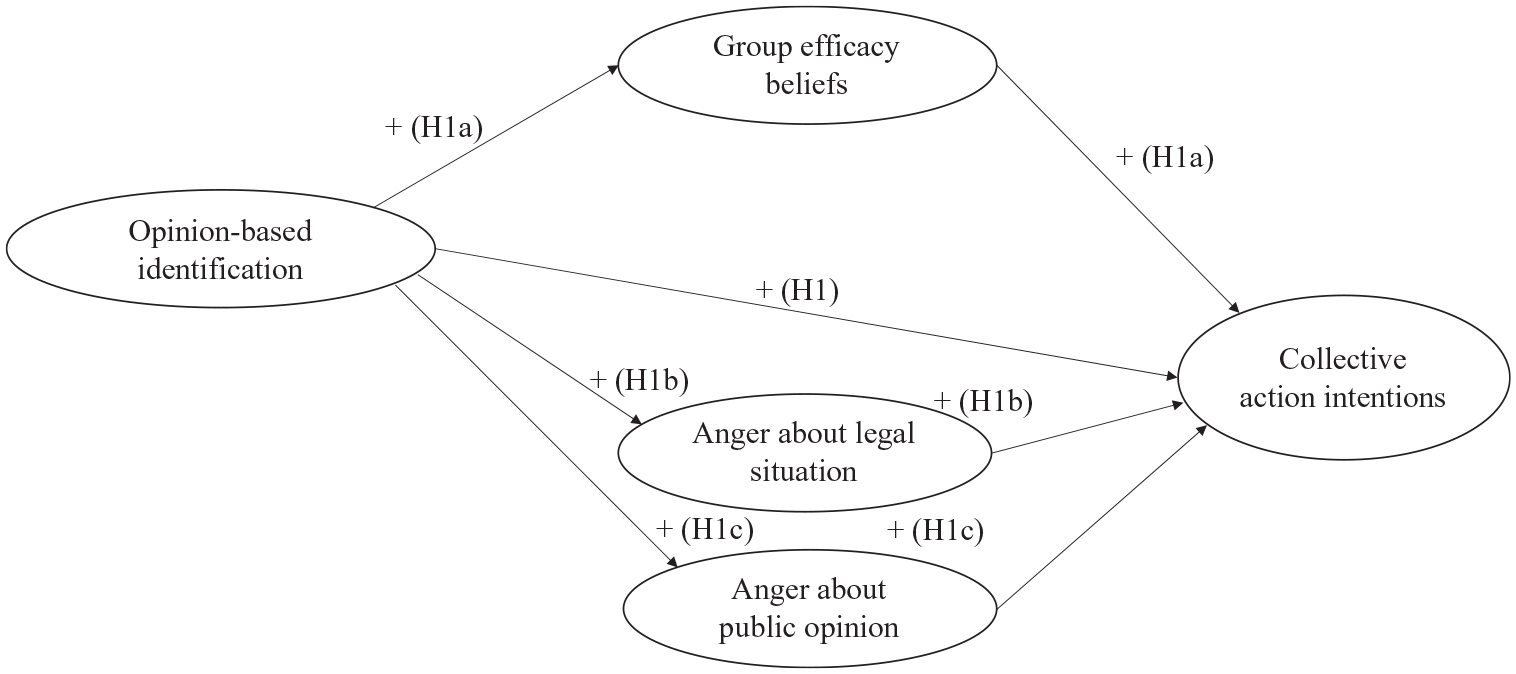
Social identity model of collective action.
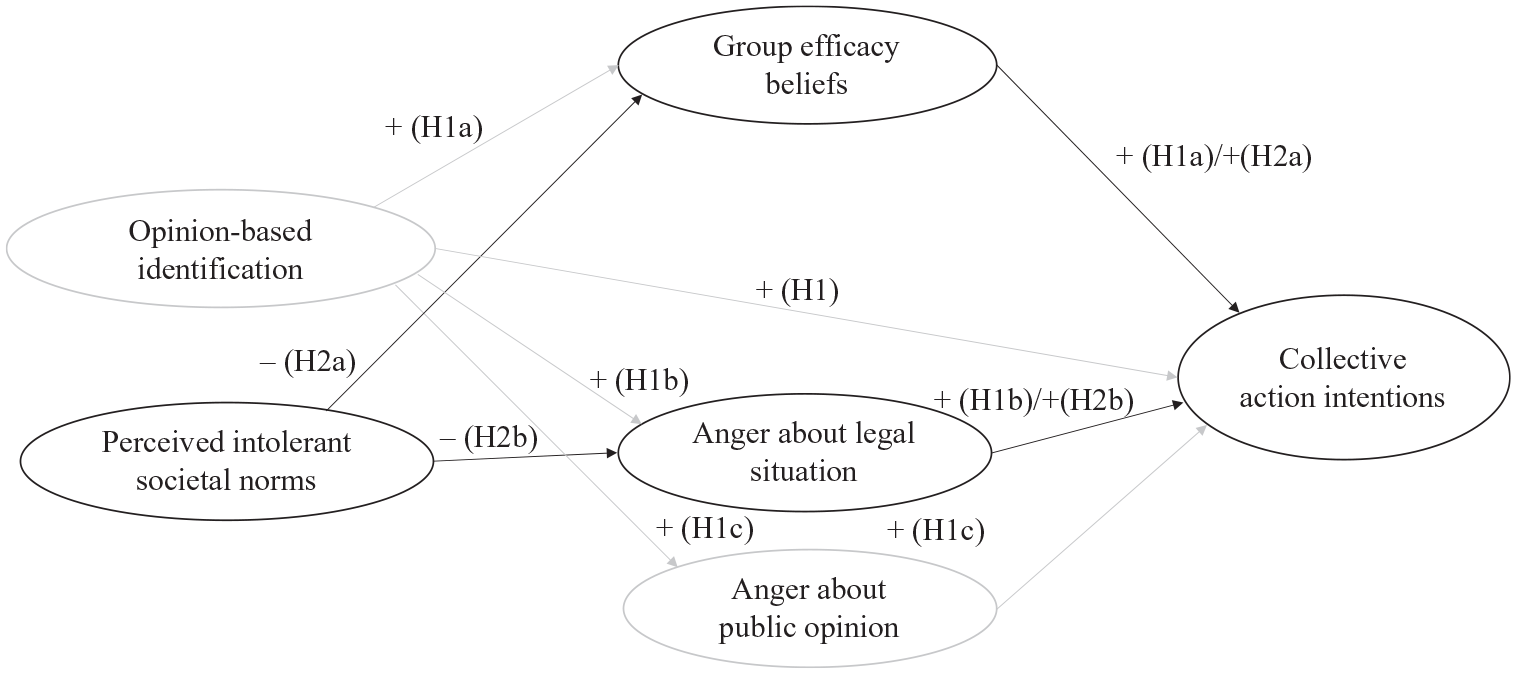
Inhibiting pathways of perceived intolerant societal norms.
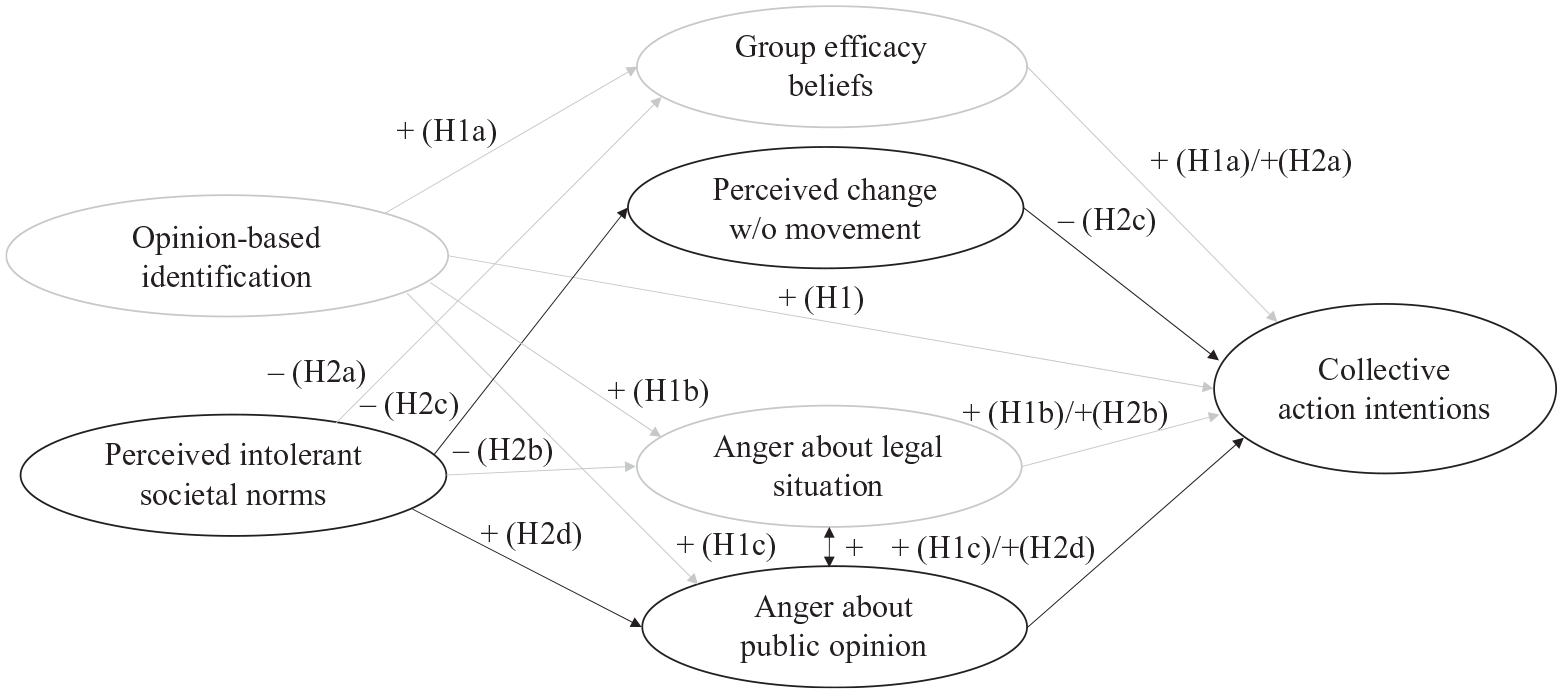
Facilitating pathways of perceived intolerant societal norms.
First, according to SIMCA, when a relevant identity becomes salient, individuals are likely to show increased group efficacy beliefs and heightened anger about group-based disparities, which should increase their support for social change (Iyer & Leach, 2010). We focus on the construct of opinion-based identification to assess participants’ general identification with supporters of sexual minority rights. Rather than limit our view to those who more narrowly identify as activists, this is a broader way to capture political identity (Bliuc et al., 2007; McGarty et al., 2009). We hypothesize that,
Hypothesis 1: Stronger opinion-based identification should be positively related to collective action.
Hypothesis 1a: Stronger opinion-based identification should be positively related to group efficacy beliefs, which in turn should be positively related to collective action.
Because previous research indicated that Swiss people perceive public opinion toward sexual minorities to be intolerant (Eisner et al., 2020), and because Swiss laws are conservative relative to neighboring countries (Mendos et al., 2020), we expect identification to be positively associated with anger about (intolerant) laws and public opinion:
Hypothesis 1b: Stronger opinion-based identification should be positively related to anger about the legal situation, which in turn should be positively related to collective action.
Hypothesis 1c: Opinion-based identification should be positively related to anger about (intolerant) public opinion toward sexual minorities, which in turn should be positively related to collective action.
Second, we test inhibiting and facilitating pathways of perceived intolerant societal norms. 2 On the inhibiting side (see Figure 2), we build on research on social support and emotion appraisal in collective action to hypothesize that,
Hypothesis 2a: Perceived intolerant societal norms should be negatively related to group efficacy beliefs and, therefore, to collective action.
Hypothesis 2b: Perceived intolerant societal norms should be negatively related to anger about the legal situation and, therefore, to collective action.
On the facilitating side (see Figure 3), we build on the relative deprivation literature and the resource mobilization literature to hypothesize that,
Hypothesis 2c: Perceived intolerant societal norms should be positively related to the perceived need for a social movement, which should be positively related to collective action.
Especially in times of social change, public opinion and laws may not match. For instance, if opinions are changing toward more tolerance of a social group, laws are likely to lag behind actual opinions (Eisner et al., 2020). Hence, we do not expect anger about public opinion to operate on the same logic as anger about the legal situation. Rather, we expect perceived intolerant societal norms to facilitate collective action via heightened anger about public opinion.
Hypothesis 2d: Perceived intolerant societal norms should be positively related to anger about public opinion, which should be positively related to collective action.
Finally, although we expect perceived intolerant societal norms to be negatively associated with anger about the legal situation and positively associated with anger about public opinion, we expect both forms of anger to be positively correlated.
The Present Research
This research comprises three studies conducted with sexual minorities who took part in the Swiss LGBTIQ+ Panel. 3 Recent research shows that Swiss residents perceive the societal norm to be relatively intolerant (Eisner et al., 2019, 2020), and sexual minorities in Switzerland still face many institutional inequalities. However, the situation is changing. For instance, in February 2020, 63% of Swiss citizens voted in favor of extending protection against discrimination to sexual minorities. This suggests that Switzerland is in a normative window of change concerning sexual minority rights (i.e., norms are shifting toward greater equality, but the process is not yet completed; Crandall et al., 2013). This makes Switzerland an interesting context for studying how perceptions of intolerant societal norms are associated with sexual minorities’ collective action.
Studies 1 and 2 are preregistered cross-sectional studies conducted in early 2019 and 1 year later, in 2020, when sexual minority issues were much more salient. Specifically, there were several political decisions about sexual minorities, the most important being the public vote banning discrimination based on sexual orientation (see also https://www.admin.ch/gov/en/start/documentation/votes/20200209/divieto-della-discriminazione-basata-sull-orientamento-sessuale.html) (on February 9, 2020). In Studies 1 and 2, we examine how perceived societal norms, opinion-based group identification, group-based anger, group efficacy, and the need for a movement are associated with collective action intentions. Study 3 is a follow-up survey of Study 2 participants who were contacted again 1 month after the vote. The follow-up survey asked about sexual minorities’ actual participation in collective action related to the vote. Study 3 explores how perceived societal norms, opinion-based group identification, group-based anger, group efficacy, and the need for a movement before the vote are associated with both collective action intention and actual collective action related to the vote. Studies 1 and 2 follow a preregistered analysis plan stored along with the questionnaires, data, and codes at the Open Science Framework (OSF; https://osf.io/zye6q/).
Study 1: Collective Action Intentions Among Sexual Minorities in 2019
Participants
We recruited a sample of sexual minorities 4 living in Switzerland using LGBTIQ+ online platforms, social media, social events, and flyers on university campuses from January 11 to February 28, 2019. The questionnaire was available in German, French, Italian, and English. The sample consisted of 1,220 sexual minority group members (859 homosexual, 5 233 bisexual, 15 asexual, and 113 individuals indicating another sexual orientation; 690 women, 503 men, and 27 nonbinary individuals) from the four linguistic regions of Switzerland (716 German-speaking, 421 French-speaking, 71 Italian-speaking, 12 Romansh-speaking). These participants had less than 20% of missing data on the relevant items. Participants’ mean age was 33.47 (SD = 13.24).
Procedure and Measures
Participants were invited to participate in an online survey on perceptions of LGBTIQ+ issues in Switzerland. Participants first completed demographic information. Next, we assessed all measures relevant to the current study.
Collective action intentions
Collective action intentions (α = .83) were measured as general support for social change. Five items adapted from Hässler, Ullrich, et al. (2020) were assessed on a 7-point Likert scale (1 = strongly disagree, 7 = strongly agree). Participants rated the extent to which they intended to engage in the following activities in the future to improve the legal situation of sexual minorities in Switzerland: (a) attend demonstrations, (b) sign a petition, (c) cooperate with heterosexual individuals, (d) support actions to improve the legal situation of sexual minority group members, and (e) talk to sexual minority group members. 6
Opinion-based identification
The two items adapted from Bliuc et al. (2007) assessed opinion-based identification (r = .70) on a 7-point Likert scale (1 = not at all, 7 = totally): (a) “To which extent do you identify with people that support the rights of sexual minorities?” and (b) “I feel strong ties with people that support the rights of sexual minorities.”
Perceived intolerant societal norms
Four items, adapted from the European Social Survey (2006), assessed perceived intolerance of public opinion toward sexual minorities as a group (α = .82) in Switzerland on a 7-point Likert scale (1 = would totally approve, 7 = would totally disapprove). Participants rated their perception of most Swiss people’s opinion toward (a) improving the rights of sexual minorities, (b) same-sex female parenting, (c) same-sex male parenting, and (d) same-sex marriage (e.g., “If a same-sex couple wants to get married, most people in Switzerland would. . .”).
Group efficacy beliefs
The two items used to assess group efficacy beliefs (r = .80) were adapted from van Zomeren et al. (2013) and assessed on a 7-point Likert scale (1 = strongly disagree, 7 = strongly agree): (a) “I believe that through joint actions we will improve the rights of sexual minorities in Switzerland” and (b) “I think that, together, those who support lesbian, gay, and bisexual individuals will be successful in improving the rights of sexual minorities in Switzerland.”
Need for a social movement
We developed two items to assess the perception that greater rights will be gained even without a social movement (r = .82). These measures were adapted from van Zomeren et al.’s (2013) items of group efficacy beliefs (see previous lines) and assessed on a 7-point-Likert scale (1 = strongly disagree, 7 = strongly agree): (a) “The rights of sexual minorities in Switzerland will improve even without a social movement” and (b) “The rights of sexual minorities in Switzerland will get better even without joint actions.” These items were reversed so that higher values indicate a greater need for a social movement.
Anger about the legal situation
Three items were derived from Mackie et al. (2000), assessing anger about the legal situation (α = .81) toward sexual minority group members in Switzerland. Participants rated the extent to which they feel (a) displeased, (b) angry, and (c) furious about the legal situation of sexual minorities in Switzerland (e.g., “It makes me angry that sexual minorities in Switzerland do not have the same rights as heterosexual persons”) on a 7-point Likert scale (1 = not at all, 7 = totally).
Anger about public opinion
The three items assessing anger about public opinion (α = .88) were adapted from Mackie et al. (2000). Participants rated the extent to which they feel (a) displeased, (b) angry, and (c) furious about public opinion toward sexual minorities in Switzerland (e.g., “Public opinion toward sexual minorities in Switzerland makes me angry”) on a 7-point Likert scale (1 = not at all, 7 = totally).
Analytic Procedure
All the analyses presented in what follows were conducted with R software (R Core Team, 2020) and the lavaan package (Rosseel, 2012). Preliminary analyses first examined means, standard deviations, correlations, and construct validity (see Tables S1, S2, and S3). Next, structural equation modeling (SEM) using latent constructs was applied to test the preregistered model 7 (see Figure 3). The fit criterion is based on the following minimal values: a CFI of .95 or above, a RMSEA close to .06, and a SRMR close to .08 (Hu & Bentler, 1999). To handle missing data and account for possible nonnormality, we applied robust maximum likelihood estimator. Finally, we estimated the size of the indirect effects using bias-corrected bootstrapping.
Results
Preliminary analyses
Descriptive statistics (see Table S1) indicate participants’ high intentions to engage in collective action, identification with a social movement, group efficacy beliefs, and anger about the legal situation.
Preregistered analyses
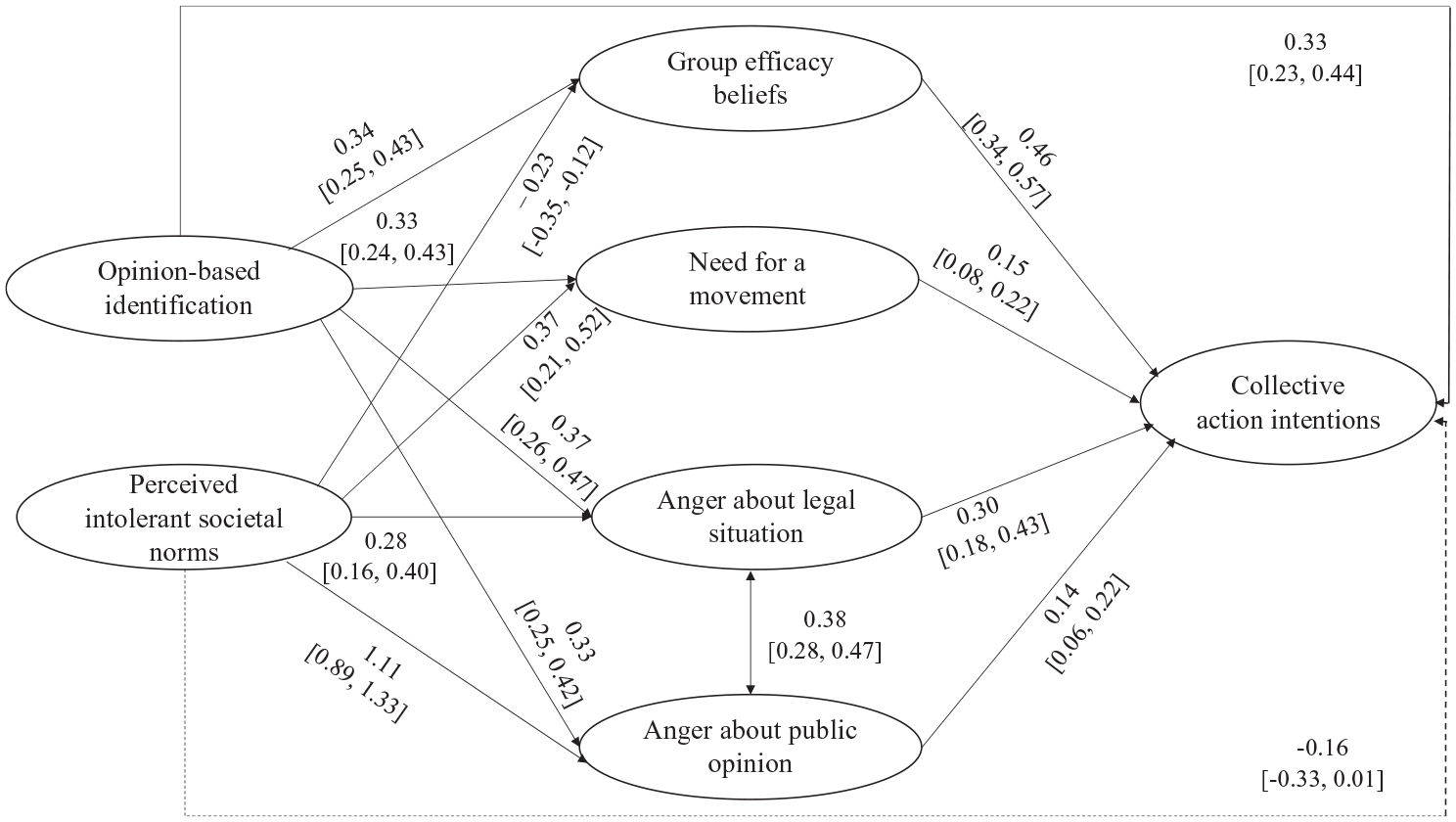
The postulated model fit the data well, χ²(173) = 600.38, CFI = 0.96, RMSEA = .05, SRMR = 0.05, explaining 51.7% of the variance in collective action intentions (see Figure 4). Because standardized data yield inaccurate parameter estimates and standard errors, unstandardized parameters are reported (Cole & Maxwell, 2003). Table 1 summarizes the resulting indirect effects.
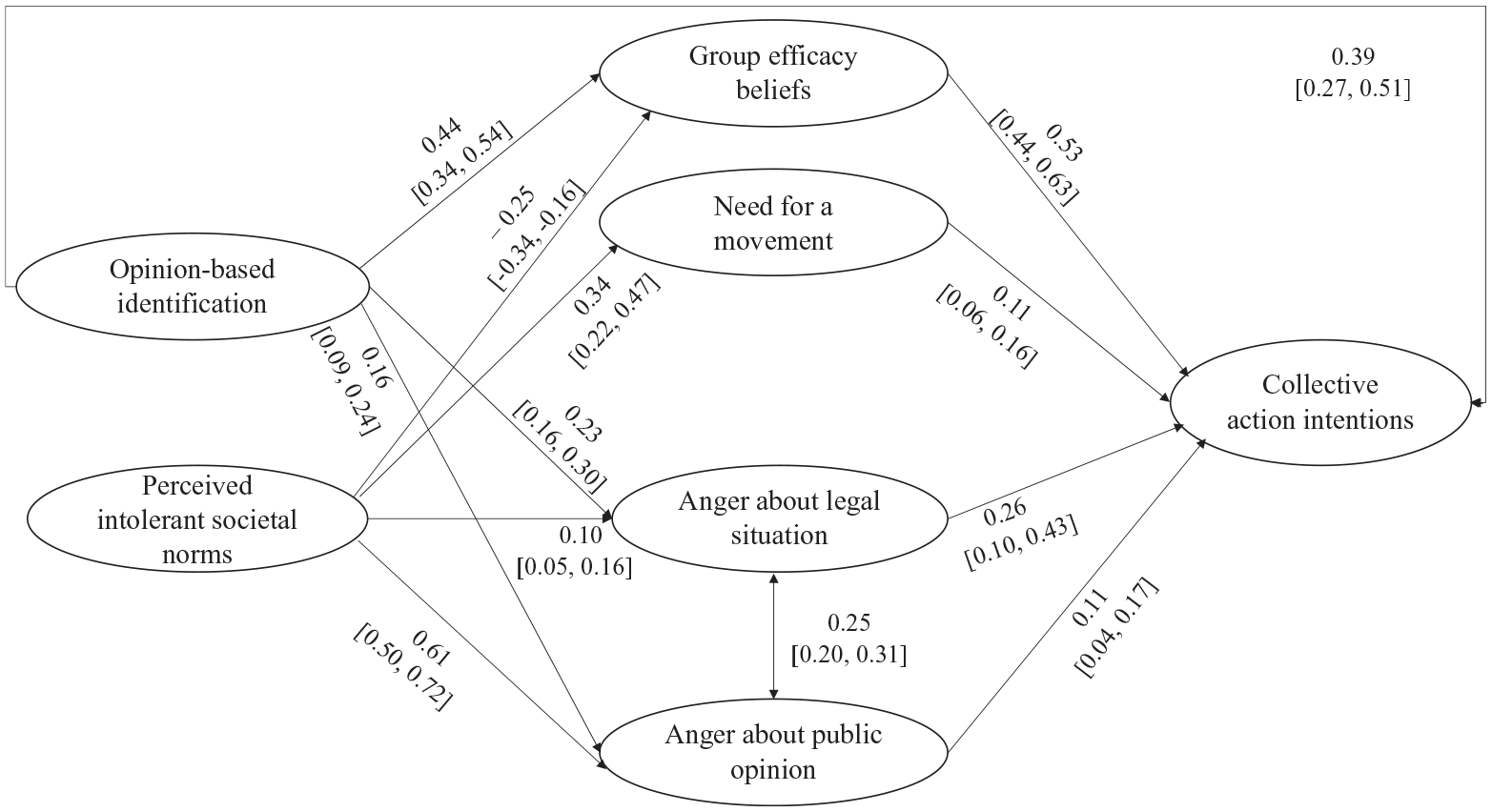
Expanded social identity model of collective action for sexual minority group members: Study 1.
Summary of indirect effects: Study 1.
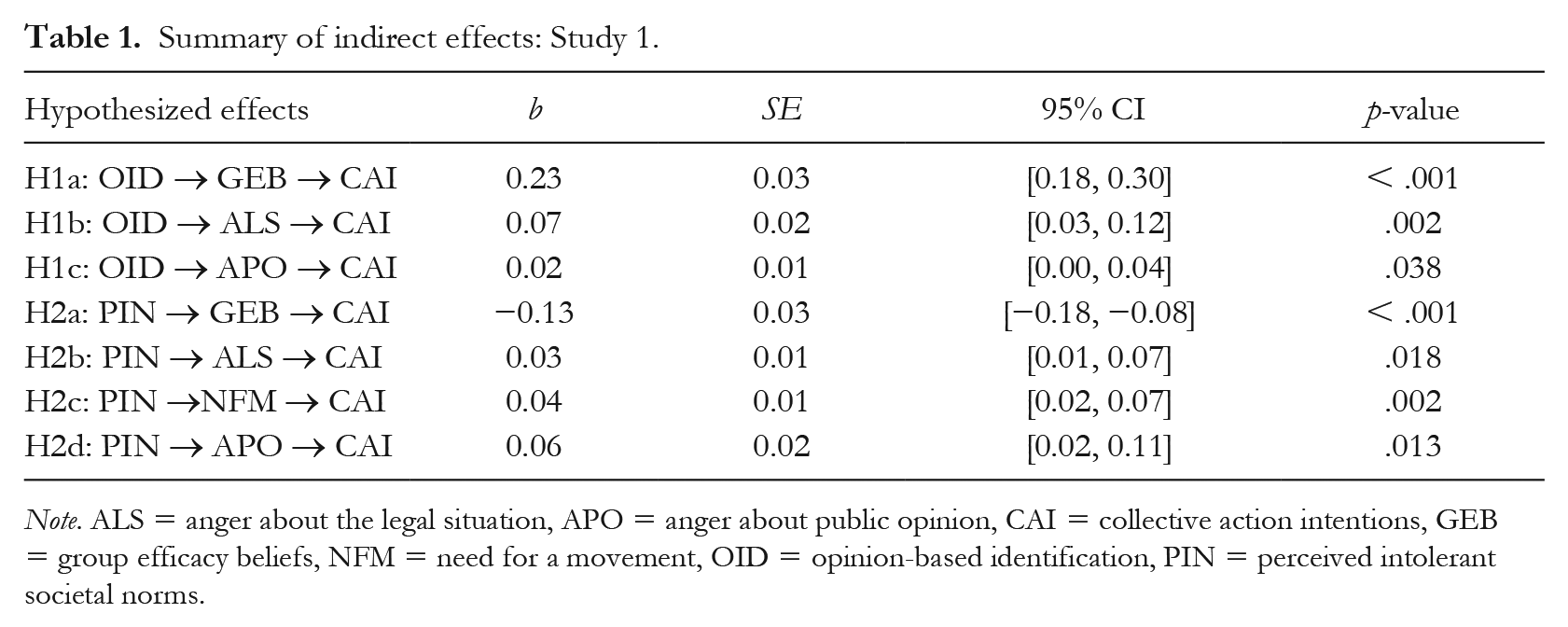
Note. ALS = anger about the legal situation, APO = anger about public opinion, CAI = collective action intentions, GEB = group efficacy beliefs, NFM = need for a movement, OID = opinion-based identification, PIN = perceived intolerant societal norms.
We first tested the hypotheses derived from SIMCA (see Figure 1). In line with Hypothesis 1, opinion-based identification was directly positively related to collective action intentions. Next, we tested the proposed indirect effects of opinion-based identification on collective action intentions. As hypothesized, opinion-based identification was positively related to collective action intentions via group efficacy beliefs (H1a), anger about the legal situation (H1b), and anger about public opinion (H1c). Consistent with SIMCA, opinion-based identification was both directly and indirectly (via group efficacy beliefs, anger about the legal situation, and anger about public opinion) related to collective action intentions.
Next, we estimated the effects of perceived societal norms. We began by looking at inhibiting pathways of perceived intolerant societal norms to collective action intentions. As expected, perceived intolerant societal norms were negatively related to collective action intentions via group efficacy beliefs (H2a). Contrary to our expectation, perceived intolerant societal norms were positively related to collective action intentions via anger about the legal situation (H2b). Hence, we found mixed support for the proposed inhibiting pathways: perceived norms were negatively related to collective action intentions via lowered group efficacy only.
Finally, we estimated the proposed facilitating pathways of perceived intolerant societal norms to collective action intentions. As hypothesized, perceived intolerant societal norms were positively related to collective action intentions via the need for a social movement (H2c). Also, perceived intolerant societal norms were positively related to collective action intentions via anger about public opinion (H2d). In sum, we found support for the proposed facilitating pathways of perceived intolerant societal norms to collective action intentions.
Discussion
Overall, our findings were aligned with the predictions of SIMCA, supporting Hypotheses 1a–1c. Findings also indicated that perceived intolerant societal norms might have opposing indirect effects on collective action intentions. On the one hand, perceived intolerant societal norms were associated with inhibited collective action intentions via lower group efficacy beliefs (supporting H2a). On the other hand, perceived intolerant societal norms were associated with facilitated collective action intentions via a greater need for a social movement (H2c), greater anger about public opinion (H2d), and greater anger about the legal situation.
Contrary to Hypothesis 2b, perceived intolerant societal norms were positively related to collective action intentions via greater anger about the legal situation, suggesting that they are associated with the facilitation of collective action rather than the inhibition of collective action we expected. This suggests that individuals who perceive greater tolerance in public opinion may be less aware of existing legal inequalities (which tend to lag behind/be more conservative; Eisner et al., 2019, 2020) and therefore be less angry about them, consequently reducing their intentions to engage in collective action (for discussion on the “irony of harmony effect,” see Hässler, Ullrich, et al., 2020; Saguy et al., 2009). To further examine the robustness of this unexpected facilitating pathway, we conducted Study 2 approximately 1 year after Study 1. Although both studies were conducted in Switzerland, the political context varies, as Study 2 data were collected amid a public vote on extending the antidiscrimination law to include sexual orientation. This allowed us to test whether our model replicates in a moment of heightened salience of LGBTIQ+ rights.
Study 2: Collective Action Intentions Among Sexual Minorities in 2020
Participants
We recruited a sample of 1,283 sexual minority group members 8 living in Switzerland, using the same strategy as in Study 1. These participants had less than 20% of missing data on the relevant items. Because we wanted to replicate the model with an independent sample, we excluded the 379 sexual minority participants who also participated in the previous wave. Notably, the inclusion or exclusion of these participants did not affect the main conclusions (see supplemental material).
The final sample consisted of 904 sexual minority group members (585 homosexual, 187 bisexual, 81 pansexual, 19 asexual, and 32 individuals indicating another sexual orientation; 493 women, 395 men, and 16 nonbinary individuals) from the four linguistic regions of Switzerland (608 German-speaking, 240 French-speaking, 16 Italian-speaking, 12 Romansh-speaking, 28 from a bilingual region). Participants’ mean age was 31.85 (SD = 12.23).
Procedure and Measures
Between December 15, 2019 and July 15, 2020, participants were invited to complete an online survey on perceptions of LGBTIQ+ issues in Switzerland. Participants first completed demographic information. Next, we assessed all measures relevant to the current study.
We used the same items as in Study 1 to assess collective action intentions (α = .80), opinion-based identification (r = .79), perceived intolerant societal norms (α = .80), group efficacy beliefs (r = .69), and need for a social movement (r = .81). Further, anger about the legal situation (r = .70) and anger about public opinion (r = .81) were assessed using two of the three items measured in Study 1 (i.e., the extent to which participants feel [a] angry and [b] furious about the legal situation/public opinion toward sexual minorities in Switzerland).
Analytic Procedure
We used the same analytical procedure as reported in Study 1. Consistent with Study 1, descriptive statistics (see Table S3) indicate that the means were high. The positive correlation between opinion-based identification and the need for a movement in Study 1 (see Table S1) suggested that opinion-based identification predicts increased need for a social movement. We therefore made a decision to deviate from the preregistered model by examining the indirect effect of opinion-based identification on collective action intentions via the need for a movement. To run a full model, we further examined the direct path from perceived intolerant norms to collective action intentions. Adding these two effects did not affect the overall results (see supplemental material). 9
Results
The model fit the data well, χ²(134) = 355.30, CFI = 0.97, RMSEA = .05, SRMR = 0.04, explaining 59.1% of the variance in collective action intentions (see Figure 5). Table 2 summarizes the hypothesized indirect effects.
Expanded social identity model of collective action for sexual minority group members.
Summary of indirect effects: Study 2.
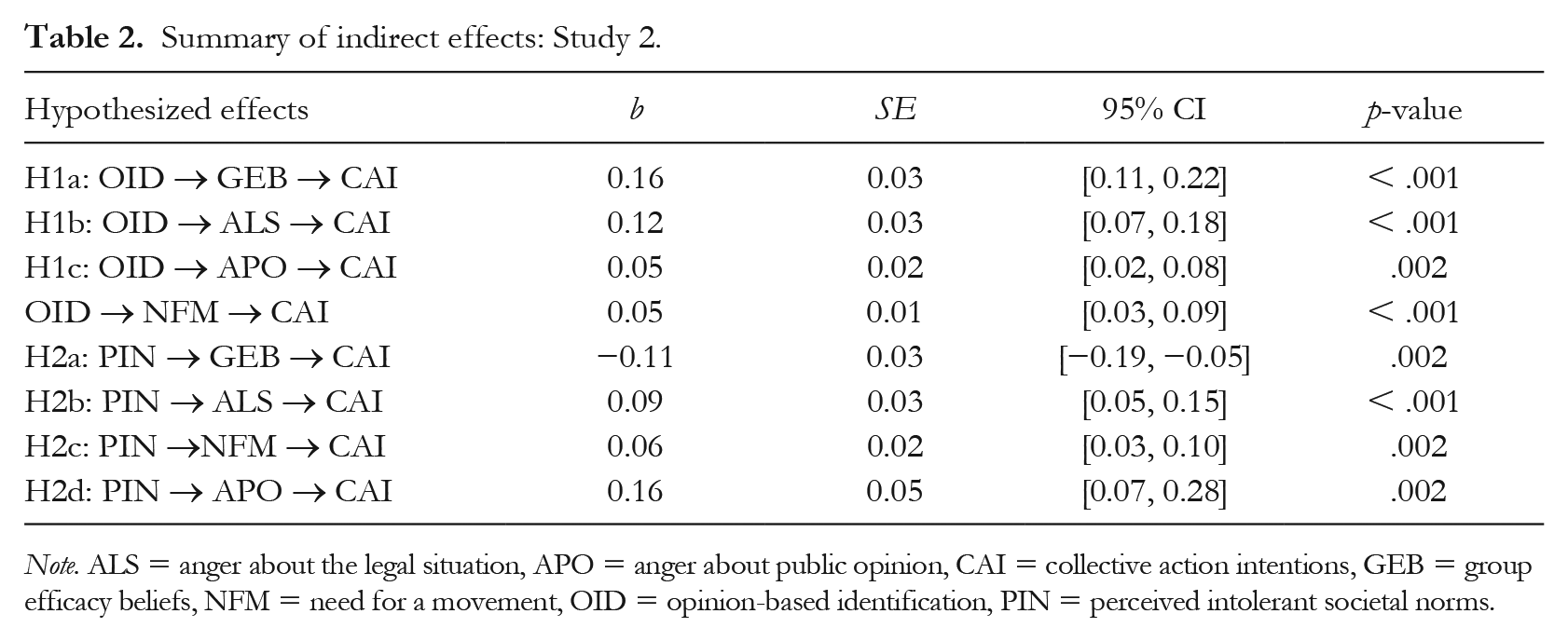
Note. ALS = anger about the legal situation, APO = anger about public opinion, CAI = collective action intentions, GEB = group efficacy beliefs, NFM = need for a movement, OID = opinion-based identification, PIN = perceived intolerant societal norms.
In line with the hypotheses of SIMCA and the results of Study 1, opinion-based identification was positively related to collective action intentions (H1). This effect was also partially mediated by a positive relationship with group efficacy beliefs (H1a), anger about the legal situation (H1b), and anger about public opinion (H1c). Also, we tested a new (not preregistered) path: opinion-based identification was positively related to collective action intentions via belief in the need for a movement.
Next, we examined the relationship between social norms and collective action intentions. Consistent with Study 1, perceived intolerant societal norms were negatively related to collective action intentions via group efficacy beliefs (Hypothesis 2a). In line with the findings of Study 1, perceived intolerant societal norms were positively related to collective action intentions via anger about the legal situation (H2b). As in Study 1 and contrary to our predictions, perceived intolerant societal norms were related to greater anger about the legal situation, which was related to higher collective action intentions, indicating a facilitating indirect pathway. We further found support for the proposed facilitating pathways. Consistent with the hypotheses and Study 1, perceived intolerant societal norms were positively related to collective action intentions via the need for a movement (H2c) and anger about public opinion (H2d).
Discussion
Overall, the findings of Study 2 replicated those of Study 1 using an independent sample in a more contentious political context. Results indicated support for SIMCA (Hypothesis 1) and the expected dual relationship between perceived intolerant norms and collective action intentions; that is, both inhibiting (H2a) and facilitating (H2c and H2d) collective action intentions. As in Study 1, H2b was not supported; instead, we found that perceived intolerant societal norms were positively related to collective action intentions via anger about the legal situation. Analyses of additional paths—particularly between opinion-based identification and the need for a movement—suggest that it may be best to consider the full model (see Figure 5) rather than the preregistered one (see Figure 3). Results indicated that sexual minority group members who identify more with people who support sexual minorities are also more likely to think that a social movement is needed to achieve social change. This resonates with literature showing that politicized identities foster responsibility for more organized forms of social action (McGarty et al., 2009).
Study 3: Actual Collective Action Among Sexual Minorities
Studies 1 and 2 were both cross-sectional and assessed collective action intentions. The goal of Study 3 was to test our predictions with a delayed outcome measure. This allows us to examine whether the model replicates when both action intentions and self-reported engagement in collective action are assessed. Moreover, it tests whether collective action intentions are associated with action engagement at a later time point. This reflects the theoretical expectation that action mobilization is a psychological process in which action intentions are necessary for ultimately predicting collective action engagement (Klandermans & Oegema, 1987). We collected data for Study 3 before and after a public vote on extending the antidiscrimination law to sexual minorities. We extended our preregistered model (see Figure 3) by adding self-reported collective action. Thus, we assessed whether opinion-based identification and perceived societal norms are directly and indirectly associated with collective action via our mediators (i.e., efficacy beliefs, need for a movement, anger about public opinion and the legal situation) and/or collective action intentions.
Participants
One month after a public referendum on integrating sexual orientation in the antidiscrimination law (February 9, 2020), we recontacted Study 2 participants who indicated that they were willing to complete further surveys. Study 2 data were gathered before the referendum (December 15, 2019 and February 8, 2020). The follow-up data for Study 3 were gathered between March 9 and April 9, 2020.
A total of 408 sexual minority group members participated in the study and had less than 20% missing data on the relevant items from Study 2 and the follow-up survey. These participants (289 homosexual, 72 bisexual, 29 pansexual, three asexual, and 15 individuals indicating another sexual orientation; 219 women, 183 men, and six nonbinary individuals) came from the four linguistic regions of Switzerland (245 German-speaking, 141 French-speaking, seven Italian-speaking, six Romansh-speaking, nine from a bilingual region). Participants’ mean age was 35.34 (SD = 14.05).
Procedure and Measures
We relied on participants’ data from Study 2 (before the public referendum) to assess opinion-based identification (r = .71), perceived intolerant societal norms (α = .79), group efficacy beliefs (r = .68), need for a social movement (r = .77), anger about the legal situation (r = .68), anger about public opinion (r = .82), and collective action intentions (α = .80).
In the follow-up study after the referendum, we assessed self-reported actual collective action. Nine items were assessed on a dichotomous scale (0 = no, 1 = yes). Participants indicated whether they participated in the following activities to motivate people to vote in favor of extending the antidiscrimination law by sexual orientation: (a) having a visible rainbow flag, (b) distributing flyers about the vote, (c) being in a stand at a public space, (d) sending postcards to motivate people to vote, (e) posting on social media to motivate people to vote, (f) putting up posters about the vote in public spaces, (g) talking to LGBTIQ+ individuals to motivate them to vote, (h) talking to heterosexual individuals to motivate them to vote, and (i) donating money for the campaign. Answers to these items were averaged and then rescaled to range from 1 (no collective action) to 7 (participated in all forms of collective action; M = 3.08, SD = 1.21).
Analytic Procedure
We extended Study 2 by adding self-reported collective action to the model. Specifically, we modeled the SIMCA motivators of collective action intentions at Time 1 and self-reported collective action engagement at Time 2. The results of this exploratory model are reported in what follows (see supplemental material for the model without collective action intentions). Descriptive statistics can be found in Table S9.
Results
The model fit the data well, χ²(146) = 270.30, CFI = 0.96, RMSEA = .05, SRMR = 0.04, explaining 35.0% of collective action intentions and 26.8% of self-reported collective action (see Figure 6). Table 3 summarizes the hypothesized indirect effects.
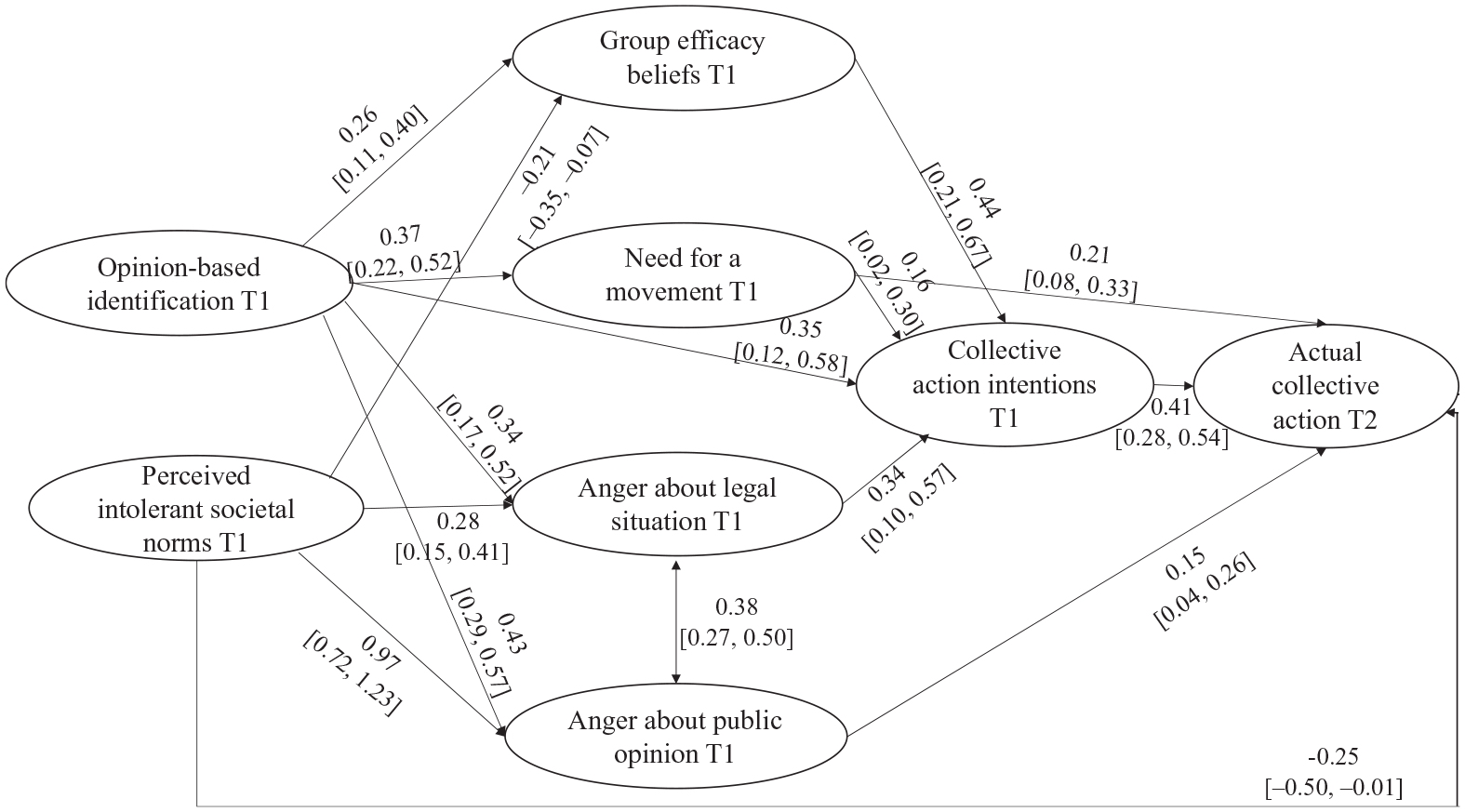
Expanded social identity model of collective action: Sequential mediation model for sexual minority group members.
Summary of indirect effects: Study 3.
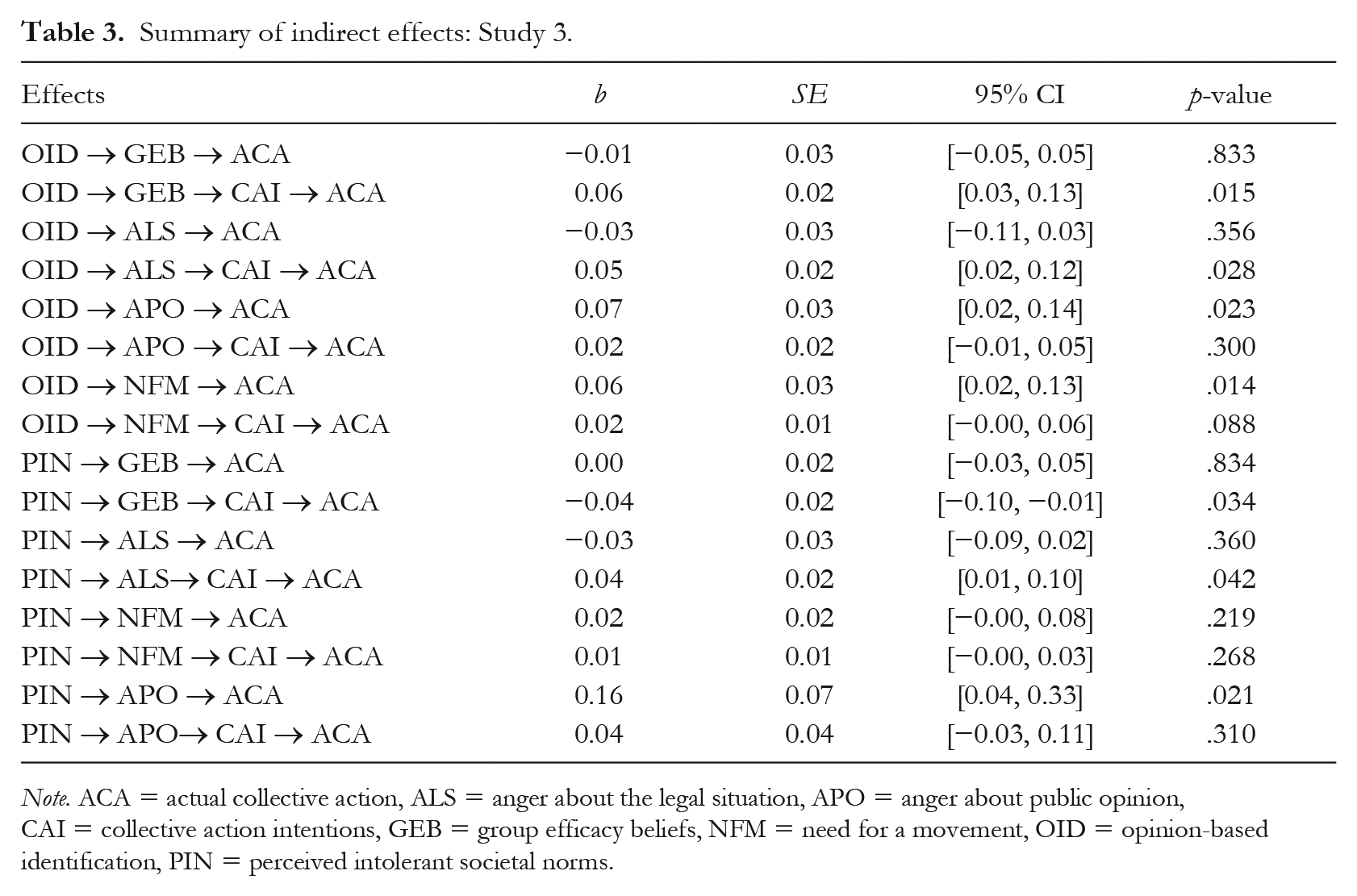
Note. ACA = actual collective action, ALS = anger about the legal situation, APO = anger about public opinion, CAI = collective action intentions, GEB = group efficacy beliefs, NFM = need for a movement, OID = opinion-based identification, PIN = perceived intolerant societal norms.
First, we examined the association between opinion-based identification and actual collective action. We found evidence for a positive indirect sequential pathway: sexual minority group members high on opinion-based group identification were more likely to be angry about the legal situation (H1c) and believe that the group would be effective in achieving the desired change (H1a), which was associated with heightened collective action intentions and ultimately their actual collective action. Further, contrary to our cross-sectional studies, we did not find a significant direct relationship between opinion-based identification and actual collective action (T2). We found, however, some evidence for an indirect relationship between opinion-based identification and actual collective action (T2), as can be seen in Table 3. Opinion-based identification was positively related to actual collective action (T2) via anger about public opinion and the need for a movement.
Next, we examined the association between perceived intolerant societal norms and actual collective action. First, we found evidence for a negative indirect sequential pathway of perceived intolerant societal norms to actual collective action (T2): perceived intolerant societal norms were associated with lower group efficacy beliefs, which were associated with lower collective action intentions (H2a) and ultimately lower actual collective action. We further found evidence for a positive indirect sequential pathway of perceived intolerant societal norms to actual collective action (T2): perceived intolerant societal norms were associated with greater anger about the legal situation, which was associated with higher collective action intentions (H2b) and ultimately higher actual collective action. We also found a direct negative relationship between perceived intolerant societal norms and actual collective action (T2). Finally, perceived intolerant societal norms also had a positive indirect relationship with actual collective action (T2) via increased anger about public opinion.
Discussion
These data show that our model also predicted self-reported collective action engagement, not just intentions, and supported the dual role of societal norms. Perceived intolerant societal norms had a direct inhibiting relationship with actual collective action, as well as an indirect sequential inhibiting relationship (via reduced group efficacy beliefs and reduced collective action intentions). Simultaneously, perceived intolerant societal norms had both a facilitating indirect relationship (via increased anger about public opinion) and a facilitating sequential indirect relationship (via increased anger about the legal situation and collective action intentions) with actual collective action.
With respect to opinion-based identification, there was some support for positive (sequential) mediation. Opinion-based identification was associated with the facilitation of collective action indirectly, via both mediation and sequential pathways. First, in terms of mediation pathways, opinion-based identification was indirectly and positively related to actual collective action via increased anger about public opinion and increased need for a movement. Second, in terms of sequential pathways, opinion-based identification was associated with actual collective action via increased anger about the legal situation, group efficacy beliefs, and collective action intentions. Overall, these findings suggest that group perceptions (e.g., perceived norms, public opinion) are important to consider when the outcome of collective action is determined by majority opinion (e.g., public vote).
General Discussion
By extending SIMCA (van Zomeren et al., 2008), we sought to identify how perceptions of intolerant societal norms are related to sexual minorities’ collective action intentions and self-reported collective action engagement. Guided by previous work on social norms, we hypothesized and found that perceptions of intolerant societal norms have two opposing relationships with collective action intentions (Studies 1 and 2). Perceived intolerant norms suggested a pattern of inhibiting collective action intentions, being associated with lower collective action intentions via lower perceptions of group efficacy. Simultaneously, however, perceived intolerant norms suggested a pattern of facilitation of collective action, being associated with higher collective action intentions via greater anger about the legal situation, greater anger about public opinion, and greater perceived need for a movement. Furthermore, results suggest both a direct and an indirect (via decreased group efficacy beliefs) inhibiting association of perceived intolerant societal norms with actual collective action, but simultaneously a facilitating indirect association via anger about public opinion and anger about the legal situation (Study 3).
In line with expectations based on SIMCA, Studies 1 and 2 revealed a positive association between opinion-based identification and collective action intentions among sexual minorities via group-based anger and group efficacy. Moreover, in Study 3, opinion-based identification was indirectly associated with actual collective action via anger about public opinion. Furthermore, opinion-based identification was positively related to group efficacy beliefs and anger about the legal situation, which were related to higher intentions to engage in collective action and, through this, actual collective action.
Theoretical Implications of the Normative Approach
This research plays a valuable role in bringing together the literature on collective action and (perceived) social norms (McDonald & Crandall, 2015; Tankard & Paluck, 2016). Social norms researchers emphasize three actors of social change: individuals, groups, and institutions. While much research on collective action focuses on individuals and groups, the dynamic interplay between individual characteristics, group characteristics, and social context is not well explored (Hässler, Uluğ, et al., 2020). A normative approach brings these into greater focus and is beneficial in at least three important ways.
First, our findings indicate that perceived intolerant societal norms can play a dual role, both inhibiting and facilitating collective action intentions and engagement. This dual role sets societal norms apart from the related construct of perceived discrimination, which has been argued to facilitate (but not inhibit) collective action (Stronge et al., 2016). On the inhibiting side, when a group is seeking equality, perceived intolerant societal norms are associated with lower group efficacy and, therefore, lower action intention. Thus, perceived intolerant societal norms are directly and negatively associated with collective action (intentions). This inhibiting side suggests that intolerant societal norms may function similarly to low external political efficacy (Finkel, 1985)—that is, if individuals expect their environments to be unresponsive to collective action, they will have a harder time achieving their goals and therefore be less motivated to engage in collective action. On the facilitation side, however, perceived intolerant societal norms seem to highlight an existing injustice that could theoretically fuel an individual’s anger about public opinion and the legal situation. More generally, the dual pathways of perceived societal norms indicate the value of including norms in SIMCA. Perceiving poor social conditions (i.e., intolerant societal norms) may both stimulate the need for collective action as well as suppress the hope that change can be achieved. As such, these norm perceptions might help explain why collective action engagement can be low even when accompanied with favorable psychological conditions like high politicized identification. Future research is needed to further develop an understanding of the conditions under which the balance might tilt toward a facilitating or inhibiting effect of perceived intolerant societal norms on collective action.
Second, the normative approach highlights the added value of considering different targets of anger as predictors of collective action. Drawing on the social norms literature (e.g., Tankard & Paluck, 2016), we identified two distinct forms of anger: anger about the legal situation and anger about public opinion. Contrary to our initial expectations, the results of all three studies indicated that perceptions of intolerant societal norms were associated with both greater anger toward the legal situation and toward public opinion. Additional analyses indicated that anger about the legal situation and anger about public opinion are related but distinct constructs (see supplemental material). Indeed, there are times in which anger at laws and at public opinion may diverge, such as when public opinions are increasingly tolerant, but laws are still restrictive. Both theoretically and methodologically, it seems valuable to include both forms of anger.
Finally, the normative approach highlights the importance of considering beliefs about group efficacy and the need for a social movement. People who perceive the societal climate shifting toward greater tolerance of sexual minorities might be tempted to wait for change to come “naturally” because political engagement requires time and energy, just as perceptions of intolerance might lead people to feel that the desired change requires a social movement and their engagement in it. Results from the two cross-sectional studies (Studies 1 and 2) indicated that people were more likely to engage in collective action when they felt that a movement was required. The finding that perceived tolerance might undermine collective action by decreasing the perceived need for a movement parallels what has been found in studies on hope (e.g., Hasan-Aslih et al., 2019; Hornsey & Fielding, 2016). These studies suggest that hope can have a dual impact on collective action tendencies, motivating people to engage but also increasing social loafing. Tensions like these are important for advancing theories and research on collective action. Finally, results from Study 3 indicated that the need for a movement also has the potential to predict actual collective action. Importantly, when both collective action intentions and actual actions were integrated into the model, the need for a movement was associated with both outcomes. Future research should continue to investigate the impact of beliefs about the need for a movement on intended and actual actions.
Practical Implications
Our findings expand the understanding of the circumstances under which norm perceptions could facilitate and inhibit collective action to achieve greater social justice. The perceived disapproval toward sexual minorities in Switzerland (Eisner et al., 2020) might be an important motivator of sexual minorities’ support for social change. However, our findings suggest that this is not always the case, as inhibiting and facilitating pathways could cancel each other out. In order to avoid activating the inhibition pathway, leaders of social movements and other advocates may find it helpful, for example, to raise awareness of and anger about group disparities and emphasize the need to collectively demand equal rights (see Hässler et al., 2021, for the role of empowerment). They might simultaneously address perceptions (and potential misperceptions) of societal intolerance to increase sexual minority group members’ feelings of inclusion and well-being (e.g., Badgett, 2011). In this sense, targeted messages such as “People are becoming more tolerant, but you still need to fight for equal rights!” might be highly effective in motivating people to engage in support for social change.
Limitations and Future Directions
Several limitations are important to acknowledge. First, although we extend previous research on collective action by assessing perceived societal norms and both collective action intentions and actual collective action, the present manuscript focused on a specific context (i.e., Switzerland) and a particular minority group (i.e., sexual minority group members; see supplemental material for results among gender minority group members). Future research should investigate the association between perceived intolerant norms and collective action across a wider range of social issues (e.g., race/ethnicity, gender [identity], climate change) and social groups (e.g., disadvantaged, advantaged, third-party groups), which vary in levels of perceived (in)tolerance. The strength and direction of perceived societal norms will differ across contexts and issues (Crandall et al., 2018).
Second, we aimed to investigate the association between perceived intolerant societal norms and collective action. We took perceived social norms as our analytic starting point. Research that investigates differences in collective action across (national, political, or social) contexts is likely to benefit from conceptualizing social norms as an exogenous contextual variable that moderates relationships between key variables and collective action (similar to research assessing the effect of laws on collective action; Earle et al., 2020; Górska et al., 2017). In this case, we believe that measures of actual social norms—instead of perceived social norms—might more accurately reflect the contextual nature of norms.
Third, we cannot draw causal inferences. Theoretical assumptions suggest that opinion-based identification and perceived societal norms should affect collective action (and the proposed model fit the data well), but collective action might also affect individuals’ identification with a movement and their perceptions of societal norms (i.e., bidirectional paths). Additionally, group-based anger and group efficacy beliefs might also predict identification with a social movement (for the encapsulated model of collective action, see Thomas et al., 2012). Literature has pointed to how mediation analyses with cross-sectional data can generate biased estimates (see Fiedler et al., 2011; Maxwell et al., 2011). Future studies should use experimental designs, or longitudinal designs with at least three time points, to investigate potential confounding causal paths.
Finally, researchers might also gain insights from more recent versions of the SIMCA—particularly including moral beliefs (van Zomeren et al., 2012, 2018)—as this extension might be particularly relevant to the study of allies’ collective action.
Conclusion
This research has emphasized the importance of adding perceived societal norms into social psychological research. It has indicated that perceived intolerant societal norms are indirectly and directly associated with support for social change among sexual minority group members. Collective action researchers will benefit from endorsing a normative approach, whether in understanding changes in laws or policies at the societal level, or why people may be ambivalent about engaging in collective action. This dynamism also implies that it is critical for interventions aimed at promoting social change to prevent possible inhibiting effects. If the goal is to promote greater equality, interventions must not only focus on making people aware of a shift in societal norms toward more tolerance, but also point to the need to act for social change.
Supplemental Material
sj-pdf-1-gpi-10.1177_13684302211024335 – Supplemental material for Perceptions of intolerant norms both facilitate and inhibit collective action among sexual minorities
Supplemental material, sj-pdf-1-gpi-10.1177_13684302211024335 for Perceptions of intolerant norms both facilitate and inhibit collective action among sexual minorities by Léïla Eisner, Richard Settersten, Felicity Turner-Zwinkels and Tabea Hässler in Group Processes & Intergroup Relations
Footnotes
Acknowledgements
We thank Matteo Antonini, Olenka Dworakowski, and Lynn Heydasch for their help with the translation of the questionnaires. We also thank Kristina Olson and Johannes Ullrich for their insightful comments. Finally, we thank all LGBTIQ+ organizations and LGBTIQ+ magazines for distributing our survey.
Author contribution
Primary idea: L. Eisner. Draft of preregistration: L. Eisner and T. Hässler supported by R. Settersten. Revision of the preregistration plan: F. Turner-Zwinkels. Data collection: L. Eisner and T. Hässler. Data preparation: L. Eisner and T. Hässler. Data analysis: L. Eisner. Paper draft: L. Eisner. Revision of the paper: T. Hässler, F. Turner-Zwinkels, and R. Settersten.
Funding
The author(s) disclosed receipt of the following financial support for the research, authorship, and/or publication of this article: This project received direct financial support through the Swiss National Science Foundation awarded to Léïla Eisner (P2LAP1_194987) and Tabea Hässler (P1ZHP1_184553).

Supplemental material
Supplemental material for this article is available online.
Notes
References
Supplementary Material
Please find the following supplemental material available below.
For Open Access articles published under a Creative Commons License, all supplemental material carries the same license as the article it is associated with.
For non-Open Access articles published, all supplemental material carries a non-exclusive license, and permission requests for re-use of supplemental material or any part of supplemental material shall be sent directly to the copyright owner as specified in the copyright notice associated with the article.
