




Abstract
Purpose:
This study examined request production by heritage language (HL) speakers of Russian dominant in different societal languages (SLs), such as SL-Hebrew and SL-German. By comparing request strategies in Russian, Hebrew, and German, the study investigated the effect of cross-linguistic influence (CLI) from the SL on the HL, as well as the effect of diminished HL input.
Methodology:
Request production in both formal and informal contexts was compared among three groups of Russian speakers: monolingual L1-Russian speakers (n = 26), HL-Russian speakers dominant in SL-Hebrew (n = 26), and HL-Russian speakers dominant in SL-German (n = 26) via an elicitation task.
Data and analysis:
Analysis involved comparing request production across groups using statistical methods to identify differences and similarities in strategies related to (a) address forms; (b) morphosyntactic realization, including clause type (declarative, interrogative, and imperative), the presence of the Russian negation particle “ne,” and the subjunctive particle “by”; and (c) lexical strategies.
Findings:
The study identified differences between HL-speakers and monolingual controls, as well as variations between the two bilingual groups. Divergence in HL-speakers was attributed to CLI and reduced input.
Originality:
Unlike previous studies that compare two L1s, this study focused on HLs, suggesting a new area of research due to their indeterminate status as neither L1 nor L2. The study provides additional evidence on how cross-linguistic factors impact pragmatic development in HL-speakers, contributing to understanding bilingual communication and language acquisition processes.
Significance:
To the best of our knowledge, this is the first study to date that compared requests in HL-speakers of typologically different SLs.
Keywords
Introduction
The current study investigated the production of the speech act of requests by heritage language (HL) speakers of Russian. The term HL refers to a language spoken by bilingual speakers at home, which is not the dominant societal language (SL) of the community in which HL-speakers live (Benmamoun et al., 2013; Fishman, 2001, 2006; Montrul, 2016; Polinsky, 2018; Polinsky & Scontras, 2020). Across different language domains, HL-speakers are reported to show divergence from baseline speakers, that is, speakers using this language in the country of origin and/or bilingual speakers who are dominant in this language (Aalberse & Muysken, 2013; Montrul, 2016; Polinsky, 2018). Several potential mechanisms have been proposed to account for the divergence observed in the pragmatic performance of HL-speakers: limited knowledge of formal registers due to diminished HL input (I. Dubinina, 2021; Warditz, 2012, 2023a; Blacher & Brehmer, 2024; Wiese et al., 2022; Ždanova, 2008) and cross-linguistic influence (CLI) from the dominant SL (Authors, 2023; Bar On & Meir, 2022; I. Y. Dubinina, 2012; I. Dubinina & Malamud, 2017; Gordon & Meir, 2024; Keevallik, 2016; Koike & Palmiere, 2011; Marti, 2006; Pinto, 2005; Pinto & Raschio, 2007, 2008; Warditz, 2023b). However, teasing apart these two mechanisms is not trivial.
The available research on pragmatic abilities of bilingual speakers reveals that they often exhibit general awareness of sociopragmatic norms in their HL (Authors, 2023; Wolski-Moskoff, 2018). However, their limited linguistic repertoire can hinder their ability to consistently produce pragmatically felicitous speech acts in their weaker language (see previous studies on L2 pragmatics, e.g., Bardovi-Harlig, 2001; Marti, 2006; Owen, 2001; Shafran & Stavans, 2023; Walters, 1979; Xiao-Desai & Wong, 2017). This suggests that bilingual speakers often show sensitivity to sociopragmatic nuances but may struggle with appropriate language use in different contexts.
Studies on intercultural communication stricto sensu are built on the comparison of two L1s, while HLs, addressed in the current study, offer a new research field due to their indeterminant status (neither L1 nor L2; Benmamoun et al., 2013). Exploring this field can deepen our understanding of bilingual communication and enrich our knowledge of language acquisition in multilingual settings.
The current study investigated request formation in two groups of HL-speakers of Russian who acquired their HL-Russian in contact with two typologically different SLs: SL-Hebrew and SL-German. These two groups were also compared to a group of monolingual Russian speakers, who served as a baseline. To the best of our knowledge, this is the first study to compare requests in HL-speakers of typologically different SLs. The rationale for the study was that a prototypical request is different in the three languages (Russian, Hebrew, and German); therefore, divergence between the two groups could indicate the effect of the CLI on the emergence of new conventions in request formation, while similarities could point to the role of diminished input in HL acquisition of pragmatic norms.
Cross-linguistic aspects in pragmatics: studies of requests in HL-speakers
Requests represent one of the riskiest communicative behaviors associated with Goffman’s (1967) notion of face. Effective face-saving strategies require knowledge of language-specific mitigation tools as well as sensitivity to register and cultural phenomena. Pragmatic competence includes pragmalinguistic and sociopragmatic knowledge, as well as the ability to use these knowledge bases to create a communicative act in interaction (Taguchi, 2018).
Previous studies on requests in HL-speakers have been mainly focused on HLs in contact with English (I. Dubinina & Malamud, 2017; Pinto & Raschio, 2007, 2008). For example, Pinto and Raschio (2007, 2008) examined the level of directness of requests in HL-Spanish speakers dominant in English. They found that, unlike monolingual L1-Spanish speakers, HL-Spanish speakers avoided direct imperatives, conforming to the pattern of monolingual L1-English speakers. Along the same line, Koike and Palmiere (2011) also examined the realization of the request speech act in three groups of Spanish speakers: bilingual Spanish HL-speakers, bilingual English-Spanish speakers who are proficient in L2-Spanish, and monolingual L1-Spanish speakers. The results showed that the three groups differed in both the written and oral modalities and revealed a few instances of CLI. However, the results of Garcia’s (2018) research indicate that HL-Spanish speakers who had lived in the United States most of their lives did not demonstrate negative pragmatic transfer from SL-English to HL-Spanish for request strategies.
Research on other HLs in context of various SLs is scarce (but see Bar On & Meir, 2022; Keevallik, 2016; Marti, 2006; Warditz, 2012; Wolski-Moskoff, 2018), yet it brings valuable evidence on HL acquisition in contact situations. To be more specific, Marti (2006) showed that Turkish–German bilinguals were more likely to prefer indirect strategies compared to Turkish monolinguals, which supports the notion of CLI effects from SL-German onto HL-Turkish. In the same vein, polite requests and proposals in HL-Estonian were reported to be formed in accordance with Swedish norms, that is, as yes/no questions, which would constitute impolite orders in Estonian (Keevallik, 2016).
The research pertaining to HL-Russian, which is the focus of the current study, is limited. Existing studies on HL-Russian provide evidence of both CLI from the dominant SL and the effects of reduced input. For instance, I. Y. Dubinina (2012) and I. Dubinina and Malamud (2017) explored the production of requests by HL-speakers of Russian in contact with English in the United States. Their study found that these HL-speakers often used interrogatives as subordinate clauses, a pattern attributed to calquing from English syntactic structures. Moreover, while monolinguals commonly used the negative particle ne in requests, HL-speakers of Russian rarely did so. The authors also observed that HL-Russian speakers frequently employed the phrase možno požalujsta “possible + please” when making requests. The authors posited that this construction has become the standard way of making polite requests in HL-Russian across various social contexts. These findings align with those of Avramenko & Meir (2023), who studied request strategies among HL-speakers of Russian with different Ages of Onset of Bilingualism, that is, before the age of 5, between ages 5 and13, and after the age of 13, in contact with Hebrew. Their research suggested that the noted variances in HL pragmatics can be attributed to both CLI and reduced input. CLI evidence was apparent in the overuse of the T-form 1 in address forms (and the underuse of the V-form), an increased reliance on interrogatives, decreased use of the negative particle ne and the subjunctive particle by, and an overuse of both the lexical politeness marker požalujsta “please” and the phrase možno požalujsta “possible please.” Indications of reduced and divergent input were seen in the choice of address forms and the infrequent use of the particles ne and by.
To clarify, the sociopragmatic and linguistic knowledge in HL-speakers is shaped by their unique sociolinguistic context where HL-speakers navigate between their HL and the SL. HL development is influenced by the dominant SL’s social and linguistic norms, leading to integration of certain SL features into the HL. This multilingual context necessitates HL-speakers to utilize pragmatic strategies from both languages, which can result in pragmatic failures, or “errors of appropriacy” (Crabnal & Basturkmen, 2004). Previous studies have not conclusively determined if these divergences stem from CLI or reduced HL input. The current study aims to investigate the sociopragmatic knowledge of HL-speakers, addressing an existing research gap.
Speech act of requesting in Russian, Hebrew, and German: differences and similarities
A requestive act, based on speech act theory and frameworks such as those outlined in the Cross-Cultural Speech Act Realization Project, consists of several critical components designed to effectively structure and communicate a request. These components include an alerter (a phrase to capture the hearer’s attention), a head act (the core of the request that states the desired action), and supportive moves (additional context or politeness strategies to mitigate the imposition of the request; Blum-Kulka & Olshtain, 1984).
The primary component of a request is the head act, which can be further analyzed in terms of sentence type, use of modals, and politeness markers. Another important element of a request is the use of address forms, which set the tone and formality of the interaction. Different languages have varied conventions for address forms, making them crucial in the pragmatics of making requests. Blacher and Brehmer (2024) provide further insight into the influence of address forms on HL-Russian speakers in Germany, highlighting the significance of understanding these elements in studying HL pragmatics. For example, consider the request: “Hey, Sarah, could you lend me £100 for a week? If it’s not too much trouble for you.” In this example, “Hey, Sarah,” functions as the alerter, capturing the hearer’s attention and setting the interaction’s tone. The phrase “Could you lend me £100 for a week?” represents the head act, clearly articulating the request. The supportive move, “If it’s not too much trouble for you,” provides additional context and mitigates the imposition of the request, enhancing its politeness and acceptability.
In this subsection, we present the relevant elements of requests: pronominal address forms, syntactic constructions, and lexical markers in Russian, Hebrew, and German overviewing the existing previous research. However, when reviewing the previous research, we have identified certain limitations. Due to the lack of descriptive corpus-based studies on requests in baselines, we cannot exclude the possibility that the addressed older studies were rather shaped by speech etiquette’s prescriptions, only partly attenuated by authors’ observations. Therefore, these studies do not necessarily present the current or up-to-date trends in the use of requests.
Address forms in Russian, Hebrew, and German
Repertoires of address forms and their use are different in Russian, Hebrew, and German. Russian differentiates between two forms of address: formal situations require a V-form (vy “you.2PL”), while the T-form (ty “you.2SG”) is used in informal situations with friends or family or sometimes with someone younger, for example, with children or teenagers (see [1]). Therefore, a formal Russian vy can be used to address both an individual person and several people, and it coincides with the plural form.
Unlike Russian, Hebrew uses the singular form of “you” in both formal and informal contexts (apart from some religious communities, where the third-person singular [3SG] form might be used (Bogoch, 1994)). German, like Russian, differentiates between formal and informal forms of address. From the pronominal repertoire of German address forms, Du is primarily used to address a single person with whom the speaker is on familiar terms. The formal Sie that coincides with the third-person plural form (3PL) is used to address strangers, colleagues, business associates, and acquaintances (Spillner, 2014). However, this more or less clear distribution (Du in the informal register and Sie in the formal one) has been changing over the last 20 years, with an increasing expansion of Du into official domains such as private commercial business, under intense influence from English. This circumstance may, in turn, affect the use of pronominal address forms by HL-Russian speakers in Germany, that is, their preference for the Russian T-form even in formal situations (cf. comparable evidence for HL-Polish speakers in Germany in Warditz [2023b]).
Syntactic structures, modals, and particles
Furthermore, the languages under scrutiny vary with respect to the morphosyntactic realization of requests, that is, the choice of sentence type, the use of modals, and downgrading particles. For example, the imperative is reported to be the most frequent and appropriate strategy for performing requests in informal social contexts in Russian in comparison to other languages (e.g., German; Betsch, 2003; Rathmayr, 1994). Generally speaking, when making requests, Russian monolingual speakers favor imperatives (M. H. Mills, 1991, 1992; M. Mills, 1993), and direct requests in Russian can be considered as polite as indirect ones, provided that they are pronounced with the appropriate rise–fall intonation. Direct imperative requests in Russian (see [1]) are often softened by the equivalent of please (M. H. Mills, 1992: 67; Betsch, 2003).
(1) Podvezi menya, požalujsta, domoi.
Drive.IMP.SG me please home. “Give me a ride home please.”
In Russian, formal indirect requests often use two types of interrogatives: future action queries (2) and preparatory queries (3–5; interrogatives related to ability or willingness). These interrogatives can appear with either finite or impersonal modals, or without any modal. I. Y. Dubinina’s (2012) research indicates that while both monolingual speakers and HL-speakers favor personal modals, HL-speakers resort to the impersonal modal možno more frequently (see [5]).
(2) Ty menja podvezešʹ?
You.2SG me.ACC drive. FUT.PVF.2PL “Will you give me a lift?”
(3) Možno u vas ètu knigu vzjat?
Possible from you.2PL this book take.INF “May I take this book from you?”
(4) Mogu li ja u vas eë vzjat’?
Can.1SG INT.P I from you.2PL her.ACC take.INF “Can I take it from you?”
(5) Možno požalujsta odolžit’ u tebja konspekt?
Possible please borrow-INF from you.2SG notes “May I borrow your notes please?”
Turning to Hebrew, while direct requests in Hebrew are very common (Blum-Kulka et al., 1985), they are considered to be the least polite among the available structures, even in informal situations. Recent research has shown that declaratives and interrogatives are typically used in both formal and informal contexts (Bar On & Meir, 2022). Examples of such requests include:
(6) haiti smexa š-te’argeni et ha-mesiba be-’atzmex.
I-was happy that-you-organize ACC the-party on-your-own. “I would be happy if you could organize the party on your own.”
(7) ata yaχol le’argen et ha-mesiba be-’atzmex?
you can.2SG organize ACC the-party on-your-own? “Can you organize the party yourself?”
In contrast to Russian, Hebrew requires modals for requests and cannot form them as interrogatives alone. Research by Blum-Kulka et al. (1985) indicates that the modal yaχol (“can”) is used more frequently than efšar (“possible/may”).
(8) efšar linso’a itχem ha-’ira?
Possible.IMP travel.INF with-you DEF-town? “Is it possible to travel with you to town?”
(9) ata yaχol la’azor li?
You.2SG can.2SG.PRS help.INF me “Can you help me?”
Another common structure is to question the possibility of an action using efšar bevakaša (“possible please”), followed by an infinitive (see [10]).
(10) efšar bevakaša lidχot et ha-pgiša?
Possible.IMP please push.INF ACC DEF-meeting? “Is it possible to postpone the meeting, please?”
Similar to Hebrew, German imperative sentences are often considered direct and less polite due to their commanding tone. Their use varies depending on the situation and the social distance between the speakers, and they are commonly used among close friends or in informal settings to lessen the imposition. On the other hand, declarative sentences suggest a request indirectly, which reduces the imposition and is seen as more polite, for example, Ich müsste mir morgen deine Notizen kopieren “I’ll have to copy your notes tomorrow”. Interrogative sentences, which are the most prevalent and polite way to make requests in German, frequently use modal verbs and conditional phrases to further soften the request as in (11) (Ogiermann, 2009).
(11) Könnten Sie mir bitte helfen, den Koffer auf das Regal zu legen?
Could. PST.SG you.SG me please help.INF DET suitcase onto DET shelf to put.INF “Could you please help me put the suitcase on the shelf?”
Kotorova (2015) notes that in similar social contexts of asking for a favor, for example, the conventionalized Russian request is expressed through an imperative utterance while German speakers prefer an interrogative (compare [11] and [12]):
(12) Pomogite mne, požalujsta, položit’ chemodan na polku.
Help.IMP.PL. me please put.INF suitcase onto shelf “Please help put the suitcase on the shelf.”
In general, imperative sentences in German are used to express a request with low degree of imposition. These are mostly found in informal social contexts and are often accompanied by the particles mal and doch “just,” which indicate that the request is for a small favor (13).
(13) Bring mir mal eben die Notizen vorbei.
Bring.IMP me only just DET.notes over “Bring me (downtoner) the notes.”
Similar to Russian, L1-German speakers resort to the subjunctive verb form mögen “would like” in polite requests. In German, modal verbs like dürfen “may” and können “can” are used to express permission and ability, respectively. While Russian uses the impersonal modal construction možno to convey both possibilities and permissions, German distinguishes between these modalities more explicitly through different verbs. Generally, in contrast to German modal verbs, their Russian equivalents are used less often because of their polysemy; the corresponding modal nuances are usually expressed by modal words such as možno or syntactic constructions. In Hebrew, yaχol can mean “can” or “be able to,” and efšar bevakaša “possible please” is used to politely request permission. The use of these modals often serves to soften requests and reduce the imposition on the listener, thereby mitigating potential face threats.
Russian requests in formal contexts involve morphosyntactic downgraders, such as the use of subjunctive forms (past tense and particle by), the interrogative particle li, and the negative particle ne “not.” M. H. Mills (1992) observes that the prototypical indirect request in Russian uses the negative particle ne with or without the subjunctive (see [14]). The function of ne “not” is twofold: it transforms yes/no questions into requests and simultaneously conveys a tone of deference, thus acting as a mitigator:
(14) Vy ne mogli by menya podvezti?
You.PL NEG could.PST.PL SBJV me drive? “Could you give me a lift?”
Unlike Russian interrogative requests, which may include the negative particle ne “not”, most indirect Hebrew interrogative requests are expressed as positive utterances. Another point of difference between Russian and Hebrew requests lies in the fact that Hebrew does not employ subjunctive verb forms as a request mitigator.
Even though the use of negation as a syntactic downgrader in German requests (such as Kannst Du nicht “Would it be possible to x? Cannot you x?”) has been reported in previous studies, Barron (2003) and Faerch and Kasper (1989) state that the use of negation in German requests is restricted. Rathmayr (1994) points out that the literal translation of the Russian negative question into German acquires a note of irritation and impatient insistence, associated with the annoyance of the speaker (see [15]):
(15) Wirst du nicht Milch holen gehen?
Will you NEG milk get go “Won’t you go get milk?”
Lexical downgraders
The three languages vary with respect to the choice of lexical strategies, for example, the use of please. For example, in Russian, the use of požalujsta “please” is restricted to the imperative (see [16], M. Mills, 1993).
(16) Dai mne knigu, požalujsta. Give.IMP.SG me book please “Give me a book, please.”
Also, the use of požalujsta “please” in questions as part of the request speech act is not common (Kotorova, 2015). As shown above, the requests are, as a rule, expressed through diverse syntactic constructions. In contrast to Russian, the German bitte can be used both in imperative sentences and in questions concerning the feasibility of the desired action, as in (17). The use of the Russian equivalent of the German bitte “please” in this context is not felicitous.
(17) Wenn du zur Bibliothek gehst, kannst du When you to library go can you please this book for me hand in? “When you go to the library, can you please drop off this book for me?”
Using požalujsta “please” in interrogative requests is perceived by monolingual L1-Russian speakers as infelicitous. The use of požalujsta “please” in combination with možno is considered infelicitous in Russian requests formed as interrogatives. Unlike the Russian use of požalujsta “please,” the Hebrew equivalent bevakaša is used as the primary lexical politeness downgrader in all requests, regardless of their syntactic structure (Blum-Kulka et al., 1985). Furthermore, a combination efšar bevakaša “possible please” represents a pervasive requestive strategy in Hebrew.
To mitigate the threat imposed by the speech act of requesting, German often resorts to indicators signaling the doubt of the speaker that s/he has right to make such a request, for example, eventuell “perhaps,” vielleicht “maybe,” ausnahmsweise “as an exception.”
(18) Könntest Du vielleicht auch Tina und Mario heimfahren?
Could.PST.SG you.SG. perhaps also Tina and Mario drive home “Could you maybe drive Tina and Mario home too?”
In summary, according to the previous research, German, Hebrew, and Russian employ different request strategies. Therefore, if cross-linguistic effects drive divergence in HL pragmatics, differences in HL-Russian in contact with SL-German and SL-Hebrew are expected at many levels.
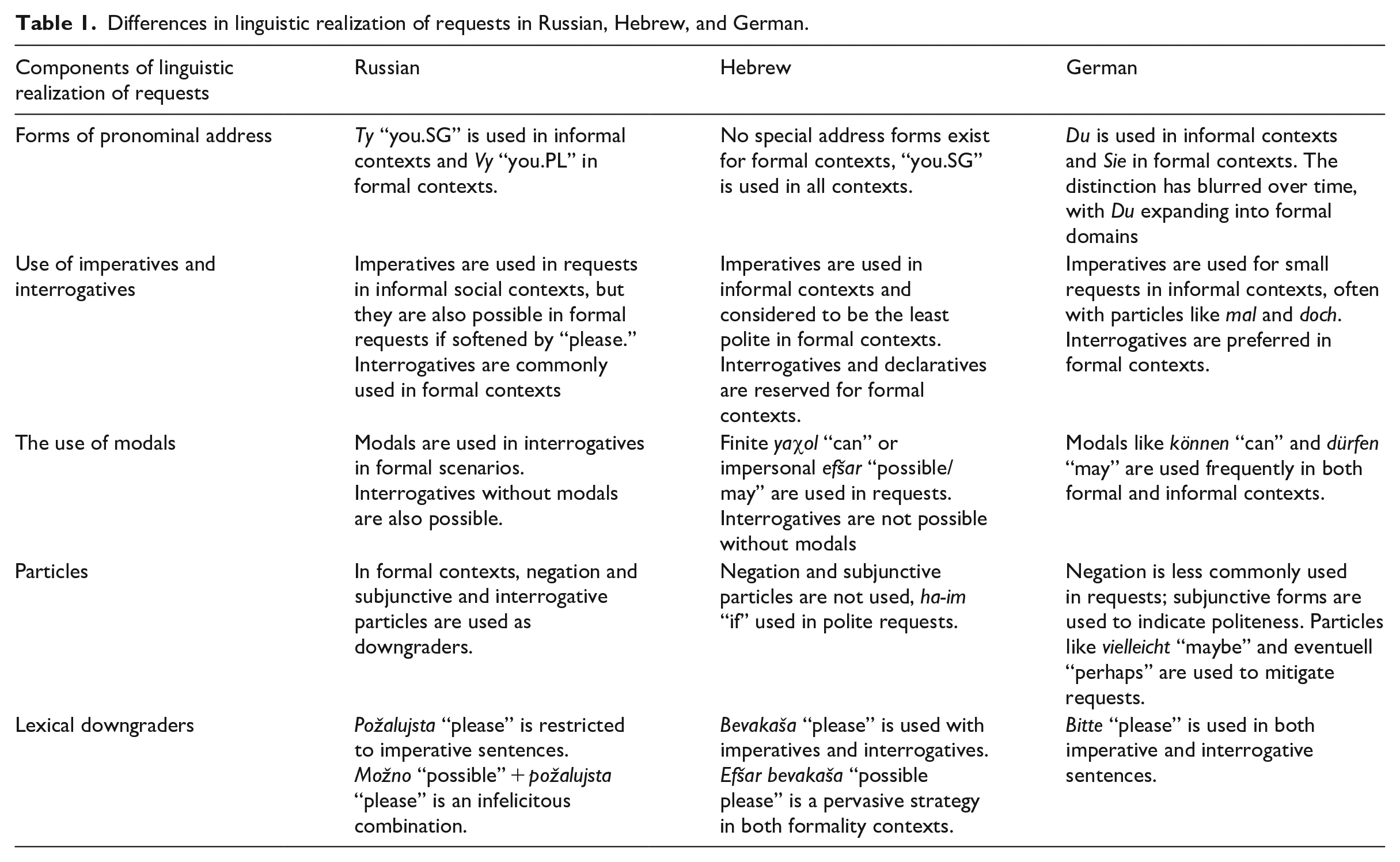
A summary of prototypical conventionalized requests in the three languages in informal versus formal social contexts is provided in Table 1.
Differences in linguistic realization of requests in Russian, Hebrew, and German.
Research questions and hypotheses
In the current study, we aim to evaluate the effect of CLI from the SL on the production of requests by HL-Russian speakers who are dominant in SL-Hebrew or dominant in SL-German, comparing them to each other and to monolingual controls. We have three competing hypotheses which may enable us to tease apart effects of CLI and diminished input.
H0: The null hypothesis posits that both groups of HL-Russian speakers will mirror the pattern of monolingual controls. This is highly implausible given previous research on HL-speakers.
H1: HL-Russian speakers dominant in SL-Hebrew and SL-German will show divergence from monolingual controls, yet will demonstrate similarities in their emergent norms in the heritage bilingual context. Thus, HL-speakers will not carry over pragmalinguistic and sociopragmatic skills from their SLs into their HL-Russian. In this scenario, the divergence can be attributed to the effect of diminished input observed in both groups of HL.
H2: Alternatively, we expect that HL-Russian speakers will carry over pragmalinguistic and sociopragmatic skills from their SL into their HL-Russian and differences will be observed between the two HL-groups. The resulting divergence can be explained by CLI influence from their SLs.
Methods
The materials, data, coding schemata, and analysis scripts for this study can be retrieved from https://osf.io/ftjm8/?view_only=0c5296c2f1d0422388ea775e8f4def29.
Participants
For the purposes of the current study, a total of 78 participants, equally split into three groups, were recruited:
(a) a baseline group of monolingual Russian speakers (hereafter MONO), residing in Russia, Belarus, and Kazakhstan, all of whom described themselves as monolingual and considered Russian to be their mother tongue.
(b) HL-Russian speakers dominant in SL-Hebrew residing in Israel (hereafter HEB).
(c) HL-Russian speakers dominant in SL-German residing in Germany (hereafter GER).
All participants were asked to complete a background questionnaire eliciting the participants’ demographic information such as age, gender, level of education, occupation, birthplace, place of residence, and so on, as well as language-related information such as age of onset (AoO; the age at which each language was acquired or learned), self-reported proficiency in reading and writing, and frequency of usage of each language. The demographic data and self-evaluated language proficiency of the participants are presented in Table 2.
Participants’ background (means and SD).
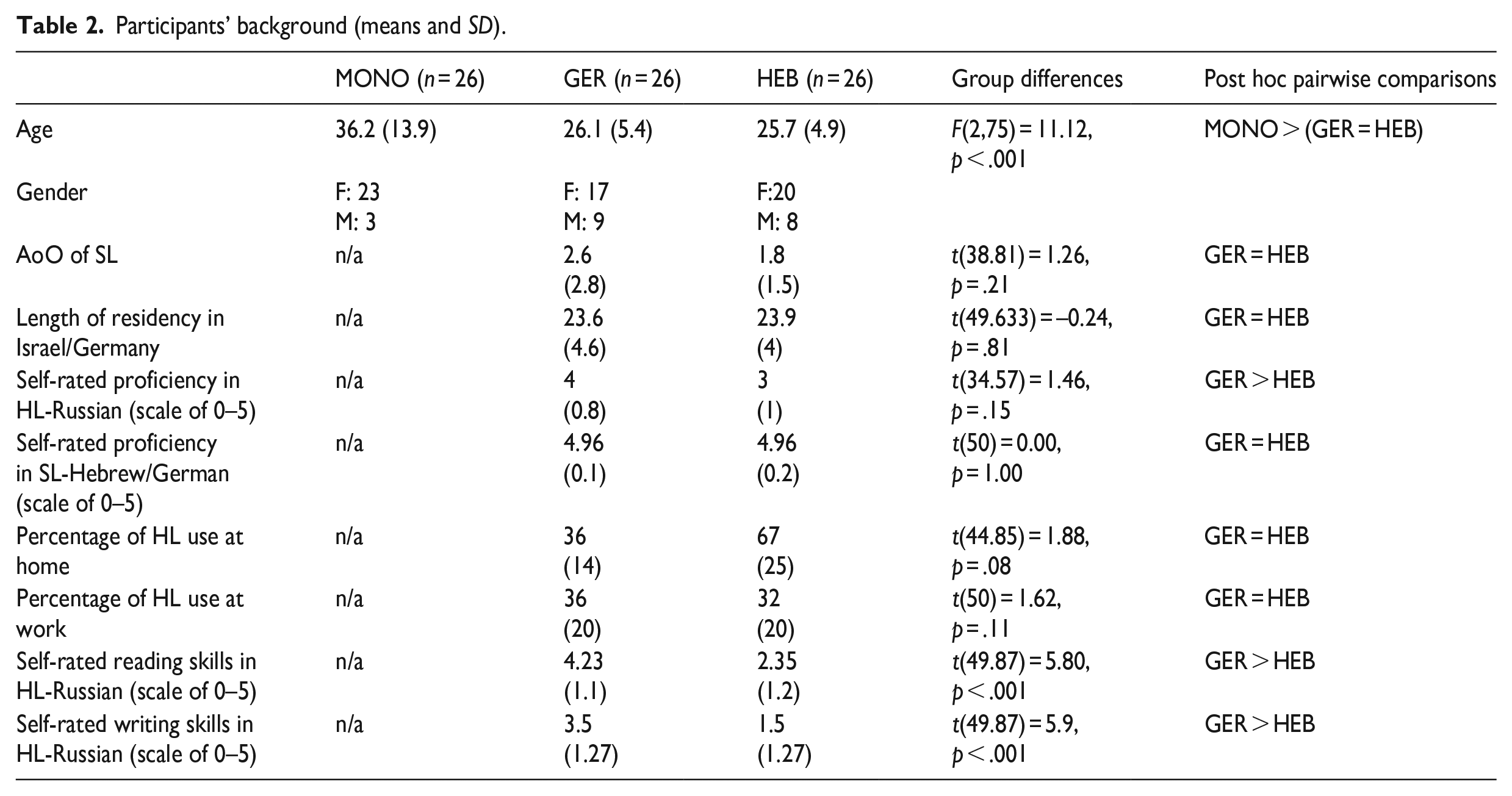
The two HL-groups (GER and HEB) did not differ in the length of residency in the host country, participants have resided in Israel and Germany for over 23 years, on average. The two groups did not differ in the amount of current use of HL-Russian at home and at work. The two bilingual groups showed different profiles in their self-reported reading and writing skills, with the GER group reporting better reading and writing abilities (see Table 2).
We also assessed participants’ lexical abilities via vocabulary tasks (Fridman & Meir, 2023), which comprised 51 nouns and 51 verbs. The performance of the participants is illustrated in Figure 1, with raw scores converted to percentages. While the MONO group exhibited a ceiling effect, the two HL-groups displayed a high degree of variation in their skills, ranging from low scores to near-monolingual-like performance. One-way analysis of variance (ANOVA) confirmed group differences: nouns: F(2,75) = 30.86, p < .001; verbs: F(2,75) = 19.34, p < .001. Moreover, post hoc pairwise comparisons revealed that both HL-groups scored lower than the monolingual controls. However, crucially, no differences were observed between the HEB and GER groups for the purposes of our study (nouns: p = .98; verbs: p = .08). Thus, any divergence noted in request production between the two HL-groups cannot be attributed to disparities in lexical proficiency levels.
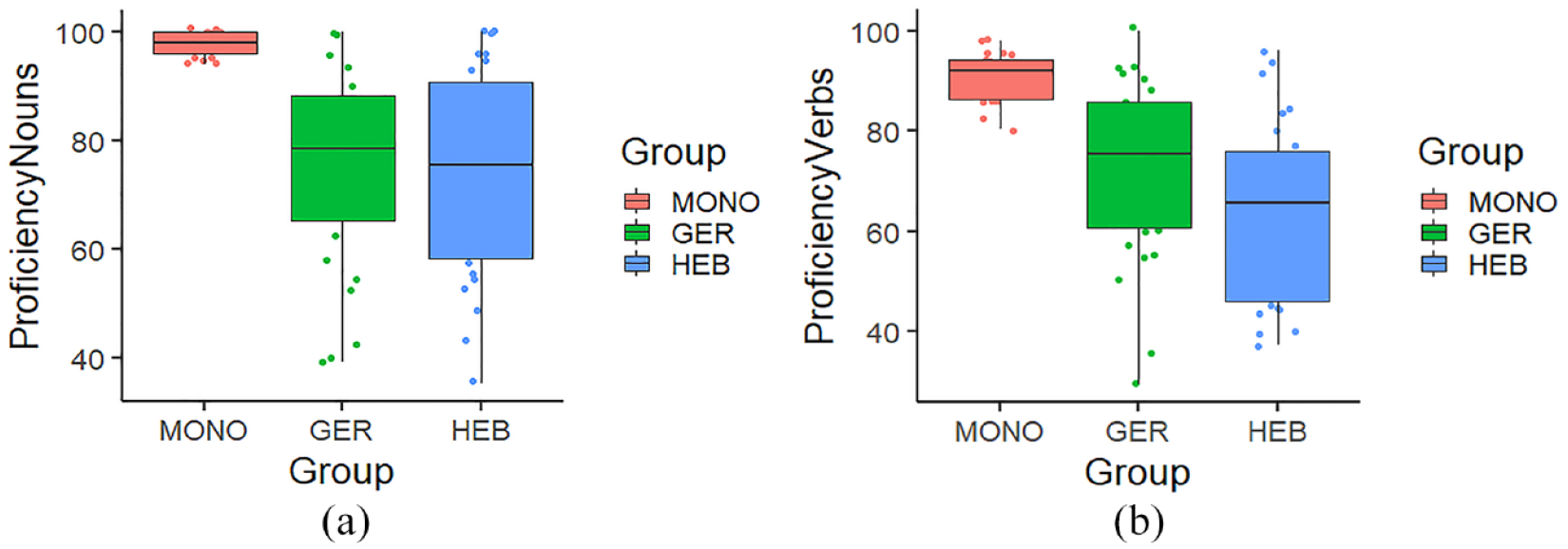
Lexical proficiency across the three groups (MONO, GER, HEB). (a) Noun naming accuracy. (b) Verb naming accuracy.
Materials and procedure
Participants were recruited through social media channels and were required to provide written/electronic consent before completing a background questionnaire available in Russian, Hebrew, or German. Subsequently, individual remote testing sessions were conducted, each lasting between 35 and 45 minutes, via Zoom. These sessions, encompassing picture-naming and experimental tasks, were audio-recorded for subsequent analysis. The study was approved by the IRB of Bar-Ilan University. the Institutional Review Board of [removed for review].
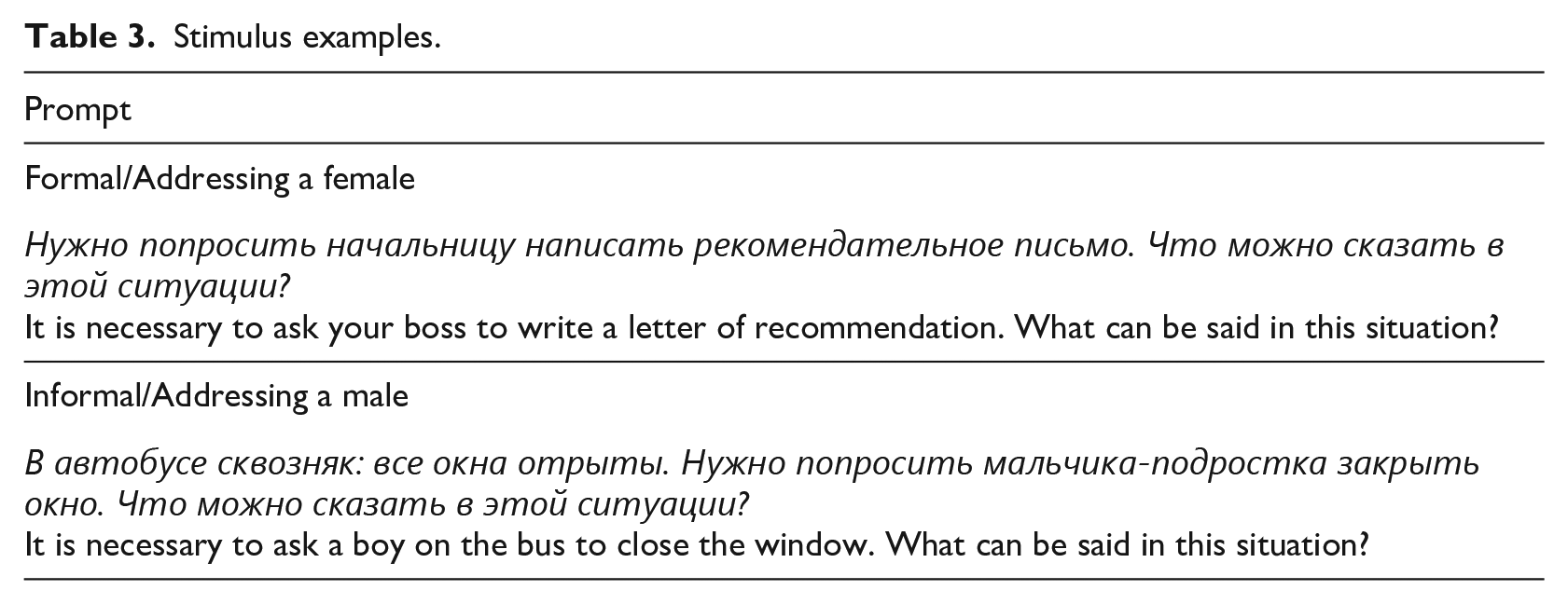
The task incorporated 20 scenarios, necessitating the speaker to formulate a request within 10 formal and 10 informal contexts. Each set of 10 scenarios included five requests that were female oriented and five that were male oriented. The participants were presented with a PowerPoint presentation consisting of 20 slides depicting the situations presented. The situations were presented orally to the participants. All pictures were chosen based on the formality of the situations they show; each situation required a choice of the register. For a similar procedure, refer to I. Dubinina and Malamud (2017) and Walters (1979). The participants’ responses were audio-recorded, and then transcribed and annotated (see Table 3 for the stimulus examples).
Stimulus examples.
The coding schemata followed the example of the studies conducted by M. H. Mills (1991), Blum-Kulka (1987), and I. Y. Dubinina (2012). First, the participants’ requests were analyzed for the presence of alerters, head acts, and supportive moves. Next, requests were coded for the choice of (a) address forms (T-form vs. V-form vs. other, where “other” included all sentences in which the second personal pronoun was not used, e.g., Can I borrow 20 shekels?); (b) morphosyntactic realization (clause type [declarative, interrogative, and imperative] of head acts, the presence of the negation particle ne or the subjunctive particle by); and (c) lexical strategies (the use of požalujsta “please” and the use of možno požalujsta “Is it possible please”; see Supplemental Material: S2 “Coding Schemata”).
Data analysis
Given the binary nature of the dependent variables (1—present, 0—absent), binomial mixed-effect logistic regression models were used for analysis (Baayen et al., 2008) with the lme4 package (Bates et al., 2015). We tested the effect of group (MONO, GER, HEB) and formality (formal vs. informal), including their interactions. Situation number and participants were also included as random factors. The model comparison was based on AIC (Akaike Information Criterion ) and BIC (Bayesian Information Criterion) values, opting for the model with the minimal AIC as the best fit. The best-fitted model was built through a stepwise procedure, followed by the ANOVA function for significance level. Pairwise comparisons used Tukey’s HSD (Honestly Significant Difference) adjustment (see Supplemental Material: S5 “Post Hoc Comparisons”).
Results
We present the descriptive statistics for each category of analysis and the results for the final binomial mixed-effects regression models. Finally, we present examples of responses for each analyzed strategy.
Alerters, head acts, and supportive moves
Table 4 summarizes the descriptive statistics for the use of alerters, head acts, and supportive moves coded as 1 = response with an alerter/supportive move and 0 = response without an alerter/supportive move, and 1 = response with more than one head act and 0 = response with one head act.
The use of alerters, head acts, and supportive moves.
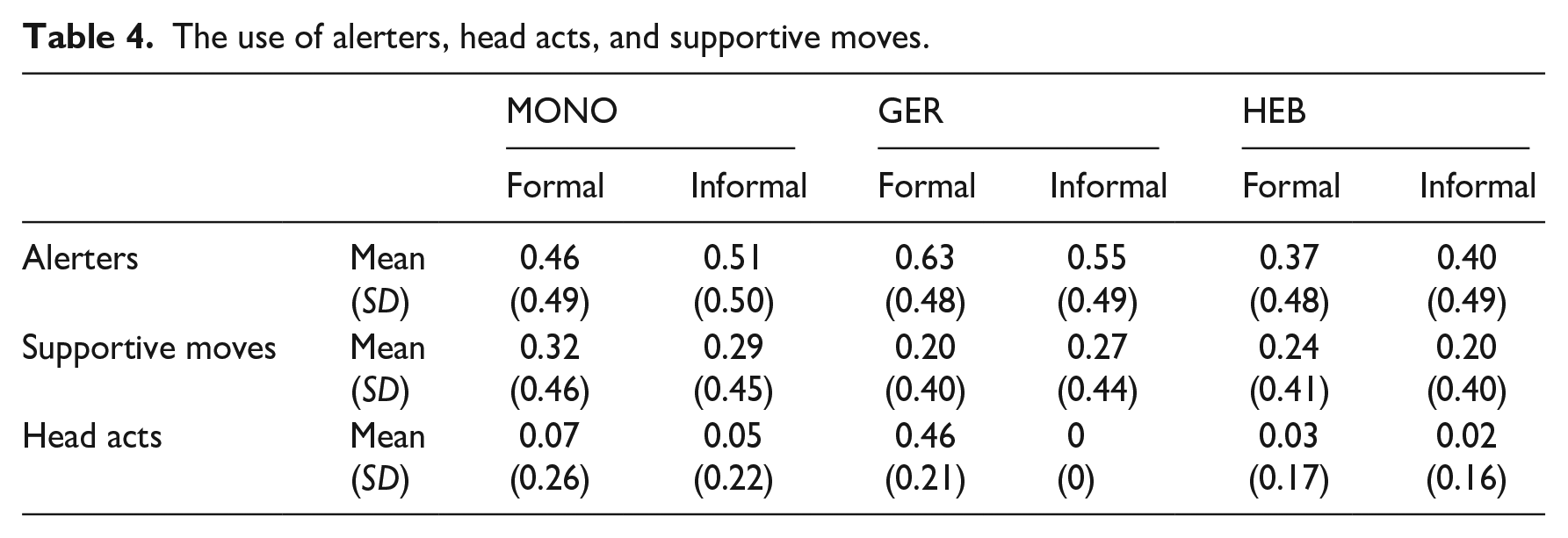
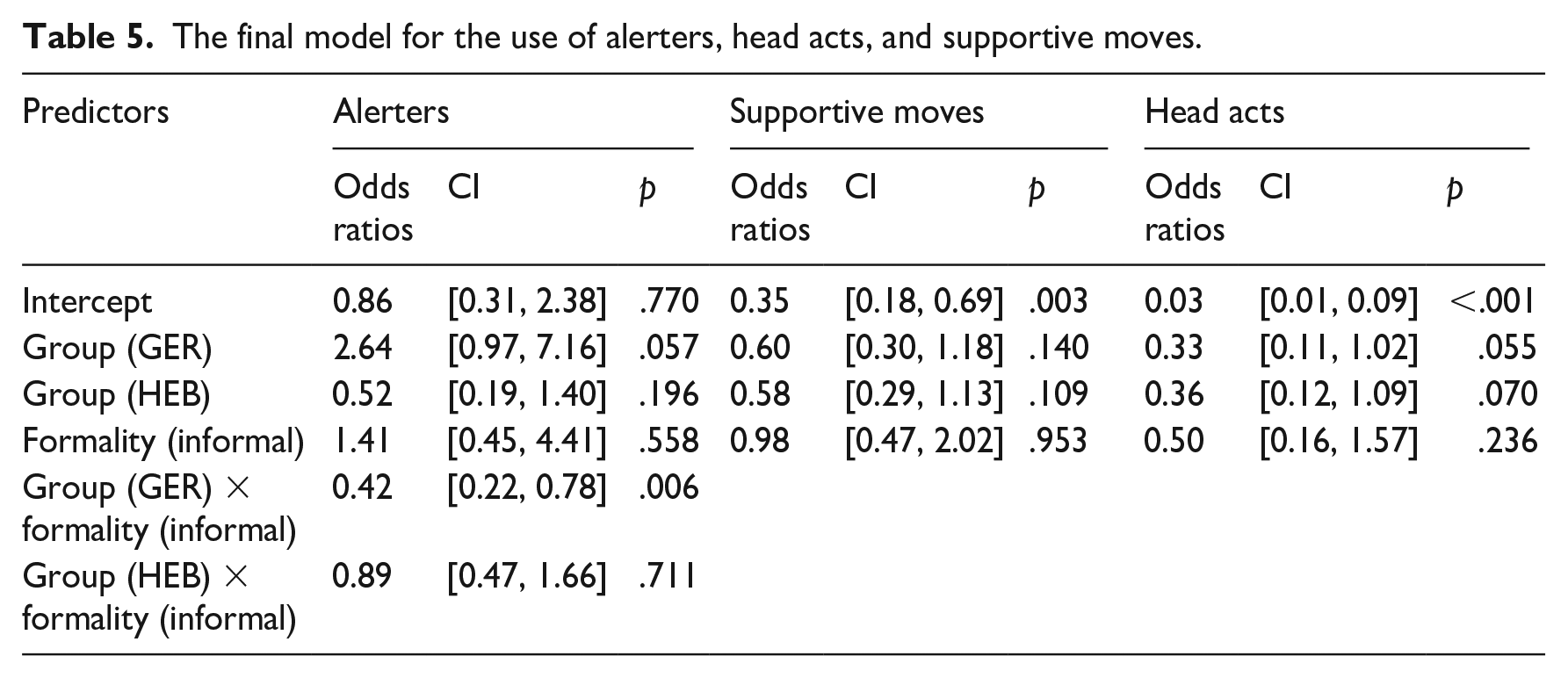
Table 5 presents the statistical analyses of alerters, head acts, and supportive moves. No significant effects of formality were found across the three measures of analysis. Neither group nor group × formality interaction showed significant effects on supportive moves and head acts, indicating a monolingual-like performance across both HL-groups. For alerters, the results showed a significant group × formality interaction. Subsequent pairwise contrasts for the use of alerters showed significant differences between GER and HEB (p = .02), yet there were no significant differences between MONO and GER (p = .51) and between MONO and HEB (p = .29). GER participants were more likely to use alerters compared to HEB participants.
The final model for the use of alerters, head acts, and supportive moves.
The use of address forms
The descriptive statistics showed that, in general, all groups resorted to T-forms in informal contexts and used V-forms in formal contexts (see Figure 2). It should be noted that the “Other” category was used mostly in formal contexts.
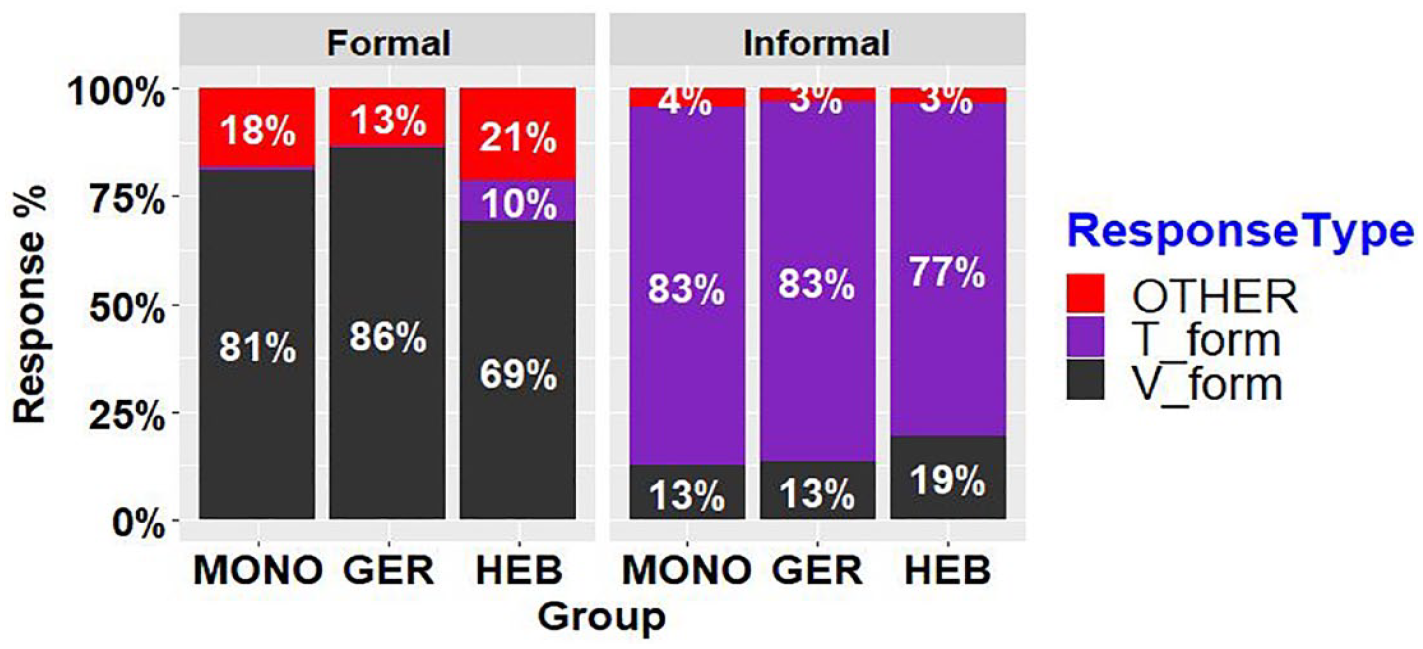
Address forms choice in formal and informal contexts across the three groups.
The results of the optimal models for the use of T- versus V-forms are presented in Table 6. There was an effect of formality, namely the V-form was favored in formal contexts, while the T-form was predominant in informal settings. The results for the use of V-form indicated a significant effect of group (p < .001) and a group × formality interaction (p < .001). Further pairwise comparisons within formality scenarios showed significant differences between MONO and HEB (p = .02). The GER group aligned with MONO and differed from HEB, employing the V-form significantly more in formal situations compared to HEB (p = .0006).
The final model for the use of V- and T-forms.
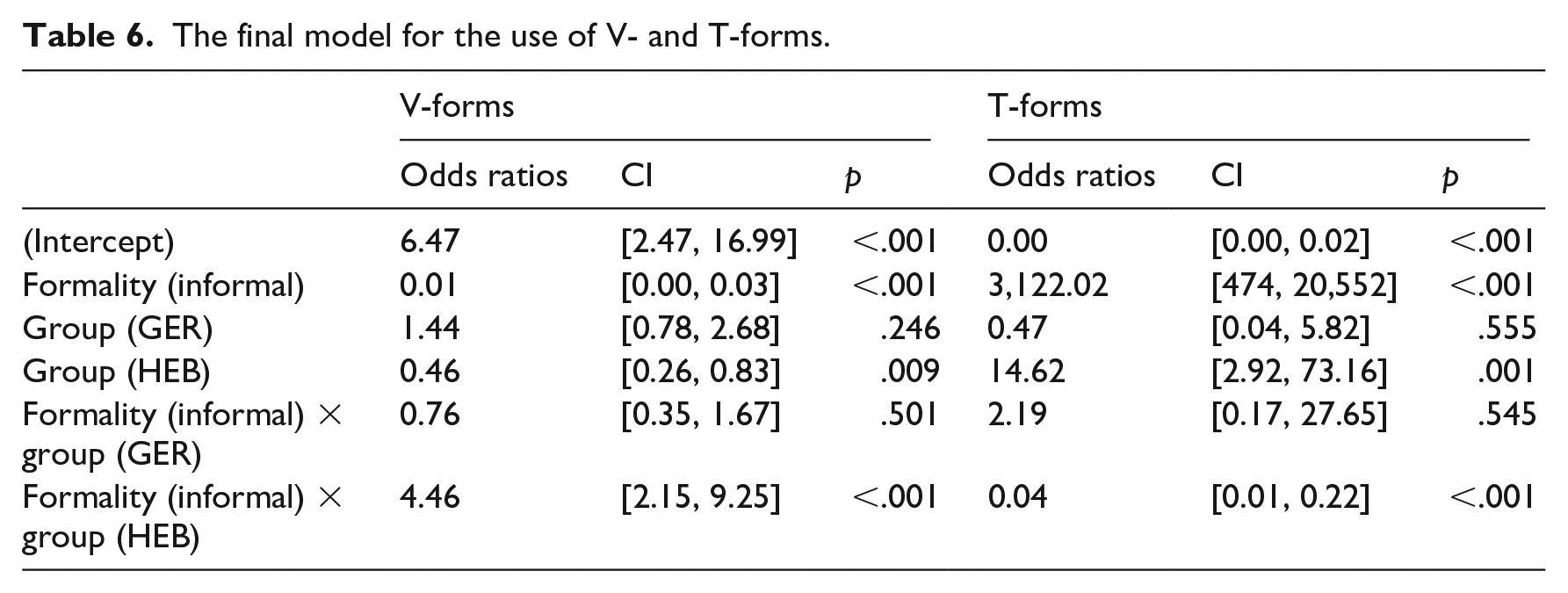
The results for the use of T-form demonstrated a significant effect of group (p = .002) as well as a group × formality interaction (p < .001). Further pairwise contrasts showed that the source of the interaction came from the HEB group, showing a significantly higher use of T-form than the MONO (p = .005) and GER (p = .01) groups. Thus, the results indicated that the two HL-groups differed in the use of both T-form and V-form in formal situations.
Morphosyntactic realization of requests
The morphosyntactic realization comparison was addressed by investigating the choice of the sentence type (declarative, interrogative, and imperative), the negation particle ne and the subjunctive particle by.
Clause type choice of the requestive utterances
Figure 3 shows the syntactic choice for requests across the three groups in formal and informal contexts. Descriptive statistics revealed that interrogative and imperative sentences were the most frequently used.
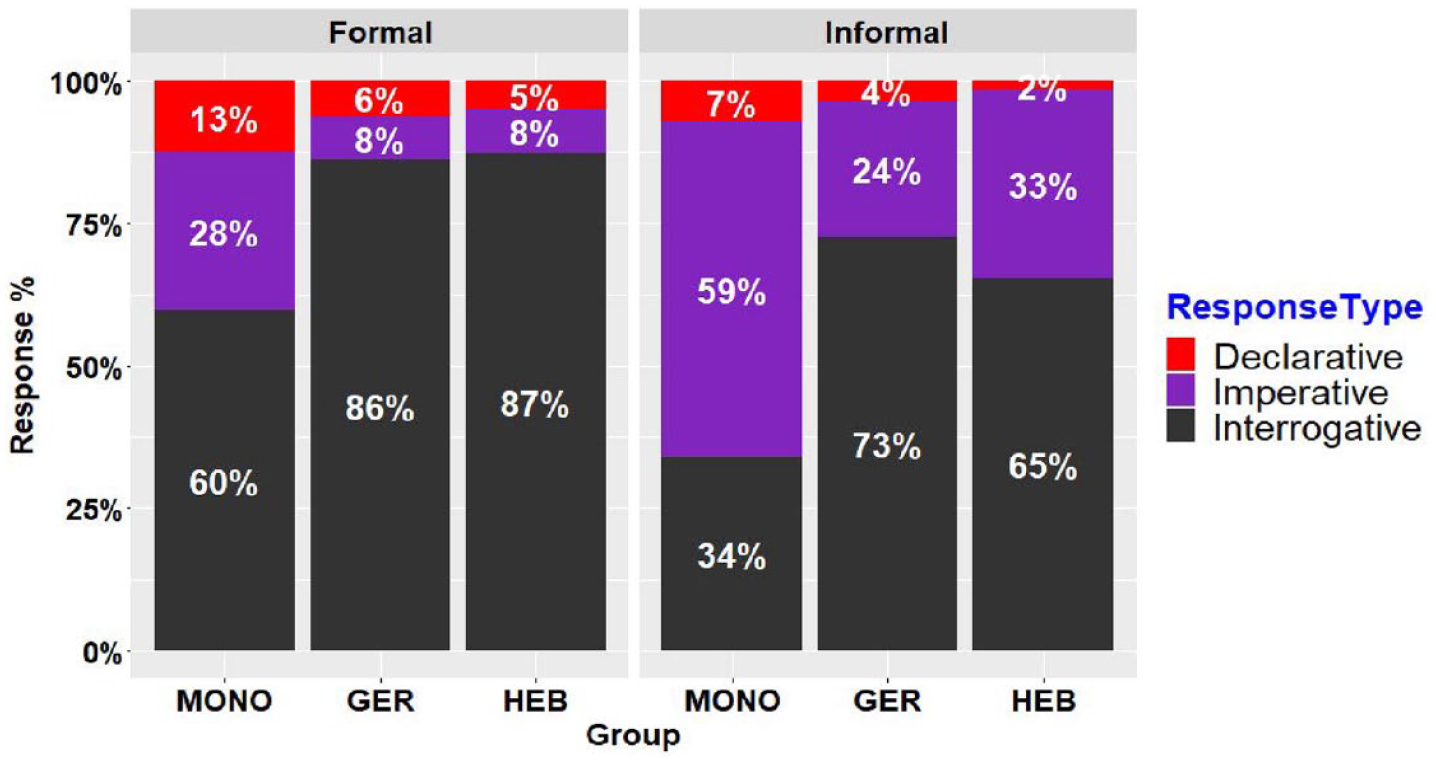
Sentence type choice in formal and informal contexts across the three groups.
Table 7 shows the final model for the use of interrogatives. The analysis for declaratives was not conducted due to their low level of usage. The model for interrogatives revealed an effect of formality (p = .001), with an increased use in formal contexts, and a group × formality interaction (p = .011). Differences were found between GER and HEB (p < .011). Pairwise comparisons indicated significant differences between the groups in both formal and informal situations, specifically between GER and MONO (p = .002, p < .0001), as well as between GER and MONO and between HEB and MONO (p = .0001, p = .0010), in formal and informal situations, respectively (see Supplemental Material: S5 “Post Hoc Comparisons”).
Optimal model for the use of interrogatives across formality contexts.
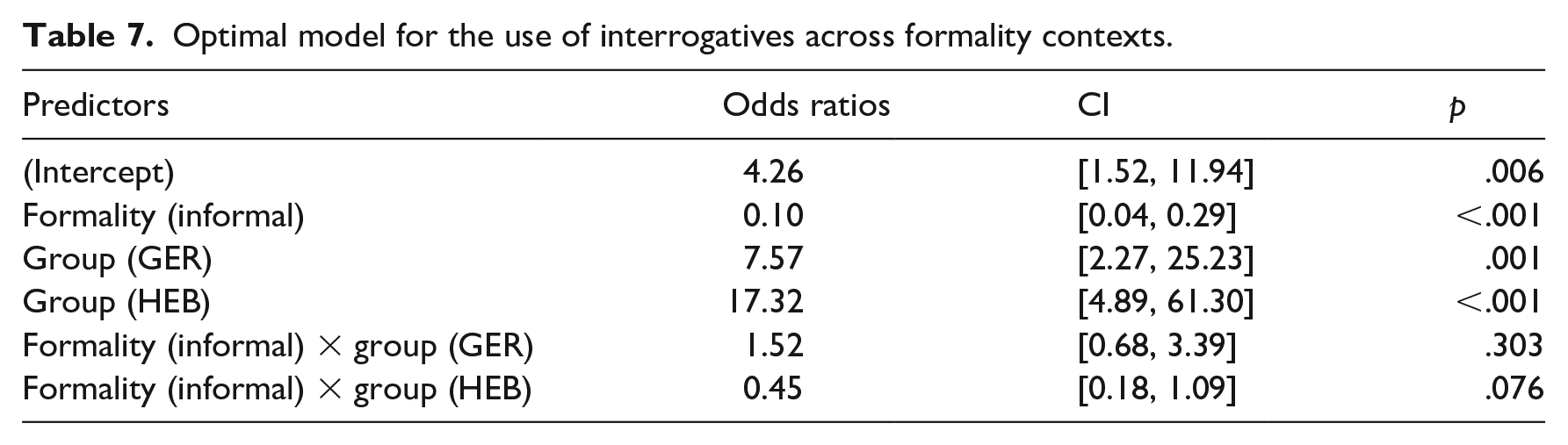
In other words, both HL-groups demonstrated a considerable divergence from the monolingual Russian group, yet they both showed a similar pattern of using interrogatives in formal and informal situations alike.
Use of modals (personal vs. impersonal forms)
Figure 4 presents the use of modals across the three groups in formal and informal scenarios. The statistical analysis presented in Table 8 for the use of personal modals indicated a significant effect of group and a group × formality interaction. The GER group used personal modals significantly more than MONO in both formal (p < .0001) and informal scenarios (p < .0001). There was also an increased use of personal modals in the HEB group compared to MONO in formal (p = .002) and informal scenarios (p = .009). There were also significant differences between GER and HEB in informal contexts (p = .009).
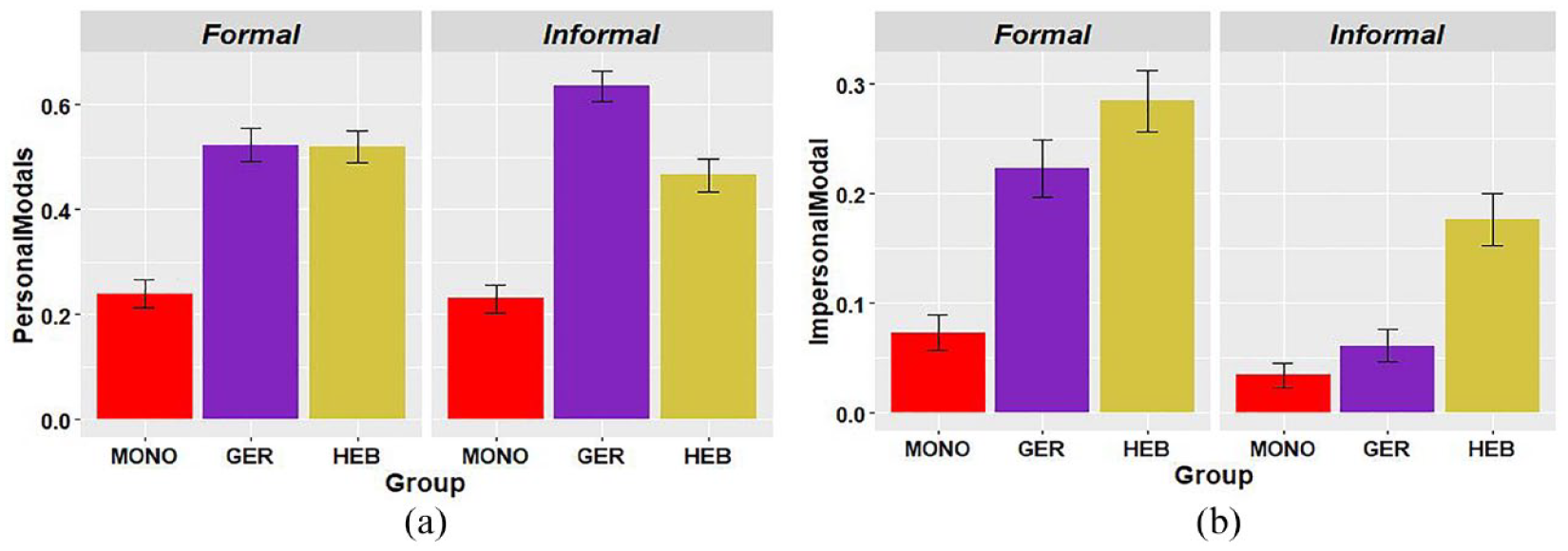
Use of modals across the three groups in formal and informal scenarios. (a) Personal modals. (b) Impersonal modals.
Optimal model for the use of modals across formality contexts.
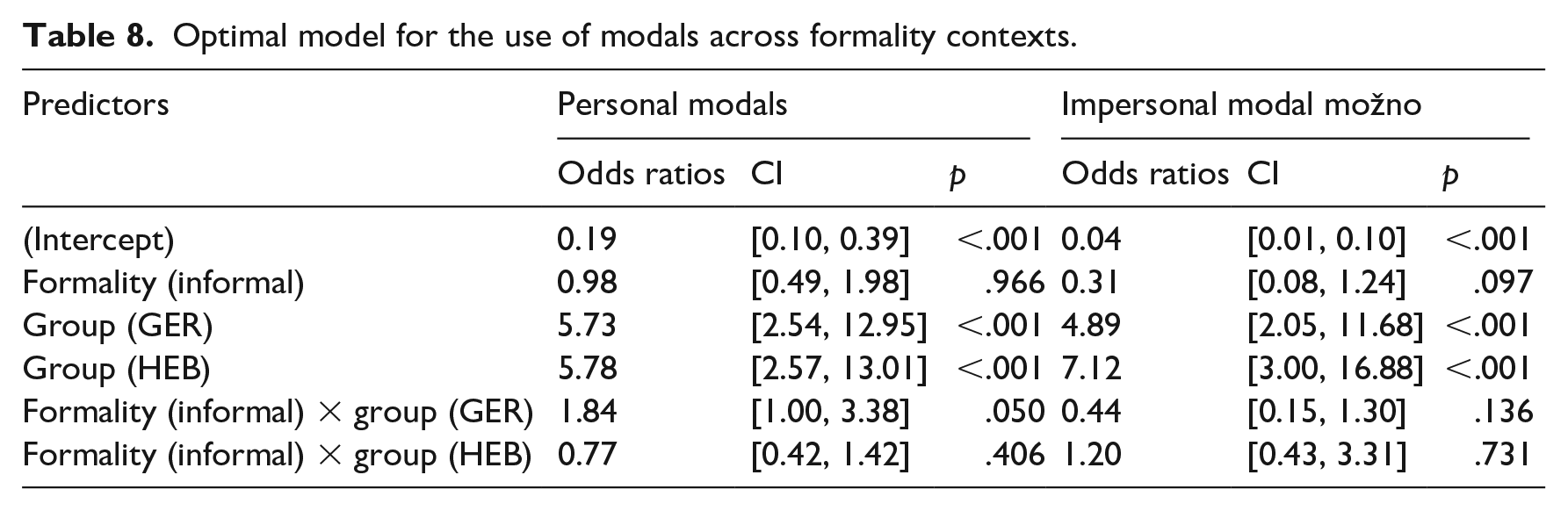
The statistical analysis for the use of the impersonal modal možno indicated an effect of group (p < .001), an effect of formality (p = .002) and a group × formality interaction (p = .02). Both GER and HEB groups showed a significantly higher use of možno compared to MONO in formal scenarios (p = .0010) and (p < .0001). In informal scenarios, statistical differences were found between GER and HEB (p = .009) and MONO and HEB (p = .0001).
Morphosyntactic particles ne and by
Figure 5 presents descriptive statistics for the use of the Russian mitigating particles ne and by.
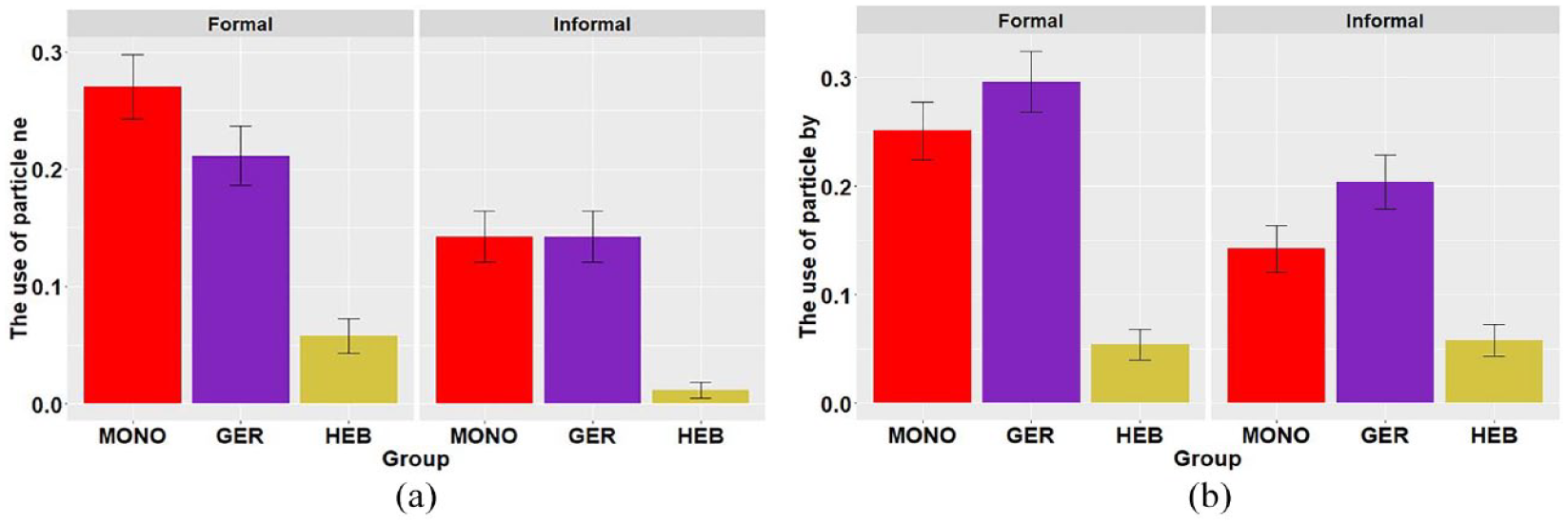
The use of morphosyntactic particles ne and by in formal and informal situations. (a) The use of the negative particle ne. (b) The use of subjunctive particle by.
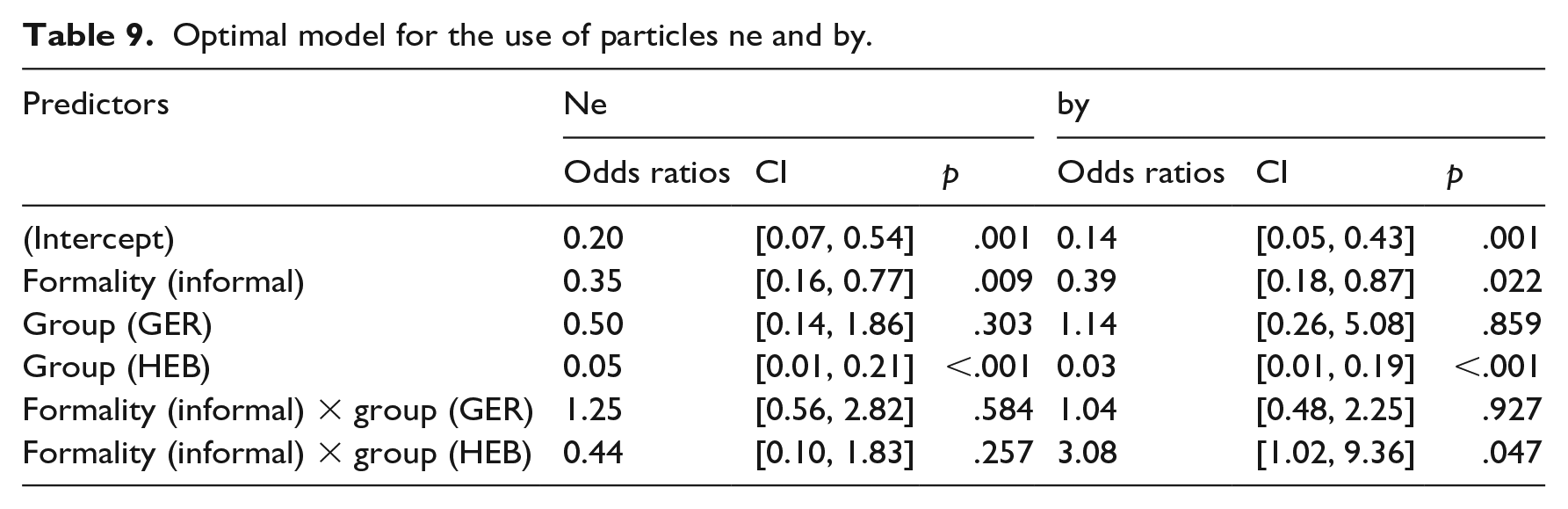
The statistical analysis for the use of ne identified a significant effect of group and formality, as detailed in Table 8. Pairwise comparisons showed significant differences between MONO and HEB, and between GER and HEB, in both formal (p = .0001, p = .002) and informal scenarios (p < .0001, p = .002).
The analysis for the use of by revealed an effect of group (p < .001) and formality (p = .030; see Table 9). There was a more frequent use of by in MONO and GER in both contexts. Pairwise comparison showed significant differences between MONO and HEB (p = .0004) and GER and HEB (p = .0002) in formal scenarios, as well as between MONO and HEB and GER and HEB in informal ones (p = .02). Thus, HL-groups differed from MONO and from each other the subjunctive particle, with GER overusing and HEB underusing (see Supplemental Material: S5 “Post Hoc Comparisons”).
Optimal model for the use of particles ne and by.
Lexical strategies
Finally, we analyzed lexical strategies used in requests by the three groups. We focused on the use of požalujsta “please” and the use of možno požalujsta “possible please.” First, we analyzed all the occurrences of “please” in all the contexts and then separately in interrogatives (Table 10).
Descriptive statistics for the use of lexical strategies (mean and SD).
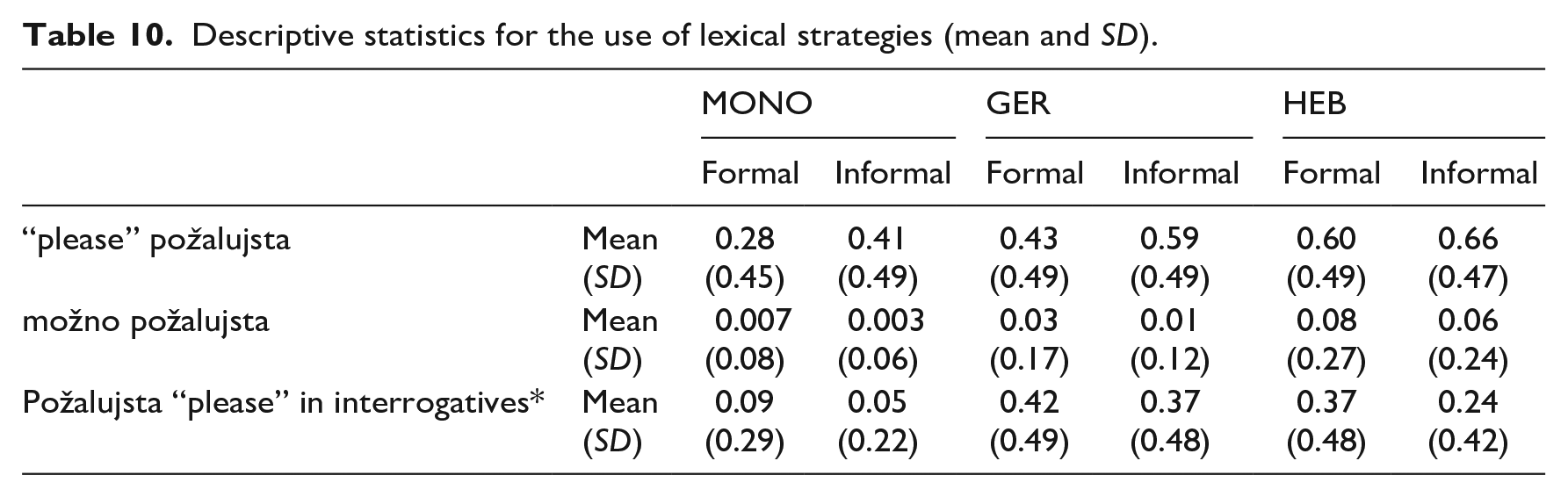
As depicted in Table 11, the results for the use of požalujsta “please” showed effects of formality and group with a more frequent use of “please” by the HEB group in both contexts (p = .028). Pairwise comparisons revealed significant differences between MONO and both GER and HEB in formal (p = .022 and p = .0001, respectively) and informal scenarios (p = .01 and p = .0001, respectively). Thus, both HL-groups diverged from MONO: they used “please” significantly more frequently than the monolingual group. The HEB group preferred the use of “please” in both scenarios whereas the GER group did not diverge from MONO in informal contexts (see Supplemental Material: S5 “Post Hoc Comparisons”).
The optimal models for the use of požalujsta “please” and možno požalujsta “possible please.”
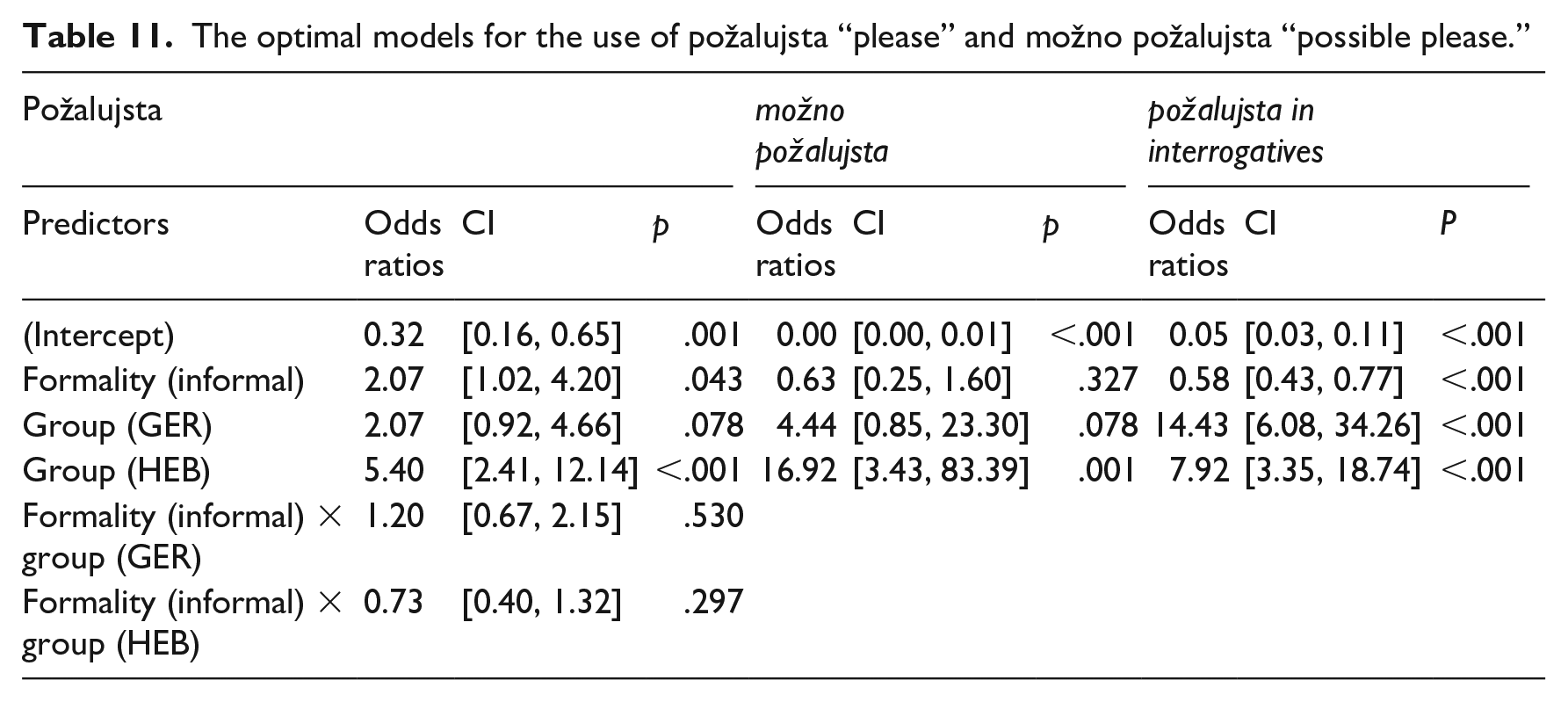
For the use of možno požalujsta “possible please,” there was no effect of formality, yet there was an effect of group (p = .03). Further pairwise comparison showed that HEB showed statistically higher use of možno požalujsta “possible please” in both scenarios compared to MONO (p = .002). There was no statistical difference between GER and HEB (p = .07) and MONO and GER (p = .18). For the use of požalujsta “please” in interrogative sentences, which is an infelicitous strategy for monolingual controls, there was an effect of formality and a significant effect of group. Significant differences were observed between MONO and GER (p < .0001) and between MONO and HEB (p < .0001). The further pairwise comparisons also showed a significant difference between HEB and MONO (p = .0001), MONO and GER (p = .0001), and MONO and HEB (p = .001) in both scenarios.
Prototypical request strategies per group
We identified “prototypical request strategies” by analyzing the frequency and significant group differences in both formal and informal scenarios, based on the preferred strategy observed within each group. Instances where the groups deviated from these established patterns were explicitly noted as divergences.
Prototypical requests differed across the three groups (see examples in Supplemental Material: S6 “Prototypical requests”). Thus, observed divergence occurs not only between monolingual and HL-speakers, but also between the two groups of HL-speakers. In formal situations, a prototypical request in the MONO group was formulated as an interrogative statement that employed an alerter, a supportive move, and included the V-form. It also featured the subjunctive mood, negation, and did not include the word “please.” An informal request involved an imperative sentence, an informal T-form, and požalujsta “please.”
A typical formal request strategy in the GER group was formulated as an interrogative sentence that included alerters and supportive moves, a personal modal, negation, a V-form, and “please.” In contrast, an informal request involved alerters, the use of a T-form, an interrogative statement, and the inclusion of požalujsta “please.”
Regarding the HEB group, a formal request was constructed as an interrogative sentence that included “please,” a personal modal, and the use of a V-form. However, it did not typically include the subjunctive mood or negation. An informal request in the HEB group was formulated as an interrogative statement that included the word “please” and the combination of možno požalujsta “possible please.”
Discussion
This study aimed to explore HL-Russian speakers’ pragmatics through request-formation strategies, and to document the presence of CLI effects (if they exist) from SL-Hebrew and SL-German. This would indicate that the null hypothesis, according to which all the groups in this study would perform at the same level, cannot be maintained. But the HL-speakers in this study diverge from their monolingual counterparts. The analysis of request strategies and possible CLI effects from the SL was carried out through a comparison of the use of alerters, head acts, supportive moves, and the choice of the syntactic structure of head acts. It also included the use of modals, morphosyntactic particles, požalujsta “please,” and možno požalujsta “possible please” across the three groups of participants (MONO, GER, and HEB). These linguistic parameters were hypothesized to reflect possible differences in request formation in the three languages involved: Russian, German, and Hebrew. In the following subsections, we will examine request formation in the three groups through the lens of our hypotheses: convergence in performance between HL-speakers and monolingual controls and divergence among HL-speakers, which we attribute to reduced input (H1) and/or CLI (H2). For head acts and supportive moves, no differences were observed between the groups, pointing to the convergence between HL-speakers and monolingual controls. However, for the rest of the investigated parameters differences were observed.
Divergence in the use of forms of address
Under the CLI hypothesis (H2), we expected the GER group to demonstrate higher sensitivity to the formal context requiring the use of V-forms, compared to the HEB group, and thereby carrying over pragmatic behavior from the SL into their HL-Russian. Indeed, our results confirmed hypothesis H2 and demonstrated that the GER group showed significantly higher use of V-forms in formal scenarios compared to the HEB group. They also paired up with the monolingual group in the use of both V- and T-forms in both scenarios.
In line with hypothesis H2, the HEB group demonstrated diminished sensitivity to the formal context possibly due to pressure from SL-Hebrew. However, if the address form was solely affected by the properties of the SL, we would expect a decrease in V-forms and an increase in T-forms across both contexts. Our results showed both response patterns in the SL-Hebrew group: the overuse of T-forms in formal contexts and the overuse of V-forms in informal contexts. Thus, this latter pattern cannot be ascribed to CLI exclusively and may partially stem from a confluence of diminished input and CLI.
Divergence in morphosyntactic realization
For the domain of morphosyntax, in line with hypothesis H1, we predicted an overuse of interrogative sentences by HL-speakers, because interrogatives are traditionally perceived as more polite both in Hebrew and German. Therefore, we expected a reduction in the use of syntactic strategies in the HL-groups. Our study has provided evidence of divergence of the two HL-groups from monolingual controls in the choice of morphosyntactic forms. In line with Dubinina and Malamud (2017) and Keevallik (2016), our findings showed that both HL-groups avoided using imperative sentences (direct requests) in informal contexts, unlike monolinguals, and overused interrogative sentences in both scenarios (formal and informal). These findings echo the results by Kupisch (2021) who points out that HL-speakers commonly show a preference for using constructions or linguistic features that are present in both of their languages. This preference often leads to a reduction in the use of structures and strategies that are exclusive to one language.
Divergence in the use of modals
We expected HL-speakers in both groups to overuse modals due to CLI from their SLs. The results indicated that the GER group did indeed transfer pragmatic behaviors from SL-German into HL-Russian, utilizing finite modals (e.g., “can,” “should”) more frequently than monolingual controls did in both formal and informal scenarios. HL-Russian speakers dominant in SL-Hebrew aligned with monolinguals in their use of modals but used finite modals less frequently than the GER group in informal scenarios. Instead, they showed an increased use of the impersonal modal “možno,” which SL-Hebrew participants employed interchangeably with finite modals, consistent with their customary behavior in Hebrew. I. Y. Dubinina (2012) suggested that HL-speakers tend to overuse the impersonal modal “možno,” interpreting it as a general marker for any type of request, without considering its connotation of seeking permission.
The more frequent use of modals in both bilingual groups can also be explained by the inherent co-dependence of modals and interrogatives. In contrast to Russian, where indirect requests can be expressed as either a query preparatory involving a modal or an action query without one, Hebrew and German form indirect requests using interrogatives that incorporate modals in both scenarios.
Divergences in the use of particles ne and by
We anticipated that both HL-groups would use the negative particle ne less than monolingual controls do, as ne is not used as a mitigator in Hebrew; and in German, the use of negation in requests is limited. Our expectation was only partially confirmed, as only HEB differed from the monolingual controls. The two HL-groups differed from each other as well, with HEB demonstrating a lower use of ne in both formality contexts.
The low usage of ne in the HEB group can be further understood by examining their high frequency of using the impersonal modal možno. Since možno cannot be used with negation, this inherently limits the contexts in which ne can appear. Therefore, the lower use of ne in the HEB group is not solely due to a preference or tendency but also due to the syntactic constraints imposed by the frequent use of možno.
We expected the HEB group to underuse the subjunctive particle by in requests due to Hebrew’s lack of this device, while the GER group, influenced by German’s use of subjunctives as a politeness marker, would differ from HEB in this regard. Thus, it was not surprising to find that GER incorporated the use of the subjunctive in their HL-Russian and showed a significantly higher use of by than HEB, who employed by significantly less frequently than both the GER and MONO groups. Interestingly, the GER group resorted more frequently to the use of by only in formal scenarios and showed patterns similar to those of monolingual speakers in informal contexts.
Divergence in lexical strategies: the use of please
We expected HL-speakers to overuse požalujsta “please” for two reasons: first, due to the pressure from the SLs where this mitigating device has a wider application and not restricted to imperative requests as in Russian, and second—as a compensatory attempt to mitigate “face threatening” by resorting to strategies available in both languages.
Our predictions have been confirmed as statistical differences were observed between MONO and both HL-groups. These results can be attributed both to the influence of Hebrew and German and to a compensatory technique. We can hypothesize that HL-speakers, who lack the full knowledge of morphosyntactic downgraders available to the monolingual speakers of Russian, overused the politeness marker “please,” which is present in both languages. This result ties in well with previous studies conducted by Pinto and Raschio (2007) who argued that multiple downgrader use by HL-speakers is an attempt to compensate for their perceived lack of linguistic abilities.
The overuse of “please” in interrogative sentences, where its use is not felicitous for monolingual Russian speakers, may also be traceable to the influence of SLs (Hebrew and German), where the use of “please” in interrogative sentences is acceptable.
As to the use of možno požalujsta, while this phenomenon was not observed at all in the monolingual data, the HEB group overused možno požalujsta in both scenarios. The influence of SL-Hebrew could explain the use of požalujsta in combination with možno “possible,” resulting in možno požalujsta (a direct translation from the Hebrew phrase efšar bevakaša “possible please”), which is a pervasive request strategy in Hebrew. The resulting structure can also be viewed as a case of restructuring the impersonal modal možno “may,” which “loses its primary use as a permission-seeking device and becomes generalized as a marker of any type of request” (I. Dubinina & Malamud, 2017, p. 110). Thus this is not attributable to the SL influence, as is the case for English. Rather, the infelicitous combination možno požalujsta may result from the influence of SL-Hebrew and internal restructuring. The GER group did not diverge from MONO, which points to the CLI hypothesis rather than a restructuring of the impersonal modal možno “may.” Our findings for the HEB group are consistent with the findings of I. Dubinina and Malamud (2017), who investigated request-making strategies produced by HL-Russian speakers dominant in SL-English in the United States, and reported the overuse of the downgrader požalujsta “please” and its transfer to interrogative sentences.
Limitations and future research
While our study offers valuable insights into the request strategies of HL-speakers, it is crucial to acknowledge its limitations. One significant limitation concerns the average age of the monolingual group, which differs from that of the bilingual groups and may potentially influence their pragmatic norms. Furthermore, there is variability in the AoO among the bilingual groups, with the German group averaging 2.6 years and the Hebrew group 1.8 years. While this difference is not statistically significant, AoO is a critical factor that could impact pragmatic skills more than the length of residency in the host country. These factors may help elucidate why both HL-groups scored lower than the monolingual controls on vocabulary tasks.
The recruitment process, primarily through personal connections, may have influenced the representativeness of the sample. Participants, aware that their Russian proficiency was being evaluated, might have felt compelled to demonstrate a higher level of proficiency and politeness, potentially biasing the results. This pressure could lead to linguistic insecurity, resulting in the use of formal language in casual settings (Martinez & Petrucci, 2004).
Given our study’s findings on the effects of bilingualism, future research should aim to understand the trajectory of pragmatic development in HL-speakers. Establishing the endpoint of acquisition for monolingual children is essential, as some linguistic properties are acquired later or may present difficulties even in monolingual development. Understanding these factors can better explain deviations from the baseline observed in HL-speakers.
Summary and conclusions: CLI and input as important factors in HL pragmatics
Our study contributes to the field of pragmatics by evaluating the effect of typologically different SLs (here, Hebrew and German) on HL acquisition. In particular, the study attempted to tease apart the effects of CLI and diminished input by comparing requests produced by HL-Russian speakers who are dominant in SL-Hebrew and SL-German, with their monolingual counterparts and with each other.
The results of the study revealed robust effects of CLI from the dominant language on the production of requests in HL-Russian. To be more specific, the SL-German group showed a higher sensitivity to formal contexts and used V-forms more frequently, aligning with monolinguals. The SL-Hebrew group demonstrated lower sensitivity to formality, resulting in the overuse of T-forms in formal contexts and V-forms in informal contexts. Both HL-groups overused interrogative sentences and showed differences in the use of negation particles and subjunctive particles compared to monolingual Russian speakers. The study also observed the overuse of politeness markers, such as “please,” and the influence of SL-Hebrew and SL-German on HS-Russian speakers’ request strategies.
Thus, the evidence for CLI in HL request formation has been detected in all the domains: (a) address forms (overuse of T-form and underuse of V-form); (b) syntactic structures (overuse of interrogatives); (c) morphosyntax (diminished use of the negative particle ne and the subjunctive particle by); and (d) lexical devices (the overuse of lexical politeness markers—požalujsta “please,” especially in interrogatives). Yet the results also point to the effects of diminished input, as evident in the similarities between the two HL-groups and their divergence from the monolingual speakers of Russian.
Our findings align with those of I. Dubinina and Malamud (2017) regarding HL-Russian in contact with SL-English, and with Pinto and Raschio (2007) concerning HL-Spanish in contact with SL-English, both of which also documented the effect of CLI in request formation. Beyond the substantial effects of CLI, our study showed that diminished input also plays a pivotal role. HL-speakers may develop novel structures, adhering to universal principles, instead of solely depending on their SL, as seen in the similarities among HL-speakers and their divergence from monolingual controls. Another crucial aspect that remains unverified is whether these novel forms in HL-speakers are “frozen” forms, which are observed in younger speakers of Russian. Future research should extend the study of HL pragmatics beyond requests to explore other speech acts, such as apologies and greetings.
Footnotes
Declaration of conflicting interests
The authors declared no potential conflicts of interest with respect to the research, authorship, and/or publication of this article.
Funding
This research was supported by the German-Israel Foundation (GIF) under Grant No. I-260-104.4-2021, jointly awarded to Natalia Meir and Vladislava Warditz, as well as by the Israel Science Foundation (ISF) under Grant No. 552/21, awarded to Natalia Meir.
