



Abstract
This article presents two empirical studies investigating the extent to which general English proficiency (GEP) and selected learner dispositions in online learning maintain their predictive utility for academic success in English-medium instruction (EMI) contexts in Türkiye across the pre-pandemic, pandemic, and post-pandemic periods. Both studies sampled engineering students from a large public university, with Study 1 involving 474 participants and Study 2 including 460. Study 1 examined the predictive roles of GEP, online learning readiness, beliefs, and satisfaction during the pre-pandemic and pandemic periods. Findings showed that GEP was a significant predictor of academic success before the pandemic, but this predictive relationship was statistically disrupted during the pandemic period. Study 2 extended the analysis to the post-pandemic context, where EMI courses were delivered both face-to-face and online. Results revealed a reinstatement of GEP’s predictive power in face-to-face EMI settings, while readiness, beliefs, and satisfaction with online learning were stronger predictors in online courses. This fluctuation illustrates a ‘passing cloud effect’, in which the predictive weight of language proficiency temporarily wanes under extraordinary contextual conditions but resurfaces when structured environments return. Based on the findings, several pedagogical implications are provided, and some relevant suggestions are made, underscoring the fluctuating nature of academic success in EMI.
Keywords
I Introduction
The global landscape of higher education classrooms is undergoing significant change. Although many classrooms have resumed their pre-pandemic routines, the pedagogical shifts instigated by online learning continue to influence teaching practices, necessitating new strategies for adaptation and implementation. Within this evolving context, English-medium instruction (EMI) finds itself at a pivotal juncture, highlighting broader tensions surrounding internationalization, linguistic policy, student academic success, and the presence of online learning.
EMI, as defined by Macaro (2018), refers to ‘the use of the English language to teach academic subjects (other than English itself) in countries or jurisdictions where the first language of the majority of the population is not English’ (p. 19). More than merely a linguistic choice, EMI has been framed as a conduit for globalization (Galloway et al., 2020), facilitating the integration of national education systems into the broader international academic community as a tool of neoliberal policies (Hultgren et al., 2023). However, its implementation has sparked considerable debate. While some view EMI as a means to enhance global competitiveness (Hammond, 2016) and language proficiency (Ben Hammou et al., 2025), emphasizing its advantages for students (R’boul, 2024), others contend that it exacerbates inequalities, especially in non-Anglophone contexts where students encounter language-related challenges that hinder academic success (Macaro & Rose, 2023; Mirhosseini & De Costa, 2025; Soruç et al., 2021).
Türkiye serves as a notable case study highlighting a paradox in the realm of education. Among the 3,849 EMI programmes currently in operation, 3,308 are conducted entirely in English, while 541 follow a partial EMI model, teaching 30% of coursework in English (OSYM Manual, 2024). This expansion aligns with broader global trends (Wingrove et al., 2025); however, it occurs alongside conflicting pressures. For instance, a report by the British Council Türkiye (West et al., 2015) calls for limiting EMI to graduate programmes and phasing out partial EMI curricula. Nevertheless, Türkiye continues to broaden its EMI offerings at the undergraduate level. This situation raises an important question: What are the true academic consequences of EMI for students, especially in a post-pandemic landscape where online learning has transformed traditional educational models and continues to coexist with in-person instruction?
In response to this issue, we conducted two interconnected studies that examined the pre-pandemic, pandemic, and post-pandemic periods. We aimed to highlight the complex relationship between general English proficiency (GEP) and selected learner dispositions that come into play in online learning, as well as their effects on students’ academic success in both face-to-face and online EMI courses. Study 1 investigates how language proficiency and three psycho-affective factors, that is, online learning readiness, beliefs, and satisfaction contributed to EMI academic success, which we measured through students’ grade point average (GPA) scores, during both the pre-pandemic and pandemic phases. Study 2 builds upon this inquiry by examining the factors influencing students’ academic achievement in EMI programmes within face-to-face classrooms and online courses in the post-pandemic era. These two studies provide a timely and nuanced exploration of the evolving role of EMI in higher education. They not only underscore the predictive significance of language proficiency but also address the broader pedagogical, contextual, and structural changes that continue to shape the EMI landscape and impact the academic success of EMI students.
II Review of the literature
1 EMI academic success
Academic success in EMI has been extensively studied, with researchers investigating various personal, interpersonal, and contextual factors (Lee et al., 2025; Lin & Lei, 2021; Liu et al., 2025). Prior research typically operationalizes success by assessing students’ content knowledge gained in EMI courses, often through calculations of their GPAs (Altay et al., 2022; Lin & Lei, 2021) or via midterm and final grades (Masrai et al., 2022). While English proficiency – both general and domain-specific – is frequently regarded as a crucial predictor of success (Aizawa et al., 2023; An, 2023; Rose et al., 2020), the findings remain inconsistent; some studies indicate a strong correlation between English proficiency and academic achievement (Thompson et al., 2022), while others suggest that language skills alone may not be sufficient predictors (Athirah, 2024).
Beyond language proficiency, several non-linguistic factors – including self-regulation, self-efficacy, motivation, academic ability, and digital literacy – have been revealed to play a significant role in the success of EMI (e.g. Ahmed & Roche, 2021; Lasagabaster, 2016; Lin & Lei, 2021; Soruç et al., 2024; Yuksel et al., 2023). Research shows that self-regulated learners, especially in challenging fields such as engineering, tend to achieve better outcomes (Yuksel et al., 2023), while higher self-efficacy is associated with improved academic performance (Thompson et al., 2022).
Although academic success ranks among EMI’s six most frequently studied concepts (Liu et al., 2025), much of the existing research has prioritized traditional face-to-face classroom environments, leaving online EMI classes largely unexamined. Furthermore, the predictors of academic success across various pandemic phases – pre-pandemic, during, and post-pandemic – remain largely unexplored in the literature, despite the reasonable expectation that these factors could differ significantly based on the diverse contexts in which EMI was implemented. Consequently, the complex relationship between academic success in EMI and language proficiency warrants a more thorough investigation. The two interconnected studies presented in this article aim to shed light on these intricate dynamics, providing new insights into how the cognitive dimensions of online learning shape academic outcomes within the evolving landscape of EMI education.
2 Online learning
Online learning, a widespread form of distance education, is defined as using the Internet to access educational resources, interact with instructors and peers, and receive support (Ally, 2004). It encompasses synchronous, asynchronous, and bi-synchronous formats (Anderson, 2008; Martin et al., 2020). Synchronous learning facilitates real-time interaction through platforms such as Zoom and Teams, while asynchronous learning provides flexible access via emails, forums, and recorded videos. Bi-synchronous learning merges the two approaches (Martin et al., 2020). The roots of online learning can be traced back to 1996, when the Internet was first utilized for distance education (Peters, 2003). By 2001, 80% of universities and 60% of companies in the U.S. had embraced online courses (Lynch, 2002). Over the years, online learning has evolved, offering enhanced accessibility, flexibility, and interactivity (Ally, 2004). Nevertheless, the terminology associated with online learning remains somewhat ambiguous, with some researchers considering it a contemporary extension of distance learning (Hiltz & Turoff, 2005).
Before the pandemic, the total number of students engaged in fully online learning in the United States had reached 3.1 million, with 47% classified as undergraduate and 28% as graduate students (Gallagher, 2019). The COVID-19 pandemic significantly accelerated the shift to online learning, impacting over 1.2 billion students globally in 2020 (UNESCO, 2020). Educational institutions worldwide transitioned to online formats, with 80% of U.S. households reporting their use (McElrath, 2020). However, this rapid expansion of online learning, often unplanned and abrupt, revealed substantial challenges and fostered negative perceptions due to issues such as academic dishonesty, inadequate infrastructure, and low levels of student preparedness (Demir Kaymak & Horzum, 2022). Like all forms of education, academic success remains a central focus of scholarly inquiry in online learning, a theme explored in depth in the following section.
3 Academic success in online learning
A thorough review of the literature reveals various factors that influence academic success in online learning. Key cognitive factors include student beliefs, satisfaction, and motivation (Offir et al., 2004), as well as self-regulation (Broadbent & Poon, 2015), perceived barriers to online learning (Demir Kaymak & Horzum, 2022), and self-efficacy (Tang et al., 2022). Additionally, significant factors encompass personality traits (Sandu, 2019), readiness for online learning (Wang et al., 2023), motivation (Demir Kaymak & Horzum, 2013), and anxiety (Y. Zeng et al., 2023). Psychological elements such as belief systems and anxiety (Alyahyan & Düştegör, 2020) also play a crucial role in shaping students’ experiences in online learning environments.
The swift shift to online learning during the pandemic highlighted its opportunities and challenges (Adedoyin & Soykan, 2023). While incorporating new technologies broadened learning possibilities, establishing online learning as a primary mode of instruction, several obstacles remained. Key among these were the necessity for well-prepared teaching materials, enhanced instructional design, and optimized digital tools to boost student engagement and comprehension (Rahayu et al., 2018). Moreover, factors like limited interaction between students and instructors, delays in responses, and the absence of traditional classroom socialization posed significant barriers to academic success in online settings (Mann et al., 2024).
While centred on online language learning, Zhou and Zhang’s (2022) systematic review reflects overarching trends in the broader online learning literature. By analysing 103 empirical studies, the review revealed that students’ experiences in online learning and academic success improved over time, with 89 studies reporting positive outcomes such as heightened success rates and increased satisfaction. Nonetheless, it also underscored significant challenges, including limited access to technology, unreliable internet connections, and varying levels of technological proficiency – factors that hindered students’ success in online learning during the pandemic and beyond.
Furthermore, previous studies have demonstrated that online learning moderately affects academic success, with a reported effect size of g = 0.409 (e.g. Wei & Chou, 2020). While some studies indicate that online learning may be more effective than traditional methods, others contend that face-to-face instruction is superior due to enhanced comprehension and interaction (Swan, 2007). Previous meta-analyses (Bernard et al., 2004; Zhao et al., 2005) have yielded mixed results, emphasizing the necessity for additional research to examine the moderator variables that influence outcomes in online learning.
Despite these insights, much research on academic success in online learning has concentrated on the period before or during the COVID-19 pandemic, with limited attention given to the post-pandemic landscape. Additionally, courses delivered through EMI have not been specifically examined, a gap that the two studies discussed in this article seek to address.
4 Learner dispositions in online learning
Any learning endeavor in which an additional language is involved, including learning academic content through the medium of English, is mediated by a range of learner-related factors (Pawlak & Kruk, 2022). In the two studies presented below, we focused on three key aspects of online learning that we believe are particularly relevant to EMI but that have thus far failed to receive the empirical attention they deserve: readiness for online learning, beliefs about online learning, and satisfaction with online learning. The importance of these factors can be accounted for in terms of Bandura’s (1986, 1998) concept of self-efficacy, or learners’ beliefs about their ability to successfully tackle the task at hand, with important consequences for motivation, engagement, emotions, self-regulated learning and so on (see Fryer et al., 2025). It can also be explained through the lens of self-determination theory (Deci & Ryan, 1985), with its focus on the need for autonomy (i.e. being in control of one’s choices and actions), competence (i.e. feeling capable of confronting the task at hand) and relatedness (i.e. feeling connected to others) (see Oga-Baldwin & Ryan, 2025). The three constructs (i.e. readiness for online learning, beliefs about online learning, and satisfaction with online learning) are described in more detail in the following subsections.
a Readiness for online learning
Students’ readiness for online learning is a crucial factor directly influencing their academic success. Artino and Stephens (2009) emphasize the vital role of academic motivation and self-regulation in ensuring students are well-prepared for online learning, underscoring the necessity to incorporate these elements into online course design. Online learning readiness serves as a key antecedent variable that can be effectively enhanced through targeted interventions, ultimately improving learning experiences (Joosten & Cusatis, 2020). It encompasses both physical and cognitive preparedness for online education (Borotis & Poulymenakou, 2004). It includes essential psychosocial skills, such as technological proficiency, necessary for managing the learning process (Yurdugul & Demir, 2017). Research demonstrates that online learning readiness significantly affects learning outcomes (H.J. Kim et al., 2019; Torun, 2020), student satisfaction (Bagriacik Yilmaz, 2023), interactions, and motivation (Cebi, 2023; Horzum et al., 2015). Furthermore, it is a strong predictor of student engagement (Ergun & Adıbatmaz, 2020), with self-directed learning identified as a crucial determinant (Bolliger & Martin, 2021).
Research has specifically examined the relationship between emotions and the subdimensions of online learning readiness, including self-efficacy (Hayat et al., 2020) and motivation (Ramirez-Arellano et al., 2018). Despite students displaying varied levels of readiness at the beginning of online learning, the impact of this readiness on academic outcomes has not been adequately addressed (Joosten & Cusatis, 2020; Torun, 2020). This gap is especially critical in EMI settings, where the relationship between cognitive readiness and academic success demands further investigation.
b Beliefs about online learning
Beliefs are integral in shaping students’ learning behaviours, significantly influencing their engagement, motivation, and academic performance. Personal beliefs about learning are dynamic; they evolve through past experiences and ongoing interactions (Barcelos & Kalaja, 2011). Positive beliefs drive persistence and success, whereas negative beliefs diminish motivation and impede learning outcomes (Lobos et al., 2021). Ultimately, beliefs are closely linked to various academic outcomes, including commitment, absenteeism, sustainability, and achievement (Steyn et al., 2024).
Epistemic beliefs – individuals’ implicit perspectives on knowledge and learning – play a crucial role in online education. These beliefs shape how students perceive the structure, certainty, and sources of knowledge, as well as their attitudes toward the nature and pace of learning (Bråten & Strømsø, 2005). Research indicates that students’ beliefs about online learning hold particular significance within university English learning contexts (Alhamami, 2019; Koraneekij & Khlaisang, 2019). Negative beliefs, such as skepticism regarding the effectiveness of online instruction, have been associated with stress, decreased motivation, and challenges in maintaining focus, which can ultimately result in lower academic achievement (Banihashem et al., 2024). Furthermore, students’ self-efficacy beliefs – confidence in their ability to succeed in online learning – play a significant role in influencing their participation and academic performance (Bandura, 1986; Camfield et al., 2021; Fryer et al., 2025). In English-medium instruction contexts, where students must manage both content mastery and the demands of an English-language environment, these beliefs are vital for shaping academic success by promoting persistence, engagement, and adaptive learning strategies.
c Online learning satisfaction
Research on online learning frequently examines student satisfaction, academic success, and programme completion rates, with satisfaction and success being the most commonly studied variables (S. Kim & Kim, 2021). Online learning satisfaction refers to students’ evaluative perceptions and emotional responses regarding the quality of online education, shaped by a cognitive and affective comparison between their expectations and actual learning experiences (Yu, 2022). Satisfaction serves as a crucial indicator of the effectiveness of online learning environments, significantly influencing students’ engagement, motivation, and overall academic performance (Moore, 2011). Given its importance, online learning satisfaction has been extensively researched, particularly in light of the growth of online education following the COVID-19 pandemic (Hew et al., 2020; Jiang et al., 2021; X. Zeng & Wang, 2021).
Student satisfaction with online learning is influenced by a range of factors, including course design, instructional quality, academic support, interaction levels, learning materials, technological infrastructure, and assessment methods (Dinh & Nguyen, 2020; Horzum, 2007). Notably, faculty engagement, the nature of student-instructor and student-student interactions, and the perceived value of online courses have been highlighted as particularly significant (Costley & Lange, 2016). Furthermore, students’ self-efficacy, autonomy, and self-regulation play crucial roles in enhancing their satisfaction and success in online education (Yukselturk & Yildirim, 2008). Given the multifaceted nature of student satisfaction in online learning, it is essential to examine this construct alongside various other factors to gain a clearer understanding of how different instructional and technological components shape student experiences. In EMI contexts, where students simultaneously navigate both language demands and content learning, their satisfaction with online learning may be a vital element of academic success, affecting motivation, readiness, beliefs, engagement, and overall performance. This study explored the interplay between these aspects, focusing on how EMI students’ perceptions and preparedness for online learning influence their academic success.
5 The current study
The effectiveness of online learning fundamentally hinges on three crucial psycho-affective dimensions: students’ sense of satisfaction, their preparedness for online learning, and their positive beliefs about the educational process. Strategically balancing these dimensions is not just advantageous but essential for optimizing online programmes and fostering meaningful academic success. As EMI programmes continue to gain traction in the digital education landscape, it becomes increasingly vital to thoroughly understand and actively address students’ readiness, beliefs, and satisfaction to design impactful online learning experiences. This study rigorously challenges the existing EMI literature by filling significant gaps and introducing the following original contributions:
Bridging the research gap: While academic success, typically assessed through students’ GPAs in English-taught courses, is a primary focus in studies related to EMI (Liu et al., 2025), previous research has largely concentrated on traditional face-to-face classrooms, leaving online EMI classes largely unexamined.
Addressing pandemic phases: The factors influencing academic success during pre-pandemic, pandemic, and post-pandemic phases remain largely unexplored, positioning this study as one of the first to investigate these evolving dynamics.
Highlighting learner-related dimensions of online learning: Key cognitive aspects – such as online learning readiness, beliefs, and satisfaction – have not been systematically analysed within the EMI context, filling a critical gap that this study aims to address.
Displaying complex interactions: By exploring the intricate relationships among EMI success, language proficiency, and learner dispositions, this study aims to provide a comprehensive understanding of academic success in the context of changing learning environments.
To fill these gaps in the literature, the two interrelated empirical studies reported below aimed to answer the research questions:
Research question 1: To what extent do general language proficiency and learner dispositions in online learning maintain their predictive utility for academic success in EMI courses during the pre-pandemic and pandemic periods? (Study 1)
Research question 2: How do the predictive weights of general language proficiency and learner dispositions in online learning influence academic success in both face-to-face and online EMI courses in the post-pandemic period? (Study 2)
III Methodology
This research was conducted in two distinct phases: Study 1 and Study 2. Study 1 took place in 2022 during the pandemic, with data meticulously gathered from a cohort of EMI students. In this phase, we collected metrics on academic success and GEP scores, alongside survey data assessing online learning readiness, beliefs, and satisfaction. These data were obtained from the same participants at two separate time points: prior to the pandemic at the conclusion of the Fall semester of the 2019–20 academic year and during the pandemic (at the end of the Spring semester of the 2021–22 academic year).
Following this, Study 2 was conducted in 2025 with an independent sample of EMI students, as the initial cohort had graduated by the time of the subsequent data collection. In Study 2, we collected data on EMI GPAs, GEP, and the corresponding survey measures for online learning readiness, beliefs, and satisfaction post-pandemic (at the conclusion of the Fall semester of the 2024–25 academic year). The methodologies and findings for both studies are presented separately under their respective headings.
Study 1
a Participants
A total of 474 EMI students from a large public university in Türkiye participated in the study. Among these participants, 259 (54.6%) were female and 215 (45.4%) were male. The sample included students from various departments: 73 (15.4%) from Chemistry, 93 (19.6%) from Civil Engineering, 84 (17.7%) from Electronics and Communication Engineering, 104 (21.9%) from Environmental Engineering, 45 (9.5%) from Mathematical Engineering, and 75 (51.5%) from Mechanical Engineering. Regarding prior online learning experiences before the pandemic, 184 students (38.8%) reported having taken courses online, whereas 290 (61.2%) indicated that they had not. In terms of willingness to engage in online learning, 179 students (37.8%) expressed willingness to continue online learning, compared to 295 (62.2%) who were reluctant. When assessing their internet usage skills, 158 students (33.3%) rated their proficiency as very poor, 73 (15.4%) as poor, 163 (34.4%) as moderate, and 80 (16.9%) as good. The participants’ ages ranged from 18 to 28 years, with an average age of 21.27 years (SD = 1.48). Additionally, their daily internet usage ranged between 2 and 7 hours, with a mean duration of 4.23 hours (SD = 1.56).
b Measures
In this study, the instruments included a demographic information form, an online learning readiness scale, an online learning beliefs scale, and an online learning satisfaction scale. In addition, data on EMI GPAs were collected. These instruments are described below:
c Demographic information form
This form, developed by the researchers during the study, collected data on participants’ age, gender, field of study, previous experience with online learning, willingness to engage in online learning post-pandemic, internet usage proficiency, and daily internet usage duration.
d Online learning readiness scale
The 18-item, five-point Likert online learning readiness scale – originally developed by Hung et al. (2010) and rigorously adapted into Turkish by Demir Kaymak and Horzum (2013) – was used to assess students’ preparedness for web-based instruction. It comprises five core dimensions:
Computer/internet self-efficacy, which gauges confidence in using digital tools for academic purposes (e.g. Microsoft Office, online learning platforms, information retrieval);
Self-directed learning, reflecting abilities in setting learning goals, managing study processes, and reviewing materials independently;
Student control, covering time management, sustained concentration, and help-seeking behaviours;
Learning motivation, encompassing persistence, openness to new ideas, and maintaining high expectations; and
Online communication self-efficacy, measuring confidence in articulating ideas and engaging in virtual discussions.
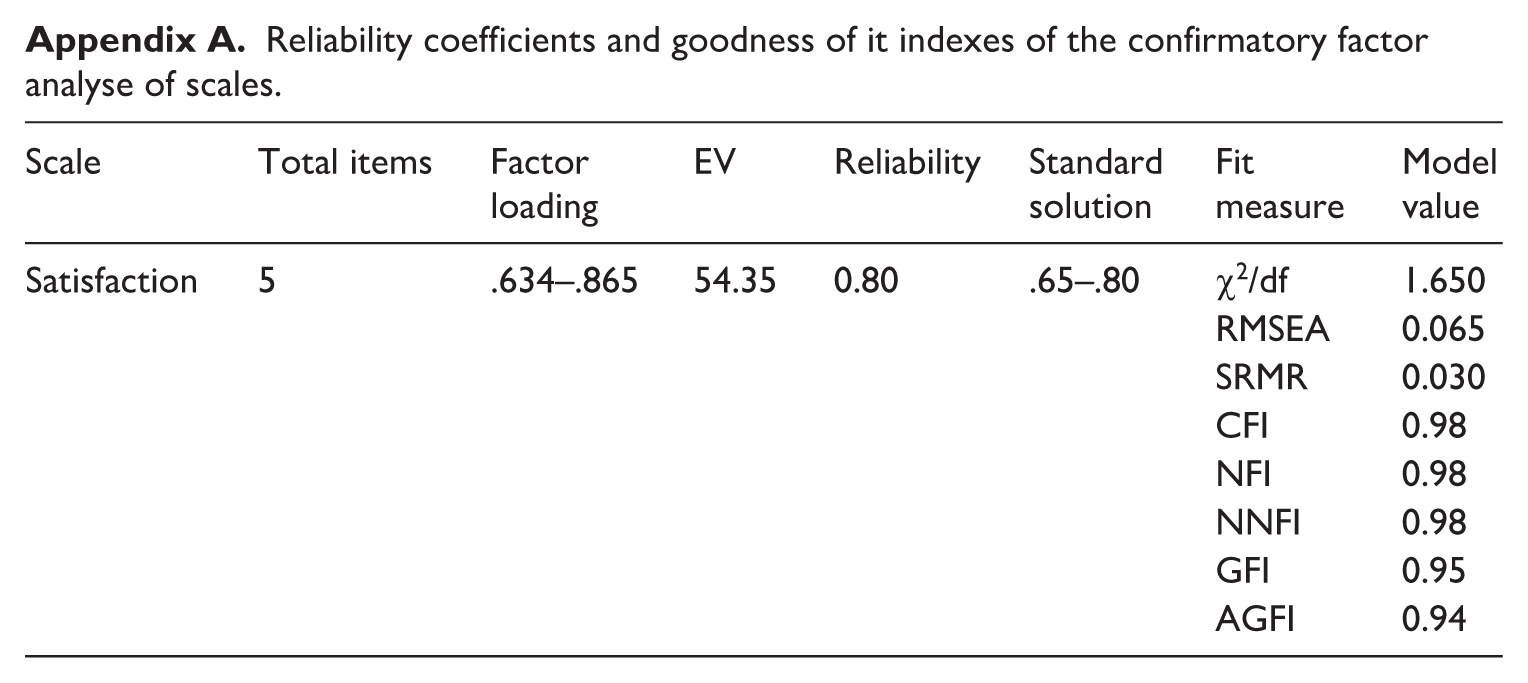
Confirmatory factor analysis supported the five-factor structure with acceptable fit indices (for details, see Appendix A). Each subscale demonstrated good internal consistency, with the full scale achieving Cronbach’s α = .85 in prior research, α = .83 in Study 1 and α = .84 in Study 2. For a unified measure of readiness, we aggregated scores across all five dimensions into a single overall readiness index.
e Online learning beliefs scale
The 14-item, five-point Likert scale survey used to evaluate participants’ beliefs about online learning was originally developed by Yang and Tsai (2008) and later rigorously adapted into Turkish by Horzum and Gungoren (2012). It comprises three distinct but related dimensions – behavioural beliefs (e.g. flexibility, enhanced interaction, self-regulated learning), perceived difficulty (e.g. diminished teacher control, distractions, increased workload), and contextual beliefs (e.g. subject-appropriateness, access to external information, suitability for active learners) – each of which was both examined separately and aggregated into a single overall attitude score. Internal consistency for the full scale was excellent (Cronbach’s α = .84 in prior research; α = .80 in Study 1 and α = .79 in Study 2), with subscale reliabilities similarly satisfactory.
f Online learning satisfaction scale
The five-item Satisfaction Scale used to assess students’ satisfaction with online learning was specifically developed for this study, drawing on established frameworks of student satisfaction in web-based education. Its development drew upon established frameworks of student satisfaction in web-based education and aimed to capture key aspects influencing learners’ experiences in virtual environments. The scale employs a five-point Likert response format (1 = strongly disagree to 5 = strongly agree). Items capture:
overall satisfaction with the online learning process;
perceived alignment of the experience with expectations;
effectiveness and efficiency of the virtual environment;
perceived support for learning; and
willingness to participate in future online courses.
Both exploratory and confirmatory factor analyses corroborated a single-factor solution, thereby establishing the instrument’s construct validity and internal consistency (Cronbach’s α = .80 in Study 1 and α = .81 in Study 2). An overall satisfaction index was computed by summing the five item responses (possible range: 5–25), yielding a composite indicator of students’ affective engagement and evaluative judgments regarding their online learning experience.
g EMI academic success
Academic success in EMI courses was evaluated using students’ GPAs. Although GPA is a broad measure of academic performance, its widespread use and established reliability in educational research (e.g. Rose et al., 2020; Thompson et al., 2022; Xie & Curle, 2022) made it an appropriate and essential indicator for this study. Specifically, an EMI-specific GPA was calculated by averaging final grades from English-taught courses within EMI programmes. Only students with at least eight completed EMI courses were included in the analysis to ensure a robust measure of EMI academic performance.
h General English proficiency (GEP)
The Cambridge Preliminary English Test (PET) at the B1 level (Cambridge ESOL, 2014) was employed to evaluate students’ GEP scores, a standard practice in EMI research (Feng et al., 2023) and within the Turkish educational context (Curle et al., 2020). This comprehensive test assesses the four core language skills: reading, writing, listening, and speaking, yielding individual skill scores and a final overall score, and it was this aggregate score that was used for this study’s analysis. Universities offering EMI programmes utilize exams, such as PET, to determine student proficiency, enabling placement in necessary language support courses. The test’s reliability and validity are substantiated by studies focusing on its individual components: writing (Shaw & Weir, 2007), reading (Khalifa & Weir, 2009), speaking (Taylor, 2011), and listening (Geranpayeh & Taylor, 2013). The PET’s established validity makes it a strong and commonly used tool for measuring language skills in the Turkish EMI context.
i Procedure
Following institutional review board approval and compliance with all ethical procedures, including the acquisition of informed consent, data were gathered online across three temporal phases: pre-pandemic, during the pandemic, and post-pandemic. Participants’ responses were linked via anonymized coded identifiers, in keeping with the approach of Soruç et al. (2024). Descriptive statistics (means, standard deviations, and Pearson correlation coefficients) were first calculated. Thereafter, hierarchical multiple regression analyses were conducted to explore the interrelationships among variables. Prior to regression, key assumptions were assessed: the Durbin–Watson statistic was 1.479; tolerance values ranged from .927 to .941; VIF values ranged from 1.063 to 1.985; and condition indices varied between 1.000 and 1.844, indicating no concerns regarding autocorrelation or multicollinearity. All statistical procedures were executed using SPSS Version 21.0.
j Findings
Descriptive analyses were conducted for each temporal phase – pre-pandemic and pandemic – on EMI GPAs, GEP scores, online learning readiness, online learning beliefs, and online learning satisfaction. In the pre-pandemic phase, EMI GPAs averaged M = 66.90 (SD = 9.63, S = –0.15, K = –0.54); during the pandemic, they ranged from 41 to 89 (M = 71.52, SD = 9.21, S = –0.10, K = –0.61), reflecting an increase of over 4 points. A paired-samples t-test confirmed this improvement was statistically significant (t473 = –27.16, p < .05), indicating higher EMI achievement during the pandemic.
Across the same single administrations in the pandemic phase, GEP scores ranged from 31 to 98 (M = 73.50, SD = 10.38); online learning readiness scores ranged from 27 to 86 (M = 62.10, SD = 8.85); online learning beliefs scores ranged from 24 to 65 (M = 46.54, SD = 7.99); and online learning satisfaction scores ranged from 5 to 25 (M = 16.91, SD = 4.04). These descriptive results demonstrate that, when measured once during the pandemic, all variables – academic success, GEP, readiness, beliefs, and satisfaction – remained relatively high. All analyses were conducted in SPSS Version 21.0.
k EMI academic success and its predictors: Pre-pandemic analysis
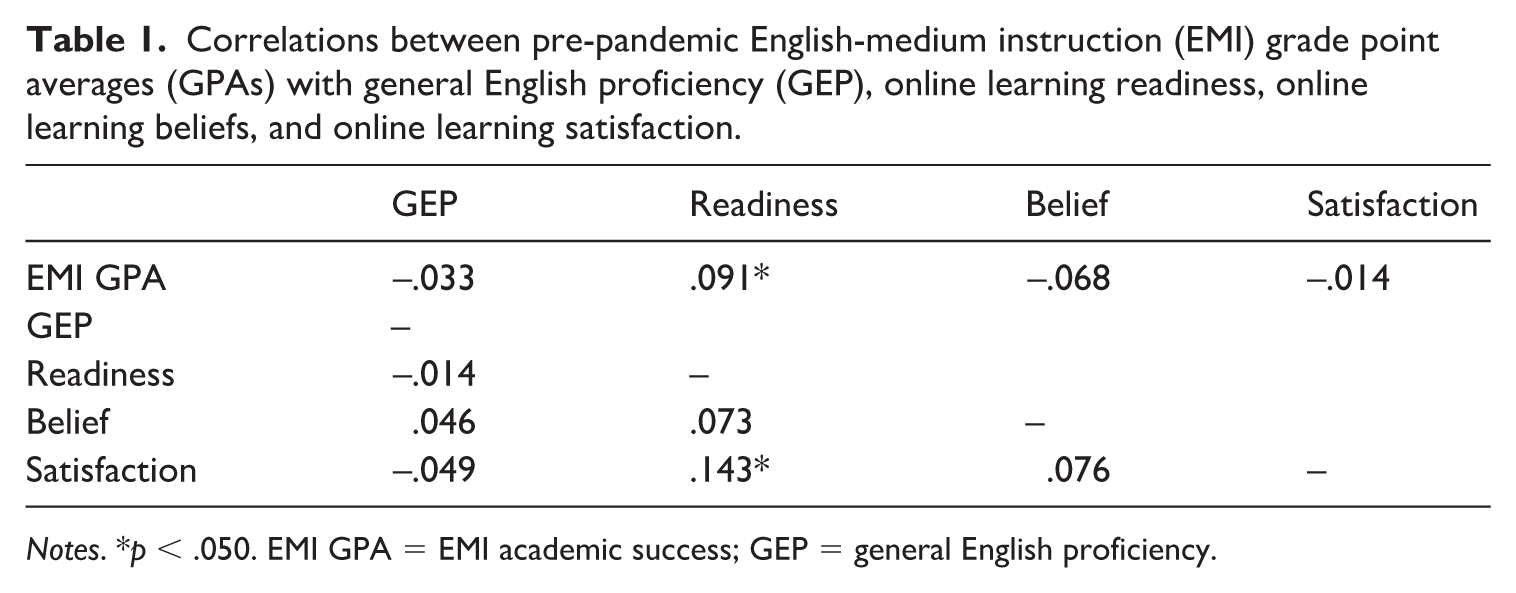
Prior to the pandemic, the relationship between EMI GPAs and the key variables – GEP, online learning readiness, beliefs, and satisfaction – was examined using correlation analysis. The results, which detail both the strength and direction of these associations, are presented in Table 1.
Correlations between pre-pandemic English-medium instruction (EMI) grade point averages (GPAs) with general English proficiency (GEP), online learning readiness, online learning beliefs, and online learning satisfaction.
Notes. *p < .050. EMI GPA = EMI academic success; GEP = general English proficiency.
Correlation analysis revealed a statistically significant positive relationship between EMI GPAs and online learning readiness, with a large effect size, as well as between online learning readiness and satisfaction, with a small effect size (all interpretations are based on the guidelines in Plonsky & Oswald, 2014). Interestingly, GEP and EMI GPA showed a negative but non-significant relationship (r = –.033), which implies that language proficiency of engineering students does not have a significant impact on their academic performance. No significant relationships were observed among the other variables. Subsequently, a linear regression analysis was performed to examine whether pre-pandemic academic success could be predicted by GEP, online learning readiness, online learning beliefs, and online learning satisfaction. The results of this regression analysis are presented in Table 2.
Regression analysis with pre-pandemic academic success as the outcome variable and general English proficiency (GEP), online learning readiness, online learning beliefs, and online learning satisfaction as predictor variables.
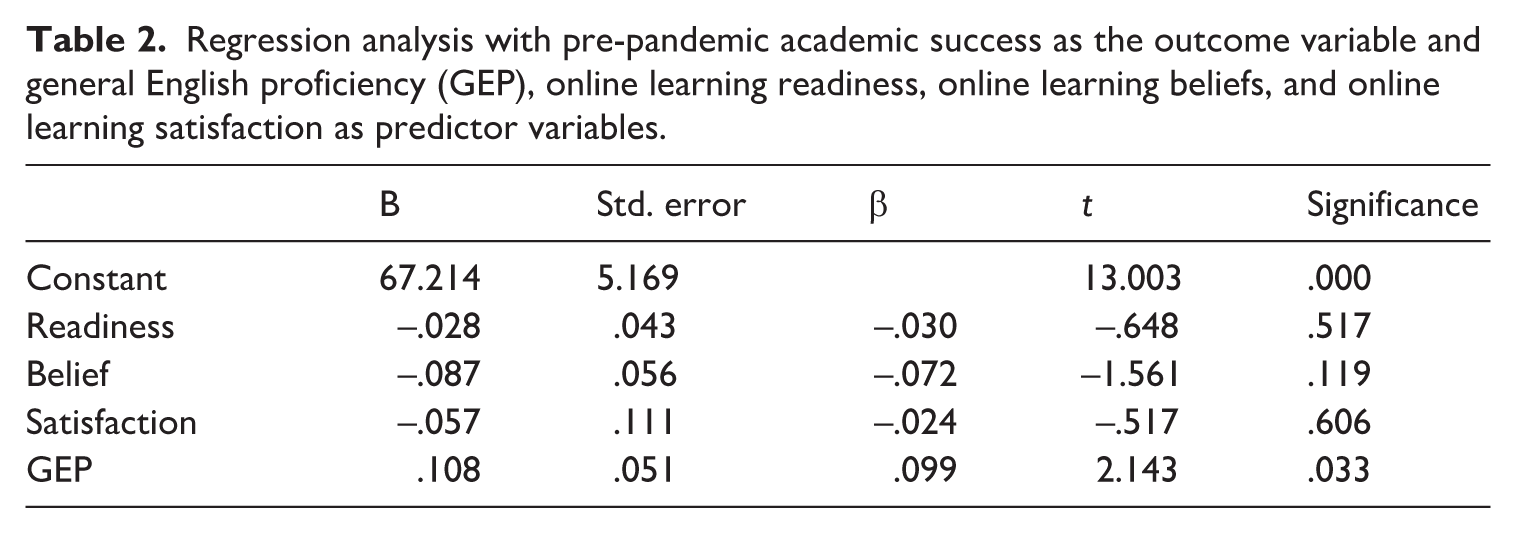
A linear regression analysis was performed to assess the extent to which GEP, online learning readiness, online learning beliefs, and online learning satisfaction predicted pre-pandemic EMI GPAs. The overall model reached statistical significance (F(4, 469) = 1.82, p < .05), but accounted for only 0.7% of the variance in EMI success scores (adjusted R² = .007). The effect size for EMI courses GPA regression analysis was found to be 0.007. Since this value is less than 0.2, it is considered to be low (Cohen, 1988). Within this model, GEP was the sole significant predictor of academic performance (p < .05), whereas readiness, beliefs, and satisfaction did not contribute significantly. These findings indicate that, in the pre-pandemic context, higher GEP levels were modestly yet significantly associated with better EMI outcomes, suggesting that initiatives aimed at enhancing GEP could offer a viable strategy for improving student achievement in EMI settings.
l EMI academic success and its predictors: During the pandemic analysis
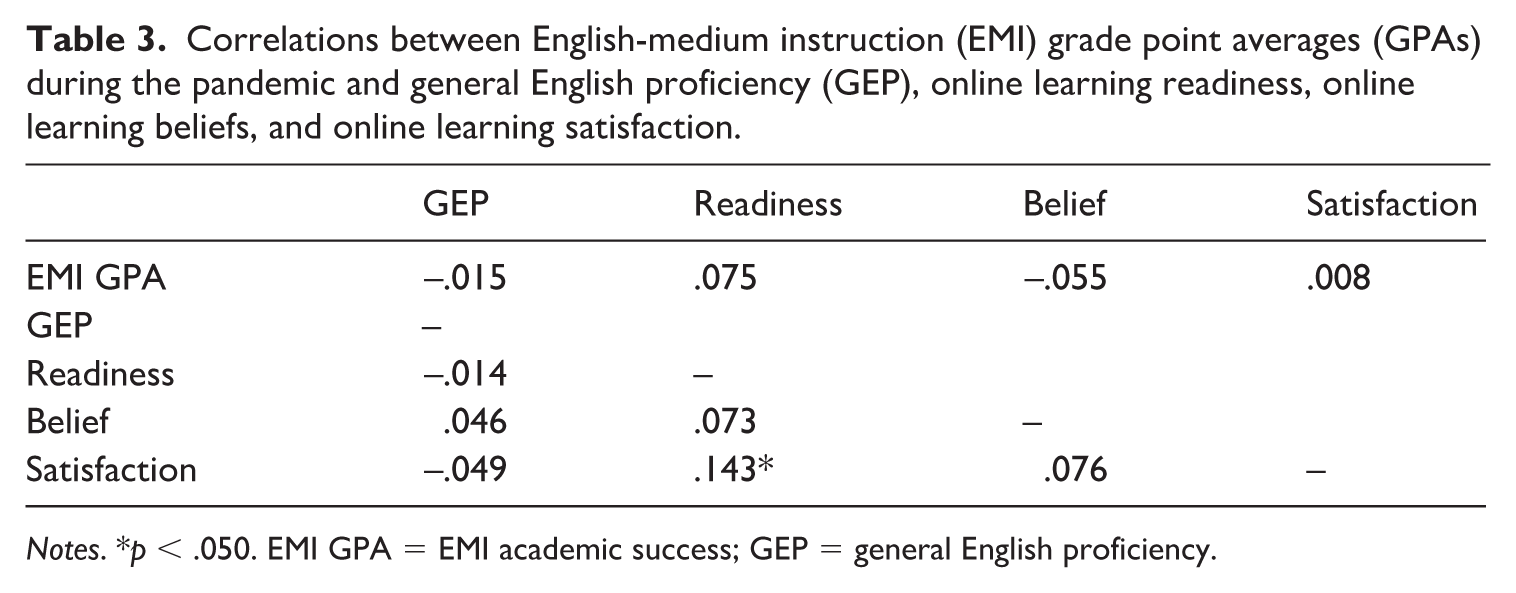
During the pandemic, correlation analysis was employed to investigate the relationships between EMI GPAs and key variables – namely, GEP, online learning readiness, online learning beliefs, and online learning satisfaction. The results of this analysis are comprehensively presented in Table 3.
Correlations between English-medium instruction (EMI) grade point averages (GPAs) during the pandemic and general English proficiency (GEP), online learning readiness, online learning beliefs, and online learning satisfaction.
Notes. *p < .050. EMI GPA = EMI academic success; GEP = general English proficiency.
Based on the correlation analysis, no significant relationship was found between students’ EMI GPAs during the pandemic and online learning readiness, beliefs, or satisfaction. The only notable finding was a positive correlation between online learning readiness and satisfaction, but the effect size was small (Plonsky & Oswald, 2014). Apart from this, no other significant relationships were identified. To further investigate whether EMI GPAs during the pandemic could be predicted by these variables, a linear regression analysis was conducted. The results of this analysis are presented in Table 4.
Regression analysis with during the pandemic academic success as the outcome variable and general English proficiency (GEP), online learning readiness, beliefs, and satisfaction as predictor variables.
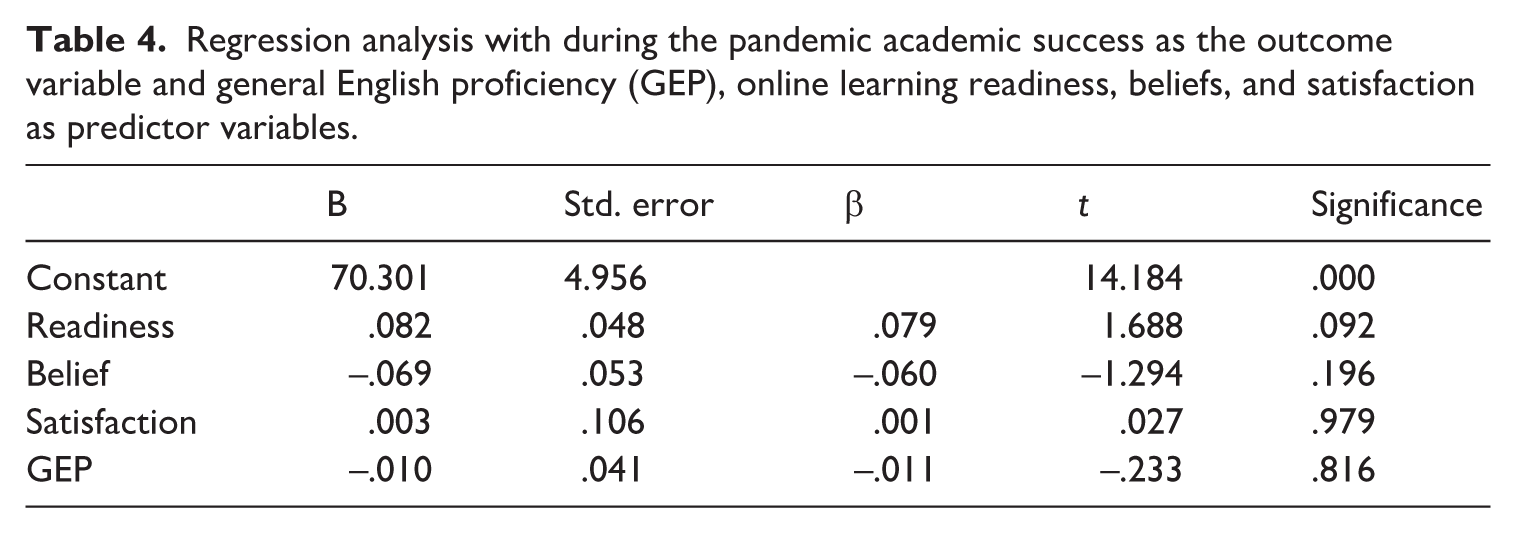
A multiple linear regression was conducted to examine whether GEP, online learning readiness, beliefs, or satisfaction predicted EMI GPAs. The overall model was non-significant, F(9, 464) = 1.10, p > .05, adjusted R² = .001. Moreover, none of the individual predictors reached significance, suggesting that, within the period analysed, GEP, readiness, beliefs, and satisfaction did not exert a measurable impact on EMI academic performance.
Study 2
a Participants
The study sample consisted of 460 EMI students enrolled at a public university. Among them, 237 (51.5%) were female, and 223 (48.5%) were male. The distribution of students by the department was as follows: Electrical Engineering: 84 students (18.3%); Civil Engineering: 91 students (19.8%); Environmental Engineering: 106 students (23.0%); Mechanical Engineering: 179 students (38.9%). Regarding online learning preferences, 255 students (55.4%) were willing to continue online learning, while 205 students (44.6%) were unwilling. When asked about their internet proficiency, the responses were as follows: Poor: 109 students (23.7%); Moderate: 140 students (30.4%); Good: 211 students (45.9%). Participants’ ages ranged from 18 to 28 years, with a mean age of 21.31 years (±1.45). Their daily internet usage varied between 2 to 7 hours, averaging 4.26 hours (±1.51).
b Instruments
The present study employed a demographic questionnaire alongside three established instruments: the online learning readiness scale, the online learning beliefs scale, and the satisfaction scale. Their psychometric properties and item compositions were detailed in Study 1. In addition, students’ EMI academic success data were obtained following the procedures outlined previously.
c Academic success in online EMI courses
Success in online EMI courses was assessed analogously to the evaluation of overall EMI academic achievement, using each student’s GPA in their online EMI classes only. Following the 2020 Council of Higher Education (CoHE) directive permitting Turkish universities to deliver up to 40% of their traditionally face-to-face curriculum via online platforms (CoHE, 2020), the host institution offered approximately three of the eight courses in each programme online. Academic success in online EMI courses, that is online EMI course GPA, for each student was calculated by averaging the end of the semester GPAs earned in these online EMI courses.
d Procedure
Similar data collection procedures were followed as described in Study 1. Before the analysis, fundamental statistical assumptions were assessed. The Durbin–Watson value was 1.645, indicating no autocorrelation. Tolerance values ranged from .913 to .993, and VIF values ranged from 1.007 to 1.095, confirming the absence of multicollinearity.
e Findings
In this study, descriptive analyses were conducted on EMI students’ GPA scores and online EMI course GPAs, as well as their GEP, online learning readiness, beliefs, and satisfaction scores. EMI GPAs ranged from 52 to 91 (M = 71.69, SD = 8.61, S = –0.07, K = –0.67) and the online EMI course GPA scores ranged from 41 to 87 (M = 67.74, SD = 8.23, S = –0.20, K = –0.24). Additionally, the GEP scores ranged from 53 to 93 (M = 73.00, SD = 7.21), the readiness scores for online learning ranged from 27 to 86 (M = 63.05, SD = 9.05), the belief scores for online learning ranged from 24 to 68 (M = 47.80, SD = 8.40) and the satisfaction scores for online learning ranged from 5 to 25 (M = 17.33, SD = 4.05).
GPA scores of online EMI courses were designated as the dependent variable. The relationship between readiness for online learning, beliefs, satisfaction, and GEP was examined through correlation analysis and presented in Table 5.
Correlations between face-to-face (F2F) and online English-medium instruction (EMI) course grade point averages (GPAs) scores with online learning readiness, beliefs, satisfaction, and general English proficiency (GEP).
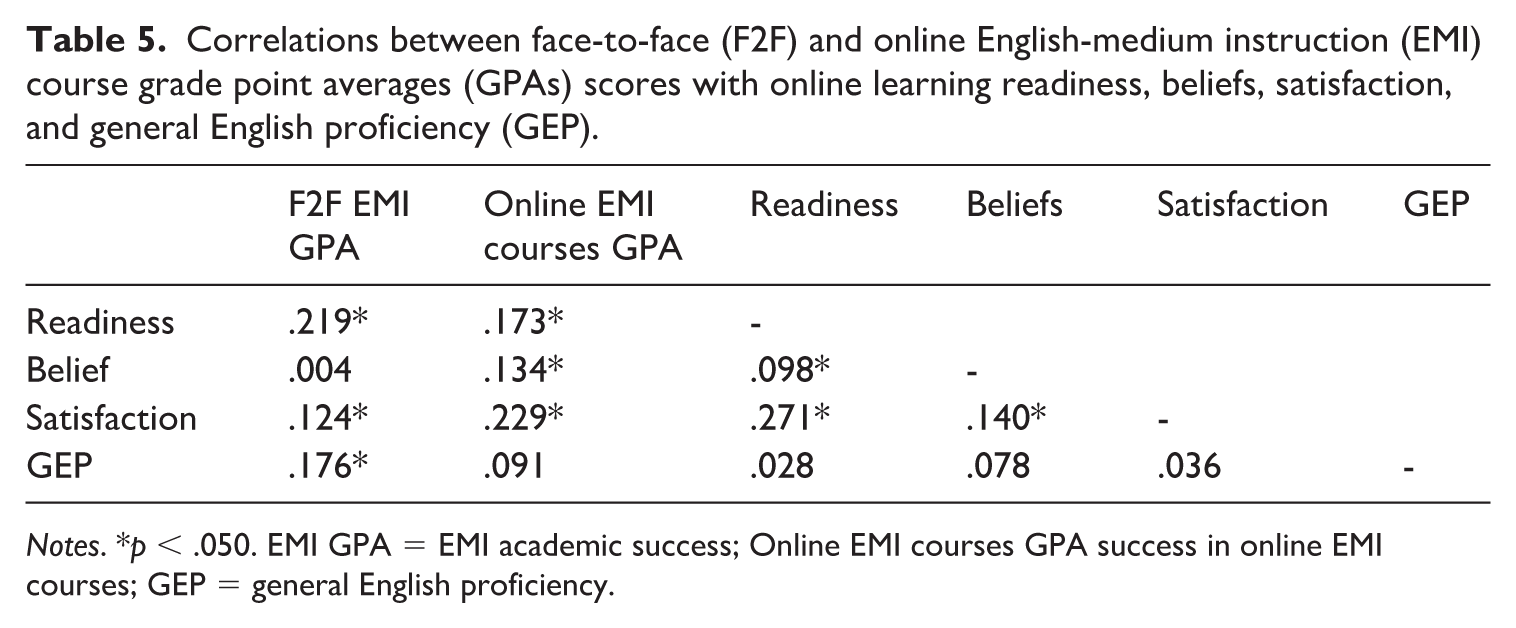
Notes. *p < .050. EMI GPA = EMI academic success; Online EMI courses GPA success in online EMI courses; GEP = general English proficiency.
When the results of correlation analysis were examined, a significant positive relationship was found between EMI GPAs and online learning readiness, satisfaction, and GEP. On the other hand, a significant positive relationship was revealed between the online EMI course GPA scores and online learning readiness, beliefs, and satisfaction. Furthermore, a significant positive relationship was found between online learning readiness and both beliefs and satisfaction, as well as between beliefs and satisfaction. The effect sizes were small in all cases (Plonsky & Oswald, 2014).
Linear regression analysis was conducted to examine whether the dependent variable, EMI GPAs, was predicted by the variables of online learning readiness, beliefs, satisfaction, and GEP in the post-pandemic period. The results of the analysis are presented in Table 6.
Regression analysis with face-to-face English-medium instruction (EMI) grade point averages (GPAs) as the outcome variable and online learning readiness, beliefs, satisfaction, and general English proficiency (GEP) factors as predictor variables.
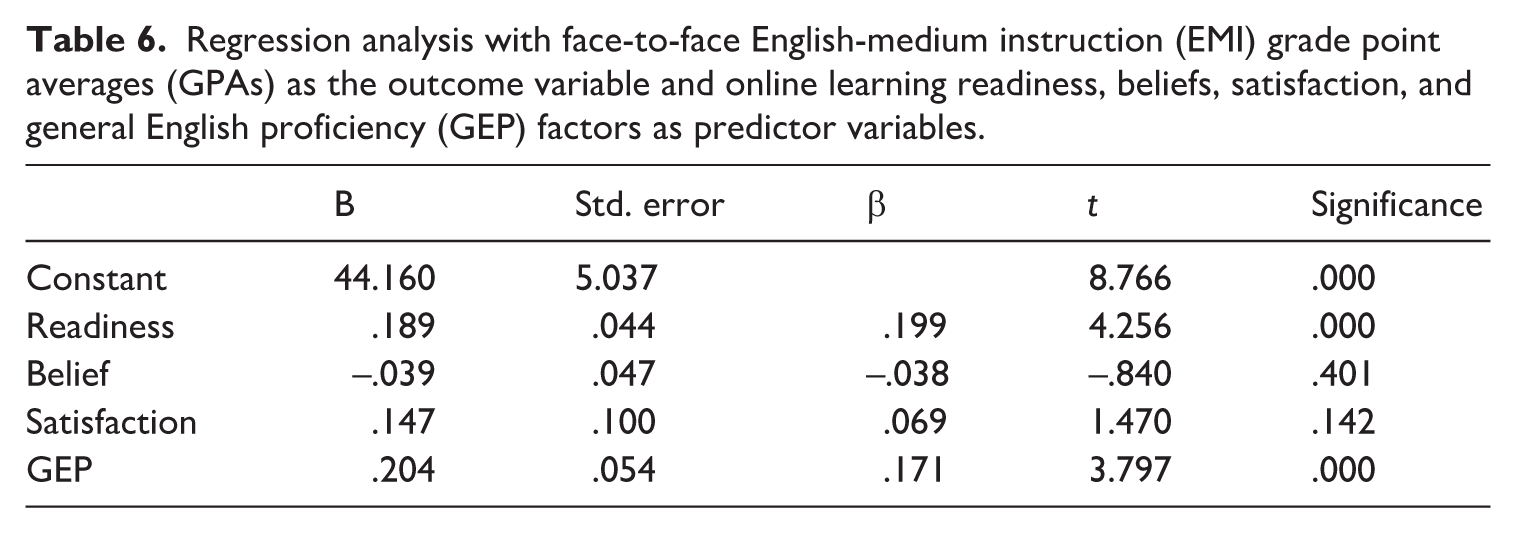
A hierarchical linear regression revealed that online learning readiness and GEP emerged as significant predictors of students’ EMI GPAs (F(4, 455) = 10.17, p < .005), accounting for 8.2% of the variance in achievement scores (adjusted R² = .082). The effect size (f2) for EMI courses GPA regression analysis was 0.09. Since this value is less than 0.2, it is considered to be low (Cohen, 1988). In contrast, neither online learning beliefs nor satisfaction contributed meaningfully to the model. These results underscore the pivotal role of both students’ GEP and their readiness for virtual instruction in fostering success within EMI settings.
In a parallel analysis, a multiple linear regression was performed to determine the extent to which online learning readiness, online learning beliefs, online learning satisfaction, and GEP collectively predicted students’ GPA in their online EMI courses. The results of the analysis are presented in Table 7.
Regression analysis with online English-medium instruction (EMI) courses’ grade point average (GPA) as the outcome variable and online learning readiness, beliefs, satisfaction, and general English proficiency (GEP) factors as predictor variables.
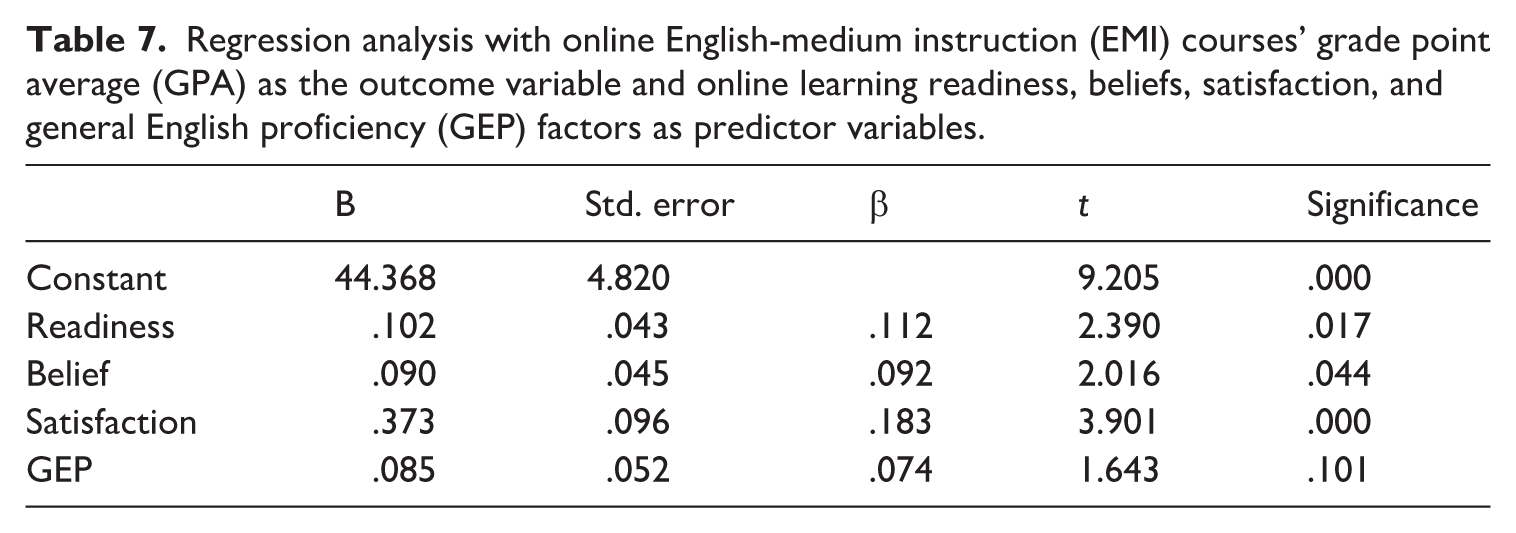
The results of linear regression are clear: students’ readiness, beliefs, and satisfaction with online learning are decisive factors in shaping their online EMI course GPA. The overall model was statistically significant, F(4, 455) = 9.96, p < .005, and explained approximately 8.0% of the variance in GPA (adjusted R² = .080). The effect size for EMI courses GPA regression analysis was found to be 0.087. Since this value is less than 0.2, it is considered to be a low effect size (Cohen, 1988). Examination of the individual predictors revealed that online learning readiness, beliefs, and satisfaction each contributed significantly to the model (all p < .05), whereas GEP did not reach significance. These results underscore the pivotal importance of students’ preparedness for online environments, their confidence in and attitudes toward web-based instruction, and their satisfaction with the learning process in determining academic success in online EMI courses.
IV Discussion
Research question 1 (Study 1) aimed to determine the extent to which GEP and learner dispositions in online learning under investigation predicted academic success in EMI courses across both the pre-pandemic and pandemic periods. A striking finding from Study 1 indicates that, prior to the pandemic, GEP served as a significant predictor of students’ EMI academic success, operationalized as through calculations of their GPA scores (Xie & Curle, 2022). This finding suggests that as students’ language proficiency increased, so did their success in EMI courses, underscoring the essential role of language proficiency in academic achievement within EMI contexts (Rose et al., 2020).
However, a comparative analysis of students’ EMI GPA scores across the two periods revealed a considerable increase in academic success during the pandemic, which was commonly described as grade inflation during the pandemic (e.g. Karadag & Ciftci, 2025; Tillinghast et al., 2023). Notably, this rise was neither related to language proficiency scores nor attributable to learner dispositions in online learning, that is, readiness, beliefs, or satisfaction with online education. In other words, the surge in EMI GPA scores bore no direct relationship to greater mastery of English or learner-related factors in virtual learning environments, suggesting that the rise in GPA provides only a limited picture of what ‘success’ meant in EMI during this period, reflecting a confluence of factors beyond language ability. These factors likely include altered assessment practices during emergency transition to online learning when most assessments were conducted remotely without sufficient security measures possibly leading to inflated scores (Nam et al., 2021; Newton & Essex, 2024). This grade inflation might also stem from potential teacher leniency, as many instructors who were accustomed to face-to-face settings may have graded higher to compensate for the unforeseen negative circumstances of the sudden switch to distance education (Karadag, 2021). While online learning expanded at an unprecedented pace, its abrupt and unstructured implementation exposed critical challenges. Among these were heightened concerns over academic dishonesty, inadequate technological infrastructure, and insufficient student preparedness – factors that collectively contributed to negative perceptions of the online learning experience (Demir Kaymak & Horzum, 2022), and that complicated the interpretation of GPA as a reliable indicator. While the current quantitative design cannot qualitatively probe the internal mechanisms of this shift, the loss of predictive significance in our model during the pandemic (see Table 4) serves as a robust statistical indicator of the contextual ‘noise’ introduced by the crisis. This suggests that the standard linguistic drivers of success were temporarily superseded by the broader structural changes of emergency remote teaching.
Research question 2 (Study 2) examined whether GEP and learner dispositions involved in online learning influenced academic success in both face-to-face and online EMI courses in the post-pandemic period. The findings suggest that these factors played distinct roles in shaping student outcomes in both cases. In the post-pandemic period, GEP regained its significance as a key predictor of academic success. As EMI courses returned to more structured formats, students once again needed high language proficiency to effectively engage with course materials and succeed academically. Put simply, after the pandemic, GEP regained its significance as a key predictor of success in EMI courses (Feng et al., 2023).
However, our findings from the same period present a crucial contrast for online EMI courses. Despite the return to more structured educational environments, GEP did not emerge as a significant predictor of academic success in online EMI courses post-pandemic (Table 7). This is a critical point that distinguishes the post-pandemic online context from traditional pre-pandemic face-to-face findings. The non-predictive nature of GEP in online EMI settings, even with structured formats, suggests that other factors – such as those related to learner dispositions like self-regulation and motivation – may have become more dominant in the digital learning environment. This could be due to the continued flexibility and asynchronous nature of some online components, where students might rely more on personal study habits and dispositional traits to manage their learning, rather than relying solely on their language proficiency for real-time engagement. This result highlights the dynamic nature of the role of language proficiency in EMI classrooms, emphasizing its fluctuating impact based on the specific learning context – be it in-person or online – even within the same academic period.
In addition to language proficiency, readiness for online learning became a significant predictor of academic success after the pandemic, which echoes the results of other studies in non-EMI settings (e.g. H.J. Kim et al., 2019; Torun, 2020). Unlike during the pandemic, when students were primarily concerned with accessing course content, the post-pandemic period saw a shift in priorities. In the new normal, students’ sense of preparedness for online learning played a crucial role in their success (Joosten & Cusatis, 2020), emerging as an equally important factor alongside language proficiency. This suggests that while the mode of content delivery was a central concern during the pandemic, students’ ability to navigate and engage with online learning environments became more critical for success in the long term (Ergun & Adıbatmaz, 2020).
When examining online EMI course GPA scores in the post-pandemic period, our data revealed that, unlike its role in face-to-face EMI academic success, GEP was no longer a significant predictor of academic success in online EMI courses, similar to the pattern observed during the pandemic, when students prioritized online learning skills. This indicates a ‘passing cloud’ effect – while language proficiency remained crucial in face-to-face EMI courses, its influence diminished in fully online settings, where other factors, such as readiness, beliefs and satisfaction with online learning, may have played a more dominant role (Demir Kaymak & Horzum, 2022). These indicators, which significantly predicted EMI GPAs in online courses, reflect a broad spectrum of psycho-affective factors that influence students’ ability to navigate online learning environments (Wang et al., 2023). Specifically, students must develop technological proficiency (e.g. mastery of Microsoft Office programs and internet-based learning software), become more adept at using self-directed learning strategies (e.g. the ability to set goals, manage time effectively, and follow structured study plans), and problem-solving skills (e.g. seeking assistance when faced with learning challenges).
To achieve academic success in both face-to-face and online EMI courses, students must cultivate strong psycho-affective attributes (Chang & Tsai, 2022; Soruç et al., 2024). They need to be well-prepared for the demands of online learning, equipped with positive beliefs about online education, and capable of effectively managing their learning processes (Zhou & Zhang, 2022). A higher sense of self-efficacy and confidence in navigating online platforms can contribute to greater academic satisfaction and achievement. All these findings emphasize the importance of a holistic approach to student readiness – one that not only encompasses preparedness but also fosters positive beliefs and academic satisfaction as the three key pillars paving the way for success in online EMI courses. This interplay triggers a snowball effect: As students develop a strong sense of readiness, their confidence in navigating online learning gains momentum, reinforcing positive beliefs about their academic abilities and deepening their satisfaction with the learning experience. This cycle of growth fuels greater engagement and persistence in online EMI courses, ultimately strengthening their overall academic performance. Just as a raindrop creates ripples in a pool, promoting readiness for online learning can set off expanding waves of influence, shaping success on a broader scale.
V Implications
Considering the main findings of the two studies, three key implications can be drawn for policymakers and higher education institution leaders. These implications highlight the need for strategic adjustments in EMI course design, online learning policies, and student support systems to enhance academic success in evolving educational contexts.
1 Enhancing online learning readiness in EMI programmes
Given that readiness for online learning emerged as a significant predictor of academic success in EMI courses, institutions should integrate digital literacy and self-regulated learning strategies into EMI curricula. Providing students with structured training on time management, self-directed learning, and the effective use of digital tools can help them navigate online learning environments more successfully. Universities should also incorporate orientation programmes that enhance students’ confidence in using online platforms and encourage proactive learning behaviours.
2 Reevaluating assessment practices in online EMI courses
The surge in EMI GPA scores during the pandemic, despite no corresponding increase in language proficiency or cognitive engagement, highlights concern about academic integrity in online assessments. Institutions should adopt more secure and more reliable evaluation methods, such as proctored exams, oral assessments, and project-based evaluations, to ensure that academic success in EMI courses accurately reflects students’ language proficiency and subject mastery. Additionally, policies should be developed to mitigate grade inflation and maintain academic standards in hybrid or fully online EMI settings.
3 Balancing linguistic competences and appropriate learner dispositions in EMI education
The fluctuating role of language proficiency in predicting academic success suggests that EMI programmes should move beyond a sole focus on linguistic competence and emphasize broader learner dispositions. Course design should integrate interactive learning activities that promote problem-solving, critical thinking, and collaborative engagement. Instructors should also foster motivation and resilience among students by creating learning environments that encourage open discussions, self-reflection, and adaptability, ensuring that students are prepared for both traditional and digital learning contexts.
VI Conclusions, limitations and future directions
The two studies reported in this article have provided important insights into the predictors of academic success in EMI as a function of the mode of instruction in the pre-, during-, and post-pandemic periods. That said, both empirical investigations suffer from several limitations that warrant acknowledgment.
First, although both studies were conducted within the same institutional context, they drew on distinct cohorts: Study 1 sampled graduates of EMI programmes, whereas Study 2 focused on currently enrolled engineering students. This design limits the direct comparability of results and calls for caution when interpreting cross-study differences. Second, the exclusive focus on engineering undergraduates constrains the generalizability of findings. The choice of engineering was deliberate, given the high uptake and prominence of EMI within STEM disciplines in Türkiye (Yuksel et al., 2022). However, as Macaro (2020) notes, disciplinary variations in language demands, pedagogical practices, and cognitive–affective dynamics may yield different predictor profiles in the humanities and social sciences. Future cross-disciplinary replications should therefore examine whether factors such as GEP, online readiness, and satisfaction operate similarly in other academic fields, thereby informing discipline-specific instructional strategies. Third, academic success in EMI is likely influenced by a broader constellation of cognitive, psychological, and affective variables – such as self-regulation, intrinsic motivation, perceived barriers, and domain-specific self-efficacy – that were not measured here. Incorporating these constructs in future research would enhance explanatory power and yield a more comprehensive understanding of student outcomes. Finally, we acknowledge a key limitation concerning the interpretation of GPA data during the pandemic. Although we observed a notable increase in GPAs during this period, our suggestion that it was partly due to lax assessment security or instructors’ attitudes lack direct empirical support, especially in our context. We did not collect qualitative, classroom-based data on exceptional learning conditions or specific changes in institutional grading policies; therefore, our assertion remains a speculative interpretation based on the previous literature. However, the value of this quantitative approach lies in its ability to document the statistical disruption of the period. While we cannot qualitatively ‘explain’ the lived experiences of the students, our data provides a large-scale macro-validation that traditional academic predictors lost their efficacy during the pandemic, creating a ‘predictive vacuum’ that only stabilized in the post-pandemic era. This interpretation is supported by existing studies on pandemic-era grade inflation and assessment shifts (e.g. Cavanaugh et al., 2023; Karadag & Ciftci, 2025; Rodríguez-Planas, 2021; Tillinghast et al., 2023), which provide the necessary context for the statistical decoupling of proficiency and performance observed in our results.
Despite these limitations, the two studies reported in this article significantly contribute to understanding the fluctuating role of language proficiency. While language proficiency predicted EMI academic success during the pre-pandemic period, its impact diminished during the pandemic, only to regain its predictive prominence afterwards. This passing-cloud effect should be considered in future research. Moreover, the findings revealed that both language proficiency and readiness for online learning influenced post-pandemic EMI academic success which highlights the importance of qualitative studies to explore how lower-proficiency students coped with the online shift, how faculty adapted their teaching, and what specific institutional supports actually helped them succeed.
Footnotes
Appendix
Reliability coefficients and goodness of it indexes of the confirmatory factor analyse of scales.
| Scale | Total items | Factor |
EV | Reliability | Standard |
Fit |
Model |
|---|---|---|---|---|---|---|---|
| Satisfaction | 5 | .634–.865 | 54.35 | 0.80 | .65–.80 | χ2/df | 1.650 |
| RMSEA | 0.065 | ||||||
| SRMR | 0.030 | ||||||
| CFI | 0.98 | ||||||
| NFI | 0.98 | ||||||
| NNFI | 0.98 | ||||||
| GFI | 0.95 | ||||||
| AGFI | 0.94 |
Funding
The authors received no financial support for the research, authorship, and/or publication of this article.
