



Abstract
Despite growing research highlighting the value of student voice practices (SVPs) in enhancing engagement and enriching children's learning experiences, SVPs remain uncommon in primary physical education (PE) ( Iannucci and Parker, 2022a). The purpose of this research was to gain insight into children's experiences of SVPs in primary PE, offering insight into how SVPs can be integrated into regular PE practice. A multi-site qualitative case study design was adopted. Over a period of five months, seven primary teachers in Ireland were supported in learning about and enacting SVPs in their PE practice. Children in their classes (n = 120) were actively involved and invited to reflect on their experiences of SVPs throughout the project. Data sources included webinar presentations (n = 6), a semi-structured interview with teachers (n = 2 participants), children's workbooks (n = 120), and blog posts co-authored by teachers and children (n = 6). A reflexive thematic analysis approach was used to analyse the data ( Braun and Clarke, 2021). Findings show how children used SVPs to share their experiences, articulate their preferences, and suggest changes to future PE lessons. Children reportedly valued sharing their voices and recognised the positive influence SVPs had on their participation in PE. Based on their own lived experiences, children came to recommend the wider implementation of SVPs by others. The findings make a compelling case for the adoption of SVPs as part of regular PE practice, while offering practical direction for enactment.
Introduction
Student voice practices (SVPs) refer to strategies which promote the active involvement of students in educational decision-making, with a focus on seeking their input and feedback on teaching practices (Conner et al., 2024). Although research highlights the value of student voice in enhancing children's learning experiences, SVPs remain atypical in primary physical education (PE) (Iannucci and Parker, 2022a). Continued disregard for children's perspectives risks deepening the disconnect between their PE experiences and their wider lives (Parker et al., 2018). Clear evidence-based direction is needed to support teachers in adopting SVPs as part of their regular PE practice. While researchers have begun to follow teachers’ experiences during the initial enactment of SVPs (e.g. Ní Chróinín et al., 2024), insight into children's experiences of the initiation of these practices in PE is lacking. The aim of this research was to gain insight into children's experiences of and engagement with SVPs in primary PE. This evidence can help guide the integration of SVPs into regular PE practice.
SVPs are not a new concept and closely align with the principles of democratic education, as outlined by theorists such as Dewey (1916). A growing body of research highlights the positive impact of SVPs on learning outcomes and student–teacher relationships (Conner et al., 2024; Mitra, 2003). Within PE, research has shown the potential of SVPs in supporting students to take ownership of their learning, in enhancing participation and engagement, and in nurturing a more meaningful and collaborative approach to PE practice (Cardiff et al., 2023; Enright and O'Sullivan, 2010; Howley et al., 2021). For example, in their research with teenage girls in an urban school setting, Enright and O'Sullivan (2010) found that collaborating with students to negotiate the curriculum and involving them in decision-making within lessons served to motivate them and led to their increased participation in PE. SVPs have also been found to support high school students in sharing personal experiences and understandings in PE and contribute to their development of social and emotional skills (Howley et al., 2021). With primary-aged children, providing opportunities to modify tasks in PE has been shown to help children to align lessons with their own learning goals, making their experiences more meaningful and relevant to their lives (Ní Chróinín et al., 2023). Cardiff et al. (2023) found that when children were comfortable sharing their voices and making decisions in PE lessons, they more readily made adaptations to the rules or challenge level of activities without teacher input. In this sense, by listening to students and engaging them in collaborative decision-making, SVPs have the potential to transform students’ PE experiences (Howley and O'Sullivan, 2021).
While substantial evidence exists which highlights the value of student voice and offers a why for enactment, the how of student voice remains less clearly defined. Some guidance has been proposed on the integration of SVPs into everyday teaching of PE. For example, Enright and O'Sullivan (2010) used personal biographies and physical activity timelines with teenage girls to inspire conversation around their PE experiences. These activities can support students in reflecting on and sharing what they value and care about, while also helping them to make sense of their experiences and relationship with PE (Enright and O'Sullivan, 2010; Howley et al., 2021). To further encourage critical reflection, Howley (2022) recommends the regular use of digital and written reflections in high school PE settings to facilitate knowledge construction and inform future decision-making in PE lessons. In addition, taster sessions, during which students experience a variety of activities, have been shown to be effective in expanding students’ frames of reference for PE, further supporting informed decision-making (Howley, 2022; Howley et al., 2021). Students have also successfully acted as co-creators in PE, by co-constructing curriculum units and making decisions about the organisation, rules, activities, and assessment procedures (Enright and O'Sullivan, 2010).
Within primary PE, more specifically, Iannucci and Parker (2022b) recommend the use of a variety of methods to support younger children both in sharing their voices and participating in collaborative decision-making. Offering children choice, in terms of the games played, the equipment used, or the challenge level of tasks, is proposed as a meaningful step towards more authentic involvement in decision-making practices (Iannucci and Parker, 2022b). Children can also be supported in acting as co-creators in PE, by designing and delivering games in small groups, based on the topic being covered (Iannucci and Parker, 2022b). More recently, allocating ‘free’ time in lessons has been shown to be effective in helping children to plan and direct their own activities in PE (Ní Chróinín et al., 2023); children can be supported in choosing a specific skill to practice or in exploring suggested content with their friends. In addition, taster sessions can be used to help children to figure out their preferences for participation in PE, by recording and ranking their experience of various games and activities. Echoing Howley's (2022) recommendation, reflection also plays an essential role in supporting student voice in primary PE. Engaging the children in regular reflective practices helps them to check-in with their preferences and needs, reflect on the outcomes of their choices, and subsequently shapes their future decisions (Cardiff et al., 2025).
Although there is growing evidence of the benefits and positive outcomes of SVPs, more evidence is needed on how children themselves experience and engage with the approach. While our preliminary, small-scale studies have begun to address this gap (e.g. Cardiff et al., 2023; Ní Chróinín et al., 2023), further research is needed to explore how children actively use their voices to influence PE. Such insight can make a valuable contribution to understanding both how to support student voice and giving impetus to arguments of why teachers should enact SVPs. This project was guided by the following research question: What can be learned from children's experiences of and engagement with SVPs in primary PE? The research aims to offer direction on the enactment of SVPs by drawing on children's lived experiences of SVPs as part of regular practice in primary PE.
Methodology
Research design
This research consisted of a multi-site qualitative case study (Jenkins et al., 2018). According to Yin (2002: 13), a single case can be defined as ‘a contemporary phenomenon within its real-life context, especially when the boundaries between a phenomenon and context are not clear and the researcher has little control over the phenomenon and context’. A multi-site qualitative approach retains the depth of exploration of a case study, while also facilitating comparative analysis across settings and enhancing the generalisability of findings (Jenkins et al., 2018). This made a multi-site case study particularly suitable for this research, as it allowed an in-depth exploration of children's lived experiences of SVPs within settings, while also supporting the transferability of findings across contexts. This, in turn, has the potential to provide new insight into SVP enactment in primary PE and open new directions for student voice research.
Context and participants
Within Irish primary schools, PE is taught by generalist classroom teachers. In line with the Irish Primary Curriculum (National Council of Curriculum and Assessment [NCCA], 1999), teachers are currently recommended to teach 60 minutes of PE each week, covering the content areas of games, athletics, gymnastics, dance, aquatics and outdoor and adventure activities. While PE is currently structured around the 1999 curriculum, the forthcoming 2025 curriculum sees the integration of PE with Social, Personal, and Health Education (SPHE), under a new Wellbeing curriculum. This redeveloped curriculum places a greater focus on shared decision-making and autonomy-supportive strategies in everyday teaching and learning (NCCA, 2023).
Seven primary school teachers (n = 7) across five public primary schools in Ireland participated in this research. Six were classroom teachers responsible for teaching students from third to sixth class (ages 8–13), while one was a special education teacher who collaborated with the class teacher at one of the participating schools. The students from these classes were also invited to participate in the study (n = 120 in total). Further details regarding the location, patronage, and size of the schools can be found in Table 1. It should be noted that while most schools in this project were Catholic primary schools, this mirrors the national context in Ireland, where Catholic schools make up approximately 90% of public primary schools (Hyland, 2022). School selection was not based on religious affiliation.
Demographic details about participating classes/schools
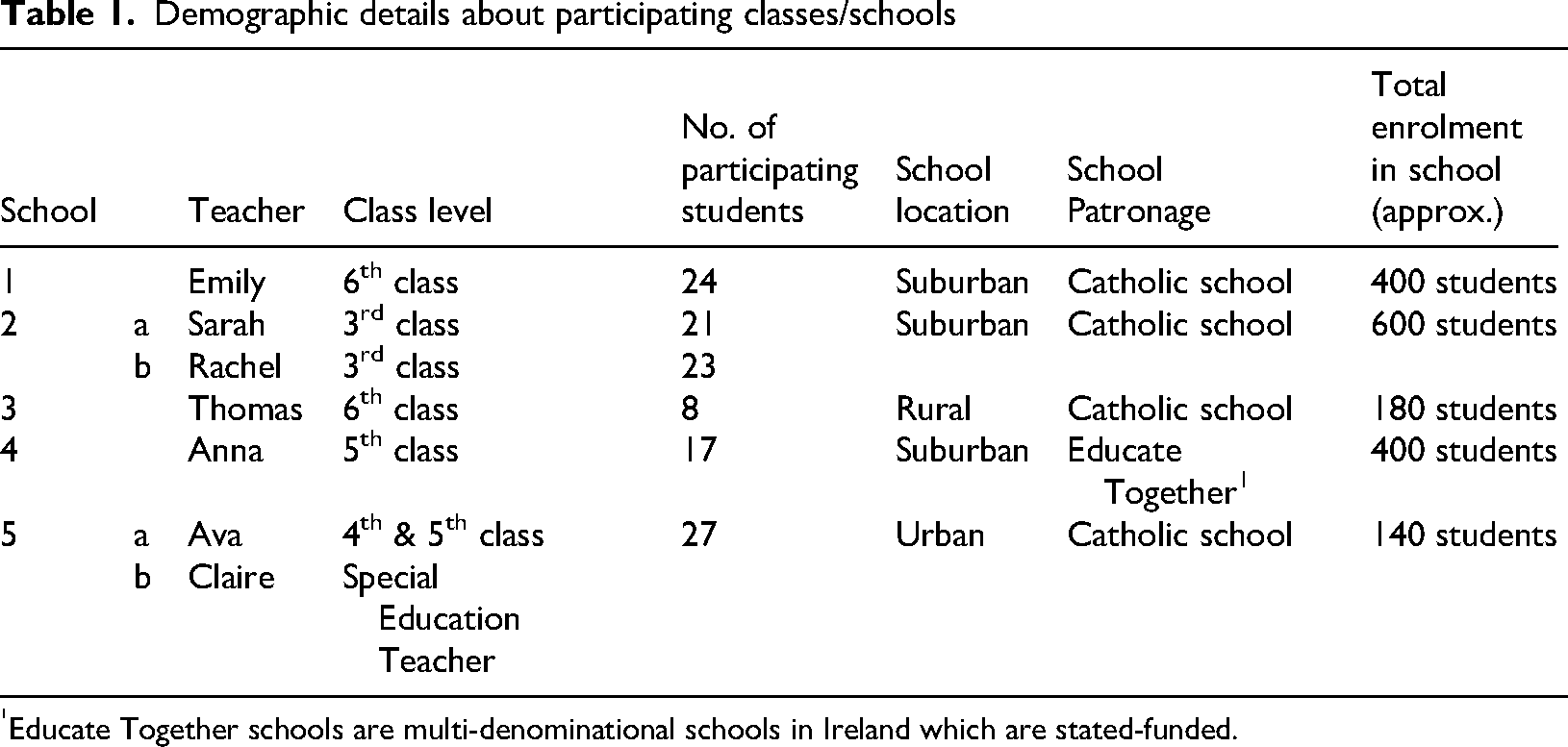
Educate Together schools are multi-denominational schools in Ireland which are stated-funded.
Following ethical approval from the Mary Immaculate College Research Ethics Committee, recruitment for the project began. An open call for participation was shared on the social media platforms of the Irish Primary PE Association (i.e. X, Facebook). The invitation sought out primary school teachers who were interested in enacting SVPs in their PE practice. Any teacher who expressed interest via e-mail was provided with further information about the project and formally invited to participate. Children in their class were subsequently invited to take part in the project, with participation open to any child in the class.
Before the project commenced, participating teachers, along with the principal teacher in each school, gave informed consent. Parental consent was sought on behalf of participating children. The assent of the children was sought in line with the British Educational Research Association's (BERA) ethical guidelines (2024). Information sheets and assent forms provided to the children were designed in a child-friendly manner, with their age and reading ability considered (BERA, 2024). Children were reminded that their participation was voluntary and there would be no consequences for choosing not to take part. Additional supports and adjustments were provided locally to ensure all children could access the information and provide informed assent if desired. Regardless of their consent/assent status, all children participated in PE as normal; they engaged in the SVPs within lessons and completed the PE workbook as part of regular PE instruction. However, only children who had given assent and whose parents had given consent participated in the student webinars and shared their workbooks with the research team. Pseudonyms are used in this paper to protect the anonymity of all participants.
Description of the intervention
The GROW VOICE project was a collaboration with the Irish Primary PE Association and took place from January to December 2024. The project team consisted of four primary PE teacher educators who have a keen interest in SVPs and were teaching on initial teacher education (ITE) programmes in Ireland. The project targeted primary school teachers, aiming to persuade them of the value of learning about and using SVPs in their PE lessons. Due to the project team's positionality across ITE programmes in Ireland, a number of the participating teachers were known to the project team.
Across a five-month period, teachers were supported in learning about and enacting SVPs in their PE practice. Three one-hour live teacher webinars were offered over the duration of the project. These webinars served as a guide for teachers in navigating SVPs in PE, while also providing a collaborative space for teachers to share their experience and practice. Strategies to support student voice in PE were shared, such as offering choice, encouraging children to direct play, and inviting them to modify a game or activity to better suit their needs or preferences. The webinars were delivered by two members of the project team, with the other two members acting in an advisory role. In the final webinar, an external expert on student voice led a problem-solving session, where teachers sought advice on various aspects of enacting SVPs in practice.
To further support teachers and complement the content of the teacher webinars, three one-hour student webinars were offered. Teachers and students could join these live webinars from their classrooms and interact with other participating classes. The student webinars, delivered by two members of the project team, were designed to develop children's skills and establish clear expectations for their participation in SVPs. For example, children were invited to contribute to the creation of PE rules and were guided in identifying appropriate behaviours, such as actively listening to others’ ideas. To further scaffold their engagement, each child had a PE workbook which they completed both as part of the webinar activities and during PE lessons.
The research team were in regular contact with the teachers throughout the project via e-mail. Student voice guidance and resources were provided as appropriate.
Data sources
Several qualitative data sources were used in this research to capture both the teachers’ and children's perspectives of SVPs in primary PE. As part of the teacher and student webinars, PowerPoint presentations (n = 6) were used as a tool by the project team to offer information and prompt discussion. The content of these presentations was included as a data source in the analysis process.
To help teachers in enacting SVPs and supporting their students’ voices, PE workbooks were designed and printed by the project team and distributed to all participating classes. PE workbooks have been used with primary school children as a tool for student voice and to facilitate reflection (Cardiff et al., 2025). Enright and O'Sullivan (2012: 122) recommend the use of PE scrapbooks to facilitate students in ‘finding their own language to articulate what they know and help them put words to their ideas and feelings and share understanding of their worlds’. The PE workbooks included a variety of activities (n = 22 pages) to support children in analysing their PE experiences and sharing their ideas for change with peers and their teacher. Some workbook activities were designed to be used as part of the student webinars, such as an activity on PE expectations and another on making decisions in PE (see Figure 1). Other activities could be used at the discretion of the teacher, before/after a PE lesson of their choosing. For example, the workbook included several exit tickets which contained prompts such as ‘Describe one thing you would change about PE today’ and ‘If I was the teacher, PE would look like….’ In addition, activities such as ‘Letter to my teacher’ invited children to address a note to their teacher to share what was working or not working for them in PE. Speech and thought bubble templates were also included in the workbook to support children in sharing times when their thoughts differed from what they said aloud. Speech and thought bubble templates, or Pupil View Templates as they are also known, have been recognised as an effective tool in facilitating dialogue about learning experiences (Wall, 2017). While every child in the participating classes was given a PE workbook, only the workbooks of consenting children (n = 120) were collected and used as a data source in the project.
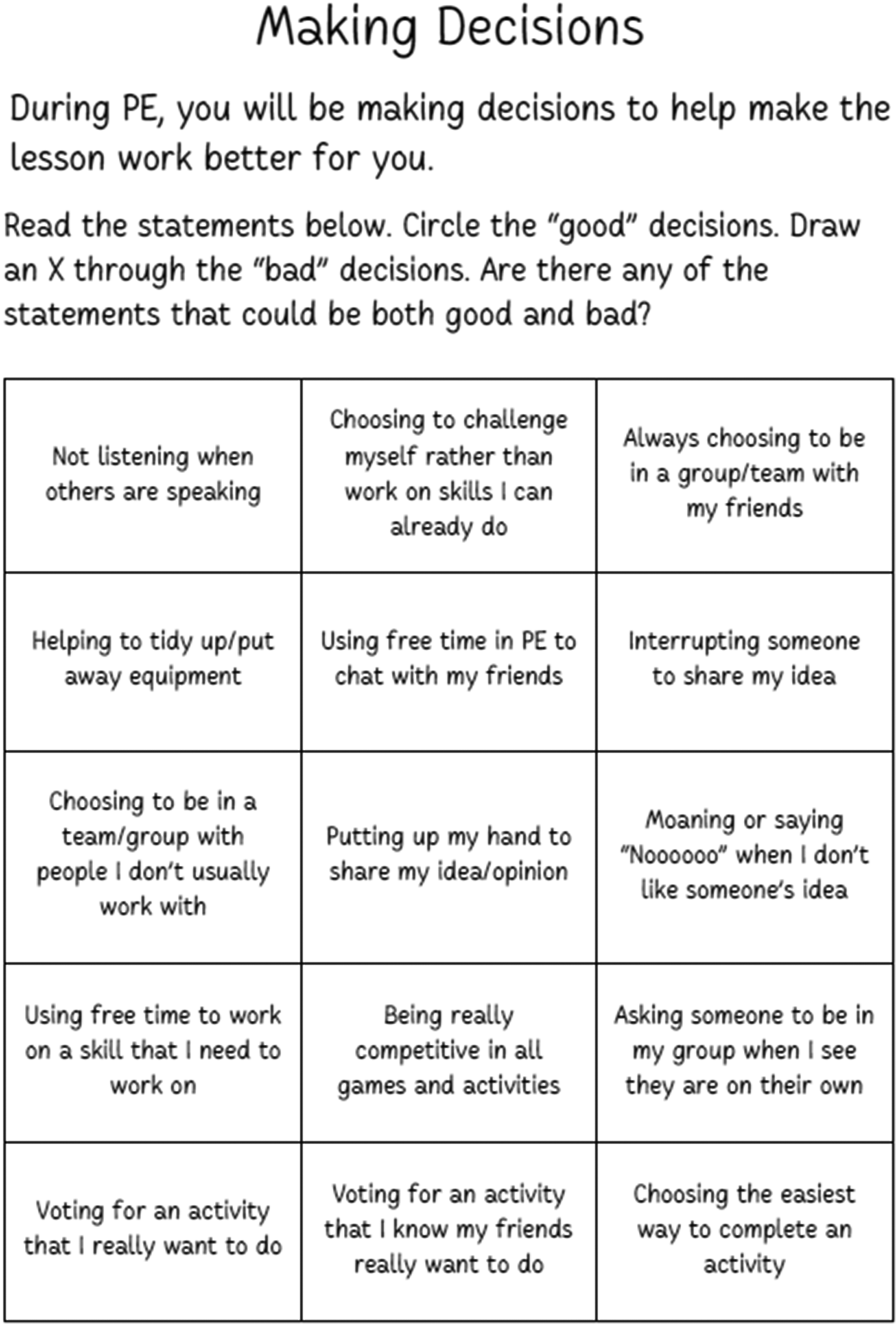
Sample of PE workbook activity used during student webinars.
In addition, a semi-structured interview was conducted with teachers (n = 2 participants) at one point during the project. Interviews are commonly employed in PE research as a means of data collection (e.g. Ní Chróinín et al., 2024; Stirrup, 2020). An e-mail was sent to all participating teachers, inviting them to be involved in an interview in which they could share their experiences and perspectives of SVPs. Two teachers, Emily and Anna, volunteered to be involved, and one member of the project team, who was not involved in the delivery of the webinars, conducted the interview. The interview was 22 minutes in length. Questions focused on the teachers’ experiences of enacting SVPs. For example: ‘How did you get started using SVPs?’, ‘What worked for you and your class?’, ‘Were there any obstacles or challenges to enacting SVPs?’, and ‘What advice would you give to other teachers?’ The transcript of this interview was used as a data source.
At the conclusion of the project, teachers and children were invited to write a blog post to share their experiences of SVPs in PE. The blog posts (n = 6, approx. 500 words each) were co-authored by teachers and their students. Each school was given a choice on authorship of their blog to fit the story they wished to tell. In the end, four schools chose to write their blog from the perspective of the children, one school wrote from the perspective of both the teacher and their students, and one from the perspective of the teacher alone. The content of these blog posts acted as a data source.
As the project ended, one participating teacher volunteered to share a video (two minutes in length) in which she spoke about her experience of the project, and the perceived benefits to her practice and her students’ PE experience. The transcript of this video was used as a data source. In addition, all e-mail correspondence with participating teachers throughout the project served as data sources and were included in the analysis process.
Data analysis and trustworthiness
A reflexive thematic analysis (Braun and Clarke, 2021) involved a combination of inductive and deductive analysis. While attention was given to both children's and teachers’ experiences of SVPs as part of the larger research project, the aim of this paper was specifically focused on children's experiences of voice – both how they perceived SVPs and how they used their voices. For this reason, children's data were prioritised in the analysis process, with teachers’ data providing additional context and insight. Two members of the research team led the analysis process. Analysis involved an iterative and recursive process that began with familiarisation and review of all data by reading and re-reading. Next, the data were coded for ideas that were relevant and important to answering the research question. The endpoint blog posts authored by each school were analysed first to provide an overall context and direction of travel for the key ideas in the data. Next, the children's workbook data, teacher e-mails, teacher video, and teacher interview were analysed. Attention to recurring and accentuated ideas led to the construction of initial themes related to sharing of experiences, requesting change, and affirming the value of student voice. Two members of the research team met regularly to review and discuss the codes, the formation of themes, and to check for consistency between the data and selected themes. All data were reviewed again in search of support for the three initial themes with particular attention to the relationship between data sources. Considering the sources collectively supported data convergence and enabled definition and naming of each theme. Finally, two members of the team drafted the reporting of the themes with attention to the overall research question. Direct quotes from participant teachers and children were selected to illustrate the argument of each theme. All four members of the research team were involved in editing and revising the final manuscript.
Trustworthiness was addressed through inclusion of a variety of data sources, triangulation of children's and teachers’ data, involvement of two members of the research team in analysis, and a member check of the key themes of the research with one of the teachers involved.
Findings
The findings illustrate both children's experiences of SVPs and the ways in which they used their voices and are presented in three themes. First, evidence is presented on how children shared their experiences, articulated their preferences, and requested changes in PE. Second, the value that children placed on having opportunities to express and use their voices is highlighted. Third, the children's recommendations for the wider enactment of SVPs by others are explored.
Children shared their experiences and preferences and requested change
Children are not often given the opportunity to have a say in PE, particularly at primary level (Iannucci and Parker, 2022a). Despite having limited experience of influencing their participation, children readily rise to the challenge when given the opportunity to share their views and influence change in PE (Cardiff et al., 2023; Ní Chróinín et al., 2023), a pattern which was also observed in this research. Findings show that, while most children had clear ideas of what they liked and disliked, many also had ideas of what they would change about their PE experiences.
Sharing preferences for participation featured consistently in how children used their voices in PE. Starting out, the children talked to their teacher and used workbook tasks to articulate their preferences and share their experiences of PE lessons. In general, children expressed positive sentiments about their experiences, describing them as enjoyable, engaging and valuable. Mirroring research in PE and physical activity (Beni et al., 2017; Koekoek et al., 2009), children's enjoyment of activities in PE often related to how fun they found the activity, who they were grouped with, and how challenging the activities were. For instance, one child stated that their favourite thing about PE is ‘playing fun games with my friends’ (Ella, School 1), while another noted, ‘I like challenging myself sometimes’ (Casey, School 2a). The aspects of participation valued by the children reflect several features of meaningful experiences as described by Beni et al. (2017) (i.e. fun, social interaction, challenge, motor competence, personally relevant learning), providing evidence of children's consistent prioritisation of these features of participation across time and place.
Some children shared less-positive responses to their participation in PE, alluding to experiences that they disliked. These experiences were often related to their judgements about rule-breaking and the importance of including everyone, factors which have been noted elsewhere (Ní Chróinín et al., 2023). For example, one child remarked, ‘I really hated when I was out in PE for no reason’ (Morgan, School 2b), while another reflected, ‘everything worked out well but sadly I was only passed the ball once’ (Ethan, School 4). Workbook tasks, such as the speech and thought bubble templates, proved useful in highlighting both the children's desire for fairness and their hesitation in sharing these opinions aloud (see Figure 2). Notably, these templates also provided valuable insights into how children's thoughts often differ from those of their peers, as illustrated in Figure 3.
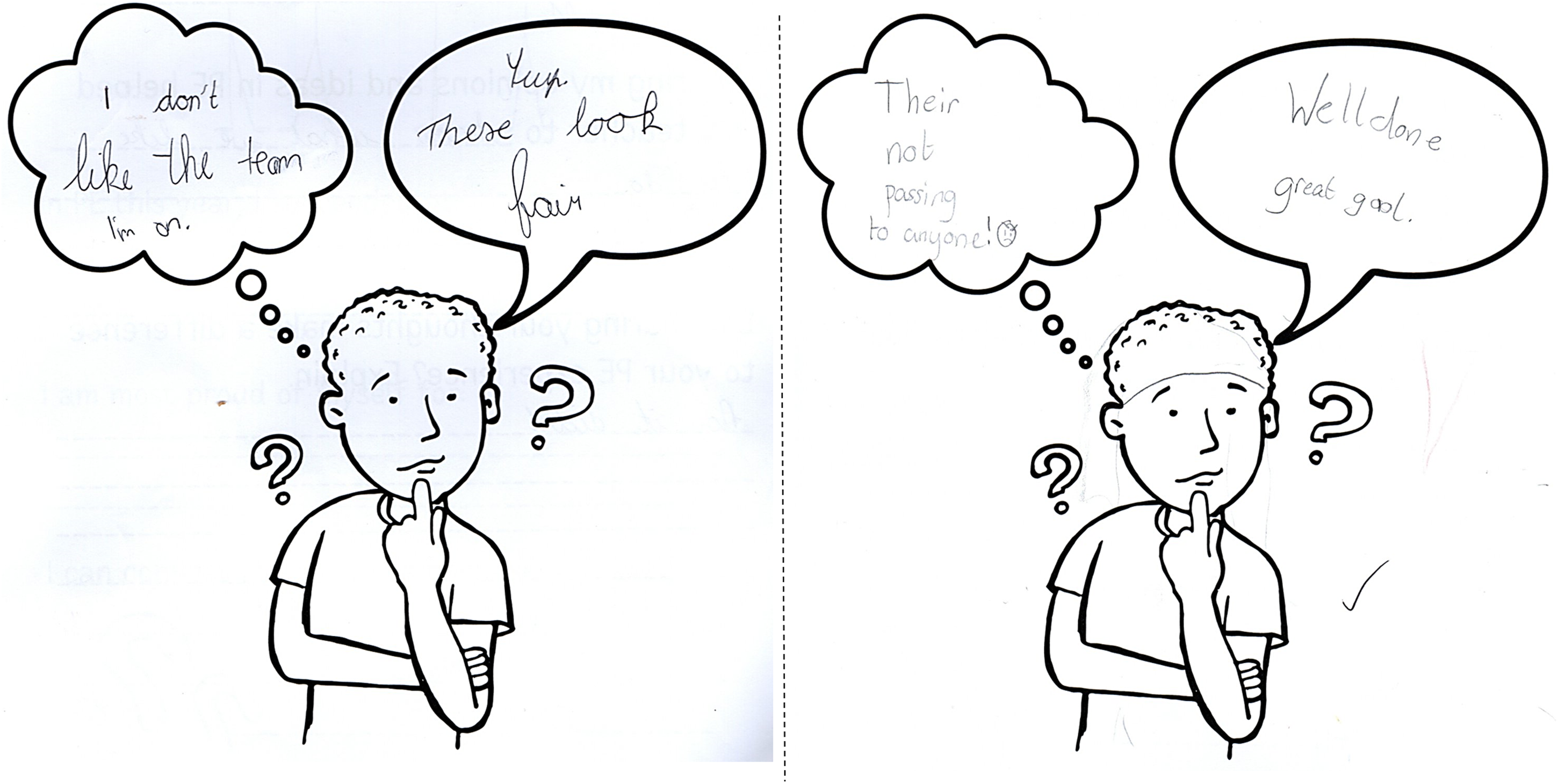
Workbook prompt ‘What I think and what I say’ (Jane, School 3; Quinn, School 2b).
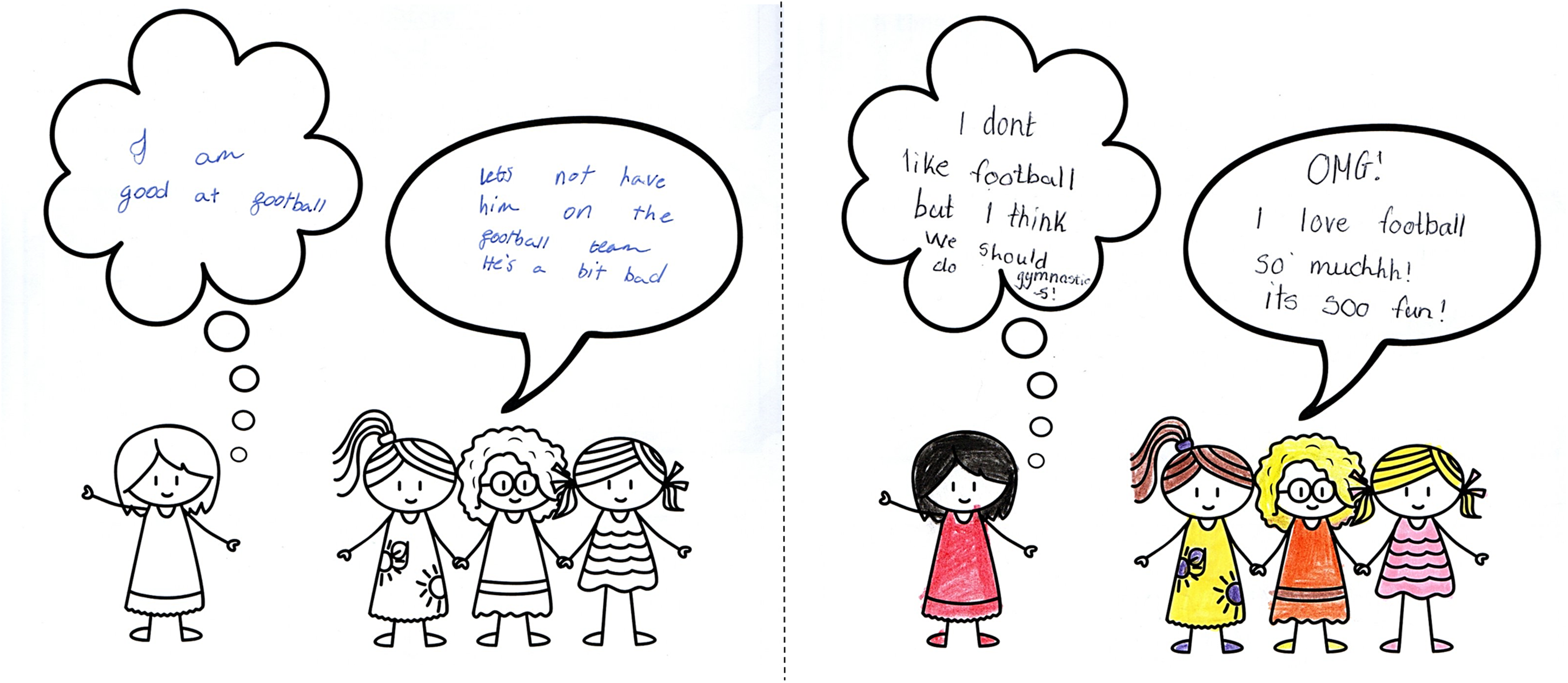
Workbook prompt ‘What I think and what others say’ (Aiden, School 1; Isla, School 5).
The diverse responses gathered through workbook tasks highlighted that children had a great deal to share; they embraced the opportunity to use their voices and share their perspectives, revealing what mattered to them. In addition, the value of creating safe spaces for children to express their thoughts, especially when they may feel hesitant to share, was further emphasised.
As the project progressed, children were asked to offer feedback or suggest changes for future PE lessons. Many children had a clear, strong preference and repeatedly petitioned for specific physical activity content when given the opportunity to do so. For example, as seen in Figure 4, one child consistently used workbook tasks to request more football in PE.
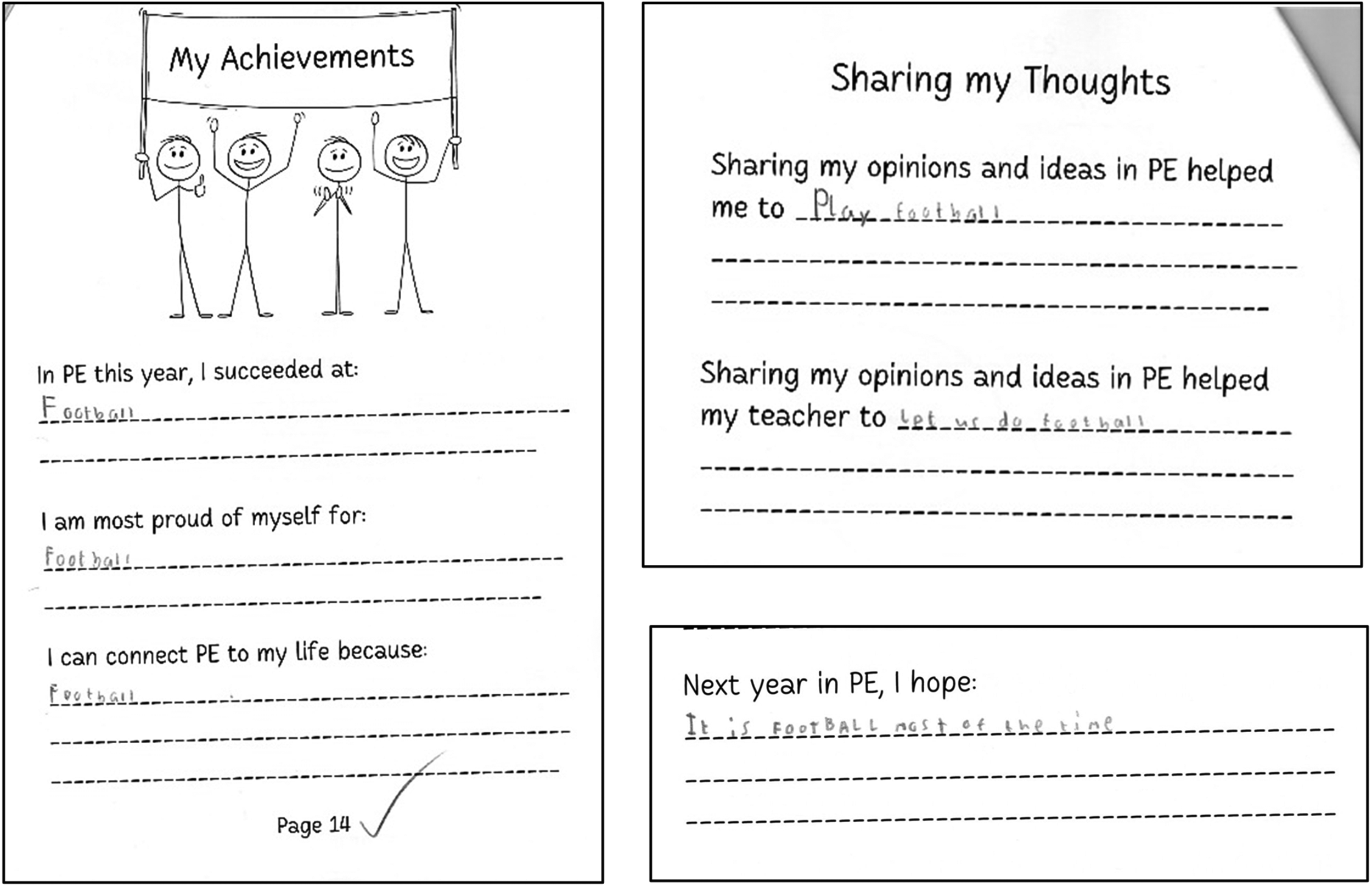
Sample of one child's workbook responses (Dale, School 2b).
Others advocated for more time for PE, for an extended focus on specific activities, or for a greater variety of activities. Building on children's preferences for participation, the elements of meaningful PE (Beni et al., 2017) featured prominently in children's requested changes in PE. For example, fun was the most common basis for arguing their suggestions, with many children asking for more fun ‘warm-up type games’. Similarly, children requested increasingly competitive or challenging activities, and the opportunity to choose who they played with. In response to a Letter to my Teacher prompt, one child wrote: Dear [Teacher], I enjoy the sports in PE very well, but I think we should be allowed to choose groups all the time. The reason I think this is because some people might not be friends and it might make it harder to communicate with your group. I also think we should do less competitive sports as some people are rough because they are so determined to win […] we should play games that help us exercise like Stuck in the Mud, Tip, Freeze Tag and many more similar to that. From Luna. (School 5)
Choosing who they worked with in PE was a consistent priority for children, with one child explaining that PE was their only chance to ‘talk to our friends without getting shouted at because we don’t get to talk any other time apart from lunch without getting in trouble’ (Maeve, School 5). These findings suggest that the features of meaningful PE, such as social interaction, fun, and challenge, can serve as valuable guideposts for teachers in facilitating conversations about PE experiences with children and offering them greater influence over their participation (Ní Chróinín et al., 2023).
Some children, however, were happy with their PE experience as it was, and did not request or perceive a need for change. For example, one child noted, ‘PE is great. […] I don’t really want to change anything’ (Aoife, School 2b). Others were unsure of what changes they wanted in relation to their participation, and ‘I don’t know’ appeared to be a common response. In some instances, suggestions were cautiously given and lacked consistency. One child stated, ‘Sorry don’t get mad. I don’t want warm-ups. If you don’t want to do something don’t do it. Never mind I love warm-ups’ (Ciara, School 2a). Similarly, when providing feedback on their PE experience, another child prefaced their comment with ‘I’m not trying to be rude’ (Lily, School 5). These statements highlight the importance of strengthening teacher–student relationships through the gradual enactment of SVPs, helping children to feel comfortable and empowered to suggest changes. Establishing trust early in the student voice journey is essential to ensure children feel safe to share their ideas and to lay the foundation for deeper collaboration and engagement (Iannucci et al., 2023; Ní Chróinín et al., 2024).
Children valued making choices and using their voices
Children appreciate having opportunities to contribute and share their voices in PE (Cardiff et al., 2023; Ní Chróinín et al., 2023). When children witness their ideas being taken seriously and having an impact on practice, they become more invested in the student voice approach (Cardiff et al., 2023). Findings from this research indicate that children quickly came to realise the benefits of SVPs and appeared to value opportunities to have a say and influence their learning experiences.
To foster a more collaborative approach to decision-making, teachers were supported in ‘starting small’ by seeking children's input and offering small choices during lessons (Ní Chróinín et al., 2024). The data indicated that these small actions by teachers were both noticed and appreciated by the children, with many identifying having a say and making choices as positive features of their PE lessons. Mirroring findings from Cardiff et al. (2023), children described how being asked for their input and ideas by their teacher made a difference and contrasted these experiences with previous PE lessons: ‘She never asked me that before’ (Riley, School 2a) and ‘last year the teacher just said, “do this for PE”’ (Victoria, School 2b). They noted that this year was different: ‘I felt like I was being listened to’ (Dara, School 2b). Having choice and being provided with opportunities to share their voice appeared to help the children to feel heard.
While all choices were appreciated by the children, they appeared to most value choosing who they participated with and what activities they participated in. Consistent with prior research (e.g. Beni et al., 2017; Ní Chróinín et al., 2023), working with their friends in PE was important to the children, and they appreciated having a choice about who they teamed up with: ‘I really enjoyed it because we got to choose where we wanted to play and the teams’ (Darcy, School 4). Similarly, choosing what activities they participated in mattered. The children described various opportunities for choice provided in PE lessons, such as designing warm-up activities, selecting between options provided by the teacher, and changing one part of a game/activity. Making choices about the lesson content seemed to help the children to feel ownership over their learning: Sometimes we got a choice of the main part of the lesson, this was our favourite part … It made us feel like we got to choose what we did for this part of the day which made us really happy. It made us look forward to our PE lessons. (School 4, blog)
Making choices also led to their reported investment in future PE lessons. Providing choice served as a valuable strategy in supporting children to access and learn to use their voices (Iannucci and Parker, 2022b) and in helping them to recognise their active role in shaping their PE experiences (Cardiff et al., 2023).
Although children appreciated the various opportunities to make choices in PE lessons, some expressed dissatisfaction when their choices were not selected. As one teacher explained: …they really felt ownership over it. Whoever's choice didn't get picked, they’d be ‘Ah that's not fair, like we’re doing the thing the others want’. But then, funnily enough, the other kids were, ‘well, we voted on it’. So it was really fairly done. And then the child was like, ‘That's true, actually. Well, the next time, hopefully it’ll be the one that I want’. (Emily, interview)
Similarly, another teacher noted that, initially, children were unhappy when their choice was not picked by the class, but ‘over time they kind of realised the system and that sometimes their choice won’t be picked and sometimes it will’ (Anna, interview). Engaging children in reflection and collective discussions helps them to consider their own and others’ perspectives, fostering compromise while ensuring they still feel listened to and valued (Cardiff et al., 2025; Iannucci and Parker, 2022b). Consistent enactment of these practices was important in supporting children to understand and accept that their choices might not always be selected.
Alongside lobbying in relation to content and features of participation, the children argued for more opportunities for input, highlighting the value they placed on SVPs in PE. Using their voices resulted in concrete changes that were identifiable to them: ‘We came up with some fun games’ (Jane, School 3) and ‘we got to make the pitch bigger’ (Noa, School 3). Children recognised how their sharing helped their teacher to have better ideas, understand their preferences, and know how they were feeling. In addition, children consistently petitioned for more of a say regarding the main content area of lessons. One child stated, ‘I suggest you let students pick the main PE’ (Susie, School 4), while another felt, ‘we should most of the time get to pick our PE [content]’ (Jamie, School 4). During the creation of a whole-class contract, a child suggested that they ‘do what everyone wants to do’ in PE (Dale, School 2b). These expectations reflect the belief that SVPs lead to everyone getting what they want. Addressing this misconception early in the process is essential to help children understand that their voices, while valued, may be limited by factors such as curriculum requirements, time limitations, and available space/equipment in everyday PE practice (Iannucci et al., 2023). As Ní Chróinín et al. (2024: 11) note, not everything is ‘up for grabs all the time’. These findings highlight the importance of framing discussions around SVPs in a way that clarifies the boundaries of participation, while ensuring children can use their voices to positively influence their learning experiences.
Children valued having a say in how their experiences played out in PE and recognised the resulting increased ownership of their participation. Findings indicated that expressing their opinions and ideas helped them to feel heard and supported their confidence in continuing to contribute. In addition, discussions around the processes of collective decision-making were important to help children understand that their voices mattered, even when the result was not what they hoped.
Children's recommendations for SVPs in wider PE practice
Towards the conclusion of the project, children were invited to share their experiences of SVPs in PE and offer advice to others through workbook tasks and a whole-class blog post. While SVPs were relatively unfamiliar to many at the start of the project, the children's experiences during the project appeared to have a positive impact on their perspectives. This shift not only reinforced their support for SVPs in PE but also prompted them to endorse implementation of these practices by others.
When invited to share advice, the children used the opportunity to recommend the adoption of SVPs by other teachers in their school and by primary teachers more broadly. Children strongly advised positioning their views at the heart of decision-making in PE, emphasising that ‘students have an opinion’ (Ethan, School 4). They advocated for the ability to make decisions about their own participation, with one child highlighting that ‘our opinion is important because we are the ones doing it’ (Jane, School 3). The children drew on their own experiences to recommend the enactment of SVPs by other teachers: We think it would be nice for other teachers in the school to try [SVPs] as we felt very included in the PE lessons and we felt that we had a choice in the activities and how we played the different games. (School 1, blog)
Children endorsed the adoption of SVPs based on the benefits they experienced in PE. The element that came across most prominently in children's responses was that SVPs made PE more enjoyable for them. One class shared that, while they had always liked PE, ‘we enjoy it more [now] because we feel that we know more about our PE’ (School 2b, blog). Similarly, another class felt that it was ‘a good thing for students to have a choice and share their voice’, stating that ‘it makes learning more enjoyable’ when they do (School 4, blog). This was further supported by participating teachers who perceived an increase in engagement and enjoyment of PE lessons because of SVPs. For example, Ava found that ‘when children get to have their say and make decisions as a group or a team, they enjoy the lesson a lot more’ (Ava, blog). She also felt that even those children who had previously been reluctant to participate in PE were ‘100% more engaged’ (Ava, blog).
While children generally made a case for SVPs based on the resulting enjoyment of activities, some noted other benefits. For instance, one child shared that the opportunities for input helped them to ‘become more confident in myself and made me feel listened to’ (Alex, School 5). Teachers considered SVPs to have a positive impact on children's learning and their involvement in the teaching and learning process. They suggested that SVPs ‘allowed children to think deeply about their own learning’ (Thomas, blog) and supported them in becoming ‘more involved in more aspects of their learning journey’ (Anna, blog). Mirroring research by Ní Chróinín et al. (2023) and Cardiff et al. (2023), teachers in this project viewed SVPs as supporting the children's confidence and fostering a sense of ownership over their learning experiences.
In offering advice to others, children used the opportunity to share their learning and propose practical suggestions on how SVPs could be implemented. One class proposed that ‘once a month we think it would be a good idea, if we were in groups and got to lead a PE lesson for our classmates. We would like to choose the activity’ (School 4, blog). Another class highlighted that the SVPs were not a free-for-all: But we didn’t just pick anything we wanted to do in PE. That would have been too crazy in the hall. Instead, when [the teacher] told us the sport we would be doing, we talked about the skills we would like to learn. Then when the skills were done in PE, we got to spend time practicing the ones we needed to work on. (School 2a, blog)
Others acknowledged challenges exist within a student voice approach, noting that it is not always an easy process. One class group described how ‘the people who had a chance to carry out warm-ups and cool downs really enjoyed doing them, but they said that they found it hard to get everybody to listen and do the activities’ (School 2b, blog). It was clear that the children engaged in thoughtful reflection on SVPs over the course of the project. They championed the importance of enacting SVPs, while showing an understanding that SVPs involve a collaborative process in which their own and others’ perspectives must be considered (Iannucci and Parker, 2022b).
Based on their own lived experiences, children came to recommend the enactment of SVPs by others. Children recognised the positive influence SVPs had on their own PE experiences and offered suggestions of how SVPs might work in practice. Their testimonies make a compelling case for the adoption of SVPs and offer direction for their enactment in PE more widely.
Discussion
This research draws on evidence of children's experiences of and engagement with SVPs to offer insight into their implementation in regular primary PE practice. The findings illustrate how children used their voices to articulate their preferences and request changes to their PE experiences. The value they found in engaging in SVPs is also highlighted, along with their suggestions for how SVPs might be enacted in wider PE practice. The findings offer direction to others on how to promote students’ engagement with SVPs by starting small – fostering trust, offering choice, supporting children in taking ownership of their learning, and engaging in open discussions about expectations.
Inviting children to express their preferences and share their experiences served as a vital foundational element of the student voice process, helping teachers to build trust and foster honest feedback. Following advice from the GROW VOICE project team and in line with previous research (Ní Chróinín et al., 2023, 2024), teachers were supported in introducing SVPs in PE by ‘starting small’ and first identifying children's preferences for participation. This initial step helped children to gradually become more comfortable with expressing their opinions, while also playing a crucial role in building trust (Ní Chróinín et al., 2023). Providing the opportunity for children to share during lessons, however, did not always yield consistent feedback, and differences sometimes emerged between what children said aloud in PE and what they shared in their workbook tasks. As evidenced in the speech and thought bubble templates (see Figures 2 and 3), some children alluded to expressing enjoyment of activities they did not really like, or withholding their feelings about who they were grouped with. Building on Lundy's (2007) research, these insights emphasise the need for teachers to create safe spaces for children to share their voices as a foundation for an authentic student voice approach. In addition, offering different ways for children to share their voices is crucial to encourage honesty and accommodate individual preferences for expression. A combination of verbal and written feedback, along with a variety of reflection tools, proved useful in supporting the children to express themselves in different ways (Koekoek et al., 2009). Reflective prompts, such as the speech and thought bubble templates, also allow children to reflect on their own and others’ perspectives (Cardiff et al., 2025), while supporting teachers in gaining a deeper understanding of students’ perspectives and nurturing trust (Wall, 2017). Echoing Cardiff et al. (2025), our findings suggest that fostering trust, by creating space for children's voices and providing regular opportunities for them to share in a variety of ways, is an integral element of effective SVPs.
The gradual enactment of SVPs also proved important in demonstrating to children the value of their involvement and convincing them of the benefits for themselves and others. Small changes enacted by teachers, such as offering simple choices in terms of the content of warm-ups and the organisation of groups, were important in helping children to see tangible evidence of their voices being heard. Echoing findings of Cardiff et al. (2023), seeing how their voice was heard and acted upon appeared to foster greater engagement and investment in the approach. Providing choice also served to help children to access their voices and use them more confidently (Iannucci and Parker, 2022b). The children particularly appreciated having a say in who they worked with, what activities they participated in, and how these activities were organised, mirroring findings of previous research (Beni et al., 2019; Ní Chróinín et al., 2023). The opportunity to make choices about their learning experiences also facilitated the children in taking greater ownership of their learning. It supported them in playing a more active role in shaping their learning experiences (Cardiff et al., 2023), for example, by choosing where they played or the size of the playing area. This, in turn, led to increased reported enjoyment and investment in future PE lessons. The children also came to recognise the broader benefits of SVPs, not just for themselves, but for others as well. Children used their final workbook tasks and their class blog post to recommend the enactment of SVPs by other teachers in their school and beyond. The children's investment in the student voice approach, along with their requests for more opportunities for input, presents a strong argument for the wider enactment of SVPs, while offering valuable guidance and direction for teachers for their integration with primary PE.
Within the children's requests for change in their PE experiences, a consistent theme was a desire for more influence over the overall curriculum focus and lesson content. However, not all the children's suggestions were actionable. As noted by Iannucci et al. (2023) and Ní Chróinín et al. (2024), tensions can arise between children's preferences and the curriculum and time requirements that teachers must navigate. To prevent SVPs from becoming tokenistic and potentially leading to student dissatisfaction (Lundy, 2007), choices should only be offered when actioning them is possible. Collaborative discussions with children are essential to clarify the parameters of SVPs, to manage their expectations, and to help them to understand the reason for teaching a range of content in PE. Shared decision-making can also encourage children to appreciate preferences other than their own and find value in activities that may not be their personal favourites. Children need time to embrace the collaborative spirit of a student voice approach (Ní Chróinín et al., 2024), and a gradual increase of their responsibility and control over their learning has been recommended (Iannucci and Parker, 2022b). Careful framing by the teacher is vital to ensure realistic expectations of SVPs are communicated to children. This prompts consideration of the expectations created by SVPs, and the extent of the influence children can have on decision-making in primary PE and in wider classroom practice.
This research offers some direction to others intending to adopt SVPs in their PE practice. There were some limitations to this research, however. A methodological limitation relates to the diversity of the participants. As noted above, all participating teachers willingly volunteered to be involved in this research based on a predisposition to enact SVPs. This indicates a willingness to make SVPs work and to ensure children had a positive experience of them. Other teachers, with more reluctance towards this approach, might implement it differently, which could influence how their students perceive and experience SVPs. A further limitation relates to the final data set included. At the outset, 15 primary teachers with an interest in student voice and a motivation to implement SVPs in PE signed up for this initiative. By the end of the project, only half of these teachers were engaged in project activities. This echoes Wong (2015), who emphasised that ease of use and usefulness may not be sufficient for sustained implementation if the conditions are not facilitative. Examining the experiences of teachers with a variety of perspectives on enacting SVPs, and the subsequent impact on children's experiences, would add to the understanding of the opportunities and challenges presented (Black and Mayes, 2020). This would further help in capturing a more complete picture of SVP enactment from the perspective of both teachers and students.
Conclusion
The findings of this research offer insight into children's experiences of and engagement with SVPs in primary PE. SVPs helped the children to share what was important to them and to request changes to their learning experiences. The children reportedly valued the opportunity to be involved in decisions about their participation and advocated for their voices to be included as part of regular PE practice. Based on their experiences, they identified some ways that SVPs might be included in primary PE. Together, their experiences and engagement with SVPs provide a compelling argument for the adoption of SVPs as part of regular practice in primary PE, while also offering useful direction for enactment.
Footnotes
Acknowledgements
The GROW VOICE initiative was a collaboration with the Irish Primary Physical Education Association. Thank you to all of the amazing teachers and children who participated and shared their student voice experiences with us.
Authors’ note
Grace Cardiff initially joined the GROW VOICE project team while affiliated with Mary Immaculate College, Ireland. The majority of the project was completed following her transition to Maynooth University, Ireland.

Ethical approval
Ethical approval for this research was received from the Mary Immaculate College Research Ethics Committee on 28/11/23 (Ref: A23-049).
Informed consent
Written consent was obtained from the participating teachers, along with the principal teacher in each school. Information sheets and consent forms were sent to parents and children. Parents provided written consent on behalf of their children, and the children provided informed assent.
Funding
The authors disclosed receipt of the following financial support for the research, authorship, and/or publication of this article: This work was supported by the Irish Research Council (grant number New Foundations: NF/2023/1769).
Declaration of conflicting interests
The authors declared no potential conflicts of interest with respect to the research, authorship, and/or publication of this article.
Data availability
The data supporting the findings of this study are not publicly available due to confidentiality and ethical considerations.