



Abstract
The purpose of this study was to investigate preservice physical education teachers’ perceptions of initial teacher education and its impact on their professional lives and teachers’ identities at the end of their school placement. It was also the aim of this study to identify school placement contributing factors and key actors in the formation of professional identities. The sample was composed of 272 preservice teachers in their final year of the master's in teaching physical education at a Portuguese university. We collected data through a questionnaire that included closed- and open-ended questions regarding six aspects of the teaching profession and initial teacher education: agents of training; components of teacher education; roles of teachers; motivation for teaching; conceptions of teaching and learning; and changes experienced during this period. Quantitative data were statistically analysed for measures of central tendency, and the responses to the open-ended question were analysed through thematic content analysis. The findings revealed: that preservice teachers considered the cooperating teacher to be the most important agent of training; that the teaching practicum experience was the most important component of teacher education; that delivering universal values was an essential role of teachers; that they had an intrinsic motivation for teaching; that they perceived a constructivist approach to teaching; and that the most meaningful change they experienced during their education was an improvement in soft skills. With the results, we conclude that professional socialisation influenced how the participants performed as teachers.
Keywords
Introduction
Occupational Socialisation Theory (Lawson, 1983) examines how various stages of the teaching profession affect the identities of physical education teachers. All socialisation processes that prepare people to ‘enter the field of physical education and that later are responsible for their perceptions and actions as teacher educators and teachers’ are part of Occupational Socialisation Theory, according to Lawson (1986: 107). This theory states that there are three chronologically oriented phases of occupational socialisation: acculturation (pre-teacher education), professional socialisation (teacher education), and organisational socialisation (workplace).
Acculturation is the first phase of Occupational Socialisation Theory, which includes everything that impacts teacher socialisation from birth to initial teacher education (Richards et al., 2014). Acculturation occurs before someone formally decides to enter the physical education teaching profession (Lawson, 1983), and early experiences as students provide the groundwork for potential teachers’ role identities, or how they see themselves as teachers (Richards et al., 2014). During this phase, potential teacher candidates engage in what Lortie (2002) refers to as the apprenticeship of observation through interactions with teachers, coaches, family members, and other key individuals, gaining a basic understanding of what it means to be a physical education teacher. This covers actions, convictions, and value systems that influence perceptions of professional conduct (Lawson, 1983). This is the point at which the subjective conceptions of teaching that form the basis of future teachers’ interpretations of socialisation experiences begin to take shape (Richards et al., 2014). Acculturation is a vital aspect of socialisation that must be understood because of the great influence it has on the attitudes of future teachers. Their perceptions of teaching and their beliefs are greatly influenced by the experiences they had as students (Curtner-Smith, 1999; Lortie, 2002). As per Capel et al. (2011), Lawson (1983), and Richards (2015), acculturation is more successful than professional socialisation in socialising physical education teachers.
Professional socialisation refers to the time when aspiring teachers are enrolled in a formal initial teacher education programme (Lawson, 1983). Motivation to be a teacher is a component of the professional self of teachers. Lortie (2002) highlights facilitators and attractors to the teaching profession. Interpersonal benefits, service, and schedule compatibility all appear to be motivating factors for recruits deciding to become physical education teachers (Curtner-Smith et al., 2008; Spittle et al., 2009).
Pacheco and Flores (1999) define the shift from student to teacher as a tripartite discontinuity involving three main actors: theory and practice, the student and the teacher, and the university and school. One aspect of the professional socialisation phase that is recognised as crucial to physical education teacher education is the teaching practicum experience (Chambers and Armour, 2012; Mordal-Moen and Green, 2014). Due to its significance in preservice teachers’ socialisation (Cardoso et al., 2016), the integration of theory and practice (Zhao and Zhang, 2017), and the development of teachers’ professional identities (Barros et al., 2018), it is an essential component of the teacher education curriculum.
Every teaching practicum is unique because preservice teachers may create new professional identities and connections with school stakeholders, which adds to its complexity and unpredictability. Preservice teachers’ professional identities emerge because of emotional interactions, the kind of feedback they receive, the nature of their connections (Geng et al., 2016), and the teaching practicum experience (Amorim and Ribeiro-Silva, 2022). During the teaching practicum, preservice teachers engage with the reality of teaching for the first time, gaining classroom experience and confidence in their role (Alves et al., 2019; Hahl and Mikulec, 2018; Mifsud, 2018), all while working with a group of peers, completely immersed in the school setting. However, aspiring teachers enter physical education teacher education programmes aware of what it takes to be a physical education teacher because of their acculturation experiences. Prior and Curtner-Smith (2020) argue that a model-based approach may provide the best physical education teacher education if preservice teachers believe the models are applicable.
Research highlights that these subjective theories are not easily altered by initial teacher education (Capel et al., 2011; Lawson, 1983; Richards, 2015) and discusses how professional socialisation has little effect on changing the attitudes and behaviours that are acquired during acculturation, especially in comparison to the effect of organisational socialisation (Curtner-Smith, 1999; Richards et al., 2014; Stran and Curtner-Smith, 2009). Regardless, Izadinia (2013) recognises some of the essential elements of preservice teachers’ identities in their review, including their feeling of agency, self-awareness, critical consciousness, cognitive knowledge, and the relationships built with colleagues and pupils. Research on how the teaching practicum influences preservice teachers’ development of professional identities is crucial (Beijaard et al., 2004; Geng et al., 2016; Korthagen, 2004; Schoeman and Mabunda, 2012; Zhao and Zhang, 2017), and it is advantageous in two ways: (1) it offers a more comprehensive and in-depth understanding of the ways in which teachers’ professional identities evolve; and (2) it pinpoints the potential effects of initial teacher education programmes on these identities, utilising that information to enhance the design of the programmes (Izadinia, 2013).
When qualified teachers begin teaching in schools, they start the third stage of Occupational Socialisation Theory, known as organisational socialisation. For new teachers, the school environment can be a reality shock because of the exponential growth in the number of students taught, the increasing responsibility, and the bureaucracy (Richards et al., 2014). This third phase is also distinguished by socialising agents (such as parents, co-workers, headteachers, and students), the micropolitical and organisational setting, and marginalisation and isolation (Richards et al., 2014).
This study investigated how preservice teachers in physical education perceived initial teacher education and how it affected their identities as teachers at the end of their teaching practicum and, therefore, at the end of their professional socialisation. This study also sought to identify key actors and contributing factors in the development of professional identities related to the teaching practicum. In this line, our research questions were: (a) what were the preservice teachers’ teaching identities? and (b) what factors in initial teacher education shaped the preservice teachers’ teaching identities?
Method
Research methods
To develop this study, we used a mixed methodology, applying a parallel mixed-methods research design (Teddlie and Tashakkori, 2009). According to Creswell and Creswell (2018), this is a form of mixed method in which both quantitative and qualitative data are collected (roughly simultaneously) to grant an exhaustive analysis of the research problem.
Participants
The sample was composed of 272 preservice teachers (82 female and 190 male) in their final year of the master's in teaching physical education at a Portuguese university and at the end of their teaching practicum. They ranged in age from 22 to 49 years old (mean (M) = 26.0, standard deviation (SD) = 4.7), and 158 had professional experience in coaching prior to initial teacher education but not in teaching physical education.
The study was given ethical approval by the university, and the preservice teachers who were willing to participate in this study signed an informed consent form containing every detail of the investigation.
Initial teacher education in Portugal
In Portugal, teacher education requires a master's degree. Candidates with a bachelor's degree in sport sciences or physical education are eligible to apply for the master's degree in teaching physical education. Those who wish to teach physical education must complete a two-year master's programme to become qualified teachers.
In the first year of the master's programme, preservice teachers take on the following courses: curriculum and assessment in physical education, didactics of physical education, fundamentals of training in physical education, sport and health in a school context, special education needs in physical education, and organisation and management of school sports. Preservice teachers have no early field experience in schools during the first year of their master's degree. They do, however, experiment with teaching in simulation-based scenarios, where they practice instructing their classmates. To be placed in a cooperating school in the second year, preservice teachers must complete all their courses successfully.
The supervised teaching practicum year, which is the second and last year of the master's programme, places preservice teachers in cooperating schools for a full academic year, which runs from September to May. Basic and secondary education make up the two educational cycles that comprise Portugal's 12-year mandatory schooling. Basic education corresponds to the first cycle (years 1–4, age 6–10 years), the second cycle (years 5–6, age 10–12 years), and the third cycle (years 7–9, age 12–15 years). Secondary education refers to years 10–12 (age 15–18 years). Preservice teachers are assigned to cohorts of two to four preservice teachers in cooperating schools with basic education or secondary education. Every preservice teacher oversees one class (between 20 and 28 pupils) over the whole academic year, teaching around 95 lessons of physical education. In addition to planning, teaching, assessing, and reflecting on their lessons, they also observe the classes of cohort colleagues and participate in both official and informal school functions (Ribeiro-Silva et al., 2019).
During the teaching practicum, preservice teachers must show proficiency in four core areas: teaching and learning activities, organisational activities and school administration, partnerships and educational projects, and professional and ethical dispositions. Preservice teachers can demonstrate their competency in teaching physical education in a safe, low-accountability, high-support setting within the school, receive feedback from their supervisors, and develop their confidence. Gradually, help is withheld, and accountability increases as the teaching practicum moves forward.
After completing the teaching practicum, preservice teachers write a report and present it to a panel consisting of two university professors and the university tutor. To grant the preservice teachers qualified teaching status, the panel assesses the written report and the oral defence.
Data collection
Instrument
We collected data using a questionnaire with closed- and open-ended questions. The survey questionnaire used was the Questionnaire for Student Teachers, which was developed and validated by Ezer et al. (2010) and translated and validated in Portuguese by Sousa et al. (2015). We used the Portuguese version of the questionnaire for its linguistic convenience, considering our participants’ nationality.
The closed-ended part of the questionnaire determined preservice teachers’ perceptions concerning five features of the teaching profession and initial teacher education: (a) agents of training; (b) components of teacher education; (c) roles of teachers; (d) motivation for teaching; and (e) conceptions of teaching and learning. Participants were presented with seven options and asked to rank them from one (most important) to seven (least important) of the following aspects:
a. Agents of training (e.g. ‘cooperating teacher’ and ‘preservice teachers’ cohort’). b. Components of teacher education (e.g. ‘teaching practicum’ and ‘didactic classes’). c. Roles of teachers (e.g. ‘delivering universal values’ and ‘imparting knowledge’). d. Motivation for teaching. Preservice teachers had a list of 11 statements, and each statement was assigned to one of the following subcategories: self-efficacy (e.g. ‘I regard myself as a successful teacher’), commitment to the practice of teaching (e.g. ‘I see myself engaging in teaching in the near future’), intrinsic motivation (e.g. ‘Teaching promotes self-realisation’), and extrinsic motivation (e.g. ‘A teaching career ensures financial security’). e. Conceptions of teaching and learning. Participants had a list of 13 statements, and each statement was assigned to one of the following subcategories: traditional approach to teaching (e.g. ‘The quality of teaching is determined by the amount of time the teachers and students spend together’), traditional approach to learning (e.g. ‘Learning is mainly an accumulation of knowledge’), constructivist approach to teaching (e.g. ‘The role of the teacher is to enhance processes of learning’), and constructivist approach to learning (e.g. ‘Learning is the integration of new knowledge into an existing knowledge’).
Preservice teachers were asked to rate each statement according to the level of agreement on a 6-point Likert scale, from level one (strongly disagree) to level six (strongly agree), regarding:
In the open-ended part of the questionnaire, the preservice teachers were asked to freely answer the following: describe the most meaningful change that you experienced during your teacher education.
Procedure
The questionnaire was distributed in person in May during the final plenary session that preservice teachers attended prior to their master's thesis defence. The questionnaire was purposely administered close to the end of the school year to allow the preservice teachers to reflect on their year-long teaching practicum and contemplate their entire initial teacher education.
Data analysis
The quantitative data were statistically analysed using IBM SPSS® Software 28 for Mac. The statistical analysis involved descriptive statistics (with measures of central tendency such as the M and measures of dispersion with the SD) to describe the sample and highlight its main properties.
The responses to the open-ended question of the survey determined the qualitative data collected. To analyse the responses to the open-ended question, we performed thematic content analysis following an inductive approach to data coding and analysis. We started by getting acquainted with the data through repeated readings of textual data and notetaking (Braun and Clarke, 2012). We then created the initial codes at the semantic and latent levels of meaning, completely coded the data, and compiled pertinent data in an Excel file made for this purpose. We coded independently and then conferred until we arrived at a mutual understanding. We achieved an intercoder agreement by examining, comparing, and documenting individual codes. We examined the coded data to identify similarities and overlaps between codes before searching for categories based on the data. Following that, we examined prospective themes to see if they effectively captured the data set. By naming and defining the themes, we completed the data analysis.
We used quotes from the responses to the open-ended question to improve the reporting of the results. These have been translated from Portuguese to English. The translation procedure followed functional equivalency, which meant moving beyond literal translation. The translation followed an ongoing assessment of linguistic and conceptual equivalency. A linguistic professional validated the translation's accuracy.
Findings
Agents of training
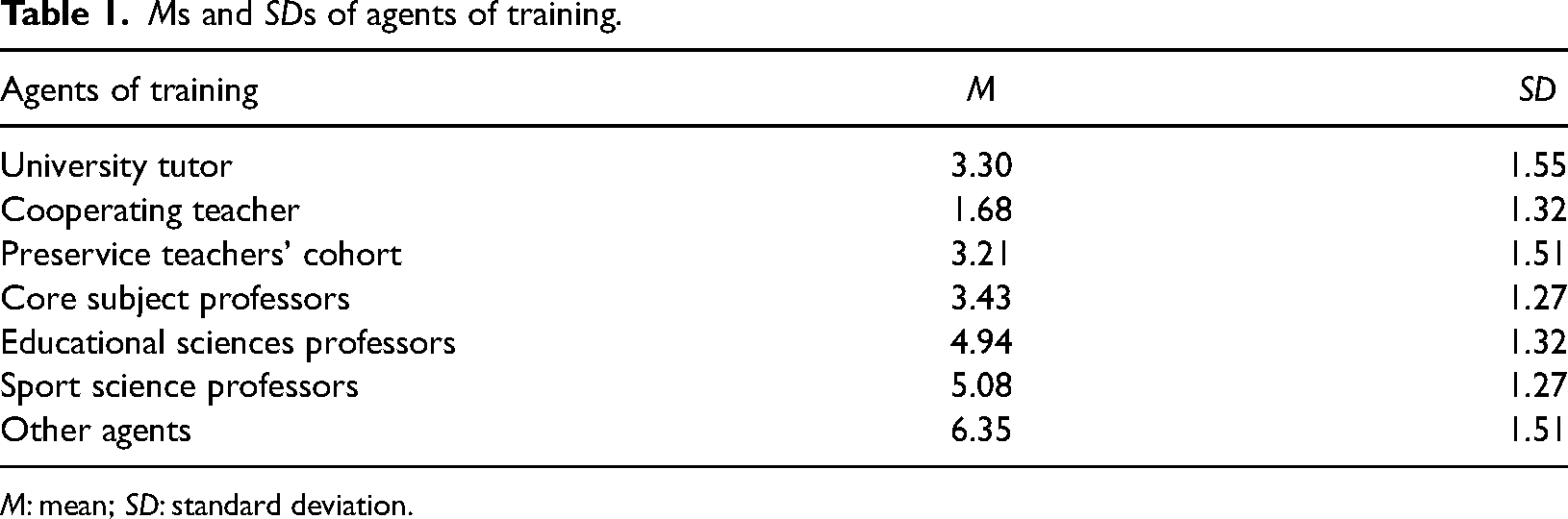
As shown in Table 1, the preservice teachers considered the ‘Cooperating teacher’ (M = 1.68, SD = 1.32) as the agent that made the most important contribution to their training as a teacher and ‘Other agents’ (M = 6.35, SD = 1.51) as the least important.
Ms and SDs of agents of training.
M: mean; SD: standard deviation.
Components of teacher education
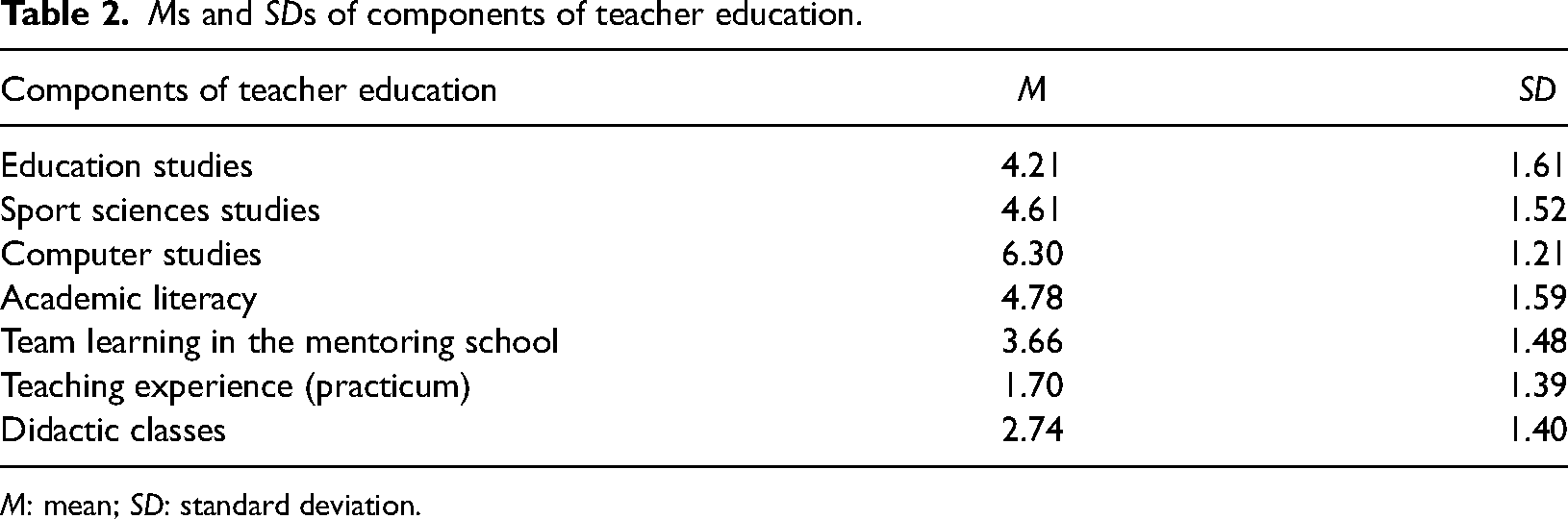
Table 2 shows that the preservice teachers considered the ‘Teaching experience (practicum)’ (M = 1.70, SD = 1.39) as the component of teacher education that made the most important contribution to their training as a teacher and ‘Computer studies’ (M = 6.30, SD = 1.21) as the least important.
Ms and SDs of components of teacher education.
M: mean; SD: standard deviation.
Roles of teachers
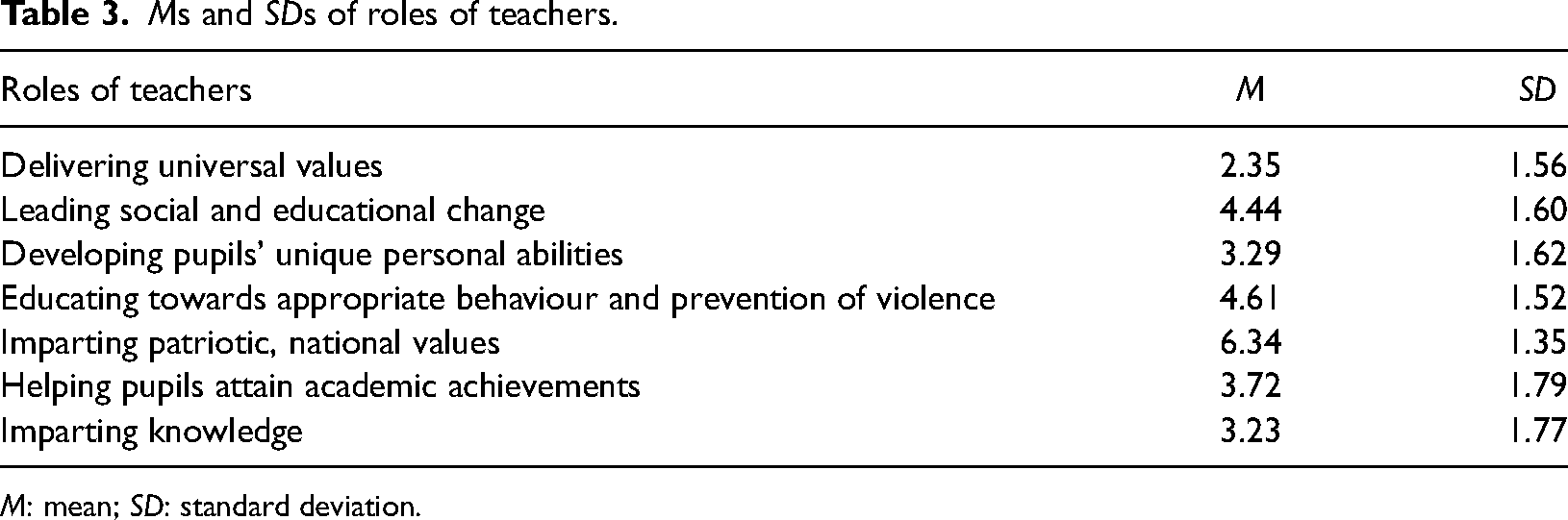
As shown in Table 3, the preservice teachers considered ‘Delivering universal values’ (M = 2.35, SD = 1.56) as the most important role of teachers and ‘Imparting patriotic, national values’ (M = 6.34, SD = 1.35) as the least important.
Ms and SDs of roles of teachers.
M: mean; SD: standard deviation.
Motivation for teaching
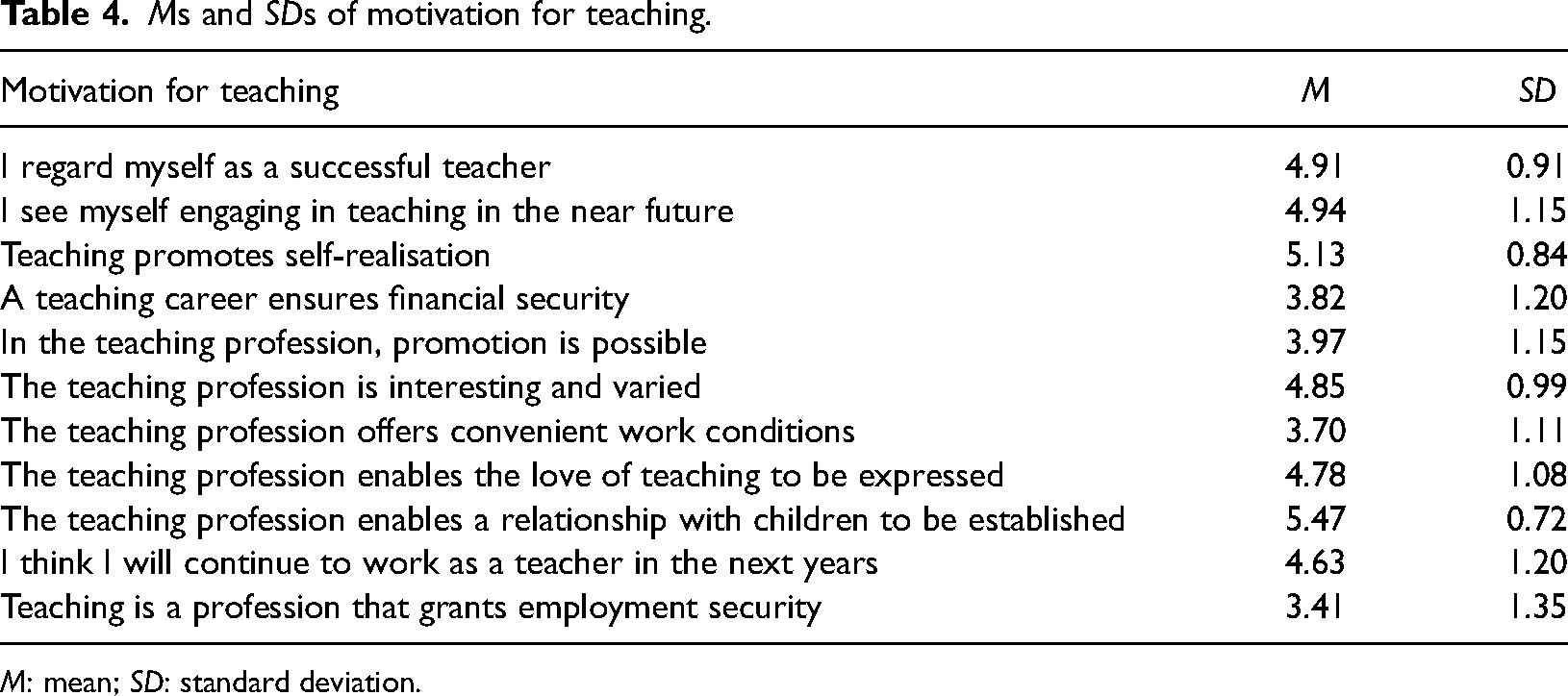
The results in Table 4 highlight that the statement the preservice teachers had the highest M level of agreement with was ‘The teaching profession enables a relationship with children to be established’ (M = 5.47, SD = 0.72). The statement that preservice teachers gave the lowest M of agreement for was ‘Teaching is a profession that grants employment security’ (M = 3.41, SD = 1.35).
Ms and SDs of motivation for teaching.
M: mean; SD: standard deviation.
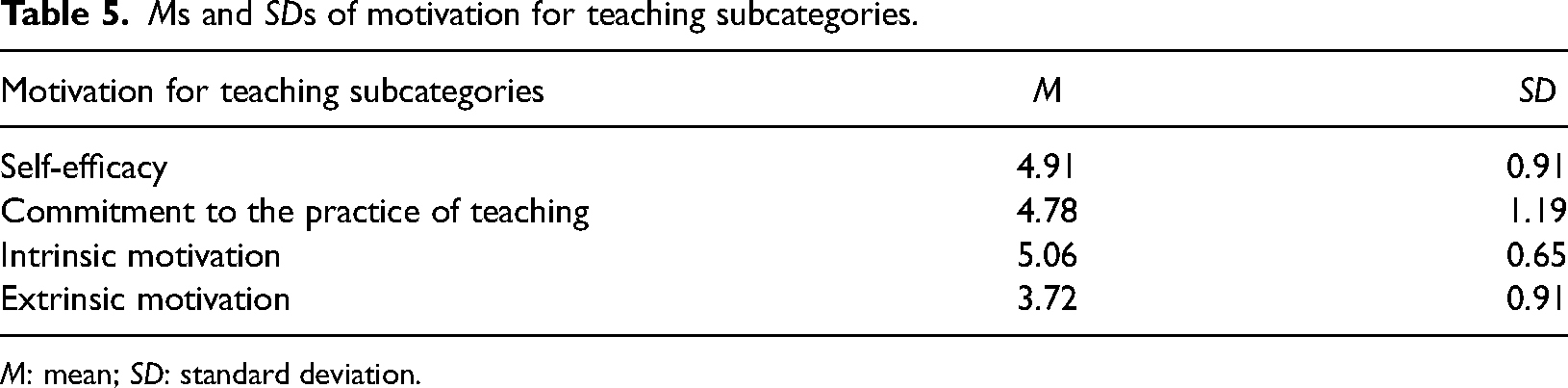
These statements were associated with four subcategories: self-efficacy, commitment to the practice of teaching, intrinsic motivation, and extrinsic motivation. Accordingly, we verified which of these categories had higher and lower Ms, meaning agreement with the statements. The results shown in Table 5 emphasise that preservice teachers mostly agreed with the statements related to ‘Intrinsic motivation’ for teaching (M = 5.06, SD = 0.65), and the statements they least agreed with were those related to ‘Extrinsic motivation’ for teaching (M = 3.72, SD = 0.91).
Ms and SDs of motivation for teaching subcategories.
M: mean; SD: standard deviation.
Conceptions of teaching and learning
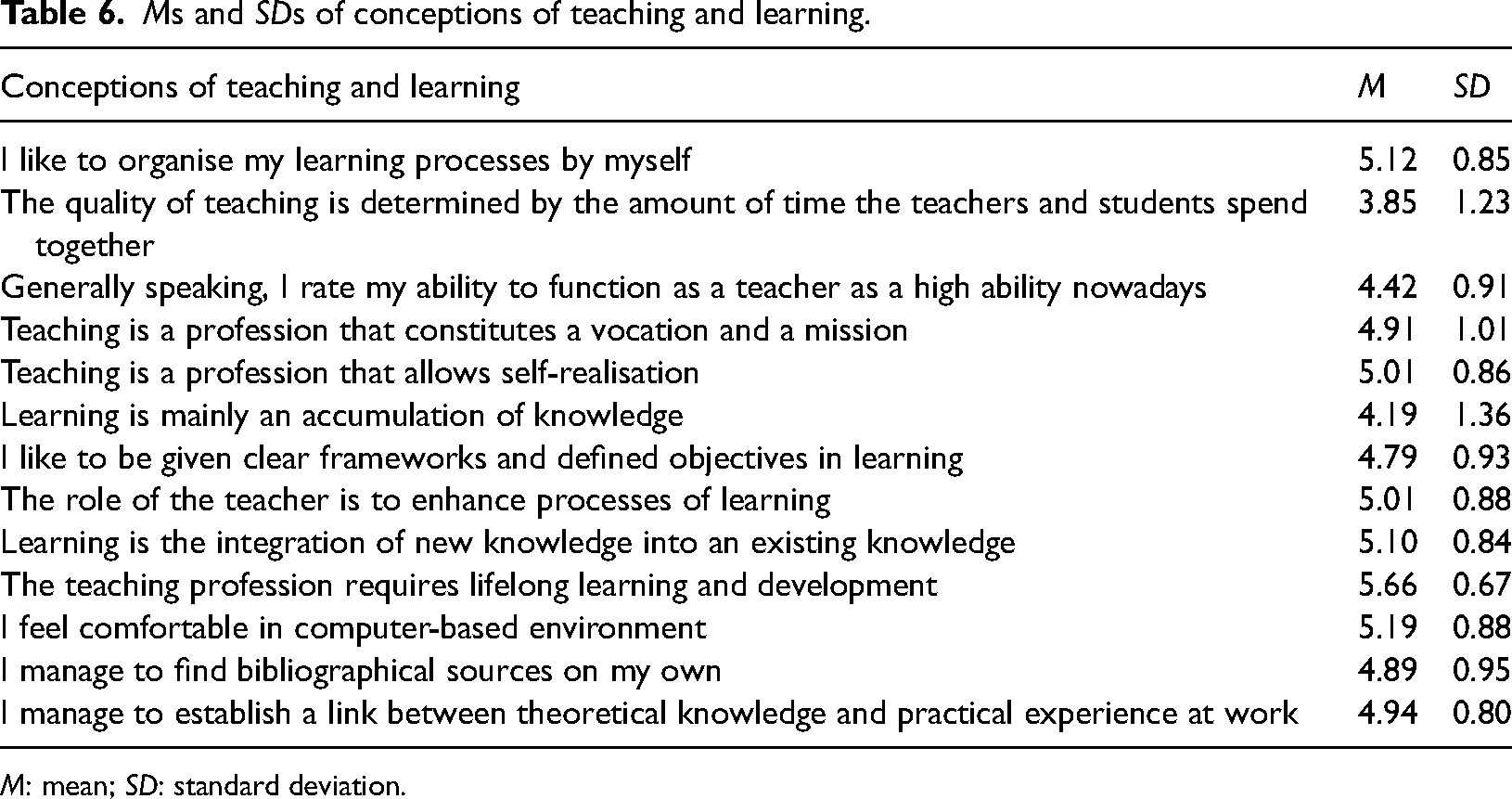
From Table 6, we can see that the statement that the participants gave the highest M level of agreement with was ‘The teaching profession requires lifelong learning and development’ (M = 5.66, SD = 0.67). The statement the preservice teachers gave the lowest M of agreement to was ‘The quality of teaching is determined by the amount of time the teachers and students spend together’ (M = 3.85, SD = 1.23).
Ms and SDs of conceptions of teaching and learning.
M: mean; SD: standard deviation.
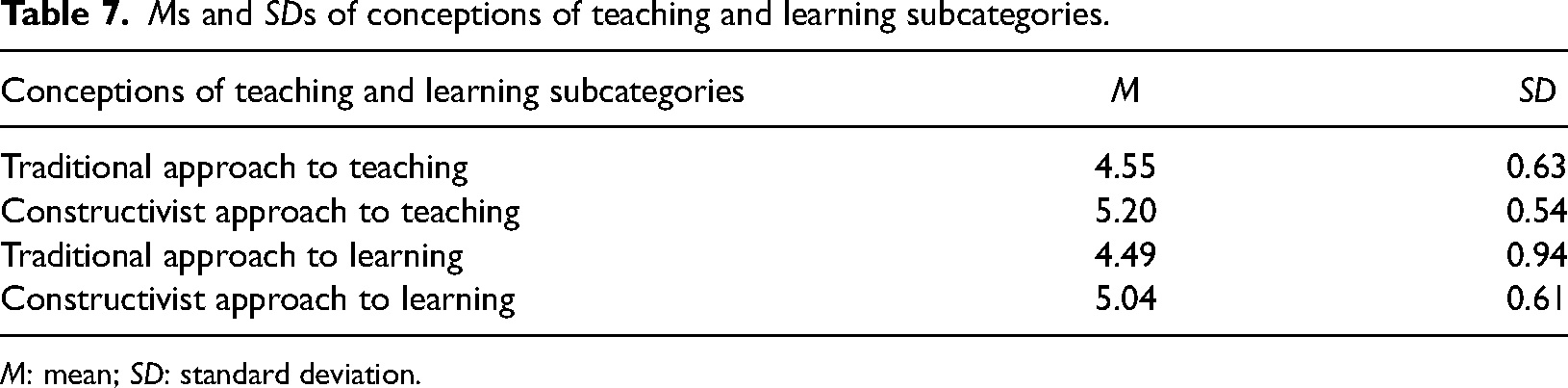
These statements were associated with four subcategories: traditional approach to teaching, constructivist approach to teaching, traditional approach to learning, and constructivist approach to learning. Table 7 shows that the preservice teachers had the highest agreement with the statement related to a ‘Constructivist approach to teaching’ (M = 5.20, SD = 0.54) and the lowest agreement with the statement related to a ‘Traditional approach to learning’ (M = 4.49, SD = 0.94).
Ms and SDs of conceptions of teaching and learning subcategories.
M: mean; SD: standard deviation.
Most meaningful change experienced during initial teacher education
The participants were asked about their teaching experiences during initial teacher education, describing the most noteworthy change they experienced. Table 8 provides a description of the data-driven categories.
Open-ended question results.
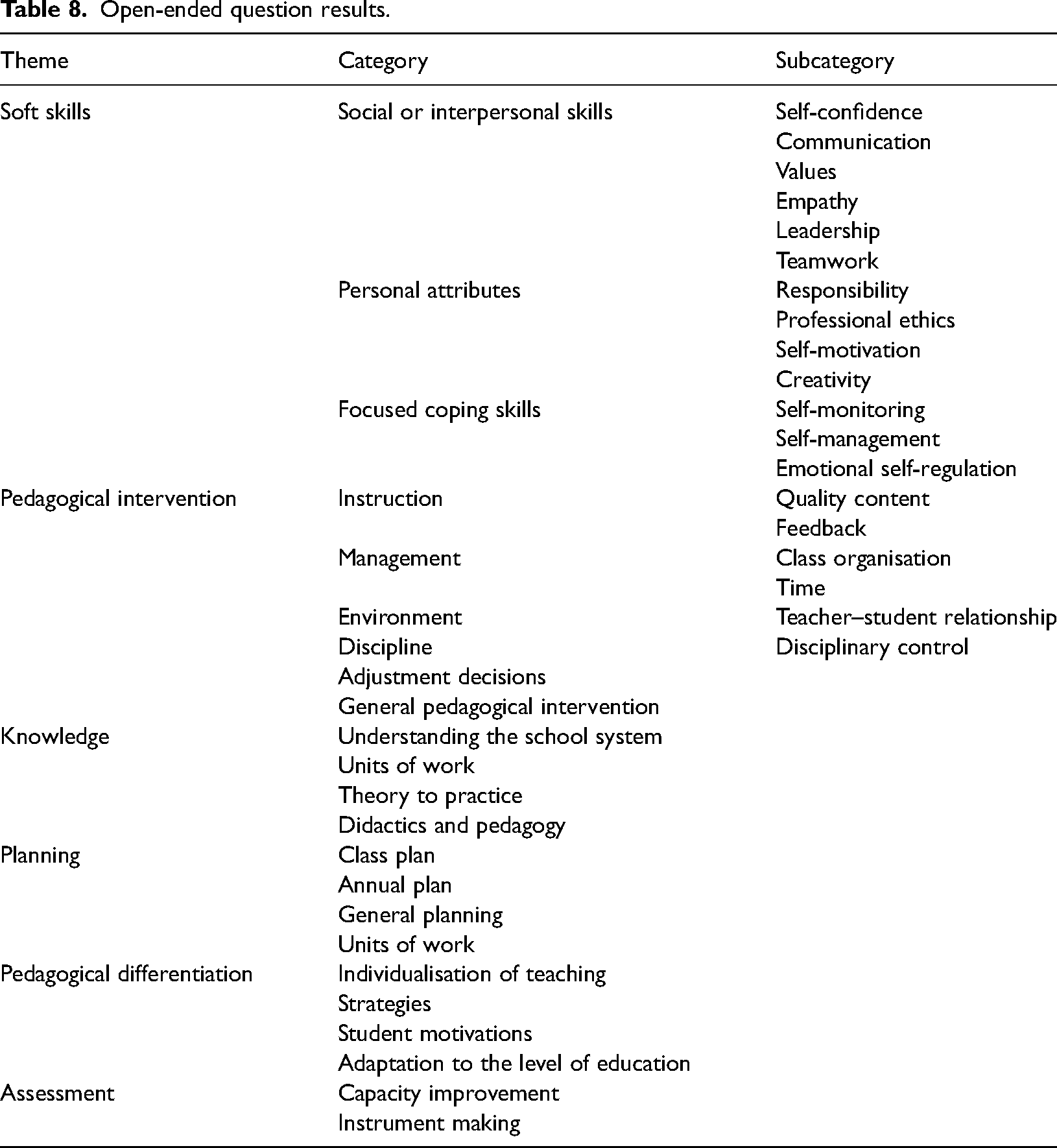
When identifying the most meaningful change that participants encountered during their teacher education, they focused on six major themes. The commonly expressed themes among the participants were soft skills, followed by pedagogical intervention, knowledge, planning, pedagogical differentiation, and assessment.
Preservice teachers mentioned that during their teacher education, the most meaningful change they experienced was related to the development of soft skills. The participants highlighted differences in their social and interpersonal skills, such as increased self-confidence in their job, the ability to communicate, instilling values in their pupils, having empathy for others, leadership improvement, and teamwork: The most significant change was that I began to trust my abilities more and developed self-confidence. (Female) Due to my shyness, I have always had some difficulty communicating. With the teaching practicum, I started to feel at ease since we were always with a group of students under our supervision, and so I developed the capacity to communicate. (Male) The capacity to comprehend the importance of conveying values and how meaningful this might be for kids was the most significant development. (Male) The most notable shift that occurred to me was an improvement in empathy, particularly with younger individuals. I previously thought of myself as a nice person who was easy to socialise with, but as the year progressed, I felt like a more attentive and empathetic person towards the young ones. (Male) My leadership and self-expression abilities. (Male) The most important shift in me occurred during my initial teacher education regarding the experience of working as a group. I was able to increase the quantity and quality of group time. With this experience, I learned how and when to act in accordance with the various situations that occur. (Male)
Differences in their personal attributes, such as increased responsibility, professional ethics, self-motivation, and creativity, were also highly reported by the participants: The most important difference in me throughout my initial teacher education was a greater sense of duty; that is, during the teaching practicum, I was compelled to develop my sense of responsibility even more. (Male) Transition from student to teacher, with responsibility for fulfilling the role to achieve collective success. (Male) Teacher motivation and professional career confirmation. (Female) The ability to be creative. (Male)
The preservice teachers also reported changes in their coping skills, such as self-monitoring, self-management, and emotional self-regulation: Throughout this process, I gained the capacity to reflect on my classes, examine the impact of teaching strategies, and seek ways to continually enhance pedagogical practice. (Male) The primary difference was autonomy; after completing the teaching practicum, I became more autonomous in my pursuit of new knowledge and in responding to my students’ individual needs. (Female) The ability to respond to difficulties faced throughout my teaching practicum. (Male)
The second theme in the preservice teachers’ answers regarding the most meaningful change they experienced during their education was pedagogical intervention. The preservice teachers mentioned differences in instruction, meaning increased quality in their content and better feedback: The most significant change was the way the lectures were delivered. Initially, the lectures were very confusing and lengthy, causing distractions for the students; however, as the teaching practicum progressed, the lectures became clearer and more objective, allowing the students to focus more on what was mentioned, promoting a greater understanding of the objectives and contents of the class. (Male) I improved the feedback a lot; I was able to instruct the first feedback, follow it up, and close the feedback loop, which was initially tough for me. (Male)
Differences in their management abilities, namely in class organisation and time management, were also reported as a meaningful change: The most notable shift that occurred throughout my initial teacher education was mastering the conduct, organisation, and control of the class, which became clearly more objective and agile during the teaching practicum. (Male) Another visible and noticeable improvement is the management of class time, with more practice time and less time spent on organising and controlling pupils. (Female)
Participants highlighted an improved environment by developing a relationship with their students: The bond with the pupils was the most important shift for me. In the beginning of my initial teacher education, I considered myself an introverted teacher because of the way I interacted with students in class. I am already showing affection to the pupils since I am more at ease in the classroom atmosphere. (Male)
The preservice teachers also reported changes in how they perceived discipline, with more control over the class and inappropriate behaviours: The most significant shift that happened throughout my teacher training was class control. I had a lot of trouble imposing myself at first, but with time, I learned skills and techniques that helped me a lot in controlling and relating to the class. (Male)
The meaningful change in their pedagogical intervention was also seen in making better adjustment decisions: The ability to make adjustment decisions in the face of different environments with a quality theoretical and scientific basis is critical to the success of the teaching-learning process, and supervised pedagogical practice makes this process easier. (Male)
Concerning the third theme in the preservice teachers’ answers regarding the most meaningful change experienced during their initial teacher education, knowledge, the participants focused on increased knowledge in understanding the school system: The perception of school dynamics from the standpoint of a teacher. (Male)
It was also reported that they had an increased knowledge to develop units of work, their ability to put theoretical knowledge into practice, and enhanced abilities regarding didactics and pedagogy: Having a more in-depth understanding of the numerous sports, I tried to get to know each one better to appropriately teach the technical gestures and games. (Male) I certainly improved my capacity to put into practice all the theoretical lessons that were taught to me. (Male) Greater understanding of didactics and pedagogy, as well as teaching techniques and strategies. (Male)
The preservice teachers’ responses regarding planning centred on: major increases in their capacity to plan a class; greater ability to undertake annual planning; overall changes in general physical education planning; and unit of work planning: I believe there has been a progression concerning the simplicity with which I carry out the class preparation and planning. (Male) The most significant change I noticed during these years of training was my perception of how important it is to carry out timely planning for the school year to provide the best learning with a guiding principle so that students can receive more appropriate learning. (Female) Changes in attitudes about the planning and organisation dimensions after understanding the importance of planning in a student-centred manner. (Male) I learned to be more organised and efficient when it came to organising units of work. (Male)
Pedagogical differentiation was also mentioned as a meaningful change in the participants, namely: their ability to individualise their teaching and learning process for pupils; the pedagogical differentiation strategies they developed; their ability to adapt classes to student motivations; and their ability to adapt to the level of education they were teaching: Learning to adjust information to students’ levels to improve both the individual and group teaching-learning processes. (Female) How to design strategies for students to attain success in their tasks. (Female) Ability to adjust teaching to students’ interests and motivations. (Female) Initially, adaptation to the level of secondary education was an issue that demanded a shift in the perception of that level of education. (Male)
Lastly, we observed that preservice teachers’ answers reported meaningful changes regarding the assessment process. The participants focused their answers on their overall capacity improvement and instrument-making abilities: Knowing how to identify and evaluate each student in class to tailor the teaching style to the students’ abilities and behaviours. Understanding how to discern and alter learning and teaching for students’ well-being. (Male) I had to learn Excel because it is required for creating evaluation grids. On this software, I was a complete noob. (Male)
It seemed from the qualitative data that the most meaningful shift encountered during initial teacher education had to do with direct and observable aspects of teaching.
Discussion
With this analysis, we were able to understand how preservice teachers perceived the different components of initial teacher education. However, we should highlight that a questionnaire with close-ended questions may prevent us from identifying other key actors or constructs of teacher education by restricting the participants’ responses to the predefined answers.
Regarding agents of training, the preservice teachers considered the cooperating teacher to be the agent of training who made the most meaningful contribution to their training as a teacher. The cooperating teacher is emphasised as the most important agent of training for preservice teachers in various studies (Alves et al., 2019; Ezer et al., 2010; Fletcher and Kosnik, 2016). According to Izadinia (2016), preservice physical education teachers can develop their professional identities with the help and interaction of cooperating teachers. The cooperating teacher is crucial in providing guidance, support, and explaining areas of the teaching profession learned through practice (McMahan and Garza, 2017). According to Amorim and Ribeiro-Silva (2024), cooperating teachers understand their role in socialising preservice teachers. As a result, we may state that the relationship between the preservice teacher and the cooperating teacher is two-way and mutually beneficial.
When we examined the outcomes for components of teacher education, the participants highlighted the teaching practicum experience as the component that made the most meaningful contribution to their preparation as teachers. This is seen as a crucial component of physical education teacher education (Dewhurst and McMurtry, 2006; Mordal-Moen and Green, 2014; Pungur, 2007; Velija et al., 2008). The teaching practicum is a time for preservice teachers to apply theoretical knowledge in practice while obtaining teaching experience in a real-world setting (Cardoso et al., 2016; Tardif et al., 1991). It is also during the teaching practicum that future teachers increase their confidence in their role as future physical education teachers (Alves et al., 2019; Hahl and Mikulec, 2018; Mifsud, 2018), which we confirmed with the results from the open-ended question. Our research on the value preservice teachers placed on their teaching practicum experience was consistent with numerous studies (Dunning et al., 2011; Ezer et al., 2010; Stidder, 2014; Stidder and Hayes, 2006; Velija et al., 2008) that show preservice teachers value their practicum experience much more than the university-based component of initial teacher education programmes. The preference for school-based learning may highlight preservice teachers’ worries about the reality of teaching daily (Velija et al., 2008). This has ramifications for initial teacher education programmes, as preservice teachers may think that the phase's goals are limited to learning to teach.
Preservice teachers’ perceptions of the roles of teachers showed that prospective teachers believed that the most important role of the teacher was to deliver universal values (such as tolerance, respect, responsibility, commitment, and democracy) to the pupils. The physical education classroom is a place where the holistic development of the student is emphasised (Gaviria-Cortés and Castejón-Oliva, 2016), and moral discernment is likely to occur there (Hirama et al., 2012). Physical education has a crucial role to play in the education and development of values (Gaviria-Cortés and Castejón-Oliva, 2016; Martínez et al., 2014). Our findings were in line with several studies (Ezer et al., 2010; Gaviria-Cortés and Castejón-Oliva, 2013; Martínez et al., 2014; Roux and Dasoo, 2020) that claim that many teachers and preservice teachers consider the values of respect, honesty, and responsibility a priority and incorporate them into their lessons.
The responses to statements related to motivation for teaching revealed that future teachers agreed the most with the statement that ‘The teaching profession enables a relationship with children to be established’. This was consistent with what Lortie (2002) identifies as an attractor to and facilitator of the teaching profession: service benefits (the desire to serve society). Preservice teachers expressed their disagreement with the statement that ‘Teaching is a profession that grants employment security’. Given the status of Portugal's teaching profession, this result was hardly unexpected. According to Flores (2011), teacher shortages and new teacher unemployment are interconnected realities that define the Portuguese teaching profession and have an impact on the expectations new teachers have for their jobs. More than a decade after Flores’ assertion, this is still the reality that teachers are facing. Flores provided a realistic (and still up-to-date) portrait of the Portuguese educational system in 2011, focusing on two crucial aspects: bureaucracy and centralisation. Other factors that affect teaching careers in Portugal include beginner teachers’ motivation due to unemployment and the lack of social recognition of the teaching profession (Flores, 2011). The levels of agreement with statements related to motivation for teaching revealed that preservice teachers related more to statements linked to intrinsic motivation for teaching than extrinsic motivation. Activities conducted out of innate interest and enjoyment are said to be intrinsically motivated (Deci, 2017). Our findings on teachers’ motivations aligned with those of Ezer et al. (2010), Hein et al. (2012), and Spittle et al. (2022), who reported internal regulation for teaching physical education and a perception that the job provides intrinsic rewards. Additionally, Hein et al. (2012) show that teachers’ intrinsic motivation is much greater among those who employ productive teaching approaches more frequently than those who do so rarely, presumably indicating a contemporary approach to teaching. Since teaching in Portugal has experienced high levels of unemployment, a lack of career opportunities, and poor status over the past few years, and since these difficulties have been worsened by austerity measures, intrinsic motivation may also be related to these issues (Flores and Niklasson, 2014). Therefore, it might be hypothesised that the teaching practicum period of initial teacher education did not change the reasons for the prospective teachers’ prior decision to pursue a career in education.
Considering the preservice teachers’ conceptions of teaching and learning, the data analysis revealed that prospective teachers strongly agreed with the statement that ‘The teaching profession requires lifelong learning and development’. The statement that participants agreed with the least was ‘The quality of teaching is determined by the amount of time the teachers and students spend together’. This translated into a stronger preference for a constructivist approach to teaching and a lower preference for a traditional approach to learning. Through tasks that encourage decision-making, critical thinking, and problem-solving, constructivist teaching approaches give students the chance to actively participate in the learning process (Driver et al., 1994). Wang and Ha (2013) argue that cooperating teachers, students, co-workers, and teacher educators can help or hinder preservice physical education teachers’ use of constructivist approaches. We can infer that our participants believed learning to be a constructivist process rather than a transmissive one based on their lower preference for a traditional approach to learning. However, Syrmpas et al. (2017) found that participants might view learning as a constructivist process even when they frequently use reproductive teaching methods rather than productive ones.
Regarding the most meaningful change experienced, the findings showed that participants believed they developed their soft skills, pedagogical intervention, knowledge, ability to plan, to do pedagogical differentiation, and to assess. Participants focused on technical proficiency, and answers seldom extended beyond technical or situational instructional objectives. In our participants’ perceptions, professional socialisation had a considerable impact on learning how to teach, but it also helped them improve their self-confidence, leadership skills, responsibility, professional ethics, and self-management, all skills that were enhanced through the teaching practicum and professional socialisation. Based on the findings, we may deduce that preservice teachers may view their initial teacher education and professional socialisation as limited to learning how to teach.
Conclusion
This study aided in understanding the perspectives on professional socialisation held by preservice physical education teachers. By answering the questionnaire, the participants reflected on their initial teacher education. The findings revealed that preservice teachers’ identities reflected a constructivist approach to teaching, intrinsic motivation for teaching, and that their purpose was to deliver universal values. With this result, preservice teachers highlighted that the teacher's role goes beyond knowledge transmission to imparting unique universal values for the formation of better citizens (as advocated by Resolution No. 6478/2017 of July 26). This may contribute to the outcome of their constructivist perception of teaching. Despite the difficult employability conditions that Portuguese teachers have been facing for some time, the preservice teachers pursued a teaching career out of intrinsic motivation.
Regarding the factors in initial teacher education that shaped preservice teachers’ teaching identities, we found that the cooperating teacher and the teaching practicum were highly valued by the participants. Preservice teachers identified improvements in soft skills (particularly confidence) and pedagogical intervention as major changes during their initial teacher education. With the results, we conclude that professional socialisation influenced how the participants viewed their performance as teachers, given the relevance that the preservice teachers attributed to the role of the cooperating teacher and the experience lived throughout the teaching practicum in a real context.
Although these conclusions are not a departure from what is already known, as they reinforce what is already acknowledged regarding preservice physical education teachers’ involvement in their professional socialisation, this paper adds to the Occupational Socialisation Theory by paying attention to how preservice teachers relate to the various facets of teacher education. These findings have important implications for preservice teacher education programmes since it is critical to address their perspectives to maximise the value of the experience. Preservice teachers’ concerns about the realities of teaching may be revealed by their preference for school-based learning. This has implications for initial teacher education programmes, as preservice teachers may view the programme's goals as limited to teaching. This might indicate a discrepancy between theory and practice, a gap between subject matter and pedagogy as the focus of teacher education, and an imbalance between the university and the school as socialising environments. To enhance programme design and optimise the potential impacts of professional socialisation on preservice teachers’ identities, teacher educators must understand how preservice teachers perceive their initial teacher education.
One limitation is that we used a questionnaire mainly comprised of closed-ended questions, which prevents us from understanding and identifying the underlying causes of the matter by restricting the participants’ responses to the predefined answers. We now understand how preservice teachers perceive initial teacher education and its key actors; however, we believe that it would be helpful to triangulate other data sources. Further research should ascertain how preservice teachers identify throughout professional socialisation. Therefore, to understand how preservice teachers regard themselves as teachers, we must observe and analyse their teaching practicum. It is critical to give future teachers a voice regarding how they envision themselves in the role of physical education teacher.
Footnotes
Declaration of conflicting interests
The authors declared no potential conflicts of interest with respect to the research, authorship, and/or publication of this article.
Ethical approval and informed consent statements
The Ethics Committee at the Faculty of Sport Sciences and Physical Education (CE/FCDEF-UC/00472019) approved the study on 2 August 2020. The preservice teachers willing to participate signed an informed consent form.
