




Abstract
Anxiety related to music performance and to teaching in non-music fields has been studied extensively; however, anxiety pertaining to the performative roles specific to music teachers, both preservice and inservice, has yet to be considered. This pilot study was designed to take the first steps in examining music education students’ anxieties in the context of preservice teaching. Twenty-seven music education students completed a questionnaire about their preservice teaching experience that included the Kenny Music Performance Anxiety Inventory, modified and divided into two sections. Participants responded to the first section (general life questions) once and the second (performance contexts) three times in direct succession, based on their experiences when performing, teaching, and conducting. No significant differences in anxiety scores were noted across the three contexts, indicating a similar degree of anxiety when performing as a musician and as a teacher. Implications for teacher educators and researchers are discussed.
Aspiring professional musicians typically begin their training in childhood or early adolescence, such that by the time they reach the postsecondary level, they have been honing their craft for many years. This training often involves not only musical skill development, but also performance experience. Indeed, for musicians studying in universities and conservatories, performance is an essential component not only of their entry into studies, but also of their placement in ensembles, success in examinations, and ability to move forward with degrees and career paths. A common challenge to their performance success involves music performance anxiety (MPA), a prevalent issue across age and skill span (e.g., Diaz, 2018; Nicholson et al., 2015; Papageorgi, 2022; Ryan, 2005; Ryan & Andrews, 2009; van Kemenade et al., 1995).
The most commonly recognized definition of MPA (Kenny, 2011) points to a number of critical MPA features that highlight its complexity and the challenges it poses to sufferers. Its wide range of possible manifestations can result in serious consequences for both the performer and their performance success (e.g., Burin & Osorio, 2017; Sokoli et al., 2022; Wiedemann et al., 2022). High ego investment on the part of the musician, stemming at least in part from years of intensive training, and evaluative threat in the form of a public audience are built into the performance traditions and training in the Western classical genre, upon which most university and college music teacher education programs are based. These traditions have increasingly been discussed in the literature for their perfection-focused culture of music pedagogy and the fear of making mistakes—a common feature of MPA—that this focus engenders (Dobos et al., 2019; Jeong & Ryan, 2021; Kobori et al., 2011; Patston, 2014). MPA has been studied extensively since the 1980s and is recognized as the most common health concern of performing musicians (Fernholz et al., 2019; Fishbein et al., 1988).
Once musicians enter postsecondary training, performance is an ongoing expectation—at a minimum through practical examinations and ensemble performances (a wide range of other performance opportunities are also common and sometimes expected). The career path of students who major in music education involves an additional kind of “performance,” as they enter schools to practice and refine their pedagogical skills and conduct ensembles during intensive periods in real-world evaluative contexts. Teaching, for some, can itself become a performative act (Abramo, 2014; Liew, 2013) in which educators transfer their personas as “teacher-artists” to a new stage—the classroom.
The concept of performativity has been discussed with regard to the multiple and competing identities that music teachers may need to negotiate (Abramo, 2014), and role identities involving performer/well-rounded musician and pupil-/content-centered teacher have been identified (Bouij, 2004). It has been suggested that music teachers tend to privilege their identities as musicians over teachers (Abramo, 2014; Froehlich, 2007), and questions have been raised about whether the emphasis in teacher education on music knowledge and skills over pedagogical practices may underprepare student teachers for their first years of teaching (Abramo, 2014). Feelings of performing and being evaluated while student teaching have been noted in the literature (Abramo, 2014; Pellegrino, 2015; Sorenson, 2022).
While the role of the inservice music teacher, and consequently preservice music teacher, is multifaceted, comprising administrative, planning, and instructional components, we suggest that it is in the face-to-face teaching and directing of ensembles that similarities between music performance and teaching “performance” may lie. When compared with the high level of musical skill development and the number of years spent developing performance skills on their primary instrument(s), the new skills and competencies preservice music teachers are expected to successfully perform during practicum (e.g., conducting, instrumental/vocal techniques) are wide-ranging and often introduced to them during their teacher education, rather than built up over years. For preservice music teachers who have grown up with high standards for excellence in performance, it is conceivable that the pressure to successfully perform across these newly developing skill and knowledge areas in the public forum of a classroom or rehearsal hall may be particularly stressful. The range of skills and varied roles that preservice music teachers assume—student, teacher, conductor, performer—may also complicate their experience and feelings of anxiety, especially in the newer “performance” venues that may be school classrooms and rehearsal halls. Furthermore, the development of preservice teachers’ professional identity and the tensions they experience (Brewer, 2009; Draves, 2021; Miksza & Berg, 2013; Paise, 2010) may potentially exacerbate their anxiety.
While a large body of literature exists on teaching anxiety, which focuses heavily on math and science teaching (e.g., Akinsola, 2014; Aydin, 2021; Brown et al., 2011; Scott, 2007), much of this literature involves the broader conception of teaching, encompassing all aspects of the teacher’s role (e.g., parent–teacher conferences, lesson planning), rather than the specific act of leading a class in a given subject matter. Indeed, the Teaching Anxiety Scale (Parsons, 1973) that has been widely used in the literature measures teaching anxiety as inclusive of these many roles, with items such as I feel calm and collected when I think about holding parent-teacher conferences and I find it easy to speak up in the staff room. Music teaching anxiety has received minimal research consideration. In a limited review of literature, Strong (2013) noted overlaps between MPA and music teaching anxiety, and, while not specifically looking at teaching anxiety, Cupido (2018) identified a fear of making mistakes in front of students as a contributing factor to performance faculty members’ MPA. The only study to explicitly examine MPA and teaching anxiety was recently published by Cui et al. (2024). They found a moderately strong significant correlation between preservice music educators’ MPA and teaching anxiety. However, their use of the Parsons’ teaching anxiety scale with its broad conceptualization of teaching anxiety as pertaining to the many roles of being a teacher preclude a direct comparison of preservice teachers’ feelings when instructing a class or ensemble with their feelings when performing onstage.
A need to focus on the teaching aspects of the teacher role has been identified in the literature on science anxiety (Novak et al., 2022) and positive relationships have been found between elementary educators’ math anxiety and math teaching anxiety (Hadley & Dorward, 2011; Olson & Stoehr, 2019). However, some challenges arise in attempting to make comparisons between teaching anxiety and subject matter anxiety in non-music areas with music teaching anxiety and MPA, at least in the context of music specialists. Whereas math anxiety and science anxiety studies typically focus on generalist educators who are required to teach those subjects (e.g., Bosica, 2022; Gresham & Burleigh, 2019), music specialist educators are typically not anxious about music as a subject area, but might instead experience anxiety about performing music for an audience.
Considering music education students’ background in performance contexts and the performative nature of music teaching, we wanted to explore whether preservice music teachers might liken the classroom or rehearsal hall to a stage, especially given the evaluative nature of both music performance and preservice teaching. It is conceivable, in essence, that they feel as though they are performing in three different capacities—as musician (in university) and as teacher and conductor (in practicum). If a sense of “performing” does exist when preservice music teaching, it is possible that MPA may be experienced in both school and stage contexts. The purpose of this pilot study was to examine the experiences and anxieties of music education students regarding preservice teaching. The research questions were as follows:
Method
Participants
We invited participation from current or recent university students in the United States or Canada who were specializing in music and were currently (or within the last 4 months) student teaching in an elementary, middle/junior high, or high school as a required component of their degree for a period of no less than three consecutive weeks. While the term “student teacher” is typically used to refer to students completing a full semester of teaching in their final semester, some Canadian universities have multiple student teaching periods, labeled as such, beginning at the end of second year that are full-time, every day for less than a full semester; students may or may not also be simultaneously taking night courses. For clarity and consistency with the literature, we will use the broader term preservice teachers throughout the document to refer to participants.
Fifty-three students entered the survey. Five declined to participate. Forty-eight consented to participate, but of these, 15 dropped out immediately or after the first few questions. Four other participants dropped out midway through, resulting in a total of 29 participants who completed the questionnaire, 15 in English and 14 in French. As two of these participants skipped a substantial number of questions without dropping out, they were ultimately excluded from the analysis, resulting in a final number of 27 participants whose data were included in the analysis. Participants’ gender identity included 15 women (55.56%), 10 men (37.04%), one nonbinary (3.70%), and one not indicated (3.70%). One participant was not involved in directing an ensemble during their preservice teaching, so for analysis in which directing was included, there were 26 participants.
Participants represented a wide range of instrumental specialties and all had ensemble experience: 70.37% (n = 19) in bands, 66.67% (n = 18) in choirs, 59.26% (n = 16) in orchestras, and 48.15% (n = 13) in other/additional types of ensembles. Most participants had experience conducting: 88.89% (n = 24) had taken at least one conducting class, 62.96% (n = 17) had taken at least two, and 11.11% (n = 3) had not taken any conducting classes.
Measures
We developed an online survey that comprised questions about (a) their training in music and music education (e.g., types of musical ensembles played in, conducting and methods courses taken); (b) practicum (e.g., grades, classes, ensembles included); (c) anxiety in general and when performing/teaching/directing (the Kenny Music Performance Anxiety Inventory [KMPAI]; Kenny, 2009); (d) feelings about performing and teaching (e.g., most stressful aspects of performing/preservice teaching); (e) preparation for and priorities in practicum (e.g., time spent on score study, goals when leading an ensemble); and (f) professional identity (performer/teacher/conductor). Items in both (e) and (f) included 7-point Likert-type scales where responses ranged from 0 (strongly disagree) to 6 (strongly agree). Four open-ended questions were included to allow participants to share any additional thoughts they had pertaining to the topic: (a) Was there anything that surprised you about your responses in the previous section (referring to MPA questions)? (b) In general, what would you say are the most stressful aspects of student teaching? (c) In general, what would you say are the most stressful aspects of performing (as a musician, not as a teacher)? and (d) Is there anything further you would like to share about your experiences and anxieties in preservice music teaching and/or when performing music in public?
Kenny Music Performance Anxiety Inventory
The KMPAI is a comprehensive and widely used measure of MPA, including its etiology, latent psychological vulnerabilities, and pre-performance experiences (Kenny, 2009). It includes 40 items across eight subscales: (a) Proximal somatic anxiety and worry about performance (11 items); (b) Worry/dread (Negative cognitions) focused on Self/other scrutiny (8 items); (c) Depression/hopelessness (8 items); (d) Parental empathy (4 items); (e) Memory (2 items); (f) Generational transmission of anxiety (3 items); (g) Anxious apprehension (3 items); and (h) Biological vulnerability (1 item; Kenny & Ackermann, 2015). Each item is scored on a 7-point Likert-type scale, with responses ranging from 0 (strongly disagree) to 6 = (strongly agree). The maximum possible score on the scale is 240, indicating intense MPA. The KMPAI has been translated into many languages and used with high degrees of validity and reliability in many studies (e.g., Oh et al., 2020; Philippe et al., 2021; Spahn et al., 2016; Wiedemann et al., 2022; Zarza-Alzugaray et al., 2016).
We modified the KMPAI for this study and divided it into two sections—one that focuses on general questions, not specific to performance contexts (16 items: e.g., “Excessive worrying is a characteristic of my family.”) and one that is specific to performance contexts (24 items: e.g., “I have increased muscle tension before or while . . . performing/teaching/directing.”). This division enabled us to ask the general questions only once, but the performance-specific questions three times in direct succession, based on their experiences (a) when performing, (b) when teaching, and (c) when conducting. Some questions were altered slightly from the original version, to fit the three contexts. For example, the previously-noted example regarding muscle tension was originally worded “Prior to, or during a performance, I have increased muscle tension.” Table 1 illustrates how the three contexts were laid out consecutively in the survey. Cronbach’s alpha for the current sample was calculated to be very high across the three iterations of the scale (between α = .89 and α = .93), indicating a high internal consistency for the measure. All KMPAI-modified questions are shown in the appendix.
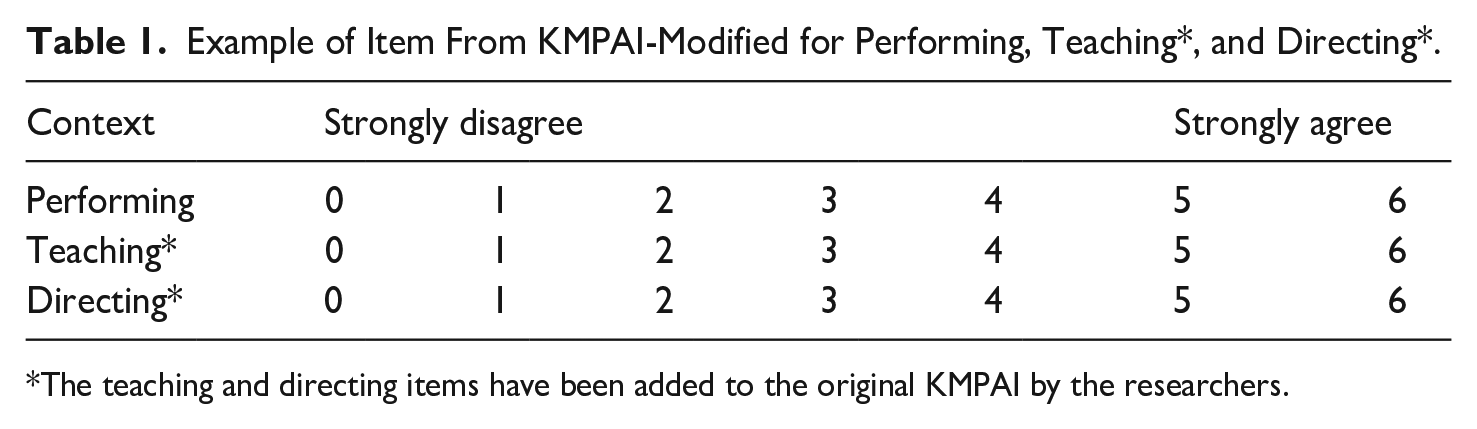
The teaching and directing items have been added to the original KMPAI by the researchers.
Procedure
Once research ethics approval was granted by the researchers’ institutions, participants were recruited to participate in a study on the experiences and anxieties of preservice music teachers. Recruitment took place between late April and early June 2023. Notifications were posted on the Facebook and Instagram pages of two of the researchers and email messages were sent to music teacher education leaders and professional contacts of the researchers across the United States and Canada, asking them to share the recruitment message with university music students in their networks. To prevent any perception of coercion, we specifically indicated for email recipients not to respond to our message so that we had no way of knowing whether or not they passed along the message to potential participants. As such, it is not possible to calculate a response rate. The approximately 15-min online survey was developed on the Qualtrics XM platform. A landing page described the study and required informed consent prior to participation.
Results
Anxiety When Teaching, Conducting, and Performing
To answer Research Question 1: What differences exist in music preservice music teachers’ anxiety when teaching a music class, directing a music ensemble, or performing a solo?, we calculated a repeated measures analysis of variance (ANOVA) on the anxiety scores (minus the general anxiety scores) on the three contexts. Mauchly’s test was nonsignificant, χ2(2) = 1.99, p = .37. We found no significant differences, F(2, 25) = .07, p = .93, η2p = .003, indicating that participants experience a similar degree of anxiety when performing (M = 72.37, SD = 29.07), teaching (M = 70.1, SD = 24.91), and directing a musical ensemble (M = 70.87, SD = 28.91).
Stressful Aspects of Preservice Music Teaching and Performing
To answer Research Question 2: What are the most stressful aspects of performing and preservice music teaching?, we coded responses to the open-ended questions, In general, what would you say are the most stressful aspects of student teaching? and In general, what would you say are the most stressful aspects of performing (as a musician, not as a teacher)? Following the process described by Creswell and Creswell (2018), two of the researchers independently coded the data, then compared codes and discussed minor discrepancies until consensus was reached. Codes for each question were then organized into five overarching emergent themes.
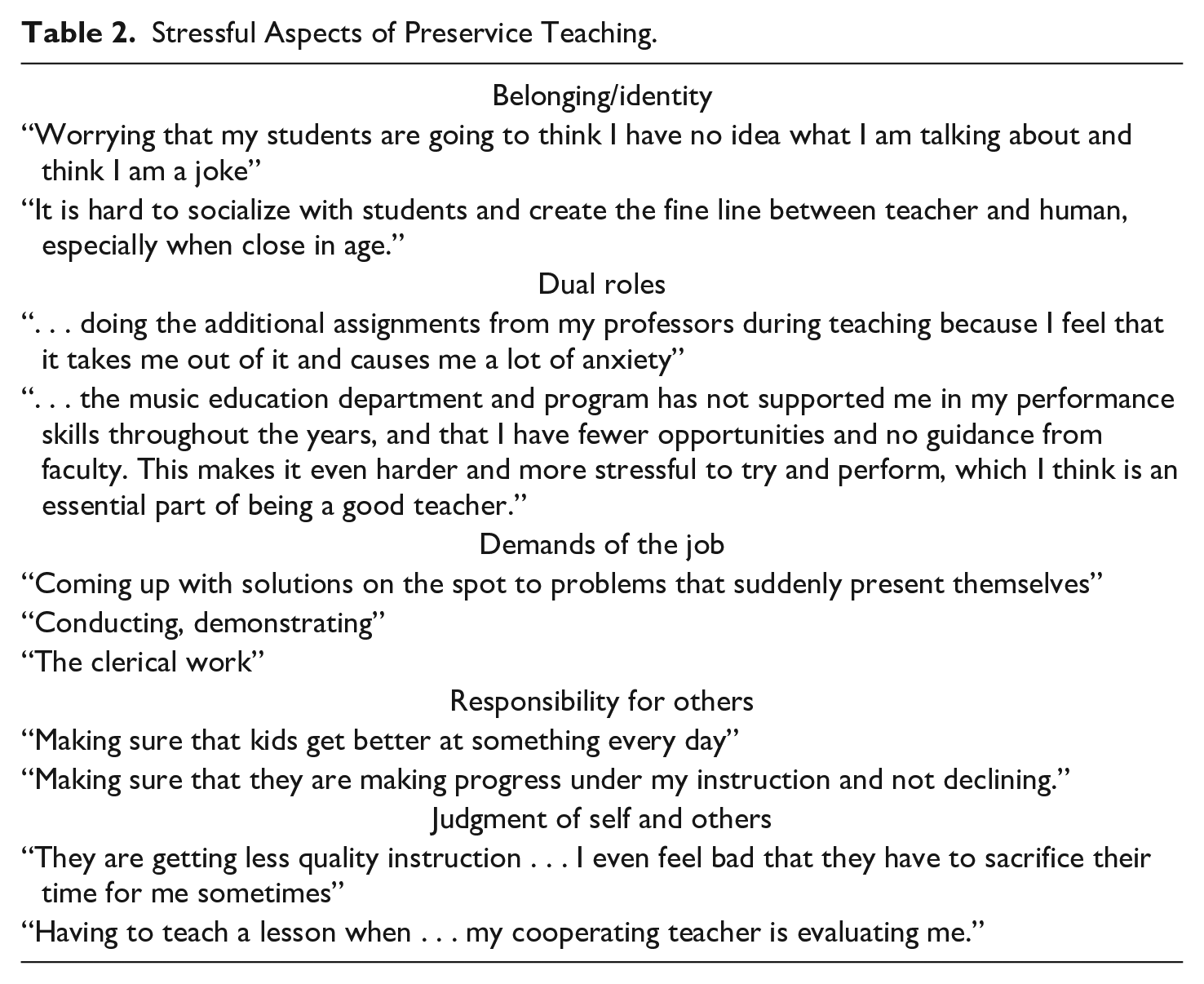
Themes pertaining to preservice teaching stress were belonging/identity, dual roles as student and teacher, demands of the job, responsibility for others, and judgment of others. Codes within the belonging/identity theme pertained to feelings of being inexperienced and lacking confidence, being an impostor, shifting identity from student to teacher, and the social aspect with students. Under dual roles, we noted codes regarding a perceived lack of institutional support, certification requirements, and navigating the demands of both the university and the school. Demands of the job included real-time problem-solving, the many diverse aspects of a teacher’s role, classroom management, performing, and preparing for teaching. Responsibility for others involved concerns about student learning, and judgment of self and others related to both formal and perceived assessments by both cooperating teachers and students. Sample statements from participants under each theme are given in Table 2.
Stressful Aspects of Preservice Teaching.
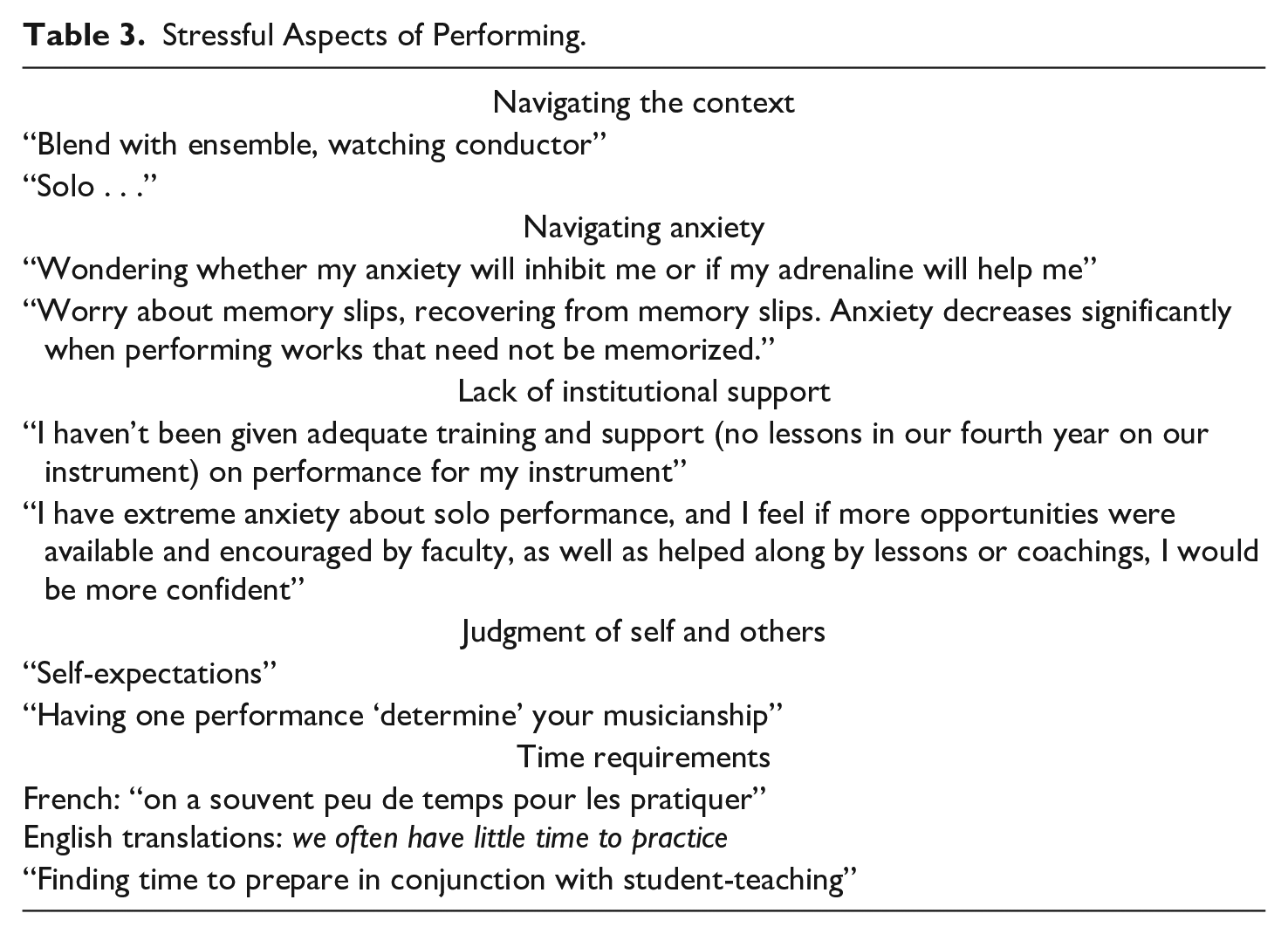
Themes pertaining to performing were navigating the context, navigating anxiety, lack of institutional support, judgment of self and others, and time requirements. Navigating context included dealing with solo and ensemble contexts. Navigating anxiety reflected concerns about impacts of anxiety, challenges with memorized performance, and building up resilience and comfort in performing. Institutional support reflected a perceived lack of institutional support. Judgment of self and others included self-expectations and judgments of others. Time requirement codes pertained to preparation and a lack of time to adequately prepare, especially when preservice teaching. Sample statements for each theme are shown in Table 3.
Stressful Aspects of Performing.
Identity and Anxiety
To determine whether participants felt a distinction in their identity roles, we conducted a repeated measures ANOVA on their identity ratings. While the sample size for this analysis was small (n = 13 who completed all three identity items), the assumptions of normality and sphericity were met. Mauchly’s test was nonsignificant, χ2(2) = 1.3, p = .52, and results indicated a significantly higher identity rating for Teacher (M = 5.46, SD = .66) than for Performer (M = 4.38, SD = 1.26) or Director (M = 4, SD = 1.87), F(12, 2) = 4.58, p = .021, η2p = .28.
To answer Research Question 4: In what ways are identity and anxiety related with regard to teaching a music class, directing a music ensemble, or performing a solo?, we calculated Pearson correlation coefficients between the three identity variables and the three anxiety scores. Significant correlations were found between MPA Directing and MPA Teaching, r = .51, p = .008, and between MPA directing and identity performer, r = −6.86, p = .01.
Preparation and Comfort
Twenty-five participants responded to all questions regarding their preparation and training for conducting. Means and modes are given in Table 4. The bi-modal responses to certain questions may indicate two different types of experiences that are not captured in the means.
Perceptions Regarding Preparation and Training.
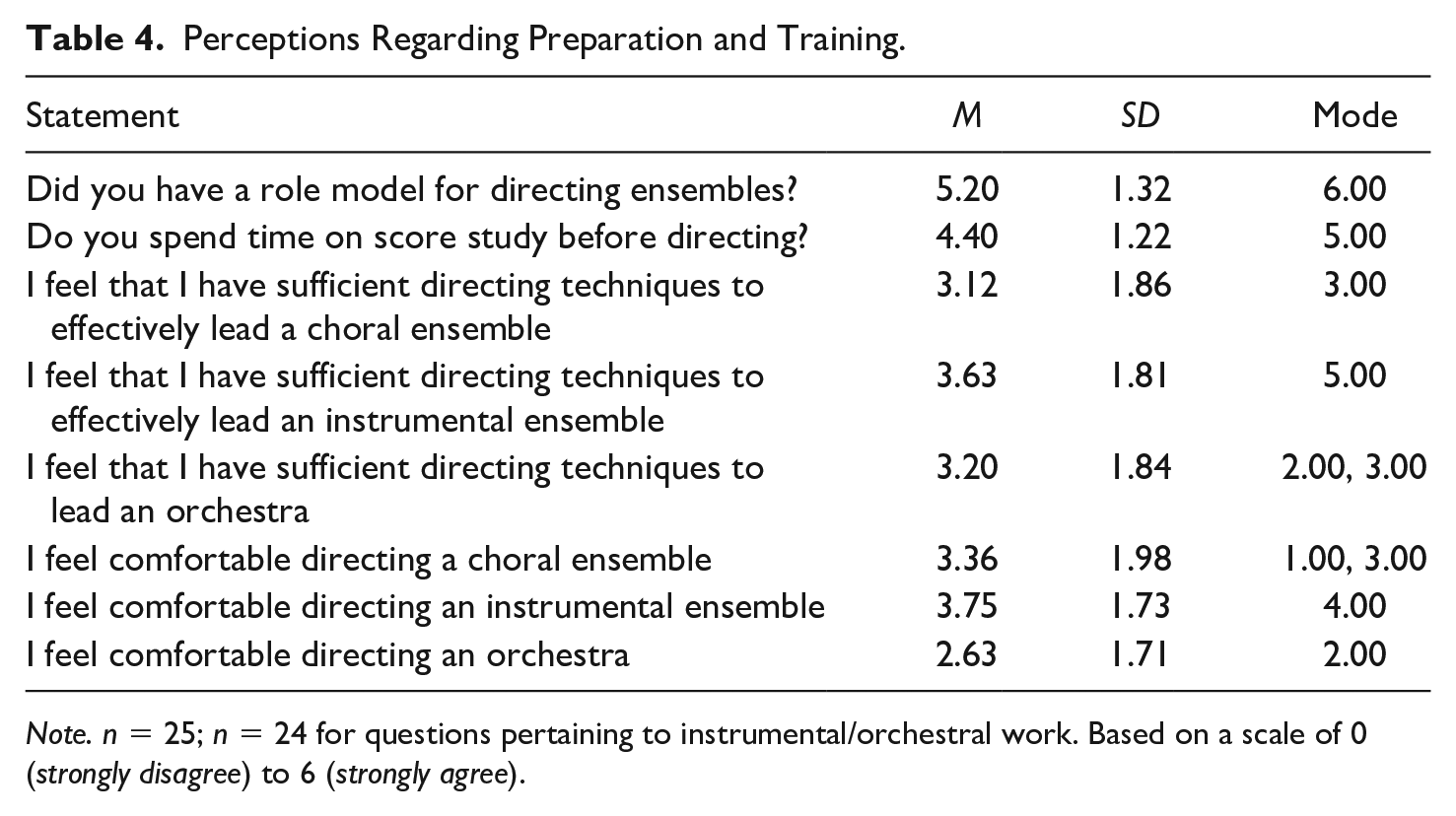
Note. n = 25; n = 24 for questions pertaining to instrumental/orchestral work. Based on a scale of 0 (strongly disagree) to 6 (strongly agree).
Discussion
The primary goal of this study was to explore the possibility that the teaching and ensemble directing components of preservice music teaching may feel performance-like for university-level musicians and thus raise feelings of or akin to MPA. By asking participants to rate their level of anxiety in the three contexts in direct succession, we afforded them the opportunity not only to rate their anxiety in each context, but also to provide a comparative context for them. We found that there were no significant differences in MPA scores across the three contexts, indicating that participants feel similarly performance-anxious when teaching and conducting as they do when performing. This is an important finding that needs further investigation to see how pervasive the issue is and how time and experience may impact upon preservice teachers’ MPA feelings in classroom and rehearsal environments.
In their open responses regarding stressful aspects of preservice teaching and performing, participants identified a variety of stressors, including several overlaps across contexts. The performative aspects of teaching, such as demonstrating and conducting, were noted, as well as concerns about being evaluated and feeling unsupported or not given adequate training in performance by their music program. Furthermore, participants worried about not teaching correctly or providing effective learning. Since the performative and evaluative components of student teaching have been noted previously (Sorenson, 2022) and a fear of being judged and making mistakes in a public context is a common underlying feature of MPA (Kenny, 2011), these findings lend support to the contention that MPA may be experienced in classroom contexts and that preservice teaching may have similar features to music performance.
Some participants noted feeling like they did not know what they were doing, or appeared not to know, and were essentially pretending to be teachers—reflective of impostor feelings that have been noted in preservice music educators (Nápoles et al., 2023; Sorenson, 2022). In the current study, we did not use an impostor phenomenon (IP) scale, but rather coded responses from participants. Given the findings in the current study and the links between IP and MPA in graduate music performance students (Sims & Ryan, 2023), we suggest that further research into the impostor feelings and anxieties of preservice music teachers using validated IP and MPA scales seems warranted to better understand, prepare, and support preservice teachers in advance of and during field placements. Furthermore, we wonder whether IP and MPA feelings of preservice teachers may be directly related to the evaluative and novice aspects of preservice teaching, and may thus be less apparent or not experienced by established teachers. Future studies on early-, mid-, and late-career teachers may be an important next step.
We were interested in learning about preservice teachers’ evolving professional identity and how it might be related to their anxieties pertaining to teaching, directing, and performing. As such, we invited participants to rate their perception of self as a teacher, conductor, and performer. While the number of participants who responded to all three questions was low, we felt it worth examining any potential relationships that might be identified in their answers. Interestingly, we found that MPA with regard to directing an ensemble was significantly negatively correlated with identity as a performer. In other words, participants who identified less with being a performer experienced greater MPA when directing an ensemble, and vice versa. While the results are correlational and calculated from a small sample size, there is an implication that the performer identity, at least for these participants, may be tied up in their anxiety when directing an ensemble, potentially lending further credence to the contention that preservice music teachers may feel aspects of practicum as performative acts. If this is the case, it makes sense that participants, with their one or two conducting courses, felt that their readiness and comfort in directing an ensemble was moderate, at best, given the high standards and expectations for excellence surrounding music performance at the university level. We could find no MPA literature that addressed identity, such as performer identity or teacher identity, but given the indications in this pilot study, this may be an area for consideration in future research.
In response to the open-ended prompt regarding anything additional they might wish to share, one participant highlighted important tensions in the experiences of preservice educators, saying (translated from French) “it’s the fear of judgment and of not doing what’s needed that is the most difficult. They show us what we should do in the ideal situation, but they don’t prepare us enough for the difficulties we might encounter.” Such concerns about preservice teachers feeling underprepared for challenging or unexpected situations, and the vast range of such situations, have been noted in the literature (Conway, 2002, 2012) and reflect common MPA features regarding fear of being judged and of making mistakes in front of an audience (e.g., Dobos et al., 2019; Patston & Osborne, 2016; Ryan, 2004). Furthermore, disconnects between teaching musicians to make music and the relative lack of teaching them to perform that music in an evaluative public space have been discussed in the MPA literature (Ryan, 2021; Ryan et al., 2021).
As a pilot study, this is the first we are aware of to examine MPA in teaching contexts. Caution must be taken when interpreting the results as the sample size was small and may not be representative of the broader population of preservice teachers. A challenge with virtually all survey research is in engaging participants with a range of responses, rather than those with specific interests in that topic. In this study, we found that a number of participants had high overall MPA scores across the contexts and we wonder whether a broader sample would yield more moderate results. Further research with a larger sample and a wider range of participants appears to be warranted to better understand relationships between anxiety in these three contexts (teaching, directing, and performing) and whether the teaching and directing experiences are indeed perceived by preservice teachers to be a type of performance.
Implications for Music Teacher Education
While the small scope of this study limits our ability to generalize its results, it highlights a number of areas that teacher educators might consider when preparing students for and mentoring them through preservice teaching. Discussions before and during school placements might incorporate issues pertaining to student feelings and psychological states. Anxiety when teaching or conducting, high self-performance expectations, fear of making mistakes or not knowing the answer, and feeling like an impostor are areas worth raising and opening for dialogue with students. Supervisors might remind students that practicum is intended to be a learning experience where they put into practice the pedagogical skills learned during their college years. It may be important to also remind them that, while their training as educators may be recent, their training as musicians is extensive. As such, they can feel confident in their musical skills, knowledge, and intuition, but know that mistakes will happen—just as they do in music performances. Tapping into their experience as performers by providing opportunities not only to practice-teach during pre-practicum methods classes, but also to troubleshoot potentially challenging situations, can help prepare students to navigate those moments when things do not go as planned or less-than-ideal situations arise.
Conclusion
While the role of the teacher, and preservice teacher by extension, is multifaceted, in this preliminary investigation, we considered whether the instructional components of the role might invoke “in-the-spotlight” and MPA feelings. Results indicate that preservice teachers may indeed perceive their teaching and directing during preservice teaching to be a type of performance, which resulted in similar levels of MPA across the three contexts. Given the purpose of a pilot study as a small-scale investigation to test methods and assess the need for more extensive study, the findings here seem to indicate that MPA, a pervasive issue among performing musicians, may extend to the preservice teaching context, and that further investigation appears warranted.
Footnotes
Appendix
Declaration of Conflicting Interests
The author(s) declared no potential conflicts of interest with respect to the research, authorship, and/or publication of this article.
Funding
The author(s) disclosed receipt of the following financial support for the research, authorship, and/or publication of this article: This research was supported by a Seed Grant from the Faculty of Community Services at Toronto Metropolitan University.
