




Abstract
Several studies have emphasized the importance of handling disruptive situations in the physical education (PE) learning environment; however, few have investigated complex disruptive situations in PE and included both teacher and student perspectives. The aims of this study, which discusses an alternative teaching style for reducing disruptive situations, were to gain a better understanding of student and teacher experiences of complex disruptive situations in PE, and to explore how the teacher handled these situations. The philosophical perspective used in this study was Rorty’s philosophical pragmatism. Methods included written narratives, interviews, observation, and video recordings of PE lessons. Data were thematically analysed. The results showed the complexity of teacher and student experiences in disruptive situations in PE. Disruptive situations occurred when there were environmental opportunities for them, such as during periods of waiting and situations in which the teacher spoke too much, did not pay attention to the whole class, or did not intervene. The teacher used an instructional teaching style for handling disruptive situations, including being very clear, nagging, yelling, waiting them out, making eye contact, and talking to them later. The instructional teaching style provided fewer opportunities for the teacher to understand the students’ behaviour, fewer opportunities for students to learn self-control and personal and social responsibility, and did not lead to a reduction of disruptive situations over the data creation period. The practical consequence of this teaching style seemed to be the frequent use of behaviour corrections for reducing disruptive situations.
Keywords
Introduction
Physical education (PE) provides many opportunities for disruptive behaviour, with students moving in large spaces, diverse student populations, poor acoustics, large class sizes, the need to incorporate simultaneously moving bodies, implements, and objects safely (Cothran and Kulinna, 2015), and high levels of noise influencing both student learning and teacher health (Ryan and Mendel, 2010). Handling behavioural issues might be even more difficult in PE than in other subjects (Chepyator-Thomson and Liu, 2003). The myriad interactions taking place between students, teachers, and equipment (McCaughtry et al., 2008) in different environments, such as the gym, weight room, outside field (Alstot and Alstot, 2015), and swimming pool, may combine to contribute to disruptive situations and the need for behaviour management (Cothran and Kulinna, 2015). Behaviour management refers to ‘the teacher’s ability to provide clear behavioural expectations and use effective methods to prevent and redirect misbehaviour’ (Pianta et al., 2008: 44), and a similar concept, class management, generally refers to preventing undesirable behaviour or dealing with it once it has occurred (Barker and Annerstedt, 2016; McCormack, 1997). Altogether, behaviour and class management deal with preventing and handling disruptive situations. The concepts of behaviour issues, behaviour problems, and misbehaviour used in this article all refer to situations perceived to be disruptive by teachers and/or their students in their respective PE classes. Disruptive situations include those in which the teacher and/or class are disturbed briefly or for a significant period (Supaporn et al., 2003).
Disruptive situations affect the learning environment, of which teachers are important influencers (Postholm, 2013). Student misbehaviour might initially be mild or moderate in nature (Cothran and Kulinna, 2007), but it should be addressed; waiting until it becomes severe is referred to as the ‘wait to fail’ approach (Hecker et al., 2014). The ‘wait to fail’ approach may lead to continual misbehaviour such as noncompliance, defiance, and aggression (Lane et al., 2005), which may disturb other students and make it difficult for teachers to instruct (Lane et al., 2002).
Behaviour problems constitute one of the major reasons why teachers do not feel comfortable with their work, and may also cause burn-out (Friedman, 2006; Lewis et al., 2008; Postholm, 2013). For students, behaviour problems may interfere with learning and lead to negative experiences through the creation of an atmosphere of discomfort (Finn et al., 2008). PE may contribute to students’ learning and experiences within the physical, social, cognitive, and emotional domains (Bailey et al., 2009), but behaviour issues may limit some of this learning. If teachers spend a lot of time managing students’ (mis)behaviour, they have less time available for organizing and facilitating learning (Kulinna et al., 2006). However, behaviour issues might be an opportunity for social and emotional learning (Bailey et al., 2009). Therefore, the quality of PE lessons depends on the teacher’s approach to behaviour management (Alstot and Alstot, 2015; Arbogast and Chandler, 2005; Cothran et al., 2003) and class management skills (Barker and Annerstedt, 2016; Cothran and Kulinna, 2015; Cothran et al., 2003; Supaporn et al., 2003). Moreover, class management has shifted from a behaviouristic understanding of focusing on pupil behaviour and discipline to understanding the class as a social system (Postholm, 2013).
The social system in PE is complex and thus may require complexity thinking to understand and manage disruptive situations (Ovens et al., 2013). A key concept of complexity thinking in this case is to think of open rather than closed and predictable systems (Ovens et al., 2013). An open social complex system implies that no two situations would be the same, and this should be taken into consideration when making suggestions regarding behaviour management. Further, students and teachers may not assign the same meanings to the same events (Cothran et al., 2003). Research has shown that student reports both differ from, and share some similarities with, teacher reports of student misbehaviour, suggesting that teachers and students should be included in research designs for a more effective learning environment in which the needs of both teachers and students are best met (Cothran and Kulinna, 2007). To gain a better understanding of class management in this case, one needs to know what behaviours are occurring in the class (Cothran and Kulinna, 2015). Considering the sheer volume of events occurring in large spaces (Cothran and Kulinna, 2015) and the overlapping nature of class events (Supaporn, 2000), it is difficult to observe accurately all the behaviours that occur (Cothran and Kulinna, 2015). Barker and Annerstedt (2016) showed how a video camera might be used to make it easier to describe teacher and student behaviour in a PE lesson. However, students might conceal their behaviour from teachers (Hastie and Siedentop, 1999), and students and teachers may have different perspectives regarding the same class event (Cothran and Ennis, 1997; Stork and Sanders, 2000). The possibility of different perspectives between students and teachers makes it difficult to define what constitutes misbehaviour (Cothran and Kulinna, 2015).
In Norway, state schools educate approximately 95% of pupils in grades 1–10. Norwegian society is considered egalitarian, with few differences between schools (Veland et al., 2009). In secondary school, most students are in the same class from the eighth through 10th grades, and the teacher usually teaches two or more subjects in her/his class. In 2009, 39% of ninth-grade students in Norway reported disruption in almost every subject and lesson in school (Ogden, 2015).
Ogden (2015) indicated three levels influencing disruptive situations. The first level is planned and structured lessons and activity, which concerns communication and the implementation of the activities. The second level is preventive class management, such as preventing and correcting behaviour at the initial stage before it escalates and interferes with activities. The third level is behaviour corrections, which includes stopping unwanted behaviour before it influences others and getting the class back on track. Further, one may influence disruptive situations through learning. The Teaching Personal and Social Responsibility model aims to teach students responsibility for their own and others’ well-being and strategies to exercise control over their own lives in their social environment (Pozo et al., 2016). The model has shown a positive influence on students in three ways: (a) reduced aggressiveness and disruptive behaviours; (b) improved self-control, caring, conflict resolution, responsibility, enjoyment, relatedness, empathy, self-confidence, self-esteem, and self-efficacy; and (c) less truancy, less tardiness, better grades, and both vision and motivation towards an academic and professional future (Pozo et al., 2016). From a pedagogical perspective, Dewey (1938) emphasized the importance of teaching students to exercise control over their own lives in their social environment. He argued that students’ intellectual control (self-control) may influence social life and communication, which are important aspects of a society (Dewey, 1916), and that the development of self-control should be facilitated through meaningful experiences (Dewey, 1938).
Because of the complexity of disruptive situations in PE and the potential to not only inhibit learning, but also create situations for learning, the aims of this study were to investigate the circumstances in which disruptive situations occur in PE, and to examine student and teacher experiences and behaviour in disruptive situations.
Methods
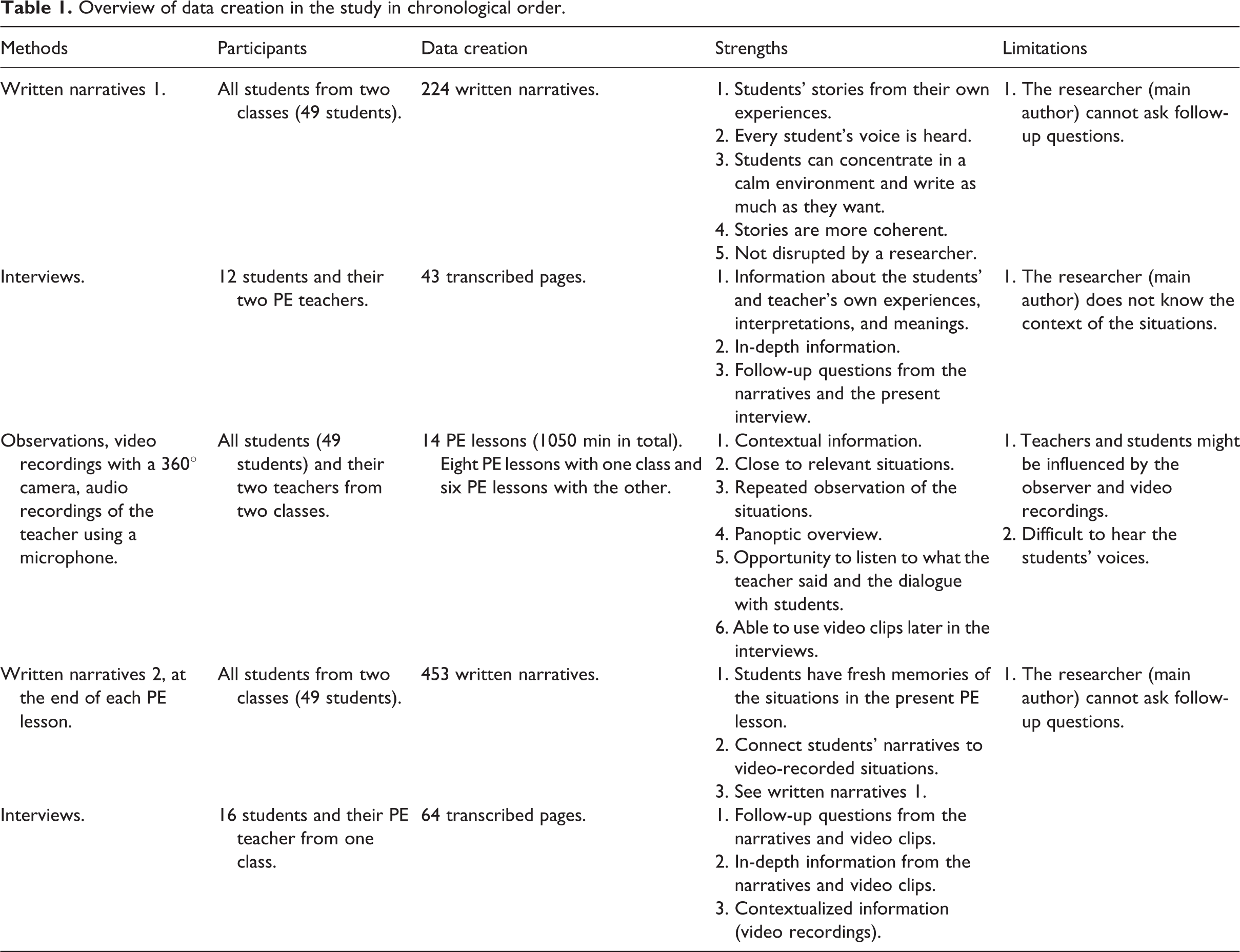
The triangulation of multiple methods (Abdalla et al., 2018) in this study is based on Rorty’s philosophical pragmatism (Rorty, 1982). Pragmatist methodology focuses on purposeful human activity (Allmark and Machaczek, 2018). The main reason we chose the ‘pragmatism’ method is that ‘for Pragmatism, the start point of scientific inquiry is a human purpose, the endpoint, whatever behoves us to believe to serve that purpose best’ (Allmark and Machaczek, 2018: 1306). We therefore approached the field by looking for meaningful patterns that could be of relevance for the field. We identified the overarching theme ‘disruptive situations in PE’. We used different methods for creating relevant knowledge regarding the complexities of disruptive situations in PE. Triangulation between interviews, written narratives, observation, and video recordings were used to complement each other and reduce the limitations of the different methods (see Table 1 below). The number of interviews and observations were chosen to provide enough data to understand the situations, and these data were further thematically analysed (Braun and Clarke, 2019). The participants and the researcher spoke the same language (Norwegian). The quotations in the Results section have been translated into English. The translation of the quotations was undertaken with the support of a professional translator and checked for the intended original meanings (Van Nes et al., 2010).
Overview of data creation in the study in chronological order.
Participants
Two secondary classes from two different schools in the south of Norway participated in the study. The classes consisted of 49 students (16 boys and 8 girls from one class, and 12 boys and 13 girls from another) and their two male PE teachers, who were also their main class teachers.
Ethical considerations
The schools’ principals, teachers, and students were informed of the study verbally and in writing, and the students’ guardians were informed in writing. Ethical considerations were fully considered before, during, and after each data creation stage (Kvale, 2015). Written consent was obtained from the teachers, students, and students’ guardians. This study was approved by the Norwegian Centre for Research Data (NSD- 58504) and the Ethics Committee of the Department of Sport Science and Physical Education at the University of Agder.
The study
This study was conducted over a one-year period, from the end of the students’ eighth-grade year until the end of their ninth-grade year (i.e., ages 13-15 years). The first data creation stage consisted of written narratives regarding the situations (peers, teachers, and tasks) in PE that the eighth-grade students liked the most and least. The second data creation stage consisted of individual interviews of 12 students and their two PE teachers. The third data creation stage consisted of observation and video recordings of 14 PE lessons (eight in one class and six in the other). The fourth data creation stage consisted of written narratives from all the students conducted at the end of each PE lesson. The fifth data creation stage consisted of individual interviews of 16 students and their teacher from one class. The selected class was chosen because disruptive situations were found to be more prominent in this class in the first four data creation stages, which allowed the complexity of disruptive situations within one context (one class) to be investigated. Table 1 shows the methods, participants, data creation stages, strengths, and limitations of this study.
Data creation stages
The written narratives from the first data creation stage were posed as questions to facilitate richer data (Patton, 2014). The questions were related to the students’ positive and negative experiences of situations in PE with peers, teachers, and tasks (created at the end of eighth grade), e.g. ‘Tell me about a situation with your teacher in PE that you liked. What happened and why did you like it?’ This narrative was relevant to the theme ‘positive experiences with the teacher’. In later questions, students could write about all their noteworthy positive and negative experiences with their peers, teachers, and tasks from their last year (resulting in 224 narratives in total). The students answered questions on their computers using an individual code, and their answers were transferred directly to a memory stick.
For the second data creation stage, semi-structured individual interviews were conducted with the students and teachers in a separate room. The interviews were audio-recorded. The student interviews lasted 5–20 minutes, depending on the themes and situations. The student interviews related to their first written narratives and aimed to gain a deeper understanding of their experiences and learning. The open-ended questions included ‘Tell me more about this situation’, ‘What did you experience?’, ‘What was the physical environment in this situation?’ (location, equipment, and so forth), ‘What did the teacher and peers do in this situation?’, ‘What did you do in this situation?’, and ‘What did you learn from this situation?’ These questions were asked in different ways depending on the student and their degree of understanding. The interviews with the teachers were related to the aim of the subject, learning structure, learning style, good lessons, motivating and helping students, and activities in the subject. The teacher interviews took approximately 30 minutes.
In the third data creation stage, the first author observed and made field notes on the PE lessons. In addition, the PE lessons were recorded using a 360° camera. The teachers were audio-recorded using a device utilizing Bluetooth and an intercom. The researcher used complete open unobtrusive participant observation (Angrosino and Rosenberg, 2011; Thorpe and Olive, 2016) by observing and video recording the PE lessons from the stands at the side of the field. There were two data gathering strategies: ‘observe and look for nothing’ (researcher) and ‘observe and record everything’ (360° video and audio recordings) (Thorpe and Olive, 2016; Wolcott, 1981). The ‘observe and record everything’ strategy was made possible by the 360° video recording and the opportunity to watch the videos several times. The students also wrote narratives at the end of the PE lessons so that the researcher could find these situations later (fourth data creation stage).
The written narratives from the fourth data creation stage were created at the end of the students’ PE lessons with no time limits. The narratives concerned the most negative and positive experiences of the just-completed PE lesson, e.g. ‘Tell me about the situation that you liked the most in the PE lesson. What happened and why did you like this situation the most?’ The narratives in this sense were relevant to the ‘positive experiences in PE lessons’ theme. The students could write as many narratives as they wanted. In total, 453 narratives were written.
The individual interviews from the fifth data creation stage (one class) took place in a separate room. They were audio-recorded using a voice recorder. The interviews with the students were related to their first written narratives, the first interviews, the narratives conducted after each PE lesson, and the notes from observations and analysed video recordings of the PE lessons, e.g. ‘You said in your first interview that…what do you think about it now?’, ‘In the narratives written after the PE lessons, you wrote…can you tell me more about that?’, and ‘If we look at this video recording from the PE lesson, can you tell me more about this situation?’ Student interviews lasted 6–30 minutes depending on the number of situations investigated and how much the students talked. The interview with the teacher of the class was related to the socio-cultural environment in the class, the main theme of ‘disruptive situations’ in the class, video clips of ‘disruptive situations’, and understanding the choice of behaviour in these situations, e.g. ‘Tell me about the socio-cultural environment in the class…you said it could be a bit noisy (disruptive situation) in this class…can you tell me more about that?’, ‘How did you experience this situation (from the clips)?’, ‘Why did you choose this kind of behaviour?’, and ‘How do you handle disruptive situations?’ The teacher interview lasted approximately 60 minutes.
Data analysis
Interviews, field notes, and video recordings were transcribed into written text and analysed together with the narratives. All data were thematically analysed with the help of NVivo 11, using the following six basic steps outlined by Braun and Clarke (2006) and Braun et al. (2016): (a) familiarize yourself with the data; (b) generate initial codes; (c) search for themes; (d) review themes; (e) define and name themes; and (f) produce the report. In the following paragraphs we show how the overarching theme developed, provide an example of the data analysis, and present the resulting main themes and subthemes.
In one of the teacher interviews (second data creation stage), the teacher indicated that disruptive situations occurred in his PE lessons: ‘And you can see that there are many [students] who are joking and ruining, yes…ruining [it] for the others’. The researcher’s first notes from the first PE lesson stated that there was ‘a long introduction to the lessons’ and ‘a lot of disruption’. Further observation and viewing of the video recording of the PE lessons showed that disruptive situations occurred throughout all PE lessons. The student narratives conducted at the end of each PE lesson indicated that disruptive situations such as ‘everybody was joking’ and ‘students ruined the warm-up’ occurred.
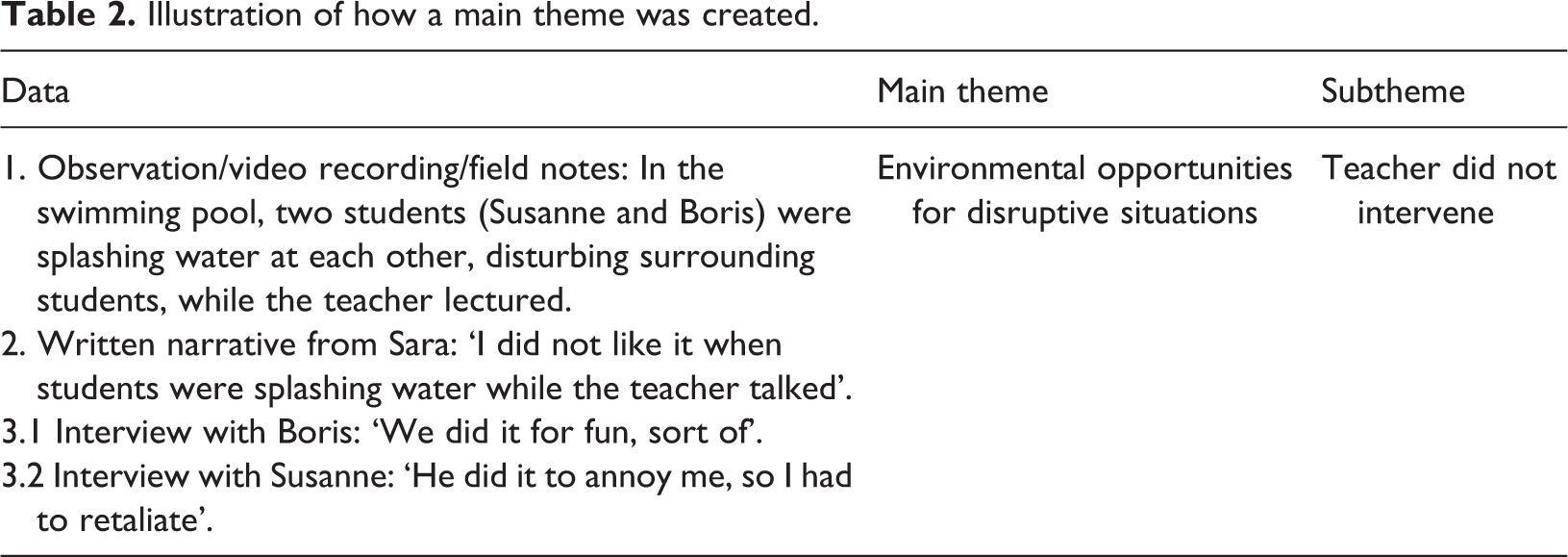
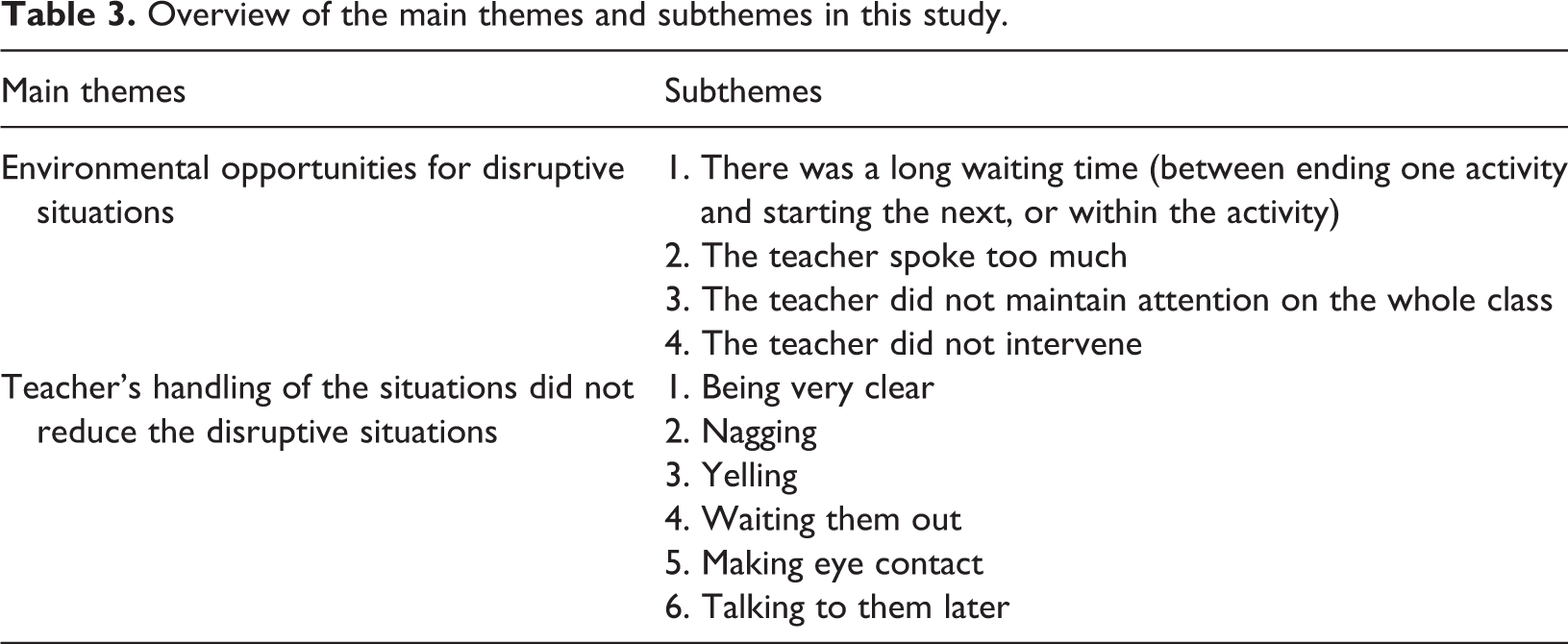
Table 2 provides an example of how multiple methods were used to create main themes and subthemes. Table 3 shows the resulting main themes and subthemes.
Illustration of how a main theme was created.
Overview of the main themes and subthemes in this study.
Results
The main themes ‘environmental opportunities for disruptive situations’ and ‘teacher’s handling of the situations did not reduce the disruptive situations’ were created from narratives, interviews of students and a teacher from one class, observations, field notes, and video recordings. In this section, we first outline when disruptive situations occurred and how they were experienced, and then consider how the teacher handled disruptive situations. Next, we outline a complex situation that was escalating from two students joking to several students joking, and the students’ and teacher’s experiences in this situation. The source (i.e. observation, interview, written narrative) of each data excerpt in this section is indicated in parentheses after the text. Field notes and video recordings are included as observations. Pseudonyms are used to ensure student confidentiality.
Environmental opportunities for disruptive situations
Disruptive behaviour occurred when there were environmental opportunities for it. These included: (a) There was a long waiting time (between ending one activity and starting the next, or there was a long waiting time within the activity); (b) The teacher spoke too much; (c) The teacher did not maintain attention on the whole class; and (d) The teacher did not intervene (discussed in a later section).
During these situations, students could start to joke, wrestle, push, poke, and pinch each other (observation and interviews). During a waiting time situation, Kevin was hugging Amanda until he saw Tom walking by. Kevin started to clap Tom on his head, and they started to wrestle (observation). Kevin expressed the situation in this way when he observed the video recording (interview): ‘I’m not sure what we were doing, but it is just for fun. We are good friends. Everyone is good friends. It was not to be cruel. We are still doing it’. Tom expressed the situation in the following way (interview): ‘We were joking a bit. I think it was me who started it’. The situation at this point was not considered disruptive by the researcher for the following reasons: the students were waiting for the next activity; the two involved students said it was for fun and that they were joking; and the observation did not indicate that the students disturbed/irritated other students with their behaviour.
The behaviour became disruptive when the teacher gathered the students and began introducing the next activity. The two students were slow to join the group and the teacher yelled at them. They stopped wrestling for a moment but started again when the teacher continued to introduce the next activity. At the gathering, they picked on each other despite the teacher reminding them to stop (observation). Kevin and Tom therefore disrupted the teacher, who was trying to introduce a new activity, and their peers, who were trying to listen. The reason the joking continued into the teacher’s introduction for the next activity was expressed by Kevin (interview) as follows: ‘After a while, the joking might have become too much, making it hard to calm down again’.
Another situation where two students disrupted the teacher’s introduction to an activity occurred in the swimming pool (observation). In this case, the directly involved students did not think it was fun, but thought it was either neutral or did not like it (interview). Susanne and Boris were splashing water at each other, but another girl, Sara, also got splashed (observation). She did not like it or the fact that they disturbed her when she was trying to listen to the teacher (written narrative and interview). Boris, who perceived the situation as neither positive nor negative (interview), started the splashing, and Susanne, who did not like the situation (interview), retaliated. Neither of them stopped the splashing until one was about to swim to the other side of the pool (observation), although the teacher and the assistant had told them to stop. The reason they did not stop might be as Susanne expressed (interview): ‘He splashed water at me, so I splashed water back. He did it to annoy me, and I did it to retaliate. I do not remember. He continued, so I continued’. Because Susanne did not like the situation, the researcher asked why neither of them stopped the splashing. This action did not seem to cross Susanne’s mind: ‘Maybe because we each wanted to hit back? I am clueless. I don’t think of such things’.
In a situation where the teacher spoke too much and took several minutes to introduce a lesson or activity, the students started to do other things, such as talking to each other (observation). The situations started as minor incidents, but escalated until the teacher said, ‘Stop that, okay!’ This also occurred when the teacher gathered the students in a group to give them information and did not see every student. Some students sat down on the floor or on a bench or started to talk to each other. This disrupted other students, who seemed to lose concentration, giving the opportunity to escalate further (observation). Because the teacher did not maintain his attention on the whole class, he did not perceive the disruption until after it had escalated. This made it harder for the students to stop the disruption and for the teacher to handle the disruptive situation (observation and interviews). These situations could be experienced as annoying by other students. As expressed by Cassandra (interview): ‘If the teacher says that they (students) should not talk and they continue, then it becomes like, could you finish talking, because we want to start’. She said that the students either stopped talking when they had finished what they wanted to say or stopped talking immediately after the teacher reminded them to be quiet. Observations showed that the teacher had to remind the students to stop joking or talking several times in some of these situations.
How the teacher handled disruptive situations
The teacher said that the students’ focus could be lacking in the PE lessons after being more sedentary in other subjects. He therefore needed to remind the students several times to calm down (interview): ‘We use some time on this issue, and you have probably seen it too. That I have to repeat it several times before it gets completely calmed down’.
The teacher did not want to yell at the students (unless he saw bullying) because he felt it would influence the relationship he had with them. Although he did nag the students (observation), he did not want to because he perceived it to be less effective for handling disruptive situations. He explained the strategies he used as: being very clear (‘I go to them or get them to come to me, and I say, “Now we need to calm down”’), making eye contact (‘I experience that if I make eye contact with them, then they calm down’), waiting them out (‘In many situations I try to wait them out, because this seems to work. Because other students start to react a little, the students who want to get started’), and talking to them later (‘Something I often do in subjects such as PE is that I don’t intervene in the situations, but rather, bring the issue up later unless it is at the expense of others. For example, if you sabotage your team’).
Observations showed that these instructional ways of handling disruptive situations worked in the immediate situation. However, the disruptions frequently returned, and no decrease in disruptive situations throughout the PE lessons was observed by the researcher (first author).
A complex situation
Escalation from ‘a bit’ disruptive to highly disruptive seemed to occur in more complex situations where the teacher did not intervene or maintain attention on the whole class. In the following paragraphs, we outline this transformation.
The PE lesson was inside a PE hall of approximately 500m2. There were 20 students and their PE teacher in the PE lesson. The activity consisted of nine stations, each with different training drills, and the students threw dice to see which station their group was going to. Each group consisted of two or three students. Music was played while the students exercised. The main situation occurred at the ‘plank’ station (Wikipedia, 2020).
Two male students (group 1) were doing the plank activity on a gym mat, while three female students (group 2) waited their turn. Kevin and Sigurd (group 3) arrived and Kevin pretended to push one of the students doing the plank and Sigurd poked him. Heidi (group 2) stopped Sigurd and pushed him lightly away (observation). Her reasons for intervening were as follows (interview): They were concentrating, and I was waiting for them to finish…then [Kevin and Sigurd] arrived and started to joke and stuff like that. And since we came before them and the others [doing the plank] were concentrating, then I thought, you can move a bit. It was annoying, even though they did not do anything to me. I know how it is to get annoyed when doing strength training, you know…We had to wait for them to finish [the plank] and they were joking with them.
The dancing situation did not seem to be disruptive (observation) but gave the students something to do while waiting (interviews and observation). However, it became distracting for the students who were doing the plank (group 2) when Kevin started to jump up and down (dancing) in front of their heads. They did, however, only briefly look up before they focused on the plank again. Kevin pretended to push them with his foot, before Karl and Christian (group 4) arrived. Kevin, Sigurd, Karl, and Christian pretended they were going to fight, until it was Kevin and Sigurd’s turn to do the plank. While Kevin and Sigurd were doing the plank, group 5 (female group) arrived at the station and started to do the plank outside the mat. Chris and Sondre (group 6) did not participate in this PE lesson and were lying on the mat at another station. At this point, they left the mat and joined the joking (observation). When asked their reasons (interview), Chris said: ‘There were people there, so I thought that I should go there’, and Sondre said: ‘I don’t remember, I think I just went with the person I was in the group with’.
Chris and Sondre pushed down the students doing the plank (group 3) with their feet and pushed them over, so they were not able to do the plank. Currently, several groups were at the same station. Two softballs at the side of the field were picked up, and Chris threw a ball at Kevin, who was doing the plank. After Kevin and Sigurd finished, group 4 (Karl and Christian) started doing the plank. Kevin and Sigurd pushed them over, and Chris and Sondre pushed Karl and pretended to step on Christian, who was lying on the mat. The teacher saw this situation and removed the softball when he arrived at the station. He then started to talk to a group that was about to throw the dice again (observation).
The situation started with pretending to push over students that were doing the plank, and escalated to poking them, physically pushing them over, and throwing softballs at them. Even though students could distance themselves from the situation by doing the plank at the side of the mat or intervene in the situation to make it stop, the disruptive situation continued to escalate (observation). We therefore interviewed the students who contributed to the disruptive situation that escalated. Kevin, Sigurd, and Karl describe their experiences of the situation as follows: At least, we became happy…we had more fun really, I think (Kevin) I think it was just some friendly joking. Nothing more. It was a fun, enjoyable situation, we were tired, and we wanted to have some fun, sort of (Sigurd) It became more fun. I do not remember (Karl)
In this situation, there were students who enjoyed it, students who neither liked nor disliked it, and a student who thought it was irritating (interviews). There were students who contributed to the situation, students who distanced themselves from the situation, and a student who tried to stop the situation (observation). One may further see that the teacher did not have an overview of the situation or intervene in the situation, which allowed it to escalate (observation and interview with the teacher).
Discussion
In this study, we investigated the circumstances in which disruptive situations in PE occurred and the students’ and the teacher’s experiences of, and behaviour in, these situations. The rationale for this investigation was that the research problem was socially situated, and the inquiries were natural, situational, and grounded in the mentioned problems (Kaushik and Walsh, 2019).
From this study, we saw that disruptive situations could occur when students had to wait for a long period of time, the teacher spoke too much, the teacher did not maintain attention on the whole class, or the teacher did not intervene. These situations provided environmental opportunities for disruptive situations. Although teachers might consider these environmental opportunities for disruptive behaviour when planning and organizing the lessons (Ogden, 2015), we focus the discussion on how teaching styles might influence student behaviour and experiences in these situations. In this study, choosing an instructional teaching style to address disruptive situations seemed to provide fewer opportunities for the teacher to understand the students’ behaviour and for the students to learn self-control and personal and social responsibility, and did not lead to a reduction in disruptive situations. We first discuss the possible consequences of the teaching style before we discuss how a teacher might understand and handle disruptive situations in PE.
An instructional teaching style
The teacher’s use of an instructional teaching style in this study was due to the need to get the students to calm down, listen, and stay on task. In other words, the students’ behaviour was influenced by external control (Dewey, 1938). This external control might reduce the opportunity for each student to learn personal and social responsibility in a group (Pozo et al., 2016). We might therefore draw from Dewey that the instructional teaching style could become non-educational (unreflecting) or even mis-educational (teaching mindlessly that students should not disrupt themselves or others) because students do not learn to think consciously through possible alternative actions or attend to consequences (Dewey, 1938). Further, they may not develop habits and attitudes that open other lines of growth or help them evaluate the quality of their future experiences (Hildreth, 2011). However, simply removing the teacher’s external control might lead to an escalation of disruptive situations and make the learning of personal and social responsibility more arbitrary, as indicated in the present study. The removal of the teacher’s external control could be replaced by the control of the students’ blind desires (Dewey, 1938). When the teacher did not exercise control over the students in this study, some students started doing other things for fun or retaliated without knowing why. Therefore, replacing the teacher’s control over the students with the students’ blind desires might not be optimal. Conversely, to exercise control over the students’ behaviour, the teacher might need to observe all the students and respond immediately to possible disruptive situations to avoid escalation (Ogden, 2015). Alternatively, the teacher could facilitate the students’ learning of intellectual control, called self-control (Dewey, 1938). By teaching the students self-control, the teacher could reduce her/his time spent on external control of student behaviour and the need to observe the students. In learning personal and social development, the students might help each other to maintain their preferred learning environment, which, in this case, is whatever the teacher and students have agreed upon.
Understanding disruptive situations
To consider PE lessons as complex, open social systems where the teacher and students may not assign the same meaning to events (Cothran et al., 2003; Ovens et al., 2013; Postholm, 2013), one needs an approach that not only considers the teacher’s own experiences of the situations, but also the students’ (Dewey, 1938). It could therefore be argued that the teacher should ask about the students’ experiences and the reasons for their actions in these situations before the teacher try to influence the students’ own and shared goals in the lessons by teaching personal and social responsibility (Pozo et al., 2016). Drawing on Dewey (1938), the training might be based on the students’ experiences and influence the students’ (shared) meaning of their experiences (of disruptive situations), which would lead to further experiences and a new understanding of these experiences.
Handling disruptive behaviour in complex situations
As one may see from the Results section A complex situation, a disruptive situation could escalate from two students joking to several students joking. For the sake of clarity, we simplistically define the first part of the situation (two students at a station) as a low complexity situation and the last part of the situation (several students at different stations and areas) as a high complexity situation (Ovens et al., 2013).
In the low complexity situation, the teacher had the opportunity to discuss the situation with the students to try to understand their experiences and perspectives and further influence their behaviour/learning in a positive direction (Dewey, 1916). For example, if the teacher noticed that a student pretended to push or poke another student doing the plank (for fun) while waiting their turn, the teacher might have asked the student why they did it, and get the answer, ‘I don’t know, it was just for fun’. The teacher might consider a few questions about the organization of the PE lesson or how to handle the situation concerning the student: (a) Is the structure of the lesson providing opportunities for disruptive behaviour? and (b) How can I help this student learn self-control (if this seemed to be lacking)? Further, one needs to consider whether learning better self-control is important. Self-control is an aspect within personal and social responsibility (Pozo et al., 2016) that is important for groups and society, but may also increase the likelihood of interpersonal, social, and career success for students themselves (Ren et al., 2018; Tangney et al., 2004). Those with weak self-control and lower social status are more likely to ignore or violate rules (Cummins, 1999; Ren et al., 2018). Because self-control has a direct influence on society through the individual, one may also consider it a life skill that might be learned in PE (Opstoel et al., 2019). Based on this study, being able to handle disruptive situations in the complexity of PE (Postholm, 2013) requires knowing where relevant information might come from and how to gather it. Handling each situation requires (or is facilitated by) existing relevant knowledge of its likely causes, or the motivation and capability to obtain such knowledge. According to Teunissen and Dornan’s (2008) work, this could be about the teacher’s lifelong learning. If a teacher does not know what could influence self-control, then he or she might consider seeking this information. In our self-control example, if a teacher can help students to see the bigger picture regarding the consequences of their behaviour, then they might be motivated and become more able to exercise self-control (Fujita, 2008). Further, the teacher might help those students to look for other ways of behaving in the environment that are not disruptive for other students.
In the high complexity situation, facilitating constructive learning based on student experiences and perspectives might be more time-consuming. The teacher may need to be in several places at the same time. One could therefore consider reducing the complexity of the situation, for example by gathering all the students in a half-circle. In this less complex situation, the teacher may facilitate the students’ learning of self-control and personal and social responsibility (Pozo et al., 2016). For example, they could discuss disruptive situations in general, considering why disruptive situations occur, how they influence the learning environment, and what the teacher, the individual student, and the class can do to reduce these situations. Further, they may discuss the students’ different goals in the lessons to create a shared goal (Casey and Quennerstedt, 2020), or, more specifically, to identify the behaviours that are appropriate while waiting their turn (or any other issue at hand). At the end of the lessons, the teacher might direct the relevance of the learning towards other aspects of life, such as other subjects, break time in school, leisure time, and later work (Pozo et al., 2016). This way of handling disruptive situations might therefore influence the students’ self-control and personal and social responsibility, which may be positive for the students themselves and society (Dewey, 1916; Gordon and Doyle, 2015; Pitter and Andrews, 1997; Pozo et al., 2016).
Footnotes
Declaration of conflicting interests
The authors declared no potential conflicts of interest with respect to the research, authorship, and/or publication of this article.
Funding
The authors received no financial support for the research, authorship, and/or publication of this article.
