



Abstract
Acoustic textiles are the most widely used acoustic materials to control room acoustic parameters in current practice. Based on porous acoustic absorption, they are able to achieve high absorption at middle and high frequencies. This behaviour is a limitation for spaces that host speech comprehension or activities that require concentration. For this reason, acoustic sector companies tend to explore the advancements in other sectors (e.g. technical apparel, transportation, etc.) to find solutions that can satisfy this requirement. This is the case of 3D spacer fabrics (3D SFs) which, thanks to the two horizontal layers and the internal connecting vertical pile, have complex and customisable structures adaptable according to the acoustic performance (absorption, reflection, diffraction). Originally developed to provide sound insulation in transportation vehicles, these materials’ acoustic performance has been explored, but a comprehensive and updated research review is lacking. In response, this paper presents a systematic review aiming to understand the correlation between the physical characteristics of these materials and their acoustic performance. The review is based on the literature of the last 10 years of reviewed and published papers. Absorption coefficients are gathered, sorted and compared with the most extensively used acoustic materials. This contribution shows that the main performance analysed is absorption and this depends on thickness, porosity, and flow resistivity of the horizontal layers. The complex pile structure of 3D SF enables absorption coefficients that are comparable with the most common acoustic materials. The analysed references are based on literature absorption coefficients measured in an impedance tube. Future research should explore the possibilities of 3D SF application at an architectural scale by analysing the absorption coefficients in a reverberant chamber or by analysing reflection and diffraction behaviours.
Introduction
Nowadays, the demand for high indoor acoustic comfort is increasing due to the widespread awareness of its impact on human well-being and health. 1 Noise is a significant issue in various environments, such as dwellings, 2 work offices 3 and classrooms. 4 Noisy conditions can be the primary health problem, causing physiological effects such as stress-related illnesses, 5 high blood pressure, 6 sleep disruption 7 and noise-induced hearing loss. 8
These negatively impact acoustic comfort, generally defined as the perception of a user’s well-being and satisfaction, as well as given by the acoustic condition in an environment. 9
The most effective strategies to provide acoustic comfort involve using acoustic materials, which, depending on their position and physical characteristics, can behave in three significant ways: altering sources of noise vibration, using barriers to disrupt the path of sound propagation, and attenuating sound pressure levels with sound absorbers.
The list of the leading companies of acoustic material panels shows that most of them offer products that use porous materials (such as mineral fibre, glass wool, fibre glass, etc.). 10 There are three types of porous materials: (1) cellular materials (foams), (2) granular materials (wood-chip panels, porous concrete, pervious road surfaces) and (3) fibrous materials. Acoustic textiles, which fall into the category of fibrous materials, show promise for noise control applications in that they achieve performances comparable to conventional acoustic materials (e.g. glass fibres and polyurethane foams). 11
In addition to leveraging aesthetic appeal to compete with other acoustic products, manufacturers of textile acoustic panels are continuously seeking to enhance their acoustic performance. This objective is pursued by looking towards other sectors where the demand for high-performance materials is more stringent and research is more extensively supported (e.g. structural engineering, technical apparel).
A paradigmatic case is three-dimensional spacer fabrics (from here on 3D SF, plural 3D SFs). Categorised as a three-dimensional textile, these are made up of two horizontal layers and a vertical layer referred to as “pile” 12 (Figure 1).
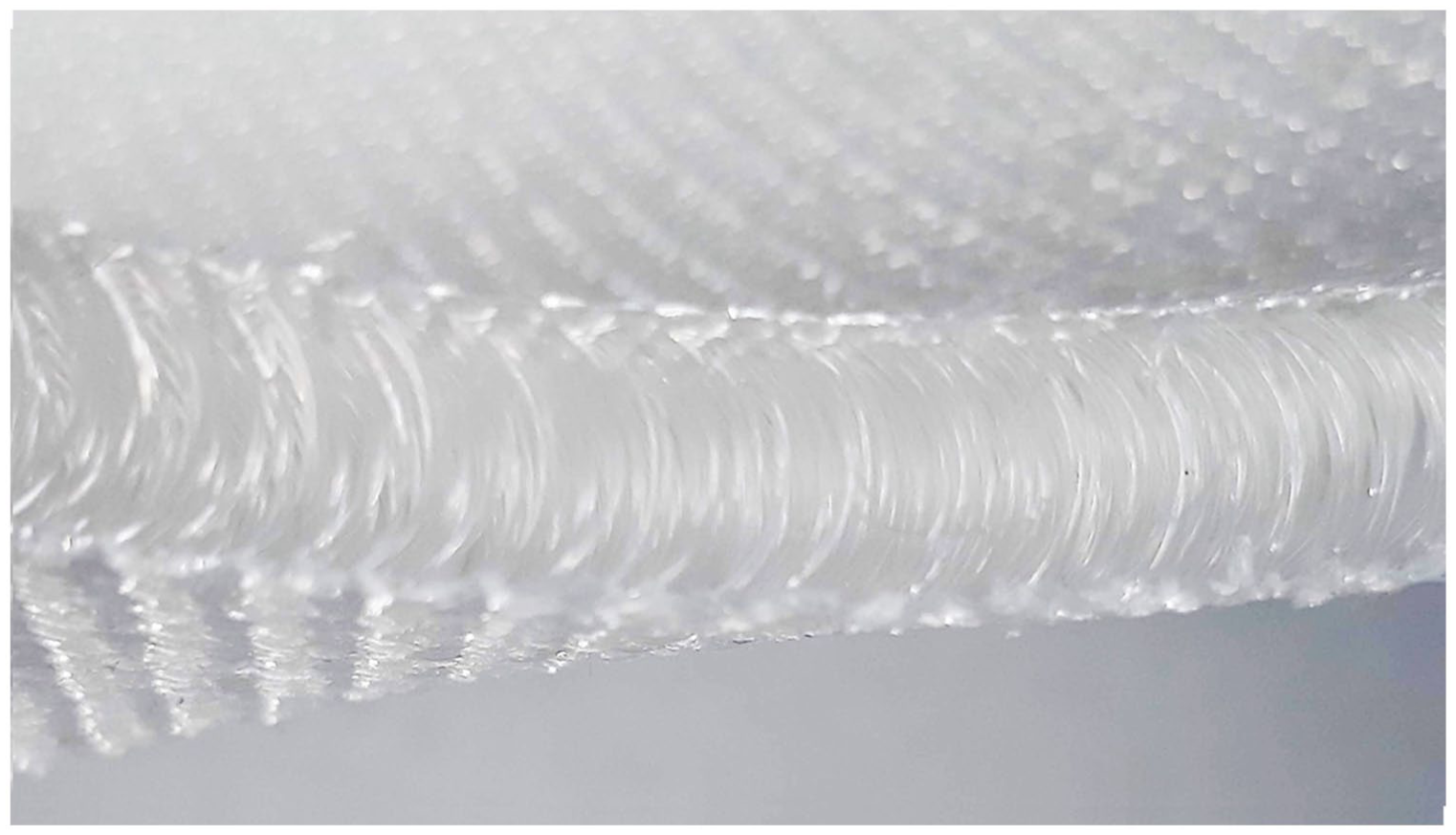
Example of knitted 3D spacer fabric (©Andrea Giglio).
3D SFs combine flexibility and straightness thanks to the complex internal structure, depending on the warp or weft distribution of the yarns along the horizontal and vertical directions. These characteristics combine both aesthetics and performance that are exploited to cope with high compressions and tractions. For this reason, they were initially developed for shoe wrapping, technical apparel and backpack straps. 13
The characteristics of 3D SFs are explored in a wide range of applications, ranging from interiors to civil engineering, and have found several applications in noise control. 14
In the literature, the manufacturing processes 15 and mechanical16–20 properties are explored in depth, but there is a lack of a comprehensive review of acoustic performance.
In response, this paper presents a review of the research that explores the acoustic performance of 3D spacer fabrics.
This paper attempts to gather these works and compare them with traditional acoustic textiles to understand the relationships between the characteristics of 3D structure and acoustic performance.
Methodology
The method has three main phases: 1. Identification of the main acoustic performances of 3D SFs. 2. Comparison of 3D SF absorption coefficients with the most widely used acoustic materials. 3. Identification of the correlation between the characteristics of the 3D SFs and their absorption coefficients.
The most extensively explored acoustic performances of 3D spacer fabrics
To understand the most widely explored acoustic performances of the 3D SFs in the literature, a semantic analysis is carried out, starting from the most commonly explored performance per 3D textile typology. The research was run in Web of Science and Scopus platforms with the definition of keywords to define the queries that correlate with syntactic operation. 21
The selection of the main keywords for the semantic research strings is based on the study of the definition of three-dimensional textiles. This reveals the use of both “three-dimensional textile,” the abbreviation “3D textile” and the keyword “3D fabric” as complementary to refer to the same material system.
The combination of these words with the five main performance categories regards mechanical, acoustic, thermal (and combustion), hydro/thermal and optical properties. For each performance category, the research considers specific subcategories. The performances of the acoustic category are either acoustic or sound insulation, acoustic wave propagation, and sound/acoustic absorption.
An example of a string is reported as the query for research on bending modulus:
(TITLE-ABS-KEY (“3D textile”,) OR TITLE-ABS-KEY (“three-dimensional textile*”) OR TITLE-ABS-KEY (“3D fabric*”) AND TITLE-ABS-KEY (“sound absorption”)).
When the scientific contribution is in the results of more than one query, it is counted in the group of main topics it refers to.
Comparison method regarding the main absorption behaviours
The comparison is based on the values extracted from peer-reviewed literature. The literature presents different types of 3D SF in terms of knitted structure, density, and thickness. For this reason, the comparison doesn’t consider only a coefficient per frequency, but the values are represented with a box chart.
For conventional materials, reference values include porous material (mineral wool), resonant absorber and a microperforated panel. For 3D SFs, values are aggregated according to similar structural parameters (e.g. thickness, density, porosity) to ensure consistency and comparability.
This approach allows for a performance-based comparison across frequency ranges, highlighting the potential of 3D SFs to match or exceed the absorption capabilities of traditional materials. The methodology also considers the placement of materials in relation to sound sources and boundaries, which significantly affects absorption efficiency. 22
Correlation between the 3D structure and the acoustic performance
To investigate the relationship between the structural parameters of 3D SFs and their acoustic performance, a statistical correlation analysis is conducted. The physical characteristics considered include thickness, density, porosity, yarn orientation, and air gap configuration, as identified in previous studies.23–25
The absorption coefficients at 500 Hz and 1000 Hz are selected as representative values for medium and high frequency ranges, respectively. These frequencies are commonly used in acoustic testing and are relevant for speech-related applications and general indoor comfort.11,22
Pearson’s correlation coefficient is applied to assess the strength and direction of the linear relationship between each structural parameter and the absorption coefficient. The analysis is based on data extracted from selected studies, with explicit reference to the sources. Where applicable, the influence of combined parameters (e.g. yarn angle and density) is also discussed to identify synergistic effects.26–28 This methodology is applied only to 3 out of 10 studies analysed, as 7 don’t present the absorption coefficients but only the graphs with curves. Therefore, the correlations mentioned in the paper are reported.
Results
The absorption performance of acoustic 3D SFs
The semantic survey highlights that the highest number of research contributions concern the performances of the woven three-dimensional textiles. Specifically, the top three areas of research concern fracture toughness tensile strength, Poisson’s ratio.
The second most explored textile typology per number of research are 3D SFs. The performances most explored are sound absorption, air permeability, and compressive strengths (Figure 2). The compressive strength performances of 3D SFs can be applied to composite reinforcement 29 such as cement-based composites. 30 The high air permeable characteristics are explored with different bio-ceramic additives to protect against mechanical risk 31 and for wound dressing. 32
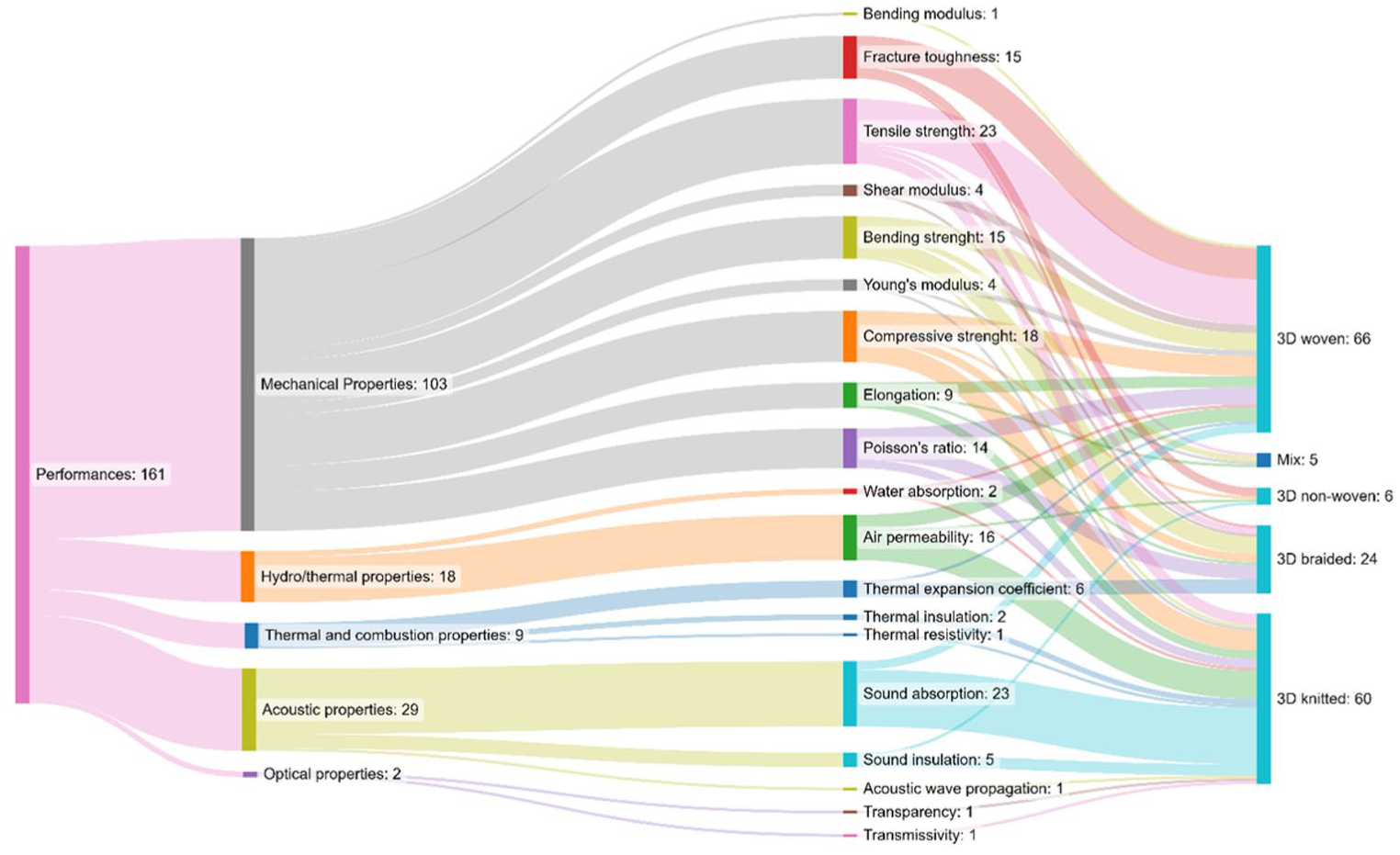
Sankey diagram of the survey regarding the performances of three-dimensional textiles. The diagram plots the typology of 3D textiles by performance category (by the author).
The survey proves that out of 60 research works studying the several performances of 3D SFs, the topic of sound absorption is explored in 23 (Figure 2). These are the scientific contributions considered for comparison.
Comparison of the 3D space fabrics’ absorption coefficient with the main absorption behaviours
Acoustic textiles behave like porous absorbers or resonant absorbers, so their acoustic properties can be described or predicted.
Porous absorbers are materials where sound propagation occurs in a network of interconnected pores (open pore structure) where the acoustic energy is dissipated from viscous and thermal effects. Air is a viscous fluid, and consequently, acoustic energy is dissipated via friction with the pore walls. In addition to the viscous impacts, there will be losses due to thermal conduction from the air to the absorber material, which might be more significant at a low frequency. For a porous absorber to create significant absorption, it needs to be placed somewhere where the particle velocity is high. The particle velocity close to a room boundary is usually zero, so the parts furthest from the backing surface are often most effective. The material needs to be greater than one-tenth of a wavelength thick to cause significant absorption, and about one-fourth of a wavelength to absorb most incident sound. 11 Figure 3, reported from Nayak, depicts the typical sound absorption coefficient curves of a layer of porous material. It represents the main limitation of the porous materials: achieving absorption at low frequencies. This limitation arises from the large thickness required for the material, and treatments are usually placed at room boundaries, where absorbers are inefficient due to particle velocity.
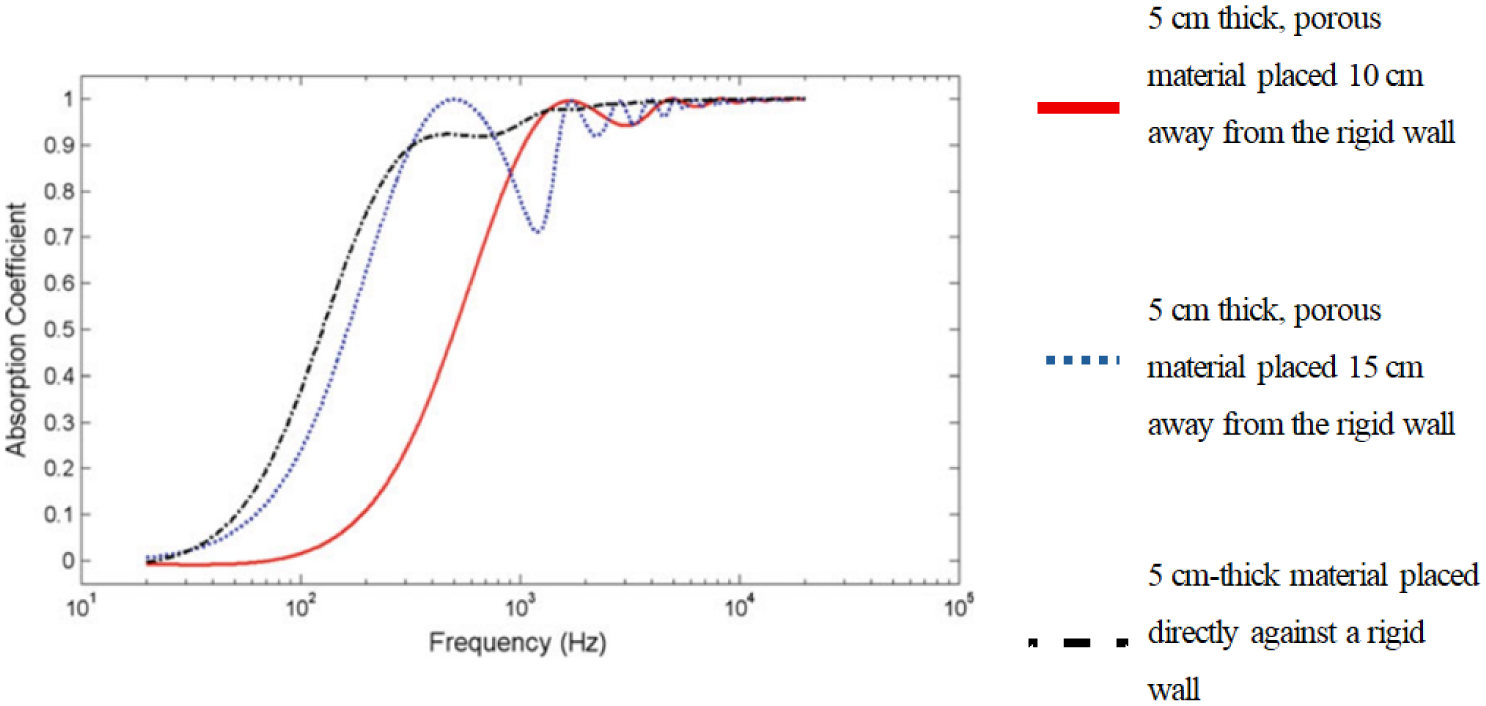
Typical sound absorption coefficient curves of a layer of porous material. 11
Resonant absorbers can be an alternative solution when it is convenient to absorb a specific frequency. 22 The coefficient absorption distribution in the frequency domain shows a peak at the desired frequency. This peak is affected by the mass-spring architecture system.
There are two common forms of resonant absorbers: membrane/panel absorbers and Helmholtz absorbers. For a membrane/panel absorber, the mass consists of a vibrating sheet made from various materials. The spring is usually provided by the resilient boundary of the membrane, panel, or air enclosed in the cavity. In the case of a Helmholtz absorber, the mass is a plug of air in the opening of a perforated sheet, and the spring is usually provided by air enclosed in the cavity. It is often best practice to place some porous absorbent in the neck of a Helmholtz resonator or just behind the membrane or panel in a membrane/panel absorber to increase the acoustic resistance of the whole absorber.
The mechanism of sound absorption for membrane or panel absorbers involves energy dissipation through their vibration. Whether the flexible membranes or panels are mounted over an air space or on a suspended ceiling, they must couple with and be driven by the sound field. Acoustic energy is then dissipated by flexure of the membrane or panel. Additionally, if the backing air space is filled with a porous material, energy is also dissipated within it. Figure 4, taken by Nayak, depicts the sound absorption coefficient curves of a typical perforated sheet (a 6.3 mm thick panel with a perforation rate of 6%, the diameter of the holes is 5 mm, the air layer thickness between the panel and the wall is 0.1 m). It represents the relation between the absorption coefficient and the air back area mass.
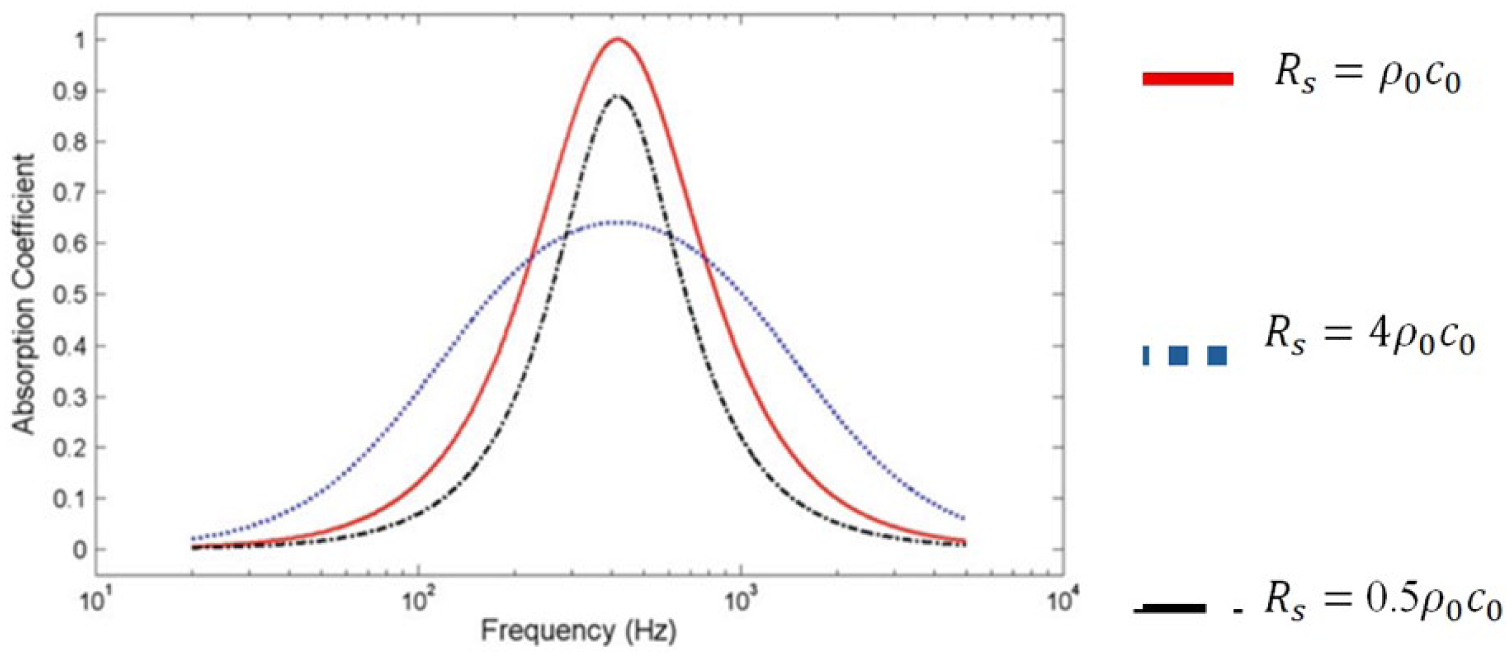
The picture represents the relationship between the variation in peak resonance and absorption coefficient. The solid line corresponds to material with
Maximum absorption occurs at the first resonance of the coupled membrane/panel-cavity system. 22
An other absorbing behaviour is given by micro-perforated panel (MPP) that consists of a thin sheet perforated with a lattice of sub-millimetre apertures, creating high acoustic resistance and low acoustic mass reactance necessary for broadband sound absorption without using additional porous material. 33 The mechanism of MPP absorption is related to the resonance effect. In this effect, the air inside the apertures of the MPP vibrates like a mass, while the air inside the backing cavity acts like a spring. Consequently, the effective sound absorption frequency band is around the resonance peak.
To understand the behaviour of 3D SFs, samples of porous material, resonant absorber, and microperforated panel are selected, and their absorption coefficients are considered. The coefficients are measured in impedance room and refers to values gathered from data sheet of products of the market (Table 1).
Absorption coefficients of porous material, resonant absorber and microperforated panel.

The values are gathered from data sheet of products of the market.
Figure 5 presents the sound absorption coefficients of three theoretical acoustic materials—porous material, resonant absorber, and microperforated panel (MPP)—across a frequency range from 125 to 4000 Hz. The vertical axis indicates the absorption coefficient, ranging from 0 to 1, while the horizontal axis represents the frequency. Each material is represented by a distinct line style, illustrating its characteristic acoustic behaviour.
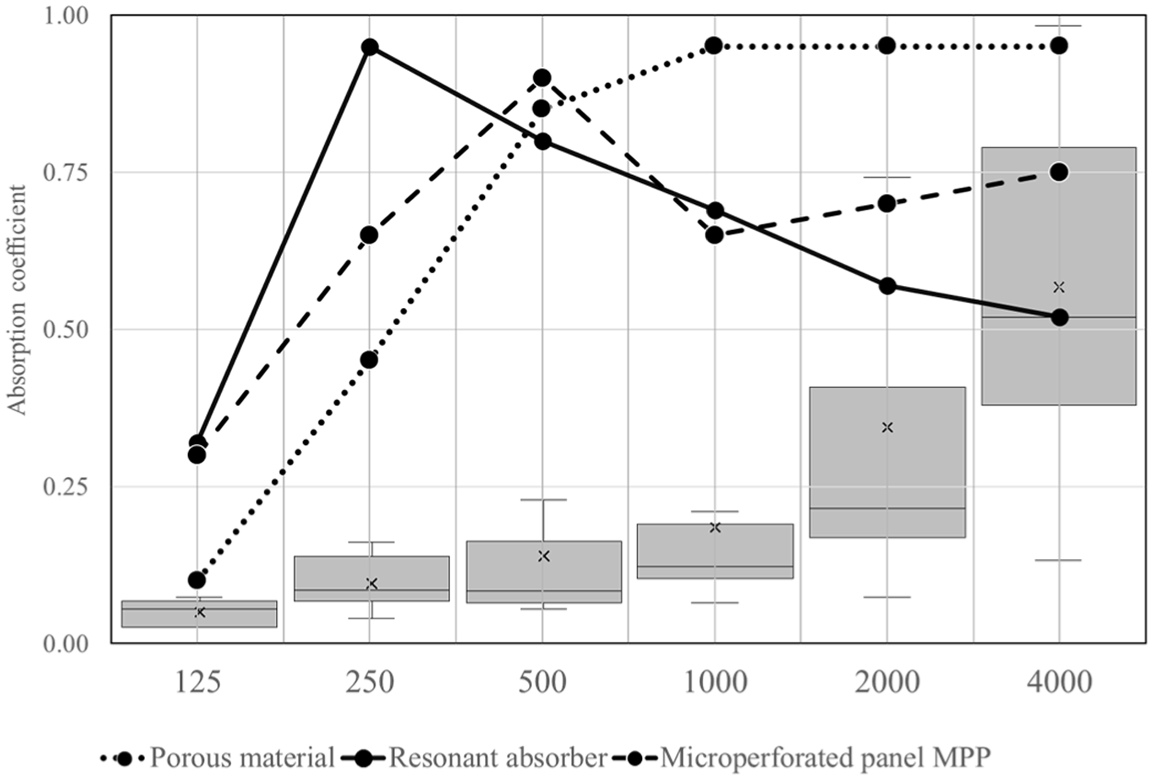
Absorption coefficients of a mineral glass panel, a resonant absorber and a microperforated panel. The box plots represent the absorption coefficients of the 3D SFs samples gathered from the literature.
The porous material exhibits a rapid increase in absorption performance, starting from approximately 0.25 at 125 Hz and reaching its peak (1.00) by 250 Hz. It maintains high absorption values across the entire high-frequency range, making it suitable for broadband acoustic treatment. In contrast, the resonant absorber shows a peak in absorption around 500 Hz, followed by a gradual decline at higher frequencies. This behaviour reflects its frequency-selective nature, typically tuned to target specific low-frequency bands. The microperforated panel demonstrates a more balanced performance, with moderate absorption at low frequencies and consistently high values from 500 Hz upwards, indicating its effectiveness across a broad spectrum, particularly in mid-to-high frequency applications.
Superimposed on the graph are box plots corresponding to the absorption coefficients of 3D spacer fabrics reported in the literature. These box plots provide a statistical overview of the performance variability among different fabric samples at each frequency. At lower frequencies (125–250 Hz), the absorption values are generally modest, although some samples exhibit promising behaviour. From 500 Hz onwards, many 3D spacer fabrics achieve absorption levels that are comparable to or even exceed those of the theoretical materials, particularly the MPP.
The observed variability in the box plots suggests that the acoustic performance of 3D spacer fabrics is highly dependent on their structural parameters, such as thickness, porosity, and fibre arrangement. Therefore, the following paragraph describes the correlation between the structural parameters and the acoustic performance.
Correlation between the 3D structure and the acoustic absorption
To address the lack of comparative synthesis noted in previous reviews, this section reorganises the findings from the selected literature based on key structural parameters influencing sound absorption: density, thickness, porosity, yarn angle, and air gap configuration. This approach enables a cross-study evaluation and highlights both converging trends and contradictory results.
Influence of density, thickness and porosity
The author’s correlation analysis reveals a strong positive relationship between density and sound absorption at mid frequencies.23,25 Data extracted from Dias et al. yields a Pearson coefficient of 0.96 at 500 Hz, indicating that higher density significantly improves absorption. Sancak presents a picture where coefficients of 0.68 at 500 Hz and 0.65 at 1000 Hz, suggesting a moderate but consistent influence across frequencies.
Regarding thickness, Sancak’s data show a weaker correlation, with values of 0.43 at both 500 and 1000 Hz (Table 2). These results suggest that while thickness contributes to absorption, its effect is less pronounced than that of density
Pearson’s correlation between absorption coefficients at 500 Hz (in blue) and 2000 Hz (in red), and the density, thickness, yarn angle and porosity.
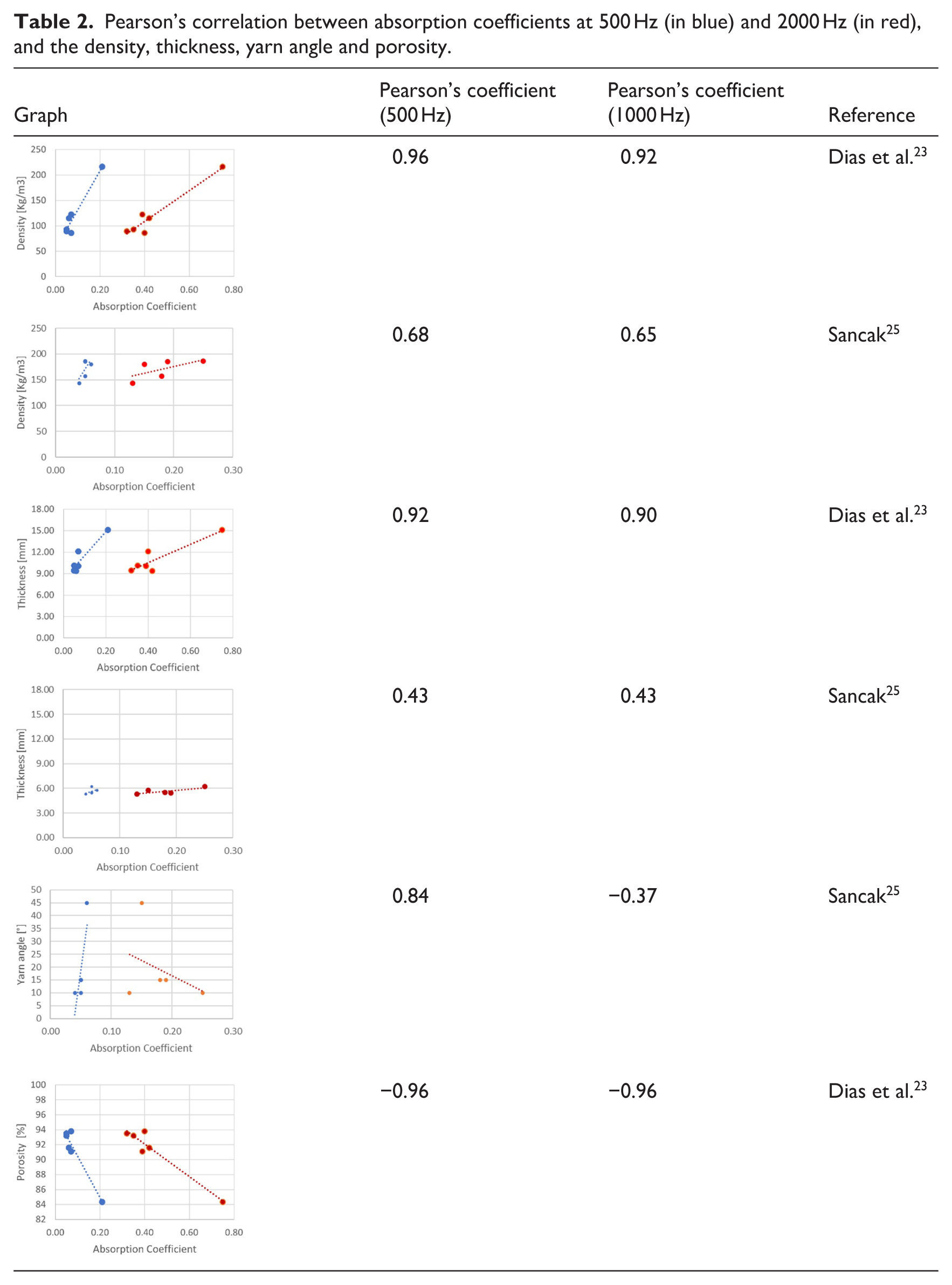
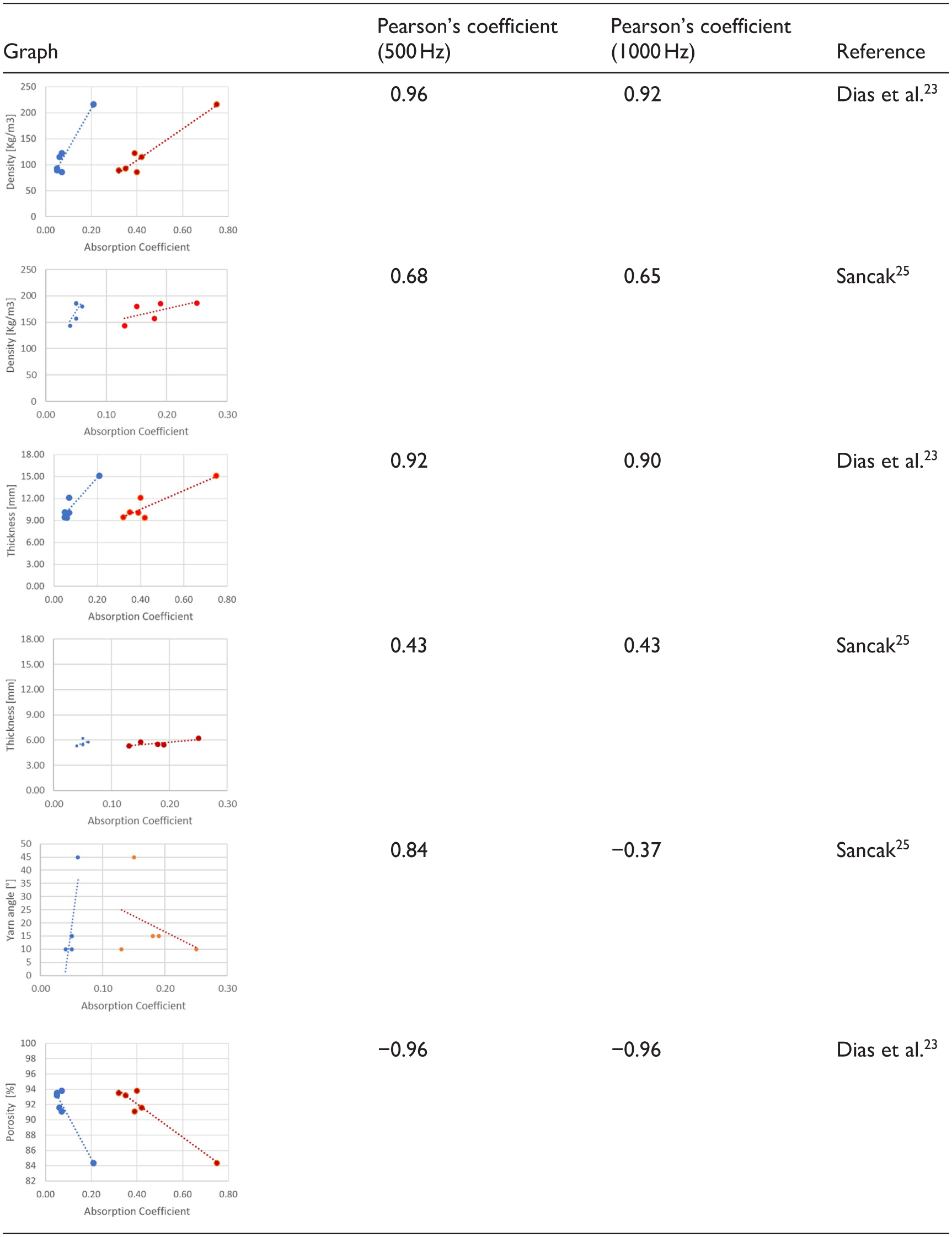
Similarly, Dias et al. found values ranging from 0.92 to 0.90 for thickness at 1000 Hz, confirming its relevance, particularly in higher frequency ranges (Table 2). These findings are consistent across multiple studies, including Arumugam et al., and suggest that both density and thickness are influential parameters. However, the correlation values also reveal that density tends to have a more consistent effect across frequencies compared to thickness.
These results suggest that both density and thickness are influential parameters, although their impact may vary depending on the frequency range. Notably, density tends to have a more consistent effect across frequencies compared to thickness.
The thickness also affects the yarn angles and, consequently, the absorption performance. 26 The author’s analysis the results of the research of Chen: it revealed a Pearson coefficient of 0.84 at 500 Hz, indicating a positive relationship between yarn angle and absorption. However, at 1000 Hz, the correlation becomes negative (–0.37), suggesting a frequency-dependent behaviour.
These findings, derived from data in Sancak, highlight the complex interplay between geometric configuration and acoustic behaviour. 25 The study explores the relationship between acoustic absorption and the connexion angles between the two horizontal layers. Greater thickness and density bring about a higher absorption coefficient while thinner samples with a lower density have a lower absorption coefficient. 25 Sancak explains that one probable reason is that when the connecting yarn angle increases, the thickness of the fabric also increases. It can thus be suggested that the yarn connecting angle, and the linear density of the yarn could be the major factors contributing to fabric thickness, and a strong link may exist between the fabric thickness and sound absorption.
The references show a Pearson correlation coefficient between 0.84 and −0.37 of weft-knitted 3D SFs. This correlation is determined, according to Sancak’s results, by the typology of connecting yarn angle. When this increases, the thickness increases and also the absorption coefficient. This correlation is true for absorption coefficients at 500 Hz but not at 1000 Hz. This find is coherent with the exploration of Chen and Lond. Their study explores the absorption coefficient of warp-knitted spacer fabrics with different structural parameters, including the inclination degree of the spacer yarn, thickness, surface layer structure and spacer yarn diameter. 26 The study indicates a particular interest in the changes caused by different inclination degrees of spacer yarn. The spacer fabric made with a more minor inclination degree of spacer yarn has superior sound absorption abilities as compared to the corresponding fabric. In contrast, the fabrics produced with a greater thickness and coarser spacer yarn exhibit a better sound absorption performance. Furthermore, the fabric with a closer surface layer possesses greater sound absorption when compared to the corresponding fabric.
Porosity appears to have an inverse relationship with absorption. The author’s analysis, based on data from Dias et al., shows a strong negative correlation of –0.96 at both 500 and 1000 Hz, confirming that lower porosity correlates with higher absorption. This trend is consistent with qualitative observations in Arumugan. The latter compares 12 warp-knitted 3D SFs with different densities (from 127.42 to 335.47 kg/m3), porosity (from 82.74% to 90.74%) and thickness (from 1.5 to 3.5 mm). The research proves that the density and surface layer structure of warp-knitted 3D SF are highly significant as regards their compression properties. Even minor changes in the fabric densities result in a significant impact on the flow resistivity and noise reduction coefficient 27
A comparative analysis of the studies by Sancak, Chen et al., Arumugam et al., and Liu and Hu reveal how fabric typology—specifically the distinction between weft- and warp-knitted 3D spacer fabrics—interacts with structural parameters and air gap configuration to influence acoustic performance.
Weft-knitted 3D spacer fabrics, as studied by Sancak, exhibit a strong dependency on geometric configuration, particularly the angle of the connecting yarns. This angle directly influences the fabric thickness, which in turn affects the sound absorption coefficient. As showed in Table 2, weft-knitted fabrics are particularly suited for mid-frequency acoustic applications, where structural manipulation (e.g. adjusting yarn angles or layering) can be used to fine-tune performance. The study also highlights that linear yarn density and connexion geometry are key design variables that can be leveraged to enhance absorption without altering material composition.
This typological and structural correlation implies that design strategies for acoustic optimisation should be tailored not only to the knitting method but also to the integration of air gaps, which can serve as a powerful tool to modulate absorption behaviour.
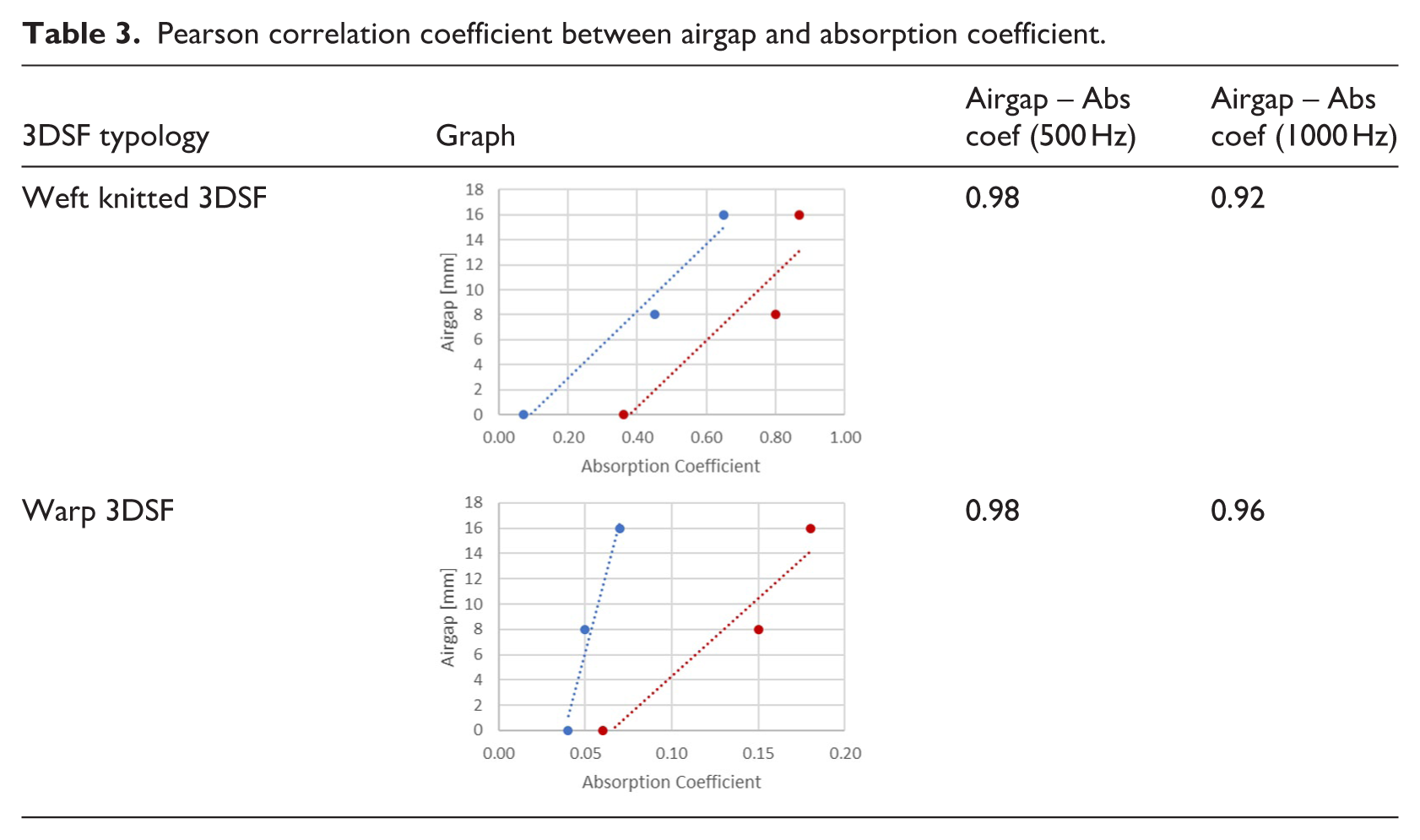
The role of air gaps was also examined in the author’s analysis, confirming the qualitative claims made by Liu and Hu. As shown in Table 3, correlation coefficients of 0.98 at 500 Hz and 0.92–0.96 at 1000 Hz were observed for both weft and warp-knitted fabrics. These values suggest that air gap configuration is one of the most effective strategies to improve performance, especially when combined with specific fabric types. 24
Pearson correlation coefficient between airgap and absorption coefficient.
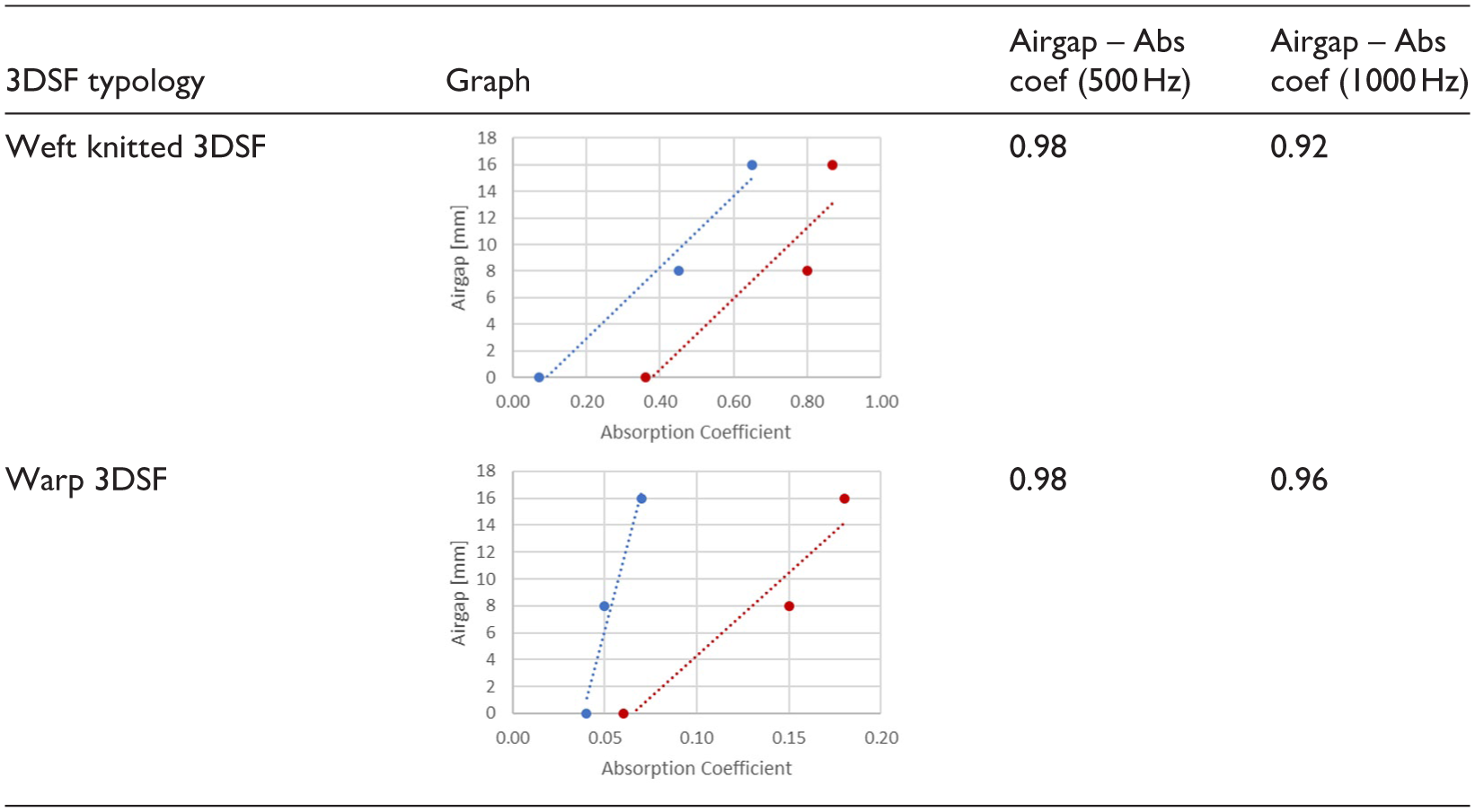
In contrast, warp-knitted 3D spacer fabrics demonstrate greater sensitivity to material composition and surface architecture. The study by Chen et al. explores the integration of polyurethane binders into warp-knitted composites, showing that these materials exhibit promising damping performance, particularly at frequencies below 3000 Hz. The structural parameters—such as surface layer compactness, spacer yarn inclination, and yarn diameter—play a significant role in shaping the acoustic response, although no correlation coefficients are reported.
Arumugam et al. (2019) further reinforce this perspective by analysing 12 warp-knitted samples with varying density (127.42–335.47 kg/m³), porosity (82.74–90.74%), and thickness (1.5–3.5 mm). Their findings show that even minor changes in density significantly affect flow resistivity and the noise reduction coefficient, confirming that material compactness and surface layer structure are central to acoustic performance in warp-knitted fabrics.
Together, these studies suggest that warp-knitted fabrics are ideal for broadband acoustic applications, where material engineering—rather than geometric manipulation—is the primary strategy for performance optimisation.
Conclusions
Among the various strategies to enhance indoor acoustic comfort, the use of acoustic materials remains the most widely adopted. In particular, the need to attenuate sound propagation has driven the development of materials with high absorption coefficients. Acoustic textiles have emerged as a competitive solution, especially when leveraging typologies and technologies originating from other sectors. A notable example is the class of three-dimensional spacer fabrics (3D SFs), originally developed for technical apparel and now increasingly investigated for their acoustic potential.
This study has reviewed and compared the acoustic performance of 3D SFs with conventional materials and has explored the correlation between their structural parameters and sound absorption behaviour. The comparative analysis confirms that 3D SFs can achieve absorption levels comparable to porous and microperforated materials, particularly when structural features such as density, thickness, and yarn angle are optimised.
A key finding is the typological distinction between weft- and warp-knitted 3D SFs. Weft-knitted fabrics show strong geometric dependency, where yarn connexion angles significantly influence thickness and absorption at mid frequencies. Warp-knitted fabrics, on the other hand, respond more to material composition and surface architecture, offering broader frequency performance. Additionally, the role of air gap configuration emerged as a universal enhancer, with correlation coefficients up to 0.98 at 500 Hz, confirming its effectiveness across both fabric types.
These insights suggest that performance-based design of 3D SFs is feasible and promising. By manipulating structural parameters and integrating air gaps, it is possible to tailor acoustic behaviour to specific architectural applications. The development of mathematical models and simulation tools further supports this direction, enabling predictive design strategies. 28
However, it is important to note that the absorption coefficients reported in the literature are predominantly measured under laboratory conditions using impedance tubes, which reflect normal incidence scenarios. To assess the real-world applicability of 3D SFs in architectural contexts, future research should focus on reverberation chamber measurements and random incidence conditions, which better represent spatial acoustic environments.
In conclusion, 3D spacer fabrics represent a versatile and adaptable class of acoustic materials. Their structural complexity and tunability offer significant potential for customised acoustic solutions, provided that future studies continue to bridge the gap between laboratory performance and architectural-scale implementation.
Footnotes
Funding
The authors received no financial support for the research, authorship, and/or publication of this article.
Declaration of conflicting interests
The authors declared no potential conflicts of interest with respect to the research, authorship, and/or publication of this article.
