




Abstract
This paper reviews the advancements and potentials in Knitted Negative Poisson Ratio (NPR) materials, including warp-knitted, weft-knitted, and three-dimensional (3D) knitted structures. The review includes 10 sections the following order: a general introduction, defection of the NPR, the auxetic textile fabrics, warp and weft knitted, the 3D, the mechanical properties of auxetic knitted structure, advantages and drawbacks, and the future trends. However, research on knitted textile structures with Negative Poisson Ratio is limited in the literature so far. This type of material with unusual properties and 3D negative stiffness textile structure has been of interest for fundamental research, and engineering applications. Nonetheless, there is a need for a systematic study of their structural design and manufacturing process and their performance for further exploitation. Among different design structures, various structures have been designed and made to show the properties of (NPR). These negative Poisson ratio textiles knitted structures will enable new applications such as vibration isolation for transportation, defense Industries, aerospace, biomedical, sports industries, geotextile, construction, and many more high-value-added and innovative products.
Introduction
Poisson’s Ratio (PR), is defined as the ratio of transverse contraction strain to longitudinal extension strain in the direction of expansion or axial force. However, Tensile deformation is considered positive and compressive deformation is considered negative. 1 In mechanics, Poisson’s ratio is the negative number of the ratio of transverse strain to lateral or axial strain. 2 It is named after the French mathematician and physicist Siméon Denis Poisson and is symbolized by the Greek letter ν (nu), which is the ratio of the amount of transversal expansion divided by the amount of axial compression.3,4
Conventional textile fabrics typically exhibit a positive PR, they become thinner laterally when stretched and thicken laterally when compressed. Auxetic textile fabrics exhibit a NPR, as they thicken laterally when stretched and become thinner when compressed, as shown in Figure 1 and 2.7,8 Poisson’s Ratio (PR) of textile structures have become the focal point of many researchers in the past recent years. (Figure 3).9–12 Number of Publications of negative Poisson’s ratio per year according to Web of Science.


Knitting technology is classified into two main categories according to yarn passage and yarn processing: Weft knitting technology and, Warp knitting technology. In weft knitting, fabrics are formed by interlocking loops horizontally, row after row. Products made using weft knitting technology are widely spread in the garment industry for T-shirts, blouses, skirts, and pullovers.13–16 Weft knitting machines are of relatively lower investment, smaller floor space requirements, lower inventory stocks requirements, and faster pattern change capabilities than warp knitting machine. 17 However, flat knitting technology is widely used compared with warp knitting and circular knitting. Flat knitting has higher process reliability and diversity in fabric structure. Auxetic fabrics can be realized based on weft knitted structures using flat knitting technology in simple way, but highly effective methods of fabricating auxetic fabrics using conventional yarns.18–21 In warp knitting technics, fabric is formed by looping of threads that run in parallel sheets in the vertical direction to form the fabric. Warp knitting machines are flat and relatively more complicated compared to weft knitting machines.22,23
Poisson’s ratio
Publications and citations of Negative Poisson’s Ratio according to web of Science.

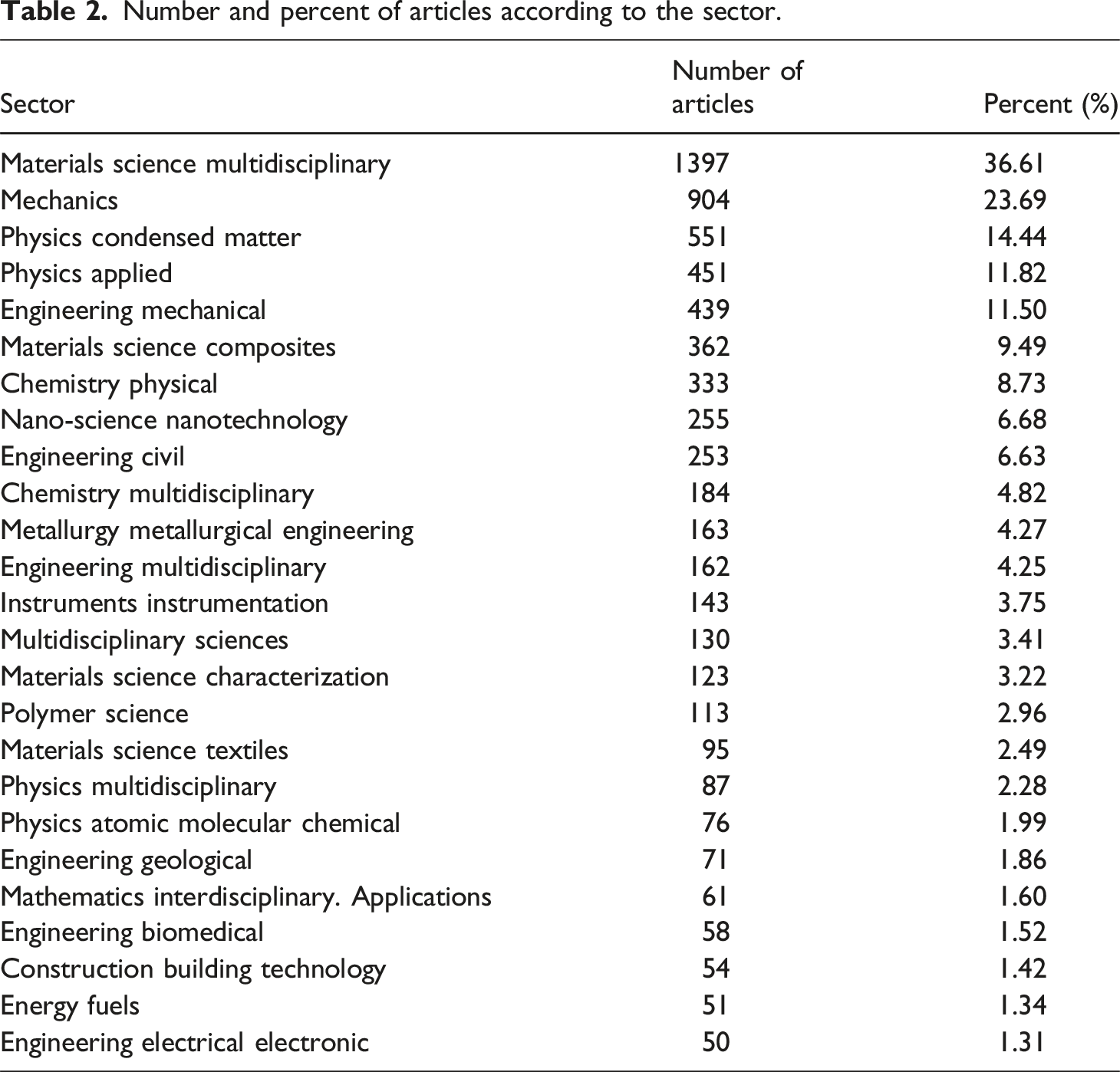
Number and percent of articles according to the sector.
It is worthwhile to define the PR before NPR and to assert that the Poisson’s ratio is a fundamental property of any common engineering material including textile structures and a principal aspect of engineering. Mathematically, Poisson’s ratio is the negative value of the ratio between strain perpendicular to the loading direction (ε
y
) and the strain along the axial loading direction (ε
x
)24–26 as formulated as below:
Since Poisson’s ratio is a ratio of two strains, and strain is dimensionless, Poisson’s ratio is also unitless. Poisson’s ratio is a material property. Poisson’s ratio can range from a value of −1 to 0.5. For most engineering materials, for example steel or aluminum have a Poisson’s ratio around 0.3, and rubbers have a Poisson’s ratio around 0.5, which are referred to as “incompressible”. Incompressible simply means that any amount you compress it in one direction, it will expand the same amount in its other directions hence its volume will not change. Further if the lateral and axial strains are equal then PR ν will be −1 as will be explained later in equation (1). ❖ A material with PR in the range (0 < ν ≤ 0.5), would contract in the lateral direction when stretched axially, and expand laterally when compressed. ❖ A material with PR equals to 0, would not deform in the lateral direction when stretched or compressed. ❖ A material with PR in the range (−1 ≤ ν < 0), would expand in the lateral direction when stretched axially, and contract laterally when compressed.
27
Equation and Units
Poisson’s Ratio (ν) = transverse strain / axial strain • ν is the Poisson’s ratio • εlateral is the lateral strain (strain in the direction perpendicular to the direction of force) • εaxial is the axial strain (strain along the direction of force),
27

Poisson’s ratio is a dimensionless magnitude, without units of measurement. As previously mentioned compressive deformation is considered negative, and tensile deformation is positive, thus the negative sign in the Poisson’s ratio formula appears, accordingly a typical material, where the lateral deformation is opposite to the longitudinal deformation, the Poisson’s ratio value would be positive see Figure 4 b.
27
(a and b) The tension and compression of material and lateral deformation for the different Poisson ratios. ν is the Poisson’s ratio, εlateral is the lateral strain (strain in the direction perpendicular to the direction of force) εaxial is the axial strain (strain along the direction of force).
27

According to previous studies11,18,28–30 the Poisson’s ratio values of fabrics can be obtained through measuring both the lateral and longitudinal dimensional changes of the samples. To facilitate the measurement of dimensional changes, marks should be made at proper positions on the surface of the fabric samples and a better and more effective method was to record the dimensional changes during the test by video. After the test, the photos with marks were extracted from the video for measuring the lateral and longitudinal dimensional changes of the marks using the screen ruler, through which the Poisson’s ratio at a certain tensile strain can be calculated. It should be noted that the lateral dimensional changes can be measured at any position of the samples along the tensile direction. However, the largest lateral dimensional changes are obtained in the middle of the samples due to the constraint of the clamps.
Among six fabrics developed by Adeel Zulifqar et al.,
11
five fabrics yielded NPR and one fabric exhibited zero Poisson’s ratio. The fabrics with parallel in-phase zig-zag folded stripes along the warp and weft produced the auxetic effect over a smaller strain range, from 2% up to 20% of longitudinal strain. A comparison of their auxetic behavior is illustrated in Figure 5. Comparison of auxetic behavior of the fabrics developed.
11

The stress–strain and PR–strain curves of both fabrics are shown in Figure 6(a) and (b), respectively. It can be found from Figure 6(a) that in the course direction, the strain range of the two fabrics is not very different, but the peak stress of Auxetic fabric BS is higher than that of Base fabric B. Regarding the NPR, it can be seen from Figure 6(b) that Auxetic fabric BS has a very obvious auxetic effect with the highest NPR of −2.6 when stretched in the course direction. Since the NPR is affected by the values of these strains.
31
Comparison between conventional base fabric and auxetic fabric: (a) tensile stress–strain curves; (b) Poisson’s ratio–strain curve.
31

The lateral strain and Poisson’s ratio as a function of tensile strain when stretched in the course and wale directions are shown in Figure 7(a) and (b), It can be seen that the auxetic effect is achieved in both directions in a large range of tensile strain. However, due to the difference in the lateral strain changes, as shown in Figure 6(a), the auxetic behaviors of the fabric in the two directions are very different.
32
Lateral strain (a) and Poisson’s ratio (b) of Fabric as a function of tensile strain.
32

During the knitting process, the knitted fabric was in a planar form. However, after knitting, the fabric became folded due to structural disequilibrium of the face loops and reverse loops. As the auxetic effect of the fabric was only found in one fabric principal direction, only the Poisson’s ratio-strain curve of the fabric when stretched in the course direction is shown in Figure 14. 18
Auxetic materials and their mechanisms
Three dimensional fabrics with NPR are a novel type of textile materials that exhibit unconventional deforming characteristics under uniaxial tensile or compression forces. There are generally three principal directions, orthogonal to each other, in a 3D-fabric structure. When an external force is applied to the 3D-fabric along one of the principal directions, the auxetic behavior shall either be in plane or out of plane, and acts either in a single direction or in multiple directions. 34 Auxetic materials have a negative Poisson’s ratio (NPR) characterized by unilateral shrinkage or expansion against axial compressive or tensile loadings, respectively.35,36 The auxetic behavior of a material cannot attributed to its chemical structure, but rather to its geometric structures, such as the honeycomb structure, at the microscopic level. 37 The NPR behavior of a material usually stems from its particular structural arrangement. 38 So far, variable geometric structures have been devised to make NPR materials from the molecular to the macroscopic level. The most important categories of these NPR structures are: re-entrant structures,39–41 chiral structures,42,43 chiral three-dimensional isotropic cubic lattices with rigid cubical nodules, and multiple deformable ribs that are developed and analyzed via finite element analysis, rotating unit,44,45 hard molecules, 46 micro porous and mesoporous polymers, 47 and free rod liquid crystalline polymers. 48 This implausible behavior gives NPR materials numerous fringe benefits, such as enhanced shear stiffness, increased plane tensile strain, fracture toughness, increased indentation or puncture resistance, and improved energy absorption properties.49–52
Traditional textile structures have utilized auxetic models to induce auxetic textile behavior A different route to design auxetic structures and mechanisms of fibers in textile structures: is to engineer the fibers to be auxetic at the molecular level to knit and weave into textiles directly.
53
The other method to produce auxetic textiles by using conventional fibers to weave or knit in weft and warp knitted fabrics which could make the textile production to be auxetic.
29
Auxetic weft knit structures for example, have been fabricated using the principles of rotating, polygons, and re-entrant structures depicted in Figure 8.18,54 Alternatively, auxetic warp knit structures have utilized manufacturing guide bars to inlay limiting yarns into open chain or pillar stitches.
55
An example of an auxetic inlay wrap knit structure is depicted in Figure 9.
54
A selection of typical auxetic structures under compression (top) and extension (bottom).
54
Auxetic warp knit textile accomplished through inlay yarn geometry throughout a repeating open chain stitch representation based on stitch pattern developed by.
54


It is asserted that the PR value obtained for textile structures is significantly different from other engineering materials, where it has a unique behavior in the performance as a fabrics when subjected to tensile deformations. 24 Further, due to the inherited nature of fabrics and their exclusive structure, the measurement of Poisson’s ratio, special attention is to be paid to gain accurate results. Many researchers have analyzed the theoretical relationship of PR, and the mechanical properties of fabric and pointed out interesting results.56–59
Auxetic textile fabrics
Textile fabrics are a special type of material constructed from fibers, filaments and yarns. Currently, Auxetic woven fabrics can be produced using auxetic fibers, or filaments 60 or auxetic yarns,61,62 or the combination of conventional yarns, filaments and auxetic geometry.63,64
Auxetic plied or cabled yarns are specially constructed with two types of single yarns of different sizes or twists and moduli. When different types of helical auxetic yarns, or filaments are made into fabrics, the produced fabric would not have the highest NPR behavior but rather would have the highest percentage open structure, that increases with the increase of the tensile strain. 65 However, the fabrication of 3D textile structures is currently possible using different textile techniques such as weaving, weft or warp knitting, braiding, tufting and non-woven.66,67 As a novel type of textile structures, 3D textile structures have a high potential for textile professionals to achieve more extraordinary structural effects for varioust applications than traditional 2D textile structures, including negative Poisson’s ratio and negative stiffness. The NPR textile structures have been reported in many research findings.33,68,69 In the following section, auxetic fabrics based on knitted structures with manufacturing pressing and their mechanical properties are discussed.
According to Ng and Hu AWFs
65
APYs were used to create four-ply auxetic yarns, which were then incorporated into a number of woven fabrics with various design parameters to investigate their auxetic behavior, as illustrated in Figure 10. The effects of APY arrangement, single component yarn qualities (warp yarn), weft yarn type, and weave pattern were then assessed. The results reveal that a different arrangement of S- and Z-twisted four-ply auxetic yarns in a woven fabric can result in a higher NPR. While a larger single stiff yarn modulus in auxetic yarn can result in more NPR behavior, finer soft auxetic yarn does not always provide such an impact. Weft yarns with low modulus and short float over four-ply auxetic yarns in fabric construction are advantageous for achieving high NPR.
65
Auxetic woven fabrics (AWF).
65

Subsequently, in 2019, Nazir et al. 62 AWFs were created with four distinct weaving patterns, employing HAYs as warp and Kevlar as weft. The HAY was created by wrapping a stiffer yarn (multifilament Kevlar) around a core yarn (multifilament PP) at variable angles ranging from 8° to 20°. It was discovered that a lower wrap angle in HAY resulted in a stronger auxetic effect, with the matt weave fabric made utilizing 8° HAY exhibiting the greatest auxetic impact. The designed structure is suitable for filtration and energy absorption applications.
Auxetic knitted fabric
Warp knitted auxetic structures
Warp knitting can be defined as the sequential formation and interlinking loops in an axial direction on a lateral or horizontal array of needles with at least one separate yarn being supplied to each needle. The loops are joined in tandem in a width-wise direction by motion of the threads backward and forward side by side between adjacent needles.70,71 Warp knitting represents the quickest approach of producing fabric from thread. The needles produce parallel rows of loops concurrently that are intermeshing in a zigzag pattern Figure 10. Fabric is produced in sheet or flat form using one or more array of warp yarns. The yarns are dispensed from warp beams to an array of parallel needles extending across the width of the warp knitting machine.
Ugbolue et al
72
produced knitted fabric structures made of traditional yarns by using chains and filling yarn inlays as shown in Figure 11.
73
They integrated the principles of geometry, fabric structural distinctive characteristics, and traditional elastic yarns to engineer hexagonal knitted structures having negative Poisson’s ratio.29,74,75 A lower stiffness thick filament was employed for open looped wales while, a high-stiffness filament was inlaid over the under-lap loops Figure (11(a). When stretching the high-stiffness filament becomes straight and fully aligned causing the open loops of lower stiffness filament to wrap over the straightened out high-stiffness continuous filament yarn as shown in Figure (11(b) manifesting the auxetic behavior. Auxetic characteristics can be perceived in the resultant structure by converging two or more of these wales in some suitable fashion as shown in Figure (11(c). The resultant functional auxetic knitted structure is shown in Figure (11(d).
35
Warp knit structures from wale of chain and in lays yarn.
72

Ugbolue et al.
55
have also constructed warp knit structures constituted of pillar stitches and inlay yarns. The wales are knitted from open loops using stocky, low-stiffness filaments, and a high-stiffness filament is inlaid over the under-lap loops which as indicated in Figure (12(a), lower stiffness filament wraps over the straightened out high-stiffness, rigid filament as indicated in Figure (12(b). There is a possibility of combining two or more of these wales in a typical fashion as in Figure (12(c). However, there is still no knitted fabric of such construction. Furthermore, based on the utilitarian mechanism of the geometric knitted structure Ugbolue et al.
76
constructed another warp-knitted inlay structure with a negative Poisson’s ratio. Alderson et al
29
developed another innovative type of warp-knitted fabric with a double arrowhead structure for amplified drape ability and energy absorption reaching an NPR up to −0.22 ± 0.03. Warp knitted structure (a) before deformation (b)after deformation (c) fabric diagram.
55

Ma et al
74
designed and produced a 2-D warp-knitted fabric with auxetic behavior based on a rotational hexagonal structure, and these type of structures can lead to a negative Poisson’s ratio mathematically. Shuaiquan Zhao et al
32
used a tricot warp knitting machine top three re-entrant hexagonal auxetic NPR warp-knitted fabrics as shown in Figure 12. The results revealed an obvious auxetic behavior within a wide range of strains. Zhao S. et al.,
77
handled a fabrics after the finishing process Figure 13. It can be observed that the expected re-entrant unit cells as designed were obtained and the angles between the horizontal ribs and diagonal ribs are different due to the different diagonal rib lengths in the structure. According to previous study
77
the Poisson’s ratio values of fabrics can be obtained by measuring both the lateral and longitudinal dimensional changes of the samples. For easiness the measurement of dimensional alterations, marks should be made at a determined position on the surface of the fabric samples and a better and more effective method is to record the dimensional changes during the test by video. After the test, the photos with marks are extracted from the video for measuring the lateral and longitudinal dimensional changes of the markings using the screen ruler, through which the Poisson’s ratio at a certain tensile strain can be determined. It is worth noting that the lateral dimensional changes can be measured at any position of the samples along the tensile direction. However, the largest lateral dimensional changes are obtained in the middle of the samples due to the constraint of the clamps preventing changes at those points. In this study, the tensile tests were conducted based on the method adopted by Zulifqar et. al.11,77
Weft knitted auxetic structures
There are four basic types of weft knitted structures: Plain, rib, interlock, and purl, from which all other weft-knitted structures can be derived. A novel approach to design techniques was used to create auxetic weft-knitted textiles.
78
The auxetic fabrics produced exhibit expansion in the X- or Y-axis (aligning axes to the direction of knitting).
79
Recently, a range of auxetic knitted fabrics has been manufactured by using weft flat knitting technology.
80
The development was based on a geometrical analysis of a new three-dimensional structure that can yield an auxetic effect.
81
Blaga, M et al.
82
investigated various variables including the effect of material composition, loop density or loop length, and structural parameters such as the repeat size and rib width/repeat size ratio on the folding effect of selected links-links knitted structurs. They employed a 3-D structure having parallelogram planes of the same shape and size coupled together shoulder to shoulder in a zigzag fashion as shown in Figure 13. When stretched horizontally or vertically, each parallelogram changes its inclined position with relation to the structure’s surface plane, resulting in an opening of the entire structure by increasing its dimensions in both horizontal and vertical directions. As a result, the auxetic effect is detected although the shape and size of the parallelogram planes remain constant. This auxetic effect comes from the opening of the folded structures in both course and wale directions, exactly like the structure indicated in Figure 14.
33
Weft-knitted auxetic materials that stretch laterally were created by utilizing flat knitting technology. Hu, H., Z, and S. Liu,
18
investigated three types of geometrical structures, including foldable structures, rotating rectangles, and re-entrant hexagons. The findings demonstrated that the auxetic effect first increases and subsequently declines with the axial strain, with the exception of folded fabric made with face loops and reverse loops in a rectangular configuration, as shown in Figure 15. Andrews Boakye et al
83
designed and manufactured knitted tubular fabric that exhibits a negative Poisson’s ratio by use of a flatbed knitting machine. Three variations of an arrowhead design (4 × 4, 6 × 6, and 8 × 8) were also used as the three main structural patterns as shown in Figure 16. The results reveal that the ‘6 × 6’ structure gives the best auxetic effect. In the other study, Boakye et al.
84
developed an auxetic-knitted tubular sample employing Kevlar yarn as reinforcement material using the weft-knitted knitting technique. Yaxin Sun
85
created, as seen in Figure 17, a novel auxetic weft-knitted fabric based on the rhombus-shaped grid re-entrant structures. Kevlar yarn was used to create the framework using a computerized flat knitting machine. The findings demonstrated that all three directions are impacted by the negative Poisson’s ratio. (a) Three-dimensional structure; (b) unit cell (c) Knit pattern (d) Stretched state of the knitted fabric.
33
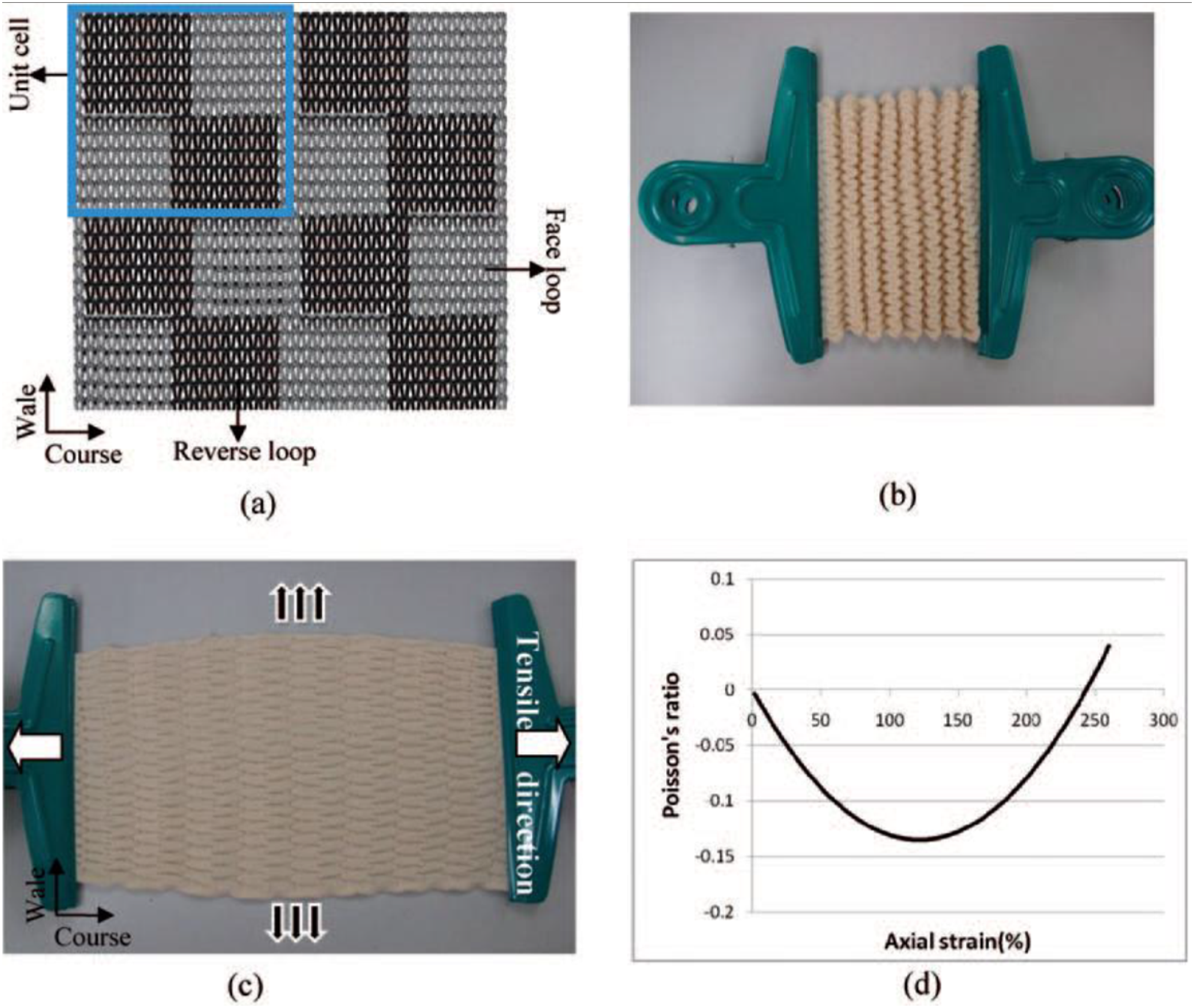
Auxetic fabric formed with the arrangement of face and reverse loops in rectangular forms. (a) Knitting pattern, (b) fabric at the free state, (c) fabric at the stretched state, (d) Poisson’s ratio versus strain.
18
The unit cell of the three different knit pattern.
83
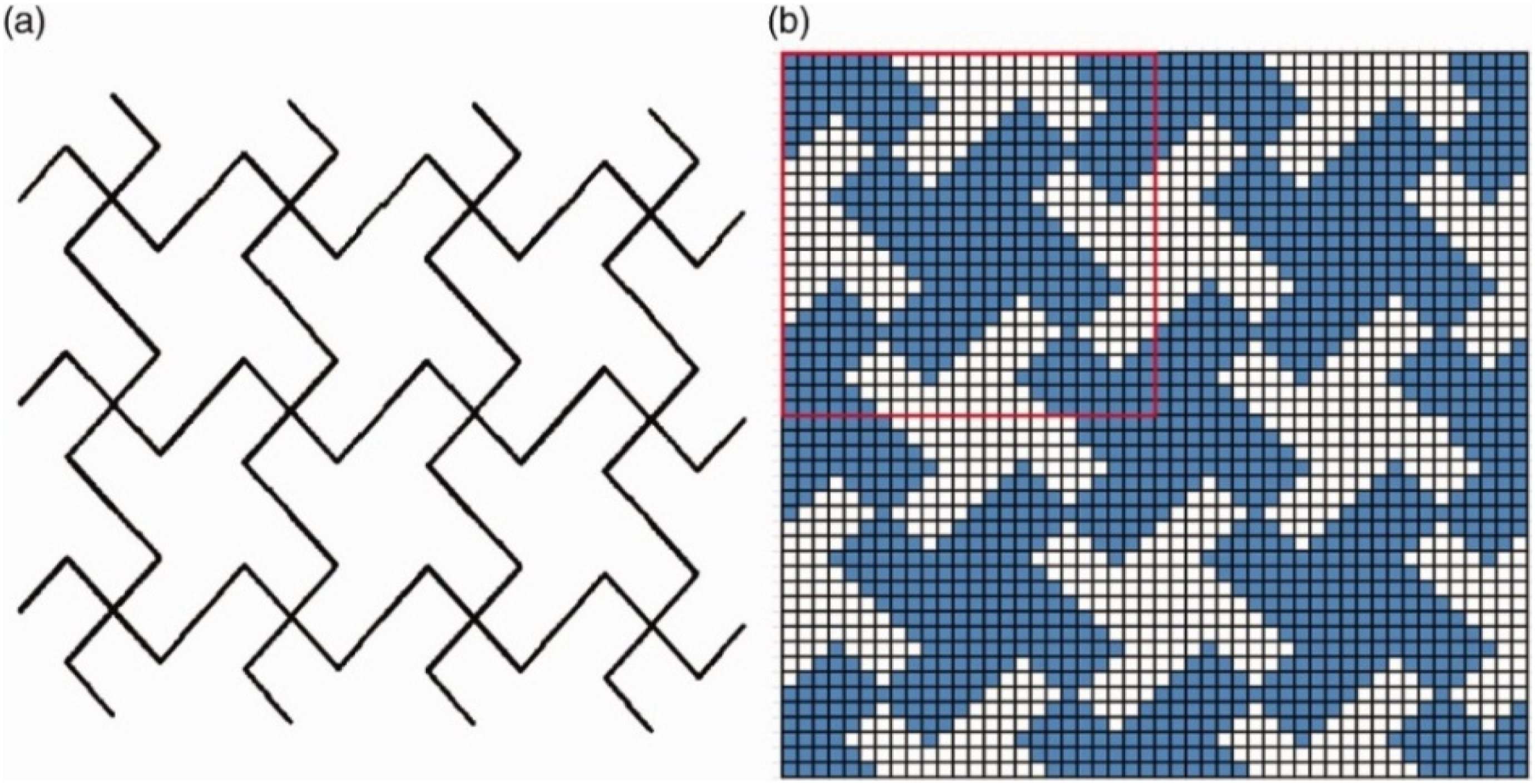
Rhombus-shaped grid re-entrant structure (a) and knitting pattern (b) of the novel auxetic weft-knitted fabric.
85


To demonstrate the viability of creating auxetic fabrics based on a variety of geometrical structures utilizing flat knitting technology Wanli et al.
86
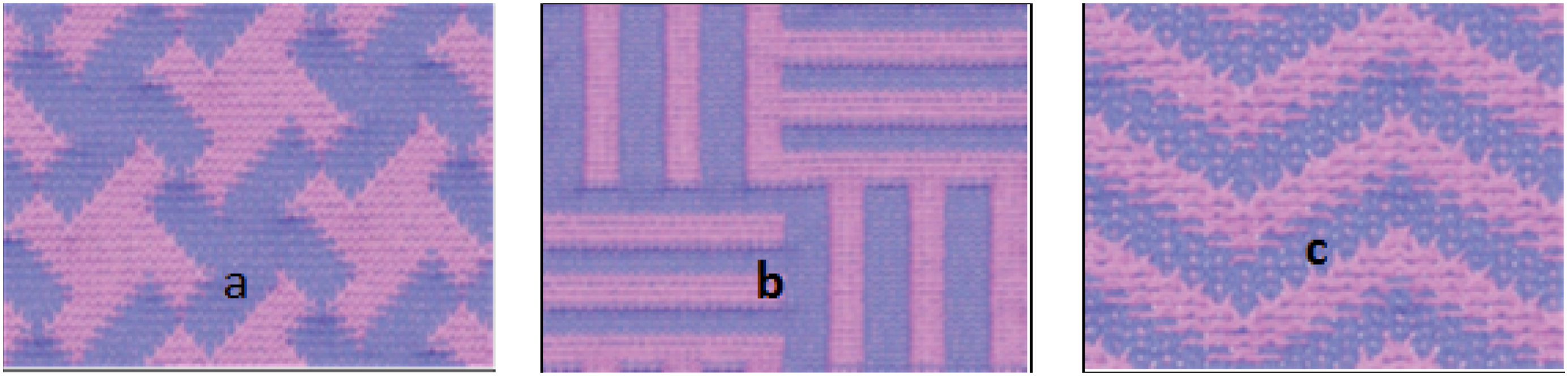
used a computerized flat knitting machine to create auxetic weft knit fabrics with three distinct geometrical structures, as illustrated in Figure 18, rotational structure, foldable structure, and double-headed arrow topological structures. The findings of the experiment demonstrate the auxetic effect of the three distinct weft-knitted textiles. The knitting pattern (a) rotating structure (b) foldable structure (c) double-headed arrow topological structure.
86

Muhammad et al.
87
developed three different foldable auxetic structures: star, line, and zigzag by using a Shima Seiki flat-knitting machine (SVR123SP); the structure was illustrated in Figure 19. The results reveal that the NPR exists in all fabric structures. Several foldable structures are presented in this chapter of the book.
88
Nada. O and Ramadan. M
89
produced and evaluated the NPR of weft-knitted fabrics by using different loop lengths as shown in Figure 20. The results showed that all knitted fabrics have the NPR effect, for both directions (wale and course), there for the NPR improved strongly with the increase in loop length of knitted structures. Virtual simulation of structures: (a) star, (b) lines, and (c) zigzag.
87
Three different loops length knitting fabric.
89

3D Auextic knitted fabric
The 3D structural design affects the NPR of the fiber assembly. The auxetic behavior of the structure can only be achieved by weaving the fibers in three different directions. A new type of 3D auxetic fabric with auxetic behavior will be created by fabricating it as a warp-knitted spacer structure using a unique geometric design.28,90
3D Auxetic warp knitted structures
A three-dimensional textile structure termed warp-knitted spacer fabric (WKSF) is made up of two distinct fabric layers that are connected together but maintained apart by spacer yarns. Spacer fabrics can be made using woven, weft, or warp knitting techniques; however, warp knitting is the method most frequently employed for high-speed production. Two needle bars are used in Rachel machines to create warp-knitted spacer fabrics (WKSF).91,92 Figure 21 depicts one of the common machines used for spacer fabrics. The surface fabric is knit on one side by the three guide bars in the front (GB1, GB2, and GB3) and on the other side by the three guide bars in the back (GB5, GB6, and GB7). A three-dimensional fabric structure is formed by the guide bar in the middle of GB4, which knits the spacer layer in between the two surface layers.
23
Yuping Chang and Pibo Ma created multiple samples, developed a basic mathematical model of auxetic structure, and used an E22 RD7/2-12EN warp-knitting machine to rebuild a 3D auxetic spacer warp-knitting structure.28,30 WU, M et al
93
and Zhi, C et al
94
created cloth with spacer warp knitting on an E−18 double-needle bar. Six yarn guide bars are installed on the Raschel warp-knitting machine. As seen in Figure 22, the fabric is made using coarse spacer yarn and dense surface layers. Vahid. Gh et al
95
produced the spacer fabrics with a double-needle Rachel knitting machine with a gauge of eight and five guide bars. Xu W et al
96
manufactured using a 7/2–12EN type of Raschel warp-knitting machine. Wang et al.31,90,97 constructed and replicated auxetic warp-knitted spacer fabric structure, which is contrasted with that of the traditional warp-knitted spacer fabrics. The structure consists of two outer fabric layers joined by a cluster of spacer yarns. According to the FE study, the simulated and actual fabric deformations at various tensile strains were in agreement. Configuration of warp knitting machine RD7.
23
Schematic, surface layer structure.
93


3D Auxetic weft knitted fabric
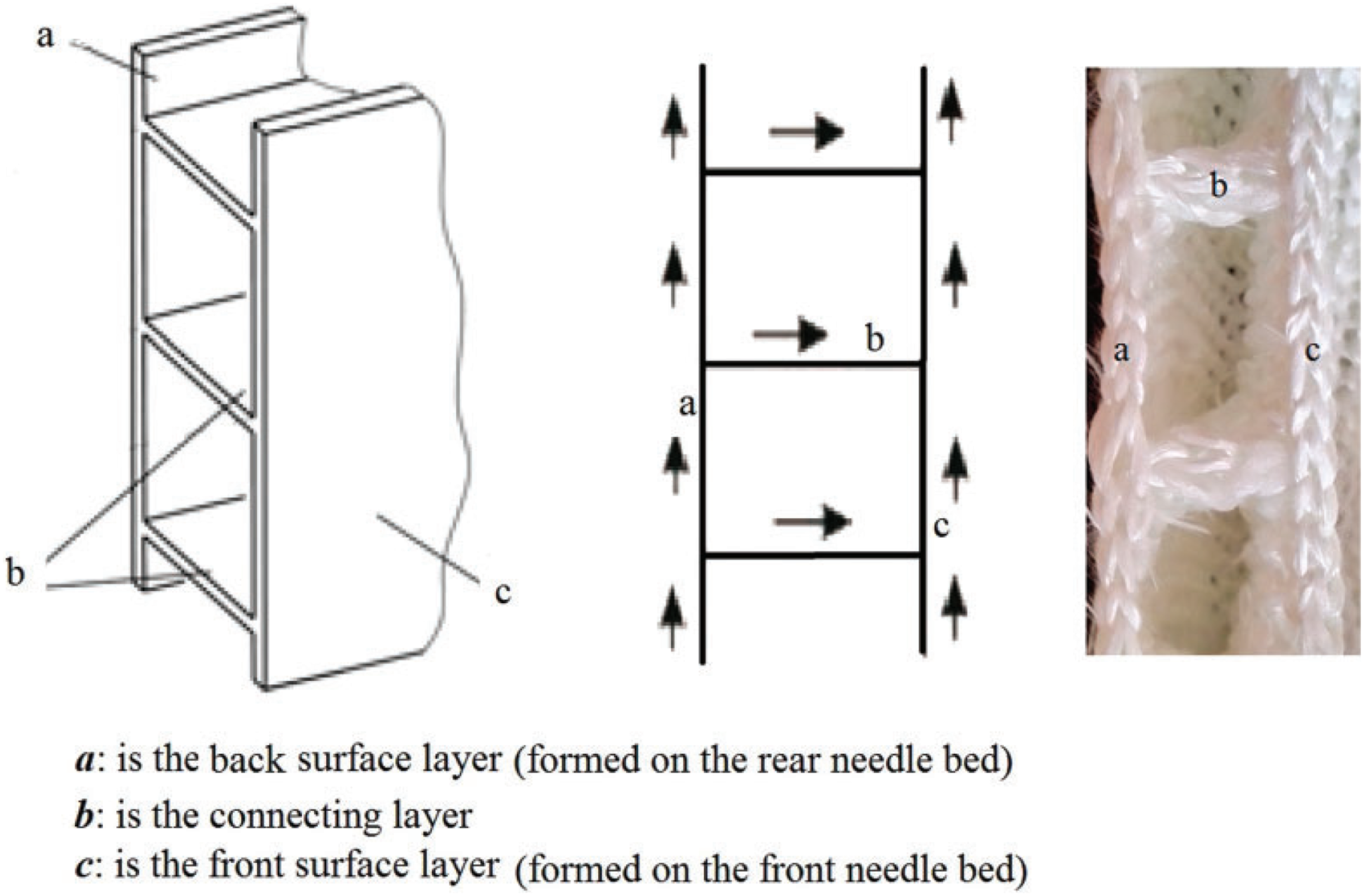
Weft-knitted spacer fabrics are also known as sandwich fabrics. Even though they can be created on circular machines (with yarns), they are primarily manufactured on electronic flat knitting machines, which provide the necessary technological conditions and development opportunities. The link can be made using yarns dispensed from both beds or by knitted layers. The first solution is limited by shape complexity and fabric thickness. The second linking principle needs knitting independently on the two beds before stopping and knitting the connection layer on selected needles, often 1 × 1. These needles can work for different fabrics (if the length of the layer is small enough) or can be used entirely to make the connection if the length and/or shape complexity. 98
Saba Hamedi et al
99
depicted the fabrication of weft-knitted spacer fabrics with U-shaped geometry on a computerized flat knitting machine (Stoll CMS 400; E5) as shown in Figure 23. Zahra Moshtaghian et, al.
100
manipulated multi-cell flat-knitted spacer textiles were intended to have compressive behavior and a Poisson’s ratio. The multi-cell spacer knitted fabric was manufactured on a computerized flat knitting machine (Stoll CMS400, E5, equipped with latch needles, four systems). Ma et al.
101
created different structures of weft-knitted spacer fabric using a high-speed computerized flat knitting machine (7-gauge, SCE-131A, Longxing). The outer surface layers of fabrics were made of aramid multifilament, which was joined by elastic nylon monofilament as spacer yarns. Typical schematic and real configuration of the U-shaped 3D weft-knitted spacer fabric.
99
Mechanical properties of auxetic knitted fabric
Auxetic of weft and warp-knitted fabric is noted for its excellent mechanical qualities, shear-resistance, bumper property, and energy-absorbing abilities, so draw more and more attention to this type of fabric.61,102–104 Yuping Chang et al105,106 investigated the impact resistance, energy absorption ability, and uniaxial tension of auxetic warp-knitted spacer textiles under low velocity-impact conditions. The results showed that higher values of NPR have better energy absorption capabilities. Schwaiger et al. investigated the flexural, tear resistance, and puncture impact qualities. 107 Overall, the effect of the knitted structures on the mechanical properties was independent of the manufacturing process. Aktas¸ et al. 108 examined plain, milano, and rib-knitted textiles for their impact and post-impact qualities. Plain-knitted fabrics had the lowest tensile strength, impact energy for penetration or puncture, and compression after impact strength, while rib-knitted materials had the highest. The tensile and forming properties of auxetic warp-knitted spacer fabrics were studied and compared to those of traditional warp-knitted spacer fabrics. The results reveal that the prolonged low-stress stage and the formability of auxetic warp-knitted spacer textiles are significantly better than those of traditional warp-knitted spacer fabrics. 31
Steffens et al. 109 the first who studied the use of high performance-fiber yarns such as high-tenacity polyamide for manufacture auxetic textile structures using knitted technology to enhance the mechanical parameters. Dong et al. 110 manufactured Weft-knitted fabrics by using high-performance fiber (Carbon/aramid) to enhance the impact toughness.
Knitted fabrics’ characteristics can be adjusted depending on the fabric structure and the raw material used to create the finished fabric. Tong et al. 111 described an experimental study on the required physical properties of WKSF that can be developed as an absorbent layer for advanced wound dressing. Hoque et al. 112 revealed an experimental investigation on the necessary physical features of WKSF that can be created as an absorbent layer for advanced wound dressing Auxetic woven fabric (AWF).
Materials which exhibit negative Poisson’s ratio are reported to have a better fracture resistance, low crack propagation, and twice crack resistance to fracture than conventional materials.113–115 However, when an indentation occurs in an auxetic material, a local contraction is observed. There is a flow of material that accumulates under the indenter, that means auxetic materials have an improved indentation resistance, when compared to conventional materials116,117 see Figure 24 The auxetic based weft knitted fabrics have superior wearing strength behavior than the conventional based weft knitted fabrics.
119
Schematic of deformation behaviors when both non- Auxetic a and Auxetic materials b are subject to impact compressive loading, Evans & Alderson, 2000.
118

K. L. Alderson, A. Fitzgerald & K. E. Evans found that the auxetic material was both more difficult to indent than the other materials at low loads (from 10 to 100 N) and was the least plastic with the most rapid viscoelastic creep recovery of any residual deformation. They added that, at low loads, where the resistance to local indentation is most elastic, the hardness increased by up to a factor of eight on changing the Poisson’s ratio from ν ≈ 0 to ν ≈ −0.8. They proposed a mechanism based on local densification under the indenter of the nodules and fibrils which explains how the microstructural response of an auxetic polymer can be used to interpret the results see Figure 24.118,120
Auxetic materials offer greater resistance to shear deformation than conventional materials, under similar situations. 121 Auxetic materials offer better fracture resistance than conventional materials. It has been reported that the auxetic materials have low crack propagation and more energy is required by the auxetic laminate for crack propagation. 114 Weft-knitted auxetic structures with varying Poisson ratios were studied by Naseer et al. 122 which assessed their practicability and durability. Fabrics with higher NPR were found to have better mechanical properties, such as higher bursting strength and resistance to pilling. Sun et al. 123 shown that the auxetic weft-knitted fabric exhibit superior fracture behavior and energy absorption capabilities.
Advantages, drawback, and limitations
Based on previous work done the auxetic materials possess some unconventional properties, a special kind of negative Poisson’s ratio textile kitted structures shown several advantages such as low density, high strength, vibration damping, sound absorption, sync-elastic behavior, and good impact resistance, improved plane strain fracture resistance and shear modulus, resistance to indentation, and fracture toughness.29,50,124 Based on the use of different structures and different types of fiber, demonstrates the potential for knitted auxetic structures to be modified to meet the needs of a wide range of applications, from protective garments to sportswear, vibration damping, medical textiles, shock absorbency and reinforcement for composites.
The use of auxetic materials has been limited because of problems with deploying them in their fabricated forms. Further, due to the limitations like low structural stability, low elastic recovery, poor stiffness and strength due to their geometrical configuration, higher thickness and difficulty in the fabrication because of their complicated geometrical structures, auxetic knitted structures cannot be successfully used in garment manufacturing. Usually, auxetic structures are prepared using additive manufacturing techniques which is very costly. Also, the complexity of the auxetic geometry induces a rise in production costs. In the case of auxetic textiles, the fiber and yarn-based auxetic fabrics have cost and mass production limitations; knitted auxetic fabrics have stability issues because of the loop structure needed special knitted machine.
Future trend
The long-term significance of this review paper is to provide a basic understanding on the structure characteristic, design principle, fabrication method and mechanical performance of negative Poisson’s Ratio of knitted fabrics. Thanks to their unusual properties different from conventional textile fabrics, these negative Poisson’s ratio textile structures will enable new applications such as vibration isolation for transportation, defense Industries, and many high value-added and innovative products. However, such a work will endeavor new development of textile products using the latest concept and technologies to increase the competitive capacity of the industry.
Thus, auxetic materials can be used in a diverse range of applications, including as core materials in curved sandwich panel composite components, radome applications, directional pass band filters, micro-electro-mechanical system (MEMS) devices, filters and sieves, seat cushion material, energy absorption components, viscoelastic damping materials and fastening devices. Auxetic composite laminates and composites containing auxetic constituents also provide enhancements in fracture toughness, and static- and low-velocity impact performance that aptly demonstrate potential in energy absorber components. 125
Due to the synclastic curvature of auxetics, they have good formability. These properties make them useful in smart materials applications, such as composites,
126
fashion and clothing,51,127 medical field,128–130 protective,10,131 and sports fields.20,132 Another example of a potential technical textile application the smart bandage can carry some wound-healing agent
120
as shown in Figure 25. It is capable of releasing a useful (anti-bacterial) agent from the pores of the filaments due to the high-volume change associated with this unusual behavior. Furthermore, auxetic fabrics will be invaluable for personal protective fabrications, and apart from such applications as biomedical filtration materials, snap-like fasteners and climbing ropes.55,133 Woven auxetic fabrics has been developed for medical devices and healthcare purposes replacing the knitted structures, which are dimensionally unstable.
134
However, weft knitted developed a resorbable scaffold for craniofacial microsomal.
135
The spacer fabric offers negative Poisson’s ratio structure achieves the effect of increasing the radial diameter by axial stretching through structural design, like some tissues in the human body, such as heart tissue.
136
WKSFs constructed with a low-density surface layer, coarser spacer yarns, and larger spacer yarn inclination-angle are more suitable for pressure redistribution support surfaces, can better meet the treatment of pressure ulcers are particularly important in the context of COVID-19 because many critical patients must stay in bed for a long time, facing a high risk of pressure ulcers.93,137 Smart bandage.
120

Conclusions
Research on various types of NPR has revealed manufacturing methods for 2D, 3D auxetic warp and weft knitted fabrics that will enhance mechanical qualities, shear resistance, cushioning, indentation and energy absorption. As a result, this type of fabric is becoming increasingly popular. However, when correctly used and combined with innovative textile manufacturing processes, they shall be improvised for a variety of applications, including defense industries, vibration isolators, bumpers materials, transportation, marine and aerospace. The enhanced characteristics married up with unusual auxetic behavior, such as shear modulus, indentation resistance, puncture resistance, fracture toughness, energy absorption, synclastic curvature, will entail the NPR fabric to revolutionize shielding equipment, ranging from personal defense garments to blast-proof upholstery textiles.
To match the objectives of personal shielding and protective equipment, materials ought to be lightweight, impact-resistant, and biomimetic. Current protection apparel with molded pads restricts body motion, lacks breathability, and fails to fit well.
Implements incorporating NPR fabrics are expected to excel in applications such as knee pads, shoulder pads, elbow pads, gloves, human organs support, and helmet linings. While experimental researchers have explored the use of auxetic foam and non-auxetic foam in sports tops for shoulder protection, there has been limited progress in leveraging the functional advantages of 3D auxetic fabrics in personal protective garments. In the field of upholstery textiles, the use of auxetic materials in blast-proof curtains has demonstrated great potential. Explosive studies on auxetic woven fabrics made of helical auxetic yarns indicated improved energy absorption when exposed to blasting conditions compared to standard reference plates.
Composite materials reinforced with 3D auxetic fabric structures show promise since the auxetic behavior efficiently avoids reinforcement pull-out, and the 3D fabric structure is very resistant to composite delamination. Furthermore, auxetic composites display bigger deformation strain during quasi-static compression tests and superior energy absorption capabilities under impact loads, making them well-suited for application in cushioning, dampening, or energy-absorbing materials.
A growing potential application for 3D auxetic fabrics is in biomedical applications; specifically wound bandaging materials, disabilities, and prosthetic organs. 3D auxetic fabrics integrated with healing aids may give appropriate coverage on the human body while dynamically delivering the healing agent to the wound. Additionally, smaller auxetic tubular textiles could be used in the palliative treatment of dysphagia or vascular blockage. Although auxetic stents have been manufactured, tubular textiles containing NPR in sizes suitable for usage inside the esophagus or blood arteries have yet to be established.
Footnotes
Acknowledgments
Thanks for the support received by one of the authors for a post doc from 2216B - TÜBİTAK-BİDEB - UNESCO-TWAS Postgraduate and Postdoctoral Fellowship Program.
Author contributions
The authors have equally contributed to this research.
Declaration of conflicting interests
The author(s) declared no potential conflicts of interest with respect to the research, authorship, and/or publication of this article.
Funding
The author(s) received no financial support for the research, authorship, and/or publication of this article.
