



Abstract
The objective of this study was to evaluate the effectiveness of digital and traditional methods and strategies in the recruitment of Mexican individuals who smoke into a cessation study. Recruitment method refers in general to either digital or traditional recruitment. Recruitment strategies refer to the particular recruitment type utilized within each recruitment method. Traditional recruitment strategies included radio interviews, word of mouth, newspaper advertisement, posters/banners placed in primary healthcare clinics, and medical referrals. Digital recruitment strategies involved emails and study advertisements through social media (i.e., Facebook, Instagram and Twitter) and website. In a 4-month period, 100 Mexican individuals who smoke were successfully enrolled into a smoking cessation study. The majority of participants were enrolled via traditional recruitment strategies (86%) compared to the digital recruitment strategies (14%). Individuals screened in the digital method were more likely to be eligible to participate in the study, compared to the traditional method. Similarly, in comparison to the traditional method, individuals in the digital method were more likely to enroll in the study. However, these differences were not statistically significant. Both traditional and digital strategies made important contributions to the overall recruitment effort.
Introduction
Although the prevalence of cigarette smoking prevalence in countries with a high Human Development Index (HDI) has greatly diminished since the 1960s and there has been a decline in smoking-related deaths since the 1980s, this is not the case for countries with a lower HDI, such as those in Latin America. 1 Despite major advances in tobacco cessation, individuals who smoke and live in low- and middle-income countries (LMICs) still have limited access to treatment. 2 Moreover, there is insufficient research on smoking cessation interventions in LMICs. 3 LMICs are adopting smoking cessation resources recommended in high-income countries. 4 However, research in LMICs is necessary to assess the efficacy, effectiveness, dissemination, and implementation of smoking cessation interventions – especially research that considers the diverse cultural, clinical (e.g., healthcare access), and economic settings of LMICs.5,6
In Mexico, an upper middle-income country in Latin America, 16.4% of adults currently smoke. 7 Eight in ten Mexican individuals who smoke are interested in quitting smoking. 7 However, less than 10% of Mexican individuals who smoke use evidence-based resources for cessation (e.g., pharmacotherapy and/or counseling). 7 Over the past decade, research on the development and implementation of mobile health (mHealth) interventions for smoking cessation has been conducted in Mexico.8-10 For example, one study assessed the feasibility and acceptability of a web-based smoking cessation tool designed to inform Mexican individuals who smoke about the importance of quitting, promote smoking cessation, and guide the development of quit plans. 8 One limitation of this study is the lack of multi-modal recruitment strategies. Recruitment was solely conducted in two primary healthcare clinics located in Mexico City – the capital and largest city of Mexico. 8 This effort resulted in the recruitment of 162 Mexican individuals who smoke. 8 Another example is a study assessing the feasibility and acceptability of a smoking cessation intervention that connected a web-based decision-making tool with the delivery of tailored text messages. 9 Forty participants were recruited in Cuernavaca – the 37th most populous urban city in Mexico 11 – through "printed posters and multimedia venues including posts through the National Institute of Public Health’s website and Facebook, and local radio announcements”. 9 One limitation of this study is the insufficient reporting of recruitment data. While these two studies have been an exceptional addition to the expanding literature on smoking cessation in LMICs, detailing recruitment data and diversifying recruitment strategies are needed to achieve research generalizability, facilitate program implementation, and advance evidence-based policy. The present manuscript evaluated the effectiveness of digital and traditional methods and strategies in the recruitment of Mexican individuals who smoke into a cessation study. Recruitment method refers in general to either digital or traditional recruitment. Recruitment strategies refer to the particular recruitment type utilized within each recruitment method. This manuscript also describes the baseline data from participants enrolled in the study.
Methods
Study design
Decídetexto México is an international expansion of Decídetexto, a smoking cessation randomized clinical trial (RCT) for Latinos who smoke and live in the United States of America. 12 Decídetexto México consists of a single-arm study with 100 individuals who smoke and live in Mexico and received a smoking cessation mHealth intervention that involves three integrated components: (1) a tablet-based software that collects smoking-related information to support the development of an individualized smoking cessation plan and guides the ensuing text messaging program; (2) a 12-week text messaging counseling program with interactive capabilities; and (3) pharmacotherapy support (provision of nicotine replacement therapy free of charge). Participants were compensated with non-monetary incentives (i.e., a study t-shirt, stress ball, and water bottle) for their time and effort. The Human Subjects Committee of the Instituto Nacional de Salud Pública (INSP) in Mexico approved and monitored the study procedures (Study identifier: CI:1712-CB:1703).
Recruitment
Recruitment was conducted by a team of trained recruiters. Recruitment started on June 28, 2021 and ended on October 18, 2021. Traditional recruitment strategies included five radio interviews, word of mouth, one newspaper advertisement, posters/banners placed in four primary healthcare clinics, and medical referrals. Digital recruitment strategies included 13 posts on the Twitter, ten posts on the Facebook, and four posts on the Instagram accounts of the INSP. Moreover, digital recruitment strategies included emailing the listserv of the INSP and an advertisement on the INSP website. No paid advertisements were used.
Eligibility
Eligibility assessments were administrated by trained research staff over the phone. Individuals were considered eligible if they (1) self-identified as Mexican, (2) were ≥18 years of age, (3) lived in Cuernavaca, Morelos or its surroundings, (4) had smoked cigarettes for at least six months, (5) smoked cigarettes three or more days within a typical week, (6) were interest in quitting smoking in the next 30 days, (7) had access to a cellphone with unlimited text messaging capability, (8) knew how to read and send text messages, (9) had access to a device that would allow them to join a Zoom® videocall, and (10) were willing to complete two follow-up assessments (at months 3 and 6). Exclusion criteria included: (1) use of other tobacco products more than one day within a typical week, (2) current participation in any other smoking cessation program or utilization of any type of medication to quit smoking, (3) having a household member currently enrolled in the study, (4) being pregnant, breastfeeding, or planning to become pregnant in the next year, and (5) planning to move out of their current residential address in the next six months.
Consent
Individuals who were eligible to participate in the study were scheduled for a Zoom videocall by research staff. During the videocall, staff talked through all aspects of study participation and confidentiality, guided eligible individuals through the process of informed consent, and answered any questions presented by the individuals. Specifically, verbal consent was sought during the videocall to send interested individuals a text message with the link to the web-based consent form. Individuals were asked to reply to the text message with their full name to obtain written consent to participate in the study.
Assessments
Before to completing the eligibility questionnaire, individuals were asked the following open-ended question: “How did you learn about the study?”. The baseline survey gathered socio-demographic variables including age, gender, sexual orientation, language of preference, and education level. 12 The smoking-related variables collected included time to first cigarette, number of cigarettes per day (CPD), age when participants started smoking, use of menthol cigarettes, most used cigarette brand, use of other tobacco products in the past 30 days, number of quit attempts in the past year, use of pharmacotherapy and/or e-cigarettes for cessation in the past, and the smoking self-efficacy questionnaire (SEQ-12). 12 The SEQ-12 is a questionnaire that measures the confidence of individuals who smoke in their ability to refrain from smoking in high-risk situations.13-14 The SEQ-12 consists of 12 items, and each item is rated on a 5-point Likert scale (1 = not at all sure, 2 = not very sure, 3 = more or less sure, 4 = fairly sure, and 5 = absolutely sure).13-14 SEQ-12 scores range from 12 to 60. Higher scores indicate greater self-efficacy. 13 Furthermore, we assessed body mass index, alcohol use disorder (measured by AUDIT-C: The Alcohol Use Disorder Identification Test Concise), 15 depressed mood (measured by PHQ-2: Patient Health Questionnaire-2), 16 and generalized anxiety disorder (measured by GAD-2: Generalized Anxiety Disorder-2). 17
Analyses
For each recruitment method and strategy, the eligibility and enrollment efficiency ratios were calculated. Eligibility efficiency ratio was the ratio of the number of individuals eligible to the number screened.18-20 Enrollment efficiency ratio was the ratio of the number of individuals enrolled to the number screened.18-20 Rates of eligibility and enrollment across the two recruitment methods were compared using chi-square tests. Differences in categorical variables were compared using Fisher exact test, while differences in continuous variables were compared using student’s t-test. Logistic regressions were used to estimate relative risks and 95% confidence intervals to measure the 1) association between recruitment method and the likelihood of obtaining eligible individuals among screened individuals, and the 2) association between recruitment method and the likelihood of enrolling the screened participants. Characteristics of enrolled participants were summarized with percentages for categorical variables, and with means and standard deviations (SD) for continuous variables.
Results
A total of 170 individuals who smoke were identified. Among these, 158 were assessed for study eligibility; 123 were eligible to participate in the study. Overall, 101 individuals consented to participate in the study and 100 were enrolled in the study. See Figure 1. Study flow diagram.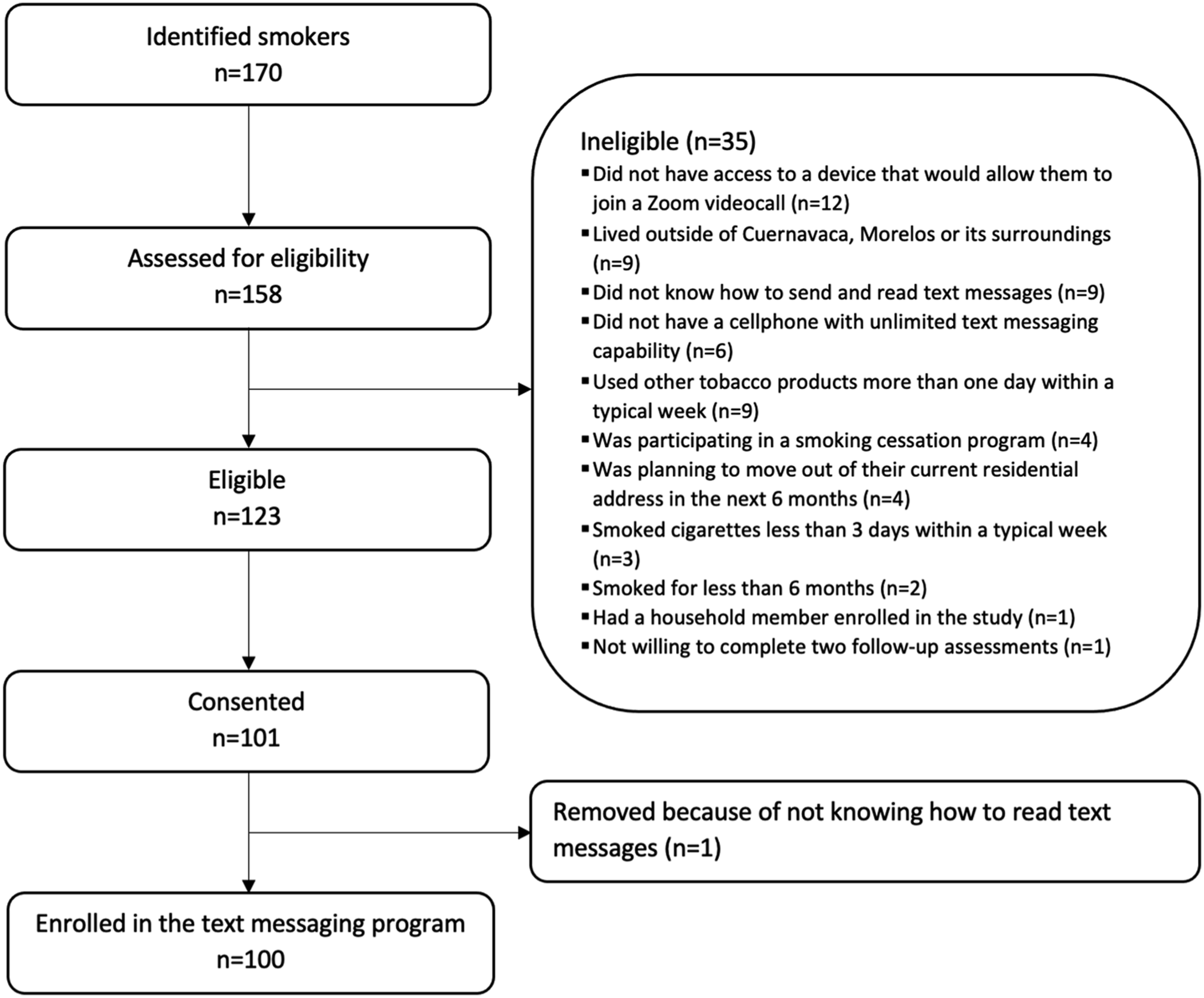
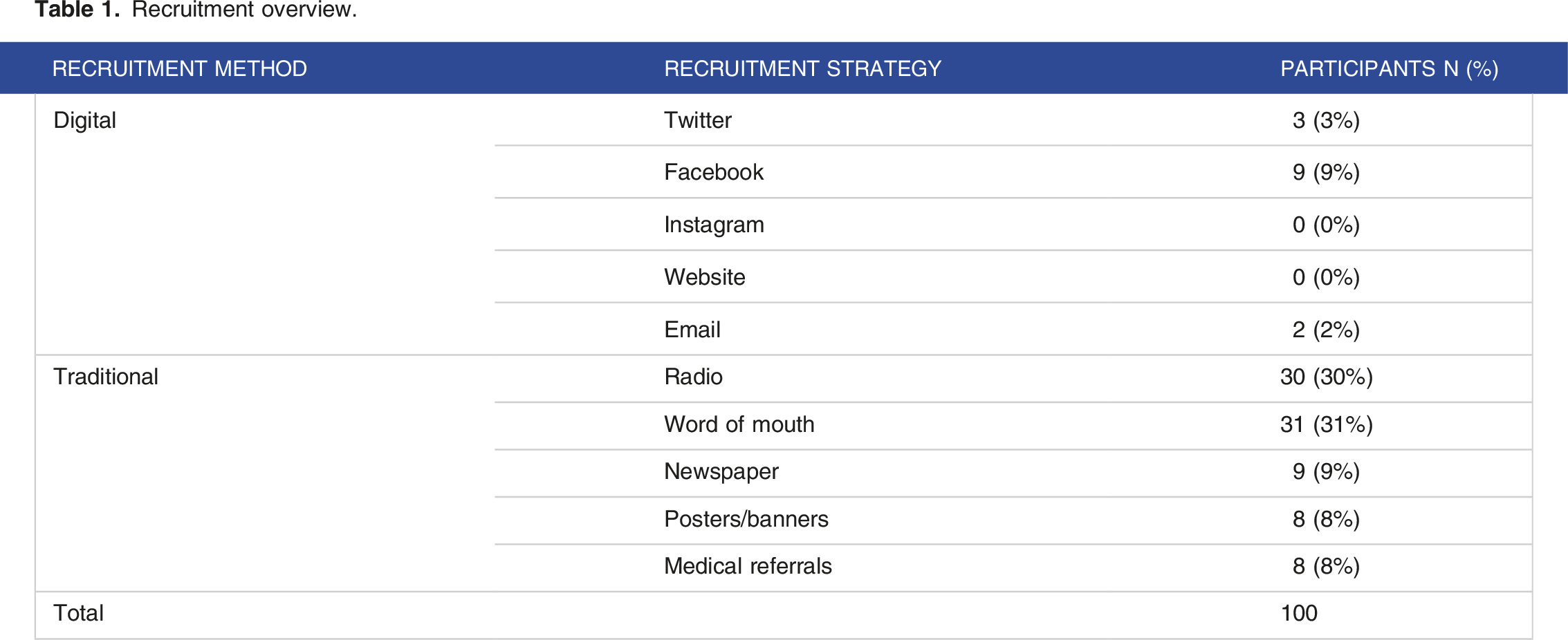
Recruitment overview.
Recruitment efficiency of specific recruitment method.

aRatio of number eligible to number screened.
bRatio of number enrolled to number screened.
Recruitment efficiency of specific recruitment strategies.
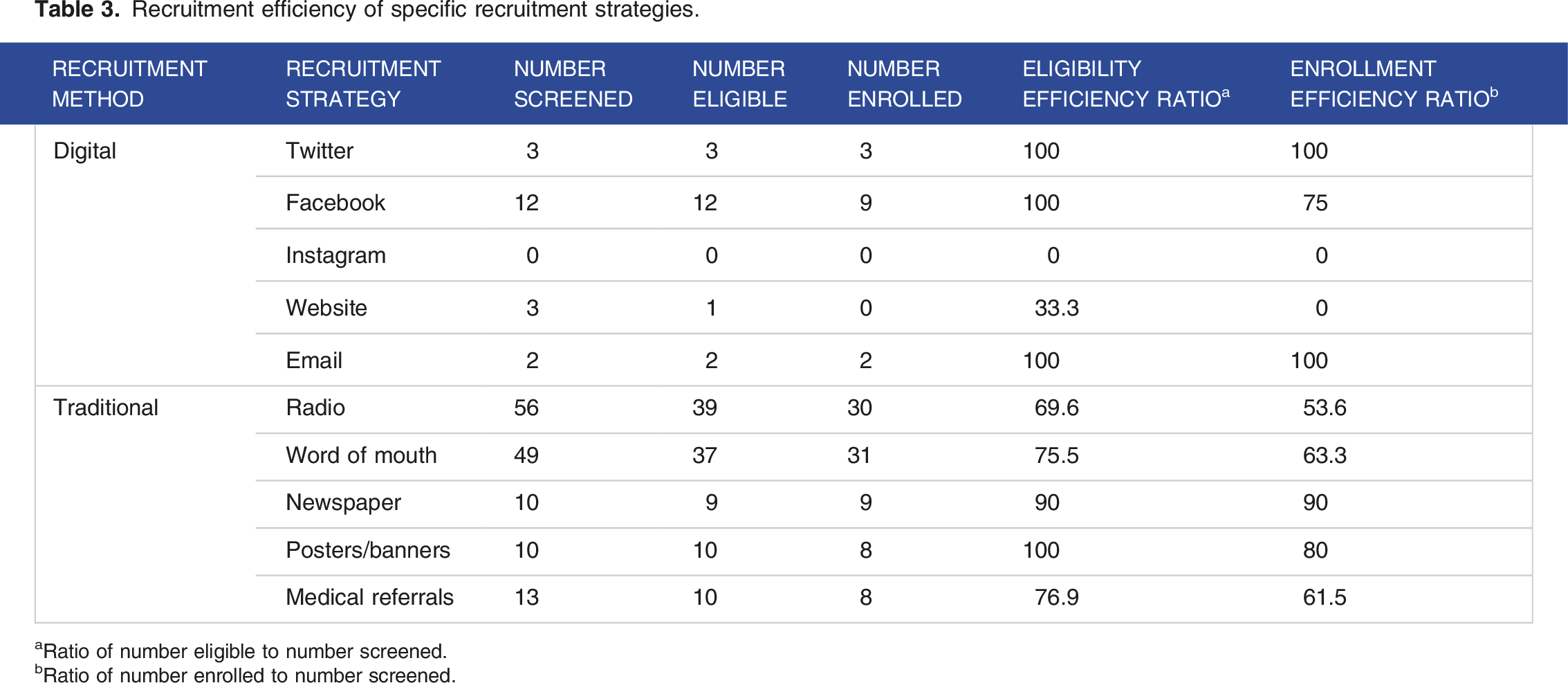
aRatio of number eligible to number screened.
bRatio of number enrolled to number screened.
Baseline characteristics of participants.

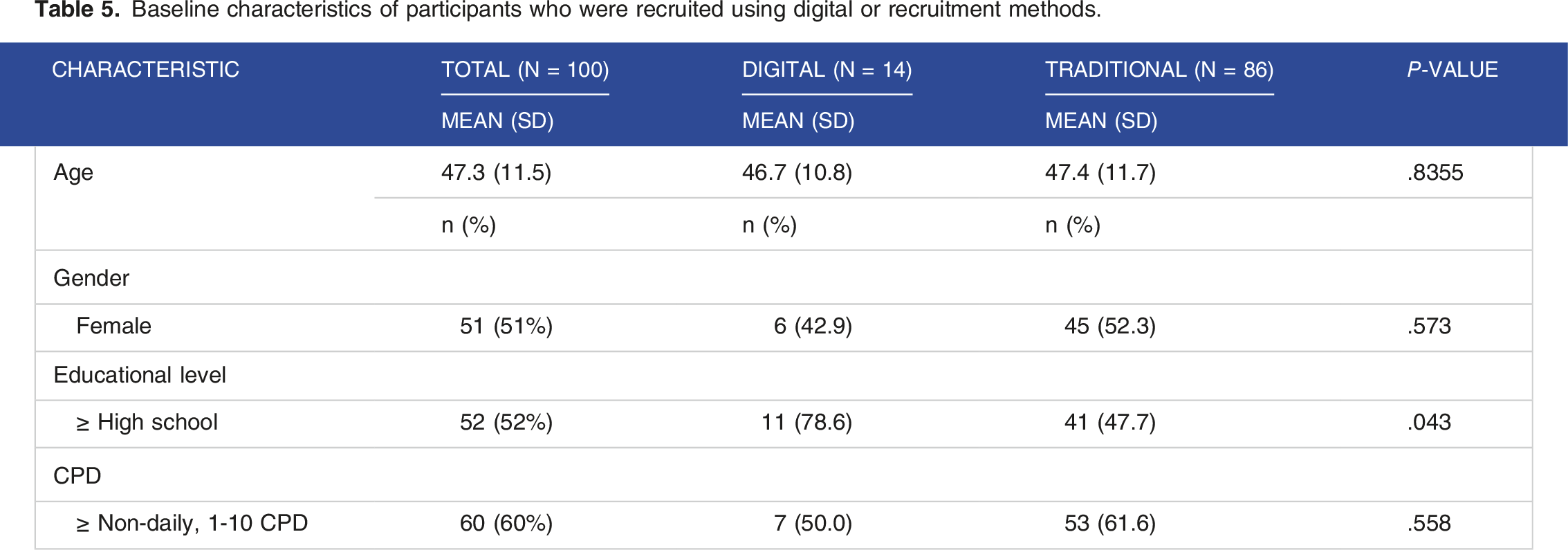
Baseline characteristics of participants who were recruited using digital or recruitment methods.
Discussion
In a 4-month period, 100 Mexican individuals who smoke were successfully enrolled into a smoking cessation study. Most participants were enrolled via traditional recruitment strategies (86%) compared to the digital recruitment strategies (14%). These results are relevant because it illustrates that traditional recruitment strategies (e.g., radio interviews, newspaper advertisements) continue to be effective for recruitment of study participants. Moreover, to the best of our knowledge, this is the first manuscript to detail the effectiveness of diverse strategies for identifying and recruiting Mexican individuals who smoke into a smoking cessation study. This study compared traditional and digital recruitment strategies on eligibility and enrollment rates. Results of this study show in comparison to the traditional method, individuals screened in the digital method were more likely to be eligible to participate in the study. Similarly, compared to the traditional method, individuals in the digital method were more likely to enroll in the study. However, these differences were not statistically significant. Both traditional and digital strategies made important contributions to the overall recruitment effort.
Word of mouth was the most prolific recruitment strategy in this study. This result is promising because word of mouth is a study-independent information source that is not under the direct control of the research team. 21 Contrary to study-dependent information (e.g., posters, radio and TV interviews), word of mouth is generated by individuals who have no self-interest in promoting the study. 21 Unfortunately, it was not tracked who referred individuals to the study nor how the referring individuals found out about the study. More research on word of mouth within social networks should be done to further understand how this recruitment strategy works. The second most prolific recruitment strategy was the radio. This finding demonstrates that, in 2021, the radio is a feasible and efficacious media outlet to reach individuals who smoke and engage them in research.
In this study, social media (i.e., Twitter, Facebook, and Instagram) resulted in low number of enrollees. This result is surprising as Mexico is the second highest country in Latin America in regards to social media engagement. 22 It is crucial to note that, in this study, recruitment via social media mostly relied on the accounts of the INSP and non-paid advertising. It is possible that the social media accounts of the INSP generally reach individuals who are part of the health workforce and/or are interested in health promotion, and not the general population. Moreover, it is possible that if paid advertisement on social media was employed, the study would have had a larger sample size for the digital recruitment group. Future research should create partnerships with key stakeholders who have a strong presence in social media to reach the general population and consider the use paid advertising.
Importantly, the three technology-based criteria (i.e., having access to a cellphone with unlimited text messaging capability, knowing how to read and send text messages, and having access to a device that would allow individuals to join a Zoom videocall) were part of the top five reasons of ineligibility, impeding 27 individuals from participating in this study. While technology offers the possibility to expand access to healthcare, enhance clinical outcomes, and improve quality of health care 23 – as intended in this study – it is imperative to carefully consider the eligibility criteria with the goal of maximizing participation. While having access to a cellphone with unlimited text messaging capability and knowing how to read and send text messages are vital criteria for this study (given that the study uses text messages to deliver treatment), the use of Zoom videocalls could be reconsidered.
Strengths
One of the strengths of this study is the utilization of digital and traditional methods for recruitment. The design of the study allowed us to isolate and determine the unique contribution of each recruitment strategy while tracking critical denominators to calculate both eligibility and enrollment efficiency. Another strength of the study, and a potential facilitator of recruitment, is that the recruitment efforts involved working collaboratively with local media outlets (e.g., radio and newspapers). Lastly, to the best of our knowledge, this is the first smoking cessation research in Mexico since the beginning of the COVID-19 pandemic. Mexico is one of the countries most impacted by COVID-19. 24 It is possible that the COVID-19 pandemic influenced individual who smoke’s interest in participating in the study. As described by Loud et al, the vast majority of individuals who smoke in Mexico believed that COVID-19 would be more severe for individuals who smoke compared to those who do not smoke. 25
Limitations
There are some limitations that should be considered when interpreting the findings from this study. First, this study was not designed to test the efficiency of recruitment strategies. Second, this was a study with a modest sample size, which lessens the power to detect differences between recruitment methods. Third, given the wide reach of our channels, it is possible that participants were exposed to multiple recruitment methods and strategies. It is also possible that individuals responding to a traditional strategy may have had prior or concomitant exposure to a digital strategy. Therefore, some cross-contamination effect cannot be ruled out. Fourth, participants were solely recruited via reactive methods. 18 Future studies should also recruit Mexican individuals who smoke via proactive strategies (e.g., telephone calls, staff attendance at local health fairs). 18 Fifth, a cost analysis of the recruitment methods was not conducted given that all of the recruitment strategies – with the exception of the printing costs of the study posters/banners – were free of cost. Moreover, the time spent by the study team was not tracked. Lastly, recruitment was exclusively conducted in the state of Morelos. Future studies should include recruitment at the national level.
Conclusion
Using digital and traditional methods, in a 4-month period, 100 Mexican individuals who smoke were successfully enrolled into a smoking cessation study. Most participants were enrolled via traditional recruitment strategies (86%) compared to the digital recruitment strategies (14%). These results are relevant because it illustrates that traditional recruitment strategies (e.g., radio interviews, newspaper advertisements) continue to be effective for recruitment of study participants. Compared to the traditional method, individuals screened in the digital method were more likely to be eligible to participate in the study. Similarly, compared to the traditional method, individuals in the digital method were more likely to enroll in the study. However, none of these differences were statistically significant. Both traditional and digital strategies made notable contributions to the overall recruitment effort.
Footnotes
Acknowledgements
The authors are grateful to the individuals who participated in this study. Moreover, the authors thank (listed in alphabetical order) (1) Aracely Martínez Rojas at Señal Informativa, and (2) Raymundo Cárdenas Medrano at RayCardenas for facilitating the recruitment of this study via radio interviews. Furthermore, the authors acknowledge the healthcare clinics that opened their doors to implement the recruitment efforts of this study (listed in alphabetical order) (1) Centro de Especialidades Dentales ROMES; (2) Centro Especializado en Radiodiagnóstico Jojutla; and (3) Instituto Mexicano del Seguro Social Clinics 3 (Jiutepec), 5 (Zacatepec), 20 (Boulevard Lic. Benito Juarez, Cuernavaca), and 23 (Jiutepec). Lastly, the authors express their sincere gratitude to (listed in alphabetical order) Christina Sisson, Claudia L. Burcke, Edith Reyes Martínez, Erin Schmidt, Gloria Aurora Oviedo Pérez, and Uvaldo Marcelo Landa for the administrative support.
Declaration of conflicting interests
The author(s) declared no potential conflicts of interest with respect to the research, authorship, and/or publication of this article.
Funding
The author(s) disclosed receipt of the following financial support for the research, authorship, and/or publication of this article: Research reported in this publication was supported by the National Cancer Institute (NCI) under an Administrative Supplement to Stimulate or Strengthen Global Cancer Health Disparities Research to grant R01CA212189. The content is solely the responsibility of the authors and does not necessarily represent the official views of the NCI.
Data availability
The datasets generated for this study are available on request to the corresponding author.