



Abstract
Water availability is becoming a critical issue in Ethiopia especially areas like Rift Valley of the country. An experiment was conducted at Melkassa Agricultural Research Center experimental site in 2022/23 under furrow irrigation system to evaluate the effects of deficit irrigation and mulch materials on the yield and water productivity of onion. A split plot combination of three levels of deficit irrigation (100%, 80% and 60% crop evapotranspiration) and three mulching materials White Plastic, Straw Mulch and No Mulch were evaluated with three replications. Application of grass Straw Mulch at the rate of 6 t/ha, while 25-micron thickness was used for white plastic mulch. The deficit irrigation results showed that the highest marketable yield (37.0 t/ha) of onion was recorded under a plot irrigated with 100% ETc with no significant difference from 80% ETc (34.9 t/ha). Moreover, the highest water productivity (10.4 kg/m3) was obtained from plots irrigated with 60% ETc but it was non-significantly different from 80% ETc (9.9 kg/m3). The maximum marketable yield of 36.4 t/ha and water productivity of 10.6 kg/m3 were obtained from straw mulch. Therefore, the present study suggests that under limited irrigation water conditions, 80% ETc and straw mulch application could be used to minimize evaporation loss and maximize water productivity and yield of onion.
Introduction
Irrigation is critical for reducing the effects of rainfall variability and inconsistency (Mekonen et al., 2022). It is one of the leading strategies to reduce poverty and mitigate the negative impacts of erratic rainfall, ensure food security and improve the livelihood situation in Ethiopia (E. Assefa et al., 2022). It is also one of the most valuable farming systems to increase production and productivity (Mekonen, 2022). It is a viable strategy to increase production to meet the growing food demands and improve the livelihood of rural households (T. Assefa et al., 2019). Irrigation practices can be highly water-intensive and often have low efficiency, depending on the types of technologies adopted. For example, surface irrigation, widely used in Ethiopia, is typically less efficient. However, with the growing demand for water and increased competition for its use, implementing water-saving and enhancing WP technologies are the most important (Al-Ghobari et al., 2017). Innovative, affordable and easy-to-implement water-saving technologies are needed for smallholder farmers to make efficient use of the available water resources (Mashnik et al., 2017). Hence, water-saving irrigation strategies need to be explored (Hashem et al., 2018). Therefore, deficit irrigation and other on-farm water management techniques like mulching are easy-to-implement practices that enable the efficient use of available water.
Deficit irrigation is a practice in which crops are deliberately exposed to a certain degree of water stress by irrigating below their optimum crop water requirement levels. Although adopting DI practices may lead to yield loss, the water savings achieved may be significant. This saved water can be used to expand and cultivate more land, which increases food production (Shanono et al., 2014). There is a growing interest in deficit irrigation to improve water productivity.
Mulching is another option among all other management strategies to increase water-use efficiency. This method has been applied worldwide, particularly in areas with limited water availability, to improve crop productivity and water use efficiency. Mulching is primarily used to protect the soil surface from solar radiation, modify soil temperature, reduce evaporation, and increase soil moisture availability for crop growth, resulting in improved crop water-use efficiency and yield (Belachew, 2022). Mulching involves covering the soil’s surface with organic material (e.g., crop residues and grasses) or inorganic material (e.g., polyethylene sheets). Compared to non-mulched settings, DI with mulching increased yield and water productivity for onion crops (Biswas et al., 2017). Onion showed a high marketable bulb yield and WP when grown with 80% ETc and straw mulch (Tufa et al., 2022). Onion yield and water productivity were significantly affected by the addition of mulch with DI (Barakat et al., 2019). Therefore, effective and adaptable use of low-cost technology to efficiently and economically utilize water resources directly helps the sustainability of smallholder farmers’ livelihoods.
In many regions of the world, there is a critical water shortage for irrigated agricultural output (Elliott et al., 2014). With the increasing population and food demand, there is a need to expand irrigation. However, the limited water availability is a challenge for expanding irrigation (Yadeta et al., 2022). Current irrigation-based agriculture is also facing difficulties due to the poor adoption of suitable water-saving technologies (Tadesse et al., 2021). Among many such practices, Deficit irrigation (DI) and mulch applications have been tested in the drip irrigation system (Ramalan et al., 2010). However, the practices have not been tested in furrow irrigation systems in Melkassa agroecology. Different mulch types had different responses in different crops and agroecology (Mubarak & Hamdan, 2018). Though onion is getting more popular, farmers in the studied areas are opting to cultivate it on their farms. One of the most widely cultivated vegetable crops in the world is onion (Allium cepa L.). It is produced in various nations using irrigation as well as rainfed agriculture. The crop is one of the most significant vegetable crops grown by smallholder farmers. The sustainability of agricultural production and productivity have been considerably impacted by irrigation water scarcity (Goodarzi et al., 2019). Under these conditions, there is a need to adopt on-farm water-saving practices to use the limited water resources efficiently. In Ethiopia it is primarily grown for cash benefit and to flavor the local stew known as “wots” (Seifu et al., 2018). Therefore, the objective of this study was to evaluate the effects of deficit irrigation and mulch-type applications on the yield and water productivity of onion.
Materials and Methods
Description of the Study Area
The study was conducted at Melkassa Agricultural Research Center experimental site which is 15 km southeast of Adama town located at 8°24′ N latitude and 39°12′ E longitude with an altitude of 1,550 m a.s.l (Figure 1). The site is situated in the Central Rift Valley of Ethiopia in the Awash River Basin, which has a semiarid climate. The average annual rainfall and potential evapotranspiration in the area were 768 and 1,994 mm, respectively, based on long-term meteorological data records. The mean maximum and minimum monthly rainfall values are 191.4 and 9.1 mm occurring in August and January, respectively. The mean maximum temperature varies from 26.4°C to 30.1°C while the mean minimum temperature varies from 10.4°C to 16.4°C, with an average value of 20.12°C (Tezera et al., 2021). Clay loam soil textures are the dominant soils of the area and the long-term climate data are shown (Table 1).

Location map of the study site.
Long-Term (From 1977 to 2022) Means of Climate Variables.

Experimental Layout and Design
The experiment was conducted in a Randomized Complete Block Design with a split plot combination with three replications and nine treatments. The treatments were three levels of water application (100%, 80%, and 60% of crop evapotranspiration) and three mulching material applications (straw mulch, white plastic mulch, and no mulch) with the non-deficit and non-mulch treatments used as control (Table 2).
Experimental Treatment Combinations.

Crop Establishment and Management Practices
A variety of onion (Allium cepa L.) seed, Nafis was used as the seed material. About 60 g of onion seed per well-prepared bed of 1 by 5 m was planted on December 10, 2022. Nafis is a high-yielding cultivar that matures quickly. Agronomic procedures like watering, weeding, applying fertilizer, spraying pesticides and other activities were carried out at the nursery. On February 1, 2023, after 50 days, the seedling was transplanted to experimental plots. Since onion is known to be a double-row crop, they were planted on both sides of the ridge (Dirirsa et al., 2017) with a plant spacing of 7 cm and a furrow of 60 cm, respectively.
Other than the treatment variables, all other agronomic practices were carried out following local practice. The crop was irrigated using the furrow irrigation method. Twenty days after transplanting, treatments were applied because seedlings start root development and are well performed. The irrigation scheduling was done based on the optimum irrigation treatment (100% ETc) and deficit treatments received lower amounts based on their levels on the same irrigation date. The reference evapotranspiration (ETo) was calculated by the FAO Penman-Monteith method, using decision support software CROPWAT 8.0 developed by FAO. FAO56 adopted the Penman-Monteith method as a global standard to estimate ETo from meteorological data. Climatic parameters that were used are maximum temperature (Tmax), minimum temperature (Tmin), relative humidity (RH), wind speed (at 2 m), and sunshine hour (hrs). The CROPWAT model calculates ETo based on the formula of the FAO Penman-Monteith method (Allen et al., 1998).
The CROPWAT 8.0 model was used to calculate the daily ETo. Crop coefficient, optimum depletion level and root depth were adopted from FAO Irrigation and Drainage Paper 56 (Food and Agriculture Organization of the United Nations, 1998). Effective rainfall for the season was calculated using the CROPWAT 8.0 model daily, considering the rainfall reported at MARC Agrometeorological Service. This amount was then subtracted from the net irrigation depth of the next irrigation. A 3-inch Parshall flume was used to measure the amount of irrigation water applied to each experimental plot.
Determination of Soil Physical Properties
Soil Texture and Bulk Density
For the analysis of texture, disturbed soil samples were collected up to 60 cm from 0–15 cm, 15–30 cm, 30–45 cm, and 45–60 cm depth using soil auger at three locations along the diagonal of the experimental field. The soil samples were taken at these depths because the maximum root depth of onion goes up to 60 cm (Nigusie et al., 2020). The particle size distribution at the Melkassa Agricultural Research Center soil laboratory was analyzed using the hydrometer method and the textural class was determined based on the percent of sand, silt and clay in the USDA textural triangle for each sample.
The soil bulk density was determined from undisturbed soil samples that were collected by using a cylindrical core sampler. The samples were then dried in an oven at 105°C for 24 hr and the bulk density was calculated by equation Hillel and Hatfield (2005).

Where: Bd—bulk density (g/cm3), Ms—dry weight of the soil (g), and Vt—total volume of the soil (cm3).
Field Capacity and Permanent Wilting Point
Samples were saturated for one day (24 hr) and water was extracted from the saturated soil using a pressure plate apparatus set at 0.33 and 15 bars, respectively at Melkassa soil laboratory. The samples were collected from the pressure plate apparatus when there was no more drop of water, weighed, and then dried in an oven for 24 hr at 105°C. The moisture contents at field capacity and permanent wilting point were then measured. Then, the total available water (TAW in mm) of the experimental field was determined using equation (Ryan et al., 2001).

Where: TAW—total available soil water (mm/m), FC—Moisture content at field capacity (%), PWP—Moisture content at permanent wilting point (%), BD—bulk density of the soil in g/cm3, Dz—maximum effective root zone depth in mm.
However, all the available moisture cannot be easily available to plants. The plant suffers when the water suction pressure approaches PWP because it requires more energy to extract since the water is tightly trapped by the soil particles (micro-pores). Readily available moisture (RAW) is the portion of the total available moisture that a crop can take up from the root zone without experiencing water stress. It is determined by using equation 3.

Where: RAW—Readily available water (mm), ρ—Allowable depletion level (%) = 25% for onion.
Reference Evapotranspiration (ETo) and Crop Water Requirement (CWR)
The FAO Irrigation and Drainage Paper 56 for onion provided the crop coefficient value. The initial, mid and late stages of growth have respective crop coefficient values of 0.53, 1.05, and 0.95 for semi-arid areas. The daily crop coefficient was interpolated for development and late stage based on the crop’s Kc values and the duration of each growth stage. The length of 15, 30, 40, and 25 days of growth stages were considered for initial, development, mid and late stage respectively. The ETc was calculated based on the following equation 4.

Where; ETc—crop evapotranspiration in (mm/day), ETo—reference crop evapotranspiration in (mm/day), Kc—crop factor in a fraction.
Using the readily available water for the root depth on that particular day, successive irrigation depths were administered. For the control treatment (100% ETc), the daily crop evapotranspiration was subtracted from the net irrigation depth until the cumulative subtraction from the applied net irrigation depth approached zero. After applying the cumulative ETc technique to net irrigation depth for the control treatment and stress treatments depending on their percentage from the non-stressed treatment, irrigation was applied next. At the time of establishment, the crop’s effective root depth was found to be 30 cm. The daily effective root depth was then interpolated to account for the time interval between the first day of the initial stage and the last day of the development stage. The effective root depth was assumed to be a constant 60 cm for the mid and late seasons.
Irrigation Water Requirements
Determination of Net Irrigation Water Requirement
The net irrigation water requirement (NIR) is defined as the water required by the crop to satisfy crop evapotranspiration and water needs that are not provided by water stored in the soil profile or precipitation. It was computed by subtracting the effective rainfall from the readily available water (RAW) then, the result was a net irrigation requirement. Determination of net irrigation water requirement was done based on the water holding capacity of the soil from critical depletion level to field capacity in the effective root depth for 100% ETc treatment based on equation 5 Frenken (2002).

Where: NIR—net irrigation water requirement (mm), Pe—Effective rainfall (mm), and RAW—readily available water (mm).
Irrigation Interval
It is the time it takes a crop to deplete the soil moisture at a given depletion level and can be calculated using equation 9. Once the amount of water that needs to be given during one irrigation application is estimated and applied, the next question is when to apply irrigation again? This is known as the irrigation interval (T); T is defined as the interval in days between two consecutive irrigations for a farm.

Where: T—Irrigation interval (days), NIR—net irrigation water requirement (mm), ETc—Crop water requirement (mm/day).
Determination of Effective Rainfall
Effective rainfall in agricultural production is the amount of rainfall that plants can effectively use to germinate or maintain their growth. The FAO Water Service developed an empirical formula to estimate dependable rainfall, the combined effect of dependable rainfall (80% probability of exceedance) and estimated losses due to deep percolation and runoff based on analysis conducted for various arid and sub-humid climates (FAO, 2009). Using daily rainfall data, the FAO/AGLW formula’s “dependable rainfall” equations 6 and 7 were used to calculate the effective rainfall.


Where; Pe—Effective rainfall (mm/day) and P—Total rainfall (mm/day).
The gross irrigation requirement was obtained from the following equation:

Where: GIR—Gross irrigation requirement (mm), NIR—Net irrigation requirement (mm), and Ea—Application efficiency (%). An application efficiency of 70% was used to estimate the gross irrigation requirement using equation 8.
Measuring Applied Irrigation Water and Time
The predetermined amount of irrigation water to each plot was measured using a 3-inch standard Parshall flume. The volume of water applied for all treatments was determined from the plot area and depth of gross irrigation requirement. The time required to irrigate each treatment was calculated from the ratio of the volume of applied water to the discharge-head relation of the 3-inch Parshall flume. Since discharge levels might vary under field conditions, the time required was calculated from 3 to 12 cm head levels. The time required to deliver the desired depth of water into each furrow was calculated using below equation 9 and irrigated the plot with the help of a stopwatch (Geremew et al., 2008).

Where: GIR—gross irrigation depth of water to be applied (cm), A—Area of the experimental plot (m2), T—application time (min), q—flow rate of discharge (l/s).
Water Productivity
Water productivity was determined based on the ratio of the yield of onion (yield per hectare) to the amount of water used from the establishment to harvest expressed as kg of yield per m3 of water. It was calculated based on the formula using equation 10.

Where: WP—Water productivity (kg/m3), Ya—Actual yield (kg/ha), and ETa—Actual applied water (m3/ha).
Yield Response Factor
Crop yield response factor Ky was determined from the experimental data. The yield response factor (Ky) was one of the important parameters that indicate whether moisture stress due to deficit irrigation was advantageous or not in terms of enhancing water productivity. It was an indication of the response of yield to water use reduction. When Ky > 1, the crop response is very sensitive to water deficit with proportional larger yield reductions; Ky < 1, the crop is more tolerant to water deficit, and recovers partially from stress, exhibiting less than proportional reductions in yield with reduced water use; Ky = 1, the yield reduction is directly proportional to reduced water use. The yield response factor was determined based on the ratio of relative yield decrease to relative evapotranspiration deficit expressed in decimal, using equation 11.

Where: Ya—actual harvested yield in kg/ha, Ym—maximum harvested yield in kg/ha, Ky—yield response factor, ETa—actual evapotranspiration in mm/growing period, and ETm—maximum evapotranspiration in mm/growing period.
Statistical Analysis
The collected data were statistically analyzed using the R software using the procedure of a general linear for the variance analysis model. Analysis of variance (ANOVA) was used for growth and yield components, yield and water productivity. When the effect of the treatments was found significant, mean comparisons were tested using the least significant difference (LSD) test at 5% probability.
Results and Discussions
Soil Characterization of the Experimental Site
Soil physical and chemical characteristics were determined at Melkassa Agricultural Research Center laboratory and the results are presented in (Table 3). According to an investigation of the soil’s physical characteristics, the particle size distribution of the experimental site indicated that the soil textural class is clay loam soil, which is suitable for onion based on the USDA’s classification of soil textural class. The result regarding bulk density indicates a small increase in depth. The experimental site’s average weighted bulk density was 1.16 g/cm3. This could be because of a slight decrease in organic matter with depth and compaction due to the weight of the overlying soil layer (Brady & Weil, 2002). The total volumetric TAW was 103.4 mm with the onion root depth of 60 cm and readily available water, with an optimum depletion level of 25%, was calculated as 25.85 mm.
Analysis of Physical and Chemical Properties of Soil of Experimental Site.
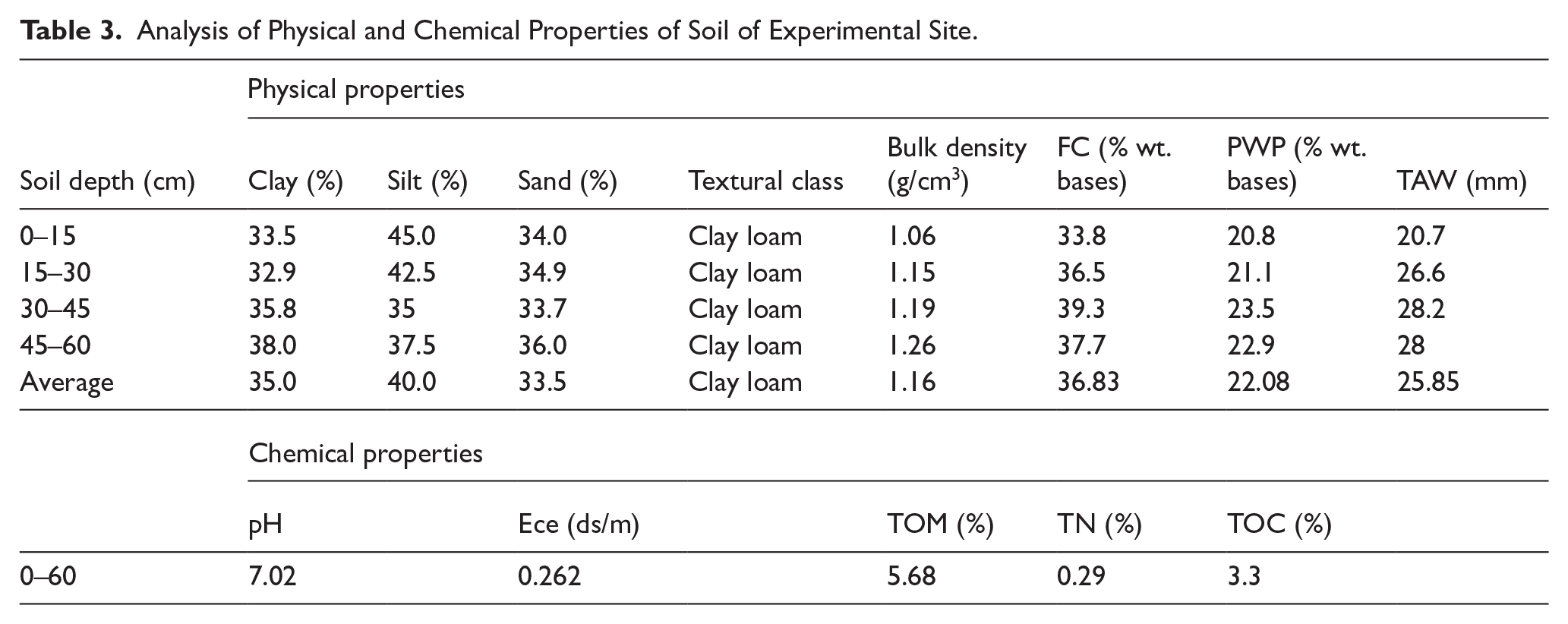
Based on the soil profile analysis, the average pH value at the experimental site was 7.02 almost neutral. Onion can grow best in soils with a pH value range from 6.0 to 8.0 (Olani & Fikre, 2010). According to Smith et al. (2011), the average electrical conductivity of the soil through a 60 cm profile was 0.262 dS/m, which is less than the onion threshold value of 1.2 dS/m. The average values of the soil’s OM, OC, and TN contents were 3.3%, 5.29%, and 5.68%, respectively.
The Effects of Deficit Irrigation and Mulch Types on Yield and Water Productivity of Onion
The analysis of the result showed that there were no interaction effects of deficit irrigation level and mulch type application on growth components, yield components, yield and water productivity of onion. Results of main effects of deficit irrigation level and mulch type application are discussed in the following section.
Growth Components
The analysis of variance revealed that growth parameters were highly significantly (p < 0.001) influenced by deficit irrigation. The maximum plant and leaf heights and number of leaves per plant of 60.2, 54.1, and 10.1 cm respectively, were recorded from the control treatment (100% ETc). In contrast, the minimum plant and leaf heights and leaf number per plant of 54, 47.2, and 7.5 cm were recorded from high deficit irrigation treatment (60% ETc) respectively (Table 4). This result showed that onion growth components decreased with an increase in levels of water deficit. These results are agreed with the result of Tezera and Woldemichael (2022) who reported that the highest growth components of onion were recorded from full irrigation and the lowest heights were recorded from high stressed treatment. The current result was also in line with Abdelkhalik et al. (2020) who stated that 100% ETc resulted in the highest values of growth parameters, while 50% ETc led to the lowest, with intermediate values recorded at 75% ETc. The present result was also in agreement with the work of Al-Moshileh (2007) who reported that with increasing soil water supply, plant growth parameters were significantly increased. In general, the results indicated growth components of onion decreased as irrigation depth decreased from optimum irrigation (100% ETc) to low soil moisture level (60% ETc).
Effects of Deficit Irrigation and Mulch Type on Growth Components of Onion.

means with the same letter (s) are not significantly different at p ≤ 0.05.
Analysis of variance showed that growth parameters of onion were significantly affected by mulch types (p < .05). All growth parameters of onion were highest in straw mulch treatment compared to plastic and no mulch treatments. Statistically straw mulch was significantly different from plastic and no mulch treatments. Both plastic and no mulch treatments were non-significant differences in all growth parameters of onion. The highest plant height, leaf height and leaf numbers of onion were 59.1, 53.6, and 10.0 cm respectively recorded from straw mulched treatments. Whereas the minimum plant height and leaf height of onion were 55.5 and 48.8 cm respectively, recorded from no mulch treatments, and the minimum leaf number was 7.6 recorded from plastic mulch treatments (Table 4). It could be the white plastic mulch increased the surface temperature and reflected solar energy above the optimal level, due to this the plant leaf was burned and dry. It was observed that straw mulch prevented the emergence and regrowth of weeds (Belachew, 2022). It, therefore, reduced the competition for nutrients while plastic mulch was observed to accelerate the emergence and regrowth of weeds in this case it increases the competition of nutrients. This result agreed with the result of Ranjan et al. (2017) who reported that maximum plant and leaf heights are observed in plots mulched with straw. Treatments mulch with straw plants received more soil moisture and good aeration which might promote vegetative growth resulting in the maximum growth components (Tufa et al., 2022). This result agreed with the results of Amare and Desta (2021) which indicates that the negative impacts of plastic mulch decrease growth components and reduce the activity of soil microorganisms. In improving the soil nutrient status straw mulch is more effective than plastic mulch (Guangcheng & Carlos, 2017).
Yield Components
Statistical analysis made on yield components indicated that there was a highly significantly (p < .001) influence by deficit irrigation. The highest average bulb weight, bulb diameter and bulb height were 110.9 g, 5.9 and 5.4 cm respectively recorded from the control treatment (100% ETc). Whereas the minimum average bulb weight, bulb diameter and bulb height were 88.2 g, 5.4 and 5.1 cm recorded from 60% ETc respectively (Table 5). This result showed that onion yield components decreased with increased water deficit levels. This indicated that the yield components of plots that received maximum applied water were higher than plots that received a minimum amount of applied water. These results were in line with the result of Rop et al. (2016) who reported that the highest yield components were obtained from treatment with the highest supply of water while the treatment with the lowest quantity produced the least mean yield components. This finding was consistent with the result of Bizuneh (2019) who reported that the highest yield components were obtained from treatment that received the highest supply of water while that received the lowest quantity produced the minimum average bulb weight of onion. Generally, yield components were reduced significantly with decreasing applied irrigation, possibly due to water shortage.
Effects of Deficit Irrigation and Mulch Type on Yield Components of Onion.

a,b,c means with the same letter (s) are not significantly different at p ≤ 0.05.
The analysis of variance showed that the yield components of onion were significantly affected by mulch-type application. The highest mean bulb weight, bulb height and bulb diameters 108.8 g, 5.5 and 5.9 cm respectively were obtained from the treatments mulched with straw. Whereas the lowest mean bulb weight, bulb height and bulb diameter 87.1 g, 4.9 and 5.4 cm respectively, were obtained from no mulch treatments (Table 5). However, there was no significant difference between straw and plastic mulch on the yield components of onion. This result is in line with Amil et al. (2005) who reported maximum bulb weight in straw mulch followed by plastic mulch and no mulch treatment. The straw mulch increased all previous yield components (Barakat et al., 2019). This study was in line with the results of Ismail (2010) who stated that plants grown with straw mulch gave higher yield components. This result is in agreement with the result of Singh and Sarkar (2020) who reported that organic mulching can improve bulb quality due to enhancing higher nutrient availability to the plants.
Marketable Yield
The results of the analysis of variance indicated that different deficit irrigation levels had a highly significant (p < .001) impact on the marketable yield of onion. In comparison to other deficit irrigation treatments, the full irrigation treatment was maximum yield of onion but this treatment was not statistically significantly different from 80% ETc. The highest marketable yield 37 t/ha was obtained from full irrigation treatment (100% ETc) and the lowest marketable yield 28.1 t/ha was obtained from 60% ETc (Table 6). This implies that the marketable yield of onion in 100% ETc was 31.7% higher than that of 60% ETc. These results indicated that as soil moisture levels decreased from optimal irrigation (100% ETc) to low soil moisture levels (60% ETc) the marketable yield of onion decreased. This indicated that the amount of irrigation water applied has a proportional effect on the marketable yield of onion. The amount of irrigation water supplied and the marketable yield of onion relate linearly. These results agreed with Temesgen (2018) finding that the minimum yield was obtained at 50% ETc. This result is in line with the findings obtained by Piri et al. (2020) who found that reducing irrigation water usage decreased onion output. This finding is consistent with that of Tezera and Woldemichael (2022) who concluded that the marketable bulb yield from non-stressed treatments was the highest while the most stressed treatment had the lowest marketable bulb yield of onion. According to Dirirsa et al. (2017), the highest and lowest onion bulb yields were attained at 100% and 50% ETc, respectively, with the highest and lowest water applications.
Effects of Deficit Irrigation and Mulch Type on Marketable Yield Total Yield and Water Productivity of Onion.

a,b,c means with the same letter (s) are not significantly different at p ≤ 0.05.
The analysis of variance showed that the marketable yield of onion was significantly affected at (p < .05) by mulch type. The maximum marketable yield recorded under straw mulch showed a statistically non-significant difference from plastic mulched plots. On the other hand, the lowest marketable yield of onion was observed in no mulch treatment and this was statistically significantly different from straw and plastic mulch treatments (Table 6). The marketable yield of onion was 36.4, 35.8, and 27.7 t/ha respectively, in straw, plastic and no mulch treatments. It implies that the marketable yield in straw mulch treatment was 31.4% higher than no mulch treatment. The result indicated that mulching with straw has significantly improved the yield of onion. This result was in line with the result of Barakat et al. (2019) who reported that straw mulch increased the bulb yield of onion and its components. The results were also consistent with the findings reported by Singh (2018) who stated that mulching with straw is likely to improve onion bulb yields by 17%. Crop yield significantly increased with the application of straw mulch (Dossou-Yovo et al., 2016). These results agree with the findings of who reported that the onion yields significantly increased with the application of rice straw mulch. These results suggest that straw mulching has great potential for improving onion yield. Plastic mulch is considered more effective than straw mulch in reducing the moisture evaporation from the soil surface and improving the soil moisture status while in improving the soil nutrient status and bulb yield, straw mulch is more effective than plastic mulch (Guangcheng & Carlos, 2017).
Total Yield
Analysis of variance showed that there was a highly significant difference (p < .001) in total yield of onion due to the effect of deficit irrigation (Table 6). Accordingly, the maximum total yield (38.4 t/ha) was obtained from the experimental plots that received 100% ETc, followed (36.7 t/ha) by plots that were grown with 80% ETc. In contrast, the minimum total bulb yield (29.2 t/ha) was recorded from the treatment that received 60% ETc. Plots with 100% ETc received the maximum yield, both marketable and unmarketable yield, and contributed to the overall yield. This result is in line with Mubarak and Hamdan (2018) who indicated that the relationship between the total bulb yield and irrigation level (as a percentage of ETc) was linear.
The analysis of variance showed that the total yield of onion was significantly (p < .01) affected by mulch types. The maximum total yield of onion recorded at plastic mulch was statistically similar with straw but it was significant different from no mulch treatment. On the other hand, the lowest total yield of onion was observed in no mulch (Table 6). The total yield of onion was 37.6, 37.5, and 29.2 t/ha, respectively, in plastic, straw, and no mulch treatments. It implies that the total yield in straw mulch treatment was 28.8% higher than no mulch. The result indicated that mulch application significantly improves the yield of the onion. The application of straw mulch is found to be economically and agronomically feasible (Berihun, 2011). The result indicated that mulch application significantly improves the yield of onion. These results agree with Tefera et al. (2021) who reported that the maximum total yield was obtained due to plastic mulch rather than no mulch.
Water Productivity
The analysis of variance indicated that the water productivity was significantly affected by the water deficit level (p < .05). The highest water productivity 10.4 and 9.9 kg/m3 was obtained from 60% ETc and 80% ETc respectively, while the lowest water productivity 8.8 kg/m3 was obtained from 100% ETc. This shows that water productivity in 60% ETc treatment was 5.1% higher than 80% ETc and 18.2% higher than 100% ETc treatment. This demonstrates that compared to 60% and 80% ETc treatment, water productivity was lower in 100% ETc treatment. In terms of water productivity, there was not a significant difference between the 60 and 80% ETc treatments. As a result, the yield was reduced by reducing the amount of irrigation water. In contrast, the water productivity of the 100% ETc treatments differed significantly from that of the other deficit treatments. Irrigation water use efficiency (IWUE) for onion was increased in deficit treatment compared to non-stressed treatment. Treatment with the smallest irrigation depth (60% ETc) and smaller yield has the greatest WP values, while the smallest WP corresponds to the non-stressed treatment (100% ETc). This result was in line with Rop et al. (2016) who reported that IWUE values decreased with increasing water application levels with the highest at 50% ETc and the lowest at 100% ETc. This result was also in line with Ismail (2010) who reported that deficit irrigation often results in more water being used efficiently. Expanding irrigated areas could be one way to increase water productivity through the use of DI (Asmamaw et al., 2021). Compared to full irrigation, deficit irrigation results in higher water productivity, lower irrigation costs, and lower production costs (Hashem et al., 2018). Applying DI can save a large quantity of water and increase water productivity without significantly lowering yields (Mekonen et al., 2022).
The analysis of variance showed that water productivity was significantly affected by the mulch Types (p < .01). The highest water productivity was obtained from straw mulch at 10.6 kg/m3, followed by plastic mulch treatments at 10.4 kg/m3. The lowest water productivity 8.1 g/m3 was obtained from no mulch treatment (Table 6). The maximum water productivity (10.6 and 10.4 kg/m3) obtained at straw and plastic mulching was statistically no different from each other but both are superior to no mulch conditions. Hence, there was a 30.9% and 28.4% increment in the water productivity of onion by applying straw and plastic mulching respectively over the non-mulching condition. The result indicated that mulching is one of the important water management strategies used to improve water productivity. This result agreed with the results of Maboko et al. (2017) who reported that straw mulch increased water productivity. This result was in agreement with the findings of Amil et al. (2005) who reported that straw mulches gave maximum water productivity of onion as compared to other mulch types. Straw mulch increased water productivity and decreased evapotranspiration (Yan et al., 2018). This research shows that Straw mulching increases yield and water productivity. Hamdan (2016) who reported that WP was significantly greater for mulched than no mulched treatments even at full irrigation (100% ETc).
The Effects of Deficit Irrigation and Mulching on Water Saving and Yield Reduction
Optimal irrigation treatment (100% ETc with NM) was used as the control treatment for the comparison of deficit irrigation level and mulch-type treatment combinations in saving water and yield reduction. The net savings in irrigation water from 80% ETc and 60% ETc were 20% and 40% respectively. This implies that as deficit level increase water savings also increase. This suggests that increasing the area irrigated with the water saved would compensate for the yield loss due to deficit irrigation for these treatments. This result shows relative yield reduction was increased with increasing moisture stress levels but mulch treatments reduce water losses by evaporation and absorb soil moisture. These findings indicate that the highest marketable yield increment of 32.08% was obtained from 100% ETc with straw mulch compared with the control treatment (Table 7).
Yield, Yield Response Factor, Saved Water, and Yield Reduction.

The Effect of Deficit Irrigation and Mulch Types on Yield Response Factor
The result indicated that the yield response factor was associated with deficit level and mulch types. This study reveals a lower yield response factor of 0.3 from 80% ETc with straw mulch. At 100% ETc, there were no recorded yield response factors (Table 7), because the actual amount of water applied at 100% ETc was similar to ETm. Based on the result obtained the Ky values of the no mulch treatment were higher than the mulched treatment. It is because the mulched experimental plot was resisting water stress by reducing water lost by evaporation accordingly it increases yield and Ky but in no mulch treatment the soil was exposed to sun which causes evaporation loss. This result agreed with Igbadun et al. (2012) reported that the Ky of onion crop under no mulch condition was higher.
Limitations of the Study
This study evaluates the effects of deficit irrigation and mulch application on onion yield and water productivity. The study does not cover the effect of mulch types on soil nutrient dynamics and moisture, soil temperature, and the occurrence of pests and diseases. It uses locally available grass straw mulch another study tests for other straw mulch types and compares them depending on their decomposing time. Grass straw mulch not recommended for long-growing period crops other studies use another type of straw mulch (Figures 2–4).
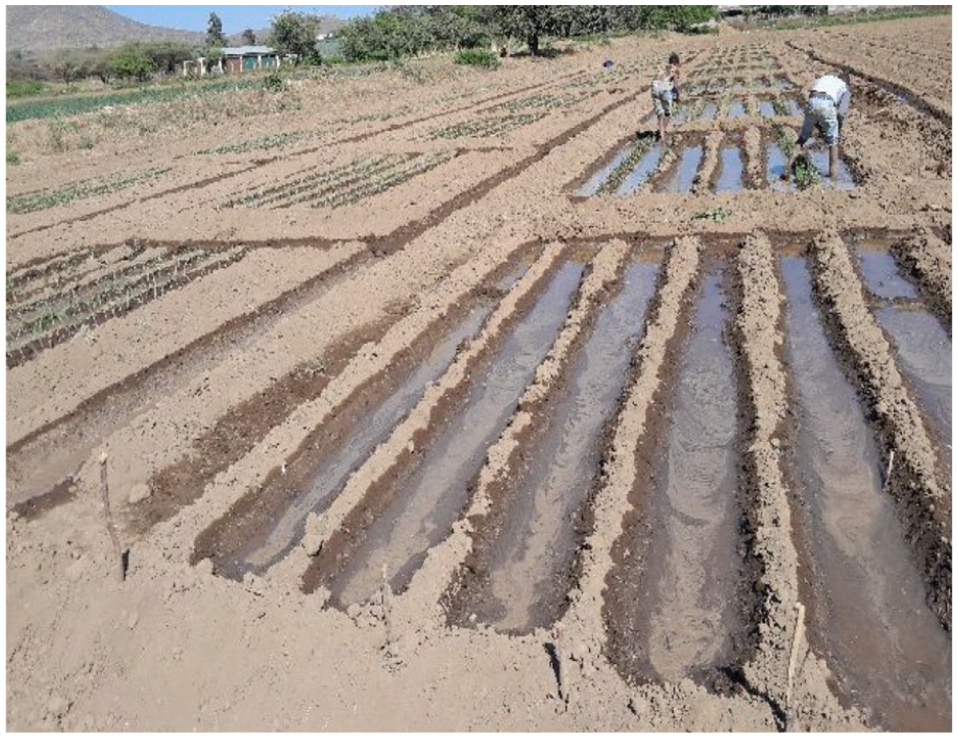
Transplanting of seed.

Growth parameter data collection.
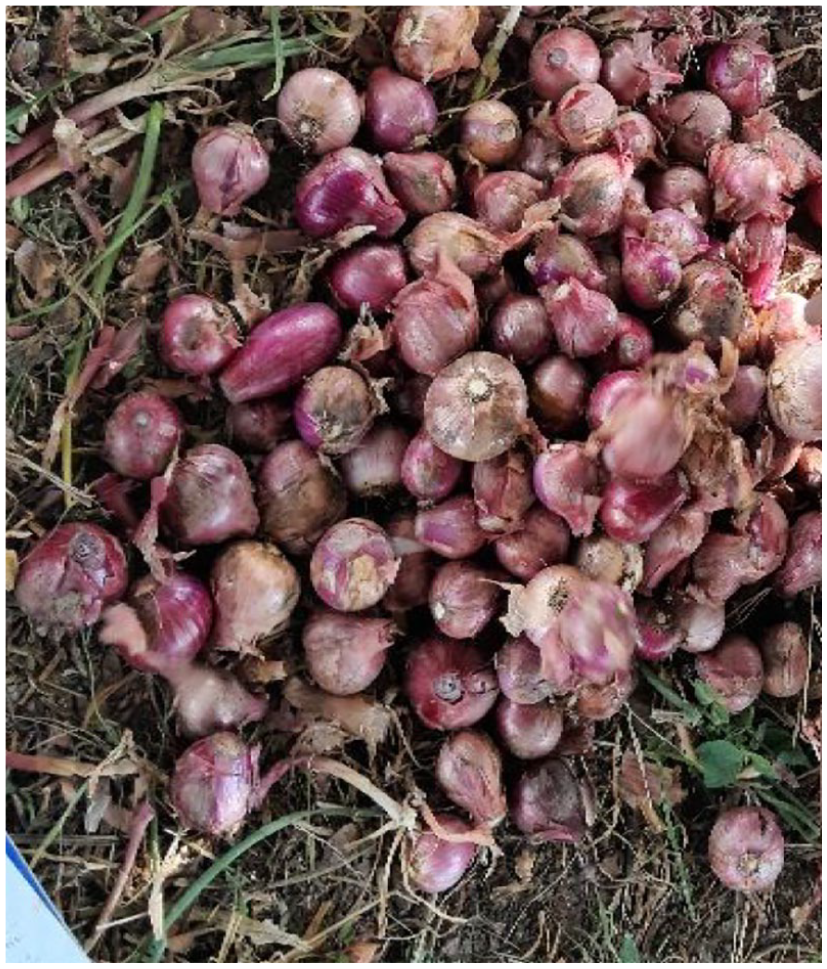
Onion bulb photo.

Yield parameter data collection.
Conclusions
This experiment was undertaken to study the effect of deficit irrigation and mulch type application on yield and water productivity of onion. The study concluded that deficit irrigation and mulch-type application exerted significant effects on growth and yield components, marketable yield, total yield and water productivity of onion. The highest marketable yield was obtained from 100% ETc has no significant difference from 80% ETc but it was a 31.7% yield improvement from 60% ETc. The highest water productivity of onion was obtained from 60% ETc and it has an insignificant difference from 80% ETc but 18.2% higher than 100% ETc treatment, however, higher yield reduction (31.7%) was obtained corresponding to this treatment (60% ETc). From deficit irrigation treatments 80% ETc saves 20% of water compared to the control treatment (100% ETc) and the water saved could be used to cultivate additional land in areas where there is water scarcity and it could increase the cultivated land area Whereas, the marketable yield of onion in straw mulch was 31.4% higher than no mulch but statistically similar to white plastic mulch while the water productivity of onion in straw was 30.9% higher than no mulch and there was no significant difference from white plastic mulch. Therefore, in terms of marketable bulb yield, water productivity and economic importance, irrigating with 80% ETc with straw mulch can be suggested for the production of onion in the study area and similar agro-ecology and soil type.
Photographs of the field and the onion bulb photos
Footnotes
Acknowledgements
The authors acknowledge the Ethiopian Institute of Agricultural Research, Melkassa Agricultural Research Center for financial support.

Authors Contributions
Tigist Worku Awulachew: Experimental data collection, analysis, and write the manuscript. Mekonen Ayana Gebul: Read and edit the final content of the manuscript.
Funding
The author(s) received no financial support for the research, authorship, and/or publication of this article.
Declaration of Conflicting Interests
The author(s) declared no potential conflicts of interest with respect to the research, authorship, and/or publication of this article.
Data Availability Statement
All data are available on the article itself.