




Abstract
The effect of different substrates and deficit-irrigation intervals were explored on the physiological parameters of 3 Cordyline terminalis cultivars in a factorial experiment with 3 factors including 4 substrates, 3 irrigation intervals (2, 7, and 10 days) and 3 cultivars (green, red, and tricolor) in 3 replications. The results showed that plants had the highest growth under the irrigation interval of 2 days and the lowest growth under the irrigation interval of 10 days. The highest growth was obtained from plants grown in garden soil, and among cultivars, “tricolor” exhibited the highest growth, plant height, and leaf number. The interaction between substrate and irrigation interval revealed that plants grown in garden soil and irrigated every other day produced the highest chlorophyll and carotenoid content. Trilateral effects of “substrate × irrigation interval × cultivar” indicated that the highest catalase activity was related to “garden soil + perlite × irrigation interval of 10 days × Green.”
Introduction
Population growth and climate change have posed a significant challenge to plant researchers and breeders for the production of suitable plants in water-deficit environments in the 21st century, while agriculture accounts for 75% of total water consumption of the world and 26% of arable lands are located in arid regions of the world. 1 The fluctuation of rainfall distribution that is induced by global warming increases the risk of the plants’ frequent exposure to drought. Almost all plant species show drought tolerance, but this capability varies with species and variety. 2 There is an increasing need for a substrate that can support the vigorous growth of the plants. When the soil is used as the substrate for pot plants, it causes severe physical problems because of its fixed quality. Therefore, plant growers have to use blend substrate enjoying the features of suitable substrates. Different substrates can be produced from different materials to optimize their physical and nutritional specifications. 3
C. terminalis from the Liliaceae family is a plant with 15 evergreen palm-like species that grow as shrubs or trees with stunning leaves. It is native to Southeastern Asia with the height reaching 50 to 100 cm. 4 C. terminalis is an important cut green in the world trade and used worldwide for its attractive foliage. 5 A major limitation for the producers of ornamental plants, particularly pot flowers, relates to suitable substrates. These substrates differ for the plants. The substrate is an essential parameter that influences the appearance of the plants. 3 Producers need substrates that are stable and fixed (low variability in composition), are available and easy to use, and have low labor cost. The optimal physical and chemical properties are of crucial importance for the substrates and their compositions. 6 Inden and Torres 7 and Yasui 8 have stated that carbonized rice husk acts as substrate amendment in both soil and soil-less substrates. It greatly contributes to plant growth because of its high P and K content and the improvement of their uptake by the plants. Carbonated rice husk not only improves the nutritional and moisture conditions of the substrate but also increases air-filled pore spaces. 9 A study on the effect of vermicompost on marigold yield showed that the highest stem diameter, flower weight and size, and shoot and root fresh and dry weight were related to the treatment of 60% vermicompost + 30% sand + 10% soil. Vermicompost outperformed peat in most measured traits, and the effect of compost was better than that of peat. 10 A study on the impact of municipal-waste compost and vermicompost on yield components of Plantago ovata indicated that 80% vermicompost + 20% garden soil had the strongest impact on the plant height and spike length, number, and weight. Subler et al 11 proved that in addition to its physicochemical superiority over the conventional compost, vermicompost outperforms it in the sense that it contains growth promoters like vitamins, enzymes, and growth factors generated by microflora exudations of worm intestine as well as the skin exudations of worm.
Deficit irrigation is an optimal approach for crop production that improves water use efficiency by removing extra irrigations and reducing irrigation water use without adverse effect on net profit. 12 Water availability is limited in most parts of the world. On the other hand, drought is the most limiting factor of crop growth and production. Iran is located in arid and semi-arid area and urgently needs optimal water management. To find suitable irrigation interval for the seedlings of Acer monspessulanum, an experiment was conducted on the irrigation intervals of 2, 4, 6, 9, and 11 days. The results revealed significant differences in morphological traits. The highest mean traits were observed in plants irrigated at the 4-day interval. All seedlings that were irrigated once 11 days dried. The highest longevity and quality after 1 year was observed at irrigation interval of 4 days. 13 Results of a study on the impact of water deficit stress at 3 irrigation intervals (4, 8, and 10 days) on Gomphrena globosa L. and Amaranthus tricolor L. revealed that higher irrigation intervals resulted in the significant loss of stomatal conductance, total chlorophyll, and root volume so that the lowest traits of G. globosa L. were observed at irrigation interval of 10 days and those of A. tricolor L. were observed at irrigation interval of 8 days. 14 This study aims to explore the effect of different substrates and irrigation intervals on vegetative and physiological traits of 3 cultivars of C. terminalis.
Materials and Methods
Experimental site and design
The experiment was carried out in Guilan Greenhouses Center, 17 km away from Rasht City. The study was carried out as a factorial experiment based on a Randomized Complete Block Design with 3 factors. The first factor was devoted to substrate at 4 levels (garden soil, 33% garden soil + 33% leaf litter + 33% rice husk, 50% garden soil + 50% perlite, and 70% garden soil + 30% vermicompost), the second factor was devoted to irrigation interval at 3 levels (2, 7, and 10 days), and the third factor was devoted to Cordyline cultivar at 3 levels (green, red, and tricolor), amounting to 36 treatments, 3 replications, and 108 plots each one containing 3 plants. The plants were about 2 years old.
Measurement of traits
The vegetative parameters included plant height, leaf number, and fresh and dry weight, and the physiological parameters included chlorophyll a and b, total chlorophyll, carotenoid, and catalase and peroxidase enzymes activity.
Chlorophyll content was measured by Mazumdar and Majumder’s 15 method
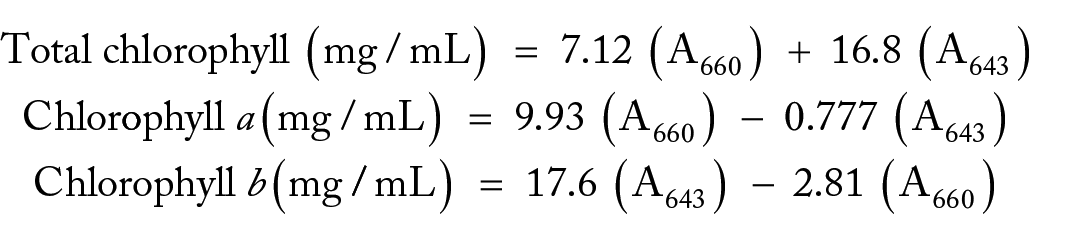
To measure carotenoid content, the treatments were sampled. Then 0.5 g was weighed and ground in a mortar with 50 mL 80% acetone (80 mL acetone + 20 mL distilled water). Then, the extract was infiltrated, adjusted to 50 mL and poured into cuvettes. The extracts were read at 645, 663, and 660 nm, and the following formula was used to estimate carotenoid content 15

To measure catalase activity, 16 1 g of plant tissue that had been ground in 4 mL of ethanol was added with 0.01 M phosphate buffer (pH = 7), 0.5 mL of 0.2 M H2O2, and 2 mL of acid reagent (dichromate/acetic acid mixture). Then, it was read at 610 nm with a spectrophotometer.
The total nitrogen content of substrate was measured by the Kjeldahl method. 17 The substrates were extracted using AB-DTPA solution (ammonium bicarbonate-diethylene triamine penta acetic acid). 18 Then, its available P was read at 470 nm with a spectrophotometer (Apel-PD-303UV). K concentration in the samples was estimated using a flame photometer (Jenway). The pH and EC of the substrates were estimated using Verdonck and Gabriels’s 19 method. Accordingly, 400 cm3 of the substrates were mixed in an Erlenmeyer at v/v ratio of 1:2.5 (1 part substrate to 2.5 parts distilled water). Then, they were shaken for 30 min. Finally, they were extracted by infiltration. To measure pH, we used a pH-meter (the Elmetron) and to measure EC, we used a conductivity meter (the Jenway model). Organic carbon was determined by the Walkley-Black procedure. 20 Data were analyzed in the MSTATC software packages (version 1.1.0), means were compared by LSD test at P < 5%.
Results and Discussion
Properties of substrates
Table 1 presents the chemical properties of different substrates used in the study. According to soil analysis, all substrates had almost same N content. The highest available P and K were obtained from “garden soil + vermicompost” substrate. C/N ratio was ideal in all substrates for the production of ornamental plants. Davidson et al 21 reported that substrates with C/N ratio of <20 were appropriate for crop production. The lowest pH was 4.54 observed in “garden soil + perlite” substrate, and the other substrates were almost in optimum pH range for the growth of ornamental plants. According to Abad et al, 22 suitable pH is 5.3 to 6.5 for optimum growth of ornamental plants. All substrates were in the allowed salinity level (6-8 dS/m) for the production of ornamental plants.
Chemical properties of the studied substrates.

Plant growth and height
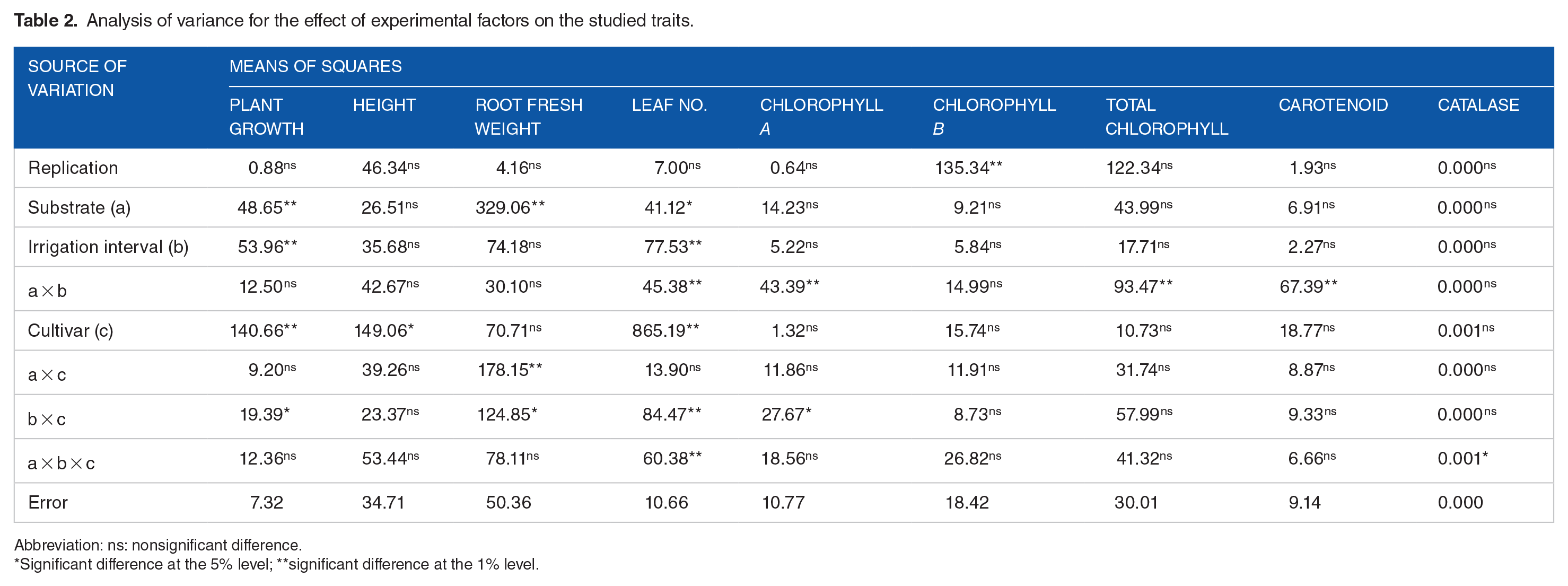
Analysis of variance (Table 2) indicated that among all experimental factors and their interactions, plant growth was significantly influenced by substrate, irrigation interval, and cultivar (P < .01) and by “irrigation interval × cultivar” at the 5% level. According to means comparison, garden soil treatment was related to the highest growth (8.94 cm) and “garden soil × vermicompost” was related to the lowest one (6.09 cm; Figure 1). Also, data on the impact of irrigation interval on plant growth showed that the irrigation interval of 2 days resulted in the highest growth of 8.07 cm and the irrigation interval of 10 days resulted in the lowest one of 5.64 cm (Figure 2). The highest growth was 9.22 cm for “Tricolor” and the lowest was 5.79 cm for “Red” differing insignificantly with that of “Green,” which was 5.81 cm (Figure 3). According to means comparison for the effect of the interaction between substrate and irrigation interval on leaf number (Table 3), the highest number of leaves was 19.22 observed in plants grown in garden soil and irrigated every other day, and the lowest one was 10 leaves observed in plants grown in garden soil + leaf litter + rice husk and irrigated once 10 days. The other treatments did not show significant differences to one another.
Analysis of variance for the effect of experimental factors on the studied traits.
Abbreviation: ns: nonsignificant difference.
Significant difference at the 5% level; **significant difference at the 1% level.

The effect of substrate on the plant growth.

The effect of irrigation interval on plant growth.
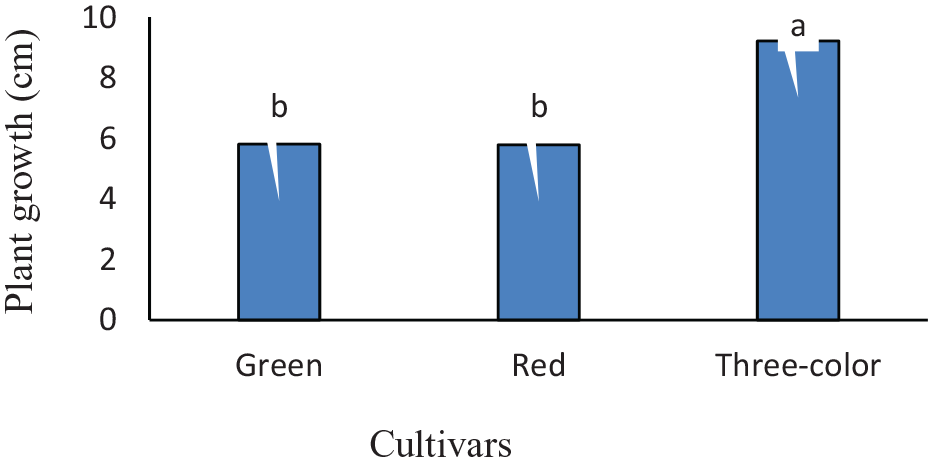
The effect of cultivar on plant growth.
Means comparison of “substrate × irrigation interval” for the studied traits.

Similar letter(s) in each column show the lack of significant differences at the 1% and 5% probability level according to LSD test.
Data on the effect of “irrigation interval × cultivar” interaction on plant growth (Table 4) revealed that the highest and lowest growth was related to “irrigation interval of 2 days × cv. Tricolor” and “irrigation interval of 10 days × cv. Green,” respectively. Results for the effect of substrate on plant growth showed that the highest growth was devoted to garden soil. Maloupa et al 23 stated that better physical and chemical properties contributed to better uptake of nutrients and higher quantity and quality of the plants. Padasht Dahkaei and Gholami 3 observed better growth of Dracaena marginata Ait. and Beaucarnea recurvata Lem. in substrates with higher concentrations of nutrients, especially nitrogen, and with more appropriate physical properties. We found that C. terminalis grew differently in different substrates so that it exhibited better growth in some substrates. This can be attributed to the fact that the substrates differ in providing appropriate conditions, including moisture, aeration, and other physical and chemical properties, for the plants. Similar results have been reported by Fakhri et al 24 and Lichty et al. 25 These researchers have reported that the substrate should be selected so as to provide the best physical and chemical conditions for the plants. We found that longer irrigation interval was associated with the lower growth of C. terminalis so that the highest growth was obtained at the irrigation interval of 2 days and the lowest one at the irrigation interval of 10 days. One of the first responses that the plants show to abiotic stresses is the growth reduction. The longer drought period causes the further lowering the shoot growth. This loss of growth is induced by the increased level of abscisic acid in the shoot. 26 Drought stress at high levels, especially 10-day interval, reduces plant height and fresh and dry weight of Buxus and Euonymus species. 27
Means comparison of “irrigation interval × cultivar” for the studied traits.

Similar letter(s) in each column show the lack of significant differences at the 1% and 5% probability level according to LSD test.
According to the analysis of variance (Table 2), cultivar changed final plant height significantly (P < .05). Other factors and their interactions were insignificant for this trait. Means comparison revealed that the highest plant were 24.79 and 24.25 cm for cv. tricolor and cv. red and the lowest one was 21.03 cm for cv. green, respectively (Figure 4). We found that no simple or interaction effects of the substrate were significant on plant height. The tallest plants were observed in cv. tricolor, but it did not differ significantly from that of cv. red. This reflects the effect of genetics. Plant height is determined by genetic features and environmental conditions, such as moisture, radiation, nutrition, and light quantity and quality. It seems that the competition of plants for water uptake under drought stress reduces the amount of photosynthates allocated to stem, resulting in the growth of shorter plants. 28 A study on the effect of drought stress on morphological traits of thyme indicated that more severe drought was associated with lower plant height. 29
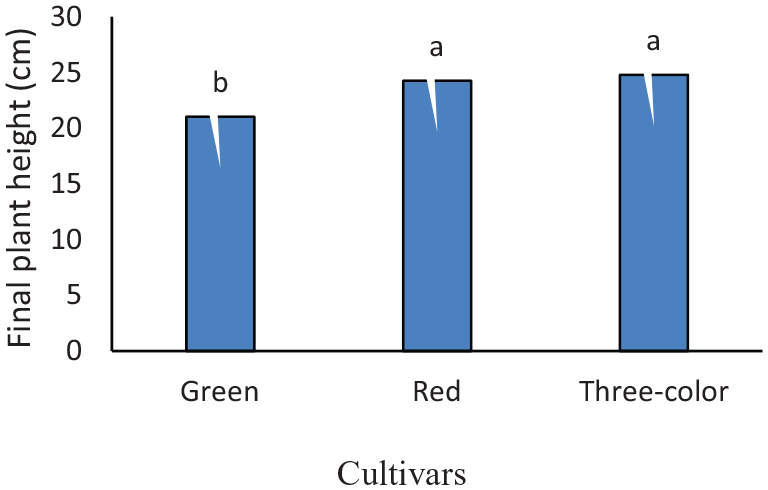
The effect of cultivar on final plant height.
Leaf number
According to the results of analysis of variance, leaf number was significantly influenced by substrate (P < .05) and by irrigation, cultivars, “substrate × irrigation interval,” “irrigation interval × cultivar,” and “substrate × irrigation interval × cultivar” (P < .01; Table 2). According to means comparison for the impact of the substrate on leaf number, the highest number of leaves (14.85) was related to garden soil, showing no significant differences with “garden soil + perlite” and “garden soil + vermicompost.” The fewest leaves were 11.85 observed on plants grown in “garden soil + leaf litter + rice husk” (Figure 5). Data for the impact of irrigation interval on leaf number revealed that the highest number of leaves was 14.22 related to the irrigation interval of 7 days and 14.19 related to the irrigation interval of 2 days, differing to one another insignificantly. Also, the lowest number of leaves was 11.67 observed in plants irrigated once 10 days (Figure 6). Among the cultivars, cv. tricolor produced the highest number of leaves (19 leaves) and cv. green produced the lowest number (10.11 leaves), but it did not differ from that of cv. red significantly (Figure 7). Data for the effect of “irrigation × cultivar” on leaf number (Table 4) indicated that “irrigation interval of 7 days × cv. tricolor” produced the highest number of leaves (22.33) and “irrigation interval of 10 days × cv. green” produced the lowest number (8.58). We found from the means comparison for the interaction effect of “substrate × irrigation interval × cultivar” on leaf number (Figure 8) that “garden soil × irrigation interval of 2 days × cv. red” resulted in the highest number of leaves (29 leaves) and “garden soil × irrigation interval of 7 days × cv. red” resulted in the lowest one (5 leaves).

The effect of substrate on leaf number.

The effect of irrigation interval on leaf number.

The effect of cultivar on the leaf number.
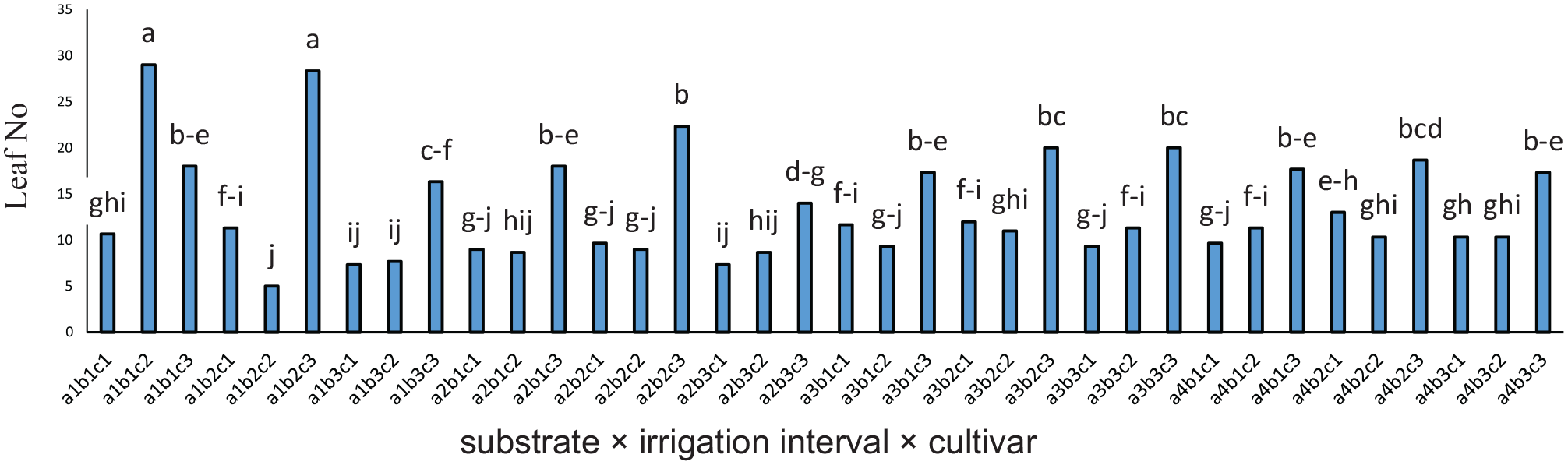
The effect of “substrate × irrigation interval × cultivar” on leaf number (a1: garden soil; a2: garden soil + leaf litter + rice husk; a3: garden soil + perlite; a4: garden soil + vermicompost; b1: irrigation interval of 2 days; b2: irrigation interval of 7 days; b3: irrigation interval of 10 days; c1: green; c2: red; c3: tricolor).
In a study on the effect of different substrates on English daisy, Mohammadi Torkashvand et al 30 observed the highest number of leaves in plants grown in 50% garden soil + 50% municipal-waste compost. Among different substrates and their interactions with irrigation interval, the highest number of leaves was obtained from garden soil. The lowest number of leaves was related to garden soil + leaf litter + rice husk. This can be related to the inadequate supply of nutrients to the plants. We observed that as irrigation interval was prolonged, leaf number was decreased so that the highest number of leaves was related to irrigation interval of 2 days and the lowest number was related to the irrigation interval of 10 days. In longer drought periods, leaf area is decreased, and as it prolongs further, leaf number starts to be lost too. 31 A study on the physiological and morphological traits of Newhall and Tangor oranges under drought stress showed that stress was related to lower leaf number and area in Tangor oranges. 32 Goldani and Kamali 14 reported that as irrigation interval was prolonged, leaf number of glob amaranth plants started to decrease so that the irrigation interval of 8 days was associated with the lowest number of leaves. Leaf number and area depends on leaf turgor, temperature, and assimilates, all influenced by water deficit. In fact, when water is inadequate, leaf number and area is decreased resulting in the loss of photosynthesis capacity. 33
Root weight
As the analysis of variance showed (Table 2), root fresh weight was influenced by the substrate and “substrate × cultivar” at the 1% statistical level and by “irrigation interval × cultivar” at the 5% statistical level. Other treatments and interactions were insignificant for this trait. According to means comparison, the highest root fresh weight of 15.91 g was obtained from plants grown in garden soil + vermicompost and the lowest one of 7.74 g was related to those grown in garden soil (Figure 9). Means comparison for “substrate × cultivar” for root fresh weight (Figure 10) revealed that “garden soil + vermicompost × cv. tricolor” was related to the highest root fresh weight of 24.52 g and “garden soil × cv. red” was related to the lowest root fresh weight of 5.87 g. According to means comparison for root fresh weight as influenced by “irrigation interval × cultivar” (Table 4), “irrigation interval of 10 days × cv. tricolor” exhibited the highest root fresh weight of 17.97 g, and “irrigation interval of 2 days × cv. red” exhibited the lowest one (8.67 g).

The effect of substrate on root fresh weight.
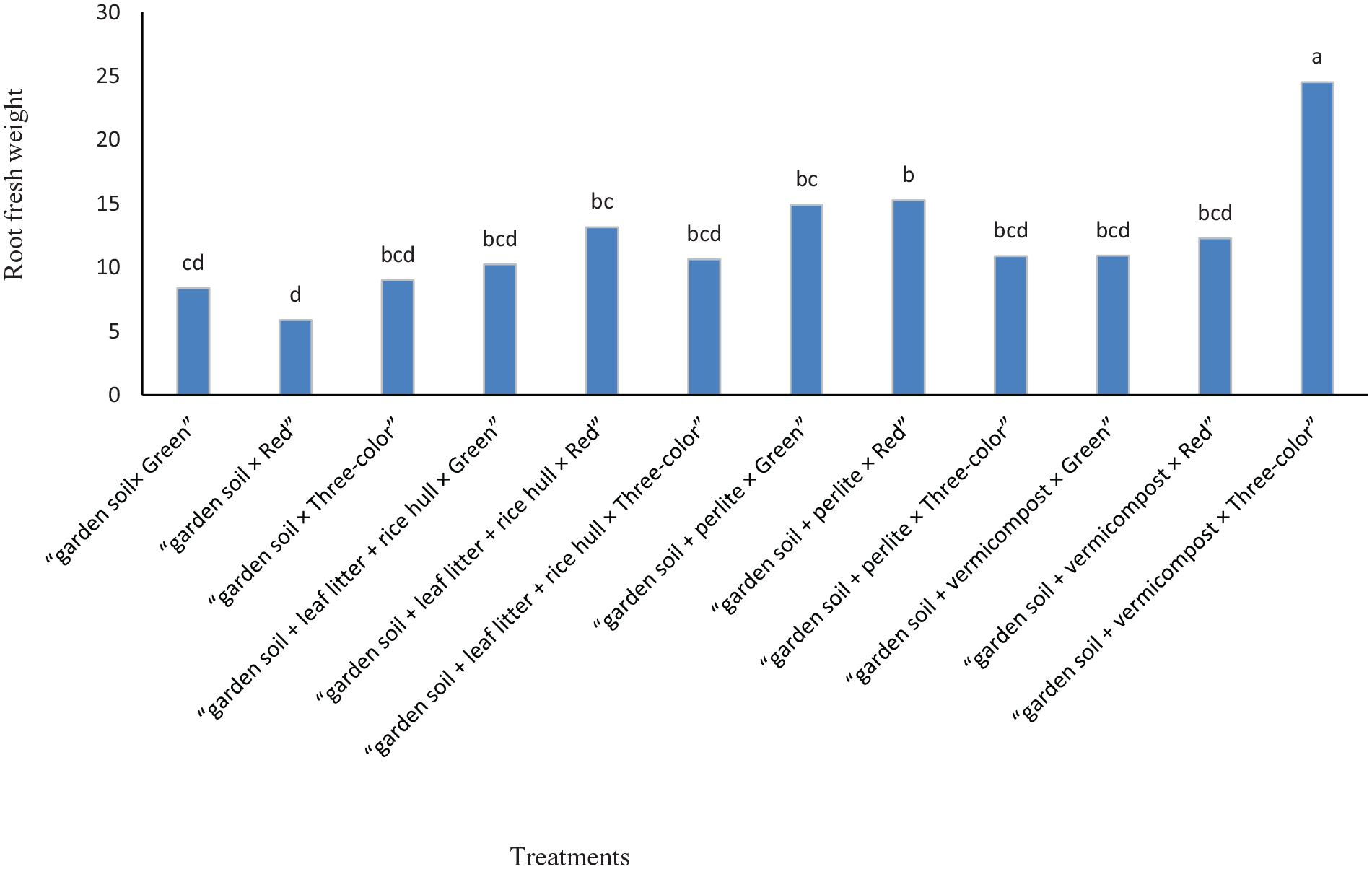
The effect of “substrate × cultivar” on root fresh weight.
The highest root fresh weight was observed in plants grown in garden soil + vermicompost. It was significantly higher than that in other substrates. This increase can be related to more appropriate conditions, such as substrate porosity and aeration. 30 Therefore, lower root fresh weight in the substrate containing rice husk can be due to its inappropriate aeration. Sedaghathoor et al 34 reported that Aloe maculata plants had the highest root fresh weight in garden soil and the substrate containing vermicompost. In a study on the effect of drought stress on morphological traits of thyme, Babaee et al 29 reported the loss of shoot fresh and dry weight with the increase in drought stress. Stem fresh weight of Acer monspessulanum was higher at irrigation interval of 2 days, and it was significantly decreased as stress was intensified. 13 Sadrzadeh and Moalemi 35 explored the water-deficit tolerance of olive cultivars and found the loss of leaf, stem, and root fresh and dry weights with the increase in drought stress. We found for the interaction effect of “irrigation interval × cultivar” on root fresh weight that “irrigation interval of 10 days × cv. tricolor” had the highest root fresh weight and “irrigation interval of 2 days × cv. red” had the lowest root fresh weight, which is inconsistent with the reviewed studies.
Chlorophyll content
Analysis of variance (Table 2) showed that the interaction of “substrate × irrigation interval” and the interaction of “irrigation interval × cultivar” were significant for chlorophyll a. The other treatments and interactions were not found to be significant. Means comparison (Table 3) indicated that the highest chlorophyll a content of 7.67 mg g−1 FW was related to “garden soil × irrigation interval of 2 days” and the lowest contents of 3.17 and 3.07 mg g−1 FW were related to “garden soil + leaf litter + rice husk × irrigation interval of 2 days” and “garden soil + perlite × irrigation interval of 2 days,” respectively. “Irrigation interval of 10 days × cv. red” produced the highest chlorophyll a content of 7.15 mg g−1 FW and “irrigation interval of 2 days × cv. red” produced the lowest one 3.87 g g−1 FW (Table 4). Analysis of variance (Table 2) indicated the lack of significant differences among experimental treatments on chlorophyll b content. Also, it was found that “substrate × irrigation interval” influenced total chlorophyll content significantly (P < .01). Other treatments and interactions were insignificant for this trait. Means comparison (Table 4) revealed that the highest total chlorophyll content of 13.79 mg g−1 FW was related to “garden soil × irrigation interval of 2 days” and the lowest one was 5.34 mg g−1 FW obtained from plants treated with “garden soil + leaf litter + rice husk × irrigation interval of 2 days.”
Higher chlorophyll content in the substrates containing garden soil can be related to their higher nutrients content, especially N which plays a direct role in leaf chlorophyll generation. 30 The loss of chlorophyll in substrates that contained rice husk can be associated with the fact that these substrates are poor in nutrients and do not help the leaves build chlorophyll. Chlorophyll content of plants is a major parameter in upholding photosynthesis capacity. Meanwhile, drought stress influences chlorophyll a and b content in plants depending on drought intensity and duration and plant growth phase. Kirnak et al 36 and Nayyar and Gupta 37 have reported the loss of leaf chlorophyll content under drought stress. Similarly, Angra et al 38 stated the loss of leaf chlorophyll content and leaf relative water content with the increase in drought stress. They reported that the extent of their loss was higher in more sensitive genotypes. Saeedipour 39 found that drought stress accelerated leaf senescence by reducing leaf chlorophyll and dissolved proteins that happened earlier in more sensitive genotypes. There are many reports about the loss of leaf chlorophyll content under water stress.40,41 The reason for the loss of net photosynthesis induced by water deficit is the loss of stomatal conductance due to their closure. 42 Ashraf et al 43 reported that drought stress reduced chlorophyll b content to a greater extent than chlorophyll a content.
Carotenoid content
Analysis of variance (Table 2) showed that “substrate × irrigation interval” was significant for carotenoid content (P < .01). Other treatments were insignificant for this trait. According to means comparison (Table 4), the highest carotenoid content of 10.47 mg 100 g−1 FW was related to “garden soil × irrigation per 2 days” and the lowest carotenoid content of 4.05 mg 100 g−1 FW was related to “garden soil × irrigation per 10 days.” Carotenoids are composed of a wide range of plant pigments occurring in the leaves and fruits of the plants. Due to their antioxidant properties, carotenoids immunize the body against the diseases and inhibit the formation of free radicals in the human body. 44 In a study on phenolics and carotenoids in rose hips, Marie et al 45 reported that they deeply varied with species and cultivar. Subjecting Moringa oleifera plants to drought stress caused significant decreases in photosynthetic pigments (chlorophyll and carotenoids) as compared with control plants. 46
Catalase activity
According to the analysis of variance (Table 2), “substrate × irrigation interval × cultivar” was significant for catalase (P < .05). But, the other treatments and interactions were not significant for this trait. Means comparison showed that the highest catalase activity was 0.07 mg/protein observed in “garden soil + perlite × irrigation per 10 days × cv. green” and the lowest one was 0.01 mg/protein observed in “garden soil × irrigation per 10 days × cv. red,” “garden soil + leaf litter + rice husk × irrigation per 10 days × cv. green,” “garden soil + perlite × irrigation per 2 days × cv. tricolor,” and “garden soil + vermicompost × irrigation per 7 days × cv. red” (Figure 11). Catalase is an enzymatic antioxidant that stops chain reactions of free radicals and protects the plants against oxidative stress by removing hydrogen peroxidase.47,48 Catalase turns hydrogen peroxidase into water and oxygen by its antioxidant activity. 49 This enzyme contains the molecule hem which is an oxidoreductase and acts as electron donor or acceptor. 50

The effect of “substrate × irrigation interval × cultivar” on catalase activity.
Conclusions
We observed that prolonged irrigation interval, either alone or in interaction with other factors, adversely influenced most studied traits so that the lowest growth was obtained from the irrigation per 10 days, whereas the highest growth was obtained from the irrigation per 2 days. Plants grown in garden soil had the highest growth and leaf number, and cv. tricolor showed the highest growth, plant height, and leaf number. Results for “substrate × irrigation interval” indicated that “garden soil × irrigation per 2 days” was related to the highest chlorophyll a, total chlorophyll, carotenoid, and leaf number. Also, the highest catalase activity was observed in plants treated with “garden soil + perlite × irrigation per 10 days × cv. Green.”
Footnotes
Acknowledgements
The authors thank their colleagues from Rasht Branch, Islamic Azad University.
Funding:
The author(s) received no financial support for the research, authorship, and/or publication of this article.
Declaration of conflicting Interests:
The author(s) declared no potential conflicts of interest with respect to the research, authorship, and/or publication of this article.
Author Contributions
J.A. performed the experiments. S.S. designed and analyzed the study and led the writing of the paper and paper submission.
Ethical Approval /Patient Consent
This article does not contain any studies with human participants or animals performed by any of the authors.
