



Abstract
Practical relevance:
The ‘2022 ISFM/AAFP Cat Friendly Veterinary Environment Guidelines’ (hereafter the ‘Cat Friendly Veterinary Environment Guidelines’) describe how the veterinary clinic environment can be manipulated to minimise feline patient distress. Many components of a veterinary clinic visit or stay may result in negative experiences for cats. However, much can be done to improve a cat’s experience by making the veterinary clinic more cat friendly. Exposure to other cats and other species can be reduced, and adjustments made with consideration of the feline senses and species-specific behaviour. Caregivers can prepare cats for a clinic visit with appropriate advice. Waiting rooms, examination rooms, hospital wards and other clinic areas can be designed and altered to reduce stress and hence encourage positive emotions. Changes need not be structural or expensive in order to be effective and make a difference to the cats and, in turn, to cat caregivers and the veterinary team. Moreover, by improving the all-round experience at the veterinary clinic, there are positive effects on preventive healthcare, identification of and recovery from illness, and compliance with treatment.
Clinical challenges:
Good feline healthcare necessitates visiting the veterinary clinic, which, simply by being outside of a cat’s territory and familiar surroundings, may lead to negative experiences. Such experiences can trigger negative (protective) emotions and associated physiological stress, which can result in misleading clinical findings, patient distress, prolonged recovery from illness, further difficulties with handling at subsequent visits and potential veterinary personnel injury. There may be a mistaken belief that veterinary clinics must undergo significant renovation or building work to become cat friendly, and that, if species cannot be separated, then clinics cannot improve their care of cats. These Guidelines aim to dispel any such misconceptions and provide detailed practical advice.
Evidence base:
These Guidelines have been created by a Task Force of experts convened by the International Society of Feline Medicine and American Association of Feline Practitioners, based on an extensive literature review and, where evidence is lacking, the authors’ experience. Endorsements: These Guidelines have been endorsed by a number of groups and organisations, as detailed on page 1161 and at icatcare.org/cat-friendly-guidelines and catvets.com/environment.
Keywords
Introduction
The ISFM Cat Friendly Clinic (catfriendlyclinic.org) and AAFP Cat Friendly Practice (catvets.com/cfp) programmes celebrate their 10-year anniversary in 2022 and have made a positive contribution to feline health and well-being during this time. Being ‘cat friendly’ means considering the cat’s experience of their environment in the veterinary clinic and during the veterinary team’s interactions with the cat. These Guidelines have been written to provide a practical guide to adjusting the clinic environment and equipment to improve the experience of feline patients. To do this we need to understand how cats perceive and interact with their environment and the emotions this can provoke. 1 By promoting positive and minimising negative experiences in the veterinary clinic, we can enhance feline wellbeing, 2 improve team safety3,4 and positively engage cat caregivers. Each area of the clinic, and the home and transport environment prior to the visit, can be considered with the cat in mind, to optimise both the cat’s physical health and mental wellbeing.
These Guidelines aim to provide all veterinary teams with practical information on how, and why, the veterinary clinic environment can be altered, often inexpensively, to become cat friendly.


Feline behavioural needs
The domestic cat is unique as the only solitary hunter able to live amicably with humans. 5 Many of the self-protective behaviours of their ancestor, Felis silvestris lybica, are retained in domestic cats including predatory behaviours, territoriality and avoidance of threats. One exception exists; where Felis silvestris lybica is solitary by nature, the domestic cat is a socially flexible species, with individuals displaying varying degrees of sociability, both to other cats and to other species, including humans. 5
In free-ranging domestic cats with no care-giver, social grouping is dependent on predictable availability of resources such as shelter and food, as well as on relatedness, particularly down the maternal line. However, in companion cats contact between cats is caregiver-determined. The ability to live without distress alongside other cats and people in a home setting is dependent not only on availability of resources, but also genetic predispositions to sociability to people and cats, and on relevant early, and ongoing, positive social exposure.6,7 For behaviour towards people, a sensitive period between approximately 2 and 9 weeks has been identified as the time when cats are most receptive to learning about people.8-10 Despite this social flexibility towards cats and people, the legacy of being a solitary survivor is retained, and domestic cats naturally prefer to rely only on themselves for protection. Perceived safety comes from a behavioural need for familiarity, control, predictability and avoidance/displacement of all possible threats.


Much of cats’ characteristic behaviour conveys this. For example:
✜ Regular assessment of their environment, including hypervigilance in novel or challenging environments, such as a veterinary clinic. 2
✜ Regular chemical marking of the environment to enhance familiarity. For secure individuals within homes, such marking usually includes facial rubbing and scratching. More confident and bold cats will facial rub in examination rooms and hospital cages. Outdoors, urine spraying may be witnessed. In individuals feeling insecure within the indoor environment, urine spraying and increased scratching may occur, and facial rubbing may be used to boost the cat’s perceived security. 12
✜ Employing distance-increasing and self-protection strategies in the face of threats, including running away, getting up high and hiding. In an unfamiliar environment or situation, the preferred coping strategy for most cats is to escape. When this option is unavailable, as in the veterinary clinic, they attempt to hide or to perch to increase perceived safety, choice and sense of control. Hiding is critical to the cat’s coping ability to reduce distress.13-16
✜ Perching, to enable cats to monitor the environment from above to detect perceived threats, such as approaching people and animals. Confident cats are more likely to perch on a flat surface, while more timid cats prefer some concealment, even when perched.17,18
✜ Engaging in territorial behaviours such as chemical marking, and regular patrols and surveillance to aid avoidance of close contact with unknown or known, but disliked, individuals.
✜ Consuming food within the safety of the territory. Even if a meal involves prey or scavenged food from outside of the territory, it will often be brought back to the safety of the central area of the territory (core territory) to be consumed. 19
✜ Sleeping and resting within the core territory, where perceived safety is highest. Secluded locations within this area are often used.
✜ Toileting on the periphery of the territory in soft rakeable substrates where burying of faeces is optimal. Such behaviour is thought to help maintain territory cleanliness, minimise parasite burden and spread of disease, and prevent chemical detection by possible predators.
Together, these behaviours serve to prevent conflict, and potential injury and illness that could impact the cat’s survival, and they need to be taken into account when considering the veterinary environment.
Sensory system
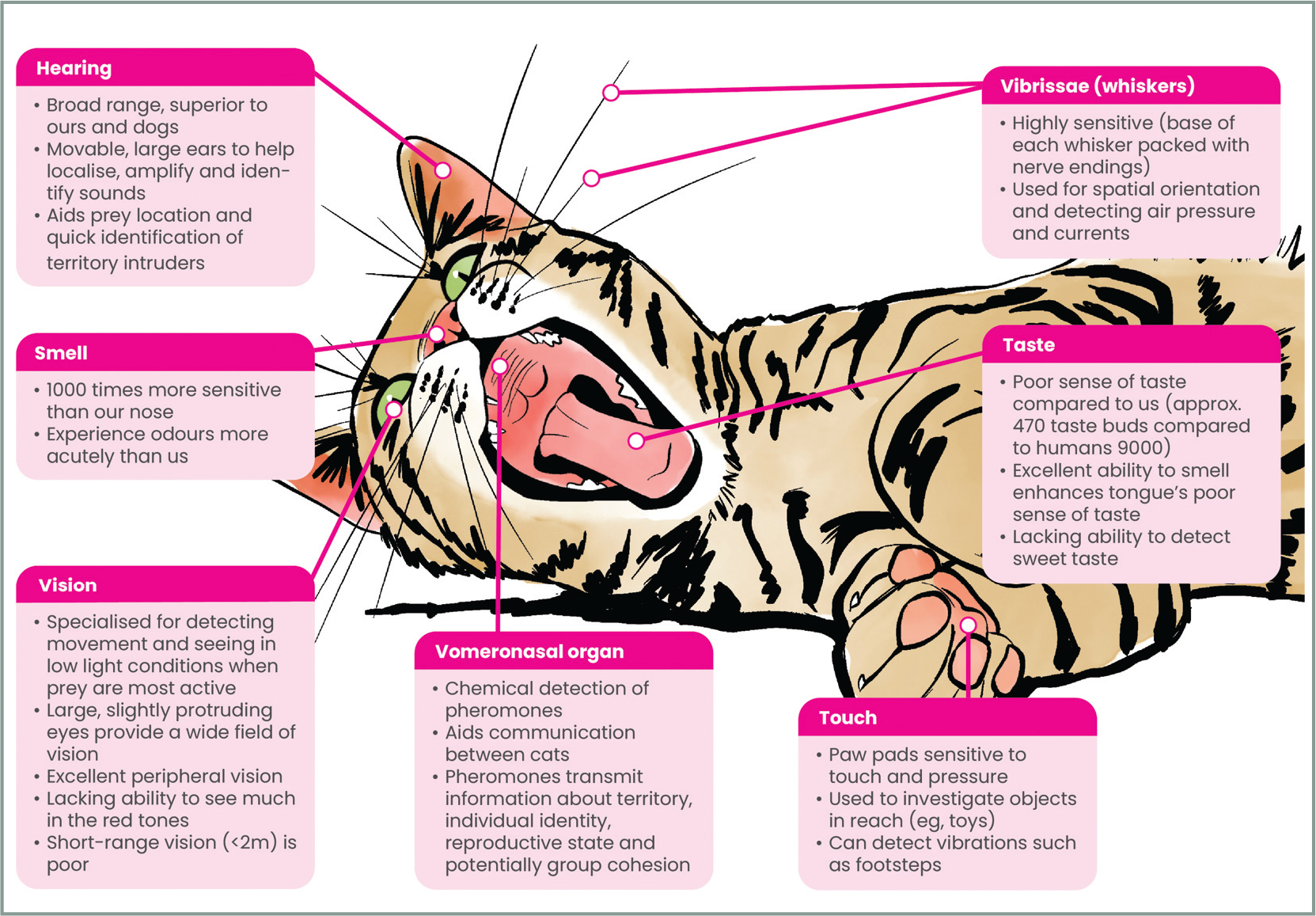
The cat’s keen senses primarily function to detect prey and possible threats, continually monitoring the potential for an environment to be either beneficial or detrimental to their survival. Promoting positive and minimising negative stimuli within the veterinary clinic environment will help to increase the cat’s perception of it as being a beneficial rather than a threatening environment (Figure 1).20-22 As the cat’s senses differ from those of humans, they perceive the world differently. The impact of the veterinary environment on each of the feline senses should be considered when developing spaces in which to interact with and to hospitalise cats.
Emotions
Cats are thinking and feeling animals, and their behaviour reflects the situations they experience and the cognitive capabilities and emotional motivations they possess. Cognitive and emotional health (together, termed mental wellbeing) are therefore equally important to physical health and should be addressed in each feline patient. 2 The physical and social environment of the home and clinic must meet the cat’s needs in order to optimise cognitive, emotional and physical health. 2 Cats have long-term memory,23-25 and learn from both positive and negative experiences. In some cases, learning from a single experience can influence future behaviour substantially.
What the cat sees, hears and smells at the veterinary clinic will be compared with, and processed based on, previous experiences (Figure 2).26-28 This creates an emotionally motivated response to their situation which, in turn, triggers a behavioural response of either engaging with the environment or displaying self-protective behaviour. Fear-anxiety, pain and frustration may all contribute to a protective emotional response. 28 When short-lived, these protective emotions are adaptive and lead to physiological and behavioural responses that allow the cat to keep themselves safe. However, when experienced over long periods of time, or frequently, these emotional motivations can become maladaptive and lead to distress and potential suffering. The environment should always be assessed for triggers that threaten the cat’s safety and, where removal is not possible, these triggers should be minimised and counteracted with positive experiences.
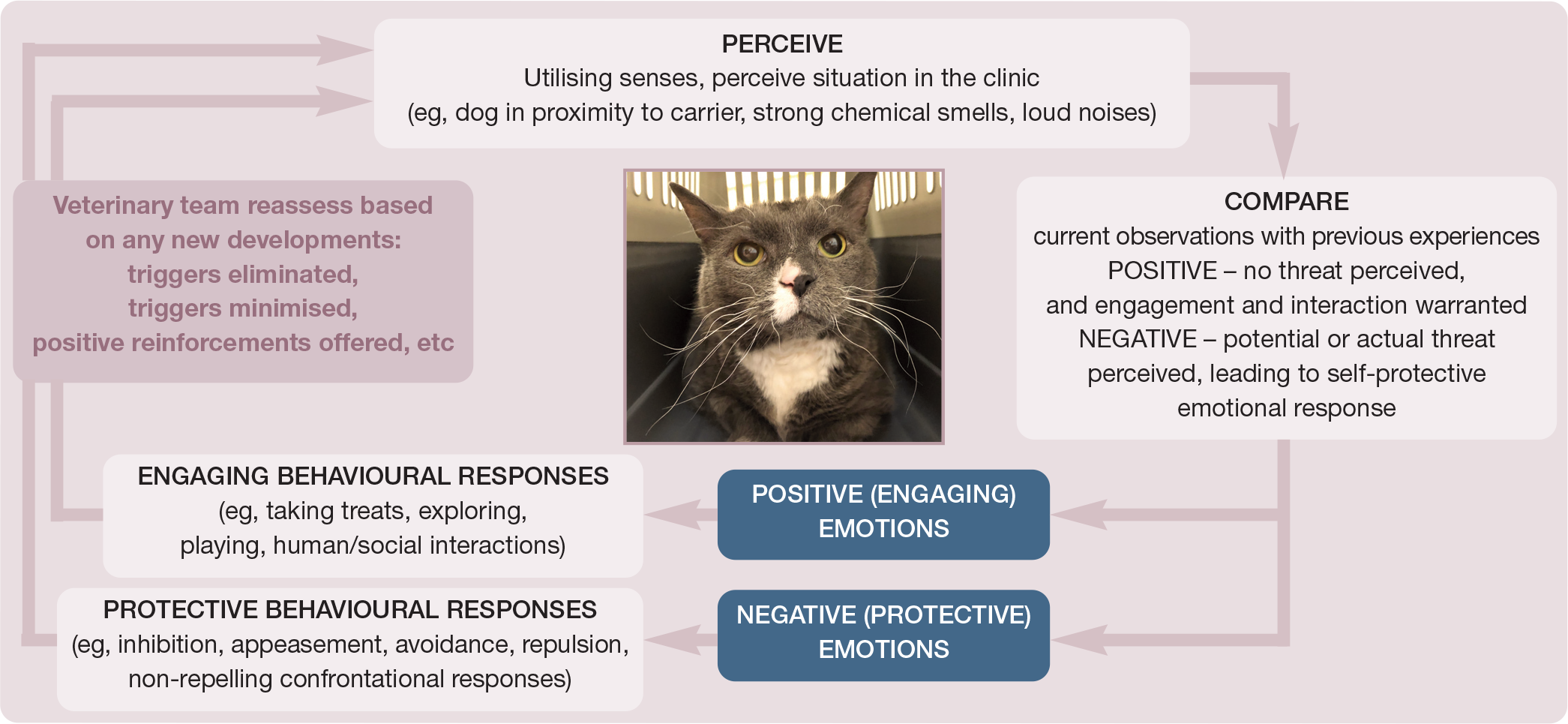
Experiences at the veterinary clinic are compared with previous experiences, triggering a behavioural response that can be engaging or protective.26,28 Veterinary team members have the opportunity to initially assess and subsequently reassess any new developments in the cat’s emotions and behaviours in response to changes they have implemented. Diagram designed by Ilona Rodan; image courtesy of Kelly St Denis
In certain situations, the cat’s emotional response to unavoidable triggers can be modified using anxiolytic therapy, and the cat’s ability to identify and respond to triggers can be altered using sedation.29,30 It is essential that use of either of these approaches is based on an accurate assessment of the situation and a diagnosis of the emotional motivations involved. Sedation alone will not alter a cat’s perception of the environment and interactions they are experiencing, but may be necessary in some clinical contexts to limit the potential damage that could be done by exposing the cat to unavoidable triggers. This will help to prevent emotional arousal that might alter emotional responses at future visits.
Pleasurable experiences are desirable to the cat, and the emotional motivation system known as the desire-seeking system drives the cat to seek out positive experiences such as food, warmth (or coolness) and companionship (in certain circumstances, with specific individuals). Promotion of positive (engaging) emotions is as important as the removal of triggers for negative (protective) emotions, as both measures may improve the cat’s response to what they are experiencing, rescuing a potentially problematic situation.
Fundamentals of a cat friendly environment
Cat friendly physical environment
The cat’s veterinary clinic experience has many components, including their journey to the clinic, their interactions with team members, the social environment (eg, other animals in waiting and hospitalisation areas) and the physical environment. Providing an environment that minimises negative emotions, such as fear-anxiety, and promotes behaviours that cats find rewarding or comforting enhances feline wellbeing. 31 For example, normal species-specific behaviours, such as hiding in an unfamiliar situation, scratching or finding tasty food treats, can help minimise negative emotions and/or promote positive emotions. Each cat needs a sense of control and the ability to find comfort and, if possible, pleasure in the environment, even at the veterinary clinic. 31 The ’AAFP and ISFM Feline Environmental Needs Guidelines’ describe the essential needs for cats in any environment in terms of five pillars (Figure 3). 1 The fifth pillar, for example, refers specifically to the cat’s senses, including the sense of smell, which must be addressed in the clinic context where sensory input can be challenging. Sensory stimuli can trigger an emotional state, either positive or negative, leading to a behavioural response. Ensuring that these stimuli are positive is important to enhance the cat’s wellbeing.


The five pillars illustrate the essential needs of cats in any environment, including the veterinary clinic. Utilising these pillars as a guide, the clinic environment can be optimised to meet these needs during all facets of veterinary care. Modified, with permission, from Ellis et al 1
Environmental adaptations that are necessary to enhance feline physical health and mental wellbeing during the veterinary visit are described on page 1137 according to the five pillars framework.
Additional fundamental principles to consider
✜
✜
✜

Food treats can be used to induce positive emotions and thereby cue wanted behavioural responses, such as movement, which enables the clinician to move the cat to a desired location (eg, when leaving the carrier). Image courtesy of Ellen Carozza
✜

Warmed towels and other bedding are excellent options to ensure thermal comfort in the conscious patient. (a) A commercial towel warmer. (b) Heated grain bags (in pink) with a towel wrapped around are a low-cost option for mobile patients. These can be sprayed in advance with synthetic feline pheromones and tucked into an examination room drawer or other small space to stay warm. lmages courtesy of Kelly St Denis
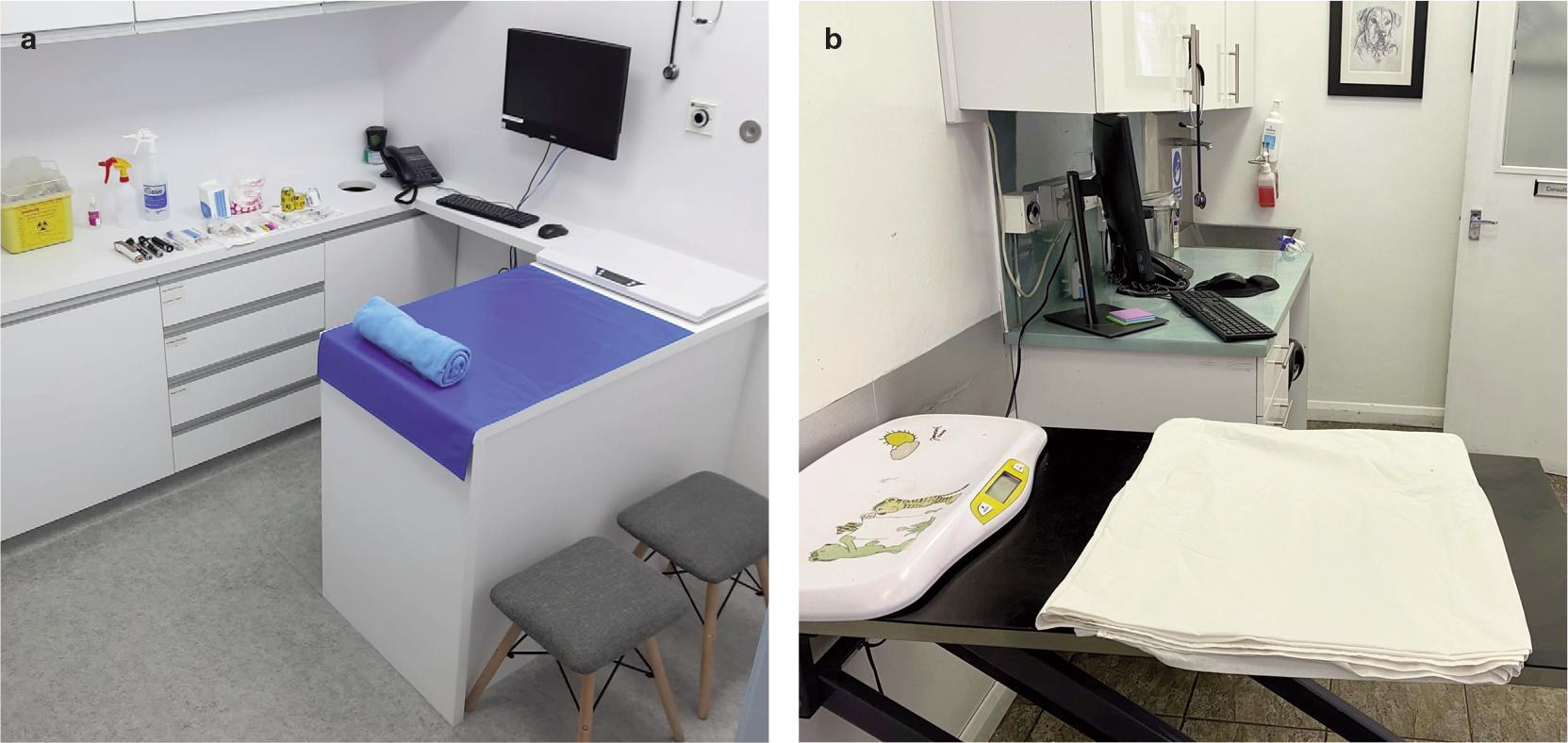
(a,b) Covering the consulting room table with non-slip materials such as rubber mats or yoga mats, topped with soft blankets or towels, increases patient comfort and security. lmages courtesy of Creature Comforts Veterinary Centre, Hong Kong (a) and Village Vet St Helens, UK (b)
Preparation to reduce stress prior to the clinic visit
Many factors relating to the cat’s environment may induce distress (frustration, fear-anxiety, pain) prior to a veterinary visit, including novelty, unfamiliarity, unpredictability, restriction, exposure to perceived threats, previous learning and loss of autonomy, all of which cats find difficult. See Box 1 for specific examples.

A cat’s coping ability is influenced by both the number of stressors and the exposure time to them, as shown in Figure 7, which illustrates the concept of ‘stressor stacking’. Stressors can begin to accumulate during preparation for the veterinary visit at home, and continue to accumulate throughout the physical examination, and during any sample collection, treatment and hospitalisation. Further stressor stacking can occur when the patient returns home; other cats in the house may, for example, have an adverse response to the patient on return and/or the caregiver may need to continue treatments at home.
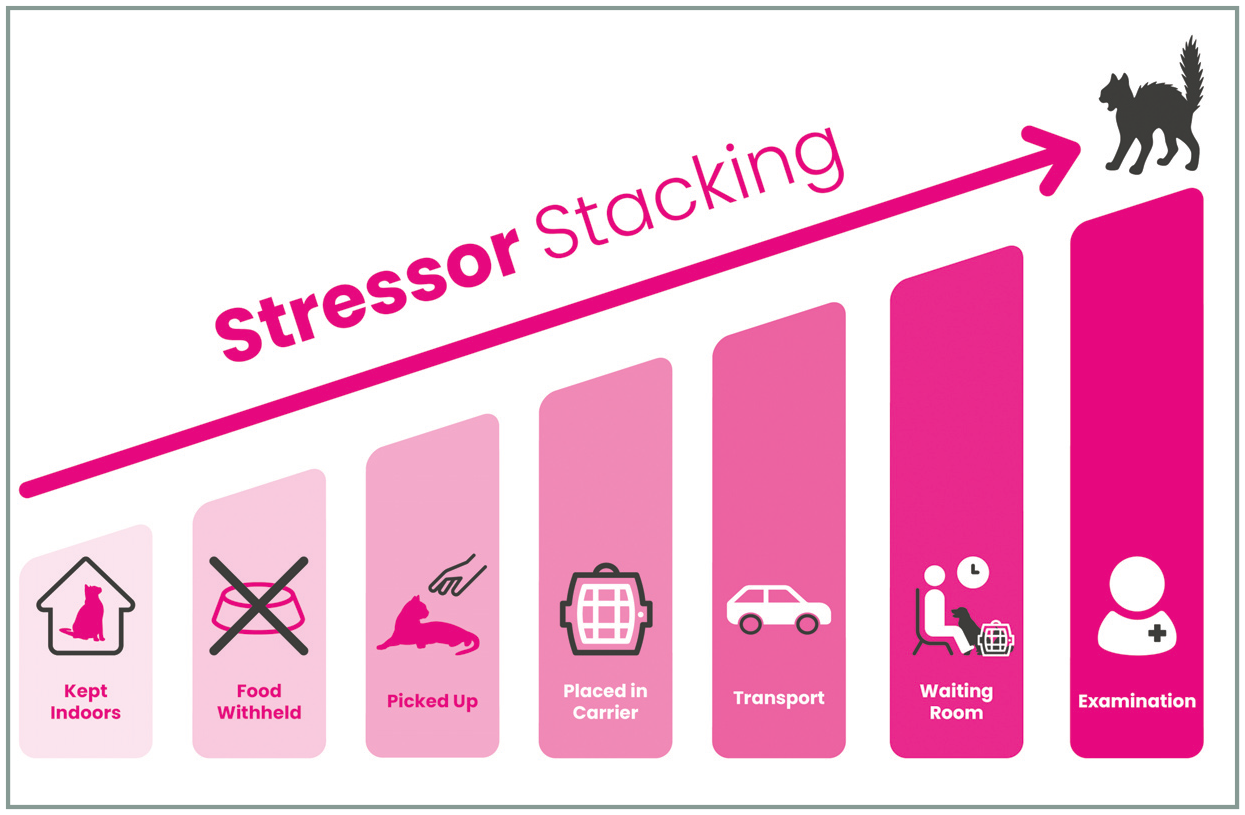
‘Stressor stacking’ associated with a visit to the veterinary clinic. A cat’s coping ability is influenced by both the number of stressors and the exposure time to them. For example, cats may cope with being temporarily confined in their carriers at home, but when compounded by enforced confinement, fasting, non-consensual handling, possible pain/illness/discomfort, removal from their territory and transport, stressor stacking is experienced, often resulting in cats being unable to cope and consequently showing signs of negative (protective) emotions on arrival at the clinic. Stressor stacking will continue not only during the cat’s visit (eg, in response to sample collection, treatments and hospitalisation), but right up until the cat is settled back at home. Image courtesy of International Cat Care
How negatively impacted cats may be by exposure to stressors also depends on a range of factors related to the individual. For example:
✜
Reducing the impact of potential stressors prior to the clinic visit is essential and includes:
– toys for self-directed play;
– puzzle feeders for food acquisition (if food is allowed).

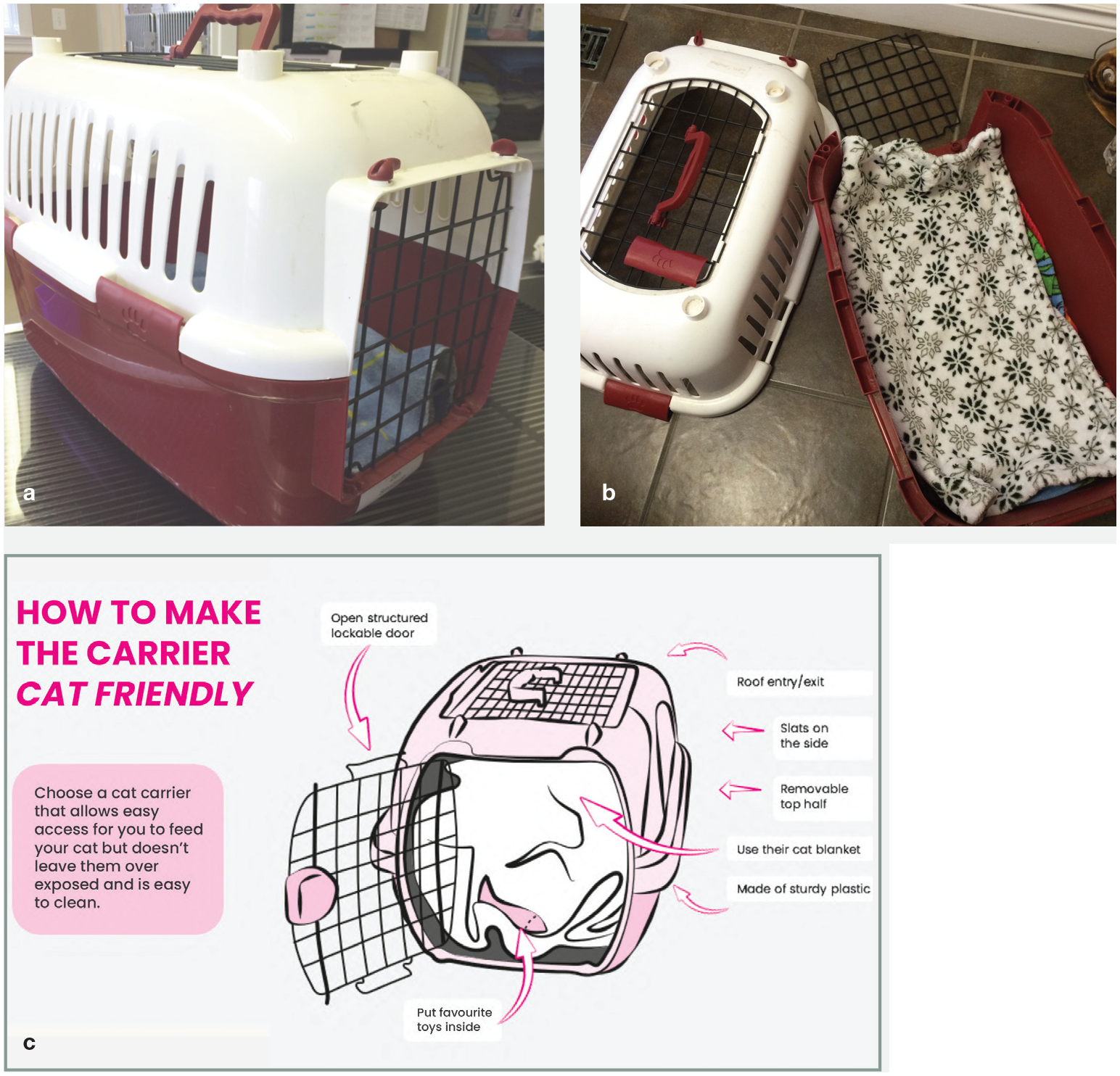
Carrier design and preparation can improve the cat’s comfort and the veterinary professional’s cat friendly approach.

Carriers are best maintained as a permanent feature of the cat’s daily environment, in a place that the cat likes to be. The carrier should be inviting and comfortable, allowing it to be a familiar item associated with positive experiences. Image courtesy of Sam Taylor
– Never carry by the handle or strap, and always support carriers top and bottom. Limit sudden or erratic movements, and aim to maintain consistent/predictable motion. Consider using a buggy/stroller or trolley to transport the carrier if carrying steadily is difficult and the surface is not too uneven.
– Plan to transit smoothly, minimising as much exposure to perceived threats on the journey to the clinic as possible (eg, noisy people, animals or traffic).
– If travelling by car, identify a safe, stable area for the carrier, which will allow the cat to feel secure. The recommendation from the Center for Pet Safety is that most carriers be placed on the floor behind the front seats (centerforpetsafety. org/pet-parents/pet-travel-tips).
Pre-consultation period and waiting area
In addition to helping caregivers and their cats prepare prior to clinic visits, the design of the entrance and reception areas can help to create a positive clinic experience. 40 Ideally, cats should have a separate waiting area, which is away from the sight, sound and scent of dogs and other species. It may be possible to be creative with unused space; for example, a blind-ended or long, quiet hallway may be able to accommodate a chair and table as a cat-only waiting area. Where possible, a separate entry/exit to the building, with a cat-specific reception desk (or section of the reception desk) and examination rooms, will ensure there is no risk of inter-species encounters and will reduce awareness of other species.
However, if such adaptations are not possible, simple adjustments to the available space and processes can still be effective in mitigating stress in a multispecies waiting area (Box 3 and Figure 10).

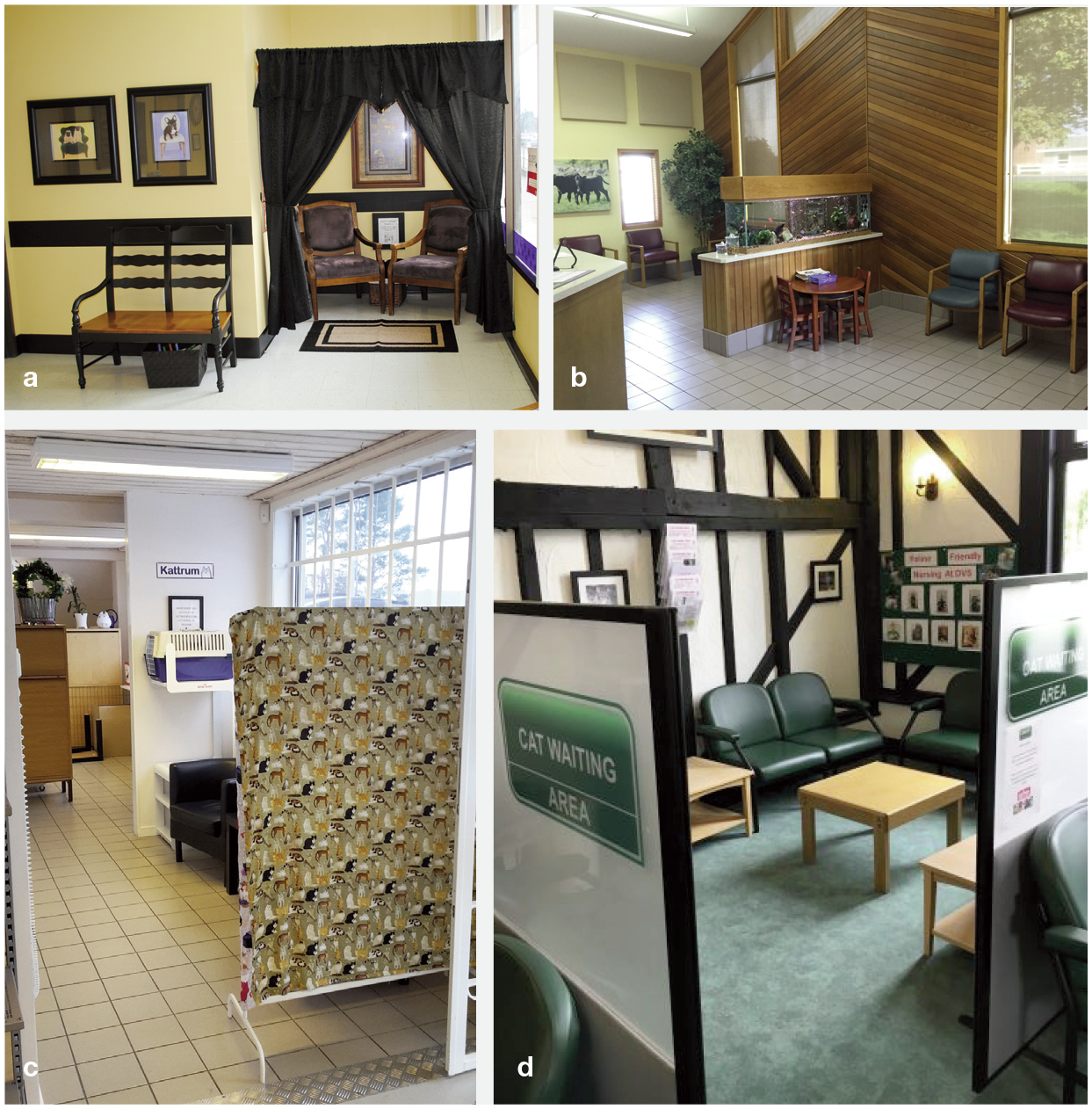
(a-d) Arranging furniture and barriers in creative ways can help prevent contact between patients without necessitating waiting room renovations or other costly modifications. Barriers can comprise of branded screens, information boards, potted plants and shelves, and can be as inexpensive as corrugated cardboard or fabric. All manner of approaches is possible – homemade, tailormade, foldable, slidable, etc. Whichever option is used, the individual areas of the waiting room should be clearly labelled. Images courtesy of Neighborhood Pet Clinic, USA (a), Redmond Veterinary Clinic, USA (b), Balsta Smadjursveterinarer, Sweden (c) and Davies Veterinary Specialists, UK (d)
There are also a number of ways in which the waiting room, regardless of whether it is multispecies or segregated, can be made more cat friendly, as outlined below.
✜ Ensure that the waiting room is a calm, unhurried and quiet area, maintained at a comfortable ambient temperature. Ideally, it should be as spacious as possible to allow cats and caregivers to be at a good distance from others.
✜ Play calming classical music, or cat-specific music, 41 to reduce acoustic stimuli and create a more relaxed atmosphere.
✜ Remove ringing practice phones from the waiting area if it is possible for external calls to be answered elsewhere in the practice. If not possible, ringer volume can be reduced. Calm and quiet discourse in the waiting area should be encouraged by the reception team and reinforced in signage and posters.
✜ Mute or turn off any door entry bells and alerts to reduce additional unwanted noise.
✜ Train the veterinary team to use and model calm behaviour – talking quietly, moving slowly and minimising noise or hurry.
✜ Consider the cat’s sensitive olfaction and pheromone detection abilities:
– Disinfect regularly with unscented or minimally scented cleaning products, promptly cleaning away patient-related odours (eg, urine) as they occur;
– Avoid perfumes/colognes, deodorants, air fresheners, smoke (on clothing), etc.
– Use synthetic feline pheromones, both environmentally (ensuring adequate plug-ins for the size of the room) and applied to towels/blankets for covering carriers. < Cover cat carriers, preferably with a pheromone-sprayed towel or blanket, to facilitate hiding and decrease visual and auditory stimuli (Figure 11). For those cats who prefer some visual access to their environment, the front of the carrier can remain uncovered (Figure 11a,c) or be partially covered. Towels and blankets can be provided by the clinic in the waiting area and returned as the cat leaves. Covering the carrier can also help to keep the cat warmer than ambient room temperature; warmed blankets could potentially be used. (See ‘Creating a cat friendly ward’ for information on the thermoneutral zone of cats.)
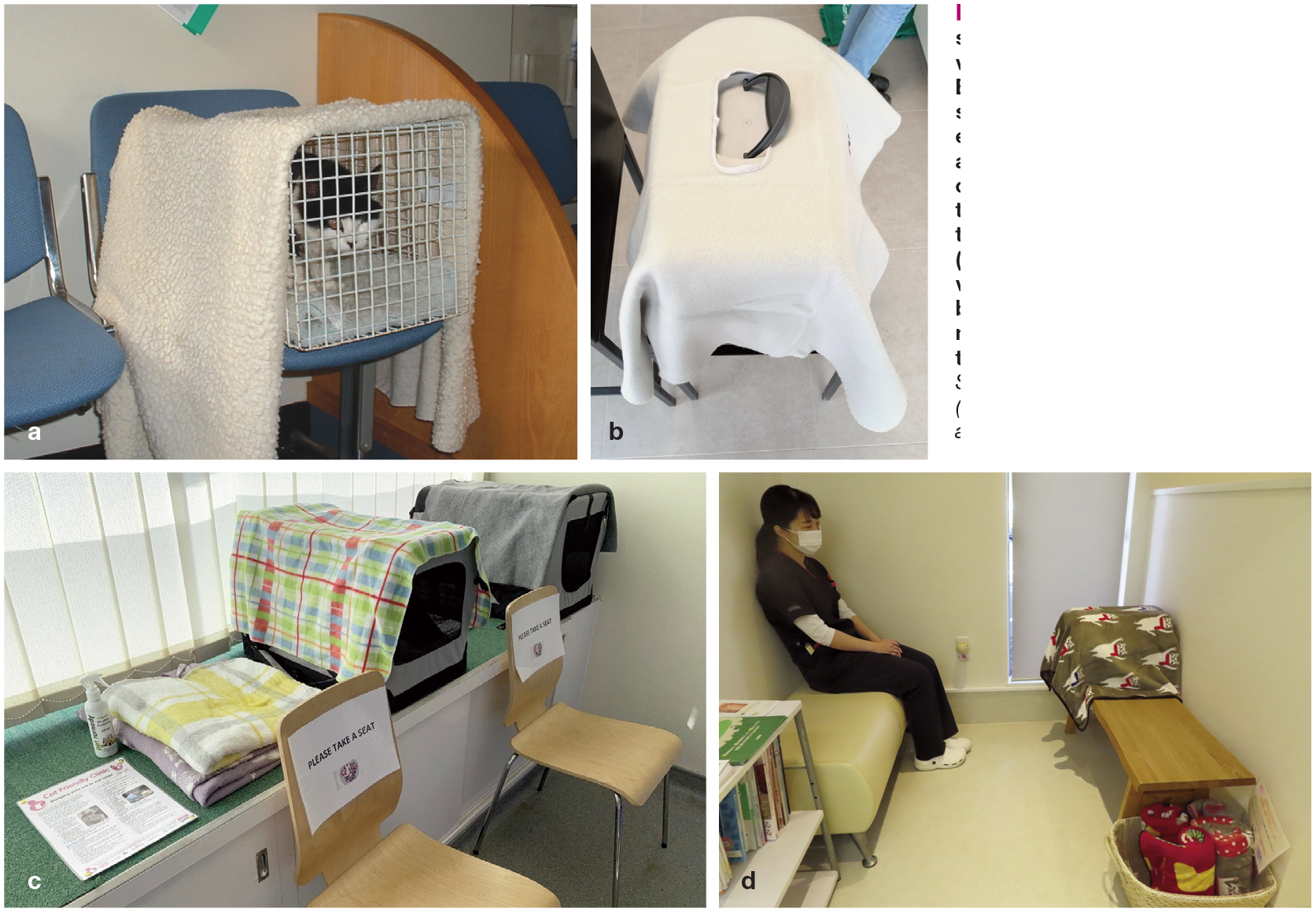
(a-d) Cat carriers should be covered to decrease visual and auditory stimuli. Blankets pre-sprayed with synthetic feline pheromones can either be provided by the clinic and returned when the cat leaves, or brought into the hospital with the cat, if admitted, to stay with that patient. The decision to cover (partially or completely) the cat’s view of the surroundings should be based on the individual cat’s needs, previous experiences and temperament. Images courtesy of Sam Taylor (a), KatUnique, Belgium (b), Village Vet Longstanton, UK (c) and Asahi Pet Clinic, Japan (d)
✜ Provide elevated surfaces to place carriers on while caregivers are either waiting or at the reception desk following their appointment, to avoid carriers being put on the waiting room floor and/or where they can be sniffed by dogs (Figure 12).

(a-c) Provision of elevated surfaces for carriers to be placed on prior to the appointment gives cats a sensation of safety from potential predators and harm in a strange environment. This could be a chair, table, shelf or specially designed ‘cat parking’. (d) Also include an area at reception so the cat carrier remains elevated when caregivers are speaking with the receptionist and/or settling their bill. Images courtesy of Dierenartspraktijk Nieuwkoop-Noorden, Netherlands (a), Abbey House Veterinary Hospital, UK (b), Village Vet Highbury UK (c) and Joy Pet 24-hour Animal Hospital, China (d)
✜ Ensure that there is no contact between feline patients and any resident or team members’ pets, including visually from a distance. Restrict access of clinic cats to patients, whenever possible.
✜ Train the reception team to be instrumental in implementing cat friendly principles in the waiting area (Box 4).


The reception team should be trained and feel empowered to implement cat friendly principles, ensuring, for example, that waiting areas are calm and quiet, and that carriers are elevated. Image courtesy of Oxford Cat Clinic, UK
The cat friendly examination room
Planning and preparation of the examination room can – as with all areas of the clinic -improve the clinic’s handling of feline patients.2,42
Cat-only
Where space in the clinic allows, a cat-only examination room should be established and clearly labelled as being cat-only, and strictly not used for any other species (Figure 14). If the clinic does not have space available for a cat-only examination room, try to schedule certain periods of time where the examination room space can be single species. For example, offer cat-only appointments on one or two afternoons each week.

(a,b) Cat-only consulting rooms are ideal. If not available, consultations should be timed to avoid exposure of cats to other species’ scent. Images courtesy of Lumbry Park Veterinary Specialists, UK (a) and the AAFP (b)
Minimise movement
Where possible, the clinic layout should allow direct access from the car or cat-only waitin area to a cat-only examination room, bypassing any dog waiting areas or the busy reception area. The room should have spaces where the cats can potentially hide that are easily accessible (Figure 15). Difficult-to-access areas under cabinets and seating should be blocked off down to floor level. A stool for the consulting veterinarian, rather than a chair, and a wall-mounted computer monitor reduce access to awkward hiding spaces. All equipment that is likely to be required during feline examinations should be present in the room or brought in at the beginning of the appointment to minimise patient arousal as a result of exiting and re-entering of team members during the examination (Box 5; see also ‘Cat friendly equipment’). When it is not possible to have dedicated equipment for each examination room and/or there is a lack of storage space, portable caddies containing everything that might be needed are ideal (Figure 16).
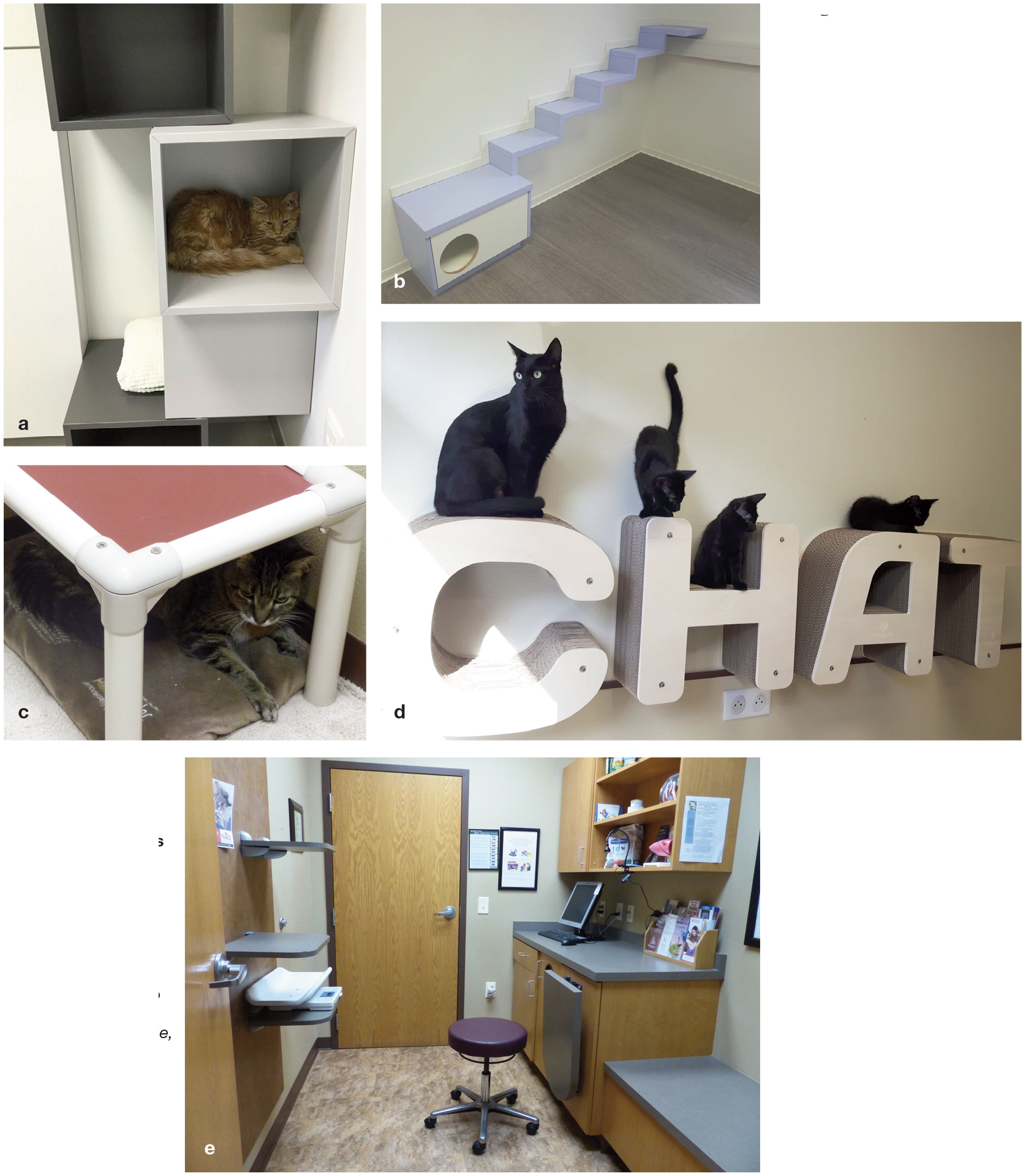
(a-e) Within the examination room, spaces should be provided where cats can potentially hide or perch that are easily accessible. Any difficult-to-access areas under cabinets and client seating should be blocked off down to floor level. Images courtesy of KatUnique, Belgium (a), Anicura Kleintierzentrum Weingarten GmbH, Germany (b), Ilona Rodan (c,e) and OcciCat Bessieres, France (d)
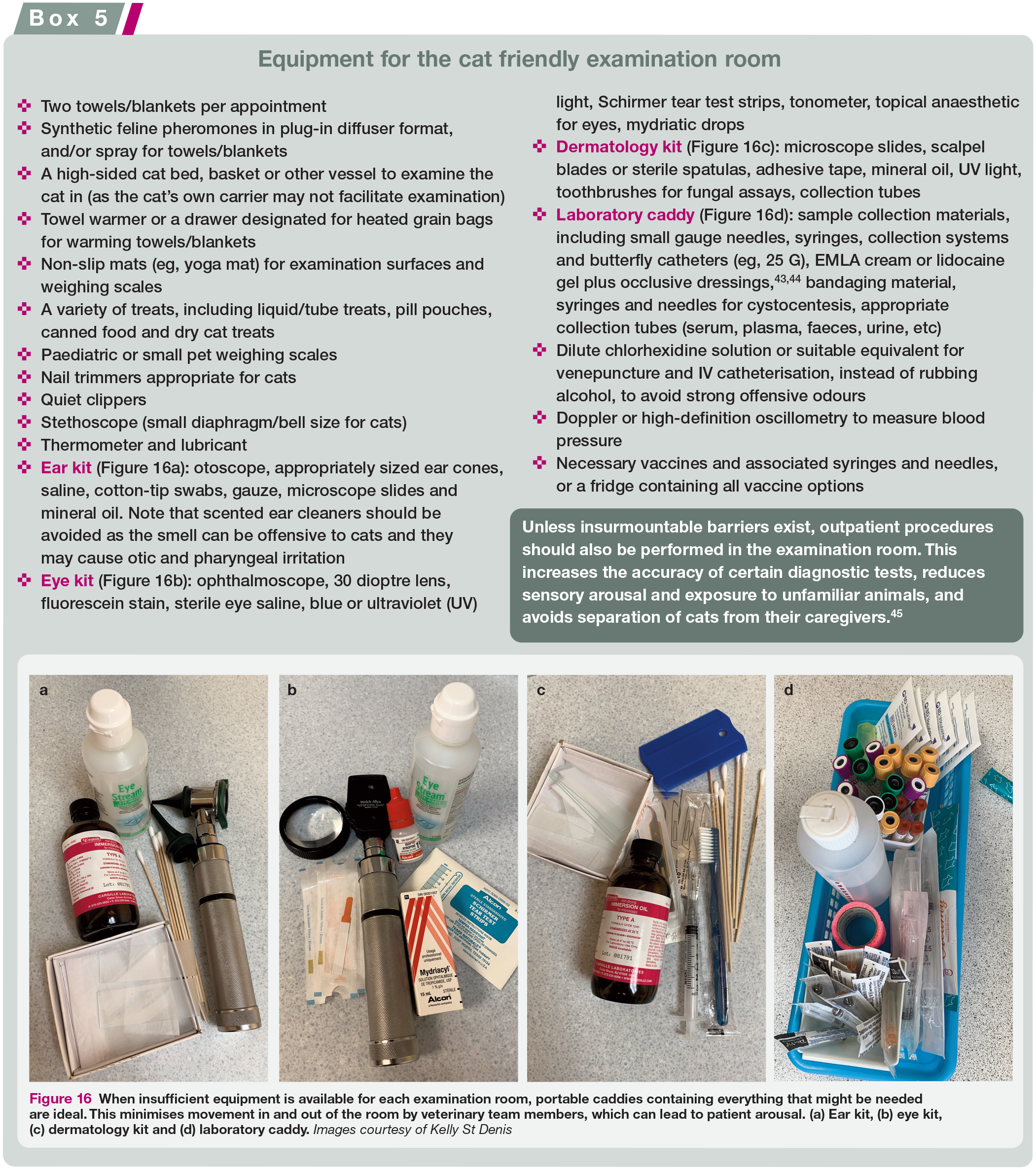
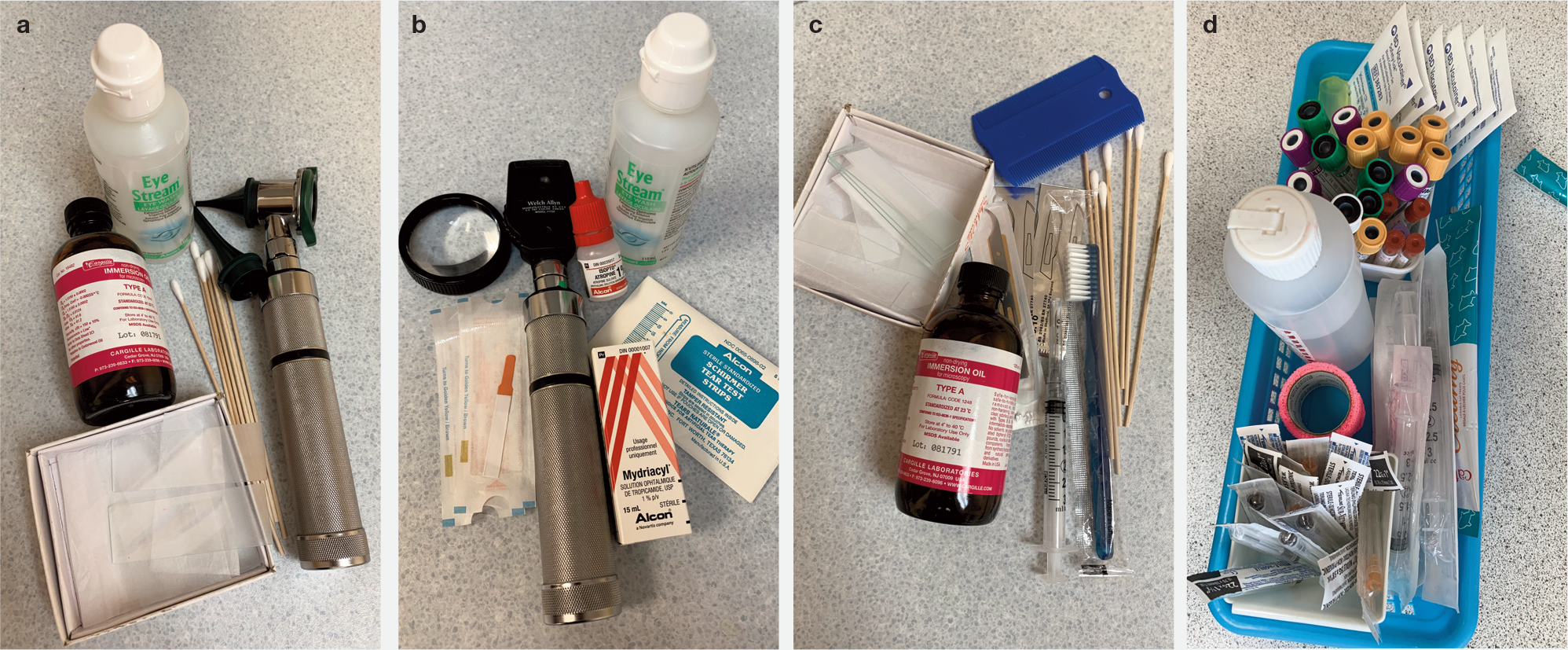
When insufficient equipment is available for each examination room, portable caddies containing everything that might be needed are ideal. This minimises movement in and out of the room by veterinary team members, which can lead to patient arousal. (a) Ear kit, (b) eye kit, (c) dermatology kit and (d) laboratory caddy. Images courtesy of Kelly St Denis
Optimise for cats’ sense of smell
Clean the room thoroughly between patients. Cats have an excellent sense of smell, 12 and even non-visible material from the previous patient may be alarming and cause increased arousal. Use lint rollers to remove hair from soft furnishings and clothing. Special attention should be paid to places where cats may have marked with pheromones (eg, corners of cabinets, human legs, sweaty paw prints on the examination room table) and plug-in synthetic feline pheromone diffusers should be in use. Consider the smell of disinfectants used in the examination room and utilise those that are unscented or only minimally scented.
Other considerations
Surfaces can be unpleasantly cold and slippery for cats. Use veterinary examination table mats or yoga mats as well as warmed towels or blankets on the surface of the examination room table (Figure 6). Place a towel or blanket on the weighing scales (tare to zero before weighing the cat) to reduce fear of the slippery surface and to keep the cat warm.
If the cat remains in the carrier or a cat bed, weigh them within and then weigh the item alone when the cat needs to be removed (for admission, diagnostic tests, etc). Recording the weight of the carrier and contents (blankets, toys, etc) on a sticker on the carrier and/or in the medical record can facilitate future weighing; recommend to the caregiver that they include the same contents at each visit.
All cats need the ability to hide if desired,12,16,42 and much or all of the examination can be performed while allowing the cat to have the sensation of being ‘hidden’, be it in the bottom of the cat carrier, in a high-sided cat bed or basket and/or under towels/blankets (Figure 17). 2 Be prepared to work where the cat chooses to be, thus allowing them a sense of control. Some cats prefer perching to monitor the environment; having shelves or windowsills in the room may also allow assessment of their mobility and movement. Ensure that any perch options provided for the cat are safe and easily accessible for veterinary team members. Safe perching areas can be made desirable with beds, including those with sides to provide concealment while perching. Other cats may prefer to settle on the floor, on a chair or bench next to their care-giver or in their caregiver’s lap (Figure 18). For further discussion see the accompanying ‘Cat Friendly Veterinary Interaction Guidelines’. 11

Hiding is a self-preservation response that can be accommodated during the physical examination. Give cats the opportunity to express normal behaviour by allowing them to remain (a,b) in the bottom of the carrier, in a high-sided cat bed or basket, and/or (b-d) under towels or blankets. Images courtesy of Kelly St Denis (a,c,d) and Sam Taylor (b)

Examine cats where they are comfortable. This may be (a,b) on the floor, (c) in the caregiver’s or veterinarian’s lap, (d-f) on a chair or windowsill, for example, or (g) in their carrier or bed. Images courtesy of ISFM (a), the AAFP (b,c), Sam Taylor (d,f), Ilona Rodan (e) and MyVet Maynooth, Ireland (g)
Creating a cat friendly ward
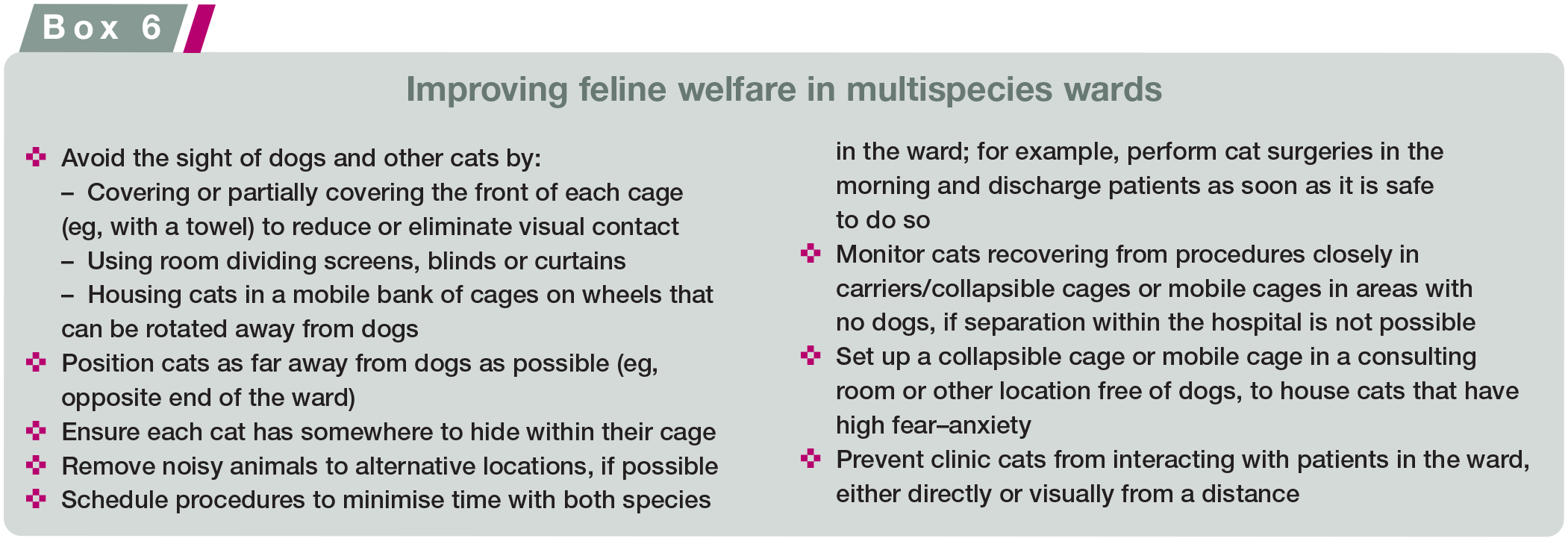
The hospital/clinic cat ward and associated cages provide housing for sick cats, and cats in perioperative care (pre-/post-surgery), and may also be used for boarding in some circumstances. Being unwell and/or in pain while confined to a small space in an unfamiliar setting can be very stressful for cats and can result in a variety of emotions including fear-anxiety and frustration.2,46,47 Consideration for patients’ sense of safety and comfort in the cat ward is critical. It has been shown that cats housed in a quiet, predictable environment are more tolerant of an approach by an unfamiliar person, 48 so the aim should be to create as quiet and predictable an environment for hospitalised patients as possible. Ideally cats are kept in a separate ward. If this is not possible, efforts should be made to reduce the impact of the presence of dogs on the hospitalised cats (Box 6).
The thermoneutral zone for cats is 30-38°C (86-100.4T), so the ambient temperature in cat wards should be higher than in other parts of the hospital. Heated cages are used in some clinics, or additional warming devices may be supplied for each cat. 18
Noise in the ward
The cat ward needs to be in a quiet setting that has minimal disturbances, including sounds from other patients (eg, vocalising dogs or cats) and noisy hospital equipment (eg, centrifuges). Increased noise levels that may be detrimental to patients have been recorded in veterinary intensive care wards, 49 and high levels of background noise may elicit physiological stress responses during examination. 35 Telephone ringers should be muted or turned to the lowest setting and team members need to communicate in soft, quiet tones and minimise conversation; case discussions can occur elsewhere. All doors in and out of the area, as well as cage doors, should be squeak-free and close quietly, with door silencers installed.
The ideal room for a ward is one that is separated from other areas of the clinic and incorporates sound proofing. A window into the room allows visual assessment of patients and a one-way intercom will alert the nursing team to the sounds of cats in distress or IV fluid pump alarms. Video monitoring devices can also be useful for monitoring hospitalised cats. Certain types of music are reported to reduce stress in several species, including cats. Studies have shown that cat-specific music reduces stress, both at home 41 and in the examination room. 50 Cat-specific and classical music also seemed to have benefit in a recent study of hospitalised cats. 51
Quiet periods are essential to facilitate proper rest and recovery, including periods of dim light or darkness. In human medicine, sleep deprivation in the intensive care setting contributes to fear and anxiety as well as sensitivity to light, noise and activity; 52 moreover, periods of both light and darkness are important to avoid disruption to circadian rhythms, which can negatively affect recovery from illness. 53
Cage positioning
Cages need to be oriented facing in one direction to avoid visual contact with other cats (Figure 19a), rather than facing one another or at an angle that allows visual contact. Treatment tables where other cats are examined should be out of view of the cages, to avoid unnecessary stress to the cats (both observer and observed); 54 if necessary, mobile screens, room dividers, blinds and curtains can be used when a cat is on the table (Figure 19b,c).

(a) Cages should be oriented facing in one direction (rather than facing one another or at an angle), thus avoiding all visual contact between cats. Treatment tables should equally be out of view, to avoid patients observing other cats being examined. (b,c) If necessary, a room divider, curtains or mobile screen can be utilised around the treatment table or between the treatment table and cages. Images courtesy of Lumbry Park Veterinary Specialists, UK (a), Narae Animal Medical Center, South Korea (b) and Sam Taylor (c)
Cages should be elevated from the floor to reduce stress due to perceived dangers lurking at floor level, or lower cages used only as a last resort when higher cages are full. Cage elevation from the floor should take into account ease of use for the veterinary team, the cat’s ability to survey their surroundings, and the safety of the patient (eg, risk of a fall). Cages that are too high up or too low down can make interactions with the patient difficult. Step stools should be provided where necessary to keep the patient and veterinary team level during any interactions.
Cage size and construction
The cat ward cages should be constructed of materials that are non-permeable, easy to clean or disinfect, and not likely to bend or make noise during use. Consider low gauge stainless steel, laminate or moulded plastic construction materials. Shiny surfaces may reflect the cat’s face and lights, causing potential alarm, so non-reflective materials such as brushed stainless steel and matt finish surfaces are preferred. If shiny surfaces are unavoidable, high-sided cat beds may reduce reflection. 46
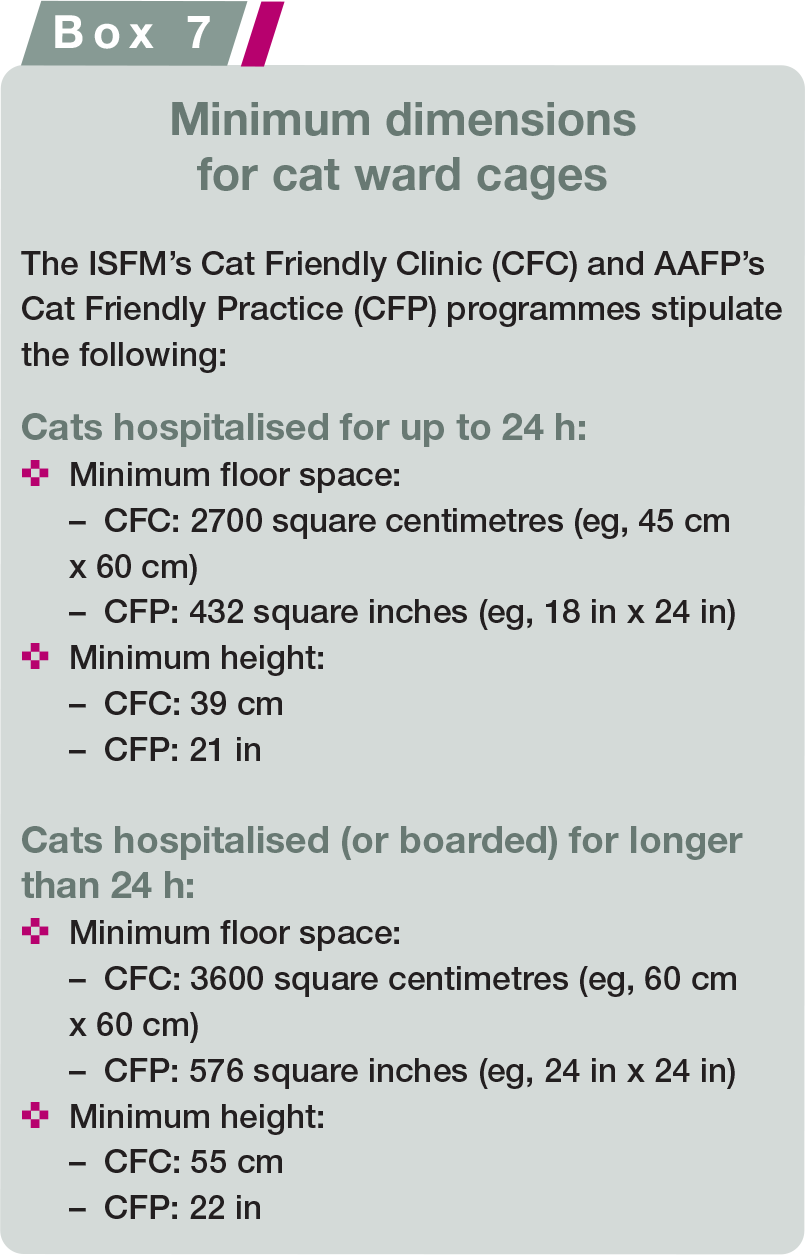
Minimum dimensions for ward cages are noted in Box 7, and depend on whether the cat is hospitalised for up to 24 h or more than 24 h.

Cage space can be expanded with options such as (a,b) portholes connecting between cages and (c,d) shelves. This maximises the space, allowing appropriate distribution of resources. Images courtesy of Clinique Veterinaire de l’Estuaire, France (a), Tierklinik Hofheim, Germany (b), Clinique Veterinaire du Grand Large, France (c) and Affinity Veterinary Center, USA (d)
Consider expanding the space provided by connecting portholes between cages or utilising vertical space with shelves to allow perching (Figure 20). The goal is to provide ample space to have core resources spread out and allow the cat to engage in normal behaviours (stretching, grooming, etc).
Cage doors should operate quietly, and be easy to clean/disinfect and to open and close, remaining securely latched when closed. Additional security may be required for overnight care, particularly with clever, active or frustrated cats who may unlatch the door. Doors may have bars (stainless steel, aluminium) or a more solid but transparent (plastic/acrylic [Perspex or Plexiglas]) design. Opaque or semi-transparent door structures are not recommended generally, due to lack of patient visibility and potential frustration for the cat in being unable to see their surroundings. Doors with bars or air holes in solid-fronted cages provide air flow, which reduces the build up of odours within the cage, improves air quality for the patient and allows the patient to view and smell their surroundings. Solid transparent doors may be required for oxygen therapy and have the benefit of reducing external sound transfer into the cage. Disadvantages of doors with bars include the potential for entrapment of limbs (a particular consideration for kittens -ensure bars are appropriately spaced in relation to patient size), contact between patients in neighbouring cages, and splattering of spilled food, water, litter, urine or faeces.
Occasional patients may become distraught and potentially cause self-harm when confined, necessitating other options including being housed loose in a separate room (eg, office or examination room; Figure 21).

Occasional patients may become distraught when confined to a cage, necessitating other housing options. This cat would become frantic when housed in a hospital cage, causing self-trauma while trying to escape, but was relaxed and settled when housed loose in a separate room. Image courtesy of Kelly St Denis
Furnishing the cage
Within the cage, and depending on the state of health of the patient, a variety of core resources will be required, including bedding, a hiding place, food, water and a litter box/ tray. Additionally, a vertical space or perch is desirable, 14 particularly for patients hospitalised or boarding for longer than 24 h. Ideally, resources are separated, 47 with food, water and litter boxes/trays placed in different areas of the cage. Double-compartment housing is optimal but, in small cages, these three resources should be placed as far apart as possible, and/or at differing levels (Figure 22). 46

Cage layout and furnishings. A variety of core resources including bedding, a hiding place, perch, food, water and a litter box/tray will be required in the cage. (a) Double-compartment caging is ideal, but (b) in small or single-compartment cages, the feeding and water vessels and litter box/tray should be placed as far apart as possible. Images courtesy of Kelly St Denis (a) and Sam Taylor (b)
All hospitalised cats should be provided with an area in which to hide, as hiding is an important coping mechanism for cats and can reduce stress during confinement.2,14,15,55 Linens draped over perches creating tents underneath, cardboard boxes, beds or the patient’s carrier provide easy and inexpensive opportunities for the patient to hide, and in some cases also an option to perch (Figure 23); Figures 23c,d illustrate how other household items can be adapted for this purpose. Additional options might include draping sheer fabric over the cage door, allowing the team to still see the cat, yet giving the cat the sensation of being hidden and protected, or partially covering the cage door with a towel, giving the cat the option to look out. Each cat needs to be assessed individually in this regard. Covering the whole cage front can lead to an increased sense of security for some cats, and to frustration for others because their visual access is obscured; covering just half of the cage front gives cats the choice over whether to stay hidden or look out. Perches – whether as part of the resting space options, as noted above, or provided as additional shelving -expand the cage space and offer a higher vantage point.
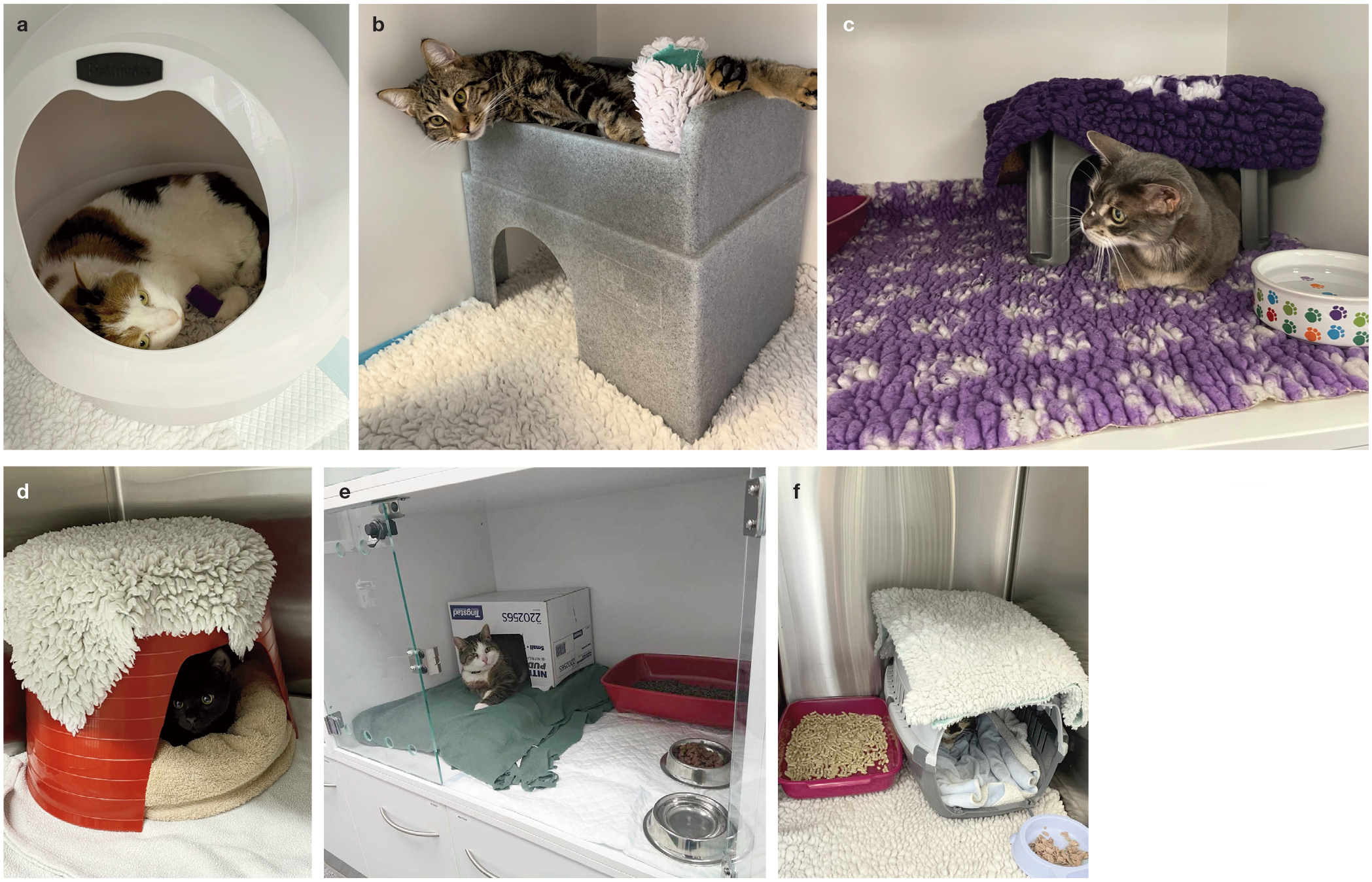
All hospitalised cats should be provided with an area in which to hide, and ideally also to perch. Many options are available that are low cost and readily accessible. Examples include (a) a covered litter box/tray repurposed as a bed; (b) Cats Protection Hide & Sleep; (c,d) modified plastic stool or plastic bucket; (e) a simple cardboard box; and (f) the cat’s own carrier. The choice of bed may depend on the patient’s clinical status (eg, it may not be desirable for orthopaedic patients to perch) and temperament (bolder cats may like to perch and have a view out of the cage). Images courtesy of Sam Taylor (a,b), Wicstun Veterinary Hospital, UK (c), Village Vet Kensal Green, UK (d), Anicura Jeloy Dyresykehus, Norway (e) and Aireworth Vets, UK (ff

Beds and bedding
Soft bedding may include layers of fleece blankets or soft towels, and these items can be placed over the top of a cushioned surface, such as convoluted foam or a mattress. Cages without blankets, or with only paper lining, are not considered cat friendly. The addition of familiar items from home may increase patient emotional comfort; 56 caregivers should understand that these items might become soiled or lost, although a labelling and recording system can avoid this. Warming devices in cages are beneficial for sedated, recovering or unwell patients to avoid hypothermia (taking care to avoid overheating or burns). 39
Provision of food and water
Cats are likely to have food preferences and may have feeding/water vessel preferences as well. Consider a pre-admission questionnaire requesting details of these preferences from the caregiver (an example ‘dietary history questionnaire’ is available in the supplementary material). If necessary, the caregiver can supply items and food to maintain familiarity. Ideally, the hospitalised patient should have access to their preferred diet, and new diets should be introduced slowly when the patient has returned home.46,57
Feeding and water vessel preferences will vary with temperament, age, breed and patient mobility/wellness (Figure 24). Many cats will prefer familiar foods, warmed and presented in low-sided bowls, with one recent study demonstrating that cats over 7 years of age prefer wet food warmed to 37°C (98.6°F). 58 Hospitals should have various food and feeding vessel options available to meet a range of patient preferences. See the ‘2022 ISFM Consensus Guidelines on Management of the Inappetent Hospitalised Cat’ for more information. 57

(a-d) Feeding and water vessel preferences will vary with temperament, age, breed and patient mobility/wellness. Wards should stock a variety of bowls for hospitalised cats. Flatter, low-sided bowls, plates or saucers are generally preferred. Images courtesy of Kelly St Denis (a,c), Sam Taylor (b) and Summercourt Veterinary Centre, UK (d)
Food consumed should be monitored and calculated as a proportion of the daily resting energy requirement (RER) of hospitalised patients (Box 8).

Litter boxes/trays
Litter boxes/trays should be 1.5 times the length of the cat (from nose to base of tail) in size, if cage dimensions allow, 2 and preferably low-sided, or with high clear walls and a low entry door, to make them easy for the unwell cat to access and exit. Seed trays and other large flat trays (eg, builders’ concrete mixing trays) can be used as an alternative (Figure 25). Unscented clumping litters are generally preferred by cats and should be provided at a sufficient depth to allow burying of faeces and urine. Wood shavings and wood or recycled paper pellet litters can have a strong scent, with some cats also finding the pelleted varieties painful to stand on (particularly cats with DJD), so these may be best avoided. As with all resource provision, every patient should be assessed as an individual and their personal preferences catered for, whenever possible. If a cat’s familiar litter is not stocked in the ward, caregivers can be asked to supply some; and for cats accustomed to passing urine and faeces outside, it may be necessary to fill a litter box/tray with soil or sand to encourage use while hospitalised.

Litter boxes/trays should be appropriately sized and preferably low-sided for ease of use. (a-c) Many options are available, including seed trays, baking trays and building products, such as concrete mixing trays. (d) Various types of litter should be stocked, or caregivers asked to bring in familiar litter from home. Images courtesy of Kelly St Denis (a,b) and Sam Taylor (c,d)
Cleaning of cages
A full daily clean is rarely required and will remove pheromone markings and familiar reassuring scents. Ideally, the cat remains in the same cage during hospitalisation and, if moved, the bedding is moved with the cat. Layering two blankets/towels can allow removal of the top layer, if soiled, minimising disturbance to the patient and maintaining the familiar scent profile. ‘Spot cleaning’ of soiled areas, with minimal disruption of other areas, is preferable to a full clean for hospitalised patients. 46
Other clinic areas
Examination rooms and hospitalisation wards are not the only areas of the clinic that should be cat friendly. During the journey of the veterinary visit, some feline patients may require certain procedures (eg, imaging or surgery), often necessitating sedation or anaesthesia. Hence all areas should be designed and used in a way that reduces the impact of fear-anxiety and considers the principles of a cat friendly environment. Ideally, dedicated cat-specific areas should be available in every part of the clinic. Where this is not possible, consideration should be given to the timing of procedures (prioritising feline patients first so there is no scent from dogs), thorough cleaning of the areas between patients/ species, having only one patient in an area at a time, minimizing personnel and using ‘do not disturb’ signs. Always ensure that all equipment is set up, ready and in good working order, and that all consumables appropriate for the patient size and procedure are readily available; this saves time and reduces noise and movements back and forth of personnel.
Preparation/treatment rooms
General preparation/treatment rooms can be a busy environment, especially when used for multiple species and purposes (eg, procedures, treatments, examination and induction of general anaesthesia). The loud sounds of equipment and scents of other patients may cause significant fear-anxiety for feline patients. Consider whether this is an appropriate place to provide the quiet, calm environment required for reducing stress in cats. If these requirements cannot be met, then it is preferable to move the cat to another room (an unused examination room can be a good alternative). Careful scheduling of patient treatments and procedures will assist with this, and time spent planning can create a more relaxed cat who is easier to handle and allow a more efficient treatment or procedure.
Induction of anaesthesia and recovery
Physiological stress associated with protective emotions leads to release of catecholamines and, in turn, to physiological changes that can increase the risks of anaesthesia in cats. 39 Cats exposed to a less stressful transport protocol took less time to reach sedation and needed a lower dose of propofol than control cats in one study. 61 Meanwhile, research in humans and rat models suggests exposure to stress and low mood perioperatively can increase com-plications 62 – for example, affecting wound healing, 63 and both postoperative and chronic pain62,64 – and the same may be true in cats. Therefore, areas of the clinic where cats are sedated or anaesthetised, and where they recover, should be kept quiet, with minimal staff movement, and no (or minimal) exposure to the sight, sound or smell of other animals, as impacts may be far reaching for each patient. Calm interactions and gentle handling of the patient are essential to optimise outcomes as well as to minimise negative emotional impacts (see the accompanying ‘Cat Friendly Veterinary Interaction Guidelines’). 11
A side room or other quiet area can be used for cats in the peri-anaesthesia period (Figure 26), or procedures timed for quieter or dedicated cat-only periods, as described earlier. A similar approach applies during recovery, where cats should be kept in a warm, quiet area without dogs or visual contact with other cats, but still with the required facilities to maintain monitoring in order to avoid complications that can occur during this period. 65 Recovery can occur in the ward, if adequate personnel, monitoring and warming devices, for example, are available and if litter boxes/trays and water bowls are removed from the cage. Consider expressing the bladder prior to recovery to decrease postoperative discomfort, and manage dysphoria and pain as indicated.39,66 Litter boxes/trays and water bowls should only be put back into the cage when the cat is fully recovered.
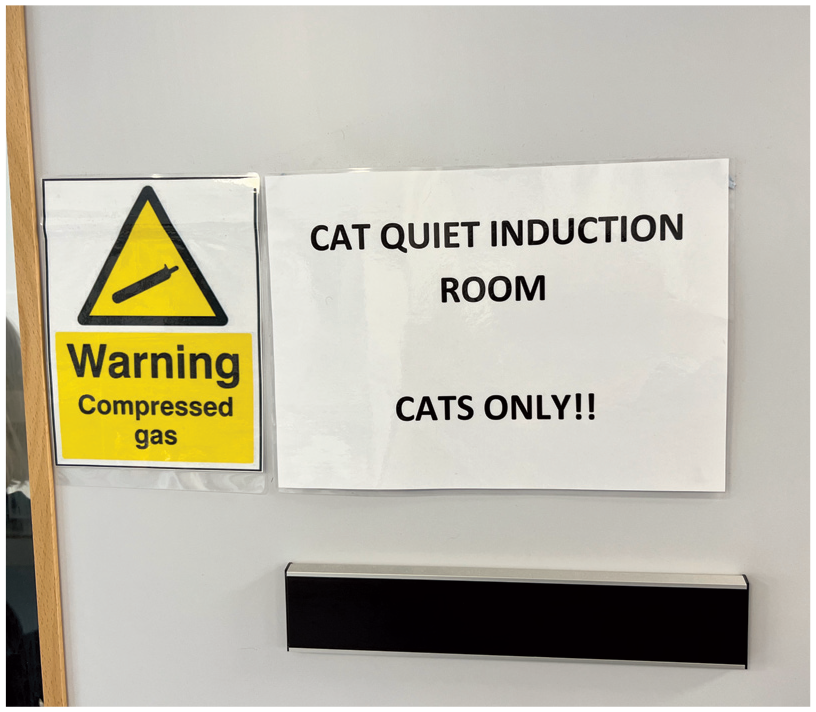
The option of a side room or other quiet area for sedated and recovering cats can reduce anxiety and stress. These areas should be warm, have minimal staff movement, and no or minimal exposure to the sight, sound or smell of dogs. Image courtesy of Lumbry Park Veterinary Specialists, UK
Theatre/operating room
The small size of feline patients increases the risk of hypothermia during surgery and measures to prevent this should be employed (Figure 27). 39 Heat sources during anaesthesia should be limited to warm air devices, medical grade electric blankets, circulating water blankets and/or warmed towels/blankets, and care should be taken with any warming device to avoid burns. 39 Multimodal analgesia including local anaesthesia should be considered during and after surgical procedures. 66 A study of anaesthetised cats showed that patients had reduced blood pressure, heart and respiratory rates, and possibly lower anaesthetic levels, when listening to classical music as compared with other human music genres; 67 hence, background classical music can be considered in the theatre/operating room.
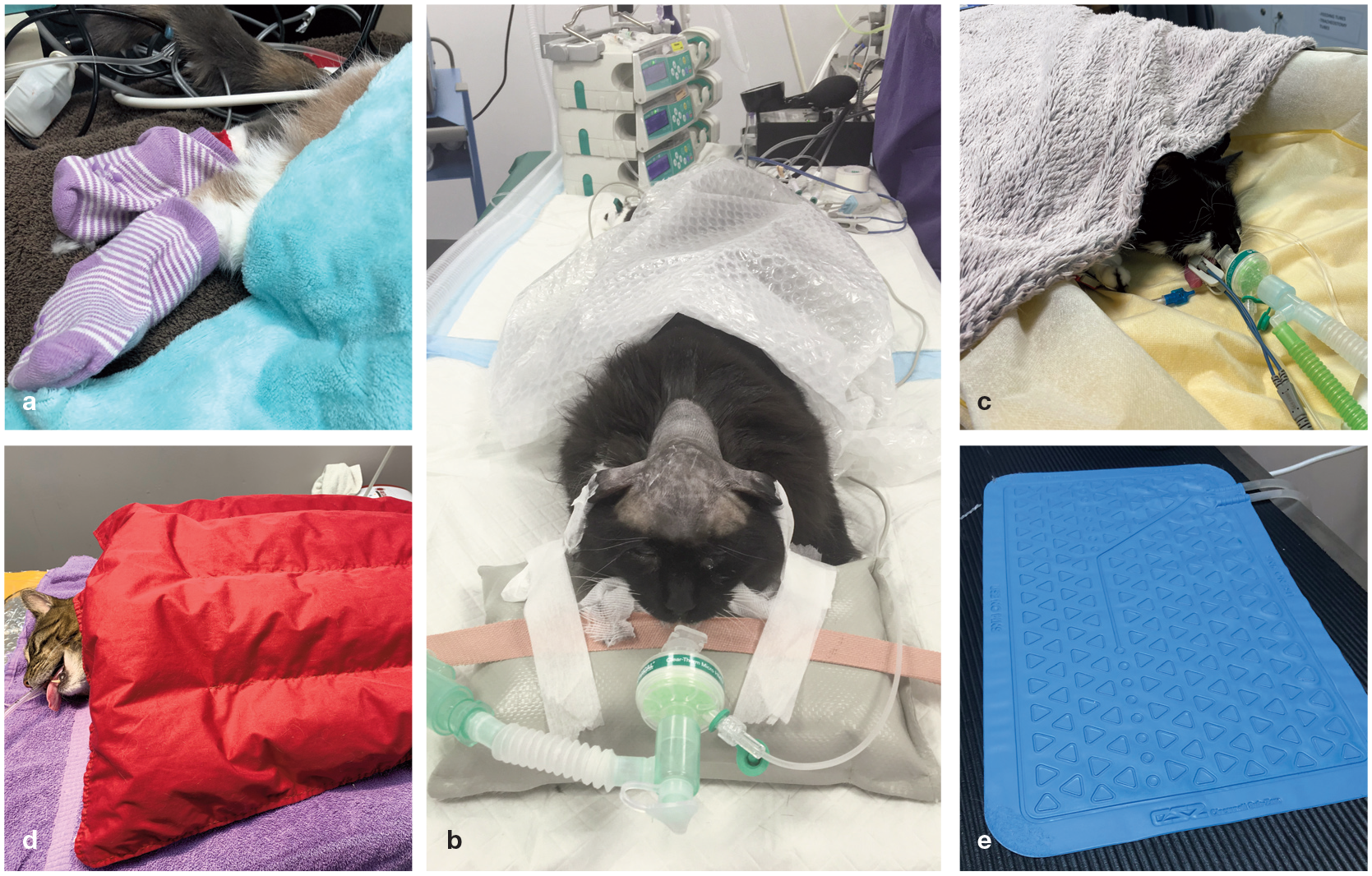
Cats are prone to hypothermia under sedation or anaesthesia and equipment should be available to prevent its development. (a) Booties or infant socks placed over the feet of an anaesthetised patient to reduce heat loss through the limbs; (b) bubble wrap to prevent heat loss; (c) a commercial warm air under-blanket below the cat, who themselves are covered in a blanket, and there is an additional heat-moisture exchanger present between the endotracheal tube and circuit; (d) commercial warm air blanket covering a cat during dental surgery; and (e) warm water circulating mat. Images courtesy of Kelly St Denis (a,d,e) and Joanne Michou (b,c)
Imaging areas (radiography, ultrasound, advanced imaging)
Cats should be sedated or anaesthetised, as appropriate, for imaging. 30 Conscious radiography and ultrasonography rarely provide results of diagnostic quality and may result in exposure of veterinary team members to radiation. Moreover, the restraint required for radio-graphic positioning is likely to result in distress due to triggering of fear-anxiety and/or pain, the latter particularly in older cats where extension of limbs may cause significant discomfort given the prevalence of DjD in this age group. 68 Imaging areas, like other clinic regions, should be cleaned to remove the scent of dogs and other animals before being used for cats, and kept warm, quiet and fully stocked to avoid excessive personnel movement.
Isolation and intensive care areas
Cats with infectious diseases may need to be hospitalised and facilities should be available for this purpose. Similar considerations in terms of reducing distress apply as they do in other clinic areas, particularly in the light of the fact that stress can also affect the immune system. 69 Ideally, dogs are not housed in the same area and cages are furnished as recommended earlier for the main cat hospitalisa-tion ward. If a specific isolation area is not available, unused rooms may be converted into quiet areas to house cats with infectious disease, noting that these patients may be significantly unwell and so should be monitored as closely as they would be on the main ward. Infection control must be optimum to avoid infection of other patients; for example, cats in isolation should be attended to last and not removed from the isolation area. 46
Larger clinics and hospitals may have an intensive care unit (ICU) and these facilities can be a challenge to make cat friendly due to the requirement for frequent interventions and the severity of patient illnesses. Cats in the ICU may be very unwell, depressed or sedated, but their behavioural needs, including cognitive and emotional health, still need consideration. Oxygen tents or incubators and ICU cages should contain areas to hide, and be partially covered with blankets/towels or covered with sheer draping material (Figure 28). Repeated lifting of opaque towels to view an anxious patient can escalate anxiety and promote protective behaviour; sheer draping, on the other hand, reduces the need to disturb the patient. Cats should not be in direct visual sight of other cats or other species, yet they should be visible to the veterinary team to ensure adequate monitoring. Lights should be dimmed at night, and even during the day, to allow rest and sleep. 53 The ICU should be kept quiet, with case discussions held outside the ward.

(a) Cat-only ICU with cage fronts partially covered with blankets to allow patients to hide and yet be monitored by the veterinary team via the transparent doors. (b) Sheer draping reduces the need for disturbance, leaving the cat visible while giving them the sensation of being hidden. Images courtesy of Lumbry Park Veterinary Specialists, UK (a) and Kelly St Denis (b)
Cat friendly equipment
When looking for cat friendly equipment, there are a few key things to take into consideration. Most of this equipment is novel to cats and hence will likely be met with mistrust, so any equipment that needs to be used on a regular basis (eg, blood pressure monitoring equipment) should be introduced slowly, prior to a time that its use becomes essential. Time invested in cooperative care (see later) will be beneficial in the longer term. Secondly, take into consideration the noise, smell and sensation the equipment may create when used, and do what you can to minimise these sensations. Finally, consider the emo-tion(s) that use of the equipment may create.
The aim is to provide an experience that is neutral, or even positive, for the cat, and prioritises their security and comfort.
Needle gauges
Where possible, use small gauge needles (23-25 G) for all injections and sample collection. Smaller gauge needles may be more comfortable for the cat, with a number of studies showing no impact on clotting parameters or biochemistry/haematology readings.70,71 Additionally, the human literature 72 indicates that less pain is experienced when phlebotomy is performed using a smaller gauge needle, and the Task Force members’ experience is that the same is true in cats. Changing to a fresh needle after drawing up medication also ensures a sharp needle, reducing any pain that a blunter needle may cause. 73
Clippers
Cats can hear up to an octave above the human hearing range, but they can also hear lower pitched sounds. 22 The sound of electrical clippers is novel and frightening for many cats, and a quieter volume is likely to be better tolerated (Figure 29).

(a,b) Examples of quiet clippers suitable for feline work. Image (b) also shows gentle handling for blood sampling in the base of a carrier. Images courtesy of Ellen Carozza (a) and Sam Taylor (b)
Topical local anaesthetic cream/gel
Have EMLA cream or lidocaine gel and occlusive dressings readily available in advance of phlebotomy or IV catheter placement and always allow adequate time for effect (Figure 30).43,44,74,75
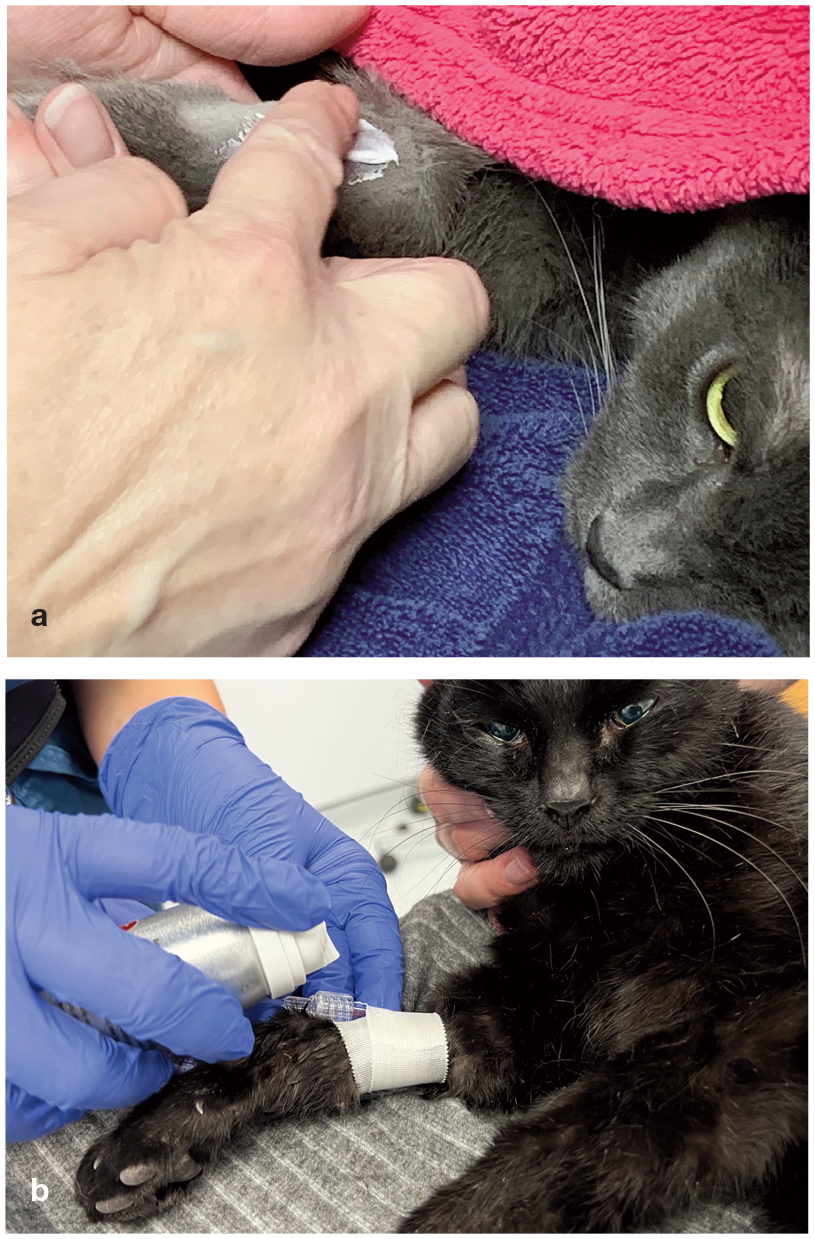
(a) EMLA cream or lidocaine gel applied topically in a sedated cat. The area is covered with occlusive dressings in advance of phlebotomy or IV catheter placement and left for at least 20-30 mins for effect,43,75 to reduce negative responses and pain from these procedures. (b) Products to dissolve adhesives on bandaging tape can reduce the pain of the removal of dressings. Images courtesy of Kelly St Denis (a) and Sam Taylor (b)
Blood pressure machines
Blood pressure measurement is best performed in a place where the cat is comfortable and relaxed, with all the equipment required housed in the room and ready to be used. When using a Doppler machine, use headphones to minimise noise. 76
✜
Blood pressure readings obtained by Doppler are not interchangeable with blood pressure measured by oscillometric devices. 82 There is a need for reference intervals for cats specific to oscillometric devices and possibly even specific to the oscillometric manufacturer. 82 Never> theless, consistent use of the same machine allows monitoring of trends in the patient and, along with evidence of target organ damage, will support a diagnosis of hypertension. For further details on feline hypertension see the ‘ISFM Consensus Guidelines on the Diagnosis and Management of Hypertension in Cats’ 76 and the AAFP’s Hypertension Educational Toolkit (catvets.com/hypertension).
Weighing scales
Accurate weight (and body condition score) recording is important for feline health, 83 and thus small portable weighing scales are essential for all veterinary clinics (Figure 31). Stainless steel surfaces can be cold, slippery and stressful to stand on, and even plastic scales can alarm an anxious cat. The use of non-slip surfaces (eg, rubber mat), where necessary, and a layer of warm blankets on the scales, tared to zero weight, can greatly improve the cat’s acceptance of the equipment. Scales with slightly elevated sides also provide a cat with a sensation of being protected and even hidden, and hence offer greater security; some cats choose to sit in such scales and can be examined in them, if comfortable. Alternatively, a box or high-sided bed can be placed onto the scales (again, tared to zero) to provide concealment for the cat when being weighed.

(a,b) Portable paediatric scales, or those designed for cats, should be available for weighing feline patients, ideally with a set in each clinical area. Various types are available. Images courtesy of the AAFP (a) and Ilona Rodan (b)
Towels and blankets
Have a ready supply of soft towels or fleece blankets. It is important that these are large enough to provide a loose wrap, if required. Equally, have a supply of smaller ones for kittens and young cats. Where possible, have a way to warm these (either a commercial towel warmer or using heat pads or heated grain bags) prior to the cat’s arrival (Figure 5). Consider spraying synthetic feline phero-mones onto the blankets or towels 15 mins prior to use, for added comfort.
Hiding places within cat cages
The importance of providing a place to hide for cats being hospitalised (Figure 23) is well estab-lished,14,15,55,84 and is discussed above. A variety of different types of beds that can facilitate hiding, and can be easily cleaned, stacked and stored, should be stocked.
Non-slip surfaces
Non-slip surfaces are important when examining cats to aid them in feeling more secure, whether on the examination table, weighing scales or the floor (Figure 6). Non-slip mats can be used with a soft towel or blanket on top to make them more comfortable.
Fluid pumps and syringe drivers
Cats are at risk of fluid overload if their IV fluid therapy is not well controlled.39,85 The ability to give fluids and blood products at a controlled rate is very important and, consequently, fluid pumps should be serviced annually and calibrated according to manufacturer’s directions. Inaccurate fluid delivery can risk not only fluid overload, but, in the case of drugs administered by constant rate infusion, potential overdose.
Synthetic feline pheromones
Provision of synthetic feline pheromones has a beneficial effect for cats in the clinic. 33 As discussed earlier in these Guidelines, as well as in the accompanying ‘Cat Friendly Veterinary Interaction Guidelines’, 11 plug-ins should be used in all rooms that cats may be in, including in the waiting area, to provide a reassuring pheromone environment. Bedding or equipment may also be sprayed with pheromones, where appropriate.
Elizabethan collars and other protective items
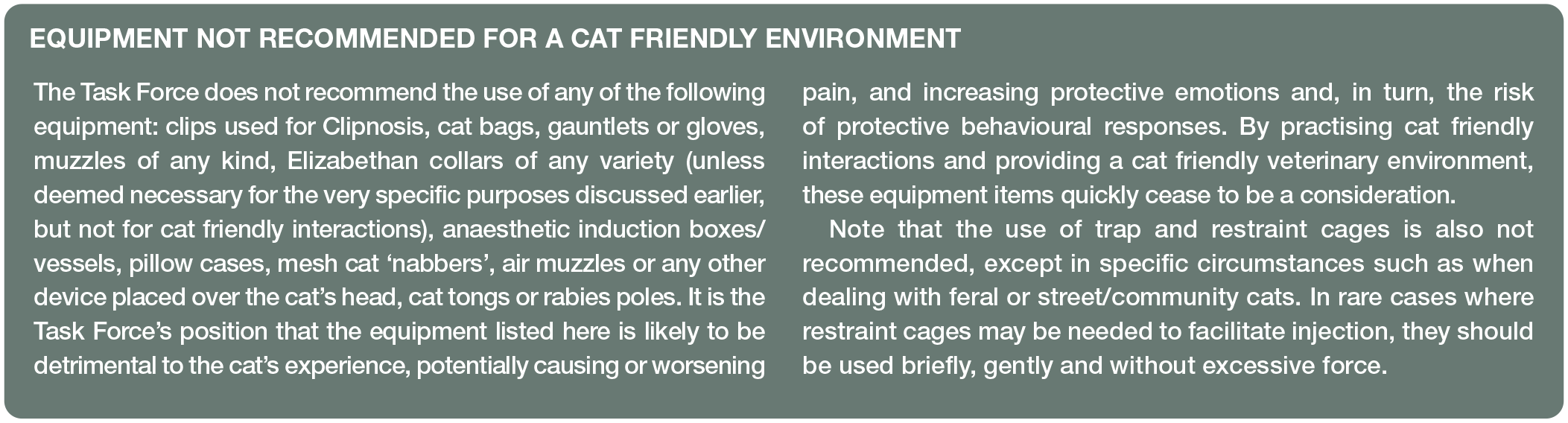
Certain items such as Elizabethan collars may be needed to prevent the cat from pulling at catheters (IV, urinary, etc) or tubes (feeding tubes, chest drains, etc), damaging or removing bandages, or licking wounds (surgical or otherwise). With consideration of appropriate analgesia perioperatively (eg, local anaesthesia, postoperative multimodal analgesia), the need for protection of surgical wounds may, however, be lessened. 66 The Task Force recommends that, if deemed necessary, only the soft variety of Elizabethan collar be used (Figure 32), avoiding hard plastic or other materials unless absolutely necessary. Other possibilities include the use of donut collars or recovery suits. It is important to recognise that any of these items will restrict the cat’s comfort, movement and possibly peripheral vision, thus potentially triggering protective emotions including frustration. Their use should be carefully weighed against these potential issues and, if they are still deemed necessary, periods of supervised time without the item should be permitted to allow the cat to eat, groom and to perform other normal behaviours. Where a potential need for an Elizabethan collar or other protective item is being anticipated, such as in the case of elective surgery, cooperative care techniques can be employed to acclimatise the patient to the item in advance. Cooperative care is fundamental to a cat friendly environment, and further information on how it may be introduced is provided in the accompanying ‘Cat Friendly Veterinary Interaction Guidelines’. 11

Soft Elizabethan collars are preferred over hard plastic versions, as they allow cats to move and eat, and are more comfortable. Image courtesy of Sam Taylor
Other useful items
✜ Small blood tubes, so anticoagulant is correctly diluted without excessive sample sizes being required. 86
✜ Blood collection systems for direct collection of blood into sample tubes.
✜ Portable ultrasound machines, on hand in the examination room or hospitalisation ward, so that quick diagnostic procedures, including point-of-care ultrasound and ultrasound-guided cystocentesis, can be performed without moving the cat. This is particularly important for dyspnoeic cats, who are vulnerable to decompensation due to stress (Figure 33).
✜ Unscented surgical scrub and cotton wool (cotton ball) or gauze, for skin cleaning for phlebotomy.
✜ Cat-specific licensed medications. Where licensed products are not available, or dosing does not fit the patient, pharmaceutical grade compounding is helpful to provide smaller tablet sizes (preferably with scoring to increase dosing options), flavoured liquids, flavoured treats and transdermal formulations. Note that transdermal medications should only be used where the specific medication has been studied for transdermal efficacy (eg, mirtazapine).87,88
✜ Crash trolley, incorporating a chart of cat doses of emergency drugs, and appropriately sized endotracheal tubes.

A small portable ultrasound machine can be very useful, allowing cats to be scanned in carriers and cages with minimal stress. This cat is free to move around and adopt a comfortable position. Avoiding stress for dyspnoeic patients is vital and point-of-care ultrasound can immediately identify effusions, for example, without restraint. Image courtesy of Sam Taylor
Conclusions
Achieving an optimal veterinary visit for cats depends on many factors, including the environment into which they are welcomed. As a prey species taken out of their natural home territory and transported to an unfamiliar setting, there is much that can be done to improve their experience by making the environment cat friendly, as discussed in these Guidelines. The Guidelines should be used in conjunction with the ‘ISFM’s Cat Friendly Principles for Veterinary Professionals’ 89 and the accompanying ‘Cat Friendly Veterinary Interaction Guidelines’. 11
Summary Points
✜ Every clinic can benefit from the advice and recommendations set out in the ‘2022 ISFM/AAFP Cat Friendly Veterinary Environment Guidelines’. While there is much to consider, as each clinic is unique, creation of a cat friendly veterinary environment need not involve significant financial investment.
✜ Rather than being overwhelmed, each veterinary team is encouraged to look at even the smallest adjustments they can make right away to their own veterinary environment, while starting to adopt other adjustments over time. Small and incremental changes will improve the veterinary visit for cats, caregivers and veterinary teams alike.
✜ The nature of interactions with the cat is also fundamental to being cat friendly, and is the focus of the accompanying ‘2022 AAFP/ISFM Cat Friendly Veterinary Interaction Guidelines: Approach and Handling Techniques’. 11
Supplemental Material
sj-docx-3-jfm-10.1177_1098612X221128763 – Supplemental material for 2022 ISFM/AAFP Cat Friendly Veterinary Environment Guidelines
Supplemental material, sj-docx-3-jfm-10.1177_1098612X221128763 for 2022 ISFM/AAFP Cat Friendly Veterinary Environment Guidelines by Samantha Taylor, Kelly St Denis, Sarah Collins, Nathalie Dowgray, Sarah LH Ellis, Sarah Heath, Ilona Rodan and Linda Ryan in Journal of Feline Medicine and Surgery
Supplemental Material
sj-pdf-1-jfm-10.1177_1098612X221128763 – Supplemental material for 2022 ISFM/AAFP Cat Friendly Veterinary Environment Guidelines
Supplemental material, sj-pdf-1-jfm-10.1177_1098612X221128763 for 2022 ISFM/AAFP Cat Friendly Veterinary Environment Guidelines by Samantha Taylor, Kelly St Denis, Sarah Collins, Nathalie Dowgray, Sarah LH Ellis, Sarah Heath, Ilona Rodan and Linda Ryan in Journal of Feline Medicine and Surgery
Supplemental Material
sj-pdf-2-jfm-10.1177_1098612X221128763 – Supplemental material for 2022 ISFM/AAFP Cat Friendly Veterinary Environment Guidelines
Supplemental material, sj-pdf-2-jfm-10.1177_1098612X221128763 for 2022 ISFM/AAFP Cat Friendly Veterinary Environment Guidelines by Samantha Taylor, Kelly St Denis, Sarah Collins, Nathalie Dowgray, Sarah LH Ellis, Sarah Heath, Ilona Rodan and Linda Ryan in Journal of Feline Medicine and Surgery
Supplemental Material
sj-pdf-4-jfm-10.1177_1098612X221128763 – Supplemental material for 2022 ISFM/AAFP Cat Friendly Veterinary Environment Guidelines
Supplemental material, sj-pdf-4-jfm-10.1177_1098612X221128763 for 2022 ISFM/AAFP Cat Friendly Veterinary Environment Guidelines by Samantha Taylor, Kelly St Denis, Sarah Collins, Nathalie Dowgray, Sarah LH Ellis, Sarah Heath, Ilona Rodan and Linda Ryan in Journal of Feline Medicine and Surgery
Supplemental Material
sj-pdf-5-jfm-10.1177_1098612X221128763 – Supplemental material for 2022 ISFM/AAFP Cat Friendly Veterinary Environment Guidelines
Supplemental material, sj-pdf-5-jfm-10.1177_1098612X221128763 for 2022 ISFM/AAFP Cat Friendly Veterinary Environment Guidelines by Samantha Taylor, Kelly St Denis, Sarah Collins, Nathalie Dowgray, Sarah LH Ellis, Sarah Heath, Ilona Rodan and Linda Ryan in Journal of Feline Medicine and Surgery
Supplemental Material
sj-pdf-6-jfm-10.1177_1098612X221128763 – Supplemental material for 2022 ISFM/AAFP Cat Friendly Veterinary Environment Guidelines
Supplemental material, sj-pdf-6-jfm-10.1177_1098612X221128763 for 2022 ISFM/AAFP Cat Friendly Veterinary Environment Guidelines by Samantha Taylor, Kelly St Denis, Sarah Collins, Nathalie Dowgray, Sarah LH Ellis, Sarah Heath, Ilona Rodan and Linda Ryan in Journal of Feline Medicine and Surgery
Supplemental Material
sj-pdf-7-jfm-10.1177_1098612X221128763 – Supplemental material for 2022 ISFM/AAFP Cat Friendly Veterinary Environment Guidelines
Supplemental material, sj-pdf-7-jfm-10.1177_1098612X221128763 for 2022 ISFM/AAFP Cat Friendly Veterinary Environment Guidelines by Samantha Taylor, Kelly St Denis, Sarah Collins, Nathalie Dowgray, Sarah LH Ellis, Sarah Heath, Ilona Rodan and Linda Ryan in Journal of Feline Medicine and Surgery
Supplemental Material
sj-pdf-8-jfm-10.1177_1098612X221128763 – Supplemental material for 2022 ISFM/AAFP Cat Friendly Veterinary Environment Guidelines
Supplemental material, sj-pdf-8-jfm-10.1177_1098612X221128763 for 2022 ISFM/AAFP Cat Friendly Veterinary Environment Guidelines by Samantha Taylor, Kelly St Denis, Sarah Collins, Nathalie Dowgray, Sarah LH Ellis, Sarah Heath, Ilona Rodan and Linda Ryan in Journal of Feline Medicine and Surgery
Supplemental Material
sj-pdf-9-jfm-10.1177_1098612X221128763 – Supplemental material for 2022 ISFM/AAFP Cat Friendly Veterinary Environment Guidelines
Supplemental material, sj-pdf-9-jfm-10.1177_1098612X221128763 for 2022 ISFM/AAFP Cat Friendly Veterinary Environment Guidelines by Samantha Taylor, Kelly St Denis, Sarah Collins, Nathalie Dowgray, Sarah LH Ellis, Sarah Heath, Ilona Rodan and Linda Ryan in Journal of Feline Medicine and Surgery
Supplemental Material
sj-pdf-10-jfm-10.1177_1098612X221128763 – Supplemental material for 2022 ISFM/AAFP Cat Friendly Veterinary Environment Guidelines
Supplemental material, sj-pdf-10-jfm-10.1177_1098612X221128763 for 2022 ISFM/AAFP Cat Friendly Veterinary Environment Guidelines by Samantha Taylor, Kelly St Denis, Sarah Collins, Nathalie Dowgray, Sarah LH Ellis, Sarah Heath, Ilona Rodan and Linda Ryan in Journal of Feline Medicine and Surgery
Footnotes
Acknowledgements
ISFM Cat Friendly Clinic is sponsored by IDEXX, Ceva, Royal Canin, Boehringer Ingelheim and Zoetis. The AAFP Cat Friendly Practice Program is sponsored by Zoetis, Boehringer Ingelheim, Ceva Animal Health, Elanco, Hill’s, IDEXX, Merck Animal Health, Purina Pro Plan Veterinary Diets and Royal Canin, and is supported by Wedgewood Pharmacy. ISFM and the AAFP gratefully acknowledge the support of these companies in enabling them to deliver and build on their Cat Friendly Clinic/Practice programmes.
Supplementary material
The following files are available online at jfms.com and can also be accessed at catvets.com/environment and  .
.
✜ Getting to know your cat: new client questionnaire (ISFM and AAFP versions).
✜ Example dietary history questionnaire for caregivers.
✜ ISFM/AAFP cat friendly hospital chart.
✜ ISFM guide for cat carers – ‘Taking your cat to the veterinary clinic’.
✜ ISFM guide for cat carers – ‘Cat Friendly Clinic: cat friendly veterinary care’.
✜ AAFP client brochure – ‘Visiting your veterinarian: getting your cat to the veterinary practice’.
✜ AAFP client brochure – ‘You and your cat deserve a Cat Friendly Practice®’.
Conflict of interest
Sam Taylor is employed by Linnaeus. Nathalie Dowgray is employed part-time as a post-doctoral researcher at the Feline Healthy Ageing Clinic funded by Royal Canin. Ilona Rodan serves on an advisory board for Royal Canin. All members of the Task Force have also received financial remuneration for providing educational material, speaking at conferences and/or consultancy work; however, none of these activities cause any direct conflict of interest in relation to these Guidelines.
Funding
The members of the Task Force received no financial support for the research, authorship, and/or publication of this article.
Ethical approval
This work did not involve the use of animals and therefore ethical approval was not specifically required for publication in JFMS.
Informed consent
This work did not involve the use of animals (including cadavers) and therefore informed consent was not required. For any animals or people individually identifiable within this publication, informed consent (verbal or written) for their use in the publication was obtained from the people involved.
References
Supplementary Material
Please find the following supplemental material available below.
For Open Access articles published under a Creative Commons License, all supplemental material carries the same license as the article it is associated with.
For non-Open Access articles published, all supplemental material carries a non-exclusive license, and permission requests for re-use of supplemental material or any part of supplemental material shall be sent directly to the copyright owner as specified in the copyright notice associated with the article.
