



Abstract
Objectives
The aim of this study was to analyze the behavioral characteristics and success of adoption for previously hoarded cats.
Methods
Shelter records and post-adoption surveys were analyzed for hoarded cats ⩾6 months old at intake. A non-standard scoring system was used. Intake scores were allocated contemporaneously and socialization scores were applied retrospectively for three time points (TPs): 5–10 days post-intake (shelter TP), ⩽1 week post-adoption (home TP1) and >1 week post-adoption (home TP2). Adoption returns were compared between hoarded and non-hoarded cats.
Results
The study included 195 hoarded cats, of which 174 were adopted. Of 164 cats with intake scores, 86 (52%) were scored as ‘friendly’ at intake. Forty-five cats had socialization scores for all of the TPs, and of these, the percentages of ‘supersocial’ or ‘social’ decreased from 87% at the shelter TP to 47% at home TP1, then increased to 84% at home TP2. Most cats that scored as ‘tense’ at intake had supersocial or social scores at home TP2. Nine of the 88 cats with survey results had out-of-box (OOB) elimination in either the shelter or home but only 1/88 in both. Adopters expressed positive feelings for 42/43 cats for which feelings-based language was used in their survey responses. Notable behaviors, such as neediness, were recorded for 48/88 cats. Relationships with other household pets were typically positive. Eighteen of 174 hoarded (10%) and 188/2662 non-hoarded (7.1%) cats were returned post-adoption. Of these, six hoarded and 87 non-hoarded returns included behavioral reasons. There were no significant differences between hoarded and non-hoarded cats for total or behavioral returns.
Conclusions and relevance
Hoarded cats had high adoption rates, high adopter satisfaction and the potential for good emotional well-being in adoptive homes. Behavior at intake and OOB elimination in the shelter may not reflect post-adoption behavior. Behavior-based outcome decisions for these vulnerable animals should be deferred to allow time for habituation.
Introduction
Animal hoarding is a poorly understood phenomenon characterized by the pathological accumulation of more than the typical number of companion animals; failure to provide minimum standards of nutrition, sanitation and veterinary care; denial of this inability and its impact on the animals and people involved; and continuing to accumulate animals despite these circumstances.1,2
At the time of their removal, animals have often lived in hoarding conditions for >5 years, 3 with chronic exposure to stressors. These include limited access to positive human social interactions, crowding, inadequate food and/or water, competition for resources, inability to escape from aggressive animals, poor air quality, squalid conditions and lack of veterinary care.3–6 Hoarded animals may also suffer ‘secondary victimization’ after seizure, due to traumatic removal and long periods of confinement due to their status as property and evidence. 7 A better understanding of their emotional needs and capacity for resilience is important to prevent further suffering and facilitate humane outcomes after removal from the hoarding environment.
Cats are frequently involved in hoarding cases and often constitute the majority of hoarded animals.1,8,9 Exposure to short-term stress has been tied to feline behavior changes, 10 but there is little information regarding the behavioral impacts of hoarding in this species. Hoarding has resulted in fear, attention-seeking, separation-related anxiety and house soiling in dogs; 5 however, canine findings cannot be extrapolated to cats.
The life histories and resulting degrees of socialization of hoarded cats are highly variable, even within a hoarded group. Cats born into a hoarded group receive diminishing opportunities for socialization as the number of hoarded animals increases. In many cases, co-hoarded cats do not originate from a single source.3,11 Sources include unplanned litters, previous pets, unsocialized community cats and deliberate breeding.3,4,11,12 Therefore, the ability of individual hoarded animals to adapt to a conventional home environment can be expected to vary.
Historically, many seized hoarded animals have been euthanized because shelter resources were insufficient to manage large groups with potentially challenging medical and/or behavioral problems.4,6,13,14 Outcome decisions may need to be made rapidly, owing to space and resource constraints. The stigma of having been in a hoarding environment may lead to assumptions that these animals are not adoptable. 15 It is therefore crucial to better understand the behavior of hoarded animals, and how this might change over time. This information could also be used to target shelter interventions to the behavioral needs of hoarded animals.
The objectives of this study were to: (1) document behavioral characteristics of hoarded cats; (2) analyze behavioral change before and after adoption; (3) assess the success of home placement through quantitative (adoption returns) and qualitative (adopter satisfaction) means; and (4) compare frequency of, and reasons for, adoption returns between hoarded and non-hoarded cats.
Materials and methods
Study design
The study examined case records from hoarded cats relinquished to Toronto Humane Society (THS) between 26 July 2011 and 11 June 2014. 12 Information was retrieved from paper and electronic records (PetPoint Data Management System) and post-adoption survey responses. Cats <6 months old at the time of intake were excluded, to remove confounding effects of young age on behavior and socialization. Possible outcome types were adopted, barn placed, died, euthanized and returned to owner. Adoption return data until 31 December 2019 were extracted. Cats were designated as hoarded if they were identified as having originated from a hoarding environment by a shelter veterinarian, shelter manager and/or intermediary (typically a community animal activist/volunteer or a partner agency), based on (1) having more than the typical number of companion animals and (2) failing to provide appropriate nutrition, sanitation, shelter and veterinary care. 12 This definition included cats housed in large numbers with no control over breeding. The shelter does not conduct cruelty investigations/seizures and frequently relies on intermediaries to facilitate relinquishment of hoarded animals.
The THS shelter is a private, limited-admission, adoption-guarantee (‘no-kill’) shelter with a full-service veterinary hospital. A standardized intake protocol was followed for all cats. Additional diagnostics and treatment were provided as needed. In this shelter, cats were considered to be candidates for adoption if good medical and behavioral welfare were anticipated to be achievable in an adoptive home, even if considerable time and resources were required to reach this point. Barn placements were arranged for unsocialized or undersocialized cats that experienced poor welfare in human company. Euthanasia decisions were made by shelter veterinarians for severe medical and/or behavioral conditions, when the prognosis for providing a good quality of life was considered poor. At the time of the study, the shelter did not employ an animal behaviorist, and formal behavior modification techniques were not used. However, dedicated staff and volunteers did use strategies to reduce stress and socialize poorly socialized animals. These included out-of-cage space (or at least double-sided cages), environmental enrichment (particularly hiding opportunities) and staff/volunteer interaction sessions, with a focus on creating a positive association through the provision of food or play, from whatever distance the cat felt comfortable. These staff and volunteers underwent a training program focused on recognizing signs of stress in cats, specific techniques to help create a positive association and how/when to alter their interaction style in response to the behaviors exhibited by the cats. Staff and volunteers were required to document free-text, qualitative detail on the content and quality of each interaction, including what they did during the session, how the cat responded and any tips for subsequent interaction sessions.
Behavioral assessment: intake
Cats were contemporaneously allocated a behavioral score at intake (‘intake score’) by the examining veterinarian or registered veterinary technician. This was a subjective categorical score, using broad descriptors that were provided in table form (Table 1), and was routinely incorporated into intake examinations at that time.
Behavior score allocated to shelter cats at intake examination (intake score)
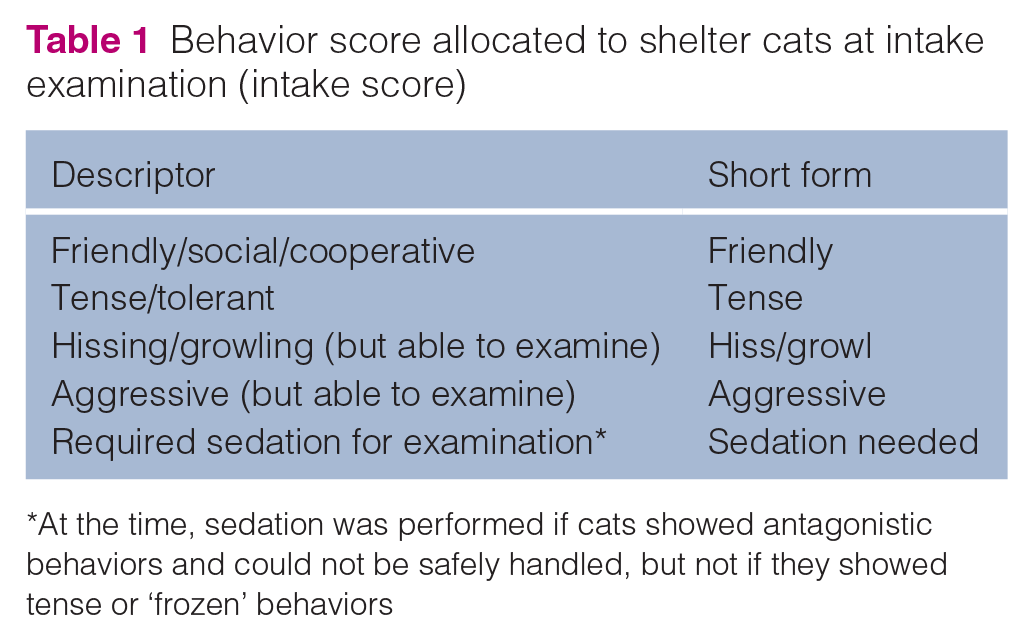
At the time, sedation was performed if cats showed antagonistic behaviors and could not be safely handled, but not if they showed tense or ‘frozen’ behaviors
Post-adoption survey
A post-adoption survey, in the form of an individualized email, was sent to adopters during the summer of 2014 for hoarded cats that had been in the adoptive home for at least 1 month. One follow-up email was sent several days after the first if there was no response. The survey used open-ended questions to document post-adoption behavior (Table 2). Answers to question 1 were used for scoring for ‘home time point (TP) 1’ and answers to question 2 for ‘home TP 2’.
Post-adoption survey completed by adopters of hoarded cats admitted to an animal shelter, which were ⩾6 months old at intake and had been in the adoptive home for at least 1 month

Behavioral assessment: in-shelter and post-adoption
Retrospective behavior assessments were designed for the study by one of the investigators (JE), a certified applied animal behaviorist specializing in feline behavior and welfare (Table 3). A ‘socialization score’ was employed, using a four-level ordinal scale (Table 3, part A). The socialization scale was designed to reflect evidence of socialization in cats of unknown history, rather than to reliably reflect their level of socialization. Current behavior may or may not reflect socialization status or history of comfort with humans, and we used this scale as our best approximation.
Operational definitions for behavior of previously hoarded cats admitted to an animal shelter
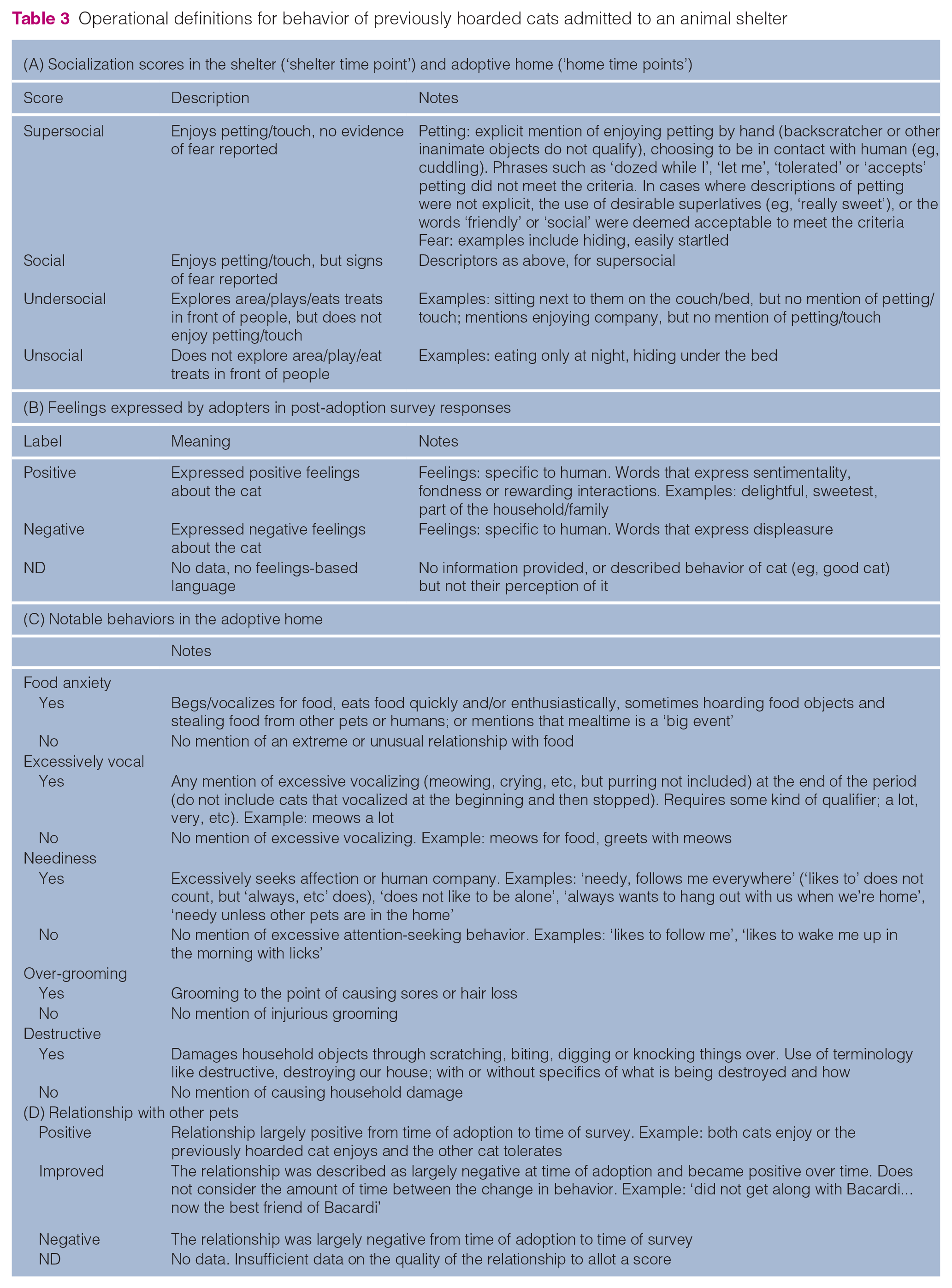
Socialization scores were retrospectively applied through a review of free-text volunteer notes entered from day 5 to day 10 after intake, after a habituation period (shelter time point [shelter TP]), and through review of post-adoption survey responses (home TP1, ⩽1 week post-adoption; home TP2, >1 week post-adoption). The 5-day in-shelter habituation period (ie, days 0–4) was chosen because it is the period beyond which behavioral signs of stress in singly-housed cats can be reasonably assumed to have plateaued. 16
The scorers classified adopter feelings about cats as positive or negative, based on feelings-based language (Table 3, part B). Litter box use was recorded twice daily in the shelter. Each cat’s record was scrutinized for out-of-box (OOB) elimination events. The cat was classified as having had OOB elimination in the shelter if this was noted at least twice and/or if an OOB disclosure was provided at adoption. Adopters were asked about OOB elimination in the home. Notable behaviors described by adopters were reviewed and categorized (Table 3, part C) and relationships with other pets were categorized (Table 3, part D).
All retrospective scores and classifications were allocated independently by JE and KJ. In cases of disagreement between raters, JE’s scores were used.
Adoption returns
Numbers of returns were recorded, and reasons were retrieved from the surrender forms. The adopter’s free-form, verbatim reason for surrender was recorded. Non-hoarded cats were included if they had an intake during the study period, were ⩾6 months old at the time of intake and had an initial adoption outcome. Operational definitions were created to classify behavioral reasons for returns (Table 4).
Operational definitions for behavioral adoption return reasons, for hoarded and non-hoarded cats adopted from an animal shelter

Statistical analysis
Cohen’s kappa 17 was used to determine inter-observer agreement for behavioral scores. Strength of agreement was interpreted following the standards provided by Landis and Koch. 18 The Kruskal–Wallis test was used to compare the length of stay to adoption for different intake scores. The χ2 test was used to compare hoarded and non-hoarded cats for number of returns and number of returns for behavioral reasons. Data were analyzed using Microsoft Excel Real Statistics Resource Pack software (release 7.6.1). Significance was set at P <0.05.
Results
Study population
The original study group 12 contained 371 cats. One hundred and sixty-two were excluded from the current study because they were <6 months old at intake, and 14 were excluded owing to missing data. Tables 1 and 2 in the supplementary material show the relationship between the two data sets. The study population consisted of 195 previously hoarded cats from 13 sources, of which 174 were adopted and 21 had non-adoption outcomes (Figure 1). Intake scores were recorded for 164 cats (150 adopted, 14 not adopted). There was sufficient information to allocate socialization scores at the shelter TP to 104 cats (97 adopted, seven not adopted). Survey responses were returned for 89 cats, which was a response rate of 51%. There was sufficient information for socialization scores at both home TPs for 88/89 cats. Forty-five cats from nine hoarding environments had intake scores and socialization scores for all four TPs (Figure 1).
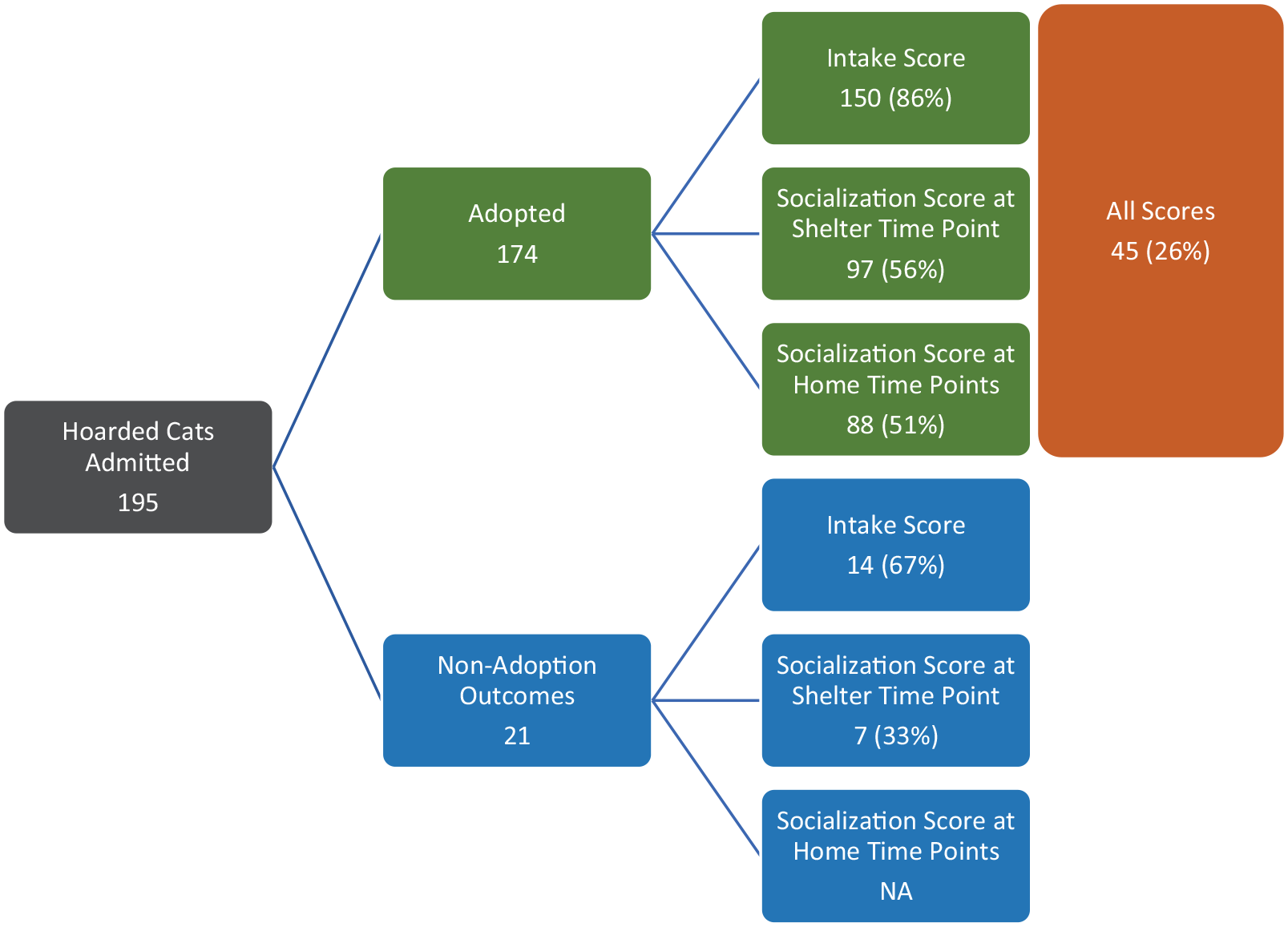
Study population of hoarded cats admitted to Toronto Humane Society, showing sample sizes for different behavior scores. NA = not applicable
Inter-observer agreement
There was substantial to perfect agreement between raters for socialization scores. Kappa values were as follows: shelter TP = 0.83 (SE 0.05); home TP1 = 0.80 (SE 0.05); and home TP 2 = 0.78 (SE 0.06). Identification of notable behaviors had substantial to almost perfect agreement between raters. Kappa values were as follows: food anxiety = 0.92 (SE 0.05); excessively vocal = 0.89 (SE 0.06); neediness = 0.97 (SE 0.03); over-grooming = 0.79 (SE 0.20); destructiveness = 0.78 (SE 0.12); and relationship with other pets = 0.92 (SE 0.07).
Behavioral scores
Of the 164 cats with intake scores, 86 (52%) were scored as ‘friendly’, 60 (37%) as ‘tense’, two (1.2%) as ‘hiss/growl’, one (0.6%) as ‘aggressive’ and 15 (9.1%) as ‘sedation needed’ (Tables 1 and 5). Eight cats that were scored as ‘tense’ or ‘sedation needed’ were placed in barns. Eleven cats scored as ‘sedation needed’ (73% of the cats with this designation) were adopted.
Intake scores and outcome types for 164 hoarded cats admitted to an animal shelter, which were allocated behavior scores during the intake examination

Data are shown as n (%)
Length of stay (LOS) to adoption for cats scored as ‘friendly’ at intake was a median of 31 days (interquartile range [IQR] 12–54; n = 81) vs 41 days (IQR 16–61; n = 55) for ‘tense’ and 63 days (IQR 40–71; n = 11) for ‘sedation needed’ (P <0.05). Groups for ‘hiss/growl’ (LOS 32 and 132 days; n = 2) and ‘aggressive’ (LOS 40 days; n = 1) could not be compared because the sample sizes were too small.
For 45 cats that had intake scores and all three socialization scores, the majority were scored as ‘supersocial’ or ‘social’ after habituation to the shelter and to the adoptive home: shelter TP = 39/45 (87%); and home TP2 = 38/45 (84%) (Figure 2). By contrast, only 21/45 (47%) cats were scored as ‘supersocial’ or ‘social’ immediately after adoption (home TP1). While 2/45 (4.4%) of cats scored as ‘unsocial’ at the shelter TP, and 11/45 (24%) at home TP1, no cats scored as ‘unsocial’ at home TP2. Table 6 shows the intake score in relation to the socialization score at home TP2. Two cats that were scored as ‘friendly’ at intake scored as ‘undersocial’ at home TP2. Most cats that were ‘tense’ at intake had ‘supersocial’ or ‘social’ scores at home TP2 (n = 15/17; 88%), while those that showed antagonistic behaviors (hiss/growl, sedation needed) had the same proportion of ‘supersocial/social’ or ‘undersocial’ scores (n = 3/6 each; 50%).

Socialization scores of 45 hoarded cats admitted to an animal shelter, based on behaviors reported after habituation to the shelter (shelter time point), within a week of adoption (home time point 1) and at least a week after adoption (home time point 2)
Intake score in relation to the socialization score at home time point 2 (>1 week post-adoption), in 45 hoarded cats admitted to an animal shelter and subsequently adopted

Data are shown as n (%)
Feelings-based language was used for 43/88 cats with post-adoption survey results. Feelings were classified as positive for 42/43 (98%) and negative for one – this adopter stated that they were ‘looking for a friendly, lap cat’. The cat concerned scored ‘undersocial’ at home TP2 and showed destructive behavior.
Notable behaviors in the home were recorded for 48/88 cats (55%). Twenty each (20/88; 23%) were described as excessively vocal or needy, 16 (18%) showed mild to severe food anxiety, seven (8%) were destructive and two (2.3%) showed over-grooming behavior. Thirty-two demonstrated one notable behavior, 15 showed two and one showed three. Behavior toward other pets in the home could be categorized for 24 relationships (20 cats, four dogs). Relationships with other cats were positive from the outset for 12/20 (60%) and toward dogs for 4/4 (100%), and were described as having improved toward cats for 6/20 (30%). Negative interactions towards other cats were described for 2/20 (10%).
For cats with survey results, OOB elimination in the shelter was identified in 5/88 (5.7%), with the same number reported in the home (Table 7). However, only 1/9 had OOB elimination in both settings. The nine cats with OOB elimination originated from five source groups. Three cats with OOB elimination were returned. The return reasons provided were ‘not suitable‘, ‘litter box issues’ and ‘not stated‘.
Out-of-box elimination behaviors in the shelter and post-adoption in nine hoarded cats admitted to an animal shelter

OOBU = out-of-box urination; OOBD = out-of-box defecation; return = adoption return; Y = yes
Adoption returns
Eighteen of 174 hoarded cats (10%) and 188/2662 non-hoarded cats (7.1%) had at least one return recorded by the end of 2019. The intake types for the non-hoarded cats that were returned were as follows: owner surrender, 53%; custodial surrender (surrender by a person responsible for an animal, but not their legal owner, eg, a colony cat caregiver), 13%; stray/abandoned, 8%; and transfer from shelter or rescue, 26%. There was one return for 17/174 (9.8%) hoarded cats and 171/2662 (6.4%) non-hoarded cats, and two returns for one (0.6%) and 17 (0.6%), respectively. There was no statistically significant difference in the number of adoption returns between hoarded and non-hoarded cats (P = 0.1). For the 18 hoarded cats that were returned, six (33%) returns included at least one behavioral reason. Behavioral reasons were reported for 46% (n = 87/188) of returns for non-hoarded cats. There was no statistically significant difference between hoarded and non-hoarded cats for behavioral returns (P = 0.3). There were a variety of return reasons for both hoarded and non-hoarded cats (Table 8).
Behavioral reasons for adoption returns for hoarded and non-hoarded cats admitted to an animal shelter
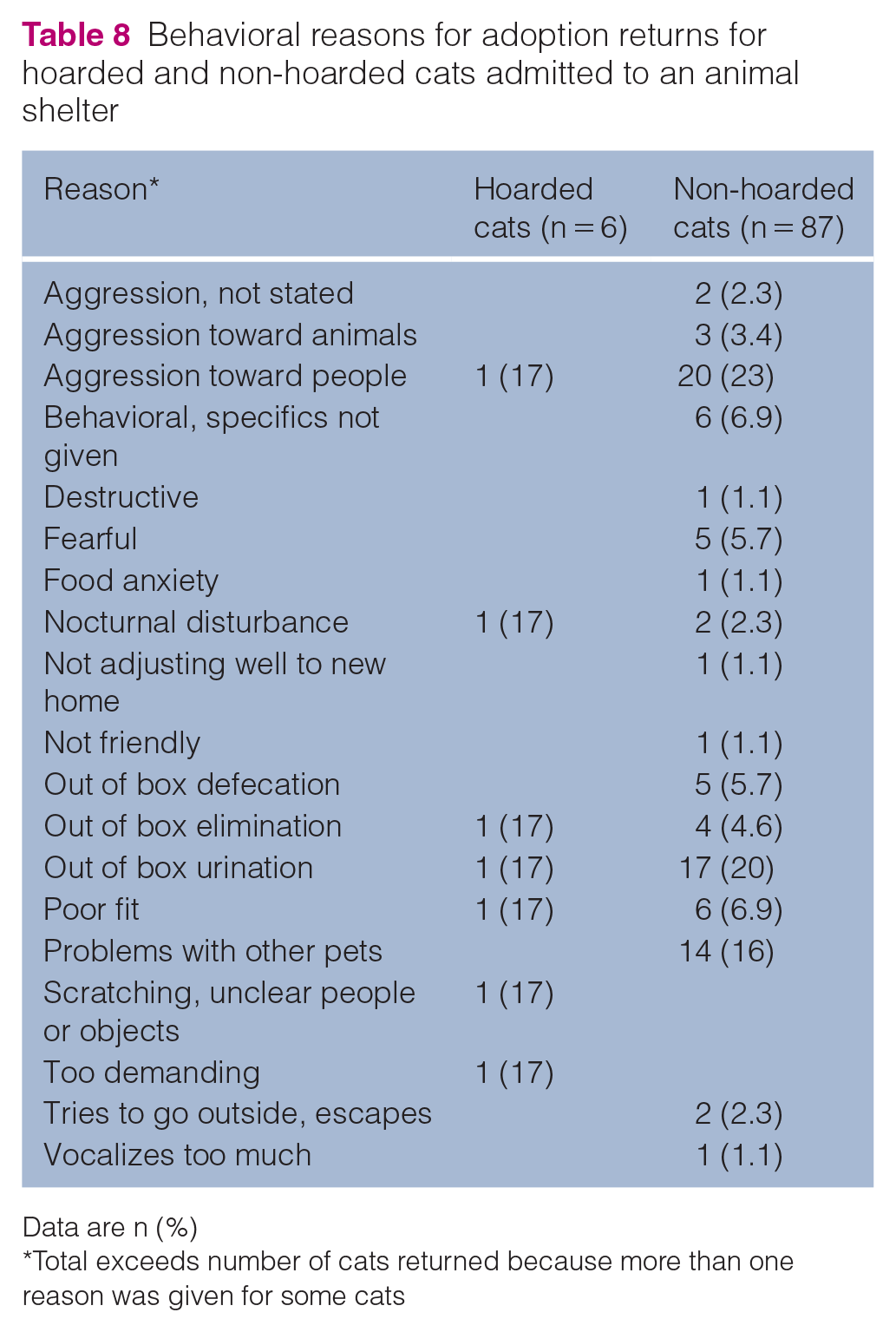
Data are n (%)
Total exceeds number of cats returned because more than one reason was given for some cats
Discussion
This study reports the first published findings of the behavioral characteristics and adoptability of previously hoarded cats. This is an important and largely overlooked aspect of animal hoarding. The study showed high adoptability and successful adoption outcomes for hoarded cats from multiple sources, without the use of formal behavior modification techniques. Adopters expressed positive feelings about their cats in nearly all cases, and adoption returns were uncommon. The high percentage of ‘supersocial’ and ‘social’ scores at home TP2 suggested that most cats were likely to experience good emotional well-being in a traditional home environment.
More cats were scored as ‘undersocial’ or ‘unsocial’ immediately after entering their adoptive homes, compared with after habituation to the shelter and at least 1 month after adoption. This may have been stress related. Even cats well adapted to life in conventional homes are notoriously neophobic, 19 and may initially react negatively to unfamiliar environments or people. Stress levels in shy cats placed in cages decreased over several days. 20 The changes we observed over time suggest that behavior-based outcome decisions should be deferred to allow time for stress levels to decrease.
A 5-day shelter habituation period was allowed before assigning a socialization score for the shelter TP. This duration was largely based on Kessler and Turner’s findings that there were no significant changes in daily average stress scores after day 5. 16 Other authors have reported a steep decline in behavioral signs of stress immediately following intake, which stabilize in a similar time period.20–24 The ideal duration of the habituation process for cats from a hoarding environment has not been evaluated. Many factors can influence the amount of time that may be required for cats to reach a baseline stress level. In a hoarding context these would include chronic stress, chronic illness and the potential for reduced levels of socialization. Given the highly variable nature of hoarding situations, it may not be possible to establish a clear guideline regarding the ideal duration of habituation prior to making outcome decisions for hoarded cats. Shelters may consider using the American Society for the Prevention of Cruelty to Animals’ Feline Spectrum Assessment (https://www.aspcapro.org/research-feline-spectrum-assessment/implement-feline-spectrum-assessment-fsa-your) to gain insight into a cat’s level of socialization. This assessment can be performed in a maximum of 3 days, is designed to account for the stress inherent in the first few days, provides clear results and is the best validated behavioral test for use with shelter cats.25–27
Approximately a third of the cats in our study were scored as ‘tense’ at the intake TP. Tense (frozen, passive) behaviors can easily be misinterpreted. Cats initially exhibiting these behaviors may be assumed to be unadoptable; however, the majority of cats identified as ‘tense’ at intake were subsequently adopted, and most ‘tense’ cats with follow-up socialization scores were considered ‘supersocial’ or ‘social’ at home TP2 (Table 6).
Approximately three-quarters of the cats designated as ‘sedation needed’, and all three cats with intake scores of ‘hiss/growl’ or ‘aggressive’ were ultimately adopted. There was a significant difference in LOS to adoption between cats scored at intake as ‘sedation needed’, ‘friendly’ and ‘tense’. The study did not assess whether this was because of time required to be medically/behaviorally cleared for adoption, or because they were available but no adopters selected them. However, the fact that the shortest LOS (‘friendly’) was the group that exhibited the most affiliative behavior at intake, and the group with the longest LOS (‘sedation needed’) was the group that exhibited the most antagonistic behavior, suggests that behavior was a factor in the prolonged LOS. While these cats were ultimately adoptable, more resources were required for them to reach this outcome.
The percentage of cats in our study that exhibited signs of fear (‘tense’, ‘hiss/growl’, ‘aggressive’, ‘sedation needed’; 48%) and antagonistic behaviors (‘hiss/growl’, ‘aggressive’, ‘sedation needed’; 11%) at intake (Table 5) was notably lower than a previous report of fearfulness in 96% and aggression in 43% of hoarded animal groups at first intervention. 3 However, the results are not directly comparable, as the previous study rated behavior on site before removal, did not differentiate between species, and reported behaviors for groups, not individuals. Further, the majority of animals in that study were dogs. Our study showed that cats may frequently enter a shelter from a hoarding situation without exhibiting overt fear or antagonistic behaviors.
The number of adoption returns after several years did not differ significantly between hoarded and non-hoarded cats. Hoarded cats were returned for a variety of reasons, with a similar percentage of behavioral returns compared with non-hoarded cats. It is possible that adopters in our study were more committed to the hoarded cats, and willing to accept more unusual behaviors, but this was not reflected in the post-adoption survey comments. Our findings are consistent with a study that compared adopted cats from a single hoarding environment with non-hoarded cats, through an owner survey. 28 The hoarded cats were thought to be previously socialized cats that had been ‘rescued’. 28 That study also did not find significant differences between hoarded and non-hoarded cats for behavior problems. There were no significant differences between hoarded and non-hoarded cats for approaching the owner, being approached or playful behavior. 28 Hoarded cats were significantly more likely to remain on or jump onto the owner’s lap. In contrast with hoarded dogs, which were more likely to be fearful of strangers and touch, 5 these cats were significantly friendlier to both familiar and unfamiliar people. Hoarded cats were significantly more fearful of loud noises and vacuum cleaners, but significantly less fearful of ‘seemingly everything’ than non-hoarded cats. 28 Fearfulness in previously hoarded cats may reflect prior experiences, the specific hoarding environment, or an inherent difference in the responses of dogs and cats to the chronic stress and emotional deprivation associated with hoarding.
OOB elimination is a common reason for relinquishment of cats to shelters.29,30 Hoarding environments are likely to have insufficient numbers of litter boxes, sub-optimal substrates and inadequate frequency of cleaning. This may lead to the assumption that hoarded cats are not accustomed to using a litter box and may fail to adapt to using a box. However, OOB elimination was uncommon in the hoarded cats in our study and rarely resulted in adoption returns. It was striking that only 1/88 cats exhibited OOB elimination in both the shelter and the adoptive home. McMillan did not find significantly greater litter box concerns for hoarded cats compared with non-hoarded cats. 28 This contrasts with hoarded dogs, which were more likely to exhibit house soiling behavior in the home when left alone. 5 Incomplete house training is the most common diagnosis for canine house soiling. 31 Cats, however, typically use a litter box without any training, and will often use a litter box even under suboptimal conditions. 32
Notable behaviors were identified in almost half of the hoarded cats in our study. However, without assessing similar behaviors in non-hoarded cats, we could not determine to what extent these behaviors specifically reflect the effects of hoarding. Almost a third of adopters of hoarded cats in a previous study 28 stated that visitors had commented that their cats’ behavior was unusual. Those observations did not follow a particular pattern and ranged from the cat being unusually timid to unusually affectionate. Excessively vocal and needy behavior was frequently reported in our study. Cats from an institutional hoarding situation were dubbed ‘Velcro cats’ because of their intense desire for affection (see www.torontocatrescue.ca/toronto-cat-rescue-blog/2017/02/06/meet-velcro), while cats from another hoarding environment were characterized by adopters as affectionate and attention seeking. 28 This extremely affectionate behavior is also reminiscent of cats reunited with their owners after a 3 month quarantine. 33 Cats in quarantine were less affectionate, more nervous and less playful during the quarantine period, more affectionate and more timid after leaving quarantine, and continued to spend more time with their owners 3 months after returning home. 33
Food anxiety was identified by a number of adopters in our study. This has not been previously explored in feline literature, but is frequently described in popular science resources (eg, www.catster.com/lifestyle/cat-behavior-problemshealth-eating-disorders) or social question-and-answer websites (eg, www.reddit.com/r/cats/comments/5ggo0m/cat_obsessed_with_food_please_help_long/), primarily in former community cats and cats that have experienced food insecurity (eg, needing to hunt or scavenge daily, fighting with other cats for resources and bouts of insufficient resources available). It has even been termed ‘stray cat eating syndrome’ (see thecatsite.com/threads/stray-cat-eating-syndrome.268634/). It is not unreasonable to suppose that similar insecurity may be experienced by cats in hoarding environments. The concept of food anxiety in cats (and differences in presentation between cats of different intake types) is an interesting area for future research.
Most of the hoarded cats in our study that were adopted into homes with other pets had an affiliative relationship with the resident pets after a habituation period. McMillan 28 reported that hoarded cats were significantly more friendly than non-hoarded cats toward other cats. While cats in hoarding environments may lack opportunities to be properly socialized to humans, and therefore be fearful of them, their constant exposure to conspecifics could result in them being very well socialized to other cats (and, on occasion, other animals). In this respect, hoarded cats may differ from hoarded dogs, which were likely to be more fearful of conspecifics. 5 The authors (LJ, JE) have observed that housing hoarded cats in pairs or groups can markedly reduce their stress when entering a shelter environment. Hoarded cats are also likely to be good candidates for adoption to homes with other cats, as well as other species with which they are familiar.
This study had several limitations. The behavior scores relied on subjective assessments at intake, and non-standardized, open-ended observations from shelter volunteers and adopters. A prospective, formal assessment would have been preferable, and a direct comparison with a matched group of non-hoarded cats would be ideal. However, scores were designed by a specialist in the field (JE), inter-observer agreement was excellent and cats were not included if scores could not be applied with confidence. Informal assessments are performed in a typical sheltering environment and are used in decision-making.
The cats’ apparent degree of socialization was classified based on the reported quality of their interactions with humans (to capture socialization to people specifically) and behaviors indicative of fear (to capture socialization more broadly). It was not possible to validate that these behaviors or classifications accurately reflected true socialization status of the cats, owing to a lack of sufficient behavioral history before being surrendered to THS. The authors acknowledge that it is possible that behaviors were exhibited due to other factors (eg, stress of shelter conditions, trauma or genetic predisposition to be shy). However, classifying cats in four categories (1 = enjoys touch/not fearful; 2 = enjoys touch/fearful; 3 = does not enjoy touch/not fearful; 4 = does not enjoy touch/fearful) seemed the most objective way to classify the evidence of socialization status of each cat post hoc, based on the type of data available.
Another limitation was the lack of detailed information about the source environments, precluding any ability to determine the levels of socialization and deprivation the cats had previously experienced. The study may also not reflect the behavioral characteristics of cats from more severe and large-scale hoarding cases, given that most cats were voluntarily relinquished.
Missing intake and socialization scores might have been a source of bias if the reasons for the omissions were similar. This is considered unlikely. Intake scores were allocated regardless of socialization or temperament. Some poorly socialized animals may not have received socialization scores at the shelter TP because of limited interaction with volunteers, but some volunteer notes were also missing for medical reasons – at that time, volunteers did not interact with cats in isolation rooms, and many cats required isolation and treatment. Cats that were not considered adoptable were, self-evidently, not included in the home TPs; however, these cats accounted for a small number of the total. Response bias in the post-adoption survey might have biased the result toward socialized cats and satisfied adopters. Despite these limitations, the findings were comparable to those from a previous report 28 and provide important preliminary findings on the behavioral characteristics of hoarded cats.
Conclusions
Hoarded cats should not be assumed to be less adoptable or have greater potential for adoption returns simply on the basis of having lived in a hoarding environment. Litter box issues were uncommon in this study, and should not be assumed to occur as a result of hoarding. The majority of hoarded cats were successfully adopted, and the high percentage of supersocial and social scores at TP2 suggested that the cats were likely to experience good emotional well-being in a traditional home environment.
Many hoarded cats would benefit from being co-housed with conspecifics in the shelter, and may be adoptable to homes with other cats, or other species to which they are accustomed. Notable behaviors, such as being excessively vocal and needy, and showing food anxiety, warrant further investigation.
Outcome decisions based on behavioral characteristics should be deferred to allow habituation to a new environment, given the likelihood that these vulnerable animals will experience high levels of stress and fear at admission, and that different behaviors will be observed after habituation. Many studies have shown that cats habituate to a shelter in an average of 5 days, but it is not known how a hoarding background might influence the time to habituation.
Supplemental Material
Supplementary Table 1
Group composition of hoarded cats previously reported in a study of medical conditions, and composition of a subset used to evaluate behavior and adoptability in the current study
Supplemental Material
Supplementary Table 2
Length of stay from intake to first adoption for adopted hoarded cats previously reported in a study of medical conditions and in the subset of cats in the current study
Footnotes
Acknowledgements
The authors are grateful to Dr David Kozuch and Procter & Gamble, who made this study possible. Thank you to Dr Caitlin Davidson, Mariana Accioly Lima and Ying (Angela) He, for their invaluable assistance. We thank the management and Board of Toronto Humane Society for their support.
Supplementary material
The following files are available online:
Supplementary Table 1: Group composition of hoarded cats previously reported in a study of medical conditions, and composition of a subset used to evaluate behavior and adoptability in the current study
Supplementary Table 2: Length of stay from intake to first adoption for adopted hoarded cats previously reported in a study of medical conditions and in the subset of cats in the current study
Conflict of interest
The authors declared no potential conflicts of interest with respect to the research, authorship, and/or publication of this article.
Funding
Procter & Gamble funded a summer internship for JG at Toronto Humane Society.
Ethical approval
The work described in this manuscript involved the use of non-experimental (owned or unowned) animals. Established internationally recognized high standards (‘best practice’) of veterinary clinical care for the individual patient were always followed and/or this work involved the use of cadavers. Ethical approval from a committee was therefore not specifically required for publication in JFMS. Although not required, where ethical approval was still obtained, it is stated in the manuscript.
Informed consent
Informed consent (verbal or written) was obtained from the owner or legal custodian of all animal(s) described in this work (experimental or non-experimental animals, including cadavers) for all procedure(s) undertaken (prospective or retrospective studies). No animals or people are identifiable within this publication, and therefore additional informed consent for publication was not required.

References
Supplementary Material
Please find the following supplemental material available below.
For Open Access articles published under a Creative Commons License, all supplemental material carries the same license as the article it is associated with.
For non-Open Access articles published, all supplemental material carries a non-exclusive license, and permission requests for re-use of supplemental material or any part of supplemental material shall be sent directly to the copyright owner as specified in the copyright notice associated with the article.
