



Abstract
Practical relevance:
Up to 40% of the domestic feline population is overweight or obese. Obesity in cats leads to insulin resistance via multiple mechanisms, with each excess kilogram of body weight resulting in a 30% decline in insulin sensitivity. Obese, insulin-resistant cats with concurrent beta-cell dysfunction are at risk of progression to overt diabetes mellitus.
Approach to management:
In cats that develop diabetes, appropriate treatment includes dietary modification to achieve ideal body condition (for reduction of insulin resistance), and optimization of diet composition and insulin therapy (for glycemic control and the chance of diabetic remission). Initially, as many obese cats that become diabetic will have lost a significant amount of weight and muscle mass by the time of presentation, some degree of diabetic control should be attempted with insulin before initiating any caloric restriction. Once body weight has stabilized, if further weight loss is needed, a diet with ≤ 12–15% carbohydrate metabolizable energy (ME) and >40% protein ME should be fed at 80% of resting energy requirement for ideal weight, with the goal of 0.5–1% weight loss per week. Other approaches may be necessary in some cats that need either substantial caloric restriction or do not find low carbohydrate diets palatable. Long-acting insulins are preferred as initial choices and oral antidiabetic drugs can be used in combination with diet if owners are unable or unwilling to give insulin injections. Glucagon-like peptide-1 (GLP-1) agonists have recently been investigated for use as adjunctive treatment in diabetic cats and sodium-glucose cotransporter-2 (SGLT2) inhibitors are currently being evaluated in clinical trials.
Evidence base:
The information in this review is drawn from: epidemiological studies on obesity prevalence; prospective longitudinal studies of development of insulin resistance with obesity; randomized controlled studies; and expert opinion regarding the effect of diet on diabetes management in cats.
Obesity and its consequences in cats
Obesity is a common problem in domestic cats. Of approximately 500,000 cats presented to a US corporate veterinary practice in 2016, 33% were classified as overweight (body condition score [BCS] 3.5/5) or obese (BCS >4.5/5). 1 Additional studies from the USA, as well as from Europe, Australia and New Zealand, have found similar prevalences, with some variation (eg, ranging from 11% in one UK-based study 2 to 63% in a study from New Zealand 3 ) related to different assessors, systems of body condition scoring and geographic areas.4,5 Cats with sedentary, indoor lifestyles and access to premium or therapeutic diets (which tend to be more calorically dense) are more likely to be obese.6,7 Other factors associated with excess body weight (BW) in cats include owner behavioral patterns (feeding treats, bonding with the pet by feeding), high dietary fat (but not carbohydrate), middle age, male sex and neutering.6–11 Neutered cats are more likely to become overweight if there is no external control of caloric intake, since gonadectomy decreases energy requirements and increases the amount of voluntary food consumption.11–13
Obese cats are predisposed to many of the same conditions as obese humans, including orthopedic disease (odds ratio [OR] 4.9), non-allergic skin problems (OR 1.5-2.3), higher risk of death associated with sedation or anesthesia (OR 2.8), neoplasia (OR 2.0), and a form of diabetes mellitus characterized by insulin resistance and pancreatic beta (β)-cell dysfunction.7,14,15 Obese cats are 2-4 times more likely to develop diabetes than cats of ideal body condition.7,14 Predisposition to diabetes in obesity is undoubtedly related to development of insulin resistance.

Insulin resistance in obese cats
Under normal circumstances, binding of insulin to its cell surface receptor results in phosphorylation of intracellular proteins known as insulin receptor substrates (IRSs). IRSs are involved in signaling cascades with both metabolic and mitogenic (growth -promoting) effects. Metabolic effects of insulin signaling in muscle include mobilization of the glucose transporter GLUT-4 to the cell surface, leading to a substantial increase in glucose uptake (muscle is responsible for 75% of peripheral glucose uptake after a meal).18,19 The entering glucose is stored as glycogen under the influence of insulin, or used for the production of energy. In the liver, insulin signaling promotes glycogen formation and suppresses endogenous glucose production. In adipose tissue, it augments lipid uptake and fat storage, and inhibits release of free fatty acids (also known as non-esterified fatty acids, or NEFAs) into the circulation.
When insulin resistance is present, the dose-response relationship for insulin in the liver, muscle and fat is shifted to the right; in other words, higher concentrations of insulin are required to promote the same level of glucose and fatty acid uptake, inhibition of lipolysis and suppression of glucose production.20,21
Insulin resistance has been studied longitudinally during weight gain in cats. In an investigation utilizing a hyperinsulinemic-euglycemic clamp (the gold standard for assessing insulin resistance), there was a 30% decline in insulin sensitivity for each kilogram of excess BW. 22 Another study using intravenous glucose tolerance testing (IVGTT) showed a 17% decrease in insulin sensitivity and a 15% decrease in insulin-independent glucose uptake per kilogram of weight gain. 23 The cats in this study also had increased basal insulin concentrations and secreted a greater total quantity of insulin during the IVGTT. Increased insulin secretion is a compensatory response to insulin resistance in multiple species.24,25 Higher insulin concentrations maintain peripheral glucose concentrations within normal limits by suppressing endogenous glucose production. 26 Elevated insulin secretion became apparent in the cats in the IVGTT study after as little as 10% gain over their lean BW (Figure 1). 23

Insulin resistance in obese cats. Insulin and glucose concentrations in 20 cats during development of obesity (gain of up to 100% of lean body weight). (a) Insulin concentrations increase as a compensatory response to insulin resistance. (b) Fasting plasma glucose is maintained within normal limits by the higher insulin concentrations, despite insulin resistance. Reproduced, with permission, from Hoenig et at, 2013 23
How does obesity lead to insulin resistance?
Proposed mechanisms for obesity-induced insulin resistance include the following:
Abnormal fatty acid trafficking and incomplete fatty acid oxidation, leading to accumulation of lipid intermediates (eg, fatty acyl-CoAs, ceramides and diacylglycerol) in non-adipose tissue such as liver and muscle. Lipid intermediates are thought to interfere with insulin signaling in those tissues by activating enzymes that phosphorylate serine residues on the insulin receptor (IR) or its substrates.27,28
Cellular hypoxia resulting from adipocyte hypertrophy, which leads to oxidative stress, apoptosis and an inflammatory response.29,30 In obese humans and rodents, adipose tissue is infiltrated by macrophages.31,32 Tumor necrosis factor-alpha (TNF-α) and interleukin 6 (IL-6) may be released either from these macrophages or from dysfunctional adipocytes, and may trigger serine phosphorylation of IRs and/or IRSs.27,32,33
Altered adipocyte secretion of bioactive substances (eg, adipokines) involved in insulin sensitivity and inflammation. 34 For example, serum concentrations of adiponectin, an adipokine that increases insulin sensitivity, decline in humans in proportion to increasing fat mass. 35
The mechanism for insulin resistance in obese cats is likely complex and multifactorial, as in humans. Metabolic abnormalities documented in obese cats that may be relevant to some of the hypotheses discussed above include decreased expression of GLUT-4 in muscle and fat, 36 increased triglyceride content in muscle and liver, 37 and a high muscle:fat ratio of lipoprotein lipase expression. Lipoprotein lipase is responsible for hydrolysis of NEFAs from very low density lipoproteins (VLDLs), and the abnormal pattern seen in obese cats may contribute to muscle lipid accumulation. 38 Obese cats also have increased circulating triglyceride, VLDL and (variably) NEFA concentrations in the fasting state. 39
In contrast to the situation in humans, neither distribution of abdominal fat (visceral vs subcutaneous fat, both of which are present in roughly equal proportions and equally correlated with insulin sensitivity in cats undergoing weight gain and loss) nor systemic inflammation seem to be major factors in feline insulin resistance. 22 Obesity-induced macrophage infiltration has not been reported in cats, and obese cats do not have elevated plasma concentrations of the inflammatory cytokines TNF-α or IL-6. 22 Data on circulating adipokines such as adiponectin in cats are inconsistent, but several studies have found a decrease of at least the high-molecular-weight forms of this molecule in obese cats.22,26,40,41
Progression to diabetes
Despite their insulin resistance, many overweight cats never develop diabetes mellitus. Obese cats can maintain normal resting glucose concentrations for multiple years, as long as pancreatic β -cell function and insulin con centrations remain adequate to control endogenous glucose production by the liver. Continuous glucose monitoring of obese and lean cats for 156 h showed no difference in glucose concentrations between the groups, 42 and a cross-sectional study of 117 client-owned cats (normal weight, overweight or obese non-diabetic; and treatment naive or treated diabetic) found no difference in basal blood glucose or fructosamine concentrations between the overweight/ obese and normal weight cats. 43 There was a distinct demarcation between the fructosamine concentrations of the obese non-diabetic and treatment-naive diabetic cats (median and interquartile range 226 μmol/l [186-266] and 500 μmol/l [379-621], respectively), and a ‘pre-diabetic’ state was not identified in that scenario.
In obese humans also, elevated insulin concentrations can keep glucose within reference intervals under basal conditions. However, when challenged with a glucose tolerance test, a proportion of nor-moglycemic people with obesity-induced insulin resistance have impaired glucose tolerance, meaning the increased endogenous insulin is still not sufficient to keep blood glucose from rising above the reference interval during the test. This implies a defect in β -cell function in those individuals, and further decline in insulin secretion relative to insulin resistance occurs during the progression to dia-betes.44,45 β -cell dysfunction may arise from a combination of genetic and environmental factors that affect β -cell mass, development, differentiation and ability to respond to metabolic stressors (eg, lipid accumulation in the β -cell). Obesity appears to hasten the decline of β -cell function after diagnosis of type 2 diabetes. This has been hypothesized to be related to chronic insulin oversecretion with a diminishing β -cell mass. 46
The timeline of developing diabetes has been observed in partially pancreatectomized cats rendered insulin resistant by administration of growth hormone and dexamethasone (Figure 2). 47 During serial IVGTT, the cats showed loss of the first phase of the usually biphasic pattern of insulin secretion, followed by impaired glucose tolerance and later a decrease in overall insulin concentrations. Development of overt diabetes occurred when insulin secretion declined to 80% of normal.

Progression from insulin resistance to diabetes. Glucose and insulin concentrations during intravenous glucose tolerance testing in partially pancreatectomized cats rendered insulin resistant with growth hormone and dexamethasone. (a) Normal glucose tolerance and insulin secretion. (b) Abnormal glucose tolerance and insulin secretion. (c) Development of overt diabetes, with fasting hyperglycemia and abnormal insulin secretion. Reproduced, with permission, from Hoenig et al, 20 00 47
The progression to diabetes may be similar to what happens in naturally occurring situations, in that there is likely a pre-existing defect in β-cell function of variable etiology in some cats, and the chronic metabolic stress of insulin resistance eventually overcomes insulin secretory capacity. Nutrient excess related to obesity and calorie overconsumption may also interfere with insulin signaling in β -cells, leading to loss of normal trophic feedback and progressive β -cell apoptosis. 48 Lastly, pancreatic amyloid deposits are present in many diabetic cats and are associated with reduced β -cell mass and altered function. 49 Amyloid is formed from a precursor, amylin, which is hypersecreted in insulin-resistant states. 50 It is toxic to β -cells in vitro.51,52 However, amyloid deposits are also present in 45% of older non-diabetic cats; therefore, amyloid deposition is not the sole determinant of β -cell failure in feline diabetes, although it may contribute to β -cell depletion.53,54
Once diabetes is established, hyperglycemia itself contributes to β -cell dysfunction. This phenomenon is referred to as ‘gluco toxicity’ and may involve suppression of transcription factor binding to the insulin promoter.55,56 In healthy cats, maintenance of blood glucose at 30 mmol/l (540 mg/dl) for 10 days caused loss of glucose-stimulated insulin secretion, depletion of pancreatic insulin stores and β-cellapoptosis. 56

Management of the obese diabetic cat
Diet
Dietary goals for obese diabetic cats include: (1) achievement of an ideal body condition for reduction of insulin resistance; and (2) optimization of nutrient composition for glycemic control and the chance of diabetic remission (see ‘Feeding the obese diabetic cat’ box).

On initial assessment, it should be determined whether active weight loss is occurring as a result of the disease process. If it is, insulin treatment should be started before considering caloric restriction. This time period can be used to determine how many calories the cat is already consuming per day, and BW and body/muscle condition should be reassessed every 1-2 weeks. Once BW has stabilized, if further weight loss is needed, the daily number of calories consumed can be reduced by 20% or the daily caloric requirement can be estimated as 80% of RER for ideal BW. Information about the ideal BW may be available from the cat’s history, at a time when the BCS was 4-5/9. Otherwise, ideal BW can be estimated by assuming a 10–15% increase for each BCS increment over 5/9 (ie, a BCS of 6 is 10-15% above ideal weight, a BCS of 7 is 20–30% above ideal weight, etc).

During weight loss, BW should be monitored every 2-4 weeks and the amount fed should be adjusted to achieve 0.5–1% loss of BW per week. The number of calories fed can be reduced or increased by a further 10% if weight loss is not occurring or is occurring too quickly, respectively. However, caution must be exercised in obese cats since severe caloric restriction (eg, <50% RER) can predispose to hepatic lipidosis. If the BCS is >7/9, a diet designed specifically for weight loss may be beneficial to avoid problems with satiety, and/ or potential deficiencies associated with the lower nutrient:calorie ratio of maintenance diets. For extremely obese cats, consultation with a veterinary nutritionist is advisable.
Feeding canned foods to obese diabetic cats may be preferable for several reasons. First, the higher water content of these foods allows more volume to be fed and reduces caloric consumption. 58 Secondly, canned foods are likely to be lower in carbohydrate (although prescription dry diabetic diets may also be low in carbohydrate). In a randomized controlled study, a low carbohydrate diet (12% ME vs 26% ME for a control diet) was associated with a higher likelihood of diabetic remission, with the caveat that other components of the diets fed also differed, and remission was not clearly defined or based on glycemic assessment other than fructosamine concentration. 59 Several other studies have suggested a benefit of low carbohydrate diets for glycemic control in diabetic cats, although each has limitations.60–62
The optimal dietary carbohydrate content for management of feline diabetes is not known at this time. However, in the absence of additional data, ≤12–15% carbohydrate ME has been suggested as a reasonable goal.63,64 Canned prescription diabetic diets that meet this criterion are available, one of which is labeled for weight management. 5 High dietary protein (>40% ME) may also be desirable for maintaining lean body mass during weight loss, 65 as well as reducing the risk of lipidosis. 66 Many obese diabetic cats have lost muscle mass prior to diagnosis or treatment, and have suboptimal muscle condition scores on presentation, despite still having excess body fat (Figure 3).
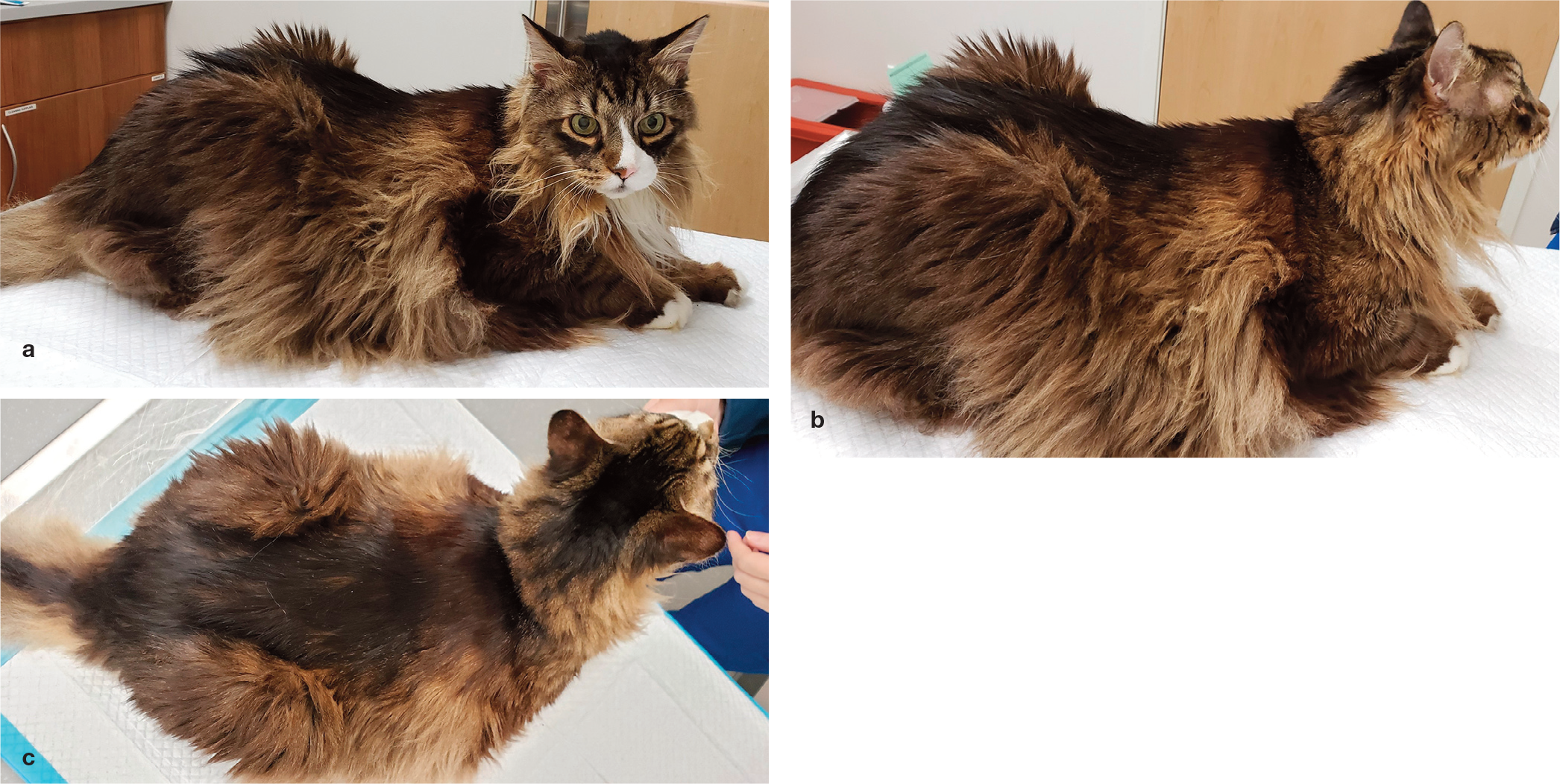
(a-c) Muscle atrophy in an obese diabetic cat. This 14-year-old castrated male domestic longhair cat weighed 10.9 kg at the time diabetes was diagnosed. He subsequently lost 2.7 kg and, although still overweight at a body condition score of 7/9, had a muscle condition score of 1.5/3. The cat had been receiving a high fiber diet with 40% protein on a dry matter basis
In obese cats that do not tolerate a low carbohydrate diet (eg, because of excessive restriction of food intake owing to high calorie content or problems with palatability) an alternative strategy is a high protein, low fat, moderate fiber (5–15% dry matter), moderate carbohydrate (15–25% ME) diet. 6 Likewise, obese cats with concurrent disease may need to be fed higher carbohydrate diets for management of other conditions. In this scenario, caloric intake should still be regulated to try to optimize BW and insulin sensitivity.
Owner commitment to the weight loss program is critical, and advice for communication and troubleshooting can be found in the ‘2014 AAHA Weight Management Guidelines for Dogs and Cats’. 67
Insulin therapy
Currently, injectable insulin is still the mainstay for management of feline diabetes. First-choice insulin types for diabetic cats include glargine, detemir and protamine zinc insulin. 63 Lente insulin can also be used successfully, but its shorter duration of action may lead to significant periods of hyper-glycemia in some cats. Although the highest reported remission rates have been from studies using glargine or detemir q12h and low carbohydrate diets,68–70 various limitations included lack of randomization, small sample size, low generalizability of the monitoring protocols used and, in one of the studies, a high proportion of cats with prior corticosteroid treatment. A systematic review evaluating factors involved in feline diabetic remission was not able to support an association between insulin type or protocol and likelihood of remission, and concluded that more randomized controlled trials with adequate sample size are needed to address this question. 71

Initial insulin dosage (0.25-0.5 U/kg q12h) in obese diabetic cats should be based on an estimate of ideal BW, to reduce the risk of hypoglycemia. Starting dosages greater than 2-3 U/cat q12h are not recommended. If planned weight loss is occurring, response to insulin should be monitored closely so that any required insulin dosing adjustments can be made as insulin sensitivity increases. Home blood glucose monitoring (see box) is preferable to glucose determination in the hospital, with a target of 80-250 mg/dl for most readings throughout the day. Details of insulin adjustment and monitoring for diabetic cats in general can be found in the 2015 consensus guidelines on diabetes mellitus from the International Society of Feline Medicine. 63
Oral hypoglycemic agents
Oral hypoglycemic agents are a consideration primarily when owners cannot administer injectable insulin, since no oral medication to date has been shown to have equivalent efficacy to insulin in diabetic cats, and delay in control of hyperglycemia may perpetuate glucotoxicity and lead to irreversible β-cellloss. The sulfonylurea glipizide was demonstrated in two studies in the 1990s to improve glycemic control in approximately 30–40% of diabetic cats;72,73 efficacy may be higher, based on anecdotal evidence, when it is combined with a low carbohydrate diet. 74 However, as a secretagogue, this drug relies on residual insulin secretory capacity for efficacy, and long-term use in cats has led to amyloid deposition in pancreatic islets. 47 If glipizide is used, the starting dosage is 2.5 mg/cat q12h, increased to 5 mg/cat q12h after 2 weeks if ineffective. Metformin, although commonly used in humans, is associated with a high rate of adverse effects in cats and improved glycemic control in only 1/5 diabetic cats. 75
Other oral antidiabetics used in humans include the thiazolidinediones (TZDs) and sodium-glucose cotransporter-2 (SGLT-2) inhibitors. TZDs are agonists of the nuclear receptor, peroxisome proliferator-activated receptor gamma (PPARγ), and improve insulin sensitivity and lipid profiles in diabetic humans. These drugs (darglitazone, pioglita-zone) increased insulin sensitivity in obese cats76,77 but have not been evaluated in diabetic cats. SGLT-2 inhibitors lower blood glucose by reducing glucose resorption in the proximal tubule and increasing its excretion in urine. In human type 2 diabetics, clinical benefits include weight loss and reduction of blood pressure. 78 Velagliflozin, an SGLT-2 inhibitor, increased urinary glucose excretion in obese cats and reduced the amount of insulin secreted during IVGTT, suggesting improved insulin sensitivity. 79 Clinical investigation of SGLT-2 inhibitors in diabetic cats has not yet been completed.
Incretin mimetics
In humans, multiple glucagon-like peptide (GLP)-1 receptor agonists have been developed for treatment of type 2 diabetes. These drugs elicit glucose-dependent insulin secretion, reduce hepatic glucose production and slow gastric emptying, promoting weight loss. 80 Two placebo-controlled studies have evaluated the effects of the GLP-1 agonist exenatide in diabetic cats, in combination with glargine insulin and a low carbohydrate diet.81,82 No significant effect on glycemic control or remission rates was found, although cats did lose more weight and required less insulin on exenatide than on placebo in one of the studies. 82 Dipeptidyl peptidase-4 (DPP4) antagonists are used to inhibit the breakdown of incretins in human medicine, but there is currently minimal evidence to support their use in cats. 83
Key Points
Obesity in cats predisposes to insulin resistance via multiple mechanisms, including accumulation of lipid intermediates in non-adipose tissue, which interferes with insulin signaling.
Progression to diabetes in obese cats likely involves: (1) a pre-existing defect in β-cell function of variable etiology; and (2) the chronic metabolic stress of insulin resistance, which eventually overcomes insulin secretory capacity.
Dietary goals for obese diabetic cats include: (1) achievement of an ideal body condition for reduction of insulin resistance; and (2) optimization of nutrient composition for glycemic control and a chance of diabetic remission.
Dietary goals may be best achieved by feeding a canned diet ⩽12–15% carbohydrate ME and >40% protein ME. In cats still overweight when pathologic weight loss is controlled, these diets can be fed at 80% RER for an ideal weight, to achieve a loss of 0.5–1% BW per week.
Obese diabetic cats can still be well managed on other types of diets, if these are necessary for more substantial weight loss or for concurrent conditions.
Long-acting insulins (glargine, detemir, protamine zinc insulin) are preferable in most cats and should be dosed at 0.25–0.5 U/kg q12h, based on an estimate of ideal BW.
Insulin alternatives such as SGLT2 inhibitors and incretin mimetics are under active study in diabetic cats, but further investigation is needed to document efficacy and safety.

Footnotes
Conflict of interest
The authors declared no potential conflicts of interest with respect to the research, authorship, and/or publication of this article.
Funding
The authors received no financial support for the research, authorship, and/or publication of this article.
Ethical approval
This work did not involve the use of animals and therefore ethical approval was not specifically required for publication in ]FMS.
Informed consent
This work did not involve the use of animals (including cadavers) and therefore informed consent was not required. For any animals or people individually identifiable within this publication, informed consent (verbal or written) for their use in the publication was obtained from the people involved.