




Abstract
Gamification has attracted considerable practitioner attention and has become a viable tactic for influencing behavior, boosting innovation, and improving marketing outcomes across industries. Simultaneously, studies on the use of gamification techniques have emerged in diverse fields, including computer science, education, and healthcare. Despite the broad popularity of gamification in other fields, it has received only limited attention in the service literature. Moreover, the findings of extant studies on gamification in the service field are inconclusive and suggest an incomplete understanding of the employment of gamification in service contexts. Thus, this study aims to integrate the growing but scattered cross-disciplinary literature on gamification and to emphasize its relevance to service research. Specifically, we first conceptualize gamification for service and differentiate it from related concepts. Then, using a systematic literature review, we identify 34 empirical articles that reflect this gamification conceptualization and can be connected to relevant service research themes (e.g., customer participation, experience, and loyalty). Employing activity theory, we derive four higher-order functions of gamification: production, consumption, exchange, and distribution. Finally, we develop a research agenda to generate a better understanding of the central aspects within each of the identified gamification functions and stimulate future academic efforts on gamification in services.
Introduction
“In every job that must be done, there is an element of fun.” Mary Poppins (1964)
Defined as the use of game mechanics in non-game contexts (Deterding et al. 2011), gamification has become a viable tactic for influencing behavior, boosting innovation, improving marketing outcomes, and driving value (Leclercq, Hammedi, and Poncin 2018). Since its addition to the peak of Gartner’s Hype Cycle for emerging technologies approximately a decade ago (Fenn and LeHong 2011), gamification has been gaining increasing momentum toward large-scale adoption in the marketplace. Several international service providers, including Amazon, Microsoft, and Uber, have successfully implemented gamification techniques in their business activities (Milkman 2021). Technavio (2021) estimates that the worldwide gamification market will more than double its value to $11.94 billion in 2021 from $4.91 billion in 2016, reaching $32 billion by 2025. Gamification also entered the public debate in 2021, when the Robinhood investing application’s ability to intrigue, educate, engage, and empower young people with stock trading received considerable media attention (Massa and Robinson 2021). This example reflects the trend that younger users expect and thrive in gamified consumption and work environments (Deterding 2019).
Considering its potential for evoking persistent behavioral changes among users (e.g., employees and customers), gamification has also captured substantial research interest, and a plethora of gamification studies have emerged from fields as diverse as computer science, education, health and medicine, and business management. These studies have described gamification as a powerful means of activating or satisfying users’ motivations (e.g., Mitchell, Schuster, and Jin 2020; van Roy and Zaman 2018), improving their experience (Feng et al. 2018; Robson et al. 2015), and engaging them in contexts that are not commonly associated with games (e.g., Gutt, von Rechenberg, and Kundisch 2020; Zimmerling et al. 2019).
However, despite the great enthusiasm among practitioners and academics, gamification remains a problematic concept: research in various disciplines has conceptualized gamification differently, which has led to a lack of consensus surrounding its conceptual and theoretical clarity (Landers 2019). For example, some researchers do not distinguish gamification from full-fledged (video) games or serious games, although the underlying purpose is fundamentally different. Although all forms can influence attitude and behaviors, gamification is associated with the performance of a core activity, which is not the case for (serious) games (Deterding et al. 2011), leading to a misunderstanding of what gamification entails and how it works (Landers 2019). Moreover, despite the broad popularity of gamification in other fields, the concept still has received only limited attention in the service literature despite several calls for research on this topic (e.g., Cambra-Fierro et al. 2020; Ostrom et al. 2021). This is surprising since gamification is strongly associated with prominent contexts (e.g., healthcare and e-services) and concepts (e.g., engagement, experience, and value creation) relevant to the service field.
Moreover, the findings of extant studies on gamification in the service field are inconclusive and indicate an incomplete understanding of how gamification techniques may enhance interaction and support users’ overall value creation (Huotari and Hamari 2017). More precisely, while some studies highlight the favorable outcomes and benefits of implementing gamification techniques in the service domain (e.g., Tanouri, Mulcahy, and Russel-Bennett 2019; Hammedi, Leclercq, and van Riel 2017), others draw attention to unexpected and counterproductive effects (Leclercq et al. 2020; Mitchell et al. 2020). Importantly, the extant gamification literature has focused primarily on users’ interactions with gamification elements (e.g., leaderboards, points, and badges) while largely neglecting the social context in which gamified interactions are situated. However, considering social contextual factors (e.g., interactions with other community members, the rules and norms governing the community) may help researchers identify situational elements that users leverage to derive value from gamified services and classify types of services that might be successfully gamified. Thus, the purpose of this research is to address these shortcomings through a systematic literature review that integrates dispersed cross-disciplinary research on gamification. We employ activity theory (Engeström 1987; Vygotsky 1978), an established psychological framework that has been used to study the contextual nature of interactive activity systems, to analyze the gamification activity system by examining its elements (e.g., related to the individual, the technology, and the social context) and their relationships. Consequently, we present gamification functions that may support service research and management and address the service research priority of technology and the customer experience identified by Ostrom et al. (2021).
We thus contribute to service research in three major ways. First, limited work has been conducted on gamification from a service research perspective despite its efficacy in improving service objectives. Our review addresses this gap by conceptualizing gamification in service research and untangling it from related concepts (e.g., classic, pervasive, or serious games). Second, we draw from activity theory to structure the existing yet highly fragmented gamification literature, providing a solid foundation to better conceptualize this concept in service research via its four derived functions (production, consumption, exchange, and distribution). Third, we develop a well-rounded research agenda geared toward generating a better understanding of the central aspects within each of the four identified gamification functions to advance research on gamification in the service domain.
In the remainder of this article, we position our study against existing literature reviews on gamification, provide an overview of prior conceptualizations, develop a novel conceptualization of gamification for service research, and introduce activity theory as an organizing framework for our analysis. We then describe the systematic literature review strategy used to identify and include articles in our analysis. Subsequently, we present our results and highlight the four functions of gamification—namely, production, consumption, exchange, and distribution—derived from activity theory. We conclude with a discussion about how each function can support service research and formulate research questions to stimulate, structure, and guide future academic efforts on gamification in services.
Conceptual Background
Extant Literature Reviews on Gamification
Over the past decade, gamification has interested both practitioners in various industries and scholars from diverse academic backgrounds. In attempts to understand gamified practices and synthesize and synergize extant findings, scholars in different disciplines have conducted selective and systematic reviews of the academic literature. Many such reviews have aimed to delineate gamification in a particular domain (e.g., business and management, education, computer science, health science, and psychology) but have not provided insights central to the conceptualization of gamification: How users integrate gamification and contextual elements to derive value from their interactions (Huotari and Hamari 2017). For instance, in the business context, Perryer et al. (2016) conduct a selective review to investigate which elements of gamification impact motivation in the workplace and identify how gamification outcomes can be explained with theories such as self-determination theory (Ryan and Deci 2000). Shi et al. (2017) systematically (n = 88) review a decade of research (2005–2015) to integrate gamification frameworks related to the emotional mechanics of gamification with the adoption of advanced services. More recently, Warmelink et al. (2020) investigated how gamification impacts production and logistics operations, and their systematic review (n = 18) identified a lack of experimental studies in the research area.
Beyond the business context, education researchers have conducted various reviews on gamification. Hakak et al. (2019), for example, review the literature on gamification applications to describe a gamification architecture that contains different game mechanics to improve learning outcomes. Huang et al. (2020) systematically (n = 30) provide a review of a decade (2009–2018) of quantitative gamification research in the context of educational settings and student learning outcomes. With a similar focus but a shorter time frame (2017–2020), Sailer and Homner (2020) systematically (n = 58) reviewed how gamification impacts cognitive, motivational, and behavioral learning outcomes. Some reviews have combined a focus on education and health science, for example, De Vette et al. (2015), who provide a broad review of the academic and practitioner literature to identify how elderly users of telemedicine offerings interact with gamification content and conclude that significant future research is needed in this specific field. Miller, Cafazzo, and Seto (2016) review gamification applications in a mobile health context to provide an overview of the design principles and mechanics required to improve the success of such applications. Other disciplines, such as computer science and psychology, have also produced reviews; however, most of these researchers have restricted their search to narrow contexts (e.g., the gamification of surveys) or time frames.
Although these reviews can provide gamification insights into other domains, they suffer from several shortcomings that signal the need for further research in the form of a systematic literature review with a focus on service research and management (see Web Appendix A). First, one of the major deficits of prior work on gamification is the lack of a consistent conceptualization and clear differentiation from other related concepts, such as classic games, pervasive games, and serious games. Second, most literature reviews have focused primarily on enumerating game elements (e.g., Alhammad and Moreno 2018; Hakak et al. 2019; Pedreira et al. 2015; Miller, Cafazzo, and Seto 2016). However, game elements are not sufficient to conceptualize gamification. In other words, focusing solely on game elements does not provide a comprehensive understanding of gamification and may lead to some authors using gamification and related concepts (e.g., pervasive and serious games) interchangeably (e.g., Dias, Barbosa, and Vianna 2018; Souza et al. 2018). We address these two shortcomings in the next section, where we provide a conceptualization of gamification for service research.
Third, some studies have focused on the effect of gamification on specific outcomes (i.e., outcomes that have been quantified in a comparable manner across studies). For instance, two meta-analyses (Huang et al. 2020; Sailer and Homner 2020) are conducted in the education domain to test the impact of gamification elements on learning outcomes. Although such studies show variation in how different gamification elements impact an outcome, they do not aim to provide a holistic perspective on gamification or focus on outcomes directly relevant to service research.
Finally, most of the reviews have investigated the use of gamification mechanics in a specific domain and consequently overlook the extent to which the contextual factors that are relevant to the service field (e.g., interactions with technology and interactions with other community members) may influence how these mechanics generate value for users (e.g., Leclercq et al. 2020). However, situational factors are critical to understanding users’ value creation through services (Vargo and Lusch 2016). We address these two shortcomings in our analysis by using activity theory (Engeström 1987; Vygotsky 1978) to derive gamification functions. Through our analysis, we achieve a holistic perspective on gamification for service research and a better understanding of the role of contextual factors in gamified services.
The Conceptual Evolution of Gamification
Initially, defined as “the use of game mechanics in non-game contexts” (Deterding et al. 2011, p. 2), gamification describes the combination of game elements such as leaderboards, points, badges, levels, rewards, and virtual currencies to create game mechanics such as quests or challenges to reach an objective. This definition has been extended to include the objectives (e.g., creating engagement and fostering specific behaviors) of introducing gamification elements in contexts initially distant from gaming cultures, such as education, marketing, and human resource management (Zichermann and Cunningham 2011). In that respect, Domínguez et al. (2013, p. 381) define gamification as “incorporating game elements into a non-gaming software application to increase user experience and engagement 1 .” In marketing, Hofacker et al. (2016, p. 26) suggest that gamification refers to the “use of game design elements to enhance non-game goods and services by increasing customer value and encouraging value-creating behaviors such as increased consumption, greater loyalty, engagement or product advocacy.” To understand how gamification may be used to reach these objectives, many researchers have emphasized the abilities of game elements to activate motivations and change behaviors (Cardador, Northcraft, and Whicker 2017; Vesa and Harviainen 2019). As gamification has permeated the realms of organizational strategy and performance, ethical concerns pertaining to the manipulation and exploitation of user behavior in favor of the firm have become a matter of debate (Kim and Werbach 2016; Thorpe and Roper 2019). Furthermore, the effects of gamification on individual performance across varying domains and user attributes seem to yield mixed results, ranging from positive to neutral and, in some cases, counterproductive (Khan et al. 2020; Landers 2019). In response to these concerns, Huotari and Hamari (2017, p. 25) revise the definition of gamification as “a process of enhancing a service with affordances for gameful experiences in order to support users’ overall value creation.” This definition highlights two key characteristics of gamification: (1) game mechanics integration (i.e., combining game elements based on user resources and motivations to create affordances for a gameful experience) and (2) the creation of user value from a gamified service.
Game Mechanics and Value Creation
Regarding game mechanics integration, Floryan, Ritterband, and Chow (2019) distinguish between the exogenous and endogenous use of digital or physical game mechanics in consumption contexts. Specifically, exogenous use refers to game mechanics that are detached from the core activity to support the performance of the core service (e.g., using a serious game platform to improve learning outcomes). Endogenous use, on the other hand, embeds game mechanics in the core activity (e.g., gaining points and competing on leaderboards while using a health tracking app).
The distinction between exogenous and endogenous uses of game mechanics, however, does not capture the extent to which value is created for the user. For instance, classic games (e.g., Monopoly or League of Legends) engage players in an alternative and ephemeral reality governed by rules, goals, logics, and roles that differ significantly from those characterizing ordinary life. This bounded reality, including the user and his or her context, is commonly referred to as the “magic circle” (Consalvo 2009). The activities performed by players cannot generate any outcomes outside the magic circle (Caillois 1958). Accordingly, classic games are exogenous to users’ ordinary consumption context and do not contribute to their value creation beyond the magic circle. Pervasive games (e.g., Pokémon GO or Treasure Hunt) tend to expand the magic circle to integrate game mechanics into users’ ordinary life (Montola, Stenros, and Waern 2009). Although these games may be endogenous to users’ non-game activities, they do not aim to create value for the user beyond the game boundaries. In contrast, serious games (e.g., Lego Serious Play or SuperBetter) suggest the implementation of game mechanics to achieve educational and informative aims beyond the magic circle (Michael and Chen 2005). However, the usage of game mechanics is exogenous, as they are distinct from the performance of the non-game activity (Dickey 2015). Finally, gamification ties game mechanics to the core activity, making it endogenous. It aims to improve user outcomes and performance, enabling users to derive value from their interactions with the service (Koivisto and Hamari 2014). While serious and pervasive games share common game mechanics with gamification, the key distinction lies in the value creation for the user within the service activity (Huotari and Hamari 2017; see Figure 1). Conceptual positioning of gamification and other forms of games.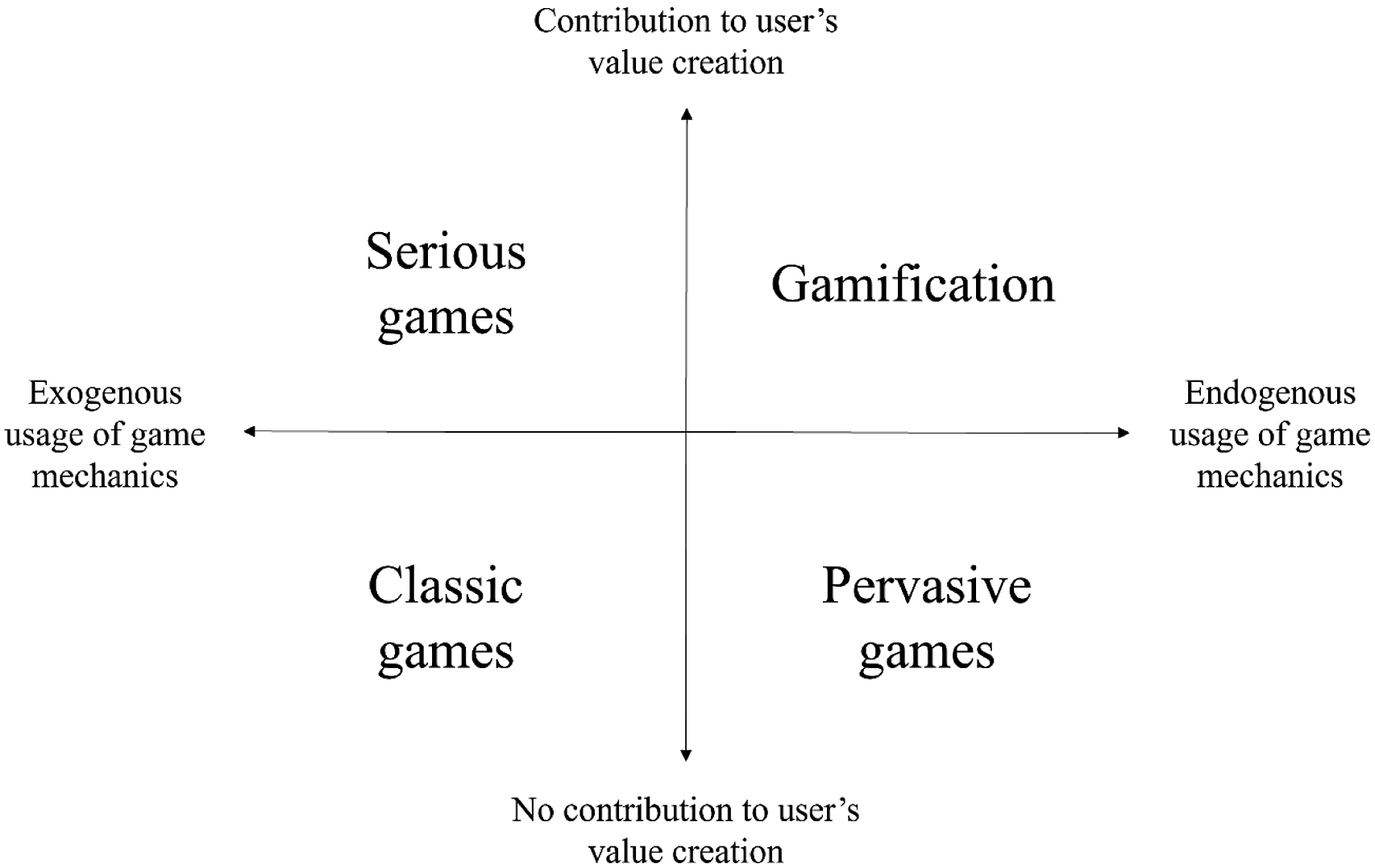
Aligned with this study’s focus on service research and management and considering the distinctions between the use of game mechanics (i.e., endogenous or exogenous) and their influence on user value creation (i.e., inside or outside the user’s magic circle), we adopt the following gamification perspective: The endogenous use of game mechanics that contributes to users’ value creation within the core activity of a service. Value is socially and contextually created and consequently demonstrates a complex system in which users derive value from their interactions with many elements present in their environment (Vargo and Lusch 2016). To identify these contextual elements, structure our analysis and derive gamification functions that can support service research, we draw on activity theory (Engeström 1987; Vygotsky 1978).
Fundamentals of Activity Theory
This theoretical framework is rooted in social psychology and has been employed to study interactive and complex activity systems in different areas of research, including management (e.g., Engeström 2000; Jarzabkowski 2003), information systems (e.g., Allen et al. 2013; Clemmensen, Kaptelinin, and Nardi 2016), and education (e.g., Chung, Hwang, and Lai 2019; Cowan and Butler 2013). Gamification is an intentional activity that requires an individual to interact with an artifact (e.g., an application, a fitness tracker, etc.) in a broader social context to produce an outcome: Therefore, activity theory provides an appropriate framework to study gamification. In the following, we briefly introduce the tenets of activity theory and explain how this approach helps derive gamification functions.
According to activity theory (Engeström 1987; Vygotsky 1978), an activity system in its most basic form is defined by three nodes: subject, instrument, and object. The central idea is that a subject (e.g., a student) interacts with an instrument (e.g., a mediating tool such as a mobile application) to act on an object (e.g., course content). This process brings about an outcome (e.g., final course result). This basic model was extended to include three additional nodes of social context (see, e.g., Allen et al. 2013; Holt and Morris 1993): community (i.e., an interdependent aggregate of individuals who, at least to some degree, share a set of social meanings), rules (i.e., formal or informal guides or norms for action or activity), and division of labor (i.e., the division of tasks and the division of power across members within the community).
More important to our analysis, activity theory also describes four dominant functions that arise from the relationships between neighboring nodes of activity systems (see Figure 2): Production, consumption, exchange, and distribution (e.g., Cowan and Butler 2013; Engeström 1987; Holt and Morris 1993). Production creates artifacts according to the needs or desired object of the activity system, while consumption relates to the subject achieving the object within the community or system. Exchange refers to social interactions between community members. Finally, distribution divides activities and outcomes according to the social laws of the community. In sum, activity theory provides our analysis framework and is especially relevant to our research objective, as it incorporates all contextual factors people interact with and the relationships among them through higher-order functions. Activity theory functions applied to gamification.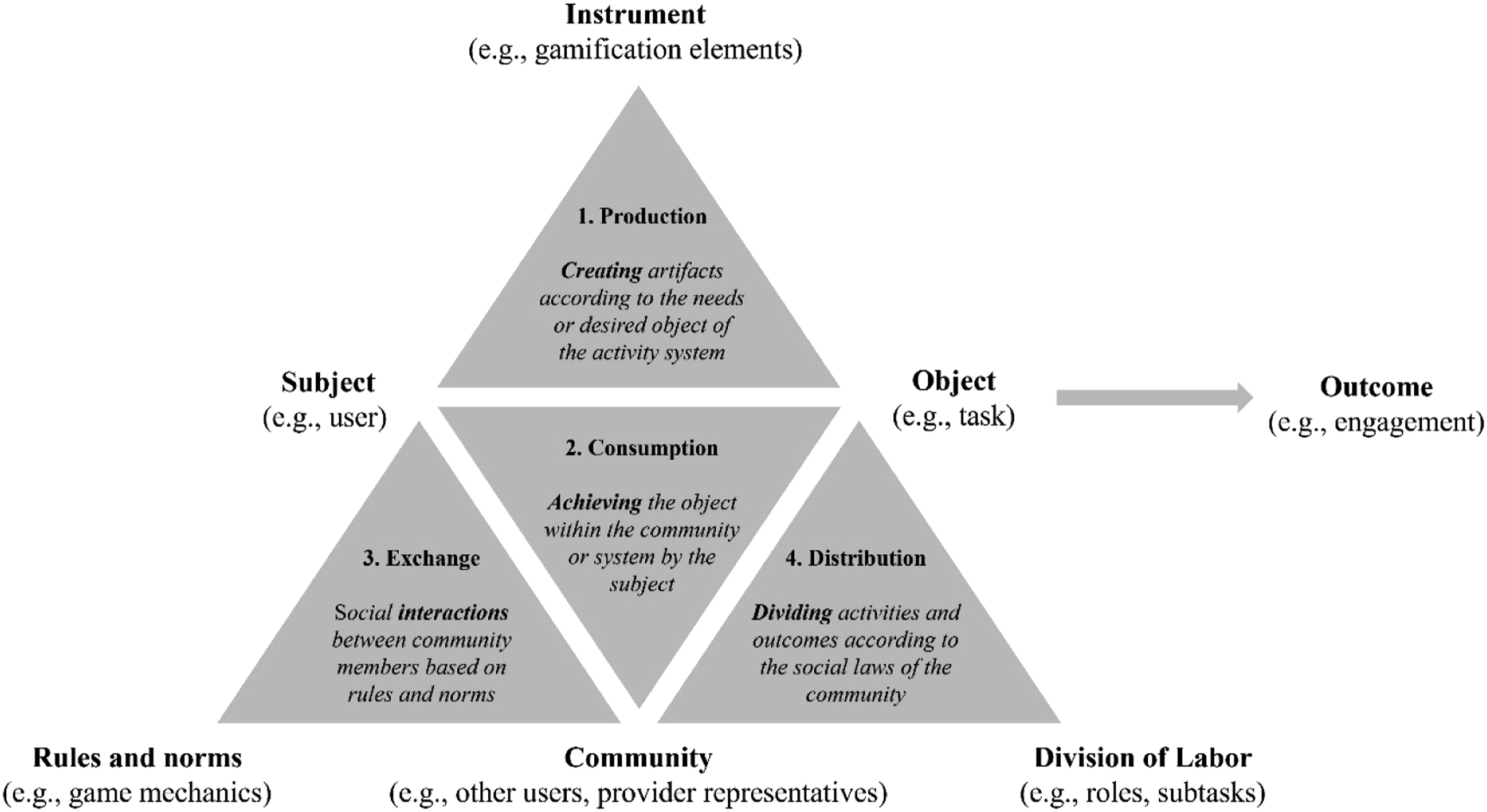
Literature Search Strategy
Figure 3 outlines the steps of our systematic literature search following the procedure recommended by Torraco (2016). In March 2021, we searched for the term “gamif*” at the topic level (i.e., title, abstract, and keywords) in the Web of Science Core Collection, and the search returned 3154 references. After filtering for peer-reviewed articles written in English, we were left with 2415 articles. To be as inclusive as possible but also maintain publication quality criteria, we focused on 1062 articles published in journals with an impact factor of two or higher according to the Journal Citation Report (Clarivate 2020). Systematic search strategy and inclusion process.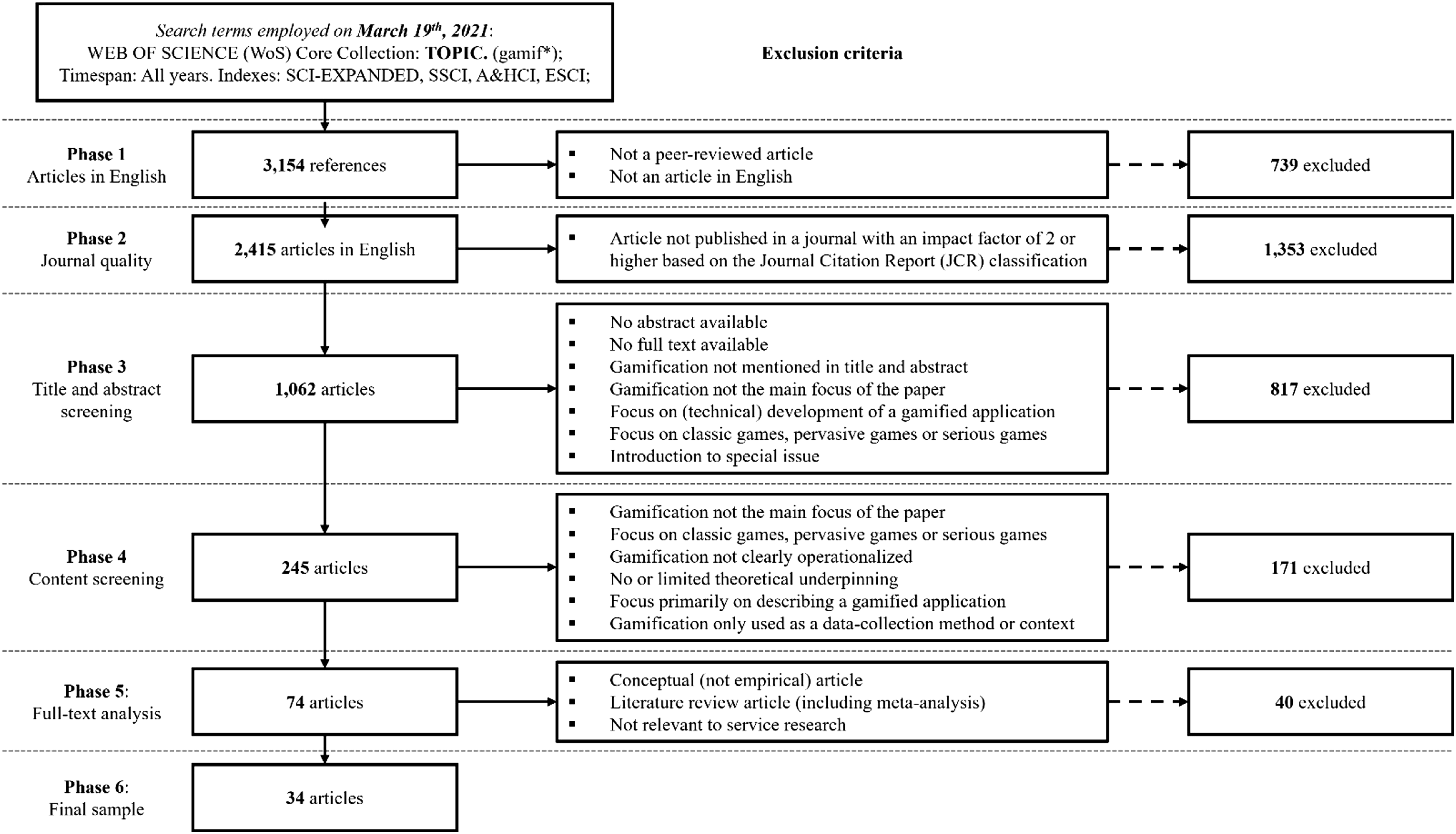
We first screened these articles at the title and abstract level. Pairs of researchers identified and excluded articles in which gamification was not mentioned in the title or abstract; gamification was not the focus; the focus was the (technical) development of a gamified application; the focus was classic games, pervasive games, or serious games; or the purpose of the article was to introduce a special issue. The exclusion intercoder reliability for the teams of coders ranged from 88% to 91%. Each article on which there was initial disagreement was discussed and agreed upon. Thus, 245 articles proceeded to a second screening phase in which each pair of researchers screened a different set of included articles at the content level. In addition to the exclusion criteria from the previous screening phase, we excluded articles with no or limited theoretical underpinning, articles that focused primarily on describing a gamified application, and articles in which gamification was used only as a data-collection method or context to study other phenomena. For example, we excluded studies with no clear hypotheses as to how or why gamification elements were expected to perform in a particular way. Intercoder agreement on exclusion was high, ranging from 87% to 88%. Once more, each disagreement was discussed and resolved. Thus, the second phase of screening yielded 74 articles for full-text analysis.
For our final sample, we selected 34 articles that were relevant to service research and that were not conceptual or literature review articles. The relevance to service research was established based on the most prolific research themes identified by Donthu et al. (2020) in Journal of Service Research (JSR) articles published between 1998 and 2019. Specifically, we excluded articles that could not be classified under at least one of the 45 research themes 2 (e.g., loyalty, experience, and participation) resulting from Donthu et al.’s (2020) bibliometric analysis.
Analyses and Results
The 34 articles in our final sample were published between 2014 and 2021 in 21 journals (see Web Appendix B for an overview), and 14 journals (including three service journals) were represented by just one publication each. In terms of journal categories (using the primary classification in the Web of Science Master Journal List; Clarivate 2020), most of the articles were published in business and management journals (38%), followed by psychology (21%) and computer science and information research (21%). The most frequent journals in our final sample were Computers in Human Behavior and Journal of Business Research, with five articles each.
To understand the key characteristics of each article (e.g., scientific domain, focus, and methodology), a content analysis was applied (Strauss and Corbin 1998). Teams of two researchers manually coded each empirical article for research context, perspective (e.g., firm/organization or user/customer), gamification conceptualization (e.g., gamification definition), gamification operationalization (e.g., gamification measurement), gamification application (e.g., mobile application, online platform, and electronic learning environment), conceptual background (e.g., theory and theoretical reasoning), outcomes and antecedents (e.g., variables of direct relevance to gamification clearly described in the article through hypotheses or analysis) and findings. Starting from the research themes identified by Donthu et al. (2020), we coded the relevance of each article to service research in more depth, for example, differentiating between specific service-relevant outcomes (e.g., loyalty and job satisfaction), broader service-relevant concepts (e.g., experience and participation/engagement) and service-relevant contexts (e.g., e-service and healthcare).
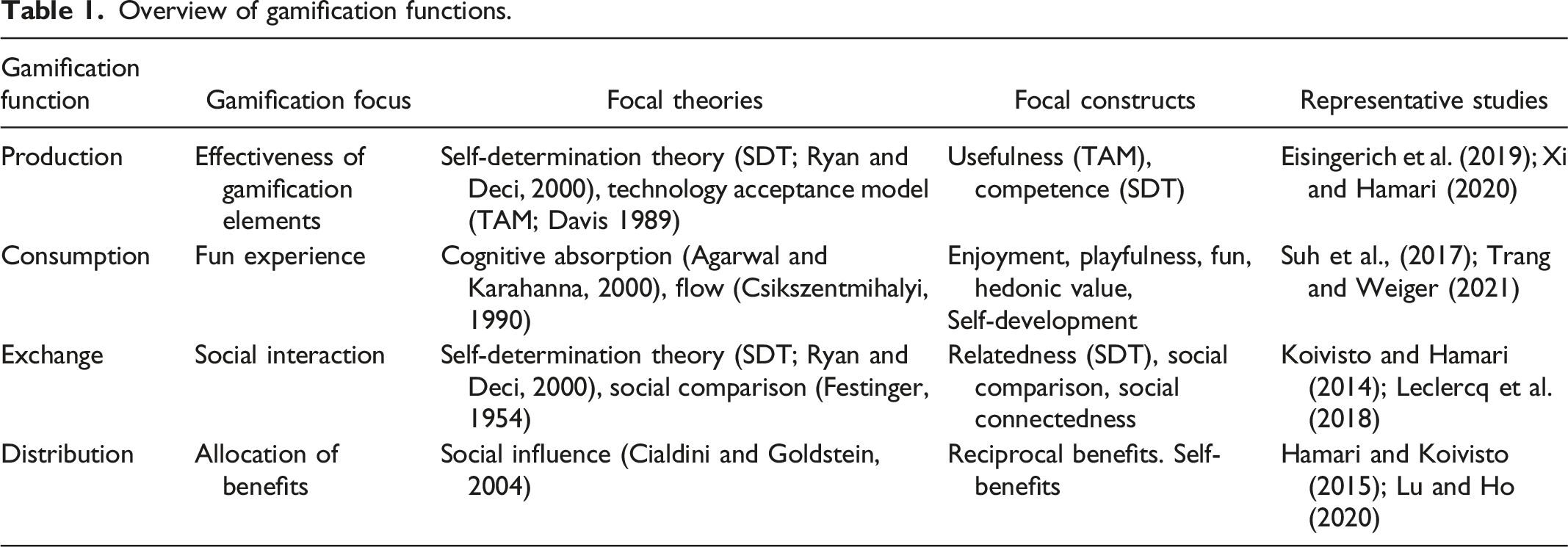
Overview of gamification functions.
Production
Conceptually, the production function of activity theory refers to the relationship between subject and object that is mediated by instrument. Thus, in a gamification context, this function describes a user’s execution of a task using a gamified instrument. Out of the 34 articles in our sample, 17 address the production function (see Web Appendix B). Most of these studies (1) examine users’ evaluations of gamified applications comprising a fixed set of gamification elements (e.g., Eisingerich et al. 2019; Hamari and Koivisto 2015; Harwood and Garry 2015; van Roy and Zaman 2018; Kunkel, Lock, and Doyle 2021; Xi and Hamari 2020); (2) test their effectiveness relative to a non-gamified condition (e.g., Ferriz-Valero et al. 2020; Hammedi et al. 2021; Högberg, Shams, and Wästlund 2019; Passalacqua et al. 2020); or (3) investigate potential changes in the effectiveness of specific gamification elements by adding, removing, or varying features (e.g., Li, Chau, and Ge 2020; Zimmerling et al. 2019).
As a theoretical foundation, several studies of this function draw from variations in the technology acceptance model (TAM; Davis 1989). This model posits that individuals’ attitudes toward and, by extension, usage intentions toward and actual use of a new technology are determined by attributes of the technology, such as perceived ease of use and usefulness, which, in turn, are driven by a variety of external variables, including technology-related (e.g., reliability) or personal characteristics (e.g., technology readiness). Accordingly, several studies have highlighted the crucial role of gamification characteristics (e.g., Koivisto and Hamari 2014; Hamari and Koivisto 2015; Silic et al. 2020; Tanouri et al. 2019). For example, investigating users’ evaluations of gamified fitness software, Hamari and Koivisto (2015) find that attitudes toward using the service are positively related to perceived usefulness, while continued use intentions are determined by ease of use.
Other gamification researchers have built on variations of self-determination theory (SDT; Ryan and Deci 2000). This approach acknowledges the importance of intrinsic and extrinsic motivations and particularly the satisfaction of the basic human needs for autonomy, competence, and relatedness as a means of motivating individuals to undertake an activity. Research has shown that the presence of gamification elements, such as challenges, badges, and rewards, that address these needs is positively related to users’ motivation and, consequently, outcomes when performing an activity (e.g., Ferriz-Valero et al. 2020; Kunkel, Lock, and Doyle 2021; Passalacqua et al. 2020; van Roy and Zaman 2018; Xi and Hamari 2020; Zimmerling et al. 2019). For instance, while investigating the development of ideas for new products, Zimmerling et al. (2019) find that game elements in an idea contest can improve the number of comments a participant leaves but not the quality of participants’ contributions and ideas because extrinsic motivations—which tend to positively influence the quantity but not the quality of performances—rather than intrinsic motivations are triggered by the use of gamification elements. Consistent with this finding, Ferriz-Valero et al. (2020) demonstrate that the use of gamification elements in an educational context can enhance extrinsic but not intrinsic motivations.
Consumption
The consumption function of activity theory focuses on the relationship between subject and object that is mediated by community. In a gamification context, this function describes the subject achieving the object within the community or system. Out of the 34 articles in our sample, 25 address the consumption function. Most of these studies discuss achieving objects through (1) different forms of fun (e.g., Koivisto and Hamari 2014; Hamari and Koivisto 2015; Harwood and Garry 2015; Mulcahy, Zainuddin, and Russell-Bennett 2021; Silic et al. 2020) or (2) different forms of experience (e.g., Liu et al. 2019; Suh et al. 2017; Wolf, Weiger, and Hammerschmidt 2020). The communities and systems in which consumption occurs include classrooms (Hanus and Fox 2015), workplaces (Suh and Wagner 2017), fitness platforms, (Koivisto and Hamari 2014), healthcare platforms (Tanouri, Mulcahy, and Russell-Bennett 2019), crowdsourcing communities (Feng et al. 2018), cultural events (Liu et al. 2019), and supermarkets (Högberg, Shams, and Wästlund 2019).
Most studies of this function capture the fun part of gamification through enjoyment and/or playfulness (Dindar, Ren, and Järvenoja 2021; Feng et al. 2018; Hamari and Koivisto 2015; Li et al. 2020), fun (Lu and Ho 2020) or hedonic value (Tanouri et al. 2019; Suh and Wagner 2017). Enjoyment is treated primarily as an antecedent of other outcomes (e.g., involvement in Mulcahy, Russell-Bennett and Iacobucci 2020, continuance intention in Hamari and Koivisto 2015 and psychological empowerment in Lu and Ho 2020). Some articles classified under the consumption function also focus on the self-development dimension of the user experience (e.g., Trang and Weiger 2021), as it enables them to assess the extent to which objects are acted upon. Wolf, Weiger, and Hammerschmidt (2020), for instance, show that gamified applications that facilitate self-development experiences drive customer commitment, willingness to pay, and customer referrals (i.e., different aspects of firm performance).
Some of the articles classified under the consumption function also consider the production function and naturally draw from similar theoretical backgrounds (e.g., TAM or SDT). Such articles study consumption and production elements in parallel (e.g., enjoyment relating to consumption and usefulness relating to production in Silic et al. 2020 or enjoyment and playfulness relating to consumption and usefulness and ease of use relating to production in Hamari and Koivisto 2015). Other articles (e.g., Harwood and Garry 2015; Lee 2019; Silic et al. 2020; Trang and Weiger 2021) draw on variations of flow theory (Csikszentmihalyi 1990), which postulates that an optimal experience is characterized by users’ perceptions of a balance between their competences and the challenge evoked by activities. In some studies, flow is conceptualized as an experience (Liu et al. 2019) or as cognitive absorption (Eppmann, Bekk and Klein 2018; Trang and Weiger 2021), while in others, flow is a component of user engagement (Suh et al. 2017) or customer engagement emotions (Harwood and Garry 2015).
Exchange
The exchange function of activity theory addresses the relationship between subject and community that is mediated by rules and norms and thus refers to the social interactions between community members. The most prolific rules and norms relate to competition and cooperation (e.g., Dindar, Ren, and Järvenoja 2021; Hammedi et al. 2021; Leclercq, Hammedi, and Poncin 2018; Suh et al. 2017; Suh and Wagner 2017; van Roy and Zaman 2018). Almost all studies in our sample (i.e., 30 out of 34) discuss aspects that concern this function. The most prevalent theory used in this area is SDT (e.g., Ding 2019; Feng et al. 2018; Liu et al. 2019; Dindar, Ren, and Järvenoja 2021; Passalacqua et al. 2020; Wolf, Weiger, and Hammerschmidt 2020) because it acknowledges the basic psychological need for relatedness (i.e., the desire to feel connected to others). Other theoretical approaches build on variations of Festinger’s (1954) social comparison theory (e.g., Hanus and Fox 2015; Leclercq, Hammedi, and Poncin 2018), which explains how individuals evaluate their own opinions and abilities by comparing themselves to others.
Several studies on this function investigate users’ response to socially related gamification elements such as competition, cooperation, and social networking features (e.g., Dindar, Ren, and Järvenoja 2021; Feng et al. 2018; Leclercq, Hammedi, and Poncin 2018; Suh et al. 2017; Suh and Wagner 2017; van Roy et al. 2018; Xi and Hamari 2020), albeit with mixed findings. For instance, Dindar, Ren, and Järvenoja (2021) show that competition reduces perceptions of social-relatedness, while Xi and Hamari (2020) find that social-related gamification features can evoke feelings of relatedness. Furthermore, Leclercq, Hammedi, and Poncin (2018) demonstrate that competition can be a double-edged sword: the use of competition mechanics in an idea-generation activity has a positive effect on users’ experience after winning, but this effect is reversed after losing. Finally, aspects of social interaction, such as relatedness, social support, and recognition, have been found to be positively related to users’ engagement, attitudes, value perceptions, and usage intentions (e.g., Hamari and Koivisto 2015a, 2015b; Li, Chau, and Ge 2020; Lu and Ho 2020; Tanouri, Mulcahy, and Russell-Bennett 2019; Trang and Weiger 2021; Xi and Hamari 2020; Zimmerling et al. 2019), emphasizing the important role of the exchange function in gamified activities.
Distribution
Finally, the distribution function of activity theory comprises the relationships between community, object, and division of labor and thus describes how tasks and outcomes are distributed among those who are involved in the activity. Compared to the other three functions, the distribution function is highly underrepresented in the literature. Specifically, out of the 34 articles in our final sample, only four address this function. These studies focus on reciprocal and self-benefits, referring to the extent to which users and other community members perceive the benefit of the activity (e.g., Koivisto and Hamari 2014; Lu and Ho 2020). The main theoretical lens employed is social influence (e.g., Cialdini and Goldstein 2004).
Highlighting the role of the distribution of benefits, Silic et al. (2020) demonstrate in a workplace context that perceptions of reciprocal benefits (i.e., the extent to which a gamified human resource management system is seen as helpful and advantageous to oneself and to other people) are positively related to job satisfaction and engagement. Further consequences of benefit perceptions include favorable attitudes toward using a gamified application (Hamari and Koivisto 2015), fun, and continued use intentions (Lu and Ho 2020). Regarding potential antecedents, prior research has found that perceived benefits are determined by both self-achievements and team achievements (Lu and Ho 2020). In addition, receiving recognition positively influences the experience of reciprocal benefits (Hamari and Koivisto 2015). Finally, Koivisto and Hamari (2014) analyze responses to gamified fitness software and demonstrate that benefit perceptions differ by users’ gender; female participants perceive more reciprocal benefits than male participants.
Service Research Themes Reflected in Gamification Functions
Three service research themes resulting from Donthu et al.’s (2020) bibliometric analysis were identified as predominant across the gamification functions: participation, experience, and loyalty. The prevalence of these themes illustrates the relevance of gamification to service research: participation (including engagement) is one of the most popular research themes trending in JSR, while experience and loyalty are very important service research themes (Donthu et al. 2020. Participation (present in nine articles; see Web Appendix B) and then loyalty (present in four articles) were the most prevalent service research themes under the production function. Loyalty (present in 11 articles) and then participation and experience (each present in 10 articles) were the most prevalent service research themes under the consumption function. Participation (present in 13 articles) and then loyalty (present in 12 articles) and experience (present in eight articles) were the most prevalent service research themes under the exchange function. Finally, loyalty (present in two articles) was the most prevalent service research theme under the distribution function. These results reflect conceptual work by Hofacker et al. (2016), who suggest that gamification may encourage value-creating behaviors, including greater loyalty or engagement.
The service research theme of value (creation) is present in seven articles classified under the consumption and exchange functions; the service research theme of emotion is present in four articles classified under production, consumption, and exchange functions; and the service research theme of satisfaction is present in three articles classified under the consumption and exchange functions. Some contextual service research themes (Donthu et al. 2020) are also present in several articles across the functions, for example, healthcare and e-service are themes in eight articles each, while frontline appears in three articles.
Participation/Engagement. In service research, the conceptual domain of engagement has expanded from customer engagement (e.g., affective, cognitive, or behavioral) resulting from interactive experiences with firms or brands to actor engagement or an actor’s disposition to invest resources in interactions with other actors connected in a service system (Brodie et al., 2019). The conceptualizations of engagement in most articles in our review do not exactly match the conceptualizations used in service research because they originate from different research domains. Nevertheless, the understanding of engagement as some sort of investment made (e.g., of time or effort) is still consistent across research areas. For example, some articles operationalize participation in a gamified activity as behavioral engagement (e.g., click-through rate in Högberg, Shams, and Wästlund 2019) or cognitive engagement (e.g., Eisingerich et al. 2019), while in others, it is a multidimensional construct (e.g., implicit and explicit engagement in Passalacqua et al. 2020; customer engagement behaviors and emotions in Harwood and Garry 2015). Engagement has been an antecedent of performance in work settings (Passalacqua et al. 2020) and a determinant of purchase intentions (i.e., loyalty) in consumption settings (Eisingerich et al. 2019). Findings regarding the use of gamification include both positive (e.g., Eisingerich et al. 2019; Ferriz-Valero et al. 2020; Xi and Hamari 2020) and negative effects (e.g., Hammedi et al. 2021; Högberg, Shams, and Wästlund 2019) on participation (i.e., attitudinal, cognitive, or behavioral engagement) and other outcome variables. Achievement-related gamification features are positively associated with brand engagement in online communities (Xi and Hamari 2020), engagement with a third-party sports application (Kunkel, Lock, and Doyle 2021), and engagement with a health application and a dating service (Eisingerich et al. 2019). In an offline retail setting, Högberg, Shams, and Wästlund (2019) find that while gamification has a negative impact on the effectiveness of in-store mobile advertisements, high levels of behavioral engagement can make gamification more effective. Finally, in a work setting, Hammedi et al. (2021) find that the implementation of a performance-based contest had a negative effect on sales employees’ job engagement and performance.
Experience. Defined as non-deliberate, spontaneous responses and reactions to stimuli embedded within a specific context (Becker and Jaakkola, 2020), customer experience has become one of the most important marketing concepts (De Keyser et al. 2020). Like the conceptualizations of engagement discussed previously, there is some variance in how experience is conceptualized across research domains. In some articles in our review, the experience of a gamified activity has been conceptualized in line with service research theorizing (e.g., the cocreation experience in Leclercq, Hammedi, and Poncin 2018), while other studies have presented different conceptualizations with some degree of overlap with service research (e.g., affective experience in Li, Chau, and Ge 2020; flow experience in Lee 2019; Liu et al. 2019; Suh et al. 2017; user experience in Lu and Ho 2020). Wolf et al. (2020) draw from service-dominant logic (Vargo and Lusch 2016) and SDT (Ryan and Deci 2000) to conceptualize motivational user experiences (i.e., self-development, social connectedness, expressive freedom, and social comparison). Eppmann, Bekk, and Klein (2018) develop GAMEX, a gameful experience (i.e., a more game-like consumer experience) scale comprised of enjoyment, absorption, creative thinking, activation, absence of negative affect, and dominance items. The relationship between engagement and experience also varies across articles: Leclercq, Hammedi, and Poncin (2018) see engagement as the outcome of the customer experience in an online community, Högberg, Shams, and Wästlund (2019) see engagement as a dimension of the gameful experience in an offline supermarket setting, Harwood and Garry (2015) study branded content over different social media platforms as a customer engagement experience environment, while Suh et al. (2017) conceptualize flow experience and aesthetic experience as dimensions of user engagement in frontline employee encounters. These different perspectives on engagement and experience during gamified interactions (i.e., engagement as an outcome or as a dimension of experience) suggest that gamified experiences imply active resource investments from participants. This type of experience reflects the high-participation quality of customer experience, as characterized by De Keyser et al. (2020). The gamified experience then affects participants’ ensuing engagement toward a focal object. Such engagement may be reflected in the relationship customers develop with the service provider.
Loyalty. Most studies reflecting this service research theme have captured some form of attitudinal loyalty. Suh et al. (2017) study various gamified applications and show that the aesthetic experience is more salient than the flow experience in explaining continuance intention. Studying a gamified exercise application, Hamari and Koivisto (2015b) show that continuance intention is directly and positively impacted by ease of use and enjoyment. In a similar context, Hamari and Koivisto (2015a) show that social factors (e.g., subjective norms, perceived reciprocal benefit) positively impact intention to recommend the technology and intention to use it as mediated by attitude. Although studying a gamified website for a brand, Eppmann, Bekk, and Klein (2018) show that factors in their GAMEX scale can predict purchase, revisit and WOM intentions. Across different types of gamified applications, Wolf, Weiger, and Hammerschmidt (2020) show that all dimensions of the motivational user experience positively impact willingness to pay, but only self-development impacts intention to recommend. In one study capturing behavioral loyalty, Eisingerich et al. (2019) show that customer engagement mediates the impact of the psychological states of hope and compulsion on the actual purchase behavior of users of a gamified health application.
Discussion
This study presents an examination of the extant literature on gamification through the lens of activity theory (Engeström 1987; Vygotsky 1978). Gamification studies relevant to service research are classified and discussed in relation to the four functions of activity systems (production, consumption, exchange, and distribution). In the following, we discuss how these functions can support service research and consequently encourage future research on gamification in service. We also present our contributions to service research, provide several managerial recommendations, and finally discuss some limitations of our approach.
How Gamification Functions Support Service Research
Overview of gamification’s contributions to service research and research agenda.
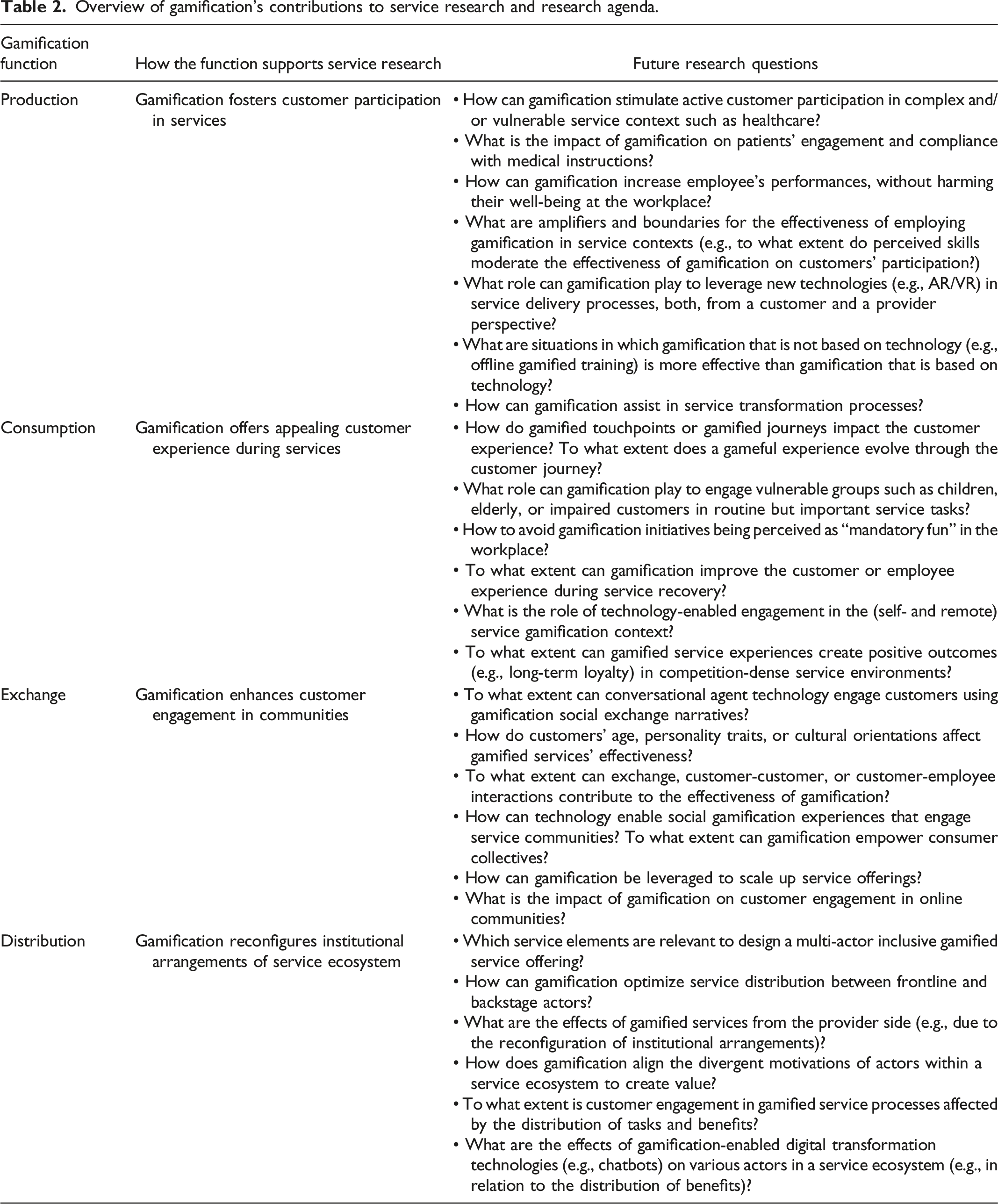
First, the production function suggests the use of gamification as an instrument to activate motivations and facilitate behaviors. Guiding customers’ actions is central for many services because of the substantial participation of customers in their production (Bolton and Saxena-Iyer 2009). Customer participation affects the core service performance and consequently the value that can be derived from these interactions (Menguc, Auh, and Wang 2020). Successful customer participation in service production leads to better service quality, higher customer satisfaction and improved relational outcomes (Dong et al. 2015). Managing customer participation has been highlighted as a key topic for service research (Donthu et al. 2020). Although Dong et al. (2015) outline the role of perceived extrinsic benefits in enhancing customer participation, the production function of gamification aims to address this challenge by making participation in the service motivational. Therefore, gamification relies on game elements to activate the psychological needs for autonomy, competence, and relatedness and ensure participation in the long run (Ryan and Deci 2000). By addressing these motivations to stimulate participation, gamification may generate a greater investment in time and effort from customers in service production (Xi and Hamari 2020) and from employees in service delivery (Hammedi et al., 2021). Hence, additional efforts are needed to explore the opportunity to use gamification to improve customer participation in services where customers are, by definition, highly involved, such as interactive or self-services (e.g., self-tracking of one’s health or fitness), as well as in contexts where there is a greater demand for increased participation (e.g., waste reduction as suggested by Ostrom et al., 2021). For instance, the investigation of gamification as a strategy to increase patient engagement and compliance with medical instructions (e.g., vaccination recommendations, social distancing, and hand hygiene in a pandemic context) would help improve the quality of care, which remains a challenging task for the healthcare sector (Berry et al. 2020). In addition, whereas gamification may be a powerful driver for increasing customers’ investment in effort in the service, the skills and confidence they possess may vary (Chowdhury and Endres 2010). Accordingly, customers’ resources (e.g., perceived competence) should be further examined as moderators of gamification’s ability to improve customer participation in the service domain, an aspect that could also enrich the current discussion on customer vulnerability (Boenigk et al. 2021).
Second, the consumption function highlights the use of gamification to deliver an appealing experience to customers and the associated community. Although the notion of experience is strongly associated with gamification, it is not necessarily theorized from a service research perspective (e.g., user experience from human-computer interaction rather than customer or service experience). Customer experience has been studied extensively in the service literature, especially because of its closeness to the value creation process (Becker and Jaakkola, 2020). Designing touchpoints to offer a meaningful experience to customers at various stages of the consumption process is a key ingredient for service management (De Keyser et al. 2020). Future research could explore how gamified touchpoints or gamified journeys impact the customer experience. Furthermore, little research has investigated how the customer experience with gamified services may evolve over time. Therefore, the time-flow quality of the customer experience (i.e., duration and dynamism; De Keyser et al. 2020) can be mobilized to go beyond the cross-sectional gameful experience and understand the gamification journey (e.g., learning a new language with Duolingo or practicing mindfulness with Headspace). The gamification journey implies considering gamification beyond punctual participation to integrate consecutive gamified interactions (Leclercq et al., 2020). Service research can also benefit from other types of experiences associated with activities that might be demanding or repetitive, such as learning (Huang et al. 2020), work (Silic et al. 2020), or physical exercise (Kelders, Sommers-Spijkerman, and Goldberg2018). For example, the gameful experience has been explored through flow theory (e.g., Suh et al. 2017; Lee 2019). People experiencing a state of flow demonstrate deep immersion and strong engagement in the tasks they execute (Csikszentmihalyi 1990). Furthermore, gamification tends to induce an aesthetic experience through meanings and symbols associated with games. The pleasure derived from such experience is commonly named fun or playfulness (Feng et al. 2018; Harwood and Garry 2015; Suh et al. 2017). Gamification has been identified as a powerful strategy for enhancing users’ experience during tasks they are reluctant to perform, so further research efforts should be devoted to investigating the use of this strategy in settings relevant to service research. To illustrate, best practices to manage customer complaints in the service recovery process remain limited (Grégoire and Mattila 2020), and gamification offers a promising opportunity to address this challenge (e.g., gamified feedback forms for consumers and gamified service recovery steps for employees).
Third, the exchange function indicates that gamification provides norms and rules to shape social interaction with peers. These interactions are key considerations for service researchers, given the importance of dynamic network structures implied by services, beyond a dyadic interaction (Brodie et al. 2019). Online communities play a critical role in this network, as they, for example, influence customers’ relationship with the brand (Bowden et al. 2017). Generating a deeper understanding of how to engage customers in online communities is critical for managers and researchers, as customers engaged in a community share information, advocate the brand, socialize, learn practices, and codevelop solutions (Brodie et al. 2019). Dessart, Veloutsou, and Morgan-Thomas (2015) report that a community’s characteristics affect customers’ intentions to engage. In that respect, gamification leverages social interactions to increase customer engagement. Therefore, two social dynamics are part of the gamification strategy and frame relationships among peers: competition and cooperation. Although in competition, the success of a member implies others’ losses, in cooperation dynamics, every participant is rewarded as soon as the group achieves an identified objective. Most current research reports the ability of gamification to induce social comparisons among users, influencing their intentions to engage further (e.g., Leclercq et al. 2018). Although such comparisons may generate some sense of injustice and disengagement within the community, they are nonetheless considered central to the value creation process in services (Leclercq et al. 2020). Additional research is thus needed to explore the conditions leading to successful or harmful uses of competition and cooperation dynamics in communities. For instance, personality traits, such as cooperativeness and competitiveness, and cultural dimensions, namely, individualistic and collectivist orientations, may affect how customers integrate gamification dynamics into their interactions with peers and should consequently be further analyzed. Additionally, age may play an important role, as younger users are expected to hold more favorable attitudes toward gamified services (Deterding 2019). Thus, future research could examine to what extent gamification can empower collective consumers in settings from which they are typically excluded (e.g., young Reddit users investing as a cooperating collective via a gamified application; Massa and Robinson 2021).
Finally, the distribution function reveals how gamification affects the generation of outcomes among customers, service providers, and other stakeholders. Our review indicates that research investigating this function of gamification is scarce. Creating value beyond customer-service provider interaction has yet to arise as a priority for scholars investigating service ecosystems (Vink et al. 2021). A service ecosystem is defined as a “relatively self-contained, self-adjusting system of resource-integrating actors connected by shared institutional arrangements and mutual value creation through service exchange” (Vargo and Lusch 2016, p. 10-11). In such ecosystems, customers can influence, at least partially, how value is created (Nenonen, Gummerus, and Sklyar 2018). Therefore, Vargo and Lusch (2016) emphasize the role of institutional arrangements, namely, rules, norms, meanings, and symbols, in guiding appropriate behaviors to create value for all stakeholders of the service ecosystem (Koskela-Huotari et al. 2016). Gamification operates as a reconfiguration of these institutional arrangements by providing rules, norms, meanings, and symbols commonly associated with games to design interactions among ecosystem actors and guide value creation. Current research has highlighted the ability of gamification to draw users’ attention to the benefits other actors may derive from gamified interactions (e.g., Koivisto and Hamari 2014; Lu and Ho 2020; Silic et al. 2020). Future research should investigate the impact of gamified interactions on more complex ecosystems, including actors such as employees, providers, and communities. The distribution function can be assessed by considering studies in different contexts. A comparison of studies that focus on gamification in health or educational contexts wherein self-benefits might be more prevalent and those conducted in organizational contexts wherein outcomes are more likely to represent mutual benefits could be informative as well. Prior research has suggested that the effectiveness of the use of gamification might be somewhat diminished (e.g., Zimmerling et al. 2019) or even reverted (e.g., Högberg, Shams, and Wästlund 2019) in business contexts. For instance, Hammedi, Leclercq, and van Riel (2017) provide initial insight into how gamified care may transform the role of medical staff by becoming a coach, ensuring that the patients properly use the gamified service that is delivered.
Based on this conceptual discussion, each function of gamified activities may support a distinct layer of service design (see, e.g., De Keyser et al. 2020). The production function examines gamification as an instrument to shape customers’ interaction with service providers by motivating them to invest time and effort in service production. The exchange function goes beyond the dyadic interaction between customers and the service provider to include (online) communities. In that respect, gamification is described as a set of rules to govern customers’ interactions with peers and engage them within brand communities. The consumption function broadens our understanding of gamified services by covering the overall experience of customers. Accordingly, gamification aims to provide customers with an appealing (e.g., fun) experience. Finally, the distribution function points out the contributions of gamification to the entire service ecosystem as a reconfiguration of institutional arrangements to guide actors’ behaviors and affect overall value creation.
Theoretical Contributions
With this research, we aim to make three key contributions to service research. First, despite the increasing popularity of gamification in practice and other disciplines, there has been limited research on this concept in the service field. Our review addresses this issue by identifying the evolution of gamification conceptualizations, highlighting the endogenous usage of game mechanics as a core contributor to the customer’s overall value creation in a service research context. Furthermore, by analyzing prior definitions of gamified services (e.g., Huotari and Hamari 2017), our conceptualization distinguishes gamification from related concepts, such as classic games, pervasive games, and serious games that have been used interchangeably in the literature. These distinctions also emphasize that the process of value creation in gamified services is strongly affected by contextual elements, an aspect current research overlooks (Khan et al. 2020).
Second, adopting a cross-disciplinary approach, our review captures contextual elements that affect the value derived from gamified interactions. By drawing from activity theory (Engeström 1987; Vygotsky 1978), we identify four gamification functions for services (production, exchange, consumption, and distribution) outlined by their relationships with gamification elements, gamified tasks, users’ motivations, the community users are interacting with, and the rules or norms governing the community as well as the division of labor within it. Current and important service research themes (i.e., participation/engagement, experience, and loyalty) are highlighted across these functions, and conceptual challenges stemming from the multidisciplinary nature of the literature review are signaled. In doing so, we achieve a holistic and in-depth perspective on gamification in service research and a better understanding of the role of contextual factors in gamified services.
Finally, for each emerged gamification function, we highlight service domains in which gamification should be further investigated (e.g., service recovery, self-service, and service ecosystems). Our research agenda aims to structure future academic efforts and stimulate the development of knowledge on gamified services. We identify rich opportunities for research in various service environments, such as digital transformation processes that involve attitude and behavioral changes from ecosystem actors, as well as transformative service research and giving voice to more vulnerable groups such as children or the elderly (Boenigk et al. 2021). Furthermore, the ever-increasing impact of technology in developing a better understanding of experiences and stimulating engagement (e.g., chatbots and augmented reality) strongly impacts opportunities for gamification practices in various (self- and remote-) service environments and requires further investigation (Heller et al. 2021, Sidaoui, Jaakkola, and Burton 2020).
Managerial Recommendations
In the following section, we present an outline of managerial implications derived from our analysis of the functions of production, consumption, exchange, and distribution.
Considering the production function, prior research has highlighted that users’ perceptions of aspects that are well known from technology acceptance research, such as a gamified instrument’s usefulness and ease of use, drive adoption and continued usage intentions. Thus, service providers aiming to engage their customers using gamification should highlight the benefits users may derive from taking part in the service. For instance, Kinto, a Toyota car subscriptions service operating in Japan, uses gamification to reward safe and eco-friendly drivers with lower monthly fees. Another opportunity to activate motivations and thereby foster customer participation is addressing customers’ needs, such as autonomy and competence, with gamification elements, such as points or badge systems. This can be especially useful in sensitive services, where customer engagement is highly relevant, such as healthcare treatment processes, which require continuous participation and information sharing from customers (i.e., patients). In addition, service providers should be aware that the effectiveness of gamifying activities could diverge across different types of activities. Given that research has shown that gamification is most effective for low-effort tasks (e.g., symptom check-in for chronic patients), service providers should focus their attention on such activities when developing a gamification strategy.
In a similar vein, prior research classified under the consumption function has highlighted the important role of hedonic aspects such as enjoyment, fun, and flow when performing a gamified task as an essential part of customer experience. Hence, these aspects should become central considerations in the implementation of gamification in service practices. An important consideration for service providers is to implement gamification as optional rather than compulsory to avoid employees feeling forced to participate in “mandatory fun” (Milkman 2021). In addition, the exchange function emphasizes the relevance of social aspects in gamified activities, a facet that is typically implemented through instruments of competition and cooperation. Furthermore, this function also recognizes the different types of social interactions in gamified service settings, namely, customer-service provider and customer-customer interactions. Based on prior research on the relevance of social aspects, service providers should try to create and promote users’ feelings of relatedness and belonging as well as mutual recognition of performances or contributions among community members. For instance, the direction application Waze asks users to cooperate by submitting data about driving conditions in real-time in exchange for points and the opportunity to be on a leaderboard.
Finally, services are becoming increasingly complex, and they typically involve contributions from multiple actors. Considering the distribution of tasks and outcomes among those who are involved in a gamified activity, prior research has shown that the extent to which users and other community members perceive the benefit of a gamified activity is an important and crucial driver of users’ engagement. Thus, service providers employing gamification techniques should ensure that customers are aware of the benefits provided by a gamified service.
Limitations
The nature of systematic literature reviews poses some limitations in our research, such as the criteria defined for article inclusion (e.g., peer-reviewed articles in English-language journals with an impact factor of two or higher), somewhat limiting our findings yet allowing us to analyze the articles in our final set in greater depth. Furthermore, we acknowledge that our findings could be subject to publication bias, that is, the phenomenon that significant findings are much more likely to be published than nonsignificant findings (e.g., Rosenthal 1979). Consequently, although our review of the literature indicates that the use of gamification to induce favorable outcomes seems to be relatively effective, it is possible that its actual effectiveness is overestimated because of publication bias. Despite such limitations, we are confident that our in-depth analysis of the key literature on gamification through the lens of activity theory as well as the research implications derived from this examination may stimulate future research on this highly managerially relevant topic.
Supplemental Material
sj-pdf-1-jsr-10.1177_10946705221076272 – Supplemental Material for It is Really Not a Game: An Integrative Review of Gamification for Service Research
Supplemental Material, sj-pdf-4-jsr-10.1177_10946705221076272 for It is Really Not a Game: An Integrative Review of Gamification for Service Research by Robert Ciuchita, Jonas Heller, Sarah Köcher, Sören Köcher, Thomas Leclercq, Karim Sidaoui and Susan Stead in Journal of Service Research
Footnotes
Author Contributions
All authors contributed equally and are listed in alphabetical order by their last name.
Acknowledgments
This research originated at the seventh Let’s Talk about Service Workshop at the University of Ghent, December 5–7, 2018. The authors thank the organizing committee (Bart Larivière, Paul Gemmel, Wafa Hammedi, Sertan Kabadayi and Annouk Lievens), the keynote speakers (Mike Brady, Melissa De Regge, Jay Kandampully, Chiara Orsingher, Katrien Verleye and Yves Van Vaerenbergh) and the participants for their feedback and support. The authors thank Daria Novikova for her invaluable help with data-collection and early stages of the analysis. The authors also thank the organizers and track chairs of the SERVSIG 2020 conference and the 2020 La Londe International Conference in Services for their feedback. Finally, the authors thank the current and the previous editor-in-chief, the coeditor, and the anonymous reviewers for their constructive feedback and helpful comments.
Declaration of Conflicting Interests
The author(s) declared no potential conflicts of interest with respect to the research, authorship, and/or publication of this article.
Funding
The author(s) received no financial support for the research, authorship, and/or publication of this article.
ORCID iDs

Supplemental Material
Supplemental material for this article is available online.
Notes
Author Biographies
References
Supplementary Material
Please find the following supplemental material available below.
For Open Access articles published under a Creative Commons License, all supplemental material carries the same license as the article it is associated with.
For non-Open Access articles published, all supplemental material carries a non-exclusive license, and permission requests for re-use of supplemental material or any part of supplemental material shall be sent directly to the copyright owner as specified in the copyright notice associated with the article.
