



Abstract
Digital technologies offer significant economic, environmental, and societal benefits. However, a key challenge for implementing digital technology is determining which solution best addresses the needs of the organisation, its workforce, society, and sustainability. This paper uses the concept of legitimacy, the acceptance and normalisation of technology, to explore different stakeholder perspectives, helping to inform decisions about technology adoption. A legitimacy lens encourages critical questioning of the norms and values of societies, public bodies, or organisations. We outline a set of discussion cards designed to structure conversations about the legitimacy of implementing potential digital technologies into a specific workplace or industry setting. The cards simplify concepts from legitimacy theory into nine main themes and encourage discussions that explore both positive and negative aspects. This paper presents an early-stage prototype card tool, their piloting and redesign, and validation in an industrial setting with Rolls-Royce. The company used them in three on-line and in-person workshop sessions with 15 industry participants. Results support the usefulness of the legitimacy concept in holistic, guided conversations and the cards as a boundary object tool to help the industry operationalise theory effectively. Conclusions indicate the need to simplify the academic language used, ensure that topics for discussion are distinct, and enhance guidance or process for equity in workshop facilitation/participation.
Keywords
Introduction
Engineers and manufacturers today are confronted with pressing environmental and societal challenges, highlighting the urgent need for innovative solutions to address these global issues. Industry 5.0 is expected to tackle not only technical obstacles but also deliver broader societal benefits, with industry central to any value that can be derived from such transformations (European Commission: Directorate-General for Research and Innovation, 2024). A major source of this value is anticipated to come from adopting digital technology (Basir et al., 2024; Made Smarter Innovation, 2017). For instance, the UK's manufacturing sector is targeting a £150 billion boost to the economy over the next decade, driven by the strategic adoption of digital innovation and automation (Nevin, 2025). Digital advancements have so far transformed conventional manufacturing methods, leading to significant improvements in efficiency (Lattanzi et al., 2021; Schleich et al., 2017), and operational performance (Choi et al., 2023).
However, adopting these digital solutions is often far from straightforward, with the UK lagging behind other nations in terms of uptake (Made Smarter Innovation, 2017; PwC, 2024). Key barriers include difficulties in decision-making regarding which technologies to adopt, delays in realising tangible societal benefits (or the benefits being unclear), and the added complexities that come with introducing change in industry and among their stakeholders. Among these complexities, we can include the need for collaborative efforts among policymakers, industry associations, and technology providers to create a more conducive ecosystem for manufacturers (Basir et al., 2024; Foresight, 2013). This issue brings together a wide range of perspectives from stakeholders, which can often be conflicting, and these differing views play a key role in shaping the outcomes and effectiveness of the technology.
Since people ultimately drive the challenge, it requires innovation across the disciplines to encourage early adoption and fully realise the benefits of digitalisation (World Economic Forum, 2023). Digital technology adoption often involves transdisciplinary (TD) considerations, as it requires the integration of technical, organisational, and societal perspectives that transcend traditional disciplinary boundaries (Lattanzio et al., 2022). The European Union's conceptualisation of Industry 5.0 explicitly frames digitalisation in terms of human-centricity, sustainability, and resilience, underscoring the need for transdisciplinary approaches (Lattanzio et al., 2022). However, most existing approaches to digital adoption remain multidisciplinary rather than truly transdisciplinary, lacking systematic mechanisms for knowledge integration and co-creation across stakeholder groups.
In this research, we use the concept of legitimacy, i.e., the acceptance and normalisation of technology, to structure holistic conversations. The purpose being to support understanding, as early as possible in the digitalisation journey, whether a new technology is (the most) appropriate to implement. This paper presents a prototype tool in which legitimacy theory is operationalised through discussion cards, and tested with industrial teams, to facilitate transdisciplinary conversations about digital technology adoption. This work includes the legitimacy theory background, the rationale for creating and using cards to facilitate discussions, the systematic design process conducted for the card development, and results of validation studies, including those conducted in an industrial setting (World Economic Forum, 2023).
This study represents an early-stage industry validation rather than a comprehensive implementation study. Our research questions focus on: (1) Can legitimacy theory be effectively operationalised through discussion cards as a boundary object? (2) Do these cards facilitate meaningful stakeholder dialogue in industrial contexts? (3) What design improvements are needed for broader implementation?
The paper is structured as follows. We first present the literature surrounding legitimacy to establish the need for tools such as discussion cards that support manufacturing industries in using such conversations for technology adoption (Section “Background”). The approach used to conduct this work is detailed (Section “Method”). The work conducted in phase one—operationalisation of theory to legitimacy cards and the pilot workshop with PhD students—is summarised (Section “Phase 1: Operationalisation of Theory to Legitimacy Cards and Pilot Workshop with PhD Students”). The work conducted in phase two—the redesign of the legitimacy card deck and its evaluation through the workshops in an industry context—is presented and discussed (Section “Phase 2: Redesign of the Legitimacy Cards and Workshops in an Industry Setting”). Finally, conclusions are formulated, and future work is identified (Section “Conclusion & Further Work”).
Background
The adoption of emerging technologies is essential for organisations seeking to leverage the productivity improvements that digital tools can provide (Made Smarter Innovation, 2017). Yet, digital transformation is a multifaceted challenge, extending beyond mere technological shifts to include financial, organisational, environmental, and social dimensions. This complexity makes it a pressing transdisciplinary (TD) challenge for many organisations (Wognum et al., 2019).
One of the primary obstacles is the need to engage people and harmonise differing viewpoints to facilitate the transition (Made Smarter Innovation, 2017). For new technologies to be successfully adopted, several change models have stressed the importance of clearly defining change and establishing a vision and strategy for change (Errida & Lotfi, 2021). Also, it is crucial not only for users to accept digital solutions and changes but also for the leadership and management teams to embrace them (Carey et al., 2024). While many organisations may appear to share common organisational culture, on closer inspection, underlying competing perspectives and divergent worldviews can emerge, particularly at individual or departmental levels (Westrum, 2014). Achieving alignment of these differing views is not automatic; it requires a deliberate process and is critical to the success of any change or technology adoption.
A key factor in creating what Westrum calls a generative organisation, which focuses "on the mission," is the dismantling of organisational ‘boundaries’ (Westrum, 2014). Such boundaries are also a key concern in TD research where it is suggested that crossing disciplinary boundaries poses huge communication challenges (Carey et al., 2022). When addressing these challenges in the context of digital transformation, the questions of who to involve, when to involve them, and how to ensure effective communication to achieve better outcomes remain critical (Carey et al., 2022). Furthermore, tools that can facilitate these processes remain underdeveloped or theoretical.
Historical precedents exist for tools that successfully bridge disciplinary boundaries in technology contexts. Keen's seminal work on Decision Support Systems identified three key actors: the User (decision maker), the Builder (technical developer), and the Intermediary (skilled facilitator who bridges the gap between user and builder). Keen emphasised that effective system development depends on dynamic interaction among these actors through adaptive and iterative design processes (Keen, 2015). This framework demonstrates how digital tools can cross disciplinary boundaries when supported by appropriate intermediary mechanisms.
Current research has begun to recognise the growing importance of digital adoption as a TD challenge (Made Smarter Innovation, 2017). This trend points to a noticeable lack of practical tools designed to address these challenges, especially in sectors where digital support infrastructure is still emerging (Chamba & Newnes, 2024; Goudswaard et al., 2020; Made Smarter Innovation, 2017). Operationalised tools, such as the use of ideation or discussion cards to support crossing such boundaries, are of increasing interest within research. However, such tools are yet to be methodologically realised for generalised purpose (Wetzel, 2017) and working within and between boundaries.
Abraham identifies three types of boundaries that are relevant for collaboration within organisations: syntactic, semantic, and pragmatic (Abraham, 2013). Syntactic boundaries arise from differences in vocabulary between communities of practice, and these can typically be addressed by creating shared lexicons, making them the most straightforward to overcome (Carlile, 2004). Semantic boundaries occur when differences in meaning or dependencies are unclear, often due to novelty, and require more than simple knowledge transfer; they need translation to ensure that interpretations are aligned across different communities (Abraham, 2013; Carlile, 2004). The most complex boundary to overcome is pragmatic, as it involves differences in meaning and divergent interests, agendas, and perspectives within each community (Abraham, 2013). These boundaries become particularly problematic in TD projects, where the involvement of diverse stakeholders demands careful navigation and effective knowledge sharing. The introduction or adoption of new technology into an organisation, therefore, requires more than just overcoming syntactic boundaries. It also involves addressing the deeper semantic and pragmatic challenges, such as ensuring that people understand the technology's practical application and navigating the political dynamics surrounding knowledge ownership (Carey et al., 2024). A significant risk here is the potential alienation of individuals whose areas of expertise may become or are perceived as becoming obsolete, which can further complicate the process of digital transformation.
To overcome these obstacles, tools such as information or discussion cards can serve as effective boundary objects to help bridge these communication gaps (Lamont & Molnár, 2022; Suchman, 1995). Boundary objects are versatile artefacts that facilitate communication across social worlds and can include physical objects, organisational structures, conceptual spaces, or even procedural frameworks (McLeod et al., 2012). For example, a glossary or a shared database might serve as a boundary object for addressing syntactic differences (Cambridge University, 2023). Henderson's study on sketches and drawings in engineering highlights how structured, yet flexible, tools can act as boundary objects to bridge disciplinary or stakeholder divides (Henderson, 1991). However, addressing semantic and pragmatic boundaries requires more nuanced tools that can surface and accommodate the varied levels of understanding and different perspectives held by stakeholders. In this research, we expand on the use of ‘legitimacy cards’ as boundary objects, offering a framework to guide users through discussions with legitimacy serving as a key concept to promote those discussions. Thus, like sketches in design engineering, the cards provide a flexible yet structured medium to support transdisciplinary conversations essential for addressing the multifaceted challenges in digitalisation.
Legitimacy Theory
Legitimacy, in its simplest definition, refers to “the quality of being reasonable and acceptable.” However, Suchman (1995) provides a more comprehensive definition, describing it as “a generalised perception or assumption that the actions of an entity are desirable, proper, or appropriate within some socially constructed system of norms, values, beliefs, and definitions.” Viewing technology adoption from the perspective of legitimacy allows for a nuanced consideration of how different stakeholders perceive the technology, aligning with the broader process of organisational change. It also provides a framework for the operationalisation of sharing perspectives in a practical, structured manner.
Suchman identifies three primary forms of legitimacy: pragmatic, moral, and cognitive (Suchman, 1995). Pragmatic legitimacy is grounded in self-interest, moral legitimacy concerns what is seen as “right,” and cognitive legitimacy relates to perceptions of what is taken for granted or easily understood. Legitimacy as a property aligns with Suchman's work, but it can also be viewed as a process through which groups negotiate and construct shared understandings of what is legitimate. Alternatively, it can be viewed as a perspective shaped by individual or collective interpretation (Suddaby et al., 2017). This flexibility in conceptualising legitimacy is beneficial, as it allows for a more dynamic, context-dependent understanding of what is legitimate within an organisation.
The use of cards helps structure discussions among diverse stakeholders, ensuring that different perspectives are considered without one expert dominating the conversation (Felt et al., 2017). Previous research has shown that card-based tools effectively support idea generation and pose potential as boundary objects. Their tactile aspect also stimulates creative processes, making abstract perspectives, or tangible more emotive thinking providing structure for sharing viewpoints (Hornecker, 2010). Additionally, card tools can facilitate collaborative and divergent thinking, help describe complex concepts to non-experts, as well as trigger and guide brainstorming and ideation processes (Breitfuss et al., 2023). Moreover, cards can facilitate equal participation in TD discussions, allowing all voices to be heard in evaluating technology adoption.
Method
The work that follows creates a novel, practical tool to operationalise legitimacy in a card deck format and evaluate it in the industry setting. Thus, contributing support for inclusive, informed discussions about the adoption of digital technologies, for all stakeholders, regardless of expertise, to contribute to well-grounded decision-making. The discussion cards aim to operationalise legitimacy in an easy-to-use tool format, exploring digital normalisation and acceptance to support holistic discussion, but not to produce legitimacy itself. The purpose of the legitimacy card deck is to enable non-professional facilitators and non-expert participants to contribute fully to a discussion (Carlile, 2022) about the potential adoption of a technology. Important aspects of this discussion should be that diverse and divergent perspectives are voiced and heard (Carey et al., 2024), and that the topics of legitimacy are fully explored to create a holistic conversation about all relevant perspectives (Carey et al., 2024). The cards present different topics from legitimacy theory, organised into clear headings and discussion prompts. Each card focuses on one specific aspect of legitimacy, with nine key themes identified from the theory across three main categories (pragmatic, moral, and cognitive), described in Section “Background” (Carey et al., 2024). Figure 1 shows these nine themes alongside their categories and simplified headings to help users better understand the content. Each card includes discussion prompts to encourage users to explore both positive and negative perspectives related to the theme. The overarching aim for the legitimacy card deck is to provide industry with a useful tool to support making more informed decisions about the adoption of technologies.
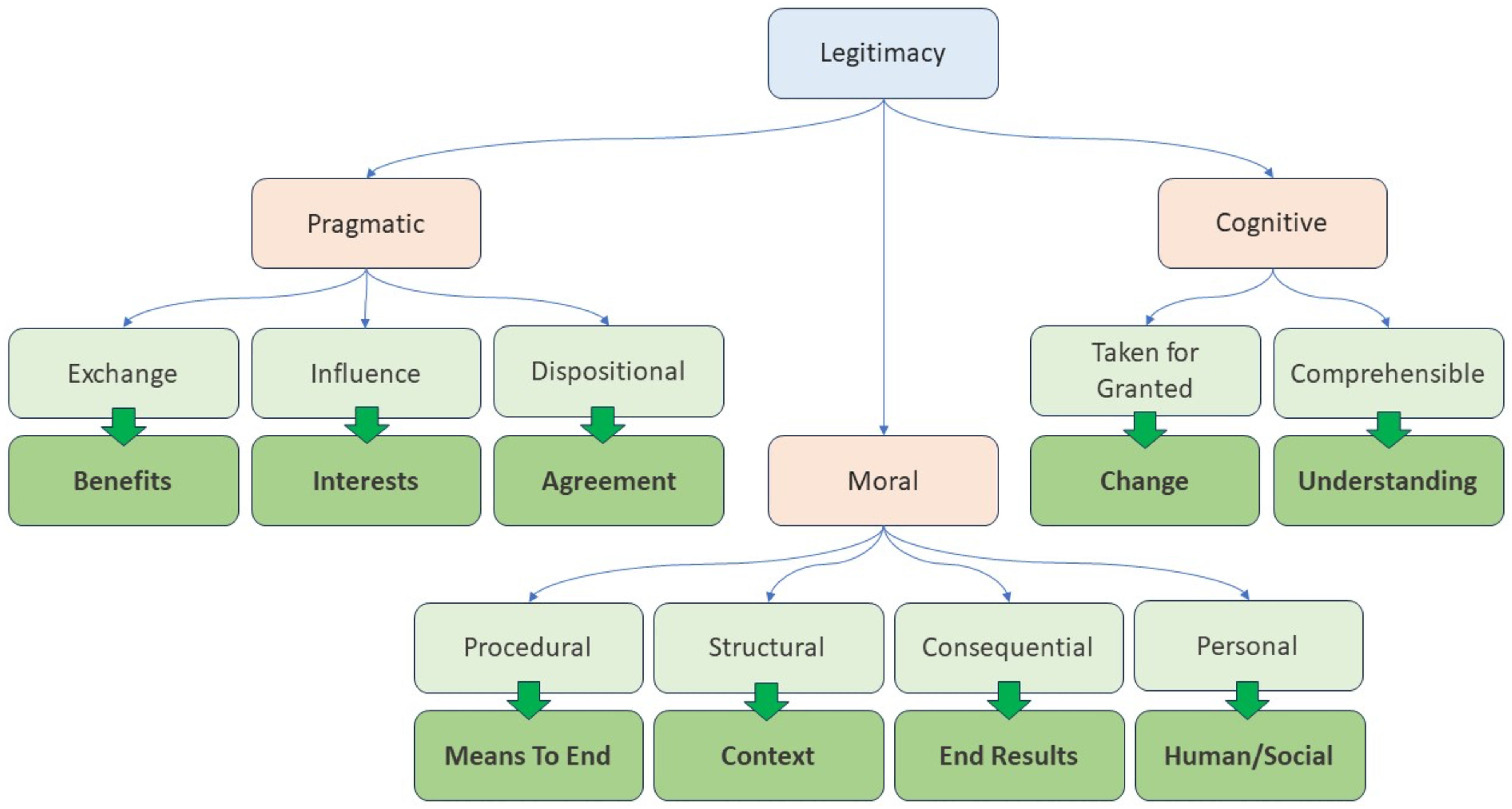
Legitimacy theory, primary forms, key themes & topic names.
The legitimacy cards discussed in this paper were developed using a systematic two-phase design and validation approach, as shown in Figure 2. This methodology follows established design research principles, including iterative prototyping, user-centred design, and systematic validation through controlled and real-world testing environments. In the first phase, a preliminary operationalisation of legitimacy was developed into a discussion card deck, these were tested in a pilot workshop with nine University of Bath students with different disciplinary backgrounds during a one-hour workshop. A comprehensive description of the method for this first phase is provided in the work of Carey et al. (2024).
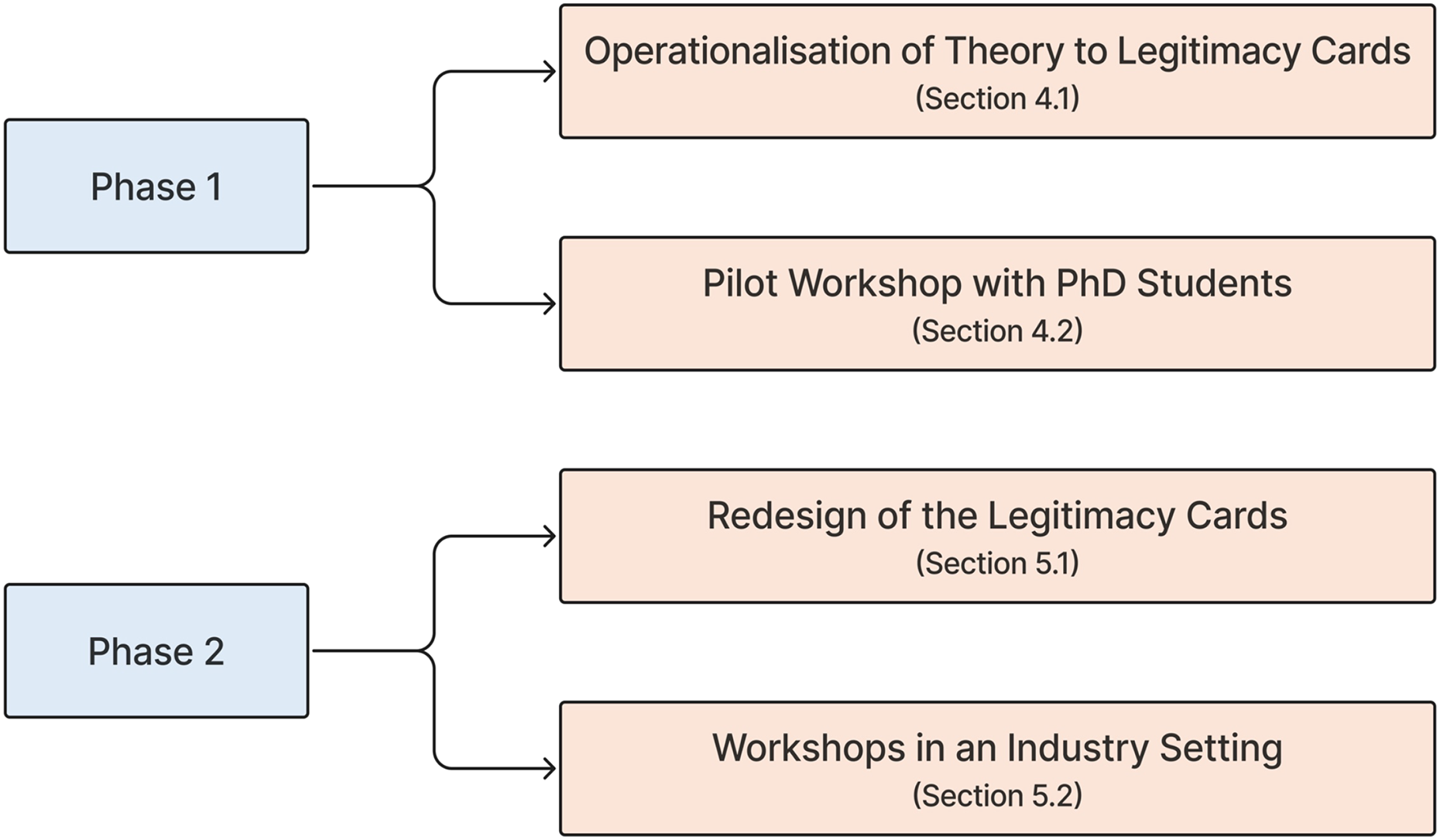
Methodology followed in this paper.
The second phase consists of redesigning the legitimacy discussion card deck based upon the student pilot feedback. This new discussion deck was then tested through workshops in an industry workshop context. The feedback from the workshops was used to understand to what extent the new version of the legitimacy cards is a useful and easy-to-use tool in the manufacturing context. These industry workshops form part of a stepwise development process to evaluate the design and usefulness of legitimacy cards in guiding holistic conversations in the adoption of technologies. We use our results to consider the usefulness of the card design and the legitimacy content in facilitating holistic discussion for digital adoption.
The revised discussion cards were used by Rolls-Royce—a prominent British company working on submarine propulsion systems with 4,125 employees—during three workshops, detailed in Section “Phase 2: Redesign of the Legitimacy Cards and Workshops in an Industry Setting”, involving 15 participants, conducted independently. Due to the sensitive nature of the technologies involved, novel evaluation approaches such as remote data collection, feedback, and anonymised answers were employed to remove industry-specific details. Workshop participants completed feedback forms to assess their experience using the legitimacy card deck in their workplace, and researchers received a compiled version of the data.
The feedback form used on phase two consisted of seven questions, assessing the ease of card use and content understanding, and the discussion process (Table 1). Literature aiming to evaluate card design suggests four following constructs are important, hence the results are distilled into themes relative to the following areas (Carlile, 2004; Haldenwang, 2016): Understandability: The cards are easy to follow/understand (process/content), Uniqueness: The cards each represent a single topic, separate from the others, Completeness: The card topics covered everything that may have been expected, Language: The terms used on the cards were easy to understand and the text easy to read. The data was analysed following the coding cycles proposed by Saldaña (2013).
Evaluation Feedback Questions for the Workshops in the Industry Setting.
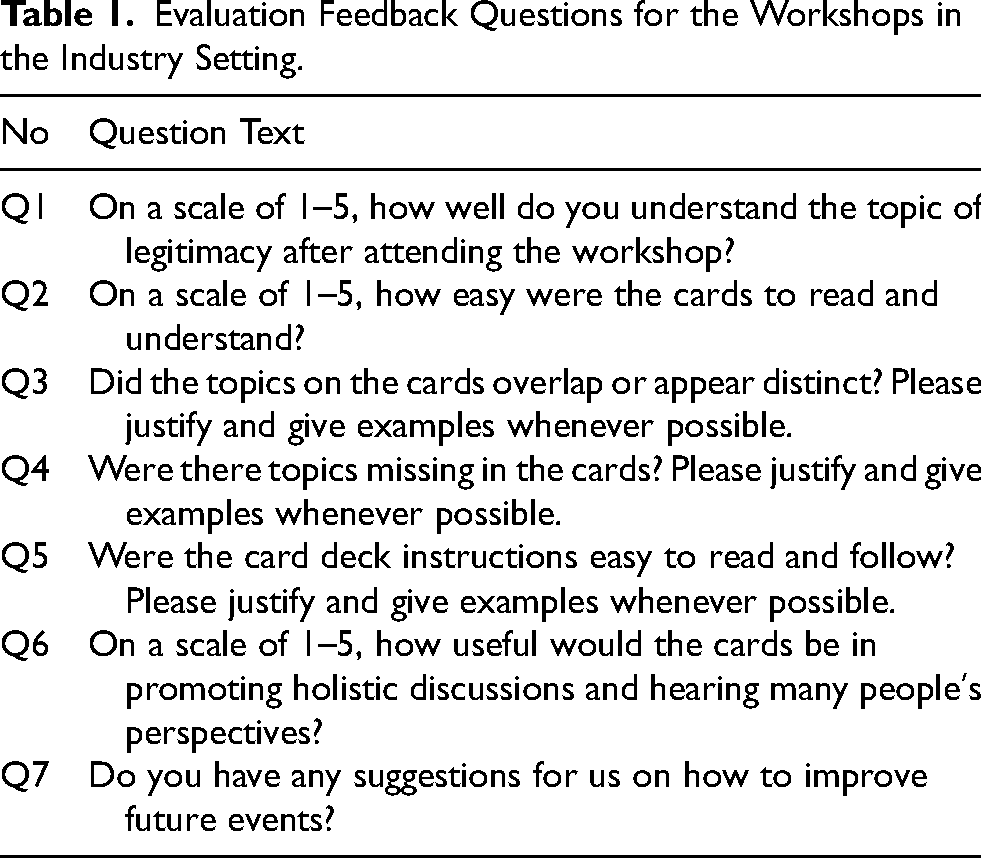
In questions 1, 2, and 6, participants were asked to rank their experience using a number from 1 through to 5, where 1 represented a poor experience, and 5 was the most positive experience. The results were evaluated using a combination of these score metrics and additional feedback statements provided by participants.
Each of the tabulated feedback questions relates to one of the areas that literature suggests requiring evaluating the use of card decks, which consists of a priori codes (Saldaña, 2013). During this process of coding, we themed the data based on the a priori codes and new themes also emerged. The codes were also counted (magnitude coding).
Phase 1: Operationalisation of Theory to Legitimacy Cards and Pilot Workshop with PhD Students
This Section details the process of designing and evaluating the cards with students.
Legitimacy Cards Design
Phase 1 focused on the development of the legitimacy card deck that constitutes the core artefact evaluated in this study. A prototype version of the Legitimacy Cards was designed to operationalise legitimacy theory, and to be used for facilitating transdisciplinary (TD) discussions on the adoption of digital technologies, specifically addressing digital normalisation and acceptance. The artefact development followed a structured design process. First, each legitimacy dimension was translated into a set of guiding concerns reflecting common tensions and decision points observed in digitalisation projects. Second, these concerns were reformulated into concise prompts intended to elicit discussion and reflection among workshop participants. Third, each prompt was materialised as an individual card, with wording designed to be accessible to non-academic stakeholders while retaining traceability to the underlying theoretical construct. Finally, the draft deck was iteratively refined to improve clarity, reduce overlap between cards, and ensure balanced coverage of legitimacy dimensions. The cards outline threads or topics from legitimacy using easy to understand topic headings and prompts for discussion. Each individual card theory using easy to understand topic headings and prompts focuses on a singular identified legitimacy theme (Carey et al., 2024). These cards were developed to test a method for guiding conversations about legitimacy theory, with each card covering a different theme related to legitimacy (pragmatic, moral, and cognitive) as shown in Figure 3.
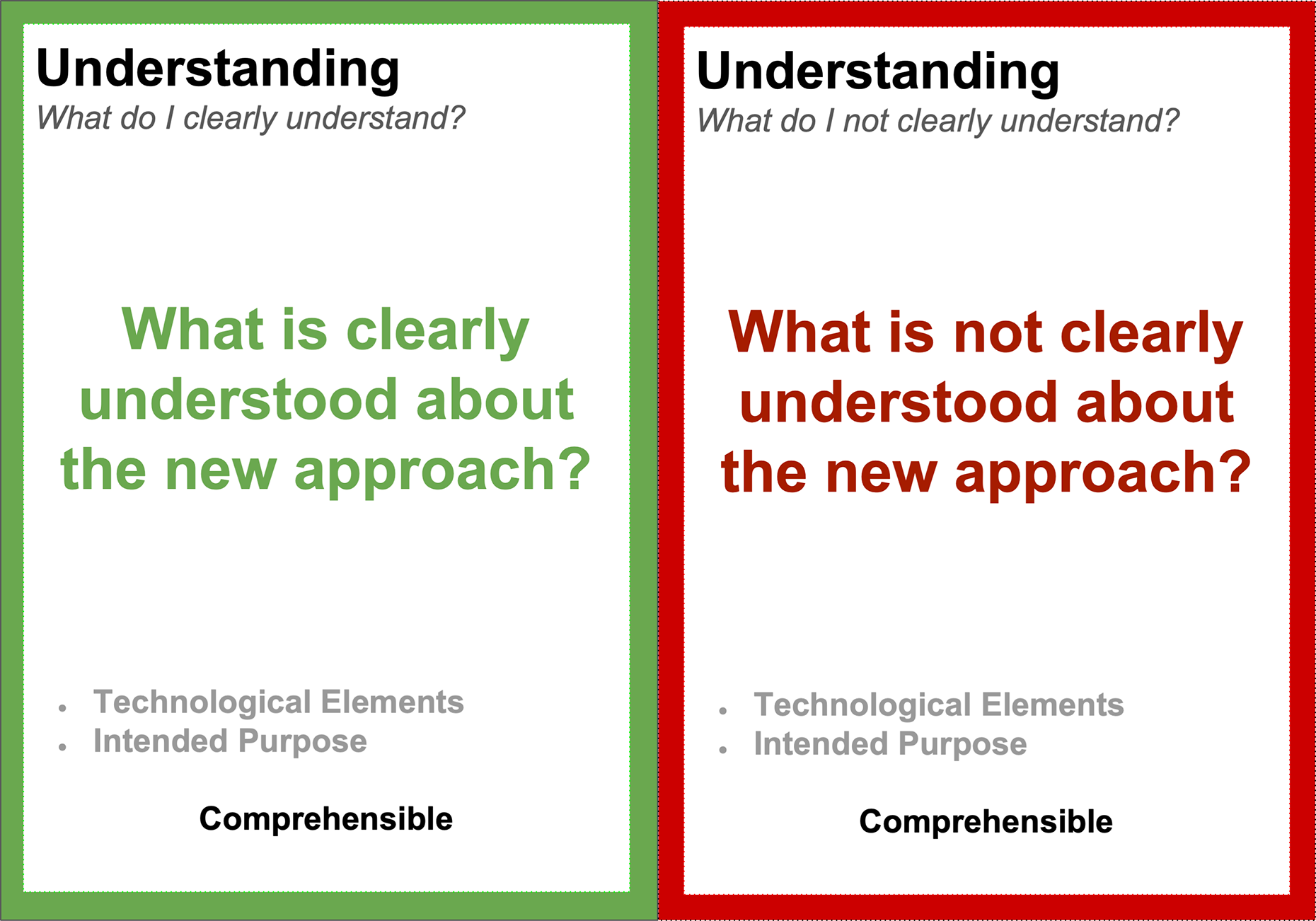
Preliminary version of the legitimacy cards.
These cards were tested in a pilot study aiming to assess how useful and user-friendly these cards were in encouraging diverse, inclusive discussions among participants from different academic disciplines. A one-hour pilot workshop was conducted with nine University of Bath students from diverse backgrounds and focused on a scenario proposed to facilitate their discussion about the adoption of “ChatGPT” technology. Each student was asked to provide feedback using a paper question form after using the cards. This form gathered responses to evaluate the cards’ clarity, comprehensiveness, and usability, with particular attention to how well they supported equal participation and structured the discussions (Carey et al., 2024).
Results from the Pilot Workshop with Students
The results indicated that while the legitimacy cards generally supported holistic discussions, several areas for improvement were identified. Participants found the cards’ theoretical content and language challenging to understand without the explicit examples, and suggested some topics potentially overlapped. The instructions for using the cards to facilitate conversation were also noted to be too complex and lengthy, leading to cognitive overload for some users.
Despite these issues, the participants appreciated the value of the open discussion format and the pros-and-cons sections, which helped uncover ideas in conversations they may not have considered otherwise. However, the time allocated for discussing each topic was insufficient, and future revisions of the cards should focus on simplifying the language, clustering related topics, improving accessibility (e.g., for colour blindness), and optimising the timing for more meaningful conversations.
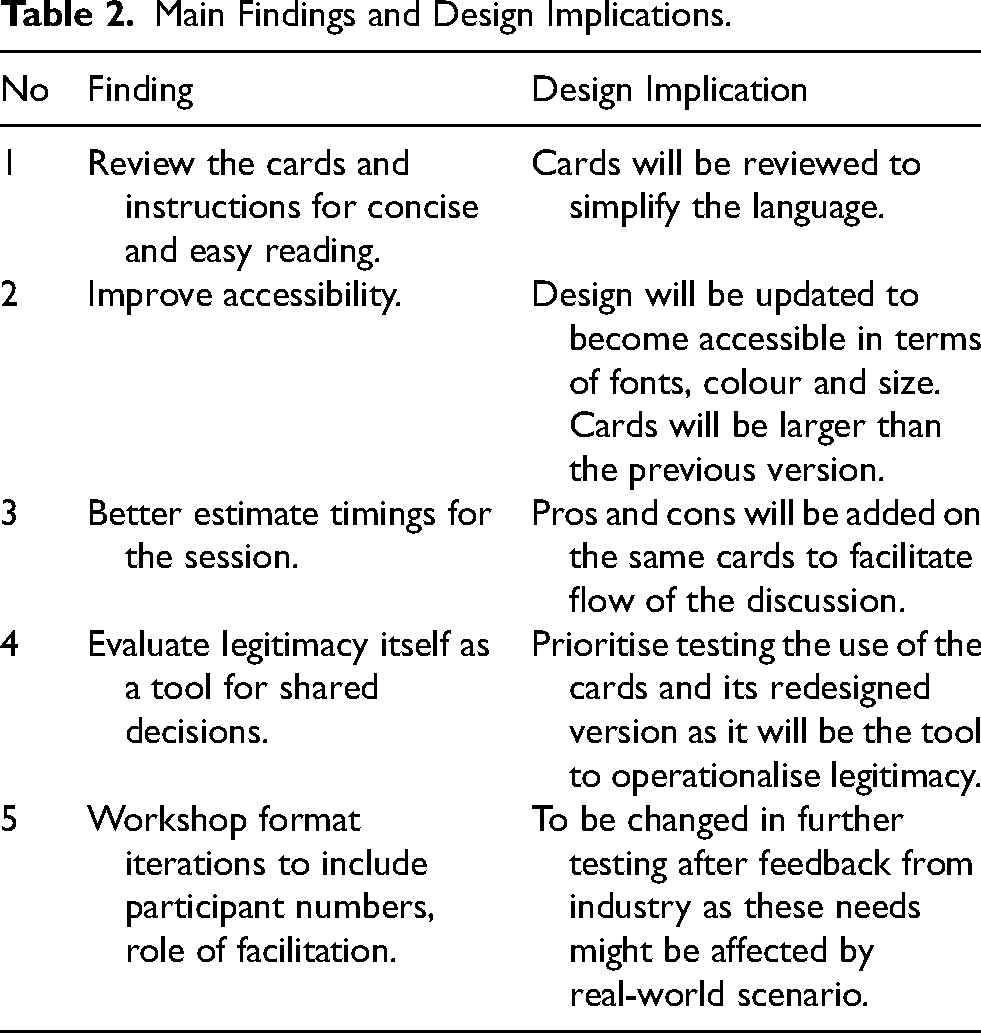
Given the feedback from this pilot study, the key findings and the design changes required for future designs of the cards are summarised in Table 2. These findings were discussed among researchers to prioritise the changes needed, considering the time available and the need to test some of the features with industry before making final changes. The decisions made are listed as design implications.
Main Findings and Design Implications.
Phase 2: Redesign of the Legitimacy Cards and Workshops in an Industry Setting
This Section details the process of redesigning and evaluating the cards in an industry setting.
Legitimacy Cards Redesign
Step two, of phase one of this research is conducted in response to the feedback received during the pilot study with students (Carey et al., 2024). As described in Section “Results from the Pilot Workshop with Students”, the cards were positively evaluated in terms of the topics covered, their design, and their usefulness in easing a meaningful discussion about the legitimacy of new technology. Nevertheless, some of the design aspects needed improvement and were thus prioritised among the researchers to make the necessary updates, as detailed in Table 2. As Table 2 shows, change number 4 (evaluate legitimacy itself as a tool for shared decisions) and 5 (workshop format iterations to include participant numbers, role of facilitation) are wider pieces of research, not evaluated here in this paper; they form later phases of research for the cards. The rationale that the cards serve as a tool to operationalise legitimacy, must be tested first and foremost, and then their design finalised. The evaluation of legitimacy as a tool for shared decision-making is a separate research challenge. Further contextual detail is needed to advise how the workshop should be conducted, especially as a standalone tool, industry will facilitate this for themselves. Hence, aspects such as the number of participants and the role of facilitation, were postponed, as insights from the industry are needed to better understand their specific needs for conducting the workshops. The card instruction set, hence, remained generic.
The revised cards have iteratively been redesigned from an original theoretical version, each card now outlines a concept from legitimacy theory using topic headers and text prompts to guide discussion, with each individual card covering a singular identified legitimacy theme. In total, nine identified legitimacy theory themes are derived from the primary forms outlined in Section “Method” (pragmatic, moral & cognitive). Each of the nine themes derived is outlined in Figure 1, associated with its primary form and a simpler/meaningful topic heading we have utilised to support user understanding in the discussion cards. Each card also provides potential discussion points associated with a single topic header, prompting users to find positive or negative ideas for discussion. In total, the first card deck comprises 18 cards (reduced to 9 cards in latter designs)—examples are shown in Figure 4. Added instruction cards, shown in Figure 5, are provided (yellow exemplar cards), and a booklet guide to the process is provided to support the construction of an equal discussion for all participants. These instruction cards and booklet supply guidance about the process, timelines, card interpretation, and recording aspects of the group discussion (Wetzel, 2017). The focus of the workshops is to evaluate the design and ease of using the revised cards, together with the industry's perception of the usability and usefulness of the cards.
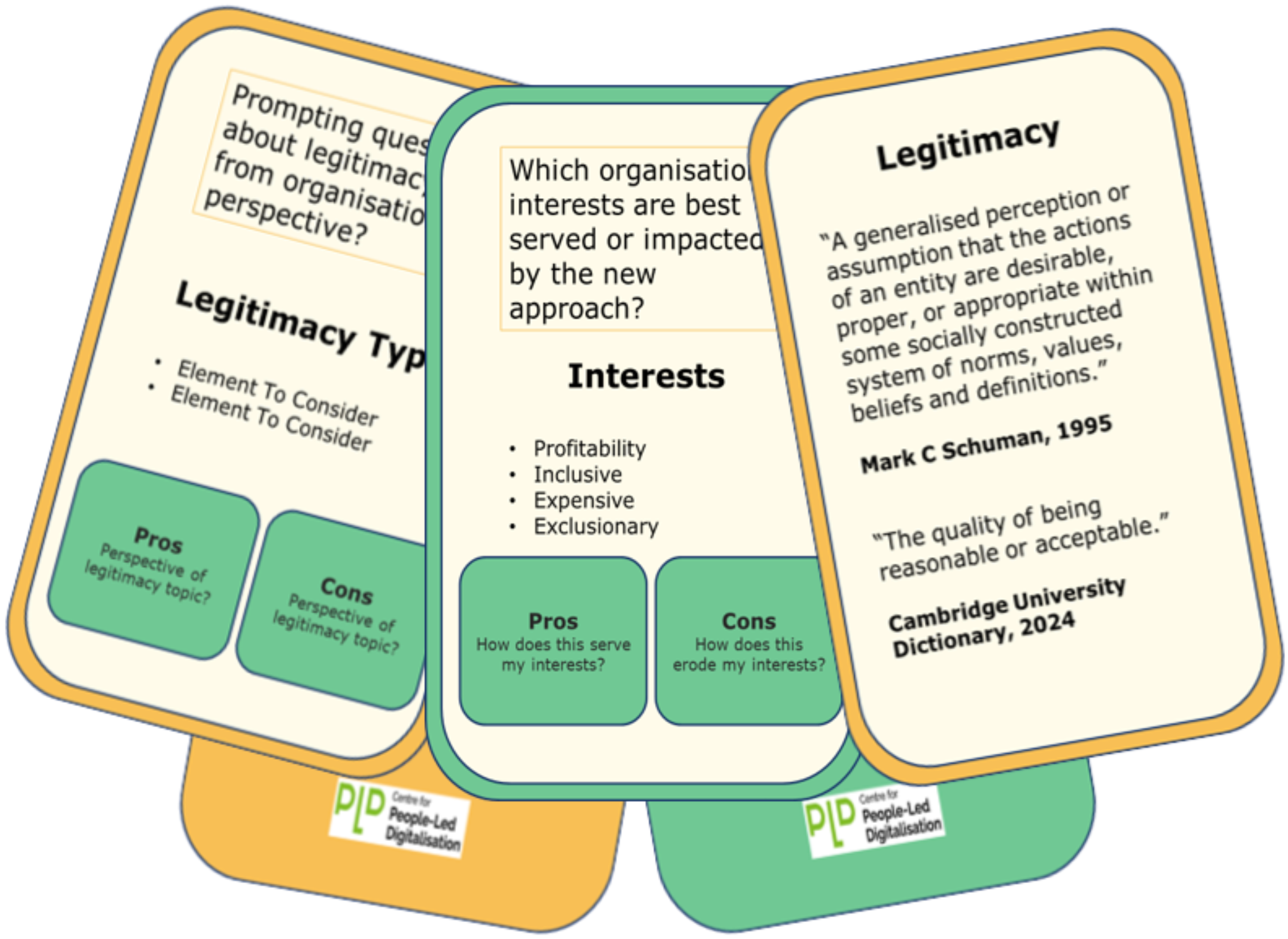
Legitimacy card redesign exemplars.
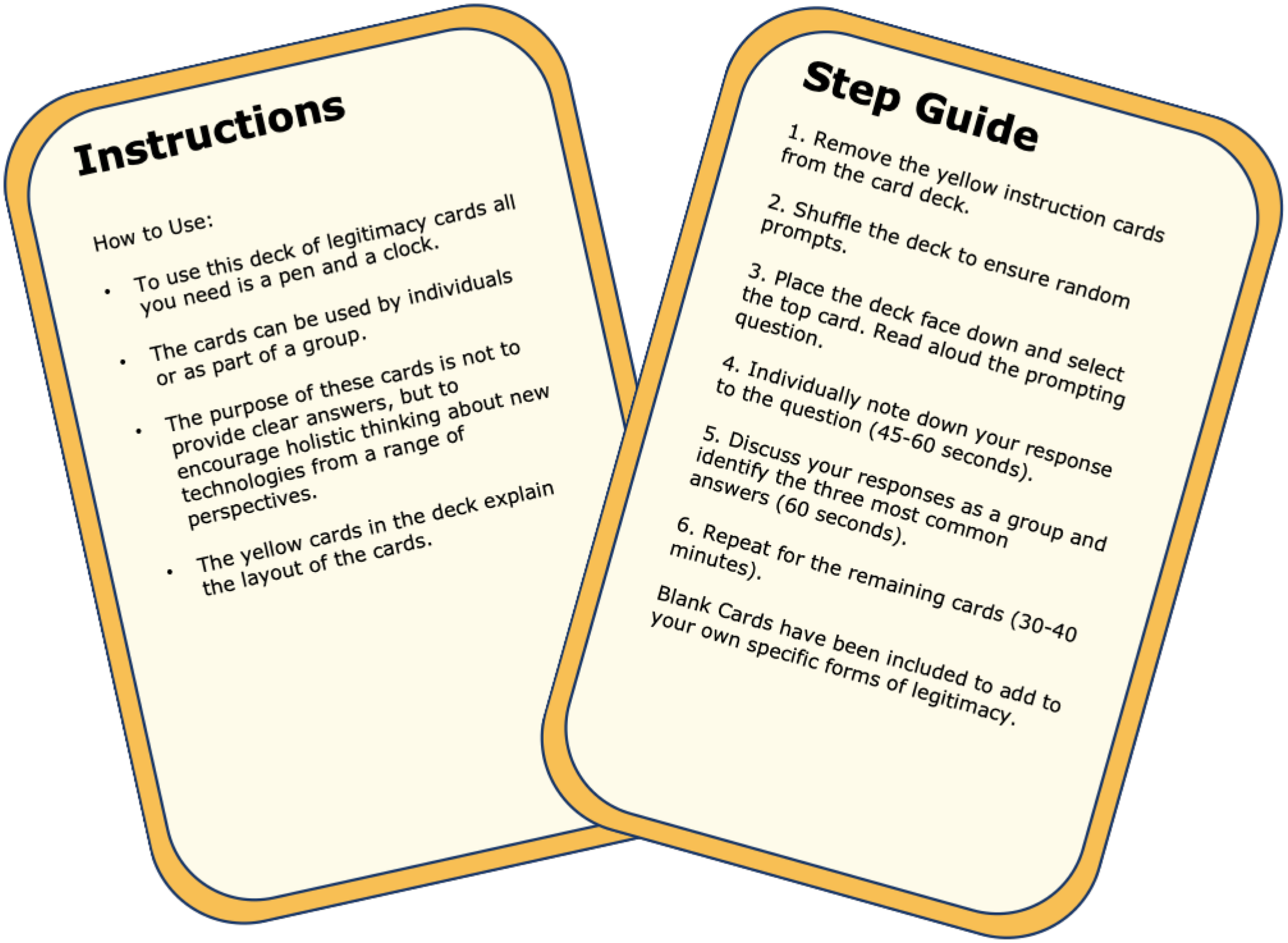
Instruction cards & guidance booklet redesign.
Results from the Workshops in an Industry Setting
As detailed in Section “Method”, Rolls-Royce hosted three workshops conducted independently at the company between August and September 2024. Their main objective was to determine if the cards would enable them to assess if digital opportunities were worth pursuing further, allowing the organisation to focus its efforts and be more agile when triaging demands. The workshops were conducted independently to facilitate the discussion of sensitive industry information and to enable the evaluation of the cards as a self-sufficient tool. This is particularly significant given that digitalisation often involves transdisciplinary challenges, requiring the integration of technical, organisational, and societal perspectives. The European Union's conceptualisation of Industry 5.0 explicitly frames digitalisation in terms of human-centricity, sustainability, and resilience, underscoring the need for transdisciplinary approaches that transcend disciplinary silos (Lattanzio et al., 2022). As this represented the first iteration in an industry setting and given the intention for the cards to be applicable in real-world settings, the researchers did not exercise control over participant selection for the workshops.
After receiving the cards, they held three internal workshops, two online and one in-person, with key stakeholders to review the cards’ practicality and usefulness within the company. Participants across the three workshops were from the following business areas: five Information Technology—IT (staff level), four information management team (staff level), and central digital (staff level), totalling fifteen participants. Workshops one (in-person) and three (online) each had five participants. Workshop two had fifteen participants and was held online. All workshops had a mix of participants from different areas, assuring they were transdisciplinary and covered different perspectives. They followed the tool guidance and collected session feedback using the researchers’ survey questions.
Table 3 summarises the average scores of the number-based questions asked, illustrating positive experiences. The average score related to their understanding of the legitimacy after attending the workshop (3.8) suggests they were generally able to understand the concept following the instructions provided in the cards. This result is encouraging as the tool was developed to be used independently.
Average Scores (From 1 to 5) of Number-based Questions.
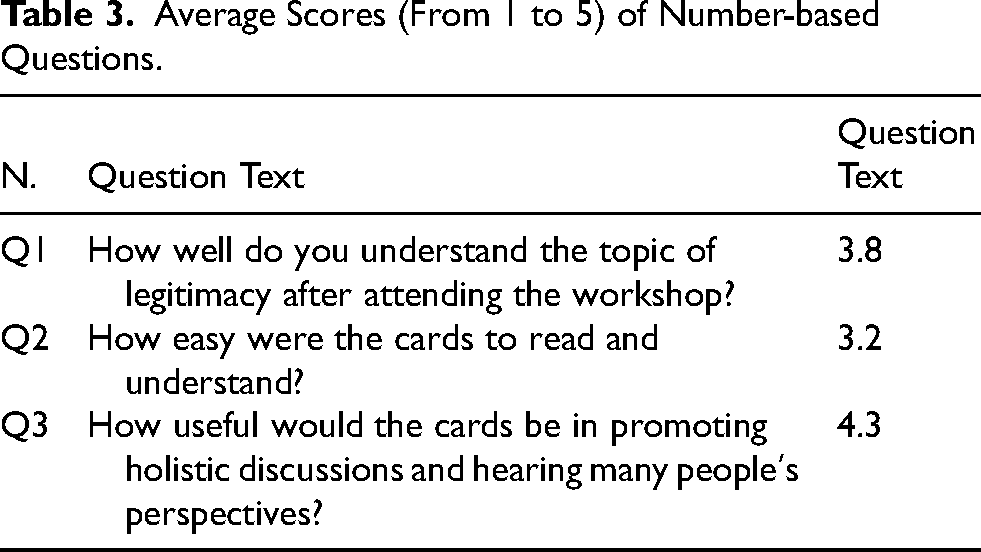
The score related to how the cards were easy to read and understand was the lowest of the three (3.2). This suggests there is still room for improvement in the language used on the cards.
Finally, the score given (4.3) suggests they found the cards useful in promoting holistic discussions and hearing diverse perspectives about the topic at hand, which is the primary goal of the artefact proposed.
Due to the similarity in responses, feedback for the open-ended questions “Q5: Were the card deck instructions easy to read and follow?” and “Q7: Do you have any suggestions on how to improve future events?” have been combined and reported on by the participants.
Data was coded by the first author and later reviewed by the other authors. Four a priori coding categories were established based on the literature (i.e., understandability, uniqueness, completeness, and language). Through the process of coding the responses given by participants, three a posteriori themes emerged: improvements, the workshop conduction process, and the value of the cards, as detailed in Table 4. The number of codes was counted as part of the magnitude coding process (Saldaña, 2013).
Themes and Their Respective Number of Comments (Magnitude Coding Chart).
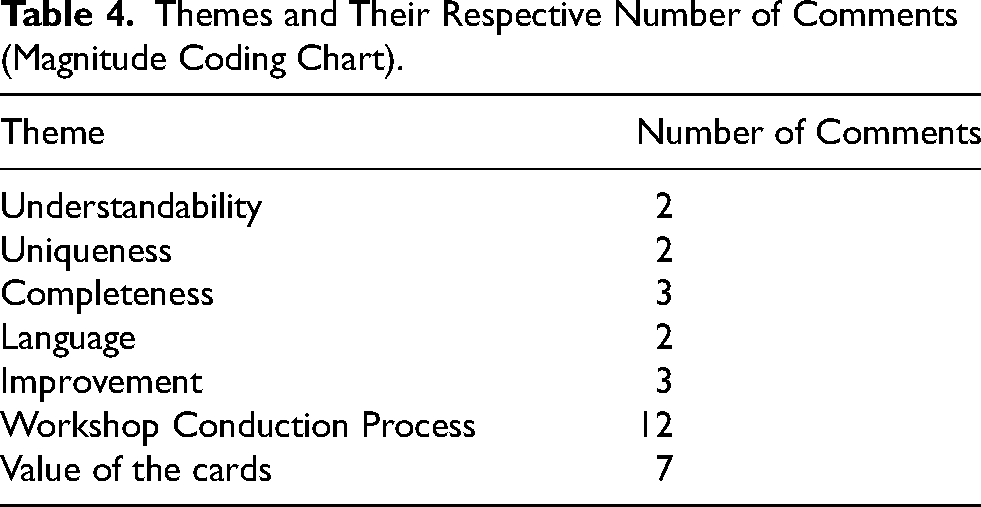
Regarding participants’ understanding of the concept of legitimacy, only two comments mentioned difficulties. One participant noted, “Some users had to read the cards several times over (…)”, indicating that the complex wording may have hindered comprehension. However, the limited number of such comments suggests that, overall, participants were able to grasp the concept. When it comes to whether the cards were easy to read and understand, the main concern raised was the language used. Two comments specifically highlighted this issue, with one participant stating, “Cards used unfamiliar academic language”. These comments suggest that the academic language should be simplified.
The questions about overlapping and missing topics are related to the theme of completeness. Three comments were grouped in this theme, and they suggest that the number of cards could be reduced and the relationship between bullet points and questions made more explicit. An example is shown in these participants’ words: “Some cards may be less relevant as the same results may be achieved with 4 or 5 cards.” and “Sometimes a couple of the example bullet points on the card didn't seem to relate to the question being asked heavily.” Regarding topics missing, most comments expressed the need for more guidance in terms of the discussion. Participants stated that: “It may be helpful to add a ‘setting the scene’ card to inform everyone in the group of the topic being discussed”. They also argued for the addition of “A next step,” i.e., the “so what” question” and “A summary section”.
Question 5, related to whether the card deck instructions were easy to follow, generated twelve codes related to the theme workshop conduction process. These comments cover a wide range of aspects, such as enhanced guidance on leading the workshop “Some additional guidance on kicking-off the session and closing the session might be beneficial” and add a suggested number of participants “It may be helpful to put a recommended number of attendees in the instructions as it will make people more engaged.”. Comments also highlighted the need for additional strategies to maintain flow of ideas and balanced participation among the group: “It may have worked better and allowed for more engagement if people were to change the order of people answering as you progress through the cards.” and “It may be worth limiting individuals to one pro and con as otherwise individuals may dominate the discussion.” Another interesting outcome is that they mentioned that “The cards worked both in person and online however it was better in person.” This indicates the flexibility of the cards to multiple scenarios. The high number of codes suggests the need to prioritise an update to the instructions for card use.
The question concerning how useful the cards were to promote holistic discussions generated seven codes related to the theme of value of the cards. Overall, participants found value in using the cards and performed well as exemplified by this participant “People found it made them think about business wide value/benefits/impact more than they usually would.” Participants also highlighted that the cards enabled diverse participation as described by one of the participants “The basis of the cards allows for everyone to get an opinion on the item being discussed.” The cards facilitated focused, constructive discussions, encouraged broader thinking about business value, and provided an efficient, low-time commitment way for everyone to contribute valuable input.
Regarding future improvements, the main update is related to how the sessions were run. This refers particularly to timing and structuring the session, attendees, and session preparation. Nevertheless, other comments refer to the need to ensure everyone has a baseline understanding of the topic being discussed and the interpretation of the cards as well as the language used. As one participant puts it: “The academic language could be improved by adding a glossary or rephrasing using simpler language.” Overall, academic language could be made clearer by simplifying the language, adding a glossary, and refining the cards to reduce overlap and clarify differences.
Conclusion & Further Work
Accelerating the adoption of new technologies presents opportunities for industry advancement, such as enhanced productivity, and improved working environments (World Economic Forum, 2023), but the choice of the best technologies and the decision for the most appropriate to adopt often involves TD considerations (Made Smarter Innovation, 2017). We find that digital adoption is one such example where being TD is particularly important and sharing diverse perspectives is critical (Carey et al., 2024) and needs new and practical tools to support industry (Made Smarter Innovation, 2017; PwC, 2024).
To facilitate holistic, comprehensive and inclusive dialogue, new approaches are needed that allow participants to engage in discussions from multiple perspectives, helping them feel involved in the change process (Carey et al., 2024). In this context, we explored the use of a deck of discussion cards designed as an operationalisation of TD theory to guide conversations, framing the topics around themes of legitimacy to explore the acceptance and integration of emerging technologies (Carey et al., 2024). Our results show that the use of the legitimacy cards to operationalise legitimacy (Carey et al., 2024) provides both a practical and usable tool for guiding holistic conversations about technology adoption. The need for boundary objects is key for sharing perspectives (Westrum, 2014) and the use of cards as a boundary object to present complex theory has been shown to be possible for legitimacy theory (Breitfuss et al., 2023). Using the cards and legitimacy theory helps to reveal its usefulness to help structure discussion within an organisation relative to a technology's adoption. We evaluate the usefulness of legitimacy as an operationalisation of legitimacy theory for guiding workshop discussions around potential new technologies in real-world scenarios.
Our results showed that the cards were useful in explaining legitimacy theory to industrial stakeholders, enabling them to use this understanding in TD discussions of novel technologies. Moreover, the cards are a promising tool for operationalising legitimacy and supporting holistic conversations. Manufacturers implementing change might require tools that enable the discussion of strategic topics in private settings. The results show that the use of these legitimacy cards were usable as a standalone tool to guide the workshops in on-line and in-person meeting formats. This enabled participants to understand the theory behind the cards and how to use them in their specific context. This finding reinforces existing literature that shows the use of cards as a helpful tool to structure discussion among diverse stakeholders (Felt et al., 2017) and help describe complex concepts to non-experts (Breitfuss et al., 2023). However, evaluating the legitimacy theory and its relevance to technology adoption may be necessary to fully understand the significance of different aspects, particularly in relation to how participants understand some topics compared to others.
The card design feedback results are positive, which validates the redesign made, with the second version having proportionally fewer comments related to language and completeness issues. Nevertheless, legitimacy is a dense academic topic, and the language can be simplified even more.
Additionally, issues related to completeness, more specifically overlapping and missing topics were pointed out by participants. This feedback highlights the importance of evaluating the legitimacy theory and its relevance to the adoption of technology to better understand the relevance of differing aspects, which could relate to participants’ understanding of some topics relative to others. Additionally, they indicate the need for more guidance on conducting/facilitating the workshops.
Results indicate that the most pressing update needed is the review of the instruction cards. There remain issues related to the need for more detailed instructions on organising the sessions to maximise engagement, decision-making efforts, and equal participation among attendees. This result was expected because these changes were not prioritised in our first research phase, as industry feedback was vital to understanding the changes that needed to be made.
During the feedback, participants reflected that possible use cases for this tool were demand assessment, workshop tools, improvement projects, and business engagement.
To summarise, following the feedback received, three areas emerge from results, to redesign the card deck, to evolve the language used to make it clearer, to distinguish theoretical legitimacy topics and to improve guidance offered for the workshop format to include concise/easy language. While the sample size and a single industry setting appears limited, using the real-world application of the cards in industry is invaluable; therefore, more studies with the industry are currently being conducted and prospected.
Future Work
In future work, the authors will collect feedback from other case studies with industry, compile the results, and implement necessary changes based on the findings of this study and the new case studies. In these case studies, the focus will be on evaluating legitimacy itself as a tool for shared decision-making. Workshop format iterations will include participant numbers and the role of facilitation. Future case studies will control participant diversity and examine its impact on the results. Additionally, we intend to map participant feedback to an implementation framework such as TASKS (Yang et al., 2022) or CFIR (Atkins et al., 2017). The main goal is to have a final version of the legitimacy cards available for the industry to use and be supported in their decision-making process of digitalisation strategies.
Footnotes
Acknowledgment
The work reported in this paper was undertaken as part of the Made Smarter Innovation: Centre for People-Led Digitalisation, at the University of Bath, University of Nottingham, and Loughborough University. The project is funded by the Engineering and Physical Sciences Research Council (EPSRC) Grant EP/V062042/1. The authors would like to express their gratitude to Rolls-Royce for their participation.

Funding
The authors received no financial support for the research, authorship, and/or publication of this article.
Declaration of Conflicting Interests
The authors declared no potential conflicts of interest with respect to the research, authorship, and/or publication of this article.
Author Biographies