



Abstract
This study introduces a four-step boundary object assessment framework designed to support knowledge integration in product realization. The framework helps select the most suitable boundary object for various contexts, facilitating effective knowledge integration. Developed through transdisciplinary engineering research, including close collaboration between practitioners and researchers, the framework consolidates fragmented research, identifies key boundary object properties, and aligns them with situational complexity. It provides a structured approach to assessing and managing boundary objects, meeting four key criteria: stimulating collaboration, practical applicability, comprehensiveness, adaptability, and supporting organizational learning. The framework is practical and user-friendly, enabling managers to select and implement boundary objects that enhance teamwork and decision-making in complex product realization scenarios. This paper contributes to the literature on knowledge integration in product realization.
Keywords
Introduction
Product realization is a knowledge-intensive process where innovation is crucial in developing new and functional products and processes (Tell et al., 2017). To succeed in product realization, integrating knowledge from various specializations such as engineering design, production engineering, materials science, industrial design, and marketing is key (Ferreira et al., 2019; Wlazlak et al., 2021). Knowledge integration involves the purposeful combination of specialized knowledge to generate new knowledge and accomplish specific tasks (Berggren et al., 2011; Tell et al., 2017). However, achieving knowledge integration within product realization is challenging due to the inherent nature and characteristics of knowledge (Carlile, 2004), causing boundaries across individuals and specializations (Tell et al., 2017).
Knowledge integration involves bridging knowledge boundaries, which necessitates a thorough understanding of these boundaries (Berggren et al., 2011; Tell et al., 2017). Prior research outlines several typologies and frameworks of knowledge boundaries, highlighting their complexities (Carlile, 2004; Tell, 2017). Mismanaging these boundaries can cause misunderstandings and significant costs (Carlile, 2002). Research argues that one way to facilitate knowledge integration in product realization is by using boundary objects (Van de Ven & Zahra, 2017). A boundary object is an analytical concept describing objects that facilitate effective collaboration by mediating between different areas of expertise. Prior research suggests that a boundary object's effectiveness is context-dependent, it may serve as a boundary object in one situation but not in another Carlile (2002). However, understanding what enables an object to function effectively as a boundary object in a specific situation remains fragmented and incomplete, despite prior research highlighting the importance of specific properties that facilitate this function (Hussmo et al., 2022; Van de Ven & Zahra, 2017).
Research on boundary objects has been conducted across a range of sectors, including education (Akkerman & Bakker, 2011), the IT and software industry (Barrett & Oborn, 2010; Huber et al., 2020; Levina & Vaast, 2005; Rosenkranz et al., 2014), and construction (Comi et al., 2019; Ewenstein & Whyte, 2009; Koch & Thuesen, 2013). Significant attention has also been given to the manufacturing sector, covering areas such as automotive, electronics, and medical equipment (Bechky, 2003; BenMahmoud-Jouini & Midler, 2020; Carlile, 2004; Gustavsson & Safsten, 2017; Lakemond et al., 2024; Le Dain et al., 2020; Wlazlak et al., 2019). However, the focus on product realization has received comparatively limited attention (Caccamo et al., 2023; Gustavsson & Safsten, 2017; Wlazlak et al., 2019).
Existing typologies and frameworks within the context of product realization, such as those by Carlile (2004), Tell (2017) or Van de Ven and Zahra (2017) provide valuable insights into various types and complexities at a boundary as well as what enables an object to function as a boundary object. However, they fail to address three aspects. First, they do not provide a comprehensive understanding of the critical factors that enable an object to function as a boundary object, nor the relationships between these factors. Second, they lack practical applicability, as the conceptual nature of existing frameworks and typologies often limits their usefulness for managers and engineers involved in product realization. Third, they do not facilitate organizational learning and the cumulative development of knowledge integration capabilities. Therefore, developing a framework that offers a practical and structured approach to comprehensively understanding the topic of boundary crossing, incorporating various factors, their interactions, and influences, and providing explanatory elements (Säfsten et al., 2024), appears essential.
The purpose of this paper is to enhance understanding of how boundary objects can be selected to effectively support knowledge integration in product realization. The means to support this is to present the development of a boundary object assessment framework for use in product realization projects, designed to guide the selection of the most suitable boundary object for each situation. This framework consolidates previously fragmented frameworks and theories on factors that enable an object to function as a boundary object within a product realization context. It focuses on the complexity of the boundary to be crossed, the object's properties, and factors related to its usage. The framework is designed to assist product realization teams in effectively integrating knowledge across various specializations that emerge during the process. By helping teams identify and select the most appropriate and effective boundary objects, the framework ensures more efficient collaboration among individuals from diverse disciplines. The proposed framework was developed with the help of two case studies in the Swedish manufacturing industry, where concepts were tested, and insights gathered to ensure its relevance and practical applicability.
This paper contributes to the literature on knowledge integration in product realization by addressing existing gaps and offering a holistic and practical approach to managing knowledge boundaries using boundary objects.
The paper is structured as follows. Section 2 clarifies the research gap. Section 3 outlines the methodology applied. Section 4 presents the criteria for the boundary object assessment framework, followed by section 5, which discusses the outcomes from the Descriptive Study I. Section 6 presents the outcomes from the Prescriptive Study I. Finally, the paper concludes with a discussion and conclusions.
Frame of Reference and Research Clarification
In this section, an overview of current knowledge on the factors that enable an object's role as a boundary object in product realization is presented. Specifically, the focus is on types of knowledge boundaries and their complexities, the properties of the object itself, and factors related to its use.
Knowledge Boundaries in the Context of Product Realization
Knowledge boundaries arise from specialized knowledge across various domains. Tell (2017) suggests five types of knowledge boundaries: individual, domain-specific, task-oriented, spatial, and temporal. An individual boundary is a consequence of personal expertise and skills, which are often tacit and difficult to transfer due to their context-dependent nature (Carlile, 2002; Nonaka, 1994). As knowledge specialization deepens (know-how), trans-expert integration becomes more challenging (Postrel, 2002). A domain-specific boundary is rooted in expertise within a specific field like mechanics, electronics, and materials. Members of a domain possess knowledge of its specific concepts, jargon, processes, methods, rules, tools, and procedures, which poses a challenge for trans-domain integration (Dougherty, 1992; Enberg et al., 2006; Majchrzak et al., 2012). A task-oriented boundary arises from task-specific knowledge developed through routines and procedures, providing procedural know-how for completing tasks. While routines can facilitate integration across domains, they also create boundaries between those with task-oriented knowledge and others. The challenge is achieving trans-routine knowledge integration (Tell, 2017). A spatial boundary is based on the local context where knowledge is developed and influenced by language and culture. Physical distance can create boundaries between individuals from different locations, complicating trans-location knowledge integration (Tell, 2017; Wlazlak et al., 2019). Knowledge is context-specific not only in terms of location but also in terms of time (Tell, 2017), which is the origin for the fifth knowledge boundary, a temporal boundary. The typology suggested by Tell (2017), categorizes knowledge boundaries based on types of specialization, know-about, know-how, know-when, and know-where, emphasizing the source of the boundaries. While this typology provides a broad spectrum of knowledge boundaries, it does not fully capture the complexity and depth of these boundaries.
By contrast, Carlile (2004) emphasizes the degree of knowledge complexity at a boundary, determined by factors such as difference, dependencies, and novelty in relation to existing common knowledge. Difference refers to variations in the amount and type of specialized knowledge that individuals possess. Dependency indicates that individuals and their knowledge are interdependent, requiring them to consider each other's inputs and perspectives to accomplish tasks and achieve a shared goal. Novelty at a boundary occurs when existing knowledge is no longer sufficient (Carlile, 2002). To account for the varying properties of knowledge and the resulting complexities, prior research identifies three types of knowledge boundaries in product realization: syntactic, semantic, and pragmatic. Each boundary type is associated with a specific integration process, transfer, translation, and transformation. This relationship between boundary type and knowledge integration process is illustrated in a framework (see Figure 1) (Carlile, 2004). Syntactic boundaries occur in situations with low novelty, where cross-domain differences and dependencies are well understood. Here, a shared lexicon enables effective knowledge exchange, with the main challenge being the storage and retrieval of domain-specific knowledge for transfer. According to (Carlile, 2002) knowledge integration at a syntactic boundary requires a solution that can enable the transferring of existing and specialized knowledge and make it accessible to others. Semantic boundaries arise when novelty increases, reducing shared knowledge and mutual understanding. This novelty brings different interpretations and ambiguous meanings, with each domain often uncertain about the concerns and constraints of others. Managing these boundaries requires efforts to learn about and clarify new differences and dependencies across domains. Knowledge integration at a semantic boundary, therefore, involves knowledge translation, where knowledge must be interpreted and presented in a way that others can understand. The goal is to reconcile differences in meaning and achieve shared understanding. The most complex knowledge boundaries are pragmatic (or political) boundaries, which arise because knowledge is embedded in practice, leading individuals to resist changes to their existing domain-specific knowledge and the development of new shared knowledge. In these cases, the challenge goes beyond translating meanings to negotiating the interests of each domain. Therefore, a transformation process, where existing knowledge is combined and new knowledge is created, is essential for managing this type of complex boundary. (Carlile, 2002) acknowledges that effective knowledge transformation is possible only when shared syntax and meaning are reached.
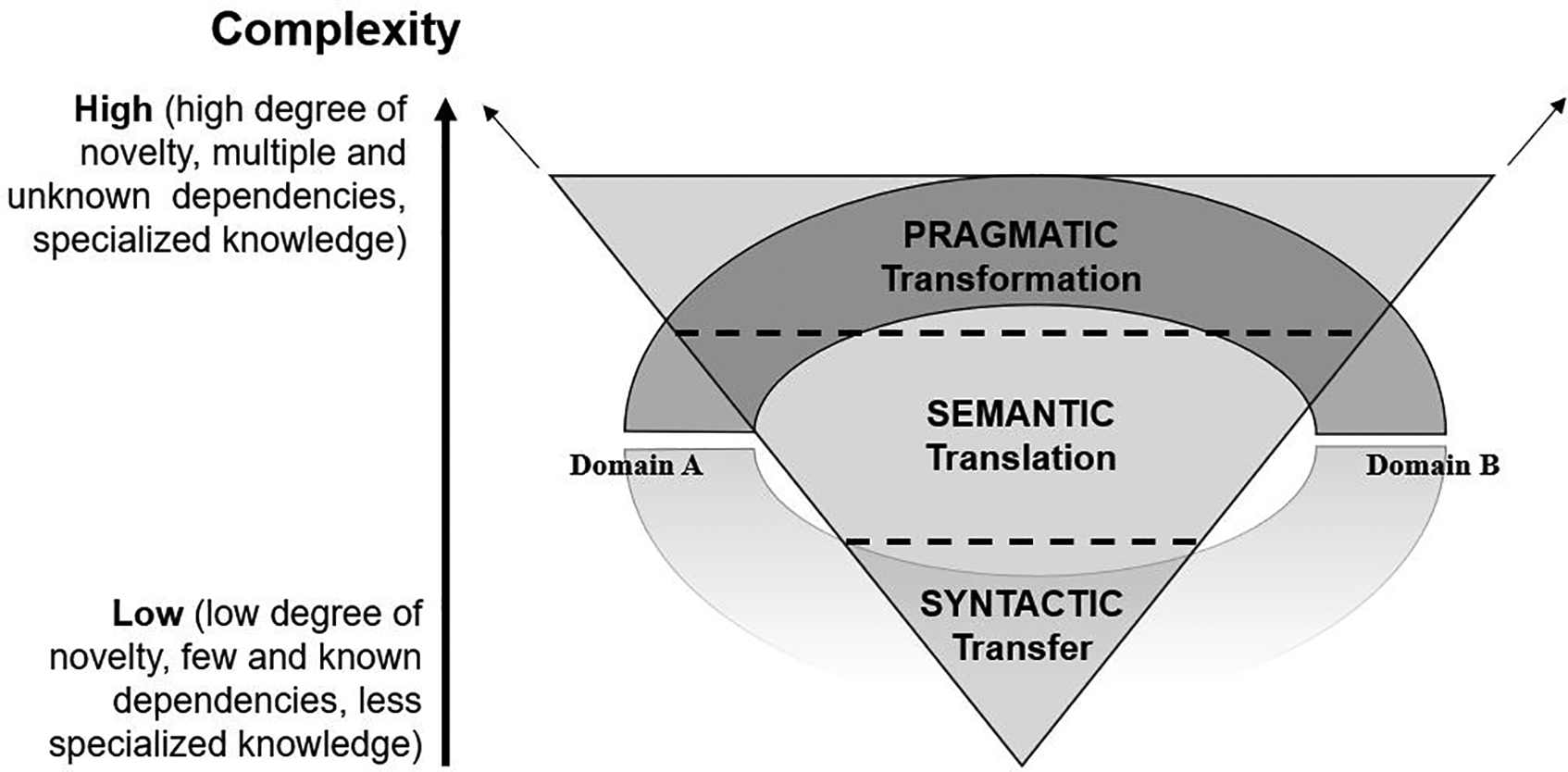
An Integrative Framework for Managing Knowledge Across Boundaries, Inspired by (Carlile, 2004).
Carlile's work has significantly influenced research on knowledge integration and boundary crossing. His 2002 paper (Carlile, 2002) has been cited 4,915 times, and his 2004 paper (Carlile, 2004), which introduces an integrative framework (Figure 1), has been cited 4,209 times as of December 2024. This framework provides key insights into boundary complexity and the properties and functions of boundary objects needed to manage it effectively. Many researchers, such as Van de Ven et al. (2017), have built on Carlile's work, highlighting the importance of knowledge boundary types (syntactic, semantic, and pragmatic) and levels of complexity (low, medium, high). Other studies, including Le Dain and Merminod (2014) and Fang et al. (2022) have based their studies on Carlile's integrative framework. Given its foundational role, Carlile's integrative framework (Figure 1) served as a basis for the boundary object assessment framework proposed in this paper.
Boundary Objects in the Context of Product Realization
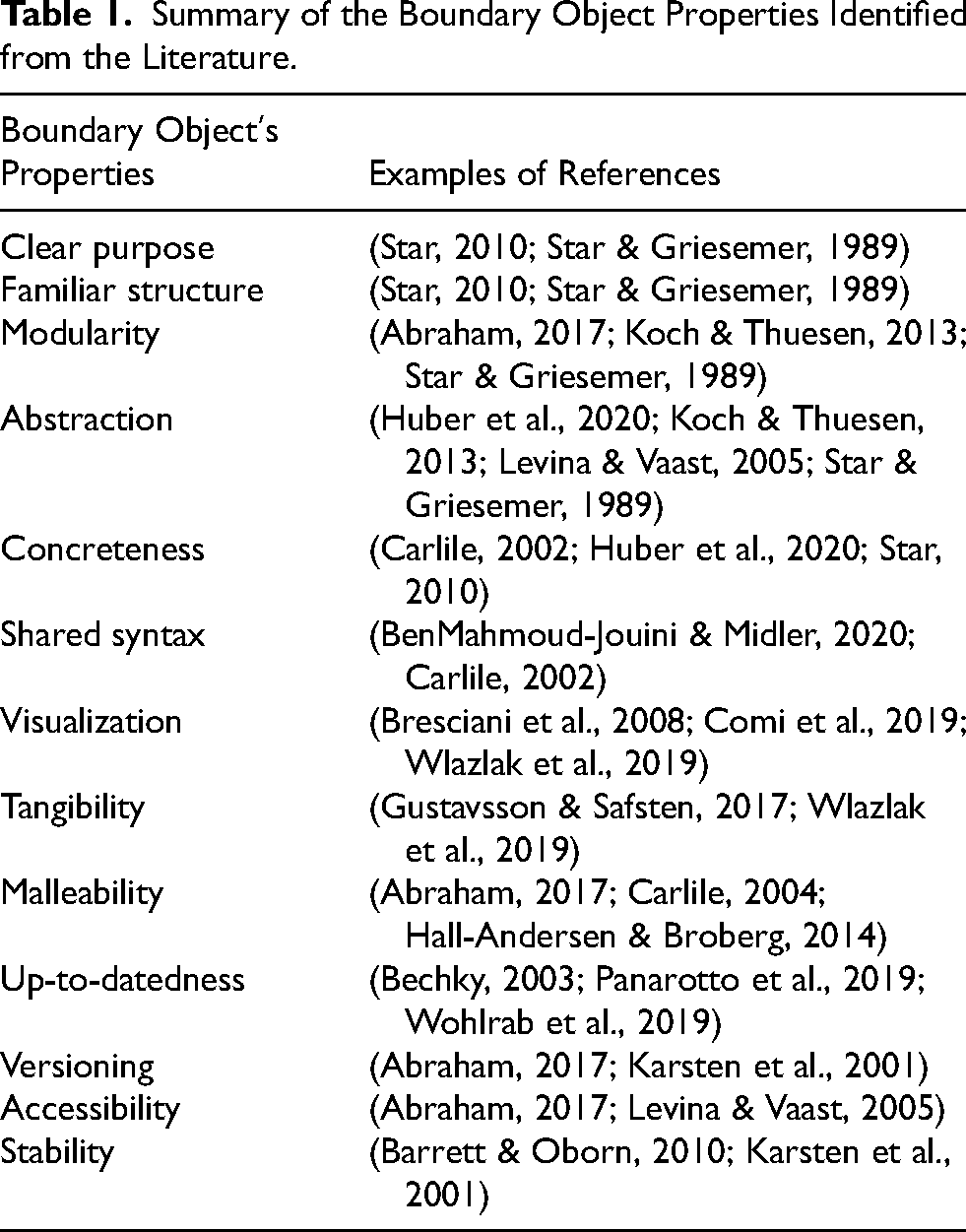
One way to manage boundaries during product realization is by using boundary objects (Gustavsson & Safsten, 2017; Hussmo et al., 2022). According to existing research (Huber et al., 2020; Koch & Thuesen, 2013; Levina & Vaast, 2005), boundary objects need to possess certain properties that enable them to function effectively. They need to have a clear purpose to support collaboration and interactions in completing tasks, solving problems, and achieving goals with minimal interaction and maximum efficiency. These objects should have a common structure that different domains or departments can relate to and are familiar with. They also exhibit mediating properties, serving as a bridge between individuals and domains to facilitate communication and understanding (Star, 2010; Star & Griesemer, 1989). Additionally, boundary objects are characterized by interpretive flexibility, which allows users to adapt them to their specific needs (Koch & Thuesen, 2013; Star & Griesemer, 1989; Wenger, 2000). This property is also referred to as modularity by other researchers in the field of boundary-crossing (Abraham, 2017). Abstraction involves the object's ability to serve as a shared reference point at a high level of generalization, allowing users with diverse specializations to identify commonalities among their distinct perspectives (Star, 2010; Star & Griesemer, 1989). In contrast to abstraction, concreteness emphasizes that the object must be sufficiently defined in its local use, allowing users from specific domains to articulate their concerns and share their knowledge related to the problem at hand (Abraham, 2017). Thus, abstraction and concreteness refer to the emphasis that researchers place on the need for boundary objects to possess both a common structure and interpretive flexibility Abraham (2017); Carlile (2004); Hall-Andersen and Broberg (2014). Furthermore, the object needs to provide a shared syntax, or informational elements and language that are understood and shared among the users of the object (Bresciani et al., 2008; Comi et al., 2019; Wlazlak et al., 2019). Malleability refers to the object's ability to be altered and adapted to support newly created knowledge and the negotiation of interest (Bechky, 2003; Panarotto et al., 2019; Wohlrab et al., 2019). Visualization is a property of an object that refers to graphical elements and annotations that the object contains (Bresciani et al., 2008; Comi et al., 2019; Wlazlak et al., 2019). Up-to-dateness signifies that the object must reflect the latest knowledge at the time of use (Gustavsson & Safsten, 2017; Wlazlak et al., 2019). However, stability is also identified as a property, that requires the object to maintain a consistent core that remains unchanged over time (Barrett & Oborn, 2010). Tangibility as a property refers to the physical nature of an object, meaning it can be interacted with in a concrete, hands-on way (Abraham, 2017; Levina & Vaast, 2005). Versioning is crucial following any modifications to an object, as it enables tracking of alterations and the reasoning behind them (Abraham, 2017). Accessibility pertains to both the availability of the object to different users and their familiarity with its use (Abraham, 2017; Levina & Vaast, 2005). Finally, participation involves users in the processes of developing and sustaining the object (Abraham, 2017). Table 1 presents the summary of the boundary objects properties found in the literature.
Summary of the Boundary Object Properties Identified from the Literature.
Several factors influence the effectiveness of boundary objects, including the location and format of the meeting where the object is used. Different locations and formats can vary in their level of engagement or interaction intensity. For instance, in-person meetings are typically considered more engaging and intense than phone conversations (Caccamo et al., 2023; Koch & Thuesen, 2013). Another significant factor is the individuals involved, whose openness, commitment, and willingness to engage across boundaries can determine the object's functionality (Wenger, 2000). Certain individuals may act as brokers, facilitating interactions across domains and supporting boundary crossing, thereby enhancing the use of a boundary object (Gustavsson & Safsten, 2017). Additionally, researchers have highlighted the use of multiple boundary objects in combination to enhance their effectiveness (Comi et al., 2019; Pershina et al., 2019; Scarbrough et al., 2015).
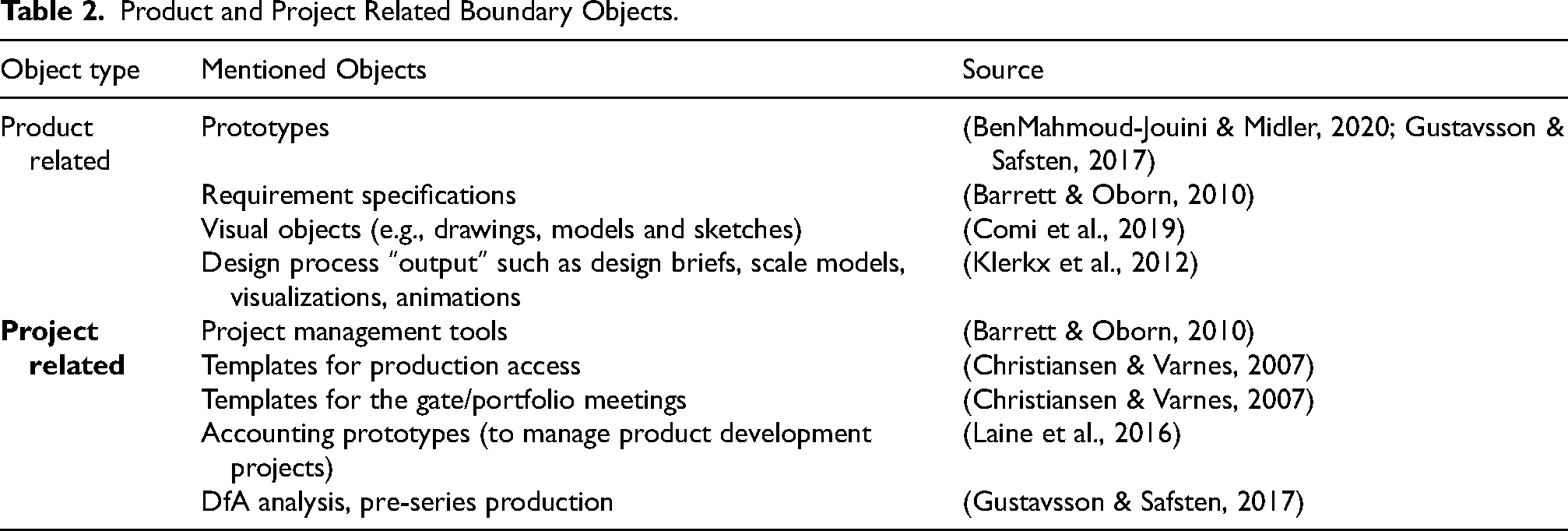
In the context of product realization, Carlile (2002) proposes a relationship between the type of boundary and the properties of boundary objects. At the syntactic boundary, repositories (e.g., cost databases, part libraries) are seen as facilitating knowledge transfer. At the semantic boundary, standardized forms and methods (e.g., FMEA, checklists, sketches, process maps, and workflow matrices) translate knowledge and fulfill the requirements for managing knowledge integration. Further examples of standardized forms and methods are requirement specifications, project management tools (Barrett & Oborn, 2010), templates for production access (trail production) (Christiansen & Varnes, 2007), Design for Assembly (DfA) analysis, Design for Manufacturing (DfM) guidelines, pre-series production (Gustavsson & Safsten, 2017), test results (Le Dain & Merminod, 2014). Finally, at the pragmatic boundary, objects or models (such as sketches, drawings, and prototypes) and maps (e.g., process maps, workflow matrices, Gantt charts) possess the properties needed to represent, learn, and transform knowledge effectively (BenMahmoud-Jouini & Midler, 2020; Carlile, 2002; Comi et al., 2019).
The boundary objects discussed in the reviewed papers primarily relate to either the product under development or project management, with some overlap between the two, see Table 2.
Product and Project Related Boundary Objects.
Prior research highlights that boundary objects are situational. In Van de Ven and Zahra (2017), the authors provide a typology of boundary objects for integrating knowledge depending on Carlile's types of boundary complexities (syntactic, semantic, pragmatic) (Carlile, 2004) and degree of knowledge complexity (low, medium, high). Therefore, the type and degree of knowledge complexity must be considered when selecting appropriate boundary objects (Carlile, 2004; Van de Ven & Zahra, 2017).
In summary, there is a fragmented understanding of what enables an object to function as a boundary object. This includes factors such as the type of boundary that needs to be crossed, the inherent properties of the object, and its specific use. Moreover, the relationships between these factors in the context of product realization remain unclear. Current literature also lacks clarity on how knowledge about different types of boundary objects accumulates, spreads, and is utilized within organizations. This paper addresses these shortcomings by presenting an accessible and practical framework that supports knowledge integration in the context of product realization.
Methodology
Design Research Methodology (DRM) was applied to develop a boundary object assessment framework, adapted to the context of product realization. DRM provided an overall strategy for conducting the research and allowed for the integration of various methods and techniques for data collection (Blessing & Chakrabarti, 2009). DRM is an iterative process (Säfsten et al., 2024) and hence it was well-suited for this study. In this research, DRM type 2 was applied, which means that three of the DRM stages were implemented. In the next paragraphs, an overview of the applied stages, including the aim, activities, and main outcomes for each stage, is provided. The overview is also provided in Figure 2, while more details are included in the sections dedicated to each step.
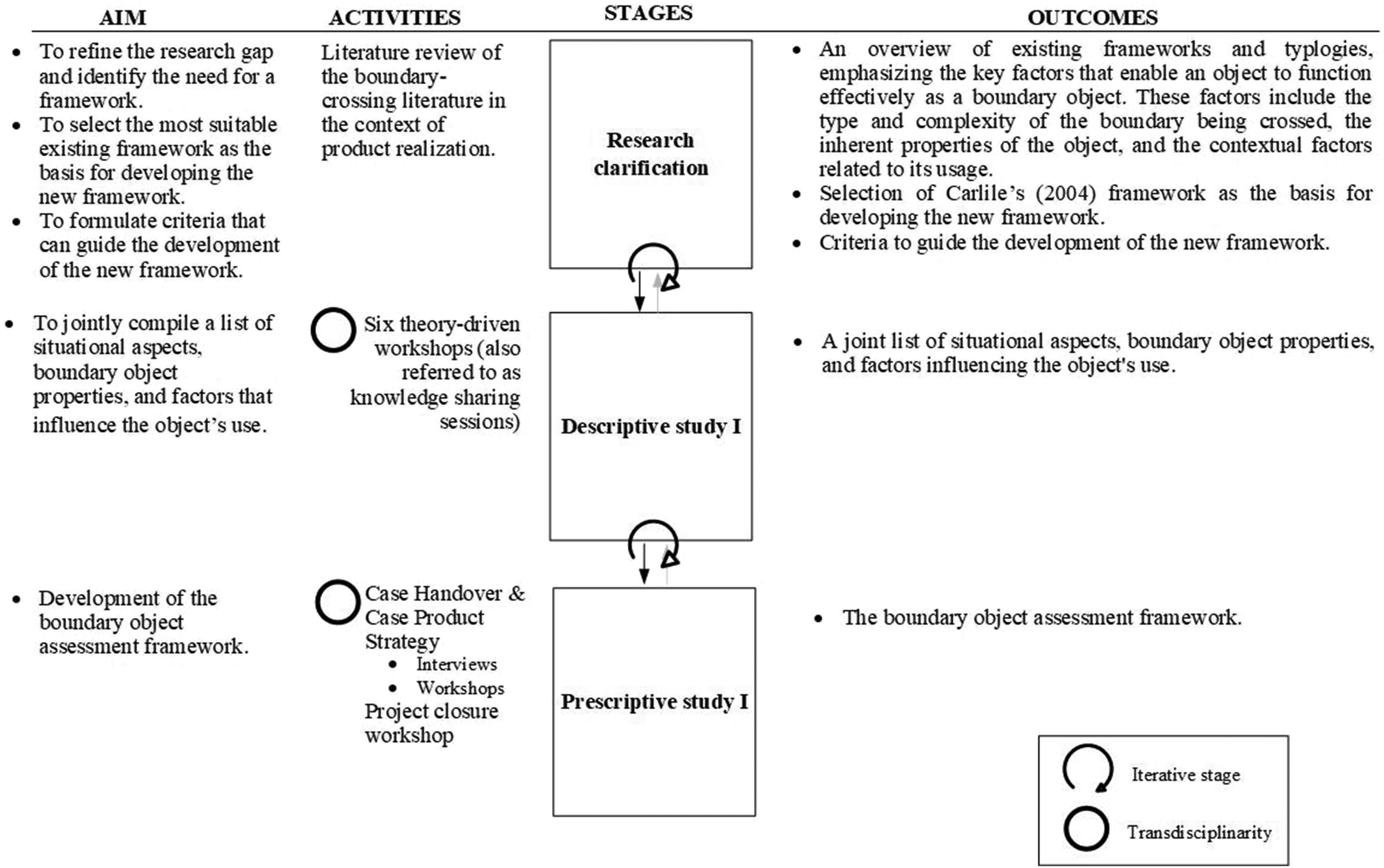
Overview of the Approach Followed for the Development of the Boundary Object Assessment Framework.
Boundary Object Assessment Framework Development
The boundary object assessment framework was developed between April 2020 and January 2024. The development was part of a research project carried out in close collaboration with industrial partners. Five Swedish companies participated in the research project, see Table 3. Among the industrial partners, three represented the traditional mechanical engineering sector, one the construction sector, and the last one was a software developer specializing in solutions for integrating product and production development. The applied stages of DRM, Research clarification, Descriptive study I, and Prescriptive study I are described below.
Companies Overview.

The literature search was conducted between November 2020 and December 2023. It began with a few key publications already known to the researchers, which were used to generate relevant keywords and search terms (i.e., Carlile, 2002, 2004; Gustavsson & Safsten, 2017; Koch & Thuesen, 2013; Wlazlak et al., 2019). Afterwards, the search continued using databases such as Scopus, Web of Science, and ProQuest. The search strategy involved two groups of terms combined in various ways. The first group included terms such as ‘boundary object’, ‘boundary crossing’, ‘boundary spanning’, ‘boundary management’ and ‘epistemic object’. The second group encompassed terms related to ‘product realization’, ‘product development’, ‘product introduction’, ‘product innovation’, ‘innovation process’, ‘construction project’, ‘manufacturing industry’, and ‘software development’. To ensure relevance, the search was restricted to scholarly journals, conference proceedings, theses, books, and empirical or conceptual papers published in English. Through the initial search we obtained 1,222 publications, which were screened by the authors through an evaluation of titles, abstracts, and keywords. Studies that were not relevant to product realization, such as those focused on education, open innovation, or publications lacking explicit references to boundary objects, were excluded. After three iterative searches, the final set comprised 83 publications that specifically addressed boundary objects in the context of product realization. This systematic literature review was conducted following the methodology outlined by Dekkers et al. (2022).
Participants in Theory-driven Knowledge Sharing Sessions.
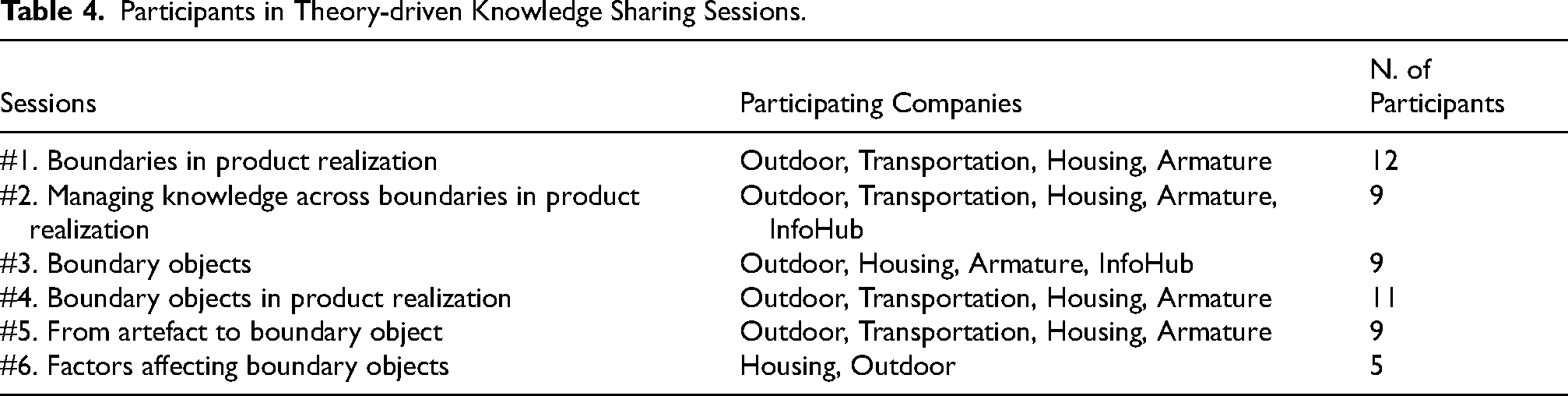
The six knowledge sharing sessions focused on boundary types and boundary objects. These sessions facilitated discussions on the role of boundary objects, while also validating research-based conceptualizations through collaboration with practitioners (Säfsten et al., 2024). These sessions provided an important forum for both researchers and practitioners to reflect on and compile a joint list of the aspects of a situation that need to be considered, the properties of objects that enable them to function as boundary objects, and the factors influencing their effective use. Researchers presented literature, existing frameworks, and typologies on aspects of a situation or boundary object properties, which were then refined in collaboration with practitioners for later inclusion in the proposed framework. Additionally, the criteria for the boundary object assessment framework were refined to align with practitioners’ expectations. Each session included three 15-min lectures followed by facilitated discussions using simplified language and visual aids. The sessions were recorded and detailed notes were taken for documentation. The content and topics covered in each session are presented in Figure 3.
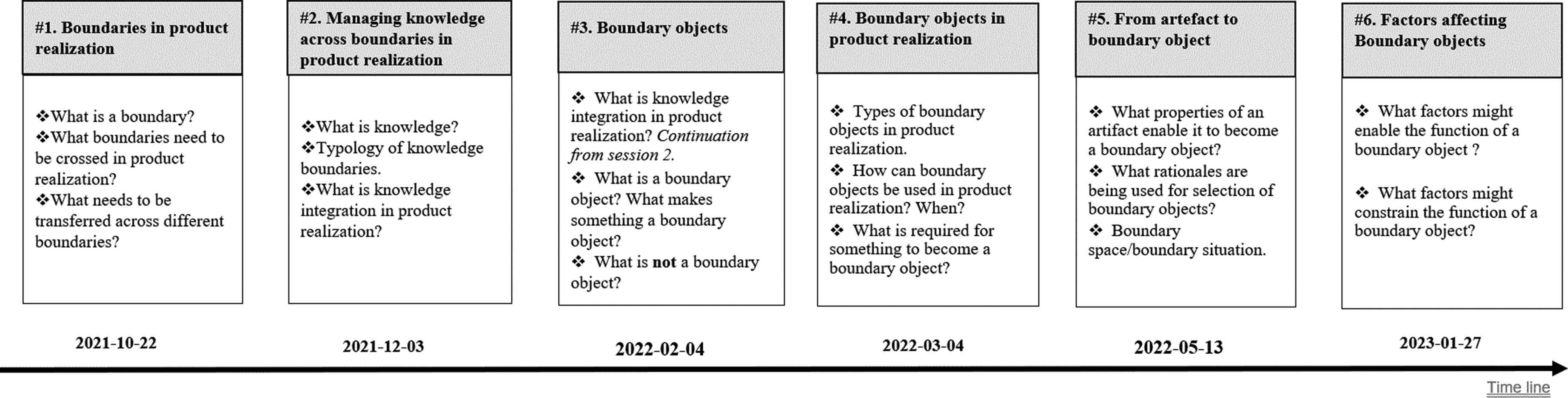
Theory-Driven Knowledge Sharing Sessions and Their Dates of Execution.
Testing Preliminary Versions
Case Handover: version #1 of the boundary object assessment framework
The first case study was conducted at Company Armature. The unit of analysis was the handover process between the project (development) organization, a cross-functional team, and the line organization, such as operations. During this process, the project (development) organization's involvement, specifically the engineering designers, typically ended or was significantly reduced, even though issues related to the product still arose, potentially necessitating changes. The empirical data for this study was collected through 17 semi-structured interviews conducted in February 2023. The study examined two types of handovers: the first from the project development organization to the product design line organization, which handles customer modifications and product maintenance during the product lifecycle, and the second from the project development organization to the operations (production) line organization. For the first type of handover, participants included project design engineers, line design engineers, line managers, and project managers. For the second, participants comprised quality engineers, managers, production engineers, logistics representatives, and industrialization representatives. Some of the respondents participated in both handovers. Additionally, two interviews were conducted with managers part of a steering committee that provided strategic guidance, oversight, and decision-making for the development projects. With the help of the company contact person, interview participants were selected based on their expertise relevant to the subject under investigation. Participation was voluntary, allowing individuals to join based on their interests and availability. The interviews, held online, lasted 20 to 40 min each and were transcribed into 146 pages of data.
During data analysis, version #1 of the boundary object assessment framework was applied to evaluate boundary complexity, object properties, and their alignment. The goal was to assess how the objects’ properties matched the complexity of handover situations. Findings were shared and discussed in a three-hour workshop in May 2023, involving 21 practitioners. The workshop provided valuable feedback on version #1 of the framework.
During the testing of version #1, boundary complexity was assessed through knowledge properties, including differences in knowledge, dependencies, and novelty. Focus areas included domain specialization, knowledge accumulation, ambiguities, dependencies, and the degree of novelty. Two key company documents, a production acceptance checklist and a product design acceptance checklist, were identified as critical to the handover processes. Their properties, such as visualization, modularity, abstraction, concreteness, and stability, were evaluated against the complexity level of the handovers (which were assessed to have a medium level of complexity). Discussions revealed that factors such as the format and location of checklist use, the individuals involved, their prior engagement (before the handover processes), and their accessibility to the checklists were not considered properties of the checklists but external factors affecting their use. These insights guided the development of version #2 of the framework, which emphasized distinguishing between object properties and external influencing factors.
Case Product Strategy: Version #2 of The Boundary Object Assessment Framework
The second case study was conducted at Company Housing. In this case, the unit of analysis was the product strategy process, which led to the development of a product strategy that functioned as a boundary object. The study involved 12 semi-structured interviews and one written response to the interview questions, conducted in October 2023. It compared two product strategies, each represented in the form of a book, developed for two of the company's brands. Additional interviews were conducted with users who had not participated in the development process to explore how the books were utilized during product realization, their contribution to the process, and the role of its format and content. Interviewees included individuals in roles such as technical manager, production manager, purchasing manager, concept developer for new products, construction engineer, art director/graphic designer, project manager, product manager, building permit planning/design representative, and product coordinator. Similarly, participants were selected with the help of the company's contact person, with participation being voluntary based on their expertise, interest, and availability. The interviews, conducted online, lasted between 30 and 60 min. They were recorded, transcribed, and supplemented with complementary notes.
During data analysis, version #2 of the boundary object assessment framework was applied to evaluate boundary complexity during the development of product strategies, object properties (the two product strategies manifested in two books), their alignment, and factors influencing the use of boundary objects. The study results were presented in a three-hour workshop held in November 2023, attended by eight practitioners who had also participated in the interview study.
During the testing of version #2, boundary complexity was assessed through knowledge properties, including differences in knowledge, dependencies, and novelty. Key dimensions of complexity included the degree of novelty, prior collaboration, dependencies, ambiguities, required negotiations, as well as domain specialization and knowledge accumulation. The properties such as up-to-dateness, flexibility, visualization, tangibility, modularity, abstraction, stability, accessibility, and shared syntax were used to assess both strategies, represented as books. It was found that for low-complexity boundaries, accessibility and shared syntax were critical, while medium-complexity boundaries required visualization, tangibility, modularity, and abstraction. For high-complexity boundaries, up-to-dateness and flexibility became essential. A clear purpose was necessary to foster shared understanding, and broad participation from various departments was key to ensuring inclusivity. The willingness to cross boundaries was facilitated by an open, creative process that allowed participants to share their ideas. Physical workshops played a crucial role in brainstorming and open discussions. Test #2 revealed that factors such as purpose, up-to-dateness, and accessibility were not properties of the objects themselves but external factors influencing their use. Furthermore, participation in the development was found to be important for the effective use of a boundary object. These insights were valuable for refining the boundary object assessment framework.
After test #2, the boundary object assessment framework was further refined, and the updated version (#3) was presented at the project closure workshop. Test version #3 is detailed in Section 6.
Transdisciplinary Engineering Research
Transdisciplinary research is distinguished by a high level of integration and the active participation of both academic and non-academic participants (Tress et al., 2005). This approach was employed in developing the boundary object assessment framework, with collaboration between academics and industry representatives (non-academic participants) to address the limitations of existing research. This integration was essential for defining criteria that ensured the framework's practical applicability and usability for managers and engineers in product realization, as well as for identifying dimensions of situational complexity, boundary object properties, and factors influencing their use. As noted by Marijan and Sen (2022), research frequently fails to connect with real-world contexts, leading to results that lack practical applicability and scalability. The boundary object assessment framework introduces a new approach to work during product realization. Therefore, involving participants directly engaged in product realization and acknowledging their perspectives during the framework's development was crucial to ensuring its practical relevance and usability. Research benefits significantly from collaborative efforts that bridge academia and industry, especially when tackling complex problems. Transdisciplinary research supports such endeavors by crossing disciplinary and academic/non-academic boundaries, fostering integrated knowledge that combines knowledge from different disciplines and diverse perspectives, and ensuring the practical implementation of results (Lattanzio et al., 2021; Pohl, 2010).
The knowledge sharing sessions demonstrated the application of a transdisciplinary approach in this study. As part of Descriptive study I, these sessions played a crucial role in fostering industry-academia collaboration through an interactive research approach aimed at generating knowledge that aligns with the needs and interests of all stakeholders (Ellström et al., 2020). This collaborative effort sought to strike a balance between practical relevance and academic rigor, addressing a well-recognized challenge in applied research fields such as engineering and management (Van de Ven, 2018). Representatives from five industrial partners, across various roles and functions, actively participated, highlighting the significance of close collaboration. Furthermore, transdisciplinarity was implemented by applying the boundary object assessment framework in two case studies: Case Handover and Case Product Strategy. Input for the framework was gathered from practitioners involved in product realization, who were also the intended users of the newly developed framework. This was done to ensure the framework's practicality and usability in real-life cases.
Criteria for Boundary Object Assessment Framework
This section outlines the criteria for a boundary object assessment framework, specifying the requirements for the framework to be useful and applicable in the context of product realization.
Outcomes of Descriptive Study I
This section presents the results of the collaborative work between researchers and practitioners. The outcome of this stage was a list of critical situational aspects, boundary object properties, and factors influencing the object's use, jointly compiled by the industrial and academic partners.
Situational Aspects
During the knowledge sharing sessions (#1 & #2), several key aspects were identified by practitioners as critical in understanding and addressing the complexity of a situation. One of the main aspects discussed was the challenge of working across domains. It was emphasized that when individuals collaborated toward a common goal, there could be a lack of understanding of each other's roles and expertise, leading to incorrect assumptions. A practitioner (during session #2) shared an example from packaging development, noting that even simple tasks, such as creating a cardboard box, involved multiple domains and quickly became complex. Power dynamics between domains were also mentioned, where individuals became narrowly focused on their own domain, losing sight of the broader context. Domain specializations often created boundaries during product realization, making it important to consider how these separations affected collaboration. Departmental goals were cited as further sources of division, with a sense of ownership sometimes fostering a “this is your problem, not mine” mentality (mentioned in session #2). These boundaries could prevent a holistic view, with individuals failing to recognize how their decisions impacted other departments. Another type of boundary mentioned during session #2 by one of the practitioners was individual boundaries. These were noted in the context of young employees who may not have had the time to build deep knowledge and instead relied on documentation to retain critical information. During session #3, a practitioner from the company Housing highlighted that drawings are extensively used during product realization in their company. However, there are instances where 3D drawings are required to clarify certain aspects. While 3D drawings often work well for communication among designers, they may not be effective for bridging the gap with production due to knowledge disparities between the departments. As a result, this boundary object may not always successfully facilitate cross-departmental collaboration. Task-oriented boundaries arose when disconnected processes and routines led to misunderstandings about responsibilities, with individuals unaware of the tasks expected of them. As one practitioner mentioned during session #2, “Sometimes, some individuals say, ‘Aha, is this my responsibility?’”. Temporal boundaries were highlighted as a significant challenge, as there was a dependency between activities and their timing, meaning one task could not be completed without the prior completion of another. Physical distance was also seen as a barrier to communication, creating challenges like cultural and linguistic differences and time-consuming interactions.
Boundary Object Properties
During the knowledge sharing sessions, several properties were identified as important for enabling an object to function as a boundary object. During session #3, a practitioner from the company Armature shared an example related to design reviews, where a document containing a set of questions was used alongside a prototype. It was explained that how the document was used, whether by strictly following the questions or allowing open-ended discussions, significantly impacted the nature of the discussions. Additionally, the practitioner highlighted that the document's structure could either empower or limit individuals’ ability to express their opinions, and hence influencing its effectiveness as a boundary object. Furthermore, the level of detail in the document could constrain the discussions necessary for navigating complex situations and crossing boundaries. These discussions continued during session #5.
During session #5, several properties of boundary objects were highlighted and emphasized as crucial for bridging knowledge boundaries. The practitioners also discussed how easily the properties, as presented in the literature, could be understood. They reflected on whether the definitions and explanations of these properties were clear or if further clarification was needed. Modularity was identified as a critical and easily understood property. It was noted that this property needed to be clearly linked to the abstraction/concreteness properties. Practitioners highlighted that combining different objects, such as CAD models and prototypes, could help create modularity. They understood modularity as a property that allowed everyone to connect with and relate to the object, which was essential for fostering engagement.
Abstraction and concreteness were somewhat more challenging for practitioners to understand and relate to in practice. They expressed a desire to make these properties more concrete and clearly articulated. Practitioners discussed that objects with extensive detail could increase complexity, create confusion, and hinder shared understanding. For instance, detailed technical drawings were difficult for everyone to interpret. A higher-level or simplified version of such drawings could have helped make them more relatable to a broader audience. While designers did not need to be experts on how components fit together, they understood that it was a necessary part of the process. Lower complexity with less detail enhanced abstraction, allowing for multiple interpretations of an object's use. In contrast, highly detailed objects constrained these interpretations, making the object more concrete. Striking the right balance between abstraction and concreteness was seen as essential for fostering mutual understanding. To make an object more concrete, features like annotations and explanatory text could be included.
Shared syntax was perceived by the practitioners as clear and easy to understand property. It was considered important because it enabled and facilitated the creation of a common understanding, rather than focusing on differences in syntax. This was particularly crucial when different departments met, as a shared language was needed to ensure that discussions remained focused on the actual issues at hand, rather than getting diverted by language-related matters (such as the meanings of terms). Therefore, a language that suited all involved in the group was essential. Practitioners also found that reducing the number of domain-specific abbreviations was helpful.
During session #5, visualization and tangibility were considered key properties of boundary objects, crucial for enhancing understanding and communication across domains. Practitioners highlighted that combining visual formats like prototypes and drawings helped individuals relate to and better understand the developed products. Prototypes allowed users to physically feel an object's weight and size, while CAD tools enabled clearer views by scaling off layers, a technique successfully used by company Outdoor during the pre-study phase before the start of a product realization. While prototypes and drawings were essential for understanding, the interpersonal (face-to-face) aspect of communication, such as making eye contact and confirming understanding, was also emphasized. As company Armature shared, this was more challenging in digital meetings, compared to physical meetings with direct interaction with the object. Furthermore, company Housing noted that virtual reality (VR) technology supported visualization by allowing customers to experience a house's depth, which was much harder with traditional drawings.
During the session #5, up-to-datedness and versioning were considered important properties of boundary objects. Practitioners emphasized that the relevance and trustworthiness of a boundary object depended on its up-to-datedness. When updated, it fostered a willingness to collaborate, as noted by the company Armature. It was also seen as crucial to communicate the status and updates of an object to those concerned. For this reason, versioning was recognized as a vital property. When modifications were made, practitioners highlighted the importance of keeping a record of versions to document changes, often supported by supplementary documentation. This helped maintain clarity and alignment as the object evolved.
Accessibility was considered an obvious property of an object, but practitioners noted that it required further clarification, specifically, at what level accessibility should be granted. The importance of this property varied depending on the object being discussed (e.g., prototype, FMEA), as not all objects should always be accessible to everyone. Accessibility was seen as context-dependent, with its significance tied to the specific needs of those using the object. During discussions, it was crucial that everyone involved had access, which was considered a fundamental condition. Furthermore, practitioners highlighted that accessibility was related to where the object was stored. Ensuring a shared understanding of the object's purpose (why it is used) was also emphasized, as this was essential for effective collaboration and was related to accessibility.
During session #5, it was discussed that stability in objects could refer not only to the object itself but also to its usage, including accompanying documentation. This property was perceived as clear and easy to understand by practitioners. However, stability was seen as challenging in relation to drawings and prototypes, as these evolve throughout the product realization process. Stability was also associated with how the use of an object remained consistent over time. Practitioners linked this property to the earlier discussion of up-to-dateness and versioning, emphasizing the importance of tracking and clearly communicating any changes to those affected. Another example related to stability was the standardization of drawing practices, where a consistent approach to creating drawings was maintained. Additionally, the stable format of documentation itself was also related to this property.
The final property discussed during session #5 was participation. It was considered crucial to have someone responsible for managing and owning the object. Practitioners also emphasized that active participation in the development of the object was essential for it to function effectively as a boundary object. This property was not mentioned in the literature, but practitioners perceived it as important.
Influencing Factors
Several factors that influence the use of a boundary object were highlighted by practitioners during the knowledge sharing sessions. To reduce knowledge boundaries and bridge cross-domain gaps, they emphasized the importance of building relationships between individuals from different departments. For example, one practitioner in session #1 suggested “forcing meetings that create relationships”, which could foster understanding across domains and departments. Additionally, a willingness to understand each other's challenges was viewed as essential for effective collaboration. Involving individuals from different departments early in the process was also highlighted to reduce misunderstandings and ensure that everyone understood the history and rationale behind decisions.
During session #3, a practitioner from the company Outdoor highlighted several boundary objects as critical to product realization, including DFA and CAD. However, for these boundary objects to be effective, certain key prerequisites were identified, such as strong engagement, a willingness to progress, and constructive discussions. Additionally, bridging differences of opinion became significantly easier when all participants adopted a solution-oriented and engaged approach. In general, the practitioners agreed that a willingness to cross boundaries and engagement were fundamental for effective boundary-crossing. Furthermore, during session #3, practitioners from the company Outdoor shared an example of a boundary object that did not function as expected. They discussed the use of DFX, highlighting that it had been less effective when applied early in the development process, as the product's technological maturity had not yet been sufficient to incorporate meaningful input from production. During session #4, practitioners mentioned that ownership, being actively involved in the development process, as well as appointing someone to maintain and take responsibility for the object, was important factor for it to be effective.
During session #6, practitioners discussed the important role of individuals who bridge knowledge gaps across departments, emphasizing their crucial contribution to the effective use of boundary objects. For example, a practitioner from the company Outdoor shared the experience of an individual who had held various roles within the company, including positions in product development and design, production preparation, and measurement expert. With a broad range of experience across different departments, this individual was appointed as a boundary broker, facilitating communication and collaboration between domains. This boundary broker had worked extensively on industrialization and production preparation, including tasks such as DFX analysis. The ability of a boundary broker to critique a drawing from a manufacturability perspective, while considering inputs from various departments and past projects, was highly valued. This skill, however, was not easily replicated by newer or less experienced designers. Practitioners emphasized that boundary brokers were highly respected within their respective companies, and their influence shaped discussions. As such, boundary brokers played a key role in ensuring that boundary objects were interpreted and applied correctly across different domains and departments.
Outcomes of The Prescriptive Study I
This section presents version #3 of the boundary object assessment framework. This version includes slight modifications compared to the one presented in an earlier publication (Säfsten et al., 2024). The changes primarily involve language improvements and minor clarifications. An additional change was made to Figure 6 (Step 4), where the objects were categorized according to their type, namely product and/or project.
Version #3 of the boundary object assessment framework clearly outlined four steps, as shown in Figure 4. The steps were as follows: Step 1: Assess the situation; Step 2: Assess objects; Step 3: Prepare to use; and Step 4: Evaluate the boundary object's capacity. The focus was on the alignment and relationship between situational complexity and boundary object properties. Additionally, version #3 of the framework addressed factors influencing the use of boundary objects, as well as strategies for capturing knowledge and facilitating organizational learning.
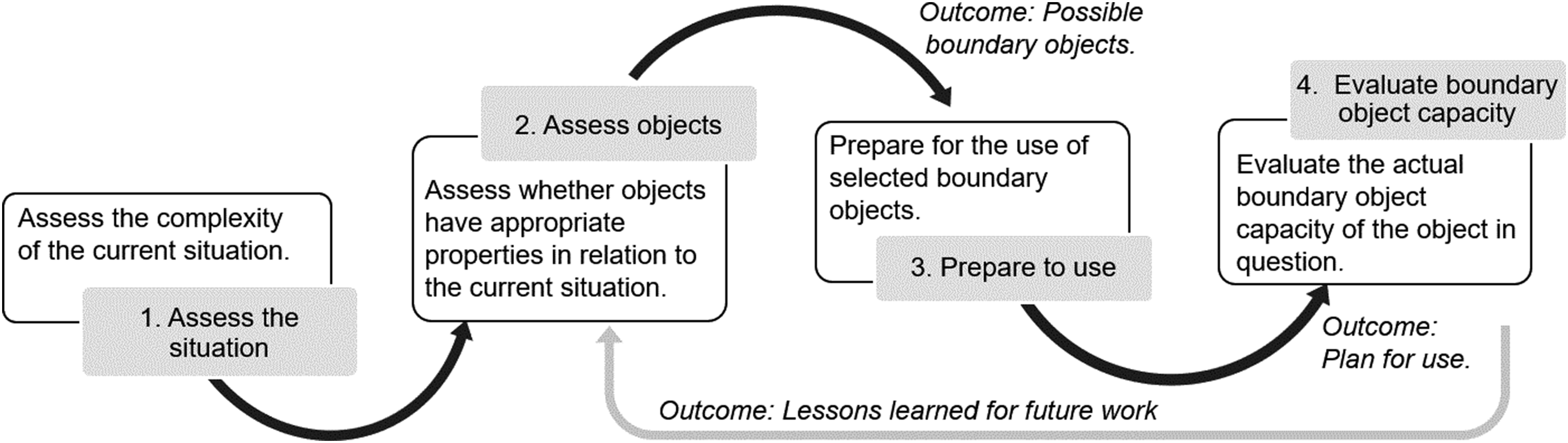
The Four-Step Boundary Object Assessment Framework.
Step 1. Assess the Situation
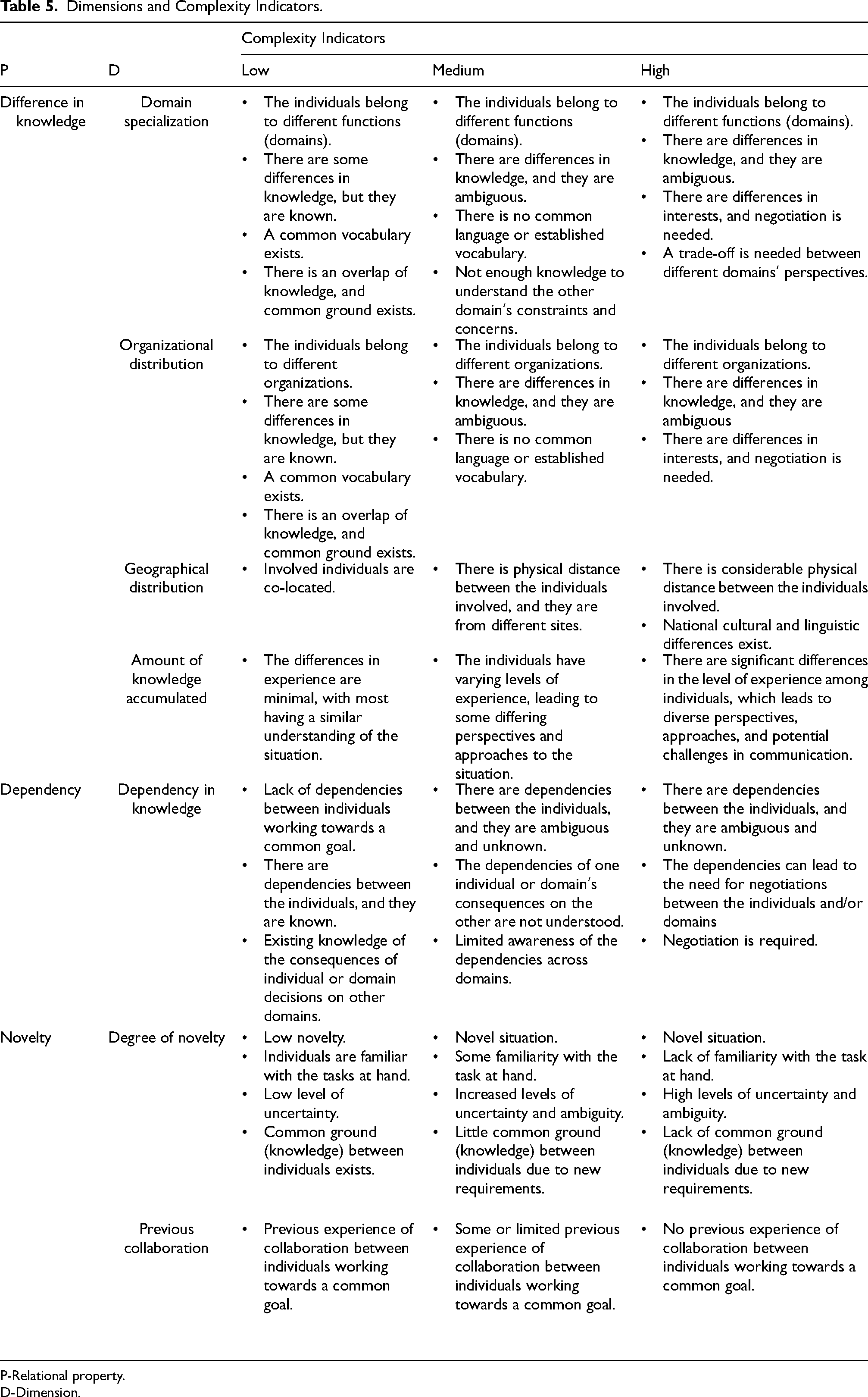
Boundary objects are context-dependent, making it crucial to gather information about the specific boundary that poses a challenge and needs to be crossed, with particular focus on its complexity, as the first step in the boundary object assessment framework. The complexity is influenced by key knowledge properties such as knowledge difference, dependency, and novelty (Carlile, 2004), which were chosen as the focus areas for assessment and the starting point and are explained in detail in Section 2. Relevant dimensions were identified for each property, and indicators were developed to facilitate assessment (see Table 5). Four dimensions were proposed to operationalize differences in knowledge: domain specialization, organizational distribution, geographical distribution, and the amount of knowledge accumulated. Physical and organizational distribution can heighten complexity at boundaries, creating separation between individuals involved in product realization (Lakemond et al., 2013; Säfsten et al., 2014; Wlazlak et al., 2019). One dimension related to knowledge dependencies, as outlined by (Carlile, 2004), which was identified as a key factor in why differences in knowledge present challenges during knowledge-intensive processes like product realization. To address novelty as a knowledge property, two dimensions were suggested: the degree of novelty and prior collaboration. Previous research has indicated that new requirements, such as the introduction of new technology in a product, and limited prior experience among individuals working together can significantly increase boundary complexity in product realization (Lakemond et al., 2013; Wlazlak et al., 2019).
Dimensions and Complexity Indicators.
P-Relational property.
D-Dimension.
Depending on the number of check marks for each property, the complexity of the situation can be categorized as low, medium, or high. The outcome of this first step is a clear understanding of the complexity level of the current boundary that needs to be crossed.
Step 2. Assess an Object
The next step in the framework involves assessing whether an object possesses the appropriate properties in relation to the given situation and its complexity. The complexity levels identified in Step 1 guide the determination of the properties an object must have to function as a boundary object (see Figure 5).
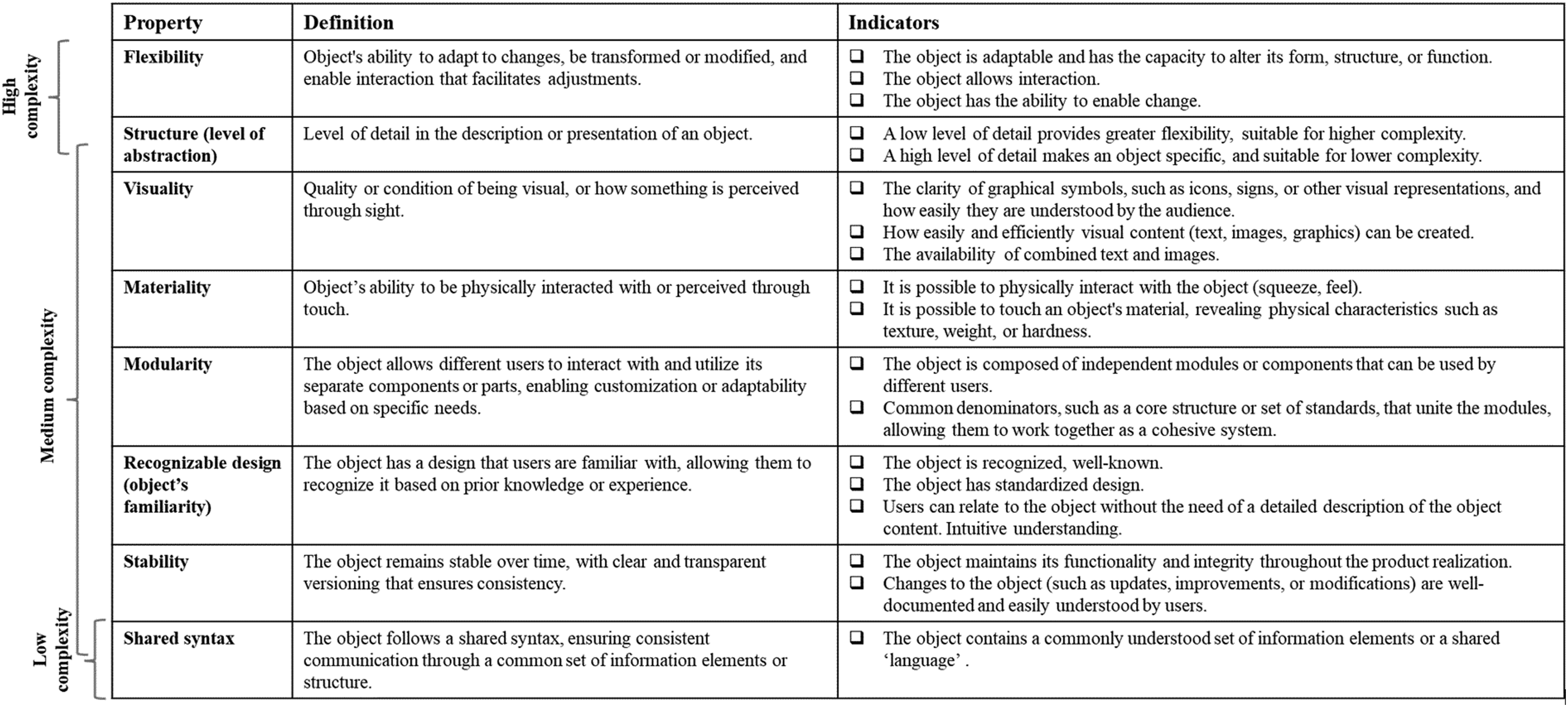
Boundary Objects Properties, Definition and Indicators.
Previous studies have identified specific properties of objects that enhance their capacity to bridge various boundaries (Abraham, 2017; Carlile, 2002; Huber et al., 2020; Koch & Thuesen, 2013; Star, 2010). From the empirical studies, some properties were considered not as inherent to the object itself, but rather as factors that influence its use. Therefore, these properties were not included as object properties in the version # 3 of the framework (for example, clear purpose, versioning, up-to-datedness, accessibility). Additionally, the empirical study revealed that in highly complex situations, the flexibility of an object becomes critical for fostering new knowledge creation and co-developing shared understanding. In such contexts, an object must accommodate diverse interests, which is why flexibility and a low level of detail, often linked to higher abstraction, are important. Conversely, higher levels of detail can make an object more specific, potentially reducing its effectiveness in addressing complexity.
The boundary object assessment framework offers guidance for evaluating situational complexity and aligning it with the appropriate object properties. By identifying the properties best suited to a given situation, the framework increases the likelihood of selecting a relevant and effective boundary object.
Step 3. Prepare the Use
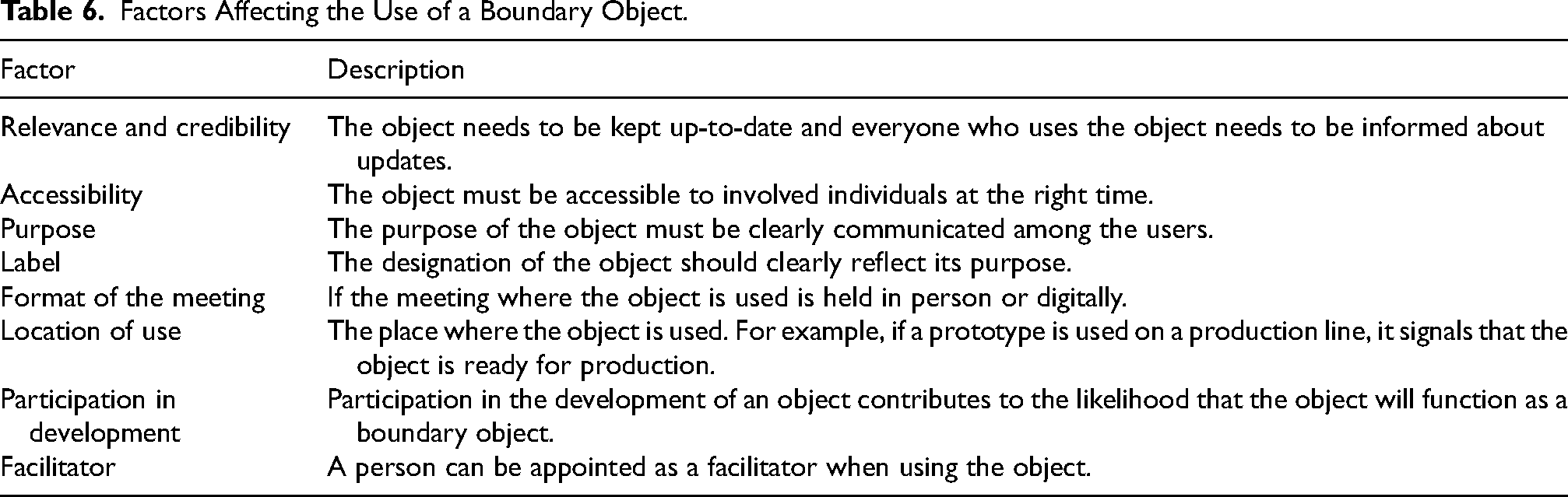
The third step of the boundary object assessment framework involves preparing for the use of the boundary object, which requires consideration of several factors. Some of these factors, such as being up-to-date and accessible (Abraham, 2017), have been previously identified as properties of boundary objects. However, empirical research suggests that these factors are better understood as prerequisites for the successful use of the boundary object. The studies also uncovered additional crucial factors, including having a clearly defined purpose, appropriate labeling, the location of use, and participation in the object's development. Furthermore, prior research has highlighted the role of facilitators (brokers) in supporting the effective use of the object (Gustavsson & Safsten, 2017; Rosenkranz et al., 2014). In conclusion, the following factors have been identified in both literature and practice as key considerations when preparing to use a boundary object, as shown in Table 6.
Factors Affecting the Use of a Boundary Object.
Step 4. Evaluate Boundary Object Capacity
Learning and continuous development using boundary objects have received limited attention in previous research. To support learning and continuous improvement, it is recommended to evaluate and document the effectiveness of an object as a boundary object after its use. This evaluation constitutes a fourth step in the boundary object assessment framework. A proposed approach is to create a boundary object register or library, as illustrated in Figure 6, which includes various types of boundary objects and their associated properties. Figure 6 highlights objects linked to the three types of boundary objects indicated in (Carlile, 2002). Furthermore, the objects can be categorized as either product- or project-related boundary objects. This could help clarify the role of the boundary objects during product realization.
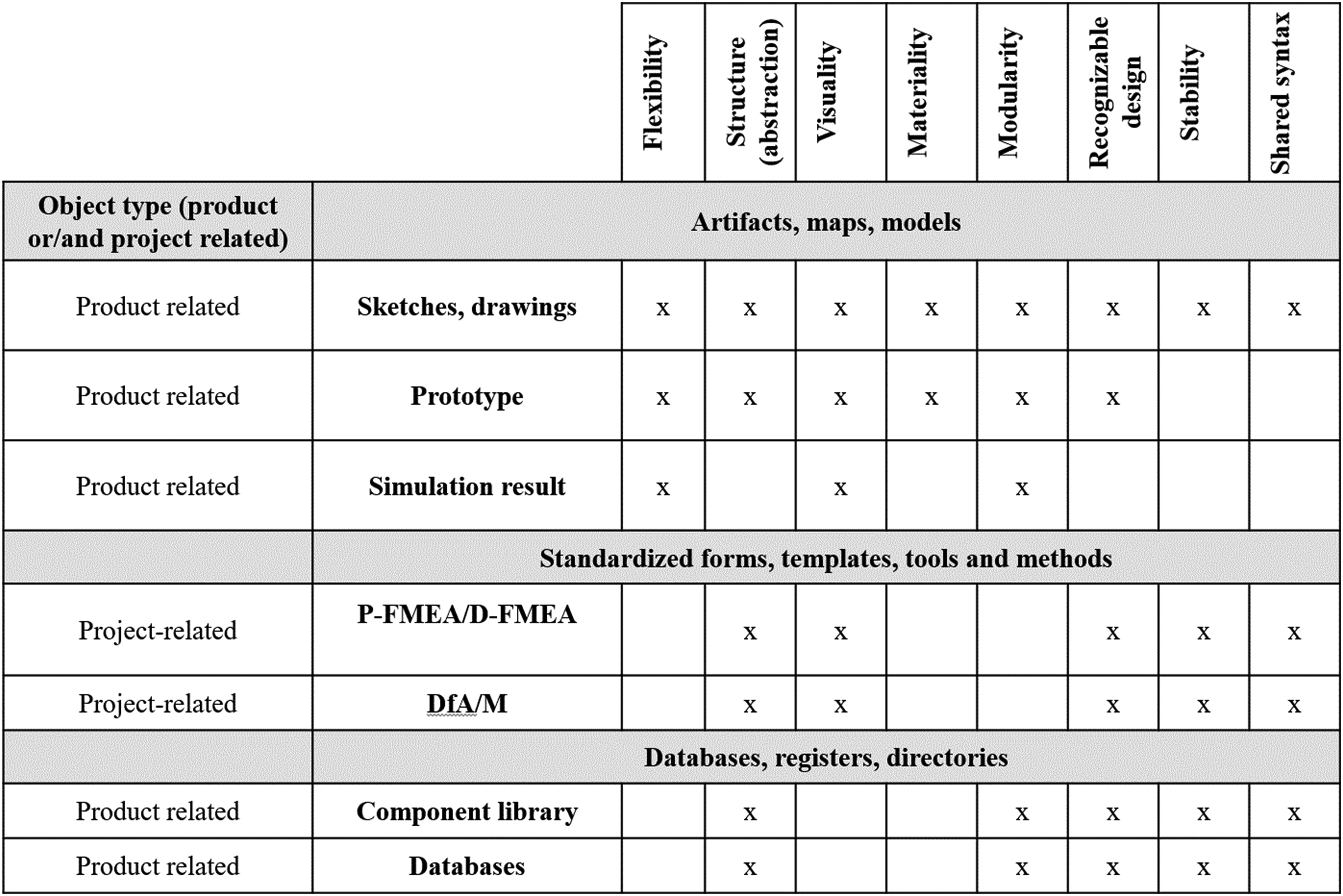
An Example of a Boundary Object Register/Library.
After using a boundary object, such as in a product realization project, its effectiveness can be assessed. For instance, did a prototype facilitate knowledge integration among participants? If so, record the insights gained. If not, investigate the reasons by revisiting steps 1–3 of the boundary object assessment framework.
Discussion
The purpose of this paper was to enhance understanding of how effective boundary objects can be selected to support knowledge integration in product realization. Drawing from both existing literature and empirical evidence, a four-step boundary object assessment framework, tailored for product realization context, was proposed. By doing so, the paper advances our understanding of how and when boundary objects can facilitate knowledge integration within the context of product realization.
Requirements Fulfillment
In section 4, four criteria for the boundary object framework were established. After developing the boundary object assessment framework, it became clear that the framework met criterion #1 in stimulating collaboration. The framework is designed to facilitate collaboration between domains involved in product realization. As a collaborative tool, it unites perspectives from individuals with varying expertise across domains. This unification is crucial for aligning interests and enhancing collaborative efforts. By functioning as a boundary object itself, the framework enables individuals to assess situations, understand boundary complexities, and identify appropriate artifacts to bridge gaps. Acting as a common reference point, it helps the involved practitioners align their understanding and work together more effectively. The framework emphasizes clear, accessible communication through visuals and written text, ensuring usability across disciplines. Simple, intuitive language represents complex phenomena, making the framework more engaging and reducing the risk of overwhelming participants. This simplification is vital for fostering collaboration, allowing all participants to engage without confusion. Additionally, the framework addresses knowledge boundaries that often hinder effective collaboration in product realization. By offering a structured approach to assess and manage these boundaries, it helps teams navigate the complexities of knowledge integration, ensuring that all relevant perspectives are considered and fostering a collaborative environment.
The framework also meets criterion #2 for practical applicability. It provides actionable, real-world guidance through a four-step assessment process, ensuring that the framework is not purely theoretical but directly applicable in practical scenarios. The framework goes beyond explaining what boundaries are and why they matter, as it focuses on how to assess and address them effectively in practice. It offers clear instructions on evaluating boundary complexity, analyzing the properties of boundary objects, and aligning these with situational needs. Additionally, the framework presents practical examples of potential boundary objects, such as engineering drawings and prototypes, and outlines how to maximize their effectiveness in product realization. This helps managers and engineers understand how to implement the framework in their specific contexts. The systematic approach ensures that knowledge integration efforts are thorough and well-documented, which further enhances the framework's practical utility.
The boundary object assessment framework fulfills criterion #3 for comprehensiveness, abstraction, and adaptability. It synthesizes diverse insights from prior research on boundary crossing, addressing knowledge fragmentation in the field. By providing a holistic perspective, the framework supports a thorough understanding of situational complexity, encompassing knowledge boundaries, boundary object properties, their alignment, and factors influencing their use. The framework ensures all essential elements required for an object to function as a boundary object are included, offering a unified perspective. It clearly defines key concepts such as knowledge boundaries, boundary objects properties, enabling users to apply the framework across various contexts without losing its essence. Its abstract yet practical design allows the framework to remain relevant across diverse scenarios, recognizing that an object may serve as a boundary object in one situation but not in another. This adaptability makes it applicable to different organizational needs and challenges. Furthermore, the framework includes mechanisms for feedback and continuous improvement, ensuring its relevance over time as organizational and industry demands evolve.
The boundary object assessment framework fulfills criterion #4 by supporting organizational learning. It is designed to capture and share insights from the use of boundary objects, enhancing cumulative knowledge integration across teams. By documenting and disseminating these insights, the framework ensures valuable knowledge is retained and leveraged for future projects, fostering continuous development of organizational competencies. By promoting knowledge accumulation and clear communication, the framework enhances collaboration and organizational learning. The framework proposes a boundary object register or library to catalog various boundary objects and their properties. This repository supports long-term knowledge retention, reuse, and improved knowledge integration capabilities critical for effective product realization.
Limitations of The Framework
While the boundary object assessment framework has many strengths and meets the established criteria, it also has certain limitations. The framework requires users to assess boundary complexity, evaluate object properties, and document insights. While this structured approach is beneficial, it can be time-consuming, which may pose a challenge in time-sensitive product realization processes. The framework prioritizes usability by simplifying concepts and using intuitive language. However, this simplification may sometimes overlook the nuanced, dynamic interactions in product realization, potentially leading to an incomplete or inaccurate understanding of a situation. Additionally, while the framework provides clear guidance, its effectiveness depends on how well users interpret, follow, and apply it in practice. Misinterpretation or subjective biases could result in the suboptimal selection and use of boundary objects. Another limitation is that the framework does not fully account for the influence of organizational structures, hierarchies, and power dynamics on the selection and effectiveness of boundary objects in product realization. Although external factors are considered in Step 3: Prepare the use, there may be additional factors not addressed in the framework that could influence the effectiveness and applicability of a boundary object in a given situation. Furthermore, the framework is primarily designed to assess existing boundary objects and their capacity to function in a given context. It does not support the development of entirely new boundary objects that may be necessary when no suitable options exist. Expanding the framework to accommodate not only the selection but also the design and development of boundary objects could be a valuable area for future research. This would be particularly beneficial in cases where existing boundary objects are insufficient to manage the complexity of a specific situation.
Theoretical and Managerial Implications
This study contributes to the literature on knowledge integration in product realization. Building on Carlile's framework (Carlile, 2004), this study defines dimensions and indicators for assessing boundary complexity. It consolidates fragmented research on the properties of boundary objects, incorporating insights from empirical studies to restructure and enrich the theoretical understanding of their use. The four-step boundary object assessment framework contributes significantly to the theoretical understanding of knowledge integration in product realization. By unifying fragmented research, the framework provides a comprehensive perspective on the properties of boundary objects and their situational effectiveness, bridging gaps in the literature. Furthermore, the framework operationalizes the assessment of boundary objects by categorizing their properties and aligning them with situational complexity. This structured approach simplifies the application of theoretical concepts, making the theory of boundary objects more practical and relevant for real-world scenarios.
In addition to its theoretical contributions, this study provides valuable managerial insights. The boundary object assessment framework offers practical tools for managers involved in product realization, enabling them to identify and implement boundary objects that foster collaboration among diverse domains and individuals involved in product realization. By facilitating clear communication and mutual understanding, the framework helps align interests and enhance teamwork. The framework's four-step process, including assessing boundary complexity, evaluating object properties, preparing for use, and evaluating boundary object capacity, provides a systematic approach to managing knowledge integration. This structured method ensures that boundary objects are well-suited to project needs, promoting effective and documented knowledge integration efforts. Designed for real-world applicability, the framework equips managers and engineers with actionable steps to navigate the complexities of product realization. It offers clear guidance on addressing boundary challenges, selecting suitable objects, and fostering collaboration, making it a practical tool for enhancing decision-making and organizational learning.
Conclusion
This study addresses gaps in the literature by offering a framework that stimulates collaboration among stakeholders in product realization while providing practical applicability. Unlike the conceptual nature of many existing frameworks and typologies, this study delivers actionable insights for managers and engineers. It offers a comprehensive understanding of the critical factors enabling an object to function as a boundary object, as well as the interrelationships among these factors. The framework's abstract and adaptable nature ensures its relevance across diverse scenarios and contexts. Additionally, it promotes organizational learning and supports the cumulative development of knowledge integration capabilities.
While the framework has been tested, further research and application across diverse product realization scenarios are recommended to ensure comprehensive coverage of all essential aspects. Although it is grounded in both literature and empirical evidence, its real-world applicability may still be limited. Expanding case studies and empirical validations across various industries and company sizes would enhance its credibility and practical utility.
Footnotes
Acknowledgements
The research results presented in this paper are based on research funded by the Knowledge Foundation and Jönköping University. ]. We extend our gratitude to the participating industrial companies and former colleagues who contributed to the research project for their invaluable support.
Funding
The authors disclosed receipt of the following financial support for the research, authorship, and/or publication of this article: The study has been funded by The Knowledge foundation and Jönköping University.
Conflicting Interests
The author(s) declared no potential conflicts of interest with respect to the research, authorship, and/or publication of this article.