



Abstract
Keywords
Introduction: About the Theme and Background of This Special Issue
Cyber-physical systems (CPSs) are typical manifestations of hybrid-engineered systems (Nardelli, 2022). Anyone, who is following the latest literature, is aware of the fact that the interdisciplinary field of CPSs is rapidly evolving (Yang et al., 2021). This evolution is so fast and radical that it challenges the traditional views and interpretations, and raises the need for reformulation of the definitions and models. Three influential phenomena can be identified as generic causes of the changes. The first one is the coexisting disciplinary convergence and divergence that brings together the knowledge, methods, and priorities of multiple disciplines and provides opportunities for the emergence of new interests and the springing-off of new competencies (Favela & Amon, 2023). The second one is the trend of intellectualization of hybrid engineered systems in a broad spectrum that not only increases their smartness in operation and problem-solving but also creates a strong basis for the realization of novel and generic system characteristics such as social embedment and personal identity (Horváth, 2022). The third one is a widely-based integration and synthesis of systems technologies (involving both artefactual and production technologies), The purposeful confluence of technologies is happening not only in the material (physical) world (as a multi-scale integration of atoms, genes, neurons, and memes) but also (an even more smoothly) in the cyber world forming a synergy of molecular informatics, cognitive informatics, neural informatics, brain informatics, and computational informatics (Wang, 2011). The result is a synergistic relationship of hardware, software, cyberware, and brainware technologies in current and future systems.
The identified, mutually interacting three phenomena have already influenced the governing paradigm of CPSs and will continuously be changing our worldview concerning the future of this genre of systems. It must be noted that the term ‘paradigm’ is used above as a constitutional (comprehensive) pattern (or a widely shared human mental model) that underpins all specific manifestations of certain things, e.g., artefacts and systems. To differentiate it from the notion of the science paradigm introduced by Kuhn (1962), we will refer to it as a ‘system paradigm’ from now on. Eventually, system paradigms can be identified based on a finite set of distinctive characteristics, such as the objective of bringing to existence, addressed tasks, functional spectrum, architectural organization, enabling technologies, problem-solving intelligence, resource management, range of adaptivity, and operational characteristics. As illustrated in Figure 1, parallel with the paradigmatic changes, the place of cyber-physical systems is also changing in the overall landscape of the systems.
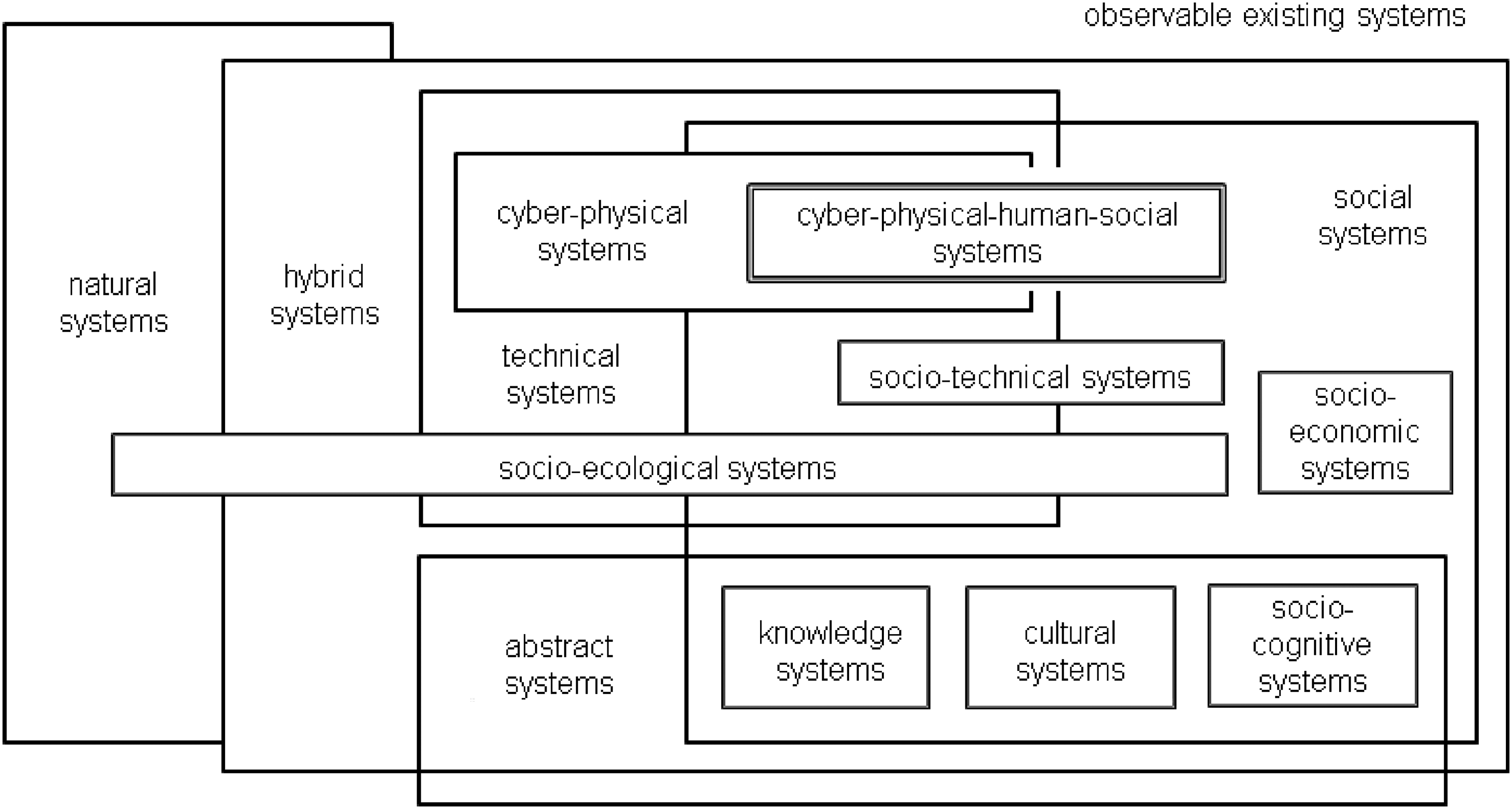
The place of CPSs on the landscape of factual systems.
In the theme of this Special Issue of the Journal of Integrated Design and Process Science, three aspects of dealing with next-generation CPSs (NG-CPSs) are brought into concert (i) supradisciplinary research conduct towards transdisciplinary knowledge, (ii) frameworks and activities of cognitive design and engineering, and (iii) concepts and manifestations of I-CPSH systems. In simple words, the objective was to cast light on the boundary-stretching and road-paving results of pluridisciplinary research to exploit intellectualization in the design and implementation of NG-CPSs. The starting point, and the basic assumption, of our reasoning was that successful design and implementation of I-CPSH systems cannot be done without (i) new insights delivered by pluridisciplinary research, (ii) addressing the concerned industry, society, systems, and/or humans created complicated problematics, and (iii) completing inquiries by collectives working in supradisciplinary research arrangements and synthesizing heterogeneous background knowledge. However, for these, new fundamentals seem to be necessary through a critical consideration of the role of humans and systems (Matthies et al., 2023).
The goal of this Special Issue has been to release novel research methodologies, transdisciplinary development frameworks, synthetic knowledge management strategies, technological tools and means, and novel insights related to the above-mentioned issues for a broadly-based public debate and, thereby, to facilitate scholarly progress. The preferred topics for this special issue included but were not limited to the following: (i) foundational issues of cognitive engineering of I-CPSH systems, (ii) cognitive and computational fundamentals of I-CPSH systems, (iii) principles, methods, and mechanisms for intellectualization, socialization, and personalization of cyber-physical systems, (iv) human knowledge and system-generated synthetic knowledge embedded in cyber-physical-social-human systems, (v) developments in the extension of the digital twin concepts and implementations towards feedback functionalities, (vi) transferring synthetic knowledge among dissimilar smart cyber-physical-social-human systems, (vii) state of the art reviews, future visions, research strategies, and implementation opportunities. The potential authors have been asked and the submitted manuscripts have been supposed to provide a balanced comprehension as well as a holistic treatment of the above three aspects and their interplay. This Special Issue has been brought into existence to present their pioneering work and to release their important results to a public debate and orientation.
Structurally, this Extended Editorial has been divided into three thematic parts which can be called exposition, contribution, and consolidation. Considering the rapid developments, the exposition part provides an insight into the state-of-the-art. It presents a concise overview of four related topics: (i) the advancement of the paradigm of cyber-physical systems, (ii) the interlaced trends of intellectualization, socialization, and personalization, (iii) the essence and role of cognitive engineering from the perspective of problem-solving and goal-achieving system behaviour, and (iv) novel research approaches, models, and designs reported in the literature. The contribution part introduces the research papers submitted to this special issue and casts light on the scientific or engineering significance of the reported works and results as well as on their implications. The consolidation part provides some instant reflections both in a narrow and in a general context, discusses the prospects, and formulates conclusions and propositions.
Advancement of the Paradigm of Cyber-Physical Systems
Less than two decades ago, a strong vision was formed about multidisciplinary hybrid systems and this gave birth, among others, to an initial system paradigm of CPSs. On the one hand, this paradigm has orientated the theoretical progress over more than a decade, and, on the other hand, it has guided the practical achievements (Iqbal et al., 2020). However, this initial system paradigm has also been challenged by the three trends described in the Introduction section and has become the object of many debates. At the time of compiling this Special Issue, the number of evidence for the rapid transdisciplinary changes in this field is mushrooming and the influences they make are becoming more obvious, though not completely free of uncertainties. The bottom line is that there is a continuous and far-reaching shift in the paradigm of CPSs (Cogliati et al., 2018). The uncertainties are being created by the quickness and arbitrariness of the orientation of the changes that have similar effects in the areas of design, implementation, and deployment of the present-day CPSs and, in particular, concerning NG-CPSs.
The shift of the paradigm, which recognizes four generic functional characteristics (Figure 2), has various well-recognizable implications. First, the classical definitions and descriptions of CPSs are not keeping their validity in the current situation determined by the intense techno-scientific convergence and divergence, the wide-ranging, multi-scale integration of technologies, and the ubiquitous aggregation of industrial and social vicissitudes. Second, the essence, trends, and interplay of the accelerating evolutionary developments are difficult to follow by those in the industry, governments, and universities who have more urgent tasks than gluing together the pieces of the broken overall picture and applying prognostic systems thinking. Third, those who are busy with daily research problems, system conceptualization and integration, and hardware, software, cyberware, or brainware development, do not always have time to analyse the far-reaching consequences of their doings and makings.
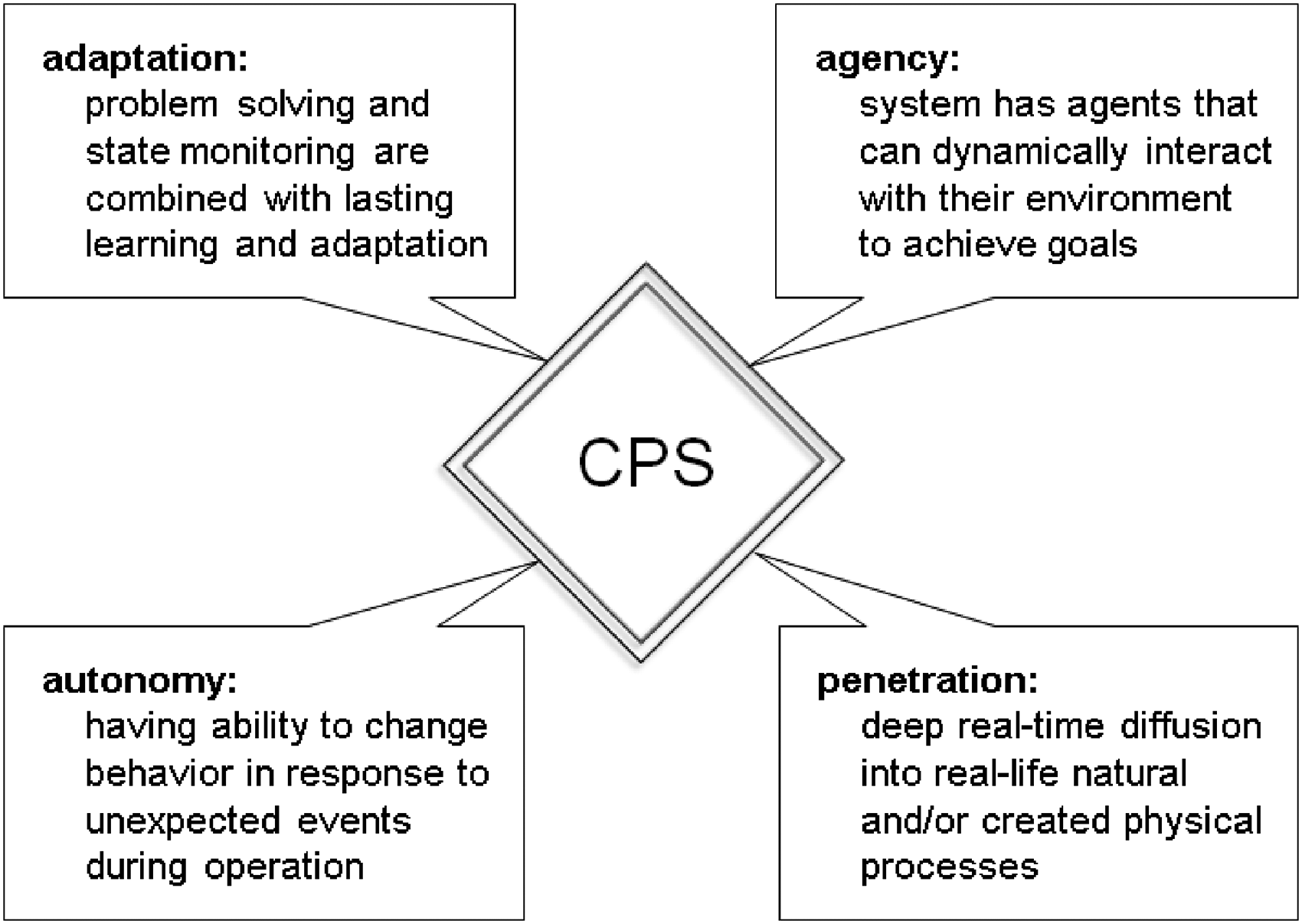
The highest level functional characteristics of the family of cyber-physical systems.
Unfortunately, the recent professional literature has paid enough attention neither to monitoring the overall developments nor to the analysis of the implications. The fact of the matter is that the overwhelming majority of publications address ‘technical’ research and development problems, rather than the foundational concepts, generic conceptual frameworks, formation of the discipline, side-effects of intellectualizations, realistic road maps, and detailed strategic visions). This is of importance from a system-internal viewpoint because CPSs manifest not only as an intersection of the physical (analogue and digital) space and the cyber (data, information, knowledge, algorithms, and mechanisms) space anymore but also extend to the human (perceptive, cognitive, behavioural, and emotional) space and to the social (relational, cultural, normative, and valuation) spaces (Ning & Liu, 2015). This special issue is dedicated to dealing with the new developments related to this.
The growing complexity and heterogeneity raise challenges also from a methodological point of view (Zheng et al., 2016). To cope with them, the development processes of CPSs need multidisciplinary collaborative efforts. The mainstream academic literature claims that the design process of CPSs goes through the following domains of knowledge: (i) the inception domain (specifying needs and affordances), (ii) the conceptual domain (ideas and requirements), (iii) the functional domain (functions and physical principles), (iv) the architectural domain (components and structures), (v) the operational domain (workflows and parameters), and (vi) the assessment domain (verification and validation). As a facilitator of integration, model-based system engineering (MBSE) has been widely applied in the development processes of CPSs. MBSE is often seen as a combination of model-based design (MBD) and model-integrated implementation (MII) activities. The conventional process of engineering CPSs follows a sequential path, while today's competitive processes (i) are recurrent and iterative in terms of finding the path to satisfying solutions and (ii) involve multiple different knowledge backgrounds, analysis and synthesis methods, and working cultures (Horváth, 2023). Furthermore, they impose the demand for a multidisciplinary collaboration on the stakeholders, the necessity of which has been known for a long time.
The Intertwining Trends of Intellectualization, Socialization, and Personalization
Artificial intelligence research is striving for the ‘intelligentization’ of systems by using intelligent computing rather than for smartification or intellectualization (Zhu et al., 2023). Two complementing objectives of the intellectualization of engineered systems are autonomous problem-solving and evolutionary self-management. It is often claimed by scholars that intellectualization eventually leads to so-called intelligent systems, the concept of which is not fully established yet (Wang et al., 2020). On the other hand, the use of the term ‘intellectualized engineering systems’ allows us to differentiate systems that are developed for solving complex application problems (for instance, autonomous transportation systems, personalized homecare systems, or precision agricultural systems) from those systems that are developed to mimic various manifestations of human intelligence, such as artificial vision, speech recognition, machine learning, etc. Furthermore, using the word ‘intellectualized’ helps avoid the conceptual confusion that has been introduced by the terms “intelligent systems” and “intelligent cyber-physical systems”, respectively (Russell, 2016).
The fact of the matter is that intellectualization lends itself to the emergence of other – sophisticated – system abilities and behaviours. Based on the analysis of the latest disciplinary trends and technological advances, it has been hypothesized that an observable shift in the paradigm of CPSs is being caused by four intertwining developments. These have been depicted by the terms (i) disciplinary complexification, (ii) functional intellectualization, (iii) canonical socialization, and (iv) adaptive personalization. They form four dimensions of the expected future developments. The essence, interactions, and major outcomes of the progression in these four interplaying and mutually reinforcing dimensions are shown in Figure 3. Consideration of these is important because of their large impacts on the research, development, and educational frameworks, as well as on the application domains and deployment opportunities of NG-CPSs (Colombo et al., 2014).
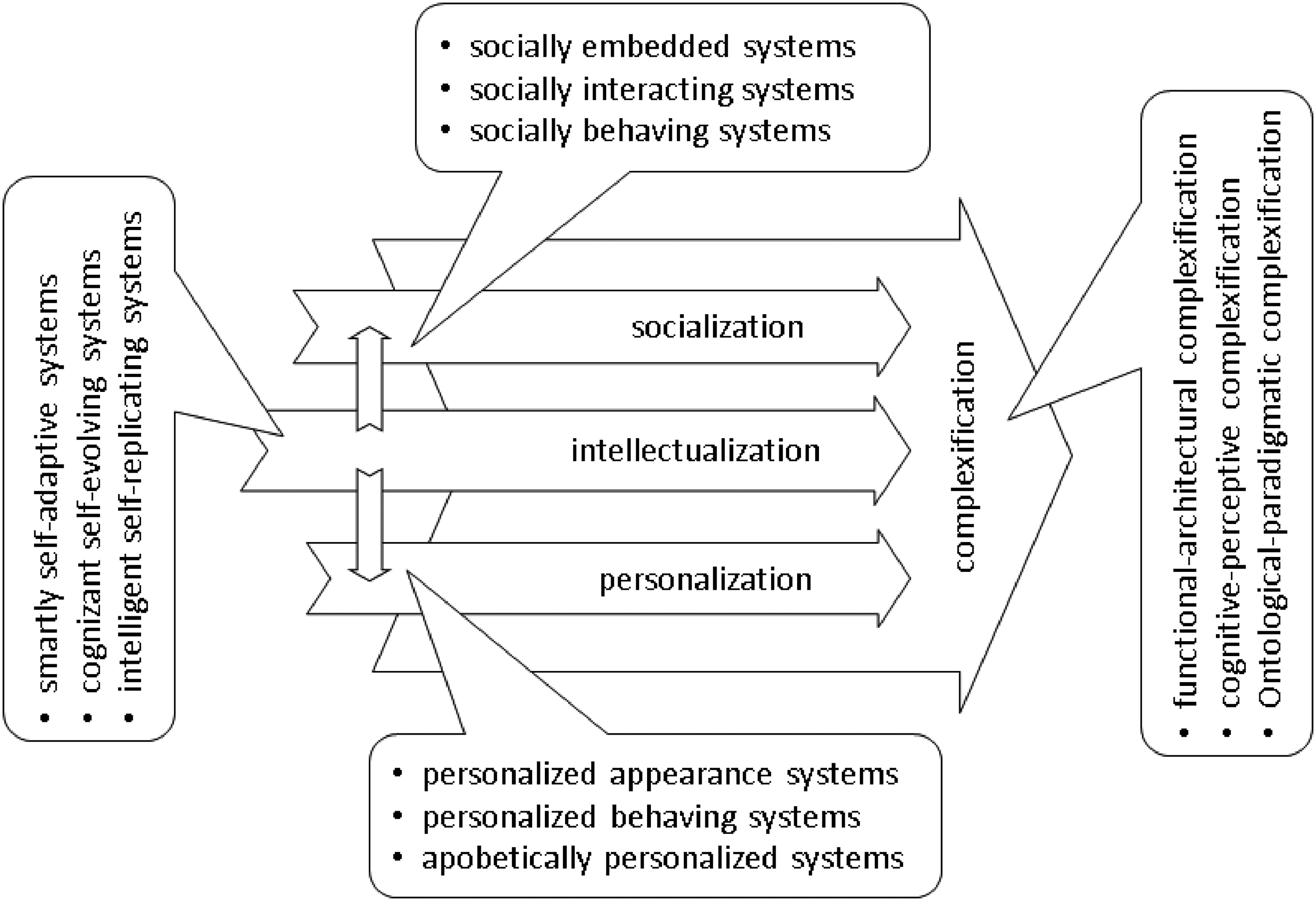
The dimensions and milestones of the evolution of the paradigm of cyber-physical systems.
System intellect is the total of all perceptive, cognitive, and motor abilities and powers of an engineered system for controlled physical changes, context-dependent reasoning, rational and efficient problem-solving, formal decision-making, and purposeful adaptation toward optimum operational states and performances (Zabezhailo, 2023). It typically commences with some human-provided physical resources and computational mechanisms, which are extended with self-acquired ones over time. In practice, system intellect is realized based on processing problem-solving knowledge by ampliative computational mechanisms in given application contexts. The intellectualization of engineered systems is a complicated matter (Grimm et al., 2014). It involves (i) the complex process of seeking intellectual character for systems in an application-specific manner, (ii) the run-time resetting of the goals of problem-solving and adaptation of the systems toward optimal performance, and (iii) the generation and aggregation of synthetic intellect as a rational, contextualized, and effective problem-solving power and capacity. These usually happen with full ignorance (or with only a restricted reproduction) of human-like consciousness and other characteristics of emotional or psychological significance (Rushby & Sanchez, 2022).
The functional intellectualization of engineered systems is not a new endeavour. The roots are back in the seventies when the first concepts of knowledge-based utility and computer-integrated manufacturing systems became sufficiently supported by the maturing and strengthening of computing and information technologies (Alqudah & Lemounes, 2022). Intellectualization of systems always received impetus and new resources from the achievement of artificial intelligence research and development. However, as for now, there are many more open questions than coherent explanations and comprehensive forecasts concerning the near future (Du et al., 2023). This applies to the concept of intellectualized cyber-physical-social-human (I-CPSH) systems, which are often dubbed as next-generation cyber-physical systems. Over the years, a specific domain of research and development interest has come to formation which is distinguished by the name ‘cognitive engineering’ (Wilson et al., 2013). Among others, it generates unique theoretical, methodological, praxiological (human involvement), implementation, and deployment knowledge for both academic and industrial purposes by frontier studies (e.g., speculations, surveys, explorations, inquiries, analyses, prognostications, experiments, tests, verifications, and validations).
In the context of CPSs, as well as in our everyday life, the word ‘socialization’ means having, learning, and operationalizing social norms, values, behaviour, and social skills, and establishing social relationships of various kinds (Qiu et al., 2023). The adjective ‘canonical’ is used to refer to a form of socialization that is adhering to what is commonly accepted in human society. The connection between socialized entities can be a formal (strong and enduring) relation as well as an informal (weak and volatile) relationship. These distinctions are important for the reason that social relations and relationships can be established not only among humans and systems (like in the case of collaborative robots) but also among systems and systems. Considering their intended deployment, the relations of systems can be not only hierarchical relations (such as between a supervisory system and actor systems) but also heterarchical relations and relationships (such as a swarm of non-ranked systems that are related in two or more differing ways, or a flock of systems with varying roles over time and contexts) (Blackmore, 2021). The CPSs developed for socialization with human stakeholders are called cyber-physical-social systems (CPSSs), whereas the systems developed for socialization with other systems are differentiated in the literature as social-cyber-physical systems (SCPSs). Currently, three main types of system socialization can be differentiated, namely (i) social embedment, (ii) social interaction (interfacing), and (iii) social behaviour, though many other forms of socialization of CPSs and socialization by CPSs have been conceptualized and implemented.
Likewise, the concept of system personalization is a historical development that appeared more than 40 years ago in fields such as robotics to realize human-like physical appearance and behaviour of robots by giving them anthropometric shapes and making them able to perform human-like locomotion, sensorial navigation, and verbal communication (Fan & Poole, 2006). Based on their goals, these have been called structural personalization and appearance personalization, respectively. The personalization in the physical and perceptive domains has been augmented with functional or behavioural personalization as well as with rational and emotional personalization. Consequently, it forms a complicated core activity of cognitive engineering nowadays. The complicatedness originates in that the focus of personalization is shifting from the functional capabilities and performance qualities of artificial agents to their moral status, ethical obligations, and collective priorities (Yu & Choi, 2005).
According to its dynamics, definite and adaptive personalization can be distinguished. Definitive personalization is typically made by human experts before the implementation of a system. In the case of adaptive personalization, human experts create the profile of personalization, specify the needed knowledge, and provide the needed resources, while the concerned system personalizes itself run-time. If (i) the creation of the personalization profile, (ii) the acquisition of the needed knowledge and resources, and (iii) the decision-making concerning the possible or optimal adaptation are taken care of by the concerned system, then self-managed adaptive personalization happens. Present-day intellectualized systems are supposed to be increasingly able to make self-managed adaptive personalization. The word ‘adaptive’ also expresses the needed context-dependent variability of personalized behaviour. From a computational viewpoint, the above approaches and their combination can be regarded as (i) programmed personalization, (ii) autonomous personalization, and (iii) hybrid personalization approaches can be differentiated. They are constituents of what is often referred to as embodied behavioural personalization.
Since human personal behaviour is partly inherited and partly acquired, system personalization should have these two constituents. CPSs can be equipped with a set of ‘inherited’ personalized appearances and behaviours in their design process. Self-adaptive systems can change these or can even learn or develop the synthetic appearance and behavioural patterns that may deviate from genuine human patterns (Oyebode et al., 2023). A current research issue is managing (controlling) and applying (utilizing) acquired synthetic patterns. When intellectualization, socialization, and personalization are simultaneously targeted in CPSs, we talk about (systems) humanization (O’Neill & Stapleton, 2020). This is a new field of system science and engineering interest that is still in its infancy. Obviously, concurrent socialization and personalization of intellectualized systems considerably contribute to epistemic complexification by involving social, cultural, physiological, and behavioural science knowledge (Maldonado & Gomez Cruz, 2012).
The Essence and Role of Cognitive Engineering Concerning Problem-Solving and System Behaviour
Though cognitive engineering of systems (CEoSs) does still not have an exact, single-sentence definition, its essence and role can be easily described with a few words. First of all, CEoSs is the art of equipping CPSs and other systems with application-orientated problem-solving intellect, social memes, and personal features. It intends to increase the smartness (knowledge-intensiveness, context awareness, reasoning capabilities, and functional adaptiveness) of CPSs. CEoSs also attempts to optimally utilize the affordances of artificial intelligence research and development in the context of industrial and everyday CPS applications. From another perspective, this is the emerging discipline of studying the sources, knowledge, mechanisms, methods, procedures, outcomes, and implications of the intellectualization of engineered systems. It concurrently focuses on two interrelated objectives (i) creating and managing synthetic knowledge and smart reasoning mechanisms for CPSs, and (ii) harmonizing stakeholders’ cognitive processes, social memes, and personal features. Figure 4 provides a visual image of the system-orientated concerns of CEoSs.
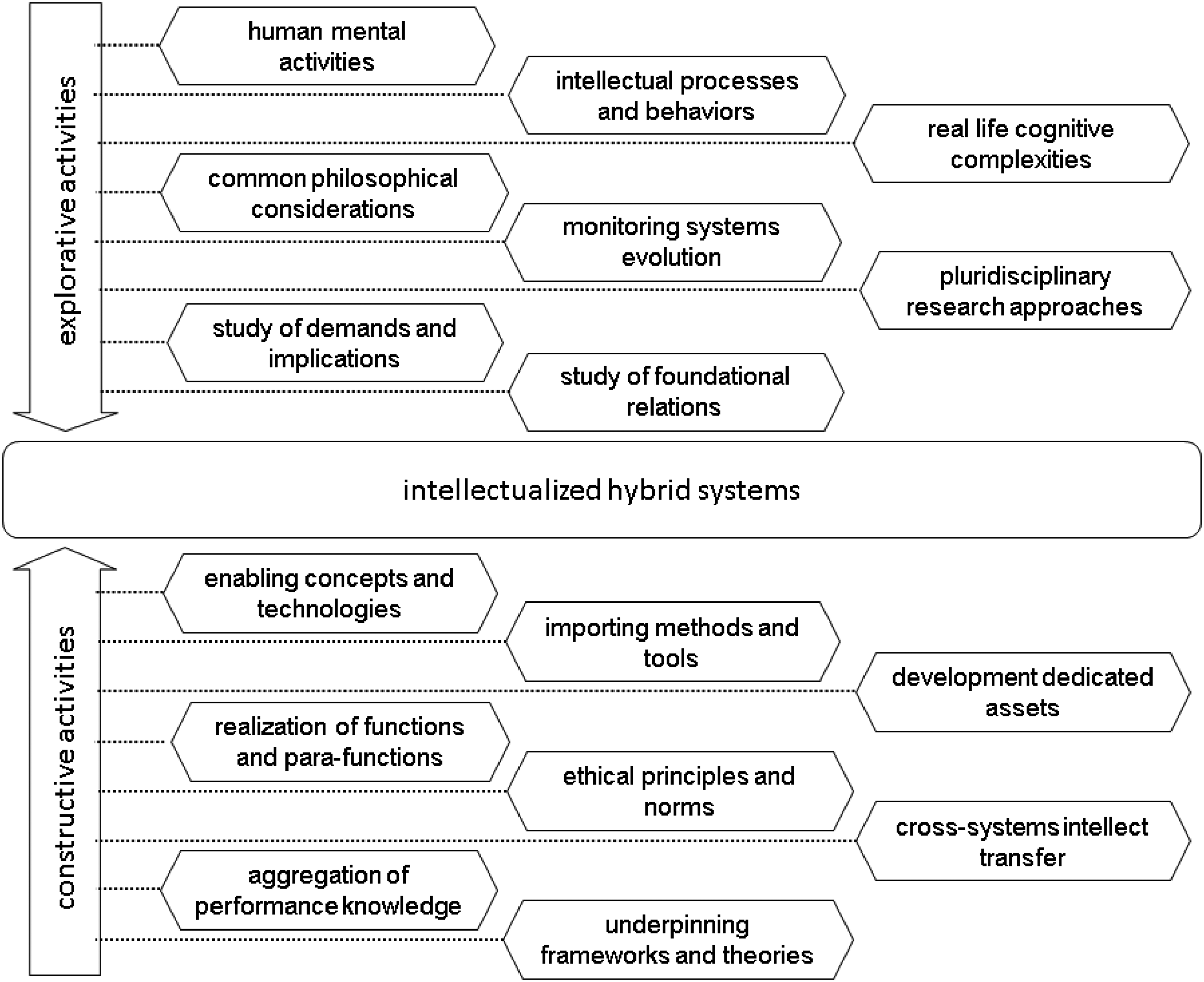
Activities and concerns of cognitive engineering of systems.
The total of the activities of CEoSs can naturally be divided into the group of explorative activities and the group of constructive activities. On the one hand, the explorative activities concentrate on (i) the complex human mental activities, such as perception, awareness, intuition, understanding, learning, thinking, and planning abilities, and (ii) the intellectual processes of acquiring and understanding knowledge through belief, inferring, sensing, and experience. On the other hand, they (iii) monitor the paradigmatic, technological, computational, and cognitive evolution of hybrid engineered systems, and (iv) analyse the practical needs, resources, economic aspects, and social implications of designing, implementing, and deploying intellectualized systems. The constructive activities of CEoSs concentrate on (i) dealing with real-life manifestations of cognitive complexities, (ii) importing methods and tools developed by artificial narrow and general intelligence research, (iii) developing dedicated approaches, knowledge, algorithms, and mechanisms for application-specific problem-solving, (iv) conceptualization of system operational functions and behavioural para-functions in application contexts, (v) aggregating knowledge by experimental validation and real-life monitoring of behaviour and performance of intellectualized systems is application contexts, and (vi) facilitating intellect transfer among various networked problem-solving systems including their self-developed synthetic knowledge and mechanisms.
Cognitive engineering research oversteps the common computational approaches of generating artificial intelligence means and traditional human-in-the-loop and system(s)-in-the-loop relationships by considering multiple levels of cognitive functions together with the intended perceptive and affective operational functions, and the accompanying social and personal para-functions (Tatarkanov et al., 2022). While the concept of operational functions is well known from traditional system engineering, the concept of behavioural para-functions is getting accepted as the behaviour (attitude, organization, and rendering of the way of acting and decision making) in response to a particular situation or stimulus as enabled by reproduced personal patterns (Horváth, 2022).
A representative target domain of CEoSs is CPSs and NG-CPSs. However, the pluridisciplinary research supporting CEoSs considers composable, compositional, and synergetic systems, applies holistic approaches to understand complex real-life problem-solving processes and generates intertwined computational enablers for intellectualized CPSs. The knowledge explored by pluridisciplinary research approaches is indispensable for the socialization and personalization of CPSs (Sample, 2022). Eventually, CEoSs harmonizes cognitive problem-solving abilities and cognitively correct relationships. Towards having robust underpinning theories, CEoSs also investigates the relationships between (i) human intelligence and system intellect/intelligence, (ii) artificial narrow-, general-, and superintelligence and synthetic system intellect/intelligence, (iii) human consciousness and system consciousness, (iv) human reasoning mechanisms and system reasoning mechanisms, (v) natural human knowledge and synthetic system knowledge, and (vi) dependable intellectualization and autonomy of systems. CEoSs intends to pay sufficient attention to five ethical principles, namely (i) responsibility, (ii) non-maleficence, (iii) transparency, (iv) justice and fairness, and (v) privacy. It is also influenced by the meta-physical, ontological, epistemological, and methodological discourses and speculations about (human-made) ‘pseudo intelligence’. Like cognitive science, both cognitive engineering and system cognition are still work in progress and their progression depends on the underpinning natural, human, and social sciences.
Novel Research Approaches, Models, and Designs Reported in the Literature
The current state of knowing can be best characterized by the standing war of the philosophies of the Mode 1 science and Mode 2 science. While there is a historically built understanding of the principles of Mode 1 science in the context of engineered systems, this cannot be claimed about the loose principles of the yet unsettled Mode 2 science that is driven by the rationales of long-term sustainability and global transformative changeover (Gibbons et al., 1994). Notwithstanding, it is becoming overall accepted that more new transdisciplinary knowledge should be generated by cross-disciplinary and systems-orientated, at the same time, human-centred and socially sensitive research to provide a proper scientific basis for the engineering of NG-CPSs. Not surprisingly, such inquiry approaches are efficiently used in interdisciplinary and transdisciplinary fields of science. However, they are still not part of the daily practice of engineering (e.g., materials, systems, artefacts, processes, and information) sciences where a cutting-edge specialization is a key to achieving engineering superiority or competitiveness.
To understand the reasons, it is important to see the specific differing objectives and approaches of the research driven by the philosophy of Mode 2 science. The first major difference concerns the object of the studies. Such research focuses on industrially, socially, or individually created problematics, such as the influence of mobile phones on the personal development of youngsters or the effects of artificial intelligence developments on academic integrity, instead of naturally existing or emerging phenomena. The second difference is in the collective execution-oriented organization of the research activities which assumes various levels of co-working (e.g., cooperation, coordination, collaboration, and coadunation). The third difference is in the strong pursuit of transdisciplinary knowledge which facilitates both the resolution of problematics and the solving constituting problems. The fourth difference is represented by the striving to involve non-academic (e.g., industrial, governmental, and social) stakeholders in exploring, interpreting, and conceptual modelling complicated problematics and in prioritization of the constituting problems to be addressed. Lastly, the fifth difference is the preference of supradisciplinary methodological and procedural organization of collective research.
From an epistemological point of view, important is to apply transdisciplinary (or at least interdisciplinary and multidisciplinary) research approaches and models, while, from a management point of view, it is needed and beneficial to organize the research according to the principles of supradisciplinary research. Figure 5 juxtaposition the major activities (procedural milestones) of the development of a transdisciplinary research model and a supradisciplinary research design. A research model is a specification of the research focus, problem, and challenge, which is derived by a purposeful scoping of the initial research problematics into the manageable definitive research problematics and characterizing it by research parameters (indicators, variables, etc.) (Horváth & Abou Eddahab-Burke, 2024). It conveys information about what to study in a supradisciplinary investigation done by a research collective co-working in various forms, (and the associated research design informs about how to study it methodologically and procedurally). These methodological approaches and procedural constructs do not exclude but may include the use of multiple underpinning unidisciplinary theories that are typically the subject of front-end knowledge synthesis for the research programs or projects.
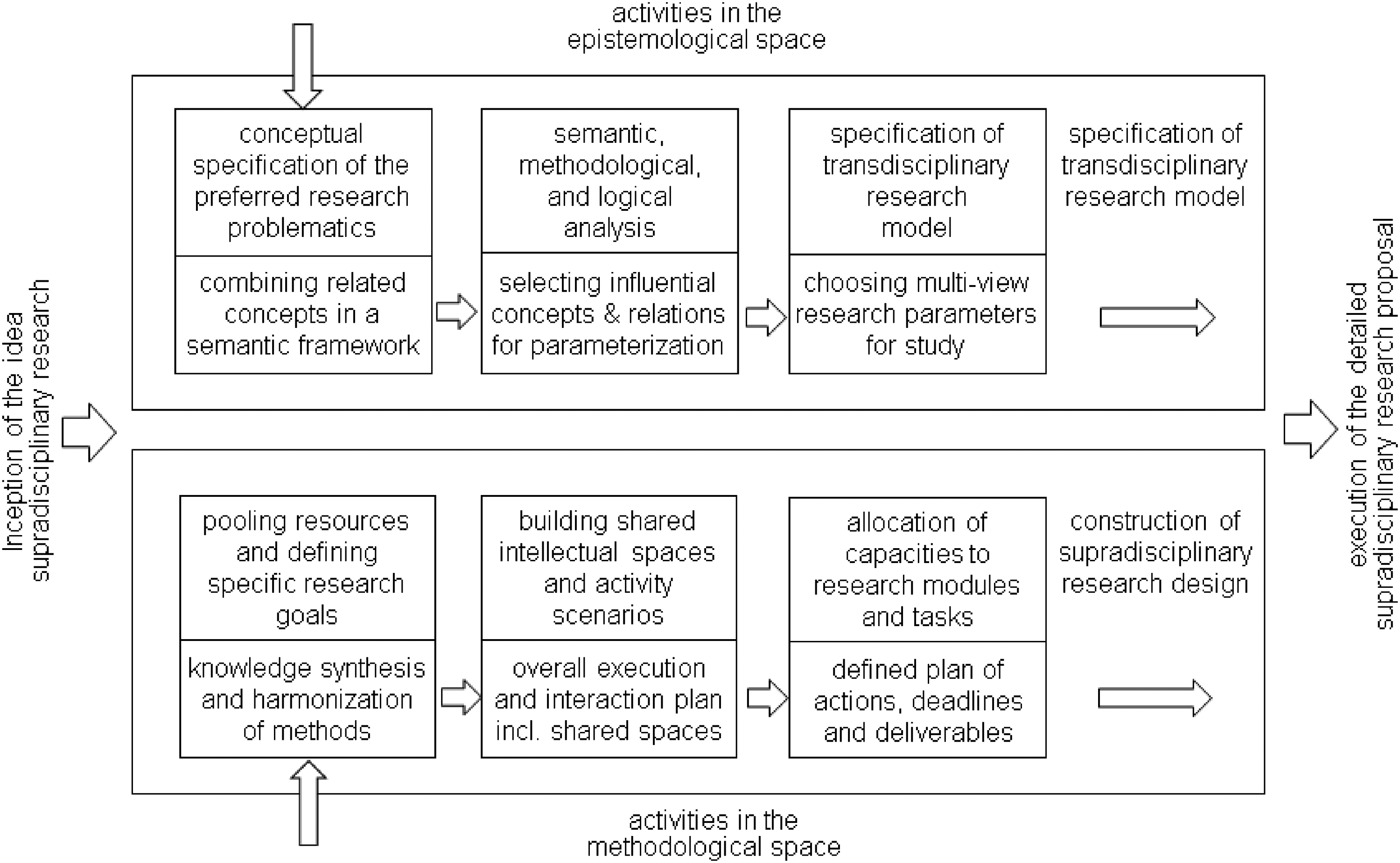
Juxtaposition of the activities concerning the development of a transdisciplinary research model and a supradisciplinary research design.
In the case of holistic I-CPSH systems, transdisciplinarity is an epistemological issue, while supradisciplinarity is a management issue concerning knowledge acquisition. Supradisciplinary research is the organization and conduct of research transcending multiple disciplines. This is an integrative form of conducting research that goes beyond the levels of integration that take place in monodisciplinary, interdisciplinary, multi-disciplinary, and transdisciplinary research conducts. The extra is the embedment of the abovementioned conducts according to a shared procedural framework which is in concert with the transdisciplinary research model. While the synthesis and consolidation of knowledge in monodisciplinary and multidisciplinary research approaches typically happen in the form of back-end integration, focusing on the newly explored knowledge, these happen in the form of a front-end integration in the case of interdisciplinary and transdisciplinary studies. Supradisciplinarily organized research programs and projects should take care of both front-end and back-end integration. To make it happen in a systematic process rather than a discrete procedural action, sophisticated means such as problematics scoping approaches, and systematic research model development procedures (Figure 6). In addition, the concept of shared intellect spaces have been proposed that support systematic epistemic, conceptual, and methodological harmonization of the academic and social stakeholders. Such spaces allow the conversion of the complementary nature of disciplinary research into a holistic manifestation of research.
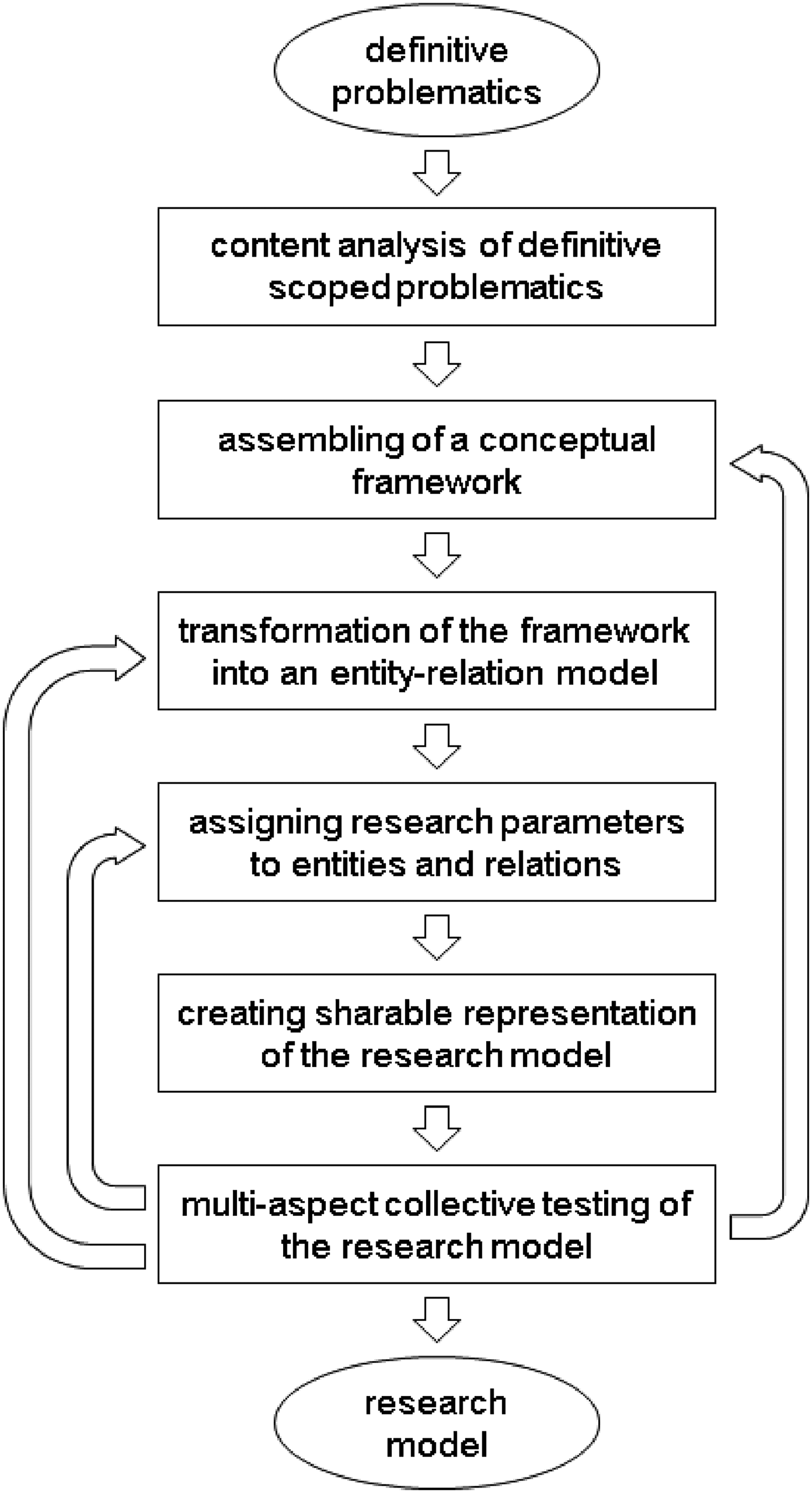
Main steps of deriving transdisciplinary research models for a scoped research problematics.
Organizing supradisciplinary research facilitates coping with large-scale problematics and managing conventional epistemic and methodological specialization concurrently. As Pohl and Hadorn (2008) discussed it, supradisciplinary research conduct is operationalized to provide descriptive, explanatory, normative, and practice-oriented transdisciplinary knowledge to help solve, mitigate, or prevent real-life (world) problematics. It should provide insights and explanations and should come up with articulated visions, transitional roadmaps, intervention strategies, and activity scenarios. While these objectives can be formulated clearly and easily, the fulfilment of the need for the highest-level effectiveness of supradisciplinary conduct has proven not so straightforward. Ultimately, it boils down to the issue of how intensively physical, life, engineering, human, social, and business sciences can be convoluted towards a specific complicated problematics. This starts with the interpretation of the essence of the problematics and conceptualization of possible resolutions for its whole or specific solutions for the included problems and continues with working towards a non-disciplinary holistic view. Based on these, some experts say that supradisciplinary research has a more important role in the transdisciplinary synthesis of application-related knowledge than in the multi-disciplinary discovery of genuine phenomena-related knowledge. Also, it must be seen that the notion and role of such classical concepts as conceptual framework, disciplinary theory, and research model are changing (Hinderer et al., 2021). Furthermore, the application of supradisciplinary research should be preceded by a trade-off analysis which should be considered together with the significant barriers in engaging in supradisciplinary collaborations, since its conduct goes together with extra overheads (in terms of organization of collaboration among different fields of expertise, and coordination and intensification of knowledge sharing).
Backgrounds and the Making of this Special Issue
Based on the Call for papers, altogether 29 proposals have been submitted. They have been pre-screened for (i) thematic relevance to the Journal and to the Special Issue, (ii) scientific novelties and significance, (iii) respecting ethical norms, and (iv) overall presentation quality. As a result, 16 proposals have been considered for peer review. The assessment of these manuscripts was typically done by three or more reviewers. Practically, each submitted manuscript has gone through at least two review cycles before getting accepted for publication. In the end, nine papers have been selected for publication in the Special Issue.
We have sorted the submissions accepted for publication into two groups according to whether they addressed theoretical and/or methodological issues or technological and/or deployment issues. In both categories, we analysed if the main contribution of a particular paper represents (i) a novel research approach, (ii) a new cognitive engineering/design, or (iii) previously not identified features of I-CPSH systems. Each of the nine papers has been carefully studied to be able to (i) summarize the objectives of the presented work, (ii) disclose the research and development activities, (iii) expose the scientific and professional novelties, (iv) display the major findings, and (v) tested or foreseen implications of the work and the results. The next two sections present the synopses of the papers compiled according to this logical scheme shown in Figure 7.
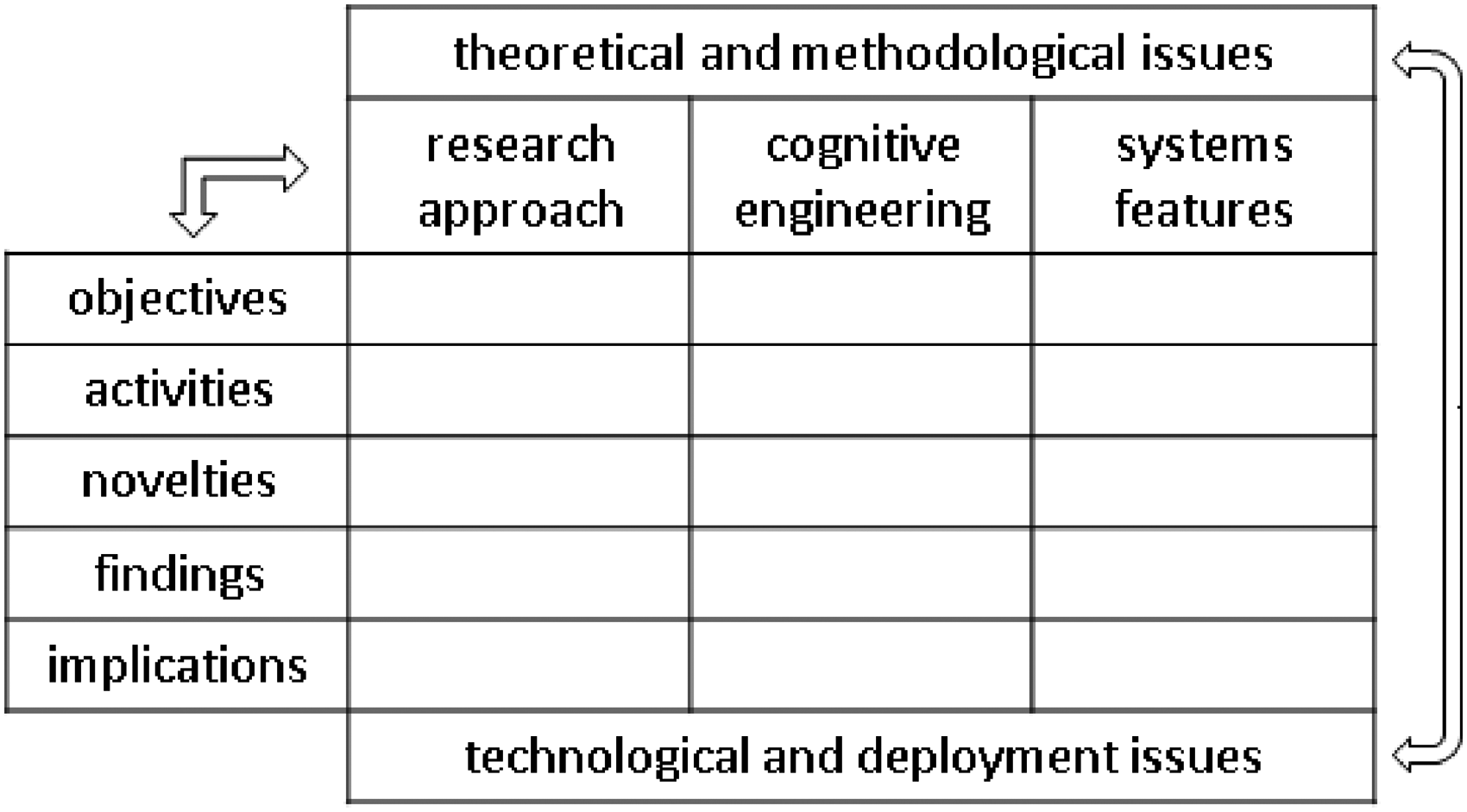
The logical scheme of summarizing the contributions of the accepted papers.
Contribution of the Theoretical and Methodological Submissions
Novel theoretical fundamentals, conceptual frameworks, working principles, research methods, or application-independent tools are useful enablers provided by the maturing discipline of cognitive engineering. The papers belonging to this group report on such novelties. The systematic methodological thinking present in these papers is a characteristic ingredient of forwarding preconceptions of research to scrutinized practical solutions.
The first paper in this group is titled “
Cognitive visualization is an important aspect of cognitive engineering. The paper, “
Many intellectualized cyber-physical-social-human systems include human operators as essential agents assisting with different aspects of interpretation of information, monitoring states of problem-solving, and critical decision-making across the system to achieve the desired goal. This is the thematic context of the next paper included in the theoretical and methodological group. Submitted by Joseph Distefano, Souma Chowdhury, and Ehsan Esfahani, this paper is titled “
Also, human-machine interaction remains an important research subject and a critical productivity factor even in the case of intellectualized cyber-physical-social-human systems. Using AI technologies and approaches, such as large language models, is getting more dominant in the development of such systems. However, if such means are integrated into the interaction subsystem of an I-CPSH, then the effectiveness of prompting becomes an important issue. Prompt engineering, a valuable domain within both CEoSs and generative artificial intelligence (genAI), can enhance the functionality of pre-trained models by introducing task-specific hints. These provide the underpinning and significance of the work of Simon Wilbers, Leonardo Espinosa-Leal, Ron van de Sand, and Jörg Reiff-Stephan. The last paper belonging to this group, titled “
Contribution of the Technological and Deployment Submissions
This group of papers deals with topics related to using technologies to realize the goals of cognitive engineering, investigations of technologies in the context of cyber-physical-social-human systems, and specific design and intellectualization issues of such systems. They all reflect the hastening pace of technological advances and changes. The use of the adjective ‘technological’ implies that these contributions target solving specific problems of system development or offer technological skills to solve problems of everyday life.
In the paper titled “
Andrii Berezovskyi, Leonid Mokrushin, Fredrik Asplund, Jad El-Khoury, Rafia Inam, and Elena Fersman contribution to this special issue has been submitted under the title “
The next paper has been submitted by Oleg Sychev, Andrey Sidor, and Pavel Karpenko, and presented under the title “
The penultimate paper in this group establishes a cognitive relationship between a particular implementation of I-CPSH systems and educating academic students to deploy this. Titled “
From the technological and deployment submissions, one more paper has been accepted which addresses the recently recognized new issue of individualization in intelligent tutoring systems (ITS). Titled “
Some Reflections, Concluding Remarks, and Prospects
The four sections following the Introduction attempted to provide a concise overview of (i) the advancement of the paradigm of cyber-physical systems, (ii) the intertwining trends of intellectualization, socialization, and personalization, (iii) the essence and role of cognitive engineering in the context of problem-solving and system behaviour, and (iv) the novel research approaches, models, and designs reported in the literature. Due to space limitations, neither these interest domain nor their interactions could receive a broader and deeper discussion. The readers are advised to refer to the large number of scholarly and professional publications that appeared in the last decade. Despite their evidential incompleteness, these sections suggest that we live in the age of rapidly shifting system paradigms, in particular in the context of the proliferation of cyber-physical systems. This non-natural phenomenon is an indicator of a multi-faceted progression but also a source of different uncertainties.
It has been found that the recent professional literature has not paid proper attention to a comprehensive analysis of the general (supradisciplinary) developments and their implications. Only a limited number of publications have dealt with the effects of scientific convergence and divergence, technological integration, and functional complexification. At the same time, an increased demand for transdisciplinary knowledge has emerged as a consequence of these trends. On the other hand, many publications have concentrated on intellectualization, socialization, and personalization as distinct conceptual, technological, and functional domains, rather than as intertwining trends. The authors propose to regard them as such because of their mutual interactions, especially in the context of explanation and development of intellectualized cyber-physical-social-human systems.
Cognitive engineering is inseparable from the development and implementation of I-CPSH systems because it covers the whole lifecycle of such systems. This is a maturing domain of interest that includes both explorative and constructive activities. It needs more attention to develop the general principles of these two sets of activities. The principles should harmonize with that of cognitive science and should facilitate the development of system cognition (intellect). Cognitive engineering requires transdisciplinary knowledge that in turn can be generated in supradisciplinary projects. It seems to be a current challenge how to operationalize supradisciplinary research projects in and for I-CPSH systems that cannot be treated in the traditional reductionist manner. Further studies are needed to support the development of transdisciplinary research models and for planning supradisciplinary research designs for complicated problematics associated with intellectualization, socialization, and personalization of I-CPSH systems.
The main contribution of the contributed papers can be summarized as follows: The authors (i) identified different important challenges of cognitive engineering of systems, (ii) explored knowledge for better insights, and (iii) proposed attention-deserving solutions for related specific problems. A part of these solutions are genuinely new, while others are based on adaptation and incremental further development of approaches that have been published in the literature. It was also interesting to see that the papers placed cognitive design and engineering into different roles in the context of intellectualized cyber-physical-social-human systems. Their generalized objectives were (i) synergetic inclusion of human agents and stakeholders in cyber-physical processes, (ii) integration of programmed autonomous and intuitive human decision-making processes, (iii) comprehensive functional modelling and visual representation of human and system activities, and (iv) optimization of the effectiveness for human-system interaction and performance. Realization of these general objectives needed transdisciplinary thinking and cross-disciplinary knowledge synthesis. Interestingly, the presented works were based on traditional research methods, rather than on transdisciplinary knowledge generation and supradisciplinary organization. While the lack of the latter can be explained by the moderate scales of the conducted project, the former issue would need follow-up research on its own.
Footnotes
Acknowledgements
In the end, let us conclude this extended editorial with some personal words. The responsible editor would like to take this opportunity to thank all authors for submitting their work to this Special Issue of the Journal of Integrated Design and Process Science on “Research to support cognitive engineering of cyber-physical-social-human systems”. It is hoped that our readership will appreciate their contributions which are new limit-stones on the diverging but also converging roads of cognitive engineering of cyber-physical-social-human systems. Due to their commitment to high-quality work, keeping deadlines, striving for true novelties, and being open to communication in the preparation process, it was a pleasure to work with them. The contributions selected for publication nicely complement one another while insisting on the proposed focus. Similar gratefulness and appreciation must go to the peer reviewers who accepted our invitations and supported the work of the authors not only with critical assessments but also with clear and constructive comments. It was not the easiest task to find them but we have managed to take many outstanding experts on board. Their professionalism, critical opinion forming, and useful recommendations cannot be overpraised. Last but not least, the publisher must also be appreciated for taking a key role in advertising the special issue and creating a submission channel dedicated to the special issue and its authors. The author acknowledges and gratefully thanks for the technical support received from Dr. Fatima-Zahra Abou Eddahab-Burke, Faculty of Technology, Policy and Management, Delft University of Technology, Delft, the Netherlands.
Declaration of Conflicting Interests
The author declared no potential conflicts of interest with respect to the research, authorship, and/or publication of this article.
Funding
The author received no financial support for the research, authorship, and/or publication of this article.