




Abstract
Species-dependent differences in relative incidence of spontaneous variations and malformations should be considered in the assessment of the translational value of reproductive and developmental safety assessments. The objective of this evaluation was to compare litter parameters and the frequency of external, visceral, and skeletal malformations and variations across species in the Sprague-Dawley rat, New Zealand White rabbit, and Göttingen minipig and to determine whether notable differences exist. Pregnant female rats (n = 824), rabbits (n = 540), and minipigs (n = 70) from vehicle control groups were included in the analysis, equating to 10,749 rat, 5,073 rabbit, and 378 pig fetuses collected at term by cesarean delivery. Preimplantation loss was more frequent than postimplantation loss in the rat and rabbit, whereas the opposite was observed in the minipig. Several external and visceral malformations and variations such as domed head, bent tail, abdominal edema, and anal atresia were observed in all 3 species. Visceral malformations of the heart and major blood vessels were remarkably more frequent in the minipig and rabbit, respectively; ventricular and atrium septum defects were observed in 1.9% and 2.1%, respectively, for the minipig fetuses, whereas they were observed in equal or less than 0.02% among the rat and rabbit fetuses evaluated in this study. Understanding species-dependent differences in spontaneous variations and malformations can be useful for the interpretation of embryo–fetal development study results. The current analysis identified relevant differences between commonly used species in reproductive toxicology with potential implications for data assessment.
Keywords
Introduction
In most toxicology studies, data comparisons between groups administered test article and the control group within the same study are essential in the evaluation of toxicity and in the overall assessment of the toxicological potential of the test item. However, the main end points investigated in embryo–fetal development (EFD) toxicity studies are minor and major fetal abnormalities (including variations and malformations) that can be rare events that may not occur in the concurrent control group of interest in a given EFD study. In these cases, the available historical control data are pivotal to allow for adequate comparison and proper assessment. 1,2
Current guidelines from the International Conference on Harmonisation and Organisation for Economic Co-operation and Development (OECD) require the conduct of EFD studies in both a rodent and nonrodent species. Traditionally, the rat and rabbit have been used as both species have been shown to be useful to identify and characterize the teratogenic potential of investigative drugs. Both present many advantages, such as litter size, gestation period length, as well as the availability of historical control data from different laboratories. In 1998, the minipig was included in OECD guideline 409 as an alternative nonrodent species in repeat-dose toxicity studies and has been increasingly used in cases where the rabbit is not suitable (eg, different drug metabolism and pharmacokinetic considerations, antibiotics that can be problematic when investigated in rabbits). The minipig presents numerous logistical and ethical advantages over other nonrodent species such as dogs and nonhuman primates (NHP) 3,4 ; such as regarding sexual maturation and gestation of the minipig occurs much faster than that of NHP and the minipig litter size is on average 4 to 6 piglets, whereas the NHP typically only has 1 offspring per litter. Although the beagle dog does not present the same litter size and gestation length limitations as the NHP, its use is limited by seasonal breeding, which hinders the availability of sexual mature animals for reproductive and developmental toxicology studies. In addition, there is an increasing social opinion to reduce the use of the dog in research as it is often viewed as a companion animal. 5,6 Finally, the pig has also been shown to be susceptible to the teratogenicity of numerous established developmental toxicants, including ethanol, thalidomide, and hydroxyurea, 7 demonstrating that it can be considered as an alternative nonrodent test system for EFD studies.
Historical control data from reproductive and developmental toxicity studies in Sprague-Dawley (SD) rats and New Zealand White (NZW) rabbits as well as the spontaneous incidence of congenital malformations and variations in the Göttingen minipig have been previously reported. 6,8 -11 The aim of this retrospective analysis is to compare the spontaneous incidence of external, visceral, and skeletal malformations and variations in these 3 species within our laboratories in order to aid in the understanding and interpretation of interspecies developmental toxicity results.
Materials and Methods
Control data were compiled and evaluated from 40 SD rat, 26 NZW rabbit, and 4 Göttingen minipig EFD toxicity studies conducted in our facilities located in France (Citoxlab France, Evreux, France), Canada (Citoxlab North America, Laval, Canada), and Denmark (Citoxlab Denmark, Ejby, Denmark) between 2009 and 2016. Details of these studies are presented in Table 1. Briefly, pregnant dams received vehicle or control article throughout the period of organogenesis of the major organs. Cesarean deliveries were performed on pregnant dams at the end of gestation, prior to parturition. Ovaries and uterine contents were examined to assess maternal performance and uterine observations. Fetuses were examined for external and internal malformations and variations prior to fixation. They were then fixed and stained for skeletal evaluations. The terminology used for fetal external, internal, and skeletal findings was mostly based on Makris et al. 12 For simplicity, the term “anomalies’’ was used throughout this publication to refer to both variations and malformations of a given type. Fetal incidence was defined as the number of fetuses presenting an anomaly across all studies over the number of fetuses evaluated across all studies and was expressed as a percentage. Litter incidence was defined in a similar manner. Due to the generally limited incidence of all anomalies, only anomalies of interest were selected based on their overall frequency and/or species-specific difference in incidence and are presented with the exception of the visceral anomalies of the heart and major blood vessels that are all integrally reported. External and visceral anomalies, as well as skeletal malformations from data sets for a given species were pooled for interspecies analysis. Selected skeletal variations in SD rat and NZW rabbit fetuses were observed in incidence, which allowed for a comparison between sites and animal providers. In instances when variations in assessment method were noted between sites, the data were reported integrally in the site comparison table for the individual specie but were excluded from the interspecies comparison to avoid bias. As a detailed description and comparison of the methods of assessment between sites and species is beyond the scope of this manuscript, the small difference in these methods is a limitation of this analysis.
Summary of Study Designs and Methods.
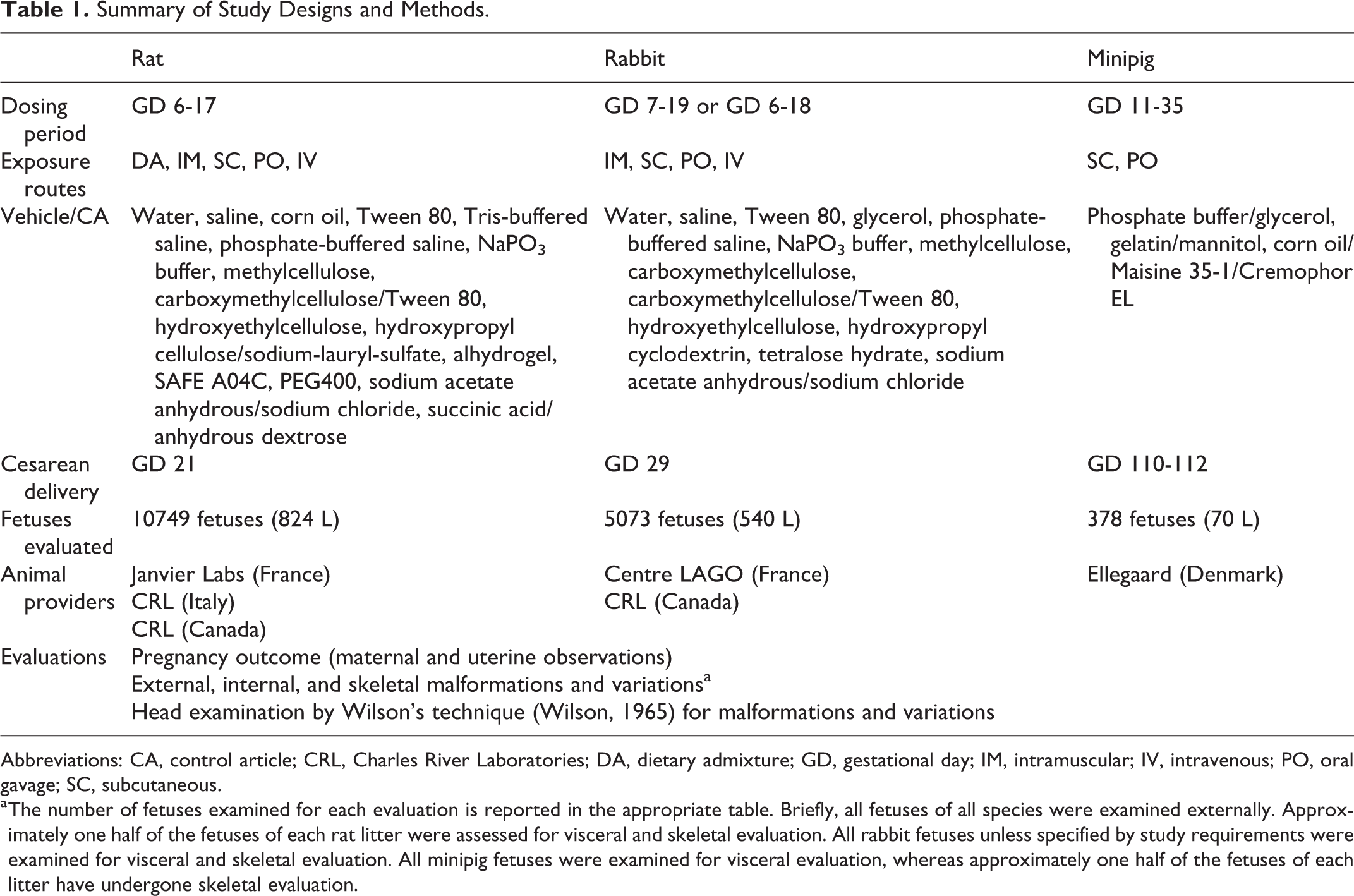
Abbreviations: CA, control article; CRL, Charles River Laboratories; DA, dietary admixture; GD, gestational day; IM, intramuscular; IV, intravenous; PO, oral gavage; SC, subcutaneous.
a The number of fetuses examined for each evaluation is reported in the appropriate table. Briefly, all fetuses of all species were examined externally. Approximately one half of the fetuses of each rat litter were assessed for visceral and skeletal evaluation. All rabbit fetuses unless specified by study requirements were examined for visceral and skeletal evaluation. All minipig fetuses were examined for visceral evaluation, whereas approximately one half of the fetuses of each litter have undergone skeletal evaluation.
Care and use of animals on the analyzed studies were in accordance with principles outlined by the appropriate animal care council or national authorities.
Results and Discussion
Maternal and Uterine Observations
Pregnancy rates and survival (Table 2) were similar across species; pregnancy rates varied between 94.6% and 95.2%, whereas pregnancy survival was between 93.4% and 100.0%. Pre- and postimplantation losses were comparable between the SD rat and NZW rabbit, with the percentage of preimplantation loss was approximately twice more frequent than postimplantation loss in the rat (11.2% and 5.2%, respectively) and in the rabbit (13.3% and 7.4%, respectively). Similar findings in these 2 species were observed and reported by other groups. 8 -11 In contrast, the incidence of preimplantation loss was lower than that of postimplantation loss observed in the Göttingen minipig (7.6% and 13.0%, respectively).
Interspecies Comparison of Maternal and Uterine Observations.
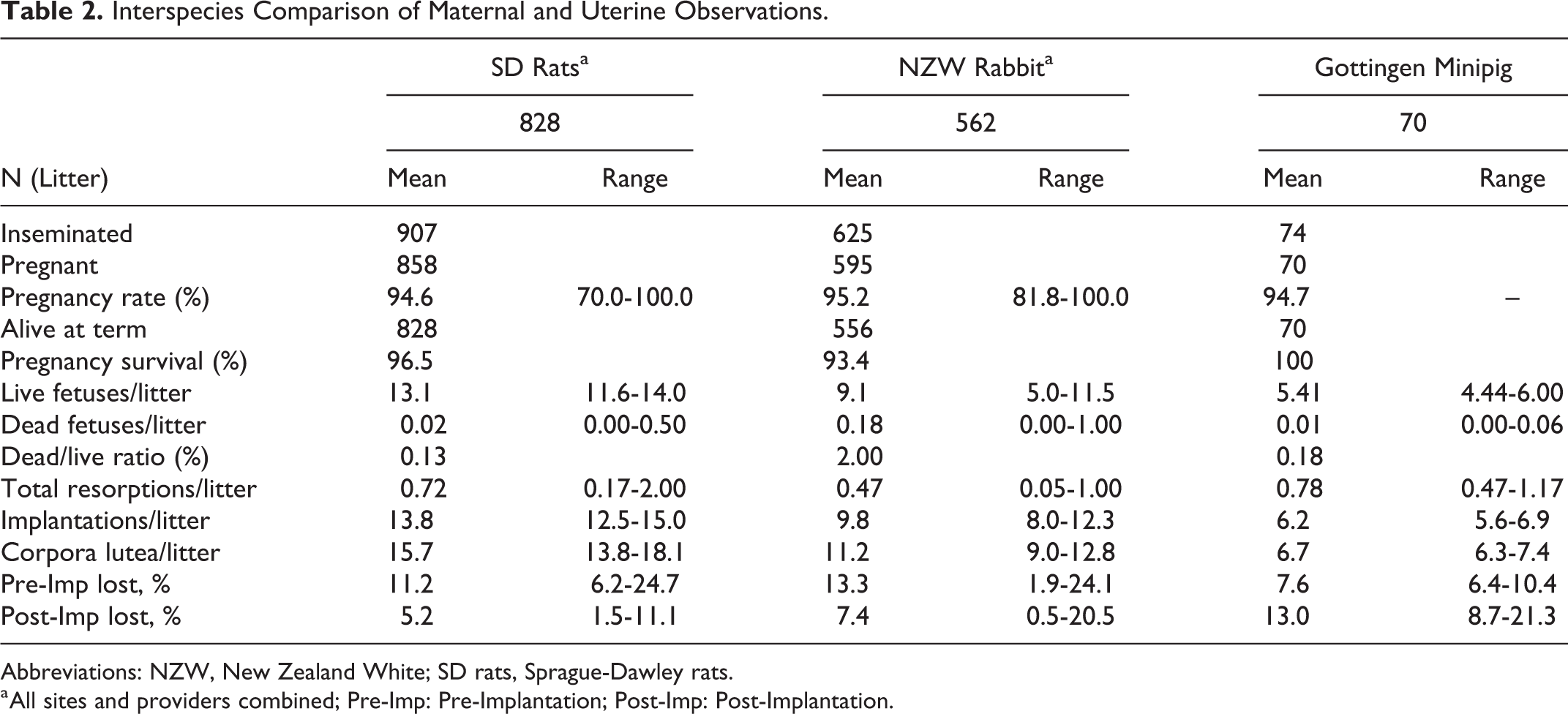
Abbreviations: NZW, New Zealand White; SD rats, Sprague-Dawley rats.
a All sites and providers combined; Pre-Imp: Pre-Implantation; Post-Imp: Post-Implantation.
External and Visceral Anomalies
Interspecies comparison of external variations and malformations are presented in Table 3; domed head, bent tail, and anal atresia were seen consistently across all species investigated. Other anomalies such as malrotated limb, short or small tail, cleft palate, omphalocele, and umbilical hernia were observed only in the rat and rabbit in the current evaluation, although at very low fetal incidence ranging from 0.01% to 0.05% and 0.04% to 0.06% in the rat and rabbit, respectively, which was consistent with previously reported data. 8,9 The number of minipig fetuses included in this analysis may have been insufficient to identify very low incidence malformations. Moreover, these anomalies were previously reported by our group at very low incidence in the minipig in a separate data set. 6
Summary of Selected External Variations and Malformations Observed in the SD Rat, NZW Rabbit and Göttingen Minipig Fetuses.
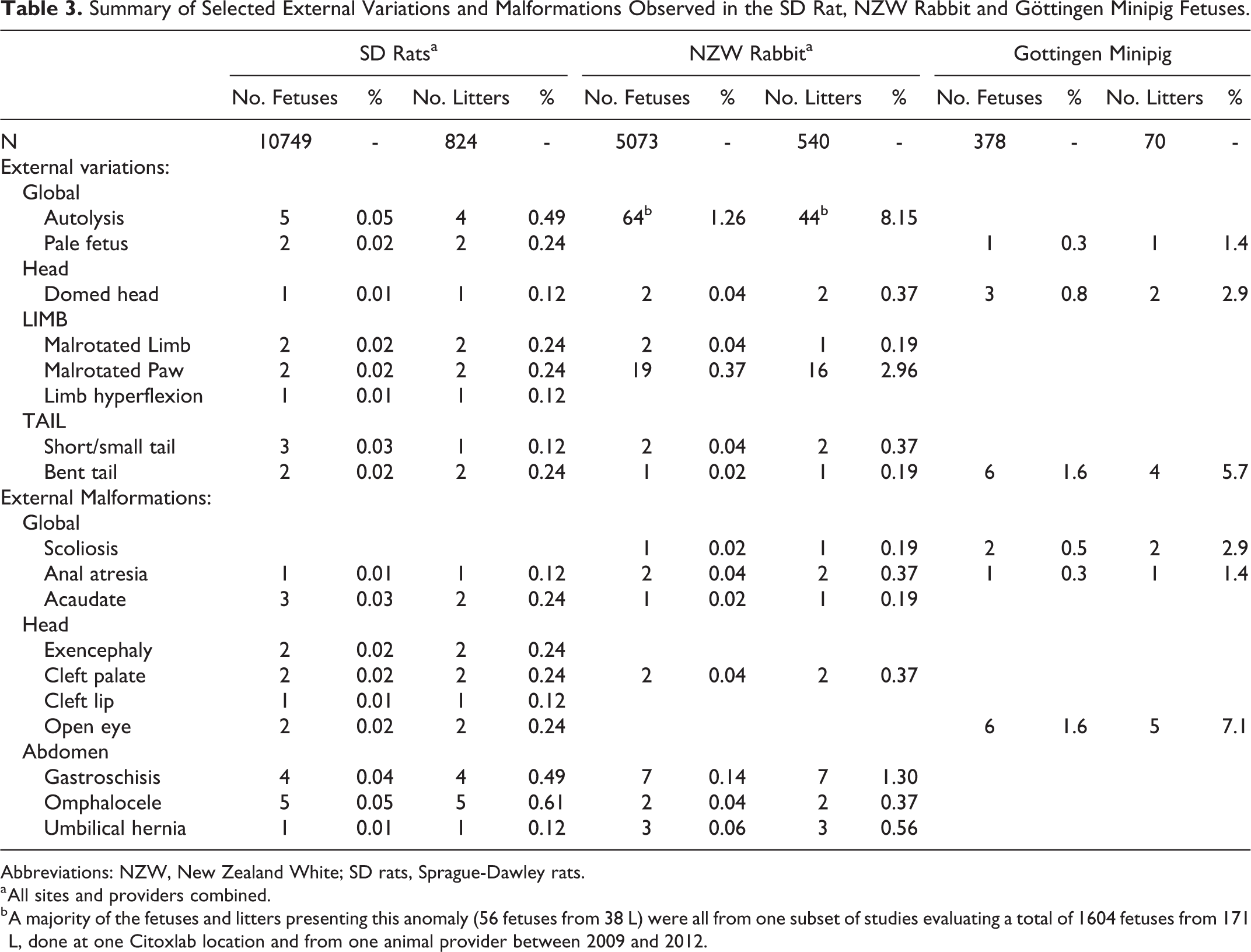
Abbreviations: NZW, New Zealand White; SD rats, Sprague-Dawley rats.
a All sites and providers combined.
b A majority of the fetuses and litters presenting this anomaly (56 fetuses from 38 L) were all from one subset of studies evaluating a total of 1604 fetuses from 171 L, done at one Citoxlab location and from one animal provider between 2009 and 2012.
Interspecies comparison of visceral variations and malformations with the exceptions of anomalies of the heart and major blood vessels is presented in Table 4; discoloration of the lung, spleen, and/or liver were observed across all species at incidences varying from 0.04% to 0.63% in fetuses. Whereas fluid-filled abdomen (ascites) was observed in all 3 species, thoracic cavity fluid accumulation (pleural effusion) was only observed in the rabbit and minipig fetuses. Fused kidneys were observed in 0.06%, 0.02%, and 0.79% of fetuses and absence of brain was observed in 0.02%, 0.02%, and 0.26% of the rat, rabbit, and minipig fetuses, respectively. Some visceral malformations such as an absent kidney or fused and/or absent ureters were only observed in the rat and rabbit fetuses in these data sets, although infrequently with an incidence lower than 0.12%. However, as discussed earlier, this apparent species difference could be due to the limitation of this analysis associated with the sample size of the minipig data set that may not capture low incidence malformations. Dilated renal pelvis and dilated ureter were uniquely observed in both the rat and rabbit fetuses, with an incidence ranging from 0.12% to 1.17%, consistent with incidences observed in other published historical control data sets. 8,9,11 These results suggest that these variations are substantially more rare in the minipig than in these 2 species. In contrast, malpositioned testis was frequently observed in minipig fetuses (5.80%), whereas this observation was not seen in any of the rat and rabbit fetuses examined in this study; however, it has been observed by other groups although at low incidences ranging from 0.07% to 0.47%. 8,9,11
Summary of Selected Visceral Variations and Malformations Observed in the SD Rat, NZW Rabbit and Göttingen Minipig Fetuses (With the Exception of Findings of the Heart and Major Blood Vessels).
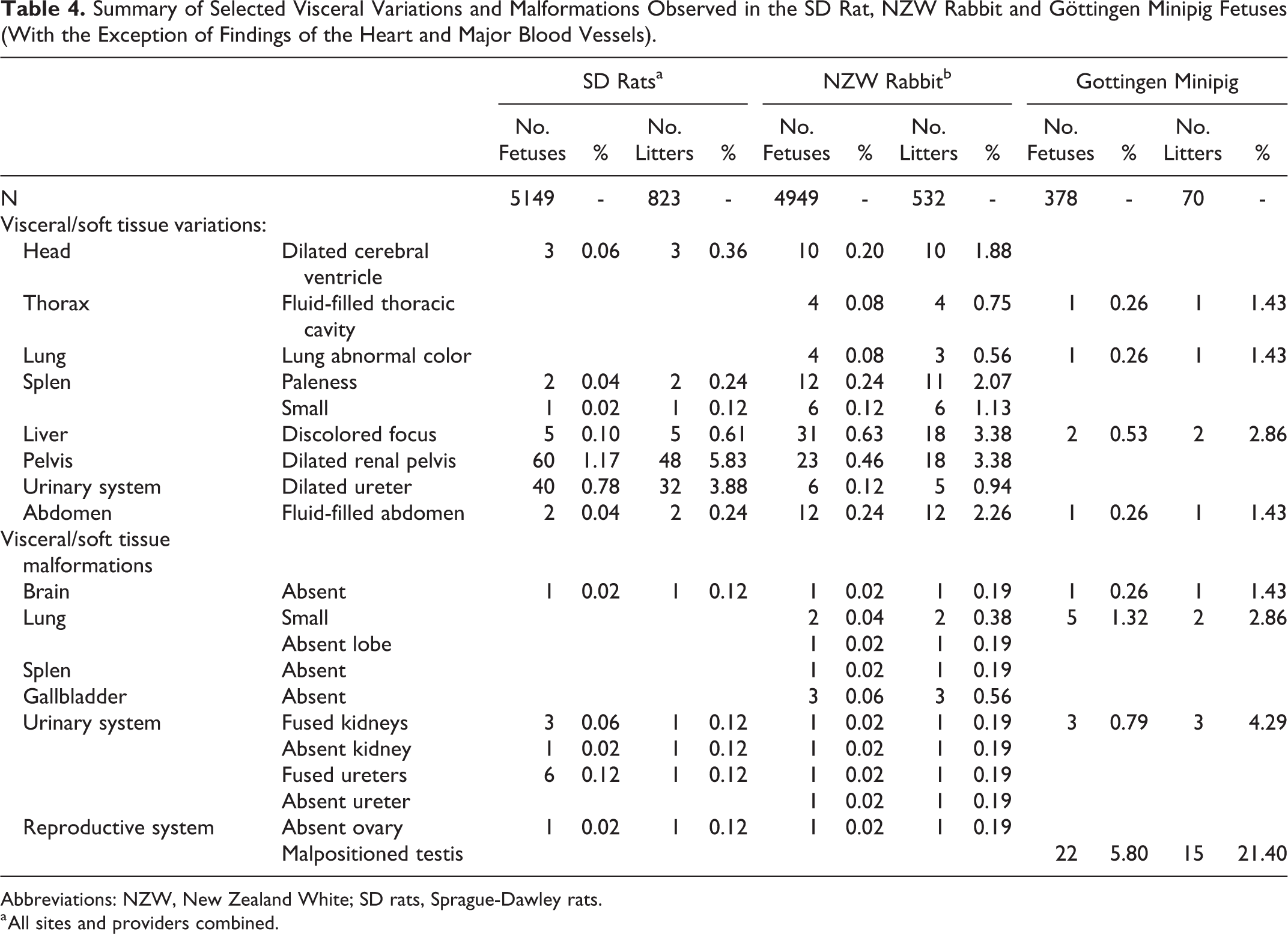
Abbreviations: NZW, New Zealand White; SD rats, Sprague-Dawley rats.
a All sites and providers combined.
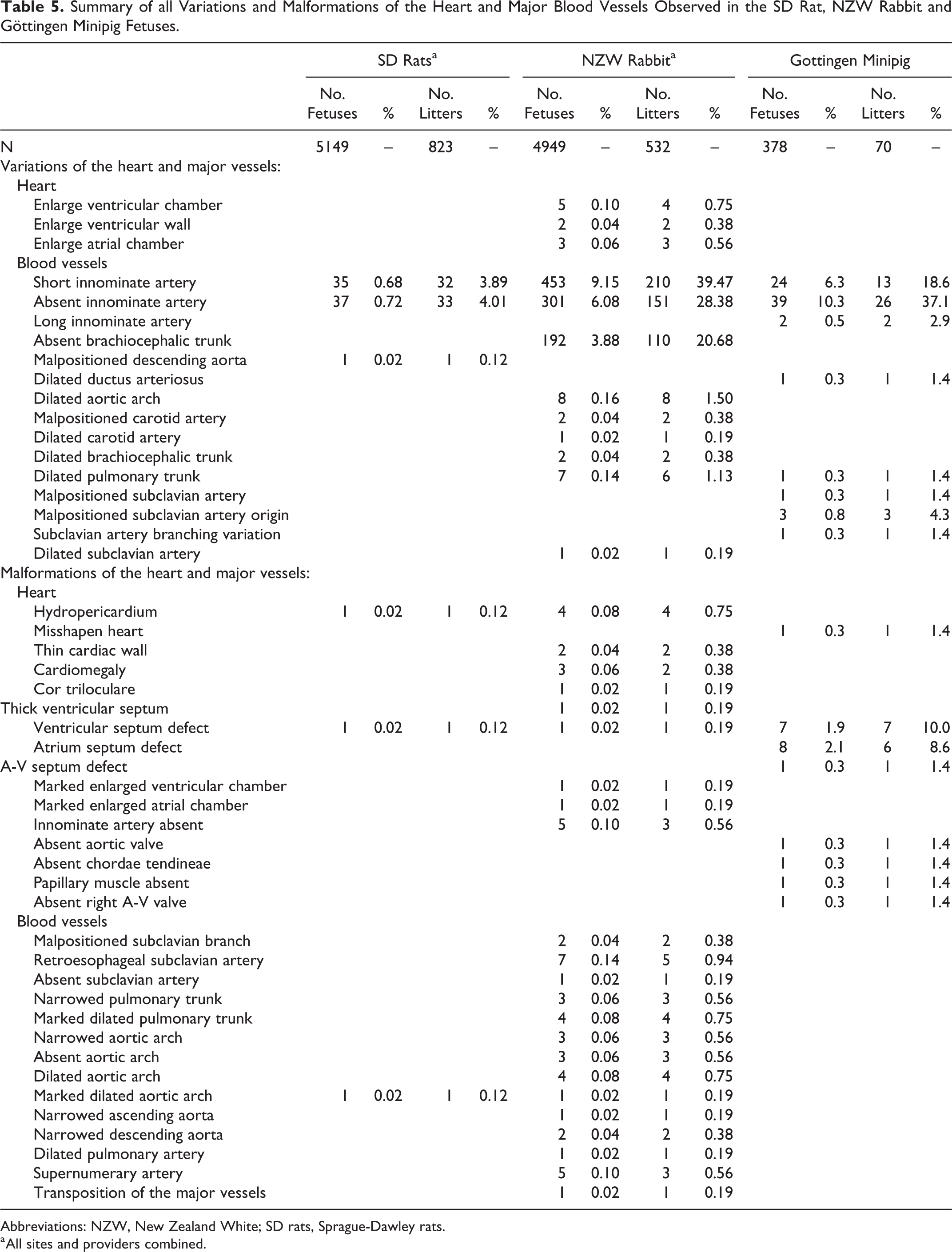
In addition, the minipig fetuses presented the highest spontaneous incidence of heart anomalies and the rabbit fetuses presented the most incidence and diversity of anomalies of the major blood vessels. Notably, all septum defects and malformation of the heart valves were more prevalent in the minipig; ventricular septum, atrium septum, and atrioventricular septum defects were observed, respectively, in 1.9%, 2.1%, and 0.3% of the minipig fetuses investigated in this study, which is consistent with humans, as congenital heart defects are the most common types of birth defects in humans and occur in approximately 1% of births. 13,14 In addition, the difference in septum defects incidence may be partly due to the difference in organ size between the species. The atrium septum defect incidences in the rat and rabbit fetuses observed in this study are consistent with that of previous reports. However, considerable variability in the previously reported incidence of ventricular septum defects has been observed between the different laboratories and depending on the year of the studies. 8 -10 An integrated list of all anomalies of the heart and vessels observed in the 3 species evaluated in the current analysis is presented in Table 5.
Summary of all Variations and Malformations of the Heart and Major Blood Vessels Observed in the SD Rat, NZW Rabbit and Göttingen Minipig Fetuses.
Abbreviations: NZW, New Zealand White; SD rats, Sprague-Dawley rats.
a All sites and providers combined.
Skeletal Anomalies
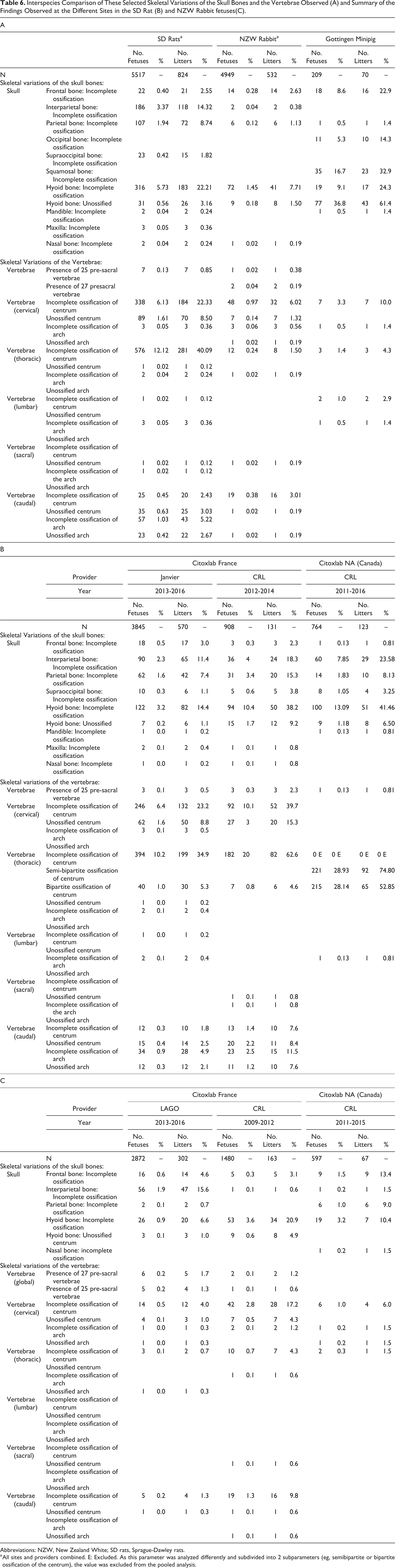
Incomplete ossification of the hyoid bone was the most frequent skeletal variation of the skull bone observed in both the rat and rabbit fetuses (incidence of 5.73% and 1.45%, respectively; Table 6A). In contrast, although incomplete ossification of the hyoid bone was also observed in 9.1% of the minipig fetuses, a complete unossification was more frequently noted (36.8% of the fetuses).
Interspecies Comparison of These Selected Skeletal Variations of the Skull Bones and the Vertebrae Observed (A) and Summary of the Findings Observed at the Different Sites in the SD Rat (B) and NZW Rabbit fetuses(C).
Abbreviations: NZW, New Zealand White; SD rats, Sprague-Dawley rats.
a All sites and providers combined. E: Excluded. As this parameter was analyzed differently and subdivided into 2 subparameters (eg, semibipartite or bipartite ossification of the centrum), the value was excluded from the pooled analysis.
Incomplete ossification of the frontal, occipital, and squamosal bones of the skull were variations frequently observed in the minipig (8.6%, 5.3%, and 16.7%, respectively), whereas this frontal bone variation was observed in less than 1% of both rabbit and rat fetuses and the occipital and squamosal bone findings were not observed in any of the rabbit or rat fetuses examined in this study.
In addition, incomplete ossification of the interparietal and parietal bones of the skull was frequently observed in rat fetuses (3.37% and 1.94%, respectively) as compared to the rabbit (0.04% and 0.12%, respectively) and minipig fetuses (0.0% and 0.5%, respectively).
In all 3 species, a high incidence of incomplete ossification of the centrum and the arch of the vertebrae was observed for both the cervical and thoracic vertebrae, with the highest incidences observed in the rat. In addition, a high incidence of spontaneous skeletal variation of the caudal vertebrae was observed in rat and rabbit fetuses, but not in the minipigs.
Assessments of the potential variability across sites and across animals providers were performed for selected skeletal variations in SD rat and NZW rabbit fetuses and are presented in Table 6B and C. Although minor differences in the incidence of some parameters were observed between sites, which could be attributed to slight variability in the assessment method, the most common findings and general trends described previously were consistently observed across sites and animal providers.
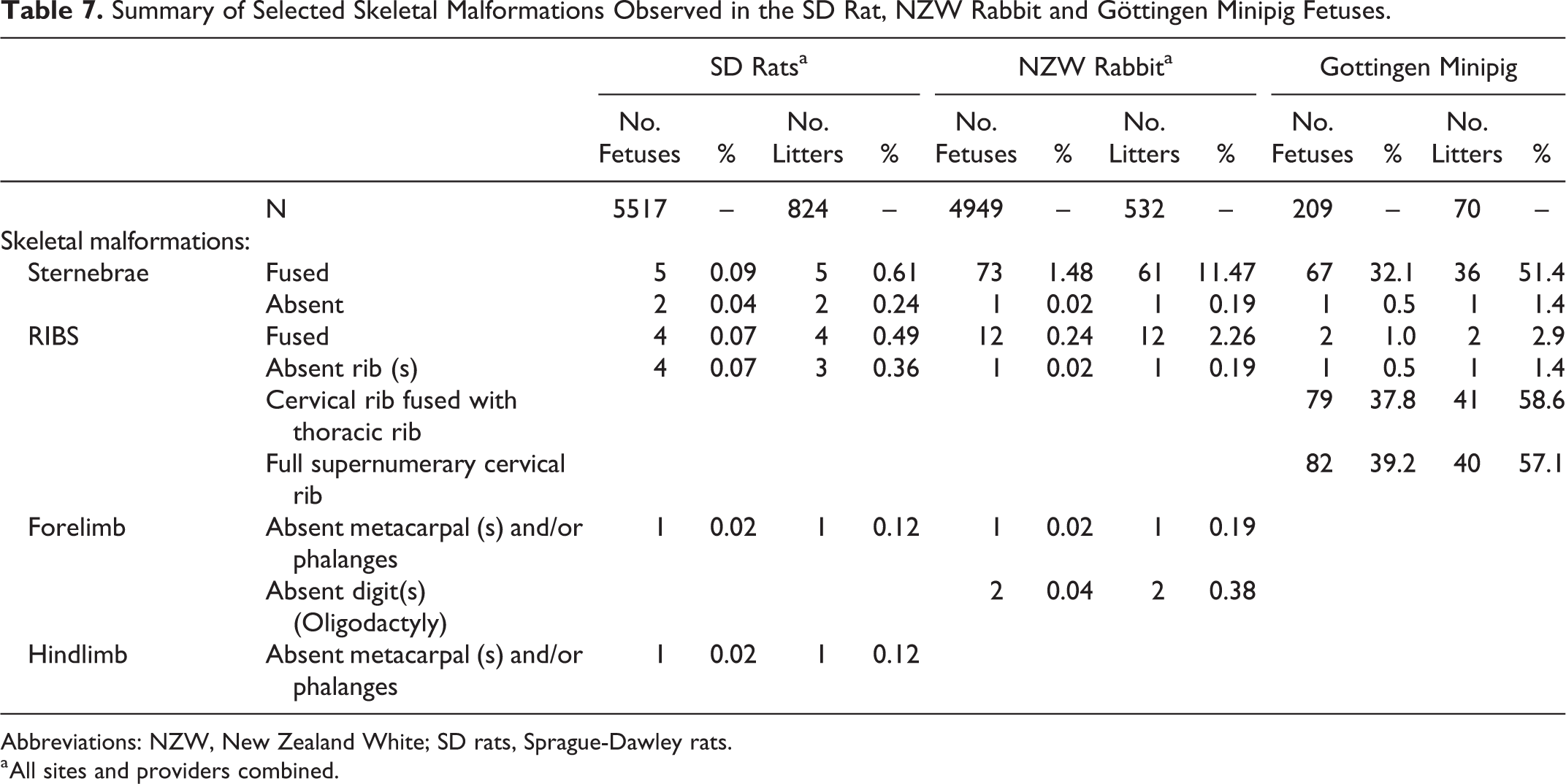
Fused or absent sternebrae and fused or absent ribs were observed in all 3 species, although the incidence of fused sternebrae was markedly increased in minipig fetuses compared to the rat and rabbit fetuses (32.1%, 0.09%, and 1.48%, respectively). Consistent with these results, the previously reported incidences of fused sternebrae for the rat and rabbit were between 0.03% to 0.06% and 0.05% to 2.92%, respectively. 8,9,11 Moreover, minipig fetuses frequently exhibited 2 malformations of the ribs that were not observed in the rat and rabbit fetuses; a cervical rib that is fused to the thoracic rib and a full supernumerary cervical rib were observed solely in the minipig fetus, with an incidence of 37.8% and 39.2%, respectively (Table 7).
Summary of Selected Skeletal Malformations Observed in the SD Rat, NZW Rabbit and Göttingen Minipig Fetuses.
Abbreviations: NZW, New Zealand White; SD rats, Sprague-Dawley rats.
a All sites and providers combined.
Conclusion
Congenital abnormalities are caused by various contributing factors, and the etiology for interspecies difference in the occurrence of these malformations remains mostly unknown. Historical control data from rat, rabbit, and minipig prenatal developmental toxicity studies performed at 3 different locations between 2009 and 2016 were summarized and analyzed for interspecies differences and similarities in incidences of spontaneous fetal abnormalities. Globally, the minipig exhibited a number of notable differences compared to the rat and rabbit fetuses, which should be taken into consideration when analyzing toxicity data from EFD studies. Species differences in spontaneous malformations highlight potential translational considerations during EFD study interpretation.
Footnotes
Author Contributions
France-Helene Paradis contributed to conception; acquisition, analysis, and interpretation; drafted manuscript; gave final approval; and agrees to be accountable for all aspects of work ensuring integrity and accuracy. Anne Marie Downey, Clémentine Pinêtre, Sisse Ellemann-Laursen, Andy Makin, Katherine Hill, Pramila Singh, Judit Hargitai, Roy Forster, Robert Tavcar, and Francine Beaudry contributed to analysis; critically revised manuscript; and gave final approval. Simon Authier contributed to conception and design; acquisition, analysis, and interpretation; critically revised manuscript; gave final approval; and agrees to be accountable for all aspects of work ensuring integrity and accuracy.
Declaration of Conflicting Interests
The author(s) declared no potential conflicts of interest with respect to the research, authorship, and/or publication of this article.
Funding
The author(s) received no financial support for the research, authorship, and/or publication of this article.
