




Abstract
We cast our lens on intersectional networks of identity negotiated by young children in immigrant families. Although some scholars discuss identity construction, we reference identity negotiation to capture the active, strategic, and agential work that we witnessed in our study. We begin by synthesizing relevant research on children’s identity negotiation. We then explore theoretical frames that form the basis for our claims related to intersectional identity negotiation. These 3-year longitudinal collective case studies of Carlos and Liz involved observations, spoken data, and student-created artifacts (e.g., writing samples, maps, photographs, drawings). Data sources were designed to highlight literacy practices and identity construction across time. The cases of Carlos and Liz reveal intersectional networks of identity negotiation that entail positionings relative to various dimensions of self including language, gender, technological practices, nationality, and race. We maintain that attending to the identity negotiations of children in immigrant families reveals sophisticated, agential, and strategic negotiations on the part of children.
When asked to draw a picture of herself, Liz—a 6-year-old Korean American child—depicted and described herself as a “tomboy” with short hair and dull-colored clothing (see Figure 1).
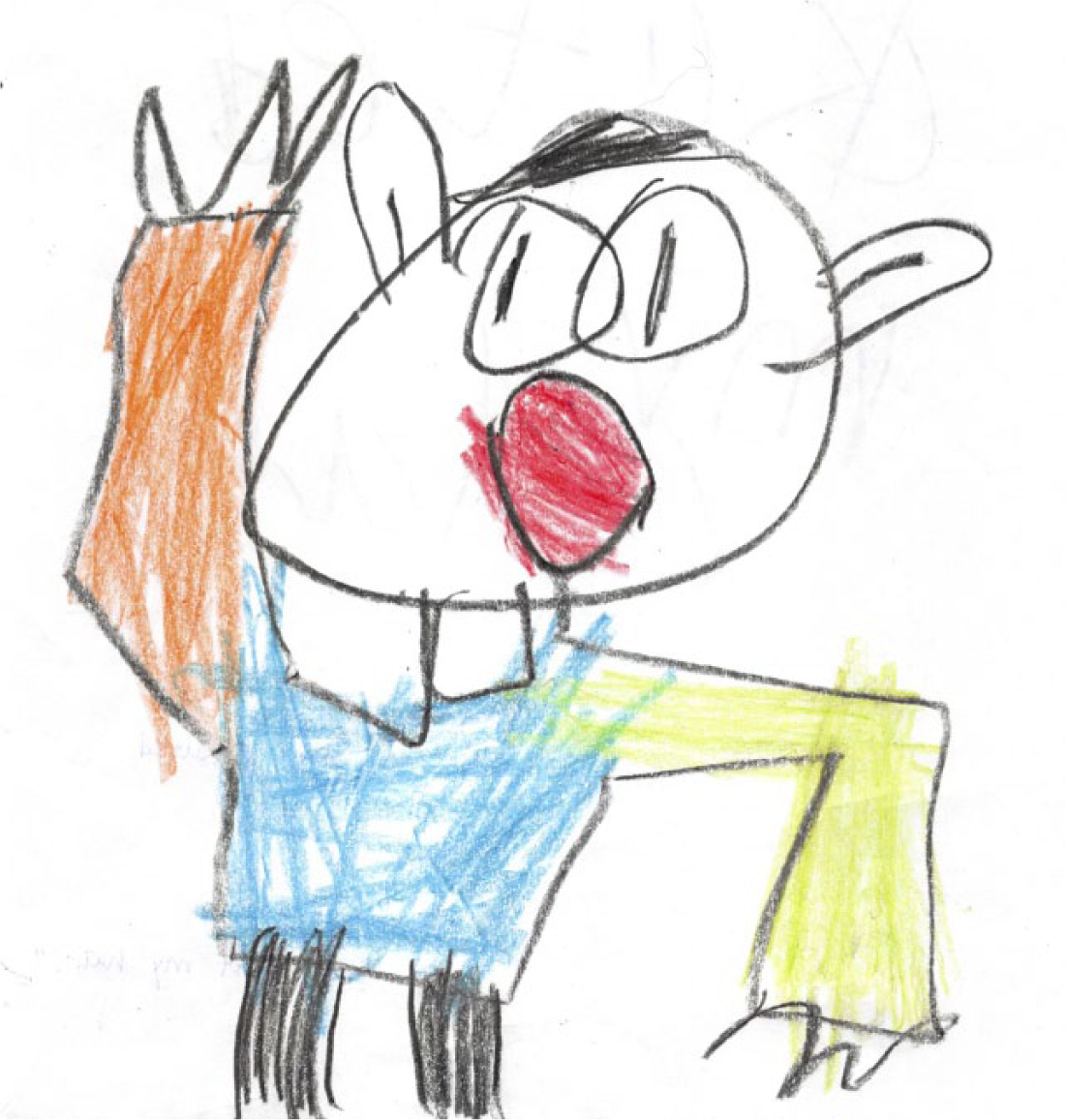
Liz at age 6.
At age 8, she presented herself practicing the traditional Korean martial art of Taekwondo and added markers of her other interests, including soccer, basketball, and playing the cello. She referenced the 2018 Winter Olympics that will be held in South Korea (see Figure 2).
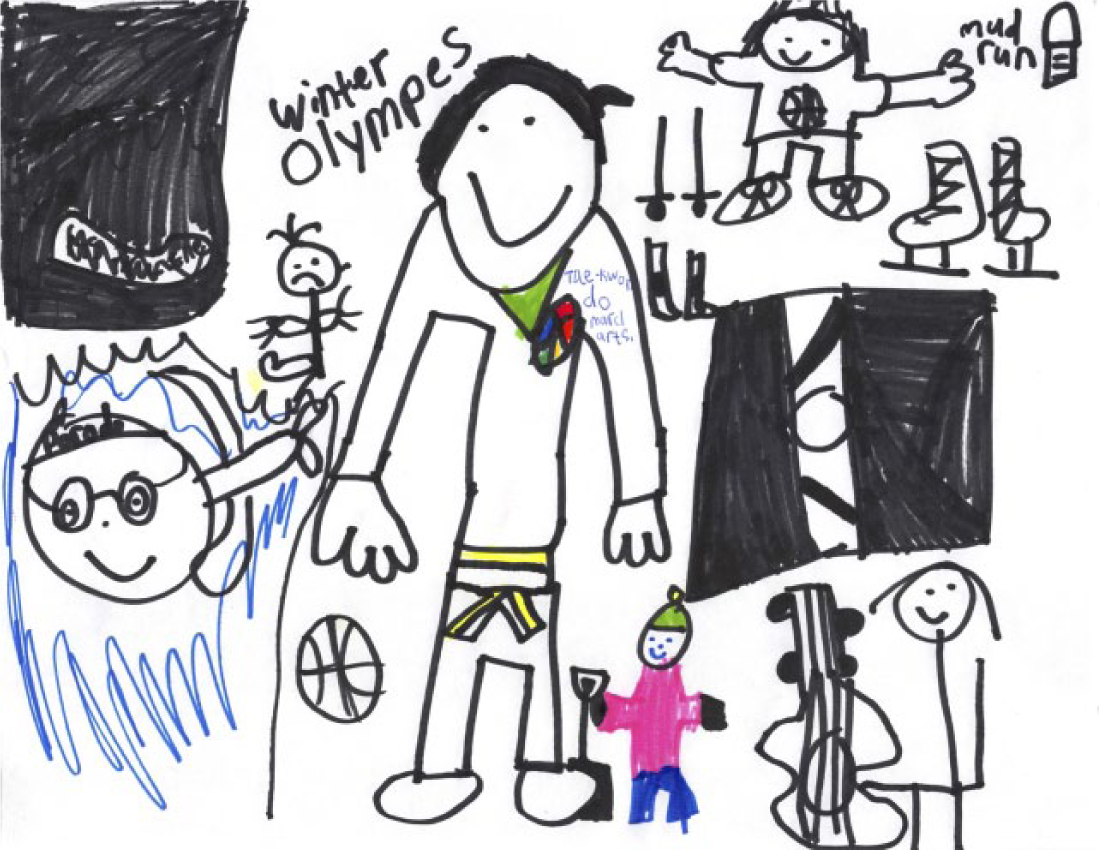
Liz at age 8.
Even as a young child, Liz’s self-portraits revealed multidimensional networks of self. Across the first 3 years of our longitudinal study, Liz claimed many selves as she situated herself within various spaces. The multidimensional networks of self enacted by young children in families that have immigrated to the United States are the focus of this article.
Although our study was originally designed to explore literacy practices and identity negotiation over time as the children moved from primary school through high school, we soon became intrigued by the intersectional identity negotiations exhibited by the young children in our sample. In this article, we ask the following questions:
How do young children in families that have immigrated to the United States negotiate identity as they move across home, school, and community spaces?
How do children use literacy, as well as other dimensions of self, to present themselves and negotiate ways of being and becoming?
Although the full longitudinal study includes 10 families, we focus on two of these children—Liz and Carlos—to present a detailed discussion of how each child negotiates, performs, and embodies multiple dimensions of identity. We argue that the experiences of children in families that have immigrated to the United States provide a unique lens into identity negotiation for young children (ages 6-9). These negotiations often involve literacy practices, which we define broadly as reading, writing, viewing, and listening to texts. Recognition of students’ literacy practices and accompanying literate identities is significant for teachers, as literacy practices involve the types of books students choose to read, the modalities that they access, the types of stories they engage with, and the reasons they have for interacting with texts. Although some researchers have investigated particular dimensions of identity for young children (Hawkins, 2005; Hemming & Madge, 2012; Norton, 1997; Orellana, Reynolds, Dorner, & Meza, 2003; Reese & Galimore, 2000; Rutland et al., 2012), researchers have yet to explore how young children engage with literacy as they negotiate multiple dimensions of identity (i.e., gender, biculturality, nationality, language, popular culture) across time.
In this study, we cast our lens on intersectional networks of identity negotiated by young children in families that have immigrated to the United States. Some scholars discuss identity construction. In contrast, we reference identity negotiation to capture the active, strategic, and agential work that we witness. While construction suggests the building of a stable entity, negotiation highlights the continual and evolving nature of becoming—identity as a process, not a thing. We begin by synthesizing relevant research on children’s identity negotiation. We then explore theoretical frames that form the basis for our claims related to intersectional identity negotiation. A methodological description of the research is followed by the cases of Carlos and Liz to explore how they negotiate intersectional identities as they engage in literacy practices across time.
Identity Negotiation and Young Children
In this article, we make three claims. First, in contrast to early discussions of identity, we contribute to an emerging body of research that demonstrates that identity negotiations begin long before children approach adolescence. Second, differences in nationality, language, race, gender, sexual orientation, culture, and a range of other dimensions of self are significant as young children (Grades 1-4) negotiate identities. Third, as will be addressed directly in the concluding sections of this article, we recognize identity negotiation as an issue of social justice for young children from communities that have historically been underserved in schools; thus, we recognize theories of intersectionality (Collins, 1998, 2000; King, 1988) as a significant theoretical lens for making sense of the identity negotiations of children from families that have recently immigrated to the United States. In short, identity negotiations can be recognized and supported, or they can be neglected and dismissed, leaving children to negotiate complex social spaces and expectations. The construct of intersectionality—while generally reserved for analyses of adolescents and adults (Collins, 1998, 2000; King, 1988)—is used in this article to explore how young children negotiate intersectional identities within power-laden contexts, including schools.
Although early scholars with an interest in identity (i.e., Erikson, 1968, 1993; Mead, 1934) highlighted identity as an individual and psychological entity that developed during adolescence, views have shifted. For example, Erikson (1968) describes children’s early relationships as affecting their eventual identity construction, while continuing to describe identity as formed during adolescence.
Over time, scholars (Corenblum, 2014; Spencer & Markstrom-Adams, 1990; Whaley, 1993) increasingly argue that experiences prior to adolescence are particularly critical for youth from diverse backgrounds. For example, Spencer and Markstrom-Adams (1990) describe “childhood precursors to identity formation” (p. 291) as being related to psychological constructs (i.e., self-recognition, self-awareness, locus of control) that involve “ethnic and racial identification, ethnic and racial preference, ethnic and racial attitudes, and reference group orientation” (p. 292).
Referencing precursors that affect African American children, Whaley (1993) argues that preschool children, school-age children, and adolescents have different levels of cultural awareness that “take on significant meaning” (p. 414) during adolescence. Whaley argues that it is only after “children acquire the knowledge that they are separate and stable entities” that they “engage in reflected appraisals and social comparisons about their self in relation to others” (Whaley, 1993, p. 416). More recently, Corenblum (2014) maintains that First Nations children develop strong racial and ethnic identities starting around age 7.
Solid lines no longer frame adolescence as the critical period for identity negotiation. For example, Rutland and his colleagues (2012) explore group identity and peer relationships for children ages 5 to 11 based on children’s perceptions of peer acceptance and friendship choices. As children grow older, they begin to consider and assume multiple social roles, contributing to their capacity for bicultural identity negotiation. Researchers increasingly explore additional dimensions of children’s identities, including religion (Hemming & Madge, 2012), gender (Norton, 1997), literacy (Compton-Lilly, 2014), and language (Bernhardt et al., 2006). These scholars generally focus on particular dimensions of identity rather than intersections among multiple dimensions. For example, Van Ausdale and Feagin (2001) document preschool children’s sophisticated understandings of race. They note that “white children and children of color use the racial-ethnic concepts widely found in the surrounding societal environment to interact and build and define the meaning of their own selves and the selves of others” (Van Ausdale & Feagin, 2001, p. 49).
Other scholars (Dyson & Genishi, 2005; Genishi & Dyson, 2009; Hawkins, 2004; McCarthey, 2001; Rogers & Elias, 2012) explore identity negotiation for young English learners. For example, Hawkins (2004) conceptualizes “culturally embedded notions of language and literacy” (p. 22), concluding that not all identities are equally available to all students, nor are all voices given the same weight. Hawkins reveals identity development as an active and agential process for young English learners. Similarly, Dyson and Genishi (2005) and Genishi and Dyson (2009) highlight nuances of identity that immigrant students navigate within educational systems that often devalue their native languages and sociocultural competencies. They note that identity negotiations involve children claiming their places within schools and classrooms.
Similarly, Reyes and Azuara (2008) find that immigrant preschool children develop an awareness of the dominance of English during preschool. As they argue, young immigrant students quickly learn whose languages and literacies are valued in classrooms and come to view themselves accordingly. Reynolds and Orellana (2009) make similar claims about children aged 10 to 12, arguing that despite rich linguistic repertoires, immigrant children are often sanctioned for speaking Spanish, affecting how they come to view themselves. Across these studies, children are recognized as being aware of cultural and racial differences, the privileging of English, and how they are perceived relative to their peers.
Literacy and identity are deeply connected. Street (1995) describes literacy practices as how people use texts in their everyday lives. Street argues that literacy practices reflect people’s values, attitudes, feelings, and social relationships that privilege particular ways of being. Scholars, including Gee (1992), claim that engaging in a particular literacy practice can be an act of affiliation and an enactment of identity. For example, a child who repeatedly writes about a favorite sports team or a favorite Disney princess is making claims on being a particular type of child. Significantly, these literacy practices and embedded identity claims reflect established gendered roles, as boys use sports fandom and girls use princess-inspired attire to craft relationships with others and identify as particular types of people. Although normalized identity positionings are generally privileged, children often negotiate opportunities to challenge these norms, as some girls enact claims of being a “tomboy” and some boys choose topics that are less gendered than sports.
Across the past three decades, literacy researchers are increasingly attentive to literacy practices that entail new modalities, including technological media that inform identity negotiations (e.g., Cope & Kalantzis, 2009). For example, Marsh (2004) explores how popular cultural texts, including digital texts, contribute to young children’s identity negotiations. She documents how children’s home literacy practices and identities are informed by popular culture landscapes. Wohlwend (2009) documents children, ages 5 to 7, imitating adults’ use of text messaging, email, social media sites, and cell phones. She argues that young children are enacting emergent identities as technology users. Likewise, Cope and Kalantzis (2009) maintain that new communication practices—including new literacies practices (i.e., reading e-books, referencing websites, writing blogs)—engage children visually, physically, and mentally. They argue that new literacies affect how children communicate as well as how they negotiate literate identities.
Drawing on new studies of childhood, Hamilton, Heydon, Hibbert, and Stooke (2015) describe identity negotiation as a longitudinal process that entails “complex layers of meaning and knowledge embedded in young people’s representations, choices, and intentions” (p. 7). In short, children are no longer viewed as mere recipients of available identity positionings and roles. They are recognized as participants and producers who draw on literacy practices to contribute to the negotiation of their own identities. Uprichard (2010) maintains that young children have much to contribute as “potential informants” (p. 11) who can help researchers make sense of not only the experience of childhood but also children’s experiences of the larger world. Rather than recipients of predetermined roles and identities, children are recognized as active and agential. Hemming and Madge (2012) note that while there may be differences in how children are expected to exercise agency during childhood, the children in their study consistently drew on religion alongside other dimensions of self as they reconfigured existing meanings and practices to serve their own purposes. Similarly, Uprichard (2010) and others (Hamilton et al., 2015; Pahl, 2007) maintain that young children are actively and effectively negotiating identities within significantly complex spaces.
While the above studies generally highlight particular dimensions of identity related to ethnicity/race, religion, gender, language, technology, or bilinguality, we highlight intersections among dimensions of identity and children’s literacy practices. Thus, the work of Rogers and Elias (2012), who explore the multiple, complex, and sometimes contradictory dimensions of identity negotiated by young African American children, is particularly relevant. Echoing theories of intersectionality (Collins, 1998, 2000; Crenshaw, 1989; King, 1988), they highlight how multiple layers of identity converge and contradict in idiosyncratic ways. Based on interviews, videos, and field notes, their findings suggest that young children draw on multiple discourse patterns and literacy practices informed by home, school, media, and popular culture as they actively and agentially author themselves as literate people. Challenging simplistic discussions of identity negotiation, Rogers and Elias analyze children’s stories to reveal complex and intersecting identity negotiations involving race, gender, reading ability, and social class.
In summary, we build on prior research to conceptualize identity as contextually and socially negotiated (Hawkins, 2004, 2005) and as fluid and negotiated (Compton-Lilly, 2014; Moje & Luke, 2009; Rogers & Elias, 2012) as we highlight the multidimensional and intersectional nature of identity negotiation for two young children from families that have immigrated to the United States. Also building on previous research cited above (Cope & Kalantzis, 2009; Gee, 1992; Marsh, 2004; Wohlwend, 2009), we define literacy broadly as involving reading, writing, viewing, and listening to texts.
Intersectionality, Identity, and Young Children
Based on our longitudinal and evolving multimodal analysis including various types of text (Compton-Lilly, 2014; Compton-Lilly, Kim, Quast, & Tran, in review; Compton-Lilly & Nayan, 2015; Compton-Lilly, Porath, & Ryan, 2017), we focus specifically on the multidimensional and intersectional nature of identity negotiation for young children. Designed to highlight the complexity of identity negotiations for people from historically underserved communities, intersectionality was conceptualized to describe how adults navigate and are positioned relative to multiple subject positionings (i.e., race, class, and gender; Collins, 1998, 2000; King, 1988). Theories of intersectionality draw on Black feminist scholarship to explain Black women’s experiences relative to race and gender. For example, the experiences and identity negotiations of African American women prove to be different from those of Black men and White women, which in turn contributes to differing lived experiences and commensurate identities (Crenshaw, 1989).
The experiences of families that have immigrated, and thus of their children, have been viewed through an intersectional lens. Collins (1998, 2000) references traditional conceptions of family as an example of intersectionality. She describes age, birth order, time of arrival in the United States, adoption policies, schooling experiences, inheritance policies, and eugenic movements as operating within historically constructed systems that inequitably position people. For children, “naturalized hierarchies of gender and age” (Collins, 1998, p. 65) are relevant, as are intersectionalities that affect schooling, including race, social class, language spoken, and nationality.
Although they do not directly reference intersectionality, literacy scholars reveal that young children from families that have immigrated engage in various literacy practices and enact multiple identities (Gregory, Long, & Volk, 2004; Gutierrez, Baquedano-Lopéz, & Tejeda, 1999; Hawkins, 2005; Souto-Manning, 2013). In particular, scholars explore the literacies children take up and practice across home, school, and community spaces (Gregory et al., 2004). Duranti and Ochs (1997) describe syncretic literacy practices that entail how the “intermingling or merging of culturally diverse traditions informs and organizes literacy activities” (p. 172). Gutierrez et al. (1999) note that literacy learning spaces are inherently hybrid and that conflict, tension, and diversity create ruptures in current understandings and possibilities for learning. In short, it is through collective and interactional work that understandings of the world, including understandings of self, are negotiated, revisited, and reworked, in part through literacy practices. While Gutierrez highlights the potential of hybrid learning spaces, she also references Anzaldúa (1987), who argues that cultural and linguistic borderlands can be spaces where some differences are systematically suppressed and devalued.
These investigations highlight identity negotiation as multidimensional, syncretic, and hybrid, recognizing learners as members of social groups that engage in multiple linguistic, literate, and cultural practices. Souto-Manning (2013) documents how emerging and inclusive notions of literacy challenge existing binaries that separate clandestine and official notions of reading, oral and written authoring, collective versus individual learning, and the present versus the past. She argues that educators should “create contexts in which students can negotiate multiple and changing communicative competencies, literacies and texts” (p. 389).
Although the investigation of intersectionality is generally reserved for analyses of adolescents and adults, we argue that children engage in what we call networks of self, which we define as involving intersectional identity negotiations that can be tracked across time, providing important information about how identities are contextualized, negotiated, and renegotiated. Recognizing identities as fluid, contextually and socially negotiated, multidimensional, and intersectional highlights not only the complexity of identity negotiation but also the ways in which identities are deeply situated in social contexts that bring long histories of privilege.
Method
We adopt a collective case study methodology (Stake, 1995, 2006) to explore identity construction for 10 children from families that have immigrated to Shoreline, a city in the midwestern United States. In this article, we focus on children who participated in the ongoing study during its first 3 years. We address how two of these young children negotiate their identities as they move across home, school, and community spaces and how those children use literacy, as well as other dimensions of self, to present themselves and negotiate ways of being. We use pseudonyms for people and places referenced in this article. As we have collected and analyzed data for our project (Compton-Lilly, 2014; Compton-Lilly et al., in review; Compton-Lilly & Nayan, 2015; Compton-Lilly et al., 2017), the multidimensional nature of children’s identities has become apparent. We realize that we would not do justice to the complexity of the children’s identity negotiations if we focus on all 10 children. Thus, we identified two participants—one girl and one boy—as the subjects for this analysis of the intersectional nature of children’s identities.
Liz and Carlos were selected from the larger sample for a variety of converging reasons. Liz entered the study at age 6, whereas Carlos entered the study at age 7. They were active participants who spoke extensively about themselves and their interests and created intriguing and detailed drawings. In addition, they also provided contrasting cases. Carlos tends to think carefully before he responds to our questions and often provides detailed answers. His family came to the United States from a rural region of Mexico, seeking employment. Carlos’s father works in local restaurants. Carlos attends a dual-language school, where he was taught to read and write in Spanish; he is being transitioned to a 50-50 English/Spanish program. Liz tends to answer questions quickly, moving fluidly from thought to thought. She often interjects tangential stories. Liz is biracial (White and Korean); she was born in Alaska and then lived in a major Korean city until her father’s career as a college-educated business professional brought the family back to the United States. Liz attends a regular English-dominant classroom and speaks Korean at home and at church. Bringing different native languages and cultures, personalities, social class positionings, and school experiences, these two children offer contrasting intrinsic cases (Stake, 1995) to our current discussion of intersectionality, illustrating how identity negotiation draws on particular and unique experiences, interests, and ways of being.
During the first year of the project, we visited both families’ homes and the children’s classrooms 5 times. In subsequent years, we are visiting both homes and classrooms 3 times. Each year, we collect three types of data: observations, spoken data, and student-created artifacts. Team members take observational notes during home visits, often while children are drawing pictures, writing, or taking photographs. We pay attention to ongoing activities, evidence of literacy practices (i.e., magazines, books, recipes on the refrigerator), and the items that parents and children share in response to the questions we ask. Immediately following each interview, we expand our field notes in a journal we keep for each family. Research team members observe the children in their classrooms during literacy instruction using an observational template on which we record activities across the scheduled literacy block (generally 1.5-2 hr). We focus on how and to what extent case study children engage in classroom literacy activities.
We interview parents, students, family members, and teachers each year. Our semistructured interviews focus on children’s school experiences, interests, literacy achievement, and language and literacy practices. Team members ask questions that invite children, parents, family members, and teachers to share their thoughts about the focal children: What are the children like? What activities and topics are of interest to them? What types of books do they read? We also ask children and family members to compare schooling in their native countries with schooling in the United States.
We analyze student-created artifacts, including self-portraits; photographs of their home, school, and neighborhood; drawings of their present community and native country; and maps of neighborhoods, schools, and homes. We regularly invite students to discuss these artifacts and ask children and parents to talk about published photographs from their home countries and the cities where they now live. Thus, these artifacts highlight what participants find significant across various spaces and provide clues as to how children view themselves.
In this study, we designed data sources to highlight the various spaces that the families have occupied across time (i.e., home/neighborhood/school; native country/country of residence). We collect parallel data sets, in which children complete the same or similar tasks, each year. For example, each year, we ask children to draw a self-portrait, enabling us to explore change and continuity across time in how children depict themselves.
We code interviews and field notes using a combination of a priori and grounded codes to explore children’s experiences relative to literacy, identity, and schooling (see Online Figure 1). We identified a priori codes based on our foci on literacy practices and identity negotiation over time. In particular, we created codes referencing young children and identity (Genishi & Dyson, 2009; Hawkins, 2005), race (Rogers & Elias, 2012; Spencer & Markstrom-Adams, 1990; Van Ausdale & Feagin, 2001), and language (Reyes & Azuara, 2008). Other a priori codes anticipated responses to the interview questions that we planned to ask. For example, a code labeled “child preferences” was created to accommodate children’s responses to questions about their favorite books. A priori codes are continuously extended through grounded coding of the same data to ensure that unanticipated ideas are represented. Across the ongoing study, our shared codebook is continuously revised. For example, as we analyzed interview data during the early years of the study, we added a grounded code, “popmedia,” to accommodate the increasing number of comments related to popular culture. Occasionally, we notice that some a priori codes are rarely used. For example, we initially created an a priori code “in/out” to capture comparisons between in-school and out-of-school experiences. We eventually omitted this code and merged these data with code sets related to home and school literacy practices. As the children grew older, new themes have emerged, and we revise our cross-case codebook to reflect these new patterns. While these analytical practices are informed by prior longitudinal research (i.e., Comber & Barnett, 2003; Compton-Lilly, 2014; McLeod & Yates, 2006), our analytical processes continue to emerge in relation to our data.
As we coded field notes and interviews from the first 3 years of the project, a particular a priori code set, “child identity,” became a rich source of data for the current article. We employed constant comparison methods as we compared student-created artifacts with themes identified from the coded data. Specifically, we explored artifacts from each child in terms of how they supported, complicated, and/or challenged the identity themes identified through our coding of transcripts. Children’s self-portraits and the photographs they took of significant things in their homes and schools provided particularly rich sources of information about children’s identities. We selected the transcript excerpts and artifacts presented below for inclusion in this article because they illustrate some of the ways Liz and Carlos negotiated networks of self across multiple social contexts and across time.
The Families and the Research Team
We solicited families’ participation in one of two ways. We contacted some families through preexisting relationships with members of the research team through schools, preschool programs, or teachers. We contacted others through personal connections with local immigrant communities (i.e., heritage churches, community organizations, language schools). A former preschool teacher who was a member of the research team contacted Carlos’s family, whereas a Korean graduate student who attended the same Korean church contacted Liz’s family. We are particularly interested in how individual children negotiate identities; thus, our findings are idiosyncratic in the sense that each child negotiated dimensions of his or her identity (e.g., language, gender, nationality, affinity groups) to different degrees and in different ways.
Two female, White, U.S. research team members worked with Carlos’s family. Both were present at all interviews; one is fluent in Spanish. The female researcher who worked with Liz is from Korea and fluent in Korean and English. The primary researcher is White and currently middle class. She grew up in a low-income family in the United States and attended preschool in Taiwan. As a research team, we regularly engaged in reflective conversations about our data. These conversations occurred not only at our monthly research meeting but also through conference presentations and our collaborative writing of articles and book chapters. Across these forums, the diversity of our research team was an asset, as team members questioned each other as they drew on their unique transnational experiences. Nevertheless, we are confident that the multiple dimensions of self that we brought affected both how participants responded to us—what they chose to say or not say—and how we collected and analyzed our data. Although much could be written about the research team’s backgrounds (e.g., nationality, race, teaching experiences, age, immigration history and status), a full discussion of the intersectional nature of researchers’ identities would exceed the space limitations of this article.
Intersectional Identity Negotiation: Two Case Studies
As described by intersectionality theorists (Collins, 1998; Crenshaw, 1989; King, 1988), we argue that young children negotiate networks of self in ways that reflect social and institutional contexts. As we examine intersectional identity negotiation for children, we must remember that these negotiations are taking place in spaces that are neither neutral nor equitable. Identity negotiations in U.S. classrooms historically favor children of European heritage from families that speak English.
Below we present the case studies of two children—Carlos and Liz—to explore how each child negotiates intersectional identities. We opened this article with the self-portraits Liz drew at ages 6 and 8. We open the following discussion of intersectional identity negotiation with Carlos’s case. Although we recognize that opening the findings section of the article with Carlos could be read as an enactment of male privilege, this is not our intent. We elect to start with Carlos because his case generally illustrates adherence to cultural norms and expectations, whereas Liz more actively challenges and sometimes rejects the norms placed on her. In turn, we discuss Liz first in the “Discussion” section of the article. Specifically below, we explore how enactments of self—related to gender, peers, nationality, language, literacy, and technology—intersect within these illustrative cases. We do not claim that the categories that are salient to Carlos and Liz are necessarily generalizable to other immigrant children. Furthermore, we do not claim that these cases reveal the full range of dimensions that immigrant children encounter and negotiate. In contrast, we draw on theories of intersectionality (Collins, 1998, 2000; Crenshaw, 1989; King, 1988) to illustrate the idiosyncratic and agential ways (see Hamilton et al., 2015; Rogers & Elias, 2012; Uprichard, 2010) Carlos and Liz negotiate identity.
Intersectional Identity Negotiation: Carlos
Even for young children, identities are complex, multidimensional assemblages of being and becoming. These intersectional selves matter; they locate individuals, including children, as particular types of people who occupy particular roles, engage in particular activities with others, and are recognized as, among other things, successful or unsuccessful, charming or annoying, active or passive, and worthy or unworthy.
Carlos’s family migrated to the United States from Mexico before he was born. Carlos’s father worked long hours and was generally not present during our interviews. Carlos’s mother is not confident in her ability to speak English and sometimes uses Spanish to answer our questions. Carlos attends a dual-language school in which he is learning to read and write in both English and Spanish; in this article, we follow Carlos from Grade 2 through Grade 4.
Carlos’s teachers described him as socially awkward. As his third-grade teacher explained, “His weakness to me is the connection with his peers . . . He has OK social skills. I don’t think that he’s someone who has like really deep intimate friendships with people.” Thus, making friends and interacting with others was often a challenge for Carlos, who was generally thoughtful in his interactions. This reserve and focus carried over into the ways he approached the research tasks. For example, he was intentional and systematic as he planned and discussed the photographs he took and the drawings he made.
Carlos was successful in enacting and displaying various literacy practices while drawing on multiple textual forms, including written texts, images, games, and maps. He often engaged in literacy and identity practices that aligned him with his peers (i.e., being a soccer player, playing video games, reading particular books). These shared interests and practices created shared spaces for constructing friendships, albeit sometimes awkwardly, with the boys in his class.
Gender was significant for Carlos. With the exception of his younger sister, Carlos never mentioned girls and interacted with them only when required. Instead, Carlos used artifacts and activities to craft relationships with boys that aligned with traditional gendered norms related to sports and video games. Carlos’s investment in sports was evident during our initial interview, when our field notes described Carlos’s sports-themed shirt and attending Carlos’s final soccer game of the season. When asked annually to take pictures of his favorite things at home, shots of sports memorabilia prevailed; Carlos photographed a Club América coffee mug, pennant, and various other toys and memorabilia. When he visited Mexico, he returned with a Club América wallet that, he explained, “You can’t find over here [in the USA].” At school, he took pictures of the soccer fields behind his school and his locker, which was decorated with sports-related imagery and featured handmade signs saying “Mexico, America, E.E.U.U., Futbol de la.” When asked to draw a self-portrait in Grade 2, Carlos depicted himself with arms raised in celebration of an imagined soccer victory (see Online Figure 2). When asked to talk about the picture, he highlighted the red-striped soccer shoes that he wears “only when I play soccer.”
On numerous occasions across the 3 years, Carlos stated that his “favorite team in the world” was the Club América Soccer Team and regularly reminded researchers of when he “got the soccer cup in the school” (Grade 2). Adults confirmed these identity positionings. His teacher noted, “He’s also a remarkably good soccer player” (Grade 2), and his mother noted, “He likes to play soccer a lot” (Grade 3).
Not only is soccer a means of affiliation with friends, but it is also linked to Carlos’s relationship with his brother and father, who share Carlos’s passion for the Club América Soccer Team—a Mexican soccer team that is central to life in the Gonzalez home. Carlos and his brother were introduced to online websites by their father, which they accessed to follow their favorite Central and South American soccer teams. Carlos also used the Internet to check the team’s ranking after each game—to “see which position it [the team] is.”
While visiting a community event with Carlos and his family, Carlos was attracted to the face-painting booth. He chose to have images of the local university mascot and the U.S. flag painted on his cheeks. Across the study, images of flags recurred, connecting Carlos not only to the United States, where he was born, but also to his family’s native country of Mexico. Carlos’s photograph of his bedroom revealed large Mexican and U.S. flags hanging over his and his brother’s beds (see Online Figure 3). On multiple occasions, Carlos took pictures of these flags. During Grade 3, he reported that the U.S. flag was his favorite, “because I from here.” He then pointed to the space between the flags saying, “And I do something here that says ‘versus,’ like [the] United States versus Mexico.” Carlos’s use of the word “versus” references discourses of competition and sports—the “United States versus Mexico.” Here, we witness a merging of Carlos as athlete, Carlos as Mexican, Carlos as born in the United States, and Carlos as a brother.
This conflation of nationality, family, and sports occurred across spaces and was reflected in various artifacts that Carlos produced. Among Carlos’s photographs are multiple shots of the Club América Soccer Team logo (see Figure 3), which featured a map of the Western hemisphere. Carlos references this map across the project. In Figure 4, Carlos positioned the family globe to display North and South America—the Club América logo (Grade 2). When given a camera to photograph his neighborhood, Carlos took a picture of a cloud (Figure 5, Grade 3), saying, “The cloud one [is my favorite]. Because it gots the Canada, United States, and Mexico.”
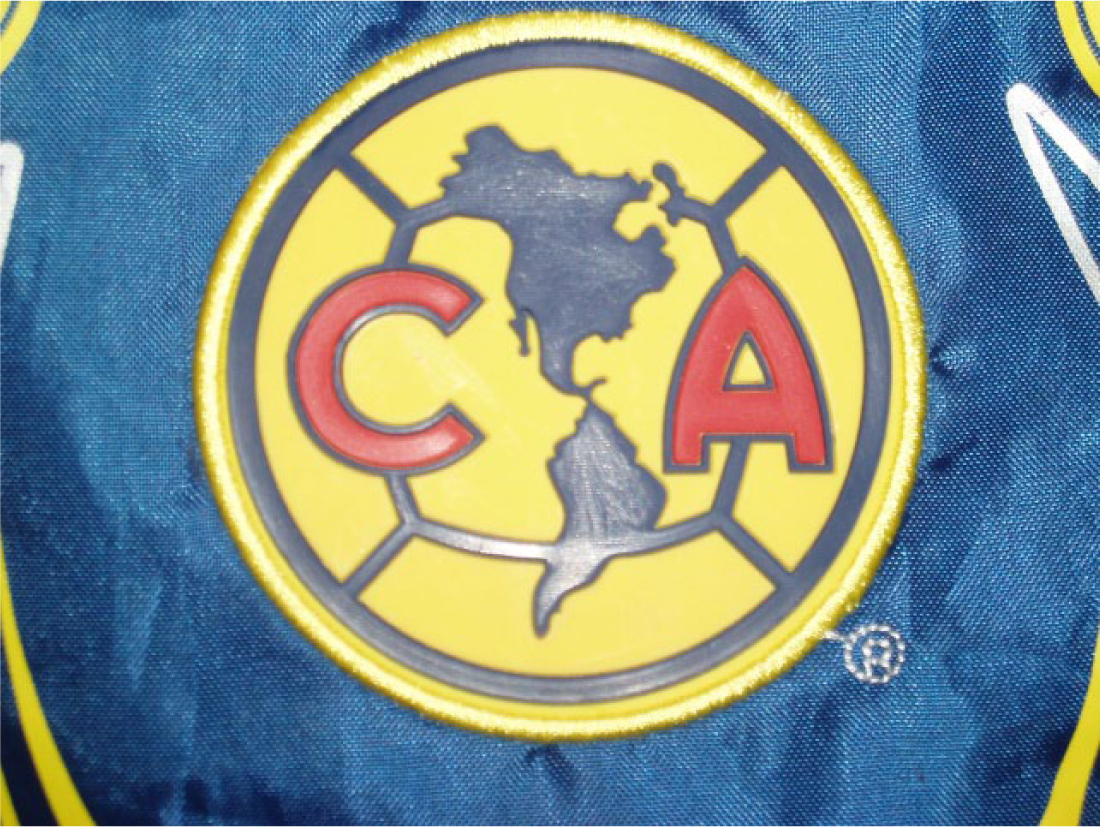
Club América Soccer Team logo (photographed in Grades 3 and 4).

Carlo’s photograph of the globe (Grade 2).

Carlos’s photograph of clouds (Grade 3).
Transnational negotiations of self were apparent. Echoing the positioning of flags over his and his brother’s beds, Carlos drew flags and detailed maps of Mexico and the United States on opposite sides of a page (see Online Figure 4). Carlos’s sense of being from both the United States and Mexico was apparent in Grade 3. When asked whether Shoreline or Mexico was his home, Carlos responded, “Well, I think both of them . . . because over here’s (pointing to a book depicting Shoreline) where I was born and my parents born over here (pointing to a book depicting Mexico).” Nation states, soccer leagues, sports, friends, and self merge as Carlos negotiated the sports at home (Club América), sports at school, his friends, and his identity as both (Anzaldúa, 1987) via a vast array of literate practices and texts, including flags, televised sports events, photographs, and maps.
Technological texts composed a significant dimension of Carlos’s life at school. Carlos photographed the school’s computer lab, where he reported playing video games with his friends. At home, he used his mother’s cell phone to call his friends and his DSI (dual-screen handheld game console) to play games and take photographs. By third grade, Carlos shared gaming websites with friends, where they created avatars and played games. As he reported, “My friends go to websites and I just look there, and then I play [with] them.” Carlos also had a Facebook account. Technology not only created opportunities for Carlos to align with friends but also involved a range of literacy practices that provided opportunities for identity negotiation (Marsh, 2004; Wohlwend, 2009).
When Carlos was in Grade 3, he and his brother identified their favorite movie as Rio, an animated story about a macaw from Brazil who was smuggled to Minnesota, which paralleled the family’s journey as they moved from Mexico to the northern Midwest. Carlos’s facility with language and technology was evident as we observed him setting the family television to play the dubbed Spanish version of the film so that his brother could watch.
Both was a recurring motif Carlos’s mother and his teachers noted about Carlos. By second grade, Carlos was recognized as being bilingual. His mother reported,
Pues las maestras son bilingües y como te digo pues no es fácil estudiar los dos idiomas a la vez y por eso Carlos es bilingüe y me siento que el y lo que me dicen las maestras y a lo que yo miro en el y todo el va muy bien—en los dos idiomas.
Carlos claimed that it was “easy” to read in both languages. When asked whether he preferred to read in English or Spanish, his responses shifted over time. In Grade 2, Carlos reported that he liked “them both,” explaining that “in English I’m a level 20 and then in Spanish level 25.” That same year, he noted that he was a better writer in Spanish because he only knew how to write “in English a little bit.” In Grade 3, Carlos noted, “Well, I read most in English.” Later that year, he described his preference as “50-50.” By fourth grade, Carlos reported that he usually read in English but sometimes read Spanish books at school. He continued to maintain that it was easy to read in both, and across time, Carlos’s teachers confirmed his excellent progress:
This is his first year in English at all and he is already at a 20. So it’s very, very good. (Grade 2 teacher) All those skills he learns in Spanish transferred over for him immediately . . . I mean, halfway through the year last year he was reading at a level 30. (Grade 4 teacher)
Over time, Carlos’s progress in both languages was recognized and valued. Although traditional schools tend to value being literate in English over being literate in Spanish, at his dual-language school, being bilingual was the explicit goal. Thus, the criteria for successful school performance were bilingualism and biliteracy (see Escamilla et al., 2014).
Relationships with peers were also reflected in Carlos’s traditional literacy practices. In Grades 2, 3, and 4, Carlos named books from the Wimpy Kid series (Kinney, 2007)—which were popular among his classmates—as his favorite books. Carlos explained, “I like how the author tells the story and he every time is making more book[s]. Yeah, and he has it [the books] in movies” (Grade 3). These books, and the accompanying movies, reflected the interests of his peers. That same year, Carlos wrote and published a book about playing soccer with his friends. Interestingly, he dedicated this book to his extended family in Mexico.
Gender, sports, nationality, technology, peer affiliations, and a vast range of literate practices intersected through Carlos’s enacted identity claims in complex and fluid ways. Being Mexican, being a Club América fan, and being bilingual and biliterate mattered and were consistently rewarded across his bilingual home and classroom.
Intersectional Identity Negotiation: Liz
Liz’s self-portraits at ages 6 and 8 revealed various dimensions of her self-ascribed networks of self, including enactments related to gender, peer culture, language, literacy, Korean cultural norms, popular culture, citizenship, technology, and school. While Carlos was generally successful in school, Liz was described as falling behind in Grade 4. While Carlos assumed traditional male roles, Liz often rejected gendered norms, although her resistance was notably selective, as she rejected female norms in some spaces more adamantly than in others.
To a degree, Liz’s tendency to challenge traditional norms may have reflected her biracial heritage. Liz was born in Alaska, lived in Korea, and then relocated to Shoreline in the Midwestern United States. At school, Liz received English as a second language (ESL) services because her mother identified her first language as Korean. However, she also spoke English at home. Liz attended a school that, due to its close proximity to the local university, served large numbers of international students. For example, Liz’s second-grade class included children from 15 countries. Liz’s home featured a unique Asian fusion decor with a traditional Korean tea table alongside a Western dining room set. Liz, like Carlos, actively negotiated a sense of being both.
As her self-portraits revealed, Liz generally described herself as a “tomboy” with an interest in sports. In Grade 3, she was excited about Taekwondo, sports, and Korea hosting the 2018 Winter Olympics. This “tomboy” persona carried over to her school literacy practices, where, in contrast to the other girls in her classroom who read books about cute animals, princesses, and female protagonists, Liz read alone or with the boys. She preferred comic books, adventure stories, books about robots, and the Captain Underpants series (Pilkey, 1997-present).
The photographs that Liz took of her home reflected the energy she brought to just about everything. Unlike Carlos, who carefully staged his photographs, Liz’s photos often appeared random, as she moved quickly through her home snapping shots of things and spaces. Her drawings, while often detailed, presented assemblages of stuff (see Figure 1 and Online Figure 5). When asked in Grade 3 to draw a map of her house, Liz produced the drawing presented in Online Figure 6. While detailed in terms of the labels she inserted on her map, the map itself was quickly sketched, with little attention to neatness or scale. As Liz explained,
I detailed this [map] like this to just get more fancy. I always color like that . . . I just drawing something that pops up out of my head like things that I first I know something. And then I write about it.
Liz recognized the value of making a quick sketch that could later be detailed and refined; she reported, “This is also good because I want to be an architect. So it’s kind of good.”
Although sports and Captain Underpants (Pilkey, 1997-present) reflected Liz’s self-ascribed “tomboy” identity, her best friends at school were girls. Liz preferred gender-neutral clothing and did not own typical girl toys, but her notebooks and diary were adorned with images of Disney princesses.
Liz’s family was deeply involved in the local Korean Christian church. Liz attended the church-sponsored Korean school on weekends, where she learned to read and write in Korean, played traditional Korean games, wore a traditional Korean hanbok, enjoyed Korean food, and celebrated Korean festivals. Liz’s enthusiasm for these cultural practices complicated her “tomboy” persona and stated preference for torn blue jeans and speaking in English. Here, we witnessed Liz negotiating cultural and linguistic norms across contexts and enjoying each experience on its own terms.
Although Liz’s “tomboy” identity resided comfortably alongside her enactment of the traditional Korean roles displayed at the Korean church, the transition was incomplete. A Korean international doctoral student accompanied the family to Liz’s Korean church. As she reported,
I greeted Liz, who was wearing a sports T-shirt, pants, and colorful basketball socks, by saying “hello” in Korean . . . I asked her where her mother and father were and she answered to me in Korean. Her reply was not based in an honorific form of Korean [as it should have been], but this was also not big surprise.
Thus, although Liz used the Korean language, she did not use the honorific forms expected in a traditional Korean setting. Liz negotiated language practices—assuming some and jettisoning others.
Liz patiently explained to the Korean researcher that she always spoke “Shoreline English” with her Korean best friend Jiwon, because, as Liz reported, “I [was] born in Alaska!” In Grade 2, Liz’s teacher reported that she had never heard Liz and Jiwon speaking Korean with each other; she explained, “I think that they had a good handle in English language. So, I think they never felt that they needed to.” She added that she had only heard Liz speak Korean once, when helping two newcomer Korean boys. Her teacher did note that “Lizzy has written things in Korean” on the class morning message board. Liz adamantly maintained that she read in “American.”
Liz’s preference for English at school and with her peers was complicated by her reported online practices. Accessing the same Korean website that her mother used to watch Korean dramas, Liz watched Korean cartoons, including Pororo, a Korean cartoon about an adventurous penguin. Her mother encouraged Liz to watch Korean movies and television shows. As she explained, Liz “understands pretty well—Korean television programs. So we can watch [them] through Internet right now. She loves to watch video, you know, TV, cartoons. She knows Korean music too.” Liz’s parents believed that online viewing experiences and reading emails from friends and family in Korea would help Liz maintain her proficiency with the Korean language. Across the study, Liz engaged with bicultural texts both at home and at school, as she generally used English at school to read books and talk with friends while also engaging with a rich set of Korean texts (i.e., watching Korean cartoons, television programs, and movies; attending her Korean church; and listening to Korean music).
When asked in Grade 2 if Liz’s facility with Korean negatively affected her learning to read in English, her mother acknowledged that it might. Perhaps challenging the school’s focus on learning English, she viewed Liz’s bilingualism as an advantage that outweighed any challenges she faced with learning to read in English:
[Speaking Korean affects Liz’s learning to read] a little bit. Not very much. Since she loves to read books right now, so I don’t think that affect[s it] too much. But her English vocabulary is somewhat limited . . . But I prefer [that] my kids are bilingual, so I don’t really mind even though she learns how to read a little bit later.
Liz’s father was less convinced. By the time she was in fourth grade, he expressed concerns about her progress with reading in English:
Yeah! Yeah! You can see the difference. So I think when she went to the school, she could read. In first grade, she was at the top of the class and [had] perfect reading. Second grader little lower, and third grader little lower . . . a lot lower.
Notably, the school’s assessment of Liz focused only on reading in English, challenging and unsettling the bilingual and biliterate values of Liz’s father and mother.
Meanwhile, Liz was engaged in her own language negotiations. It was in fourth grade that she stopped attending Korean school. As the researcher wrote, “[When I arrived for the interview,] Ms. Roland was not at home. She was [at] the Korean language school teaching kids Korean language . . . Liz told me she quit learning Korean.” Liz’s fourth-grade teacher was unaware that Liz had stopped attending Korean classes and responded,
[The children] don’t like to stand out in front of their peers. However, I do know our Korean translator only speaks to her in Korean and she responds; She’s fine in Korean . . . I am not sure what mom can do . . . it’s just [a] stage of being you know like the teens, pre-teens sort of age groups.
Not speaking Korean at school was viewed by Liz’s teacher as an understandable move toward affinity with her English-speaking peers.
Despite not attending the Korean school, Liz had competently used Korean when visiting family in Korea during the previous summer. Her mother noted,
I was very proud of her. When we went to Korea, she could talk to any people there, even though her pronunciation and sentences were not perfect. But she didn’t have any problem in understanding and expressing herself.
Although Liz generally spoke with the Korean researcher in English, in Grade 2, she selectively used Korean to talk about photographs of Korea and her favorite Korean television shows.
Liz’s mother was very aware of negotiations related to citizenship. While traditionally Korean immigrants to the United States chose either U.S. or Korean citizenship, dual citizenship had recently become an option. As Mrs. Roland explained, “So, that’s why I was trying to teach her Korean language you know—a lot . . . she can have both citizenships.” While Mrs. Roland viewed being able to claim both citizenships as an advantage, she had also heard from friends that citizenship could sometimes be confusing. She explained,
Like [when] they’re like teens . . . They get confused about their identity. And they get so confused themselves and they get sometimes depressed . . . And she has American blood plus Korean blood. So, [I] make sure she has both [identities] . . . I [am] really concerned about her; how to teach her [about] identity. I really care about that.
Mrs. Roland’s efforts seemed to pay off. When asked in Grade 1 whether she considered herself Korean or American, Liz responded, “Both.” She noted that she liked living in the United States and reminded the researcher, “I [was] born here.” While Liz readily negotiated gender, nationality, and language, she adamantly claimed that she was “White, White, White!” Despite her biracial heritage, she did not claim a biracial identity, perhaps reflecting the historical privileging of Whiteness in the United States.
While Liz’s mother may be correct that challenges related to identity may affect Liz’s future, at present, we recognized the complex and multifaceted young lady that we have found Liz to be. Although her recent drop in reading progress and her decisions to stop attending Korean language school are troubling, choosing not to attend the school could be viewed as an agential act of identity negotiation initiated by Liz.
Discussion
Theories of intersectionality (Collins, 1998; Crenshaw, 1989; King, 1988) have been used to understand race and gender as multilayered networks of self that work together to influence how people are perceived and how their actions are interpreted. In the current analysis, we build on a growing body of work (Duranti & Ochs, 1997; Gregory et al., 2004; Gutierrez et al., 1999) that highlights the multidimensional nature of children’s experiences to consider how children employ literacy within intersectional networks of identity negotiated by young children.
We explore children’s intersectional identities to reveal rich networks of self, which children negotiate as they engage in ongoing processes of becoming. Liz actively leverages dimensions of self as she enacts traditional gender, language, and literacy practices, although her resistance to traditional and cultured ways of being is more intense at home and in the classroom than at the Korean church. Liz negotiates this resistance as she interacts with the girls at school—and Disney princesses are observed on her school binder. For Liz, her identity networks entail claims of being both as she enacts both “tomboy” and traditional roles in the various spaces she occupies, informing the linguistic choices she makes to speak English at school while speaking Korean with relatives, and choosing not to attend Korean language school, which is interpreted as a response to peer pressure and may also reflect her insistence that she is White and English speaking. All of this occurs alongside her increasing struggle to meet literacy benchmarks at school. Liz’s intersectional networks of self reference gender, language, nationality, and race in ways that present both possibilities and limits as she navigates the spaces of home and school.
For Carlos, networks of self also involve negotiations, including his gendered interest in playing soccer with his friends, the fandom that he shares with his brother and father, and his affinity for the team’s logo, which reflect his claims of being both Mexican and “American.” All of these are connected to his bilingual technological practices with family and peers, alongside his biliterate accomplishments at his dual-language school. Networks linking multiple dimensions of self for Liz or Carlos are not linear. Instead, Liz and Carlos actively leverage these interwoven, recursive, and constantly shifting networks of selves. These networks affect not only who the children are but also who others perceive them to be across various spaces and social contexts. Ways of reading, writing, viewing, and using texts are significant enactments of self, and often act as bids for affiliation with friends, teachers, and family members.
As our case studies illustrate, children actively resisted, reacted, and reworked expectations. Honeyford (2014) explains that immigrant youth “reposition themselves in their multiple social worlds” (p. 202) through active, agential, and negotiated forms of linguistic and cultural adaptation. Young children actively view themselves as being both and use those positionings to negotiate their identities. This flexibility allows them to reposition themselves through creative linguistic and cultural negotiations that highlight their intersectional identities and practices within larger structures of power. As Uprichard (2010) maintains, educators and researchers must recognize children as agential participants and as producers who contribute to the negotiation of their own identities. The cases of Carlos and Liz do not provide the unequivocal accounts of children in families that have immigrated to the United States. These two cases speak to the complexity of identity negotiation for young children and the role played by literacy practices within those negotiations (Gee, 1992).
However, these negotiations do not occur on a neutral playing field. As intersectionality theorists (Collins, 1998; Crenshaw, 1989; King, 1988) argue, differences matter differentially. Thus, being a male, soccer-playing Mexican student who lives in the United States, meets school benchmarks in English and Spanish, and attends a dual-language school presents very different possibilities for self than being a female, biracial Korean student living in the United States, who is falling behind in reading and attends a traditional classroom where being and speaking Korean is marginalized. Significantly, Carlos is successful not only because he, his teachers, and his parents agree that he is bilingual but also because he passed standardized assessments in both languages. Liz did less well in English, and her abilities in Korean are only anecdotally assessed or reported. Significantly, educational contexts matter. Although Spanish has historically been considered a low-status language spoken by poor immigrant and migrant students, Carlos’s bilingual abilities are celebrated and supported in his dual-language classrooms. Ironically, Korean, which is often associated with “model minority” (Lee, 2009) children, is invisible at school, and Liz’s decision to stop attending Korean school is treated as an understandable deferral to peer pressure.
Thus, intersectionality matters. It reveals how the teaching of reading, writing, and other literacy practices is intricately interwoven with networks of self that extend beyond classrooms. For young children, this intersectionality is not merely about the intersectional networks of race, gender, social class, and language the children bring but also about how those ways of being are taken up, valued, and negotiated by both the children and the people they encounter. As children negotiate networks of self, adults must not only support children in negotiating this multiplicity but also view children as active and invested individuals who have the capacity to contribute to their own becomings.
Conclusion
Intersectionality is about social justice. Social justice is relevant because schools and society privilege particular ways of being and being literate that affect access to resources and admittance to important instructional spaces. Intersectionality affects how we view students. Carlos is viewed as bilingual, whereas Liz’s teacher unproblematically attributes her reluctance to attend Korean classes to peer pressure. In particular, we highlight the ways in which the young children in our sample actively negotiated networks of self long before they approached adolescence.
Perhaps most important, theories of intersectionality blur the possibility of simple causal arguments that connect race, class, culture, and/or language to academic inequity. Intersectionality reveals the complexities of children’s identities and the ways in which literacy learning overlaps with, interacts with, and entails multiple ways of being that cannot be untangled. Intersectionality makes multiplicity visible while revealing the impossibility of identifying simple explanations for the achievement debt (Ladson-Billings, 2006).
We propose that teachers and researchers can support children through these negotiations:
Make a vast range of texts available—both traditional and digital—including those that challenge traditional and imposed roles and practices.
Be aware of the expectations and norms that operate in educational spaces and be ready to challenge and discuss these privileged ways of being.
Recognize and provide time and space for children to work through the challenges they face as they negotiate who they are through texts, conversations, and multimodal representations.
Remember that identity work may be particularly complex for children who bring different experiences, backgrounds, and cultures to classrooms as they encounter unfamiliar and sometimes hostile norms and expectations.
Of course, there are limitations to this study. In addition to limits generally shared across case studies—a small sample, defined boundaries, a nonrepresentative sample—the literacy practices we monitored, the questions we asked, and the student-created artifacts that we asked children to produce reflected our interests, not those of the children. In addition, by coming back to visit the children 3 or more times each year, we sometimes caused the children to experience research fatigue, evident when they complained about having to repeat the same tasks they had done in the past. Thus, the methodological choices that we made clearly affected the data that were produced.
While researchers may attend to particular dimensions of identity, these dimensions must be recognized as intersectional. In particular, longitudinal research treats identity as an ongoing negotiation rather than as a static negotiation. As a research team, we have learned powerful lessons from the children, their parents, and their teachers. We look forward to continuing to track Carlos and Liz over time as we follow them through high school. We aspire to honor the complex work that is routinely undertaken by young children in families that have immigrated to the United States and highlight the importance of helping children to navigate the complexities of who they are and who they aspire to become.
Footnotes
Declaration of Conflicting Interests
The author(s) declared no potential conflicts of interest with respect to the research, authorship, and/or publication of this article.
Funding
The author(s) received no financial support for the research, authorship, and/or publication of this article.
Supplemental Material

Author Biographies
References
Supplementary Material
Please find the following supplemental material available below.
For Open Access articles published under a Creative Commons License, all supplemental material carries the same license as the article it is associated with.
For non-Open Access articles published, all supplemental material carries a non-exclusive license, and permission requests for re-use of supplemental material or any part of supplemental material shall be sent directly to the copyright owner as specified in the copyright notice associated with the article.
