



Abstract
In Hawaii, impacts from climate change, such as sea-level rise and flooding, increased hurricanes and wildfires, and warmer temperatures, intersect with aging infrastructure, toxicities from the built environment, and pathogens to threaten the health of recreational ocean users via reduced water quality, severe weather and flooding, environmental degradation, and food systems impacts. An examination of climate-driven threats to water safety is a pertinent review of threats to coastal residents globally.
Introduction
Located about 2400 miles from the mainland United States, Hawaii is the world's most isolated population center. Ancient Polynesians developed knowledge and skills in the ocean, expertly using celestial maps, ocean currents, and birds to navigate their outrigger canoes across staggering distances of open water to the Hawaiian Islands. The concept of a “waterman” in Hawaii is rooted in this skill set, which began as a necessity for survival and encompasses not only mastery of watersports like surfing, diving, or paddling but a knowledge of fish, plants, and animals and a deep respect for the ocean and culture.
Climate change threatens the health of all recreational ocean users: from the waterman to the tens of millions of residents and tourists that enjoy Hawaii's warm waters each year. Impacts from climate change, such as sea-level rise and flooding, increased hurricanes and wildfires, and warmer temperatures, intersect with environmental pathogens, aging infrastructure, and toxicities from the built environment to threaten health via reduced water quality, severe weather and flooding, environmental degradation, and food systems impacts. In the United States, nearly 40% of the population lives near the coast, and ocean-based activities are a core part of the wellness of this population and these communities. 1 An examination of climate-driven threats to Hawaii's water safety is a pertinent review of threats to coastal residents and recreational water users globally.
Background
A resource from the Centers for Disease Control and Prevention (CDC) and the State of Hawaii Department of Health (Figure 1) illustrates how climate change impacts health in Hawaii.2,3 The inner ring shows changes to the climate that impact human health, such as rising temperatures, more extreme weather, rising sea levels, and increasing carbon dioxide levels. These climate changes increase risk factors to human health in Hawaii through the mechanisms detailed on each side of the figure. Rising temperatures, for example, can affect water quality by precipitating harmful algae blooms (HABs), 4 which then harm human health by proliferating and producing toxins, which when contacted or ingested, cause a range of sequela such as vomiting, diarrhea, fever, headache, neurological symptoms, myalgia, respiratory distress, seizures, kidney and liver toxicity, and even death.5,6 Finally, the figure's pink ring touches all the risk factors and illustrates that mental health impacts from climate change, such as depression and anxiety, are wide-reaching.
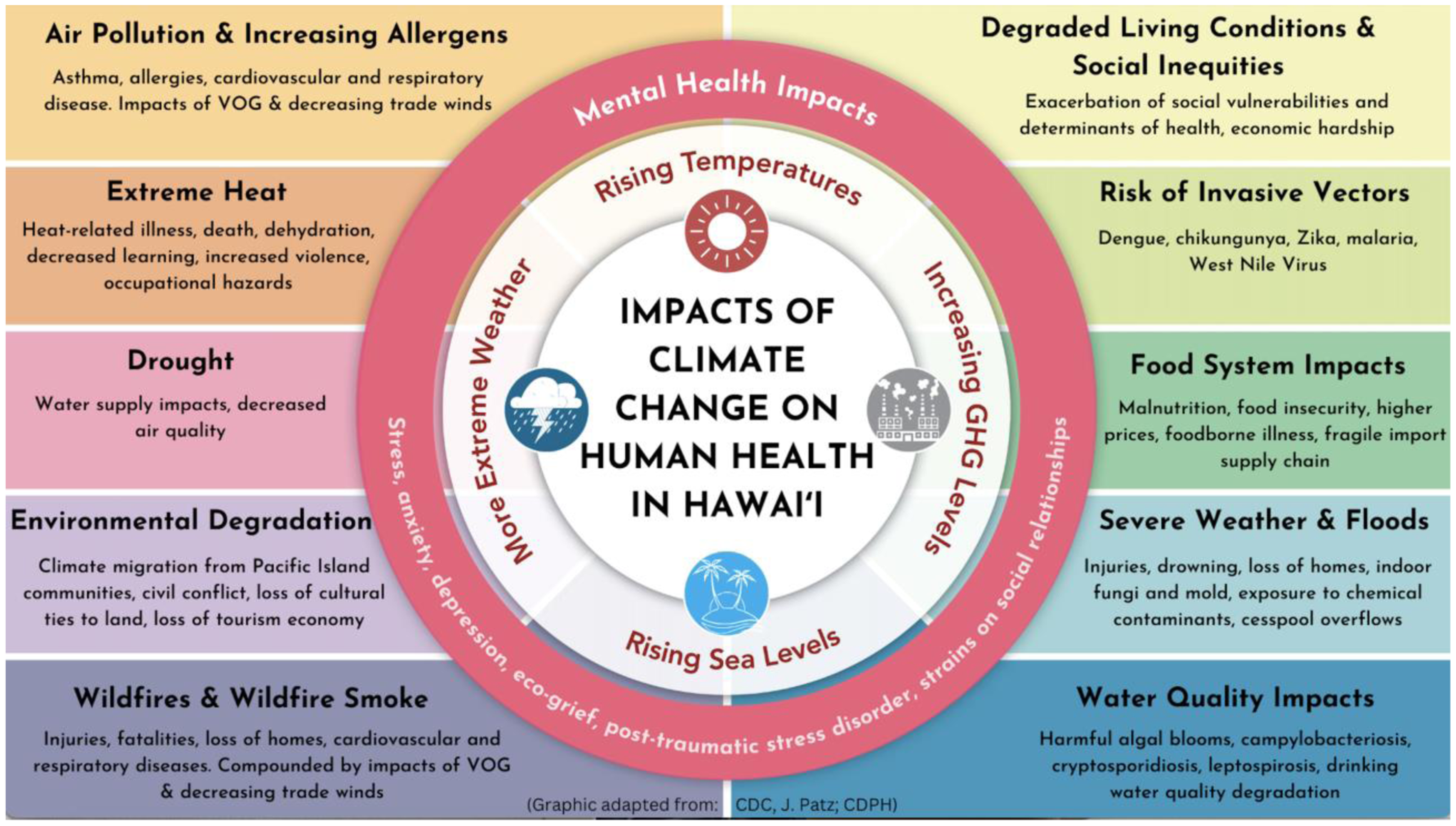
Impacts of climate change on human health in Hawaii; adapted from the CDC.
Changes to the climate, such as sea-level rise, extreme weather including hurricanes and wildfires, and warmer oceanic and atmospheric temperatures, are already evident in Hawaii. National Oceanic Atmospheric Association data shows coastal seas 10 inches higher in Hilo, Hawaii, compared to a 1950 baseline. 7 While overall rainfall in the state is decreasing, modeling also predicts increases in the intensity of tropical cyclones, heavier rains, increased stream and canal flooding, and flooding up to several meters for most of Honolulu, including populated low-lying areas such as Waikiki.8–11 Vertical wind shear from trade winds in Hawaii has historically destroyed the storm structure of hurricanes as they approach the islands. However, this effect is predicted to weaken due to climate change. 12 Fire is not part of Hawaii's land life cycle except in active volcanic regions, 13 but in the past 100 years, the average area burned in Hawaii has increased 400% per year. 14 The climate effects of drought and warmer, drier weather contributed to the devastating 2023 Maui wildfires15,16 that killed 101 people, injured dozens, and caused extensive physical and mental health impacts for thousands of people. Hawaii is also getting warmer. Since 1950, Hawaii's average temperature has risen 2 degrees Fahrenheit, with record-setting peak average annual temperatures over the last 5 years. 17 The northeast trade wind breezes that normally cool the island and increase airflow have been decreasing for decades and are projected to decline further, compounding the heat. 18
Health Impacts of Climate Change
The health impacts on those enjoying the ocean in Hawaii occur primarily through water quality, severe weather and flooding, environmental degradation, and food system impacts.
Climate change is predicted to increase the intensity of storms and flooding in Hawaii, which increases the amount of polluted runoff discharged into streams, rivers, and the ocean and subsequently impacts health through water quality.8,9,19 In Hawaii, surfers, swimmers, and residents know to avoid the beaches and ocean during brown-water advisories that occur when heavy rains bring this runoff from the land into the nearshore waters. 20 Contaminated runoff is murky and discolored not from naturally occurring stream sediment, but rather from pathogens, pesticides, agricultural runoff, debris, cesspool sewage, and animal waste, which are discharged into the ocean from overflowing streams, rivers, or storm drains. 11 Surfers are at particular risk of exposure to these hazards compared to swimmers, divers, or fishers, as they spend more time in the water with each visit and have repeated full underwater immersions, forceful exposure of water into the sinuses, and unintentional water ingestion, up to 10 times that of swimmers. 21 As flooding increases from more frequent and higher-intensity storms, the increased exposure to the recreational water user may result in more illness from these pathogens and contaminants.
The high-intensity storms and hotter weather that result from climate change will intersect with aging infrastructure to affect health through decreased water quality. Hawaii's infrastructure has already seen breaches from climate events: in 2015, heavy rains were to blame when a Honolulu wastewater treatment plant discharged one million gallons of partially treated waste runoff into the ocean, resulting in a Department of Health (DOH) brown-water advisory that threatened the health of water users and closed beaches for days. 22 The Ala Wai Canal watershed area is home to 400,000 Honolulu residents and is adjacent to the dense tourist and economic center of Waikiki. The canal is fed by 3 streams historically known to overflow during storms, resulting in contaminated runoff entering the ocean. 23 Of note, vibrio vulnificus occurs naturally in the canal and has been implicated in several exposure-related infections and deaths in Honolulu.24,25 Research shows increased vibrio abundance with increased water temperatures and warmer weather; climate projections of rainfall and temperature predict a doubling or tripling from current bacteria levels by the end of the century.26–29
Sea-level rise from a warming planet can also affect water quality in Hawaii through the state's 83,000 existing sewage cesspools that inject 52 million gallons of wastewater into the ground daily.30,31 These onsite sewage disposal systems are at risk of overflow due to sea-level rise and coastal erosion, as rising oceans also lift the contaminated groundwater and soil. 32 Overflow is also confounded by normally occurring spring and king tides that further push pathogens into the ocean. 33 Cesspool pathogens include hepatitis A, staphylococcus, and salmonella, as well as fecal indicators such as E. coli and enterococci, which put swimmers, paddlers, and beachgoers at risk of gastroenteritis, conjunctivitis, diarrhea, and skin infections. Hawaii has been shown to have a higher prevalence of methicillin-resistant Staphylococcus aureus (MRSA) compared to the national average,34–36 and studies also confirm increased bacterial concentrations with rainfall and floodwater discharge. 37 Swimmers in Hawaii have a higher risk of staphylococcal skin infections compared to those who are not exposed to seawater. 34 Recent studies demonstrate that coastal beaches, river waters, and sand in the state are contaminated with MRSA, posing a substantial health risk to all beach users. 38
Climate change–induced sea–level rise also exposes people engaging in coastal recreation to previously undisturbed legacy chemical contamination, including heavy metals and pesticides. This affects health through water quality, environmental degradation, and food system impacts. The Hawaii DOH Hazard Evaluation and Emergency Response Office monitors about 1000 contaminated, low-lying sites along the shore at risk for coastal erosion and impact from flooding and sea-level rise. These sites contain stable contaminants, including petroleum, heavy metals, solvents, pesticides, and persistent organic pollutants. One heavily used recreation area is Kaka’ako Park, a 35-acre oceanfront park used for surfing, diving, fishing, picnicking, biking, and walking. The park is located on the site of a former landfill, contaminated with lead and incinerator ash. It is currently managed with thick caps of clean soil and pavement that prevent exposure to the contamination, but these are at risk for disruption from storm surge and sea-level rise, which would then cause contaminated fill material to spread along the shore, into the ocean, and onto delicate coral reefs. 39 Coral reef health is of particular importance, as reef fish are a significant part of Hawaiian culture, a source of food for local fishermen, and a draw to residents and tourists for snorkeling and swimming.40,41 Coral reefs provide the micronutrients and biodiversity to feed the reef fish that have fed native Hawaiians for centuries via both traditional fishing and the aquaculture system of fishpond management, which uses indigenous knowledge to farm and support ecosystem and reef populations in surrounding waters.42,43 Loss of coral reefs has been correlated with the loss of this important food source and reliance on preserved, poor-quality imported food, which can worsen human health.44,45
Extreme weather such as hurricanes, heat waves, or wildfires impact the health and safety of oceangoers in numerous other ways. The recent Maui wildfires left ash and debris contaminated with asbestos, lead, cobalt, and arsenic. These chemicals can spread by wind and rain, settling further from the burn zone or into the ocean and surrounding coral reefs, further impacting the community's fishing, recreation, and economic recovery.46,47 Extreme heat and low wind from climate change also have consequences for athletes and those enjoying the water, as still and humid conditions can make physically intense sports like outrigger canoe paddling more strenuous and place athletes at risk for heat-related illness.48–50 In Hawaii, the addition of elevated humidity also reduces the body's ability to sweat and impairs the evaporative cooling process.51–53 Tourists who are not acclimatized, small children, the elderly, and those with preexisting conditions are also vulnerable in Hawaii's heat and humidity.54,55
The mental health impacts of climate change range from depression, anxiety, post-traumatic stress disorder after natural disasters, and solastalgia (distress produced by environmental change) to ecological grief (grief felt in relation to experienced or anticipated ecological losses).56–59 Climate change increased the likelihood of the flash drought conditions and hurricane-force winds that fueled the devastating 2023 Maui wildfires, leading to over one hundred deaths but also potential long-lasting trauma and mental health sequelae in the survivors.60–62 For Native Hawaiians, there is a strong cultural connection to place that is fundamental to indigenous identity and intertwined with stewardship of the ocean and its connection to land, food sustenance, and ocean voyaging. 63 An examination of island communities’ ecological grief stemming from a loss of these connections to ocean and place due to climate change is limited, but urgent, given that Pacific Islands are at the front line of climate change.64–68
Conclusion
Climate change drivers such as sea-level rise, increased hurricanes and wildfires, and warmer oceanic and atmospheric temperatures impact the health of all recreational ocean users, from watermen to surfers to tourists and locals. Poor water quality can impact the health of those who enjoy ocean-based activities. Legacy chemical contamination, coupled with infrastructure issues, can be a source of additional damage after severe storms or sea-level rise. Contaminated water can destroy coral reefs, threaten fisheries, food sources, and cultural traditions, and impact food systems. Extreme heat and elevated humidity increase the risk of heat-related illness, especially during exertional outdoor activities.
Increased education, communication, and vigilance are needed to keep both residents and visitors safe while enjoying recreational activities. Educational efforts such as the Hawaii Department of Health's recently launched Heat Awareness Campaign use multilanguage brochures and social media to offer tips on staying cool. 69 Beach monitoring programs from the State Clean Water Branch provide timely advisories in response to sewage leaks, heavy rains, or high indicator bacteria necessitating public announcements and even beach closures. 70 Broader efforts are underway from the legislature to urge the State Climate Commission to develop a climate change and health education curriculum for schools so that students have the knowledge and tools to understand and manage the health implications of the climate crisis. 71 Finally, a newly established Climate Change and Health Working Group aims to collaborate across disciplines and communities to strengthen public health resiliency. 72 These efforts are a start to the tremendous work ahead to address the health effects of climate change among those living, working, and in the clear blue waters of Hawaii.
Footnotes
Author Contribution(s)
Declaration of Conflicting Interests
The author(s) declared no potential conflicts of interest with respect to the research, authorship, and/or publication of this article.
Funding
The authors received no financial support for the research, authorship, and/or publication of this article.