Kailee Pollock: A 73-year-old male with a past medical history of colitis, gastroesophageal reflux disease, tobacco use, and osteoarthritis presented to the emergency department (ED) after ingesting wild mushrooms. The patient and a friend found the mushrooms growing near the stump of an oak tree in the friend's yard. The patient reported that the mushrooms looked like chanterelles, and he proceeded to cook and consume 2 to 4 mushrooms 45 minutes prior to arrival. Despite initially being asymptomatic, the patient presented to the ED for evaluation because his friend, who also consumed a small amount of the same mushrooms, reported feeling “high” and nauseated. On physical exam, the patient was in no acute distress with no neurologic deficits, his abdomen was nontender and nondistended, and he had no cardiopulmonary abnormality. It seems as if the friend may be experiencing symptoms of mushroom toxicity. What are findings that may support a dangerous ingestion?
Josh Trebach: There are about 100 known mushroom species that are poisonous to humans, with new species continuing to be identified or reclassified.1 The increasing rigor of analytical methods for identifying mushrooms and mushroom toxins, in addition to the culinary appeal of mushrooms, has expanded our knowledge of mushrooms and their toxins.2–5
Between 2017 and 2022, an average of 6554 mushroom poisoning exposures were reported each year to US poison centers.6–11 Many cases presented asymptomatically or minimally symptomatic, with death being rare. The most common scenario was a child ingesting a small amount of a mushroom with minimal to no symptoms. Serious ingestions have been reported in those who accidentally ingest poisonous mushrooms after misidentifying the mushroom as an edible species. Mushroom identification after an exposure is rare, however, with the exact species remaining unidentified in 75 to 95% of cases.2 Of 6600 reported mushroom ingestion cases in 2012, only 17% were identified. Mushroom illnesses also have occurred due to incorrect processing after harvesting. In some cases, long-term storage of mushroom dishes in plastic containers resulted in increased moisture and spoilage, which were found to be contributors to illness.12
In general, when it comes to unknown mushroom ingestions, timing of symptom onset is important when evaluating patients. Mushrooms can be classified as causing early-onset symptoms (<5–6 h) or delayed-onset symptoms (>5–6 h).2,13 Early onset of symptoms (such as nausea and vomiting) tends to be associated with mushroom poisoning that, although unpleasant, is often not life-threatening. Mushrooms associated with early onset of symptoms include muscarine-containing mushrooms (eg, Clitocybe dealbata), coprine-containing mushrooms (eg, Coprinopsis atramentaria), and psilocybin or psilocin-containing mushrooms (eg, Psilocybe cyanescens). Late onset of symptoms tends to be associated with mushrooms that carry more severe toxicity and potential for morbidity and mortality. These include Amanita phalloides (amatoxins), which can lead to liver failure; Cortinarius orellanus (orellanine), which can lead to renal failure; and Gyromitra esculenta (gyromitrin), which can lead to CNS toxicity. It should be noted that the early- vs late-onset rule is not absolute and is prone to error or other factors, such as poor recall of timing or ingestion of multiple different mushrooms. Furthermore, there are some mushrooms that simply do not follow this rule—for example, A smithiana contains allenic norleucine, which leads to renal failure but can also cause early onset of symptoms. Lastly, it is important to note that symptoms may occur due to the inability to digest the mushroom as opposed to the toxin alone.2
Kailee Pollock: The patient brought in a sample of the mushrooms that he harvested, which were eventually identified as Jack O’Lantern by the treating clinician, who happened to be familiar with this mushroom. How can one identify Jack O’Lantern mushrooms?
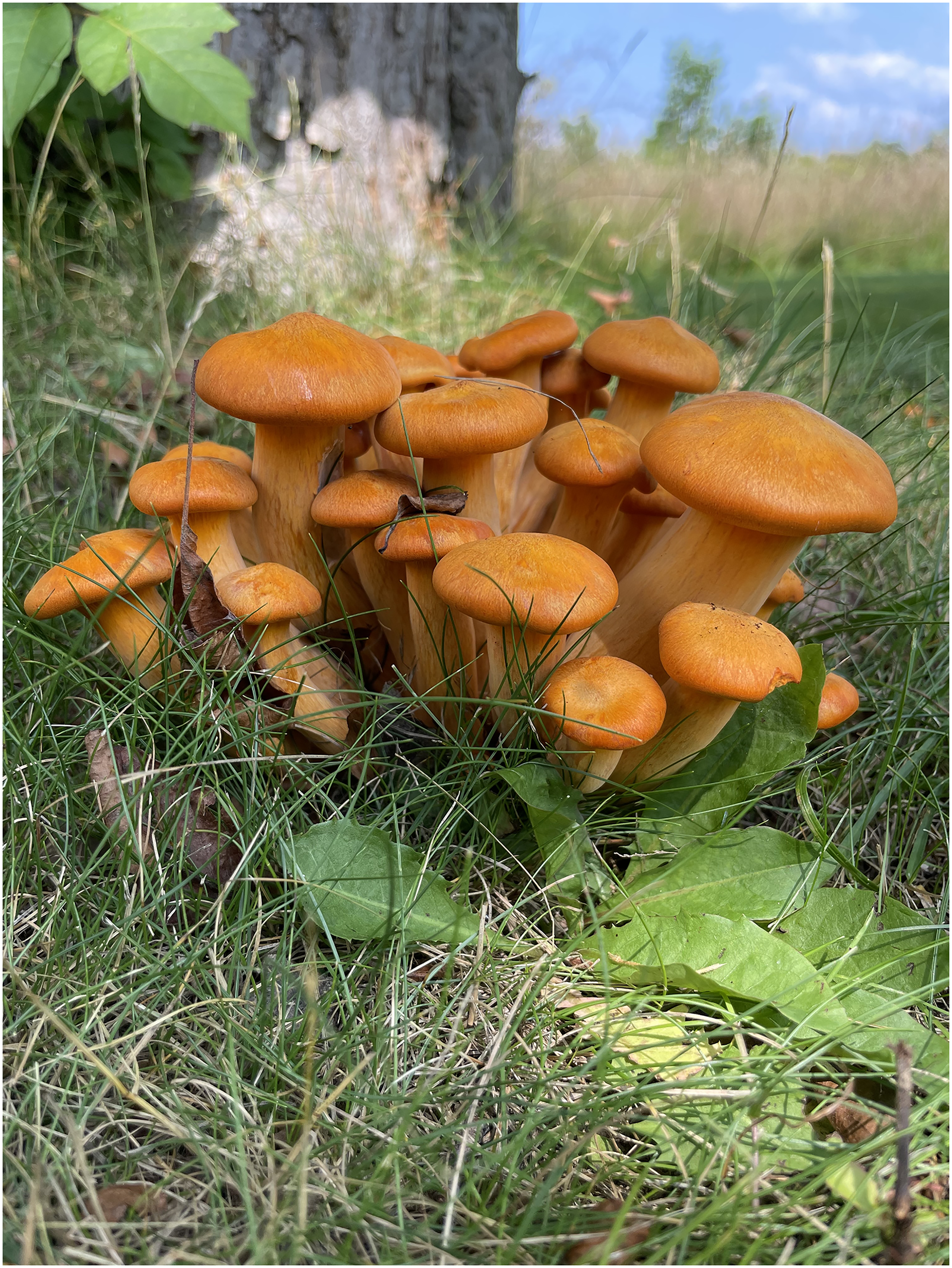
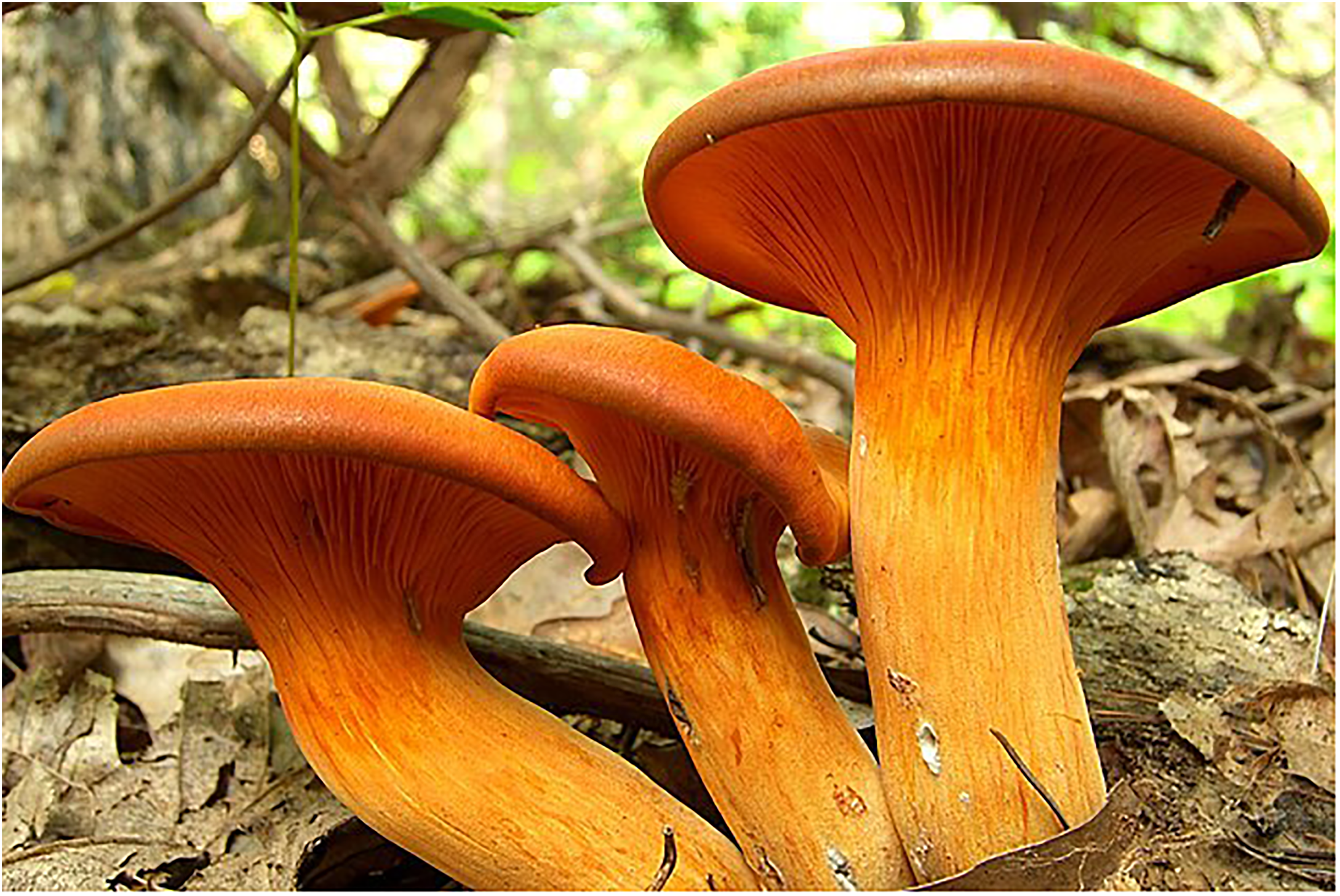
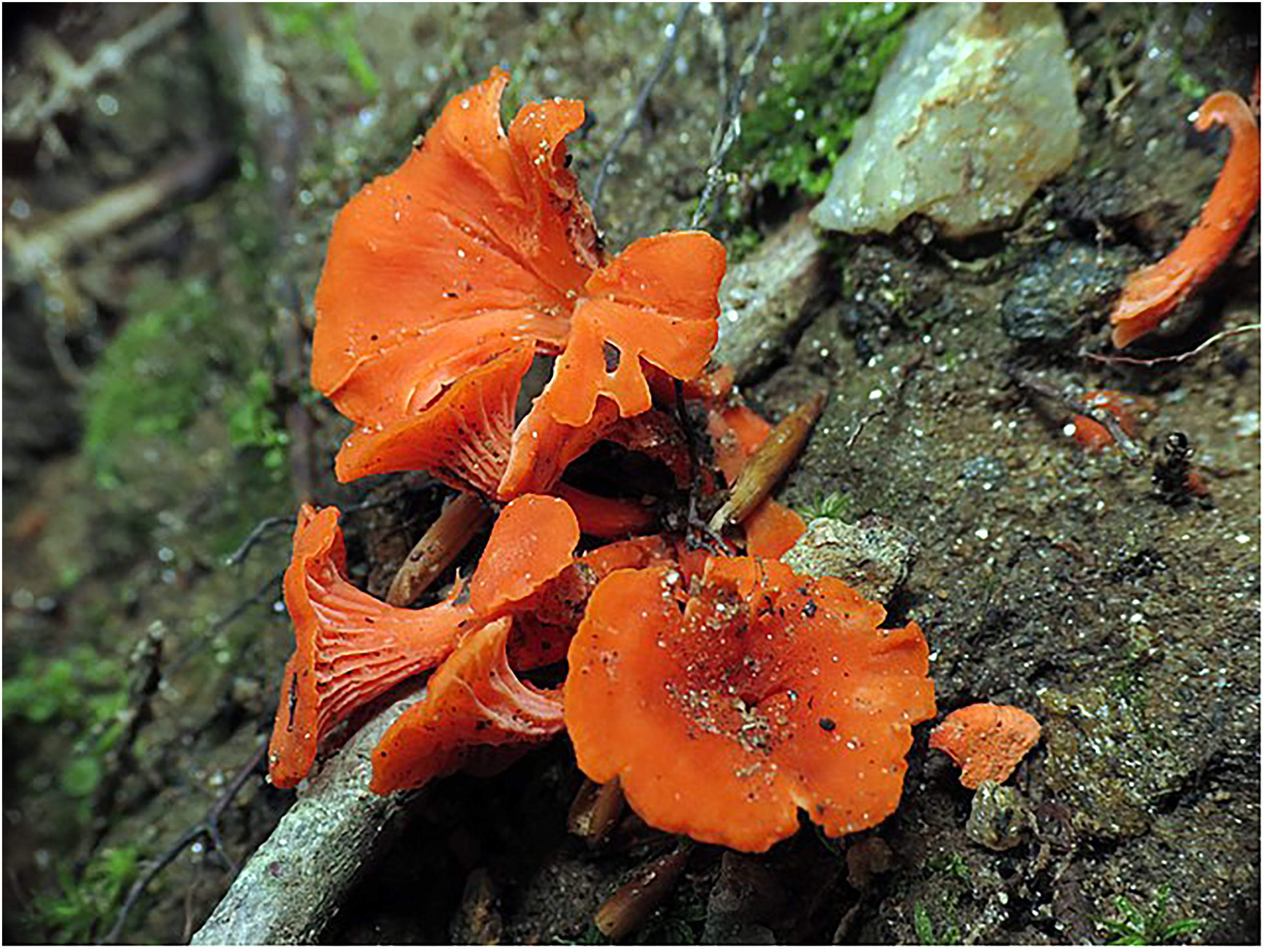
Kevin Watkins: Jack O’Lantern mushrooms (Figures 1 and 2), otherwise known as false chanterelles, Omphalotus olearius, O. illudens, and O. olivascens, are bright, luminescent, orange-yellow pumpkin-colored mushrooms that contain the toxins muscarine and illudin. Their blue-green bioluminescence occurs from the enzyme luciferase found in the mushroom's gills—the same compound that causes fireflies to glow. These mushrooms are native to eastern and western North America, growing in large clusters at the base of stumps or roots of deciduous oak and hardwood trees in early spring to late fall.14 They can be mistaken for the chanterelles (Figure 3), which are orange edible mushrooms that grow terrestrially and have a fruity aroma that Jack O’Lanterns lack.15 Additionally, the fertile surfaces of chanterelles are ridges or folds, whereas Jack O’Lanterns have true gills that are decurrent (run a bit down the stalk).16
Jack O’Lantern caps.
Jack O’Lantern underside. Photo credit: Jason Hollinger (Wikimedia).
Kailee Pollock: What classification of toxic mushrooms are Jack O’Lantern mushrooms?
Kevin Watkins: Mushroom poisonings can be classified based on the primary organ system they affect.1 Jack O’Lantern mushrooms cause early-onset symptoms such as gastrointestinal disturbances and mild transaminitis that can last for several days. In European case reports of Jack O’Lantern ingestions, it seems that muscarinic effects appear more frequently compared with cases in North America.14
Kailee Pollock: What are the most common mushrooms implicated in toxicity, and how are they identified?
Josh Trebach: According to data from the American Association of Poison Control Centers, the most commonly reported mushroom exposures are those containing hallucinogenic or gastrointestinal toxins.2 An example of a common mushroom implicated in toxicity is Chlorophyllum molybdites, also known as the false parasol, which causes early-onset gastrointestinal distress.13 The history is most important when forming a differential diagnosis because although there are many mushrooms that can cause clinical symptoms (due to their toxicity, inedibility, or poor storage conditions), there are also many unrelated illnesses (ie, bacterial gastroenteritis, viral hepatitis) that can cause similar symptoms. A retrospective study demonstrated that in a large portion of cases where patients reported symptoms of poisoning, spore analysis identified ingestion of edible mushrooms.12 The process of definitive identification should involve a toxicologist or mycologist. Pictures of the mushroom or samples can be sent. If samples are sent, the mushroom can be wrapped in wax paper and sent in a paper bag with refrigeration. Spore analysis may be useful as well, and samples could be obtained from gastric aspiration if the mushroom's fertile surface is not available for a spore print. Alternatively, mycotoxin analysis may be performed, if available and recommended by a toxicologist.17 Historically, the Meixner test has been used to evaluate for the presence of amatoxins, but it is not without pitfalls because it cannot reliably distinguish between alpha-amanitin and other mushroom indoles such as psilocin.18 For clinicians who are concerned about mushroom poisoning in a patient, it is recommended to call the local poison control center to discuss the case further, obtain assistance with identification, and explore whether further testing or a specialist consultation is warranted.
Kailee Pollock: What other testing or monitoring is recommended? Are there antidotes or treatments that an ED provider should be familiar with?
Josh Trebach: In the case of an unknown mushroom ingestion, the mainstay of therapy will be supportive. This ranges from proper intravenous hydration, electrolyte repletion, control of vomiting, airway management, and hemodynamic support. Workup and management depend on multiple factors, including the level of concern for a serious mushroom ingestion (ie, late onset of symptoms or concern for a dangerous mushroom) and the patient's history and physical exam. Tests that may be considered include an electrocardiogram, glucose, liver enzymes, partial thromboplastin time and prothrombin time, bilirubin, and creatinine. Treatment is aimed at managing symptoms. No antidotes are currently available for most mushroom ingestion toxicities, although activated charcoal may be recommended within a few hours of ingestion if there is low concern for potential aspiration.12–14 Poison control is a helpful resource that can guide clinicians for both evaluation and management. How did this patient present when he came to the ED?
Kailee Pollock: The patient did not report any symptoms on arrival. His initial vital signs included a blood pressure of 153/88 mm Hg, heart rate of 104 beats/min, respiratory rate of 18 breaths/min, and oxygen saturation of 95% on room air, and he was afebrile. His physical exam and laboratory tests, including liver function testing, were unremarkable. In consultation with the poison control center, the patient was given activated charcoal. His mental status was normal and risk of aspiration was low, and he presented within 1 h of ingestion. He had 1 episode of emesis 2 h after charcoal administration. Additionally, he received 1 L of normal saline, magnesium, and ondansetron intravenously. Poison control recommended that the patient stay for a 24-h observation period with monitoring of symptoms and repeat lab work as well as a 1 week follow-up with his primary physician. The patient was transferred to the observation unit for monitoring, where he did not require any additional fluids or antiemetics, and no additional events occurred. The patient soon left against medical advice after a couple of hours as opposed to the recommended overnight period without any prescriptions. Per hospital records, it does not seem that the patient followed up with his primary care physician.
Kailee Pollock: The patient in this case left against medical advice. How should a patient be counseled in this situation? Are there any recommendations for deciding disposition in these patients?
Josh Trebach: Counseling should proceed in the typical fashion for a patient leaving against medical advice. Beyond that, the patient should be educated on the signs and symptoms of toxicity for return to the ED, such as intractable vomiting or worsening abdominal pain. It is typically advised that patients do not forage for wild mushrooms given that many people lack the appropriate expertise and there can be significant risks with ingestion of misidentified mushrooms. Additionally, the patient should be educated on proper processing and storage of mushrooms after harvesting if he still plans to continue foraging. It also should be emphasized that repeated and raw ingestion of foraged mushrooms may lead to more severe symptoms.12 Specifically, Jack O’Lantern mushrooms cause early-onset symptoms that are often self-limiting. Disposition of these patients is determined on a case-by-case basis, with some patients requiring only observation until asymptomatic in the ED and others requiring admission for symptom management.15
Kailee Pollock: It seems that edible mushroom foraging and reports of mushroom poisoning are becoming more prevalent. Based on this case, what are important considerations for physicians encountering symptomatic mushroom ingestions?
Kevin Watkins: This case highlights the general evaluation and management of a patient with a suspected poisonous mushroom ingestion. A poison control help line is a good resource, particularly for clinicians in settings without access to toxicology consultation. Jack O’Lanterns are bright orange-yellow mushrooms that grow in clusters in wood and contain true gills that are decurrent. Symptoms of Jack O’Lantern ingestion tend to manifest early, consistent with the benign mushroom poisoning paradigm. Symptoms can include vomiting, diarrhea, abdominal pain, and muscarinic effects. Activated charcoal may be helpful in the appropriate patient. Fortunately, symptoms tend to be self-limited, and patients do well with supportive care.
The authors declared the following potential conflicts of interest with respect to the research, authorship, and/or publication of this article: KW has received equipment for his consulting work for Clarius.
Funding
The authors received no financial support for the research, authorship, and/or publication of this article.
ORCID iDs
Kailee Pollock
Josh Trebach MD
Correction (October 2024):
The following erratum notice was issued to print figures 1-3 in color: .
References
1.
GraemeKA. Mycetism: a review of the recent literature. J Med Toxicol. 2014;10(2):173–189.
BarbosaIDominguesCBarbosaRMRamosF. Amanitins in wild mushrooms: the development of HPLC-UV-EC and HPLC-DAD-MS methods for food safety purposes. Foods. 2022;11(23):3929.
4.
BarbosaIDominguesCRamosFBarbosaRM. Analytical methods for amatoxins: a comprehensive review. J Pharm Biomed Anal.2023;232:115421.
5.
DengGLiJLiuHWangY. Volatile compounds and aroma characteristics of mushrooms: a review. Crit Rev Food Sci Nutr. 2023:1–18.
6.
GumminDDMowryJBSpykerDABrooksDEOsterthalerKMBannerW. 2017 Annual report of American Association of Poison Control Centers’ National Poison Data System (NPDS): 35th annual report. Clin Toxicol. 2018;56(12):1213–1415.
7.
GumminDDMowryJBSpykerDA, et al.2018 annual report of the American Association of Poison Control Centers’ National Poison Data System (NPDS): 36th annual report. Clin Toxicol. 2019;57(12):1220–1413.
8.
GumminDDMowryJBBeuhlerMC, et al.2019 annual report of the American Association of Poison Control Centers’ National Poison Data System (NPDS): 37th annual report. Clin Toxicol. 2020;58(12):1360–1541.
9.
GumminDDMowryJBBeuhlerMC, et al.2020 annual report of the American Association of Poison Control Centers’ National Poison Data System (NPDS): 38th annual report. Clin Toxicol. 2021;59(12):1282–1501.
10.
GumminDDMowryJBBeuhlerMC, et al.2021 annual report of the American Association of Poison Control Centers’ National Poison Data System (NPDS): 39th annual report. Clin Toxicol. 2022;60(12):1381–1643.
11.
GumminDDMowryJBBeuhlerMC, et al.2022 annual report of the American Association of Poison Control Centers’ National Poison Data System (NPDS): 40th annual report. Clin Toxicol. 2023;61(10):717–939.
12.
GawlikowskiTRomekMSatoraL. Edible mushroom-related poisoning: a study on circumstances of mushroom collection, transport, and storage. Hum Exp Toxicol. 2015;34(7):718–724.
Vanden HoekTLEricksonTHryhorczukDNarasimhanK. Jack O'Lantern mushroom poisoning. Ann Emerg Med. 1991;20(5):559–561.
15.
MastersEJ. Personal experience with Jack O’Lantern mushroom toxicity. Wilderness Environ Med. 2002;13(2):182–183.
16.
LincoffGH, ed. National Audubon Society Field Guide to North American Mushrooms. Penguin; 2000.
17.
FlamentEGuittonJGaulierJMGaillardY. Human poisoning from poisonous higher fungi: focus on analytical toxicology and case reports in forensic toxicology. Pharmaceuticals. 2020;13(12):454.
18.
BeuhlerMLeeDCGerkinR. The Meixner test in the detection of alpha-amanitin and false-positive reactions caused by psilocin and 5-substituted tryptamines. Ann Emerg Med. 2004;44(2):114–120.