



Abstract
After four decades of privatization, remunicipalization has begun to reverse the trend. This policy phenomenon has been accompanied by a concomitant growth in academic writing on the topic, documenting a wide range of dynamics from different conceptual and methodological viewpoints, resulting in what many see to be a highly polarized debate. This article provides the first comprehensive review of this remunicipalization literature, providing critical insights into its schisms and overlaps, arguing that differences may not be as irreconcilable as some suggest, while also highlighting the need for an expanded scope of geographic and thematic research on the topic.
Ideas are like rabbits. You get a couple and learn how to handle them, and pretty soon you have a dozen. (John Steinbeck)
Introduction
After four decades of stalemated debates about privatization, there is a newer and more refreshing conversation on the block: remunicipalization. Also known as “reverse privatization” and “insourcing,” remunicipalization refers to a process of returning services back to state ownership and management after a period of private sector control. More than 1,600 cases of remunicipalization in over seventy countries have been recorded, in services such as water, electricity, health care, transportation, and waste management (Cibrario and Cumbers 2022). It can happen at various scales, for diverse reasons, and often involves a complex web of state institutions and non-governmental actors, representing one of the most intriguing shifts in public policy and grassroots activism of the last twenty years.
This phenomenon has been accompanied by a rapid growth in academic research and writing on the topic, documenting remunicipalization efforts, and assessing the dynamics that have led to its development. As this body of literature has expanded, so too has the attention paid to the writing itself, with analysts reflecting on the implications of its accumulated knowledge and appraising the relative merits and veracity of its competing claims. This is to be expected of the academic enterprise, of course, and is a sign of a rapidly developing field of study.
It will come as little surprise then that the literature on remunicipalization has become “highly fragmented” (Voorn 2021, pp. 440–1), ranging from energetically boosterish to inquisitorially skeptical. Writing and research on the topic have thus become as fascinating as the subject matter itself.
Some see remunicipalization as a powerful and persistent drift toward democratized forms of public services: a “big wave,” “a growing trend,” and a “profound change” that has “heightened a sense of optimism” about the potential for more progressive forms of public services (e.g., Bauer and Meier 2019; Kanakoudis and Tsitsifli 2014; Kishimoto 2019; Novaro and Bercelli 2017; Tchuwa 2018). Others question the quantitative and qualitative nature of these claims, asking whether remunicipalization simply represents a long-standing pendulum-like swing between public and private service delivery driven by mundane forms of bureaucratic rationality that have informed decision-making on service delivery mechanisms for decades (e.g., Albalate and Bel 2021; Jansson et al. 2021; Voorn et al. 2021; Warner and Aldag 2021; Warner and Hefetz 2012). This latter set of research tends to question whether remunicipalization is mere “hype” (Clifton et al. 2021), with some analysts convinced that “there is no evidence of a comprehensive (re)municipalization” (Cullmann et al. 2016, p. 227).
This brief synopsis is an oversimplification of the debate, but it captures what some see as a highly polarized discourse. In reality, there is considerable diversity in the literature, with multiple competing conceptual frameworks and methodological approaches, making any singular description of remunicipalization debates impossible, and misleading, with as much consensus in the literature as there is disagreement.
It is therefore important to systematically identify and dissect this growing body of writing to better assess its multiple fault lines and crossovers. Previous attempts at such a literature review have been made, but they have not captured the full scope and character of writing on the topic due to a combination of small sample sizes, sectoral/geographic restrictions and narrow definitions of what constitutes “academic” publications, all of which have contributed to an unrepresentative interpretation of research on the topic (see, e.g., Hung and Lu 2022; Lu and Hung 2021; Petkovšek, Hrovatin and Pevcin 2021; Voorn 2021).
This article, by contrast, includes the full breadth of academic writing on remunicipalization to date, offering a complete overview of the sectoral, geographic, chronological, methodological, and analytical characteristics of the literature, accompanied by a more fulsome discussion of the conceptual and methodological tools employed. A total of 252 articles are included in this review, representing all the published academic writing available on the topic as of October 2022. A broad cross-section of articles is cited in this article to provide readers with a representative sampling of the literature, along with a complete bibliography of sources in the attached Appendix. It should also be noted that articles published since late 2022 are not cited here for the sake of consistency.
It is not the intent of this article to take sides in this debate. The aim is to highlight the nuanced political and epistemological natures of remunicipalization, and how these are interpreted in different ways, with compelling arguments and evidence available to support a wide range of claims. The article describes these competing theoretical and methodological positions, examining their strengths and weaknesses, and discussing their implications for future research, policy making, and grassroots activism. As such, the article offers a “critical review” of different schools of thought to help readers understand the assumptions and methods that inform the debates, highlighting their potential overlaps, contradictions, controversies, and inconsistencies (Paré et al. 2015; Templier and Paré 2015).
Several conclusions can be drawn from this assessment. First, there are fundamental and often incompatible theoretical differences between schools of thought on how and why remunicipalization happens and what its outcomes have been. Second, these differences are based in part on the choice of research methods, with strong correlations between methodological approaches and empirical results. Third, there are strong overlaps between empirical and normative conclusions, with perceptions of what remunicipalization should look like often contributing to an interpretive bias that can influence research outcomes.
This compartmentalization of research runs the risk of overlooking potential common ground, creating echo chambers of opinion that can discount the insights and evidence of different schools of thought. There are also notable gaps in our knowledge, including the need for more research in sectors other than water and electricity, a lack of research in countries outside of Europe and the US (especially in the Global South), and the need for a broader range of thematic topics to widen the scope of investigation and to introduce new perspectives on the debate (such as gendered and racialized dimensions of remunicipalization).
The article begins with a description of how the data base was created for this literature review as well as a summary of its key characteristics (including the sectoral and geographic focus of existing research). It then identifies and explains different theoretical orientations in the writing, followed by a discussion of the ways in which research methods and conceptual “bias” appear to contribute to a factionalization of the debate. A discussion of lessons learned (including implications for broader urban studies) is followed by concluding remarks on research gaps and future research needs.
Defining and Selecting Remunicipalization Literature
One of the biggest shortcomings of previous literature reviews on remunicipalization has been a narrow definition of what constitutes an “academic” article, resulting in data sets with as few as sixteen articles and a maximum of fifty. Petkovšek, Hrovatin and Pevcin (2021, p. 40), for example, only included “scientific journal articles” in their review, “as this type of article is the most rigorous way of communication between researchers.” And although “some good studies have been conducted that do not fit these criteria,” Voorn (2021, p. 444) also “explicitly excluded books, book chapters, government reports and other such materials, of which the peer-review status and author motives are unclear.”
This current review, by contrast, expands the definition of academic to incorporate a large body of so-called “gray” literature excluded in previous assessments. These publications include books and book chapters (e.g., Becker 2021; Beveridge and Naumann 2015; Bönker, Libbe and Wollmann 2016; Horváth 2016; Kishimoto, Lobina and Petitjean 2014, 2015, 2020; Pigeon et al. 2012; Rosewarne 2022; Torsteinsen and Van Genugten 2016), Working/Policy Papers (e.g., Albalate, Bel i Queralt and Reeves 2019; Bauby and Similie 2013; Gradus, Schoute and Budding 2019; Lobina and Hall 2013; Lobina, Weghmann and Nicke 2019; Razavi 2022), peer-reviewed articles in (often non-English) academic journals (e.g., Chiu 2013; Cullmann et al. 2016; Cumbers and Paul 2020; Gonçalves 2017; Marwa 2019; Ran and Tomic 2006; Setiadi and Pratiwiningrum 2020; Villoria, Navarro and Puey 2020; Yamamoto, Pereira and Alcântara 2020), and published conference papers (e.g., Canneva and G-Eau 2012; Gradus and Budding 2016; Lobina 2017; Wagner and Berlo 2015). Master's and PhD theses on remunicipalization have not been included, although there is a growing number, indicating an expanding pool of researchers (e.g., Beyschlag 2019; Coppola 2020).
This previously excluded literature has been authored by a wide variety of actors, including academics and non-academics affiliated with university-based research institutions, non-governmental organizations (NGOs), and unions (e.g., Public Services International Research Unit, GLOBALMUN, Jean Monnett Programme, CIRIEC, Institut de Recerca en Economia Aplicada Regional i Pública, Municipal Services Project, Transnational Institute, Food and Water Watch, Ingeniería Sin Fronteras Cataluña, Focus on the Global South, European Federation of Public Service Unions, Canadian Union of Public Employees, Fagforbundet). In many cases these practitioners, policy makers, activists, and trade unionists were deeply engaged in research, with the explicit aim of advancing participatory forms of study design, implementation, interpretation, and dissemination, helping to expand and strengthen the breadth of research insights and capacity on the topic (see, e.g., Kishimoto, Lobina and Petitjean 2014, 2015).
It is critical to include this literature in a comprehensive review of remunicipalization for several reasons. First, it is voluminous. As one previous reviewer of this literature acknowledges, “Much more than most research, research about remunicipalization has mostly escaped the traditional peer-review processes, with perhaps the majority of cited work appearing in (sometimes politicized) reports and books, rather than in peer-reviewed articles” Voorn (2021, p. 446). Excluding this work would therefore result in an impoverished assessment of the broader state of knowledge on remunicipalization. Second, much of this “gray” literature is too important to ignore. Indeed, it is amongst the most significant and influential of the writing on remunicipalization, indicated in part by its high citation rates in “scientific” academic articles (making its exclusion from an academic literature review all the more prejudicial).
Third, the vast majority of this “gray” literature is sufficiently academic to be included in a scholarly assessment of writing on the topic, with all of the publications included in this review meeting one or more of the following criteria: inclusion of a clearly defined research methodology; use of relevant conceptual frameworks that draw on formal academic literature; employment of academic citations and reference lists which acknowledge a debt of precedence and establish a credible writing ethos; and the use of some form of peer-review process or editorial oversight. In short, these gray publications are written and organized in ways that are generally expected of academic articles. They are not immune from conceptual or methodological shortcomings, but “scientific” articles can also suffer from these problems, particularly if they are held hostage to an editorial or peer review process that limits the perspectives and insights of what gets published due to ideological and institutional gatekeeping (Gray 2019; Tennant and Ross-Hellauer 2020).
I have also expanded this literature review to include non-English articles. Voorn (2021, 444) excluded these to avoid “potential author misinterpretation,” but most non-English articles provide English abstracts, and online translation tools allow for easy and reliable assessments of key concepts, methods, and conclusions. Although the overwhelming majority of articles included in this review were published in English (91%), there were twenty-three articles (9%) in other languages (mostly German, French, Spanish, and Portuguese).
Selecting Articles
No literature review of remunicipalization would be complete without a discussion of the techniques used to identify relevant articles, starting with terminology. Although remunicipalization is the most prevalent term (with “z” and “s” spellings), it is by no means the only phrase, with a wide range of language employed, including reverse privatization, insourcing, contracting back-in, and republicization. These phrases were also included in keyword searches. There is a matter of scale as well, with privatization reversals also happening at national and regional levels, making “renationalization” or some other scalar reference more appropriate than remunicipalization (Bauer and Markmann 2016). Related literatures (such as the growing body of work on “new municipalism”; e.g., Thompson 2021) were included as well, but only if remunicipalization was an important and explicit focus of the publication.
There is also a substantial literature on the original waves of municipalization in the late nineteenth and early twentieth centuries. Much of this literature was written during that period (Crofts 1885; Fiamingo 1898; Knoop 1912; Newcomb 1905; Porter 1907) but there is a large and growing body of more contemporary historical writing on the topic (Booth 1985; Johnson 2000; Leopold and McDonald 2012; MacKillop 2005; Radford 2003). This literature is not included in this review because it addresses a different era of activity, but it is highly recommended reading owing to similarities and differences to the ideological and institutional fault lines of remunicipalization today, with a mix of pragmatic and highly politicized forms of arguments in favor of public ownership, as well as robust grassroots movements mobilizing for change (for a comprehensive review see Stromquist 2023).
Multiple academic search engines were tested to identify relevant articles. SCOPUS proved the most effective with 507 relevant results for “remunicipalization OR remunicipalisation” in “all fields.” Many of these articles were only tangentially related to remunicipalization, however, requiring additional manual filtering to exclude articles that did not have remunicipalization as a significant focus, reducing the number of relevant articles to 170.
SCOPUS also captured a large portion of the gray literature described above (reinforcing the case for its inclusion), although there were important gaps on that front, with some of the best-known writing on remunicipalization not included in its database. For this, an additional keyword search was conducted on Google Scholar, producing about 4,000 results (the exact number of which inexplicably varied on different days). The vast majority of these results had already been identified by SCOPUS, but Google Scholar did add eighty-two more academic articles (after careful manual sorting), bringing the total number of relevant articles to 252 (five times greater than the largest data set used in previous literature reviews on the topic).
Who, What, When, and Where
Very few articles were published on remunicipalization in the early stages of the contemporary debate, but the creation of Eau de Paris in 2010 (which saw the two largest private water companies in the world—Suez and Veolia—lose contracts in their own backyard) generated considerable popular attention and appears to have been a turning point in the academic literature as well (Turri 2022a). By 2015, there were more than twenty articles a year being published.
The vast majority of these articles (82%) have been published in academic journals. A much smaller proportion have been published as book chapters (10%) and Working Papers (6%), although these have been among the most influential in terms of their citation rates and impacts on the debates. Water is the most common sectoral focus in the literature (45% of publications), followed by energy (15%) and solid waste (8%), with many articles (35%) assessing remunicipalization across a range of sectors.
In terms of geographic focus, Europe accounts for the lion's share of publications (58%). Discussions of Latin America and North America are a distant second and third (7% and 6%), while Asia and Africa barely register at 4% and 1%, respectively. Global overviews (i.e., articles with no particular geographic focus) were also popular, accounting for 27% of publications, although these tended to reference Europe when citing concrete examples of remunicipalization. A disproportionate number of articles about Berlin, Paris, and Barcelona narrows the geographic scope further, with many smaller cities, and cities in the Global South, entirely absent from the literature (a problem that vexes urban research in general, Lawhon et al. 2020; Wolman et al. 2022).
The fact that most of the known cases of remunicipalization are in Europe helps to explain this geographic bias, as does the large number of “successful” cases in Europe (a product of a “success-oriented” research focus discussed later in the article). Further explanation of geographic preference may come from the institutional home base of the researchers themselves, with 70% of authors based at institutions in Europe, 30% in North America, and only 7% in other parts of the world.
Theorizing Remunicipalization
Geography and demographics aside, the most significant distinguishing feature of the literature on remunicipalization has been its competing theoretical perspectives on how and why remunicipalization is taking place (or not). Previous attempts to define these competing perspectives were plagued by small sample sizes, as well as their own conceptual limitations, notably a tendency to employ too many vague categories with imprecise definitions. Voorn (2021, 443), for example, identifies “at least 30 causes of remunicipalization” in his review, including “political,” “pragmatic,” and “environmental” motives, but does not situate these ideas within broader theoretical frameworks. Nor does he define the criteria that are used beyond ambiguous references to factors such as “citizen participation,” “grass-roots campaigns,” “quality improvements,” and “population size.” It is not always clear what is meant by these different typological indicators or how they impact remunicipalization outcomes. Nor is the degree to which these aspects of remunicipalization can be interpreted in different ways adequately acknowledged or examined (with “environmental factors,” e.g., potentially taking on very different ideological, institutional, and strategic dimensions).
I have opted for a much simpler taxonomy, with clearer conceptual parameters, resulting in six distinct schools of thought (Table 1). Some of these classifications have been openly employed in the remunicipalization literature (some authors associate themselves with the “pragmatic” school, for example), but for the most part these conceptual differences have been unacknowledged, with authors adopting particular analytical frameworks but not necessarily classifying (or recognizing) themselves as such.
Theoretical Framing of Remunicipalization.
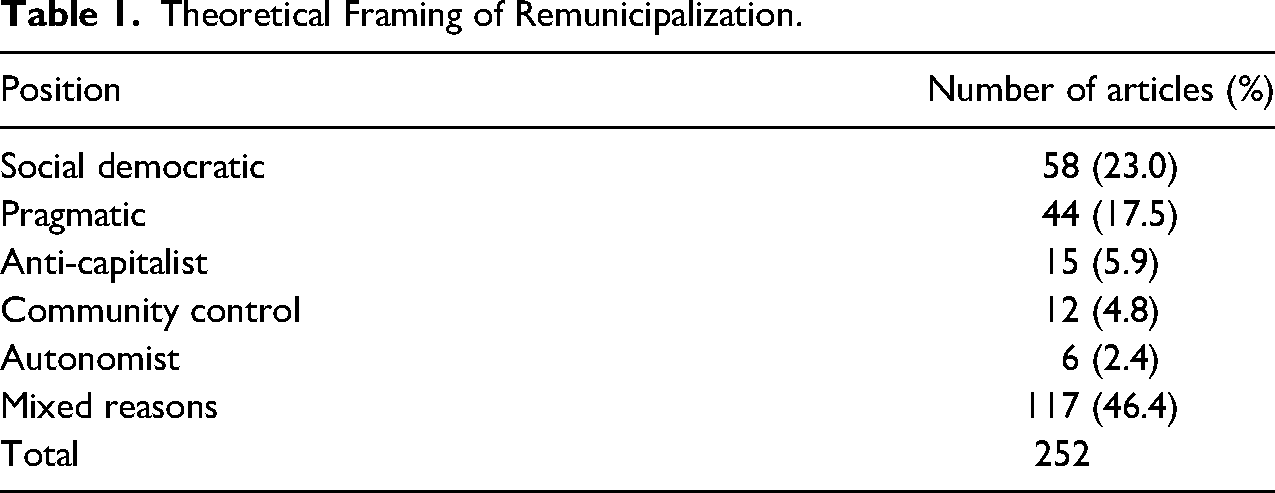
The most common school of thought is what I have labeled social democratic (23% of the literature), referring to authors who see remunicipalization not only as an opportunity to reverse privatization but also to create new and different forms of public services geared toward advancing a wide range of equity and sustainability-oriented objectives, shaped by the state and requiring significant market reforms. Researchers in this category are united on two central points. First, privatization is deeply and inherently problematic, resulting in rising prices, greater inequality, less transparency, weakened accountability, and increased corruption, all contributing to a fraying of the social, economic, political, and environmental fabric of society. Second, there is an urgent need to reverse privatization through vigorous and democratic forms of citizen and state intervention and ownership, with the explicit aim of promoting social and economic justice by ensuring better access, affordability and quality of public services across a wide range of socio-spatial and economic divides (e.g., Agovino et al. 2021; Capone 2011; Jakob and Sanchez 2015; Kishimoto 2019; Novaro and Bercelli 2017; Pohlmann and Colell 2020).
This writing sees remunicipalization as a unique and necessary opportunity to challenge the hyper-commodification of privately run services, promoting public values that go beyond notions of individualized marginal pricing. There is also a push for better horizontal integration of public services and the promotion of public solidarity within and across sectors—including cross-subsidizations—in contradistinction to the ringfencing associated with commercialized forms of service delivery. These demands are also accompanied by calls for new forms of social engagement in public services that promote meaningful citizen participation.
In other words, the social democratic school does not see the push for remunicipalization as a return to a pre-privatization status quo, but rather as an opportunity to upend the bureaucratized, top-down, and prejudiced forms of public services that often plagued them in the Keynesian era, all of which require a broad coalition of state and non-governmental actors to enact change. Demands for more environmentally sustainable forms of public services are also prevalent in this literature.
The remunicipalization of water services in Paris is archetypal of this perspective, with the introduction of social tariffs aimed at making water services more affordable for low-income households, the promotion of upstream water management with farmers to reduce runoffs into the water supply, the creation of a Water Observatory that brings together users, elected officials, researchers, and academics in decision making, and solidarity programs with other public water operators in France and elsewhere to promote and improve public water services (Le Strat 2014; Turri 2022a). Terrassa, Spain, has seen similar initiatives with its remunicipalized water operator (Planas Martín, Gastelaars and Gómez 2022; Satorras, Saurí and March 2020).
A second category of writing takes these social democratic arguments further, with an explicitly anti-capitalist interpretation of the reasons for and potentialities of remunicipalization. These authors share the criticisms of privatization with the social democratic school, seeing remunicipalization as a potentially useful way to improve the quality and equity of public services through enhanced democratic control, but reject the possibility of reconciliation between social justice and market forces (e.g., Cumbers and Paul 2022; March et al. 2019; Santos 2021; Sarnow and Tiedemann 2023; Terhorst, Olivera and Dwinell 2013).
This perspective represents a relatively small segment of the remunicipalization literature (6% of articles) but signifies a distinct theoretical current. It focuses on the limits of social democratic reform, highlighting the ways in which remunicipalized entities are forced to operate within broader market constraints—such as adopting narrow cost-reflexive pricing models that benefit high-income households and private capital despite the desire to introduce more progressive tariffs—raising questions about the extent to which social democratic reforms can reverse the broader commodification process or sufficiently alter socio-economic inequalities. As Terhorst, Olivera and Dwinell (2013, 56) note with regards to the post-privatization water politics of Cochabamba, Bolivia—which included a strong contingent of anti-capitalist voices—water services in that city have been captured by an assortment of elite politics, neoliberal logic, bureaucratized decision making, and social democratic reform, due in part to a strong residue of conservative political and bureaucratic forces in the city, but also to a national government which had “not fully broken with neoliberal policies” despite its socialist rhetoric (see also Razavi 2022).
Notably, there are no examples of remunicipalizations that have sufficiently escaped the clutches of the market to demonstrate what an anti-capitalist perspective would look like in practice. As such, the writing is more aspirational than interpretive. Nor is there a single vision for how a non-capitalist remunicipalization would operate. As with anti-capitalist political movements more broadly, there is as much that pulls this literature apart as binds it together in terms of what constitutes “socialism” and whether this can even be accomplished at a municipal level.
Nevertheless, the literature is united in its rejection of top-down and heavily bureaucratized notions of “old school” socialism, with demands for public services that are democratically accountable and ecologically sustainable. It is also influential, despite its relatively small representation in the literature, insofar as its critiques of privatization continue to animate calls for more radical forms of remunicipalization, with anti-capitalist activists often taking part in a complex patchwork of voices within remunicipalization movements, most notably in southern Europe and Latin America (Cumbers and Paul 2022; March et al. 2019; Razavi 2019; Roca and Heras 2020).
A third set of literature focuses on community-led and community-owned forms of remunicipalization. This writing shares the same concerns with privatization as the previous two schools but focuses instead on community control and community ownership of services rather than the state. In this respect, the writing is not about remunicipalization per se, insofar as it sees the reclamation of public services as a community act in opposition to centralized and bureaucratized forms of state governance. Its proponents are cautious—if not outright dismissive—of state ownership, and circumspect of the potential for progressive state reform. Nevertheless, their aim is to reverse privatization and return services to “public” control. And despite being in the minority these voices are an influential factor in many remunicipalization debates, particularly amongst autonomist organizations pushing for deconcentrated forms of localized decision making and indigenous communities demanding a return to artisanal and traditional forms of services.
It is useful to divide this literature into two sub-sets. The first puts an emphasis on “community control” via strong grassroots engagement with the state in various forms of co-production (5% of the literature) (e.g., Becker, Naumann and Moss 2017; Sanchis-Ibor, Boelens and García-Mollá 2017; Tova 2017; Weber, Cabras and Frahm 2019). In these cases, communities and other NGO work collaboratively with state apparatuses to build capacity and knowledge about public services and to share their approach to public services with local authorities. These are regularized, long-term arrangements between state agencies and groups of citizens, NGOs, and other formal or informal non-profit groups, where both make substantial contributions to decision making or delivery (Bovaird 2007; Nabatchi, Sancino and Sicilia 2017). The rationale for this model is that top-down centralized state-driven services operating on their own become detached from the people they serve, while service users become docile consumers, unconnected to and uninformed about the services provided to them. Direct involvement of citizens therefore has a double benefit: it “transforms the service, but [citizens] are themselves transformed by the service…. Some aspects or components of the system rub off on one another through the production process. This means we must go beyond the perspective of a one-way relationship between state and third sector as principal and agent, or provider and recipient” (Brandsen and Pestoff 2006, 496).
The other grouping is explicitly anti-state in its demands for autonomous forms of service delivery with little (if any) involvement by formal government institutions (2% of the literature; e.g., Trench 2008; Schroering 2021; Wilhelmi 2021). In some cases, this is driven by a desire to return to traditional forms of providing services prior to colonial and “modern” influences, while in others it is driven by a deep skepticism of the impartiality of the state. As Frenk (2018, 5) explains with respect to water provision in rural parts of Mexico, many residents feel that municipal government procedures “rule out participation by local residents and instead foster clientelism and corruption.” As such they are opposed to putting public water (back) into state hands, demanding community control over how services are provided.
A fourth theoretical category of remunicipalization is the “pragmatic” school (17% of the literature). This literature shares many of the same concerns with privatization as the other schools, but it challenges the notion that remunicipalization is driven by broad social forces mobilizing for deep-seated political, ideological, and institutional change. It argues instead that remunicipalization is based primarily on pragmatic decisions about the costs and benefits of remunicipalization by a relatively small group of non-political bureaucrats comparing the relative transaction costs of insourcing and outsourcing. According to this school of thought the vast majority of remunicipalizations are driven by fiscally conscious municipal managers who decide to bring services back in house because it is cheaper to do so (by removing the costs of monitoring and tendering as well as eliminating profit-taking by private firms). The corollary to this is that decisions to outsource are also pragmatic, resulting in pendulum-like swings between public and private service operations based on whichever is cheaper.
This literature does not ignore political factors (e.g., levels of unionization in a municipality) but it does downplay or reject the notion that ideological opposition to privatization is the primary driver of remunicipalization or that non-governmental actors tend to initiate the process. As Warner and Aldag (2021, 229) note with regard to remunicipalization in the United States: “We do not find support for re-municipalization as a political project. We find political interests do not have an effect on re-municipalization. Unionized public sector workers are arguably the best positioned to push for re-municipalization, but we find unionized governments are not more likely to re-municipalize….Forces that might oppose re-municipalization, such as citizen groups in support of privatization or a political climate that favors a decreased role for government, also were not significant. These results are consistent with the broader US literature on contracting, which finds it to be a pragmatic market management project.” The bulk of this writing has focused on the United States, which has recorded some of the highest levels of privatization reversals (see also Warner and Hefetz 2012; Warner 2021), but there has been a substantial growth of similar writing in Europe in recent years (e.g., Albalate and Bel 2021; Clifton et al. 2021; Jansson et al. 2021; Schoute, Gradus and Budding 2021; Voorn et al. 2021).
The last, and largest, set of literature falls into a “mixed” category (46% of publications), where authors point to multiple rationales for remunicipalization. Here it is often noted that the remunicipalization process is too complicated and multifaceted to assign a singular motivation or outcome—a result of the institutionally complex, locationally unique, and ideologically diverse terrain upon which remunicipalization unfolds (e.g., Becker, Beveridge and Naumann 2015; Cumbers and Becker 2018; Leiren 2015; Medarov and McDonald 2019; Pigeon et al. 2012; Powell and Yurchenko 2020; Wollmann 2018; Zaifer 2019).
These authors see pragmatic motivations as well as politicized ones, with an acknowledgment of remunicipalization's contested and sometimes problematic end results. Some of this writing is explicit about its multidimensional perspective, pointing to complex empirical realities on the ground and arguing that there is no simple way to describe these competing dynamics. But much of the writing is implicit in this regard, identifying different rationales and outcomes of remunicipalization but not necessarily acknowledging or addressing the inherent theoretical tensions between these different motivations and results.
The fact that so many authors have adopted this mixed position suggests that writing on remunicipalization may not be as polarized as some analysts suggest. In fact, it may serve to illustrate the opposite, demonstrating that vigorous conceptual debates have convinced these researchers of remunicipalization's multipolarity. Whatever the reasons, a lack of clear theoretical orientation in much of the remunicipalization literature suggests the need for more explicit positioning, even if this means rejecting any single perspective due to the complexity of the topic.
Research Methods
Research methods also play an important role in shaping the debate on remunicipalization. In some cases, there is a strong correlation between theory and method. In others, similar methods have led to entirely different theoretical conclusions, raising questions about the consistency of their application and highlighting the need for better methodological clarification. To illustrate I have classified the literature into four methodological camps (Table 2).
Research Methods Employed.
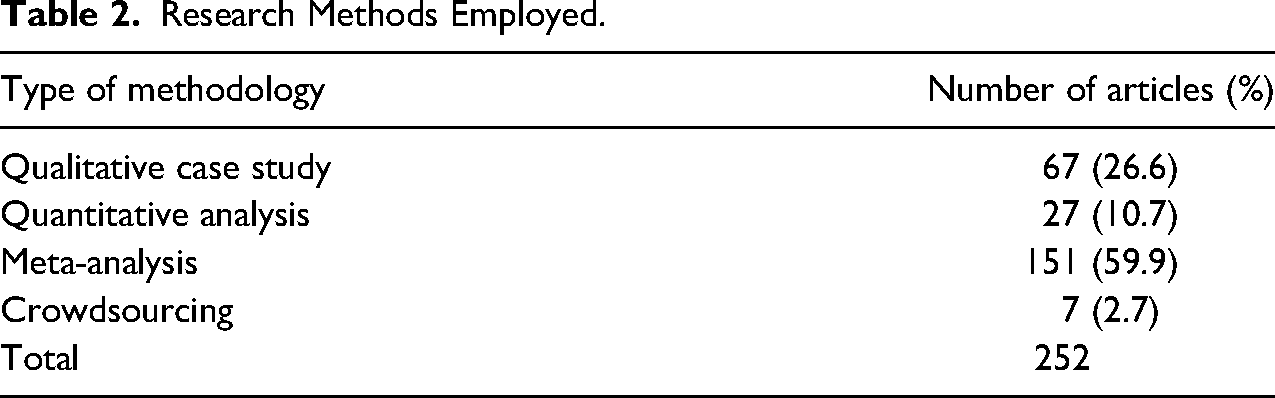
The first is literature that employs the use of qualitative case studies (27% of articles). These articles typically involve interviews with key individuals and organizations involved in a remunicipalization process—from policy makers to labor unions to community groups—as well as assessments of primary documents. Some are single location studies while others involve multiple sites for comparative purposes (e.g., Angel 2021; Azpiazu and Castro 2012; Blanchet, Berthod and Herzberg 2023; Lobina, Weghmann and Nicke 2019; Mann and Warner 2019; March et al. 2019; Poupeau 2010; Torsteinsen and Van Genugten 2016, Razavi 2022; Zamzami and Ardhianie 2015). These case studies involve months, if not years, of engagement with key actors and processes, and offer rich insights that cannot be obtained by any other method. They can also result in very different outcomes, even in the same location (for a variety of perspectives on Barcelona see Planas 2017, March et al. 2019, and Popartan et al. 2020).
This methodological tension is not unique to the remunicipalization literature. What is problematic is the dearth of information about case study procedure, including a lack of clarity on the hypotheses being tested, how interviews were conducted, what questions were asked, and what documents were assessed. Some studies offer more methodological detail than others, but for many publications the information is slim. Even if unintentional, it can be hard to avoid the sense that some research simply proves its preconceived conclusions (a theme we return to below), interviewing people who share the same perspectives and aspirations and excluding those who do not. Better transparency would alleviate these concerns.
A second methodological cluster involves the use of large quantitative data sets to measure the nature and extent of insourcing and outsourcing in municipalities (11% of publications). These are often national-level surveys involving hundreds, if not thousands, of municipalities, some of which cover multiple years to permit longitudinal assessment. Statistical analytical tools are employed to evaluate the data, including random-effects panel logit models, binomal regressions, directional distance functions, metafrontiers, zero unitarization method, and data envelopment analysis techniques (e.g., Albalate, Bel and Reeves 2022; Campos-Alba et al. 2021; Jedynak and Wąsowicz 2021; Suárez-Varela et al. 2017).
These studies assess a broad mix of data types, some of which are comparatively objective (including “levels of debt held by local government,” “transaction costs of privatization,” and “rates of unionization”) while others are decidedly subjective (such as “perceptions of fiscal stress,” notions of “public values,” and “competing political ideologies”; e.g., Albalate, Bel i Queralt and Reeves 2019; Gradus, Schoute and Budding 2021; Jansson et al. 2021; Stiel 2022; Stiel, Cullmann and Nieswand 2018; Weber, Cabras and Frahm 2019; Warner and Aldag 2021; Warner and Hefetz 2012, 2020). These authors are nevertheless transparent in their reporting of how their research was conducted, going to great lengths to describe the methods applied and providing extensive details on the data generated.
Virtually all this literature falls into the “pragmatic” category of remunicipalization, and often carries with it an explicit refutation of qualitative case study research, suggesting that the latter is unreliable and used by competing schools of thought to reinforce their own conclusions. But there are tensions within the quantitative methods literature as well, with different techniques for collecting and interpreting data making it difficult to draw comparisons between studies. Moreover, the highly technical nature of the statistical methods employed can render the analyses opaque to some readers.
There is also inadequate acknowledgment in many of these quantitative articles as to the inherent tensions in some of their data—such as notions of “efficiency”—despite considerable controversy over their meanings and measurements (e.g., Spronk 2010). This problem is most pronounced with the use of overtly subjective measures such as “political ideologies” which tend to be reduced to narrow quantifiable categories that do not necessarily reflect the full scope of thinking and action on remunicipalization, marginalizing or excluding more critical dimensions of the debate (such as anti-capitalist and autonomous perspectives). This can result in an overly narrow set of analytical parameters which effectively rule out the possibility of more politicized motivations for remunicipalization.
A third cluster of methodology employed in the literature is that of crowdsourcing (7% of the writing). In this model, researchers prepare a survey and ask organizations to complete the questionnaire based on their own experience with remunicipalization, typically in a single location but occasionally covering multiple sites. Survey participants are identified via a combination of existing connections, snowball sampling, and social media outreach, customarily among a consortium of academic, NGO, labor, and community partners. Secondary research of academic and popular literature is also employed to further populate the data sets.
The best-known example of this research method is the work conducted by the Transnational Institute in collaboration with Public Services International and the GLOBALMUN project at the University of Glasgow. The strength of this data lies in its transparency (all of which is available on the GLOBALMUN website), the potential for people to complete surveys based on their own deep knowledge of events, its democratization of the research process, and the relatively inexpensive way in which it permits data collection. The reference at the start of this article to more than 1,600 cases of remunicipalization in over seventy countries is derived from this project, providing the largest single database in the world and offering other researchers a rich and open source of information.
The potential weaknesses of this research method include inconsistent data collection (with respondents potentially interpreting survey questions in different ways or not fully completing questionnaires), the possibility of interpretive bias due to the like-minded effect of crowdsourcing, and a reliance on familiar networks of organizations (which may explain the dominance of European examples in the data base). The like-minded effect is the most concerning, evidenced by the fact that the majority of articles which employ this method fall into the “social democratic” category, begging the question as to whether a crowdsourcing project by researchers from a different school of thought might come to different conclusions based on their own networks.
The final, and most commonly employed, research method in the literature (at 60%), is meta-analytical studies—that is, articles that systematically synthesize or merge the findings of other independent research to assess an overall effect (e.g., Brinker and Satchwell 2020; Friedländer, Röber and Schaefer 2021; Hanna 2019; Powell and Yurchenko 2020; Turri 2022b; Ulmer and Gerlak 2019). These articles do not produce new empirical evidence but evaluate the significance of other primary research (mostly qualitative case studies but some quantitative studies as well), drawing conclusions based on these assessments.
The fact that such a high proportion of articles rely on meta-analysis is itself noteworthy given that there is still a relatively small number of publications on remunicipalization (compared to thousands of articles on privatization, for example). Combined with the limited geographical scope of research, the potential for reproducing existing ideas without creating new knowledge is concerning. So too is there a potential for like-mindedness to exacerbate an echo effect, with authors (inadvertently) selecting examples of remunicipalization that are compatible with their own conclusions, reinforcing the hypotheses they set out to test. The fact that each of the theoretical schools described above—including the “mixed” category—have employed a meta-analysis approach suggests that selection preference may be taking place across the ideological spectrum; yet another reason for better methodological and conceptual clarity in the remunicipalization literature.
Author “Bias”
One additional aspect of the remunicipalization literature that must be addressed in this review is the potential for author “bias.” In his assessment of the literature, Voorn (2021, 440) warns readers to “be aware of the potential biases…in current research on remunicipalization,” with the inference being that writing on the topic is rife with predetermination, with authors having decided whether remunicipalization is good or bad (or neutral) prior to conducting their research.
This is perhaps the most controversial feature of the remunicipalization literature—and its most vexed, given that intentional research bias is difficult (if not impossible) to prove. But given the allegations, it is important to assess the extent to which predetermination shapes academic writing on the subject. My conclusion is that bias does exist, but for reasons that are much less nefarious and intentional than often implied.
I have opted once again for a simple analytical taxonomy, with five categories of “bias” (or lack thereof) (Table 3). These perspectives are seldom explicit in the literature but they do represent distinct ways of thinking about whether remunicipalization is seen to be an inherently positive or negative phenomenon. They also closely correlated with choices of research method.
Author “Bias”.
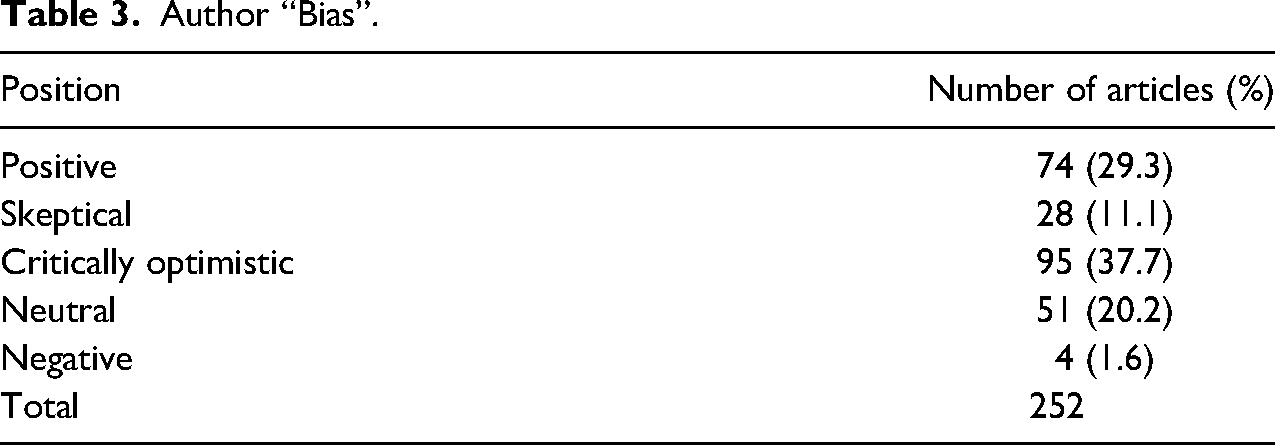
The first category is the “positive” school of thought. These authors argue, ex ante, that remunicipalization is an inherently beneficial phenomenon that necessarily brings about deep-seated political, institutional, and ideological change (e.g., Kishimoto 2019; Petitjean 2017; Planas and Martínez 2020; Ramos et al. 2020; Tova 2017). This writing makes up more than a quarter (29%) of publications and is informed almost entirely by qualitative case studies and crowdsourced data. It is also predominantly social democratic in its orientation.
Much of this writing is also unabashedly activist, written with the express intent of shaping public policy and generating public awareness, frequently coupled with popular education materials and direct lobbying of policy makers at various levels of government. These authors are not unaware of problematic forms of remunicipalization—calling out authoritarian and heavily commercialized forms—but the writing does focus overwhelmingly on encouraging results with social democratic outcomes. Supportive coverage of this literature in popular media has arguably served to further reinforce this positive loop (e.g., Hancox 2020).
Perhaps not surprisingly, this literature has drawn the ire of other scholars. At the top of this list is a group of researchers I have labeled “skeptical,” questioning the validity of the positive perspective on remunicipalization due what they see as its unwillingness to collect data on less politicized and less progressive forms of remunicipalization. Although this cluster of writing represents only 11% of the literature, it is growing in influence and volume (e.g., Albalate, Bel i Queralt and Reeves 2019; Campos-Alba et al. 2021; Jansson et al. 2021; Voszka 2021; Stiel 2022).
If the positive school is the protagonists of the remunicipalization story, the skeptics are its antagonists, challenging the positive school's research process and questioning its enthusiastic findings. The skeptics are not opposed to remunicipalization—often pointing to the same potential benefits of a return to public control as the positive school—but they are critical of what they see to be an overly zealous and incomplete interpretation of events by positive writers. Some of these criticisms are subtle (such as the exclusion of much of the positive literature from previous literature reviews for not being “scientific”) while others are more direct, calling out “sketchy evidence” (Bel 2020, 1) and insisting on the need for “more nuanced debate” (Voorn et al. 2021, 305). The skeptics are closely aligned to the pragmatic school of thought (79% crossover), with the literature evenly split between quantitative data analysis and meta-analytical reviews, with only two qualitative case studies (Barraqué 2012; Lindholst 2021).
The third type of bias is what I have labeled “critically optimistic” (which, at 38%, represents the largest proportion of writing). Here we see a more qualified form of predisposition, with writers sharing much of the enthusiasm and optimism of the positive school but also arguing that there is nothing inherently positive about remunicipalization, highlighting the fractured and fractious ways in which most remunicipalizations have evolved, including many negative outcomes (e.g., Bönker, Libbe and Wollmann 2016; Cumbers and Becker 2018; Medarov and McDonald 2019; Pigeon 2012; Thompson 2021; Razavi 2022). The majority of this research employs qualitative case studies and meta-analytical research methods, but a substantial portion (19%) utilizes quantitative data analysis, once again suggesting that remunicipalization research may not be as irretrievably polarized as some argue it to be.
There are also a significant number of articles that can be considered “neutral” (20% of the writing). In these cases, there is no indication of preconceived notions of remunicipalization outcomes (e.g., Maria de Jesus 2018; Pohlmann and Colell 2020; Romano, Molinos-Senante and Guerrini 2017; Wollmann et al. 2010). This research is overwhelmingly meta-analytical in its approach, however, suggesting a lack of vested interest in any particular conclusions due to the use of other peoples’ research results (and also providing a counterweight to the aforementioned potential for meta-analysis to result in selection bias, underscoring the fact that there is nothing inherently prejudiced about any particular research method).
The final category of potential author bias is tiny (at 2%) but worth mentioning here due to the surprising fact that it does not occupy a larger space in the literature. I have labeled this group “negative,” referring to authors who are explicitly opposed to remunicipalization, albeit for very different reasons. The first group, represented by Röhl (2016) and Lichter (2016), argue that remunicipalization is bad for consumers because it distorts market forces and leads to unfair competition by state enterprises, arguing instead that privatization is a better option. Given the sustained attack by neoliberal analysts over the past few decades on national-level state-owned enterprises (for a discussion see Bernier, Florio and Bance 2020) it is surprising that there is not more anti-remunicipalization writing from a pro-privatization point of view. One possible explanation for this may be that remunicipalization has not fully hit the radar screens of pro-privatization policy makers and analysts—with some evidence to suggest this is the case (McDonald 2019, Petitjean 2020)—but if remunicipalization continues to expand there may be an increase in overtly anti-remunicipalization writing.
The other “negative” perspective adopts a very different position, arguing that a focus on municipal reforms distracts us from the need for more radical structural change at the national and global levels (Santos 2021; Trench 2008). Unlike the anti-capitalist remunicipalization writing referred to above—which sees potential for transformative social and economic change at the municipal level—this writing reiterates a more doctrinaire anti-capitalist line that was prominent in the original municipalization debates a century ago, with no less a detractor than Vladimir Lenin (1907, np) declaring municipalization incapable of bringing about larger socialist transformation because it “seeks to divert public attention away from the fundamental questions of the economic system as a whole, and of the state structure as a whole, to minor questions of local self-government.” Most contemporary anti-capitalist remunicipalization, by contrast, engages with the possibility of working “within, against and beyond” state institutions to push the limits of social democratic reforms, informed in part by the multi-scalar nature of public services and the growing reality of non-state actors engaged in service reforms (e.g., Angel 2021; Cumbers 2015).
Lessons Learned
If there is one lesson to be drawn from this literature review it is that there are no simple answers when it comes to understanding remunicipalization. The motivations and the outcomes of bringing services back in house are as varied as the people, places, and sectors involved.
The academic writing on remunicipalization reflects this dynamic reality, offering an increasingly robust set of methodological tools and theoretical insights, with compelling evidence to support a wide range of findings and perspectives. Some remunicipalizations would appear to be largely pragmatic and bureaucratic while others are far more politicized, with a wide range of political influences, some of which co-exist (uneasily) within a single remunicipalization movement. And as more towns and cities explore the possibility of remunicipalization in the future, the potential for these dynamics to morph and complicate matters further is highly likely, particularly in locations and sectors with different socio-political realities than those which have been the focus of attention thus far.
Acknowledging the existence of this diversity is important for researchers, as well as policy makers and grassroots activists. An unwillingness to appreciate the findings of different schools of thought runs the risk of exacerbating unnecessary rifts in the literature, whereby researchers of one school of thought only encounter information or opinions that reflect and reinforce their own. Acknowledgment of where (and if) one stands in aspirational terms—that is, what remunicipalization should look like versus what it actually looks like—is therefore important, highlighting and differentiating normative from empirical perspectives.
So too must there be better clarity and more detail on research methods in the literature on remunicipalization, with an explicit discussion of the strengths and weaknesses of the tools employed. More mixed-methods research could alleviate some of the concerns raised earlier regarding the potential for predetermined conclusions, as would an expansion of empirical data to broaden the pool of information for comparative analyses.
These lessons are relevant for other sub-fields of urban studies, notably that of “new municipalism” which shares many of the same ideological and methodological tensions. As Thompson (2021, 317) notes in his review of the new municipalism literature, authors are united in their interest in understanding how municipal resources can be harnessed to achieve strategic ends but differ radically in their interpretations of what this looks like in practice, ranging from “pragmatic” and “entrepreneurial” to more “proactive, contentious, expansive programs for transformation of state/capitalist social relations” (see also Angel 2021; Bianchi 2023; Russell, Milburn and Heron 2023). The remunicipalization literature has something to offer in this regard, shedding light on the concrete realities of (re)making municipal services. It also demonstrates the potential for disjuncture between a single service in a single location with that of a larger municipalist movement. Remunicipalization can be a reflection of broader political demands for transformative urban change, but it can also be a parochial and pragmatic attempt to address an immediate problem in a particular place. Neither possibility should be assumed.
Looking Forward
This literature review also highlights the need to expand the geographic scope of research on remunicipalization outside of Europe and the United States. Although the bulk of known remunicipalizations has taken place in these regions, efforts to find examples in Asia, Africa, and Latin America have been limited, constrained by funding (with well-resourced research projects dedicated to the study of remunicipalization being a rarity) and limited networks on the ground.
Theory and methods will need to adapt to this expansion. As debates on “Southern urbanisms” have demonstrated, the research tools suited to a study of remunicipalizing networked infrastructure in formal urban areas in Europe and North America are not always applicable to that of highly fragmented and often informalized systems of service delivery in the Global South (Arpini et al. 2023; Lawhon et al. 2020; Parida and Agrawal 2023). Colonial histories, modernist imaginaries, and a lack of state capacity can make northern-centric visions of remunicipalization impracticable and inappropriate, shutting out alternative worldviews and highlighting the importance of a truly global dialogue on remunicipalization, with the potential for improved mutual learning.
Detailed research on sectors other than water and electricity is also required. Comprehensive and multifaceted assessments of remunicipalizations in health, transport, waste, housing, and other essential services are needed to better understand their unique challenges, as well as the synergies they have with other sectors to help build cross-sectoral modeling. Institutional, financial, and cultural norms can differ dramatically from water to health care to waste management, with no guarantee of shared objectives or strategies. Gains in one area can also mean losses in another, requiring a deeper appreciation of how individual remunicipalizations can influence service delivery as a whole, including cross-border impacts between jurisdictions.
There is also need for considerable thematic expansion of research. Studies to date have tended to focus on relatively generic assessments of the social, economic, and political dynamics of remunicipalization (e.g., Are prices more affordable? Is decision-making more participatory? Have services improved?). Writing that focuses on specific demographic questions—such as gender, indigeneity, and racialization—has been sparse (exceptions include Frenk 2018; Ran and Tomic 2006; Razavi 2022). What role do women play in remunicipalization struggles? How are racialized communities impacted by the return of services to public hands? Are indigenous voices being heard in the debates? Do working conditions improve for front-line employees? Related research in the field of energy democracy has demonstrated that well-intended public service reforms can have negative social, economic, and cultural outcomes, making it important to know who is benefitting from remunicipalization and who is not (e.g., Allen, Lyons and Stephens 2019; La Viña et al. 2018; Sweeney 2017).
Another important research gap is finance. Paying for remunicipalization can be one of the biggest challenges facing governments and communities—diminishing its potential impacts and often preventing it from becoming a reality. In Berlin, for example, a coalition of activists organized a referendum which ultimately led to the remunicipalization of water services in 2012, but legal wrangling forced the municipality to buy back the private shares of the water companies at a cost of €1.3 billion, financed by a thirty-year loan to be repaid by water consumers, “cast[ing] doubt on the sustainability of water operations [and] threatening to undermine the aspirations of the Berlin Water Table for affordable and socially equitable charges” (Lobina 2017, 155). A better understanding of financial constraints—as well as the potential for progressive financing alternatives such as public banks (e.g., Butzbach and Spronk 2022; Garcia-Arias et al. 2022)—could assist with policy making that advances the definancialization prospects of remunicipalization.
There is also a need for further studies of “failed” remunicipalizations—instances where efforts to bring services back in house were unsuccessful, or where post-remunicipalization reforms have not produced what policy makers and activists had hoped for (e.g., March et al. 2019; Razavi 2022; Spronk and Sing 2019). It is difficult to know how many such cases exist but casting an expanded research net into new geographic and sectoral terrains could provide rich insights into potential impediments to remunicipalization, regardless of their end goals. The same argument applies to the need for more studies of “ugly” forms of remunicipalization—notably cases where authoritarian governments have reclaimed ownership and control of key services to serve their own autocratic political and economic ends (e.g., Horváth 2016).
Adapting to this expanded research agenda will require an acknowledgment of the diversity of views currently in place and a willingness to engage with new perspectives. Remunicipalization has proven to be a remarkably rich and complex field of study thus far. With the need to dig deeper—and the likelihood of many new cases in the future—it promises to become richer still.
Supplemental Material
sj-docx-1-uar-10.1177_10780874241233535 - Supplemental material for Landscapes of Remunicipalization: A Critical Literature Review
Supplemental material, sj-docx-1-uar-10.1177_10780874241233535 for Landscapes of Remunicipalization: A Critical Literature Review by David A. McDonald in Urban Affairs Review
Footnotes
Declaration of Conflicting Interests
The author declared no potential conflicts of interest with respect to the research, authorship, and/or publication of this article.
Funding
The author received no financial support for the research, authorship, and/or publication of this article.

Supplemental Material
Supplemental material for this article is available online.
Author Biography
References
Supplementary Material
Please find the following supplemental material available below.
For Open Access articles published under a Creative Commons License, all supplemental material carries the same license as the article it is associated with.
For non-Open Access articles published, all supplemental material carries a non-exclusive license, and permission requests for re-use of supplemental material or any part of supplemental material shall be sent directly to the copyright owner as specified in the copyright notice associated with the article.
